Dangers and Questions of the Zuckerberg Era

Civil Society, Democracy, Global, Headlines, Human Rights, Press Freedom

Opinion

Will the Internet become a tool for participation? How will this be done? These are questions that political institutions, if they really care for democracy, must address as soon as possible. The Zuckerberg era must make this choice now, in a few years time it will already be too late…

ROME, Nov 15 2019 (IPS) – This year the Worldwide Web is thirty years old. For the first time since 1435, a citizen from Brazil could exchange their views and information with another in Finland.


The Internet, the communications infrastructure for the Web is a little older. It was developed from the ARPANET, a US Defense Department project under the Advanced Research Projects Agency; the military designing it to decentralize communications in the case of a military attack.

That network enabled scientists to communicate over email in universities. Then in 1989 Tim Berners-Lee at CERN in Switzerland invented the Hyperlink and the Worldwide Web (the Web) rapidly moved from scientists automating information sharing between universities and research institutions to the first Websites now available to the general public.

In 2002 the first social media sites began as specialised websites. LinkedIn launched in 2003 then FaceBook in 2004, Twitter in 2006, Instagram in 2010 and so on…

Will the Internet become a tool for participation? How will this be done? These are questions that political institutions, if they really care for democracy, must address as soon as possible. The Zuckerberg era must make this choice now, in a few years time it will already be too late…

My generation regarded the arrival of the Web as a great prospect for democracy. We come from the Gutenberg era, an era that in 1435 changed the world. From manuscripts drafted by monks to be read by a few people in monasteries, the invention of reusable movable type meant that in just 20 years already eight million copies of printed books went all across Europe.

Among many other things it also meant the creation of information. People who heretofore had merely a scant horizon beyond their immediate surroundings, could suddenly access information about their country, and even the entire world. The first newspaper was printed in Strasbourg in 1605. From then until 1989, the world was filled with information.

Information had a very serious limit. It was a vertical structure. Just a few people sent news to a large number of recipients; there was little feedback. It wasn’t participatory, it required large startup investments, it was easily used by economic and political powers.

In the Third World, the media system was part of the State. In 1976, 88% of World news flows emanated from just three countries: the US, the UK and France. International news agencies based in these three countries included Associated Press (AP), United Press International (UPI), Reuters and Agence France Press (AFP).

The world’s media were dependent on their news services. Some alternative news agencies, like Inter Press Services, were able to put a dent in their monopoly. But what this Western media published, by and large was a biased window on the world.

Then came the Internet, and with it, came horizontal communication. Every receiver was also a sender. For the first time since 1435, media were no longer the only window on the world. Like-minded people could take part in social, cultural and economic interactions.

This change was evident in the United Nations Woman’s World Conference in Beijing, 1995. Women created networks prior to the conference, and came with a common plan of action. Governments were not so prepared, so the Declaration of Beijing was a turning point, one which was entirely unlike the bland declarations from the previous four World Conferences.

Another good example is the campaign to eliminate anti-personnel landmines, started by the Canadian activist Jody Williams in 1992. This soon blossomed into a large coalition of Non-Governmental Organizations from more than 100 countries.

Under mounting pressure Norway decided to introduce the issue to the UN, where the US, China, and other manufacturers of landmines like the USSR, tried to block the debate, declaring that they would vote against it.

Roberto Savio

The activists did not care, and 128 countries adopted the Mine Ban Treaty in 1997 with the US, China and the USSR voting against. A vast global movement was more powerful than the traditional role of the Security Council. The Internet had become the tool to create world coalitions.

Those are just two examples of how far the Internet could change the traditional system of Westphalian state sovereignty as defined at the Conference of Westphalia in 1648. The Internet spanned national frontiers to bring on a new era.

Let’s say, for the sake of symbolism, that the Internet brought us from the Gutenberg Era, to the Zuckerberg Era, to cite the inventor of Facebook and a leading instance of what went wrong with this medium.

The Internet came upon us with an unprecedented force. It took 38 years for the radio to reach 50 million people: television took 13 years; and the Web just four years. It had a billion users in 2005, two billion in 2011, and it now has three and a half billion users, three billion of those using social media.

So the two traditional pillars of power, the political system and the economic system, also had to learn how to use the Internet. The US provides a good example. All of American media (national and regional publications) involves printing 50 million copies daily.

Quality newspapers — both the conservative broadsheets like the Wall Street Journal, and progressive ones like the Washington Post or the New York Times — together print ten million copies a day. Trump has sixty three million followers on Twitter; they read Trump’s tweets but don’t buy newspapers.

The Web has had two unforeseen developments. One was the dramatic reinforcement of the consumer society. Today advertising budgets are ten times larger than budgets for education, and education only lasts a few years compared with a lifetime of advertisement.

With the development of social networks, people — now more consumers than citizens — have become objects for marketing goods and services, and recently also for political campaigns. All systems of information and communications extract our personal data, selling us on as consumers.

Now the TV can see us while we watch it. Smartphones have become microphones that listen in on our conversations. The notion of privacy is gone. If we could access our data, we would find out that we are followed every minute of the day, even into our bedrooms.

Secret algorithms form profiles of each and every one of us. Based on these profiles platforms provide us with the news, the products, and the people that these algorithms believe we will like, thus insulating us in our own bubbles.

Artificial intelligence learns from the data that it accumulates. China, with 1.35 billion people, will provide its researchers with more data than Europe and United States together. The Internet has given birth to a digital extractive economy, where the raw material is no longer minerals, but we humans.

The other development that went awry is that the digital extractive economy has created unprecedented wealth.

Amazon CEO Jeff Bezos was recently divorced from his wife. In the settlement she received 36 billion dollars yet Bezos remains among the 10 richest people in the world. This is just one story from an increasingly sad reality of social injustice, where 80 of the world’s richest persons hold the same wealth as nearly three billion poor people.

A new sector is evolving, the “surveillance capitalism” sector, where money is made not from the production of good and services, but from data extracted from people.

This new system exploits humans to give to the owners of this technology, a concentration of wealth, knowledge and power without precedent in history. The ability to develop facial recognition and other surveillance instruments no longer lies in the realms of science fiction.

The Chinese government has already given every citizen a digital number, where all their ‘good’ and ‘bad’ behaviours converge. If a citizen goes below a level, their children will not be allowed to go to a good school, and the citizen themselves, though they may still be able to travel by train, won’t have access to planes.

These technologies will soon be in use all over the planet. London town now has 627,000 surveillance cameras, one for every fourteen citizens; in Beijing it’s one for every seven.  A study conducted by The Rand Corporation estimates that by 2050, Europe too would also have one camera for every seven citizens.

The interrelationship between democracy and the Internet is now creating a belated awareness in the political system. The European Parliament has just released a study, about the negative impact of the Internet. These impacts are:

  1.        Internet Addiction
    There is unanimity among doctors and sociologists that a new generation is coming, one which is very different from the previous one. Over 90% of those aged 15-24 uses the Internet, as against 11% for those over 55. Young people spend 21 hours per week on the PC, and 18 hours on a smart phone. This leaves little time for social and cultural interaction. 4.4% of European adolescents now show pathological Internet use “that affects their lives and health”. The American Academy of Psychology has officially included Internet Addiction as a new ailment. Magnetic resonance studies of those with Internet Addiction Disorder (IAD) show that they exhibit the same brain structure alterations as those who suffer from drug or alcohol addiction.
  2.        Harming cognitive development
    A particular warning is given about children under two years of age. More than 20 minutes a day of screen use reduces some of their neural development. People pushed to isolation tend to develop symptoms of distress, anger, loss of control, social withdrawal, familial conflicts, and an inability to act in real life. Internet users in tests were faster than non-users at finding data, but they were less able to retain data.
  3.        Information Overload
    The condition of having too much information hampers the ability to understand an issue, or to make effective decisions, an important issue for managers, consumers, and social media users. According to Microsoft, attention span for a title has gone from 12 seconds in 2000 down to 8 seconds in 2016. The attention span for reading has gone from 12 minutes to 8 minutes. Two new terms can be used: one, the ‘popping brain’, describes a brain less adept to adapt to a slower pace of real life and then there is ‘Neuroplasticity’; i.e. the ability to alter one’s behaviour after a new experience. Frequent immersion in virtual worlds can reduce neuroplasticity and also make it more difficult to adapt to the slower pace of real life. The need to compete in speed between social media channels is well known. For example Amazon estimates that one second of performance delay would cost 1.16 billion losses per year in sales.
  4.        Harmful effects in knowledge and belief
    The fact that social media deliberately tends to gather together users with similar views, tastes and habits, is fragmenting society in a negative way for democracy, resulting in closed systems that don’t allow for alternative viewpoints. Adolescents no longer discuss significant subjects. They go to their virtual world, and if they come across somebody from another group, they tend to insult each other. The Internet is full of fake news and misleading information, and users have great difficulty distinguishing accurate from inaccurate information. Echo chambers appear to be far more pervasive, and may unite those with more extreme and partisan political and ideological positions, therefore undermining possibilities for civil discourse and tolerance, supporting radicalization.
  5.        Harming public/private boundaries.
    The Internet blurs the distinction between the private and the public. Private life becomes public. This is especially negative for teenagers who lose the concept of privacy, for example by sending private photos across the Internet. One important observation is that teenagers now get their sexual education from pornography, where women are always an object to satisfy men’s sexual phantasies. This is in turn creating a lack of respect for women, and a new generation that risk, for new reasons, returning to a patriarchal society. Group violations of teenage girls are clearly a result of this trend.
  6.        Harming social relationships
    The Internet is clearly a powerful instrument to create new communities. However, when used negatively, it can also damage communities, because of the migration to Internet of many human activities such as shopping, commerce, socialising, leisure, professional activities and personal interaction. That migration creates impoverished communication, incivility and a lack of trust and commitment.
  7.        Harming democracy
    The Internet has been a powerful tool for participation, and therefore for democracy. However the study notes with concern that a growing number of activities are also harmful to democracy. These include: a) The incivility of many online political discourses, b) Political and ideological polarisation, uniquely possible using the Internet. c) Misinformation, and, in particular, fake news, d) Voter manipulations through profiling based on harvested social media information. We all know what happened in the US elections with Cambridge Analytica data, gathered by Facebook, and how thousands of false web users and bots now heavily interfere in elections.

We should add to this study some other considerations. The first is that finance now is now also run by algorithms. The algorithms do not only decide when to sell or buy shares, but now also decide where to invest.

The Exchange-Traded Funds (ETFs) last month reached 14,400 billion dollars in trades, more than that traded by humans. This trend will continue with the development of artificial intelligence and soon finance will become even more dehumanized.  Even when Internet users invest themselves they too will be directed by machines and algorithms.

A second consideration is that young people read less and less. Reading a book is very different to scrolling a screen. We are experiencing a progressive reduction in levels of culture. It’s not uncommon to have university students that make grammar and spelling mistakes.

Let us remember that when the Internet was still new, its proponents told us: it is not important to know, rather it is important to know how to find. We are more and more dependent on search engines, learning less and less, and we are unable to connect that data in a personal holistic logical system.

There is clearly a need for regulation to reduce the negative aspects of the Internet and to reinforce positive values. The owners of social media platforms are now under increased scrutiny so they have taken the road of self-regulation.

Twitter, for instance, has decided that it cannot be used for political purposes. Zuckerberg is an exponent of market myths telling us that good news will automatically prevail over fake news. Except that platforms help users to read and find only what they like, to maintain our attention, providing us what is striking, unusual and provocative. This is not a free market.

The Zuckerberg era is clearly creating an entirely different generation, very different from the generations of the Gutenberg era. This raises many questions, from privacy to freedom of expression (now in private hands), from who will regulate, what to regulate and how.

A five year-old child is now very different from a Gutenberg five year-old. We are in a period of transition. The meaning of democracy is changing. International relations are moving away from the search for common values via multilateralism, to a tide of nationalist, xenophobic and selfish views of the world.

Terms like peace, cooperation, accountability, participation and transparency are becoming outdated. What is clear is that the present system is no longer sustainable. Policies disappear from debate, now referred to only as ‘politics’. Vision and paradigms are getting scarce.

Over and above all of this the threat of climate change is looming; yet last year toxic emissions from the five largest countries increased by 5%. Young people are largely absent from political institutions as is shown by the vote on Brexit where only 23% of the 18-25 age group participated.

At this very moment we have large demonstrations in thirteen countries all over the world. In those streets young people do participate, frequently demonstrating rage, frustration and violence. If we cannot bring back horizontal communication to the Internet and we do not free it from the commercial fracturing of young people, the future is hardly rosy.

Yet as the marches against Climate Change clearly demonstrate, if young people want to change the world, values and vision will return. It is evident that the Internet can be a very powerful tool. But who will redress these failings? Will the Internet become a tool for participation? How will this be done?

These are questions that political institutions, if they really care for democracy, must address as soon as possible. The Zuckerberg era must make this choice now, in a few years time it will already be too late…

Publisher of OtherNews, Italian-Argentine Roberto Savio is an economist, journalist, communication expert, political commentator, activist for social and climate justice and advocate of an anti neoliberal global governance. Director for international relations of the European Center for Peace and Development.. He is co-founder of Inter Press Service (IPS) news agency and its President Emeritus.
  Source

Central America – Fertile Ground for Human Trafficking

Civil Society, Crime & Justice, Democracy, Editors’ Choice, Featured, Gender, Gender Violence, Headlines, Human Rights, Latin America & the Caribbean, Migration & Refugees, Regional Categories, Special Report

Crime & Justice

This is part of a series of features from across the globe on human trafficking. IPS coverage is supported by the Riana Group.

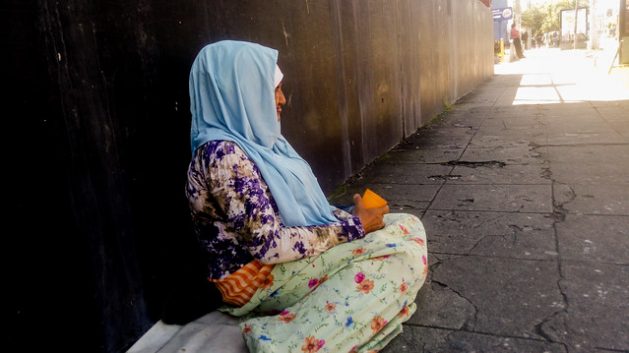
An older woman panhandles on a street in San Salvador. Criminal trafficking groups take advantage of vulnerable people, such as the destitute, to force them to beg. But in Central America, 80 percent of the victims of trafficking are women and girls, for purposes of sexual exploitation. Credit: Edgardo Ayala/IPS

An older woman panhandles on a street in San Salvador. Criminal trafficking groups take advantage of vulnerable people, such as the destitute, to force them to beg. But in Central America, 80 percent of the victims of trafficking are women and girls, for purposes of sexual exploitation. Credit: Edgardo Ayala/IPS

SAN SALVADOR, Nov 8 2019 (IPS) – Central America is an impoverished region rife with gang violence and human trafficking – the third largest crime industry in the world – as a major source of migrants heading towards the United States.


Human trafficking has had deep roots in Central America, especially in Guatemala, Honduras and El Salvador, for decades, and increasingly requires a concerted law enforcement effort by the region’s governments to dismantle trafficking networks, and to offer support programmes for the victims.

The phenomenon “has become more visible in recent years, but not much progress has been made in the area of more direct attention to victims,” Carmela Jibaja, a Catholic nun with the Ramá Network against Trafficking in Persons, told IPS.

“We know that El Salvador, Honduras and Guatemala are countries with a heavy flow of undocumented migrants, which puts them at risk of becoming victims of trafficking.” — Carlos Morán

This Central American civil society organisation forms part of the Talita Kum International Network against Trafficking in Persons, based in Rome, which brings together 58 anti-trafficking organisations around the world.

Jibaja pointed out that “the biggest trafficking problem is at the borders, because El Salvador is a country that expels migrants,” as well as in tourism areas. The most recognised form of trafficking in the region is sexual exploitation, whose victims are women.

Carlos Morán, Interpol security officer and a member of the Honduran police Cybercrime Unit, concurs .

“We know that El Salvador, Honduras and Guatemala are countries with a heavy flow of undocumented migrants, which puts them at risk of becoming victims of trafficking,” Morán told IPS while participating in a regional forum on the issue, hosted Nov. 4-8 by San Salvador.

The “Regional Seminar on Investigation Techniques and Protection of Victims of Trafficking in Persons” brought together officials from the office of the public prosecutor, police officers, legal experts and other key actors and experts from Guatemala, El Salvador and Honduras, the countries that make up the so-called Northern Central American Triangle.

The objective is to strengthen capacities and good practices in the investigation of trafficking, especially when the crime is transnational in nature.

Morán and other participants in the meeting declined to talk about figures on the extent of trafficking in the region, due to the lack of reliable data.

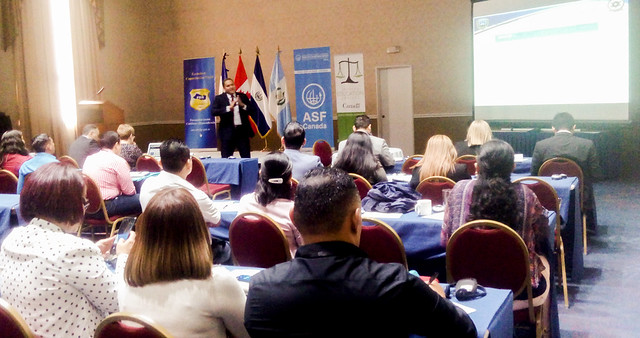
Prosecutors, police officers, government officials, experts and representatives of social organisations from Central America are participating in a special seminar on human trafficking Nov. 4-8 to identify and coordinate joint efforts. Credit: Edgardo Ayala/IPS

Prosecutors, police officers, government officials, experts and representatives of social organisations from Central America are participating in a special seminar on human trafficking Nov. 4-8 to identify and coordinate joint efforts. Credit: Edgardo Ayala/IPS

Civil society supports victims

In the countries of the Northern Triangle there are government efforts to develop victim care programmes, but they are insufficient and civil society organisations have had to take up the challenge.

Mirna Argueta, executive director of the Association for the Self-Determination of Salvadoran Women (AS Mujeres), told IPS that “the problem is serious, because we are facing networks with great economic and political influence, and victims are not being protected,” and there are very few programmes to help with their reinsertion in society.

Her organisation has been working since 1996 with victims of trafficking, offering psychological and medical support, and is also an important ally of the Attorney-General’s Office in victim protection work.

AS Mujeres collaborates with the police and prosecutors when victims have to be moved from one place to another, in the most secretive way possible, especially when judicial cases against organised crime networks are underway.

In the past it has also offered shelter to women victims of trafficking, but now the prosecutor’s office does, said Argueta, who is also coordinator in El Salvador of the Latin American Observatory on Trafficking in Persons, which brings together 15 countries.

AS Mujeres’ victim care programme includes, in addition to psychological support, medical assistance which incorporates non-traditional techniques such as biomagnetism, performed by a physician specialising in this area, as well as massage and aromatherapy.

“Experience has shown us that with the combination of these three techniques, recovery is more effective, and care is more integral,” said Argueta.

She added that since the programme’s inception in 1996, it has served some 600 trafficking victims.

They currently offer support to five women, who IPS could not speak to because they are under legal protection, and providing their names or a telephone number for them has criminal consequences.

For the same reason, the public prosecutor’s office also vetoed conducting interviews with victims under its protection.

AS Mujeres also promotes a self-care network.

“When the victim has gone through different stages, we integrate her with other women and they can share their experiences, making it less painful, and helping them with their reinsertion in society,” Argueta added.

She said many victims feel they are “damaged,” or worthless, and they turn to prostitution.

Victims can spend anywhere from six months to two and a half years in the programme, depending on the complexity of each case. For example, there are women with acute problems of depression, suicidal thoughts and persecutory delusions.

According to figures from the United Nations office in Honduras, released in July, 80 percent of the victims of human trafficking in Central America are women and girls.

In El Salvador, 90 percent of cases involve sexual exploitation, according to official figures provided by the public prosecutor’s office during the regional forum in San Salvador.

However, other types of trafficking have been detected, such as labour exploitation, forced panhandling and others.

So far this year, the prosecution has reported 800 victims, cases that are still open.

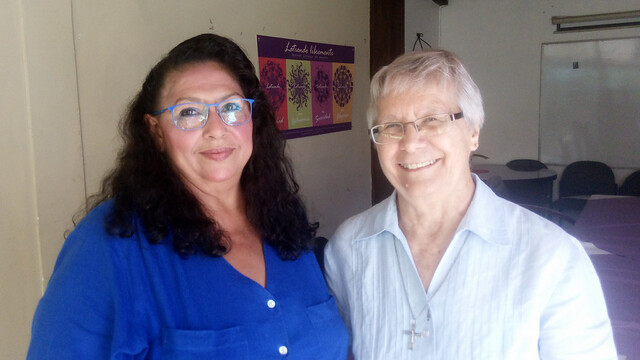
Mirna Argueta (L), executive director of the Association for the Self-Determination of Salvadoran Women, and Catholic nun Carmela Jibaja, of the Central American Network against Trafficking in Persons, are two activists working to provide care for victims of trafficking, who are mostly women. Credit: Edgardo Ayala/IPS

Mirna Argueta (L), executive director of the Association for the Self-Determination of Salvadoran Women, and Catholic nun Carmela Jibaja, of the Central American Network against Trafficking in Persons, are two activists working to provide care for victims of trafficking, who are mostly women. Credit: Edgardo Ayala/IPS

In Guatemala, in 2018, the Public Prosecutor’s Office detected 478 possible victims of human trafficking, four percent more than the previous year. There were 276 reported cases, also an increase of four percent.

Children and adolescents continue to be vulnerable to trafficking, as 132 children and adolescents were detected as possible victims of human trafficking, 28 percent of the total, 111 of whom were rescued.

They were victims of illegal adoptions, labour exploitation, forced marriage, forced panhandling, sexual exploitation and forced labour or services. But the most invisible form of trafficking, according to the prosecutor’s office, is the recruitment of minors into organised crime.

Gangs involved in people trafficking

Experts consulted by IPS point out that many trafficking cases are the product of a relatively new phenomenon: involvement in trafficking by the gangs that are responsible for the crime wave in the three Northern Triangle countries.

The gangs have mutated into bona fide organised crime groups, with tentacles in the illicit drug trade, extortion rackets, “sicariato” or murder for hire and now human trafficking, among other criminal activities.

In El Salvador, it is common to hear stories in neighborhoods and towns controlled by gangs about young girls who gang leaders “ask for”, to be used as sex toys by the leaders and other members of the gang, and the families hand them over because they know that they could be killed if they don’t.

But the gangs go farther than that, forcing their victims to provide sexual services for profit, another aspect of trafficking.

Official figures from the National Council against Trafficking in Persons, which brings together government agencies to combat the phenomenon, indicate that in 2018 there were 46 confirmed victims, 43 police investigations and 38 judicial proceedings.

The trials led to four convictions and two acquittals. The rest are still winding their way through court, according to the Council’s Work Report 2018.

The document also reported that the attention to victims included programmes to help them launch small enterprises, as well as measures of integral reparations for families of children and adolescents in the shelters.

Emergency response teams were also coordinated to provide assistance to victims, whether the women are foreigners or nationals.

El Salvador is part of the Regional Coalition against Trafficking in Persons and Smuggling of Migrants, along with Belize, Costa Rica, Guatemala, Honduras, Mexico, Nicaragua, Panama and the Dominican Republic.

Honduras has also provided support for economic reinsertion, offering seed capital to set up small jewelry businesses, among others, said Interpol’s Morán.

At least 337 people from Honduras have been rescued since 2018, including 13 in Belize and Guatemala, according to a report by the Inter-Institutional Commission Against Commercial Sexual Exploitation and Trafficking in Persons in Honduras.

  Source

The Most Important Meeting You’ve Never Heard Of — & the Grand Challenge on Inequality

Aid, Civil Society, Democracy, Development & Aid, Editors’ Choice, Global, Global Governance, Headlines, Inequity, Population, Poverty & SDGs, TerraViva United Nations

Opinion

Ben Phillips is an author and activist on inequality.

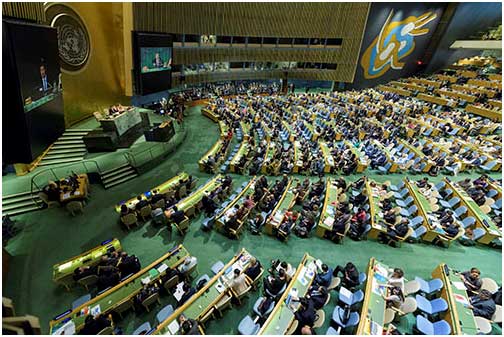
Credit: United Nations

MEXICO CITY, Oct 9 2019 (IPS) – Last month 195 world leaders once again met in New York for big speeches and grand events. But on inequality, when all is said and done, more has been said than done.


Four years after governments across the world committed to fight inequality as part of the UN Sustainable Development Goals, far too little has been seen in the way of government action. That’s not the verdict of critical NGOs – that’s the official assessment of UN Secretary-General António Guterres himself.

As Guterres told countries, adding only the thinnest diplomatic coating, “the shift in development pathways to generate the transformation required to meet the Sustainable Development Goals by 2030 is not yet advancing at the speed or scale required.”

Indeed, he noted, “the global landscape for Sustainable Development Goal implementation has generally deteriorated since 2015”. It is in this context that the UN has called for a “decade of delivery” following five years in which we the people have been able to feast on words whilst fasting on action.

For years, grassroots organisations have been sounding the alarm about the damage being caused by widening inequality. More recently, the formal debate on inequality shifted and the accepted mainstream normative position has become that inequality is dangerous and needs to be reduced.

The UN has also stepped up in providing coordination and advice. But governments have not shifted in recognition of the new consensus. Cynicism about whether anything will be done has taken root amongst even the most hopeful observers.

And the big headlines from this year’s UN General Assembly did very little to counter that cynicism, dominated as they were by the world’s loudest leaders, who seem to make up for an absence of substance with a surfeit of bombast.

Quietly, on the sidelines, however, another group met to plan not a communique on the stage but a series of actions at home. It was not a huge group of countries, just a dozen, but it included countries from every region of the world and every income level.

They met not because they think they have the answers, but because they are keen to learn from each other and to act. From Indonesia to Sierra Leone to Sweden to Mexico, they and others gathered in the first heads of state and government meeting of the Grand Challenge on Inequality, a new multi-stakeholder initiative to support vanguard governments, committed to tackling inequality, in finding the path by walking it.

Then, even more crucially, these same leaders mandated senior leaders and officials – the doers – to gather just after the New York meetings in Mexico City, and then in a few months in Jakarta, and onwards, to plan the implementation of a series of practical country-specific policies to narrow the gap between the runaway few and the many pushed behind.

You haven’t heard about this meeting because the leaders don’t believe that they have yet earned the right to declare themselves the leaders. Saint Francis of Assisi said “Preach the Gospel, and if you must, use words.”

In a similar spirit, the country leaders in the Grand Challenge on Inequality recognized, in the New York and in Mexico City meetings, that the power of their commitment to tackling inequality will be shown not in what they say but in what they do.

They recognized that there is no single policy that on its own can beat inequality, and so a series of complementary policies year on year is needed. They recognized that tackling inequality means taking on vested interests: that it means progressive tax and universal public services, it means protected workers and regulated corporations, it means designing policy from the bottom-up not the top-down, and it means tackling the wealth and power of the very wealthy.

As part of that, they opened themselves up to forthright challenge from grassroots social movements and trade unions, and shared what they as leaders were finding most challenging and the lessons they had learnt from their mistakes. It was, I’ll confess, something of a shock to hear leaders start off not with justifications but with self-criticism.

It was a world away from the (in)famous “Big Men Who Strode New York”. In a world saturated by the fake, to witness sincerity was disorientating.

It is early days for the pioneer governments Grand Challenge on Inequality, but, as a witness and as someone who has spent years bluntly challenging governments for their failures, here’s why it matters: social transformation doesn’t happen when people recognize that ther society is unfair – it happens when people also recognize that it can be fairer.

And that depends on people witnessing change, somewhere. Cynicism and despair are ultimately tools of the status quo. There is nothing more dangerous to those who would keep things as they are than the threat of a good example.

And, quietly, this group of countries, of leaders who do not call themselves leaders, are starting to build that good example. Oxfam have started to call this group of governments the “axis of hope”. Perhaps these governments could be more prosaically named the “axis of action”.

Grassroots organising will remain essential to help foster leaders’ determination, and to push back against the pressures that will continue to be exerted by economic elites. There is no certainty that change is coming. But there is no longer certainty that it isn’t. And the sound that accompanies this change is not the bang of fireworks. It is a quiet whirring of hard work.

  Source

Reimagining ‘Crazy Rich Asians’ as Social Commentary on Inequalities in Asia-Pacific

Aid, Civil Society, Democracy, Development & Aid, Editors’ Choice, Global, Global Governance, Headlines, Inequity, Population, Poverty & SDGs, TerraViva United Nations

Opinion

Srinivas Tata is Director, Social Development Division, UN Economic and Social Commission for Asia and the Pacific (ESCAP)
 
Jaco Cilliers is Head of Asia-Pacific Policy and Programmes
UNDP Bangkok Regional Hub

BANGKOK, Thailand, Aug 30 2019 (IPS) – It’s 1962, and in a modest Hong Kong neighborhood, a poetic love story unfolds. Filmed almost twenty years ago, Wong Kar-wai’s seminal movie In the Mood for Love captured the world’s imagination about lifestyle in the region.


A lower-middle class existence had never looked better. Fast forward to 2018 and a new movie, set in today’s Singapore captures the world’s attention, but for very different reasons.

“Crazy Rich Asians” mixes Asian family values, education and prosperity with a consumeristic facade of jewelry, clothes and luxury travel. The result is entertaining, yet thought-provoking: when did this seismic socio-economic shift take place? When did Asia become so prosperous, yet so unequal?

Research by the United Nations has shown that inequalities of both income and opportunities have been on the rise across the region over the past two decades. Our 2019 research with the Oxford Poverty and Human Development Initiative (OPHI) shows two-thirds of the world’s ‘multi-dimensionally’ poor now live in middle-income countries.

Increases in income inequality have coincided with a narrower concentration of wealth in the Asia-Pacific region, now home to the greatest number of billionaires in the world. Their combined net worth is seven times the combined GDP of the region’s least developed countries.

Governments have committed to achieving the Sustainable Development Goals (SDGs) by 2030 and aim to fulfill the promise of “leaving no one behind”. Nonetheless, research reveals a worrying trend toward greater inequality, not just in incomes, but also in access to basic services — educational attainment, health, clean energy and basic sanitation.

Gender is, perhaps, the most important lens through which these stark inequalities in access to health, basic services and rights can be understood. And they are most likely to be left behind. In addition, natural disasters, which have become more frequent and intense, disproportionately affect the poorest. Due to their socio-economic plight, their capacity to recover is also seriously weakened.

Putting “Leave no one behind” into practice

Inequalities are not inevitable – they ‘stem from policies, laws, cultural norms, corruption, and other issues that can be addressed.’ To be addressed, they require a range of well-coordinated policy interventions. If left unchecked, inequalities ultimately threaten social cohesion, economic growth and environmental sustainability.

Several countries have prioritized investments in education, health and social protection to achieve more equitable development outcomes. Mongolia, for instance, now allocates 21 per cent of public expenditure toward social protection with a specific focus on children. This has resulted in a significant reduction in stunting.

Bhutan and Thailand have successfully introduced universal health care schemes. Viet Nam decided to boost financing toward education and health sectors, in effect managing or reversing the trend toward greater inequality.

Fiscal measures are equally fundamental in addressing inequality. Tax to GDP ratios are low in a number of countries across the region, especially in South Asia. Progressive taxation remains a critical tool for wealth and income redistribution.

Some countries are taking steps to reform their tax systems while others are finding innovative and creative ways to boost venue and enforce tax collection. In 2016, for instance, Thailand introduced an inheritance tax and China is planning to do so in the coming years.

Labour market policies aimed at improving working conditions, raising the minimum wage, and offering unemployment benefits can act as a buffer to protect the poorer segments of society.

While some countries in the region, especially in Southeast Asia, have raised the minimum wage, more comprehensive measures need to be taken. With the emergence and adoption of new technologies—automation, AI, and machine-learning—many low-skilled jobs and tasks are being eliminated.

Adopting and embracing new technologies would need to be viewed through the broader lens of achieving the SDG and leaving no one behind.

Emerging trends, such as the fourth industrial revolution and climate change have wider cross-border ramifications. Countering the negative impact on inequalities will require collective and coordinated responses at the national, regional and global levels. It is apparent that a range of pro-active actions need to be taken by policymakers in the region to tackle inequality. Business as usual will just not do it this time.

The producers of the comedy blockbuster probably did not intend to stir debate on socio-economic inequalities. Nonetheless, by showing us “Crazy Rich Asians” enjoying their lavish lifestyles, they also managed to hold up a mirror and make us think about the striking contradictions lived everyday by millions.

If the region is to continue to be a growth engine for the world and a centre of global economic dynamism, it will have to show that it is not just a place where billionaires feel at home, but also a region that is charting a more secure and sustainable future for those left behind.

  Source

Triumph of the Right is Changing the World Order

Civil Society, Democracy, Featured, Global, Global Governance, Headlines, Human Rights, TerraViva United Nations

Opinion

Katharina Hofmann de Moura holds a diploma in political science from the Free University (FU) Berlin. She currently leads the Brazil office of Friedrich Ebert Stiftung (FES). Before that she was the head of the FES Mozambique (2011-2016) and worked with the FES in Berlin and Shanghai.

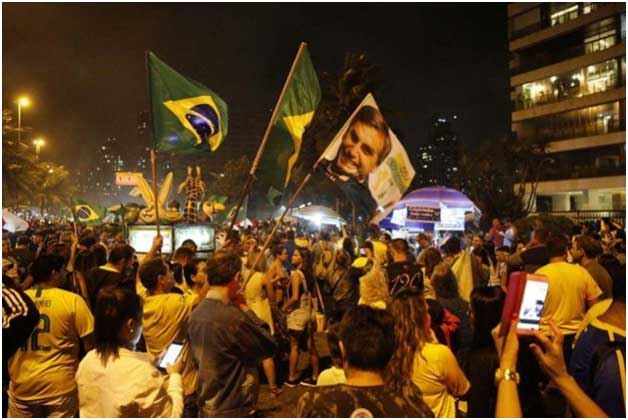
Supporters of president-elect Jair Bolsonaro celebrated his triumph in the early hours of Oct. 29, in front of the former captain’s residence on the west side of Rio de Janeiro. The far-right candidate garnered 55.13 percent of the vote and began his four-year presidency on Jan. 1, 2019. Credit: Fernando Frazão/Agencia Brasil

SAO PAULO, Brazil, Aug 29 2019 (IPS) – The crisis of regional and multilateral institutions goes hand in hand with the international rise of right-wing populism. In the US, the UK, Russia, Italy, Poland, Hungary, Turkey, the Philippines and Brazil, we are experiencing the rise of right-wing populist politicians who throw headline-grabbing barbs at global compromises and the negotiating processes of supranational institutions such as the UN.


The more countries succumb to right-wing populism, the lower the chances of curbing climate change and social inequality and triggering the transition to a sustainable economic model.

While criticism of economic globalisation came predominantly from the left in the past, it’s currently becoming the core narrative of the Right. All over the world, right-wing populists are making protectionism the key theme of their regime.

They are using frustration with the social upheavals of neoliberal globalisation as a narrative. Job losses due to relocations, the decline of whole industrial sites, concerns about uncontrolled immigration and the search for identity in a multipolar world are skilfully exploited. The result is a historic, authoritarian-style populist ‘backlash’.

Despite their anti-globalisation rhetoric, however, the right-wing populists are not convincing protagonists against free trade. Rather, they are usually aligned with or even part of economic and financial elites. Their target group is the lower middle class who often does not actually benefit from their policies.

People in this electoral group feel that they are net losers from globalisation. In the populists’ promises, they see compensation for the perceived and sometimes real loss of national sovereignty.

Katharina Hofmann De Moura

Right-wing populists are making inroads into the centres of political power because they focus on the issues that are causing uncertainty and growing inequality: fear of downward social mobility, unemployment and lack of prospects.

The globalisation of right-wing populism

Alignment of these global right-wingers is progressing apace. For instance, current Brazilian president Jair Bolsonaro based his election campaign on Donald Trump’s strategy. ‘The Movement’, headed by Steve Bannon, Trump’s former election campaign advisor, has successfully forged links in Europe and Latin America as well as the US.

The formula is always the same: building up the national economy as a bastion against foreign influence while attacking the left for supposedly neglecting the interests of the majority of the population in favour of a ‘politics of identity’ geared towards minorities and a snobbish urban electorate.

The Western model of liberal democracy, so heavily influenced by Germany in the post-war era, is visibly ailing.

The right-wing populists rely on dividing society and pit various population groups and their interests against each other. Brazil provides a powerful example of this. ‘Only vegans are interested in nature,’ was Bolsonaro’s response to accusations of large-scale environmental destruction.

Accordingly, ‘America First’ has become ‘Brasil Primeiro’. The focus on neoliberal economic policy is underpinned with contemptuous remarks against minorities, extending as far as incitement to violence. Society is extremely polarised and the centre is fading away.

In a WhatsApp campaign focused on inadequate public safety and spiralling corruption, Bolsonaro managed to win the elections in the largest and, until the controversial removal of Dilma Roussef in 2016, most progressively governed country in Latin America.

The Brazilian election campaign is a good example of how right-wing movements use ‘social’ media to get closer to the people. They convey a sense of direct influence and apparent power and portray themselves on Twitter as ‘down-to-earth’.

Denial, denial, denial

Science and facts are flatly denied. For instance, Brazil’s foreign minister Ernesto Araujo has dismissed climate change as a ‘Communist invention’. This statement echoes Trump’s anti-climate ideology.

Bolsonaro denies the authenticity of satellite images that show how deforestation of the Amazon has doubled since he took office, and summarily dismissed the director of the renowned INPE institute (Instituto Nacional de Pesquisas Espaciais) when it published the corresponding data.

Historical denial is also part of the package, such his ‘own account’ of the military dictatorship, shamelessly praising torture. Right-wing populist movements manipulate citizens and employ an anti-intellectualism, a hatred of the so-called ‘elite’ – which obviously means the educational rather than the economic elite.

The right-wing populist is a self-styled ‘straightforward man’ of the people. The anti-politician is coming to the fore. Ideological confrontation is the aim, not least in order to deflect from the results of his own economic policy – Brazil remains mired in an economic crisis, with growth of just 0.8 per cent.

The rise of right-wing populism is exacerbating the crisis of the international order. The unprecedented rise of China is weakening Europe’s position as a global democratic power, while also challenging the decades-long formula of ‘democracy combined with economic growth’.

Economic development just seems to be achievable more quickly without democracy, as democratic processes require votes and compromises and everything is based on dialogue. That’s why many countries in the South admire the rise of China and not division-wracked Europe.

The Western model of liberal democracy, so heavily influenced by Germany in the post-war era, is visibly ailing. Many analysts are already talking of the end of the liberal international order. Pressure on the European states will grow, as the upcoming emerging nations show no ambitions to assume regional or multilateral responsibility.

For instance, the Brazilian president says, ‘The Amazon is ours, not yours,’ and brooks no criticism from Europe. No international responsibility and no external interference is the guiding principle of authoritarian rulers.

Although it is currently weakened, Brazil has a well-organised left-wing civil society as well as trade unions and the Workers’ Party.

Gone is the optimistic era of global governance that only recently was largely shaped by the BRICS alliance (Brazil, Russia, India, China and South Africa). BRICS embodied the ‘rise of the South’, aimed at building a better world on an equal footing with the North.

The euphoria of multilateralism has since faded away. Whereas there were still hopes in the early 2000s that the emerging nations would become ‘anchor countries’, taking responsibility for regional integration and democratisation, most of their heads of state are now populists.

They too are looking for new alliances, but under different premises. So, the world is indeed converging, but only because of a growth in populism in Europe rather than an upturn in democracy in the South. Whole new alliances are being forged.

For instance, on the UN Human Rights Council, Bolsonaro is backing the Arab nations, which criticise the term ‘gender’ and jointly aim to stand up for ‘traditional family values’.

So what’s left for the left?

Left-wing governments cannot resolve this dilemma in the short term. The left’s partly self-inflicted loss of power because of its naive embracing of globalised free trade has been underestimated.

Now, business owners like Blackrock and the large multinationals have hit on a hitherto unknown form of capital accumulation that produces a form of wealth redolent of feudal times. Big corporations control social media, enabling them to build up their own influence even more and further undermine that of politicians (a phenomenon now known as ‘corporate capture’).

According to research by the Folha de São Paulo newspaper, owners of large stores and restaurant chains paid 12 million reais (€3 million) per WhatsApp campaign to service providers, ensuring mass distribution of lots of fake news against the Workers’ Party (Partido dos Trabalhadores) in the Brazilian election campaign. Bolsonaro’s supporters then forwarded this fake news to their individual contact lists in a snowball process.

Democratic politicians were no match for the right in terms of their method – but that’s alright, as it is illegal. Before the 2018 elections, election campaign financing by companies was banned for the first time in Brazil’s history. The above-mentioned business owners had to pay fines, yet the elections were declared valid.

However, the Brazilian left is using social media to mobilise protests, for example against cuts to the education budget and health and social programmes, against liberalisation of weapons laws, in favour of women’s and LGTBI rights, and against an unfair pension reform.

Although it is currently weakened, Brazil has a well-organised left-wing civil society as well as trade unions and the Workers’ Party. And they will not readily give into right-wing populism.

  Source

Tackling Inequality: A Focus on Cities can Improve Upward Economic Mobility

Civil Society, Democracy, Development & Aid, Editors’ Choice, Global, Global Governance, Headlines, Inequity, Population, TerraViva United Nations

Opinion

Tarik Gooptu is in his second and final year of the master’s of philosophy in economics at the University of Oxford. Originally from Washington, DC, he received his bachelor’s degree from the University of Michigan in economics and political science*.

OXFORD, UK, Jul 31 2019 (IPS) – Tackling inequality in the 21st century requires us to understand and address barriers to upward mobility that segments of people face within countries. In a world with high and increasing levels of urbanization, the conversation on challenges to mobility must start with cities.


By addressing the drivers of inequality in cities, policymakers can alleviate conditions that perpetuate within-country inequality. Efficiently planning public transportation investments to target metropolitan communities with low connectivity is a crucial step to reducing disparities in upward mobility.

Doing this provides low-income residents with improved access to jobs, schools, hospitals, and other benefits of living in an urban area. A smart urban planning framework, enabled by effective partnership between the public and private sector, would enable citizens to enjoy a more level playing field.

As a result, cities can transform into drivers of global economic convergence in living standards.

In the past three decades, the world has experienced a global convergence between countries, mainly due to increased international trade, advancements in technology, and economic integration.

However, these same factors have led to a relatively new phase of inequality seen in the 21st century. Works by Atkinson, Piketty, and Saez (2011) and Lakner and Milanovic (2016) have depicted a world suffering from inequality within countries, characterized by disparities between “gainers” and “losers” in the globalized economy.

People have proposed multiple explanations for this, including skill-biased technological change, increased automation, and outsourcing of jobs to regions with cheaper labor—to name a few. Perhaps somewhat overlooked are the large disparities between people living within the cities themselves.

Why cities? Rapid urbanization and severe intracity inequality are the two primary reasons policymakers should focus on cities when thinking about how to tackle the broader issue of inequality.

According to the World Urbanization Report, 55 percent of the global population resides in urban areas—an increase from 30 percent in 1950. The global urbanized population is projected to increase even further, to 68 percent, by 2050 (UN 2018).

In addition, the UN Population Division reports that “urbanization has been faster in some less developed regions compared to historical trends in the more developed regions” (UN DESA 2018. The convergence in the growth of urbanization, between developing and advanced economies, also suggests that the problems of cities increasingly affect countries at all income levels.

In addition to rapid urbanization, cities have become a locus of the most severe inequality we see today. A 2014 article by Kristian Behrens summarizes the issue of inequality within cities.

Behrens shows that within-country Gini indexes are highest as population densities increase and that under current conditions, cities tend to disproportionately reward people in the top income percentiles (Behrens 2014). In addition, cities draw people primarily from the top and bottom of the income distribution.

The global economic restructuring, outlined above, is expected to create more polarized income distribution within countries. This, combined with Behrens’s evidence, suggests that inequality within cities is expected to worsen, under current conditions.

The countries of the world are simultaneously experiencing unprecedented urbanization and severe inequality. While cities are currently the nexus of the worst inequality, there are opportunities to convert them into means for economic convergence.

The concept of “agglomeration economies” is summarized well by Edward Glaeser as the benefits realized from people and firms locating close to one another, in cities and industrial clusters, which are primarily gained through reduced transportation costs (Glaeser 2010).

But some areas in cities are not as well connected as others. This drives disparities between people in metropolitan localities. In order to address this, policymakers must address inequality of access to jobs and services between communities of different income status.

Underinvestment in roads, buses, train lines, and subways can cut off districts within large cities from jobs, education, and services. Higher mobility costs, in the form of longer commute times and lack of affordable transportation, are barriers to the upward mobility of lower-income people in cities.

Local governments and the private sector can work together to improve access to jobs and services by building a better public transportation infrastructure within cities. However, misallocation of both land and public resources worsens conditions for marginalized communities, contributing to intracity inequality.

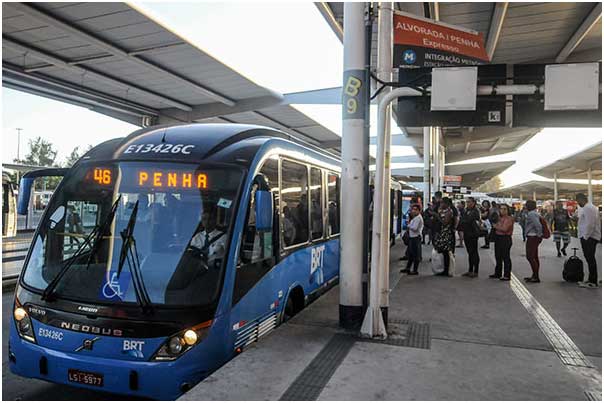
The 2016 Rio Olympics, which have been heavily criticized for putting the city in an adverse fiscal situation, is as an example of how misallocation of public resources can actually perpetuate inequality in a city. Rio de Janeiro’s bus rapid transit (BRT) system is a designated-lane integrated bus system planned and funded via a public-private partnership.

City officials said that Rio’s BRT was needed to help transport Olympic spectators and will provide long-term rapid and affordable travel for city residents. While Rio’s BRT successfully reduced average transportation costs, its routes served to aggravate inequality between high- and low-income citizens.

An urban planning study conducted by the Fluminese Federal University shows how Rio’s major daily traffic flows run from lower-income neighborhoods (in the north and west) to downtown Rio (South Zone and part of the North Zone), where 60 percent of Rio’s formal employment is concentrated (Johnson 2014).

But, instead of providing lower-income residents access to the city center, the BRT allocates routes to an upper-income residential area. Jobs here are predominantly in the informal sector: not registered with the government, with lower salaries, and without health or other benefits.

Furthermore, the city government cut spending on health and police as a result of going over budget on Olympics expenditures, which worsened the health and safety of the poor.

Rio’s BRT system exemplifies how public infrastructure can be misallocated, without proper planning and an understanding of citizens’ demand for jobs and services. However, when policymakers implement well-planned public infrastructure, it can combat inequality within cities.

Curitiba’s BRT is a well-known example of effective urban planning yielding positive outcomes for city expansion. Planning of the bus line construction was orchestrated by the Institute for Research and Urban Planning of Curitiba in the 1970s.

Funding and implementation were conducted via a public-private-partnership between the Urban Development Agency of Curitiba, and private bus companies that operate the routes. The partnership model allows policymakers to develop creative ways to ease the cost burden of providing public infrastructure.

The result of Curitiba’s plan was a low-cost, fast, and efficient means of transportation, running on green energy, that has operated successfully for 35 years. A diagram from a 2010 World Resources Institute report shows that the integrated transit system provides a means for citizens in all areas of the expanding city to access all parts of it.

However, despite its initial success, even Curitiba’s sustainable transit system faces difficulties. A 2012 CityLab article says that in recent years, the city has failed to integrate its growing suburbs into its BRT system (Halais 2012).

As a result, low-income residents are cut off while upper-income residents switch to cars—an inconvenience for everyone that harms the poor more severely. Curitiba’s example shows that policymakers require a constant and proactive awareness of cities’ changing needs.

With available economic data and the implementation of origin-destination surveys, we can better understand where populations need to be connected and their demands for particular services.

An efficient way to tackle inequality is to address lack of mobility in cities, which drives unequal access to jobs, education, and services. Improving access to public infrastructure allows people of all income levels to benefit from the agglomeration effects of living in an urban area.

Well-planned public transportation systems bring cities closer to this goal through better access for low-income populations to jobs, schools, and hospitals in the city center. Thus, growing cities can serve as sources of economic convergence rather than divergence.

Public transportation not only helps lower inequality, it also helps reduce cities’ carbon footprint. As many megacities begin to suffer the ill effects of heavy pollution, policy that addresses both inequality and sustainability would be welcome.

*Following a global essay competition for graduate students on how best to tackle inequality, Tarik Gooptu’s submission was selected as the runner-up. To learn of future Finance & Development ( F&D) essay competitions, sign up for the newsletter here. F&D is a publication of the International Monetary Fund (IMF).