Racist Political System Thwarts Candidacy of Mayan Woman in Guatemala

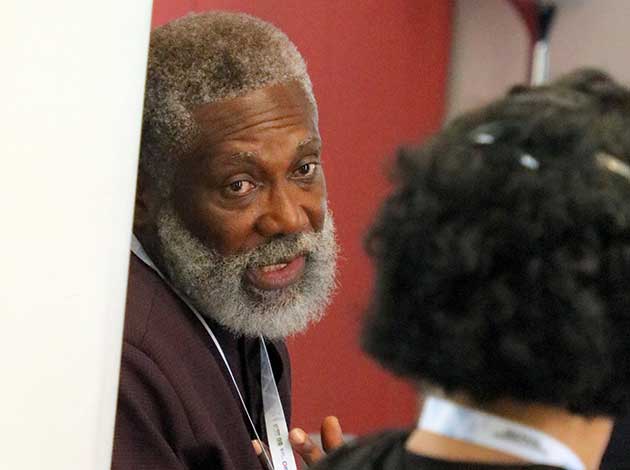
Thelma Cabrera and Jordán Rodas launch their candidacy for the presidency and vice presidency of Guatemala in December 2022, which has been vetoed by the courts, in a maneuver that has drawn criticism from human rights groups at home and abroad. CREDIT: Twitter

Thelma Cabrera and Jordán Rodas launch their candidacy for the presidency and vice presidency of Guatemala in December 2022, which has been vetoed by the courts, in a maneuver that has drawn criticism from human rights groups at home and abroad. CREDIT: Twitter

By Edgardo Ayala
SANTA CATARINA PALOPÓ, Guatemala, Mar 4 2023 (IPS)

Centuries of racism and exclusion suffered by indigenous peoples in Guatemala continue to weigh heavily, as demonstrated by the denial of the registration of a political party that is promoting the presidential candidacy of indigenous leader Thelma Cabrera in the upcoming general elections.


On Mar. 2, the Guatemalan Constitutional Court ruled against Cabrera’s party, the leftist Movement for the Liberation of the Peoples (MLP), which had appealed a Feb. 15 Supreme Court resolution that left them out of the Jun. 25 elections.“There is a racist system and structure, and we indigenous people have barely managed to start climbing the steps, but with great difficulty and zero opportunities.” — Silvia Menchú

Cabrera’s candidacy and that of her vice-presidential running-mate Jordán Rodas are now hanging by a thread, with their hopes depending on a few last resort legal challenges.

The deadline for the registration of candidates is Mar. 25.


A centuries-old racist system

Guatemala’s political and economic elites “are looking for ways to keep her (Cabrera) from registering; everyone has the right to participate, but they are blocking her,” Sonia Nimacachi, 31, a native of Santa Catarina Palopó, told IPS. The municipality, which has a Cachiquel Mayan indigenous majority, is in the southwestern Guatemalan department of Sololá.

“We would like a person with our roots and culture to become president, I think it would help our people,” added Nimacachi, standing by her street stall in the center of town.

Nimacachi, a Cachiquel Mayan woman, sells “granizadas” or snow cones: crushed ice sweetened with syrup of various flavors, perfect for hot days.

“There is a racist system and structure, and we indigenous people have barely managed to start climbing the steps, but with great difficulty and zero opportunities,” Silvia Menchú, director of the K’ak’a Na’oj (New Knowledge, in Cachiquel) Association for the Development of Women, told IPS.

The organization, based in Santa Catarina Palopó, carries out human rights programs focused on indigenous women.
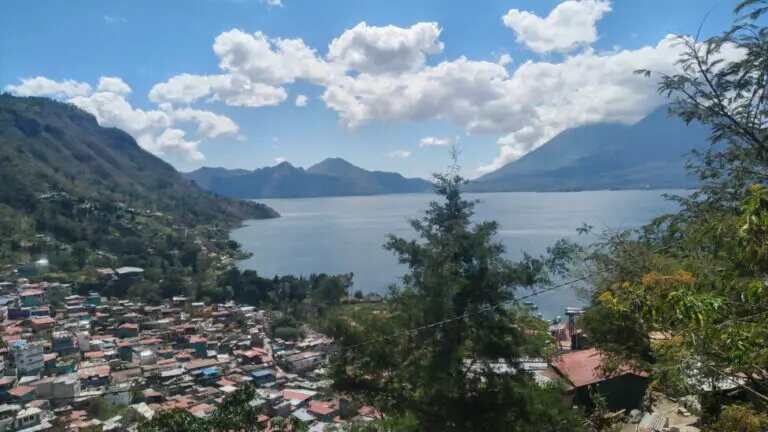
 

Santa Catarina Palopó, a picturesque Cachiquel Mayan town located on the shore of Lake Atitlán in the southwestern Guatemalan department of Sololá, is preparing for the upcoming general elections, where voters will choose a new president, vice president, 160 members of Congress, 20 members of the Central American Parliament, as well as 340 mayors. CREDIT: Edgardo Ayala/IPS

Santa Catarina Palopó, a picturesque Cachiquel Mayan town located on the shore of Lake Atitlán in the southwestern Guatemalan department of Sololá, is preparing for the upcoming general elections, where voters will choose a new president, vice president, 160 members of Congress, 20 members of the Central American Parliament, as well as 340 mayors. CREDIT: Edgardo Ayala/IPS


“Racism has prevailed, we are mistreated everywhere by the government and the authorities, we are seen as people with little capacity,” said Menchú, of the Maya Quiché ethnic group.

An alleged illegality attributed to Rodas, the vice-presidential candidate, was the cause for denying the MLP the right to register for the elections.

Analysts and social organizations perceive obscure maneuvering on the part of the powers-that-be, who cannot accept the idea that an indigenous woman is trying to break through the barriers of the country’s rigid, racist political system.

Cabrera is a 51-year-old Mayan Mam woman who is trying for a second time to run in the unequal fight for the presidency of this Central American country of 14.9 million inhabitants.

Of the total population, 43.7 percent identify as indigenous Mayan, Xinca, Garífuna and Afro-descendant peoples, according to the 2018 census.

In the 2019 elections Cabrera came in fourth place, winning 10 percent of the total votes cast.

In the Jun. 25 general elections voters will choose a new president for the period 2024-2028, as well as 160 members of Congress and 20 members of the Central American Parliament, and 340 mayors.

In Guatemala, the ancient Mayan culture was flourishing when the Spanish conquistadors arrived in the 16th century.

The descendants of that pre-Hispanic civilization still speak 24 different autochthonous languages, most of which are Mayan.

Years of exclusion and neglect of indigenous rural populations led Guatemala to a civil war that lasted 36 years (1960-1996) and left some 250,000 dead or disappeared.
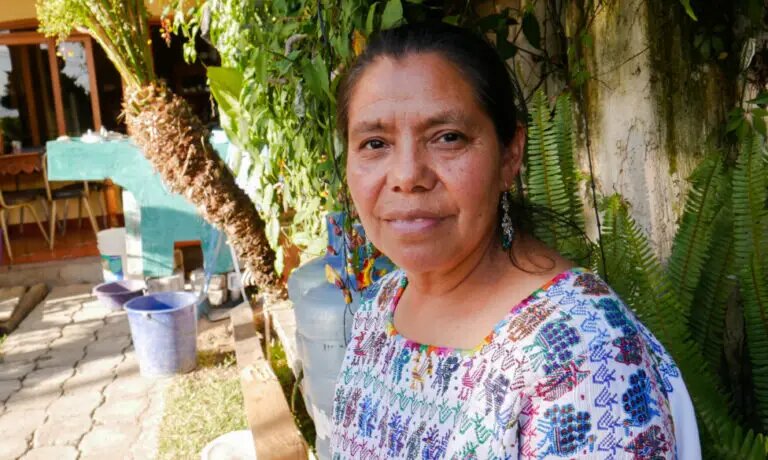
 

The presidential candidacy of Thelma Cabrera, of the Movement for the Liberation of the Peoples (MLP), must be allowed by the Guatemalan authorities, so that the indigenous population is represented in the Jun. 25 elections, says Silvia Menchú, director of the K’ak’a Na’oj (New Knowledge, in Cachiquel) Association for the Development of Women. CREDIT: Edgardo Ayala/IPS

The presidential candidacy of Thelma Cabrera, of the Movement for the Liberation of the Peoples (MLP), must be allowed by the Guatemalan authorities, so that the indigenous population is represented in the Jun. 25 elections, says Silvia Menchú, director of the K’ak’a Na’oj (New Knowledge, in Cachiquel) Association for the Development of Women. CREDIT: Edgardo Ayala/IPS


A blatant maneuver

The Supreme Electoral Tribunal’s (TSE) rejection of the MLP arose from a complaint against Rodas, who served between 2017 and 2022 as head of the Office for the Defense of Human Rights.

In that office, Rodas strongly questioned alleged acts of corruption by the current government of Alejandro Giammattei, who took office in January 2020.

The criminal complaint against the vice-presidential candidate was filed on Jan. 6 by the current head of the Office for the Defense of Human Rights, Alejandro Córdoba.

After Cabrera and Rodas attempted to register as candidates, Córdoba said he had “doubts” about some payments allegedly received by his predecessor in the Office for the Defense of Human Rights.

His “doubts” apparently had to do with some alleged illegality on the part of Rodas, but since Córdoba has not described it in detail, his statements have been nothing but a weak half-hearted accusation.

However, that was enough for the Supreme Electoral Tribunal to reject the MLP on Feb. 2, which triggered protests by rural and indigenous people, who blocked roads in at least 12 parts of the country.

According to Guatemalan law, all candidates for popularly elected positions must have a document that attests that they have no pending legal issues.

But analysts have pointed out that this document should only take into account actual legal rulings handed down by courts, and not “doubts” vaguely expressed by some government official.

By vetoing Rodas, the TSE automatically bars his presidential runningmate Cabrera, who may actually be the ultimate target of the maneuver, since she is the one who is trying, once again, to win the votes of the indigenous population.

On Feb. 15, the MLP runningmates filed a provisional injunction with the Supreme Court, so that it would take effect immediately and overrule the TSE’s decision, while the Supreme Court studied and resolved the matter in depth.

But the injunction was rejected, so the MLP appealed the next day to the Constitutional Court, asking it to review the case and order the Supreme Court to admit the provisional injunction, to allow the fight for the registration of Cabrera and Rodas to continue forward.

But the appeal was denied Thursday Mar. 2 by the Constitutional Court.

However, the Supreme Court has not yet issued a final ruling on the injunction, but only a provisional stance. This means that when it is finally issued, if it goes against the MLP, Cabrera and Rodas could once again turn to the Constitutional Court, in a last-ditch effort.

But it seems as if the die is already cast.

In a tweet on Thursday Mar. 2, Rodas wrote: “The constitutional justice system has denied my constitutional right to be elected and denies the population the right to choose freely. We await the Supreme Court ruling on the injunction and the position of the @IACHR (Inter-American Commission on Human Rights). Our fight continues.”
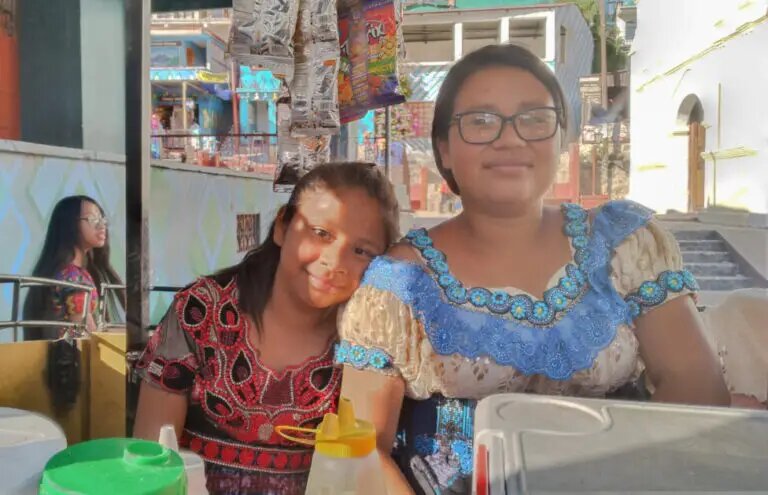
 

Guatemala's political and economic elites are determined to block the candidacy of indigenous leader Thelma Cabrera, says Sonia Nimacachi, a Cachiquel Mayan woman selling snowcones in Santa Catarina Palopó, in the country's southwest. She would vote for Cabrera again, if her candidacy is finally allowed. CREDIT: Edgardo Ayala/IPS

Guatemala’s political and economic elites are determined to block the candidacy of indigenous leader Thelma Cabrera, says Sonia Nimacachi, a Cachiquel Mayan woman selling snowcones in Santa Catarina Palopó, in the country’s southwest. She would vote for Cabrera again, if her candidacy is finally allowed. CREDIT: Edgardo Ayala/IPS


Cabrera’s second attempt

This is Cabrera’s second attempt to run for the presidency. Her first was in the 2019 elections, when she failed to fully capture the indigenous vote.

“I would dare to think that the majority of the indigenous population did not vote for her because of those instilled prejudices: that she is a woman and also indigenous, not a professional, are issues that have nothing to do with the dignity and the quality of a person,” argued Silvia Menchú.

She added that the right-wing parties have been allies of the country’s evangelical churches, through which they keep in submission segments of the indigenous population that end up supporting conservative parties, rather than a candidate who comes from their Mayan culture.

To illustrate, she said that in Santa Catarina Palopó, a town of 6,000 people, there is only one school to cover primary and middle-school education, “but there are about 15 evangelical churches.”

The TSE’s veto of the registration of Cabrera and Rodas puts the credibility of the elections at risk, Human Rights Watch (HRW) and the Washington Office on Latin America (WOLA) warned on Feb. 27.

In a joint statement, the two organizations said the electoral authority’s rejection of aspiring candidates “is based on dubious grounds, puts political rights at risk, and undermines the credibility of the electoral process.”

“The electoral process is taking place in the context of a decline in the rule of law, in which the institutions responsible for overseeing the elections have little independence or credibility,” they stated.

In addition to Cabrera and Rodas, the TSE also rejected the registration of right-wing candidate Roberto Arzú, because he allegedly began campaigning too early.

HRW and Wola added that “efforts to exclude or prosecute opposition candidates create unequal conditions that could prevent free and fair elections from taking place.”

Meanwhile, the TSE did endorse, on Feb. 4, the presidential candidacy of Zury Ríos, daughter of General Efraín Ríos Montt, who governed de facto between 1982 and 1983.

In 2013 the general was found guilty of genocide and crimes against humanity for the massacre of more than 1,400 indigenous Ixil people in the north of the country.

He was sentenced to 80 years in prison, but the Constitutional Court later revoked the ruling. Ríos Montt died in April 2018.

Article 186 of the Guatemalan constitution prohibits people involved in coups d’état, or their relatives, for running for president.

Meanwhile, snowcone vendor Sonia Nimacachi said in the central square of Santa Catarina Palopó that she still held out hope that Cabrera would be able to register as a candidate.

“If they let her participate, I would vote for her again,” she said, while serving a customer.

Source

Democracy on the Blink

Asia-Pacific, Civil Society, Crime & Justice, Democracy, Featured, Global Governance, Headlines, Human Rights, TerraViva United Nations

Opinion

Food insecurity in Sri Lanka has increased dramatically due to two consecutive seasons of poor harvests, foreign exchange shortages, and reduced household purchasing power. Amidst Sri Lanka’s worst economic crisis since independence, the UN revised its joint Humanitarian Needs and Priorities (HNP) Plan, appealing for more life-saving assistance to aid 3.4 million people. November 2022 Credit: UNICEF/Chameera Laknath

LONDON, Feb 3 2023 (IPS) – On February 4, Sri Lanka commemorates 75 years of Independence. But it will not be the extravaganza of the past years, the minaturised imitations of the grand displays on Moscow’s Red Square or China’s Tiananmen Square.


Still, a critical question has been reverberating in the community ever since the government announced a scaled down celebration to commemorate 75 years since Britain relinquished power in 1948.

After defaulting on the country’s debt servicing last April for the first time in its post-independence history and being forced to resort to massive printing of money to meet state expenditure, does Sri Lanka need to celebrate independence day this year however downsized it would be?

Particularly so, when President Ranil Wickremesinghe’s government itself claims Sri Lanka is struggling economically and it would take years to recover from its current chaos created by leaders who inexorably pushed it to the tip of the abyss with stupid economic policies, wasteful expenditure and wide- scale corruption and fraud.

While imposing unbearable new taxes and other restrictions on the daily lives of the people, driving them further into penury with school children going without meals, fainting in their classrooms and in need of medical treatment which itself is becoming scarce, the country’s leaders don’t seem short of resources for celebrations.

Even the country’s diplomatic missions will be holding their annual independence day celebrations as the invitation I received indicated, feasting their countrymen as best as they could.

Yet over the last couple of months the government has been selling the story that it has no funds to pay for the Local Government elections due in March. A strange enough claim after President Ranil Wickremesinghe, in one of his other roles as finance minister, presenting the budget for 2023 last November allocated funds for the election and parliament, which oversees public expenditure, approved it.

Now, the very persons who allocated money just three months ago claim to lack funds for a constitutionally required election. Punning on the old Harry Belafonte calypso, there is a hole in the budget, said some wag on social media.

It is this contradiction in government conduct that an already enraged people find inexcusable. Having got rid of one elected president– Gotabaya Rajapaksa– who surreptitiously fled the country last July when mounting peoples’ protests demanded the Rajapaksa clan quit the government, they find themselves confronted with what Sri Lankans have come to see as a Rajapaksa clone– and now derisively call him Ranil Rajapaksa– thrust into the presidency to keep the family’s political fires alight.

The Roman poet Juvenal dismissively called the delusionary performances staged by the Roman emperors of the time to distract their discontented citizenry, “panem et circensus”- bread and circuses.

Bread, like some other essentials, might be scarce or priced beyond the reach of many of its 22 million people. A few months back, the UN agency UNICEF reported that 5.7 million Sri Lankans including 2.3 million children, are in need of humanitarian assistance and the numbers are likely to rise in the coming days.

But the country’s leaders are not beyond performing their own circus acts. A few days back President Wickremesinghe appointed two more cabinet ministers bringing the total to 22.

Within hours Sri Lankans with their innate sense of humour were on social media branding the new cabinet “Ali Baba and the 22” with the doors to the cabinet still open for more acolytes chosen not for integrity and competence but loyalty.

Before the two new ministers fattened the cabinet, splicing off the portfolios of two existing ministers, President Wickremesinghe a couple of months ago appointed 37 state ministers leaving room for three more.

Sri Lanka’s bloated ministerial ranks would surely be one of the largest in today’s parliamentary democracies. Not only is it large in numbers but the perks offered to ministers and state ministers is stunningly staggering–salaries, free housing, several expensive vehicles with fuel, free utilities such as electricity, water, telephones up to a point, several personal staff with paid salaries, armed personal security with escort vehicles, a special allowance for each day they attend parliament, state pension after five years and other facilities not generally known.

While the government is prepared to splash state funds on bolstering party cadres and lickspittle who have creamed off state assets, in the last couple of months it has been using every ruse in the books-and some which are not in them- trying to deprive the people of their constitutional right to the franchise, by blocking the Local Government elections due shortly.

This election, last held in 2018, is for 340 municipal councils, urban councils and village bodies is scheduled for March 9—the date set by the independent Election Commission last month.

But as the day for the election, as constitutionally required, neared, the attempts to stymie it began with grandees of President Ranil Wickremesinghe’s United National Party (UNP) and the Rajapaksa clan-run Sri Lanka Podujana Peramuna (SLPP) that is propping up Wickremesinghe with its parliamentary majority, asserting that economic recovery must precede elections.

Ministers and even state officials were trotting out excuses that there was no money to fund elections, expecting the populace to have forgotten the budgetary allocation passed by parliament a few months back.

As this was being written, internationally-known legal academic and former foreign minister Prof GL Peiris was telling the media the government had made seven attempts to try and stop the election including an affidavit to the Supreme Court filed by the secretary to the finance ministry claiming the state of the economy precluded holding elections right now.

The latest ruse was a law called the Election Expenses Bill to control spending for elections hurriedly passed by parliament. If, as Justice Minister Wijeyadasa Rajapaksa said, this proposal has been hanging fire for years, why the rush now, the opposition and anxious voters asked.

Like the opposition, the public too smelled a rotten rat. It was seen as another attempt to derail the elections by calling for the provisions of the bill be incorporated which would call for more time.

Despite all the public bravura, both the Rajapaksa-controlled SLPP and Wickremesinghe-led UNP which was swept into oblivion at the 2020 general elections, fear that given the mood of the country which rose in mass protests for some seven months last year leading to the resignation of President Rajapaksa and three of his brothers from the cabinet, they would suffer ignominious defeat.

Especially so the UNP which lost every single seat including that of party leader Wickremesinghe who managed to creep back into parliament one year later through a clause in the electoral law.

Not only would a poor electoral performance by the SLPP and UNP which have now joined hands make governance difficult and troublesome, it would also strengthen public opposition both to the Rajapaksas and President Wickremesinghe who many argue-and rightly so-as a leader rejected by the country two years ago and lacking a popular mandate to rule the country.

So what one sees now is a symbiotic relationship between the executive headed by Wickremesinghe and the legislature controlled by the Rajapaksas, running the country and using outdated laws- some dating back to British times- to beat back public dissent, employing the security forces to trample on the constitutionally guaranteed freedoms of the people- free speech and expression, of association and assembly and peaceful protest.

It also raises issues about the independence of the Attorney-General and some of the independent institutions set up under the constitution which are believed to have come under pressure during the Wickremesinghe presidency.

With two arms of the state- the executive and legislature under the control of the Wickremesinghe-Rajapaksa- led cabal and backed by the security forces as recent event have shown, Sri Lanka’s increasingly beleaguered populace can only rely for justice on the third arm of the state- an independent judiciary.

Over the years the judiciary has, now and then, been under pressure from dictatorial leaders who have not been averse to tamper with justice and the judicial process, sometimes denying impartial, independent judges their rightful place as chief justice or appointing friends or those amenable to the judiciary.

But two recent judgements by the Supreme Court have resurrected public faith that the judiciary could be relied on to safeguard the constitution and the peoples’ constitutional and human rights against state abuse of the law and the battering and brutality by the security forces.

A few months back the government tried to push through a “Bureau of Rehabilitation Bill” ostensibly to help treat and rehabilitate drug addicts and other drug users. Under cover of that it hoped to incarcerate political dissidents, activists and others which state security would identify those they do not like as ‘trouble makers’.

So, it included among those to be included under the law “ex-combatants, members of violent groups, violent extremist person and any other person or group of persons”.

The Supreme Court saw through this as an attempt to round up any person the authorities considered a political nuisance and hold them without recourse to the law. The court struck down the clause.

Holding that the Bill as a whole violated the constitution, it said it could be acceptable if certain clauses were amended. One of the clauses it found repugnant was the one cited above which the court wanted deleted, leaving rehabilitation open only to drug dependent persons and those identified by law as in need of rehabilitation.

In mid-January the Supreme Court delivered a landmark verdict which held former president Maithripala Sirisena, secretary of the defence ministry, police chief and top- ranking intelligence officers, of dereliction of duty and “failure to act” when valid and clear intelligence was passed on by foreign sources of an impending terrorist attacks by Islamic extremists on churches on Easter Sunday in 2019.

Some 270 persons including foreigners were killed and several hundred wounded in these attacks on churches and Colombo hotels.

Since these were civil cases, President Sirisena was fined 100 million rupees and the others lesser amounts. Sirisena as a former president was no longer entitled to immunity, a lesson for other former and future presidents that they too are liable to civil and criminal action such as corruption and human rights violations once they cease to hold office.

These judicial judgments bring some hope to the people that the citadels of power are vulnerable and could be breached by a strong and upright judiciary, the only institution now left to protect and uphold the country’s democratic traditions and norms.

If the judiciary is badgered, the last resort is too bloody to contemplate.

Neville de Silva is a veteran Sri Lankan journalist who held senior roles in Hong Kong at The Standard and worked in London for Gemini News Service. He has been a correspondent for the foreign media including the New York Times and Le Monde. More recently he was Sri Lanka’s Deputy High Commissioner in London.

Source: Asian Affairs, London

IPS UN Bureau

  Source

What Does it take to Build a Culture of Equality & Inclusion at the UN? Reflections from Inside a Change Process

Civil Society, Democracy, Featured, Gender, Global, Global Governance, Headlines, Human Rights, TerraViva United Nations, Women in Politics

Opinion

“The Quilt in the Making”. Credit: Claudia Steinau

GENEVA, Oct 28 2022 (IPS) – The organisational is personal. Every day since the two of us were asked back in 2020 to co-lead the process of culture transformation at UNAIDS, the United Nations organisation which drives global efforts to end AIDS, we have both felt at our very core how crucial it has been to get it right.


The mission of UNAIDS is vital to ensuring the health and human rights of every person. Staff and partners need to be confident of a supportive and empowering culture that will enable their work.

A 2018 Report by an Independent Expert Panel had shone a light on what were important organisational shortcomings, leading to a comprehensive set of changes in leadership, systems and crucially, culture.

As the Culture Transformation process has got underway, the COVID-19 pandemic has brought unprecedented shifts in work, and a resurgence of global protests, including from the Black Lives Matter movement and for women’s rights, have a generated an inspirational momentum for action to tackle intersectional injustice.

Reflecting almost three years of UNAIDS culture transformation work, what stands out in particular for the two of us is how the “outer work” has required so much “inner work”. We have needed to be, and to help others be, our full selves, and to acknowledge what we don’t yet know of each other’s experiences.

The process has deepened our appreciation of how our differences, both personally and professionally, are a key strength, enabling each situation, each process, to be seen from a combination of unique angles, and how equality is crucial in enabling all these to be brought forth.

Creating safe spaces for our colleagues to speak about their lived experiences was transformative. We asked ourselves and those around us tough and tender questions. We had colleagues tell us they felt heard for the first time. Brave conversations helped colleagues to connect and to advance the tangible changes that matter most to them.

We understood the need for a common reference framework for all of us at UNAIDS. This has led to a first set of feminist principles that guide our way forward.

Through the process, it became ever more clear to both of us that culture transformation begins at the personal level. As a Malawian woman of African-Asian heritage, living and working in Latin America at this time, intersecting identities and multiple cultural heritage became for Mumtaz the centre of personal reflections.

In leading conversations on decolonizing the HIV Response, Mumtaz’s own colonization was calling for attention. For Juliane, too, this has been powerful journey: as someone who has experienced sexual assault in the workplace, this work is deeply personal, driven by a determination to build safe workplaces for everyone, including by addressing inequalities and unhealthy power balances. Our intersectional feminist approach has brought our experiences to our work.

But this work has also highlighted that whilst the organisational is personal, so too the personal is often dependent on the organisational. Engaging with intersectional feminist principles at the personal level was not enough.

That is why we were proud to help UNAIDS become the UN entity to put intersectional feminist principles at the core of its being. It is why vital work continues to integrate those principles into policies and practices to advance a workplace culture in which every individual can flourish.

As we have helped build a movement for change across six regions, engaged in conversation with more than 500 colleagues, and supported some 25 diverse teams in their own journey, we have recognised the centrality of the institutional level.

Cultural transformation is a long and challenging process that requires the tenacity and creativity of many. To weave the stories and aspirations of so many of the champions for change together while preserving their uniqueness, we have borrowed the quilt symbol that is iconic in the AIDS response.

As the change process evolves, new tiles will be added, others might fade or need repairing. But the work is not done. It is a ‘quilt in the making’ – individual and collective work, one tile at a time.

Mumtaz Mia and Juliane Drews have led UNAIDS Culture Transformation since May 2020.

Mumtaz is a Public Health expert with two decades of experience working to end AIDS. Juliane is a change management expert with 15 years of experience in developing inclusive and just organizations in which staff in all their diversity thrive.

The link to UNAIDS Culture Transformation here.

IPS UN Bureau

  Source

Public Development Banks Can’t Drag Their Feet When It Comes to Building a Sustainable Future

Civil Society, Climate Action, COVID-19, Democracy, Development & Aid, Economy & Trade, Environment, Gender, Global, Headlines, Human Rights, Inequality, Sustainability, TerraViva United Nations

Opinion

Civil society organisations at the Finance in Common Summit. Credit: Noel Emmanuel Zako

ABIDJAN, Ivory Coast , Oct 21 2022 (IPS) – A coalition of civil society organisations is demanding public development banks (PDBs) to take radical and innovative steps to tackle human rights violations and environmental destruction. No project funded by PDBs should come at the expenses of vulnerable groups, the environment and collective liberties, but should instead embody the voices of communities, democratic values and environmental justice.


The demands, part of a collective statement signed by more than 50 civil society organisations, come as over 450 PDBs gather in Abidjan, Ivory Coast, from October 19th, for a third international summit, dubbed Finance in Common.

The COVID-19 pandemic and climate emergency, coupled with human rights violations and increasing risks for activists worldwide, is bringing the need to change current practices into even sharper focus. While public development banks may drag their feet on addressing intersecting and structural inequalities, civil society organisations are taking actions aimed at creating dignified livelihoods by embedding development with concrete affirmative measures towards climate, social, gender, and racial justice.

PDBs cannot be reluctant to act. They need to hit the target when it comes to supporting the transformation of economies and financial systems towards sustainability and addressing the most pressing needs of citizens worldwide – from food systems to increasing support for a just transition towards truly sustainable energy sources. PDBs must recognise that public services are the foundation of fair and just societies, rather than encouraging their privatisation and keep austerity narratives alive.

9 out of 10 people live in countries where civic freedoms are severely restricted, and with an environmental activist killed every two days on average over the past decade, development banks have an obligation to recognize and incorporate human rights in their plans and actions, following a “do not harm” duty.

Civil society organisations at the Finance in Common Summit. Credit: Noel Emmanuel Zako

Communities cannot be left out of the door. They need to be given the space to play the rightful role of driving forces in the answers to today’s global challenges, without them PDBs will move backwards rather than forward – and this means more environmental degradation, less democratic participation, and to put it bluntly an even greater crisis than the one we are facing today. And nobody needs that.

The recommendations in the collective civil society statement emerge from a three-year process of engagement and exchange, involving civil society networks in an effort to shape PDBs policies and projects. You can find some of their words and messages below.

As the call for accountability grows, the Finance in Common summits are an opportunity for PDBs to show moral leadership and help remedy the lack of long-term collaborations with civil society, communities and indigenous groups, threatening to curtail development narratives and practices.

Here’s the messages from civil society organisations from around the globe directed at public development banks.

Oluseyi Oyebisi, Executive Director of Nigeria Network of NGOs (NNNGO) the Nigerian national network of 3,700 NGOs said: “The Sahara and Sahel countries especially have been facing the most serious security crisis in their history linked with climate change, social justice and inequalities in the region. Marked by strong economic (lack of opportunities especially for young people), social (limitation of equitable access to basic social services) and climatic vulnerabilities, the region has some of the lowest human development indicators in the world – even before the covid pandemic. Access to affected populations is limited in some localities due to three main factors: the security situation, the poor state of infrastructures and difficult geographic conditions. PDBs must prioritise civil society organisations and Communities initiatives supporting state programs of decentralization, security sector reforms and reconciliation. This will help reduce the vulnerability of populations and prevent violent extremism.”

Mavalow Christelle Kalhoule, Forus Chair and President of Spong, the NGO network of Burkina Faso said: “Development projects shape our world; from the ways we navigate our cities to how rural landscapes are being transformed. Ultimately, they impact the ways we interact with one another, with plants and animals, with other countries and with the food on our plates. The decisions taken by public development banks are therefore existential. Such responsibility comes with an even greater one to include communities directly concerned by development projects, those whose air, water and everyday lives are affected for generations to come. For this to happen, public development banks must reinforce their long-term efforts to create dialogue with civil society organisations, social movements and indigenous communities in order to fortify the democratic principles of their work. We encourage them to listen, to ask and to cooperate in innovative ways so that development stays true to its original definition of progress and positive change; a collective, participative and fair process and a word which has a meaning not for a few, but for all.”

Tity Agbahey, Africa Regional Coordinator, Coalition for human rights in development said: “Many in civil society have expressed concerns about Finance in Common as a space run by elites, that fails to be truly inclusive. It is a space where the mainstream top-down approach to development, instead of being challenged, is further reinforced. Once again, the leaders of the public development banks gathered at this Summit will be taking decisions on key issues without listening to those most affected by their projects and the real development experts: local communities, human rights defenders, Indigenous Peoples, feminist groups, civil society. They will speak about “sustainability”, while ignoring the protests against austerity policies and rising debt. They will speak about “human rights”, while ignoring those denouncing human rights violations in the context of their projects. They will speak about “green and just transition”, while continuing to support projects that contribute to climate change.”

Comlan Julien AGBESSI, Regional Coordinator of the Network of National NGO Platforms of West Africa (REPAOC), a regional coalition of 15 national civil society platforms said: “Regardless of how they are perceived by the public authorities in the various countries, non-governmental organisations (NGOs) contribute to covering the aspects and spaces not reached or insufficiently reached by national development programmes. Despite the undeniable impact of their actions on the living conditions of populations, NGOs remain the poor cousins of donor funding, apart from the support of certain philanthropic or charitable organisations. In such a context of scarce funding opportunities, aggravated by the health crisis due to COVID-19 and the subsequent economic crisis, Pooled Finance, which is in fact a paradigm shift, appears to be a lifeline for CSOs. This is why REPAOC welcomes the commitments made by both the Public Development Banks and the Multilateral Development Banks to directly support CSO projects and programmes in the same way as they usually do with governments and the private sector. Through the partnership agreements that we hope and pray for between CSOs and banks, the latter can be assured that the actions that will be envisaged for the benefit of rural and urban communities will certainly reach them with the guarantees of accountability that their new CSO partners offer”.

Frank Vanaerschot, Director of Counter Balance, said: “As one of this year’s organisers of the Finance in Common Summit, the EIB will brag about the billions it invests in development. The truth is the bank will be pushing the EU’s own commercial interests and promoting the use of public money for development in the Global South to guarantee profits for private investors. Reducing inequalities will be second-place at best. The EIB is also co-hosting the summit despite systemic human rights violations in projects it finances from Nepal to Kenya. Instead, the EIB and other public banks should work to empower local communities by investing in the public services needed for human rights to be respected, such as publicly owned and governed healthcare and education – not on putting corporate profits above all else.”

Stephanie Amoako, Senior Policy Associate at Accountability Counsel said: “PDBs must be accountable to the communities impacted by their projects. All PDBs need to have an effective accountability mechanism to address concerns with projects and should commit to preventing and fully remediating any harm to communities”.

Jyotsna Mohan Singh, Regional Coordinator, Asia Development Alliance said: “PDBs should have a normative core; they should start with the rights framework. This means grounding all safeguards into all the various rights frameworks that already exist. There are rights instruments for indigenous people, the elderly, women, youth, and people living with disability. They are part and parcel of a whole host of both global conventions and regional conventions. Their approach should be grounded in those rights, then it will be on a very firm footing.

Asian governments need to support, implement, and apply strict environmental laws and regulations for all PDBs projects. The first step is to disseminate public information and conduct open and effective environmental impact assessments for all these projects, as well as strategic environmental assessments for infrastructure and cross-border projects.”

IPS UN Bureau

  Source

Journalists, Under Threat, Need Safe Refuge Through Special Emergency Visas

Active Citizens, Civil Society, Democracy, Featured, Global, Headlines, Human Rights, IPS UN: Inside the Glasshouse, Press Freedom, TerraViva United Nations

Opinion

A video journalist covers a news event. Credit Unsplash/Jovaughn Stephens
 
Journalists and media workers are facing “increasing politicization” of their work and threats to their freedom to simply do their jobs, that are “growing by the day”, said UN Secretary-General Antonio Guterres, marking World Press Freedom Day, May 2022

NEW YORK, Oct 4 2022 (IPS) – “This woman sitting next to me, Maria Ressa, is a Nobel laureate and a convicted criminal,” said barrister Amal Clooney, who co-leads the international legal team representing Ressa. The founder of news website Rappler, Ressa has been targeted with a barrage of legal charges intended to stop her journalism in the Philippines.


During a conversation hosted by the Committee to Protect Journalists (CPJ) on the sidelines of the UN General Assembly high-level week, which concluded September 26, Clooney revealed that Ressa faces the possibility of imminent imprisonment in the Philippines.

“The only thing standing between her and a prison cell is one decision from the Philippines Supreme Court that could come as soon as in 21 days’ time,” said Clooney to an audience of news leaders, diplomats, and advocates.

She then appealed for prosecutors to drop the baseless charges and for newly elected President Ferdinand Marcos Jr. to issue a pardon. In May, CPJ wrote to Marcos requesting that he urgently take concrete steps to undo former President Rodrigo Duterte’s long campaign of intimidation and harassment of the press.

The conversation, led by CPJ President Jodie Ginsberg, also explored the broader misuse of laws increasingly deployed to silence the press across the world. Clooney and Ressa are both past recipients of CPJ’s Gwen Ifill Press Freedom award for their extraordinary and sustained achievement in the cause of press freedom.

UNGA week also served to gather legal experts, diplomats, and activists to discuss the plight of journalists forced to flee their homes and the responsibility of governments to provide safe refuge through special emergency visas.

During a high-level side-event hosted by the Czech Republic, CPJ’s Ginsberg joined Czech Foreign Minister Jan Lipavsky and deputy chairs of the High Level Panel of Legal Experts on Media Freedom to make the case for these visas.

CPJ has advocated for such visas in the past in line with recommendations by members of the Media Freedom Coalition, a group of 52 governments that support press freedom.

Ginsberg’s message: Governments must create special emergency visas for journalists to allow them to quickly evacuate and relocate to safety. The visas should be granted to individuals who are at risk due to their work keeping the public informed.

As Ginsberg noted, across the world, from Afghanistan to Nicaragua and Belarus to Myanmar, CPJ has worked on hundreds of cases of such journalists seeking safe refuge. There is no time to waste.

Journalists forced to flee often try to continue reporting in exile. Panelist Roman Anin, an exiled investigative journalist who runs news website iStories, shared his story of moving his newsroom out of Russia.

“When the war started, we had a choice between three options, either stay in Russia and stop our work, stay in Russia, continue our work and end up in jail, or relocate the newsroom,” he said. Anin said that in spite of the hardship of the relocation, his newsroom has been able to reach Russian audiences with stories on alleged war crimes committed in Ukraine.

Anin’s experience, and CPJ’s own work helping many other displaced journalists, demonstrate how critical it is for governments to prioritize emergency visas for swift relocation and safety. Refusing to do so not only impacts the lives of individual journalists, it is a blow to free expression and access to information globally.

In solidarity,

Gypsy Guillén Kaiser is CPJ Advocacy and Communications Director.

IPS UN Bureau

  Source

Uyghur Violations a Litmus Test for Global Governance & Rules-based International Order

Asia-Pacific, Civil Society, Crime & Justice, Democracy, Featured, Global Geopolitics, Global Governance, Headlines, Human Rights, TerraViva United Nations

Opinion

Protesters in Washington, DC, march against the alleged killing of Uyghur Muslims. June 2022. Credit: Unsplash/Kuzzat Altay

NEW YORK, Oct 3 2022 (IPS) – This week is a momentous one for the world’s premier human rights body. At stake is a resolution to decide whether the UN Human Rights Council in Geneva can hold a debate on a recently released UN report.


The report concludes that rights violations by China’s government in its Xinjiang region ‘may constitute international crimes, in particular crimes against humanity’.

Unsurprisingly, China’s government is doing everything in its power to scotch plans for a debate on the report’s contents. Its tactics include intimidating smaller states, spreading disinformation and politicising genuine human rights concerns – the very thing the Human Rights Council was set up to overcome.

The historic report, which affirms that the rights of Xinjiang’s Uyghur Muslim population are being violated through an industrial-level programme of mass incarceration, systemic torture and sexual violence, attracted huge controversy before it was released on 31 August 2022, minutes before the end of the term of the outgoing High Commissioner for Human Rights, Michelle Bachelet.

The report was supposedly ready in September 2021 but so great was the pressure exerted by the Chinese state that it took almost another year for it to be aired. Absurdly, the 46-page report includes a 122 page annex in the form of a rebuttal issued by China, rejecting the findings and calling into question the mandate of the Office of the High Commissioner for Human Rights.

The Office of the High Commissioner has asserted that the report is based on a rigorous review of documentary evidence with its credibility assessed in accordance with standard human rights methodology. The report’s recommendations are pretty straightforward: prompt steps should be taken to release all people arbitrarily imprisoned in Xinjiang, a full legal review of national security and counter-terrorism policies should be undertaken, and an official investigation should be carried into allegations of human rights violations in camps and detention facilities.

Nevertheless, a proposed resolution to hold a debate on the report’s contents in early 2023 is facing severe headwinds. A number of states inside and outside the Human Rights Council, united by their shared history of impunity for rampant human rights abuses – such as Cuba, Egypt, Laos, North Korea, Pakistan, Saudi Arabia, Syria and Venezuela – have already rallied to China’s defence in informal negotiations on the brief resolution.

What is most worrying is that China appears to be leaning on smaller states that make up the 47-member Human Rights Council by inverting arguments about politicisation of global human rights issues and projecting itself as the victim of a Western conspiracy to undermine its sovereignty.

If China were to have its way, it would be a huge setback for the Human Rights Council, which was conceived in 2006 as a representative body of states designed to overcome the flaws of ‘declining credibility and lack of professionalism’ that marred the work of the body it replaced, the UN Commission on Human Rights.

Former UN Secretary-General Kofi Annan, in his ground-breaking In Larger Freedom report, lamented that states sought membership ‘not to strengthen human rights but to protect themselves against criticism or to criticize others’.

Human Rights Council members are expected to uphold the highest standards in the protection and promotion of human rights. But our research at CIVICUS shows that eight of the Council’s 47 members have the worst possible civic space conditions for human rights defenders and their organisations to exist. In these countries – Cameroon, China, Cuba, Eritrea, Libya, Sudan, United Arab Emirates and Uzbekistan – human rights are routinely abused and anyone with the temerity to speak truth to power is relentlessly persecuted.

Regimes that serially abuse human rights may be motivated to block findings of investigations being aired on the international stage, but the international community has a collective responsibility to the victims. Civil society groups are urging Human Rights Council members to stand firm on the call for a debate on the China report.

Human Rights Council member states that assert the importance of human rights and democracy in their foreign policy are expected to vote in favour. Nevertheless, the influence of regional and geo-political blocs within the Council mean that the issue will essentially be settled by the decisions of states such as Argentina, Armenia, Benin, Brazil, Côte d’Ivoire, Gabon, Honduras, India, Indonesia, Malawi, Malaysia, Mexico, Paraguay, Senegal, Ukraine and Qatar.

China will undoubtedly pressure these states to try to get them to oppose or abstain in any vote that seeks to advance justice for the Uyghur people.

The stakes are particularly high for China’s mercurial leader, Xi Jinping, who is seeking to anoint himself as president for a third term – after abolishing term limits in 2018 – at the Chinese Communist Party’s Congress, which begins on 16 October.

Recognition of the systematic abuses to which Xi’s administration has subjected the Uyghur people would be considered an international affront to his growing power.

If China were to prevail at the Human Rights Council, it would be another blow to the legitimacy of the UN, which is already reeling from the UN Security Council’s inability to overcome Russia’s permanent member veto to block action on the invasion of Ukraine. So much – for the UN’s reputation, and for the hope that human rights violators, however powerful, will be held to account – is resting on the vote.

Mandeep S. Tiwana, is chief programmes officer and representative to the United Nations at global civil society alliance, CIVICUS.

IPS UN Bureau

  Source