The Precipitous Barbarisation of Our Times

Civil Society, Crime & Justice, Democracy, Education, Featured, Global, Globalisation, Headlines, Human Rights, Inequity, Migration & Refugees, TerraViva United Nations

Opinion

ROME, Jul 23 2019 (IPS) – When all is said and done, it appears that Thomas Hobbes, the 17th century English philosopher who had a dire vision of man, was not totally wrong.

From the frivolous to the serious, in just a week we have had four items of news which would not happen in a normal world. An English porn beauty with 86,000 followers on social media has put bottles of the water she bathes in on sale at 30 pounds a bottle and has sold several thousand bottles.


Roberto Savio

A survey in Brazil found out that 7% of citizens believe that the earth is flat (40 percent of American schools teach that the world was created in a week, according to the Bible, so there cannot be ancient civilisations) Another survey, this time of members of the British Tory party, who seem likely to elect Boris Johnson as prime minister (not exactly a triumph of reason) are so in favour of a “hard” Brexit that they do not care if this means the exit of Scotland and the end of the United Kingdom. Finally, in order to win election, US president Donald Trump has made racism one of his banners and, in a country of immigrants, this has given him an increase of 5 points in opinion polls.

There are so many signs of barbarisation that they would fill a book… and, as Euripides famously wrote: Whom the gods would destroy, they first make mad.

It is not a popular task, but we have to look at the reality and observe that, in the most scientifically and technologically developed period of history, we are living in times of precipitous barbarisation.

Social inequality has become the basis for the new economy. People have now lowered their expectations and are prepared to work part-time in a precarious job, where young people (according to the International Labour Organisation) can hope for a retirement pension of 600 euro a month. This has been accepted by the political system. We even have a study from Spain according to which, in the present housing market, nearly 87% of people need 90% of their salary just to rent a house.

Today, for many, a salary means survival, not a dignified life. The new economy has developed the so-called gig economy: you work to distribute food, but you are a co-entrepreneur without any of the rights of an employee, for an amount that will never allow you to marry. Children have grown accustomed to look at phenomena such as poverty or war as natural. And now politics are not based on ideas but on how you can successfully exploit the guts of the people, waving banners against immigrants (when we are witnessing a rapid fall in the birth rate) and splintering countries between ”We” who represent the people and “You” enemy of the country. The United States is the best example, where Republicans consider Democrats enemies of the United States. And this brings us to a central question: have Trump, Italy’s Matteo Salvini, Brazil’s Jair Bolsonaro and company not been elected democratically? And they are the symptom or the cause of the “populocracy” which is replacing democracy?

It is not possible to offer a sociological or historical study here. Let us just use a bite: we have gone from the Gutenberg era into a new era – the Zuckerberg era.

Those who greeted the arrival of the Internet with enthusiasm also did so because it would democratise communication and therefore bring about greater participation. The hope was to see a world where horizontal communication would replace the vertical system of information which Gutenberg made possible. Information was, in fact, a support for states and business that used it to reach citizens, who had no recourse to feedback. With Internet, people could now speak directly throughout the world and the propaganda which accompanied its arrival was not considered relevant: it is not important to know, it is important to know where to find It. Well, we have all the statistics on how Internet has affected the general level of culture and dialogue.

The attention span of people has declined dramatically. The majority of Internet users do not stay on an item more than 15 seconds. In the last five years, book volumes have been shortened by 29 pages. Today, articles longer than 650 words are not accepted by columnists’ services. The last meeting of editors of international news agencies decided to lower the level of news from the level of 22 years to that of 17 years. In Europe, the percentage of people who buy at least one book a year now stands at 22% (in the United States it is now 10.5%). According to a recent study in Italy, only 40% of the population is able to read and understand a book. In the same country, 13% of libraries have closed in the last ten years. A very popular transmission in Spain was ”59 seconds” which saw a number of people debate round a table; at the 59th seconds their microphones would disappear. Today, the dream of a TV interviewer is that the person interviewed will give a shorter answer than the question. Newspapers are for people over forty. And there is a unanimous complaint about the level of students entering the university: not all are free from mistakes of orthography and syntax. And the list could continue practically ad infinitum.

The problem of barbarisation has major relevance for political participation. The Gutenberg generations were accustomed to dialogue and discussion. Today, 83% of Internet users (80% under the age of 21), do so only in the virtual world they carved out for themselves. People of Group A gather only with people of Group A. If they come across somebody from Group B, they insult each other. Politicians have been able to adjust rapidly to the system. The best example is Trump. All US newspapers together have a circulation of 60 million copies (ten million those of quality, both conservative and progressive). Trump has 60 million followers who take Trump’s tweets as information. The do not buy newspapers, and if they watch TV it is Fox, which is Trump’s amplifier. No wonder that over 80% of Trump’s voters would vote for him again. And the media, which have lost the ability to offer analysis and cover processes, not just events, take the easy path. Let us follow famous people and make the famous more famous. Analytical journalism is disappearing. In the United States it exists thanks to grants … in every European country, there are few quality papers left, and the largest circulation goes to tabloids which spare their readers the effort of thinking. The Daily Mirror in Britain and Bild in Germany are the best examples.

Internet has made everybody a communicator. This is a fantastic achievement. But in this increasing barbarisation, people also use the Internet for transmitting false information, stories based on fantasy, without any of the quality controls that the media world used to have. And artificial intelligence has been taking over, creating many false accounts, which now interfere in the electoral process, as was proven in the last US elections. We have to add to this that the algorithms used by the owners of the Internet aim to trap the attention of users in order to keep them as much as possible. This month, El Pais published a long study entitled “The toxic effects of YouTube”, where it shows how its algorithms push the viewer to items that are of fantasy, pseudoscientific and of great attraction.

This is due to the fact that the owners have become fabulously rich by transforming citizens into consumers. They find out our identity, and they sell it to companies for their marketing, and also for elections. Those owners have unprecedented wealth, never achieved in the real world: not only in that of production, but even in the world of finance, which has become a casino with no control. The entire world of production of services and goods, man-made, is now close to a trillion dollars a day; that same day, financial flows reach 40 trillion dollars. Jeff Bezos ‘s divorce gave his wife 38 billion dollars. That is equal to the annual average income of 20,000 dollars of 19 million people. No wonder that 80 individuals now possess the same wealth as 2.3 billion people (in 2008, they were 1,200 individuals).

According to historians, greed and fear are great engines of change in history. That was also true in the Gutenberg era. But now, they have triggered a combination of both in a short period of time. After the fall of the Berlin Wall, the doctrine of liberal globalisation arrived with such strength that Margaret Thatcher (who with Ronald Reagan ushered in the new vision of individual profits and elimination of social goods) famously talked of TINA: There Is No Alternative.

The entire political system, including Social Democrats, accepted riding a system of values based on greed and unfettered competition at individual level, at state level and at international level. It took twenty years to understand that the poor have become poorer, and the rich richer, and that states have lost much of their sovereignty to multinational corporations and the world of finance. It is worth noting that, in 2009, in order to save a corrupt and inefficient financial system, the world spent 12 trillion dollars (the United States alone, 4 trillion). Since that rescue, banks have paid the impressive amount of 800 billion dollars in penalties for illicit activities.

The financial crisis of 2009 has triggered a wave of fear. Let us not forget that until 2009, there were no sovereignist, populist, xenophobic parties anywhere, except for Le Pen in France. Soon old traps such as “in name of the nation” and “the defence of religion” were resurrected by politicians able to ride fear. A new scapegoat – immigrants – was found and populocrats are now undermining democracy everywhere.

Populocracy is the new wave. Former Italian prime minister Silvio Berlusconi ushered in a new language, and that language has now been updated by Salvini, Trump and so on. Twitter, Facebook and Instagram are the new medium and now the medium is the message. The old elite had not found a new language.

The Zuckerberg era is an era of greed and fear. Zuckerberg is now attempting to create a global currency, the Libra, to be used by his 2.3 billion users. Until now, states were the only entities able to emit money, a symbol of the nation. Zuckerberg’s currency is based entirely on the Internet and will have no control or regulations. In case of a default, we will have a world crisis without precedent. In the Gutenberg era, this was not possible.

But who has made able Jeff Bezos to give 38 billion dollars to a former wife? Who has elected Trump and Salvini and company, who speak on behalf of the nation and the people, and turn those who do not agree into enemies of the nation and the people, creating an unprecedented polarisation, accompanied by an orgy of revolt against science and knowledge, which have supported the elite, and must now be put aside for the good of people.

This process of barbarisation should not obscure an old proverb: every country has the government it deserves. It is called democracy. However, the traditional elite has no code of communication with the new era. The answer will come from citizen mobilization.

A young Swedish girl, Greta Thunberg, has done more with her stubbornness to raise awareness about impending climate change than the entire political system. Even Trump (albeit for electoral reasons) has now declared that climate change is important.

Today, there many “points of light“ appearing in the world. The elections in Istanbul are a good example, as are the mobilisation in Hong Kong, Sudan and Nicaragua, among many others. Let us hope we will reach a point where people will take the reins of the process and awake the world from the precipitous course of barbarisation. Even Thomas Hobbes concluded that humankind will always, soon or later, find the right path, and give itself good governance. He thought that an elite would always be able to lead the masses.

Well, elites are now the Greta Thunbergs of the world.

Publisher of OtherNews, Italian-Argentine Roberto Savio is an economist, journalist, communication expert, political commentator, activist for social and climate justice and advocate of an anti neoliberal global governance. Director for international relations of the European Center for Peace and Development.. He is co-founder of Inter Press Service (IPS) news agency and its President Emeritus.
 

Prejudice and Discrimination, the Uncured Ills of Leprosy

Civil Society, Democracy, Development & Aid, Editors’ Choice, Headlines, Health, Human Rights, Latin America & the Caribbean, Population, Regional Categories

Health

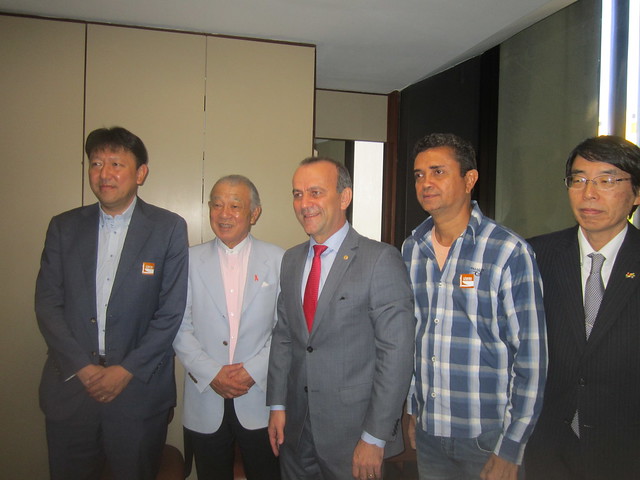
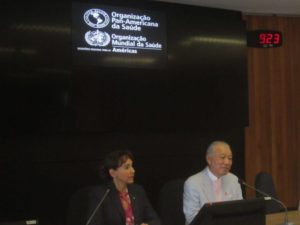
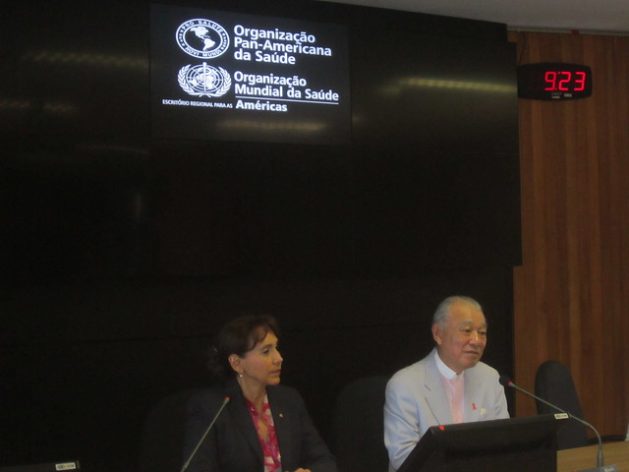
Nippon Foundation President Yohei Sasakawa and Socorro Gross, Pan American Health Organisation representative in Brazil, hold a press conference in Brasilia at the end of a 10-day visit to this country by the Japanese activist who is also World Health Organisation Goodwill Ambassador for Leprosy Elimination. Credit: Mario Osava/IPS

Nippon Foundation President Yohei Sasakawa and Socorro Gross, Pan American Health Organisation representative in Brazil, hold a press conference in Brasilia at the end of a 10-day visit to this country by the Japanese activist who is also World Health Organisation Goodwill Ambassador for Leprosy Elimination. Credit: Mario Osava/IPS

BRASILIA, Jul 11 2019 (IPS) – “The ambulance team refused to take my sick friend to the hospital because he had had Hanseniasis years before,” said Yohei Sasakawa, president of the Nippon Foundation, at one of the meetings held during his Jul. 1-10 visit to Brazil.


His friend was completely cured and had no visible effects of the disease, but in a small town everyone knows everything about their neighbours, he said.

This didn’t happen in a poor country, but in the U.S. state of Texas, only about 20 years ago, Sasakawa pointed out to underline the damage caused by the discrimination suffered by people affected by Hansen’s Disease, better known as leprosy, as well as those who have already been cured, and their families.

“The disease is curable, its social damage is not,” he said during a meeting with lawmaker Helder Salomão, chair of the Human Rights Commission in Brazil’s lower house of Congress, to ask for support in the fight against Hanseniasis, the official medical name for the disease in Brazil, where the use of the term leprosy has been banned because of the stereotypes and stigma surrounding it.

The highlight of the mission of Sasakawa, who is also a World Health Organisation (WHO) Goodwill Ambassador for Leprosy Elimination, was a meeting on Monday Jul. 8 with President Jair Bolsonaro, who posted a message on Facebook during the meeting, which had nearly 700,000 hits as of Thursday Jul. 11.

In the 13-and-a-half minute video, Bolsonaro, Sasakawa, Health Minister Luiz Mandetta and Women, Family and Human Rights Minister Damares Alves issued a call to the authorities, organisations and society as a whole to work together to eradicate the disease caused by the Mycobacterium Leprae bacillus.

A preliminary agreement emerged from the dialogues held by the Japanese activist with members of the different branches of power in Brasilia, to hold a national meeting in 2020 to step up the fight against Hanseniasis and the discrimination and stigma faced by those affected by it and their families.

The idea is a conference with a political dimension, with the participation of national authorities, state governors and mayors, as well as a technical dimension, said Carmelita Ribeiro Coriolano, coordinator of the Health Ministry’s Hanseniasis Programme. The Tokyo-based Nippon Foundation will sponsor the event.

Brazil has the second highest incidence of Hansen’s Disease in the world, with 27,875 new cases in 2017, accounting for 12.75 percent of the world total, according to WHO. Only India has more new cases.

The government established a National Strategy to Combat Hanseniasis, for the period 2019-2022, in line with the global strategy outlined by the WHO in 2016.

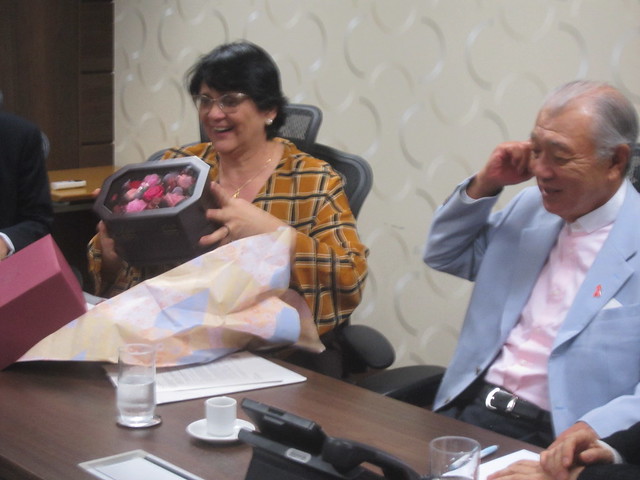
Brazilian Minister of Women, Family and Human Rights Damares Alves receives a gift from Yohei Sasakawa, president of the Nippon Foundation, at the beginning of a meeting in Brasilia, in which the minister promised to strengthen assistance to those affected by Hansen's Disease, including the payment of compensation to patients who were isolated in leprosariums or leper colonies in the past. Credit: Mario Osava/IPS

Brazilian Minister of Women, Family and Human Rights Damares Alves (L) receives a gift from Yohei Sasakawa, president of the Nippon Foundation, at the beginning of a meeting in Brasilia, in which the minister promised to strengthen assistance to those affected by Hansen’s Disease, including the payment of compensation to patients who were isolated in leprosariums or leper colonies in the past. Credit: Mario Osava/IPS

Extensive training of the different actors involved in the treatment of the disease and plans at the state and municipal levels, tailored to local conditions, guide the efforts against Hansen’s Disease, focusing particularly on reducing cases that cause serious physical damage to children and on eliminating stigma and discrimination.

Before his visit to Brasilia, Sasakawa, who has already come to Brazil more than 10 times as part of his mission against Hansen’s Disease, toured the states of Pará and Maranhão to discuss with regional and municipal authorities the obstacles and the advances made, in two of the regions with the highest prevalence rate.

“In Brazil there is no lack of courses and training; the health professionals are sensitive and give special attention to Hanseniasis,” said Faustino Pinto, national coordinator of the Movement for the Reintegration of People Affected by Hanseniasis (MORHAN), who accompanied the Nippon Foundation delegation in Brasilia.

“Promoting early diagnosis, to avoid serious physical damage, and providing better information to the public and physical rehabilitation to ensure a better working life for patients” are the most necessary measures, he told IPS.

Pinto’s case illustrates the shortcomings in the health services. He was not diagnosed as being affected with Hansen’s Disease until the age of 18, nine years after he felt the first symptoms. It took five years of treatment to cure him, and he has serious damage to his hands and joints.

His personal plight and the defence of the rights of the ill, former patients and their families were outlined in his Jun. 27 presentation in Geneva, during a special meeting on the disease, parallel to the 41st session of the Human Rights Council, the highest organ of the Office of the United Nations High Commissioner for Human Rights.

Pinto is an eloquent advocate of the use of Hanseniasis or Hansen’s Disease, rather than leprosy, a term historically burdened with religious prejudice and stigma, which aggravates the suffering of patients and their families, but continues to be used by WHO, for example.

Yohei Sasakawa (2nd-L), president of the Nippon Foundation, accompanied by two members of his delegation, took part in a meeting with Congressman Helder Salomão (C), chair of the Human Rights Commission of the Brazilian Chamber of Deputies, who pledged to support initiatives to eliminate leprosy in his country. Faustino Pinto (2nd-R), national coordinator of the Movement for the Reintegration of Persons Affected by Hanseniasis (MORHAN), also participated. Credit: Mario Osava/IPS

Yohei Sasakawa (2nd-L), president of the Nippon Foundation, accompanied by two members of his delegation, took part in a meeting with Congressman Helder Salomão (C), chair of the Human Rights Commission of the Brazilian Chamber of Deputies, who pledged to support initiatives to eliminate leprosy in his country. Faustino Pinto (2nd-R), national coordinator of the Movement for the Reintegration of Persons Affected by Hanseniasis (MORHAN), also participated. Credit: Mario Osava/IPS

Discrimination against people with the disease dates back to biblical times, when it was seen as a punishment from God, said Sasakawa during his meeting with Minister Damares Alves, a Baptist preacher who describes herself as “extremely Christian”.

In India there are 114 laws that discriminate against current or former Hansen’s Disease patients, banning them from public transport or public places, among other “absurdities”, he said.

In India, they argue that these are laws that are no longer applied, which justifies even less that they remain formally in force, he maintained during his meetings in Brasilia to which IPS had access.

Prejudice and misinformation not only subject those affected by the disease to exclusion and unnecessary suffering, but also make it difficult to eradicate the disease by keeping patients from seeking medical care, activists warn.

His over 40-year battle against Hansen’s Disease has led Sasakawa to the conclusion that it is crucial to fight against the stigma which is still rife in society.

He pressed the United Nations General Assembly to adopt in 2010 the Resolution for the Elimination of Discrimination against Persons Affected by Leprosy and their Families.

He said these attitudes and beliefs no longer make sense in the light of science, but persist nonetheless.

Treatment making isolation for patients unnecessary in order to avoid contagion has been available since the 1940s, but forced isolation in leprosariums and leper colonies officially continued in a number of countries for decades.

In Brazil, forced segregation officially lasted until 1976 and in practice until the following decade.

With multi-drug treatment or polychemotherapy, introduced in Brazil in 1982, the cure became faster and more effective.

Information is key to overcoming the problems surrounding this disease, according to Socorro Gross, the Pan American Health Organisation (PAHO) representative in Brazil who also held meetings with the Nippon Foundation delegation.

“Communication is essential, the media has a decisive role to play” to ward off atavistic fears and to clarify that there is a sure cure for Hansen’s Disease, that it is not very contagious and that it ceases to be so shortly after a patient begins to receive treatment, Gross, a Costa Rican doctor with more than 30 years of experience with PAHO in several Latin American countries, told IPS.


Right to Information in Latin America & the Caribbean

Civil Society, Democracy, Featured, Headlines, Human Rights, Latin America & the Caribbean, Press Freedom, TerraViva United Nations

Opinion

Luis Felipe López-Calva is UN Assistant Secretary-General and UNDP Regional Director for Latin America and the Caribbean

UNITED NATIONS, Jul 9 2019 (IPS) – Transparency is a critical element of making governance more effective. By making information available, it creates a foundation for greater accountability to citizens.


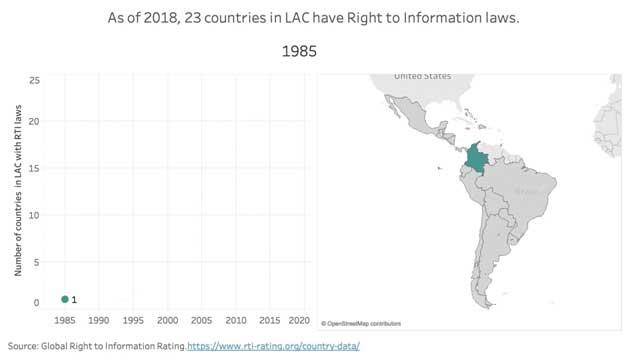
In recent decades, transparency has been on the rise across Latin America and the Caribbean. According to data from the Global Right to Information Rating, 23 countries in LAC have laws securing citizens’ right to information.

Colombia was the first country in the region to pass such a law in 1985, and Saint Kitts and Nevis was the most recent country to do so in 2018.

While transparency is a necessary condition for promoting accountability, it is not a sufficient condition. We can think about transparency as a first step.

While transparency makes information available, we also need publicity to make information accessible, and accountability mechanisms to make information actionable.

Information, per se, is nothing without publicity and accountability. If information does not reach the interested audiences, its effect is negligible. Similarly, even if information reaches the public, if it does not lead to consequences, its effect is not only negligible but potentially harmful.

For example, we have seen, unfortunately, many cases in our region where people can access detailed information about corruption cases, but nothing happens to those who are responsible. This leads to frustration and destroys trust.

Luis Felipe López-Calva

We can think about this progression from transparency to accountability as the “information value chain.” Recently, one way in which the information value chain has been broken in Latin America and the Caribbean is the intentional creation and spread of false information (what is known as “disinformation”).

In many cases these pseudo-facts are created for political purposes and target specific audiences, with the intention to induce certain outcomes (for example, by influencing voting behavior).

This system has been called the “fake news” industry—a term widely used by politicians in recent times. It’s important to note that false information can also be spread unintentionally (what is known as “misinformation”).

The rise of disinformation and misinformation has been facilitated by the rise of technology. Technology—particularly the rise of social media and messaging apps—has reduced the cost of disseminating information to massive audiences.

This has made the “publicity” industry more competitive and created a new social dynamic in which people often take access to information as equivalent to knowledge.

While knowledge is difficult to build and constantly update, information has become easy to get, and public debates are increasingly based on false—and often deliberately false—information.

Indeed, a recent study by scholars at MIT found that false news spreads much more rapidly than true news—and this effect is particularly salient for false political news (in comparison to false news about topics such as terrorism, natural disasters, science, urban legends, or financial information).

According the 2018 Reuters Institute Digital News Report, citizens in LAC countries are facing high exposure to false information, and are very concerned about what news is real and what news is fake on the internet.

In each of the four LAC countries included in the study (Brazil, Chile, Mexico, and Argentina), over 35% of respondents stated that they were exposed to completely made-up news in the last week—reaching as high as 43% of the sample in Mexico.

Moreover, over 60% of respondents stated that they are very or extremely concerned about what is real and what is fake on the internet when it comes to news—reaching as high as 85% of the sample in Brazil.

This high level of concern is consistent with recent experiences with political disinformation in the region—for example, the use of automated bots to influence public opinion in Brazil, Argentina, and Venezuela.

This problem carries with it the concern for broader potential consequences such as deepening political polarization or the erosion of trust in the media. Indeed, over the past few decades years, the dissemination of false information by political parties and levels of political polarization are increasing in tandem in LAC.

This is a challenge not only in LAC, but in many regions around the world. This global preoccupation was reflected in the theme chosen for this year’s World Press Freedom Day—which focused on journalism and elections in times of disinformation.

Several of the countries in Latin America are holding presidential elections later this year: Argentina, Bolivia, Guatemala, and Uruguay. There is a concern in the region about how disinformation campaigns, coupled with microtargeting of political messages and sophisticated online advertising through social networks and online platforms, could affect the outcome of elections.

There is a lot we can do in this area to protect the information value chain and the quality of elections—such as “clean campaign” agreements between political parties, the creation of independent fact-checking services, greater enforcement by social media companies, and the promotion of information literacy among citizens.

In Latin America, these initiatives are still nascent, but they are growing. It is important to recognize, however, that combatting the challenge of disinformation campaigns will require the coordinated action of multiple stakeholders such as electoral courts, the media, civil society, academia and tech businesses (such as Facebook, Google, WhatsApp, and Twitter).

Without a strong coalition of actors, it will be difficult to successfully repair the information value chain and achieve accountability.


UN Says Kyrgyz Journalist Should be Freed

Asia-Pacific, Civil Society, Democracy, Global, Global Governance, Headlines, Human Rights, Press Freedom, TerraViva United Nations

Opinion

Gulnoza Said* is Program Coordinator, Committee to Protect Journalists (CPJ), Europe and Central Asia

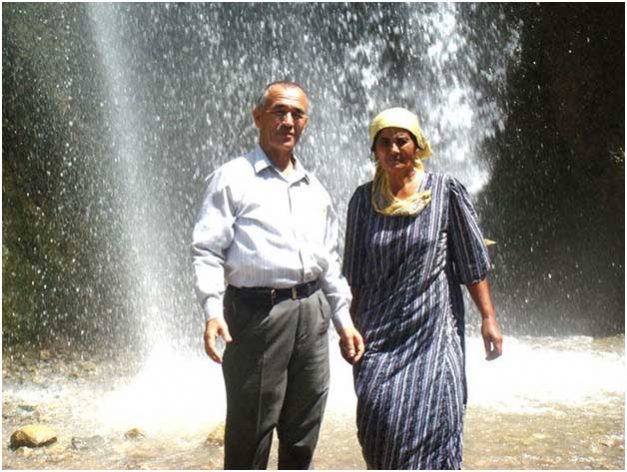
Kyrgyzstan journalist Azimjon Askarov and his wife, Khadicha, pictured during a family vacation in Arslanbob in the summer of 2009. ‘This was Azimjon’s last summer of freedom,’ Khadicha told CPJ. (Askarov family)

NEW YORK, Jun 10 2019 (IPS) – On a recent morning in Bazar-Korgon, southern Kyrgyzstan, Khadicha Askarova was giving hasty instructions to her daughter about what needed to be packed.


They were about to set off: first for the capital Bishkek, some 600km from where they live, and then another 70km to a prison colony where her husband, Azimjon Askarov, was transferred in March.

But Askarov, a 68-year-old independent journalist and rights activist, shouldn’t be in jail at all. The U.N. Human Rights Committee ruled in 2016 that Askarov was subject to torture and mistreatment from the moment of his detention on June 15, 2010 to his speedy trial and subsequent imprisonment, and that he should be released immediately.

CPJ’s research into his case found that the original trial was marred by irregularities and allegations of torture, mistreatment and harassment of defendants, including Askarov, and their witnesses. But Kyrgyz authorities defied the U.N. resolution and in 2017, amid international outcry, upheld his life sentence.

Conditions in the new prison are harsh. In letters home, the journalist wrote that he had run ins with the guards and that prison officials punish detainees after visiting days. His health is also deteriorating and he has limited access to medication, the journalist’s wife, Askarova, said.

“What breaks my heart is to see how much he aged since being imprisoned. He used to be a man full of energy and vigor. Now, he is old, sickly, skinny, and there’s no way out of this situation for him,” she said, fighting back the tears when we spoke via a video messaging app earlier this month.

The couple, who have been married for over 40 years, now have limited contact: just six family visits and two phone calls a year. As Askarov wrote in a recent letter to his wife, “They like keeping us under a tight lid here. Communication with the outside world is banned.”

The letter, which his wife shared with CPJ, also gave a glimpse of the harsh prison conditions: “After family visits, inmates are punished by being forced to eat raw onions and carrots for several days.”

“On regular days, they give us pea soup that contains nothing but watery peas. On public holidays, we get what the prison administration calls plov [pilaf] but it is not more than 150g of rice cooked with some carrots, per person.”

Since Askarov’s transfer to a prison outside Bishkek in March, he wrote that he has had three “incidents” with prison guards. The journalist did not specify the nature of incidents, but wrote that guards were known for their mistreatment of and conflicts with inmates.

“There are few good ones among them”, he added, almost as if he was preventing possible punishment should the content of the letter became known to the guards.

One of the incidents was connected to the journalist’s poor health. He has the heart condition tachycardia, hypotension, and gets dizzy and nauseated if he stands for too long.

Under prison rules, if a guard enters a cell, the inmate must stand. “That’s the rule. Twice a day, guards enter cells. An inmate has to cite his full name and an article of the criminal code he was convicted of violating. But Azimjon was not able to stand straight for too long. His knees bend, he had to sit down. That was the ‘incident’,” the journalist’s wife, Askarova, told me.

Soon after the transfer, Askarov complained about his health to prison administration, and said that low blood pressure and a cold was diagnosed. “But they did not have any medication to give me,” he wrote.

Askarova told CPJ that doctors at the prison ask families to bring medication. “They rely on us for something that they ought to provide,” she said.

She added that the few visits they are allowed are emotional, and the travel hard and costly. She makes sure that one visit falls on her husband’s birthday, May 17. This year, the couple’s daughter and their three grandchildren also visited on his birthday, their first visit to a new jail.

‘I’m afraid they will forget how he looks’ Askarov’s wife says

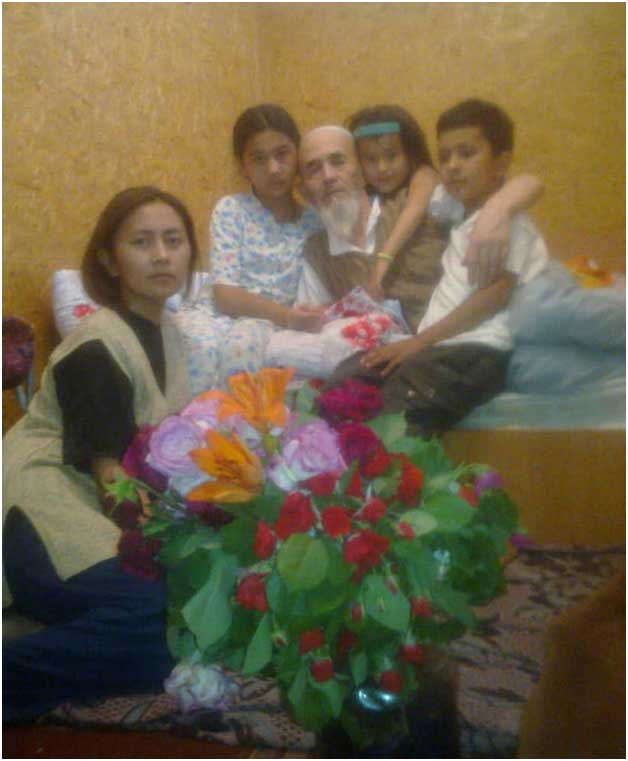
Azimjon Askarov, pictured with his daughter Navruza and grandchildren, during a May 2018 visit in Bishek prison. The journalist was moved to a new prison in 2019 that bans families from taking photographs during visits. (Askarova family)

“The new prison is much farther from Bishkek. After a nearly 14-hour drive to Bishkek, we took another taxi to the prison, but then had to walk about seven kilometers in the heat and dust. It was especially hard for the little ones, although they were excited to see their grandfather. They are still little, and I am afraid they can forget how he looks like, how he sounds,” Askarova said.

Adding to that concern is a rule at the prison banning families from taking photographs during visits. “Now, I have to look at old pictures of Azimjon. They deprived me even of the photos of my husband,” she said.

Askarova said she would move to Bishkek to be closer to the prison, but she cannot sell the house that her husband has owned for decades. The authorities seized the journalist’s property after he was charged in 2010.

In 2015, the journalist’s lawyer successfully appealed against the seizure, but before Askarova had overcome a legal quagmire of changing the ownership, authorities placed a new lien on the house in February. She said she has started another appeal process.

Askarova said that before they visit each year on his birthday, the couple’s daughter Navruza, who lives in Uzbekistan, usually comes to Bazar-Korgon to help pack personal items, food, medicine and books. But it is Askarova who picks flowers from her garden and buys bouquets at a florist for her husband.

“He is an artist, you know. He loves flowers. I get the most beautiful ones for him. Many kinds, sometimes several bouquets,” she said.

Azimjon and Khadicha met at art college in the Uzbek capital Tashkent in 1974. They have been married for 42 years and raised four children, who live in Uzbekistan. He used to work as an artist. But every time he heard a neighbor complain of injustice, he felt the urge to help, Askarova said.

In the late 1990s, he started documenting the cases, mediating between his community members and law enforcement, and researching legal books. He eventually became a go-to person in Bazar-Korgon if the rights of a member of his community had been violated.

He was known for taking up the cases on police brutality. It was this reputation that led many people to come to him for help when violence against ethnic Uzbeks erupted in June 2010, she said.

In prison, Askarov started to paint again. In 2014, international and local activists organized an exhibition of Askarov’s work to raise awareness of his case. In 2018, he wrote a book, “I am happy,” which includes a dedication to his late mother, “who lost me, her son, during her and my life, and left this world, shocked by the greatest injustice.” Copies of the book are still available online.

During his imprisonment, Askarov studied English and is able to read the many cards sent to him from around the world, his wife said. She added that he has been studying Japanese from the books and dictionaries she brought him, and that he has become interested in herbal medicine because conventional medication was not available in prison.

Askarov has also kept a diary since 2010. “He writes down everything. I keep reading them in between prison visits. One word that he uses most frequently is freedom. When he sees rain through the cell window, he writes ‘I wish I was free to feel rain drops on my skin. When he sees snow, he writes ‘I wish I was free to be outside and enjoy the snow now’. Freedom is his main wish and goal. He lives for it,” Askarova said.

* Gulnoza Said is a journalist and communications professional with over 15 years of experience in New York, Prague, Bratislava, and Tashkent. She has covered issues including politics, media, religion, and human rights with a focus on Central Asia, Russia, and Turkey.


Class Analyst: Global Income Inequality

Aid, Civil Society, Democracy, Development & Aid, Editors’ Choice, Featured, Global, Global Governance, Headlines, Inequity, Population, Poverty & SDGs, TerraViva United Nations

Opinion

CHRIS WELLISZ is on the staff of Finance & Development published by the International Monetary Fund*

Credit: IMF

WASHINGTON DC, May 24 2019 (IPS) – As a child growing up in Communist Yugoslavia, Branko Milanovic witnessed the protests of 1968, when students occupied the campus of the University of Belgrade and hoisted banners reading “Down with the Red bourgeoisie!”


Milanovic, who now teaches economics at the City University of New York, recalls wondering whether his own family belonged to that maligned group. His father was a government official, and unlike many Yugoslav kids at the time, Milanovic had his very own bedroom—a sign of privilege in a nominally classless society. Mostly he remembers a sense of excitement as he and his friends loitered around the edge of the campus that summer, watching the students sporting red Karl Marx badges.

“I think that the social and political aspects of the protests became clearer to me later,” Milanovic says in an interview. Even so, “1968 was, in many ways, a watershed year” in an intellectual journey that has seen him emerge as a leading scholar of inequality. Decades before it became a fashion in economics, inequality would be the subject of his doctoral dissertation at the University of Belgrade.

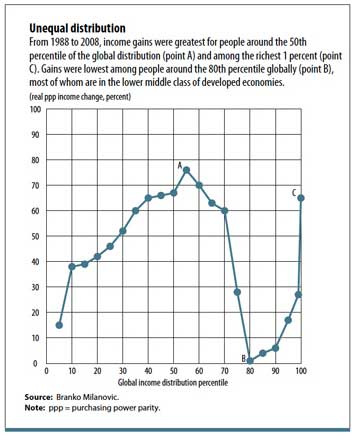
Today, Milanovic is best known for a breakthrough study of global income inequality from 1988 to 2008, roughly spanning the period from the fall of the Berlin Wall—which spelled the beginning of the end of Communism in Europe—to the global financial crisis.

The 2013 article, co-written with Christoph Lakner, delineated what became known as the “elephant curve” because of its shape (see chart). It shows that over the 20 years that Milanovic calls the period of “high globalization,” huge increases in wealth were unevenly distributed across the world.

The middle classes in developing economies—mainly in Asia—enjoyed a dramatic increase in incomes. So did the top 1 percent of earners worldwide, or the “global plutocrats.”

Meanwhile, the lower middle classes in advanced economies saw their earnings stagnate.
The elephant curve’s power lies in its simplicity. It elegantly summarizes the source of so much middle-class discontent in advanced economies, discontent that has turbocharged the careers of populists from both extremes of the political spectrum and spurred calls for trade barriers and limits on immigration.

“Branko had a deep influence on global inequality research, particularly with his findings on the elephant curve, which has set the tone for future research,” says Thomas Piketty, author of the bestselling Capital in the Twenty-First Century.

Piketty and his collaborators confirmed the findings in a 2018 study, which found that the top 1 percent globally captured twice as much of total growth as the bottom 50 percent from 1980 to 2016.

Milanovic’s findings “appear to be even more spectacular than what was initially suggested,” Piketty says. “The elephant looks more like a mammoth.”

Economists long disdained the study of inequality. Many lived in a theoretical world populated by a mythical figure known as homo economicus, or rational man, whose only attribute was a drive to maximize his well-being. Differences among people, or groups, were irrelevant. Variety was irrelevant. Only averages mattered.

In this world of identical rational actors, the forces of supply and demand worked their magic to determine prices and quantities of goods, capital, and labor in a way that maximized welfare for society as a whole. The distribution of wealth or income didn’t fit into the picture. It was simply a by-product of market forces.

“The market solves everything,” Milanovic says. “So the topic really was not—still is not—totally mainstream.”

Then came the global financial crisis of 2008, and with it “the rise of the realization that the top 1 percent or the top 5 percent have really vastly outstripped, in income growth, the middle class,” he says.

The study of inequality also got a boost from the explosion of data that can be mined with evermore powerful computers, making it easier to divide the anonymous masses of consumers and workers into groups with common characteristics. Big data, he says, “enables the study of heterogeneity, and inequality is by definition heterogenous.”

Data has always been one of Milanovic’s passions, alongside his interest in social classes, which flourished during his high school years in Brussels, where his economist father was posted as Yugoslav envoy to the then–European Economic Community.

“High school in Belgium—and I think it was the same in France—was very Marxist,” he says.

His classmates were divided between leftist kids, influenced by the student movements of the late 1960s and early 1970s, and “bourgeois” kids. As the privileged son of a diplomat representing an ostensibly workers’ government, young Branko didn’t quite fit either category. “It was a very peculiar situation,” he says.

At university in Belgrade, Milanovic initially leaned toward philosophy but decided economics would be more practical. It also offered a way to combine his interests in statistics and social classes.

Graduate studies led to a fellowship at Florida State University in Tallahassee, where he was impressed by American abundance—huge portions of inexpensive food, free refills of coffee, big cars—alongside stark income inequality and racial discrimination.

Two years later, he was back in Belgrade to work on his doctoral dissertation on inequality in Yugoslavia, mining rare household survey data supplied by a friend who worked in the federal statistical office.

While his dissertation raised eyebrows in Marxist Yugoslavia—along with his decision to avoid joining the Communist Party—it launched a two-decade career at the World Bank’s Research Department.

“Branko was really one of the leading experts, even at that time, on income distribution,” says Alan Gelb, who hired Milanovic to join a small team studying the transition to market economies in post-Communist eastern Europe. Milanovic focused on issues of poverty and income distribution.

The wealth of data the World Bank collects was a priceless resource, and it inspired Milanovic to carry out cross-country comparisons of inequality, which were a novelty. One day in 1995, Milanovic was talking with Gelb’s successor as the head of his unit.

“I suddenly had this idea: ‘Look, we have all this data from around the world. We study individual countries, but we never put them together.’ ” Four years later, he published the first study of global income distribution based on household surveys.

In the years that followed, Milanovic published widely and profusely. Alongside his work on post-Communist economies, he continued to explore inequality and its link with globalization. His articles and books display the broad range of his interests, which include history, literature, and sports.

In one article, he estimates the average income and inequality level in Byzantium in the year 1000. Another looks at the links between labor mobility and inequality in soccer, which he calls the most globalized sport.

He found that club soccer has become very unequal because a dozen top European teams can afford to recruit the world’s best players. On the other hand, the free movement of soccer players has reduced inequality among national teams. The reason: players from small countries can hone their skills at top club teams, then return home to compete for their national teams.

Literary conversations with his wife, Michele de Nevers, a specialist in climate finance at the Center for Global Development, inspired him to write an offbeat analysis of Jane Austen’s Pride and Prejudice.

Arguing that the book is as much about money as love, he estimates the incomes of various characters and looks at how wealth influences the choice of mates for Austen’s protagonist, Elizabeth Bennet.

He did the same for Leo Tolstoy’s Anna Karenina. Both essays were published in Milanovic’s 2011 book, The Haves and the Have-Nots: A Brief and Idiosyncratic History of Global Inequality .

Another book, Global Inequality: A New Approach for the Age of Globalization, was a milestone that synthesized years of his scholarship on inequality within and among countries since the Industrial Revolution.

In contrast to Piketty, who argues that inequality inexorably widens under capitalism, Milanovic sees it moving in waves or cycles under the influence of what he calls benign and malign forces.

In advanced economies, income disparity widened in the 19th and early 20th centuries until the malign forces of war and hyperinflation reduced it by destroying wealth. After World War II, benign forces such as progressive taxation, more powerful labor unions, and more widely accessible education pushed inequality down.

The fall of the Berlin Wall was a watershed. It brought the former Soviet bloc states into the global economy at a time when China also began opening up. Rapid growth in the developing world narrowed inequality between countries while widening it in the developed world, where middle-class incomes stagnated as the wealthy prospered.

What does the future hold? It looks good for much of the developing world and especially Asia, which will continue to catch up with the rich countries. In advanced economies, on the other hand, the outlook seems grimmer.

There, the twin forces of globalization and technological innovation will continue to squeeze the middle class. Social mobility will decline as an entrenched elite benefits from greater access to expensive higher education and wields its political clout to enact “pro-rich” policies, such as favorable tax regimes.

As income disparities grow, so will social tensions and political strife—a prognosis confirmed by events such as Brexit and protests in France that have occurred since the book’s publication in 2016.

Milanovic worries that this friction might lead to a “decoupling” of democracy and capitalism, resulting in plutocracy in the United States and populism or nativism in Europe.

While there has been considerable debate about inequality over the past decade, “nothing has really moved” in policy terms, he says. “We are on this automatic pilot which basically leads to higher inequality. But I am not totally losing faith.”

The traditional answer—redistribution of income—won’t work as well as it did in the past because of the mobility of capital, which allows the wealthy to shelter their incomes in tax havens. Instead, policy should aim for a redistribution of “endowments” such as wealth and education.

Measures would include higher inheritance taxes, policies that encourage companies to distribute shares to workers, and increased state funding for education.

“We cannot achieve that tomorrow,” he says. “But I think we should have an idea that we want to move to a capitalist world where endowments would be much more equally distributed than today.”

Milanovic also takes on the nettlesome issue of inequality between countries. He calculates that an American, simply by virtue of being born in the United States, will earn 93 times more than a person born in the world’s poorest country.

This is what Milanovic calls the “citizenship premium,” and it gives rise to pressure for migration as people born in poor countries seek their fortunes in richer ones.

Milanovic argues that halting migration is no more feasible than halting the movement of goods or capital. Yet it’s also unrealistic to expect citizens of advanced economies to open their borders. His solution: allow more immigrants but deny them the full rights of citizenship, and perhaps tax them to compensate citizens displaced in the labor force.

His current work, in a way, brings him back to his roots in Yugoslavia. It involves the study of class structure in the People’s Republic of China and, in particular, a close look at the top 5 percent of the income distribution. It forms a part of his next book, Capitalism, Alone, which argues that China has developed a distinct form of capitalism that will coexist with its liberal forebear.

Where is the study of inequality headed? Milanovic sees two frontiers, both driven by the availability of new data. One is wealth inequality, à la Piketty; the other is intergenerational inequality, a subject plumbed by economists such as Harvard’s Raj Chetty.

The two areas “appeal to young people who are now very socially aware,’’ he says. “On the other hand, they are very smart and want to work on tough topics.” He adds, “I am very optimistic in that sense.”

*Opinions expressed in articles and other materials are those of the authors; they do not necessarily reflect IMF policy.


UN’s Mandate to Protect Human Rights Takes Another Hit

Civil Society, Democracy, Featured, Global, Global Governance, Headlines, Human Rights, TerraViva United Nations

UNITED NATIONS, May 20 2019 (IPS) – The UN’s longstanding mandate to promote and protect human rights worldwide –- undermined recently by right-wing nationalist governments and authoritarian regimes – has taken another hit.


The Geneva-based Office of the UN High Commissioner for Human Rights (OHCHR) says six of the UN’s 10 treaty bodies are being forced to cancel their sessions this year due to financial reasons.

The situation has been described as “an unprecedented consequence of some UN member States delaying payments due to the Organisation.”

Anna-Karin Holmlund, Senior UN Advocate at Amnesty International (AI), told IPS: “Amnesty is deeply concerned by member states’ delay in paying their assessed contributions, which will have a direct effect on the ability of the UN to carry out its vital human rights work.”

Without these funds, the UN’s human rights mechanisms and International tribunals could be severely affected, she warned.

By 10 May, only 44 UN member states – out of 193 — had paid all their assessments due, with the United States owing the largest amount.

“Unfortunately, this is only the latest in a worrying trend of reduction in the UN budget allocated to its human rights mechanisms. To put this in perspective, the budget of the OHCHR is only 3.7 % of the total UN regular budget,” she pointed out.

In addition to the possible cancellation of sessions of the treaty bodies, mechanisms created by the Human Rights Council such as Fact-Finding Missions and Commissions of Inquiry may be hampered in carrying out their mandate of investigating serious human rights violations.

The OHCHR said last week the cancellations meant that reviews already scheduled with member states, as well as consideration of complaints by individual victims of serious human rights violations — including torture, extra-judicial killings, enforced disappearances -– will not take place as scheduled.

“The cancellation of sessions will also have numerous other negative consequences, and will seriously undermine the system of protections which States themselves have put in place over decades,” said a statement released by the OHCHR.

The chairpersons of the 10 Committees are deeply concerned about the practical consequences of cancelling these sessions and have sent a letter to the UN Secretary General and the High Commissioner for Human Rights, requesting they, together with Member States, explore ways of addressing this situation, “as a matter of urgency.”

Alexandra Patsalides, a Legal Equality programme officer at Equality Now, told IPS that it is deeply concerned that UN Treaty body review sessions have been postponed for financial reasons, including the Committee to Eliminate Discrimination Against Women (CEDAW), with its focus on ending all forms of discrimination again women and girls.

She said the crisis comes particularly at a time when women’s rights are continuously being undermined and eroded around the world– and civil society organisations are operating in a space that is increasingly under attack and shrinking.

The UN should strongly call on state parties to prioritise their international human rights obligations, she added.

“The UN treaty bodies are vital to holding states accountable to their commitments on women and girl’s rights — and now is the time to increase the international response, not cut back,” said Patsalides.

These review sessions offer civil society organisations a vital opportunity to hold their governments to account for their international human rights commitments and raise awareness of human rights violations in their countries.

But with the backsliding on women’s rights across the globe, it is now more urgent than ever that the various mechanisms stand up to defend hard won gains, she noted.

“The UN treaty bodies are often the only mechanism for women and girls to hold their countries to account for violations of their rights. We cannot allow these voices to be silenced and call on the UN to prioritize the protection of women and girls’ rights and ensure these treaty bodies have appropriate and sustainable funding.”

The 10 UN human rights treaty bodies are: the Human Rights Committee, the Committee on the Elimination of Racial Discrimination, the Committee against Torture, the Committee on Migrant Workers, the Committee on Enforced Disappearances, the Committee on Economic, Social and Cultural Rights, the Committee on the Elimination of Discrimination Against Women, the Committee on the Rights of the Child, the Committee on the Rights of Persons with Disabilities And the Subcommittee on Prevention of Torture.

Meanwhile the budget cuts come at a time when the UN is battling a series of setbacks in the field of human rights.

The UN Human Rights Office in Burundi was closed down last February at the insistence of the government, with the UN High Commissioner for Human Rights Michelle Bachelet expressing “deep regrets” over the closure, after a 23-year presence in the country.

A UN Commission of Inquiry has called on Eritrea to investigate allegations of extrajudicial killings by its security forces, including torture and enslaving hundreds of thousands, going back to 2016.

And under the Trump administration, the US has ceased to cooperate with some of the UN Rapporteurs, and specifically an investigation on the plight of migrants on the Mexican border where some of them have been sexually assaulted—abuses which have remained unreported and unprosecuted.

The government of Myanmar has barred a UN expert from visiting the country to probe the status of Rohingya refugees.

On the setbacks in Colombia, Robert Colville, Spokesperson for the UN High Commissioner for Human Rights, said May 10: “We are alarmed by the strikingly high number of human rights defenders being killed, harassed and threatened in Colombia, and by the fact that this terrible trend seems to be worsening”

“We call on the authorities to make a significant effort to confront the pattern of harassment and attacks aimed at civil society representatives and to take all necessary measures to tackle the endemic impunity around such cases.”

In just the first four months of this year, he pointed out, a total of 51 alleged killings of human rights defenders and activists have been reported by civil society actors and State institutions, as well as the national human rights institution.

The UN Human Rights Office in Colombia is closely following up on these allegations. This staggering number continues a negative trend that intensified during 2018, when our staff documented the killings of 115 human rights defenders.

According to a press release from the OHCHR, the 10 United Nations human rights treaties are legally binding treaties, adopted by the UN General Assembly and ratified by States.

Each Treaty establishes a treaty body (or Committee) comprising elected independent experts who seek to ensure that States parties fulfil their legal obligations under the Conventions.

This system of independent scrutiny of the conduct of States by independent experts is a key element of the United Nations human rights system, supported by secretariats in the Office of the High Commissioner for Human Rights

The writer can be contacted at thalifdeen@ips.org