When Democracy Freezes, Autocrats Rise

Civil Society, Democracy, Economy & Trade, Editors’ Choice, Global, Headlines, Human Rights, IPS UN: Inside the Glasshouse, TerraViva United Nations

Opinion

When Democracy Freezes, Autocrats Rise

Pro-Democracy protesters gather in front of the headquarters of the Sudanese army in the capital, Khartoum. Credit: Masarib/Ahmed Bahhar via UN News

VIENNA, Austria, Jan 5 2026 (IPS) – Consider our political systems not merely as battlegrounds of passions, ideologies and economic interests, but as systematically functioning arrangements of interactions, akin to game theory. In recent decades, we have witnessed the dissolution of large homogeneous groups into numerous subgroups — a patchwork of minorities.


This fragmentation, compounded by individualisation and the resulting weakening of strong political bonds, has profound consequences for democratic governance.

In nations with majority voting systems, this process fragments the party system itself. As dissatisfaction with political parties grows – initially quietly but eventually becoming pronounced – new parties emerge, further splintering the political landscape.

This increasing fragmentation complicates government formation and makes majorities more precarious. Often, only coalitions that can agree on the lowest common denominator are formed. Consequently, the outcomes of politics do not necessarily improve; in most cases, they worsen.

A vicious circle

Decisive action, bold moves and clear leadership have become increasingly elusive. This reinforces dissatisfaction and the prevailing sentiment among voters that politicians are failing to achieve meaningful results. Doubts about the effectiveness of the political system become self-perpetuating, creating a situation where decisive politics is nearly impossible.

The rise of populists and right-wing extremists is both a consequence of this stagnation and a further catalyst — a ratchet effect. Right-wing agitators stoke discontent, transforming it into anger and outrage while exploiting negative emotions.

As they gain strength, democratic politics becomes more paralysed, often preoccupied with defending against radicalism, preventing the worst outcomes, and forming coalitions whose members can agree on little more than a lacklustre commitment to ‘more of the same’.

When social cohesion erodes, the radical right gains ground — which then leads to even more division. The perceived polarisation and alienation that accompanies the rise of right-wing extremism increases the perception of social disintegration and decay.

Democracy gives rise to its own threats

In a sense, right-wing radicalism is itself the problem that it then laments in a subsequent cycle. It is the disintegration that it denounces. In this way, it contributes to the chain of evidence that reinforces authoritarian reflexes. Authoritarianism feeds authoritarianism.

These framework conditions of political systems – fragmentation and the resulting weakness of action – lead German democracy theorist Veith Selk to diagnose that modernisation and social change are increasingly putting democracy under stress, making a reversal unlikely.

This presents a rather depressing diagnosis of decline: democracy gives rise to its own threats.

Additionally, globalisation necessitates ‘global governance’, which, even under favourable circumstances, has historically produced solutions at an unbearably slow pace and is now reaching its limits amid chaotic multilateralism.

Conversely, ‘de-globalisation’ – through national power politics, tariffs and trade wars – provides no relief and instead creates new problems, such as the loss of sales markets, disrupted supply chains and a consequent decline in economic growth, potentially destroying whole economic sectors.

Europe’s mounting crises

The emergencies of the future are already on the horizon. The climate catastrophe threatens not only our livelihoods but also has tangible economic repercussions. Crop failures due to droughts and floods are already contributing to rising inflation in the cost of living, particularly for vegetables and fruit.

This situation is certain to become much more severe. Even if successful, socio-economic transformation will be costly. Insurance companies may face financial difficulties, asset portfolios could lose value rapidly, and if we are unfortunate, a sudden ‘Minsky moment’ could trigger a downward spiral leading to a financial crisis.

Ageing populations are already straining public finances, with healthcare and care systems becoming increasingly expensive, pushing European welfare states to their financial limits.

Government debt is rising, and under current conditions, it will be more challenging to “grow out” of debt than it was in the past. Growth will be harder to mobilise, and austerity is not a viable alternative, as contraction strategies lead to dire consequences. These are all concerning prospects.

Here are a few highlights:

Germany’s economy has stagnated for six years, and private investment remains weak. France is facing a budget deficit of 5.8 per cent and a public debt ratio of 113 per cent of GDP, while sliding from one government crisis to another. Political actors are unable to achieve a socially just change of course that would reconcile savings in the pension system with additional revenue from wealth taxes.

Austria was projected to have a budget deficit of six per cent, prompting left-wing Keynesian Finance Minister Markus Marterbauer to assemble a package of tightening measures aimed at reducing the deficit to 4.5 per cent by 2025.

Ensuring that large fortunes contribute to costs through higher taxation is not only a matter of fairness but also an economic necessity — yet there is a lack of parliamentary majorities for decisive measures nearly everywhere.

There is a growing desire for politics to provide sensible solutions instead of getting bogged down in petty details.

A whole panorama of emergencies is unfolding before us. As noted earlier, most of those in power have little energy or flexibility to think and act beyond daily problems. This situation has tangible and psychopolitical effects: citizens feel that things are deteriorating and that serious trouble is brewing, while simultaneously sensing that those in power are merely tinkering with details.

For many, this leads to outright fear and a generally pessimistic mood, which in turn fuels the rise of right-wing radicals.

The political forces of the left and the conservative centre must, above all, demonstrate their ability to act together. A few years ago, the prevailing view was that various political camps should dare to engage in more conflict to make democratic life more vibrant.

At that time, there were complaints about everyone crowding into the centre and becoming interchangeable. However, we find ourselves in a different situation today.

There is a growing desire for politics to provide sensible solutions instead of getting bogged down in petty details or wasting time on pointless culture wars. The left may need to acknowledge that states are reaching their financial limits, while conservatives must recognise that clientele politics, which ensures free rides for the super-wealthy, is no longer viable.
Urgent issues require swift action, and all of this comes at a high cost.

Rhetoric is no longer effective, and pandering to the extreme right leads nowhere. Conservatives, in particular, need to understand this, as they sometimes give the impression that they view fascists as merely slightly more radical conservatives (or conservatives as moderate fascists).

This perception is not only misguided; it also highlights a significant identity crisis within traditional conservatism. Fortunately, some are beginning to realise that authoritarianism is not a relative; it is the enemy. The best way to undermine it is to demonstrate a commitment to action.

Robert Misik is a writer and essayist. He publishes in many German-language newspapers and magazines, including Die Zeit and Die Tageszeitung.

This is from a joint publication by Social Europe and IPS Journal.

Source: International Politics and Society (IPS), Brussels, Belgium

IPS UN Bureau
  Source

A Grim Year for Democracy and Civic Freedoms – but in Gen Z There Is Hope

Active Citizens, Armed Conflicts, Civil Society, Climate Change, Crime & Justice, Democracy, Economy & Trade, Environment, Featured, Gender, Global, Headlines, Human Rights, Inequality, LGBTQ, TerraViva United Nations

Opinion

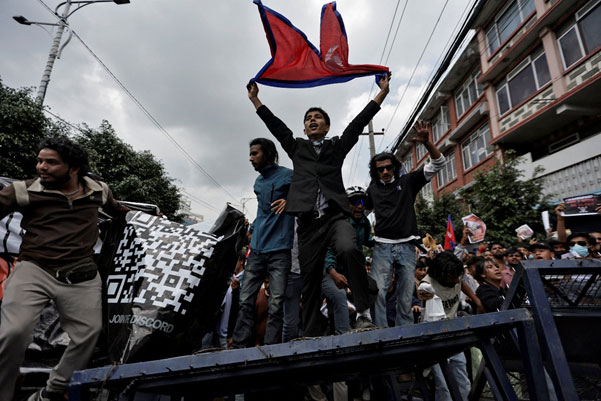
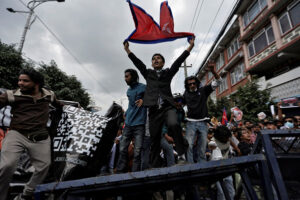
People take part in an anti-corruption protest in Kathmandu, Nepal on 8 September 2025. Credit: Navesh Chitrakar/Reuters via Gallo Images

NEW YORK, Dec 24 2025 (IPS) – 2025 has been a terrible year for democracy. Just over 7 per cent of the world’s population now live in places where the rights to organise, protest and speak out are generally respected, according to the CIVICUS Monitor, a civil society research partnership that measures civic freedoms around the world. This is a sharp drop from over 14 per cent this time last year.


Civic freedoms underpin healthy democracies, and the consequences of this stifling of civil society are apparent. At the end of the first quarter of the 21st century, the world is experiencing 19th century levels of economic inequality. The wealth of the richest 1 per cent is surging while some 8 per cent of the world’s population – over 670 million people – suffer from chronic hunger. Weapons-producing firms, closely intertwined with political elites, are reaping windfall profits as death and destruction rains down in Gaza, Myanmar, Sudan, Ukraine and many other places. It should surprise no one that the political leaders fomenting these conflicts are also squashing civic freedoms to avert questions about their motivations.

From Lima to Los Angeles, Belgrade to Dar es Salaam and Jenin to Jakarta, far too many people are being denied the agency to shape the decisions that impact their lives. Yet these places have also been the site of significant protests against governments this year. Even as authoritarianism appears to be on the march, people are continuing to pour onto the streets to insist on their freedoms. As we speak people in Sofia in Bulgaria are demonstrating in large numbers against endemic corruption which recently forced the government to resign.

History shows that mass demonstrations can lead to major advances. In the 20th century, people’s mobilisations helped achieve women’s right to vote, liberation of colonised peoples and adoption of civil rights legislation to address race-based discrimination. In the 21st century, advances have been made in marriage equality and other LGBTQI+ rights, and in highlighting the climate crisis and economic inequality through protests. But in 2025, the right to protest, precisely because it can be effective, is under assault by authoritarian leaders. Around the world, the detention of protesters is the number one recorded violation of civic freedoms, closely followed by arbitrary detentions of journalists and human rights defenders who expose corruption and rights violations.

This backsliding is now happening in major established democracies. This year, the CIVICUS Monitor downgraded Argentina, France, Germany, Italy and the USA to an ‘obstructed’ civic space rating, meaning the authorities impose significant constraints on the full enjoyment of fundamental rights. This regression is being driven by anti-rights nationalist and populist forces determined to degrade constitutional checks and balances and advance ballot box majoritarianism that denies minorities a fair say in economic, political and social life.

The push to degrade democracy by anti-rights forces now coming to fruition has been many years in the making. It accelerated this year with the return of Donald Trump. His administration immediately withdrew support to international democracy support programmes and instead built links to politicians responsible for crushing civic freedoms and committing grotesque human rights violations. Trump has laid out of the red carpet to El-Salvador’s Nayib Bukele, Hungary’s Victor Orbán, Israel’s Benjamin Netanyahu, Russia’s Vladimir Putin and Saudi Arabia’s Mohammed bin Salman, ushering in a new era of values-free might-is-right diplomacy that threatens to undermine decades of painstaking progress achieved by civil society.

The fallout is clear. Many wealthy democratic governments that traditionally fund civil society activities have significantly reduced their contributions. At the same time, they have linked their remaining support for civil society to narrowly defined strategic military and economic interests. In doing so, they have played directly into the hands of powerful authoritarian states such as China, Egypt, Iran, Nicaragua and Venezuela that seek to discredit domestic calls for accountability. Countries including Ecuador and Zimbabwe have introduced laws to limit the ability of civil society organisations to receive international funding.

All these developments are negatively impacting on civil society efforts for equality, peace and social justice. Yet the story of 2025 is also one of persistent resistance, and some successes. The courage demonstrated by Generation Z protesters has inspired people around the world. In Nepal, protests triggered by a social media ban led to the fall of the government, offering hope for a much-needed political reset. In Kenya, young protesters continued to take to the streets to demand political reform despite state violence. In Moldova, a cash-rich disinformation campaign run by a fugitive oligarch failed to sway the course of the national election away from human rights values. In the USA, the number of people joining the No-Kings protests just keeps on growing.

With over 90 per cent of the world’s population living with the institutional denial of full civic freedoms, anti-rights forces must be feeling pretty smug right now. But democratic dissent is brewing, particularly among Generation Z, denied political and economic opportunities but understanding that another world – one more equal, just, peaceful and environmentally sustainable – is possible. It’s far from game over yet, and even in difficult times, people will demand freedoms – and breakthroughs may be just around the corner.

Mandeep S Tiwana is Secretary General of CIVICUS, the global civil society alliance.

  Source

Myanmar’s Sham Election: Trump Legitimises Murderous Military Dictatorship

Active Citizens, Armed Conflicts, Asia-Pacific, Civil Society, Crime & Justice, Democracy, Featured, Headlines, Human Rights, Migration & Refugees, Press Freedom, TerraViva United Nations

Opinion

Credit: Issei Kato/Reuters via Gallo Images

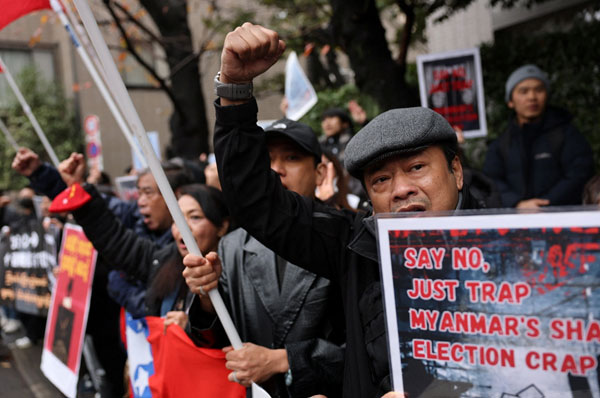
MONTEVIDEO, Uruguay, Dec 22 2025 (IPS) – Myanmar is heading for an election, beginning on 28 December, that’s ostensibly an exercise in democracy – but it has clearly been designed with the aim of conferring more legitimacy on its military junta.


Almost five years after its February 2021 coup, the regime continues to fight pro-democracy forces and ethnic armed organisations, barely controlling a fifth of Myanmar’s territory. The junta has acknowledged that voting won’t be possible in much of the country.

The upcoming election fails every test of democratic legitimacy. The main democratic parties — the National League for Democracy and the Shan Nationalities League for Democracy — are banned. What remains is the Union Solidarity and Development Party, the military’s puppet party, plus minor groups that won no seats in the democratic election held in 2020. Independent media outlets have been crushed, journalists are arrested and intimidated daily and internet access is heavily restricted. In areas that resist military rule, civilians face escalating violence and arbitrary detention.

This election is designed not to reflect the popular will but to entrench military power. It comes as the regime continues its systematic campaign of violence against civilians: weeks before the junta announced the vote, Myanmar’s air force bombed a school in Oe Htein Kwin village, killing two teachers and 22 children, the youngest only seven years old.

The Assistance Association for Political Prisoners has confirmed 6,231 civilians have been killed by the military since the coup, though true figures could be much higher. Nearly half of all civilian deaths are estimated to have been caused by airstrikes. These are not indiscriminate military operations where civilians are collateral damage; they are deliberate attacks where civilians are the targets. The majority of locations of airstrikes have been sites with protected status under international law: camps for displaced people, churches, clinics and schools, often with no presence of armed groups nearby.

The junta has some powerful international allies. China backs it with billions in aid and advanced weapons. Russia supplies the fighter jets that drop bombs on civilians. India quietly sells arms. The three have long provided diplomatic cover and shielded the junta from international accountability. Meanwhile, the Association of Southeast Asian Nations (ASEAN) continues pursuing its failed Five-Point Consensus agreed with the regime in April 2021, despite its systematic violation of every commitment. Regional powers have negotiated exclusively with the junta without input from the National Unity Government — the government in exile formed by democratically elected lawmakers — effectively treating the military regime as Myanmar’s legitimate rulers.

Now recent decisions by the Trump administration threaten to tip the balance decisively in favour of legitimising military rule. Trump has lifted sanctions, cut independent media funding and eliminated the protections formerly afforded to Myanmar’s refugees in the USA. Consistent with his transactional approach, he’s choosing access to rare earth minerals over democracy.

The concern now is that ASEAN member states may follow suit, using the sham election as justification to normalise relations with the military regime. Some have already started moving in this direction, with the junta leader invited to regional meetings.

Myanmar’s pro-democracy forces continue to resist despite the shifting international context. The People’s Defence Forces and ethnic armed groups maintain coordinated operations across most of the country. Civil society continues documenting violations, providing aid to displaced people and advocating for international action. They deserve better than to watch the world legitimise their oppressors.

The junta’s control on the ground remains tenuous, but its diplomatic position is strengthening. Whether this consolidation continues depends on how the world responds to the election. The international community must be clear that treating the election as legitimate would signal to authoritarians everywhere that democratic institutions can be overthrown with impunity, war crimes carry no real consequences and regimes that bomb schools and imprison elected leaders can secure international acceptance.

Inés M. Pousadela is CIVICUS Head of Research and Analysis, co-director and writer for CIVICUS Lens and co-author of the State of Civil Society Report. She is also a Professor of Comparative Politics at Universidad ORT Uruguay.

For interviews or more information, please contact research@civicus.org

  Source

Defending Democracy in a “Topsy-Turvy” World

Active Citizens, Africa, Asia-Pacific, Civil Society, Democracy, Development & Aid, Editors’ Choice, Featured, Green Economy, Headlines, Human Rights, Humanitarian Emergencies, Middle East & North Africa, Press Freedom, Sustainable Development Goals, TerraViva United Nations

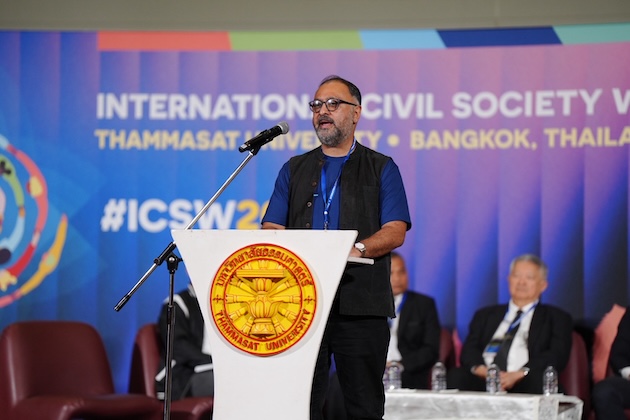
Secretary General of CIVICUS, Mandeep Tiwana, at International Civil Society Week 2025. Credit: Civicus

Secretary General of CIVICUS, Mandeep Tiwana, at International Civil Society Week 2025. Credit: Civicus

BANGKOK, Nov 1 2025 (IPS) – It is a bleak global moment—with civil society actors battling assassinations, imprisonment, fabricated charges, and funding cuts to pro-democracy movements in a world gripped by inequality, climate chaos, and rising authoritarianism. Yet, the mood at Bangkok’s Thammasat University was anything but defeated.


Once the site of the 1976 massacre, where pro-democracy students were brutally crushed, the campus—a “hallowed ground” for civil society actors—echoed with renewed voices calling for defending democracy in what Secretary General of CIVICUS, Mandeep Tiwana, described as a “topsy-turvy world” with rising authoritarianism—a poignant reminder that even in places scarred by repression, the struggle for civic space endures.

“Let it resonate,” said Ichal Supriadi, Secretary General, Asian Democracy Network. “Democracy must be defended together,” adding that it was the “shared strength” that confronts authoritarianism.

Despite the hopeful spirit at Thammasat University, where the International Civil Society Week (ICSW) is underway, the conversations often turned to sobering realities. Dr. Gothom Arya of the Asian Cultural Forum on Development and the Peace and Culture Foundation reminded participants that civic freedoms are being curtailed across much of the world.

Citing alarming figures, he spoke bluntly of the global imbalance in priorities—noting how military expenditure continues to soar even as civic space shrinks. He pointedly referred to the United States’ Ministry of Defense as the “Ministry of War,” comparing its USD 968 billion military budget with China’s USD 3 billion and noting that spending on the war in Ukraine had increased tenfold in just three years—a stark illustration of global priorities. “This is where we are with respect to peace and war,” he said gloomily.

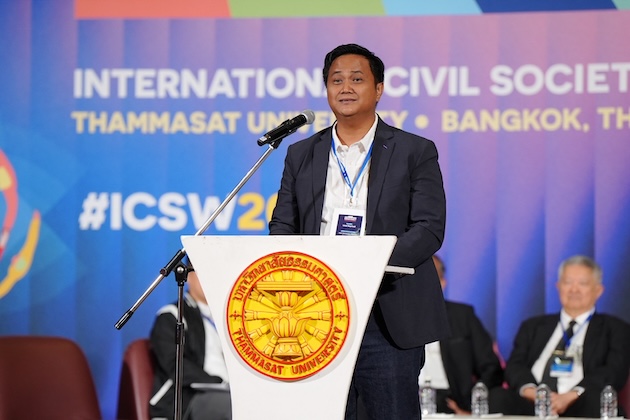
Ichal Supriadi, Secretary General, Asian Democracy Network. Credit: Civicus

Ichal Supriadi, Secretary General, Asian Democracy Network. Credit: Civicus

At another session, similar reflections set the tone for a broader critique of global power dynamics. Walden Bello, a former senator and peace activist from the Philippines, argued that the United States—especially under the Trump administration—had abandoned even the pretense of a free-market system, replacing it with what he called “overt monopolistic hegemony.” American imperialism, he said, “graduated away from camouflage attempts and is now unapologetic in demanding that the world bend to its wishes.”

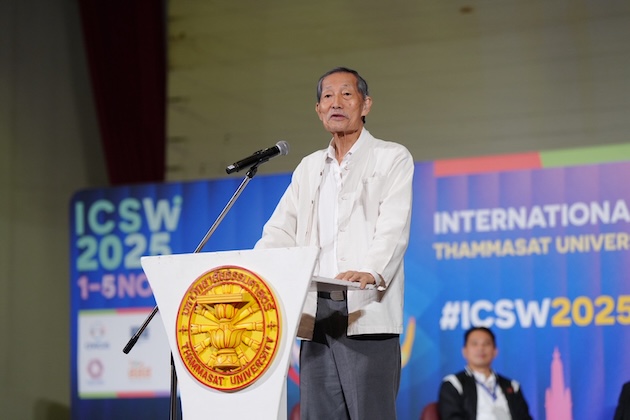
Dr. Gothom Arya of the Asian Cultural Forum on Development and the Peace and Culture Foundation. Credit: Civicus

Dr. Gothom Arya of the Asian Cultural Forum on Development and the Peace and Culture Foundation. Credit: Civicus

Dr. Pervez Hoodbhoy, a Pakistani physicist and author, echoed the sentiment, expressing outrage at his own country’s leadership. He condemned Pakistan’s decision to nominate a “psychopath, habitual liar, and aggressive warmonger” for the Nobel Peace Prize, saying that the leadership had “no right to barter away minerals and rare earth materials to an American dictator” without public consent.

Hoodbhoy urged the international community to intervene and restart peace talks between Pakistan and India—two nuclear-armed neighbors perpetually teetering on the edge of renewed conflict.

But at no point during the day did the focus shift away from the ongoing humanitarian crises. Arya reminded the audience of the tragic loss of civilian lives in Gaza, the devastating fighting in Sudan that had led to widespread malnutrition, and the global inequality worsened by climate inaction. “Because some big countries refused to follow the Paris Agreement ten years ago,” he warned, “the rest of the world will suffer the consequences.”

That grim reality was brought into even sharper relief by Dr. Mustafa Barghouthi, a Palestinian physician and politician, who delivered a harrowing account of Gaza’s devastation. He said that through the use of  American-supplied weapons, Israel had killed an estimated 12 percent of Gaza’s population, destroyed every hospital and university, and left nearly 10,000 bodies buried beneath the rubble.

“Even as these crises unfolded across the world, the conference demonstrated that civil society continues to persevere, as nearly 1,000 people from more than 75 organizations overcame travel bans and visa hurdles to gather at Thammasat University, sharing strategies, solidarity, and hope through over 120 sessions.

Among them was a delegation whose presence carried the weight of an entire nation’s silenced hopes—Hamrah, believed to be the only Afghan civil society group at ICSW.

“Our participation is important at a time when much of the world has turned its gaze away from Afghanistan,” Timor Sharan, co-founder and programme director of the HAMRAH Initiative, told IPS.

“It is vital to remind the global community that Afghan civil society has not disappeared; it’s fighting and holding the line.”

Through networks like HAMRAH, he said, activists, educators, and defenders have continued secret and online schools, documented abuses, and amplified those silenced under the Taliban rule. “Our presence here is both a statement of resilience and a call for solidarity.”

“Visibility matters,” pointed out Riska Carolina, an Indonesian woman and LGBTIQ+ rights advocate working with ASEAN SOGIE Caucus (ASC). “What’s even more powerful is being visible together.”

“It was special because it brought together movements—Dalit, Indigenous, feminist, disability, and queer—that rarely share the same space, creating room for intersectional democracy to take shape,” said Carolina, whose work focuses on regional advocacy for LGBTQIA+ rights within Southeast Asia’s political and human rights frameworks, especially the ASEAN system, which she said has historically been “slow to recognize issues of sexuality and gender diversity.”

“We work to make sure that SOGIESC (Sexual Orientation, Gender Identity and Expression, and Sex Characteristics) inclusion is not just seen as a niche issue, but as a core part of democracy, governance, and human rights. That means engaging governments, civil society, and regional bodies to ensure queer people’s participation, safety, and dignity is part of how we measure democratic progress.”

She said the ICSW provided ASC with a chance to make “visible” the connection between civic space, democracy, and queer liberation and to remind people that democracy is not only about elections but also about “who is able to live freely and who remains silenced by law or stigma.”

Away from the main sessions, civil society leaders gathered for a candid huddle—part reflection, part reckoning—to examine their role in an era when their space to act was shrinking.

“The dialogue surfaced some tough but necessary questions,” he said. They asked themselves: ‘Have we grasped the full scale of the challenges we face?’ ‘Are our responses strong enough?’ ‘Are we expecting anti-rights forces to respect our rules and values?’ ‘Are we reacting instead of setting the agenda? And are we allies—or accomplices—of those risking everything for justice?’

But if there was one thing crystal clear to everyone present, it was that civil society must stand united, not fragmented, to defend democracy.

IPS UN Bureau Report

  Source

As Civil Society Is Silenced, Corruption and Inequality Rise

Active Citizens, Asia-Pacific, Civil Society, Climate Change, Climate Change Justice, Conferences, COP30, Democracy, Editors’ Choice, Environment, Featured, Global, Headlines, Human Rights, Press Freedom, Sustainable Development Goals, TerraViva United Nations

Civil Society

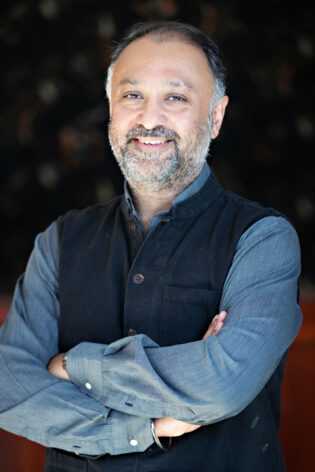
Mandeep Tiwana, Secretary General, CIVICUS Global Alliance. Credit: CIVICUS

Mandeep Tiwana, Secretary General, CIVICUS Global Alliance. Credit: CIVICUS

BULAWAYO & BANGKOK, Oct 31 2025 (IPS) – From the streets of Bangkok to power corridors in Washington, the civil society space for dissent is fast shrinking. Authoritarian regimes are silencing opposition but indirectly fueling corruption and widening inequality, according to a leading global civil society alliance.


The warning is from Mandeep Tiwana, Secretary General of CIVICUS Global Alliance, who points to a troubling trend: civil society is increasingly considered a threat to those in power.

That is a sobering assessment from CIVICUS, which reports that a wave of repression by authoritarian regimes is directly fueling corruption and exploding inequality.

“The quality of democracy on hand around the world is very poor at the moment,” Tiwana tells IPS in an exclusive interview. “That is why civil society organizations are seen as a threat by authoritative leaders and the negative impact of attacking civil society means there is a rise in corruption, there is less inclusion, there is less transparency in public life and more inequality in society.”

His comments come ahead of the 16th International Civil Society Week (ICSW) from 1–5 November 2025 convened by CIVICUS and the Asia Democracy Network. The ICSW will bring together more than 1,300 delegates comprising activists, civil society groups, academics, and human rights advocates to empower citizen action and build powerful alliances. ICSW pays tribute to activists, movements, and civil society achieving significant progress, defending civic freedoms, and showing remarkable resilience despite the many challenges.

The ICSW takes place against a bleak backdrop. According to the CIVICUS Monitor, a research partnership between CIVICUS and over 20 organizations tracking civic freedoms, civil society is under attack in 116 of 198 countries and territories. The fundamental freedoms of expression, association, and peaceful assembly face significant deterrents worldwide.

Protests at COP27 in Egypt. Mandeep Tiwana, Secretary General of CIVICUS Global Alliance, is hopeful that COP30, in Belém, Brazil, will be more inclusive. Credit: Busani Bafana/IPS

Protests at COP27 in Egypt. Mandeep Tiwana, Secretary General of CIVICUS Global Alliance, is hopeful that COP30, in Belém, Brazil, will be more inclusive. Credit: Busani Bafana/IPS

“It is becoming increasingly dangerous to be a civil society activist and to be the leader of a civil society organization,” Tiwana tells IPS. “Many organizations have been defunded because governments don’t like what they do to ensure transparency or because they speak out against some very powerful people. It is a challenging environment for civil society.”

Research by CIVICUS categorizes civic freedom in five dimensions: open, narrowed, obstructed, repressed, and closed. Alarmingly, over 70 percent of the world’s population now lives in countries rated in the two worst categories: ‘repressed’ and ‘closed.’

“This marks a regression in democratic values, rights, and accountability,” Tiwana noted, adding that even in the remaining 30% of nations, restrictions on civic freedoms remain.

Repression Tools in Tow

The ICSW, being held under the theme ‘Celebrating citizen action: reimagining democracy, rights, and inclusion for today’s world,’ convenes against this backdrop.

Multifaceted tools are used by governments to stifle dissent. Governments are introducing laws to block civil society organizations from receiving international funding while simultaneously restricting domestic resources. Besides, laws have also been enacted in some countries to restrict the independence of civil society organizations that scrutinize governments and promote transparency.

For civil society activists, the consequences are sobering.

“If you speak truth to power, uncover high-level corruption and try to seek transformative change in society, whether it’s on gender equality or inclusion of minorities you  can be subjected to severe forms of persecution,” Tiwana explained. “This includes stigmatization, intimidation,  imprisonment for long periods, physical attacks, and death.”

Multilateralism Tumbles, Unilateralism Rises

Tiwana said there is an increasing breakdown in multilateralism and respect for international laws from which civil society draws its rights.

This erosion of civic space is reflected in the breakdown of the international system. Tiwana identified a surge in unilateralism and a disregard for the international laws that have historically safeguarded the rights of civil society.

“If you look at what’s happening around the world, whether with regard to conflicts in Palestine, in the Congo, in Sudan, in Myanmar, in Ukraine, in Cameroon, and elsewhere, governments are not respecting international norms,” he observed, remarking that authoritarian regimes were abusing the sovereignty of other countries, ignoring the Geneva conventions, and legalizing attacks on civilians, torturing and persecuting civilians.

This collapse of multilateralism has enabled a form of transactional diplomacy, where narrowly defined national interests trump human rights. Powerful states now collude to manipulate public policy, enhancing their wealth and power. When civil society attempts to expose these corrupt relationships, it becomes a target.

“They are colluding to game public policy to suit their interests and to enhance their wealth.  The offshoot of this is that civil society is attacked when it tries to expose these corrupt relationships,” said Tiwana, expressing concern  about the rise in state capture by oligarchs who now own vast swathes of the media and technology landscapes.

Citing countries like China and Rwanda, which, while they have different ways of functioning, Tiwana said both are powerful authoritarian states engaging in transactional diplomacy and are opposed to the civil society’s power to hold them to account.

The election of Donald Trump as US President in 2025 has shattered the foundation of the US as a democracy, Tiwana noted. The country no longer supports democratic values internationally and is at home with  attacks on the media and defunding of civil society.

The action by the US has negative impacts, as some leaders around the world are taking their cue from Trump in muzzling civil society and media freedoms, he said, pointing to how the US has created common cause with authoritarian governments in El Salvador, Israel,  Argentina, and Hungary.

The fight Goes On

Despite facing repression and threats, civil society continues to resist authoritarian regimes. From massive street protests against corruption in Nepal, and Guatemala  to pro-democracy movements that have removed  governments in Bangladesh  and Madagascar,

“People need to have courage to stand up for what they believe and to speak out when their neighbors are persecuted,” Tiwana told IPS. “People still need to continue to speak the truth and come out in the streets in peaceful protest against the injustice that is happening. They should not lose hope.”

On the curtailing of civil society participation in climate change negotiations, Tiwana said the upcoming COP30 in Brazil offered hope. The host government believes in democratic values and including civil society at the table.

“Past COPs have been held in petro states—Azerbaijan, the United Arab Emirates and Egypt—which are all authoritarian states where civil society has been attacked, crushed, and persecuted,” he said. “We are hopeful that there will be greater inclusion of voices and the commitments that will be made to reduce emissions will be ambitious but the question is really going to be after the COP and if those commitments will be from governments that really don’t care about civil society demands or about the well-being of their people.”

Young people, Tiwana said, have shown the way. Movements like Fridays for Future  and the Black Lives Matter have demonstrated the power of solidarity and unified action.

But, given the massive protests, has this resistance led to change of a similar scale?

“Unfortunately, we are seeing a rise in military dictatorships around the world,” Tiwana admitted, attributing this to a fraying appetite by the international community to uphold human rights and democratic values.

“Conflict, environmental degradation, extreme wealth accumulation, and high-level corruption are interlinked because it’s people who want to possess more than they need.”

Tiwana illustrated what he means by global priorities.

“We have USD 2.7 trillion in military spending year-on-year nowadays, whereas 700 million people go to bed hungry every night.”

“As civil society, we are trying to expose these corrupt relationships that exist. So the fight for equality, the struggle to create better, more peaceful, more just societies—something CIVICUS supports very much—are some of the conversations that we will be looking to have at the International Civil Society Week.”

IPS UN Bureau Report

  Source

Quo Vadis UN @80?

Civil Society, Democracy, Editors’ Choice, Global, Global Governance, Headlines, Human Rights, IPS UN: Inside the Glasshouse, TerraViva United Nations

Opinion

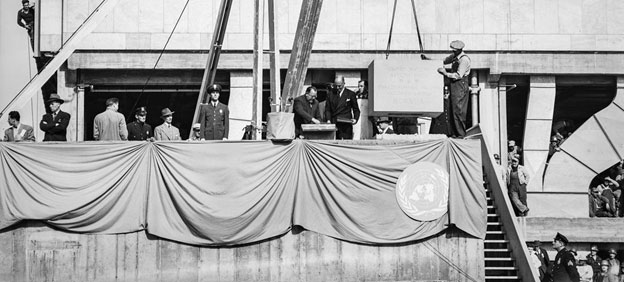
The corner-stone of the UN headquarters building was laid on UN Day at a special open-air General Assembly meeting held on 24 October 1949. Credit: UN Photo

KATHMANDU, Nepal, Oct 13 2025 (IPS) – The United Nations turned 80 this year. What should have been a moment of pride and celebration at the high-level session of the UN General Assembly in September 2025 turned instead into an occasion of bitter irony.


At the UN Headquarters in New York—fittingly located in the host country that once helped found and champion the organization—the loudest fireworks came not from commemoration but condemnation.

The President of the United States, boasting that he had “ended seven wars in seven months while the UN did nothing,” derided the very purpose of the institution. He dismissed climate change as a hoax, renounced the Sustainable Development Goals, and mocked multilateralism as an obsolete bureaucracy.

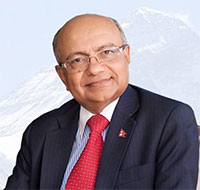
Kul Chandra Gautam

That outburst was shocking, but not surprising. The UN has long been an easy target for populist politicians. Yet even as it endures ridicule and neglect, the truth remains: if the UN did not exist, the world would have to create it again.

An Imperfect but Indispensable Institution

The UN’s failures are glaring and often heartbreaking. As the wars in Ukraine and Gaza rage on—each aided and abetted by two Permanent Members of its Security Council—the organization looks helpless, capable only of issuing pleas and providing meager humanitarian aid.

Its impotence is evident again in Haiti’s gang warfare, Myanmar’s and Sudan’s military atrocities, Afghanistan’s gender apartheid, and North Korea’s saber-rattling, just to name a few.

It is easy to blame “the UN,” but the real culprits are its Member States—especially the five veto-wielding powers of the Security Council, who too often place narrow national interests above global security. Many others strangle the UN with grand resolutions and lofty mandates but fail to fund them.

Hiding behind sovereignty, many governments oppress their citizens, foster corruption, and neglect their global commitments. Meanwhile, the richest nations, capable of lifting millions from poverty, pour trillions of dollars into their militaries.

Still, despite its flaws and frustrations, humanity cannot afford to abandon the United Nations. The challenges of our time— poverty, climate change, pandemics, terrorism, cybercrime, and mass displacement—are “problems without passports.” No nation, however powerful, can solve them alone. Only collective action through a multilateral system can address the interconnected crises that define the 21st century.

For smaller or poorer nations, the UN is an amplifier of voice and leverage. Acting together, they can negotiate more fairly with the powerful. For big and powerful nations, the UN provides legitimacy and a framework for cooperation that unilateral action can never achieve.

The UN, for all its imperfections, remains a mirror of our world: it reflects both our aspirations and our divisions. Its hypocrisy is our hypocrisy; its failures are our failures. Resolutions without resolve and promises without action are the true reasons for its ineffectiveness.

Yet amid the cynicism, it is worth recalling that the UN and its agencies have earned 14 Nobel Peace Prizes—more than any other institution in history. That is no small testament to its contributions to peacekeeping, humanitarian relief, human rights, and development.

But it cannot rest on past laurels. If the UN is to remain relevant, it must transform itself to meet the demands of a rapidly changing world.

Time for Tough Love and Real Reform

UN Secretary-General António Guterres has launched the UN@80 Initiative to sharpen the system’s impact and reaffirm its purpose. A recent system-wide Mandate Implementation Review uncovered a staggering reality: over 30% of mandates created since 1990 are still active, and 86% have no sunset clause. Many require the Secretariat and specialized agencies to carry them out “within existing resources”—an impossible task.

Hundreds of overlapping resolutions and reports clog the UN’s machinery, sustained by bureaucratic inertia and Member States’ appetite for endless paperwork. Too many meetings produce too little action.

Technology now offers a way out. Artificial intelligence can consolidate and streamline reporting, freeing up resources for real work. Likewise, the frequency of governing board meetings—three times a year for agencies like UNDP, UNICEF, UNFPA, UN Women, and WFP—could be reduced without sacrificing accountability.

Facing financial crisis, political hostility from major donors, and a proliferation of unfunded mandates, the UN has no choice but to rationalize its structure. Some agencies will have to merge or move their operations from costly headquarters in New York and Europe to lower-cost locations in Africa, Asia, and the Middle East.

UNICEF has already taken the lead with its “Future Focus Initiative,” with plans to cut headquarters budgets by 25% and relocate 70% of its staff to more affordable hubs such as Bangkok, Nairobi, or Istanbul. Such moves can reduce expenses, bring the organization closer to the field, and align it better with the realities of today’s world.

At the same time, the UN must take advantage of the tremendous growth in professional capacity within developing countries. Many of these nations now produce highly qualified experts who can serve effectively—and at lower cost—than expatriates from the Global North.

UNICEF pioneered this decades ago by hiring national professionals in its field offices. Expanding this practice system-wide would not only save money but also strengthen local ownership and credibility.

These are sensible, short-term measures. But they only scratch the surface. The real test of leadership lies in tackling the deep structural reforms that have eluded the UN for decades.

The Hard Reforms: Power, Accountability, and Money

1. Democratizing the UN

The UN’s mission is to promote peace, democracy, development and human rights—but its own structure remains profoundly undemocratic. The Security Council’s five permanent members hold veto power that can paralyze action even in the face of genocide or aggression.

That provision might have made sense in 1945, but it is indefensible in 2025. Yet changing it requires the consent of those same five powers. Only enlightened leadership in those countries and sustained public pressure globally can bring about reform.

Democratization must also extend to how the UN’s top leaders are chosen. The Secretary-General and heads of major agencies are still selected through opaque bargains among powerful nations. These posts are often “reserved” for certain nationalities rather than awarded on merit. The UN must move toward a transparent, merit-based system if it hopes to regain credibility.

2. Reviving the “Responsibility to Protect”

Too many regimes hide behind the shield of sovereignty to oppress their own people. The world leaders agreed at the UN Millennium Summit in 2005 that when a government fails to protect its citizens—or worse, becomes their tormentor—the international community has a Responsibility to Protect (R2P). The 2024 Pact for the Future reaffirmed that principle.

But R2P has rarely been applied because powerful nations invoke it selectively—protecting their allies and condemning their rivals. True leadership would mean upholding R2P universally, without double standards.

3. Rebalancing Priorities: Disarmament and Development

The UN was founded to prevent war. Yet worldwide military spending now exceeds $2.7 trillion a year—nearly $7.5 billion every day. NATO countries are expanding their defense budgets even as social spending shrinks and commitments to the poor are cut.

This is moral madness. Humanity needs fewer weapons and more investment in sustainable development. Redirecting even a fraction of global military spending toward the Sustainable Development Goals would do more to secure peace than all the bombs in the world.

4. Fixing the UN’s Finances

Money and power often speak louder than moral authority at the UN. The United States contributes about a quarter of the UN’s regular budget—and uses that leverage to exert disproportionate influence. Other large donors do the same.

In 1985, Swedish Prime Minister Olof Palme proposed a simple remedy: no single country should pay—or be allowed to pay—more than 10% of the UN’s budget. That would reduce dependence on any one donor while requiring modest increases from others. Ironically, Washington opposed it, fearing it might lose influence.

Reviving that proposal today could help depoliticize UN financing and make it more sustainable. The UN should also expand partnerships with private philanthropy, foundations, and innovative sources such as taxes on global financial transactions or the use of the global commons. Such mechanisms could liberate the organization from the recurring hostage drama of budget threats and withheld dues.

A Hopeful Horizon

History rarely moves in straight lines. Progress often comes two steps forward and one step back. Today, the post-World War II international order is fraying, and populist nationalism is resurgent. But in the long arc of human history, the movement toward global cooperation is irreversible.

We are slowly—but surely—evolving from primitive tribalism to modern nationalism and onward toward shared global solidarity. Multilateralism may be under siege, but it will rise again, reimagined and renewed, because our interdependence leaves no alternative.

I take hope from the energy and courage of Generation Z across the world—from Nepal and Bangladesh to Kenya, Indonesia, Morocco, and beyond. Young people are challenging corruption, inequality, and authoritarianism, and they see themselves increasingly as global citizens, connected through technology and united by shared aspirations rather than divided by borders or dogma.

If we can offer these young citizens opportunity and justice instead of inequality and despair, we will see the dawn of a more cooperative, humane, and equitable world. That, in turn, will breathe new life into the United Nations—still imperfect, still indispensable, and still humanity’s best hope for promoting peace and prosperity.

Kul Chandra Gautam, a former Deputy Executive Director of UNICEF and Assistant Secretary-General of the United Nations, is the author of ‘Global Citizen from Gulmi: My Journey from the Hills of Nepal to the Halls of United Nations’.

IPS UN Bureau

  Source