Housing is Both a Prevention & Cure for COVID-19

Civil Society, Development & Aid, Editors’ Choice, Featured, Global, Global Governance, Headlines, IPS UN: Inside the Glasshouse, Poverty & SDGs, TerraViva United Nations

Opinion

Maimunah Mohd Sharif is United Nations Under-Secretary-General and Executive Director of UN-Habitat & Leilani Farha is the former UN Special Rapporteur on the Right to Adequate Housing, and Global Director of The Shift.
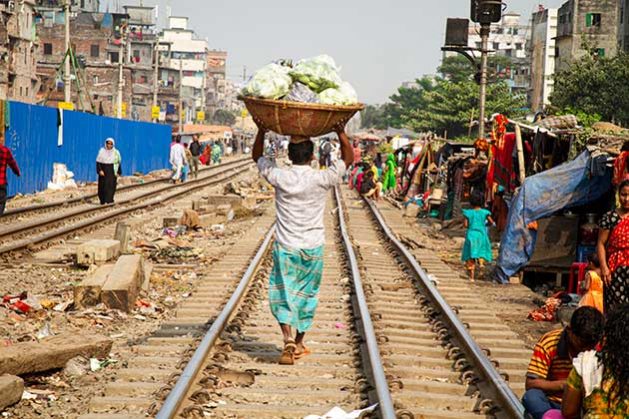
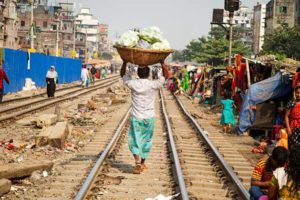
The Bijoy Sarani Railway Slum in Dhaka, Bangladesh. Credit: UNHabitat/Kirsten Milhahn

NAIROBI, Kenya, May 13 2020 (IPS) – Public health officials are calling the “stay home” policy the sacrifice of our generation. To flatten the curve of COVID-19 infections, this call of duty is now emblazoned on t-shirts, in street art and a celebrity hashtag.


But for the 1.8 billion people around the world living in homelessness and inadequate shelter, an appeal to “stay home” as an act of public health solidarity, is simply not possible. Such a call serves to highlight stark and long-standing inequalities in the housing market. It underscores that the human right to shelter is a life or death matter.

Throughout this global pandemic, governments are relying on access to adequate housing to slow the viral spread through self-isolating or social distancing policies. Yet, living conditions in poor or inadequate housing actually create a higher risk of infection whether from overcrowding which inhibits physical distancing or a lack of proper sanitation that makes regular hand-washing difficult.

At the most extreme, people experiencing homelessness must choose between sleeping rough or in shelters where physical distancing and adequate personal hygiene are almost impossible. Homeless populations and people living in inadequate housing often already suffer from chronic diseases and underlying conditions that make COVID-19 even more deadly.

It is now clear, housing is both prevention and cure – and a matter of life and death – in the face of COVID-19. Governments must take steps to protect people who are the most vulnerable to the pandemic by providing adequate shelter where it is lacking and ensuring the housed do not become homeless because of the economic consequences of the pandemic.

These crucial measures include stopping all evictions, postponing eviction court proceedings, prohibiting utility shut-offs and ensuring renters and mortgage payers do not accrue insurmountable debt during lockdowns.

In addition, vacant housing and hotel rooms should be allocated to people experiencing homelessness or fleeing domestic violence. Basic health care should be provided to people living in homelessness regardless of citizenship status and cash transfers should be established for people in urgent need.

Steps should be quickly taken to establish emergency handwashing facilities and health care services for at-risk and underserved communities and informal settlements.

In many cities and countries, emergency measures are already moving in this direction.

Berlin opened a hostel to temporarily house up to 200 homeless people, catering to all nationalities. The Welsh government pledged GBP10 million to local councils for emergency homeless housing by block booking empty lodging like hotels and student dormitories.
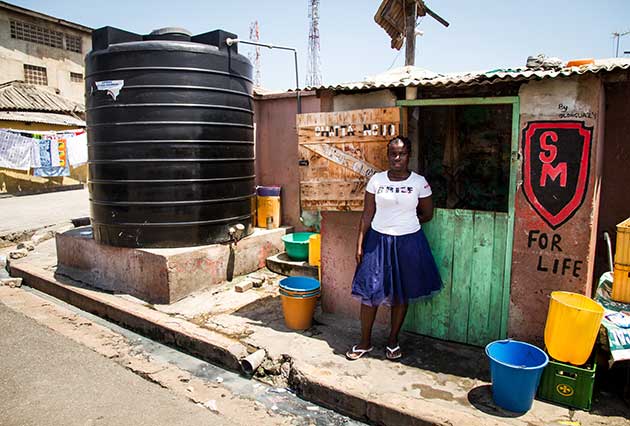
A woman outside a community run water facility in Old Town, Accra Ghana. Credit: UNHabitat/Kirsten Milhahn

In South Africa where under half of all households have access to basic handwashing facilities and in Kenya, where it is under a quarter of households, governments are increasing access to water for residents living in rural areas and informal settlements by providing water tanks, standpipes, and sanitation services in public spaces.

Many jurisdictions, such as Canada’s province of British Columbia, have suspended evictions. The eviction ban means landlords cannot issue a new notice to end a tenancy for any reason and existing orders will not be enforced.

Spain, France, the United Kingdom and the United States have announced mortgage postponements in an effort to curb potential defaults.

National and local governments are also working with the private sector to tackle housing issues. For example, Singaporean firms with government backing are providing accommodation for Malaysian workers who had been commuting to Singapore daily.

And as they are no tourists in Barcelona, the city has agreed with the Association of Barcelona Tourist Apartments to allocate 200 apartments for emergency housing for vulnerable families, homeless people and those affected by domestic violence.

Some cities are leveraging citizen solidarity. Residents of Los Angeles are making hand-washing stations for homeless people living in a depressed area known as Skid Row which are installed and maintained by a local community centre.

All of these urgent measures and more are desperately needed and demonstrate the way in which housing is inherently connected to our collective public health. These successful interventions also show concrete ways that governments and communities can effectively tackle the pre-existing global housing crisis – a crisis which affected at least 1.8 billion people worldwide, even before the pandemic.

In 2018 the European Federation of National Organisations Working with the Homeless reported that homelessness had skyrocketed across the continent. In the United States, 500,000 people are currently homeless, 40 per cent of whom are unsheltered.

In April last year, the Organization for Economic Cooperation and Development (OECD) warned that rent is currently the biggest expense for households accounting on average for one-third of their income. In the last two decades, housing prices have grown three times faster than incomes.

The current global housing system treats housing as a commodity. In times of crisis, the inefficiencies of the market are clear with the public sector expected to absorb liabilities.

This is not sustainable and many cities are struggling to find shelter for their citizens. COVID-19 has brought into sharp relief the housing paradox – in a time when people are in n desperate need for shelter, apartments and houses sit empty. This market aberration needs correcting.

Governments are at a crossroads. They can treat COVID-19 as an acute emergency and address immediate needs without grappling with hard questions and fundamental questions about the global housing system.

Or they can take legislative and policy decisions to address immediate needs, while also addressing the present housing system’s structural inequalities, putting in place long term ‘rights-based’ solutions to address our collective right to adequate shelter. Housing must be affordable, accessible and adequate.

COVID-19 is unlikely to be the last pandemic or global crisis that we face. What we do now will shape the cities we live in, and how resilient we will be in the future.
  Source

Coronavirus Hasn´t Slowed Down Ecological Women Farmers in Peru’s Andes Highlands

Active Citizens, Civil Society, Development & Aid, Economy & Trade, Editors’ Choice, Featured, Food & Agriculture, Gender, Green Economy, Headlines, Latin America & the Caribbean, Regional Categories, Special Report, TerraViva United Nations, Women & Economy

Women & Economy

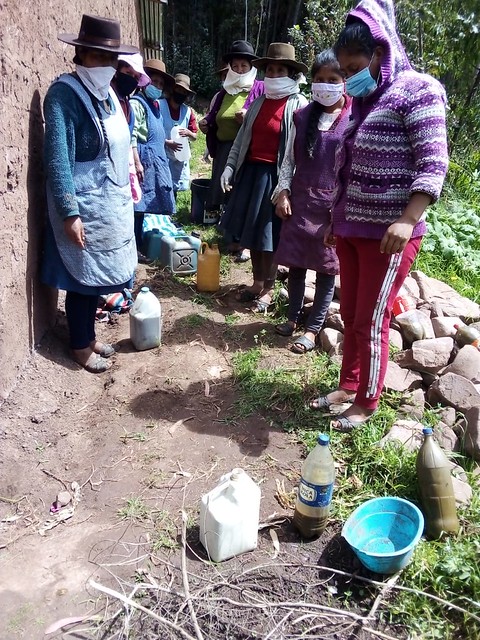
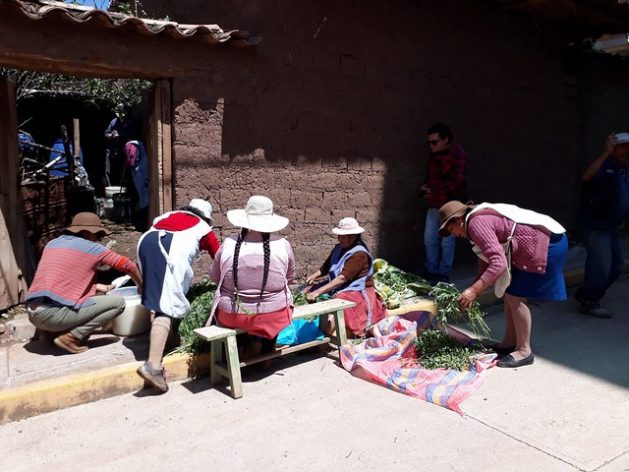
Quechua indigenous farmers from the town of Huasao, in the Andes highlands of Peru, cut insect repellent plants in front of Juana Gallegos' house, while others prepare the biol mixture, a liquid organic fertiliser that they use on their vegetable crops. CREDIT: Mariela Jara/IPS

Quechua indigenous farmers from the town of Huasao, in the Andes highlands of Peru, cut insect repellent plants in front of Juana Gallegos’ house, while others prepare the biol mixture, a liquid organic fertiliser that they use on their vegetable crops. CREDIT: Mariela Jara/IPS

HUASAO, Peru, May 6 2020 (IPS) – It’s eight o’clock in the morning and Pascuala Ninantay is carrying two large containers of water in her wheelbarrow to prepare with neighbouring women farmers 200 litres of organic fertiliser, which will then be distributed to fertilise their crops, in this town in the Andes highlands of Peru.


“We grow healthy, nutritious food without chemicals,” she tells IPS, describing the sustainable agriculture she practices in Huasao, a town of about 1,500 people in Quispicanchi province, 3,300 metres above sea level, in the department of Cuzco in south-central Peru.

It will take them four hours to prepare the “biol”, a liquid fertiliser composed of natural inputs contributed by the local farmers as part of a collective work tradition of the Quechua indigenous people, to which most of the inhabitants of Huasao and neighbouring highlands villages in the area belong.

“Between all of us we bring the different ingredients, but we were short on water so I went to the spring to fill my ‘galoneras’ (multi-gallon containers),” explains Ninantay.

The women, gathered at the home of Juana Gallegos, work in community. While some gather insect repellent plants like nettles and muña (Minthostachys mollis, an Andes highlands plant), others prepare the huge plastic drum where they will make the mixture that includes ash and fresh cattle dung.

They keep working until the container is filled with 200 litres of the fertiliser which, after two months of fermentation in the sealed drum, will be distributed among them equally.

Making organic fertiliser is one of the agro-ecological practices that Ninantay and 15 of her neighbours have adopted to produce food that is both beneficial to health and adapted to climate change.

They are just a few of the almost 700,000 women who, according to official figures, are engaged in agricultural activities in Peru, and who play a key role in the food security and sovereignty of their communities, despite the fact that they do so under unequal conditions because they have less access to land, water management and credit than men.

That is the view of Elena Villanueva, a sociologist with the Flora Tristán Centre for Peruvian Women, a non-governmental organisation that for the past two years has been promoting women’s rights and technical training among small-scale women farmers in Huasao and six other areas of the region, with support from two institutions in Spain’s Basque Country: the Basque Development Cooperation agency and the non-governmental Mugen Gainetik.

“During this time we have seen how much power the 80 women we have supported have gained as a result of their awareness of their rights and their use of agro-ecological techniques. In a context of marked machismo (sexism), they are gaining recognition for their work, which was previously invisible,” she told IPS.

A group of women farmers are ready to head out to the plots they farm on the community lands outside of Huasao, a rural town in Peru's Andes highlands department of Cuzco. They are wearing masks to prevent the spread of COVID-19, because they depend on their production for food and income from the sale of the surplus, to cover their household expenses. CREDIT: Nayda Quispe/IPS

A group of women farmers are ready to head out to the plots they farm on the community lands outside of Huasao, a rural town in Peru’s Andes highlands department of Cuzco. They are wearing masks to prevent the spread of COVID-19, because they depend on their production for food and income from the sale of the surplus, to cover their household expenses. CREDIT: Nayda Quispe/IPS

This group of women farmers is convinced of the need for nutritious food that does not harm people’s health or nature, and they are happy to do their small part to make that happen.

“We want to have a variety of food constantly available, but taking care of our soil, water, plants, trees and air,” says Ninantay.

“We no longer use chemicals,” says Gallegos. “Thanks to the training we have received, we understood how the soil and our crops had become so dependent on those substances, we thought that only by using them would we have a good yield. But no, with our own fertilisers we grow lettuce, tomatoes, chard, artichokes, radishes and all our big, beautiful, tasty vegetables. Everything is organic.”

Once they were producing their fresh produce using agro-ecological techniques, the women decided to also begin growing their staple crops of potatoes and corn organically. “I see that the plants are happier and the leaves are greener now that I fertilise them naturally,” says Ninantay.

Villanueva says these decisions on what to plant and how to do it contribute to new forms of agricultural production that meet the food needs of the women and their families while also contributing to the sustainable development of their communities.

“With agro-ecology they enrich their knowledge about the resistance of crops to climate change, they carry out integrated management of pests and diseases, and they have tools to improve their production planning,” she explains.

And even more important, “this process raises their self-esteem and strengthens their sense of being productive citizens because they are aware that they are taking care of biodiversity, diversifying their crops and increasing their yields,” she adds.

Thanks to this, these peasant women are obtaining surpluses that they now market.

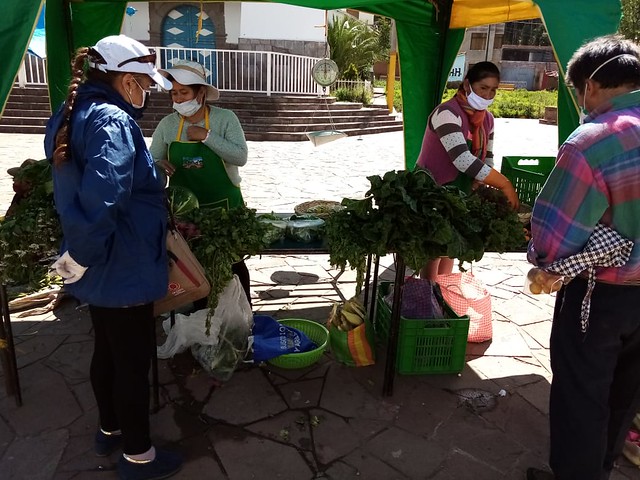
Three times a week, Ninantay and the other women set up their stall in Huasao’s main square where they sell their products to the local population and to tourists who come in search of local healers, famous for their fortune telling and cures, which draw on traditional rituals and ceremonies.

The agro-ecological women farmers set up their stall three times a week in the main square of the rural municipality of Huasao to sell lettuce, tomatoes, Chinese onions, radish and other fresh produce. They are now marketing their wares in compliance with the health regulations put in place in response to the coronavirus pandemic, for which they have received training from the municipal authorities. CREDIT: Nayda Quispe/IPS

The agro-ecological women farmers set up their stall three times a week in the main square of the rural municipality of Huasao to sell lettuce, tomatoes, Chinese onions, radish and other fresh produce. They are now marketing their wares in compliance with the health regulations put in place in response to the coronavirus pandemic, for which they have received training from the municipal authorities. CREDIT: Nayda Quispe/IPS

Coronavirus alters local dynamics

However, the measures implemented by the central government on Mar. 15 to curb the spread of the COVID-19 pandemic have reduced trade, by not allowing outsiders to visit Huasao, known locally as “the village of the witchdoctors” because of its healers.

But the work in the fields has not stopped; on the contrary, the women are working harder than ever.

“We used to have the income of my husband who worked in the city, but because of the state of emergency he can no longer leave,” says Ninantay. “My fellow women farmers are in the same boat, so we continue to harvest and sell in the square and what we earn goes to buying medicines, masks, bleach and other things for the home.”

Initially, she says, the husbands didn’t want their wives to participate in the project and stay overnight away from home to attend the training workshops. But after they saw the money they were saving on food and the income the women were earning, “they now recognise that our work is important.”

Their husbands, like most Huasao men, do not work in the fields. They work in construction or services in the city of Cuzco, about 20 km away, or migrate seasonally to mining regions in search of a better income.

So the community lands, where each family has usufruct rights on three-hectare plots, were left in the hands of women, even though the title is usually held by the men. With the opportunity offered by the Flora Tristán project, they have increased their harvests and are no longer merely subsistence farmers but earn an income as well.

Despite the pandemic, the women obtained permission from the authorities and received training on the care and prevention measures to be followed in order to market their products under conditions that are safe for them and their customers.

Their stall at the open-air market in the town’s main square is already known for offering healthy food, and on Mondays, Tuesdays and Thursdays they run out of vegetables and other products they offer. They also sell their wares in other fairs and markets.

Their stall in the municipal market is also seen as an alternative to return to more natural foods in the face of the increasing change in eating patterns in rural areas.

“Many people don’t want to eat quinoa or ‘oca’ (Oxalis tuberosa, an Andean tuber), they prefer noodles or rice,” says Ninantay. “Children fill up on sweets and junk food and they are not getting good nutrition, and that’s not right. We have to educate people about healthy eating if we want strong new generations.”

She stresses the importance of people understanding that nature, “Mother Earth”, must be respected.

“We have to recover the wisdom of our ancestors, of our grandmothers, to take care of everything that we need to live,” she warns. “If we do not do this, our grandchildren and their children will not have water to drink, seeds to plant, or food to eat.”

Flora Tristán’s Villanueva announced that the 80 women farmers in the programme would participate in initiatives for the recovery of agricultural and water harvesting practices based on forestation and infiltration ditches, using native trees known as chachacomas (Escallonia resinosa) and queñuas (Polylepis).

The women hope that their experience and knowledge will be extended on a large scale, because although they share with their families, neighbours and relatives what they are learning, they believe that the authorities should help expand these practices.

“We would like not only Huasao, but all of Cuzco to be an agro-ecological region, so that we can help nature and guarantee healthy food for the families of the countryside and the city,” says Gallegos, convinced that if they could do it, everyone can.

  Source

Impact of COVID-19 on Tourism in Small Island Developing States

Civil Society, Development & Aid, Economy & Trade, Featured, Global, Headlines, Health, Human Rights, Humanitarian Emergencies, Inequity, TerraViva United Nations

Opinion

Pamela Coke-Hamilton, Director, Division on International Trade and Commodities, UN Conference on Trade & Development (UNCTAD)

Small island developing states are most vulnerable to the impact of COVID-19 on tourism not only because they are highly dependent on tourism, but also because any shock of such magnitude is difficult to manage for small economies

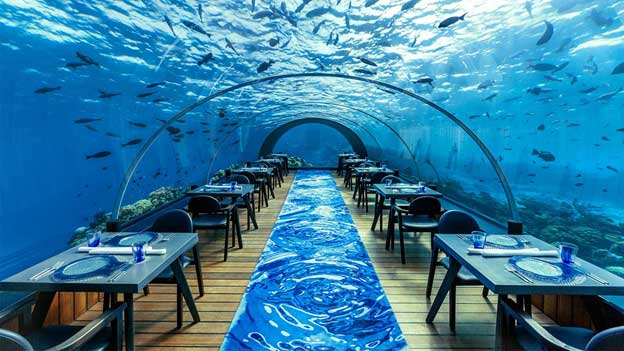
An undersea restaurant in the Maldives, a Small Island Developing State (SIDS)

GENEVA, May 4 2020 (IPS) – The COVID-19 pandemic and the measures put in place to contain its diffusion are taking a heavy toll on the tourism sector. According to the United Nations World Tourism Organization (UNWTO), the COVID-19 pandemic will result in a contraction of the tourism sector by 20% to 30% in 2020.


This estimate is likely to be conservative for countries relying on foreign tourists, as the recent data on daily air traffic indicate a drop of almost 80% since January 2020.

While many economic sectors are expected to recover once restrictive measures are lifted, the pandemic will probably have a longer lasting effect on international tourism. This is largely due to reduced consumer confidence and the likelihood of longer restrictions on the international movement of people.

According to the World Travel and Tourism Council (WTTC), in previous viral epidemics the average recovery time for visitors to a destination was about 19 months.

Highly vulnerable countries

The sudden, deep and likely prolonged downturn in the travel and tourism sector has made countries that rely heavily on foreign tourism very concerned about their finances.

Among these, small island developing states (SIDS) are most vulnerable not only because they are highly dependent on tourism, but also because any shock of such magnitude is difficult to manage for small economies.

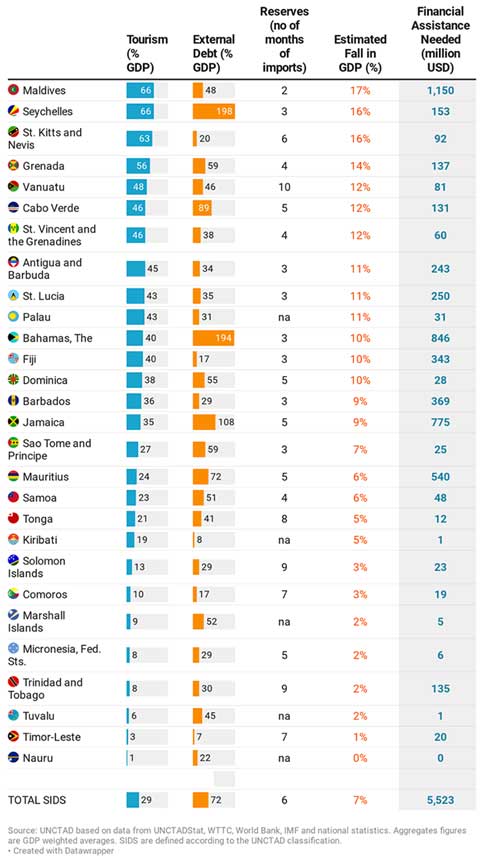
On average, the tourism sector accounts for almost 30% of the gross domestic product (GDP) of the SIDS, according to WTTC data. This share is over 50% for the Maldives, Seychelles, St. Kitts and Nevis and Grenada.

Overall, travel and tourism in the SIDS generates approximately $30 billion per year. A decline in tourism receipts by 25% will result in a $7.4 billion or 7.3% fall in GDP. The drop could be significantly greater in some of the SIDS, reaching 16% in the Maldives and Seychelles.

It is expected that for many SIDS, the COVID-19 pandemic will directly result in record amounts of revenue losses without the alternative sources of foreign exchange revenues necessary to service external debt and pay for imports.

Devastating economic consequences

In general, countries may be able to weather economic storms by relying on additional debt or using available foreign reserves.

However, access to global capital markets is increasingly tight, more so for small countries such as SIDS, which are often highly indebted and not well diversified.

The external debt of the SIDS as a group accounts for 72.4% of their GDP on average, reaching up to 200% in the Seychelles and the Bahamas.

Foreign reserves are also generally low, with many of the SIDS possessing only the reserves sufficient for a few months of imports. Given these statistics, it is evident that without international assistance, the economic consequences of the pandemic will be devastating for many of the SIDS.

Immediate financial needs

By considering the economic impact of reduced tourism revenues (assuming a 25% decline in tourism receipts and restoring the minimum level of import coverage (three months), it is possible to provide a rough estimate of each country’s immediate financial needs to offset the damage of the pandemic.

Currently, the SIDS would need about $5.5 billion to counteract the adverse effects of the pandemic on their economies.

The Maldives stands out with a need of $1.2 billion due to its reliance on tourism revenues, followed by the Bahamas and Jamaica.

Many of the SIDS, like Jamaica and the Bahamas, also face high external debt burdens which require complementary external debt suspension or relief programmes.

Table 1: Tourism, Debt and Foreign Currency Reserve Indicators

International response

While governments all over the world have announced fiscal measures totalling $8 trillion to combat the pandemic, the international community has also mobilized funds through international financial institutions to counteract the economic crisis in the most vulnerable countries.

The International Monetary Fund (IMF) created a $50 billion fund through its rapid-disbursing emergency financing facilities for low-income and emerging market countries. It has earmarked $10 billion to serve its poorest members with a zero-interest rate. Regional banks have also created response facilities aimed at financially supporting their members.

What options are available for SIDS?

The IMF has just revamped the Catastrophe Containment and Relief Trust (CCRT) to offer short term debt reliefs to some of its members.

While some SIDS such as Comoros, São Tomé and Príncipe, and the Solomon Islands have already requested and obtained debt relief, there is room for more SIDS to take advantage of this option. While many of the SIDS are not among the poorest countries, they are vulnerable. This is further compounded by high levels of external debt many SIDS experience.

It is critical that SIDS have access to funding at zero interest rates and can suspend existing debt payments until they are financially ready to service their external debt obligations.

Ultimately, this can help blunt the impact of external shocks such as COVID-19 and equip them with the necessary financial resources to plan their next steps for their economic development.

  Source

Collaboration Can Help Eradicate COVID-19

Civil Society, Development & Aid, Education, Featured, Global, Headlines, Health, Humanitarian Emergencies, TerraViva United Nations

Opinion

Rev Liberato C. Bautista is assistant general secretary for United Nations and International Affairs of the United Methodist Board of Church and Society. He also serves as president of the Conference of Non-Governmental Organizations in Consultative Relationship with the United Nations.

Coronavirus pandemic threatens crises-ravaged communities, UN appeals for global support. Credit: United Nations

NEW YORK, Apr 23 2020 (IPS) – Since the founding of the United Nations in 1945, space for multilateral policy development and commitment has grown. Its growth in the global health field augurs well as we find ways to mitigate the spread of the novel coronavirus.


Multilateralism is a difficult word, often misconstrued to be about the global and not the local and daily life. Perception plays a major role in how the public perceives multilateralism. This is in part due to the complexity of modern global challenges, which are well beyond the capacity of any one state or even a small group of states to resolve by themselves.

The novel coronavirus pandemic may yet change this perception.

As the saying goes, all politics is local. My rejoinder to this is that one’s local is another’s global. The local and the global are simultaneous realities. United Methodist connectionalism is akin to multilateralism.

As a church, we address social issues central to the multilateral agenda, including health, migration, peace, climate, and concerns about global poverty, trading and commerce, sustainable development, social justice, women, children and gender justice, human rights, indigenous peoples, and more.

Holistic health, healing and wholeness are intrinsic to Methodism and its Wesleyan roots. John Wesley attended to both the care for the soul and for the biological body with his abundant tips and remedies for ailments during his time.

Throughout the United Methodist connection, we are doing advocacy on public health policies at national legislatures and multilateral settings. We are in global mission together for sustainable development and humanitarian assistance, building capacity for peoples and communities to manage their healthcare needs.

Our numerous United Methodist-affiliated clinics, hospitals, colleges and universities around the world are training medical, health, social work and pastoral care professionals.

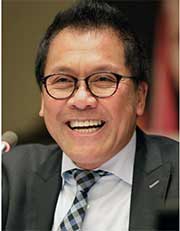
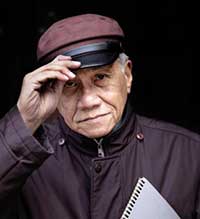
The Rev. Liberato Bautista. Credit: Marcelo Schneider, World Council of Churches

Human rights intrinsic to health, healing and wholeness

Global pandemics such as the novel coronavirus respect no sovereign boundaries or national allegiances. The coronavirus ravages all peoples across races and social classes, but its effects are more devastating on vulnerable populations everywhere and on struggling low- and middle-income economies around the world.

To mitigate the virulent spread of COVID-19, we are called by national authorities to stay at home, wash our hands, stay in place and practice physical distancing. These public health directives imply that we have houses to stay in, water to wash our hands, and some space where we can move around and still maintain six feet distance from each other.

When Philippine government officials issued the directive for Filipinos to stay at home, Norma Dollaga, a United Methodist deaconess and justice advocate from the Philippines, reacted through her Facebook page: “Stay at home. That’s for those who have homes. How about the homeless?”

The reality is that the human rights to health, housing and water, along with human mobility, have long been imperiled in many places around the world prior to COVID-19’s onslaught. Moreover, the health crisis has been used as an excuse in other parts of the world to grab power or tighten national security laws that are assaulting civil liberties and violating democratic rights.

Neither pandemic nor political or economic exigency can derogate from the enjoyment of fundamental human rights.

That the outbreak of COVID-19 started in Wuhan City in China has resulted in undue rise in racist and xenophobic acts especially against people of Chinese origin, or Asians in general. This is on top of an ongoing surge of populism and xenophobic nationalism around the world.

Health is wealth, fund it robustly

If health is wealth, it behooves peoples and their governments to protect it. Health care workers who are on the front line against this pandemic should have all the resources they need without begging for them.

A war may have been declared in the eradication of the novel coronavirus pandemic. But it is looking more like the deployment of war rhetoric and not the funding that real wars have received.

National budgets are moral documents. Health is the true common wealth that we must invest human and budgetary resources to. Yet we know that defense spending today far outweighs the puny investments from national coffers that health care urgently needs and strategically deserves.

Global collaboration is indispensable

The role of the U.N. in forging global cooperation is crucial, in times of crisis or calm. Global cooperation in the surveillance of emerging viruses and bacteria is necessary if pandemics are to be mitigated and diseases eradicated.

Coordinating this global collaboration and leading the development of a vaccine to treat the COVID-19 disease gives the public good reason to trust global institutions like World Health Organization. Think of the eradication of smallpox — and the ongoing programs to eventually eradicate polio and malaria — as examples of how global cooperation benefits us in our local daily lives.

To triumph over COVID-19, comprehensive cooperation is needed on many fronts — medical, pharmaceutical, healthcare workers, mental health providers, healthcare facilities. Public and private coordination is necessary in ensuring that the supply chain for much needed testing kits, ventilators, as well as personal protective equipment like N95 face masks, gloves, gowns, aprons, face shields and respirators remain unbroken.

A successful multilateral response requires a “whole-of-government,” “whole-of-society” and evidence-based public health approach. Mitigation works best when countries share expertise and scientific knowledge about threats to health, to climate, to populations and to peace and security.

Social inequalities imperil public health

The Commission on the Social Determinants of Health established by WHO in 2005 elaborated on the disastrous effects of social inequalities on people’s health. The intersections of physical, mental and social health, healing and wholeness are abundantly clear.

The commission’s 2008 final report stated: “The social determinants of health are the conditions in which people are born, grow, live, work and age. These circumstances are shaped by the distribution of money, power and resources at global, national and local levels.

The social determinants of health are mostly responsible for health inequities — the unfair and avoidable differences in health status seen within and between countries.”

The U.N. commemorates its 75th anniversary this year. It is an auspicious time to reaffirm support for its mandates, especially the securing of health for all peoples and the planet. A healthy population makes for a healthy planet.

Nongovernmental organizations, including faith-based organizations like our United Methodist representations at the U.N., are in a kairos moment to help achieve the U.N.’s mandates.

COVID-19 may have been virulent and will forever change the rules of social etiquette and socialization. But the novel coronavirus has done what multilateral negotiations have not done — pause globalization and its unbridled pursuit of profit and capital.

When the world reopens from the ravages of the virus, we have a momentous task not to return to, but to transform, global and local arrangements to protect humanity and the planet, at least from the ravages of pandemics and social inequalities.

It comforts me that not all contagions are deadly. Some are beneficial. Love and kindness are. So are hospitality, mercy and justice.

*This article 0riginally appeared in UM News”. The link follows: https://www.umnews.org/en/news/collaboration-can-help-eradicate-covid-19

  Source

Citizen Action is Central to the Global Response to COVID-19

Active Citizens, Development & Aid, Economy & Trade, Global, Headlines, Health, Humanitarian Emergencies, Labour, TerraViva United Nations

Opinion

NEW YORK and MANILA, Apr 22 2020 (IPS) – The coronavirus (COVID-19) pandemic has created an unprecedented human and economic crisis. Governments are taking strong actions, enforcing quarantines to reduce contagion, testing populations, building emergency intensive care units. Governments have also launched large fiscal stimulus plans to protect jobs and the economy, as well as temporary social protection programs such as income/food support, subsidies to utilities and care services.


Isabel Ortiz

But in many countries, even stronger actions are needed if we are to protect lives and jobs. States must respond adequately to this public emergency. Citizens must question if the measures implemented by their governments are sufficient and adequate.

The following are important issues for citizens and civil society organizations (CSOs) to watch out at the country level:

    1. It is time to invest in universal public health, not only emergency support. Given COVID-19, governments are advised to ramp up public health expenditures. Indeed, respirators, tests and masks are necessary, but countries need more than just emergency support. There is a risk that, as governments will become indebted, they continue with austerity cuts and privatizations that have been eroding public health systems in recent years, returning to a situation where millions are excluded from healthcare.
    2. Stimulating the economy and employment. This is much necessary to support job-generating enterprises during the COVID-19 lockdown. However, citizens need to be vigilant that fiscal stimulus do not go to the wrong hands, to large corporations avoiding taxes, to cronies, to the untaxed financial sector. If public funds are given to companies, it should be with strict conditions to stop tax evasion and share buybacks, undergo adequate regulation, cut obnoxious management bonusses, pay living wages and preserve employment.
    3. Providing social protection, income and food support to people. These measures are extremely urgent if people are to be quarantined and are unable to telework. In developing countries, most work precariously in the informal economy and isolation is not possible, households will suffer hunger with no income. Given the low living conditions in most developing countries, policymakers should consider the need for universal social protection floors.
    4. Governments need more executive powers to implement these measures. States and public policies have been weakened over the last decades by deregulations, privatizations and budget cuts. Better planning, better resources and better public policies for all citizens are needed, but it is important to ensure that far right and authoritarian leaders do not use the need for decisive executive action to grab more power for their own ends (eg. Brazil, Hungary, India, Philippines, US).

Additionally, it is important for citizens and CSOs to push for the following measures at the global level:

Walden Bello

    5. Support for global public health, at stake is the survival of the planet. The coronavirus pandemic has revealed the weak state of global public health systems – generally overburdened, underfunded and understaffed because of earlier austerity policies and privatizations. There is urgent need to improve the global governance of health, including the strengthening the WHO and UN agencies that support the extension of public health systems, as well as CSOs monitoring progress.
    6. Put pressure on the international financial institutions such as the IMF and the development banks, so their policies support universal public health systems, jobs and social protection floors at present as well as after the COVID-19 emergency, including resources and fiscal space to finance them.
    7. Given high sovereign debt levels, continue lobbying for debt forgiveness or radical debt relief to ensure that countries get the needed financing; or at least a debt moratoria, and later debt restructuring/relief.
    8. Watch out that new debt and fiscal deficits created to respond to COVID-19 do not result in a new round of austerity cuts with negative social impacts that will undermine public health systems, jobs and social protection.
    9. Ensure capital controls. Capital is flying North to safety, to the US, to Europe. Developing countries are going to be hard hit, not only because of the capital drain but also from the fall of commodity prices and others. Capital controls are easy to implement, with immediate results.
    10. A Global Marshall Plan, or a Global Green New Deal. Global problems require global solutions; after the WW2, the US implemented a Marshall Plan to rebuild Europe. This time, no country alone can or should finance a global plan, it can be built as part of a progressive multilateralism. There are many ways to finance it, solidarity taxes to wealth may well be a best way to reduce inequalities and even up world’s development. It can be complemented by other measures such as issuing more Special Drawing Rights (SDRs) at the international organizations.

The coronavirus pandemic has provided stark evidence of the weaknesses and extreme injustices of our world. We must not return to “normality”, a world where half of its population is living below the poverty line of $5.50 a day. We must move away from an inequitable model based on unregulated finance and corporate power, blind to harmful social and environmental impacts. We must back away from a system that disregards the work of health staff, cleaners, garbage collectors, farmers, and instead reward with huge salaries corporate managers, football players, and others who do not perform any essential activity. Now citizens have the opportunity to move forward.

As countries and enterprises recuperate from the crisis, they will have to rethink their economic model, including fewer links with global supply chains, and more links closer to home. It will be an important time for citizens and CSOs to press for “deglobalization”, making the domestic market again the center of gravity of the economy by preserving local production with decent jobs and green investments, and question global supply chains based on taking advantage of cheaper wages, lesser taxes and environmental regulations elsewhere.

Now is the time for citizens to ensure that world leaders forcefully respond to the COVID-19 crisis, in accordance with human rights. This time it cannot be like many earlier crisis experiences, where insufficient support was provided, or ended in the wrong hands, bailing out banks not the population. Citizens and CSOs have a very important role to play to ensure that governments respond to people.

Isabel Ortiz is Director of the Global Social Justice Program at the Initiative for Policy Dialogue, Columbia University, and former director of the International Labour Organization (ILO) and UNICEF.

Walden Bello is senior analyst at the Bangkok-based Focus on the Global South and the International Adjunct Professor of Sociology at the State University of New York at Binghamton.

  Source

A Global Crisis Like No Other Needs a Global Response Like No Other

Civil Society, Development & Aid, Featured, Global, Headlines, Health, Human Rights, Humanitarian Emergencies, Inequity, TerraViva United Nations

Opinion

Kristalina Georgieva is the Managing Director of the International Monetary Fund (IMF)

WASHINGTON DC, Apr 22 2020 (IPS) – I have been saying for a while that this is a ‘crisis like no other.’ It is:

    • • More complex, with interlinked shocks to our health and our economies that have brought our way of life to an-almost complete stop;
    • • More uncertain, as we are learning only gradually how to treat the novel virus, make containment most effective, and restart our economies; and
    • Truly global. Pandemics don’t respect borders, neither do the economic shocks they cause.

Credit: IMF

The outlook is dire. We expect global economic activity to decline on a scale we have not seen since the Great Depression.

This year 170 countries will see income per capita go down – only months ago we were projecting 160 economies to register positive per capita income growth.

Actions taken

Exceptional times call for exceptional action. In many ways, there has been a ‘response like no other’ from the IMF’s membership.

Governments all over the world have taken unprecedented action to fight the pandemic—to save lives, to protect their societies and economies. Fiscal measures so far have amounted to about $8 trillion and central banks have undertaken massive (in some cases, unlimited) liquidity injections.

For our part, the IMF has $1 trillion lending capacity – 4 times more than at the outset of the Global Financial Crisis—at the service of its 189 member countries. Recognizing the characteristics of this crisis—global and fast-moving such that early action is far more valuable and impactful—we have sought to maximize our capacity to provide financial resources quickly, especially for low-income members.

In this regard, we have strengthened our arsenal and taken exceptional measures in just these two months.

These actions include:
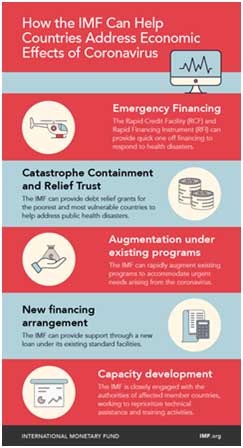
Doubling the IMF’s emergency, rapid-disbursing capacity to meet expected demand of about $100 billion. 103 countries have approached us for emergency financing, and our Executive Board will have considered about half of these requests by the end of the month.
• Reforming our Catastrophe Containment and Relief Trust, to help 29 of our poorest and most vulnerable members—of which 23 are in Africa—through rapid debt service relief, and we are working with donors to increase our debt relief resources by $1.4 billion. Thanks to the generosity of the UK, Japan, Germany, the Netherlands, Singapore, and China, we are able to provide immediate relief to our poorest members.
• Aiming to triple our concessional funding via our Poverty Reduction and Growth Trust for the most vulnerable countries. We are seeking $17 billion in new loan resources and, in this respect, I am heartened by pledges from Japan, France, UK, Canada, and Australia promising commitments totaling $11.7 billion, taking us to about 70 percent of the resources needed towards this goal.
• Supporting a suspension of official bilateral debt repayments for the poorest countries through end 2020—a ground-breaking accord among G20 countries. This is worth about $12 billion to nations most in need. And calling for private sector creditors to participate on comparable terms—which could add a further $8 billion of relief.
• Establishing a new short-term liquidity line that can help countries strengthen economic stability and confidence.

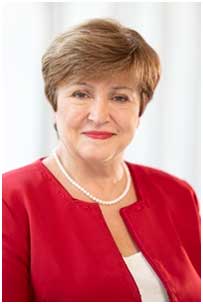
Kristalina Georgieva

This is the package of actions that the International Monetary and Financial Committee endorsed last week at our virtual Spring Meetings.

It represents a powerful policy response. Above all, it enables the IMF to get immediate, ‘here and now’ support to countries and people in desperate need. Today.

Preventing a protracted recession

But there is much more to be done and now is the time to look ahead. To quote a great Canadian, Wayne Gretzky: “Skate to where the puck is going, not where it has been.”

We need to think hard about where this crisis is headed and how we can be ready to help our member countries, being mindful of both risks and opportunities. Just as we responded strongly in the initial phase of the crisis to avoid lasting scars for the global economy, we will be relentless in our efforts to avoid a painful, protracted recession.

I am particularly concerned about emerging markets and developing countries.

They have experienced the sharpest portfolio flow reversal on record, of about $100 billion. Those dependent on commodities have been further shocked by plummeting export prices. Tourism-dependent countries are experiencing a collapse of revenues, as are those relying on remittances for income support.

For emerging economies, the IMF can engage through our regular lending instruments, including those of a precautionary nature. This may require considerable resources if further market pressures arise.

To prevent them from spreading, we stand ready to deploy our full lending capacity and to mobilize all layers of the global financial safety net, including whether the use of SDRs could be more helpful.

For our poorest members, we need much more concessional financing. With the peak of the outbreak still ahead, many economies will require significant fiscal outlays to tackle the health crisis and minimize bankruptcies and job losses, while facing mounting external financing needs.

But more lending may not always be the best solution for every country. The crisis is adding to high debt burdens and many could find themselves on an unsustainable path.

We therefore need to contemplate new approaches, working closely with other international institutions, as well as the private sector, to help countries steer through this crisis and emerge more resilient.

And the IMF, like our member countries, may need to venture even further outside our comfort zone to consider whether exceptional measures might be needed in this exceptional crisis.

Preparing for recovery

To help lay the foundations for a strong recovery, our policy advice will need to adapt to evolving realities. We need to have a better understanding of the specific challenges, risks and tradeoffs facing every country as they gradually restart their economies.

Key questions include how long to maintain the extraordinary stimulus and unconventional policy measures, and how to unwind them; dealing with high unemployment and ‘lower-for-longer’ interest rates; preserving financial stability; and, where needed, facilitating sectoral adjustment and private sector debt workouts.

We also must not forget about long-standing challenges that require a collective response, such as reigniting trade as an engine for growth; sharing the benefits of fintech and digital transformation which have demonstrated their usefulness during this crisis; and combating climate change—where stimulus to reinforce the recovery could also be guided to advance a green and climate resilient economy.

Finally, in the new post-COVID-19 world, we simply cannot take social cohesion for granted. So, we must support countries’ efforts in calibrating their social policies to reduce inequality, protect vulnerable people, and promote access to opportunities for all.

This is a moment that tests our humanity. It must be met with solidarity.

There is much uncertainty about the shape of our future. But we can also embrace this crisis as an opportunity—to craft a different and better future together.

  Source