Price and Power of Freedom: Celebrating Nelson Mandela International Day

Active Citizens, Civil Society, Democracy, Editors’ Choice, Featured, Headlines, Human Rights, Humanitarian Emergencies, Inequality, International Justice, Sustainable Development Goals, TerraViva United Nations

Human Rights

For to be free is not merely to cast off one’s chains, but to live in a way that respects and enhances the freedom of others. – Nelson Mandela
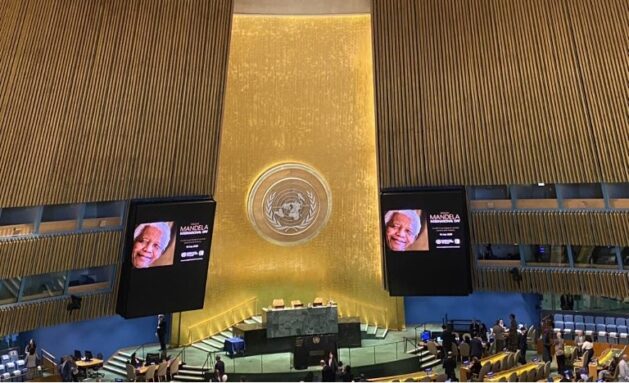
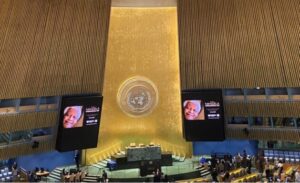
The General Assembly’s Plenary meeting on Nelson Mandela International Day. Credit: Jennifer Xin-Tsu Lin Levine/IPS

The General Assembly’s Plenary meeting on Nelson Mandela International Day. Credit: Jennifer Xin-Tsu Lin Levine/IPS

UNITED NATIONS, Jul 18 2025 (IPS) – The United Nations celebrated Nelson Mandela International Day in honor of the activist and politician’s lifelong commitment to peace and democracy.


At the 16th celebration of Nelson Mandela International Day, delegates, representatives and visitors alike reflected on the impact of South Africa’s first black president and leader in a fully representative democratic election.

The activist and politician, who spent 27 years in prison, was a staunch freedom fighter—arguing that freedom was not only an individual mission but also a collective responsibility and communal effort.

These principles were enshrined in the Nelson Mandela Rules, officially called the United Nations Standard Minimum Rules for the Treatment of Prisoners, a document protecting humane treatment of individuals without liberty. The document emphasizes respect for human dignity, prohibits torture and promotes fair and just conditions.

Although the Nelson Mandela Rules are “soft law” and not legally binding, the General Assembly has adopted them as universally agreed minimum standards. Many countries have incorporated the rules into domestic law, but many others have violated conditions of healthcare, solitary confinement and ethical working rights. Delegates and various speakers agreed that there was still much work to be done.

Nelson Mandela International Day, established in 2009 by the United Nations General Assembly and officially celebrated in 2010 on July 18th (President Mandela’s birthday), is a holiday encouraging all citizens around the world to engage positively in their communities.
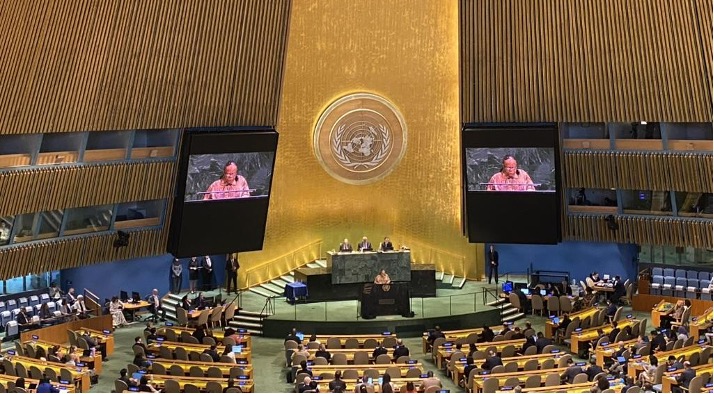
Dr. Naledi Pandor, chair of the Nelson Mandela Foundation, addresses the UN General Assembly Plenary on Nelson Mandela International Day. Credit: Jennifer Xin-Tsu Lin Levin/IPS

Dr. Naledi Pandor, chair of the Nelson Mandela Foundation, addresses the UN General Assembly Plenary on Nelson Mandela International Day. Credit: Jennifer Xin-Tsu Lin Levin/IPS

From annual volunteer events to the annual Mandela Prize, awarded to two laureates each year who have profoundly impacted their communities by serving humanity, speakers, including the award recipients, the Secretary-General and the chair of the Nelson Mandela Foundation, all reflected on Mandela’s legacy on their own lives and on the UN.

In Secretary-General António Guterres’ remarks to the General Assembly at their plenary meeting, he said, “Power is not a personal possession to be harbored. Power is about lifting others up; it’s about what we can achieve with one another and for one another. Power is about people.” He echoed Mandela’s belief in collective grassroots action to deliver power to the powerless, encouraging member states to bring these principles into practice.

Dr. Naledi Pandor, chair of the Nelson Mandela Foundation, similarly called for action against injustice and inequality. She recalled how the United Nations aided South Africa in ending apartheid as it “stood against apartheid domination, not through arms but through bringing its undeniable moral weight into combat against injustice. That boldness, that courage is needed more and more today.”
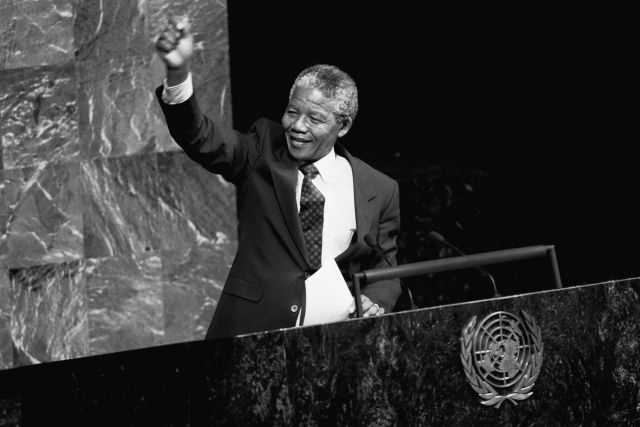
Nelson Mandela, then Deputy President of the African National Congress of South Africa, raises his fist in the air while addressing the Special Committee Against Apartheid in the General Assembly Hall, June 22, 1990. Global alliance CIVICUS commemorated Mandela Day with a reminder that many rights defenders are jailed and intimidated. Credit: UN Photo/Pernaca Sudhakaran

Nelson Mandela, then Deputy President of the African National Congress of South Africa, raises his fist in the air while addressing the Special Committee Against Apartheid in the General Assembly Hall, June 22, 1990. Credit: UN Photo/Pernaca Sudhakaran

Pandor went on to recall Mandela’s political views beyond South Africa—his demand for global equity extended to all, and reflecting on how he might feel about the current state of the world, she quoted his 1990 speech to the UN Special Committee Against Apartheid.

Mandela said, “We also take this opportunity to extend warm greetings to all others who fight for their liberation and their human rights, including the peoples of Palestine and Western Sahara. We commend their struggles to you, convinced that we are all moved by the fact that freedom is indivisible, convinced that the denial of the rights of one diminishes the freedom of others.”

Mandela was a strong supporter of Palestine, often comparing its struggle with South Africa’s. South Africa, even after his death, maintained close ties to Palestine and brought the case of genocide against Israel to the International Court of Justice (ICJ) in 2024.

The 2025 Nelson Mandela laureates, Brenda Reynolds of Saulteaux First Nation and Canada and Kennedy Odede of Kenya, both spoke about how Mandela inspired their respective work. Reynolds, a social worker by trade, led the establishment of a national, culturally grounded mental health initiative for survivors of Indian residential schools.

Reynolds described her work with survivors as an example of Mandela’s notion of moving forward from resentment towards progress—as people found peace with their experiences, they were able to recover and lift up their communities from oppression. She described this as a process of peacebuilding within people, saying, “peace begins with individuals, and from there, you can find peace within your family and within your communities.”

Odede, who founded Kenya’s largest grassroots movement, Shining Hope For Communities (SHOFCO), to empower struggling urban communities, shared how Mandela’s words and experience with struggle inspired him to build within his own life. He found creative ways to organize communities around simple things like soccer, providing hope to people in dire situations.

The representative for The Gambia, who spoke on behalf of the African states, called upon the UN to adhere to Mandela’s principles, particularly on poverty as a man-made horror that can and must be removed by actions of human beings. The representative warned of extreme poverty on the rise, centering the “developing countries and middle-income countries” suffering the most “with unemployment rates beyond records.”

He said, “It is time for solidarity, partnerships and genuine actions where they are most needed,” asserting that poverty and underdevelopment were huge perpetuators of racism, therefore continuing a vicious cycle that oppressed people.

The representative argued, “rising inequity and progressive discrimination are not inevitable; they are a result of decades of policies and dynamics emanating from colonialism, appetite, and discrimination.” Criticizing these practices as misaligned with the UN charter, he pushed the UN to renew their commitment to progressing social development by redistributing wealth.

As the world commemorates Nelson Mandela’s enduring legacy, the message resonating from this year’s observance is clear: his vision of freedom—rooted in dignity, justice and collective responsibility—demands more than remembrance; it requires action. From prison reform to poverty alleviation to indigenous healing to grassroots empowerment, Mandela’s ideals continue to challenge the global community to uphold humanity over power and compassion over indifference. In honoring his life, the UN and its member states are reminded that freedom is not static—it is a continual struggle, a shared pursuit and a moral obligation.

IPS UN Bureau Report

  Source

Sweet Hope to End Bitter Pills for Multidrug-Resistant Tuberculosis

Active Citizens, Africa, Civil Society, Development & Aid, Editors’ Choice, Featured, Headlines, Health, Human Rights, Humanitarian Emergencies, Sustainable Development Goals, TerraViva United Nations, Youth

Health

Rallying call to end TB by 2030. Credit: Busani Bafana/IPS

BULAWAYO, Jul 15 2025 (IPS) – Every day, Yondela Kolweni has to hold down her son, who screams and fights when it is time for his daily life-saving TB tablets—a painful reminder of her battle with the world’s top infectious killer disease.


“It is a fight I win feeling awful about what I have to do,” says Kolweni (30), a Cape Town resident and a TB survivor. “The tablets are bitter, and he spits them out most of the time, and that reminds me of the time I had to take the same pills.”

Kolweni’s five-year-old son is battling Multidrug Resistant TB (MDR TB), a vicious form of TB that is rising among children globally.

The global burden of MDR-TB among children and adolescents has increased from 1990 to 2019, particularly in regions with lower social and economic development levels, according to a recent study. In addition, the top three highest incidence rates of MDR TB in 2019 were recorded in Southern sub-Saharan Africa, Eastern Europe, and South Asia, while the top three highest rates of deaths in the same period were recorded in Southern, Central, and Eastern sub-Saharan Africa.

South Africa is one of 30 countries that account for 80 percent of all TB cases in the world and has the most cases of drug-resistant TB.

A Bitter Pill to Swallow

Kolweni’s son was diagnosed with MDR-TB five years ago, having tested positive for TB which has affected his grandmother and his mother. He was immediately on treatment, a drug cocktail that included moxifloxacin—a pill not for the yellow-livered.

“There were two medications he had to take, and there was one specifically, the yellow one, that he did not like, and with the color he knew what it was,” Kolweni told IPS in an interview, explaining a daily battle to get her son to take his meds.

It was down to a fight. She crushed the tablets, mixed them with a bit of water, and fed them through a syringe.

“We would sometimes hold him or wrap a towel around him so that we could feed him the medication, but he would still spit it out, which meant he was not taking the dosage he was meant to take,” said Kolweni. “We then came up with the idea to put his tablets in his yogurt, but that technique did not work because, being a smart kid, he took the bait but would soon spit out the medication.”

Moxifloxacin, an exceptionally bitter medicine, is one of the key drugs in the new all-oral treatment for multidrug-resistant tuberculosis (MDR TB). The treatment is a combination of the drugs Bedaquiline, Pretomanid, Linezolid and Moxifloxacin, known as BPaLM. The BPaLM regimen is specially formulated for children but is a bitter pill to swallow.

Sweet Medicine

But there is sweet hope. A new study, by Stellenbosch University and the TB Alliance, found that sweet, bitter-masked versions of Moxifloxacin significantly improve kids’ willingness to take the drug—easing the burden on parents and boosting treatment adherence.

Two formulations of moxifloxacin have been identified by children as tasting better than new generic versions of products currently on the market.

The results from the ChilPref ML study—a Unitaid-funded effort sponsored and led by Stellenbosch University in collaboration with TB Alliance—will help improve MDR TB treatment and adherence in children.

Dr. Graeme Hoddinott, of Stellenbosch University and the principal investigator of the study, notes that children cannot be treated in a humane manner for drug-resistant TB if the medicines taste so terrible that children refuse them or must be forced to take them.

Children diagnosed with drug-sensitive TB have good outcomes even within the four months because there is usually one tablet given, and there is a child-friendly formulation that dissolves easily to be given on a spoon or in a syringe, Hoddinott said. However, for drug-resistant TB, the situation is complicated. Most drugs for MDR TB are no longer used because of their toxicity and have been replaced by new drugs.

MDR-TB drugs are not child-friendly, Hoddinott admits. The active ingredient that kills TB in Moxifloxacin makes the pills incredibly bad tasting for children who have to take the medication daily for between six and nine months in cases of MDR TB.

“These drugs are incredibly bad tasting; they are genuinely awful to a point where adults who have been on extended TB treatment have been unable to administer the same drugs to their children because the smell evokes the time when they were sick,” Hoddinott told IPS. “It is a trauma to administer such bad-tasting drugs to a child, both for the parent and the child, particularly for the young children.”

The ChilPref study recruited just under 100 healthy children, ages 5–17, from two diverse settings in South Africa. The children evaluated flavor blends using a ‘swish and spit’ taste panel—tasting the medicine, which was dissolved in water, and then spitting it out without ingesting any of it.

Each child participant ranked the flavor blends among the three from each manufacturer and also rated the taste, smell and other characteristics of each. For moxifloxacin, there was a clear, strong preference for the new flavor blends (“bitter masker” and orange for Macleods, and strawberry and raspberry and tutti frutti for Micro Labs) over the existing commercially available flavors for both manufacturers. For Linezolid, there was no preference between the flavor blends.

“Ensuring children have access to effective and palatable TB treatments is a crucial step in improving adherence and treatment outcomes,” said Koteswara Rao Inabathina, one of the study’s authors and CMC Project Manager at TB Alliance.

“Through close collaboration with manufacturers, we have addressed critical unmet needs by developing practical solutions that make available and effective drug-resistant TB treatments not only accessible but also palatable and acceptable for children.”

The results of the ChilPref study showed that children preferred two new flavor blends of moxifloxacin, produced by Macleods Pharmaceuticals, India, and Micro Labs Pharmaceuticals, India. The results were communicated to the manufacturers, who are already updating their products.

“We are not surprised that a lot of kids did not like any of the tastings because we knew that they were horrible taste-wise, but we got a very clear signal for both manufacturers that the flavor blends we recommended were more preferred,” Hoddinott said. “We changed which flavor was going to market with relatively simple research.”

Dr. Cherise Scott, Senior Technical Manager at Unitaid, said the easier it was for children to take their medicines regularly, the more likely they were to complete their treatment successfully.

“We will not allow children to be neglected in global health responses simply because their needs are more complex.”

A Promising Treatment for MDR TB

As multi-drug-resistant TB transmission increases among children and adolescents, the development of new treatments is imperative, Hoddinott explained.

Moxifloxacin may also be increasingly used in the future for the treatment of drug-susceptible TB, which affects an estimated 1.2 million children globally each year.

Drug-resistant TB, has previously been one of the most difficult diseases to manage because of limited child-friendly treatment options, but scientists have made strides in developing new treatments for children, explains Dr. Anthony Garcia-Prats, one of the study authors and an associate professor at the University of Wisconsin-Madison.

“Now we are making sure that these medicines are appropriate for children, starting with an aspect that children and parents say is critical: taste,” Garcia-Prats said in a statement.

The new treatment is given when TB is either resistant to rifampicin, a critical first-line drug, or rifampicin and isoniazid, another first-line drug combination. These resistant strains are collectively referred to as RR/MDR-TB.

Annually there are an estimated 32,000 new cases of RR/MDR-TB among children 14 years and under—a population that is extremely sensitive to the taste of medicine, according to researchers.

This discovery could help improve adherence to TB medication and move a step closer towards the United Nations Sustainable Development Goal 3 to end TB by 2030.

“It is not a silver bullet,” Hoddinott cautions. “It does not solve everything, as people affected by TB still face many other challenges, and even the preferred flavor blends still do not taste nice. But, as part of the overall fight against TB in children, it’s an important step.”

Kolweni welcomes the development of masked TB medication.

“My experience with TB medication was not nice, and for children it is worse, and I think flavored tablets would make it easy for children to take, like  Gummies,” she said. “Every child loves flavors; even a suspension would be nice. My son would love it, and I will have no trouble getting him to take his medicine.”

Note: This article is brought to you by IPS Noram, in collaboration with INPS Japan and Soka Gakkai International, in consultative status with the UN’s Economic and Social Council (ECOSOC).

IPS UN Bureau Report

  Source

Man, Sea, Algae: HOMO SARGASSUM’s Stirring Critique of Human Culpability in the Caribbean

Active Citizens, Arts, Biodiversity, Climate Change, Editors’ Choice, Environment, Global, Headlines, Latin America & the Caribbean, Natural Resources, TerraViva United Nations

Arts

“Plastic Ocean” by Alejandro Duràn, one of the artworks previously on display in the UN lobby. Credit: Jennifer Levine/IPS

“Plastic Ocean” by Alejandro Duràn, one of the artworks previously on display in the UN lobby. Credit: Jennifer Levine/IPS

UNITED NATIONS, Jul 14 2025 (IPS) – The United Nations’ HOMO SARGASSUM exhibition served as a public immersion into the marine world and called upon viewers to take action in the face of the climate crisis, specifically regarding invasive species and water pollution.


For the past month, an art exhibition entitled HOMO SARGASSUM took up residence in the New York headquarters lobby in connection to World Ocean Month and the 2025 UN Ocean Conference. Organized by the Tout-Monde Art Foundation. In its final week on display, visitors walked through the various projected films, sculptures and photographs. The exhibit closed on July 11.

The work is described as an immersive multisensorial art and science exhibition intended to bring together various experts in science, scholarship and creativity from the Caribbean to share their perspectives on the prevalent environmental and social issue. The exhibit is primarily an introspective study of sargassum, a type of seaweed or algae commonly found on the coast of the Americas and in the Caribbean.

Sargassum, which has proliferated significantly in recent years due to pollution and chemical fertilizer, releases toxic gases that harm nearby residents in water and on land. Animals struggle to survive, and humans experience respiratory failures and burns. This algae has inspired fear since Christopher Columbus recorded his crew’s sighting of the plant. Sargassum has also become a symbol recently for climate change in the Caribbean as well as the coexisting nature of marine and human life.

Co-curator and executive and artistic director of the Tout-Monde Art Foundation Vanessa Selk described the exhibit as a journey rather than a singular experience. She said, “Much like sargassum migrating through the Atlantic Ocean, we encounter natural and human-made challenges such as pandemics, pollutants and hurricanes. This narrative of the global ecological crisis, reflected in silent floating algae, warns us to change our existing paradigms and consider ourselves as one with our environment.”

Billy Gerard Frank, one of the featured artists in HOMO SARGASSUM, echoes this sentiment.

Frank created a mixed-media piece entitled “Poetics of Relation and Entanglement” with a painting featuring Columbus’ archival notes and sargassum pigment, as well as a film he shot on the island of Carriacou. The film centered on a large metal tank surrounded by sargassum, which had washed on shore and rusted onto the massive object. He specifically shot the film around the sargassum and the tank, an eyesore for the locals who used the beach and a barrier to boats trying to leave. Growing up in Grenada, Frank recalls sargassum as a mild inconvenience but explained how it has become more prevalent due to climate change.

However, only in recent years has conversation around sargassum shifted towards the impact of climate change and geographical inequities, like, as Frank noted, how smaller islands that produce significantly lower levels of pollution are the worst affected by climate change through natural disasters.

He referenced the recent Hurricane Beryl, a Category 5 storm that “completely devastated” islands like Carriacou. His inclusion of Columbus’ notes brings a decolonial perspective: the threats Caribbean islands face from mounting climate change are exacerbated by their history of occupation, mostly from European colonial powers. In a global organization like the UN where historical, geographical and environmental context is key to making any decision, such an interdisciplinary perspective is key.

From countless gifts from member states to various donations, the UN has been an artistic hub since its inception. As both a tourist attraction and space of work for international diplomats, the UN is a particularly ripe space for more radical, political art—notably Guernica, a tapestry based on a Picasso painting portraying the Spanish Civil War—due to its broad audience.

Speaking to IPS, Frank shared how influential art has been in political, social and intellectual movements, saying, “historically…creators, writers, and artists have been able to forge ahead and create new spaces…it gives us some hope that our work and the calling are even more important.”

Frank also told IPS how important it was for him to have the work featured at the UN.

“Because the UN is also a site of consternation right now, specifically with everything that’s happening globally. And in fact, that’s the space where this type of work should be, where there should be more conversation, and a space in which it could create a critical dialogue amongst people who work there, but also the public facing that too.”

IPS UN Bureau Report

  Source

Conflict, Climate Change Push Migrants in Yemen to Return to Their Home Countries

Aid, Civil Society, Development & Aid, Editors’ Choice, Featured, Gender, Gender Violence, Human Rights, Humanitarian Emergencies, IPS UN: Inside the Glasshouse, Labour, Middle East & North Africa, Migration & Refugees, Sustainable Development Goals

Humanitarian Emergencies

People in Yemen impacted by war and climate shocks receive aid from the IOM. Photo credit: Majed Mohammed/IOM Yemen

People in Yemen impacted by war and climate shocks receive aid from the IOM. Photo credit: Majed Mohammed/IOM Yemen

UNITED NATIONS, Jul 13 2025 (IPS) – Yemen’s humanitarian crisis, driven by conflict, economic collapse and climate shocks, leaves migrants desperate to return to their home countries.


In March 2025, the Global Data Institute Displacement Tracking Matrix recorded that 1,234 non-Yemeni migrants left the country.

Once a critical transit and destination point, Yemen is unable to support incoming asylum seekers. Yemenis are struggling to survive amidst a decade-long conflict and worsening climate change impacts. Over 4.8 million people are internally displaced, and 20 million rely on aid.

Most migrants come from Ethiopia and Somalia, searching for safety or work in the Gulf countries. However, many become stranded in Yemen due to the harsh conditions and abuse.

The International Organization for Migration (IOM) found that in 2024, around 60,900 migrants arrived in Yemen with no means to survive. Subsequently, they are exposed to severe protection risks, including physical and sexual violence, exploitation, abduction, detention, and debt bondage.

“With limited humanitarian resources and few service providers on the ground, migrants often suffer from hunger, untreated medical conditions, and lack of shelter. Many are stranded without access to even the most basic services,” said the IOM to IPS.

“Meanwhile, public hostility toward migrants has increased, as they are increasingly viewed as competing with vulnerable Yemeni populations for scarce assistance. The ongoing conflict in Yemen further compounds these vulnerabilities, with migrants caught in airstrikes, exposed to explosive ordnance, and lacking access to safety.”

Women and girls are the most vulnerable group of migrants traveling through Yemen. They are disproportionately threatened with gender-based and sexual abuse.

“I’ve been beaten, detained, and exploited in Yemen,” said a 24-year-old Ethiopian woman to IOM. “Most nights, I went hungry. After everything that happened to me, I am happy to go back to my home and family.”

Severe climate impacts also make it increasingly difficult for both migrants and Yemenis to access food and water. Around 17.1 million Yemenis are struggling with food insecurity, and climate-related issues are only exacerbating this crisis.

The June 2025 Migration, Environment, and Climate Change (MECC) Country Report on Yemen by the IOM says that Yemen is the 12th most water-scarce country in the world. This significantly influences food insecurity, as rising temperatures caused by climate change create unpredictable rainfall.

In some areas, severe droughts are turning fertile farmland into arid deserts, forcing farmers to plant new crops or move in search of better conditions. Meanwhile, in other communities, heavy rain is sparking extreme flooding. Impacted areas are decimated by soil erosion and disease from contaminated water.

“Areas that used to experience heavy rainfall have now suffered from drought, and farmers have to adapt to this drought by either planting drought-resistant crops, changing their livelihoods, or migrating to another location. And some areas used to suffer from drought but now experience heavy rainfall, where the intensity of rainfall has led to the emergence of new diseases brought by floods,” said an official in the General Authority for Environmental Protection responsible for planning and information to the IOM.

Together, brutal conflict and a lack of access to vital necessities significantly limit migrants’ ability to return to their home countries. The IOM reported that in 2020, around 18,200 people risked their lives traveling by sea. Overcrowded vessels traversing rough waters often capsize, killing dozens on board.

For others, their journey back home leads them through heavily war-inflicted areas. Without proper assistance, migrants are left to navigate through dangerous frontlines, risking death from armed violence and landmines.

However, programs like the IOM’s Voluntary Humanitarian Return (VHR) aim to facilitate migrants’ safe return home. VHR is one of the only solutions for stranded migrants to voluntarily return in a safe and dignified manner.

So far, the IOM has helped 66 migrants safely return this year. This is a significant drop compared to the 5,200 individuals returned in 2024.

“IOM provides lifesaving protection and health service through Migrant Response Points (MRPs) in Aden, Sanaa and Marib and Community-based Care centers in Aden and Sanaa, as well as through mobile teams along the migratory routes funded by ECHO and UK FCDO,” said the IOM to IPS. “Since 2015, IOM has been facilitating Voluntary Humanitarian Return (VHR) as the only viable solution for stranded migrants who wish to return home voluntarily, safely, and with dignity.”

The IOM is backed by numerous groups such as the European Union, the King Salman Humanitarian Aid and Relief Centre (KSrelief), the US State Department’s Bureau of Population, Refugees and Migration, and the governments of Germany, France, Norway, and Finland. Unfortunately, despite widespread support for the program, more donations are urgently needed. The IOM is struggling to help migrants due to significant funding cuts.

“As migration flows continue to surge, the demand for safe and dignified return options for migrants has reached critical levels,” said Matt Huber, IOM’s former Chief of Mission in Yemen. “Without immediate funding support, the continuity of this vital programme is at risk, leaving thousands of vulnerable migrants stranded in precarious conditions with many experiencing serious protection violations.”

IPS UN Bureau Report

  Source

HIV/AIDS Funding Crisis Risks Reversing Decades of Global Progress

Africa, Civil Society, Development & Aid, Editors’ Choice, Featured, Global, Headlines, Health, Human Rights, Humanitarian Emergencies, Sustainable Development Goals, TerraViva United Nations, Women’s Health

Health

About 9.2 million people across the world living with HIV were not receiving treatment in 2024, according to the UNAIDS report. At the launch of the report was Rev. Mbulelo Dyasi, Executive Director of SANARELA. Winnie Byanyima, UNAIDS Executive Director, Aaron Motsoaledi, Minister of Health of South Africa. Juwan Betty Wani, Programme Coordinator, Adolescents Girls and young women Network South Sudan. Helen Rees, Executive Director, Wits RHI. Credit: UNAIDS

About 9.2 million people across the world living with HIV were not receiving treatment in 2024, according to the UNAIDS report. At the launch of the report was Rev. Mbulelo Dyasi, Executive Director of SANARELA. Winnie Byanyima, UNAIDS Executive Director, Aaron Motsoaledi, Minister of Health of South Africa. Juwan Betty Wani, Programme Coordinator, Adolescents Girls and young women Network South Sudan. Helen Rees, Executive Director, Wits RHI. Credit: UNAIDS

UNITED NATIONS, Jul 10 2025 (IPS) – UNAIDS called the funding crisis a ticking time bomb, saying the impact of the US cuts to the President’s Emergency Plan for AIDS Relief (PEPFAR) could result in 4 million unnecessary AIDS-related deaths by 2029.


A historic withdrawal of global HIV/AIDS funding threatens to derail decades of hard-won progress in the fight against AIDS, according to UNAIDS’ annual report, entitled Aids, Crisis and the Power to Transform. This funding shortage – caused by sudden and massive cuts from international donors – is already dismantling frontline services, disrupting lifesaving treatments for millions and endangering countless lives in the world’s most vulnerable communities.

“This is not just a funding gap—it’s a ticking time bomb,” said UNAIDS Executive Director Winnie Byanyima.

Despite major strides in 2024, including a decrease in new HIV infections by 40 percent and a decrease in AIDS-related deaths by 56% since 2010, the onset of restricted international assistance, which makes up 80 percent of prevention in low- and middle-income countries, could have disastrous effects. The report, mostly researched at the end of 2024, concluded that the end of AIDS as a public health threat by 2030 was in sight.

However, in early 2025 the United States government announced “shifting foreign assistance strategies,” causing them to withdraw aid from organizations like the President’s Emergency Plan for AIDS Relief (PEPFAR), which had earlier promised 4.3 billion USD in 2025. PEPFAR is one of the primary HIV testing and treatment services in countries most affected. Such a drastic decision could have ripple effects, including pushing other major donor countries to revoke their aid. The report projected that if international funding permanently disappears, they expect an additional 6 million HIV infections and 4 million AIDS-related deaths by 2029.

At a Press Briefing, Assistant Secretary-General for UNAIDS Angeli Achrekar noted the importance of PEPFAR since its inception in 2003, calling it one of the most successful public health endeavors. She expressed hope that as the US lessens its support, other organizations and countries are able to take up the global promise of ending AIDS without eroding the gains already made.

Achrekar noted “acute shifts” in a weakening of commitment from countries less directly affected by HIV/AIDS since the US has pulled funding.

UNAIDS also reports a rising number of countries criminalizing populations most at risk of HIV – raising stigma and worsening gender-based violence and non-consensual sex, two of the highest HIV risk-enhancing behaviors. The report showed the primary groups who lacked care were child HIV infections and young women, which is likely related to government campaigns  “attacking HIV-related human rights, including for public health, with girls, women and people from key populations.”

These punitive laws include criminalization or prosecution based on general criminal laws of HIV exposure, criminalization of sex work, transgender people and same-sex sexual activity and possession of small amounts of drugs. These laws have been on the rise for the past few years, and in conjunction with limited funding, the results for HIV/AIDS-positive patients could be fatal.

Recently, scientific breakthroughs have been made regarding long-acting medicine to prevent HIV infection. Health workers have seen tremendous success, both with new technologies like annual injections and the potential for more growth in the form of monthly preventative tablets and in old prevention techniques like condom procurement and distribution and access to clean, safe needles for drug users. However, due to various global conflicts and wars, supply chains have been disrupted, often harming countries not in the thick of the altercation but reliant on products like PrEP, an HIV prevention medication.

Although many countries most afflicted with the AIDS crisis have stepped up, promising more national funding for the issue, and many community networks have doubled down on their efforts, the disruption of supply chains and the lack of international frontline health workers cannot be solved overnight. To entirely restructure how healthcare is provided takes time – something those with HIV do not always have.

Areas like sub-Saharan Africa, which in 2024 housed half of the 9.2 million people not receiving HIV treatment, have been particularly affected by the recent changes. The majority of child infections still occur there, and combinations of “debt distress, slow economic growth and underperforming tax systems” provide countries in sub-Saharan Africa with limited fiscal room to increase domestic funding for HIV.

Despite the loss of funding, significant progress has been made to protect essential HIV treatment gains. South Africa currently funds 77% of its AIDS response, and its 2025 budget review includes a 3.3% annual increase for HIV and tuberculosis programs over the next three years. As of December 2024, seven countries in sub-Saharan Africa have achieved the 95-95-95 targets established by UNAIDS: 95% of people living with HIV know their status, 95% of those are on treatment, and 95% of those on treatment are virally suppressed. UNAIDS emphasized the importance of this being scaled up to a global level.

Achrekar observed, referring to countries whose domestic funds towards AIDS have increased, that “prevention is the last thing that is prioritized, but we will never be able to turn off the tap of the new infections without focusing on prevention as well.”

She reiterated the importance of countries most affected by the HIV/AIDS crisis establishing self-sustaining health practices to ensure longevity in both prevention and treatment.

Achrekar praised the global South for their work in taking ownership of treatment while still calling upon the rest of the world to join.

She said, “The HIV response was forged in crisis, and it was built to be resilient. We need, and are calling for, global solidarity once again, to rebuild a nationally owned and led, sustainable and inclusive multi-sectoral HIV response.”

IPS UN Bureau Report

  Source

For the Aged, Their Sunset Years Will Be Bedeviled by Lethal Heatwaves

Asia-Pacific, Civil Society, Climate Change, Development & Aid, Editors’ Choice, Environment, Featured, Global, Green Economy, Headlines, Humanitarian Emergencies, Population, Sustainable Development Goals, TerraViva FAO38, TerraViva United Nations

Climate Change

Facing frequent climate hazards, resultantly offsprings having migrated out, this South Sikkimese elder in India battles depression, anxiety and early onset of dementia. Credit: Manipadma Jena/IPS

Facing frequent climate hazards, resultantly offsprings having migrated out, this South Sikkimese elder in India battles depression, anxiety and early onset of dementia.
Credit: Manipadma Jena/IPS

NAIROBI & BHUBANESWAR, Jul 10 2025 (IPS) – The global population is aging at a time when heat exposure is rising due to climate change. Extreme heat can be deadly for older populations given their reduced ability to regulate body temperature. Already there has been an 85 percent increase since 1990 in annual heat-related deaths of adults aged above 65, driven by both warming trends and fast-growing older populations.


If this were not heartbreakingly disastrous enough, heat-related deaths in older populations are projected to increase by 370 percent annually if global temperatures rise by 2˚ Centigrade mid-century. The world is currently on track to reach 2.7°C by the end of the century, up from 1.14°C above pre-industrial levels in 2013-2022.

With 2024 the hottest year ever recorded and the past 11 years declared the 11 warmest on record since records began in 1880, the World Meteorological Organization (WMO) report warning of an 80% chance that 2025-2029 will be warmer than 2024, predicting severe climate impacts, and nearing the 1.5°C warming threshold is alarming if not surprising.

As extreme heat grips many countries and becomes ‘the new normal,’ the UN Environment Programme (UNEP) warns of heightened health risks for older persons in the Frontiers 2025 Report published today.

Older persons, especially those with chronic illnesses like diabetes, hypertension and heart ailments, limited mobility, or age-related frailty, are particularly vulnerable to severe health issues, depending on the intensity, duration, and frequency of heat spells. These could range from respiratory and cardiovascular to metabolic diseases, as well as increased mortality.

Inger Andersen, Executive Director of UNEP said solutions exist that can help protect communities and ecosystem. Courtesy: UNEP

Inger Andersen, Executive Director of UNEP said solutions exist that can help protect communities and ecosystems. Courtesy: UNEP

“Heat waves are among the most frequent and deadly impacts of climate change, along with floods and shrinking ice cover,” said Inger Andersen, Executive Director of UNEP. “We must be prepared for the risks these impacts pose, especially for society’s most vulnerable, including older persons.”

The 7th edition of the Frontiers Report, The Weight of Time – Facing a new age of challenges for people and Ecosystems, is part of UNEP’s Foresight Trajectory initiative and highlights emerging environmental issues as well as doable solutions. The first edition, in 2016, warned of the growing risk of zoonotic diseases, four years before the COVID-19 pandemic.

Those worst effected by rising temperatures: where and why

“The (third) issue is the risk to aging populations from environmental degradation. It is estimated that the global share of people over 65 years old will rise from 10 percent in 2024 to 16 percent by 2050. Most of these people will live in cities where they will be exposed to extreme heat and air pollution, and experience more frequent disasters. Older people are already more at risk. Effective adaptation strategies will need to evolve to protect these older populations,” says UNEP’s Executive Director, Inger Andersen.

Projections indicate that heatwaves will become more intense, frequent and persistent in nearly all regions. As heatwaves intensify, scientists warn of the amplified danger when extreme heat and humidity combine. Higher humidity tends to limit the human body’s ability to cool itself through the evaporation of sweat.

When temperatures rise by 1o C, estimates peg 275 million people will be exposed to humid heatwaves. The impact will shoot up to 789 million with 2o C, and with an apocalyptic 3oC rise, 1220 million people will be battling absolutely lethal humid heatwaves.

Already experiencing humid heatwaves are low-lying tropical regions of India and Pakistan, the Persian Gulf, the Arabian Gulf, the Red Sea, and eastern China.

Urban centers usually experience higher temperatures than surrounding rural areas because buildings, pavement, and other artificial surfaces trap, retain and re-radiate heat. This urban heat island effect and heat waves interact synergistically, exposing urban residents to greater heat and amplifying health risks.

Developing and low-income countries that are urbanizing at a fast pace are more at risk.

Rural-to-urban migrants often live in tin- or asbestos-roofed one-roomed houses, crowded and ill-ventilated, in informal settlements that spring up in low-value, hazardous land parcels without water supply, sanitation or electricity facilities. In recent hotter years, surveys have found the temperature inside these housing units is even higher than the ambient high heat outside on heat-wave days. Often poorer parts of cities have less green and heat up faster. Worse, night temperatures are not cooling down in cities owing to the heat-island effect.

Older adults who are uprooted from their traditional communities into cities, are socially isolated, economically disadvantaged, have cognitive, physical, or sensory impairments, and live in substandard housing with inadequate cooling systems or even basic water, are especially ill-equipped to withstand or adapt to heat extremes, say other studies.

Are only the elderly in low- and middle-income countries at heat risk? Latest reports suggest even the developed countries cannot protect their aged from growing climate heat.

A first rapid study released earlier in July by scientists at the Grantham Institute at Imperial College London and the London School of Hygiene & Tropical Medicine focused on ten days of heatwaves in 12 European cities from June 23 to July 2, 2025. The researchers estimated that climate change nearly tripled the number of heat-related deaths, with fossil fuel use having increased heatwave temperatures up to 2°C – 4°C across the cities.

Of the 2,305 estimated heat deaths in those ten days, people aged 65-plus made up 88 percent of the deaths, highlighting how those with underlying health conditions are most at risk of premature death in heatwaves.

“It is society’s most vulnerable … who suffer most in the midst of record temperatures. Europe’s dependence and soft hand on oil and gas corporations who are fueling this extreme heat is giving a death blow to our parents and grandparents,” said Ian Duff, Head of Greenpeace International’s ‘Stop Drilling Start Paying’ campaign, called on polluters to pay up.

It is not heat alone that the aged are vulnerable to

Exposure to air pollutants such as fine particulate matter, ground-level ozone, nitrogen dioxide and sulfur dioxide often triggers the onset and progression of a variety of respiratory, cardiovascular, neurological and cognitive illnesses and related deaths in older people, according to the Frontier report.

Nearly half of the 1.24 million deaths attributable to air pollution in India in 2017 were those aged 70 years or older.

Accelerating climate change that brings extreme heat, worsening air pollution, drought and dust storms, floods and melting glaciers is, in multiple ways, directly and indirectly, not only responsible for physical ailments but also for the development of dementia, late-life depression, anxiety and mental health in elders.

Building climate resilience for aging population: the time is now

“As this year’s Frontiers Report shows, solutions exist that can help protect communities and restore ecosystems long thought to have been lost,” Inger Andersen urges governments to implement adaptation strategies.

On its part, the report recommends transforming cities into age-friendly, pollution-free, resilient, accessible spaces with expansive vegetation through better urban planning.

Community-based disaster risk management and access to climate information are key approaches to help aging people adapt successfully to climate change. Investing in weather stations to monitor extreme heat is critical to protect lives.

The digital divide among older populations in cities needs to be addressed. Digital ignorance may affect their capacity to live in smart cities and be adequately informed of possible extreme events that may affect their survival. Otherwise too, day-to-day living—banking, medicine purchases, and shopping for essentials—are all going digital and, once mastered, convenient to the aged.

IPS UN Bureau Report

  Source



