Biodigesters Light Up Clean Energy Stoves in Rural El Salvador

Marisol and Misael Menjívar pose next to the biodigester installed in March in the backyard of their home in El Corozal, a rural settlement located near Suchitoto in central El Salvador. With a biotoilet and stove, the couple produces biogas for cooking from feces, which saves them money. The biotoilet can be seen in the background. CREDIT: Edgardo Ayala / IPS

Marisol and Misael Menjívar pose next to the biodigester installed in March in the backyard of their home in El Corozal, a rural settlement located near Suchitoto in central El Salvador. With a biotoilet and stove, the couple produces biogas for cooking from feces, which saves them money. The biotoilet can be seen in the background. CREDIT: Edgardo Ayala / IPS

By Edgardo Ayala
SUCHITOTO, El Salvador , Jul 25 2023 (IPS)

A new technology that has arrived in rural villages in El Salvador makes it possible for small farming families to generate biogas with their feces and use it for cooking – something that at first sounded to them like science fiction and also a bit smelly.


In the countryside, composting latrines, which separate urine from feces to produce organic fertilizer, are very popular. But can they really produce gas for cooking?

“It seemed incredible to me,” Marisol Menjívar told IPS as she explained how her biodigester, which is part of a system that includes a toilet and a stove, was installed in the backyard of her house in the village of El Corozal, near Suchitoto, a municipality in the central Salvadoran department of Cuscatlán.”When the first ones were installed here, I was excited to see that they had stoves hooked up, and I asked if I could have one too.” — Marisol Menjívar

“When the first ones were installed here, I was excited to see that they had stoves hooked up, and I asked if I could have one too,” added Marisol, 48. Hers was installed in March.

El Corozal, population 200, is one of eight rural settlements that make up the Laura López Rural Water and Sanitation Association (Arall), a community organization responsible for providing water to 465 local families.

The families in the small villages, who are dedicated to the cultivation of corn and beans, had to flee the region during the country’s 1980-1992 civil war, due to the fighting.

After the armed conflict, they returned to rebuild their lives and work collectively to provide basic services, especially drinking water, as have many other community organizations, in the absence of government coverage.

In this Central American country of 6.7 million inhabitants, 78.4 percent of rural households have access to piped water, while 10.8 percent are supplied by wells and 10.7 percent by other means.
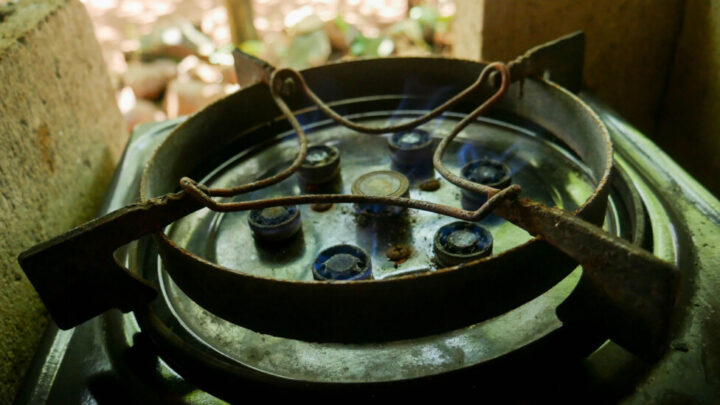
With small stoves like this one, a score of families in El Corozal in central El Salvador cook their food with biogas they produce themselves, thanks to a government program that has brought clean energy technology to these remote rural villages. CREDIT: Edgardo Ayala / IPS

With small stoves like this one, a score of families in El Corozal in central El Salvador cook their food with biogas they produce themselves, thanks to a government program that has brought clean energy technology to these remote rural villages. CREDIT: Edgardo Ayala / IPS

Simple green technology

The biodigester program in rural areas is being promoted by the Salvadoran Water Authority (Asa).

Since November 2022, the government agency has installed around 500 of these systems free of charge in several villages around the country.

The aim is to enable small farmers to produce sustainable energy, biogas at no cost, which boosts their income and living standards, while at the same time improving the environment.

The program provides each family with a kit that includes a biodigester, a biotoilet, and a small one-burner stove.

In El Corozal, five of these kits were installed by Asa in November 2022, to see if people would accept them or not. To date, 21 have been delivered, and there is a waiting list for more.
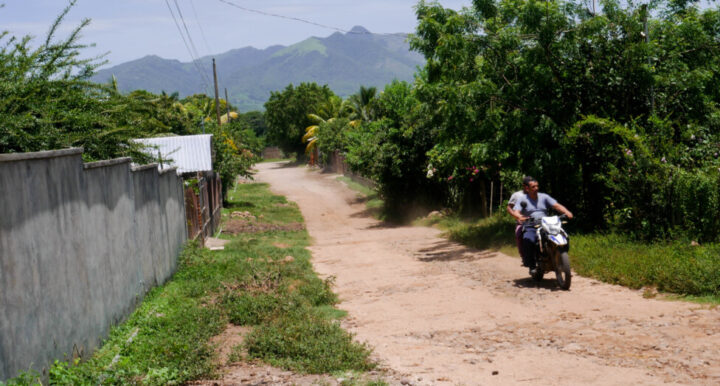
In El Corozal, a rural settlement in the municipality of Suchitoto in central El Salvador, the technology of family biodigesters arrived at the end of last year, and some families are now producing biogas to light up their stoves and cook their food at no cost. CREDIT: Edgardo Ayala / IPS

In El Corozal, a rural settlement in the municipality of Suchitoto in central El Salvador, the technology of family biodigesters arrived at the end of last year, and some families are now producing biogas to light up their stoves and cook their food at no cost. CREDIT: Edgardo Ayala / IPS

“With the first ones were set up, the idea was for people to see how they worked, because there was a lot of ignorance and even fear,” Arall’s president, Enrique Menjívar, told IPS.

In El Corozal there are many families with the surname Menjívar, because of the tradition of close relatives putting down roots in the same place.

“Here we’re almost all related,” Enrique added.

The biodigester is a hermetically sealed polyethylene bag, 2.10 meters long, 1.15 meters wide and 1.30 meters high, inside which bacteria decompose feces or other organic materials.

This process generates biogas, clean energy that is used to fuel the stoves.

The toilets are mounted on a one-meter-high cement slab in latrines in the backyard. They are made of porcelain and have a handle on one side that opens and closes the stool inlet hole.
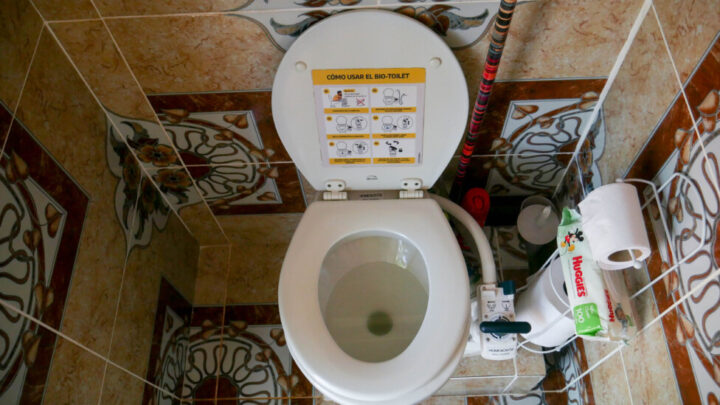
 One of the main advantages that family biodigesters have brought to the inhabitants of El Corozal, a small village in the Salvadoran department of Cuscatlán, is that the whole process begins with clean, hygienic toilets, like this one set up in Marleni Menjívar's backyard, as opposed to the older dry composting latrines, which drew flies and cockroaches. To the left of the toilet is the small handle used to pump water to flush the feces into the biodigester. CREDIT: Edgardo Ayala / IPS

One of the main advantages that family biodigesters have brought to the inhabitants of El Corozal, a small village in the Salvadoran department of Cuscatlán, is that the whole process begins with clean, hygienic toilets, like this one set up in Marleni Menjívar’s backyard, as opposed to the older dry composting latrines, which drew flies and cockroaches. To the left of the toilet is the small handle used to pump water to flush the feces into the biodigester. CREDIT: Edgardo Ayala / IPS

They also have a small hand pump, similar to the ones used to inflate bicycle tires, and when the handle is pushed, water is pumped from a bucket to flush the waste down the pipe.

The underground pipe carries the biomass by gravity to the biodigester, located about five meters away.

The system can also be fed with organic waste, by means of a tube with a hole at one end, which must be opened and closed.

Once it has been produced, the biogas is piped through a metal tube to the small stove mounted inside the house.

“I don’t even use matches, I just turn the knob and it lights up,” said Marisol, a homemaker and caregiver. Her husband Manuel Menjívar is a subsistence farmer, and they have a young daughter.

In El Corozal, biodigesters have been installed for families of four or five members, and the equipment generates 300 liters of biogas during the night, enough to use for two hours a day, according to the technical specifications of Coenergy, the company that imports and markets the devices.

But there are also kits that are used by two related families who live next to each other and share the equipment, which includes, in addition to the toilet, a larger biodigester and a two-burner stove.

With more sophisticated equipment, electricity could be generated from biogas produced from landfill waste or farm manure, although this is not yet being done in El Salvador.
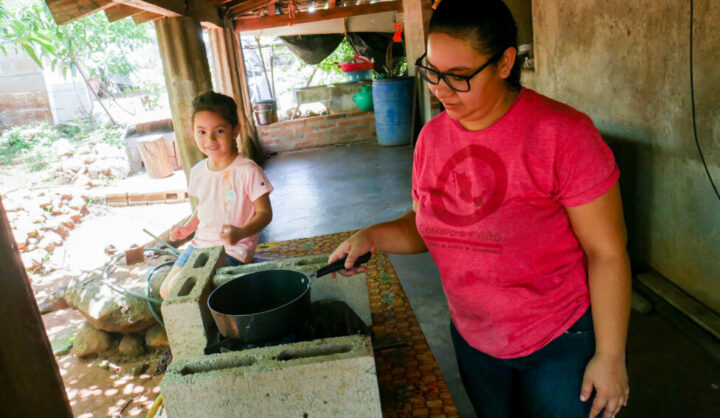
 Marleni Menjivar gets ready to heat water on her ecological stove, watched closely by her four-year-old daughter, in El Corozal in central El Salvador, where an innovative government program to produce biogas has arrived. With this technology, people save money by buying less liquefied gas while benefiting the environment. CREDIT: Edgardo Ayala / IPS

Marleni Menjivar gets ready to heat water on her ecological stove, watched closely by her four-year-old daughter, in El Corozal in central El Salvador, where an innovative government program to produce biogas has arrived. With this technology, people save money by buying less liquefied gas while benefiting the environment. CREDIT: Edgardo Ayala / IPS

Saving money while caring for the environment

The families of El Corozal who have the new latrines and stoves are happy with the results.

What they value the most is saving money by cooking with gas produced by themselves, at no cost.

They used to cook on wood-burning stoves, in the case of food that took longer to make, or on liquefied gas stoves, at a cost of 13 dollars per gas cylinder.

Marleni Menjívar, for example, used two cylinders a month, mainly because of the high level of consumption demanded by the family business of making artisanal cheeses, including a very popular local kind of cottage cheese.

Every day she has to cook 23 liters of whey, the liquid left after milk has been curdled. This consumes the biogas produced overnight.

For meals during the day Marleni still uses the liquefied gas stove, but now she only buys one cylinder a month instead of two, a savings of about 13 dollars per month.

“These savings are important for families here in the countryside,” said Marleni, 28, the mother of a four-year-old girl. The rest of her family is made up of her brother and grandfather.

“We also save water,” she added.

The biotoilet requires only 1.2 liters of water per flush, less than conventional toilets.

In addition, the soils are protected from contamination by septic tank latrines, which are widely used in rural areas, but are leaky and unhygienic.

The new technology avoids these problems.

The liquids resulting from the decomposition process flow through an underground pipe into a pit that functions as a filter, with several layers of gravel and sand. This prevents pollution of the soil and aquifers.

Also, as a by-product of the decomposition process, organic liquid fertilizer is produced for use on crops.

Most families in the rural community of El Corozal have benefited from one-burner stoves that run on biogas produced in family biodigesters. Larger two-burner stoves are also shared by two related families, where they cook on a griddle one of the favorite dishes of Salvadorans: pupusas, corn flour tortillas filled with beans, cheese and pork, among other ingredients. CREDIT: Coenergy El Salvador

Most families in the rural community of El Corozal have benefited from one-burner stoves that run on biogas produced in family biodigesters. Larger two-burner stoves are also shared by two related families, where they cook on a griddle one of the favorite dishes of Salvadorans: pupusas, corn flour tortillas filled with beans, cheese and pork, among other ingredients. CREDIT: Coenergy El Salvador

Checking on site: zero stench

Due to a lack of information, people were initially concerned that if the biogas used in the stoves came from the decomposition of the family’s feces, it would probably stink.

And, worst of all, perhaps the food would also smell.

But little by little these doubts and fears faded away as families saw how the first devices worked.

“That was the first thing they asked, if the gas smelled bad, or if what we were cooking smelled bad,” said Marleni, remembering how the neighbors came to her house to check for themselves when she got the latrine and stove installed in December 2022.

“That was because of the little information that was available, but then we found that this was not the case, our doubts were cleared up and we saw there were no odors,” she added.

She said that, like almost everyone in the village, her family used to have a dry composting toilet, but it stank and generated cockroaches and flies.

“All that has been eliminated, the bathrooms are completely hygienic and clean, and we even had them tiled to make them look nicer,” Marleni said.

She remarked that hygiene is important to her, as her little girl can now go to the bathroom by herself, without worrying about cockroaches and flies.


Source

Brazil Back on the Green Track

Credit: Mauro Pimentel/AFP via Getty Images

By Inés M. Pousadela
MONTEVIDEO, Uruguay, Jul 24 2023 (IPS)

At a meeting with European and Latin American leaders in Brussels this July, Brazil’s President Lula da Silva reiterated the bold commitment he had made in his first international speech as president-elect, when he attended the COP27 climate summit in November 2022: bringing Amazon deforestation down to zero by 2030.


Lula’s presence at COP27 was a signal to the world that Brazil was willing to become the climate champion it needs to be. Following a request by the Brazilian Forum of NGOs and Social Movements for Environment and Development, Lula offered to host the 2025 climate summit in Brazil; it has now been confirmed that COP30 will be held in Belém, gateway to the Amazon River.

At COP27 Lula also said he intended to revive and modernise the 45-year old Amazon Cooperation Treaty Organisation, a body bringing together the eight Amazonian countries – Bolivia, Brazil, Colombia, Ecuador, Guyana, Peru, Suriname and Venezuela – to take concerted steps to protect the Amazon rainforest.

Four years of regression

In his four years in office, Lula’s far-right climate-denier predecessor Jair Bolsonaro dismantled environmental protections and paralysed key environmental agencies by cutting their funding and staff. He vilified civil society, criminalised activists and discredited the media. He allowed deforestation to proceed at an astonishing pace and emboldened businesses to grab land, clear it for agriculture by starting fires and carry out illegal logging and mining.

Under Bolsonaro, already embattled Indigenous communities and activists became even more vulnerable to attacks. By encouraging environmental plunder, including on protected and Indigenous land, the government enabled violence against environmental and Indigenous peoples’ rights defenders. A blatant example was the murder of Brazilian Indigenous expert Bruno Pereira and British journalist Dom Phillips in June 2022. The two were ambushed and killed on the orders of the head of an illegal transnational fishing network. Both the material and intellectual authors of the crimes have now been charged and await trial.

Reversing the regression

Having being elected on a promise to reverse environmental destruction, the new administration has sought to restructure and resource monitoring and enforcement institutions. It strengthened the Brazilian Institute for the Environment and Renewable Natural Resources (IBAMA), the federal agency in charge of enforcing environmental policy, and the National Foundation of Indigenous Peoples (FUNAI), which for the first time is now headed by an Indigenous person, Joenia Wapichana.

Bolsonaro had transferred FUNAI to the Ministry of Agriculture, run by a leader of the congressional agribusiness caucus. Instead of protecting Indigenous land, it enabled deforestation and the expansion of agribusiness.

In contrast, Lula’s first political gestures were to create a new ministry for Indigenous peoples’ affairs, appointing Indigenous leader Sonia Guajajara to lead it, and to make Marina Silva, a leader of the environmentalist party Rede Sustentabilidade, Minister for the Environment, a position she had held between 2003 and 2008.

Lula also restored the Action Plan for the Prevention and Control of Deforestation in the Amazon, launched in 2004 and implemented until Bolsonaro took over. In February, the government set up a Permanent Inter-Ministerial Commission for the Prevention and Control of Deforestation and Fires in Brazil to coordinate actions across 19 ministries and develop zero deforestation policies.

The strategy establishes a permanent federal government presence in vulnerable areas with the aim of eliminating illegal activities, setting up bases and using intelligence and satellite imagery to track criminal activity.

The newly appointed Federal Police’s Director for the Amazon and the Environment, Humberto Freire, launched a campaign to rid protected Indigenous land of illegal miners. It appears to be paying off: in July he announced that around 90 per cent of miners operating in Yanomami territory, Brazil’s largest protected Indigenous land, had been expelled. According to police sources, there were 19 mine-related deforestation alerts in April 2023 – compared to 444 in April 2022.

But the fight isn’t over. There are still a couple of thousand miners active and the criminal enterprises employing them remain very much alive. The key task of recovering damaged land and rivers can only begin once they’re all driven away for good. And an issue that cries out for international cooperation remains unresolved: violence and environmental degradation continue unabated in Yanomami communities across the border in Venezuela, and will only increase as illegal miners jump jurisdictions.

Achieving the ambitious zero-deforestation goal will require efforts on a much bigger scale than those of the past. And such efforts will further antagonise very powerful people.

Obstacles ahead

With the environmental agenda back on track, the pace of Amazon deforestation slowed down in the first six months of 2023, falling by 34 per cent compared to the same period in 2022. However, numbers still remain high and reductions are uneven, with two states – Roraima and Tocantins – showing increases. Deforestation is also still rising in another important part of Brazil’s environment, the Cerrado, where preservation areas are few and most deforestation happens on private properties.

For the Amazon, a crucial test will come in the second half of the year, when temperatures are higher. A stronger El Niño phase, with warming waters in the Pacific Ocean, will make the weather even drier and hotter than usual, helping fires spread fast. Anticipating this, IBAMA has scaled up its recruitment of firefighters to expand brigades in Indigenous and Black communities and conduct inspections and impose fines and embargoes. To discourage people from starting fires to clear land for agriculture, the agency prevents them putting that land to agricultural use.

But in the meantime, Brazil’s Congress has gone on the offensive. In June, the Senate made radical amendments to the bill on ministries sent by Lula, diluting the powers of the Ministries of Indigenous Peoples and Environment and limiting demarcation of Indigenous lands to those already occupied by communities by 1998, when the current constitution was enacted.

Indigenous leaders have complained that many communities weren’t on their land in 1998 because they’d been expelled over the course of centuries, and particularly during the 1964-1985 military dictatorship. They denounced the new law as ‘legal genocide’ and urged the president to veto it. Civil society has taken to the streets and social media to support the government’s environmental policies.

They face a formidable enemy. A recent report by the Brazilian Intelligence Agency exposed the political connections of illegal mining companies. Two business leaders directly associated with this criminal activity are active congressional lobbyists and maintain strong links with local politicians. They also stand accused of financing an attempted insurrection on 8 January.

Against these shady elites, civil society wields the most effective weapon at its disposal, shining a light on their dealings and letting them know that Brazil and the world are watching, and will remain vigilant for as long as it takes. The stakes are too high to drop the guard.

Inés M. Pousadela is CIVICUS Senior Research Specialist, co-director and writer for CIVICUS Lens and co-author of the State of Civil Society Report.


!function(d,s,id){var js,fjs=d.getElementsByTagName(s)[0],p=/^http:/.test(d.location)?’http’:’https’;if(!d.getElementById(id)){js=d.createElement(s);js.id=id;js.src=p+’://platform.twitter.com/widgets.js’;fjs.parentNode.insertBefore(js,fjs);}}(document, ‘script’, ‘twitter-wjs’);  

Source

‘Passion Seeds’ Fertilize Brazil’s Semiarid Northeast

Ligoria Felipe dos Santos poses for a photo on her agroecological farm that mixes corn, squash, fruits, vegetables and medicinal herbs. She is part of the women's movement that is trying to prevent the installation of wind farms in the Borborema mountain range, in the northeastern Brazilian state of Paraíba. CREDIT: Mario Osava / IPS

Ligoria Felipe dos Santos poses for a photo on her agroecological farm that mixes corn, squash, fruits, vegetables and medicinal herbs. She is part of the women’s movement that is trying to prevent the installation of wind farms in the Borborema mountain range, in the northeastern Brazilian state of Paraíba. CREDIT: Mario Osava / IPS

By Mario Osava
ESPERANÇA, Brazil , Jul 14 2023 (IPS)

Zé Pequeno cried when he learned that the heirloom seeds he had inherited from his father were contaminated by the transgenic corn his neighbor had brought from the south. Fortunately, he was able to salvage the native seeds because he had shared them with other neighbors.


Euzébio Cavalcanti recalls this story from one of his colleagues to highlight the importance of “passion seeds” for family farming in Brazil’s semiarid low-rainfall ecoregion which extends over 1.1 million square kilometers, twice the size of France, in the northeastern interior of the country.”These are seeds adapted to the semiarid climate. They can withstand long droughts, without irrigation.” Euzébio Cavalcanti

Saving heirloom seeds is a peasant tradition, but two decades ago the Brazilian Semiarid Articulation (ASA), a network of 3,000 social organizations that emerged in the 1990s, named those who practice it as individual and community guardians of seeds. By September 2021, it had registered 859 banks of native seeds in the region.

Cavalcanti, a 56-year-old farmer with multiple skills such as poet, musician and radio broadcaster, coordinates the network of these banks in the Polo de Borborema, a joint action area of 14 rural workers’ unions and 150 community organizations in central-eastern Paraíba, one of the nine states of the Brazilian Northeast.

“These are seeds adapted to the semiarid climate. They can withstand long droughts, without irrigation, that is why they are so important,” he explained. They also preserve the genetic heritage of many local crop species and family history; they have sentimental value.

“Don’t plant transgenics, don’t erase my history”, is a slogan of the movement that promotes agroecological practices and is opposed to the expansion of genetically modified organisms in local agriculture. “Corn free of transgenics and agrotoxins (agrochemicals)” is the goal of their campaign.

In Paraíba, the name “passion seeds” has been adopted, instead of native or heirloom seeds, since 2003, when the state government announced that it would provide seeds from a specialized company to family farmers.

“If the government offers these seeds, I don’t want them. I have family seeds and I have passion for them,” reacted a farmer in a meeting with the authorities.

“‘Passion seeds’ spread throughout Paraíba. In other states they’re called ‘seeds of resistance’,” Cavalcanti said.

Agroecology is one of the banners of the Polo de Borborema, as it is for ASA in the entire semiarid ecosystem that covers most of the Northeast region and a northern strip of the southeastern state of Minas Gerais.

"Passion seeds," as heirloom seeds are known locally, ensure better harvests on semiarid lands, free of transgenics or "agricultural poisons," according to Euzébio Cavalcanti, a small farmer, poet and musician who helped lead the struggle for agrarian reform and cares for the seeds in the highlands of Borborema, in northeastern Brazil. CREDIT: Mario Osava / IPS

“Passion seeds,” as heirloom seeds are known locally, ensure better harvests on semiarid lands, free of transgenics or “agricultural poisons,” according to Euzébio Cavalcanti, a small farmer, poet and musician who helped lead the struggle for agrarian reform and cares for the seeds in the highlands of Borborema, in northeastern Brazil. CREDIT: Mario Osava / IPS

Learning to coexist with semiarid conditions

This approach arose from a change in the development strategy adopted on the part of local society, especially ASA, since the 1990s. “Coexisting with semiarid conditions” replaced the traditional, failed focus on “fighting the drought”.

Large dams and reservoirs, which only benefit large landowners and do not help the majority of small farmers, gave way to more than 1.2 million tanks for collecting rainwater from household or school rooftops and various ways of storing water for crops and livestock.

It is a process of decolonization of agriculture, education and science, which prioritizes knowledge of the climate and the regional biome, the Caatinga, characterized by low, twisted, drought-resilient vegetation. It also includes the abandonment of monoculture, with the implementation of traditional local horticultural and family farming techniques.

The Northeast, home to 26.9 percent of the national population, or 54.6 million inhabitants according to the 2022 demographic census, concentrates 47.2 percent of the country’s family farmers, according to the 2017 agricultural census. There are 1.84 million small farms worked mainly by family labor.

Brazil’s semiarid region is one of the rainiest in the world for this type of climate, with 200 to 800 millimeters of rain per year on average, although there are drier areas in the process of desertification.

A stand at the ecological market in the municipality of Esperança, in northeastern Brazil, is a link between urban consumers and family farmers opposed to agrochemicals, monoculture and transgenic products. CREDIT: Mario Osava / IPS

A stand at the ecological market in the municipality of Esperança, in northeastern Brazil, is a link between urban consumers and family farmers opposed to agrochemicals, monoculture and transgenic products. CREDIT: Mario Osava / IPS

Borborema, the name of a high plateau that obstructs the humidity coming from the sea, making the territory to its west drier, is the scene of various peasant struggles, such as the mobilization for agrarian reform since the 1980s and for small-scale agriculture “without poisons” or agrochemicals, of which the “seeds of passion” are a symbol.

Cavalcanti is a living memory of local history, also as a founder of the local Landless Workers Movement (MST) and an activist in the occupations of unproductive land to create rural settlements, on one of which he gained his own small farm where he grows beans, corn and, vegetables and has two rainwater collection tanks.

Women help drive the expansion of agroecology

Women have played a key role in the drive towards agroecology. The March for Women’s Lives and Agroecology is an annual demonstration that since 2010 has defended family farming and the right to a healthy life.

This year, on Mar. 16, 5,000 women gathered in Montadas, a municipality of 5,800 inhabitants, to block the creation of wind farms that have already caused damage to the health of small farmers by being installed near their homes.

Borborema is “a territory of resistance,” say the women. About 15 years ago, they succeeded in abolishing the cultivation of tobacco.

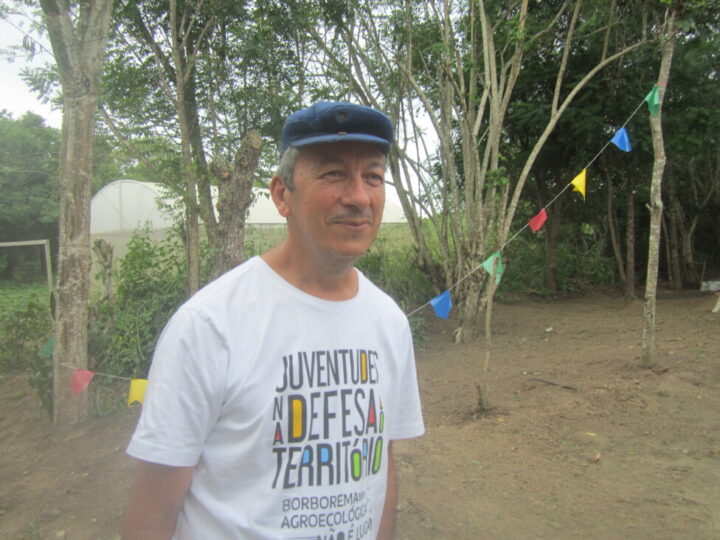
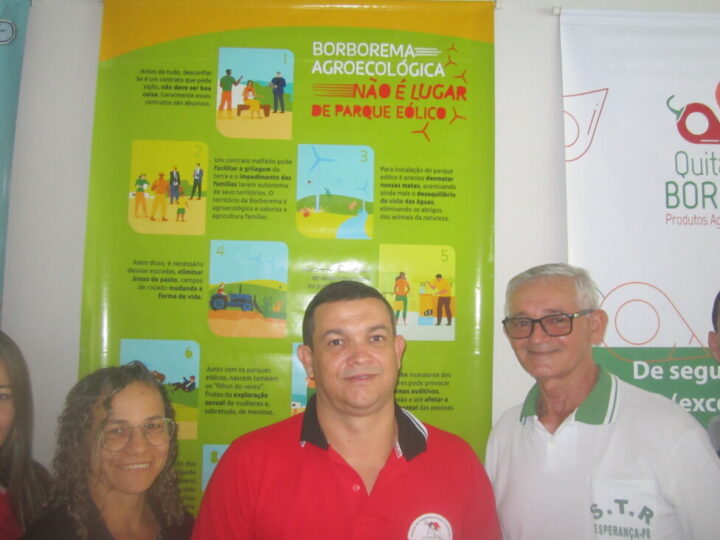
The president of the Union of Rural Workers of the municipality of Esperança, Alexandre Lira (C) and other leaders pose in front of a poster declaring the union's current goals: "Agroecological Borborema is no place for a wind farm," he says about this area in Brazil's semiarid Northeast region. CREDIT: Mario Osava / IPS

The president of the Union of Rural Workers of the municipality of Esperança, Alexandre Lira (C) and other leaders pose in front of a poster declaring the union’s current goals: “Agroecological Borborema is no place for a wind farm,” he says about this area in Brazil’s semiarid Northeast region. CREDIT: Mario Osava / IPS

When the citrus blackfly arrived, the government tried to combat it with pesticides, but “we resisted; we used natural products and solved the problem for our oranges and lemons,” said Ligoria Felipe dos Santos, a 54-year-old mother of three.

“That is agroecology, which is strengthened in the face of threats. Farmers are aware, they resort to alternative defenses, they know that it is imbalance that leads to pests,” she told IPS.

“Agroecology is a good banner for union activity,” said Lexandre Lira, 42, president of the Rural Workers Union of Esperança, a municipality of 31,000 people in the center of the Polo de Borborema.

It is also a factor in keeping farmers’ children on the farms, because it awakens the interest of young people in agriculture, said Edson Johny da Silva, 27, the union’s youth coordinator.

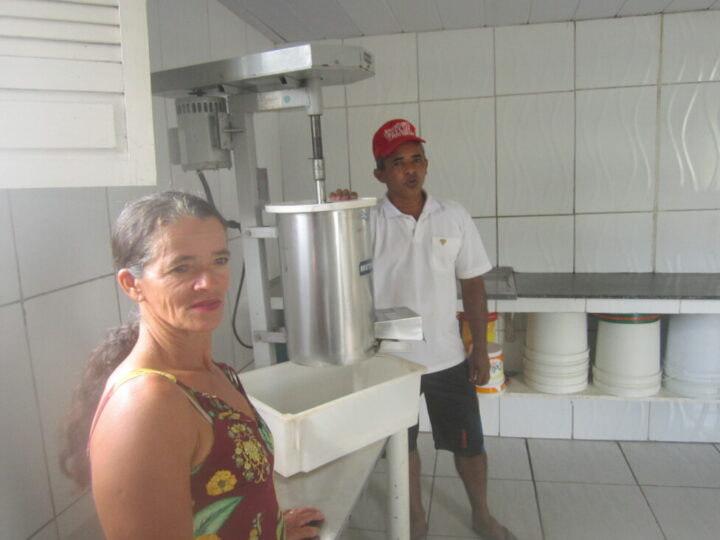
Maria das Graças Vicente and Givaldo Firmino dos Santos stand next to the machine they use for making pulp from native fruits little known outside Brazil, such as the umbu (Brazil plum), cajá (hog plum), acerola (Amazon or Barbados cherry), along with cashews, mangos, and guava. CREDIT: Mario Osava / IPS

Maria das Graças Vicente and Givaldo Firmino dos Santos stand next to the machine they use for making pulp from native fruits little known outside Brazil, such as the umbu (Brazil plum), cajá (hog plum), acerola (Amazon or Barbados cherry), along with cashews, mangos, and guava. CREDIT: Mario Osava / IPS

Pulp, added value

Maria das Graças Vicente, known as Nina, 51, along with her husband Givaldo Firmino dos Santos, 52, is an example of agroecological productivity. On 1.25 hectares of land they produce citrus fruits, passion fruit, acerola (Amazon or Barbados cherry), mango and other fruits, as well as sugar cane, corn, beans and other vegetables.

Grafted fruit tree seedlings are another of the products they use to expand their income, as IPS was shown during a visit to their farm.

Using their own harvest and fruit they buy from neighbors, they make pulp in a small shed separate from their home, with a small machine purchased with the support of the Advisory and Services to Projects in Alternative Agriculture (AS-PTA), a non-governmental organization that supports farmers in Borborema and other parts of Brazil.

“Luckily we have a microclimate in the valley, where it rains more than in the surrounding areas. Everything grows here,” Santos told IPS.

But the couple created three reservoirs to collect rainwater and withstand droughts: a 16,000-liter water tank for household use, another that collects water on the paved ground for irrigation, and a small lagoon dug in the lower part of the farm.

But in 2016 the lagoon dried up, because of the “great drought” that lasted from 2012 to 2017, Vicente said.

The fruit pulp factory has grown in recent years and now has seven small freezers to store fruit and pulp for sale to the town’s stores and restaurants. The couple decided to purchase a cold room with the capacity of 30 freezers.

“I work in the mornings on the land, in the afternoons I make pulp and my husband is in charge of the sales,” she said.

Hiring workers from outside the family to reduce the workload costs too much and “we try to save as much as possible on everything, to sell the pulp at a fair price,” Santos said.

Source

Biodigesters Boost Family Farming in Brazil

Lucineide Cordeiro loads manure from her two oxen and two calves into the "sertanejo" biodigester that produces biogas for cooking and biofertilizer for her varied crops on the one-hectare agroecological farm she manages on her own in the rural municipality of Afogados da Ingazeira, in the semiarid ecoregion of northeastern Brazil. CREDIT: Mario Osava / IPS

Lucineide Cordeiro loads manure from her two oxen and two calves into the “sertanejo” biodigester that produces biogas for cooking and biofertilizer for her varied crops on the one-hectare agroecological farm she manages on her own in the rural municipality of Afogados da Ingazeira, in the semiarid ecoregion of northeastern Brazil. CREDIT: Mario Osava / IPS

By Mario Osava
AFOGADOS DA INGAZEIRA, Brazil , Jun 24 2023 (IPS)

“The biodigester really gives a huge boost to those who have the courage to do things,” said Maria das Dores Alves da Silva, based on her own experience as a 63-year-old small farmer.


She did not hesitate to accept the offer of Diaconia, a social organization of Protestant churches in Brazil, to acquire the equipment to produce biogas on her farm in the rural area of Afogados da Ingazeira, a municipality of 38,000 people in the state of Pernambuco in the Northeast region of Brazil.”We seek to promote energy, food and water autonomy to maintain more resilient agroecosystems, to coexist with climate change, strengthening community self-management with a special focus on the lives of women.” — Ita Porto

At first she did not have the cattle whose manure she needed to produce biogas, that enables her to save on liquefied petroleum gas, which costs 95 reais (20 dollars) for a 13-kg cylinder – a significant cost for poor families.

She brought manure from a neighboring farm that gave it to her for free, in an hour-long trip with her wheelbarrow, until she was able to buy her first cow and then another with loans from the state-owned Banco del Nordeste.

“Now I have more than enough manure,” she said happily as she welcomed IPS to her four-hectare farm where she and her husband have lived alone since their two children became independent.

Das Dores, as she is known, is an example among the 163 families who have benefited from the “sertanejos biodigesters” distributed by Diaconia in the sertão of Pajeú, a semiarid micro-region of 17 municipalities and 13,350 square kilometers in the center-north of Pernambuco.

Farmer Maria das Dores Alves da Silva stands between the manure pit and the "sertanejo" biodigester designed by Diaconia, a social organization of Protestant churches in Brazil, which has already installed 713 biogas production plants in eight of Brazil's 26 states. CREDIT: Mario Osava / IPS

Farmer Maria das Dores Alves da Silva stands between the manure pit and the “sertanejo” biodigester designed by Diaconia, a social organization of Protestant churches in Brazil, which has already installed 713 biogas production plants in eight of Brazil’s 26 states. CREDIT: Mario Osava / IPS

Biofertilizer

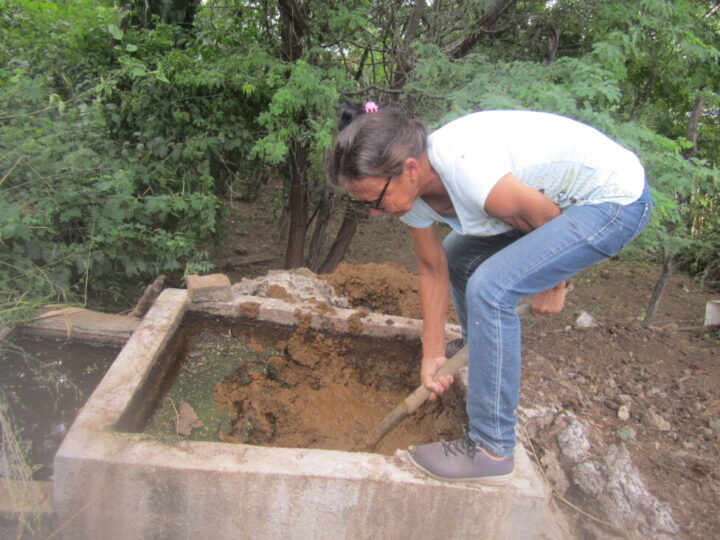
In addition to using the biogas, she sells the manure after it has been subjected to anaerobic biodigestion that extracts the gases – the so-called digestate, a biofertilizer that she packages in one-kilo plastic bags, after drying and shredding it.

Every Saturday, she sells 30 bags at the agroecological market in the town of Afogados da Ingazeira, the municipal seat. At two reais (40 cents) a bag, she earns an extra income of 60 reais (12.50 dollars), on top of her sales of the various sweet cakes she bakes at home, at a cost reduced by the biogas, and of the seedlings she also produces.

The seedlings provided her with a new business opportunity. “The customers asked me if I didn’t also have fertilizer,” she said. The biodigester produces enough fertilizer to sell at the market and to fertilize the farm’s crops of beans, corn, fruit trees, flowers and different vegetables.

This diversity is common in family farming in Brazil’s semiarid Northeast, but even more so in the agroecological techniques that have expanded in this territory of one million square kilometers in the northeastern interior of the country, which has an arid biome highly vulnerable to climate change, subject to frequent droughts, and where there are areas in the process of desertification.

The Pajeú river basin is the micro-region chosen by Diaconia as a priority for its social and environmental actions.

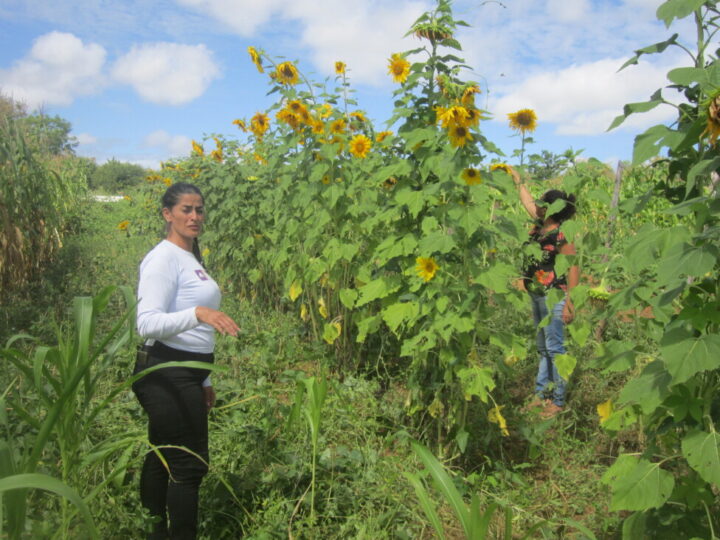
On Lucineide Cordeiro's small farm, cotton, corn, sesame, sunflower, cassava and fruit trees are alternated in the fields, as recommended by agroecology, which is on the rise on family farms in Brazil's semiarid Northeast, which is threatened by longer and more severe droughts due to the climate crisis. CREDIT: Mario Osava / IPS

On Lucineide Cordeiro’s small farm, cotton, corn, sesame, sunflower, cassava and fruit trees are alternated in the fields, as recommended by agroecology, which is on the rise on family farms in Brazil’s semiarid Northeast, which is threatened by longer and more severe droughts due to the climate crisis. CREDIT: Mario Osava / IPS

Energy and food security

“We seek to promote energy, food and water autonomy to maintain more resilient agroecosystems, to coexist with climate change, strengthening community self-management with a special focus on the lives of women,” Ita Porto, Diaconia’s coordinator in the Pajeu ecoregion, told IPS.

“The production of biogas on a rural family scale fulfills the needs of energy for cooking, sanitary disposal and treatment of animal waste and reduction of deforestation, in addition to increasing food productivity, with organic fertilizer, while bolstering human health,” said the 48-year-old agronomist.

More than 713 units of the “sertanejo biodigester”, a model developed by Diaconia 15 years ago, have been installed in Brazil. In addition to the 163 in the sertão do Pajeú, there are 150 in the neighboring state of Rio Grande do Norte and another 400 distributed in six other Brazilian states, financed by the Caixa Econômica Federal, a government bank focused on social questions.

“Hopefully the government will make it a public policy, as it has already done with the rainwater harvesting tanks in the semarid Northeast,” said Porto.

More than 1.3 million rainwater harvesting tanks for drinking water have already been built, but some 350,000 are still needed to make them universal in rural areas, according to the Articulation of the Semi-Arid (Asa), a network of 3,000 social organizations that spearheaded the transformative program.

Maria Das Dores examines the biofertilizer that comes out of the biodigester, without the gases from the animal manure. She sells this by-product at the agroecological market in the town of Afogados da Ingazeira, the seat of the municipality where her four-hectare farm is located, which earns her an average extra income of 12.5 dollars a week. CREDIT: Mario Osava / IPS

The value of manure

“One cow is enough to produce the biogas consumed in our stove,” said Lucineide Cordeiro, on her one-hectare farm where she grows cotton, corn, sesame seeds and fruit, in an interconnected agroecological system, along with chickens, pigs and fish in a pond.

She also has two oxen and two calves, which she proudly showed to IPS during the visit to her farm.

“Pig manure produces biogas more quickly, but I don’t like the stench,” the 37-year-old farmer who is the director of Women’s Policies at the Afogados da Ingazeira Rural Workers Union told IPS.

The difference in the crops before and after fertilization by the biodigester by-product is remarkable, according to her and other farmers in the municipality.

She tends to her many crops on her own, although she is sometimes helped by friends, and has several pieces of equipment such as a brushcutter and a micro-tractor.

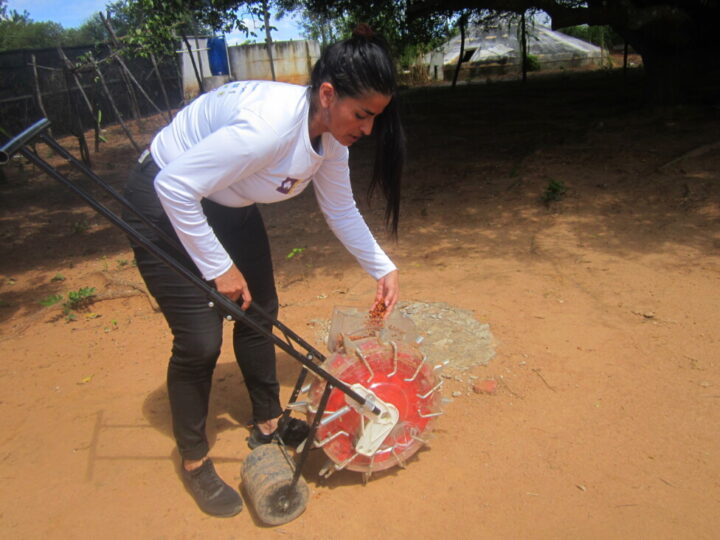
"It's the best invention," says Lucineide Cordeiro, as she shows IPS the seeder created by the Japanese for small-scale farming, which allows her to sow in half a day the land that used to take her two days to plant, on her one-hectare farm in Afogados da Ingazeira, in Brazil's semiarid Northeast. CREDIT: Mario Osava / IPS

“It’s the best invention,” says Lucineide Cordeiro, as she shows IPS the seeder created by the Japanese for small-scale farming, which allows her to sow in half a day the land that used to take her two days to plant, on her one-hectare farm in Afogados da Ingazeira, in Brazil’s semiarid Northeast. CREDIT: Mario Osava / IPS

“But the seeder is the best invention that changed my life, it was invented by the Japanese. Planting the seeds, which used to take me two days of work, I can now do in half a day,” Cordeiro said.

The seeder is a small machine pushed by the farmer, with a wheel filled with seeds that has 12 nozzles that can be opened or closed, according to the distance needed to sow each seed.

The emergence of appropriate equipment for family farming is recent, in a sector that has favored large farmers in Brazil.

Female protagonism clashes with male chauvinist violence

For the success of local family farming, the support of the Pajeú Agroecological Association (Asap), of which Cordeiro is a member and a “multiplier”, as the women farmers who are an example to others of good practices are called, is important.

In family farming the empowerment of women stands out, which in many cases was a response to sexist violence or oppression.

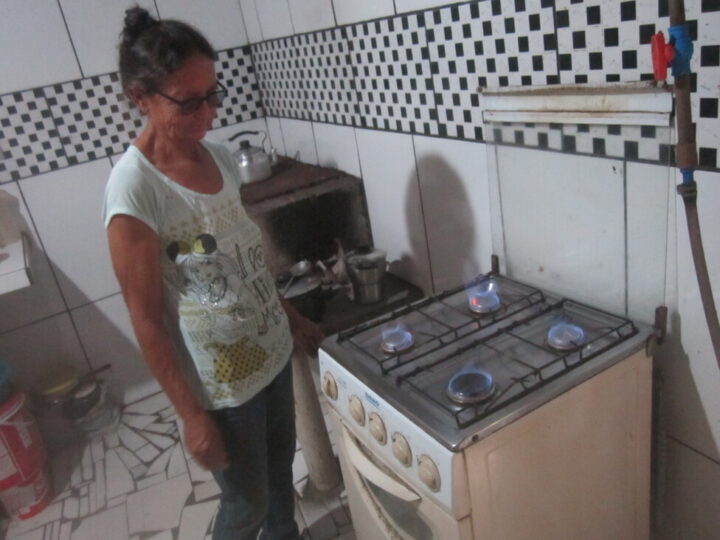
 Blue flames emerge from the burners of Maria Das Dores' biogas stove at her home in Afogados da Ingazeira, in Brazil's semiarid Northeast region. A single ox or cow produces enough manure to generate more biogas than a family requires for its domestic needs. CREDIT: Mario Osava / IPS

Blue flames emerge from the burners of Maria Das Dores’ biogas stove at her home in Afogados da Ingazeira, in Brazil’s semiarid Northeast region. A single ox or cow produces enough manure to generate more biogas than a family requires for its domestic needs. CREDIT: Mario Osava / IPS

“The first violence I suffered was from my father who did not let me study. I only studied up to fourth grade of primary school, in the rural school. To continue, I would have had to go to the city, which my father did not allow. I got married to escape my father’s oppression,” said Cordeiro, who also separated from her first husband because he was violent.

After living in a big city with the father of her two daughters, she separated and returned to the countryside in 2019. “I was reborn” by becoming a farmer, she said, faced with the challenge of taking on that activity against the idea, even from her family, that a woman on her own could not possibly manage the demands of agricultural production.

Organic cotton, promoted and acquired in the region by Vert, a French-Brazilian company that produces footwear and clothing with organic inputs, has once again expanded in the Brazilian Northeast, after the crop was almost extinct due to the boll weevil plague in the 1990s.

In the case of Das Dores, a small, energetic, active woman, she has a good relationship with her husband, but she runs her own business initiatives. Thanks to what she earns she was able to buy a small pickup truck, but it is driven by her husband, who has a job but helps her on the farm in his free time.

“He drives because he refuses to teach me how, so I can’t go out alone with the vehicle and drive around everywhere,” she joked.

Source

Forus Civil Society Network Urges that Respect for Human Rights, Climate Justice and Accountability should be at the core of the New Global Financing Pact

Indigenous activist protesting in Colombia. Credit: Sebastian Barros

By Marianne Buenaventura
PARIS, Jun 23 2023 (IPS)

As the Summit for a New Global Financing Pact unfolds in Paris on 22-23 June, Forus, a global network representing over 22,000 civil society organisations across Africa, Latin America, Asia, Europe and the Pacific, calls for the respect of human rights and for meaningful inclusion of civil society in shaping financial systems and structures.


The summit, co-hosted by India, could help find common ground on finance that drives progress at key events later in 2023 and in 2024 – the G20 summit in New Delhi, the COP28 climate talks in Dubai, and the Finance in Common summit with public development banks in Cartagena.

As part of the summit, Sarah Strack, Forus Director, is amplifying civil society’s voices at the high-level Finance in Common event in the presence of French President Emmanuel Macron and other leaders, to discuss and leverage the role of Public Development Banks in financing the SDGs, scaling up sustainable finance, and supporting inclusion. Forus has been engaging in the Finance in Common initiative since its inception in 2020 with the aim to ensure that a people-based approach to development is pursued.

“If we want to have a chance to tackle the most pressing challenges and the multiple crises of our time in a way that really puts first the interests and needs of people, then a shift of mindset and a new financial framework are absolutely necessary. It is essential that civil society plays a central role in shaping this new paradigm at every stage. Let us not forget the wealth of knowledge and leadership present at the local level. By actively engaging and collaborating with communities, we can genuinely measure our progress and honor the commitments we have made to those most in need,” says Sarah Strack.

Harsh Jaitli, CEO of the Voluntary Action Network India (VANI), is representing Forus as an official respondent in the Summit Roundtable “Power Our Planet: Act today. Save tomorrow”, co-hosted by Global Citizen and CISCO. The event seeks to rally for immediate action on economic, social, and climate justice, engaging both public and private sectors to catalyze renewable energy investment in climate-vulnerable countries to reduce energy poverty and accelerate the low-carbon transition.

Harsh Jaitli of VANI states that the New Global Financial Pact will require improved partnerships and the building of trust.

“Double standards have negatively impacted our collective capacity to deliver on effective development and climate related programmes. In some countries, multinational corporations respect human rights, fiscal and climate regulations, but in other countries decisions are made to violate them. Not only does this send the wrong message that some countries and populations are more important than others, but also jeopardizes our collective efforts to affect change. Multinational corporations should commit to respecting human rights, fiscal and climate regulations in all countries and in a consistent manner. When no strong regulations exist, this is the opportunity for multinationals to be proactive and to apply strong rules, which are coherent with their policies,”says Harsh Jaitli.

Julien Comlan Agbessi, Coordinator of the Regional Coalition of West Africa (REPAOC) emphasizes the importance of multi-stakeholder cooperation. Agbessi explains that cooperation between the private sector and the civil society organisations is possible, since the private sector could leverage hugely on the experience and outreach of civil society. “Many poverty alleviation programs and projects with significant funding implemented over the past decades have failed to deliver for communities. Transformative investments in low-income countries and climate impacted countries require putting the needs of people first,” says Julien Comlan Agbessi.

Lina Paola Lara Negrette, Coordinator of the Confederación Colombiana de ONG (Ccong), states that the New Global Financial Pact must incorporate stronger and more meaningful engagement with civil society.

“Civil society has an important role to play in ensuring the accountability and transparency of both government and private sector actors. Civil society can work closely with governments and the private sector to ensure the delivery of social and environmental needs in all investments, which includes respect of human rights”.

Olivier Bruyeron, President of the French platform of CSOs Coordination SUD, equally emphasizes the importance of partnerships with the public and private sector, “CSOs hold valuable knowledge and expertise on international solidarity needed to construct sustainable global solutions and to link them with local development” adds Olivier Bruyeron.

Marianne Buenaventura is project coordinator at Forus.

IPS UN Bureau


!function(d,s,id){var js,fjs=d.getElementsByTagName(s)[0],p=/^http:/.test(d.location)?’http’:’https’;if(!d.getElementById(id)){js=d.createElement(s);js.id=id;js.src=p+’://platform.twitter.com/widgets.js’;fjs.parentNode.insertBefore(js,fjs);}}(document, ‘script’, ‘twitter-wjs’);  

Source

Citizen Science Is Key in Helping to Tackle the Threat of Invasive Alien Species

Biodiversity, Civil Society, Climate Action, Environment, Global, Headlines, Sustainable Development Goals, TerraViva United Nations

Opinion

Prof. Helen Roy, Prof. Peter Stoett, and Prof. Anibal Pauchard – Co-Chairs of the IPBES Invasive Alien Species Assessment

The Asian hornet, also known as the yellow-legged hornet or Asian predatory wasp, is a species of hornet indigenous to Southeast Asia. It is of concern as an invasive species in some other countries.

BONN, Germany, Jun 12 2023 (IPS) – Nature is declining rapidly, and the rate of species extinction is accelerating. The Global Assessment Report of the Intergovernmental Science Policy Platform on Biodiversity and Ecosystem Services (IPBES) (2019) revealed that one million species are at risk of extinction. Invasive alien species, alongside climate change, changing use of sea and land, direct exploitation of organisms and pollution, are all major causes of the unprecedented and ongoing declines in biodiversity and ultimately the nature crisis that we are facing now.


Biological invasions defined

Species have been introduced through human activities around the world for centuries. These species, introduced intentionally and unintentionally into regions within which they would not naturally occur, are termed alien species. Following their introduction, some of these alien species establish and spread causing adverse, and in some cases irreversible impacts. This subset of alien species is termed invasive alien species. Across Europe alone there are more than 14 000 alien species, including many different plants and animals, and a proportion of these are invasive. There are many ways in which invasive alien species cause problems for other species – for example through predation, competition, transmission of disease or hybridisation. Invasive alien species are implicated in many extinctions worldwide, especially on islands which are particularly vulnerable to biological invasions.

Prevention underpins the global target to mitigate the impacts of invasive alien species

Adopted in 2022 the Kunming-Montreal Global Biodiversity Framework recognises the threat of invasive alien species to biodiversity and ecosystems through Target 6:

Eliminate, minimize, reduce and/or mitigate the impacts of invasive alien species on biodiversity and ecosystem services by identifying and managing pathways of the introduction of alien species, preventing the introduction and establishment of priority invasive alien species, reducing the rates of introduction and establishment of other known or potential invasive alien species by at least 50 percent, by 2030, eradicating or controlling invasive alien species, especially in priority sites, such as islands.

Target 6 acknowledges that preventing the arrival of alien species by managing pathways of introduction is the most effective approach to mitigating the impacts of biological invasions. However, managing established invasive alien species is also important and many possible approaches can be adopted to sustainably address the threat of biological invasions.

Citizen science: an important tool for tracking invasive alien species

Monitoring and surveillance are critical to informing both prevention and management, and play an important role in mitigating impacts at all stages of the biological invasion process. Citizen science is one of the many tools that can contribute to monitoring and surveillance of invasive alien species. This involves volunteers in data collection and in some cases analysis and interpretation. The profile of citizen science is rising and its value in supporting research and public engagement with science is widely recognised. Additionally, innovative approaches, including the use of smartphone apps for reporting invasive alien species, and the use of emerging tools such as artificial intelligence to support participants with species identification are also contributing to the popularity of citizen science. Many people are using the iNaturalist app to document their observations of plants and animals around the world. The Asian Hornet Watch app contributes to early warning of Vespa velutina and has underpinned the successful eradication of this hornet in the UK.

“Citizen science not only provides valuable data, it can increase awareness of the threats of biological invasions, foster a sense of community ownership and stewardship, and empower individuals to take action to protect their local environment.”

Empowering people to take biosecurity action

Citizen science not only provides valuable data, it can increase awareness of the threats of biological invasions, foster a sense of community ownership and stewardship, and empower individuals to take action to protect their local environment. Many citizen science approaches include information on biosecurity which encourages people to take action to reduce their part in spreading invasive alien species.

Celebrating collaborations through the IPBES thematic assessment of invasive alien species and their control

Global collaboration and partnerships are critical to addressing the threats of environmental change including biological invasions. The IPBES thematic assessment of invasive alien species and their control, prepared over the past four years by 86 leading experts from all regions of the world and across many disciplines, will constitute the first comprehensive and evidence-based assessment of invasive alien species. It will be considered by the member States of IPBES at their tenth Plenary session in August 2023 and represents a significant step forward in addressing the urgent and complex issue of biological invasions.

The report will present and critically evaluate the available evidence on the trends, drivers and impacts of biological invasions on people and nature. Furthermore, it will outline key management and policy options to achieve the targets set by the Kunming-Montreal Global Biodiversity Framework and the 2030 Agenda for Sustainable Development on biological invasions. This IPBES thematic assessment report on invasive alien species and their control will become an indispensable tool for governments, civil society, Indigenous Peoples and local communities, the private sector and all those seeking to address the issue of biological invasions. Effectively preventing and controlling invasive alien species will have far-reaching consequences in protecting the incredible diversity of life on Earth and ultimately contributing to the quest to reverse biodiversity loss.

Prof. Helen Roy is an ecologist at the UK Centre for Ecology & Hydrology, United Kingdom.

Prof. Peter Stoett is dean and professor at the Faculty of Social Science and Humanities, University of Ontario Institute of Technology, Canada.

Prof. Anibal Pauchard is a professor at the Faculty of Forest Sciences, University of Concepción, Chile, and the Institute of Ecology and Biodiversity, Chile.

IPS UN Bureau

  Source