Bangladesh Students, Community Moves to Protect Minorities Following Fall of Hasina Government

Active Citizens, Asia-Pacific, Civil Society, Crime & Justice, Featured, Freedom of Expression, Headlines, Human Rights, Humanitarian Emergencies, Religion, TerraViva United Nations

Active Citizens

Students and youth groups in Bangladesh stand guard outside temples and churches to protect those from vandalism during unrest after the Awami League government ouster. Credit: Rafiqul Islam/IPS

Students and youth groups in Bangladesh stand guard outside temples and churches to protect those from vandalism during unrest after the Awami League government ouster. Credit: Rafiqul Islam/IPS

DHAKA, Aug 28 2024 (IPS) – Immediately after the fall of the Sheikh Hasina government on August 5, 2024, following weeks of deadly demonstrations staged by students, people carried out attacks on the houses and temples of the Hindu community in Dacope of Khulna, about 225 kilometres from Dhaka. They particularly attacked and vandalized the houses of minorities believed to be involved in the politics of the ousted Awami League government.


At least 11 Hindu houses in Dacope were attacked and vandalized, with attackers claiming these were acts of political revenge.

But, in Dacope, local Muslim and Hindu students and the community soon joined together to guard the houses and temples of the minorities so that they would no longer be victimized due to the political changeover.

Beginning in mid-June 2024, peaceful student protests in Bangladesh turned violent, resulting in hundreds of people killed, including at least 32 children, and thousands injured. The protests were the result of the reinstatement of a quota system for the distribution of civil service positions.

The government resigned in response to the protests, and a civilian interim government took its place.

In other areas too, attacks were carried out on the offices of the Awami League (AL) and residences and establishments of the AL leaders and temples, churches and houses of minority communities across Bangladesh during unrest.

Nur Nabin Robin, a resident of Chattogram City, said many people from minority communities, including Hindus, Buddhist and ethnic people, live in the port city in harmony.

But when the Sheikh Hasina government fell on August 5, people of the minority communities began to feel insecure in Chattogram since attacks on minorities were reportedly being carried out in different parts of the country, he said.

“So, we patrolled in the city for two to three nights in groups and guarded the temples and houses of the minorities so that none could attack them. We also asked them to call us via mobile phone if they can sense any clue of attack on them,” Robin told IPS.

Their concerns were exacerbated because most police stations across the country ceased operating after the fall of the previous government.

General students and even madrasa students came forward to protect the houses and places of worship as the leaders of the Anti-Discrimination Student Movement asked supporters to guard temples and churches, responding to concerns voiced over reports of attacks on minority groups.

Jasim Uddin, a resident of Kuliarchar in Kishoreganj, told IPS that after the fall of Sheikh Hasina’s government, mobs torched and vandalized houses of many AL leaders in his locality, but members of the Hindu community remained safe during the political turmoil as local people voluntarily safeguarded their temples and properties.

While national monuments and government buildings in the capital, Dhaka, were looted, there were no reports of attacks on temples or churches there during the recent political turmoil.

In Dhaka, Muslim students were found guarding the Dhakeshwari National Temple, a Hindu place of worship. A Muslim was spotted offering prayers in front of Dhakeswari temple so nobody would attack the temple.

Professor Muhammad Yunus, Chief Adviser to the interim government of Bangladesh, visited Dhakeshwari National Temple on August 13, 2024, to express his solidarity with the Hindu community. During his visit, he called upon the minorities to keep patience and remain united.

Yunus condemned the attacks on minority communities in the country as “heinous.”

Religious harmony is the long tradition of Banglalees, while people from different religions—Islam, Hindu, Buddhist, Christian—have been living together from generation to generation.

“Over 90 percent people in Bangladesh do not believe in communalism. Attacks were carried out on minorities due to political reason or gaining personal interest. Those who carried out looting and vandalism were not involved in the student movement,” adviser to interim government Syeda Rizwana Hasan told a function recently in Dhaka.

She said madrasa students had safeguarded temples in many places of Bangladesh, which showed an example of the country’s religious harmony.

Barrister Sara Hossain, the honorary executive director of the Bangladesh Legal Aid and Services Trust (BLAST), said once miscreants carry out any attack on minorities, all should protect them.

CONCERN REMAINS

Following the fall of the Sheikh Hasina government, there was chaos across the country, with law enforcement officials retreating in many places for fear of retaliation.

According to a report of the Office of the High Commissioner for Human Rights (OHCHR) of the United Nations released on August 16, 2024, attacks were conducted against minorities, including Hindus, especially in the days immediately after the change of government.

The OHCHR report recognized the role of the student organizations and other ordinary people who were forming groups to protect the minorities.

It details some of the attacks against minorities, including Hindus, especially in the days immediately after the change of government. On August 5 and 6, Hindu houses and properties were reportedly attacked, vandalized and looted in 27 districts. A number of places of worship were also damaged, including an ISKCON temple in Meherpur, Khulna division, which was vandalized and set on fire.

On August 5 and 6, Hindu houses and properties were reportedly attacked, vandalized and looted in 27 districts, while many temples were also damaged, including an ISKCON temple in Meherpur, Khulna division, which was vandalized and set on fire.

The Bangladesh Hindu Buddhist Christian Unity Council (BHBCUC) claimed that around 200-300 Hindu homes and businesses were vandalized since August 5 last while 15-20 Hindu temples were damaged.

IPS UN Bureau Report

  Source

Sportwashing Allegations at Africa’s Top Football Tournament

Africa, Climate Action, Climate Change, Development & Aid, Editors’ Choice, Energy, Environment, Featured, Freedom of Expression, Green Economy, Headlines, Human Rights, Humanitarian Emergencies, Sustainable Development Goals, TerraViva United Nations

Climate Change

Opponents of the East African Crude Oil Pipeline protested American International Group's continued support of the project. The protest was in New York in July. Credit: 350.org

Opponents of the East African Crude Oil pipeline protested American International Group’s continued support of the project. The protest was in New York in July. Credit: 350.org

ABUJA, Jul 30 2024 (IPS) – Following the recent Africa Cup of Nations (AFCON) tournament in Ivory Coast, a continent-wide campaign has emerged on social media challenging the tournament’s main sponsor, TotalEnergies, over its involvement in the East African Crude Oil Pipeline (EACOP).


EACOP, a massive 1,443-kilometer crude oil export pipeline, is designed to transport oil from Western Uganda’s oilfields to the port of Tanga in Tanzania. TotalEnergies, a major stakeholder in the project, will extract oil from the Tilenga field and export it to the Global North.

Environmentalists argue that the project threatens the livelihoods of tens of thousands of people and the region’s fragile ecosystems. The Ugandan and Tanzanian governments have dismissed these concerns, asserting that the pipeline is essential for bolstering their economies.

Many of these campaigners, particularly environmentalists, have faced harassment and arrest.

One of them, Stephen Kwikiriza, an employee of Uganda’s Environment Governance Institute (EGI), a non-profit organization, was reportedly abducted and beaten by the Ugandan armed forces in Kampala on June 4, 2024.

After being questioned, he was abandoned hundreds of miles from the capital, highlighting the latest episode in the crackdown on environmentalists in Uganda.

TotalEnergies, through their press officer, François Sinecan, emphatically denied that the company had anything to do with the harassment of environmentalists, or was involved in legitimizing the company through sponsorship.

Sportswashing

Critics argue that TotalEnergies is exploiting Uganda and Tanzania for their oil, even as it faces numerous legal battles due to its role in the climate crisis and refusal to take responsibility.

They worry that TotalEnergies is using AFCON, the continent’s biggest football tournament, and its global viewership to enhance its image while profiting from climate-wrecking fossil fuel extraction across Africa.

“AFCON is one of the ways they [TotalEnergies] are using to legitimize their existence. They have to use the sports arena. They seem to say, ‘Look at what we are doing in Africa, and in your communities, it is to your benefit.’ Every time you look at the logo of TotalEnergies, you might be convinced that this is a big corporation that should invest [in Africa], when in actuality, they are destroying our existence,” Nkurunziza Alphonse, the Ugandan Coordinator of the Students Against EACOP Uganda, told IPS.

Alphonse was arrested in October 2022 when he led a group of students to the EU embassy in Kampala to deliver a petition against EACOP. But he is not the only student to be arrested and harassed in recent times.

On December 15 last year, Bwete Abdul Aziiz, a co-founder of the Justice Movement Uganda and a student at Kyambogo University in Kampala, rallied 50 students, including members of the movement, to protest and deliver a petition to the Ugandan parliament against the EACOP.

However, the students did not reach their destination as the police dispersed the protest and arrested Abdul Aziiz, along with three other students who are members of the movement.

“Before we were taken to the Central Police Station in Kampala, where we spent four days, we were held in an enclosed space for about an hour where the police threatened us to stop fighting the government. I was kicked in the ribs by a police officer, and other colleagues were slapped,” Abdul Aziiz told IPS.

However, Sinecan, TotalEnergies press officer, denied claims of sportwashing and involvement in the arrests of climate activists.

“Africa is part of the DNA of TotalEnergies, which has been present on the continent for ninety years and has never ceased to develop its activities and strengthen its local roots. The company employs 10,000 men and women in more than 40 African countries, working across the entire energy production and distribution chain. Every day, nearly 4 million customers visit the 4,700 service stations in the TotalEnergies network in Africa,” Sinecan told IPS.

He added that TotalEnergies  “will not tolerate any threat or attack against those who peacefully defend and promote human rights.”

“TotalEnergies has a history of engaging directly with all members of civil society, including NGOs involved in human rights issues. To this end, the company’s commitments include quarterly meetings, stakeholder dialogue, bilateral meetings, webinars on keynote topics identified by NGOs and responses to questions and concerns raised by all project stakeholders,” said Sinecan.

However, activists that IPS spoke to do not agree.

Bhekhumuzi Bhebhe, Campaigns Lead at Power Shift Africa, in a statement sent to IPS said, “Investing millions in sportswashing while undercompensating displaced households exposes a profound deceit by the French multinational. It also highlights the glaring disconnect between corporate sponsorship and genuine social responsibility.”

But the French oil giant denied claims of undercompensating displaced households, telling IPS that “as with all other aspects of the project, TotalEnergies stringently complies with local regulations and international standards (IFC).”

Football and Climate Change

The 2023 AFCON was postponed to 2024 due to adverse weather conditions, leading critics to argue that the tournament underscored the impacts of the climate crisis, for which TotalEnergies and other oil majors are largely responsible.

Richard Heede of the Climate Accountability Project has described EACOP as a mid-sized carbon bomb. The pipeline is projected to become operational by 2025 and once completed, it is expected to contribute approximately 34 million tons of carbon emissions annually for around 25 years.

Baraka Lenga, Greenfaith Tanzania coordinator, considers this a climate disaster.

“For capitalists and businessmen, EACOP implies making billions of dollars. TotalEnergies does not care about human rights but about money. In Tanzania, over 70 percent of citizens depend on agriculture, yet instead of being concerned about the negative impacts of EACOP, TotalEnergies is focused on profit,” Lenga said.

Alagoa Morris, an environmental expert and human rights activist in Nigeria, told IPS that African governments allow oil giants to exploit communities in the continent to maintain support from the Global North, where the majority of these oil firms are based. He says this has also led to numerous oil spills in the continent.

Last year, the Nigerian government confirmed the loss of 3,000 barrels of crude oil in TotalEnergies’ spill in the oil-rich Niger-Delta region, which is already one of the most polluted areas on the planet due to frequent oil spills.

“African governments are complicit in the exploitation of the continent’s oil resources because the wealth generated from oil is then used to fuel the lust for power and wealth of a few individuals, perpetuating a cycle of corruption and environmental degradation,” Morris said.

Renewable Energies?

To do away with fossil fuels by mid-century, world leaders during cop28 held at UAE last year, pledged to keep investing in renewable energies. However, with a projected population of about 2.5 billion in 2050, many African leaders doubt that renewable energy can adequately substitute for energy obtained from fossil fuels required to produce power for a rapidly growing population in Africa.

Seyifunmi Adebote, an environmental policy expert in Nigeria, believes Africa must embrace renewable energy but according to him, “many countries on the continent lack the infrastructure to transition to renewable energy in the short run.”

Despite accusations of investing in fossil fuels, TotalEnergies told IPS that it has “dedicated USD 5 billion to renewable and low-carbon energies and will dedicate another USD 5 billion in 2024. This is the second year in a row that TotalEnergies has invested more in low-carbon energies than in new hydrocarbon projects.

“Since 2020, we have been resolutely committed to our transition strategy, which is based on two pillars: gas and electricity. Gas and low-carbon electricity are at the heart of tomorrow’s energy system. Gas is an essential transitional energy to support the rise of intermittent renewable energies and replace coal in power generation. In electricity, we are already one of the world’s biggest solar and wind power developers, which should put us in the top 5 worldwide in this sector by 2030.”

Victory In Sight

The fate of EACOP is uncertain after several financial institutions, including previous supporters of TotalEnergies, announced they would no longer back the project due to global environmental protests.

European lawmakers have also condemned and called for its delay.

For the Ugandan-based Alphonse, this marks a significant victory in the fight against EACOP, as the lack of financiers could lead to the project being suspended.

“This is the time African countries should move away from fossil fuels. Oil is destroying our continent,” he said.

IPS UN Bureau Report

IPS UN Bureau, IPS UN Bureau Report,

  Source

Rights Groups Demand Governments Protect Exiled Journalists, Dissidents

Civil Society, Democracy, Editors’ Choice, Featured, Freedom of Expression, Global, Headlines, Human Rights, Press Freedom, Sustainable Development Goals, TerraViva United Nations

Freedom of Expression

Irene Khan, Special Rapporteur for freedom of expression and opinion, briefs reporters at UN Headquarters. Credit: Manuel Elías/UN

Irene Khan, Special Rapporteur for freedom of expression and opinion, briefs reporters at UN Headquarters. Credit: Manuel Elías/UN

BRATISLAVA, Jul 19 2024 (IPS) – Rights groups have called for governments to do more to combat transnational repression as a series of recent reports show growing numbers of exiled journalists, political dissidents and rights defenders are being targeted by autocratic regimes in an attempt to silence them.


They say governments must do more to deal with the repression, which takes the form of online harassment, surveillance, enforced disappearances, physical attacks and sometimes even killings, to protect the safety of these people.

“We have seen an increase in transnational repression, tied into the rise in authoritarianism around the world in general. Generally, there is a growing awareness of this complex problem among host countries and a willingness to do something about it.

“But more work needs to be done in some areas and governments need to support exiled journalists and understand the vital importance of the work they do,” Fiona O’Brien, UK Bureau Director at Reporters Without Borders (RSF), told IPS.

The scale of the problem has been laid bare in a number of reports in recent months.

In February, rights group Freedom House released a report documenting scores of attacks, including assassinations, abductions and assaults, carried out by governments against people outside their borders in 2023.

Naming Russia, Cambodia, Myanmar, Turkmenistan and China as the biggest perpetrators, it also reported on the first known cases of transitional repression sanctioned by a number of governments, including the regimes of Cuba, the Democratic Republic of the Congo, El Salvador, Myanmar, Sierra Leone and Yemen.

The group said that 44 countries—more than a fifth of the world’s national governments—have attempted to silence dissidents, activists, political opponents and members of ethnic or religious minorities beyond their own borders in the last ten years, with 1,034 recorded direct, physical incidents of transnational repression.

Meanwhile, at the end of June, while presenting a report on transnational repression, the United Nations special rapporteur on freedom of opinion and expression, Irene Khan, raised concerns not just about increasing incidents of transnational repression, but host countries’ responses to it.

“Too often, states are either unwilling for political reasons or unable for lack of capacity or resources to protect and support journalists in exile. Journalists should not be treated as political pawns but as human beings in distress who, at great cost to themselves, are contributing to the realization of our human right to information,” Khan said.

Following the report, scores of governments issued a joint statement condemning the repression and committing to coordinated action to help people being targeted and to hold accountable those behind any attacks. But it did not spell out any specific measures that should be implemented to do this.

Rights groups say that concrete steps must be taken by host governments to address the problem both in their own countries, and to confront those regimes perpetrating such acts.

Phil Lynch, Executive Director at the non-profit organisation International Service for Human Rights, said such action should involve host states not only providing comprehensive protection and support to those at risk of acts of transnational repression, but also measures, to undermine the capabilities of regimes to target people abroad.

He said host states must ensure they do not support or acquiesce in acts of transnational repression, such as through extradition or refoulement to states engaged in the persecution of human rights defenders; do not provide or export the tools or technologies of transnational repression, such as spyware and arms, to repressive states; must build awareness and law enforcement capabilities to respond to acts of transnational repression; and publicly denounce, investigate and pursue accountability for acts of transnational repression, including through sanctions and diplomatic repercussions.

“They should also prioritise human rights in foreign policy and relations both at bilateral and multilateral levels, adopting a principled and consistent approach to human rights in all situations, without selectivity and without discrimination,” he told IPS.

The lack of any serious consequences for regimes using transnational repression is helping perpetuate its widescale use, experts say.

“Governments don’t seem to be shying away from using transnational repression. This is likely because there has been very little accountability even in the most well-publicized cases, like the assassination of [Saudi dissident writer] Jamal Khashoggi. Since governments aren’t paying a price for targeting dissidents abroad, there’s little reason for them not to attempt it,” Yana Gorokhovskaia, Research Director, Strategy and Design, at Freedom House, told IPS.

But it is not just host country governments that could do more, experts say.

“Most of the harassment and attacks are online. Big tech have been totally absent from [efforts to fight transnational repression]. Governments have to hold big tech to account on this,” said O’Brien.

“Increasingly, acts of transnational repression occur online or are technology-facilitated. Technology providers have a duty to conduct due diligence to ensure their technologies and tools are not used, directly or indirectly, to restrict or violate human rights, including through acts of transnational repression. Governments should also legislate to mandate that human rights due diligence is undertaken by companies,” added Lynch.

It appears that some countries are becoming increasingly aware of the issue and willing to improve how they tackle it.

O’Brien said this following an RSF report on harassment of Iranian journalists in the UK released earlier this year. British authorities have “shown a lot of interest in how to tackle this problem better,”  while Freedom House has highlighted how President Joe Biden’s administration has made addressing the issue a priority across law enforcement and security agencies.

Gorokhovskaia also pointed out that over the last four years various countries have adopted policies to mitigate the threat posed by transnational repression, including improved training for police and security agencies and more outreach to communities that can be targeted.

“Countries have also become more aware of how international organizations, like Interpol, can be misused for transnational repression and taken steps to address this (by examining Interpol notices from certain perpetrator countries),” she said.

But research from other groups shows a much less reassuring picture.

A report from Human Rights Watch (HRW) said some host country governments were not only failing to ensure adequate protective measures for those at risk but were even actively facilitating transnational repression.

UN special rapporteur Khan also warned of host states becoming enablers “of transnational repression, for instance, by colluding in abductions instigated by the home state.”

Some alleged cases of such facilitation involve ostensibly stable, democratic, western states.

Abdulrahman Al-Khalidi, a political activist and a known dissident, arrived in Bulgaria in October 2021.

A campaigner for human rights and advocate for democratic reforms, he had fled his home country in the wake of mass arrests following the Arab Spring.

But since crossing into Bulgaria and claiming asylum, he has faced a complicated and, he says, at times incomprehensible legal battle over authorities’ continued refusal to grant him asylum and release him from detention at the migration centre despite court rulings in his favour.

He is facing deportation to Saudi Arabia, where, he told IPS, he will almost certainly be killed.

Al-Khalidi believes the Saudi secret service is behind the Bulgarian authorities’ blocking of his asylum. He says that during questioning by agency officials, he was told they were working with Saudi authorities on his case and that Saudi officials wanted him returned to Saudi Arabia. The Bulgarian state security agency has repeatedly said Al-Khalidi is a threat to national security, thereby blocking his asylum and release from detention.

Speaking to IPS in early July as he began a hunger strike while at a migrant detention centre near the Bulgarian capital, Sofia, where he has been held for the last three years, Al-Khalidi had a warning for governments hosting exiled dissidents and journalists.

“We live in a time full of international turmoil in which younger generations believe in anarchism more than they believe in democratic principles. This is very dangerous. The blame for this is fully borne by politicians who benefit from this and whose actions contradict the principles of the state, subsequently raising generations who lose their faith in both,” he said.

IPS UN Bureau Report

  Source

Slovakia PM Assassination Attempt Sparks Journalists’ Safety Fears

Editors’ Choice, Europe, Featured, Freedom of Expression, Headlines, Human Rights, Press Freedom, TerraViva United Nations

Freedom of Expression

Camera crews wait outside the Slovak parliament building in Bratislava days after the attempted assassination of PM Robert Fico. Credit: Ed Holt/IPS

Camera crews wait outside the Slovak parliament building in Bratislava days after the attempted assassination of PM Robert Fico. Credit: Ed Holt/IPS

BRATISLAVA, May 24 2024 (IPS) – Fears for the safety of journalists in Slovakia are growing in the wake of an assassination attempt on the country’s prime minister, which some politicians are blaming in part on local independent media.

Relations between some media and members of the governing coalition, led by Prime Minister Robert Fico’s Smer party, have become increasingly tense since the government came to power in October last year.


And immediately after Fico was shot and seriously injured on May 15, as he greeted members of the public after a government meeting, senior members of coalition parties linked the attack to critical coverage of Fico and accused outlets of spreading hate against him.

The 71-year-old man who shot the prime minister is thought to have had a political motive for his attack.

Since then, there have been calls from some other politicians and heads of media organizations to stop trying to apportion blame for the attack on any group so as to defuse tensions in society.

But senior figures from governing coalition parties have continued to attack the media for what they see as their role in fomenting anger towards the government and provoking the tragedy.

Journalists in Slovakia, and press freedom watchdogs, worry this is increasing the risk reporters could also become targets of a violent attack.

“Journalists are in no way responsible for this, and blaming them is only fueling the fires and increasing the likelihood of another violent incident,” Oliver Money-Kyrle, Head of European Advocacy and Programmes at the International Press Institute (IPI), told IPS.

For many years, Fico and his Smer party, who have been in power for much of the last 18 years in Slovakia, have publicly attacked individual media, and specific journalists in some cases, for their critical reporting of the various governments he has led.

When Jan Kuciak, a reporter investigating alleged corruption by people close to Fico’s government, and his fiancée, Martina Kusnirova, were murdered in 2018, critics said Fico’s rhetoric towards journalists had contributed to creating an atmosphere in society in which those behind the killings believed they could act with impunity.

Fico was forced to step down as PM not long after the murders, following massive public protests against his government.

But since returning to power, he and other members of the ruling coalition have repeatedly attacked journalists they see as critical of the government and his party has refused to communicate with certain newspapers and broadcasters.

The government has also pushed through legislation that media freedom organizations and members of the European Commission have warned could severely restrict independent media and press freedom.

Some journalists at major news outlets have been regularly receiving death threats and facing horrific online harassment for years, but others have said they have become increasingly worried for their safety in recent months, and that those concerns have been exacerbated now in the wake of Fico’s shooting.

Many believe that years of aggressive, derogatory rhetoric against them has made them a target for hate among some parts of a society with widespread distrust of media—a recent survey showed only 37 percent of Slovaks trust the media.

Since the assassination attempt, some newsrooms have taken extra security measures and the government has said it will also be providing extra protection for groups which could be facing an elevated safety risk, including media.

While this has been welcomed by media rights organizations, they have said politicians must take the lead in reducing tensions in society and lessening immediate safety risks for journalists.

“The way to de-escalate the situation is that political hate speech against media must stop,” Pavol Szalai, head of the EU/Balkans desk at RSF at Reporters Without Borders (RSF), told IPS.

In the immediate hours after the shooting, some ministers appeared to be pushing to calm the situation.  At a press conference, Interior Minister Matus Sutaj Estok appealed “to the public, to journalists, and to all politicians to stop spreading hatred”.

Meanwhile, dozens of editors from print and broadcast media issued a joint statement publicly condemning the attack on the prime minister and calling for politicians and media to come together to calm tensions.

However, even days after the shooting, senior government figures continued to attack specific media or play down the seriousness  of comments made by colleagues just after the shooting, including  labelling media as “disgusting pigs”.

The Slovak government did not respond to questions on journalists’ safety from IPS.

But beyond putting journalists at increased risk, it is feared that the assassination attempt may also worsen what research has shown is significantly worsening media freedom in the country.

The government recently approved legislation – which is expected to be passed in parliament within weeks that will see the country’s public broadcaster, RTVS, completely overhauled and, critics say, effectively under control of the government.

Ominously, the leader of the governing coalition Slovak National Party (SNS), Andrej Danko, warned after Fico was shot that there would “be changes to the media” now.

And on May 19, speaking on the TA3 private news channel, he said he was planning to propose legislation that would set new regulations governing journalistic ethics, relations between journalists and politicians, and what politicians would be obliged to “put up with” from journalists.

Beata Balogova, Editor in Chief of the Sme daily newspaper, one of the news outlets in the country regularly criticized by government politicians, told international media that the government could now introduce “brutal measures against the media.”

Local journalists say any repressive measures would make an already difficult job even harder.

“I haven’t thought about how things could get more difficult for us to do our work in the future because it’s already very hard. It’s so difficult to gather news with political parties refusing to speak to us. [More restrictions] certainly wouldn’t make things easier,” Michaela Terenzani, an editor at Sme, told IPS.

She added, though, that it was difficult to predict what would happen in the coming days and weeks.

“At the moment, we are all just getting over the shock and trying to get on with our work as best we can. This is a major moment in Slovakia’s history and we will have to see what happens with relations between the media and politicians. Everyone is calling for calm, and I hope that is what we get,” she said.

IPS UN Bureau Report

  Source

Media Freedom Declining Across Europe, With Implications for Rule of Law

Democracy, Editors’ Choice, Europe, Featured, Freedom of Expression, Headlines, Human Rights, Press Freedom, Sustainable Development Goals, TerraViva United Nations

Press Freedom

World Press Freedom Day 2024

Protestors gathered in Bratislava on May 2, 2024 to protest against changes to the public broadcaster, RTVS. The placard in the picture reads: RTVS on a flat-screen TV; STVR about a flat earth. Credit: Ed Holt/IPS

Protestors gathered in Bratislava on May 2, 2024 to protest against changes to the public broadcaster, RTVS. The placard in the picture reads: RTVS on a flat-screen TV; STVR about a flat earth. Credit: Ed Holt/IPS

BRATISLAVA, May 3 2024 (IPS) – A new report has warned media freedom in the EU is close to “breaking point” in many states amid rising authoritarianism across the continent.


In its latest annual report covering 2023, the Berlin-based Civil Liberties Union for Europe (Liberties) highlighted widespread threats, intimidation and violence against journalists and attacks on the independence of public broadcasters in the EU, with roll backs in media freedom down to “deliberate harm or neglect by national governments”.

The group says its research confirms a continuation of alarming trends seen in the previous year, including heavy media ownership concentration, insufficient ownership transparency rules, and threats to the independence and finances of public service media,

And it warns the decline in media freedom seen in a number of EU member states has the potential to pose a direct threat to democracy.

“Media freedom is falling across Europe, and what we see, not just in Europe but in many places around the world, is that where media freedom declines, the rule of law declines too,” Eva Simon, Senior Advocacy Officer at Liberties, told IPS.

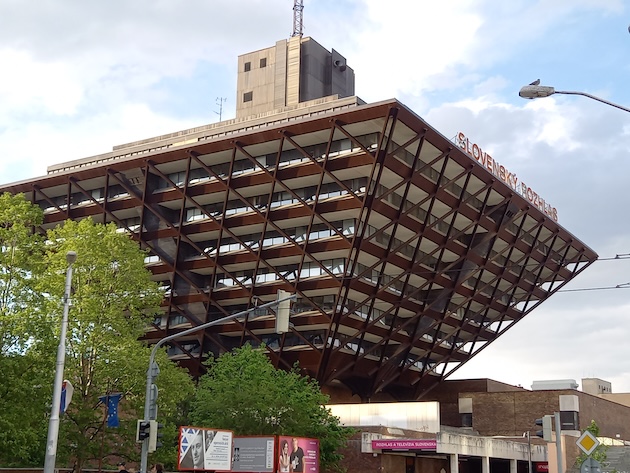
The Slovak Radio building in Bratislava, part of the RTVS public broadcaster. Credit: Ed Holt/IPS

The Slovak Radio building in Bratislava, part of the RTVS public broadcaster. Credit: Ed Holt/IPS

The Liberties report, compiled with 37 rights groups in 19 countries, comes as other media freedom watchdogs and rights groups warn of growing  concentration of media ownership, lack of ownership transparency, surveillance and violence against journalists in EU countries, government capture of public broadcasters, and rising restrictions on freedom of expression.

Press freedom watchdog Reporters Without Borders (RSF) released its annual World Press Freedom Index today (April 3, 2024), warning that politicians in some EU countries are trying to crack down on independent journalism. They single out a number of leaders as being “at the forefront of this dangerous trend,” including Hungary’s pro-Kremlin prime minister, Viktor Orban, and his counterpart in Slovakia, Robert Fico.

It also highlights concerns for press freedom in other places, such as Malta, Greece, and Italy, pointing out that in the latter—which fell in the Index’s rankings this year—a member of the ruling parliamentary coalition is trying to acquire the second biggest news agency (AGI), raising fears for future independence of media.

“One of the main themes of this year is that the institutions that should be protecting media freedom, for example, governments, have been undermining it,” Pavol Szalai, head of the EU/Balkans desk at RSF, told IPS.

Like Liberties, RSF has cited particular concern about media freedom in Hungary and Slovakia among EU states.

Media freedom has been on the decline in Hungary for more than a decade, as autocratic leader Orban has, critics say, steadily cracked down on independent journalism. His party, Fidesz, has de facto control of 80 percent of the country’s media, and while independent media outlets still exist, their sustainable funding is under threat as state advertising is funneled to pro-government outlets.

The government’s effective control of Hungary’s public broadcaster is another major concern.

“Capturing public broadcasters limits access to information and that can have a huge impact on formulating political opinions and then how people vote,” said Simon.

Hungary is also suspected of having arbitrarily monitored journalists using the controversial Pegasus software.

RSF and Liberties both say their worry is not just what is happening to media freedom in Hungary, but that what Orban has done has provided a blueprint for other autocratic leaders to follow.

“Leaders in Europe are being inspired by Orban in his war against independent media. Just look at Fico in Slovakia, who has declared war on independent media,” said Szalai.

For years, Fico has repeatedly attacked and denigrated independent media and journalists.

In 2018, investigative journalist Jan Kuciak—who had been looking into alleged corruption by people close to Fico’s government— and his fiancée Martina Kusnirova were murdered. Critics said Fico’s rhetoric against journalists had contributed to creating an atmosphere in society that allowed those behind the killings to believe they could act with impunity.

Independent journalists continue to face harassment and abuse from Smer MPs today.

Since being elected Prime Minister for the fourth time last autumn, Fico and the governing coalition led by his Smer party have continued their attacks. They also refuse to communicate with critical media, claiming they are biased.

It has also approved legislation—which is expected to be passed in parliament within weeks—that will see the country’s public broadcaster, RTVS, completely overhauled and, critics say, effectively under the control of the government.

“If the bill is passed and signed into law in its current form, RTVS will become a mouthpiece for government propaganda,” said Szalai.

The government has rejected criticism over the bill and argued changes to RTVS are necessary because it is no longer objective, is persistently critical of the government, and is not fulfilling its remit as a public broadcaster to provide balanced and objective information and a plurality of opinions. A senior official at the Slovak Culture Ministry who is among the favorites to take over as head of the public broadcaster in its new form has since suggested that people who support the flat-earth theory should be invited onto shows to air their opinions on the broadcaster.

The bill has led to public protests and threats of a mass strike from current RTVS employees.

However, against this grim backdrop, media watchdogs say new EU legislation provides hope for an improvement in media freedom.

The recently-passed European Media Freedom Act (EMFA), which takes full effect across the EU in August next year,  will, among others, ban governments from pursuing journalists to reveal their sources by deploying spyware, force media to disclose full ownership information, introduce transparency measures for state advertising, and checks on media concentration. It also provides a mechanism to prevent very big online platforms from arbitrarily restricting press freedom.

Another key measure in the legislation is that it enshrines the editorial independence of public service media, setting out that leaders and board members of public media organizations be selected through “transparent and non-discriminatory procedures for sufficiently long terms of office.”

“It is a good law that creates a very important base [for ensuring media freedom], which can be built on in the future. More safeguards [to media freedom] could be added to it in the future,” said Simon.

Szalai agreed, highlighting that the legislation was legally binding for member states. He admitted it had some shortcomings—for example, under some exceptions, journalists could be forced to reveal sources—but emphasized that it would take precedence over any national legislation, “and so governments cannot ignore it or try to get around it.”

But its implementation will be down to individual governments and authorities—something, that media freedom organizations have said must be closely watched.

A new EU body, the European Board for Media Services, is to be set up to oversee the implementation of the laws.

“It is important to make sure that the forces attacking media freedom are held back by this law. It will be up to the European Commission to hold governments to account on its implementation, and the Commission needs to consider press freedom as a priority after the European Parliament elections [in June] and to check on the EMFA’s implementation and take measures against any countries that violate it,” said Szalai.

IPS UN Bureau Report

IPS UN Bureau, IPS UN Bureau Report,

  Source

Freedom of Speech Is Silenced in Nicaragua

Civil Society, Democracy, Editors’ Choice, Featured, Freedom of Expression, Headlines, Human Rights, Latin America & the Caribbean, Press Freedom, Regional Categories, TerraViva United Nations

Press Freedom

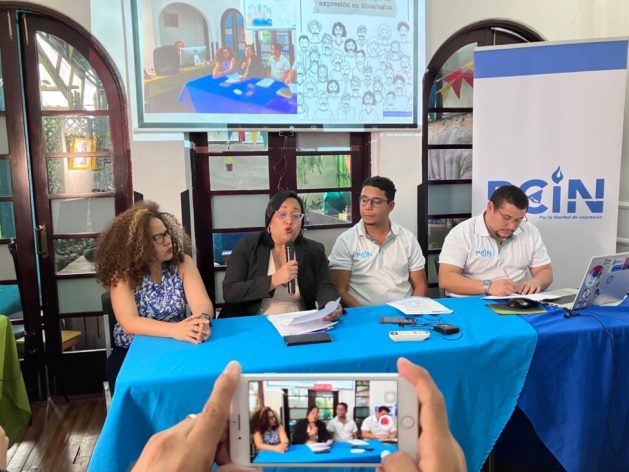
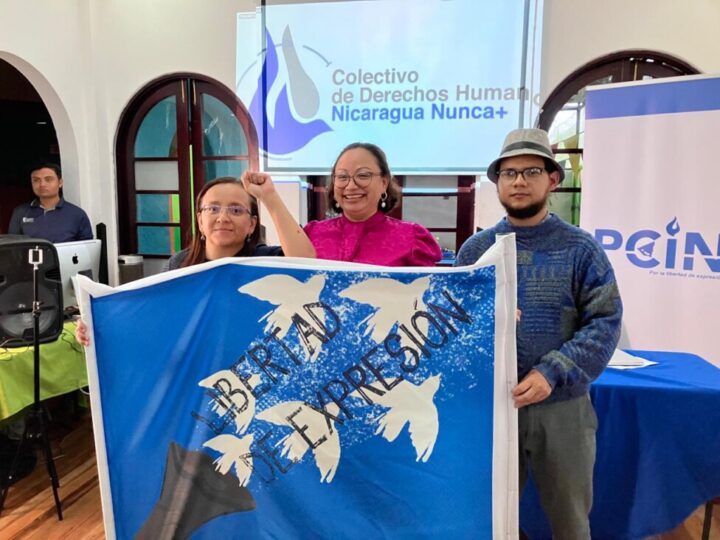
Abigail Hernández (left) appears at a press conference with journalist Wendy Quintero, a member of Independent Journalists and Communicators of Nicaragua at the headquarters of the Nicaragua Nunca Más Rights Collective. CREDIT: José Mendieta / IPS

Abigail Hernández (left) appears at a press conference with journalist Wendy Quintero, a member of Independent Journalists and Communicators of Nicaragua at the headquarters of the Nicaragua Nunca Más Rights Collective. CREDIT: José Mendieta / IPS

MANAGUA, Mar 5 2024 (IPS) – Almost six years after the outbreak of the April 2018 protests, there are no signs left in Nicaragua of the violence that reigned in those days. There is no graffiti on walls or banners with demands or opinions against the leftist regime that has ruled the country since 2007.


Nor are there newspapers or opinion programs or debates on radio and television, let alone press conferences or public rallies.

“The Ortega and Murillo regime’s repressive mechanisms have escalated to dramatic and unimaginable levels. A simple opinion issued on social networks or a criticism of the regime could land you in jail or exile.” — Martha Irene Sánchez

The city of Managua, the capital, is always bustling and active, with markets and shopping malls open at all hours; traffic is usually disorderly and police patrols roam the streets and avenues at all times.

At noon every day, on all radio and television stations, the tired, quiet voice of Vice President Rosario Murillo is heard giving the government’s news, social achievements and propaganda messages such as phrases of love and praise to God.

The program, which has no specific name, is broadcast from Channel 4, the historical property of the Sandinista National Liberation Front (FSLN), the ruling party, to which the other state media are linked. The private media outlets controlled by the presidential family are also connected, together with dozens of radio stations and portals on social networks.

It first emerged in 2007 as “a message from comrade Rosario, from the Communication and Citizenship Council of the People’s President.”

“Here we are, on Valentine’s Day, with love, friendship, and for us, love and peace, because it is with love and in peace that we can walk ahead, move forward, building the future of all, a fraternal future,” she said on Feb. 13.

Murillo has been Nicaragua’s vice president since she was appointed in 2016 by her husband, President Daniel Ortega, the veteran former guerrilla who has been in office since November 2006.

Murillo is also the regime’s spokesperson and the only authorized voice, among the population of 6.7 million inhabitants of this Central American country, who can speak publicly and freely about anything. No one else can do so.

Freedom of expression in Nicaragua is one of the most repressed and abused rights, said journalist Abigail Hernández, director of the Galería News platform.

Journalist and former political prisoner Lucía Pineda Úbau, together with Martha Sánchez, take part in a protest by Nicaraguan journalists exiled in Costa Rica. CREDIT: José Mendieta / IPS

Journalist and former political prisoner Lucía Pineda Úbau, together with Martha Sánchez, take part in a protest by Nicaraguan journalists exiled in Costa Rica. CREDIT: José Mendieta / IPS

Her opinion, tellingly sent via an encrypted messaging application, is based on experience: three years’ exile.

“The media and journalists are a good thermometer for measuring the quality of freedom of expression,” Hernández told IPS.

“When we have less and less access to sources of information, when they limit us from reporting from the streets, when we can’t take photos or videos freely, when we can’t do our work inside the country, it reveals that there is no freedom of expression,” she said.

She is part of a generation of 242 journalists who have had to go into exile since the 2018 protests, which began against Social Security reforms and ended in a bloodbath provoked by military and police forces, with more than 355 civilian deaths, according to the Inter-American Commission on Human Rights (IACHR).

Journalist Martha Irene Sánchez, director of the República 18 platform, holds similar views, also expressed from exile.

“The scenarios for exercising freedom of the press and freedom of expression in Nicaragua have not improved since 2018; on the contrary, we are encountering more and more hostility,” she told IPS.

She is also a member of Independent Journalists and Communicators of Nicaragua (PCIN), a union organization that emerged after the protests and all of whose members went into exile.

“The Ortega and Murillo regime’s repressive mechanisms have escalated to dramatic and unimaginable levels. A simple opinion issued on social networks or a criticism of the regime could land you in jail or exile,” Sánchez said.

A forum for the presentation of the report on freedom of expression and press freedom in Nicaragua, released in September 2023 in San José, Costa Rica. The panel included journalists from Nicaragua from the Connectas platform, including FLED director Guillermo Medrano, (second-right). CREDIT: José Mendieta / IPS

A forum for the presentation of the report on freedom of expression and press freedom in Nicaragua, released in September 2023 in San José, Costa Rica. The panel included journalists from Nicaragua from the Connectas platform, including FLED director Guillermo Medrano, (second-right). CREDIT: José Mendieta / IPS

She cited the example of Victor Ticay, a local journalist in Nandaime, a municipality in the northwestern department of Granada, who went out one day to cover a procession during the Catholic Holy Week of 2023.

The event had not been authorized by the police, whose agents interrupted the religious ceremony and Ticay filmed the parishioners running away from the patrol cars through the streets of the town.

He was arrested, charged with treason and spreading false news and sentenced to eight years in prison.

Guillermo Medrano, director of the Foundation for Freedom of Expression and Democracy (FLED), explained to IPS that between 2020 and 2021, the Nicaraguan regime passed a series of laws criminalizing the practice of journalism and freedom of expression.

A study that FLED released in September 2023 in San José, Costa Rica, a country bordering Nicaragua and the center of the country’s exile community, documented 1329 press freedom violations, mostly perpetrated by state agents in the 2018-2023 five-year period.

The actions were taken against 338 Nicaraguan journalists and 78 media outlets, between April 2018 and April 2023.

They included the police intervention of several media outlets such as 100% Noticias, Confidencial, Trinchera de la Noticia, Radio Darío and La Prensa, the last newspaper circulating in Nicaragua until August 2022.

According to Medrano, the Special Law on Cybercrime, passed in October 2020, provides for prison sentences for the use of information “which in normal democracies should be freely accessible to citizens and the public.”

In theory, the main objective of this legislation is the prevention, investigation, prosecution and punishment of crimes committed by means of information and communication technologies to the detriment of natural or legal persons.

The press freedom advocate also pointed out that the Ortega-Murillo administration, which controls all state institutions and branches of power, as well as the security forces, established the Law for the Defense of the Rights of the People to Independence, Sovereignty and Self-Determination for Peace, effective since Dec. 22, 2020.

This law gives discretion to judges and prosecutors in terms of the crime of “treason”, which orders the banishment and denationalization of the accused, as well as life imprisonment through a reform of the penal system.

More than 180 people have already been prosecuted under these laws and at least 22 journalists were stripped of their citizenship and banished in 2023.

“Under these laws, freedom of speech and the press has become a high-risk constitutional right for those who exercise it within Nicaragua,” Medrano denounced.

A report by the regional organization Voces del Sur says that Nicaragua ended 2023 with new forms of repression and threats to press freedom applied through banishment, confiscations, illegal detentions and harassment and surveillance of the families of journalists working in exile.

The outlook, the report warns, is of greater silence about social issues.

Nicaraguan journalists conduct interviews under risk of persecution or criminalization, denounced several reporters in San José, Costa Rica, in August 2023. CREDIT: José Mendieta / IPS

Nicaraguan journalists conduct interviews under risk of persecution or criminalization, denounced several reporters in San José, Costa Rica, in August 2023. CREDIT: José Mendieta / IPS

According to the report, between 2018 and the end of 2022, 54 media outlets disappeared, including 31 radio stations, 15 television channels and eight print media outlets. Of that total, 16 media outlets were confiscated, including La Prensa, the country’s main daily newspaper.

“Sources, even under conditions of anonymity, are harder and harder to find, and the saddest thing is that the State, through its officials, continues to be the main victimizer of citizens’ rights of expression and journalists’ press rights,” Medrano complained.

The non-governmental Human Rights Collective Nicaragua Nunca Más, made up of human rights defenders and activists in exile, states that the Ortega-Murillo administration “has carried out an unprecedented attack on freedom of expression in this country.”

The organization reports that of 28 resolutions of precautionary measures for journalists in Latin America, which have been issued since 2018 by the IACHR on freedom of expression, 15 have been issued for Nicaragua.

However, it says that “none of the precautionary measures” have been complied with by the State and, on the contrary, harassment against the targets has increased.

“And that reveals to us the seriousness of the problem of a small country with disproportionate and unacceptable restrictions on fundamental freedoms,” said one of the agency’s advocates, on condition of anonymity for security reasons.

These complaints find no responses within Nicaragua, because with the exception of Murillo, no one is authorized to answer, but can simply repeat the official discourse: “Nicaragua lives in peace and security.”

  Source