Agnès Callamard is Amnesty International’s Secretary General
Credit: World Economic Forum/Gabriel Lado. Source: Amnesty International
LONDON, Jan 16 2026 (IPS) – “The ‘spirit of dialogue’, the theme for this year’s meeting in Davos, which begins January 19, has been painfully and increasingly absent from international affairs of late. President Trump’s first year back in office has seen the United States withdraw from multilateral bodies, bully other states and relentlessly attack the principles and institutions that underpin the international justice system.
At the same time, the likes of Russia and Israel have continued to make a mockery of the Geneva and Genocide Conventions without facing meaningful accountability.
“A few powerful states are unashamedly working to demolish the rules-based order and reshape the world along self-serving lines. Unilateral interventions and corporate interests are taking precedence over long-term strategic partnerships grounded in universal values and collective solutions.
This was evident in the Trump administration’s military action in Venezuela and its stated intent to ‘run’ the country, which the president himself admitted was at least partially driven by the interests of US oil corporations. Make no mistake: the only certain consequence of vandalizing international law and multilateral institutions will be extensive suffering and destruction the world over.
“When faced with diplomatic, economic and military bullying and attacks, many states and corporations have opted for appeasement instead of taking a principled and united stand. Humanity needs world leaders, business executives and civil society to collectively resist or even disrupt these destructive trends. It requires denouncing the bullying and the attacks, and strong legal, economic, and diplomatic responses.
What should not happen is silence, complicity and inaction. It also demands engaging in a transformative quest for common solutions to the many shared and existential problems we face.
“We need UN Security Council reform to address abuse of veto powers, robust regulation to protect us against harmful new technologies; more inclusive and transparent decision-making on climate solutions; and international treaties on tax and debt to deliver a more equitable, rights-based global economy. But this will only be achievable through cooperation and steadfast will to resist those who seek to strongarm and divide us.”
-Israel’s ongoing genocide against the Palestinians in Gaza
-The USA’s military action in Venezuela, Russia’s war of aggression against Ukraine, and the conflicts in Sudan, DRC and Myanmar
-The importance of revindicating and revitalizing multilateralism
-The need for global tax and debt reform and universal social protection
-The urgent need for a full, fast, fair and funded fossil fuel phase-out
-The need to massively scale up climate finance, including to address loss and damage
-Big Tech, corporate accountability and the risks of deregulation
-How to limit the harmful impact of artificial intelligence on human rights, including the right to a healthy environment
LONDON, Jan 13 2026 (IPS) – The richest 1% have exhausted their annual carbon budget – the amount of CO2 that can be emitted while staying within 1.5 degrees of warming – only ten days into the year, according to new analysis from Oxfam. The richest 0.1% already used up their carbon limit on the 3rd January.
This day – named by Oxfam as ‘Pollutocrat Day’ – highlights how the super-rich are disproportionately responsible for driving the climate crisis.
The emissions of the richest 1% generated in one year alone will cause an estimated 1.3 million heat-related deaths by the end of the century. Decades of over consumption of emissions by the world’s super rich are also causing significant economic damage to low and lower-middle income countries, which could add up to $44 trillion by 2050.
To stay within the 1.5 degrees limit, the richest 1% would have to slash their emissions by 97% by 2030. Meanwhile, those who have done the least to cause the climate crisis – including communities in poorer and climate-vulnerable countries, Indigenous groups, women and girls – will be the worst impacted.
“Time and time again, the research shows that governments have a very clear and simple route to drastically slash carbon emissions and tackle inequality: by targeting the richest polluters.
By cracking down on the gross carbon recklessness of the super-rich, global leaders have an opportunity to put the world back on track for climate targets and unlock net benefits for people and the planet,” said Oxfam’s Climate Policy Lead Nafkote Dabi.
On top of their lifestyle emissions, the super-rich are also investing in the most polluting industries. Oxfam’s research finds that each billionaire carries, on average, an investment portfolio in companies that will produce 1.9 million tonnes of CO2 a year, further locking the world into climate breakdown.
The wealthiest individuals and corporations also hold disproportionate power and influence. The number of lobbyists from fossil fuel companies attending the recent COP summit in Brazil, for example, was more than any delegation apart from the host nation, with 1600 attendees.
“The immense power and wealth of super-rich individuals and corporations have also allowed them to wield unjust influence over policymaking and water down climate negotiations.” Dabi added.
Oxfam calls on governments to slash the emissions of the super-rich and make rich polluters pay through:
Increase taxes on income and wealth of the Super-rich and proactively support and engage on the negotiations for the UN Convention of International Tax Cooperation to deliver a fairer global architecture.
Excess profit taxes on fossil fuel corporations. A Rich Polluter Profits Tax on 585 oil, gas and coal companies could raise up to US $400 billion in its first year, equivalent to the cost of climate damages in the Global South.
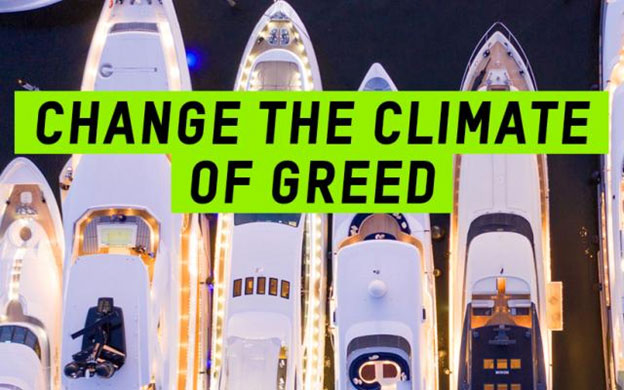
Ban or punitively tax carbon-intensive luxury items like super-yachts and private jets. The carbon footprint of a super-rich European, accumulated from nearly a week of using super yachts and private jets, matches the lifetime carbon footprint of someone in the world’s poorest 1 percent
Build an equal economic system that puts people and planet first by rejecting dominant neoliberal economics and moving towards an economy based on sustainability and equality.
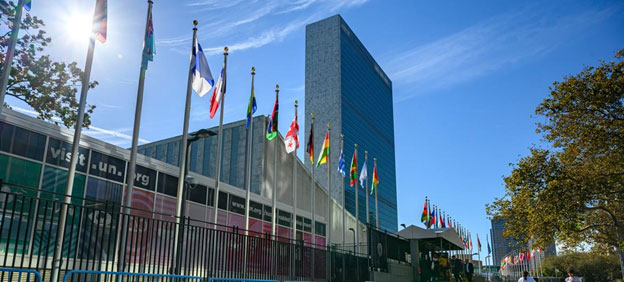
UN’s ‘responsibility to deliver’ will not waver, after US announces withdrawal from dozens of international organizations. Credit: UN Photo/Loey Felipe
“Take up the White Man’s burden — Send forth the best ye breed… By all ye cry or whisper, by all ye leave or do, [T]he silent, sullen peoples shall weigh your gods – and you…” — Rudyard Kipling, The White Man’s Burden: The United States and the Philippine Islands (1899)
NEW YORK, Jan 12 2026 (IPS) – We’re living in an age where the world is loudly proclaiming the death of empire, yet reproducing its structures. This is not nostalgia for colonial postcards — it’s a reinvention of foreign policy, international governance and global economic power that resembles colonial logic far more than it does meaningful cooperation.
The term “New Colonialism” feels extreme until you look not at poetry, but at power in motion — from military takeovers and genocides, to diplomatic withdrawal, to institutions that still perpetuate inequality and human rights’ abuses under the guise of neutrality.
I – Where Are We Today
“Imperialism after all is an act of geographical violence through which virtually every space in the world is explored, charted, and finally brought under control.” — Edward Said, Culture and Imperialism (1993)
In January 2026, the United States executed what amounts to the most dramatic foreign intervention in Latin America in decades: a military incursion into Venezuela resulting in the abduction of President Nicolás Maduro. President Donald Trump openly declared that the U.S. would “run the country until such time as we can do a safe, proper and judicious transition.” This is not coded language — it is overt control.
Critics and allies alike see the move not as a limited counternarcotics or law enforcement operation (as the Administration frames it), but as a return to the old playbook of hemispheric domination. Latin American governments from Mexico to Brazil condemned it as a violation of sovereignty — a modern mirror to the regime-change interventions of the 20th century.
Analysts at Foreign Policy have highlighted precisely how this intervention fits into a larger pattern of U.S. foreign policy ambition. Rishi Iyengar and John Haltiwanger note that under the banner of battling “narcoterrorism,” the United States has expanded the role of its military into actions that blur the distinction between security and political control — “adding bombing alleged drug traffickers to its ever-growing list of duties.”
Such actions reflect a foreign policy that is increasingly militarized and deeply unilateral in its execution.
This intervention was not an isolated blip. It fits into a broader dynamic which suggests Washington’s moves in Venezuela are less about drug interdiction and more about strategic positioning and resource control — especially Venezuela’s vast oil reserves.
In the context of a “World-Minus-One” global order where U.S. power is contested by China and Russia, interventionist impulses have resurfaced not as humanitarian projects but as geopolitical gambits.
Viewed through the lens of colonial critique, the language of “rescuing” Venezuelans from an accused dictator echoes Kipling’s exhortation to take up the supposed moral burden. But those centuries-old justifications masked violence and labour exploitation; today’s rhetoric masks geopolitical self-interest.
The U.S. claims to be liberating Venezuelans from authoritarianism, yet asserts control over governance and economic infrastructure — a 21st-century version of telling another nation it cannot govern itself without direction from Washington. The result is not liberation, but dependency — a hallmark of colonial relationships.
II. The U.S. Withdrawal from Multilateral Institutions
“The White Man’s Burden, which puts the blame of the new subjects upon themselves without acknowledging the real burden — the systematic, structural and often violent exploitation — is the oldest myth of empire.”
Kumari Jayawardena, The White Woman’s Other Burden: Western Women and South Asia During British Colonial Rule, (1995)
If the takeover of Venezuela reads like old-fashioned empire building, the withdrawal from multilateral institutions is a disengagement from the very forums meant to prevent that kind of unilateralism.
In early 2026, the United States signed a presidential memorandum seeking to withdraw support and participation from 66 international organizations — including numerous United Nations agencies and treaty frameworks seen as “contrary to U.S. interests.” This list contains both U.N. bodies and other treaty mechanisms, extending a pattern of U.S. disengagement from global governance structures.
Among the organizations targeted are the U.N.’s population agency and the framework treaty for international climate negotiations. Already, U.S. participation in historic climate agreements like the Paris Agreement has been rolled back, and the World Health Organization was officially exited — marking a return to a transactional, bilateral focus rather than deep multilateral cooperation.
U.N. Secretary-General António Guterres responded to the announcement with regret and a reminder of legal obligations: assessed contributions to the regular and peacekeeping budgets are binding under the U.N. Charter for all member states, including the United States. He also underscored that despite U.S. withdrawal, the agencies will continue their work for the communities that depend on them.
This move comes against a backdrop in which the U.N. and other institutions are already grappling with serious internal challenges — problems that critics argue undermine their legitimacy and point to deeper governance failures. For instance, allegations of sexual exploitation and abuse by U.N. peacekeepers and staff have repeatedly surfaced, with hundreds of cases documented and concerns raised about the trustworthiness of leadership responses.
In 2024 alone, peacekeeping and political missions reported over 100 allegations, and internal surveys showed troubling attitudes among staff toward misconduct.
Such abuses are not random flukes; scholars and advocates have documented persistent organizational cultures where power imbalances enable exploitation and harassment, and where transparency and accountability often lag.
These structural issues do not delegitimize the idea of multilateral cooperation — but they certainly challenge claims that these institutions function as equitable and effective global governance mechanisms.
International non-governmental organizations (INGOs) are likewise under scrutiny. Critics point to cases where aid workers have perpetrated sexual abuse and exploitation or where organizational priorities have at times aligned more with donor interests than with local needs.
A 2024 study on sexual exploitation and harassment in humanitarian work highlights how power imbalances and weak enforcement mechanisms within the sector contribute to ongoing abuses that remain under-reported and inadequately addressed.
These issues — within the U.N. and the humanitarian sector — fuel frustration that multilateralism too often protects institutional reputation at the expense of victims and local communities. That frustration helps explain why some U.S. policymakers see these organizations as outdated or corrupt.
But the response of walking away rather than strengthening accountability mechanisms plays directly into the hands of those who would hollow out global governance altogether.
III. It Takes Two to Tango
So, is the United States the villain in this unfolding story of fractured cooperation and revived colonial impulses? Yes — but only partially.
There is no denying that recent U.S. foreign policy has made unilateral moves that harm global norms: military intervention in sovereign states, withdrawal from key treaties and organizations, and politicized rejection of multinational cooperation reflect a retreat from shared leadership. Yet, the belief that multilateral institutions are inherently effective, just and beyond reproach is equally misplaced.
Structural weaknesses in international governance — from slow, opaque accountability mechanisms to insufficient representation of Global South voices — have long been recognized by scholars and practitioners. These deficiencies leave global organizations vulnerable to political capture, ineffectiveness in crisis response and the perpetuation of inequalities they are meant to dismantle.
The failures inside the U.N. and the aid sector are not the sole fault of the United States, but of a global system that institutionalized power hierarchies sustained by western donors, from the beginning.
The New Colonialism era does not show up as 19th-century conquest; it’s woven into the language of “interest,” “security,” and “institutional reform.” Whether it is a powerful state flexing military might under humanitarian pretences or “self defence”, or powerful states walking away from agreements that protect smaller nations’ interests, the pattern is the same: power asserts itself where it can, and multilateral norms are treated as optional.
If this moment teaches us anything, it’s that saving multilateralism requires both accountability and renewal — not abandonment. Countries that champion global cooperation must address colonial legacies in governance, ensure institutions are transparent and accountable, and democratize decision-making.
Likewise, powerful states must recognize that withdrawing from shared systems or using them to further their own limited interests, does not reset power imbalances — it entrenches them.
In the end, meaningful global cooperation cannot be the project of a single nation or a network of powerful elites. It must be rooted in shared accountability and genuine equity — a coalition of efforts for the common good, prepared not only to compromise, but to sacrifice.
Azza Karam is President of Lead Integrity and Director of Occidental College’s Kahane UN Program.
Food solutions were on display everywhere around COP30—from the 80 tonnes of local and agroecological meals served to concrete proposals for tackling hunger—but none of this made it into the negotiating rooms or the final agreement. —Elisabetta Recine, IPES-Food panel expert
Agriculture is both a challenge and a solution for climate change. Busani Bafana/IPS
BULAWAYO, Jan 9 2026 (IPS) – As they ate catered meals, COP30 negotiators had no appetite for fixing broken food systems, a major source of climate pollution, experts warn.
Food systems are the complete journey food takes—from the farm to fork—which means its growing, processing, distribution, trade and consumption and even the waste.
The International Panel of Experts on Sustainable Food Systems (IPES-Food) warns that the final COP30 agreement risks deepening climate and hunger crises. It failed to address global warming emissions from food systems and the escalating damages caused by fossil-fuel-dependent industrial agriculture.
Food appears only once in the negotiated text, as a narrow indicator on ‘climate resilient food production’ under the Global Goal on Adaptation, IPES-Food pointed out.
“There is no mention of food systems, no roadmap to tackle deforestation, and no recognition that industrial agriculture drives nearly 90 percent of forest loss worldwide,” noted the think tank, emphasizing that negotiators also weakened language in the Mitigation Work Programme from addressing the ‘drivers’ of deforestation to vague ‘challenges.’
IPES-Food argued that the omission of food systems in the COP30 agreement was in stark contrast to the summit itself, which was held in the heart of the Amazon. Thirty percent of all food served during COP30 came from agroecological family farmers and traditional communities, and concrete public policy proposals for a just transition of food systems were on full display, IPES-Food said.
By not supporting a transition to environmentally friendly and low-emission agriculture, the agreement has left the global food system—and the billions who depend on it—highly vulnerable to the very climate shocks it helps cause, experts said.
“Food solutions were on display everywhere around COP30—from the 80 tonnes of local and agroecological meals served to concrete proposals for tackling hunger—but none of this made it into the negotiating rooms or the final agreement,” said Elisabetta Recine, IPES-Food panel expert and president of the Brazilian National Food and Nutrition Security Council (Consea), in a statement.
“Despite all the talk, negotiators failed to act, and the lived realities of people most affected by hunger, poverty, and climate shocks went unheard.”
Big Oil and Big Ag, Bigger voice
More than 300 industrial agriculture lobbyists were registered as delegates to COP30. They are blamed for influencing discussions and promoting false solutions to climate change.
“COP30 was supposed to be the Implementation COP—where words turned into action,” Danielle Nierenberg, an expert on sustainable agriculture and food issues and President of Food Tank, told IPS. “But once again, corporate interests won over people, nature, and the future of our food and agriculture systems as part of the solution to the climate crisis.”
Raj Patel, IPES-Food panel expert and professor at the University of Texas, argues that agribusiness lobbyists captured COP30 to influence outcomes favoring industrial agriculture and big oil interests.
“Food systems are second only to oil and gas as a driver of the climate crisis, and unlike oil wells, they are also the first victim of the chaos they create, Patel noted.
Obstacles and Opportunities
Scientists have warned that carbon emissions, including those from agriculture, must be cut considerably if the world is to meet the goals of the Paris Agreement to limit global warming to 2°C or less.
Even if fossil fuel emissions were eliminated immediately, emissions from the global food system alone would make it impossible to limit warming to 1.5°C and difficult even to realize the 2°C target, scientists have said.
Selorm Kugbega, a Research Fellow at the Stockholm Environment Institute, agrees that despite many promises made to tackle agriculture-linked emissions, COP30 turned out to be a damp squib for agrifood systems.
Initiatives such as RAIZ to restore 500 million hectares of degraded agricultural land by 2030 and TERRA to scale out climate solutions for smallholder farmers through blended finance, which were launched at COP30 omitted to highlight the effects of industrial food systems. Over 300 industrial agriculture lobbyists participated in discussions at COP30, leading to accusations of swaying the outcomes.
Analysts warn the final agreement at COP30 in Belém, Brazil, risks deepening climate and hunger crises. Credit: Raimundo Pacco/COP30
Kugbega observed that after several years of slow progress and momentum in integrating food systems in climate negotiations, COP30 should have been the opportunity to seal agriculture’s centrality in future COPs. However, it ended with no clear agreements on grant-based public finance for adaptation in agriculture or redirection of public funds that subsidize industrial systems.
The climate negotiations demonstrated power inequality in climate negotiations with the implicit protection of industrial agriculture interests, which weakened the credibility of any global efforts at mitigating agriculture-based emissions, Kugbega observed, highlighting that smallholders bear a high burden of climate risks and have little adaptation financing.
Kugbega argued the most powerful countries, which are generally less dependent on agriculture, tend to prioritize sectors such as energy and transport in climate negotiations. However, many least developed countries, particularly in Africa, are highly dependent on agriculture for employment and economic stability and face urgent climate risks.
“Yet these countries often lack the political influence to elevate agriculture and food systems as central issues in COP negotiations,” he said. “COP30 in Brazil presented a major opportunity to shift this imbalance, making the failure to position food systems at the center of the climate agenda particularly troubling.”
Frugal Financing for Food and Farmers
According to the Climate Policy Initiative (CPI) and the UN’s Standing Committee on Finance, agriculture receives a small and insufficient share of total global climate finance.
Of the available approximate total global climate finance of USD 1.3 trillion per year on average, agriculture gets around USD 35 billion per year. This is a huge shortfall given that food systems are estimated to be responsible for roughly one-third of global greenhouse gas emissions and are one of the sectors most vulnerable to climate impacts, according to the CPI. Worse still, smallholder farmers, who produce up to 80 percent of food in developing countries, only receive 0.3 percent—a striking imbalance, yet they feed the world and are more exposed to climate impacts.
Will COP31 Deliver?
While COP30 highlighted the need to tackle climate change impacts through the transformation of food systems, such as highlighted in the Belém Declaration on Hunger, Poverty and Human-Centered Climate Action, it remains to be seen if COP31 will deliver a positive outcome on food systems.
Waiting for COP31 to save the world is surrendering because agribusiness lobbyists do not take holidays, argues IPES-Food panel’s Raj Patel.
“The test is not whether diplomats can craft better language in Antalya, but whether farmers’ movements, indigenous movements, and climate movements can generate enough political pressure to make governments fear inaction more than they fear confronting corporate power,” he said.
COP31, to be hosted by Turkey with Australia as negotiations president in 2026 , is expected to prioritize an action agenda centered on adaptation finance, fossil fuel phase-out, adaptation in Small Island Developing States, and oceans.
While this agenda aligns with broader climate justice goals, it means food systems risk becoming indirectly addressed rather than explicitly championed, Kugbega said.
Given the stalled negotiations on financing sustainable agriculture transitions and the postponement of the Sharm el-Sheikh Joint Work on Agriculture, Kugbega said COP31 will likely focus more on developing new roadmaps and agreements than on full-scale implementation.
COP32 could be a greater opportunity for the implementation of the work program under Ethiopia’s COP32 presidency, given the country’s direct exposure to climate risks in agriculture, he noted.
“COP31 will likely shape whether the world arrives at COP32 ready to implement and operationalize sustainable food systems or once again be forced to renegotiate what is already known.”
This feature is published with the support of Open Society Foundations.
DHAKA, Bangladesh, Jan 8 2026 (IPS) – As many of you know, out of the blue, I have been called in to assist the Interim Government led by Nobel Laureate Professor Muhammad Yunus in stabilising the economy left in ruins by the fallen autocratic-kleptocratic regime that looted the banks, stole public money and robbed small investors in the capital market to siphon off billions of dollars out of the country. I had never served in a government; neither had I ever expected this opportunity. However, my UN experience and political economy understanding have been handy.
Anis Chowdhury
Reflecting back the year that we have just passed, I trust, you have been well as we wished each other at the start of 2025 the best of our health and spirit. Unfortunately, despite our earnest wish, the world was not peaceful during 2025.
Hopes and global disorder
Hopes kindled briefly for justice for the Palestinians as the European powers, including Australia (a European settler colony) were forced to recognise the Palestine State, and Narcissist Trump pushed for some peace in both Ukraine and Gaza in his mad desperation for a Nobel Peace Prize.
Yet Gaza is still being bombarded with Israel’s genocidal intent, making a mockery of deranged Trump’s rhetorical claim of achieving “peace in the Middle East for the first time in 3,000 years”, and the illegal occupation of the West Bank along with settler violence continues unabated with complete immunity in blatant violations of international laws.
Narcissist Trump sanctioned the International Criminal Court (ICC) and International Court of Justice (ICJ) in his desperate attempt to save Israeli war criminals, including Benjamin Netanyahu and justify Israel’s genocide and settler violence. Trump upended his assault on the rule-based order with arbitrary so-called ‘reciprocal tariff’.
Bangladesh
As for the post-fascist Hasina Bangladesh, the year 2025 began with high expectations. And as for me, the year 2025 has been extra-ordinary.
Today, I am pleased to say that we have been able to avert a full-blown crisis. Heart-felt thanks to our ‘remittance fighters’ who whole-heartedly trusted the Interim Government’s various reform initiatives. Expatriate Bangladeshis sent a record $30.04 bn in remittances in the 2024–25 fiscal year, the highest amount ever received in a single fiscal year in the country’s history. Forex reserves surged to $33 bn, hitting 3-year high as December remittances crossed $3bn. You can get a report card by Finance Advisor, Dr. Salehuddin and myself, published in the Daily Star on 18 August 2025.
Of course, not everything has been rosy. The much-hoped systemic transition remains full of uncertainty. I see systemic transition as the process of total transformation of a caterpillar inside a cocoon. We still do not know whether the ‘caterpillar in the cocoon’ will turn out to be a butterfly or a moth. People are genuinely worried as the past systemic transition opportunities were wasted.
I myself found road-blocks at every turn. Bureaucratic inertia and resistance have frustrated my efforts for genuine reforms. It has been a real-life experience of the classic British political satire, “Yes, Minister”. Like Sir Humphrey Appleby, the bureaucrats will display outwardly extra-ordinary humbleness, but will politely defy citing rules of business. Bureaucratic resistance is the main stumbling block for achieving coordination, coherence and integration in policy making and implementation, thus, causing wasteful duplications, inefficiency and lack of effectiveness.
Nevertheless, I achieved some success. One of them is the agreement to expand the voluntary Bangladesh National Cadet Corps programme to cover ALL youths (aged 18) in 10-12 years, so that we can have a disciplined workforce to be readily deployed during any national emergency. Needless to say, that this is an imperative to realise demographic dividend. We are hoping to roll out the programme from July 2026 to coincide with the July Revolution anniversary.
Despite frustrations and uncertainties, I am hopeful as I can see a seismic shift in the political dynamics of the country. This coincides with the demographic shift – the youth (15-30 years) representing nearly 30% of the population. These youths have a different vocabulary of politics; they want justice, inclusion, self-respect, and dignity – they are fiercely nationalist.
Recently martyred Hadi is their embodiment. The establishment is understandably threatened and tried to silence the youth by assassinating Hadi; but they failed to extinguish the flame, instead, everyone has become a Hadi, standing unwavering in their commitment to carry out Hadi’s mission of building a just nation where citizens can live with dignity, free from fear, subjugation, and oppression. Hadi re-centred our national conscience on Insaf: justice, dignity, and fairness not as rhetorical slogans, but as non-negotiable ethical foundations of the State and society.
In an era of moral drift, Hadi reminded the nation that no political order can last without justice at its core. He ignited a generation with civic courage and moral responsibility. Free from fear, patronage, or transactional politics, young people saw in Hadi a new model of leadership: ethical, principled, and accountable. In doing so, he reshaped the future political character of Bangladesh and moved national thinking beyond entrenched legacy power structures toward people-centric, principled governance. He challenged the inevitability of corruption and coercion, insisting instead that politics could be reclaimed as a moral vocation. His life poses an enduring question to those who seek power: Will you serve justice, or merely rule?
Let me end this year-end message with my personal tribute to Khaleda Zia, who has recently passed away after a long illness imposed on her by the vindictive Hasina regime, falsely convicting her and imprisoning in a substandard cell. Like her husband, Shaheed President Zia, she was thrust into the whirlpool of history. They never sought power; but when the responsibility fell on their shoulders, they carried out their duties to the nation whole-heartedly and selflessly; thus, they became a true statesman (woman), winning hearts and minds of their people.
Perhaps Khaleda Zia’s most enduring legacy lies in her extraordinary restraint and dignified disposition, even under severe and prolonged adversity. Her self-restraint, rooted in grace rather than weakness, distinguished her from many of her contemporaries and offers a powerful lesson for today’s often abrasive and confrontational political culture.
Pro-Democracy protesters gather in front of the headquarters of the Sudanese army in the capital, Khartoum. Credit: Masarib/Ahmed Bahhar via UN News
VIENNA, Austria, Jan 5 2026 (IPS) – Consider our political systems not merely as battlegrounds of passions, ideologies and economic interests, but as systematically functioning arrangements of interactions, akin to game theory. In recent decades, we have witnessed the dissolution of large homogeneous groups into numerous subgroups — a patchwork of minorities.
This fragmentation, compounded by individualisation and the resulting weakening of strong political bonds, has profound consequences for democratic governance.
In nations with majority voting systems, this process fragments the party system itself. As dissatisfaction with political parties grows – initially quietly but eventually becoming pronounced – new parties emerge, further splintering the political landscape.
This increasing fragmentation complicates government formation and makes majorities more precarious. Often, only coalitions that can agree on the lowest common denominator are formed. Consequently, the outcomes of politics do not necessarily improve; in most cases, they worsen.
A vicious circle
Decisive action, bold moves and clear leadership have become increasingly elusive. This reinforces dissatisfaction and the prevailing sentiment among voters that politicians are failing to achieve meaningful results. Doubts about the effectiveness of the political system become self-perpetuating, creating a situation where decisive politics is nearly impossible.
The rise of populists and right-wing extremists is both a consequence of this stagnation and a further catalyst — a ratchet effect. Right-wing agitators stoke discontent, transforming it into anger and outrage while exploiting negative emotions.
As they gain strength, democratic politics becomes more paralysed, often preoccupied with defending against radicalism, preventing the worst outcomes, and forming coalitions whose members can agree on little more than a lacklustre commitment to ‘more of the same’.
When social cohesion erodes, the radical right gains ground — which then leads to even more division. The perceived polarisation and alienation that accompanies the rise of right-wing extremism increases the perception of social disintegration and decay.
Democracy gives rise to its own threats
In a sense, right-wing radicalism is itself the problem that it then laments in a subsequent cycle. It is the disintegration that it denounces. In this way, it contributes to the chain of evidence that reinforces authoritarian reflexes. Authoritarianism feeds authoritarianism.
These framework conditions of political systems – fragmentation and the resulting weakness of action – lead German democracy theorist Veith Selk to diagnose that modernisation and social change are increasingly putting democracy under stress, making a reversal unlikely.
This presents a rather depressing diagnosis of decline: democracy gives rise to its own threats.
Additionally, globalisation necessitates ‘global governance’, which, even under favourable circumstances, has historically produced solutions at an unbearably slow pace and is now reaching its limits amid chaotic multilateralism.
Conversely, ‘de-globalisation’ – through national power politics, tariffs and trade wars – provides no relief and instead creates new problems, such as the loss of sales markets, disrupted supply chains and a consequent decline in economic growth, potentially destroying whole economic sectors.
Europe’s mounting crises
The emergencies of the future are already on the horizon. The climate catastrophe threatens not only our livelihoods but also has tangible economic repercussions. Crop failures due to droughts and floods are already contributing to rising inflation in the cost of living, particularly for vegetables and fruit.
This situation is certain to become much more severe. Even if successful, socio-economic transformation will be costly. Insurance companies may face financial difficulties, asset portfolios could lose value rapidly, and if we are unfortunate, a sudden ‘Minsky moment’ could trigger a downward spiral leading to a financial crisis.
Ageing populations are already straining public finances, with healthcare and care systems becoming increasingly expensive, pushing European welfare states to their financial limits.
Government debt is rising, and under current conditions, it will be more challenging to “grow out” of debt than it was in the past. Growth will be harder to mobilise, and austerity is not a viable alternative, as contraction strategies lead to dire consequences. These are all concerning prospects.
Here are a few highlights:
Germany’s economy has stagnated for six years, and private investment remains weak. France is facing a budget deficit of 5.8 per cent and a public debt ratio of 113 per cent of GDP, while sliding from one government crisis to another. Political actors are unable to achieve a socially just change of course that would reconcile savings in the pension system with additional revenue from wealth taxes.
Austria was projected to have a budget deficit of six per cent, prompting left-wing Keynesian Finance Minister Markus Marterbauer to assemble a package of tightening measures aimed at reducing the deficit to 4.5 per cent by 2025.
Ensuring that large fortunes contribute to costs through higher taxation is not only a matter of fairness but also an economic necessity — yet there is a lack of parliamentary majorities for decisive measures nearly everywhere.
There is a growing desire for politics to provide sensible solutions instead of getting bogged down in petty details.
A whole panorama of emergencies is unfolding before us. As noted earlier, most of those in power have little energy or flexibility to think and act beyond daily problems. This situation has tangible and psychopolitical effects: citizens feel that things are deteriorating and that serious trouble is brewing, while simultaneously sensing that those in power are merely tinkering with details.
For many, this leads to outright fear and a generally pessimistic mood, which in turn fuels the rise of right-wing radicals.
The political forces of the left and the conservative centre must, above all, demonstrate their ability to act together. A few years ago, the prevailing view was that various political camps should dare to engage in more conflict to make democratic life more vibrant.
At that time, there were complaints about everyone crowding into the centre and becoming interchangeable. However, we find ourselves in a different situation today.
There is a growing desire for politics to provide sensible solutions instead of getting bogged down in petty details or wasting time on pointless culture wars. The left may need to acknowledge that states are reaching their financial limits, while conservatives must recognise that clientele politics, which ensures free rides for the super-wealthy, is no longer viable. Urgent issues require swift action, and all of this comes at a high cost.
Rhetoric is no longer effective, and pandering to the extreme right leads nowhere. Conservatives, in particular, need to understand this, as they sometimes give the impression that they view fascists as merely slightly more radical conservatives (or conservatives as moderate fascists).
This perception is not only misguided; it also highlights a significant identity crisis within traditional conservatism. Fortunately, some are beginning to realise that authoritarianism is not a relative; it is the enemy. The best way to undermine it is to demonstrate a commitment to action.
Robert Misik is a writer and essayist. He publishes in many German-language newspapers and magazines, including Die Zeit and Die Tageszeitung.
This is from a joint publication by Social Europe and IPS Journal.
Source: International Politics and Society (IPS), Brussels, Belgium