Breaking Cycle of Violence to Save Mothers & Children: Why Ending Gender-Based Violence is Essential for Global Health

Civil Society, Crime & Justice, Featured, Gender, Global, Global Governance, Headlines, Human Rights, IPS UN: Inside the Glasshouse, TerraViva United Nations

Opinion

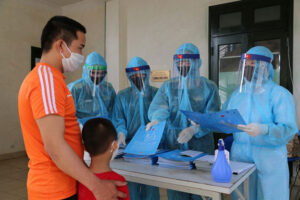
Pioneering effort to protect women and children in quarantine centres in Viet Nam Credit: UN Women

GENEVA, Nov 21 2024 (IPS) – Each year, millions of women and children around the world die from preventable causes. Maternal, newborn, and child health (MNCH) is a shared global priority, yet we often overlook one of its most pressing—and preventable—barriers: violence against women.


As we mark the 16 Days of Activism Against Gender-Based Violence, we are reminded that gender-based violence (GBV) is not just a social issue but a critical health crisis that endangers the lives of mothers and children everywhere.

When we consider that a woman experiencing violence is 1.5 times more likely to have a low-birth-weight baby and that this condition greatly increases infant mortality, the need for urgent, integrated action becomes starkly clear. 1 Addressing violence is not peripheral to MNCH efforts—it is foundational.

Violence and Health: A Devastating Cycle

Evidence tells us that intimate partner violence (IPV) directly affects maternal and infant outcomes. Pregnant women subjected to IPV face a heightened risk of complications like preterm labor and hemorrhage, often resulting in increased maternal and newborn mortality.2 3 The problem doesn’t end with pregnancy: children born to mothers experiencing violence have a higher likelihood of malnutrition, stunting, and developmental delays, perpetuating a cycle of vulnerability. 4

The psychological toll is just as concerning. Women subjected to violence are more prone to depression and anxiety, both of which affect maternal health-seeking behavior.5 Depressed mothers are less likely to access antenatal care and postnatal services, further endangering the lives of their infants. In turn, these mental health impacts lead to cascading health and social risks for women and their families, affecting entire communities.

Rajat Khosla

The Crisis Within Crises: Humanitarian Settings

Nowhere are these challenges more pressing than in humanitarian settings. Conflict, natural disasters, and displacement magnify the vulnerability of women and children, often leading to spikes in sexual violence and the breakdown of healthcare systems. In conflict zones, over 60% of women report having experienced sexual violence, according to humanitarian reports. 6 These women are not only at risk of severe trauma and infection but also of maternal mortality, with rates nearly double those found in stable environments. 7

It’s estimated that more than 500 women and girls die every day from preventable complications related to pregnancy and childbirth in humanitarian settings,8 underscoring an urgent need for an integrated approach to MNCH and GBV response. These statistics are more than numbers—they represent the lives of mothers, daughters, and children who deserve health, safety, and dignity.

The Overlooked Victims: Women Health Care Workers

It’s not only patients who suffer. Female health workers, the backbone of MNCH services worldwide, are often at grave risk. In fragile and conflict-affected settings, women health workers face high rates of violence, including harassment and physical assault.

Research suggests that up to 80% of healthcare workers in these settings report experiencing violence, a statistic that directly impacts their ability to provide care.9 High rates of violence lead to burnout, turnover, and a critical shortage of trauma-informed healthcare providers when they are needed most.10

For many, this threat is exacerbated by their roles as frontline responders to gender-based violence. The safety and mental health of our healthcare workforce are inextricably linked to the health outcomes we aim to achieve for mothers and children.

A Call to Action for Integrated Policies

    As we look to the future, it’s time to broaden our understanding of what it means to support maternal and child health. Policies that address violence against women and protect female health workers must become a central pillar of MNCH efforts. This calls for a multi-pronged approach:
    1. Prioritize Funding for Integrated MNCH and GBV Services: Donors and governments should increase funding for programs that integrate maternal health services with GBV prevention and response, particularly in crisis-prone areas.
    2. Strengthen Health Systems in Humanitarian Settings: We must scale up support for safe, trauma-informed healthcare in conflict zones, ensuring that women and children have access to life-saving care without the threat of further violence.
    3. Protect and Support Women Health Workers: Policies that safeguard the well-being of women health workers are essential. Measures like workplace protections, mental health support, and security protocols can help mitigate the impacts of violence and ensure that healthcare workers can provide essential services safely.

The costs of inaction are too high. Each preventable death of a mother or child as a result of violence marks a failure to uphold the rights to health and safety for all. By placing violence against women at the forefront of our MNCH efforts, we can break the cycle of suffering and create the conditions needed for healthy mothers and thriving children.

This 16 Days of Activism, let’s commit to integrated action against violence—because women’s health, newborn survival, and child development depend on it. Together, we can build a world where women and children live free from violence, and where health and dignity go hand in hand.

1 World Health Organization. (2013). Global and regional estimates of violence against women: prevalence and health effects of intimate partner violence and non-partner sexual violence. Geneva: World Health Organization.
2 Shah, I. H., & Hatcher, A. (2013). The impact of intimate partner violence on women’s reproductive health: A review. Trauma, Violence, & Abuse, 14(2), 128-137. doi:10.1177/1524838012451845
3 Elizabeth P. Lockington et al. Intimate partner violence is a significant risk factor for adverse pregnancy outcomes. AJOG Global Reports. Volume 3, Issue 4, November 2023, 100283
4 Ellsberg, M., & Heise, L. (2005). Researching violence against women: A practical guide for researchers and activists. Geneva: World Health Organization.
5 World Health Organization. (2013). Global and regional estimates of violence against women: prevalence and health effects of intimate partner violence and non-partner sexual violence. Consequences. https://iris.who.int/bitstream/handle/10665/77431/WHO_RHR_12.43_eng.pdf
6 UNODC. (2021). Sexual violence in conflict: Current trends and implications. Vienna: United Nations. Retrieved from UNODC
7 UNFPA. (2019). Maternal mortality in humanitarian settings. New York: UNFPA. Retrieved from UNFPA
8 UNFPA. (2020). Maternal mortality in emergencies: The hidden crisis. Retrieved from UNFPA
9 Médecins Sans Frontières. (2018). Health workers in conflict zones: Risks and realities. Retrieved from MSF
10 World Health Organization. (2021). Violence against health workers. Geneva: WHO.

Rajat Khosla is Executive Director of the Partnership for Maternal, Newborn & Child Health (PMNCH), the global alliance for women’s, children’s and adolescents’ health and well-being, hosted by the World Health Organization, based in Geneva.

Email: khoslar@who.int

IPS UN Bureau
  Source

Women in Africa are Better Off Today but Gender Equality Remains Out of Reach

Civil Society, Featured, Gender, Global, Global Governance, Headlines, Human Rights, IPS UN: Inside the Glasshouse, TerraViva United Nations

Opinion

ADDIS ABABA, Ethiopia, Nov 20 2024 (IPS) – Today, women in Africa generally have better access to education, healthcare, and opportunities than ever before. Yet, as they step into the world, a gap between them and their male counterparts persists, a reminder that gender equality remains out of reach.


The evidence is all around us. One in three women still experience physical or sexual violence. Nearly every woman spends twice as much time on unpaid household work as men. And not a single country offers women in Africa full legal protection.

For me, this reality stirs a mix of frustration and hope in recognizing how far we have come and how far we have still to go.

Nearly 30 years ago, 189 world leaders left the Fourth World Conference on Women with renewed hope, committing their countries to the Beijing Platform for Action, an ambitious roadmap for ending gender inequality. Yet today, as countries conduct their reviews, not a single country has achieved those commitments.

The 2023 Africa Gender Index report, produced by the United Nations Economic Commission for Africa and the African Development Bank, reveals that we are only halfway there on the road to gender equality. The journey remains long, and progress has been agonizingly slow.

The stakes could not be higher. Failing to end gender inequality incurs a heavy price: economic stagnation, weakened social systems, instability, and wasted human potential – all of which derail Africa’s progress towards the Sustainable Development Goals. Without urgent action now, we risk sleepwalking into a future marred by spiralling inequality, injustice and instability – an outcome none of us can afford.

As we reflect on the promises made in Beijing, all of us must hold ourselves accountable and take bold political and financial steps to change our current trajectories. To support this, our analysis points to five critical areas, where concentrated efforts over the next five years could pave the way to achieving gender equality by 2030.

First, despite more women working full-time, they still shoulder most caregiving responsibilities, suffer discrimination and deal with harmful stereotypes. Governments and businesses must dismantle barriers to women’s career progression. Experience teaches us that providing women with equal opportunities is not just the right thing to do but also the smart approach, with the potential to boost the GDP of emerging markets and developing economies by an average of 23 percent.

Second, as digitalization shapes the future of work, many women are being left behind. In 2023, only 32 percent of women in Africa had access to the internet. This divide translates into lost opportunities and costs African economies millions of dollars every year. We urgently need to make digital services affordable and promote digital literacy so that every woman has an equal opportunity to participate in the digital world.

Third, although maternal mortality rates have dropped, we cannot overlook the fact that healthcare is still out of reach for too many women. Governments must prioritize access to healthcare for every woman, regardless of where she lives or her income status. Focusing on women’s health not only saves lives but also makes economic sense. Every dollar invested in women’s health generates $3 in economic growth.

Fourth, while women in Africa now have near-equal access to primary, secondary, and tertiary education, this has yet to translate into leadership roles or economic power. Women’s parliamentary representation in Africa increased by only one percent from 25 percent in 2021 to 26 percent in 2024. Without their voices in leadership, we risk perpetuating the very inequalities we seek to eradicate.

Lastly, we must confront the harmful cultural norms, gender-based violence and legal barriers that restrict women’s access to resources and leadership positions. Tackling these deeply entrenched issues not just requires robust enforcement of laws and policies but also a societal shift, with responsibility shared by policymakers, board members, community elders, faith leaders and people like you and me.

None of these issues are new. And while some may seem intractable, they are not insurmountable. Africa has demonstrated incredible successes, from Tunisia’s increase in women science graduates to Rwanda’s significant reduction in cervical cancer cases and Namibia’s gender-equal parliament.

These instances remind us that change is possible when we invest in what we know works. In all of this, data plays an inextricable role in targeting and tracking interventions based on evidence rather than opinion. However, when it comes to women and girls, the data we need is too often missing, leaving too many of their challenges invisible and unaddressed. If we are serious about real progress, we must invest in gathering a fuller picture by bolstering our data capabilities.

In a world where pressing challenges dominate our attention, gender equality is often pushed to a backseat. We can no longer afford complacency or business as usual. If we stay on the current course, gender equality remains 300 years away. This is unacceptable.

We call on leaders across all sectors to recommit to the goals of Beijing and invest in real change to address the gender inequality that we know exists. Only then can we bring equality from a distant hope to a reality within our lifetimes. I am confident that this is possible, but only if we all act now.

Claver Gatete is Executive Secretary of the United Nations Economic Commission for Africa

IPS UN Bureau

  Source

One in Three Women Experiences Gender-based Violence

Civil Society, Crime & Justice, Featured, Gender, Global, Global Governance, Headlines, Human Rights, IPS UN: Inside the Glasshouse, TerraViva United Nations

Opinion

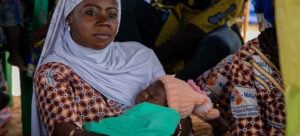
A woman with her baby attends a UN-run awareness-raising session on gender-based violence at the One Stop Centre in Sominé Dolo Hospital in Mopti, Mali. Credit: UNFPA Mali/Amadou Maiga

UNITED NATIONS, Nov 20 2024 (IPS) Every year, the 16 Days of Activism against Gender-Based Violence (GBV) campaign led by UN Women serves as a powerful reminder of the widespread violence women and girls face worldwide.


Starting from November 25, on the International Day for the Elimination of Violence against Women, and concluding on December 10, on Human Rights Day, this campaign calls on governments, activists, and individuals to unite and push for lasting change.

In support of this civil society initiative the UN Secretary-General back in 2008 launched the campaign UNITE by 2030, which runs parallel to the 16 Days of Activism.

Tweet URL

Every year, the UNITE Campaign focuses on a specific theme and this year’s focus is UNITE! Invest to prevent violence against women and girls, aiming for long-term solutions that address the root causes of the problem.

Why it matters

The statistics are staggering: nearly one in three women and girls worldwide will experience physical or sexual violence during their lifetime.

For at least 51,100 women in 2023, this violence escalated to femicide (homicide targeted at women) with over half committed by intimate partners or family members.

The agency championing women’s empowerment, UN Women, points out that femicides are the ultimate evidence that the systems and structures meant to protect women and girls are failing.

Women are not safe outside their homes either.

Public figures, including politicians, human rights defenders, and journalists, are often targeted by violence both online and offline, with some leading to fatal outcomes and intentional killings.

One alarming aspect of this issue is the prevalence of violence in conflict zones. In 2023, the United Nations reported a staggering 50 per cent increase in gender violence from the previous year.

From survivors to advocates

Women like Ukrainian activist Lyudmila Huseynova exemplify the harrowing reality of conflict-related sexual violence.

After enduring over three years of imprisonment and torture in a Russian prison, where she faced brutal physical abuse, “In that place, you become a person without rights,” she recalled of her torment in Izolyatsia prison, Ms. Huseynova’s resilience turned into activism.

Since her release in 2022, she has become an unwavering advocate for survivors, working with SEMA Ukraine to amplify the voices of those suffering from conflict-related sexual violence and to demand global attention to the atrocities faced by women and children in Ukraine.

Through her tireless efforts, Ms. Huseynova not only exposes the cruelty women endure but also leads efforts to secure justice and recovery for victims. “We will use every means to make their pain visible,” she emphasised.

What can we do?

While we may not all be activists, we all have a role in ending the abuse, says UN Women.

On an individual level, from supporting local organisations to advocating for stronger laws and supporting the women in our lives, everybody can make a difference.

Argentinian activist Iren Cari and founder of Women’s Forum for Equal Opportunities stressed the need to support women in political life and centre their voice: “We need funds to promote women’s participation – not only in public policy making, but also to participate in elections.”

UN Women emphasised that governments must enact laws to ensure accountability for perpetrators of gender-based violence, particularly through National Action Plans.

In parallel, funding women’s rights organizations is essential to support survivors and provide them with the necessary resources for recovery.

The 16 Days of Activism remind us that every action, no matter how small, counts in the fight to end gender-based violence, the agency stresses.

Source: UN News

IPS UN Bureau

  Source

Middle East: Ceasefires are the Only Answer

Armed Conflicts, Civil Society, Global Governance, Headlines, Human Rights, IPS UN: Inside the Glasshouse, Middle East & North Africa, TerraViva United Nations

Opinion

A family collecting hygiene kits from Maliha, in Eastern Ghouta, Rural Damascus, Syria. The distribution provided essential items to mostly Syrian and Lebanese families who had fled from the south of Lebanon. Credit: Norwegian Refugee Council

OSLO, Norway, Nov 13 2024 (IPS) – “The shockwaves from Israel’s ongoing and indiscriminate warfare on Gaza and Lebanon are reverberating across this entire region. Neither the horrific assault on Israeli civilians on 7 October 2023, nor the indiscriminate missiles launched by militant groups from Lebanon, can justify the degree of destruction on civilian lives and infrastructure in the region that I have witnessed in recent days.


We cannot wait another day for an end to this senseless violence. For the sake of children across the entire region, diplomacy must result in a sustainable ceasefire.

The people I have met in recent days–from those in Gaza City, to the displaced in eastern Lebanon, to those crossing into Syria–longed for peace so they could return home. Children spoke of how much they missed school and their friends, and parents wished for an end to the precarity and suffering that displacement has brought. The suffering of millions cannot begin to end until those in power push for peace and take action to end the violence.

What I witnessed in Gaza was a society shattered by advanced weaponry, with ongoing military strikes relentlessly impacting the civilian population. War has rules, and it is clear that the Israeli campaign has been conducted with utter disregard for international humanitarian law.

As Gaza has been reduced to rubble, Western leaders have largely stood by unwilling to apply the necessary pressure on the stronger party, Israel, to stop starving the population that they are besieging and bombarding.

In Lebanon, I met people who in just a couple of weeks have lost their homes, jobs and everything in between. They are now staying in almost bare shelters that offer neither protection nor privacy, in fear that the worst is yet to come. The temperature has dropped substantially. People are ill-prepared for what promises to be the coldest winter season for the hundreds of thousands displaced.

Travelling into Syria from Lebanon via the Masnaa border crossing, I saw the huge challenges facing those fleeing violence in Lebanon, exacerbated by vast craters in the road caused by Israeli strikes. Displaced people must be provided with safe passage, shelter, and services.

Those fleeing into Syria arrive in a country with deep, pre-existing economic and humanitarian crises. NRC is providing support to those arriving in Syria, people who took the impossible decision to leave their homes while facing bombardment, and left with only what they could carry.

The aid we and others are currently able to provide is totally insufficient for the needs our staff are seeing. We must be given the right to independently monitor how those who flee from Lebanon to Syria are treated. There must be robust international support to meet people forced to flee, and there must be a genuine, re-energised diplomatic effort from all sides, to halt violence against civilians.

My visit started in Gaza, continued in Lebanon, and finished in Syria, tracing the fallout of this now regional conflict. At each point, the people I met said they wished for only one thing: peace.

Jan Egeland is Secretary General of the Norwegian Refugee Council (NRC). This article follows his visit to Gaza, Lebanon, and Syria.

NRC teams are operating across Gaza, Lebanon and Syria providing essential services to displaced people. This includes items such as mattresses, blankets and hygiene kits as well as cash. We are also providing clean water and sanitation facilities as well as education to children.

IPS UN Bureau

  Source

Scorched Earth Colonizing of Gaza is a Horrible Idea

Armed Conflicts, Civil Society, Democracy, Global Governance, Headlines, Human Rights, IPS UN: Inside the Glasshouse, Middle East & North Africa, TerraViva United Nations

Opinion

Credit: UNRWA

ATLANTA, USA, Nov 11 2024 (IPS) – For religious, humanitarian, and scientific reasons, Israel’s increasingly apparent plan for the de facto colonization of the Northern Gaza Strip is a bad idea. When that program was rejected recently by Israel’s own Defense Minister Yoav Galant, he was summarily fired by Prime Minister Netanyahu.


However, the founding document of the worldwide Jewish community, the Torah, and especially the Decalogue, states plainly, “Thou shalt not covet thy neighbor’s wife…or anything that is thy neighbors.” If religion still means anything to people in the modern nation of Israel, it should be clear that whatever belongs to others should be left alone and neither coveted nor stolen.

For obvious humanitarian reasons the one-sided bombing of Gaza must stop. After more than a year of an ongoing holocaust in Gaza, Israel’s relentless bombing has produced casualties totaling nearly 150,000 dead and wounded people, mostly civilians.

Now with UN sources reporting that starvation is setting in, people everywhere must demand that this racist, inhumane bloodshed stop immediately. Otherwise, international law has no force and the word “humane” has no meaning.

In scientific terms, the contamination of the water, soil, and air in northern Gaza from explosive dust, including Depleted Uranium, will clearly persist for decades, if not generations. That is neither good for the inhabitants if they manage to return to their homes, nor for the Jewish colonists if they should return to their previous colonies in the strip.

US bombing of Iraq two decades ago, especially in and around Basra, as much scientific and eyewitness testimony—including my own on the scene report—proves, has produced a plethora of birth defects.

The idea of some capitalists that Gaza will become a future Dubai—a wealthy trade zone that will be a veritable Las Vegas on the Mediterranean shore—is actually a good one. Geographically and commercially, Gaza is a potential Hong Kong.

The only thing wrong with the plan is the question of who will control this mighty future entrepot, the Palestinians, investors from the Gulf States and the West, or Israel? Answering that will take another century of bloodletting.

Far better that the United States, NATO, the United Nations, the International Court of Justice in the Hague or somebody other than HAMAS or the extreme right wing and increasingly bloodthirsty Likud government now in power in Jerusalem should deal with that issue and guarantee justice.

The ICJ/International Court of Justice, responsible governments everywhere, and especially the campus protesters and those on the streets of cities around the world, must keep chanting, “NO JUSTICE, NO PEACE!” “NO JUSTICE, NO PEACE!”

James E. Jennings, PhD is President of Conscience International and Executive Director of US Academics for Peace

IPS UN Bureau

  Source

When the Truth Becomes a Lie: What Trump’s Election Means for the World as we Know it

Civil Society, Democracy, Global, Global Governance, Headlines, Human Rights, IPS UN: Inside the Glasshouse, TerraViva United Nations

Opinion

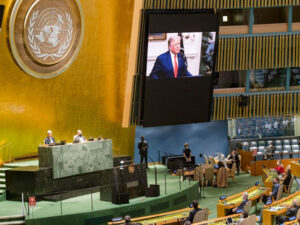
Donald J. Trump, President of the United States of America, addresses the General Debate of the General Assembly’s 75th session September 2020. Credit: UN Photo/Rick Bajornas

NEW YORK, Nov 8 2024 (IPS) – On the day following the US election, UN Secretary General, Antonio Guterres issued a brief statement commending the people of the United States for their active participation in the democratic process. He wisely omitted to mention that the election of Donald J. Trump – who attempted to overturn the people’s mandate by inciting an insurrection in 2020 – is a major setback for the UN’s worldwide quest to advance human rights and the rule of law.


Trump is a self-avowed admirer of authoritarian strongmen like Russia’s Vladimir Putin and Hungary’s Viktor Orban who disdain international norms that the UN seeks to uphold. Unsurprisingly, questions posed to the UN Secretary General’s spokesperson, Stéphane Dujarric, in a press conference on November 6, ranged from what will be Trump’s response to the war in Ukraine to potential funding cuts that might come with the new US administration to whether the UN has contingency plans ready for when Trump takes office.

The US plays an outsized role in global affairs. Therefore, any changes in policy in Washington impact the whole world. As someone who bears responsibility for stewarding a global civil society alliance, it worries me what a second Trump presidency will unleash.

Even without Trump in power we are living in a world where wars are being conducted with complete disregard for the rules; corrupt billionaires are dictating public policy for their benefit; and greed induced environmental degradation is putting us on a path to climate catastrophe. Hard fought gains on gender justice are in danger of being rolled back.

The first Trump administration showed disdain for the UN Human Rights Council and pulled the US out of vital global commitments such as the Paris Agreement to combat climate change. It restricted support for civil society groups around the world and targeted those that sought to promote sexual and reproductive rights of women. Promotion of democracy and human rights are key pillars of US foreign policy.

It’s deeply concerning that when disinformation and misinformation have assumed pandemic level proportions, the majority of the US electorate have cast their vote in favour of a candidate who ran his campaign on divisive dog whistles, half-truths and outright lies. These tactics have deepened fissures in an already polarized United States.

Families countrywide were left devastated by Trump’s negligence and COVID denialism as president which resulted in tens of thousands of Americans dying of avoidable infections. His administration’s immigration detention and deportation policies instilled fear in minority communities. This time Trump has vowed to deport millions of people.

Trump’s stances on abortion rights have caused women immeasurable suffering in several US states that have introduced laws to ban the procedure. He has promised to accelerate harmful fossil fuel extraction and undoubtedly views gender justice advocates, environmental defenders and migrant rights activists as a threat his power.

Given the stated predilections of Trump and his advisors, opposition politicians, activists and journalists exposing corruption and rights violations are likely to be at risk of enhanced surveillance, intimidation and persecution by the new administration.

At the international level, Trump’s election casts a pall over efforts to ensure accountability for war crimes, crimes against humanity and genocidal actions in the Occupied Palestinian Territories, Sudan and Ukraine due to his tacit support for authoritarian leaders in Israel, Russia and the United Arab Emirates, all of whom are fueling conflicts and causing havoc abroad. A future Trump administration could try to starve the UN of funding to erode the rules based international order, emboldening autocrats.

Even if things appear bleak today, it’s important to remember that there are hundreds and thousands of civil society activists and organisations around the world who remain steadfast in their resolve to celebrate diversity and promote justice and equality. To imagine the future we sometimes have to take heart from the past.

India’s freedom struggle, South Africa’s struggle against apartheid and the civil rights movement in the United States wasn’t won by authoritarian leaders but by brave and determined individuals united in solidarity and determined to resist oppression for as long as it takes.

There is a lesson here for civil society in the US that higher American ideals are worth standing up for and will outlive any sitting president.

Mandeep S. Tiwana is Interim Co-Secretary General of CIVICUS, the global civil society alliance. He also serves as CIVICUS representative to the United Nations.

IPS UN Bureau

  Source