NEW YORK, Mar 11 2026 (IPS) – I have often been asked a simple but important question: How can we make it sustainable if we are not being compensated for it?
That question sits at the heart of a conversation we do not address enough. Somewhere between exposure and exploitation lies a line we still have not learned to draw clearly. And perhaps that is exactly where the real conversation on “inclusion” begins.
The cost of being seen, is probably the heaviest cost youth have to bear in pursuit of carrying the passion and aspirations they strive for when trying to make an impact.
As conversations around the 2030 Agenda and the SDGs continue to grow, one question remains: how far have we really come in shaping perspectives, and not just numbers?
Too often, inclusion is measured by attendance, representation, and diversity metrics. But inclusion is not just about presence. It is about value. It is about whether people are acknowledged, respected, and taken seriously for their contribution. Inclusion does not live in the excel sheets we fill or the rooms we temporarily occupy during events.
It begins where age, gender, ethnicity, and job titles are not weighed before credibility is given. This matters even more for young people.
A single voice, a single appearance, or a single statement is often framed as an opportunity. And sometimes, it is. But when visibility becomes a substitute for fair compensation, authorship, decision-making power, or real support, exposure stops being empowered and starts becoming exploitative.
Exposure on its own is not empowerment. Visibility can open doors, but it cannot replace fair structures. Being seen is meaningful only when it is followed by trust, ownership, opportunity, and value.
Too often, young people are handed advice when what they really need is access. They are mentored, encouraged, and told to keep going, yet rarely sponsored in the spaces that shape outcomes. If we want inclusion to move beyond symbolism, we must build cultures where support does not end at guidance.
It must extend into advocacy. Because for many underrepresented voices, the issue is not a lack of talent or preparation. It is the absence of someone willing to open the right door and say, this person belongs here.
The goal is not to reject exposure. Exposure can be powerful. But it cannot be the only thing being offered. Real inclusion begins when participation is respected, contribution is valued, and visibility leads to something more lasting. Being seen may open the door, but being valued is what makes inclusion real.
Bisma Qamar is Pakistan’s Youth Representative to the UN & USA chapter under the Prime Minister’s Youth Programme (PMYP). Her work is centered towards learning and development and capability building initiatives, with a strong emphasis on creating inclusive and sustainable opportunities through “Bridging talent with opportunities” by upskilling individuals focusing on SDG 4 ( Education ) and SDG 5 ( Gender Equality )
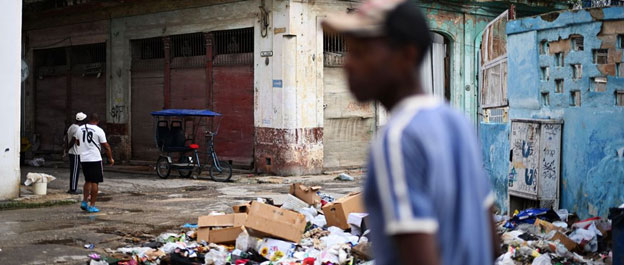
BERLIN, Germany, Mar 2 2026 (IPS) – The crisis could scarcely be more dramatic. The US is blocking practically all oil deliveries to Cuba. The island depends on imports for all diesel, petrol and kerosine. Without diesel trucks cannot move, food cannot reach Cuban towns and hospitals will not get any oxygen.
The airports are already without kerosine and several airlines have already suspended flights to and from Havana. The strategy is clear: strangulation. The US extreme right is jubilant; at last, they have found the ‘choking point’ that may finally bring Havana to its knees, 67 years after Fidel Castro’s revolution.
Trump says that negotiations are already under way, outside of declaring that Cuba is a ‘failed state’ and the government there needs to make a deal. But Trump says a lot of things. Even a sober look at the alternatives, however, is fairly terrifying. There are basically four scenarios:
Scenario 1: Cuba continues to be denied oil deliveries. The government can impose austerity measures and commit itself to heroic resistance. But without new petrol or diesel the current crisis will become a humanitarian catastrophe within weeks. Havana could pin the blame for this on the US and with complete justification. For all its own faults, no other Caribbean island could withstand such an oil embargo, whatever its political system. But what good would playing the blame game do in the end? The social and human costs would be horrendous. Without diesel even international humanitarian aid deliveries couldn’t get from the ports to the towns that need them.
Moscow says that it is willing to supply Cuba with oil, but so far it hasn’t followed through.
Scenario 2: Some oil tankers reach the island, perhaps from Moscow, from spot market purchases or from other sources. This could relieve the worst of it, no doubt. But the question remains, to what degree? And for the foreseeable future? Trump’s threats of punitive tariffs and the seizure of proscribed tankers are already sufficient deterrent.
Even Mexico had to pull its support under pressure from Washington. But who else is up for incurring America’s wrath? Moscow says that it is willing to supply Cuba with oil, but so far it hasn’t followed through.
On top of that, Russian airlines are bringing their passengers home and suspending flights. Up until the US military strikes on Maduro on 3 January Venezuela had provided 70 per cent of Cuba’s oil imports. Instead of demanding hard currency payments, it settled for Cuban medical personnel. Who will take over this role?
Scenario 3: The desperate situation intensifies, leading to protests, unrest and the fall of the government. This is what the hardliners in Miami have been dreaming of. But for all the pent-up frustration Washington’s own policy is stymying mobilisation. Already in Venezuela Trump and Rubio ignored the opposition and made deals only with the post-Maduro elite.
If Trump is now saying that negotiations with Havana are already going on and the regime will fall of its own accord, who on the island will be inclined to put themselves on the line in demonstrations or protests? No doubt there’ll be outbreaks of desperation, windows may be smashed and sporadic looting.
But if the message is that only the power struggle between Washington and Havana really counts it makes more sense for the populace to see how things develop, waiting until things have been decided by those at the top.
Scenario 4: The US oil blockade could be lifted in the course of negotiations. But even though Havana has resumed communications with Washington dialogue remains a distant prospect. Some possible steps seem realistic. The Cuba government could order the release of hundreds of prisoners, held in the protests of 11 July 2021.
It could also remove particularly controversial sections of the penal code, push ahead with market reforms or improve investment possibilities for Cuban emigrees. And all without undermining the foundations of the system. This would not only serve US interests, but also many of the civilian population. In return, Washington could permit a resumption of oil deliveries to Cuba from Mexico and elsewhere. Restrictions on remittances from US Cuban expats could be lifted. A first milestone would be reached.
Never been weaker
Nevertheless, it is difficult to imagine what kind of common denominator could be found that would ease the tension and usher in some kind of new normal. Cuba has been a worldwide symbol for the left since the revolution in 1959. But the same could be said for the right in the US.
Indeed, the latter would like nothing better than to see it fall. Trump won’t say what kind of deal he wants. But rest assured it will involve Cuba once more within the US sphere of influence and a US-friendly government in Havana.
Cuba really has its back against the wall. Its negotiating position has never been weaker. Venezuela has shown, however, that the US wants more than political alignment and access to resources. It also desires stability. The government in Caracas may have changed, but the military and the police, the state apparatus and even para-military forces remain intact.
Cuba isn’t a complete match in this respect, but if the US doesn’t want to put boots on the ground it will continue to need the state’s existing forces of order: police, military and administration. This gives the Cuban side at least something to bring to the negotiating table.
Nevertheless, Havana will have to cross a lot of red lines to reach an agreement with this US administration. And what’s more, under the constant shadow of the latent threat that Washington will again turn off the oil tap. The US government would be well advised to be pragmatic enough to allow the other side to save face.
But this is unlikely given the intoxicating fantasy of omnipotence by which Washington is currently spellbound. Cuban-born hardliners in the US Congress are already demanding that the Department of Justice bring the 94-year-old Raúl Castro to trial.
Or perhaps everything will be resolved very quickly. The power bloc around Raúl Castro’s family and its associated network controls not just the military and the security apparatus, but also by far the biggest business entity in the country, the military holding GAESA. The profound crisis of recent years has enabled them to invest with grim determination in the expansion of luxury hotels, transferring state-run restaurants into private management and acquiring stakes in lucrative online supermarkets that emigrants in Miami and elsewhere use to support their families on the island.
Could the upshot be a form of capitalism that maintains their economic privileges, with American partners in the hotels, while the old networks retain control?
None of the four scenarios seem entirely credible, but surely one of them, or some combination, will be realised in the not-too-distant future. But maybe not, if all those who are currently mute in fear of falling victim to Trump’s random impulses actually come together. Not out of nostalgia for the Cuban revolution, but to stand up and be counted as the Washington regime calls into question the basic norms of coexistence between peoples and states, whether in Cuba or Greenland.
Professor Dr Bert Hoffmann is Lead Research Fellow at the GIGA German Institute for Global and Area Studies in Hamburg and Honorary Professor at Freie Universität Berlin.
Source: International Politics and Society, Brussels
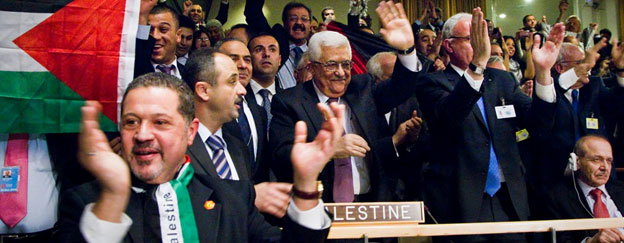
The General Assembly adopted a resolution in 2012 granting Palestine the status of non-member observer State in the United Nations. Credit: UN Photo/Rick Bajornas
UNITED NATIONS, Feb 26 2026 (IPS) – The 193-member General Assembly, the highest-ranking policy-making body at the United Nations, is most likely to elect Palestine as its next President in an unprecedented move voting for a “non-member observer state”—a state deprived of a country to represent.
The Secretariat has received three nominations for the position of President of the General Assembly beginning mid-September. In accordance with the established regional rotation, the President of the 81st session will be elected from the Asia-Pacific Group.
The election will be held on June 2, with three nominations so far: Md. Touhid Hossain (Bangladesh), Andreas S. Kakouris (Cyprus) and Riyad Mansour (Palestine).
According to geographical rotation, it will be the turn of the Asia-Pacific Group to nominate a candidate– with the final election by the General Assembly.
The current front-runner, according to diplomatic sources, is Palestine. In virtually all UN resolutions relating to Palestine, it has continued to receive an overwhelming majority of votes in the General Assembly.
The political support for Palestine among member states has always remained constantly strong. And the election of Palestine will also defy a hostile White House.
In November 2012, the General Assembly voted to upgrade Palestine to a “non-member observer state” with a majority of 138 votes in favor, 9 against, and 41 abstentions.
• Votes in Favor (138): Supported by a majority of UN member states. • Votes Against (9): Canada, Czech Republic, Israel, Marshall Islands, Micronesia (Federated States of), Nauru, Palau, Panama, and the United States. • Abstentions (41): Countries that did not vote for or against.
Last December the General Assembly overwhelmingly adopted a draft resolution reaffirming the Palestinian people’s right to self-determination, including the right to an independent State of Palestine.
The draft resolution was approved by a majority of 164 member states (out of 193), with eight countries voting against it, namely Israel, the US, Micronesia, Argentina, Paraguay, Papua New Guinea, Palau, and Nauru.
Nine countries abstained: Ecuador, Togo, Tonga, Panama, Fiji, Cameroon, the Marshall Islands, Samoa, and South Sudan.
Dr Stephen Zunes, Professor of Politics at the University of San Francisco and director of Middle Eastern Studies, told IPS a broad international consensus in support for the establishment of a viable independent Palestinian state in the occupied West Bank and Gaza, and naming a Palestinian as the next president of the UN General Assembly would send a strong message to the Israeli government and its supporters in Washington that the State of Palestine, now recognized by 164 of the UN’s 193 states, should be treated like any other nation.
It would also underscore that Palestine is represented by the Fatah-led Palestine Authority, not by Hamas, which forcibly seized power in Gaza in 2007, he said.
“If Palestine is elected to the General Assembly presidency, the position would likely go to Riyad Mansour, a U.S.-educated diplomat who currently serves as the country’s UN ambassador”.
Mansour, he pointed out, has spent most of his life in the United States, has worked with Youth4Peace and other groups promoting peacebuilding, has no association with terrorism, and is generally considered a moderate.
“Nevertheless, his selection will likely result in an angry backlash from Washington, which opposes any formal role by anyone representing Palestine”.
In 2017, during his first term, the Trump administration blocked the appointment of former prime minister Salam Fayyad, also a well-respected moderate and reformer, from leading the U.N. political mission in Libya to try to end that country’s civil war simply because he was Palestinian, declared Dr Zunes.
Dr Ramzy Baroud, a Palestinian-American author and editor of The Palestine Chronicle, told IPS two international campaigns are unfolding simultaneously: a US-led effort aimed at legitimizing Israel while it is still actively attempting to exterminate the Palestinian people, and a General Assembly–championed track aimed at legitimizing Palestine, Palestinian rights, and the Palestinian struggle.
The push to elect Palestine as the next UN General Assembly president — though the State of Palestine remains an observing member and lacks actual sovereignty on the ground — is taking place against this stark backdrop: one campaign normalizing and shielding a genocidal state, the other seeking to affirm the rights and political standing of a dispossessed nation, he pointed out.
“Nothing could be more immoral than Washington’s attempt to rehabilitate Israel diplomatically amid genocide. And nothing could be more just than the effort by Palestine’s allies to anchor Palestinian rights within international legitimacy” he said..
Yet a difficult question remains: while the US is gradually chipping away at Israel’s isolation, is much of the international community offering Palestinians little more than symbolic victories?, he noted.
“If the legitimization of Palestine at the General Assembly is to move beyond symbolism, it must translate into concrete recognition of Palestinian territorial rights, sovereignty, and freedom. Legitimacy must not remain rhetorical; it must become political and material,” Dr Baroud argued.
“This requires that the UN General Assembly states that support Palestine in international forums carry that support onto the ground — by isolating Israel diplomatically, severing ties, imposing sanctions, and adopting meaningful accountability measures. While some states have taken such steps, others continue to pursue a precarious “balance,” appeasing Washington and Tel Aviv while paying lip service to Palestine.”
Palestinians are winning what Richard Falk, the former UN Special Rapporteur on Palestine, has called the legitimacy war. But legitimacy as an intellectual or moral category is not enough. At this historical juncture, it must be transformed into enforceable political reality — into sovereignty, protection, and freedom on the ground, said Dr Baroud.
“We hope that the continued centering of Palestine at the UN and across global institutions strengthens the growing current of solidarity worldwide. More importantly, we hope that symbolic recognition will soon give way to decisive and tangible action,” he declared.
Samir Sanbar, a former UN Assistant Secretary-General and head of the Department of Public Information, told IPS the Inalianble rights of the Palestinian people, confirmed repeatedly by the General Assembly, would offer an opportunity for the Permanent Observer Mission to offer a candidate for the President of the General asembly.
Ambassador Riyad Mansour has served at the United Nations post longer than many current “Permanent Representatives” and would most likely attract wide support, particularly at these challenging times with the tragic humanitarian situation in Gaza, he said.
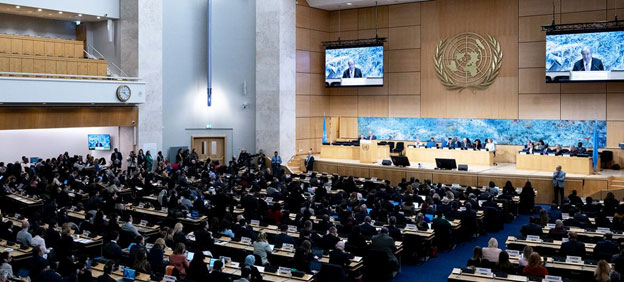
UN Secretary-General António Guterres speaks at the opening of the 61st session of the Human Rights Council at the Palais des Nations, in Geneva. Meanwhile, Volker Turk, UN High Commissioner for Human Rights, addresses (below) at the opening of the High-level segment of the Human Rights Council. Credit: UN Photo/Violaine Martin
GENEVA, Feb 24 2026 (IPS) – A fierce competition for power, control and resources is playing out on the world stage at a rate and intensity unseen for the past 80 years.
People are feeling unmoored, anxious and insecure. The gears of global power are shifting; the consequences are not clear. Some are signalling the end of the world order as we know it.
But today, I want to talk about another world order. One that is organised from the ground up, and that is unshakeable. A foundational system of how people relate to each other, based on our inherent worth, our hopes, and our common values.
I am referring to people’s pursuit of dignity, equality, and justice. This quest is innate to what makes us human: to be free, to be heard, and to have our basic needs met.
And it is a strong counterbalance to the top-down, autocratic trends we see today. The use of force to resolve disputes between and within countries is becoming normalized.
Inflammatory threats against sovereign nations are thrown about, with no regard to the fire they could ignite. The laws of war are being brutally violated.
Mass civilian suffering – from Sudan, to Gaza, to Ukraine, to Myanmar – is unfolding before our eyes. In Sudan, there needs to be accountability for all violations by all parties – notably, the war crimes and possible crimes against humanity committed by the Rapid Support Forces in El Fasher. Such atrocities must not be repeated in Kordofan or elsewhere. All those with influence need to act urgently to put an end to this senseless war.
The situation in Gaza remains catastrophic. Palestinians are still dying from Israeli fire, cold, hunger, and treatable diseases. The aid allowed in is not enough to meet the massive needs. There are concerns over ethnic cleansing in both Gaza and the West Bank, where Israel is accelerating efforts to consolidate unlawful annexation. Any sustainable solution must be based on two states living side by side in equal dignity and rights, in line with UN resolutions and international law.
Tomorrow marks four years since Russia’s full-scale invasion of Ukraine. Four interminable and agonizing years. Civilian casualties have soared, and Russia’s systematic attacks on Ukraine’s energy and water infrastructure could amount to international crimes. The fighting needs to end, and I urge a focus on human rights and justice in any ceasefire or peace agreement.
In Myanmar, five years after the military coup, the awful conflict is claiming even more civilian lives, and the humanitarian situation continues to deteriorate. The recent elections staged by the military have only deepened people’s despair.
Across most violent conflicts today, journalists, health and aid workers are targeted, in blatant violation of international law. These actions must not be allowed to harden into the new normal.
States need to be persistent objectors to violations of the law – by pursuing accountability, and by clearly denouncing these egregious crimes with consistency, and without exception.
Meanwhile, violence and tensions are resurging in some countries, including South Sudan and Ethiopia. And authorities in Iran have violently repressed mass protests with lethal force, killing thousands.
I will provide more detail on these and other country situations in my global update later this week. Developments around the world point to a deeply worrying trend: domination and supremacy are making a comeback.
If we listen to the rhetoric of some leaders, what lurks behind it is a belief that they are above the law, and above the UN Charter. They claim exceptional status, exceptional danger or exceptional moral judgement to pursue their own agenda at any cost. And why wouldn’t they try, when they are unlikely to face consequences?
They build and sustain systems that perpetuate inequalities within and between countries. Some weaponise their economic leverage. They spread disinformation to distract, silence and marginalize.
A tight clique of tech tycoons controls an outsize proportion of global information flows, distorting public debate, markets, and even governance systems. Corporate and state interests ravage our environment, robbing the riches of the earth for their own gain.
But at the same time, people are not watching all this from the sidelines. They are activating their power, from the ground up. Women and young people especially are leading these movements.
They are claiming their right to basic living conditions, to fair pay, to bodily autonomy, to self-determination, to be heard, to vote freely, and many other rights. From Nepal to Madagascar, from Serbia to Peru and beyond, people are demanding equality and denouncing corruption.
Neighbours and communities are standing up for each other – sometimes even risking their lives. People are protesting war and injustice in places far from home, expressing solidarity and pressuring their governments to act.
They see human rights as a practical force for good – and they are right. Human rights are anathema to supremacy: they are a direct challenge to those who seek and cling to power. That is what makes human rights radical, and that is what gives them force.
They are universal, timeless, and indestructible.
Human rights didn’t magically appear with the Universal Declaration on 10 December 1948. People have been seeking freedom and equality long before these principles were codified in national or international agreements.
In the late 1700s, enslaved people in modern-day Haiti rose up against colonial rule, in the name of racial equality. The American and French revolutions challenged unaccountable authority. The Abolitionist movement was a rejection of the Transatlantic slave trade – the most brutal system of subjugation.
In the early 1900s, women joined together to demand the right to vote. The fight for gender equality continues. After the bloodshed of two World Wars and the Holocaust, the UN Charter reasserted faith in fundamental human rights, and in the dignity and worth of the human person.
The 20th century then ushered in a period of decolonization, which reaffirmed the right to self-determination. People mobilized to end racial segregation, for labour rights, and to protect the rights of LGBT people.
Mothers marched together to seek justice for their disappeared children, from Argentina to Sri Lanka to Syria. And young people raised their voices for climate justice.
Human rights are the thread that runs through all these movements. And we do not take their achievements for granted. Tyranny will seize any chance and exploit any opening. We must keep standing up for human rights, in solidarity with each other.
When we come together, we wield more power than any autocrat or tech billionaire. The struggle for human rights can never be derailed by the whims of a handful of leaders with reactionary, supremacist agendas.
While some States are weakening the multilateral system, we need bolder and more joined-up responses.
First, this means calling out violations of international law, regardless of the perpetrators. Too often, denouncing violations by one party is labelled as siding with the enemy. In reality, it is upholding universality, and the pursuit of justice for all.
The alternative – selective, fragmented responses – weakens international law and hurts us all. The entire human rights ecosystem is designed to promote universality and ensure consistency. This includes the tools mandated by this Council. I condemn all attacks against them.
Second, we need stronger commitment to accountability. This includes strengthening the International Criminal Court and encouraging national prosecutions under the principle of universal jurisdiction. We need to increase the cost of breaking international law.
Third, let’s forge coalitions to champion what unites us, and uphold equality, dignity, and justice for all. We must protect the diversity of the human family and demonstrate what we gain by standing together.
In the coming weeks, we will set in motion a Global Alliance for Human Rights to capture the energy and commitment that is palpable everywhere.
This will be a cross-regional, multi-stakeholder coalition of States, businesses, cities, philanthropists, scientists, artists, philosophers, young people and civil society.
It will confront top-down domination with grassroots solidarity and support. It will represent the quiet majority, who want a different world. Human rights are not political currency, and they are not up for grabs.
Our future depends on our joint commitment to defend every person’s rights, every time, everywhere.
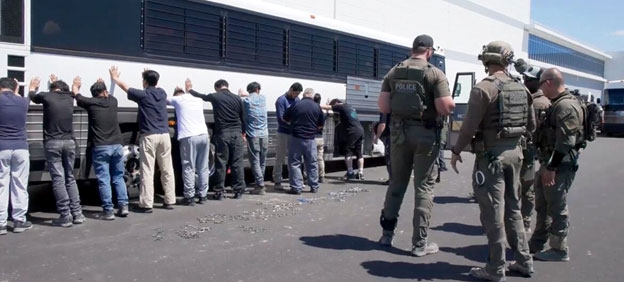
NEW YORK, Feb 23 2026 (IPS) – Trump’s immigration policy is destroying America’s greatness Immigrants are the backbone of America’s greatness— powering its economy, enriching its culture, and advancing its global leadership. Yet under the guise of making America great again, Trump’s exclusionary, racist policies are dismantling that very foundation, stifling innovation and tarnishing the nation’s moral standing.
To understand the magnitude and importance of immigrants in the US, and the need for continued immigration, the following clearly shows how deeply they sustain our workforce, drive innovation, and secure America’s competitive edge on the global stage.
The Current State of Immigration
Over 1 million farmworkers in the United States are undocumented, including approximately 40 percent of crop farmworkers. Immigrants account for roughly 70 percent of all US farmworkers, making them indispensable to the agricultural labor force and underscoring how dependent American food production is on this workforce.
We are already witnessing the impacts of immigration crackdowns on the US farm industry. In California’s Central Valley, a majority of farmworkers stopped showing up after intensive ICE raids in July 2025, leaving crops rotting in the fields due to a lack of available workers. This has resulted in substantial financial losses, food waste, reduced farm revenues, and rising food prices.
Beyond agriculture, immigrants from Latin America and other regions are heavily represented in construction, hospitality, and food processing; they account for approximately 33 percent of meat processing and over 80 percent of food manufacturing workers.
In the leisure and hospitality sector, immigrants account for roughly 18 percent of workers; in traveler accommodations (i.e., hotels) alone, over 30 percent of workers are immigrants.
STEM Workforce
According to the National Science Foundation, foreign-born workers account for approximately 22 percent of the US’ STEM workforce. Among science and engineering occupations with doctorates, about 43 percent are foreign-born; in the doctorate-level fields of computer and mathematical sciences, this share exceeds 55 percent.
Roughly 30 percent of full-time science and engineering faculty at US universities are foreign-born, disproportionately present at research-intensive institutions.
Denying admission of scientists from countries such as India and China, Mexico and Argentina would result in serious talent shortages in key STEM fields. Moreover, inventors and entrepreneurs account for a disproportionately large share of US patents, high-growth startups, and advanced-degree STEM workers.
Thus, losing foreign-born scholars would undermine research, reduce innovation, slow scientific progress, and erode US technological and economic competitiveness.
Research on immigrant entrepreneurship indicates that immigrants are heavily overrepresented among founders of new firms, including high-tech firms and “unicorn” startups, which amplifies the long-term damage that restrictive policies toward non-European scientists would inflict.
Immigrants in the US military
In 2017, about 190,000 foreign-born individuals were on active duty, representing roughly 4.5 percent of all active-duty service members. As of 2024, approximately 8,000 non-citizens enlist each year. As of 2022, there were about 731,000 foreign-born veterans—around 4.5 percent of the total veteran population.
Historically and today, foreign-born soldiers have played key roles in every major US conflict, dating back to the Revolutionary War, and mmigrants have received more than 20 percent of all Medals of Honor, underscoring the depth of their contribution to national defense.
Reagan’s Honoring of Immigrants
Perhaps no one could express the vital importance of immigrants to the US, and how they made America the land of opportunity that embodied the very promise that has made America exceptional, like President Reagan in his final speech to the nation:
“Since this is the last speech that I will give as president, I think it’s fitting to leave one final thought, an observation about a country which I love. It was best stated in a letter I received recently. A man wrote me and said: ‘You can go to live in France, but you cannot become a Frenchman. You can go to live in Germany, Turkey, or Japan, but you cannot become a German, a Turk, or a Japanese. But anyone, from any corner of the Earth, can come to live in America and become an American.’
“Yes, the torch of Lady Liberty symbolizes our freedom and represents our heritage, the compact with our parents, our grandparents, and our ancestors. It is that lady who gives us our great and special place in the world. For it’s the great life force of each generation of new Americans that guarantee that America’s triumph shall continue unsurpassed into the next century and beyond. Other countries may seek to compete with us, but in one vital area, as a beacon of freedom and opportunity that draws the people of the world, no country on Earth comes close.
“This, I believe, is one of the most important sources of America’s greatness. We lead the world because, unique among nations, we draw our people—our strength—from every country and every corner of the world. And by doing so, we continuously renew and enrich our nation. While other countries cling to the stale past, here in America, we breathe life into dreams. We create the future, and the world follows us into tomorrow.
“Thanks to each wave of new arrivals to this land of opportunity, we’re a nation forever young, forever bursting with energy and new ideas, and always on the cutting edge, always leading the world to the next frontier. This quality is vital to our future as a nation. If we ever closed the door to new Americans, our leadership in the world would soon be lost.”
How did we fall from President Reagan’s recognition of immigrants’ nobility to Trump’s dehumanizing claim that “they are eating the dogs…they are eating the cats…They’re eating—they are eating the pets…” In that stark descent, we see the horrific moral cost of abandoning truth for political expediency.
Immigrants have been the lifeblood of the American experiment. To close our door to immigrants is to close the door to the very engine of American vitality. If we open our borders, welcoming all regardless of ethnicity, race or faith, we unleash our greatest strength—a nation reborn, limitless in its capacity to dream and achieve the impossible.
Dr. Alon Ben-Meir is a retired professor of international relations, most recently at the Center for Global Affairs at NYU. He taught courses on international negotiation and Middle Eastern studies.
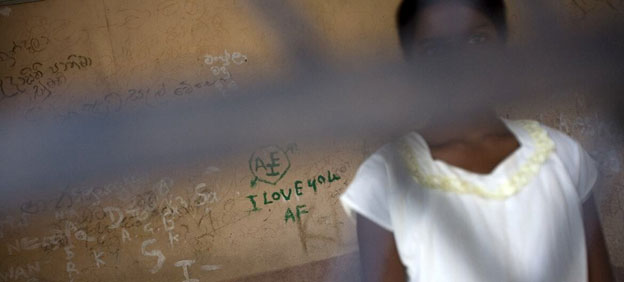
A UN human rights report has found that people trafficked and forced to work at scam centres are subjected to torture, sexual abuse and prison-like conditions. (representational photo). Credit: UNICEF/Ron Haviv
GENEVA, Feb 23 2026 (IPS) – A report published today by the UN Human Rights Office graphically details the lived experiences of some of the hundreds of thousands of people trafficked from dozens of countries around the world into working in entrenched scam operations mostly in Southeast Asia, as well as far beyond.
The report documents instances of torture and other ill-treatment, sexual abuse and exploitation, forced abortions, food deprivation, solitary confinement, among other grave human rights abuses. Survivors also shared experiences of border officials aiding scam recruiters, and of threats and extortion by police.
Satellite imagery and on-ground reports show that nearly three-quarters of the scam operations are in the Mekong region, which have also spread to some Pacific Island countries and South Asia, as well as Gulf States, West Africa and the Americas.
“The treatment endured by individuals within the context of scam operations is alarming,” finds the report, based on interviews with survivors originating from Bangladesh, China, India, Myanmar, Sri Lanka, South Africa, Thailand, Viet Nam and Zimbabwe.
They had been trafficked into scam centres in Cambodia, Lao People’s Democratic Republic, Myanmar, the Philippines and the United Arab Emirates between 2021 and 2025. It is also based on interviews with police and border officials, as well as civil society and others with knowledge of such operations.
Victims described being lured into scamming jobs under false pretences and then being coerced into perpetrating online fraud ranging from impersonation scams, online extortion, financial fraud as well as romantic scams.
The operations described are fluid, with some survivors sharing experiences of being held in immense compounds resembling self-contained towns, some over 500 acres in size, made up of heavily fortified multi-storey buildings with barbed wire-topped high walls, guarded by armed and uniformed security personnel.
“A victim from Sri Lanka related how those who failed to meet monthly scamming targets were subject to immersion in water containers (known as ’water prisons’) for hours,” said the report, which updates a 2023 UN Human Rights report.
“Victims also recounted being forced to witness or even conduct grave abuse of others as a means to ensure compliance; one Bangladeshi victim said that he was ordered to beat other workers and a victim from Ghana recounted being forced to watch his friend being beaten in front of him.”
They told of people losing their lives as they attempted to escape, including falling from balconies and roofs in the compounds.
Failed rescue attempts were also punished severely, the report finds. One Vietnamese victim described how her sister was beaten, tasered and locked in a room with no food for seven days after her sister had tried to engineer her escape.
It found traffickers would video call family members to watch their loved one being abused and mistreated in order to pressure families to pay extortionate ransoms.
While most victims described receiving some wages, all those interviewed by UN Human Rights experienced a range of escalating deductions and none received the entirety of the promised salary. A Thai victim reported that they were ordered to meet steep scamming targets of some $9,500 per day to avoid fines, beatings, or even being “sold” to another compound with harsher conditions.
“The litany of abuse is staggering and at the same time heart-breaking,” UN Human Rights Chief Volker Türk said. “Yet, rather than receiving protection, care and rehabilitation as well as the pathways to justice and redress to which they are entitled, victims too often face disbelief, stigmatization and even further punishment.”
“Effective responses need to be centred in human rights law and standards. Crucially, that means explicitly recognizing forced criminality within anti-trafficking laws and regulations and guaranteeing the non-punishment principle for victims of trafficking.”
“Victims of such abuses require coordinated timely, safe and effective rescue operations, respect for the principle of non-refoulement, as well as available support mechanisms to ensure torture and trauma rehabilitation and address risks of reprisals or re-trafficking.”
The report uniquely applies a behavioural science and systems analysis to explore why people continue to fall prey to fraudulent recruitment into scam operations and to suggest rights-based and effective prevention responses.
“There must be increased availability and accessibility of safe labour migration pathways and meaningful oversight of recruitment such as verification of online job postings and flagging suspicious recruitment patterns,” Türk said.
He called on States and relevant stakeholders to engage trusted and community-based actors, such as survivor-led groups, in outreach to individuals considered at risk of trafficking into scam operations. Awareness activities need to be accessible, concrete and available through trusted media.
Türk also urged States and regional bodies to act effectively against corruption, which he said was deeply entrenched in such lucrative scamming operations, and to prosecute the criminal syndicates behind them. He also recalled the importance of independent media, human rights defenders and civil society organisations being able to carry out their vital anti-trafficking work free from interference.