Immigrants Are What Made America Great

Civil Society, Global, Global Governance, Headlines, Human Rights, International Justice, IPS UN: Inside the Glasshouse, TerraViva United Nations
Opinion

NEW YORK, Feb 23 2026 (IPS) – Trump’s immigration policy is destroying America’s greatness Immigrants are the backbone of America’s greatness— powering its economy, enriching its culture, and advancing its global leadership. Yet under the guise of making America great again, Trump’s exclusionary, racist policies are dismantling that very foundation, stifling innovation and tarnishing the nation’s moral standing.


To understand the magnitude and importance of immigrants in the US, and the need for continued immigration, the following clearly shows how deeply they sustain our workforce, drive innovation, and secure America’s competitive edge on the global stage.

The Current State of Immigration

Over 1 million farmworkers in the United States are undocumented, including approximately 40 percent of crop farmworkers. Immigrants account for roughly 70 percent of all US farmworkers, making them indispensable to the agricultural labor force and underscoring how dependent American food production is on this workforce.

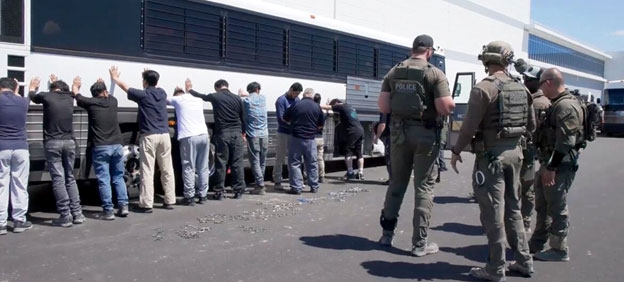
We are already witnessing the impacts of immigration crackdowns on the US farm industry. In California’s Central Valley, a majority of farmworkers stopped showing up after intensive ICE raids in July 2025, leaving crops rotting in the fields due to a lack of available workers. This has resulted in substantial financial losses, food waste, reduced farm revenues, and rising food prices.

Beyond agriculture, immigrants from Latin America and other regions are heavily represented in construction, hospitality, and food processing; they account for approximately 33 percent of meat processing and over 80 percent of food manufacturing workers.

In the leisure and hospitality sector, immigrants account for roughly 18 percent of workers; in traveler accommodations (i.e., hotels) alone, over 30 percent of workers are immigrants.

STEM Workforce

According to the National Science Foundation, foreign-born workers account for approximately 22 percent of the US’ STEM workforce. Among science and engineering occupations with doctorates, about 43 percent are foreign-born; in the doctorate-level fields of computer and mathematical sciences, this share exceeds 55 percent.

Roughly 30 percent of full-time science and engineering faculty at US universities are foreign-born, disproportionately present at research-intensive institutions.

Denying admission of scientists from countries such as India and China, Mexico and Argentina would result in serious talent shortages in key STEM fields. Moreover, inventors and entrepreneurs account for a disproportionately large share of US patents, high-growth startups, and advanced-degree STEM workers.

Thus, losing foreign-born scholars would undermine research, reduce innovation, slow scientific progress, and erode US technological and economic competitiveness.

Research on immigrant entrepreneurship indicates that immigrants are heavily overrepresented among founders of new firms, including high-tech firms and “unicorn” startups, which amplifies the long-term damage that restrictive policies toward non-European scientists would inflict.

Immigrants in the US military

In 2017, about 190,000 foreign-born individuals were on active duty, representing roughly 4.5 percent of all active-duty service members. As of 2024, approximately 8,000 non-citizens enlist each year. As of 2022, there were about 731,000 foreign-born veterans—around 4.5 percent of the total veteran population.

Historically and today, foreign-born soldiers have played key roles in every major US conflict, dating back to the Revolutionary War, and mmigrants have received more than 20 percent of all Medals of Honor, underscoring the depth of their contribution to national defense.

Reagan’s Honoring of Immigrants

Perhaps no one could express the vital importance of immigrants to the US, and how they made America the land of opportunity that embodied the very promise that has made America exceptional, like President Reagan in his final speech to the nation:

“Since this is the last speech that I will give as president, I think it’s fitting to leave one final thought, an observation about a country which I love. It was best stated in a letter I received recently. A man wrote me and said: ‘You can go to live in France, but you cannot become a Frenchman. You can go to live in Germany, Turkey, or Japan, but you cannot become a German, a Turk, or a Japanese. But anyone, from any corner of the Earth, can come to live in America and become an American.’

“Yes, the torch of Lady Liberty symbolizes our freedom and represents our heritage, the compact with our parents, our grandparents, and our ancestors. It is that lady who gives us our great and special place in the world. For it’s the great life force of each generation of new Americans that guarantee that America’s triumph shall continue unsurpassed into the next century and beyond. Other countries may seek to compete with us, but in one vital area, as a beacon of freedom and opportunity that draws the people of the world, no country on Earth comes close.

“This, I believe, is one of the most important sources of America’s greatness. We lead the world because, unique among nations, we draw our people—our strength—from every country and every corner of the world. And by doing so, we continuously renew and enrich our nation. While other countries cling to the stale past, here in America, we breathe life into dreams. We create the future, and the world follows us into tomorrow.

“Thanks to each wave of new arrivals to this land of opportunity, we’re a nation forever young, forever bursting with energy and new ideas, and always on the cutting edge, always leading the world to the next frontier. This quality is vital to our future as a nation. If we ever closed the door to new Americans, our leadership in the world would soon be lost.”

How did we fall from President Reagan’s recognition of immigrants’ nobility to Trump’s dehumanizing claim that “they are eating the dogs…they are eating the cats…They’re eating—they are eating the pets…” In that stark descent, we see the horrific moral cost of abandoning truth for political expediency.

Immigrants have been the lifeblood of the American experiment. To close our door to immigrants is to close the door to the very engine of American vitality. If we open our borders, welcoming all regardless of ethnicity, race or faith, we unleash our greatest strength—a nation reborn, limitless in its capacity to dream and achieve the impossible.

Dr. Alon Ben-Meir is a retired professor of international relations, most recently at the Center for Global Affairs at NYU. He taught courses on international negotiation and Middle Eastern studies.

IPS UN Bureau

  Source

UN Report Details Grave Abuses Against those Trafficked into Scam Centres

Civil Society, Crime & Justice, Democracy, Global, Global Governance, Headlines, Human Rights, IPS UN: Inside the Glasshouse, TerraViva United Nations

Opinion

UN Report Details Grave Abuses Against those Trafficked into Scam Centres

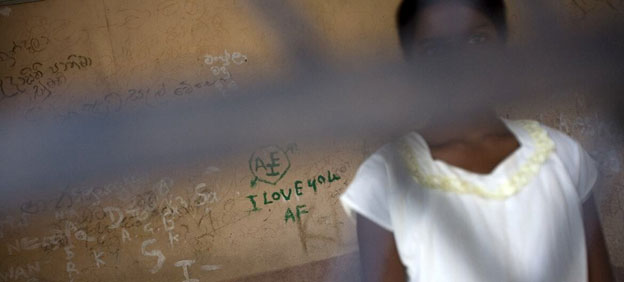
A UN human rights report has found that people trafficked and forced to work at scam centres are subjected to torture, sexual abuse and prison-like conditions. (representational photo). Credit: UNICEF/Ron Haviv

GENEVA, Feb 23 2026 (IPS) – A report published today by the UN Human Rights Office graphically details the lived experiences of some of the hundreds of thousands of people trafficked from dozens of countries around the world into working in entrenched scam operations mostly in Southeast Asia, as well as far beyond.


The report documents instances of torture and other ill-treatment, sexual abuse and exploitation, forced abortions, food deprivation, solitary confinement, among other grave human rights abuses. Survivors also shared experiences of border officials aiding scam recruiters, and of threats and extortion by police.

Satellite imagery and on-ground reports show that nearly three-quarters of the scam operations are in the Mekong region, which have also spread to some Pacific Island countries and South Asia, as well as Gulf States, West Africa and the Americas.

“The treatment endured by individuals within the context of scam operations is alarming,” finds the report, based on interviews with survivors originating from Bangladesh, China, India, Myanmar, Sri Lanka, South Africa, Thailand, Viet Nam and Zimbabwe.

They had been trafficked into scam centres in Cambodia, Lao People’s Democratic Republic, Myanmar, the Philippines and the United Arab Emirates between 2021 and 2025. It is also based on interviews with police and border officials, as well as civil society and others with knowledge of such operations.

Victims described being lured into scamming jobs under false pretences and then being coerced into perpetrating online fraud ranging from impersonation scams, online extortion, financial fraud as well as romantic scams.

The operations described are fluid, with some survivors sharing experiences of being held in immense compounds resembling self-contained towns, some over 500 acres in size, made up of heavily fortified multi-storey buildings with barbed wire-topped high walls, guarded by armed and uniformed security personnel.

“A victim from Sri Lanka related how those who failed to meet monthly scamming targets were subject to immersion in water containers (known as ’water prisons’) for hours,” said the report, which updates a 2023 UN Human Rights report.

“Victims also recounted being forced to witness or even conduct grave abuse of others as a means to ensure compliance; one Bangladeshi victim said that he was ordered to beat other workers and a victim from Ghana recounted being forced to watch his friend being beaten in front of him.”

They told of people losing their lives as they attempted to escape, including falling from balconies and roofs in the compounds.

Failed rescue attempts were also punished severely, the report finds. One Vietnamese victim described how her sister was beaten, tasered and locked in a room with no food for seven days after her sister had tried to engineer her escape.

It found traffickers would video call family members to watch their loved one being abused and mistreated in order to pressure families to pay extortionate ransoms.

While most victims described receiving some wages, all those interviewed by UN Human Rights experienced a range of escalating deductions and none received the entirety of the promised salary. A Thai victim reported that they were ordered to meet steep scamming targets of some $9,500 per day to avoid fines, beatings, or even being “sold” to another compound with harsher conditions.

“The litany of abuse is staggering and at the same time heart-breaking,” UN Human Rights Chief Volker Türk said. “Yet, rather than receiving protection, care and rehabilitation as well as the pathways to justice and redress to which they are entitled, victims too often face disbelief, stigmatization and even further punishment.”

“Effective responses need to be centred in human rights law and standards. Crucially, that means explicitly recognizing forced criminality within anti-trafficking laws and regulations and guaranteeing the non-punishment principle for victims of trafficking.”

“Victims of such abuses require coordinated timely, safe and effective rescue operations, respect for the principle of non-refoulement, as well as available support mechanisms to ensure torture and trauma rehabilitation and address risks of reprisals or re-trafficking.”

The report uniquely applies a behavioural science and systems analysis to explore why people continue to fall prey to fraudulent recruitment into scam operations and to suggest rights-based and effective prevention responses.

“There must be increased availability and accessibility of safe labour migration pathways and meaningful oversight of recruitment such as verification of online job postings and flagging suspicious recruitment patterns,” Türk said.

He called on States and relevant stakeholders to engage trusted and community-based actors, such as survivor-led groups, in outreach to individuals considered at risk of trafficking into scam operations. Awareness activities need to be accessible, concrete and available through trusted media.

Türk also urged States and regional bodies to act effectively against corruption, which he said was deeply entrenched in such lucrative scamming operations, and to prosecute the criminal syndicates behind them. He also recalled the importance of independent media, human rights defenders and civil society organisations being able to carry out their vital anti-trafficking work free from interference.

IPS UN Bureau

  Source

As Biodiversity Loss Grows, Rome Talks Urge Nations to Step Up Action

Biodiversity, Climate Change, Conferences, Editors’ Choice, Environment, Europe, Featured, Global, Green Economy, Headlines, Natural Resources, Sustainable Development Goals, TerraViva United Nations

Biodiversity

A red panda – labelled ‘endangered’ by the IUCN – at an animal sanctuary in the Indian state of West Bengal. As biodiversity loss accelerates, UNCBD is asking countries to take greater action to protect it. Credit: Stella Paul/IPS

A red panda – labelled ‘endangered’ by the IUCN – at an animal sanctuary in the Indian state of West Bengal. As biodiversity loss accelerates, UNCBD is asking countries to take greater action to protect it. Credit: Stella Paul/IPS

ROME & NEW DELHI, Feb 23 2026 (IPS) – Governments meeting in Rome last week acknowledged that global efforts to protect nature are still not moving fast enough, even as biodiversity loss continues to affect ecosystems, livelihoods, and economies worldwide.


The warning came as the sixth meeting of the Subsidiary Body on Implementation (SBI-6) under the Convention on Biological Diversity (CBD) concluded after four days of negotiations focused on how countries are putting global biodiversity commitments into practice.

Held at the headquarters of the Food and Agriculture Organization of the United Nations (FAO), the meeting is the first major checkpoint in a year of intensive talks leading to the United Nations Biodiversity Conference (COP17) in October in Yerevan, Armenia. There, governments will carry out the first global review of progress under the Kunming-Montreal Global Biodiversity Framework.

From Promises to Practice

At the centre of discussions in Rome was the challenge of turning global promises into action on the ground. The Kunming-Montreal Global Biodiversity Framework (KMGBF), adopted in 2022, sets out 23 targets to be achieved by 2030, including protecting and restoring ecosystems, reducing pollution, cutting harmful subsidies, and ensuring fair sharing of benefits from genetic resources.

While most governments have formally endorsed the framework, SBI-6 revealed that implementation remains uneven. Negotiators worked through recommendations on biodiversity finance, national planning, gender equality, capacity-building, international cooperation, and access and benefit-sharing. Many of these were adopted without brackets, suggesting broad agreement.

“This has been a long week for all,” said Clarissa Souza Della Nina, Chair of the meeting, as she closed the afternoon plenary and announced that delegates would meet again in the evening. She noted that turning global ambitions into real action on the ground requires strong systems and institutions, and that this is not an easy process.

“The conclusion of SBI-6 marks an important early milestone in a very demanding year,” said Souza Della Nina, highlighting the efforts made by countries to work together and find common ground.

But behind the consensus language, discussions repeatedly returned to the same concern: global ambition is not yet being matched by national action.

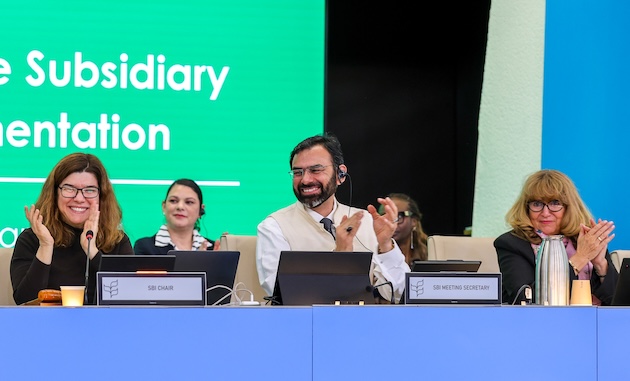
SBI 6 Chair Clarissa Souza Della Nina, Brazil; Asad Naqvi, SBI 6 Secretary; and CBD Executive Secretary Astrid Schomaker celebrating the first conference room paper being approved. Credit: IISD/ENB, Mike Muzurakis

SBI 6 Chair Clarissa Souza Della Nina, Brazil; Asad Naqvi, SBI 6 Secretary; and CBD Executive Secretary Astrid Schomaker celebrate the first conference room paper being approved. Credit: IISD/ENB, Mike Muzurakis

National Plans Show Mixed Progress

A key input to the Rome meeting was an analysis by the CBD Secretariat of national biodiversity strategies and targets submitted so far. These national plans are the main way countries translate the global framework into domestic policies.

The analysis covered 51 National Biodiversity Strategies and Action Plans (NBSAPs) and 130 sets of national targets. It found that while progress is being made, many plans fall short of the scale of change required.

About 75 percent of Parties have submitted national targets, but fewer have updated their full national strategies. Even among submitted plans, several global targets are only partially addressed. Social and economic aspects of biodiversity loss — including links to livelihoods, equity, and development — tend to receive less attention than conservation measures.

“These findings show clearly where we stand,” said Astrid Schomaker, Executive Secretary of the CBD. “They also show that countries still have the opportunity to raise ambition and speed up action before the global review.”

The first global review of progress under the KMGBF will take place at COP17. A major source of information for that review will be the seventh National Reports, which countries are required to submit by 28 February 2026.

By the end of SBI-6, the European Union, Lesotho, Uganda, and Switzerland had submitted their reports. Several other countries said they were close to completion, while others cited difficulties related to limited staff, technical challenges, or delays in accessing funds.

Delegates stressed that timely reporting is essential, not only for transparency but also to ensure that the global review reflects the realities faced by countries at different levels of development.

Gender and Inclusion Lag Behind

Another issue that drew attention in Rome was the limited integration of gender equality into biodiversity action. Under the global framework, countries have committed to ensuring the full and meaningful participation of women and girls, including those from indigenous peoples and local communities.

Yet the Secretariat’s analysis showed that only around 40 percent of national targets refer to gender-related issues, and only about 20 percent address women’s rights to land and natural resources. Even fewer countries reported involving women’s organisations in the preparation of national biodiversity plans.

For many participants, this gap was a reminder that biodiversity loss is not only an environmental issue but also a social one.

“Without addressing inequality, we will not succeed in protecting nature,” said Gillian Guthrie, a delegate from Jamaica, during the discussions, urging governments still updating their plans to take a more inclusive approach.

Money and Capacity Remain Major Hurdles

Financing biodiversity action was another recurring theme. Although the most detailed negotiations on biodiversity finance are scheduled for later this year, talks in Rome were informed by new studies on funding needs, the relationship between debt and biodiversity spending, and opportunities to better align biodiversity and climate finance.

Developing countries repeatedly pointed to limited financial resources, lack of access to technology, and institutional constraints as barriers to implementation. These challenges were reflected in the meeting itself, where several delegations consisted of a single representative struggling to follow multiple negotiating tracks.

The CBD Secretariat thanked donor countries that contributed to a special trust fund to support participation and called on others to do the same. Without broader support, delegates warned, global biodiversity decision-making risks leaving some voices unheard.

A decisive year ahead

The recommendations adopted at SBI-6 will now be forwarded to COP17, where governments will assess whether collective action so far is enough to meet the biodiversity targets set for 2030.

For many participants, the Rome meeting served as both a progress report and a warning. While cooperation is improving and more countries are engaging with the global framework, biodiversity loss continues to affect food systems, health, and economic stability, particularly in the Global South.

As delegates left Rome, the message was clear: the coming months will be critical. Whether the world can move from commitments to meaningful action will be tested in Yerevan, Armenia — and the stakes, many warned, could not be higher.

Below are some of the highlights of the 4-day meeting:

  • The sixth meeting of the Subsidiary Body (SBI-6) on Implementation under the Convention on Biological Diversity began the first global review of how countries are acting to protect nature.
  • An official analysis of national biodiversity plans showed progress but also revealed wide gaps between global goals and what many countries have committed to do at home.
  • Around three-quarters of countries have submitted national biodiversity targets, but far fewer have updated full national strategies or addressed social and economic aspects of biodiversity loss.
  • Gender equality and the participation of women, Indigenous Peoples, and local communities remain weak in many national plans, despite being central to the global biodiversity agreement.
  • Developing countries highlighted ongoing challenges linked to limited funding, lack of technical capacity, and difficulty accessing resources needed to implement biodiversity actions.
  • The outcomes from Rome will shape how global progress on biodiversity is measured and reviewed, setting the tone for accountability and action in the run-up to 2030.

IPS UN Bureau Report