Civil Society at the Finance in Common Summit Calls for Community-led, Equitable, and Human Rights-based Development

Civil Society, Climate Action, Climate Change, Development & Aid, Energy, Environment, Financial Crisis, Food and Agriculture, Global, Headlines, Human Rights, Inequality, Sustainability, TerraViva United Nations

Opinion

Civil society organisations and community leaders at the Finance in Common Summit 2023. Credit: Sebastian Barros/Forus

CAPE TOWN, South Africa, Feb 24 2025 (IPS) – As public development banks gather for the Finance in Common Summit (FiCS) in Cape Town, South Africa, civil society and community activists from across the world are demanding a shift to a community-led, equitable, and human rights-based development approach, that prioritise people and planet over profit, and a reform of the global financial architecture.


“With more than 10 % global investment flowing through them each year, public development banks hold immense responsibility—not only to fund infrastructure and development but to do so in a way that is just, inclusive, and sustainable. Development that does not listen to the voices of the people it affects is not true development; it deepens inequalities, harms ecosystems, and leaves communities behind. True development is not done for communities, but with them”, says Mavalow Christelle Kalhoule, Chair at Forus.

Since its first edition in 2020, civil society has been playing a critical role at FiCS in ensuring public development banks are accountable to the people they serve, and in amplifying the voices – too often ignored – of communities in the Global South who are most directly affected by development projects.

“Over the next few days, the world’s public development banks will be patting themselves on the back for all the good they’re doing around the world. But all that glitters is not gold. Way too often these institutions are replicating a neocolonial and neoliberal approach, dividing the world between those to be sacrificed and those to benefit from the sacrifices”, says Ony Soa Ratsifandrihamanana, Africa Regional Coordinator at the Coalition for Human Rights in Development.

Civil society organisations and community leaders at the Finance in Common Summit 2023. Credit: Sebastian Barros/Forus

Amidst rising inequality, debt crises, and the climate emergency, public development banks must move beyond rhetoric and commit to concrete, transformative actions. This is why over 300 civil society groups have joined forces to bring their demands at FiCS, calling on development banks to champion a new era of development finance, placing human rights, community leadership, and environmental sustainability at the core of all financing decisions.

“The world is passing through the most critical and testing times of its history and once again the solutions are being imposed without the consent, participation and engagement of citizens at large and representative civil society in particular. This is the time to think, reflect and act out of the box, and this opportunity of coming together at FiCS should not be considered business as usual,” says Zia ur Rehman, Secretary General and Director at the Asia Development Alliance.

In a context of shrinking civic space and increasing attacks against the human rights movement, development banks should also play a more decisive role to make sure people can actively and safely participate in decision-making processes and consultations.

“While development banks acknowledge the importance of civil society engagement, their frameworks often fall short in implementation, resulting in limited access to information, tokenistic public participation, and a lack of accountability for reprisals against activists,” says Manana Kochladze, Strategic Area Leader – Democratization and Human Rights at CEE Bankwatch Network. “There is a pressing need for development banks to collaboratively develop a unified and proactive approach to safeguarding and expanding civic space”.

More than 60 civil society organizations and community activists will also join the Summit in-person, to share their first-hand testimonies on the actual impact of development projects. From renewables in Kenya to green hydrogen projects in Chile, too often projects presented as sustainable are displacing local communities, polluting the environment, and failing to ensure that the benefits trickle down to those most in need.

Civil society organisations and community leaders at the Finance in Common Summit 2023. Credit: Sebastian Barros/Forus

“When decisions are made without the input of local voices, finance becomes an instrument of exclusion, perpetuating inequality and undermining true progress. We demand a comprehensive overhaul of global financial structures that prioritizes community rights. A shift to people-led finance will enable genuine economic transformation, lifting up every individual and fostering resilient, inclusive growth that benefits society as a whole,” says Ndeye Fatou Sy, Programs Manager at Lumière Synergie pour le Développement (Senegal).

The Lesotho Highlands Water Project, for instance, provides water to South Africa in exchange for royalties and generation of hydropower for Lesotho, but has led to devastating socio-economic and environmental impacts. Hundreds of families have been involuntarily resettled and more than 30,000 people lost their cropland and grazing land, with a particular impact on women.

“As we gather at the Finance in Common Summit, we remind public development banks that front-line communities should not bear the cost of development. Public development banks must create and use independent accountability mechanisms to hear directly from local communities and ensure that their land, livelihoods, and environment are protected,” says Robi Chacha Mosenda, Senior Associate at Accountability Counsel.

Civil society and community representatives participating at the Summit will also present viable and alternative solutions, such as small-scale and renewable energy solutions that are led by Indigenous communities themselves.

“Any form of financing by multilateral development banks should start with support to community-led planning initiatives that ascertain that decisions on energy alternatives centre the rights of affected persons and communities”, says Mwebe John, Africa Finance Campaigner at Recourse. “Multilateral development banks are investing more money than ever into renewable energy, but the scale and kind of projects matters if these investments are going to truly power people and protect the planet. Community-led projects are popping up everywhere – from rooftop solar in India, to micro hydropower in Indonesia, and rural mini grids in Rwanda and Tanzania. These are the types of projects to be supported,” adds Federico Sibaja, IMF Campaign Manager at Recourse.

These stories show that it is key for development banks to use FiCS as an opportunity to step out from their echo chamber, listen to those who are bearing the brunt of their investments, and strengthen the dialogue with civil society.

Lorena Cotza is Communications Lead, Coalition for Human Rights in Development

IPS UN Bureau
  Source

Is the UN’s Human Rights Agenda in Jeopardy?

Civil Society, Democracy, Featured, Global, Global Governance, Headlines, Human Rights, Indigenous Rights, IPS UN: Inside the Glasshouse, TerraViva United Nations

Credit: United Nations

UNITED NATIONS, Feb 24 2025 (IPS) – The UN’s human rights agenda is in danger of faltering since the Geneva-based Office of the High Commissioner for Human Rights (UNHCHR) is planning to “restructure” the office, under the moniker OHCHR 2.0.

But this proposal, if implemented, would result in the abolition of the Special Procedures Branch, established by the Human Rights Council (HRC), to report and advise on human rights from thematic and country-specific perspectives.


The question remains whether or not the HRC will give its blessings to the proposed restructuring. Currently, there are more than 46 thematic mandates and 14 country-specific mandates.

The Special Rapporteurs (who are also designated “independent UN human rights experts”) cover a wide range of thematic issues, including investigations into extrajudicial, summary or arbitrary executions, racism and xenophobia, human rights in the Palestinian territories, right to freedom of opinion and expression, rights of the indigenous peoples, violence against women, human rights of immigrants, among others.

https://www.ohchr.org/en/special-procedures-human-rights-council/current-and-former-mandate-holders-existing-mandates

Ian Richards, an economist at the Geneva-based UN Conference on Trade and Development (UNCTAD) and former President of the Coordinating Committee of International Staff Unions and Associations, told IPS the staff of the Special Procedures Branch play an essential role in supporting the work of the special rapporteurs.

He said former UN Secretary-General Kofi Annan described their work as the jewel in the crown of the UN human rights system.

“We know that some of their recent work has created pushback. There is a belief is that they are being penalized for this”.

“The High Commissioner for Human Rights “hasn’t accepted to meet with the staff union to discuss this, which is unusual. We hope he will change his mind,” said Richards.

Some of the Special Rapporteurs have been vociferously critical of member states, including Israel, on war crimes charges in Gaza, and also countries in the Middle East and South-east Asia, like Singapore and Saudi Arabia, for continuing to enforce the death penalty.

In a press release last week, two Special Rapporteurs said Singapore must urgently halt the execution of Malaysian national Pannir Selvam Pranthaman for drug trafficking.

“We have repeatedly** called on Singapore to halt executions for drug offences which are illegal under international human rights law on several grounds,” the experts said.

“We reiterate that under international law, only crimes of extreme gravity involving intentional killing meet the threshold for the death penalty,” the experts said. “Mandatory death sentences are inherently over-inclusive and inevitably violate human rights law.”

“There is no evidence that the death penalty does more than any other punishment to curb or prevent drug trafficking,” they said.

The experts warned that the rate of execution notices for drug-related offences in Singapore was “highly alarming”. They noted that eight people have already been executed on these charges since 1 October 2024, a period of just four and a half months.

Speaking off-the-record, a UN source told IPS the staff of the Special Procedures Branch fear the “re-structuring” is being done in order to reduce the effectiveness and voice of the Special Rapporteurs. And the High Commissioner’s refusal to consult with the union may be evidence of this, he said.

“As you may be aware, the special rapporteurs, and one in particular, have been vocal on the issue of Gaza, which has generated complaints from a number of member states to the High Commissioner. To seek a second term, he needs their support”.

According to the UN, Special Rapporteurs/Independent Experts/Working Groups are independent human rights experts appointed by the United Nations Human Rights Council. Together, these experts are referred to as the Special Procedures of the Human Rights Council.

Special Procedures experts work on a voluntary basis; they are not UN staff and do not receive a salary for their work. While the UN Human Rights office acts as the secretariat for Special Procedures, the experts serve in their individual capacity and are independent from any government or organization, including OHCHR and the UN.

Any views or opinions presented are solely those of the author(s) and do not necessarily represent those of the UN or OHCHR. Country-specific observations and recommendations by the UN human rights mechanisms, including the special procedures, the treaty bodies and the Universal Periodic Review, can be found on the Universal Human Rights Index https://uhri.ohchr.org/en/

The Office of the High Commissioner is being funded by the UN regular budget and voluntary contributions.

But UN Special Rapporteurs are not paid a salary by the United Nations. They receive funding primarily through logistical and personnel support from the Office of the High Commissioner.

They often also receive additional funding from private foundations and NGOs like the Ford Foundation and Open Society Foundations, which can raise concerns about potential conflicts of interest due to the source of funding.

Special procedures cover all human rights: civil, cultural, economic, political and social as well as issues relating to specific groups. Special procedures mandate-holders are either an individual (called a Special Rapporteur (SR) or Independent Expert (IE)) or a Working Group (WG) of five members, according to the UN.

As part of their mandates, special procedures examine, advise and publicly report on human rights issues and situations. They conduct thematic studies and convene expert consultations, contribute to the development of international human rights standards, engage in advocacy and provide advice for technical cooperation.

Upon the invitation from Governments, they visit particular countries or territories in order to monitor the situation on the ground. Special procedures also act on individual cases and concerns of a broader, structural nature by sending communications to States and other entities in which they bring alleged violations or abuses to their attention.

Finally, they raise public awareness of a specific topic through press releases or other public statements. Special procedures report annually to the Human Rights Council; the majority of the mandates also report annually to the General Assembly

In 2024, OHCHR received a total of US$268.9 million in voluntary contributions. As in previous years, the overwhelming majority of voluntary contributions came from Member States and International organizations including the European Commission and UN partners.

IPS UN Bureau Report

  Source

Trump’s War on Global Governance: Lessons from the Past on How to Fight Back

Civil Society, Democracy, Featured, Global, Global Governance, Headlines, Human Rights, International Justice, IPS UN: Inside the Glasshouse, TerraViva United Nations

Opinion

Daniel D. Bradlow is Professor/Senior Research Fellow, Centre for the Advancement of Scholarship, University of Pretoria, South Africa.

In a powerful appeal to the world’s largest economies during the G20 Summit, November 2024, UN Secretary-General António Guterres called for urgent climate action and reform of international institutions, warning that current systems are failing to meet global challenges. Credit: UN Photo/Gustavo Stephan

PRETORIA, South Africa, Feb 19 2025 (IPS) – US president Donald Trump’s recent actions seem designed to reassert American power and demonstrate that it is still the dominant global power and is capable of bullying weaker nations into following America’s lead.


He has shown contempt for international collaboration by withdrawing from the UN climate negotiations and the World Health Organization. His officials have also indicated that they will not participate in upcoming G20 meetings because he does not like the policies of South Africa, the G20 president for 2025.

In addition, he’s shown a lack of concern for international solidarity by halting US aid programmes and by undermining efforts to keep businesses honest. He has demonstrated his contempt for allies by imposing tariffs on their exports.

These actions demand a response from the rest of the international community that mitigates the risk to the well-being of people and planet and the effective management of global affairs.
My research on global economic governance suggests that history can offer some guidance on how to shape an effective response.

Such a response should be based on a realistic assessment of the configuration of global forces. It should seek to build tactical coalitions between state and non-state actors in both the global south and the global north who can agree on clear and limited objectives.

The following three historical lessons help explain this point.

Cautionary lessons

The first lesson is about the dangers of being overoptimistic in assessing the potential for change. In the late 1960s and early 1970s, the US was confronting defeat in the war in Vietnam, high inflation and domestic unrest, including the assassination of leading politicians and the murder of protesting students.

The US was also losing confidence in its ability to sustain the international monetary order it had established at the Bretton Woods conference in 1944.

In addition, the countries of the global south were calling for a new international economic order that was more responsive to their needs. Given the concerns about the political and economic situation in the US and the relative strength of the Soviet bloc at the time, this seemed a realistic demand.

In August 1971, President Richard Nixon, without any international consultations, launched what became known as the Nixon Shock. He broke the link between gold and the US dollar, thereby ending the international monetary system established in 1944. He also imposed a 10% surcharge on all imports into the US.

When America’s European allies protested and sought to create a reformed version of the old monetary order, US treasury secretary John Connolly informed them that the dollar was our currency but your problem.

Over the course of the 1970s, US allies in western Europe, Asia and all countries that participated in the old Bretton Woods system were forced to accept what the US preferred: a market-based international monetary system in which the US dollar became the dominant currency.

The US, along with its allies in the global north, also defeated the calls for a new international economic order and imposed their neo-liberal economic order on the world.

The second cautionary lesson highlights the importance of building robust tactical coalitions. In 1969, the International Monetary Fund member states agreed to authorise the IMF to create special drawing rights, the IMF’s unique reserve asset.

At the time, many IMF developing country member states advocated establishing a link between development and the special drawing rights. This would enable those countries most in need of additional resources to access more than their proportionate share of special drawing rights to fund their development.

All developing countries supported this demand. But they couldn’t agree on how to do it. The rich countries were able to exploit these differences and defeat the proposed link between the special drawing rights and development.

As a result, the special drawing rights are now distributed to all IMF member states according to their quotas in the IMF. This means that most allocations go to the rich countries who do not need them and have no obligation to share them with developing countries.

A third lesson arises from the successful Jubilee 2000 campaign to forgive the debts of low-income developing countries experiencing debt crises. This campaign, supported by a secretariat in the United Kingdom, eventually involved: civil society organisations and activists in 40 countries a petition signed by 21 million people and governments in both creditor and debtor countries.

These efforts resulted in the cancellation of the debts of 35 developing countries. These debts, totalling about US$100 billion, were owed primarily to bilateral and multilateral official creditors.

They were also a demonstration of the political power that can be generated by the combined actions of civil society organisations and governments in both rich and poor countries.

They can force the most powerful and wealthy institutions and individuals in the world to accept actions that, while requiring them to make affordable sacrifices, benefit low-income countries and potentially poor communities within those states.

What conclusions should be drawn?

We shouldn’t under-estimate the power of the US or the determination of the MAGA movement to use that power. However, their power is not absolute. It is constrained by the relative decline in US power as countries such as China and India gain economic and political strength.

In addition, there are now mechanisms for international cooperation, such as the G20, where states can coordinate their actions and gain tactical victories that are meaningful to people and planet.

But gaining such victories will require the following:

Firstly, the formation of tactical coalitions that include states from both the global south and the global north. If these states cooperate around limited and shared objectives they can counter the vested interests around the world that support Trump’s objectives.

Secondly, a special kind of public-private partnership in which states and non-state actors set aside their differences and agree to cooperate to achieve limited shared objectives. Neither states alone nor civil society groups alone were able to defeat the vested interests that opposed debt relief in the late 1990s. Working together they were able to defeat powerful creditor interests and gain debt relief for the poorest states.

Thirdly, this special partnership will only be possible if there’s general agreement on both the diagnosis of the problem and on the general contours of the solution. This was the case with the debt issue in the 1990s.

There are good candidates for such collaborative actions. For example, many states and non-state actors agree that international financial institutions need to be reformed and made more responsive to the needs of those member states that actually use their services but lack voice and vote in their governance.

The institutions also need to be more accountable to those affected by their policies and practices. They also agree that large corporations and financial institutions should pay their fair share of taxes and should be environmentally and socially responsible.

The urgency of the challenges facing the global community demands that the world begin countering Trump as soon as possible. South Africa as the current chair of the G20 has a special responsibility to ensure that this year the G20, together with its engagement groups, acts creatively and responsibly in relation to people and planet.

Source: Conversation Africa

IPS UN Bureau

  Source

A Global Retreat from Solidarity

Civil Society, Climate Change, Economy & Trade, Environment, Featured, Global, Headlines, Human Rights, Sustainable Development Goals, TerraViva United Nations

Opinion

Credit: CIVICUS

PARIS, Feb 17 2025 (IPS) – The world is witnessing a dangerous retreat from international solidarity by Global Minority countries. From Washington to Brussels, governments are slashing funds that sustain human rights, democracy, and humanitarian initiatives.


The U.S. foreign aid freeze, the European Union’s cut in development spending, and Belgium’s reduction in foreign aid all reflect a broader trend in countries with far-right elected governments of prioritizing domestic politics over global responsibility and solidarity.

Some may argue this is simply an abstract budgetary issue. But these funding cuts translate into real-life lost jobs, shuttered programs, and the most marginalized communities being left without vital support.

They send a clear signal: governments, even those once seen as champions of human rights, are redefining their external priorities and turning inward. The consequences will be devastating, particularly for Global Majority countries, where local organizations are already struggling to survive.

But this crisis is not inevitable. Philanthropy, civil society, and remaining international allies must step up not just to fill financial gaps but to rethink global solidarity and how civil society is funded, protected, and sustained in the long term.

The dangerous trend around funding cuts

Far-right governments and their growing global influence are driving these decisions. The U.S. foreign aid suspension is part of a broader pattern of governments scaling back support for civil society and humanitarian initiatives.

Similarly, the European Union’s decision to cut its development spending by 2 billion euros over the next three years will reduce aid to the world’s lowest-income countries by 35%, exacerbating existing inequalities.

Belgium’s 25% cut in foreign aid mirrors this shift, as does the Netherlands’ move to reduce funding for NGOs, prioritizing themes that serve its national interests over global needs. These disruptions weaken trust in international partnerships and force organizations further into survival mode rather than allowing for long-term strategic action.

The long-term impact of the foreign aid cuts

This comes at a time when the Sustainable Development Goals (SDGs) are severely off track, and the world keeps experiencing, year after year, the consequences of “the hottest year on record”.

The withdrawal of funding not only to civil society and humanitarian organizations, but also to multilateral institutions will further hinder efforts to address economic inequality and climate change for all.

Although it will take time to fully assess the impact of these recent decisions, we can already foresee their magnitude in terms of humanitarian assistance, but also in terms of human rights, democracy and global governance.

The U.S. 90-day foreign aid freeze alone has halted critical funding for international development organizations and federal contractors delivering humanitarian assistance worldwide. Thousands of jobs will be lost, and many organizations may not survive the freeze due to a lack of reserve funds.

Programs focused on combating HIV/AIDS, child health, food security, and education with reverberating impacts on all Americas have been abruptly thrown into uncertainty.

Beyond economic devastation, the crisis is deeply human. Hospitals that once provided essential care are shutting down, perishable food supplies are going to waste, and communities are left without lifesaving support.

The full impact on human rights and democracy may take longer to materialize, but we already see the warning signs: fewer resources for independent media, greater exposure for vulnerable activists, and increasing shrinking spaces for civil society.

This funding retreat is particularly dangerous for civil society organizations operating in repressive environments. Countries where civic space is already under immense pressure will become even more vulnerable, putting human rights defenders and activists at higher risk.

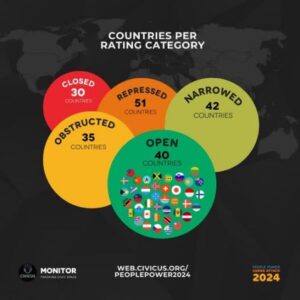
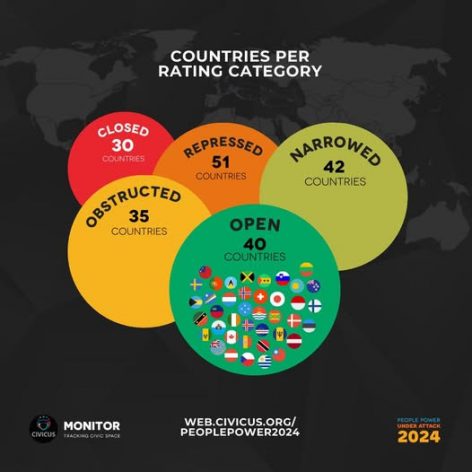
According to the CIVICUS Monitor, 72.4% of the world’s population lives in countries where civic space is repressed or closed. The message these funding cuts send to authoritarian and repressive states is clear: civil society is no longer a priority for Western democracies that once invested in the protection and promotion of civic space.

The role of philanthropy

Private foundations and philanthropic institutions must fill the gaps left by bilateral funders, providing flexible and rapid funding to sustain critical work. While the shortfall is vast, philanthropy must rise to the occasion to prevent the collapse of vital organizations and initiatives.

Emergency grants are needed to sustain operations, protect staff, and support security-related expenses such as safe houses, legal aid and physical and digital protection. Without this intervention, our ability to advocate for democracy, justice, and human rights for all will be severely diminished. Investments must prioritize local actors, ensuring they have the resources to lead, innovate, and sustain their work beyond donor-driven priorities.

Rethinking global solidarity

This moment calls for a fundamental rethinking of global solidarity. The traditional donor-recipient model is currently showing its limits. In this time of crisis, we must recognize that the challenges faced by civil society globally are shared, and the responsibility to support those in need should be mutually distributed rather than concentrated in a few high-income countries.

We should foster collaborative, co-designed solutions where all partners, North and South, large and small, share the risks and rewards of international development efforts.

This is where the power of coalitions and alliances like CIVICUS comes in. In the face of growing fear and retribution, many individuals and organizations, both in the U.S. and abroad, are afraid to speak out. CIVICUS and other global alliances and coalitions must step in to amplify the voices of those who fear retaliation and support those on the ground fighting for justice.

This moment demands not just financial resources but a renewed commitment to our shared values. This crisis might be ripping the guts out of the international aid system, but it cannot take the heart out of solidarity.

Conclusion

This moment is a stress test for global civil society. If donor-driven priorities continue to dictate the fate of grassroots organizations, social and activist movements, and civil society organizations, we will see the erosion of human rights, justice, and democracy worldwide.

The question is not just how to survive these cuts, but how to build a model of solidarity that is independent of political whims.

At the same time, this is a moment for introspection and transformation within civil society itself. Circumstances demand that we explore alternative means of resource mobilization, adapt to new challenges, and build resilience that is not solely dependent on traditional funding structures.

Now more than ever, we must reaffirm our commitment to global solidarity not as a charitable act, but as an existential necessity for a just and sustainable future.

Jessica Corredor Villamil is Chief Officer, Advocacy and Solidarity Action at CIVICUS, the global civil society alliance. She is based in Paris.

IPS UN Bureau

  Source

Why a Global Tech Fund for the Poorest Countries is a Smart Investment

Civil Society, Climate Change, Development & Aid, Environment, Featured, Global, Headlines, Human Rights, Least Developed Countries, Sustainable Development Goals, TerraViva United Nations

Opinion

GEBZE, Turkiye, Feb 17 2025 (IPS) – The 4th International Conference on Financing for Development could catalyse coordinated action to close the financing gap and set the stage for a STI-driven transformation in the world’s poorest countries.


The stark reality is that just over 250 weeks remain to go before the end of the decade, marking the endgame for achieving the Sustainable Development Goals (SDGs). With less than a fifth of the Goals on track, the Least Developed Countries (LDCs) or the world’s poorest countries urgently need bold, innovative financing for science, technology and innovation (STI) to re-set their development trajectories and salvage the 2030 Agenda.

In June/July this year, the Spanish city of Seville will host the 4th International Conference on Financing for Development, or FfD4. The last such summit was held in Addis Ababa, Ethiopia in 2015, the same year the SDGs were agreed.

Since then, the development financing gap has widened as has the divide between the richest and poorest countries across the globe. The financing gap – the amount of money required to achieve the SDGs and the resources that have been committed – is now estimated at $4.2 trillion annually.

The silver lining could be golden for the world’s most vulnerable

Notably, this past decade has seen astonishingly rapid developments in STI, spanning areas such as biotech, artificial intelligence, machine learning, green technologies and satellite connectivity. These breakthroughs, largely driven by digital technologies, have created immense wealth for a few.

According to Oxfam, five individuals will reach trillionaire status before the close of 2029, while the number of people living in poverty has remained stubbornly high since 1990. Yet for the 700 million people in the margins, this progress has not translated into better opportunities.

For them, these developments in STI could be truly transformational. There’s no better time than now to close the inequality gap and harness these assets for the benefit of all.

“There is nothing more powerful than an idea whose time has come”- Victor Hugo

The concept of a dedicated global fund for STI has never been fully operationalized at scale, but the idea is not new. The United Nations, UNESCO, the World Bank, the African Union, the G77 and China have all proposed the idea of an STI funding pool, suggesting growing momentum and backing for such a mechanism.

However, it is important to push the envelope and make the case for such a fund exclusively for the LDCs. June/July’s high-level summit on financing for development could provide the coordination and impetus it needs to get started. With the key global players in attendance, this summit could be a pivotal moment to bring the idea of a STI fund to life.

The 2024 Pact for the Future and its associated Global Digital Compact along with the Doha Programme of Action offer the policy foundation and moral imperative for such an initiative.

What the world’s 44 least developed countries (LDCs) need.

A global fund for STI should focus on financing three priorities: Boosting the capacity of institutions in LDCs; closing the skills gap; and creating an enabling environment for STI to flourish.

Economic resilience and structural change depend upon strong productive capacity which is driven by equally strong national institutions that can effectively implement pro-growth strategies and technology. Tech transfer and skills building will only support development if a country’s institutions can take advantage of the technologies they need. This aligns with the imperative to upskill and reskill workers in LDCs.

With just under half of their citizens having no access to electricity and only a third able to access the internet, it is imperative that countries are supported with vital, enabling development infrastructure. Additionally, a grant financing facility to bolster centres of excellence in the Global South would enable countries to effect game-changing outcomes in critical areas such as climate change, agriculture, and business development.

Why a global STI fund is a smart investment

Investing in the tech capacities of LDCs is not only a moral obligation but makes good business sense. High levels of inequality limit access to education and skills, undermining social mobility and economic growth in the world’s 44 LDCs. Rapid economic growth and development in these countries – with their massive market of over one billion people – represents an equally massive opportunity for countries in the global South and also for developed countries.

Investing in a dedicated STI fund would pave the way for long-term sustainable development in LDCs, providing opportunities for collaboration, harnessing the talent of their youthful populations and opening up new markets.

The Financing for Development summit as a catalyst for coordinated action

This decade began with a global pandemic that wrought havoc on economies worldwide, particularly the most vulnerable. Those who didn’t have the buffers to bounce back continue to struggle to meet basic development objectives and as a result, the SDG promises of 2015 remain elusive.

The 4th International Conference on Financing for Development presents a unique opportunity to focus on STI as an essential driver for development. The summit could catalyse coordinated action to close the financing gap and set the stage for a STI-driven transformation in the world’s poorest countries.

As we approach the final stretch of the 2030 Agenda, the need for solutions has never been more obvious. Investing in a global STI fund for LDCs is not just about making a big difference for the people in the poorest and most vulnerable countries, it also makes good business sense.

Deodat Maharaj is the Managing Direct0r of the United Nations Technology Bank for the Least Developed Countries and can be reached at: deodat.maharaj@un.org

IPS UN Bureau

  Source

Development Effectiveness & the Quality of Financing: Towards a More Holistic Approach at Seville

Civil Society, Climate Change, Development & Aid, Environment, Featured, Global, Headlines, Human Rights, Sustainable Development Goals, TerraViva United Nations

Opinion

The Sustainable Development Goals (SDGs) are off track. Decades of progress on poverty and hunger have stalled, and in some cases, been thrown into reverse. Many developing economies are mired in debt, with financing challenges preventing the urgently needed investment push in the SDGs, according to the United Nations. But amid these challenges there lies opportunity. The Fourth International Conference on Financing for Development (FfD4) – 30 June to 3 July 2025–provides a unique opportunity to reform financing at all levels, including to support reform of the international financial architecture. Credit: United Nations

STOCKHOLM Sweden / MILAN, Italy, Feb 14 2025 (IPS) – When world leaders gather in Seville for the 4th International Conference on Financing for Development (FfD4) in June, they will be meeting at a pivotal moment: one defined by mounting systemic risks, a multiplication of crises, and proliferation and fragmentation of development co-operation actors and funds.


International development co-operation is also threatened by the ongoing erosion of funding, including through unilateral decisions of unparalleled magnitude. While momentum for reform and transformative change to the financial and development architecture is growing, it is crucial not to lose sight of the fundamentals.

To achieve the Sustainable Development Goals (SDGs), increases in the quantity of development financing, be it official development assistance (ODA), private finance, or South-South co-operation, must be complemented with boosting the quality of all types of financing so that they are delivered and used in the most effective way.

Credit: Nuthawut Somsuk

Efforts to increase the quality of financing are embodied by the development effectiveness agenda and its internationally agreed principles: country ownership, focus on results, inclusive partnerships, and transparency and mutual accountability. The principles are tried and tested, and more relevant than ever.

They build on and reflect decades of global experience and are increasingly crucial for addressing the challenges that characterize today’s development co-operation landscape, such as fragmentation and misalignment with country priorities. They are also key for mobilising different types of finance from a growing array of development partners and partnerships.

Yet, as the development landscape has increased in complexity in the years after the 2015 Addis Ababa Action Agenda, the systematic focus on development effectiveness at country level has not been adequately integrated into country ecosystems and ambitions. For instance, Integrated National Finance Framework (INFF) processes could be better utilized as opportunities to talk about development effectiveness.

As Co-Chairs of the Global Partnership for Effective Development Co-operation, we believe that development effectiveness is essential to mobilising financing for sustainable development, across all types of international co-operation for development. The FfD4 Outcome Document must clearly stress this point.

A stronger, more systematic focus on the benefits of development effectiveness – and on addressing the bottlenecks and trade-offs that hinder progress on the 2030 Agenda and SDGs – is essential to reinstate trust, increase financing for development, and achieve long-term positive impacts.

The four principles of effective development co-operation remain the core enablers of development effectiveness. We welcome the focus of the recently released FfD4 Zero Draft Outcome Document on country leadership, coherence, and mutual accountability, but reiterate the need to uphold past commitments originating from the long-lasting aid effectiveness and development effectiveness processes.

It is important for the Outcome Document to stress the continued validity and intertwined nature of the four effectiveness principles, including the role of inclusive partnerships and of civil society organizations in particular.

The involvement of all stakeholders – partner countries, development partners, the private sector, civil society, parliamentarians, philanthropies, and trade unions – remains central to the effectiveness agenda. It is also important to focus on the effectiveness of partnerships with the private sector, in particular by creating enabling environments for a local private sector to thrive, an area monitored by the Global Partnership through the Kampala Principles Assessment.

Effective private sector partnerships are key for ensuring transparency and accountability and for combatting corruption. A whole-of-society approach is key to achieving true country ownership, which has emerged as a central theme in the FfD4 negotiations.

How can the Global Partnership and development effectiveness contribute to FfD4 and its follow-up?

First, the Global Partnership Monitoring Exercise provides evidence to inform how development actors can improve their policies, practices and partnerships, insights into progress in implementing the agreed effectiveness commitments, as well as opportunities for learning, dialogue and sharing of experiences on emerging effectiveness challenges.

The monitoring is a partner-country led tool holding development stakeholders to account for their implementation of the commitments, and a starting point for concrete action and behaviour change. Since 2011, 103 partner countries have led the monitoring exercise one or more times in collaboration with over 100 development partners and other actors. The ongoing global monitoring round will bring new evidence into the discussions on effectiveness, including in the lead-up and follow-up to FfD4.

(Read preliminary observations from the first 11 countries to complete data collection: Bosnia and Herzegovina, Burkina Faso, Cambodia, the Democratic Republic of Congo, Indonesia, Lao People’s Democratic Republic, Nepal, the Philippines, Uganda, Yemen and Zambia).

The fresh insights from the monitoring round are one important source of evidence which will feed into country-led multi-stakeholder action for how to enhance effectiveness.

Second, the Global Partnership’s 4th High-Level Meeting (HLM4) in 2026, where the monitoring results will be presented, is the next crucial moment after FfD4 to take stock of development effectiveness, accelerate progress, drive accountability, and inform policy dialogue on international development co-operation trends.

We invite all development stakeholders to contribute to HLM4, and to act on the dilemmas, tensions and trade-offs we are all facing to expedite delivery of the 2030 Agenda. Strengthening and streamlining the development co-operation architecture must be a collaborative, inclusive process.

The Global Partnership offers a proven, multi-stakeholder platform to ensure that all voices are heard in shaping the future of development co-operation.

We invite you to join forces with us: raise the profile of development effectiveness in the lead-up and follow-up to FfD4, and use the monitoring findings for learning, dialogue and action at country level.

Recognizing that development effectiveness is a key enabler for sustainable development by 2030 (and beyond) and fully embracing and recognizing the effectiveness principles in their integrity, is a prerequisite for an impactful and action-oriented outcome at FfD4.

Annika Otterstedt is Assistant Director General, Swedish International Development Cooperation Agency and Luca De Fraia is Co-Chair, CSO Partnership for Development Effectiveness.

Annika Otterstedt and Luca De Fraia are also Co-Chairs of the Global Partnership for Effective Development Co-operation.

IPS UN Bureau

  Source