The Winds of War

Armed Conflicts, Civil Society, Democracy, Global, Global Governance, Headlines, Human Rights, TerraViva United Nations

Opinion

The aftermath of a missile strike on the center of Kyiv. July 2024. Credit: UNICEF Ukraine

ATLANTA, Georgia, Jul 10 2024 (IPS) – Herman Wouk’s 1971 novel The Winds of War traced the romance, bravery, fear, and faith required for American youths to join the military, deploy to the war zones, and confront the mighty Axis threat in the lead-up to WW II. It later became a dramatic TV series.


Today multitudes around the world are increasingly affected by ongoing conflicts, or are living in societies so disordered that they might even welcome war as a solution to their problems.

The news on just one day in June 2024 was not reassuring: The US and NATO agreed to unleash Ukraine to attack Russia; Israel thumbed its nose at American demands to end its genocidal war in Gaza; Hezbollah bombarded northern Israel for the umpteenth time and Israel reciprocated.

Yemen exchanged missile attacks with US warships in the Red Sea; while Israel and Iran engaged in slinging hundreds of Intercontinental ballistic missiles at each other.

Meanwhile, China announced that any attempt to award sovereignty to Taiwan would receive a strong military response. Only a few days later on July 4 at Astana in Kazakhstan, Russia and China convened a bloc of their Eurasian allies for the Shanghai Cooperation Organization to stake out a policy of resistance to Euro-American control of the world economy.

Equally sobering, Japan and the Philippines have just initiated a defense alliance that echoes Japan’s security zone posture in WW II. All these moves signify that the great powers are indeed readying for war.

Elsewhere major regional wars in Sudan and Congo are ongoing; Haiti is in bloody chaos, and the same is true of several countries in West Africa, namely Mali, Niger, and Burkina Faso, which recently formed the Alliance of Sahel States to oppose the Economic Community of West African States (ECOWAS).

Political destabilization within nations is in the balance everywhere, from Myanmar and Bangladesh to Europe and Latin America, with an astounding political division in the United States as well. What could possibly go wrong?

The real problem in America and the West is one of cultural fatigue, with a lack of clear focus on what course to follow, as we had in both World Wars and the Cold War. A “War to End Wars,” like the WW I rallying cry, would not fly today.

Neither would “Make the World Safe for Democracy” as both world wars aimed to do; or “Better Dead than Red,” the slogan of the Cold War. Instead, it’s “Ho-hum, another war.” Not very inspiring.

The Ostrich is famous for sticking its head in the sand when danger approaches. With wars simmering all around, Americans may be practicing that same tactic. There was a disquieting moment at the June 6 D-Day ceremony in Normandy commemorating the 80th anniversary of the allied assault on the Nazi defenses during WW II.

In her prayer, US Army Chaplain Karen Meeker gave thanks for those who sacrificed their lives and blessed the surviving heroes at the ceremony, but also used an ominous phrase: “As war clouds gather….”

Does she know something the rest of us don’t? Probably so, and it is disquieting. War clouds are indeed gathering. All we need to do is pay attention to the news, listen to the statements of key leaders of many of the great powers, and read the headlines. It is hard to miss the central theme: that the world is becoming more and more ungovernable.

At a conference in Tallinn, Estonia during May, Yale Historian Timothy Snyder suggested that the present time reminds him of Europe in 1938, just before the start of WW II. That should frighten everybody. His warning means that unless something extraordinary prevents it, an expanding, generalized conflict may lie ahead.

Among today’s most urgent problems are the ongoing genocidal war in Gaza, the bloody and seemingly endless Russia-Ukraine War, and regional wars in Sudan, Congo, and Myanmar.

The growing East-West economic divide and the North-South poverty gap appear intractable. If these conflicts expand, global civilization is facing a world of hurt.

Maybe that’s why a tough guy image like that cultivated by our more pugnacious presidents like Andrew Jackson and Teddy Roosevelt remains so appealing today, along with a larger than life “John Wayne” type of fictional character. However, it’s never that simple, and there is always a price to be paid.

Roosevelt’s son Quentin died in the very war his father advocated so fiercely. The Greek historian Herodotus recorded the sage but painful observation that, “In times of peace, sons bury their fathers; in times of war, fathers bury their sons.”

What then is to be done? Perhaps the US could start by ending support for the blood-lust killing of so many defenseless civilians in Gaza. All it would take is for President Biden to have the guts to say no to an ally and mean it. On Taiwan vs. China and Iran vs. Israel and the US, why not sit and talk with our adversaries?

That simple tactic has worked before. Why not at least start a meaningful peace process in Sudan and Congo? It may take a long time, but peace is always better than war.

At the US Academics for Peace conferences we convened in Iraq, Iran, Syria, and Sudan over the decades before and after the US invasion of Iraq, we advocated the principle that dialogue is essential or conflict is inevitable.

Why not try? It might work.

James E. Jennings, PhD is President of Conscience International and Executive Director of US Academics for Peace.

IPS UN Bureau
  Source

As Heat Soars in India, so Does Domestic Violence

Asia-Pacific, Civil Society, Crime & Justice, Featured, Gender, Gender Violence, Global, Headlines, IPS UN: Inside the Glasshouse, TerraViva United Nations

Opinion

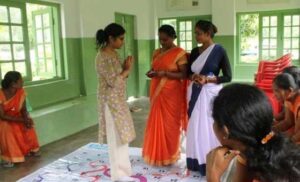
Members of a “Jugnu” club get trained by UN Women to support women who experience gender-based violence. Credit: UN Women

NEW DELHI, India, Jul 4 2024 (IPS) – As the temperature soars to new heights in India, so does domestic violence. It’s a well-established correlation that is largely left out of the climate change discussion, but the gap is glaring and needs to be bridged.


For the third summer in a row, temperatures in India are breaking historical records. The recent record high of 52.9° C (127.22° F), has resulted in loss of livelihood, water rationing, health impacts, and even death. The heat affects some more than others. As people are advised to shelter at home, those in lower economic strata contend with cramped living situations, lack of air conditioning, and power cuts.

Women bear the worst impacts. New Delhi’s Heat Action Plan (HAP) registers their greater vulnerability – noting, for example, that they’re more susceptible to falling sick from the heat compared to men, the heightened risks for pregnant people, and greater expectations of women to be caretakers. But it fails to note the increased threat of violence.¬¬¬¬¬

It is well-documented that temperature extremes lead to an increase in domestic violence cases, with low-income women bearing the brunt. In South Asia, for every degree that the temperature rises, domestic violence increases about 6%.

As India grapples with its large carbon footprint, rising temperatures, and growing population, intimate partner violence can be expected to increase drastically. P¬¬ar¬¬¬ticularly if greenhouse gas emissions aren’t regulated effectively, India could see a spike in domestic violence of more than 20% by the end of the century.

Extreme temperatures are associated with frustration, aggression, and disruptions in people’s daily routines. Researchers theorize this is the reason why heat has a such a strong influence on rates of intimate partner violence.

For low-income daily wage laborers in India, heat may result in loss of livelihood and income. Economic stress and resultant anxiety can significantly increase domestic violence risk.

In addition, women are expected to be caretakers for the family, which gives them little chance of escape from abusers and increases their vulnerability under extreme conditions. This phenomenon was prevalent during Covid-19 pandemic, when the “shadow pandemic” of domestic violence affected women across India.

The pandemic also revealed strong patterns of economic abuse of women due to unequal power dynamics within the family.

Despite research demonstrating this, the spike in domestic violence during heat waves remains hush-hush. New Delhi’s Heat Action Plan (HAP) does not mention gender-based violence even once across its 66 pages.

While it acknowledges women as a vulnerable group and deals with increased risk during pregnancy, other risks to women remain shrouded in the vagueness of “social norms” and “gender discrimination.” Failing to address the threat of intimate partner violence explicitly leaves out a key piece of the puzzle.

The omission has manifold impacts. It lets policymakers shy away from confronting the issue, creating a gap in policy at the highest level. It sets up government workers tasked with implementing the plans such as New Delhi’s HAP on the ground for failure.

With no guidance on how to deal with the predictable increase in domestic violence during extreme heat, government can offer little support for women who need it. Mahila Panchayats (“women’s councils”) and grassroots non-profits often help rural and low-income women find support and community, but extreme weather can cut them off from these resources.

Forced to stay indoors and unable to access help, women have little recourse or respite. In theory, India’s laws protect them. But in practice, implementation is spotty, and they remain vulnerable.

India’s climate policy must not leave women out in the cold. New Delhi’s Heat Action Plan and other policy initiatives must protect women and offer them accessible support. First responders and government workers must be given the tools they need to help support those at risk for domestic violence, not only during heat waves but year-round.

Finally, India’s problem with domestic violence might be exacerbated during the summers but is not unique to them. India needs a suite of policies and concrete actions to contend with rising intimate partner violence, starting at the grassroots level and prioritizing education, employment, economic stability, and family planning for all.

Heat waves and the stressors they bring might be unforeseeable in a sense, but rising temperatures and rising domestic violence are completely predictable effects of climate change. There’s no excuse for failing to redress them.

By leaving women vulnerable year after year, we are doing a disservice, both to women who need help and to the institutions that they place their trust in.

Umang Dhingra is a Duke University undergraduate and a Stanback Fellow at the Population Institute, a Washington D.C.-based nonprofit that supports reproductive health and rights.

IPS UN Bureau

  Source

UN Climate Talks: Setting Sail to Plunder the Ocean

Civil Society, Climate Action, Climate Change, Environment, Featured, Global, Headlines, Human Rights, Humanitarian Emergencies, Sustainable Development Goals, TerraViva United Nations

Opinion

The 60th session of the Subsidiary Bodies of the United Nations Framework Convention on Climate Change (SB 60, UNFCCC), took place in Bonn June 3-13, with the issue of climate finance high on the agenda. Credit: UN Climate Change Lucia Vasquez Tumi

BONN, Germany, Jun 28 2024 (IPS) – Despite the evident and increasing urgency of the climate crisis, the June intersessional meeting of the UNFCCC closed with little to show for two full weeks of negotiation.


With COP29 being cited as ‘the Finance COP’, much of the focus across various agenda items was on ever contested questions of who owes what to whom. Crucially, the meeting was supposed to advance negotiations on a New Collective Quantified Goal (NCQG) on climate finance for the post 2025 period, due to be agreed in Baku.

However, despite ‘quantified’ being in the very name of the goal, developed countries refused to be drawn on the critical matter of how much is owed and needed.

The 2020 goal of $100bn per year (stretched to 2025) remains unfilled, with the vast majority of what the Global North claims to have contributed in the form of loans, or money redirected from other overseas budgets.

Likewise, despite the long fought battle which secured a new loss and damage finance mechanism at COP27, that pot too remains as good as empty, with current pledges equating to less than 0.2% of the climate change related losses faced by Global South countries each year.

Climate finance is key. Intimately related to the core UNFCCC principles of equity and Common but Differentiated Responsibility (CBDR), it is central to unlocking the stalemate that has plagued negotiations since they began.

But instead of concrete finance commitments and delivery, carbon markets are increasingly being spun as climate finance, with some increasingly desperate nations on the frontlines of the climate crisis grasping wishfully at the idea that a 5% share of proceeds from markets under the Paris Agreement will plug the longstanding gap on adaptation funding, and others preparing to sell off their rich ecosystems as some form or other of carbon credits.

As the practical limitations, to say nothing of the social and environmental harms, of novel land based Carbon Dioxide Removal (CDR) schemes are increasingly exposed at a scale to impact the climate, Bioenergy Carbon Capture and Storage (BECCS), one of the most widely touted CDR technologies, would require twice the entire global land area currently under cultivation, oceans are being sized up as the next frontier for such exploitation.

Oceans cover over 70% of the Earth’s surface, and are already our greatest ally in the fight against climate change. Alarmingly, however, highly speculative and risky theories about engineering them at will to sequester and store ever more carbon are increasingly being incorporated into the climate policy landscape.

We see this in the opaque language that invites parties to scale up ‘ocean-based mitigation action’ that found its way into the Global Stocktake decision text last year in Dubai, and more clearly in the explicit inclusion of dangerous ocean CDR methods in the ongoing wrangling over Article 6 guidelines, which in various iterations identify ocean fertilisation, ocean alkalinity enhancement and algae cultivation / biomass sinking for potential inclusion.

And concerningly, we also saw it in this year’s Ocean and Climate Change Dialogue held in Bonn. Pitched as a “[recognition of] the need to strengthen the understanding of, and action on, ocean and climate change”, the Dialogue, now in its 4th year, saw a push for research and development of marine CDR under its theme on ‘Technology Needs for Ocean Climate Action, including Finance Links’.

The problem for those who would financialise and plunder the oceans under the guise of climate mitigation is that there are of course other UN Conventions of equal importance to the UNFCCC that have for good reason imposed restrictive regulations on these activities.

The Convention on Biological Diversity has had a de facto moratorium in place on all geoengineering since 2010, while the London Convention / London Protocol, which regulates pollution at sea, has made clear its intention to add potentially a further four categories of marine geoengineering to its 2008 prohibition on ocean fertilisation.

Crucially, a commercial factor is a key element under both regimes in restricting outdoor experiments – which of course is inherent in any ocean-based CDR envisaged under carbon markets, voluntary or otherwise.

The fact is, however, that none of the marine geoengineering approaches increasingly referred to as CDR do anything to tackle the root causes of climate change, and none have been able to demonstrate that they can effectively capture or store carbon with any permanence.

They are an extremely dangerous distraction from the real action we know is needed to rapidly bring down greenhouse gasses, starting with an urgent and just phase out of fossil fuels. Furthermore they are likely to cause great harm to the delicate equilibrium of the oceans – already severely stressed by over-exploitation, pollution and global heating – with potentially grave consequences for ocean biodiversity, food chains, fisheries, and even the oceans’ natural capacity to sequester carbon.

At least 40 open-water marine geoengineering experiments are currently underway or in planning, across a variety of theories and technologies, many of which have a clear commercial element and are likely in violation of international agreements. Some of these are already running into very practical challenges, such as the postponement of Planetary Technologies’ planned ocean alkalinity enhancement trial in Cornwall, where community resistance led to an independent assessment which exposed serious flaws in the plan, while biomass cultivation and sinking start-up Running Tide announced the closure of its fairly advanced operations only this last week, citing lack of demand for carbon credits from the voluntary market.

Ultimately however, as a broad spectrum of civil society organisations made clear in several interventions at the Ocean and Climate Dialogue, and in a statement endorsed by over 100 organisations as of last month, Paris Agreement carbon markets, which are so very clearly legitimising these highly speculative and risky approaches, cannot ignore international agreements restricting them and must uphold the precautionary principle.

As we head to COP29 in Baku and as IPCC kicks off its work on the 7th Assessment Cycle later this year, the voices of civil society across the globe, Indigenous Peoples, coastal communities and fisherfolk must be heard as they reiterate the risk of undermining the vital role oceans play in sustaining life on earth. It is unquestionably clear that our oceans cannot be for sale.

Mary Church is Geoengineering Campaign Manager, Center for International Environmental Law (CIEL) and member of Hands-Off Mother Earth! (HOME) Alliance.

IPS UN Bureau

  Source

Violent Deaths by “Small Arms & Light Weapons”: UN Chief’s Warning Dead on Target

Armed Conflicts, Civil Society, Democracy, Featured, Global, Global Governance, Headlines, Human Rights, IPS UN: Inside the Glasshouse, TerraViva United Nations

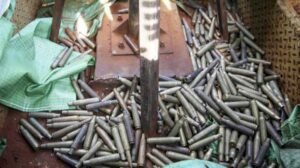
Empty large calibre bullet casings on the floor of a heavy machine gun position of the African Union Mission in Somalia (AMISOM) at Kismayo International Airport in southern Somalia. Credit: UN Photo/Ramadaan Mohamed

UNITED NATIONS, Jun 24 2024 (IPS) – Perhaps two of the biggest misnomers in military jargon are “small arms” and “light weapons” which are the primary weapons of death and destruction in ongoing civil wars and military conflicts, mostly in Asia, the Middle East and Africa.

In a statement last week, at the opening session of the Fourth Review Conference of the Programme of Action on Small Arms and Light Weapons (SALW), UN Secretary-General Antonio Guterres was dead on target when he said there is nothing “small” or “ight” about the damage these weapons cause.


“Small arms and light weapons play a major role in these conflicts. Small arms are the leading cause of violent deaths globally, and are the weapon of choice in nearly half of all global homicides,” Guterres said.

The UN Programme of Action (UNPoA) on small arms and light weapons has an ambitious goal – to “prevent, combat, and eradicate the illicit trade in small arms and light weapons in all its aspects.” But it’s a tough assignment in a political world dominated by the gun lobby and the military-industrial complex.

During the weeklong meeting, scheduled to conclude June 28, diplomats from around the world will review its implementation — against the backdrop of a political agreement that originated back in 2001. Members of civil society are also on hand to present their analyses and lobby and inform governments.

Speaking on behalf of Guterres, UN Under-Secretary-General and High Representative for Disarmament Affairs Izumi Nakamitsu told delegates global military expenditures are on the rise.

And countries, regions and communities across the globe are suffering. New and protracted conflicts are placing millions of people in the line of fire.

“They aggravate crime, displacement and terrorism. From conflict zones to homes, they are used to threaten and perpetrate sexual and gender-based violence”.

According to the UN, “light weapons,” are primarily, weapons designed for use by two or three persons serving as a crew, although some may be carried and used by a single person.

They include, heavy machine guns, handheld under-barrel and mounted grenade launchers, portable anti-aircraft guns, portable anti-tank guns, recoilless rifles, portable launchers of antitank missile and rocket systems, portable launchers of anti-aircraft missile systems, and mortars of a calibre of less than 100 millimetres.

The current civil wars, where the choice of weapons is largely small arms and light weapons, are primarily in Afghanistan, Myanmar, the Central African Republic, the Democratic Republic of the Congo, Haiti, Libya, Mali, Somalia, Sudan, South Sudan and Yemen—besides the two ongoing major wars in Ukraine and Gaza.

But in these two devastating conflicts, the Russians and Israelis are using more sophisticated weapons, including fighter aircraft, combat helicopters, drones, air-to-surface missiles, armoured personnel carriers and battle tanks, among others.

Dr. Natalie J. Goldring, who represents the Acronym Institute for Disarmament Diplomacy in her work at the United Nations on conventional weapons and arms trade issues, told IPS there are many obstacles to the full implementation of the UNPoA, both during the Review Conference and beyond. Two sets of these obstacles seem particularly noticeable at this year’s Review Conference.

The first set of obstacles is external.

In the end, the UNPoA is a political document, designed to be implemented primarily at the national level. States must have the political will to carry out the commitments in the UNPoA and the outcome documents of the various biennial meetings of states and review conferences, she said.

Smaller, less well-resourced States may also need financial assistance to be able to implement some portions of the UNPoA.

As a result, some smaller States are unwilling to accept programs and policies they fear will cost them money to implement, even with the potential availability of international assistance, Dr Goldring pointed out.

“The political challenge is complicated by the major roles played by the arms industry. Weapons manufacturers have financial incentives to sell as many weapons as they can. And States that supply weapons can be dependent on the power of those manufacturers. Some of these manufacturers are so intent on protecting their profits that they even attend, speak, and lobby at these conferences”.

The second key obstacle, she said, is internal.

“The Programme of Action process generally runs on a practice of “consensus”. In theory, that sounds laudable – why wouldn’t we want the process to be dominated by reaching consensus? But in this process, consensus is effectively defined as unanimity. That means that a single negative voice can block change – or progress”.

Because of the consensus process, she argued, these conferences and meetings often face an uncomfortable choice between two main options. One possibility is a strong outcome document, reached through votes, but lacking consensus. Another possibility is a weaker outcome document, reached through consensus.

“If it seems as though consensus is not going to be possible, then the supporters of the UNPoA could – and arguably should – construct an ambitious outcome document that would better fulfill the promise of the UNPoA and would require votes on some of the most controversial paragraphs. Arguably, the worst outcome would be for the proponents of a robust UNPoA to accept a lot of compromises on the text and still not reach consensus,” declared Dr Goldring

Guterres said small arms and light weapons aggravate crime, displacement and terrorism. From conflict zones to homes, they are used to threaten and perpetrate sexual and gender-based violence.

They block vital humanitarian aid from reaching the most vulnerable. They put the lives of United Nations peacekeeping forces and civilian personnel at risk.

And the situation is growing worse, as new developments in the manufacturing, technology and design of small arms — such as 3D printing — make their illegal production and trafficking easier than ever before, warned Guterres.

Rebecca Peters, Director, International Action Network on Small Arms (IANSA), said in an oped piece in the UN Chronicle, that a thousand people die each day from gunshot wounds, and three times as many are left with severe injuries. If the death, injury and disability resulting from small arms were categorized as a disease, it would qualify as an epidemic.

Yet the media and popular perception tend to suggest that gun violence is simply an unavoidable consequence of human cruelty or deprivation, rather than a public health problem which can be prevented or at least reduced, she said.

“The circumstances of gun violence vary so enormously, it would be simplistic to suggest a single solution. A comprehensive approach, reflecting the multi-faceted nature of the problem, is needed to bring down the grim toll of global death and injury.”

Nonetheless, the high school massacres in the US, the armed gangs in Brazil or the systematic sexual violence in the Democratic Republic of the Congo all share a common denominator: the availability of guns (or small arms, as they are known in UN circles).

She said practical steps toward reducing the availability and misuse of small arms can be classified under four headings:

    1. Reducing the existing stockpile
    2. Reducing the supply of new weapons
    3. Closing the gates between the legal and illegal markets
    4. Reducing the motivation for acquiring guns (demand)

Elaborating further, Dr Goldring said the issue of whether or how to include ammunition in the UNPoA is a key example of the difficulty of reaching consensus. This has been the case since the initial negotiation of the UNPoA, when the United States and a few others States showed their willingness to block consensus over this issue. That fight continues at this meeting.

The President of the Review Conference, she said, is a remarkably able diplomat from Costa Rica, Permanent Representative Maritza Chan Valverde. If anyone can thread the needle on having a strong outcome document and reaching consensus at the same time, it’s likely to be Ambassador Chan. But it’s a herculean task.

“I greatly admire her skill and dedication, but I think that the chasm between the supporters of the UNPoA and the obstructionists may simply be too large.”

In discussing the outcome document of the September 2024 Summit of the Future, Ambassador Chan said, “The Pact for the Future cannot remain anchored in the language of the past. Consensus must be forged, not found. Ambition must prevail in the text, and the progress of the many cannot be hindered by the reservations of the few.”

That quote, Dr Goldring said, seems to suggest that she would be willing to have votes in order to avoid having the document be undermined by the obstructionists. But only time will tell.

In the early- to the mid-90s, the international trade in small arms and light weapons was a specialist topic within an extremely small community internationally, and was not on the international policy agenda in a significant way.

Because of the work of analysts and advocates to bring attention to this issue, subsequently accompanied by the work of dedicated diplomats at the UN and elsewhere, it is now an established part of international work to reduce the human costs of armed violence.

“Unfortunately, quantitative measures of the UNPoA’s effectiveness are difficult – if not impossible — to develop. Instead, we often measure outputs and activities, rather than outcomes. We simply don’t know the counterfactual – what the situation would have been without the UNPoA,” she declared.

Thalif Deen is a former Director, Foreign Military Markets at Defense Marketing Services; Senior Defense Analyst at Forecast International; and Military Editor Middle East/Africa at Jane’s Information Group.

IPS UN Bureau Report

  Source

When U.S. Officials Show You Who They Are, Believe Them

Armed Conflicts, Civil Society, Democracy, Global, Global Governance, Headlines, Human Rights, IPS UN: Inside the Glasshouse, TerraViva United Nations

Opinion

© UNICEF/Tess Ingram
Parts of the city of Khan Younis are now almost unrecognizable after more than eight months of intense bombardment, UN officers report. Credit: UNICEF/Tess Ingram

SAN FRANCISCO, Jun 21 2024 (IPS) – “When someone shows you who they are,” Maya Angelou said, “believe them the first time.” That should apply to foreign-policy elites who show you who they are, time after time.


Officials running the Pentagon and State Department have been in overdrive for more than 250 days in support of Israel’s ongoing slaughter of Palestinian civilians in Gaza. Supposedly dedicated to defense and diplomacy, those officials have worked to implement and disguise Washington’s war policies, which have taken more lives than any other government in this century.

Among the weapons of war, cluster munitions are especially horrific. That’s why 67 Democrats and an equal number of Republicans in the House of Representatives voted last week to prevent the U.S. government from continuing to send those weapons to armies overseas.

But more than twice as many House members voted the other way. They defeated a Pentagon funding amendment that would have prohibited the transfer of cluster munitions to other countries. The lawmakers ensured that the U.S. can keep supplying those weapons to the military forces of Ukraine and Israel.

As of now, 124 nations have signed onto a treaty banning cluster munitions, which often wreck the bodies of civilians. The “bomblets” from cluster munitions “are particularly attractive to children because they resemble a bell with a loop of ribbon at the end,” the Just Security organization explains.

But no member of Congress need worry that one of their own children might pick up such a bomblet someday, perhaps mistaking it for a toy, only to be instantly killed or maimed with shrapnel.

The Biden administration correctly responded to indications (later proven accurate) that Russia was using cluster munitions in Ukraine. On Feb. 28, 2022, White House spokeswoman Jen Psaki told journalists that if the reports of Russian use of those weapons turned out to be true, “it would potentially be a war crime.”

Back then, the front page of the New York Times described “internationally banned cluster munitions” as “a variety of weapons — rockets, bombs, missiles and artillery projectiles — that disperse lethal bomblets in midair over a wide area, hitting military targets and civilians alike.”

Days later, the Times reported that NATO officials “accused Russia of using cluster bombs in its invasion,” and the newspaper added that “anti-personnel cluster bombs . . . kill so indiscriminately they are banned under international law.”

But when the Ukrainian military forces ran low on ammunition last year, the U.S. administration decided to start shipping cluster munitions to them.

“All countries should condemn the use of these weapons under any circumstances,” Human Rights Watch has declared.

BBC correspondent John Simpson summed up a quarter-century ago: “Used against human beings, cluster bombs are some of the most savage weapons of modern warfare.”

As the Congressional Research Service (CRS) reported this spring, cluster munitions “disperse large numbers of submunitions imprecisely over an extended area.” They “frequently fail to detonate and are difficult to detect,” and “can remain explosive hazards for decades.”

The CRS report added: “Civilian casualties are primarily caused by munitions being fired into areas where soldiers and civilians are intermixed, inaccurate cluster munitions landing in populated areas, or civilians traversing areas where cluster munitions have been employed but failed to explode.”

The horrible immediate effects are just the beginning. “It’s been over five decades since the U.S. dropped cluster bombs on Laos, the most bombed country in the world per capita,” Human Rights Watch points out.

“The contamination from cluster munitions remnants and other unexploded ordnance is so vast that fewer than 10 percent of affected areas have been cleared. An estimated 80 million submunitions still pose a danger, especially to curious children.”

The members of Congress who just greenlighted more cluster munitions are dodging grisly realities. The basic approach is to proceed as though such human realities don’t matter if an ally is using those weapons (or if the United States uses them, as happened in Southeast Asia, Yugoslavia, Afghanistan, Iraq and Yemen).

Overall, with carnage persisting in Gaza, it’s easy enough to say that Israel’s prime minister Benjamin Netanyahu has shown us who he is. But so has Presidente Biden, and so have the most powerful Republicans and Democrats in Congress.

While the U.S. has been supplying a large majority of the weapons and ammunition imported by Israel, a similar approach from official Washington (with ineffectual grumbling) has enabled Israel to lethally constrict food going into Gaza.

During his State of the Union address in early March, Biden announced plans for the U.S. to build a port on the Gaza coast to bring in food and other vital aid. But his speech didn’t mention the Pentagon’s expectation that such a seaport could take 60 days to become operational.

At the time, a Common Dreams headline summed up the hollowness of the gambit: “Biden Aid Port Plan Rebuked as ‘Pathetic’ PR Effort as Israel Starves Gazans.” Even at full tilt, the envisioned port would not come anywhere near compensating for Israel’s methodical blockage of aid trucks — by far the best way to get food to 2.2 million people facing starvation.

“We are talking about a population that is starving now,” said Ziad Issa, the head of humanitarian policy for ActionAid. “We have already seen children dying of hunger.”

An official at Save the Children offered a reality check: “Children in Gaza cannot wait to eat. They are already dying from malnutrition, and saving their lives is a matter of hours or days — not weeks.”

The Nation described “the tragic absurdity of Biden’s Gaza policies: the U.S. government is making elaborate plans to ameliorate a humanitarian catastrophe that would not exist without its own bombs.”

And this week — more than three months after the ballyhooed drumroll about plans for a port on the Gaza coast — news broke that the whole thing is a colossal failure even on its own terms.

“The $230 million temporary pier that the U.S. military built on short notice to rush humanitarian aid to Gaza has largely failed in its mission, aid organizations say, and will probably end operations weeks earlier than originally expected,” the New York Times reported on June 18. “In the month since it was attached to the shoreline, the pier has been in service only about 10 days. The rest of the time, it was being repaired after rough seas broke it apart, detached to avoid further damage or paused because of security concerns.”

As Israel’s crucial military patron, the U.S. government could insist on an end to the continual massacre of civilians in Gaza and demand a complete halt to interference with aid deliveries. Instead, Israel continues to inflict “unconscionable death and suffering” while mass starvation is closing in.

Maya Angelou’s advice certainly applies. When the president and a big congressional majority show that they are willing accomplices to mass murder, believe them.

It’s fitting that Angelou, a renowned poet and writer, gave her voice to words from Rachel Corrie, who was crushed to death one day in 2003 while standing in front of an Israeli army bulldozer as it moved to demolish a Palestinian family’s home in Gaza.

A few years after Corrie died, Angelou recorded a video while reading from an email that the young activist sent: “We are all born and someday we’ll all die. Most likely to some degree alone. What if our aloneness isn’t a tragedy? What if our aloneness is what allows us to speak the truth without being afraid? What if our aloneness is what allows us to adventure — to experience the world as a dynamic presence — as a changeable, interactive thing?”

Norman Solomon is the national director of RootsAction.org and executive director of the Institute for Public Accuracy. He is the author of many books including War Made Easy. His latest book, ‘War Made Invisible: How America Hides the Human Toll of Its Military Machine‘, was published in 2023 by The New Press.

IPS UN Bureau

  Source

New Caledonia: Time to Talk about Decolonisation

Asia-Pacific, Civil Society, Crime & Justice, Economy & Trade, Featured, Global, Headlines, Human Rights, Indigenous Rights, Inequality, Natural Resources, TerraViva United Nations

Opinion

Credit: Alain Pitton/NurPhoto via Getty Images

LONDON, Jun 20 2024 (IPS) – The violence that rocked New Caledonia last month has subsided. French President Emmanuel Macron has recently announced the suspension of changes to voting rights in the Pacific island nation, annexed by his country in 1853. His attempt to introduce these changes sparked weeks of violence.


Colonial legacies

Scattered around the world are 13 territories once part of the French Empire that haven’t achieved independence. Their status varies. Some, such as Guadeloupe and Martinique, have the same legal standing as French mainland regions. Others have more autonomy. New Caledonia is in a category of its own: since the 1998 Nouméa Accord, named after New Caledonia’s capital, France agreed to a gradual transfer of power. Currently, France determines New Caledonia’s defence, economic, electoral, foreign and migration policies.

The Accord came in response to a rising independence movement led by Kanak people, the country’s Indigenous inhabitants. Kanaks make up around 40 per cent of the population, with the rest being people of European descent and smaller groups of Asian, Oceanian and mixed heritage. Kanaks experienced severe discrimination under French colonial rule, and for a period were confined to reservations.

An independence movement formed after a fresh wave of Europeans arrived in the 1970s to work in the nickel-mining industry. New Caledonia is the world’s fourth-largest producer of nickel, a key ingredient in stainless steel and, increasingly, electric vehicle batteries. The nickel boom highlighted the divide in economic opportunities. Unrest lead to worsening violence and, eventually, the Nouméa Accord.

A downturn in the industry has deepened economic strife, exacerbating the poverty, inequality and unemployment many Kanaks experience. Today, around a third of Kanaks live in poverty compared to nine per cent of non-Kanaks.

Multiple referendums

The Accord created different electoral rolls for voting in mainland France and in New Caledonian elections and referendums, where the roll is frozen and only people who lived in the country in 1998 and their children can vote. These limitations were intended to give Kanak people a greater say in three independence referendums provided for in the Accord.

Referendums took place in 2018, 2020 and 2021, and the pro-independence camp lost every time. The 2020 vote was close, with around 47 per cent in favour of independence. But the December 2021 referendum was held amid a boycott by pro-independence parties, which called for a postponement due to the COVID-19 pandemic: an outbreak that began in September 2021 left 280 people dead, most of them Kanak. Independence campaigners complained the vote impinged on traditional Kanak mourning rituals, making it impossible to campaign.

Almost 97 per cent of those who voted rejected independence, but the boycott meant only around 44 per cent of eligible people voted, compared to past turnouts of over 80 per cent.

France viewed this referendum as marking the completion of the Nouméa Accord. Macron made clear he considered the issue settled and appointed anti-independence people to key positions. The independence movement insisted that the vote, imposed by France against its wishes, wasn’t valid and another should be held.

Since the Accord was agreed, the far right has risen to prominence in France, as seen in the recent European Parliament elections. French politics and its politicians have become more racist, with mainstream parties, including Macron’s, tacking rightwards in response to the growing popularity of the far-right National Rally party. The ripple effect in New Caledonia is growing polarisation. As French politicians have promoted a narrow understanding of national identity, New Caledonia’s anti-independence movement has become more emboldened.

China’s push for closer ties with Pacific countries has also raised Oceania’s strategic importance. The US government and its allies, including France, have responded by paying renewed attention to a long-neglected region. France may be less willing to tolerate independence than before, particularly given the growing demand for electric vehicles.

State of emergency

The immediate cause of the protests was the French government’s plan to extend the franchise to anyone who has lived in New Caledonia for more than 10 years. For the independence movement, this was a unilateral departure from the Nouméa Accord’s principles and a setback for prospects for decolonisation and self-determination. Tens of thousands took part in protests against the change, approved by the French National Assembly but pending final confirmation.

On 13 May, clashes between pro-independence protesters and security forces led to riots. Rioters burned down hundreds of buildings in Nouméa. Communities set up barricades and people formed defence groups. Eight people are reported to have died.

France declared a state of emergency and brought in around 3,000 troops to suppress the violence, a move many in civil society criticised as heavy-handed. French authorities also banned TikTok. It was the first time a European Union country has made such a move, potentially setting a dangerous precedent.

Dialogue needed

Macron, who paid a brief visit once violence had subsided, has said the electoral changes will be suspended to allow for dialogue. His decision to gamble on early elections in France in the wake of his European election defeat has bought him some time.

This time should be used to build bridges and address the evident fact that many Kanak people don’t feel listened to. This goes beyond the question of the franchise. There are deep and unaddressed problems of economic and social exclusion. Many of those involved in violence were young, unemployed Kanaks who feel life has little to offer.

As a consequence of recent developments, New Caledonia is now more divided than it’s been in decades. The question of independence hasn’t been settled. Many Kanak people feel betrayed. For them, before there can be any extension of the franchise, France must agree to complete the unfinished process of decolonisation.

Andrew Firmin is CIVICUS Editor-in-Chief, co-director and writer for CIVICUS Lens and co-author of the State of Civil Society Report.

  Source