Explainer: Inside COP30’s 11th Hour Negotiations for Legacy-Building Belém Climate Deal

Climate Action, Climate Change, Climate Change Finance, Climate Change Justice, Conferences, COP30, Editors’ Choice, Environment, Featured, Global, Headlines, Human Rights, Humanitarian Emergencies, Latin America & the Caribbean, Sustainable Development Goals, TerraViva United Nations

COP30


The COP30 Presidency is urging all “negotiators to join in a true mutirão—a collective mobilization of minds, hearts, and hands,” saying this approach helps “accelerate the pace, bridge divides, and focus not on what separates us, but on what unites us in purpose and humanity.”

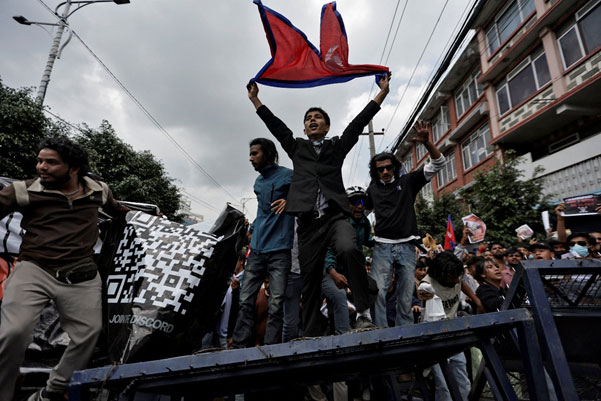
Negotiations take place throughout the day and now late into the night. Credit: UN Climate Change/Kiara Worth

Negotiations take place throughout the day and now late into the night. Credit: UN Climate Change/Kiara Worth

BELÉM, Brazil, Nov 19 2025 (IPS) – At a Conference of the Parties, where science intersects with politics, reaching agreements is often a tricky business. What is inside the last-minute negotiations as the COP presidency tries to get the parties to agreement at the final plenary?


COP negotiators are diplomats and government officials who meet at the Conference of the Parties to negotiate and agree on how to address climate change. They are also often joined by COP delegates’ representatives from civil society, social movements and businesses.

As representatives of their respective countries that are parties to the UNFCCC treaty, they discuss, debate, and haggle over their preferred wording of texts and legally binding agreements regarding how to address climate change during closed-door sessions.

Windowless Closed-Door Meetings

These closed-door meetings are often also windowless, and negotiators often lose track of time as they work through extensive documentation and diverse national positions to form a final agreement towards the end of the COP summit schedule.

COP 30, Belém, is posting a daily photographic glimpse into the collective effort to build trust, dialogue, and cooperation to accelerate meaningful climate action and deliver its benefits to all. Many hope this message will permeate inside these rooms.

The UN climate summit has now entered its final stages. The Brazilian COP30 Presidency has extended working hours, scheduling late-night meetings for the last two nights—Monday and Tuesday, Nov 17 and 18, 2025.

Tonight might not be any different, as the COP30 Presidency pushes for a rapid compromise and conclusion of a significant part of negotiations to pave the way for a “plenary to gavel the Belém political package.”

After all, the COP is where the science of the Paris Agreement intersects with politics.

The Elusive True Mutirão 

The COP30 Presidency is urging all “negotiators to join in a true mutirão—a collective mobilization of minds, hearts, and hands,” saying this approach helps “accelerate the pace, bridge divides, and focus not on what separates us, but on what unites us in purpose and humanity.”

But this is the point in the negotiations, even in a ‘COP of truth,’ as COP30 was staged to be, where the real claws come out amid accusations of protectionism, trade tensions and geopolitical dynamics as the worlds of business, politics and human survival intersect.

Even as UN officials urge parties to accelerate the pace, warning that “tactical delays and procedural obstructions are no longer tenable” and that deferring challenging issues to overtime results in collective loss, reconciling deep differences among nations is proving easier said than done even within the Global Mutirão—a concept championed by the COP30 presidency.

It calls for worldwide collective action on climate change, inspired by the Brazilian and Indigenous Tupi-Guarani tradition of mutirão, which means “collective effort.” The bone of contention at this juncture is what some parties see as weak climate commitments, insufficient financial pledges from the global North to South, and trade measures.

Protectionism

Trade measures are turning contentious and deeply debatable in Belém because of a difference of perspective—developing countries view them as protectionism, while some developed countries see them as necessary to level the playing field for their climate policies.

For developing countries, protectionism is a deliberate strategy by more developed countries to limit imports to protect their industries from foreign competition and therefore give them an undue advantage.  Developing nations say this is unfair because it restricts their ability to export and gain access to larger markets.

The core of the debate at COP30 is the inclusion of issues like the EU’s Carbon Border Adjustment Mechanism (CBAM) in climate talks. For some countries, CBAM is a direct part of climate action and belongs at COP. Others say it is an agenda best discussed at the World Trade Organization.

The EU’s Carbon Border Adjustment Mechanism (CBAM) is a tool to put a price on the carbon emissions of certain imported goods, ensuring that the carbon price for imports is equivalent to that for domestic EU production. Its main goals are to prevent “carbon leakage,” or companies moving production to countries with weaker climate policies, encourage cleaner production globally, and protect EU businesses by creating a level playing field.

How to Go About a Just Transition?

The business of climate change is not the only thing that is complex and divisive. There are also small island states calling for rapid emissions cuts vis-à-vis the positions of major emerging economies. G77 and China are an intergovernmental coalition of 134 developing countries that work together to promote their collective economic and developmental interests within the United Nations framework.

China is not an official member and does not pay dues. It has been a partner since 1976, providing significant financial support and political backing to the G77. Developed countries such as the UK, Norway, Japan, and Australia are pushing back against their proposed global just transition, thereby prolonging the negotiations.

Developed nations are refusing the global just transition proposal by the G77 and China because they see it as a new and unnecessary mechanism and a duplication of existing structures. They refuse to accept the financial and technical support these countries are asking for to facilitate this transition. Simply put, they want a less strict framework that allows their own interpretations of existing institutions and funding structures for the just transition.

Where is the Adaptation Financing?

Finance for adaptation is similarly a sticking point. Developed nations are dragging their feet around committing sufficient funds to support developing nations to adapt to climate impacts and transition their energy systems. It is still not clear whether financial commitments will be embedded inside adaptation goals or remain as they are—separate.

Lobbyists and the Fossil Fuel Debate

Amidst growing tensions, it is also not clear whether this COP will phase out or phase down fossil fuels in the final agreement. The large delegation of fossil fuel lobbyists suggests it is too early to call. On the Global Goal on Adaptation (GGA), those who want indicators for measuring adaptation progress directly linked to financial commitments will not budge. The settlement of this matter could potentially take two years (or more).

Disagreements are ongoing about the mandate of the Mitigation Work Program, which seeks to raise ambitions on national emissions reduction. In general, insiders to the negotiations are saying general negotiation tactics are at play.

Some participants are employing delay tactics to buy time and ultimately weasel out of certain commitments; a lack of trust continues, as it has in previous COPs, along with generally slow progress on building consensus around various contentious issues.

This feature is published with the support of Open Society Foundations.


IPS UN Bureau Report


AI and the Future of Learning

Artificial Intelligence, Civil Society, Global, Global Governance, Headlines, IPS UN: Inside the Glasshouse, TerraViva United Nations
Opinion

Artificial intelligence is reshaping how learners, teachers, and creators engage with education across the continent. A new wave of AI innovation transforming learning across countries on the African continent — from chat-based tutors to hybrid hubs and gamified farms. Credit: UNICEF

 
Through initiatives such as Digital Skills for Africa, Lumo Hubs, and Luma Learn, innovators are breaking barriers of access, cost, and language to build inclusive, localized learning systems.

UNITED NATIONS, Nov 19 2025 (IPS) – “Sometimes the best way to grasp a concept,” says Chris Folayan, co-founder and executive officer of Luma Learn, “is to learn it in your native language.”


Seventeen-year-old South African Simphiwe is one of more than 10,000 learners already using Luma Learn, an AI-powered tutor platform. For him, artificial intelligence isn’t an abstract idea: it is a personal tutor that is patient, consistent, and always online.

When on his phone, he’s not always chatting with a classmate or scrolling through social media. Many times, he’s studying physics with Luma Learn, that replies instantly, even in IsiZulu, his mother tongue.

Across several countries on the African continent, innovators like Folayan, Nthanda Manduwi, and Anie Akpe are reimagining what education can look like: localised, practical, and accessible to anyone with a phone or connection.

Together, they’re building a new learning ecosystem: one where AI isn’t replacing teachers but multiplying their reach.”

Nthanda Manduwi: Turning digital skills into interactive ecosystems

“I’ve always believed that technology can democratize opportunity,” says Nthanda Manduwi, founder of Digital Skills for Africa (DSA) and Q2 Corporation. “AI gives us a real chance to leapfrog the barriers that have slowed Africa’s progress, from infrastructure gaps to unequal access to training.”

Her journey began with Digital Skills for Africa, a platform designed to equip young people with practical tech competencies from AI and automation to no-code tools and digital marketing.

“Our courses like ‘Effective Use of AI’ or ‘AI and the Future of Digital Marketing’ were created to help learners not only understand AI but actually apply it,” she explains. “You leave with real, marketable skills you can use to build something or get hired.”

But scaling that vision revealed a challenge many edtech startups face. “We realised enthusiasm alone doesn’t pay the bills,” she says. “There was low willingness to pay for courses, even from institutions. So, we had to rethink how to make digital learning sustainable.”

That rethink led to Q2 Corporation, her new venture linking learning with livelihood. Under Q2’s umbrella sits Kwathu Farms—an innovative gamified agricultural simulator where users learn how to manage farms, predict supply chain issues, and test business models before investing real money.

“AI makes the learning immersive,” Ms. Manduwi explains. “Through simulations, learners can see how weather or market shocks affect yield, and how small decisions impact entire value chains. It turns agriculture into a classroom. And a business lab.”

Behind these simulations run Q2’s proprietary engines, NoxTrax and AgroTrax, which apply AI to real-time logistics and resource management. “It’s about showing that AI isn’t just for coders,” she says. “It’s for farmers, small businesses, anyone who wants to think and plan more intelligently.”

Ms. Manduwi’s mission remains rooted in access. “For Africa to truly benefit from AI, it can’t be an elite tool. It must live where people already are: on their phones, in their communities, in local languages.”

Anie Akpe: Creating spaces where AI meets human creativity

Where Ms. Manduwi builds ecosystems, Anie Akpe builds spaces. Through her work with African Women in Technology (AWIT)and Lumo Hubs, Ms. Akpe has spent over a decade helping innovators, especially women, turn curiosity into competence.

“With AWIT, I started by organising conferences across the continent,” she recalls. “We created safe spaces where women could connect with mentors and learn skills that weren’t taught in schools: digital literacy, entrepreneurship, coding, design.”

Soon, even male students began asking to participate. “That’s when I realized it wasn’t just about women in technology. It was about us (Africans) finding a place in a digital world that was changing fast.”

The next step came naturally. “When AI began to disrupt industries, I saw that we couldn’t just talk about skills. We had to create environments where people could use those skills,” she says. “That’s how Lumo Hubs was born.”

Each hub combines education, creativity, and entrepreneurship. “In one space, you might find a student learning AI-assisted graphic design, a seamstress using AI to plan production, and a young podcaster recording a show in a studio powered by the hub,” Ms. Akpe explains. “The model is hybrid, physical and digital, so even small towns can host a Lumo Hub.”

She is also deliberate about sustainability. “Community members pay; students pay less. It’s important that we don’t depend only on grants,” she says. “That balance keeps the hubs alive and the learning continuous.”

At the heart of Lumo Hubs lies mentorship. “You can’t separate technology from human guidance,” Akpe insists. “AI helps scale learning, but mentorship builds confidence.” Her approach remains rooted in empowerment. “AI can level the playing field if used right. A young person in Lagos or Uyo doesn’t have to wait for opportunity. They can create it.”

Chris Folayan: A tutor that never sleeps

For Chris Folayan, the idea behind Luma Learn came from a simple observation: “The continent doesn’t just have an access problem. It has a teaching gap too.”

According to UNESCO, Sub-Saharan Africa will need 15 million new teachers in the next five years to meet demand. “With classrooms that sometimes have over 100 students per teacher, no one can give every child the help they need,” Mr. Folayan says. “That’s where Luma Learn steps in.”

Luma Learn is an AI tutor that runs on WhatsApp, not a separate app.

“We chose WhatsApp for a reason,” he explains. “It’s already on most phones, it’s free to message, works on low bandwidth, and keeps data safe through encryption. That means a child in a rural area can learn without worrying about internet costs or app installations.”

The platform adapts to the learner’s grade level, curriculum, and preferred language. “Whether you need algebra in English or history in Swahili, Luma Learn can teach, quiz, and explain at your level,” he says. “It learns how you learn.”

Mr. Folayan shares two powerful testimonies. In Durban, a mother named Happyness wrote that her son, after years of illness, seizures, and missed schooling, caught up with the rest of the class with help from Luma Learn.

“Every time Vuyo wants to know something about school, we just ask Luma! What’s great is that Luma explains in our native language, IsiZulu.”

In another case, Simphiwe, a Grade 11 student from KwaZulu-Natal, sent over 1,200 messages to Luma. “Luma Learn wasn’t just another study resource,” he said. “It became the personal teaching assistant I desperately needed.”

Shared goals: One vision, many pathways

Three innovators. Three different models. One shared purpose: to make AI work for Africa’s learners, not the other way around. Across their stories, several threads stand out.

First, access—from WhatsApp tutors to open learning hubs to gamified ecosystems that teach real-world problem-solving.

Second, localisation—learning in local languages, within familiar tools, and around community realities.

Third, empowerment—every model links knowledge directly to opportunity.

From Ms. Manduwi’s gamified farms to Ms. Akpe’s creative hubs, to Mr. Folayan’s WhatsApp tutor, future classrooms are already here — decentralised, digital, and deeply human.

As Ms. Manduwi puts it, “We must stop treating AI as something imported. It’s a tool we can mold to fit our own systems.”

Ms. Akpe echoes that sentiment: “Africa doesn’t lack talent. It lacks platforms that meet learners where they are.”

And Mr. Folayan completes the picture: “No teacher wants their student left behind. With AI, we can make sure no one is.”

At the end of the day, a student in Durban learns physics through Luma. A young designer in Uyo experiments with AI tools at a Lumo Hub. A farmer in Lilongwe tests market scenarios on Kwathu Farms. Each represents a different face of the same revolution — a continent using intelligence, both human and artificial, to learn without limits.

As Ms. Akpe says: “The vision is simple: a generation that doesn’t just survive AI disruption but thrives because of it.” And as Ms. Manduwi concludes: “AI is not a threat to Africa. It’s our greatest chance to catch up. And lead.”

Anie Akpe and Chris Folayan were participants at the Global Africa Business Initiative (GABI): Unstoppable Africa2025, held in New York City on the margins of the UN General Assembly in September. The platform helps foster networking, exposure to potential business partners, and garner support for their initiatives.

Source: Africa Renewal, United Nations

IPS UN Bureau

  Source

‘No Land Rights, No Climate Justice,’ Say Activists at Peoples’ Summit

Active Citizens, Civil Society, Climate Action, Climate Change, Conferences, COP30, Editors’ Choice, Environment, Featured, Global, Headlines, Indigenous Rights, Latin America & the Caribbean, TerraViva United Nations

Civil Society

Brazilian Indigenous leader and environmentalist Cacique Raoni Metuktire (center) during the closing ceremony of the Peoples’ Summit in Belem on November 16, 2025. Credit: Tanka Dhakal/IPS

Brazilian Indigenous leader and environmentalist Cacique Raoni Metuktire (center) during the closing ceremony of the Peoples’ Summit in Belem on November 16, 2025. Credit: Tanka Dhakal/IPS

BELÉM, Brazil, Nov 17 2025 (IPS) – Brazilian Indigenous leader and environmentalist Cacique Raoni Metuktire appealed for support for Indigenous peoples and their land. From the podium of the Peoples’ Summit, Cacique Raoni warned negotiators at the UN climate conference in Belém that without recognizing Indigenous peoples’ land rights, there will be no climate justice.


“It is getting warmer and warmer. And a big change is going on with the earth. Air is harder to breathe; this is only the beginning,” he said on Sunday while addressing representatives of the global climate justice movement at the Peoples’ Summit. “If we don’t act now, there will be very big consequences for everyone.”

 Indigenous people and civil activists from around the world took part in the Peoples’ Summit. Credit: Tanka Dhakal/IPS

Indigenous people and civil activists from around the world took part in the Peoples’ Summit. Credit: Tanka Dhakal/IPS

While Belém city is hosting world leaders, government officials, scientists, policymakers, activists, and more than 1,600 fossil fuel lobbyists to decide the future course of global climate action, the Peoples’ Summit gathered frontline voices.

About nine kilometers from the COP30 venue, at the grounds of the Universidade Federal do Pará (UFPA-Federal University of Pará), activists engaged in diverse dialogue for five days and issued the “Declaration of the Peoples’ Summit Towards COP30” in the presence of Indigenous leaders like Raoni, which was handed over to the COP presidency.

The Declaration states that the capitalist mode of production is the main cause of the growing climate crisis. It claims that today’s environmental problems are “a consequence of the relations of production, circulation, and disposal of goods, under the logic and domination of financial capital and large capitalist corporations.” It demands the participation and leadership of people in constructing climate solutions, recognizing ancestral knowledge.

Artists performing indigenous folklore during the closing event of the Peoples’ summit. Credit: Tanka Dhakal/IPS

Artists performing indigenous folklore during the closing event of the Peoples’ summit. Credit: Tanka Dhakal/IPS

Sebastián Ordoñez Muñoz, associated with War on Want, a UK-based organization and part of the political commission of the Peoples’ Summit, said the political declaration constructed through the summit process reflects peoples’ demands and proposals. “It has our solutions, people’s solutions,” he said. He explained that crafting the declaration was a convergence of diverse voices, uniting around clarity on what needs to happen to address the climate crisis.

“It is an expression of the autonomy of people’s movements coming together, converging to develop clear proposals that are based on the real solutions happening on the ground-in the territories, in the forests, in the seas, in the rivers, and so on,” he added. “It’s important to hand it over because we need to make sure that our voices are represented there [at COP]. Any space that we have inside the COP has always been through struggle.”

As a space for community members to come together and deliver the public’s point of view, Peoples’ Summits have been organized as parallel conferences of the COP. It did not take place during the last three COPs. But in Brazil, civil society is actively making its case.

Peoples’ Summit attracted a large number of Indigenous leaders and community members, whereas at COP their access is limited. Credit: Tanka Dhakal/IPS

The Peoples’ Summit attracted a large number of Indigenous leaders and community members, whereas at COP their access is limited. Credit: Tanka Dhakal/IPS

“We need to continue making our voices heard there, but also not to beg-to state that we have the solutions and that we must be listened to, because none of these answers, none of these solutions are possible without the communities themselves,” Ordoñez Muñoz told IPS News from the Peoples’ Summit ground. “I think it’s a statement and a road map. Where do we go from here?”

Unlike COP30, the Peoples’ Summit attracted diverse groups of community members and civil society leaders. The COP venue follows the process of negotiations, while the summit emphasizes collaboration to find solutions and celebrate unity. It blends discussion with Indigenous folklore and music to bring stories of community.

“If you go into the COP summit, it’s so stale. It’s so sterile. It’s so monotonous. So homogeneous. So corporate,” Ordoñez Muñoz said. “Over here, what we have is the complete opposite. We have such diversity-differences in voice, vocabulary, language, and struggles.”

He added that the COP process is moving in one direction, unjust in nature, and reproducing many of the dynamics that led to the crisis in the first place.

“Over here, we’re all moving together. We have unity.”

This feature is published with the support of Open Society Foundations.

IPS UN Bureau Report


Belém’s Hunger, Poverty Declaration Places World’s Most Vulnerable Populations at Centre of Global Climate Policy

Active Citizens, Africa, Aid, Artificial Intelligence, Asia-Pacific, Civil Society, Climate Action, Climate Change, COP30, Development & Aid, Editors’ Choice, Featured, Food and Agriculture, Food Systems, Global, Headlines, Humanitarian Emergencies, Latin America & the Caribbean, TerraViva United Nations, Trade & Investment

Food Systems


If we do not have our land and healthy territory, we do not have healthy food, and without food we do not survive. Food must become a centerpiece in the global climate discourse, and it is not just about any food, but healthy food that aligns with our ancestry and local traditions and spirituality. —Juliana Kerexu Mirim Mariano, activist

Juliana Kerexu Mirim Mariano, coordinator for the Guarani Yvyrupa Commission that advocates for the rights of Guarani peoples in southern and southeastern Brazil. Credit: Joyce Chimbi/IPS

Juliana Kerexu Mirim Mariano, coordinator for the Guarani Yvyrupa Commission that advocates for the rights of Guarani peoples in southern and southeastern Brazil. Credit: Joyce Chimbi/IPS

BELÉM, Brazil, Nov 14 2025 (IPS) – A young woman at COP30 speaks about retracing her father’s footsteps. At only 16, her father and her grandfather were among the first families displaced by an unfolding climatic crisis of erratic weather and worsening climate conditions that goes on to date from their ancestral village in Sundarbans. Nearly 60 years later, she is on a mission to reclaim her ancestral lands.


The Sundarbans is the world’s largest mangrove forest, located on the delta of the Ganges, Brahmaputra, and Meghna rivers in the Bay of Bengal, straddling the border of India and Bangladesh.

This complex ecosystem is a vital habitat for the Royal Bengal tiger and other wildlife, while also providing critical ecosystem services like storm protection and livelihoods for millions of people. It is a UNESCO World Heritage Site and faces threats from climate change, rising sea levels, and human activities.

She said farming activities in the Sundarbans have been severely disrupted and degraded by environmental changes, primarily increased soil and water salinity, more frequent and intense cyclones, and sea-level rise. These factors have led to a decline in crop productivity, changes in traditional farming patterns, and a shift in livelihoods towards aquaculture and migration.

But the Sundarbans do not stand alone. From across the global South, delegates are speaking about their shared tragedies of weather patterns out of joint with their farming systems.

Juliana Kerexu Mirim Mariano, the coordinator of the Guarani Yvyrupa Commission, told IPS her organization advocates “for the rights of Guarani peoples in southern and southeastern Brazil, particularly the recovery of their ancestral lands in the Atlantic Forest.

The Belém Declaration on Hunger, Poverty, and Human-Centered Climate Action, launched during the COP30 Leaders Summit, places the world’s most vulnerable populations at the center of global climate policy. Credit: Joyce Chimbi/IPS

The Belém Declaration on Hunger, Poverty, and Human-Centered Climate Action, launched during the COP30 Leaders Summit, places the world’s most vulnerable populations at the center of global climate policy. Credit: Joyce Chimbi/IPS

“Its mission is to organize a political struggle for land demarcation, which is vital for preserving cultural traditions and way of life. The commission works to secure land rights, and its efforts align with the preservation of the Atlantic Forest biome, as the Guarani have lived in the region for centuries and their culture is deeply connected to its biodiversity.”

“Within our territories, we do annual plantations for us to continue producing our sacred food, preserving our traditional ceremonies, which are linked to us and to spirituality. Our spirituality is directly connected to our food, to our plantations, to our land,” she explained.

“But all these are now under threat. We have seen this abrupt change and emergencies caused by climatic changes. So, for example, in our village, we have not been able to harvest food for more than three years.

“We have only managed to keep our sacred seeds because either it rains too much or it rains too little—at the time of the annual plantations, we have only managed to maintain the part of the traditional ceremonies that is spiritual.”

Njagga Touray, Party representative from the Gambia in West Africa, told IPS that “the food situation in the country, just like many others, is not very promising. Climate change leads to land degradation due to increasingly erratic rainfall, which decreases our production; we need to feed a growing population and plan for the next generation.”

The COP30 agenda is alive in this dire situation. The Belém Declaration on Hunger, Poverty, and Human-Centered Climate Action, announced and endorsed by 44 countries last week, launched a new Climate-Resilient Social Protection and Smallholder Agriculture Finance Partnership.

Delegates say this progress has instilled a renewed sense of optimism—proving that elevating adaptation and unleashing technology within the world’s farming systems helps the global community to redefine resilience, transforming vulnerability into strength and ambition into action.

Recognizing the fundamental role of combating hunger and poverty for climate justice, a new Climate-Resilient Social Protection and Smallholder Agriculture Finance Partnership has already been launched under the COP30 Action Agenda.

This partnership supports the Plan to Accelerate Solutions (PAS) by setting clear goals to encourage action and monitor progress, which includes helping countries like Benin, Ethiopia, Kenya, Zambia, and the Dominican Republic create plans for social protection, support small farms, and improve access to water.

The PAS brings countries together with international partners and subnational networks to align national ambition with local action, integrate local priorities into NDCs, and institutionalize multilevel governance as a foundation for achieving the Paris Agreement’s goals.

By 2028, the plan is expected to have established a joint coordination group of climate finance donors to align portfolios in support of efforts to combat hunger and poverty. Importantly, the launch builds on the November 7, 2025 adoption of the Belém Declaration on Hunger, Poverty, and Human-Centered Climate Action by 44 countries, a landmark commitment developed with the Global Alliance Against Hunger and Poverty during the COP30 Leaders Summit held just days before the start of the UN climate conference.

Furthermore, two innovative digital tools have also been launched to support climate-smart agriculture at scale. Brazil and the UAE, in partnership with the Gates Foundation, Google, and leading global agricultural institutions, announced the world’s first open-source AI Large Language Model (LLM) for agriculture, a breakthrough toward a more resilient and equitable global food system.

Secondly, the AIM for Scale, a farmer-centered AI forecasting tool, could empower over 100 million farmers by 2028 by providing real-time insights that strengthen climate-smart decision-making, risk preparedness, and inclusive innovation across agricultural systems worldwide.

The Agricultural Innovation Showcase high-level event will serve as a media and political platform for governments and philanthropic leaders to announce a multi-billion-dollar package of support to fund agricultural innovations that help farmers in lower-income regions adapt to the impacts of climate change and build resilience. Nearly USD 2.8bn has been announced for farmer adaptation and resilience to strengthen global food systems.

International donors have also announced over USD 2.8bn for farmer adaptation and resilience to strengthen global food systems. In support of the COP30 Brazil Presidency’s call to make COP30 the COP of implementation, the commitments are aimed at increasing support for smallholder farmers in poorer regions who are bearing the brunt of worsening weather extremes. The donor funds will be invested in technologies and tools to help farmers adapt, build resilience, and strengthen local food systems that feed and employ billions of people.

“Agricultural innovation is the engine of climate resilience,” Martin van Nieuwkoop, Director of Agricultural Development, Gates Foundation.

Back to those on the frontlines of climate change, where it intersects with food systems, ancestry, and traditions, like those of Mirim Mariano—it is a race against time.

“If we do not have our land and healthy territory, we do not have healthy food, and without food we do not survive. Food must become a centerpiece in the global climate discourse, and it is not just about any food, but healthy food that aligns with our ancestry and local traditions and spirituality.”

This feature is published with the support of Open Society Foundations.

IPS UN Bureau Report

  Source

The AI Revolution – A Way Forward

Artificial Intelligence, Civil Society, Development & Aid, Global, Headlines, Landlocked Developing Countries, Least Developed Countries, Small Island Developing States, Sustainable Development Goals, TerraViva United Nations, Trade & Investment

Opinion

GEBZE, Türkiye, Nov 14 2025 (IPS) – Artificial intelligence (AI) is rapidly changing our world. It has helped a few companies in developed countries set record-breaking profits. Last month, Nvidia, a leading US AI company, hit a market value of USD 5 trillion.


Nvidia, together with the other six technology companies known as the Magnificent Seven, reached a market capitalisation of USD22 trillion. This value easily eclipses the combined GDP of the world’s 44 Least Developed Countries (LDCs), Small Island Developing States and Landlocked Developing Countries.

These businesses continue to make massive investments in this transformational technology. Not only are investments being made in AI for the future, but benefits are also already being reaped as it accelerates global commerce and rapidly transforms markets.

According to the World Economic Forum, AI is streamlining supply chains, optimising production, and enabling data-driven trade decisions, giving companies a big competitive edge in global markets.

Thus far, the beneficiaries have been those living in the developed world, and a few developing countries with high technological capacities, like India.

By and large, developing countries have lagged far behind this technological revolution. The world’s 44 LDCs and the Small Island Developing States are those that have been almost completely left out.

According to UNCTAD, LDCs risk being excluded from the economic benefits or the AI revolution. Many LDCs and Small Island Developing States struggle with limited access to digital tools, relying on traditional methods for trade documentation, market analysis, and logistics. This is happening as others race ahead.

This widening gap threatens to marginalize these countries in international trade and underscores the urgency of ensuring they can participate fully in the AI-driven global economy.

AI holds transformative potential for developing countries across sectors critical to economic growth and trade. The World Bank has noted that in agriculture, AI-driven tools can improve crop yields, forecast market demand, and enhance supply chain efficiency. It can also strengthen food security and export earnings. In trade and logistics, AI can optimize operations, reduce transaction costs, and help local producers access new markets.

Beyond commercial applications, AI can bolster disaster preparedness, enabling governments and businesses to allocate resources efficiently and minimize losses. The use of AI can be a game changer in responding to massive natural disasters such as the one caused by Hurricane Melissa in Jamaica a few days ago.

Despite these opportunities, the poorest and most vulnerable countries face significant hurdles in accessing and benefiting from AI. The International Telecommunications Union has noted that many countries lack reliable electricity, broadband connectivity, and computing resources, impeding the deployment of AI technologies. This is compounded by human capacity constraints and limited fiscal space to make the requisite investments.

Given this, what is the best way forward for the world’s poorest and most vulnerable countries? Firstly, policy and governance frameworks for leveraging AI for development transformation are urgently, and we can learn from others.

For example, Rwanda, a leader in the field of using technology to drive transformation has developed a National Artificial Intelligence Policy. Another example is Trinidad and Tobago, which recently established a Ministry of Public Administration and Artificial Intelligence.

Secondly, capacity building, especially for policy leaders, is key. This must be augmented by making the requisite investments in universities and centers of excellence. Given the importance of low-cost and high-impact solutions, building partnerships with institutions in the global south is absolutely vital.

Finally, financing remains key. However, given the downward trends in overseas development assistance, accessing finance, especially grant and concessional resources from other sources will be important. Consequently, international financial institutions, especially the regional development banks, have a critical role to play.

Since the countries themselves are shareholders, every effort should be made to establish special purpose windows of grants and concessional financing to help accelerate adoption of relevant, low-cost, relevant and high-impact AI technological solutions.

In an adverse financing environment, achieving the above will be difficult. This is where Tech Diplomacy comes in and must be a central element of a country’s approach to foreign policy. This will be the subject of another piece.

In summary, AI is shaping and changing the world now. For the poorest and most vulnerable countries, all is not lost. With strategic investments, forward-looking and inclusive policies, and international cooperation via Tech Diplomacy, AI can become a powerful tool for their sustainable growth and development.

Deodat Maharaj, a national of Trinidad and Tobago, is presently the Managing Director of the United Nations Technology Bank for the Least Developed Countries. He can be contacted at: deodat.maharaj@un.org

IPS UN Bureau

  Source

The Top Climate Leaders Are Now in The Global South

Biodiversity, Climate Action, Climate Change, Conferences, COP30, Development & Aid, Economy & Trade, Energy, Environment, Global, Green Economy, Headlines, Labour, Natural Resources, TerraViva United Nations

Opinion


As climate leaders gather in the Amazon, the world’s green transformation is speaking with a southern accent—powered by markets, technology, and a new economic logic.

Belém—30th Conference of the Parties (COP30). Credit: Antônio Scorza/COP30

Belém—30th Conference of the Parties (COP30). Credit: Antônio Scorza/COP30

OSLO, Norway, Nov 11 2025 (IPS) – When world leaders now gather in Belém, Brazil for the UN climate conference, expectations will be modest. Few believe the meeting will produce any breakthroughs. The United States is retreating from climate engagement. Europe is distracted. The UN is struggling to keep relevant in the 21st century.


But step outside the negotiation tents, and a different story unfolds—one of quiet revolutions, technological leaps, and a new geography of leadership. The green transformation of the world is no longer being designed in Western capitals. It is being built, at scale, in the Global South.

Ten years ago, anyone seeking inspiration on climate policy went to Brussels, Berlin or Paris. Today, you go to Beijing, Delhi or Jakarta. The center of gravity has shifted. China and India are now the twin engines of the global green economy, with Brazil, Vietnam and Indonesia closely behind.

Erik Solheim

This is not about rhetoric; it is about results. China accounts for roughly 60 percent of global capacity in solar, wind, and hydropower manufacturing. It dominates in electric vehicles, batteries, and high-speed rail. China’s 93 GW installation of solar in May 2025 is a historic high and exceeds the monthly or short‐term installation levels of any other country to date.

China has made the green transition its biggest business opportunity, turning green action into jobs, prosperity and global leadership. China is now making more money from exporting green technology than America makes from exporting fossil fuels.

India, too, is reshaping what green development looks like. I was in Andhra Pradesh last month, when I visited a wonderful six-gigawatt integrated energy park—solar, wind, and pumped storage. It delivers round-the-clock clean power. There is nothing like that in the West. In another state, Tamil Nadu, an ecotourism circuit is protecting mangroves and marine ecosystems while creating local jobs in tourism. The western state of Gujarat, long a laboratory for industrial innovation, has committed to 100 gigawatts of renewables by 2030, with the captains of Indian business – Adani and Reliance – driving large-scale solar and wind investments with the state government.

These are not pilot projects. They are national strategies. And they are succeeding because the economics have flipped.

The cost of solar power has fallen by over 90 percent in the last decade, largely thanks to the intense competition between Chinese solar companies. Battery storage is now competitive with fossil fuels. What was once an environmental aspiration has become a financial inevitability. In Indian Gujarat, solar-plus-storage projects are already cheaper than coal. Switching to clean energy is no longer a cost—it is a saving.

That is why climate action today is driven not by diplomacy, but by economics. The question is no longer if countries will go green, but who will own the technologies and industries that make it possible.

Europe, long the moral voice of the climate agenda, now risks losing the industrial race. After years of blocking imports from developing countries on grounds of “inferior” green quality, it now complains that Chinese electric vehicles are too good— too cheap and too efficient. Europe cannot have it both ways. The world cannot build a green transition behind protectionist walls. The markets must open to the best technologies, wherever they are made.

President Luiz Inácio Lula da Silva of Brazil understands this new reality. That is why he chose Belém, deep in the Amazon, as the site for climate talks. The location itself is a statement: the future of climate policy lies in protecting the rainforests and empowering the people who live within them.

Forests are not just carbon sinks; they are living economies. When I was Norway’s environment minister, we partnered with Brazil and Indonesia to reward them for reducing deforestation. Later, Guyana joined our effort—a small South American nation where nearly the entire population is of Indian or African origin.

Guyana has since turned conservation into currency. Under its jurisdictional REDD+ programme, the country now sells verified carbon credits through the global aviation market known as CORSIA. In the third quarter of this year, these credits traded at USD 22.55 per tonne of CO₂ equivalent, with around one million credits sold through a procurement event led by IATA and Mercuria.

The proceeds go directly to forest communities—building schools, improving digital access, and funding small enterprises. It is proof that the carbon market can deliver real value when tied to real lives. You cannot protect nature against the will of local people. You can only protect it with them. Last year in Guyana, I watched children play soccer and cricket beneath the jungle canopy—a glimpse of life thriving in harmony with the forest, not at its expense.

That, ultimately, is what Belém should represent: not another round of procedural debates, but a vision for linking markets, nature and livelihoods.

The Global South has also sidestepped one of the West’s greatest political failures: climate denial. In India, there is no major political party—or public figure, cricket star or Bollywood artist—questioning the reality of climate change. Leaders may differ on ideology, but not on this. Across Asia, from China to Indonesia, climate action unites rather than divides. Because here, ecology and economy move together.

Prime Minister Narendra Modi of India puts it simply: by going green, we also go prosperous. President Xi Jinping of China and President Lula of Brazil share that same message—a vision that draws people in, instead of lecturing them. It is this integration of growth and sustainability that explains why the Global South is moving faster than most of the developed world.

None of this means diplomacy is irrelevant. The UN still matters. But its institutions must evolve to reflect the realities of the 21st century. The Security Council, frozen in 1945, still excludes India and Africa from permanent membership. Without reform, multilateralism risks losing its meaning.

Yet, while negotiations stall, transformation continues. From solar parks in Gujarat to high-speed rail across China, from mangrove tourism in Tamil Nadu to carbon markets in Guyana—climate leadership is happening in real economies, not in press releases.

Belém will not deliver a grand agreement. But it doesn’t need to. The world is already moving—faster than our diplomats.

The story of Belem will not be written in communiqués, but in kilowatts, credits, and communities.

The real climate leaders are no longer in Washington or Brussels.

They are in Beijing, Delhi, São Paulo, and Georgetown.

The future of climate action is already here.

It just speaks with a southern accent.

The author is the former Executive Director of the United Nations Environment Programme and Norway’s Minister for Environment and International Development.

IPS UN Bureau