European Court of Justice Ruling on Beneficial Ownership, a Major Blow to the Fight Against Environmental Crimes

By Matti Kohonen
LONDON, Dec 12 2022 (IPS)

The European Court of Justice on November 22, 2022, made a ruling that reversed much of the progress we have made in a decade in the fight against corruption, economic and natural resource crimes, tax abuses and other forms of illicit financial flows across the world. In the ruling, the court declared invalid the part of the European Union’s Anti Money Laundering Directive that allowed public access to registries about companies’ beneficial owners (that is, the real people who own or actually control them).


This has a direct impact in the fight against environmental crimes, particularly illegal, unreported and unregulated (IUU) fishing which is devastating the world’s fisheries resources, accounting for up to one-fifth of global catches.

The financial secrecy surrounding the owners of vessels is a key driver of IUU fishing as secrecy makes it harder to catch the real perpetrators of this illegal trade. In a report published by the Financial Transparency Coalition in October 2022, we discovered that among the top 10 operators of vessels reported to be engaged in this illicit practice, one was based in Spain while a total of 30 vessels were flagged to Italy, making it the highest European flag jurisdiction for IUU fishing. In total, we found that 12.8% of all vessels engaged in IUU fishing were flagged to a European country.

Matti Kohonen

The ECJ ruling makes it impossible for a member of the public to investigate these linkages further. In Spain and Italy, the commitment to open up the registry was made in principle but remains unimplemented. This decision takes all pressure off to implement open beneficial ownership registries in these two countries that are most responsible for IUU fishing in the continent.

This is a welcome present to owners of IUU fishing vessels who often use complex corporate structures to hide their identities and evade punishment. Underscoring this problem, in our investigation we found the individual shareholder data was only available for 16% of industrial and semi-industrial vessels engaged in IUU fishing.

But the ECJ’s ruling impact will be felt well beyond Europe’s borders. Most of the world’s IUU fishing takes place in Africa which loses US$11.5bn in illicit financial flows linked to IUU fishing every year. A significant proportion of this illicit catch in Africa is caught in West Africa, with US$9.5bn losses in this region alone, with much of the fish caught there by foreign fleets ending up in Europe. In total, the European continent imports some US$14bn worth of seafood from the global South each year, making it a key market for seafood products.

The court’s decisions rested on a narrow interpretation of the purpose of the beneficial ownership registry, limited to fighting money laundering and terrorist financing. Fishing related offences are not yet recognised as ‘natural resource crimes’ by the Financial Action Task Force (FATF), the global anti-money laundering regulator, while illegal logging and illegal wildlife trade (IWT) related offences are already included in their definition of what constitutes money laundering. If this were to be upgraded by FATF, we could claim most, if not all, IUU fishing offences as money laundering crimes.

The ECJ decision also rests on a narrow interpretation of the ‘right to private life’ as a fundamental civil right as subscribed in the EU Charter of Fundamental Rights of the European Union that partly lays the legal foundation for the EU. Worryingly, the court did not consider any evidence of the benefits of public access to beneficial ownership information in both fighting money laundering and terrorist financing, let alone the risks that natural resource crimes pose to other rights, such as the right to a healthy environment recognised as a human right by the UN General Assembly in 2022.

Ultimately, the real winners of this ruling are the thousands of companies engaged in IUU fishing and other environmental crimes across the world, and which benefit from money laundering at the tune of billions of euros per year. The ruling undermines collective action to make the money trail of these crimes more traceable, at a time when countries especially in the global South are desperate for funds amid a cost of living crisis and high inflation.

Reacting to the ruling, the European Council signalled that member states should ensure that any natural or legal person demonstrating a legitimate interest has access to information held in the beneficial ownership registers, including especially journalists and civil society organisations as long as they can demonstrate legitimate interest in relation with fighting money laundering and terrorist financing.

However, this is insufficient since this will likely only apply to journalists and civil society in the same country as the registry, and application processes generally take a long time. Also one will need to know the company of interest before accessing any information, blocking the option of looking through public registries to spot risks and red flags.

The EU Parliament should be expected to start negotiations on a new anti-money laundering directive next spring. It must not allow the ECJ ruling to stand, for everyone’s sake.

IPS UN Bureau


!function(d,s,id){var js,fjs=d.getElementsByTagName(s)[0],p=/^http:/.test(d.location)?’http’:’https’;if(!d.getElementById(id)){js=d.createElement(s);js.id=id;js.src=p+’://platform.twitter.com/widgets.js’;fjs.parentNode.insertBefore(js,fjs);}}(document, ‘script’, ‘twitter-wjs’);  

Excerpt:

The author is Executive Director, Financial Transparency Coalition Source

Three Ways to End Gender-based Violence

Civil Society, Featured, Gender, Gender Violence, Global, Headlines, Health, IPS UN: Inside the Glasshouse, Poverty & SDGs, TerraViva United Nations, Women’s Health

Opinion

Testing new approaches for preventing gender-based violence to galvanize more and new partners and resources. Credit: UN Women

UNITED NATIONS, Nov 30 2022 (IPS) – How are the multiple shocks and crises the world is facing changing how we respond to gender-based violence? Almost three years after the COVID-19 pandemic triggered high levels of violence against women and girls, the recent Sexual Violence Research Initiative Forum 2022 (SVRI) shed some light on the best ways forward.


Bringing together over 1,000 researchers, practitioners, policymakers and activists in Cancún, Mexico, the forum highlighted new research on what works to stop and address one of the most widespread violations of human rights.

While some participants candidly – and bravely – shared that their initiatives did not have the intended impact, many discussed efforts that transformed lives, in big and small ways.

After 5 days of the forum one thing was clear; a lack of evidence is not what is standing in the way of achieving a better future. It is a lack of opportunities and the will to apply that evidence.

Among the many shared findings, UNDP presented its own evidence.

Since 2018, the global project on Ending Gender-based Violence and Achieving the Sustainable Development Goals (SDGs), a partnership between UNDP and the Republic of Korea, and in collaboration with United Nations University International Institute for Global Health, has tested new approaches for preventing and addressing gender-based violence, to galvanize more and new partners, resources, and support to move from rhetoric to action.

Three key strategies have emerged.

1. We need to integrate

Gender-based violence (GBV) intersects with all areas of sustainable development. That means that every development initiative provides a chance to address the causes of violence and to transform harmful social norms that not only put women disproportionately at risk for violence, but also limit progress.

Bringing together diverse partners to jointly incorporate efforts to end GBV into “non-GBV” programmes has been central to the Ending GBV and Achieving the SDGs project. Pilots in Indonesia, Peru and the Republic of Moldova integrated a GBV lens into local development planning.

The results were local action plans that focused on needs and solutions identified by the communities themselves, including evidence-based GBV prevention programming such as the Common Elements Treatment Approach, which has been proven to reduce violence along with risk factors such as alcohol abuse. This approach is growing, opening up new and more spaces for this work.

2. We need to elevate

While evidence is crucial to creating change, the work doesn’t stop there. We also need to elevate this evidence to policy makers and to support them in putting the findings into action. In our global project, we went about this in different ways.

In Peru women’s rights advocates and the local government worked together to draft a local action plan to address drivers of violence in the community of Villa El Salvador (VES). By working collaboratively and building trust between key players, the project was able to take a more holistic approach and to create stronger alliances to boost its sustainability and impacts.

In particular, the local action plan was informed by cost analysis research that showed that this approach would pay for itself if it prevented violence for only 0.6 percent of the 80,000-plus women in VES who are at risk for violence every year.

Since the pilot’s launch, more than 15 other local governments have expressed interest in the model, and it has already been replicated in three.

3. We need to finance

Less than 1 percent of bilateral official development assistance (ODA) and philanthropic funding is given to prevent and address GBV, despite the fact that roughly a third of women have experienced physical or sexual violence.

The “Imperative to Invest” study, funded by the EU-UN Spotlight Initiative and presented at the SVRI Forum, shows just what can be achieved with a US$500 million investment. The study highlights that Spotlight’s efforts will have prevented 21 million women and girls from experiencing violence by 2025.

The Ending GBV and Achieving the SDGs project also finds positive results when financing local plans. Through pilot initiatives in Peru, Moldova and Indonesia, it was possible to mobilize funds when different municipal governments take ownership of participatory planning processes at an early stage.

The local level is a key, yet an often overlooked, entry point to identifying community needs and, through participatory, multi-sectoral partnerships, to translate them into funded solutions.

In Moldova the regional government of Gagauzia assigned funds to create the region’s first safe space, with the support of the community.

The SVRI Forum was living proof that a better future is possible. It offered profound moments for thoughtful exchange, learning with partners and peers, and deepened our own reflections on the outcomes and next steps for this global project.

As we approach the final countdown to meeting the SDGs, including SDG5.2 on eliminating violence against women and girls, it has never been more urgent to take all this evidence and turn it into action against gender-based violence. Let’s act today.

Jacqui Stevenson is Research Consultant UNU International Institute for Global Health, Jessica Zimerman is Project Specialist, Gender-based Violence, UNDP, and Diego Antoni is Policy Specialist Gender, Governance and Recovery, UNDP.

Source: UNDP

IPS UN Bureau

  Source

UN Deploys Unarmed Weapon in Humanitarian & Peacekeeping Operations

Armed Conflicts, Civil Society, Featured, Global, Global Governance, Headlines, Humanitarian Emergencies, IPS UN: Inside the Glasshouse, TerraViva United Nations

Credit: IPS

UNITED NATIONS, Nov 28 2022 (IPS) – A sign outside the United Nations reads, perhaps half-seriously, that it is a “No Drone Zone”—and “launching, landing or operating Unmanned or Remote-Controlled aircraft in this area is prohibited”.

The “warning” comes even as Unmanned Aerial Vehicles (UAVs) – or drones – are some of the new weapons of war deployed mostly by the US, and more recently, by Iran, Ukraine and Russia in ongoing military conflicts.


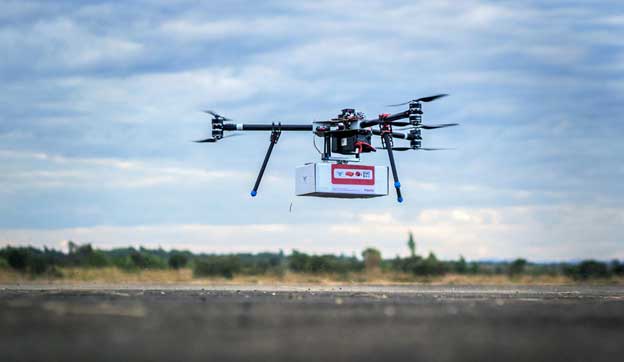
But the unarmed versions continue to be deployed by UN peacekeeping forces worldwide and by national and international humanitarian organizations.

In a recently-released report, the UN Population Fund (UNFPA says for women in Botswana, especially those living in remote communities where medical supplies and blood may not be in stock, giving birth can be life-threatening.

In 2019, the country recorded a maternal mortality rate of 166 deaths per 100,000 births, more than double the average for upper-middle-income countries.

Lorato Mokganya, Chief Health Officer in the Ministry of Health and Wellness, is quoted as saying that when a woman has lost a lot of blood during childbirth and may need to be transferred to a bigger medical facility, she first needs to be stabilized where she is before being driven out of that place. Timely delivery of blood can be lifesaving.

“A drone can be sent to deliver the blood so that the patient is stabilized,”

In an effort to curb the country’s preventable maternal deaths and overcome geographical barriers this innovative initiative will revolutionize the delivery of essential medical supplies and services across Botswana, says UNFPA.

Joseph Chamie, a former director of the UN Population Division and a consulting demographer., told IPS the increased use of drones for humanitarian and peacekeeping missions of the United Nations is certainly a good idea and should be encouraged.

“Why? Simply because the numerous benefits from the use of drones greatly outnumber the possible disadvantages”.

As is the case with all new technologies, he pointed out, resistance to the use of drones is to be expected. The public’s distrust in the use of drones is understandable given their use in military operations and surveillance activities.

Also, it should be acknowledged that drones could be misused and efforts are needed to ensure privacy, security and safety, said Chamie.

“In brief, the use of drones should be promoted and facilitated in the work of the UN’s humanitarian and peacekeeping operations as it will greatly enhance the effectiveness of their vital work,” he declared.

Credit: United Nations

Drones have been deployed in several UN peacekeeping missions, including the Democratic Republic of Congo (DRC), Rwanda and Uganda—going back to 2013.

Although this technology is not a magic solution, “the promise of drones is really tremendous,” says Christopher Fabian, principal advisor on innovation at the UN Children’s Fund (UNICEF).

For UNICEF and other humanitarian and development agencies, he said, in an interview with UN News, drone technology can make a big difference in three ways.

First, drones can leapfrog over broken infrastructure in places where developed transportation networks or roads do not exist, carrying low-weight supplies.

Second, UAVs can be used for remote sensing, such as gathering imagery and data, in the wake of natural disasters like mudslides, to locate where the damage is and where the affected peoples are.

Third, drones can extend wi-fi connectivity, from the sky to the ground, providing refugee camps or schools with access to the Internet.

As big as a Boeing 737 passenger jet and as small as a hummingbird, a huge variety of drones exist. According to research firm Gartner, total drone unit sales climbed to 2.2 million worldwide in 2016, and revenue surged 36 per cent to $4.5 billion.

Although UNICEF’s use of drones has been limited, the agency is exploring ways to scale up the use of UAVs in its operations, Fabian said.

“Hardware itself does not violate human rights. It is the people behind the hardware,” said Fabian, stressing the need to “make sure that any technology we bring in or work on falls within the framing of rights-based documents,” such as the Convention on the Rights of the Child.

UNICEF has a set of guiding principles for innovation, which includes elements like designing with the end-user.

For drone applications to spread further, Fabian said, the UN has a strong role in advocating this technology and ensuring that policy is shared with different governments.

In addition, governments have to clearly define why they need drones and what specifically they will be used for, while also building up national infrastructure to support their use.

The private sector must understand that the market can provide them real business opportunities.

In 10 to 20 years, drones might be “as basic to us as a pen or pencil,” said Fabian.

“I believe this technology will go through a few years of regulatory difficulty but will eventually become so ubiquitous and simple that it’s like which version of the cell phones you have rather than have you ever use the mobile phone at all,” he said.

Meanwhile, armed UAVs are being increasingly used in war zones in the Middle East, Asia, Africa and most recently Ukraine.

The US has launched drone strikes in Pakistan, Syria, Yemen, Somalia, Iraq, Libya and Afghanistan targeting mostly terrorist groups. But the negative fallout has included the deaths of scores of civilians and non-combatants.

In recent months, the use of drones by both Russia and Ukraine has triggered a raging battle at the United Nations while Iran has launched drone attacks inside Iraq.

The US, France, UK and Germany have urged the UN to investigate whether the Russian drones originated in Iran. But Russia has denied the charge and insisted the drones were homemade.

Russia’s First Deputy Permanent Representative to the UN, Ambassador Dmitry Polyanskiy, urged Secretary-General António Guterres and his staff on October 25 not to engage in any “illegitimate investigation” of drones used in Ukraine.

Meanwhile, going back to 2017, Malawi, in partnership with UNICEF, launched Africa’s first air corridor to test the humanitarian use of drones in Kasungu District.

Also with UNICEF, Vanuatu has been testing the capacity, efficiency and effectiveness of drones to deliver life-saving vaccines to inaccessible, remote communities in the small Pacific- island country, according to the United Nations.

Vanuatu is an archipelago of 83 islands separated over 1,600 kilometres. Many are only accessible by boat, and mobile vaccination teams frequently walk to communities carrying all the equipment required for vaccinations – a difficult task given the climate and topography.

To extend the use of drones, UNICEF and the World Food Programmes (WFP) have formed a working group.

In addition, UNICEF, together with the Office of the UN High Commissioner for Refugees (UNHCR), chairs the UN Innovation Network, an informal forum that meets quarterly to share lessons learned and advance discussions on innovation across agencies, the UN points out.

“Drones are also used in other parts of the UN system. The International Atomic Energy Agency (IAEA) and its partners have introduced a new quadcopter drone to visually map gamma radiation at Japan’s Fukushima Daiichi nuclear plant, which was damaged by the devastating 2011 tsunami”.

ROMEO, or the Remotely Operated Mosquito Emission Operation, met the competition’s aim of improving people’s lives. It was designed to transport and release sterile male mosquitoes as part of an insect pest birth control method that stifles pest population growth.

Some UN peacekeeping missions, such as those in the Democratic Republic of the Congo, Mali and the Central African Republic, have deployed unarmed surveillance UAVs to improve security for civilians, according to the UN.

The UN, however, warns that drone technology can be a double-edged sword. UN human rights experts have spoken out against the lethal use of drones.

IPS UN Bureau Report

  Source

US to Fight Sexual Abuse in International Organizations

Civil Society, Featured, Gender, Gender Violence, Global, Headlines, Health, Human Rights, TerraViva United Nations

Security Council members vote to adopt a resolution endorsing special measures for protection from sexual exploitation and abuse by UN peacekeepers. Credit: UN Photo/Loey Felipe

UNITED NATIONS, Nov 21 2022 (IPS) – The United States, which recently laid down a set of guidelines to monitor sexual exploitation and abuse (SEA) by US citizens in international organizations, including the United Nations and its agencies worldwide, has implicitly accused the UN of faltering on a high-profile case last month.


The U.S. District Court for the Southern District of New York sentenced Karim Elkorany, an American citizen and a former UN employee, to 15 years in prison for the drugging and sexual assault of one victim and making false statements to cover up another sexual assault.

As part of the federal investigation, Elkorany admitted that he had drugged and/or sexually assaulted 17 additional victims between 2002 and 2016.

Ambassador Chris Lu, U.S. Representative for UN Management and Reform at the US Mission to the United Nations, said that consistent with State Department policies, “we have referred this matter to the Office of Inspector General for review to ensure a culture of accountability”

“We also call on the United Nations to undertake a similar review that includes a comprehensive examination of the handling of any sexual exploitation and abuse or sexual harassment (SEAH) allegations against Mr. Elkorany during his employment with the United Nations”.

The investigation, he said, should examine whether UN officials were aware of Elkorany’s misconduct and failed to take appropriate action, including ensuring the availability and accessibility of assistance to survivors.

In line with the “Principles on Protection from Sexual Exploitation and Abuse and Sexual Harassment (SEAH) for U.S. Government Engagement with International Organizations”, the United States said it is committed to preventing and responding to sexual exploitation and abuse and sexual harassment in the UN system.

“We strongly support the United Nations’ zero tolerance policy and the Secretary-General’s efforts to strengthen its implementation”.

“Protection from SEAH is the responsibility of leadership and managers at every level who have a duty to take action in response to allegations of SEAH and ensure implementation of governance policies and delivery of services in a manner that respects the rights and dignity of all personnel and communities served by our institutions.”

The critical stand against the UN comes amid “16 Days of Activism against Gender-Based Violence”, beginning November 25, and billed as an opportunity to call for prevention and elimination of violence against women and girls.

Meanwhile, UN Secretary General Antonio Guterres has established a Chief Executive Board Task Force to review policies to prevent sexual harassment and develop improved and consistent approaches across the UN, including a review of how the UN defines sexual harassment.

Tsitsi Matekaire, the Global Lead on Equality Now’s End Sexual Exploitation Programme based in the UK, told IPS the publication of these principles by the US government is a welcome development.

They echo similar positive initiatives by countries such as Australia and the UK, which have introduced measures following highly publicized scandals in recent years within the international aid sector.

“It is good to see more organizations introducing and extending safeguarding policies, but words must be underpinned by effective action and we need more evidence about the impact of these commitments. It is no good having protection strategies and procedures in place if they are not being well implemented and abuse continues unchecked”, said Matekaire.

“We don’t know the true scale of the problem, but we do know from frequent revelations that sexual harassment, sexual exploitation and abuse remain a widespread problem inside the United Nations system and within other international development organizations”.

In September 2022, she pointed out, a media investigation disclosed sexual abuse by humanitarian workers at an UN-run camp in South Sudan. It was reported that abuse occurred “on a daily basis” over a number of years and aid officials were aware as early as 2015.

Although the UN did take some action, it faced criticism for failing to introduce effective strategies to end the problem, and an external review cited a lack of victim support, she noted.

“The UN and all international development agencies must enforce a zero-tolerance approach to sexual abuse and harassment directed at, and perpetrated by, staff. This must apply to everyone, regardless of what level their position is”.

“All staff should receive training, with policies and procedures well communicated. Reports of abuse should be taken seriously, investigations carried out swiftly and effectively, and perpetrators held fully to account”.

She also said that aid workers and other whistle-blowers need to be well protected so they are able to disclose allegations of abuses without fear of negative repercussions, including retaliation or sidelining.

And safeguarding and reporting mechanisms need to ensure sexual predators are not able to evade punishment or move to different jobs where they are able to commit further offences.”

And here is the link to the article about the South Sudan story referenced above.

Meanwhile, a Reuters report of November 1 said the World Health Organization (WHO) has suspended a senior manager at its Geneva headquarters after a British doctor publicly alleged she was sexually assaulted at a health conference last month, according to two sources familiar with the matter.

Rosie James, a 26-year-old junior doctor working for England’s National Health Service tweeted last month that the assault occurred at the World Health Summit in Berlin. The event, which took place from Oct. 16-18, was jointly organized by the WHO. James said at the time that she planned to report the incident.

“The alleged perpetrator is on leave and the investigation is on-going,” a WHO spokesperson said in an emailed response to Reuters about James’s statements, without naming him.

The set of “Government Engagement Principles on Protection from Sexual Exploitation Abuse and Sexual Harassment within International Organizations, laid down by the US includes six key components:

Zero Tolerance

The United States will continue to promote the full implementation of policies of zero tolerance for sexual exploitation and abuse and sexual harassment, including zero tolerance for inaction in response to allegations, across the United Nations and other International Organizations.

This includes support for policies that prioritize prevention and mitigation efforts, monitor the effectiveness of such efforts, ensure safe access to confidential SEAH reporting mechanisms and appropriate survivor support, and embed survivor-centered principles across all actions in response to reported allegations – including investigations.

The United States recognizes that an absence of reporting does not mean incidents are not being perpetrated, nor does it indicate that zero tolerance policies are being fully implemented.

A Survivor-centered Approach

The United States expects all allegations or incidents of sexual exploitation and abuse and sexual harassment to be reviewed and addressed, while respecting principles of due process.

In its engagement with the United Nations and other International Organizations, the United States will continue to advocate for the use of survivor-centered principles and standards – an approach that recognizes and empowers survivors as individuals with agency and unique needs, safeguarding their dignity and wellbeing.

Prevention and Risk Mitigation

The United States will work with the United Nations and other International Organizations to institutionalize prevention and mitigation measures that go beyond basic awareness-raising, training, capacity-building or dissemination of codes of conduct, and include a commitment to promote adequate funding, dedicated technical staff, and meaningful risk analysis and mitigation.

The United States will hold the United Nations and other International Organizations to the highest standard, including from the onset of a crisis, conflict or emergency, to mitigate against such risk, especially with highly vulnerable populations.

Accountability and Transparency

The United States expects the leadership of the United Nations and other International Organizations to take meaningful action to support accountability and transparency through, among others, the following: the conduct of timely and survivor-centered investigations; response efforts driven by the needs, experiences, and resiliencies of those most at risk of SEAH; clear reporting and response systems, including to inform Member States of allegations or incidents; and accountability measures, including termination of employment or involvement of law enforcement, as needed.

Organizational Culture Change

The United States will work to advocate for the development by the United Nations and other International Organizations of evidence-based metrics and standards of practice in the implementation of zero tolerance policies, promote holistic approaches, empower women and girls, and reinforce leadership and organizational accountability.

Policies, statements, and training are essential, but alone are insufficient to produce lasting positive change. Systems-level change requires a shift in organizational culture, behavior, and the underlying processes and mechanisms to deliver assistance and promote internal accountability.

Empowerment of Local Communities

The United States will prioritize, in partnership with the leadership of the United Nations and other International Organizations, the critical importance of locally-led efforts, particularly those led by women and girls, who, when meaningfully supported and engaged, can inform the measures that may mitigate risks and promote safer foreign assistance programming.

IPS UN Bureau Report

  Source

Loss and Damage Fund Saves COP27 from the Abyss

Active Citizens, Civil Society, Climate Action, Climate Change, Climate Change Finance, Conferences, Editors’ Choice, Environment, Global, Global Governance, Headlines, IPS UN: Inside the Glasshouse, Latin America & the Caribbean, Regional Categories

Climate Action

Egyptian Foreign Minister Sameh Shoukry, chair of COP27, reads the nine-page Sharm El Sheikh Implementation Plan, the document that concluded the climate summit on Sunday Nov. 20, to an exhausted audience after tough and lengthy negotiations that finally reached an agreement to create a fund for loss and damage, a demand of the global South. CREDIT: Kiara Worth/UN

Egyptian Foreign Minister Sameh Shoukry, chair of COP27, reads the nine-page Sharm El Sheikh Implementation Plan, the document that concluded the climate summit on Sunday Nov. 20, to an exhausted audience after tough and lengthy negotiations that finally reached an agreement to create a fund for loss and damage, a demand of the global South. CREDIT: Kiara Worth/UN

SHARM EL SHEIKh , Nov 20 2022 (IPS) – They were on the brink of shipwreck and did not leave happy, but did feel satisfied that they got the best they could. The countries of the global South achieved something decisive at COP27: the creation of a special fund to address the damage and loss caused by climate change in the most vulnerable nations.


The fund, according to the Sharm El Sheikh Implementation Plan, the official document approved at dawn on Sunday Nov. 20 in this Egyptian city, should enable “rehabilitation, recovery and reconstruction” following extreme weather events in these vulnerable countries.

Decisions on who will provide the money, which countries will benefit and how it will be disbursed were left pending for a special committee to define. But the fund was approved despite the fact that the issue was not even on the official agenda of the summit negotiations, although it was at the center of the public debate before the conference itself.

“We are satisfied that the developed countries have accepted the need to create the Fund. Of course, there is much to discuss for implementation, but it was difficult to ask for more at this COP,” Ulises Lovera, Paraguay’s climate change director, told IPS, weary from a longer-than-expected negotiation, early Sunday morning at the Sharm El Sheikh airport.

“This COP has taken an important step towards justice. I welcome the decision to establish a loss and damage fund and to operationalize it in the coming period,” said U.N. Secretary-General António Guterres. He also described as an achievement that a “red line” was not crossed, that would take the rise in global temperature above the 1.5-degree limit.

More than 35,000 people from nearly 200 countries participated in the 27th Conference of the Parties (COP27) on Climate Change in Sharm El Sheikh, an Egyptian seaside resort on the Red Sea, where the critical dimension of global warming in the different regions of the world was on display, sometimes dramatically.

Practically everything that has to do with the future of the modes of production and life of humanity – starting with energy and food – was discussed at a mega-event that far exceeded the official delegations of the countries and the great leaders present, such as U.S. President Joe Biden and the Brazilian president-elect, Luiz Inácio Lula da Silva.

Hundreds of social organizations, international agencies and private sector stakeholders came here to showcase their work, seek funding, forge alliances, try to influence negotiations, defend their interests or simply be on a stage that seemed to provide a space for all kinds of initiatives and businesses.

At the gigantic Sharm El Sheikh International Convention Center there was also a global fair with non-stop activities from morning to night in the various pavilions, in stands with auditoriums of between 20 and 200 seats, where there was a flurried program of presentations, lectures and debates, not to mention the more or less crowded demonstrations of activists outside the venue.

In addition, government delegates negotiated on the crux of the summit: how to move forward with the implementation of the Paris Agreement, which at COP21 in 2015 set global climate change mitigation and adaptation targets.

United Nations Secretary-General António Guterres walks hurriedly through the Sharm El Sheikh Convention Center during the last intense hours of the COP27 negotiations, when there were moments when it seemed that there would be no agreement and the climate summit would end in failure. CREDIT: Daniel Gutman/IPS

United Nations Secretary-General António Guterres (3rd-R) walks hurriedly through the Sharm El Sheikh Convention Center during the last intense hours of the COP27 negotiations, when there were moments when it seemed that there would be no agreement and the climate summit would end in failure. CREDIT: Daniel Gutman/IPS

On the brink of failure

Once again, the nine-page Sharm El Sheikh Implementation Plan did not include in any of its pages a reference to the need to abandon fossil fuels, but only coal.

The document was the result of a negotiation that should have ended on Friday Nov. 18, but dragged on till Sunday, as usually happens at COPs. What was different on this occasion was a very tough discussion and threats of a walkout by some negotiators, including those of the European Union.

But in the end, the goal of limiting the temperature increase to 1.5 degrees Celsius, established in the Paris Agreement, was maintained, although several countries tried to make it more flexible up to 2.0 degrees, which would have been a setback with dramatic effects for the planet and humanity, according to experts and climate activists.

“Rapid, deep and sustained reductions in global greenhouse gas emissions (are) required – lowering global net greenhouse gas emissions by 43 percent by 2030 relative to the 2019 level – to limit global warming to 1.5°C target,” reads the text, although no mention is made of oil and gas, the fossil fuels most responsible for those emissions, in one of the usual COP compromises, since agreements are reached by consensus.

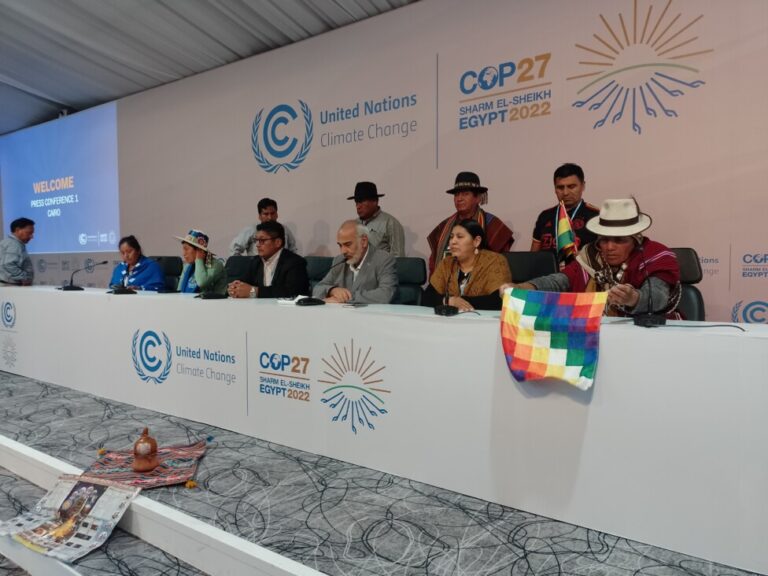
The Bolivian delegation in Sharm El Sheikh, which included officials as well as leaders of indigenous communities from the South American country, take part in a meeting with journalists at COP27 to demand more ambitious action. CREDIT: Daniel Gutman/IPS

The Bolivian delegation in Sharm El Sheikh, which included officials as well as leaders of indigenous communities from the South American country, take part in a meeting with journalists at COP27 to demand more ambitious action. CREDIT: Daniel Gutman/IPS

The priorities of the South

Developing countries, however, focused throughout the COP on the Loss and Damage Fund and other financing mechanisms to address the impacts of rising temperatures and mitigation actions.

“We need financing because we cannot deal with the environmental crisis alone. That is why we are asking that, in order to solve the problem they have caused, the rich nations take responsibility,” Diego Pacheco, head of the Bolivian delegation to Sharm El Sheikh, told IPS.

Environmental organizations, which showed their power in Egypt with the presence of thousands of activists, also lobbied throughout COP27 for greater commitments, including mitigation actions.

“This conference cannot be considered an implementation conference because there is no implementation without phasing out all fossil fuels,” the main cause of the climate crisis, said Zeina Khalil Hajj of the international environmental organization 350.org.

“Together for implementation” was precisely the slogan of COP27, calling for a shift from commitments to action.

“A text that does not stop fossil fuel expansion, that does not provide progress from the already weak Glasgow Pact (from COP26) makes a mockery of the millions of people living with the impacts of climate change,” said Khalil Hajj, head of global campaigning at 350.org.

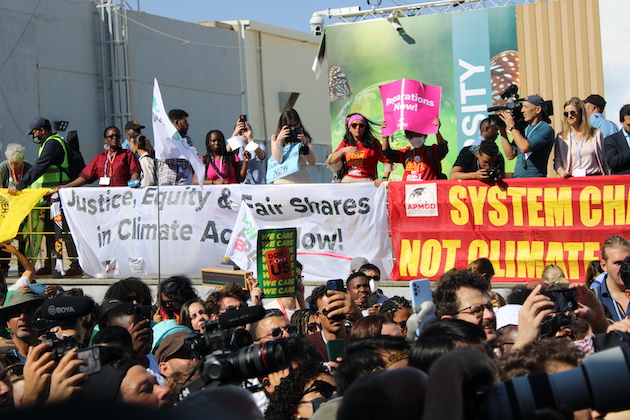
One of the demonstrations by climate activists at COP27 held in Egypt Nov. 6-20, demanding more ambitious climate action by governments, as well as greater justice and equity in tackling the climate crisis. CREDIT: Busani Bafana/IPS

One of the demonstrations by climate activists at COP27 held in Egypt Nov. 6-20, demanding more ambitious climate action by governments, as well as greater justice and equity in tackling the climate crisis. CREDIT: Busani Bafana/IPS

The crises that came together

Humanity – as recognized by the States Parties in the final document – is living through a dramatic time.

It faces a number of overlapping crises: food, energy, geopolitical, financial and economic, combined with more frequent natural disasters due to climate change. And developing nations are hit especially hard.

The demand for financing voiced by countries of the global South thus takes on greater relevance.

Cecilia Nicolini, Argentina’s climate change secretary, told IPS that it is the industrialized countries, because of their greater responsibility for climate change, that should finance developing countries, and lamented that “the problem is that the rules are made by the powerful.”

However, 80 percent of the money now being spent worldwide on climate change action is invested in the developed world, according to the Global Environment Facility (GEF), the world’s largest funder of climate action, which has contributed 121 billion dollars to 163 countries over the past 30 years, according to its own figures.

In this context, the issue of Loss and Damage goes one step further than adaptation to climate change, because it involves reparations for the specific impacts of climate change that have already occurred, such as destruction caused by droughts, floods or forest fires.

“Those who are bearing the burden of climate change are the most vulnerable households and communities. That is why the Loss and Damage Fund must be established without delay, with new funds coming from developed countries,” said Javier Canal Albán, Colombia’s vice minister of environmental land planning.

“It is a moral and climate justice imperative,” added Canal Albán, who spoke at a press conference on behalf of AILAC, a negotiating bloc that brings together several Latin American and Caribbean countries.

But the text of the outcome document itself acknowledges that there is a widening gap between what developing countries need and what they actually receive.

The financing needs of these countries for climate action until 2030 were estimated at 5.6 trillion dollars, but developed countries – as the document recognized – have not even fulfilled their commitment to provide 100 billion dollars per year, committed since 2009, at COP15 in Copenhagen, and ratified in 2015, at COP21 which adopted the Paris Agreement.

It was the absence of any reference to the need to accelerate the move away from oil and natural gas that frustrated several of the leaders at the COP. “We believe that if we don’t phase out fossil fuels there will be no Fund that can pay for the loss and damage caused by climate change,” Susana Muhamad, Colombia’s environment minister, who was at the two-week conference in Sharm El Sheikh held Nov. 6-20, told IPS.

“We have to put the victims first in order to make an orderly and just transition,” she said, expressing the sentiments of the governments and societies of the South at COP27.


Three Truths to Address Sexual Exploitation, Abuse & Harassment in the UN

Civil Society, Featured, Gender, Gender Violence, Global, Headlines, Health, Human Rights, TerraViva United Nations

Opinion

The UN Secretariat building in New York City. Credit: UN Photo/Manuel Elías

NEW YORK, Nov 15 2022 (IPS) – The U.S. Government has recently published ‘Engagement Principles’ on Protection from Sexual Exploitation Abuse & Sexual Harassment within International Organizations’, and while any involvement from Member States is to be encouraged, these principles do not address the fundamental need for either deterrence or for accountability.


The concept of a “survivor-centred approach” – sadly – is an irrelevant sound bite to appease a political lobby. Post-incident care and support for the victim is not only admirable but very necessary but serves no deterrent purpose, and any bearing it might have on the prosecution of an offender will be indirect at best.

Nothing done for victims after an incident will prevent future victims being similarly assaulted.
One of the accepted tenets of criminology is that criminal activity is not discouraged by procedures, committees, working groups or focal points, nor is there any deterrent effect in increasing the penalty for anyone convicted of the offence; criminal activity is minimised by maximising the likelihood of the perpetrator being held accountable for their actions. The UN choses to ignore that, and will not acknowledge three basic truths the Member States must recognise:

FIRST: that any sexual assault is a serious criminal offence that should be prosecuted as such.

In the real world, where both a criminal case and a civil one arise from the same event; the civil case will be sisted to give priority to the more important criminal prosecution. The UN, however, does the opposite and insists that their administrative investigation take priority over the criminal investigation of the same incident.

As a result, even where a rape is reported in the UN, the chances of the perpetrator being successfully prosecuted in a criminal court is minimised to the point where the risk is insignificant.

SECOND: that while UN personnel require and deserve the protection of the 1946 Convention on Privileges & Immunities, that Convention does not grant immunity for sexual offences.

Abuse of the concept of immunity has greatly influenced the evolution of the UN culture into one of narcissistic entitlement, where sexual predators believe they can act with impunity.

Functional Immunity was afforded to UN staff members under the Convention which states, very clearly, in Section 18:

Officials of the United Nations shall : (a) be immune from legal process in respect of words spoken or written and all acts performed by them in their official capacity; (Emphasis added.)

Given that any sexual activity – whether consensual, contractual, or coerced – is not part of the “official duties” of any UN staff member; it is self-evident that no immunity can apply in the case of any sexual offence. If such an offence appears to have been committed; the host nation must therefore have jurisdiction over the matter.

The Convention was adopted to protect UN staff against harassment by a hostile government, and in those conditions, there will always be a risk that criminal charges might be fabricated. There is no doubt, therefore that the UN must take an interest in any accusations against staff members, but as soon as their preliminary enquiries establish reasonable grounds to believe that a sexual offence has been committed; the matter should be handed over to local law enforcement immediately – for them to proceed with a criminal investigation.

The Convention was never intended to protect offenders from the consequences of their own criminality. That is made clear in Section 20 which reads:

Privileges and immunities are granted to officials in the interests of the United Nations and not for the personal benefit of the individuals themselves. The Secretary-General shall have the right and the duty to waive the immunity of any official in any case where, in his opinion, the immunity would impede the course of justice and can be waived without prejudice to the interests of the United Nations.

If the Secretary-General can give an example of how the prosecution of a sexual predator could possibly “prejudice to the interests of the UN” – the world deserves an explanation.

The UN interprets the Convention to protect UN staff members from sexual offences even when no staff member is accused of any such thing, as was demonstrated in 2015 by the Organization’s response when French authorities sought to investigate allegations against French peacekeepers in the Central African Republic.

The Convention states in Section 21:

The United Nations shall cooperate at all times with the appropriate authorities of Members to facilitate the proper administration of justice, secure the observance of police regulations and prevent the occurrence of any abuse in connection with the privileges, immunities and facilities mentioned in this article.

That is a provision the Secretariat appears to ignore, because “immunity” was cited as the reason why UN staff members could not assist French investigators by introducing them to victims. The UN has never explained how that could be justified.

Immunity was created for the best of reasons, it has now become part of the problem.

THIRD: that ‘self-regulation’ by the UN has clearly been a failure; the Organization cannot properly investigate itself.

What most people fail to appreciate about the corruption in the UN is that it is almost always “procedurally correct” – which may mean the resulting administrative decision cannot be challenged before the UN Dispute Tribunal, it does not make the decision ethical or legitimate – but OIOS investigations will not pursue any such line of enquiry for fear of what it might reveal.

Complaints about malpractices, misconduct, bias or abuses of authority by investigators are common, but are routinely ignored – because there is no independent oversight of OIOS (Office of Internal Oversight Services) and the management of the office is tied up in the same network of mutually supportive patronage that is ingrained in the UN culture.

The OIOS “leadership” is widely believed to do the bidding of the USG/DMSPC in particular, legitimising the most patent retaliation – because the USG/DMSPC protects them from any accountability for their own shortcomings. The former Director of Investigations admitting that their primary objective was simply “to get the Americans off our backs” – for which, naturally, he was promoted.

As for sexual misconduct investigations; the term “survivor-centered approach” makes little sense. It is described as an innovative approach but in any sexual assault, the victim has always been the most important witness – so how exactly were these cases actually investigated in the past?

Post-incident care for the victim has no bearing on the burden of proof. Cases must be proved by established facts, and that requires diligent and competent investigators – not “investigators” promoted for their personal loyalty, or whose misconduct has routinely been overlooked for the same reason.

Gross incompetence by managers, rampant misconduct and corruption anywhere in the UN must be considered serious in its own right, but incompetence, misconduct and corruption in the investigative function is more serious because that facilitates the corruption everywhere else.

Einstein is said to have defined insanity as doing same thing over and over, and expecting a different result, but that has been the UN’s approach to investigating sexual misconduct for the last 20 years.

The solution clearly lies with someone capable of thinking differently – but within the UN culture; anyone who dares to think differently is a dangerous heretic who cannot be promoted.

Peter Gallo is a lawyer and former OIOS investigator, whose disagreements with the Organization began when OIOS sought to demand that as an investigator, he must “never ask questions just to satisfy his curiosity” – a bizarre instruction that the UN did not consider even unusual, despite the fact that no one was ever able to point out a single example of his ever having done so….He has written extensively on the UN’s failure to properly investigate misconduct, been quoted in the media, featured on television documentaries and twice testified before congressional committees on the subject.

IPS UN Bureau

  Source