NGOs on a Virtual Blacklist at UN High-Level Meetings of World Leaders

Civil Society, Featured, Global, Global Governance, Headlines, Human Rights, International Justice, IPS UN: Inside the Glasshouse, TerraViva United Nations
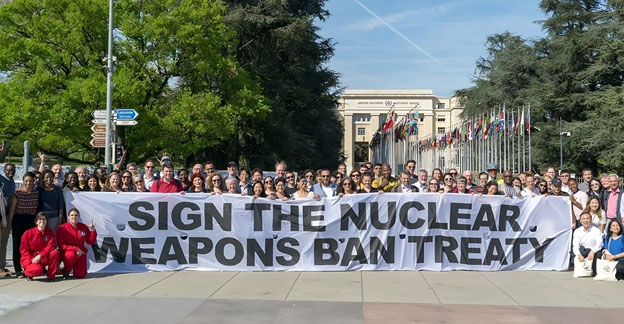
The International Campaign to Abolish Nuclear Weapons (ICAN) is a coalition of non-governmental organizations (NGOs) in over 100 countries promoting adherence to, and implementation of, the United Nations nuclear weapons ban treaty. Credit: ICAN

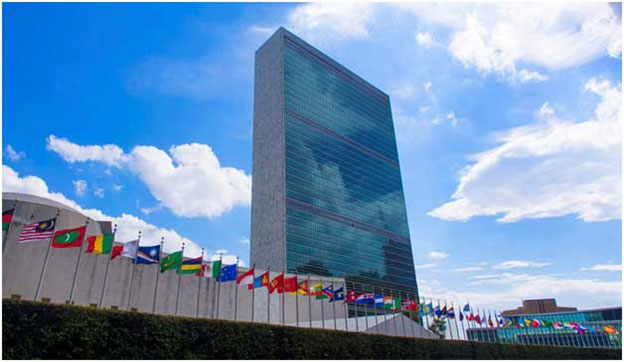
UNITED NATIONS, Sep 15 2025 (IPS) – When the high-level meeting of over 150 world political leaders takes place September 22-30, thousands of non-governmental organizations (NGOs) and their accredited UN representatives will either be banned from the UN premises or permitted into the building on a strictly restricted basis– as it happens every year.


This year will not be an exception to the rule.

In a message to staffers, journalists and NGOs last week—spelling out the rigid ground rules during the summit– the UN said members of civil society organizations (CSOs) and NGOs who are invited to attend high-level meetings or other events will be required to be in possession of a valid NGO pass– and a special event ticket (indicating a specific meeting, date and time) at all times to access the premises.

“A United Nations non-governmental organization (NGO) pass alone does not grant access during the week of 22–30 September 2025”, the message warned

These restrictions have continued despite the significant role played by NGOs both at the UN and worldwide.

A former UN Secretary-General, the late Kofi Annan (1997-2006), once characterized NGOs as ”the world’s third superpower.”

And a former Deputy Secretary-General Asha-Rose Migiro (2007-2012) told delegates at a UN meeting, the United Nations relies on its partnership with the NGO community “in virtually everything the world body does”.

“Whether it is peace-building in sub-Saharan Africa or human rights in Latin America, disaster assistance in the Caribbean or de-mining efforts in the Middle East, the United Nations depends upon the advocacy skills, creative resources and grass-roots reach of civil society organizations in all our work,” she said, paying a compliment to NGOs.

The NGOs playing a significant role in humanitarian assistance include Oxfam, CARE International, Doctors Without Borders, International Committee of the Red Cross, the Red Crescent, Save the Children, Action Against Hunger, among others,

During an event marking the 75th anniversary of the UN Charter in 2020, the current Secretary-General, Antonio Guterres, said civil society groups were a vital voice at the San Francisco Conference (where the UN was inaugurated 80 years ago).

“You have been with us across the decades, in refugee camps, in conference rooms, and in mobilizing communities in streets and town squares across the world.”

“You are with us today as we face the COVID-19 pandemic. You are our allies in upholding human rights and battling racism. You are indispensable partners in forging peace, pushing for climate action, advancing gender equality, delivering life-saving humanitarian aid and controlling the spread of deadly weapons”.

“And the world’s framework for shared progress, the Sustainable Development Goals, is unthinkable without you”, he declared.

But none of these platitudes have changed a longstanding UN policy of restricting NGO access to the UN during high-level meetings.

The annual ritual where civil society members are treated as political and social outcasts has always triggered strong protests. The United Nations justifies the restriction primarily for “security reasons”.

Currently there are over 6,400 NGOs in active consultative status with the UN Economic and Social Council (ECOSOC).
https://social.desa.un.org/issues/disability/cosp/list-of-non-governmental-organization-accredited-to-the-conference-of-states

Mandeep S. Tiwana, Secretary General, CIVICUS, a global alliance of civil society organizations, told IPS: “It’s really disappointing to see how year on year, civil society representatives who help the UN achieve its mandate, share its values and provide vital entry points to peoples’ needs and aspirations, are systemically excluded from the UN’s premises during UNGA week despite possessing valid annual security passes that are thoroughly vetted.”

Such blanket prohibitions on civil society representatives’ entry to the UN when momentous decisions and contentious debates are taking place are a missed opportunity to engage decision makers, he said.

“Such asymmetries in participation are the reason why many of us have been pushing for the appointment of a civil society envoy at the UN to enable better and more systemic involvement of civil society at the UN, ensure consistent engagement modalities across the UN system and drive the UN’s outreach to people around the world”.

“Despite, the UN Charter beginning with the words, ‘We the Peoples’, our call has fallen on deaf ears. It is well within the UN Secretary General’s power to appoint a civil society envoy that could be a legacy achievement, if realized,“ declared Tiwana.

Mads Christensen, Executive Director, Greenpeace International, told IPS: “We continue to believe in the UN and multilateralism as essential to achieving a green and peaceful future. Those in frontline communities and small island states most impacted by climate change must have their voices heard, as must young people whose very future is being decided. “

“We the peoples”, the opening words of the UN Charter, must not be reduced to “stakeholders consulted.” Civil society needs to be “in the room where it happens,” said Christensen.

Sanam B. Anderlini, Founder of the International Civil Society Action Network (ICAN), told IPS: “I find the exclusion or NGOs from UNGA ironic and tragic.”

Globally, she pointed out, “ We have raised the alarm bells about conflict, human rights abuses, the desecration of international law. Our sector is also the strongest of supporters for the UN system itself.”

“We believe in the power and potential of multilateralism, and the need for a robust UN that adheres to the principles of peace and human security. Yet the system does not stand with us. “

Today more than ever, she argued, civil society globally is under pressure, politically, financially, systematically. “Yet we still persist with doing ‘what we can’ to address societal needs – as first responders to humanitarian crises, mitigating violence”.

As the powerful abrogate their responsibilities, the least powerful are taking on that responsibility to protect.

The UN should be embracing and enabling this sector’s participation at UNGA. Just as civil society is a champion of the UN, the UN should be a champion of civil society. Yet it seems that ‘We the People of the United Nations’ are not only being marginalized but over-securitized. How many security checks, how many grounds passes does each person need?, she asked.

“How tragic that those of us advocating for peace and justice are outside of the halls of power, while those waging wars, enabling genocide and trampling international laws are inside”.

“But we will be there. If our voices are absent within the UN, that absence itself will speak louder than any words”, she declared.

Andreas Bummel, Executive Director, Democracy Without Borders, told IPS: “The UN should resist efforts by authoritarian states to delegitimize and shut out affiliated civil society groups.”
As the organization is under dramatic pressure to implement cost-cutting reforms, seen in the UN80 initiative, he said, it really needs to seek stronger engagement with civil society, citizens, and the public at large, not less.

Not admitting NGO representatives during the UNGA general debate is another lost opportunity to make a mark, declared Bummel.

IPS UN Bureau Report
  Source

The United Nations Turns 80: a Miracle it has Lasted So Long

Civil Society, Global, Global Governance, Headlines, Human Rights, IPS UN: Inside the Glasshouse, TerraViva United Nations

Opinion

SANTIAGO, Chile, Sep 12 2025 (IPS) – At eighty, the United Nations is bogged down by structural limitations and political divisions that render it powerless to act decisively – nowhere more clearly than in the Gaza genocide.


There is only one treaty in the world that, despite its limitations, binds nations together: the United Nations Charter. Representatives of fifty nations wrote and ratified the UN Charter in 1945, with others joining in the years that followed.

The charter itself only sets the terms for the behaviour of nations. It does not and cannot create a new world. It depends on individual nations to either live by the charter or die without it.

The charter remains incomplete. It needed a Universal Declaration of Human Rights in 1948, and even that was contested as political and civil rights had to eventually be separated from the social and economic rights. Deep rifts in political visions created fissures in the UN system that have kept it from effectively addressing problems in the world.

The UN is now eighty. It is a miracle that it has lasted this long. The League of Nations was founded in 1920 and lasted only eighteen years of relative peace (until World War II began in China in 1937).

The UN is only as strong as the community of nations that comprises it. If the community is weak, then the UN is weak. As an independent body, it cannot be expected to fly in like an angel and whisper into the ears of the belligerents and stop them.

The UN can only blow the whistle, an umpire for a game whose rules are routinely broken by the more powerful states. It offers a convenient punching bag for all sides of the political spectrum: it is blamed if crises are not solved and if relief efforts fall short. Can the UN stop the Israeli genocide in Gaza?

UN officials have made strong statements during the genocide, with Secretary General António Guterres saying that ‘Gaza is a killing field – and civilians are in an endless death loop’ (8 April 2025) and that the famine in Gaza is ‘not a mystery – it is a man-made disaster, a moral indictment, and a failure of humanity itself’ (22 August 2025).

These are powerful words, but they have amounted to nothing, calling into question the efficacy of the UN itself.
.
The UN is not one body but two halves. The most public face of the UN is the UN Security Council (UNSC), which has come to stand in as its executive arm. The UNSC is made up of fifteen countries: five are permanent members (China, France, Russia, the United Kingdom, and the United States) and the others are elected for two-year terms.

The five permanent members (the P5) hold veto power over the decisions of the council. If one of the P5 does not like a decision, they are able to scuttle it with their veto. Each time the UNSC has been presented with a resolution calling for a ceasefire, the United States has exercised its veto to quash even that tepid measure (since 1972, the United States has vetoed more than forty-five UNSC resolutions about the Israeli occupation of Palestine).

The UNSC stands in for the UN General Assembly (UNGA), whose one hundred and ninety-three members can pass resolutions that try to set the tone for world opinion but are often ignored. Since the start of the genocide, for instance, the UNGA has passed five key resolutions calling for a ceasefire (the first in October 2023 and the fifth in June 2025).

But the UNGA has no real power in the UN system. The other half of the UN is its myriad agencies, each set up to deal with this or that crisis of the modern age. Some predate the UN itself, such as the International Labour Organisation (ILO), which was created in 1919 and brought into the UN system in 1946 as its first specialised agency.

Others would follow, including the United Nations Children’s Fund (UNICEF), which advocates for the rights of children, and the United Nations Educational, Scientific, and Cultural Organization (UNESCO), which promotes tolerance and respect for the world’s cultures.

Over the decades, agencies have been created to advocate for and provide relief to refugees, to ensure nuclear energy is used for peace rather than war, to improve global telecommunications, and to expand development assistance. Their remit is impressive, although the outcomes are more modest.

Meagre funding from the world’s states is one limitation (in 2022, the UN’s total expenditure was $67.5 billion, compared with over $2 trillion spent on the arms trade).

This chronic underfunding is largely because the world’s powers disagree over the direction of the UN and its agencies. Yet without them, the suffering in the world would neither be recorded nor addressed. The UN system has become the world’s humanitarian organisation largely because neoliberal austerity and war have destroyed the capacity of most individual countries to do this work themselves, and because non-governmental organisations are too small to meaningfully fill in the gap.

With the disintegration of the Soviet Union, the entire balance of the world system changed and the UN went into a cycle of internal reform initiatives: from Boutros Boutros-Ghali’s An Agenda for Peace (1992) and An Agenda for Development (1994) and Kofi Annan’s Renewing the United Nations (1997) to Guterres’ Our Common Agenda (2021), Summit of the Future (2024), and UN80 Task Force (2025).

The UN80 Task Force is the deepest reform imaged, but its three areas of interest (internal efficiency, mandate review, and programme alignment) have been attempted previously (‘we’ve tried this exercise before’, said Under-Secretary-General for Policy and Chair of the UN80 Task Force Guy Ryder).

The agenda set by the UN is focused on its own organisational weaknesses and does not address the largely political questions that scuttle the UN’s work. A broader agenda would need to include the following points:

Move the UN Secretariat to the Global South. Almost all UN agencies are headquartered in either Europe or the United States, where the UN Secretariat itself is located. There have been occasional proposals to move UNICEF, the UN Population Fund, and UN Women to Nairobi, Kenya, which already hosts the UN Environment Programme and UN-Habitat.

It is about time that the UN Secretariat leave New York and go to the Global South, not least to prevent Washington from using visa denials to punish UN officials who criticise US or Israeli power. With the US preventing Palestinian officials from entering the US for the UN General Assembly, there have been calls already to move the UNGA meeting to Geneva. Why not permanently leave the United States?

Increase funding to the UN from the Global South. Currently, the largest funders of the UN system are the United States (22%) and China (20%), with seven close US allies contributing 28% (Japan, Germany, the United Kingdom, France, Italy, Canada, and South Korea).

The Global South – without China – contributes about 26% to the UN budget; with China, its contribution is 46%, nearly half of the total budget. It is time for China to become the largest contributor to the UN, surpassing the US, which wields its funding as a weapon against the organisation.

Increase funding for humanitarianism within states. Countries should be spending more on alleviating human distress than on paying off wealthy bondholders. The UN should not be the main agency to assist those in need. As we have shown, several countries on the African continent spend more servicing debt than on education and healthcare; unable to provide these essential functions, they come to rely on the UN through UNICEF, UNESCO, and the WHO. States should build up their own capacity rather than depend on this assistance.

Cut the global arms trade. Wars are waged not only for domination but for the profits of arms dealers. Annual international arms exports are nearing $150 billion, with the United States and Western European countries accounting for 73% of sales between 2020 and 2024. In 2023 alone, the top one hundred arms manufacturers made $632 billion (largely through sales by US companies to the US military).

Meanwhile, the total UN peacekeeping budget is only $5.6 billion, and 92% of the peacekeepers come from the Global South. The Global North makes money on war, while the Global South sends its soldiers and policemen to try and prevent conflicts.

Strengthen regional peace and development structures.

To disperse some of the power from the UNSC, regional peace and development structures such as the African Union must be strengthened and their views given priority. If there are no permanent members in the UNSC from Africa, the Arab world, or from Latin America, why should these regions be held captive by the veto wielded by the P5? If the power to settle disputes were to rest more in regional structures, then the absolute authority of the UNSC could be somewhat diluted.

With the genocide unrelenting, another wave of boats filled with solidarity activists – the Freedom Flotilla – attempts to reach Gaza. On one of the boats is Ayoub Habraoui, a member of Morocco’s Workers’ Democratic Way Party who represents the International Peoples’ Assembly. He sent me this message:

What is happening in Gaza is not a conventional war – it is a slow-motion genocide unfolding before the eyes of the world. I am joining because deliberate starvation is being used as a weapon to break the will of a defenceless people – denied medicine, food, and water, while children die in their mothers’ arms. I am joining because humanity is indivisible. Whoever accepts a siege today will accept injustice anywhere tomorrow.

Silence is complicity in the crime, and indifference is a betrayal of the very values we claim to uphold. This flotilla is more than just boats – it is a global cry of conscience that declares: no to the siege of entire populations, no to starving the innocent, no to genocide. We may be stopped, but the very act of sailing is a declaration: Gaza is not alone. We are all witnesses to the truth – and voices against slow death.

Vijay Prashad is Director of Tricontinental: Institute for Social Research.
https://thetricontinental.org/

IPS UN Bureau

  Source

How the UN Can Prevent AI from Automating Discrimination

Civil Society, Featured, Global, Global Governance, Headlines, IPS UN: Inside the Glasshouse, TerraViva United Nations

Opinion

The AI for Good Global Summit took place in Geneva on 8 July 2025. Credit: ITU/Rowan Farrell

 
The Summit brought together governments, tech leaders, academics, civil society and young people to explore how artificial intelligence can be directed toward Sustainable Development Goals (SDGs) – and away from growing risks of inequality, disinformation and environmental strain, according to the UN.

 
“We are the AI generation,” said Doreen Bogdan-Martin, chief of the International Telecommunications Union (ITU) – UN’s specialized agency for information and communications technology – in a keynote address. But being part of this generation means more than just using these technologies. “It means contributing to this whole-of-society upskilling effort, from early schooling to lifelong learning,” she added.

ABUJA, Nigeria, Aug 14 2025 (IPS) – Artificial Intelligence (AI) is reshaping the world at a speed we’ve never seen before. From helping doctors detect diseases faster to customizing education for every student, AI holds the promise of solving many real-world problems. But along with its benefits, AI carries a serious risk: discrimination.


As the global body charged with protecting human rights, the United Nations—especially the UN Human Rights Council and the Office of the High Commissioner for Human Rights (OHCHR)—has a unique role to play in ensuring AI is developed and used in ways that are fair, inclusive, and just.

The United Nations must declare AI equity a Sustainable Development Goal (SDG) by 2035, backed by binding audits for member states. The stakes are high. A 2024 Stanford study warns that if AI bias is left unchecked, 45 million workers could lose access to fair hiring by 2030, and 80 percent of those affected would be in developing countries.

The Promise—and Peril—of AI

At its core, AI is about using computer systems to solve those problems or perform those tasks that us to use human intelligence. Algorithms drive the systems that make these possible—sets of instructions that help machines make sense of the world and act accordingly.

But there’s a catch: algorithms are only as fair as the data they are trained on and the humans who designed them. When the data reflects existing social inequalities, or when developers overlook diverse perspectives, the result is biased AI. In other words, AI that discriminates.

Take, for example, facial recognition systems that perform poorly on people with darker skin tones. Or hiring tools that favor male candidates because they’re trained on data from past hires in male-dominated industries.

Or a LinkedIn verification system that can only verify NFC-enabled national passports that the majority of Africans don’t yet possess. These are more than technical glitches; they are human rights issues.

What the UN Has Already Said

The UN is not starting from scratch on this. The OHCHR has already sounded the alarm. In its 2021 report on the right to privacy in the digital age, the OHCHR warned that poorly designed or unregulated AI systems can lead to violations of human rights, including discrimination, loss of privacy, and threats to freedom of expression and thought.

The report asked powerful questions we must keep asking:

    • ● How can we ensure that algorithms don’t replicate harmful stereotypes?
    • ● Who is responsible when automated decisions go wrong?
    • ● Can we teach machines our values? And if so, whose values?

These are very vital, practical questions that go to the heart of how AI will shape our societies and who will benefit or suffer as a result, and I commend the UN for conceptualizing these questions.

UNESCO, another UN agency, has also taken a bold step by adopting the Recommendation on the Ethics of Artificial Intelligence, the first global standard-setting instrument of its kind. Their Recommendation emphasizes the need for fairness, accountability, and transparency in AI development, and calls for banning AI systems that pose a threat to human rights.

This is a good start. But the real work is just beginning.

The Danger of Biased Data

A major driver of AI discrimination remains biased data. Many AI systems are trained on historical data; data that often reflects past inequalities. If a criminal justice algorithm is trained on data from a system that has historically over-policed Black communities, it will likely continue to do so.

Even well-meaning developers can fall into this trap. If the teams building AI systems lack diversity, they may not recognize when an algorithm is biased or may not consider how a tool could impact marginalized communities.

That’s why it’s not just about better data. It’s also about better processes, better people, and better safeguards.

Take the ongoing case with Workday as an example.

When AI Gets It Wrong: 2024’s Most Telling Cases

In one of the most significant AI discrimination cases moving through the courts, the plaintiff alleges that Workday’s popular artificial intelligence (AI)-based applicant recommendation system violated federal antidiscrimination laws because it had a disparate impact on job applicants based on race, age, and disability.

Judge Rita F. Lin of the US District Court for the Northern District of California ruled in July 2024 that Workday could be an agent of the employers using its tools, which subjects it to liability under federal anti-discrimination laws. This landmark decision means that AI vendors, not just employers, can be held directly responsible for discriminatory outcomes.

In another case, the University of Washington researchers found significant racial, gender, and intersectional bias in how three state-of-the-art large language models ranked resumes. The models favored white-associated names over equally qualified candidates with names associated with other racial groups.

In 2024, a University of Washington study investigated gender and racial bias in resume-screening AI tools. The researchers tested a large language model’s responses to identical resumes, varying only the names to suggest different racial and gender identities.

The financial impact is staggering. A 2024 DataRobot survey of over 350 companies revealed: 62% lost revenue due to AI systems that made biased decisions, proving that discriminatory AI isn’t just a moral failure—it’s a business disaster. It’s too soon for an innovation to result in such losses.

Time is running out. A 2024 Stanford study estimates that if AI bias is not addressed, 45 million workers could be pushed out of fair hiring by 2030, with 80 percent of those workers living in developing countries. The UN needs to take action now before these predictions turn into reality.

What the UN Can—and Must—Do

To prevent AI discrimination, the UN must lead by example and work with governments, tech companies, and civil society to establish global guardrails for ethical AI.

Here’s what that could look like:

    • 1. Develop Clear Guidelines: The UN should push for global standards on ethical AI, building on UNESCO’s Recommendation and OHCHR’s findings. These should include rules for inclusive data collection, transparency, and human oversight.
    • 2. Promote Inclusive Participation: The people building and regulating AI must reflect the diversity of the world. The UN should set up a Global South AI Equity Fund to provide resources for local experts to review and assess tools such as LinkedIn’s NFC passport verification. Working with Africa’s Smart Africa Alliance, the goal would be to create standards together that make sure AI is designed to benefit communities that have been hit hardest by biased systems. This means including voices from the Global South, women, people of color, and other underrepresented groups in AI policy conversations.
    • 3. Require Human Rights Impact Assessments: Just like we assess the environmental impact of new projects, we should assess the human rights impact of new AI systems—before they are rolled out.
    • 4. Hold Developers Accountable: When AI systems cause harm, there must be accountability. This includes legal remedies for those who are unfairly treated by AI. The UN should create an AI Accountability Tribunal within the Office of the High Commissioner for Human Rights to look into cases where AI systems cause discrimination.
    • This tribunal should have the authority to issue penalties, such as suspending UN partnerships with companies that violate these standards, including cases like Workday.
    • 5. Support Digital Literacy and Rights Education: Policy makers and citizens need to understand how AI works and how it might impact their rights. The UN can help promote digital literacy globally so that people can push back against unfair systems.
    6. Mandate Intersectional Audits: AI systems should be required to go through intersectional audits that check for combined biases, such as those linked to race, disability, and gender. The UN should also provide funding to organizations to create open-source audit tools that can be used worldwide.

The Road Ahead

AI is not inherently good or bad. It is a tool, and like any tool, its impact depends on how we use it. If we are not careful, AI could lengthen problem-solving time, deepen existing inequalities, and create new forms of discrimination that are harder to detect and harder to fix.

But if we take action now—if we put human rights at the center of AI development—we can build systems that uplift, rather than exclude.

Ahead of the UN General Assembly meeting in September, the United Nations must declare AI equity a Sustainable Development Goal (SDG) by 2035, backed by binding audits for member states. The time for debate is over; the era of ethical AI must begin now.

The United Nations remains the organization with the credibility, the platform, and the moral duty to lead this charge. The future of AI—and the future of human dignity—may depend on it.

Chimdi Chukwukere is a researcher, civic tech co-founder, and advocate for digital justice. His work explores the intersection of technology, governance, and social justice. He holds a Masters in Diplomacy and International Relations from Seton Hall University and has been published at Politics Today, International Policy Digest, and the Diplomatic Envoy.

Gift Nwammadu is a Mastercard Foundation Scholar at the University of Cambridge, where she is pursuing an MPhil in Public Policy with a focus on inclusive innovation, gender equity, and youth empowerment. A Youth for Sustainable Energy Fellow and Aspire Leader Fellow, she actively bridges policy and grassroots action. Her work has been published by the African Policy and Research Institute addressing systemic barriers to inclusive development.

IPS UN Bureau

  Source

Bending the Curve: Overhaul Global Food Systems to Avert Worsening Land Crisis

Biodiversity, Civil Society, Climate Action, Climate Change, Combating Desertification and Drought, Conferences, Conservation, COP30, Development & Aid, Editors’ Choice, Environment, Featured, Food and Agriculture, Food Systems, Global, Headlines, Human Rights, Humanitarian Emergencies, Natural Resources, Sustainable Development Goals, TerraViva United Nations

Food Systems

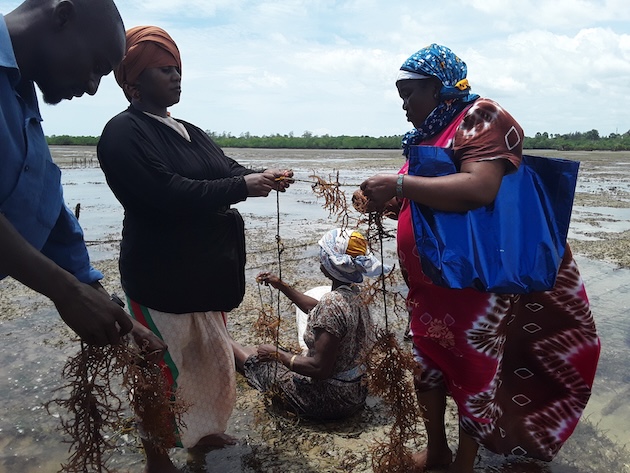
Scientists say replacing just 10 percent of global vegetable intake with seaweed-derived products could free up large portions of land. Credit: Joyce Chimbi/IPS

Scientists say replacing just 10 percent of global vegetable intake with seaweed-derived products could free up large portions of land. Credit: Joyce Chimbi/IPS

Current rates of land degradation pose a major environmental and socioeconomic threat, driving climate change, biodiversity loss, and social crises. Food production to feed more than 8 billion people is the dominant land use on Earth. Yet, this industrial-scale enterprise comes with a heavy environmental toll.


Preventing and reversing land degradation are key objectives of the United Nations Convention to Combat Desertification (UNCCD) and are also fundamental for the United Nations Framework Convention on Climate Change (UNFCCC) and the Convention on Biological Diversity (CBD).

These three conventions emerged from the 1992 Rio Earth Summit to address the interconnected crises of biodiversity loss, climate change and land degradation. A paper published today in Nature by 21 leading scientists argues that the targets of “these conventions can only be met by ‘bending the curve’ of land degradation and that transforming food systems is fundamental for doing so.”

Lead author Fernando T. Maestre of the King Abdullah University of Science and Technology (KAUST), Saudi Arabia, says the paper presents “a bold, integrated set of actions to tackle land degradation, biodiversity loss, and climate change together, as well as a clear pathway for implementing them by 2050.”

“By transforming food systems, restoring degraded land, harnessing the potential of sustainable seafood, and fostering cooperation across nations and sectors, we can ‘bend the curve’ and reverse land degradation while advancing towards goals of the UN Convention to Combat Desertification and other global agreements.”

Co-author Barron J. Orr, UNCCD’s Chief Scientist, says, “Once soils lose fertility, water tables deplete, and biodiversity is lost, restoring the land becomes exponentially more expensive. Ongoing rates of land degradation contribute to a cascade of mounting global challenges, including food and water insecurity, forced relocation and population migration, social unrest, and economic inequality.”

“Land degradation isn’t just a rural issue; it affects the food on all our plates, the air we breathe, and the stability of the world we live in. This isn’t about saving the environment; it’s about securing our shared future.”

The authors suggest an ambitious but achievable target of 50 percent land restoration for 2050—currently, 30 percent by 2030—with enormous co-benefits for climate, biodiversity and global health. Titled ‘Bending the curve of land degradation to achieve global environmental goals,’ the paper argues that it is imperative to ‘bend the curve’ of land degradation by halting land conversion while restoring half of degraded lands by 2050.

“Food systems have not yet been fully incorporated into intergovernmental agreements, nor do they receive sufficient focus in current strategies to address land degradation. Rapid, integrated reforms focused on global food systems, however, can move land health from crisis to recovery and secure a healthier, more stable planet for all,” reads parts of the paper.

Against this backdrop, the authors break new ground by quantifying the impact of reducing food waste by 75 percent by 2050 and maximizing sustainable ocean-based food production—measures that alone could spare an area larger than Africa. They say restoring 50 percent of degraded land through sustainable land management practices would correspond to the restoration of 3 Mkm² of cropland and 10 Mkm² of non-cropland, a total of 13 Mkm².

Stressing that land restoration must involve the people who live on and manage the land—especially Indigenous Peoples, smallholder farmers, women, and other vulnerable people and communities. Co-author Dolors Armenteras, Professor of Landscape Ecology at Universidad Nacional de Colombia, Bogotá, says land degradation is “a key factor in forced migration and conflict over resources.”

“Regions that rely heavily on agriculture for livelihoods, especially smallholder farmers, who feed much of the world, are particularly vulnerable. These pressures could destabilize entire regions and amplify global risks.”

To support these vulnerable segments of the population, the paper calls for interventions such as shifting agricultural subsidies from large-scale industrial farms toward sustainable smallholders, incentivizing good land stewardship among the world’s 608 million farms, and fostering their access to technology, secure land rights, and fair markets.

“Land is more than soil and space. It harbors biodiversity, cycles water, stores carbon, and regulates climate. It gives us food, sustains life, and holds deep roots of ancestry and knowledge. Today, over one-third of Earth’s land is used to grow food – feeding a global population of more than 8 billion people,” says Co-author Elisabeth Huber-Sannwald, Professor, the Instituto Potosino de Investigación Científica y Tecnológica, San Luis Potosí, Mexico.

“Yet today,” she continues, “Modern farming practices, deforestation, and overuse are degrading soil, polluting water, and destroying vital ecosystems. Food production alone drives nearly 20 percent of global emissions of greenhouse gases. We need to act. To secure a thriving future – and protect land – we must reimagine how we farm, how we live, and how we relate to nature – and to each other.”

With an estimated 56.5 Mkm² of agricultural land, cropland, and rangelands being used to produce food, and roughly 33 percent of all food produced being wasted, of which 14 percent is lost post-harvest at farms and 19 percent at the retail, food service and household stages, reducing food waste by 75 percent, therefore, could spare roughly 13.4 Mkm² of land.

The authors’ proposed remedies include policies to prevent overproduction and spoilage, banning food industry rules that reject “ugly” produce, encouraging food donations and discounted sales of near-expiry products, education campaigns to reduce household waste and supporting small farmers in developing countries to improve storage and transport.

Other proposed solutions include integrating land and marine food systems, as red meat produced in unsustainable ways consumes large amounts of land, water, and feed and emits significant greenhouse gases. Seafood and seaweed are sustainable, nutritious alternatives. Seaweed, for example, needs no freshwater and absorbs atmospheric carbon.

The authors recommend measures such as replacing 70 percent of unsustainably produced red meat with seafood, such as wild or farmed fish and mollusks. Replacing just 10 percent of global vegetable intake with seaweed-derived products could free up over 0.4 Mkm² of cropland.

They nonetheless note that these changes are especially relevant for wealthier countries with high meat consumption. In some poorer regions, animal products remain crucial for nutrition. The combination of food waste reduction, land restoration, and dietary shifts, therefore, would spare or restore roughly 43.8 Mkm² in 30 years (2020-2050).

The proposed measures combined would also contribute to emission reduction efforts by mitigating roughly 13.24 Gt of CO₂-equivalent per year through 2050 and help the world community achieve its commitments in several international agreements, including the three Rio Conventions and UN SDGs.

Overall, the authors call for the UN’s three Rio conventions—CBD, UNCCD and UNFCCC—to unite around shared land and food system goals and encourage the exchange of state-of-the-art knowledge, track progress and streamline science into more effective policies, all to accelerate action on the ground.

A step in the right direction, UNCCD’s 197 Parties, at their most recent Conference of Parties (COP16) in Riyadh, Saudi Arabia, have already adopted a decision on avoiding, reducing and reversing land and soil degradation of agricultural lands.

The Findings By Numbers

  • 56%: Projected increase in food production needed by 2050 if we stay on our current path
  • 34%: Portion of Earth’s ice-free land already used for food production, headed to 42% by 2050
  • 21%: Share of global greenhouse gas emissions produced by food systems
  • 80%: Proportion of deforestation driven by food production
  • 70%: Amount of freshwater consumption that goes to agriculture
  • 33%: Fraction of global food that currently goes to waste
  • USD 1 trillion: Estimated annual value of food lost or wasted globally
  • 75%: Ambitious target for global food waste reduction by 2050
  • 50%: Proposed portion of degraded land to be restored by 2050 using sustainable land management
  • USD 278 billion: Annual funding gap to achieve UNCCD land restoration goals
  • 608 million: Number of farms on the planet
  • 90%: Percentage of all farms under 2 hectares
  • 35%: Share of the world’s food produced by small farms
  • 6.5 billion tons: Potential biomass yield using 650 million hectares of ocean for seaweed farming
  • 17.5 million km²: Estimated cropland area saved if humanity adopts the proposed Rio+ diet (less unsustainably produced red meat and more sustainably sourced seafood and seaweed-derived food products)
  • 166 million: Number of people who could avoid micronutrient deficiencies with more aquatic foods in their diet

IPS UN Bureau Report

  Source

Four Ways Asia Can Strengthen Regional Health Security Before the Next Pandemic

Civil Society, Featured, Global, Headlines, Health, Humanitarian Emergencies, IPS UN: Inside the Glasshouse, TerraViva United Nations

Opinion

Regional cooperation can help countries respond more effectively to future pandemics. Credit: Asian Development Bank (ADB)

MANILA, Philippines, Aug 13 2025 (IPS) – In an interconnected world when infections can circle the globe in hours, cooperation in preparing for pandemics is essential. The COVID-19 pandemic highlighted just how vulnerable countries are when surveillance is fragmented, laboratory networks are underfunded and underequipped, and vaccines are not dispersed equitably.


To safeguard regional health security, several health interventions must be treated as regional public goods.

Regional public goods are services or assets that benefit multiple countries but cannot be provided by a single nation alone. They allow developing economies to cooperate on costs, expertise, and technology for greater development impact than they could achieve individually.

For example, efficient regional infrastructure and trade facilitation brings down transportation and trade costs and promotes freer movement of people and goods; delivering energy across borders improves access to sustainable energy; and financial agreements, such as the Chiang Mai Initiative Multilateralization, boost regional financial stability during crises.

Regional public goods fall into three broad categories: economic initiatives such as transport infrastructure, energy networks, and trade agreements like the Regional Comprehensive Economic Partnership; environmental efforts including river basin management, pollution control, and cross-border conservation programs; and social investments such as public health systems, regional education platforms, and collaborative research networks.

Countries in Asia and the Pacific already work together on trade, infrastructure, and climate action. Broadening areas of cooperation, however, can help countries meet their development goals and address increasingly complex health challenges, including emergencies.

This partnership is particularly important in the area of health emergency response.

A succession of human and animal infections including SARS, avian influenza, African swine fever and COVID-19 have shown just how quickly pathogens can go from a local problem to one that threatens regional and even global security. Countries can protect themselves through early alerts and early action via coordinated surveillance, data-sharing, and equitable vaccine access.

Responses to many recent outbreaks, including the COVID-19 pandemic, have been slow, fragmented, and unfair. Greater regional cooperation can mitigate the impacts of epidemics, especially for the most vulnerable, by pooling expertise, resources, and response capacities.

Health intersects with transport, trade, gender equality, education, and livelihoods. A healthy population underpins a resilient economy and supports social stability. Supporting each other to build systems that can prevent and respond to outbreaks makes sense for countries and the region.

To respond faster and smarter to the next pandemic, countries in Asia and the Pacific should focus on four high-impact areas regional integration and collective action:

Contact Tracing Networks

Early detection saves lives but only if data move faster than the disease. A regional contact tracing network, using interoperable digital tools and shared protocols, can help track outbreaks across borders.

By linking national systems through common standards and real-time data-sharing agreements, countries can monitor risks in high-risk areas, such as along borders and major transit corridors, and prevent spread.

Health Communications Coordination

Misinformation was a major problem during the COVID-19 pandemic, eroding public trust and weakening response efforts. A regional health communications framework, backed by multilingual messaging templates, rumor tracking systems, and coordinated press briefings, can ensure consistent, culturally relevant, and science-based public information across countries. Successes in reaching vulnerable populations and mobile communities can also be quickly shared.

Telemedicine for Cross-Border Care

Regional telemedicine platforms can connect healthcare providers across borders, especially in remote or small island states, ensuring continued access to care even when in-person services are disrupted. Joint investments in infrastructure, digital health standards, and clinician training can allow countries to offer virtual consultations, diagnostics, and even specialist referrals across the region.

Region-wide Public Health Funds

Collaborative procurement of vaccines, therapeutics and diagnostics have helped countries respond to disease outbreaks, and eradicate public health threats. Region-wide public health funds maintained by cooperating counties offer a means of improving timely access to life saving countermeasures.

Effectively preventing and preparing for pandemics requires countries to work in concert. These approaches can strengthen all types of health services and build resilience to all kinds of health threats. Now is the time to act decisively and secure a healthier, more prosperous future for all.

This article was originally published on the Asian Development Blog, and is based, in part, on research related to ADB’s 1st INSPIRE Health Forum: Inclusive, Sustainable, Prosperous and Resilient Health Systems in Asia and the Pacific. Ben Coghlan contributed to this blog post.

Dr. Eduardo P. Banzon is ADB Director, Health Practice Team, Human and Social Development Sectors Office, Sectors Group, who champions Universal Health Coverage and has long provided technical support to countries in Asia and the Pacific in their pursuit of this goal.

Dr. Michelle Apostol is a Health Officer for the Health Practice Team of ADB supporting the bank’s initiatives in strengthening health systems of member countries and advocating for the advancement of Universal Health Coverage (UHC).

Anne Cortez is a communications and knowledge management consultant with ADB. She brings over a decade of experience working with governments, think tanks, nonprofits, and international organizations on initiatives advancing health equity, climate action, and digital inclusion across Asia and the Pacific.

IPS UN Bureau

  Source

Beyond Lives Saved: Why Early Warning Systems Are a Smart Investment

Asia-Pacific, Civil Society, Climate Change, Development & Aid, Environment, Featured, Global, Headlines, International Justice, Natural Resources, Sustainable Development Goals, TerraViva United Nations, Trade & Investment

Opinion

A buoy in a sea of Vladivostok, Russia is tracking movement of waves. Early warning system is vital for effective disaster management. Credit: Unsplash/Ant Rozetsky

BANGKOK, Thailand, Aug 8 2025 (IPS) – Significant progress has been made globally in implementing national and local disaster risk reduction strategies. Yet, the impact of disasters on lives and economies persists and disaster resilience is one of the most regressed areas in Sustainable Development Goal implementation.


Moreover, climate change is intensifying the frequency and severity of disasters. Under a 1.5°C warming scenario, average annualized losses could reach 2.4 per cent of GDP.

Traditionally, early warning systems (EWS) have focused on saving lives. While reasonable, this narrow framing often leaves potential co-benefits untapped. Given today’s strained economic and political context, investments in resilience must also generate broader economic and developmental benefits.

This potential payoff is no myth, latest studies show that every US$1 invested in adaptation is expected to yield over $10.50 in benefits over a 10 year period.

The Triple Dividend of Resilience model offers a comprehensive rationale for investment, emphasizing three interconnected benefits:

1: Saving lives and avoiding losses

The 2024 Global status on MHEWS found that countries with less comprehensive multi-hazard early warning systems (MHEWS) have a disaster-related mortality ratio that is nearly six times higher than that of countries with ‘substantial’ to ‘comprehensive’ MHEWS. Moreover, providing just 24 hours’ notice of an impending storm can reduce potential damage by 30 per cent.

For small island developing states, this potential can be higher – one study found that over 80 per cent of Cyclone Evans’ economic destruction in Samoa, amounting to 28 per cent of the country’s GDP, could have been avoided through efficient EWS.

Largely untapped, heat early warning systems also have proven benefits, from saving lives (see Ahmedabad’s Heat Action plan, which averts an estimated 1,190 heat-related deaths annually) to demonstrating clear economic benefits (for example, Adelaide’s Heat Health Warning System with a benefit-cost ratio of 2.0–3.3 by reducing heat-related hospital admissions and ambulance callouts).

2. Resource Management and Optimization

EWS enhance decision-making across sectors such as agriculture, water management, and energy, providing reliable, timely forecasts to support more efficient and sustainable operations. Crop advisory services boost yields by an estimated $4 billion and $7.7 billion annually in India and China, respectively. Some studies demonstrating that a 1 per cent increase in forecast accuracy results in 0.34 per cent increase in crop yields.

Similarly, fisherfolk earnings can be optimised when supported by Fishing Zone advisories that take into account the changing climate (in the same study, India’s fisherfolk are reported to earn Rs.17,820 more each trip when using the Potential Fishing Zone advisory of INCOIS).

3. Unlocking Co-Benefits

In disaster-prone regions, the constant threat of extreme weather creates persistent uncertainty that discourages long-term investments, limits entrepreneurship, and shortens planning horizons. By improving hazard detection and forecasting, EWS boosts confidence for both local and foreign investments. Beyond economic gains, the third dividend also delivers social and environmental co-benefits, regardless of whether disasters occur.

When EWSs are developed with active community involvement, social cohesion often follows (Viet Nam’s community-based early warning demonstrate this intangible benefit clearly).

Regional collaboration is a pathway to unlocking the triple dividend of resilience.

A key outcome of the 4th International Conference on Financing for Development (FfD4) in Seville reaffirmed the importance of multilateralism as a framework for addressing global challenges.

Initiatives like ESCAP’s multi-donor Trust Fund for Tsunami, Disaster and Climate Preparedness, has proven the success of pooled investments in regional early warning solutions. A recent Cost Benefit Analysis funded by the Swiss Agency for Development and Cooperation, reviewed 20 years of Trust Fund investments and found that each dollar invested had generated equivalent 3.7-5.5 dollars in benefits (see Figure below).

Source: ESCAP Authors

Established by the Trust Fund is an example of reduced DRR costs maximising benefits: the Regional Integrated Multi-Hazard Early Warning System (RIMES) has developed into a fit-for-purpose operational hub, now supporting 62 countries across Asia, Africa and the Pacific with advances and interoperable early warning solutions.

Through shared infrastructure, forecasting data, and governance mechanisms, these partnerships help countries lower individual costs, improve transboundary risk monitoring, and attract more sustained technical and financial support.

These regional disaster risk management approaches go beyond saving lives and deliver social, economic, and environmental co-benefits, unlocking a cycle of development and risk reduction. As disasters are turning more complex with compounding and cascading impacts, our shared early warning should remain agile, sustained and leverage the advances in artificial intelligence and machine learning.

Looking ahead, the pay-off from preparedness will be realised when policy and financial environments are reframed to truly optimise the return on investment of sustained DRM efforts at all levels.

As the UNDRR Global Assessment Report 2025 highlights, disaster and climate risks must be embedded at the heart of financial decisions and policy frameworks, not simply as crises to respond to. To do this, dedicated financing mechanisms are required to ensure sustained and predictable support for regional DRM initiatives. Of equal importance is national governments support for the integration of EWS into national and regional development planning.

ESCAP is uniquely placed to support this shift by scaling multi-hazard early warning systems that deliver the triple dividend of resilience., The upcoming ESCAP Committee on Disaster Risk Reduction provides a timely opportunity for countries to endorse a forward-looking agenda that reinforces early warning as essential infrastructure.

In today’s climate-uncertain world, the policy case for investing in disaster resilience is clear. DRM is crucial not only for lifesaving but also a driver of sustainable growth.

Temily Baker is Programme Management Officer, Disaster Risk Reduction Section (DRS); Morgan Schmeising Barnes is Intern, DRS; and Sanjay Srivastava is Retired, Former Chief DRS.
SDGs 1, 13, 17

IPS UN Bureau

  Source