Changing a System that Exploits Nature and Women, for a Sustainable Future

Active Citizens, Civil Society, Climate Action, Climate Change, Conferences, Environment, Gender, Global Governance, Headlines, Human Rights, Indigenous Rights, IPS UN: Inside the Glasshouse, Latin America & the Caribbean, Regional Categories, Women & Climate Change

Women & Climate Change

Peruvian farmer Hilda Roca, 37, stands in her agro-ecological garden in Cusipata, a town located at more than 3,300 meters above sea level in the highlands of Cuzco, where she grows vegetables for her family and sells the surplus with the support of her adolescent daughter and son. CREDIT: Mariela Jara/IPS

Peruvian farmer Hilda Roca, 37, stands in her agro-ecological garden in Cusipata, a town located at more than 3,300 meters above sea level in the highlands of Cuzco, where she grows vegetables for her family and sells the surplus with the support of her adolescent daughter and son. CREDIT: Mariela Jara/IPS

LIMA, Mar 7 2022 (IPS) – “Pachamama (Mother Earth) is upset with all the damage we are doing to her,” says Hilda Roca, an indigenous Peruvian farmer from Cusipata, in the Andes highlands of the department of Cuzco, referring to climate change and the havoc it is wreaking on her life and her environment.


From her town, more than 3,300 meters above sea level, she told IPS that if women were in power equally with men, measures in favor of nature that would alleviate the climate chaos would have been approved long ago. “But we need to fight sexism so that we are not discriminated against and so our rights are respected,” said the Quechua-speaking farmer.

The link between climate change and gender is the focus of the United Nations’ celebration of this year’s International Women’s Day, Mar. 8, under the theme “Gender equality today for a sustainable tomorrow”.

The aim is to “make visible how the climate crisis is a problem that is closely related to inequality, and in particular to gender inequality, which is expressed in an unequal distribution of power, resources, wealth, work and time between women and men,” Ana Güezmes, director of the Gender Affairs Division of the Economic Commission for Latin America and the Caribbean (ECLAC), told IPS.

Latin America is highly vulnerable to the climate crisis despite the fact that it emits less than 10 percent of the greenhouse gases that are warming the planet.

In addition, climate injustice has a female face in the region: lower-income population groups, where the proportion of women is higher, are more exposed to climate effects due to their limited access to opportunities, despite the fact that they are less responsible for emissions.

The extreme poverty rate in the region increased from 13.1 percent to 13.8 percent of the population – from 81 to 86 million people – between 2020 and 2021, according to data released by ECLAC in January. Women between 25 and 59 years of age are the most affected compared to their male counterparts. This situation is worse among indigenous and rural populations, who depend on nature for their livelihoods.

These aspects were highlighted at ECLAC’s 62nd Meeting of the Presiding Officers of the Regional Conference on Women, held Jan. 26-27, whose declaration warns that women and girls affected by the adverse impacts of climate change and disasters face specific barriers to access to water and sanitation, health and education services, and food security.

And it is women who are mainly responsible for feeding their families, fetching water and firewood, and taking care of the vegetable garden and animals.

“That is why we maintain that the post-pandemic recovery must be transformative in terms of sustainability and equality,” Güezmes emphasized from ECLAC headquarters in Santiago, Chile.

To this end, she said, this recovery “must untie the four structural knots of gender inequality that affect the region so much: socioeconomic inequality and poverty; the sexual division of labor and the unjust organization of caregiving; the concentration of power and patriarchal, discriminatory and violent cultural patterns; and the predominance of the culture of privilege.”
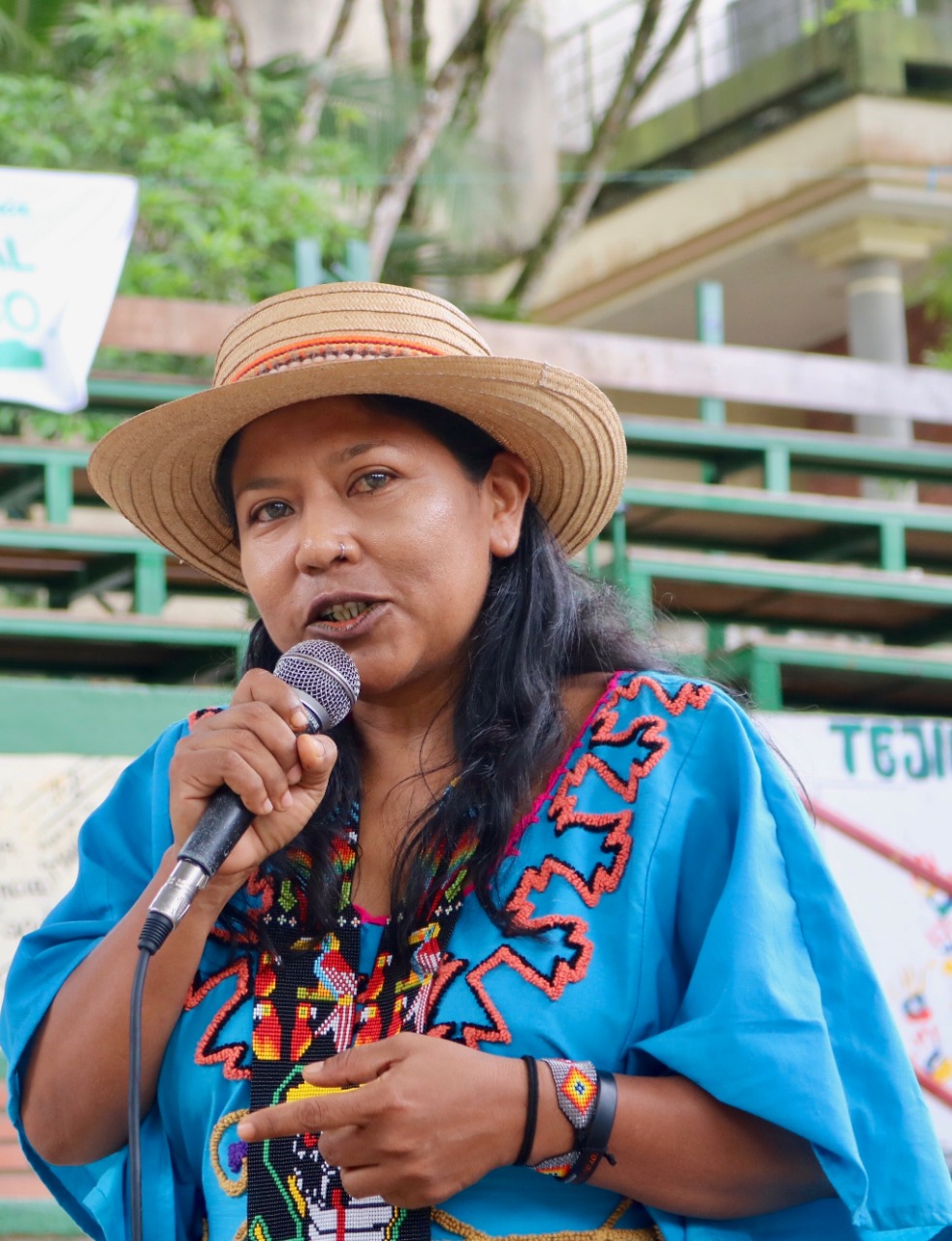
Luz Mery Panche, an indigenous leader of the Nasa people of Colombia. : Courtesy of Luz Mery Panche

Luz Mery Panche, an indigenous leader of the Nasa people of Colombia. : Courtesy of Luz Mery Panche

Reconciling with Mother Earth

Luz Mery Panche, an indigenous leader of the Nasa people, discussed the need to incorporate a gender perspective into the climate crisis. She talked to IPS from San Vicente del Caguán, in the department of Caquetá, in the Amazon region of Colombia, a country facing violent attacks on defenders of land and the environment.

For her, more than sustainable, “it is about moving towards a sustainable future.”

“We need to change the conditions that have generated war and chaos in the country, which is due to the hijacking of political and economic power by an elite that has been in the decision-making spaces since the country emerged 200 years ago,” she said.

Panche is a member of the National Ethnic Peace Coordination committee (Cenpaz) and in that capacity is part of the special high-level body with ethnic peoples for the implementation of the peace agreement in her country. She is a human rights activist and a defender of the Amazon rainforest.

She argued that to achieve a sustainable future “we must reconcile with Mother Earth and move towards the happy, joyful way of life that we deserve as human beings.”

This, she said, starts by changing the economic model violently imposed on many areas without taking into account the use of the soil, its capacities and benefits; by changing concepts of economy and the educational model; and by organizing local economies and focusing on a future of respect, solidarity and fraternity.

Panche said that in order to move towards this model, women “must have informed participation regarding the effects of climate change.

“Although we prefer to call Mother Earth’s fever ‘global warming’. And it is up to us to remember to make decisions that put us back on the ancestral path of harmony and balance, what we call returning to the origin, to the womb, to improve coexistence and the sense of humanity,” she said.
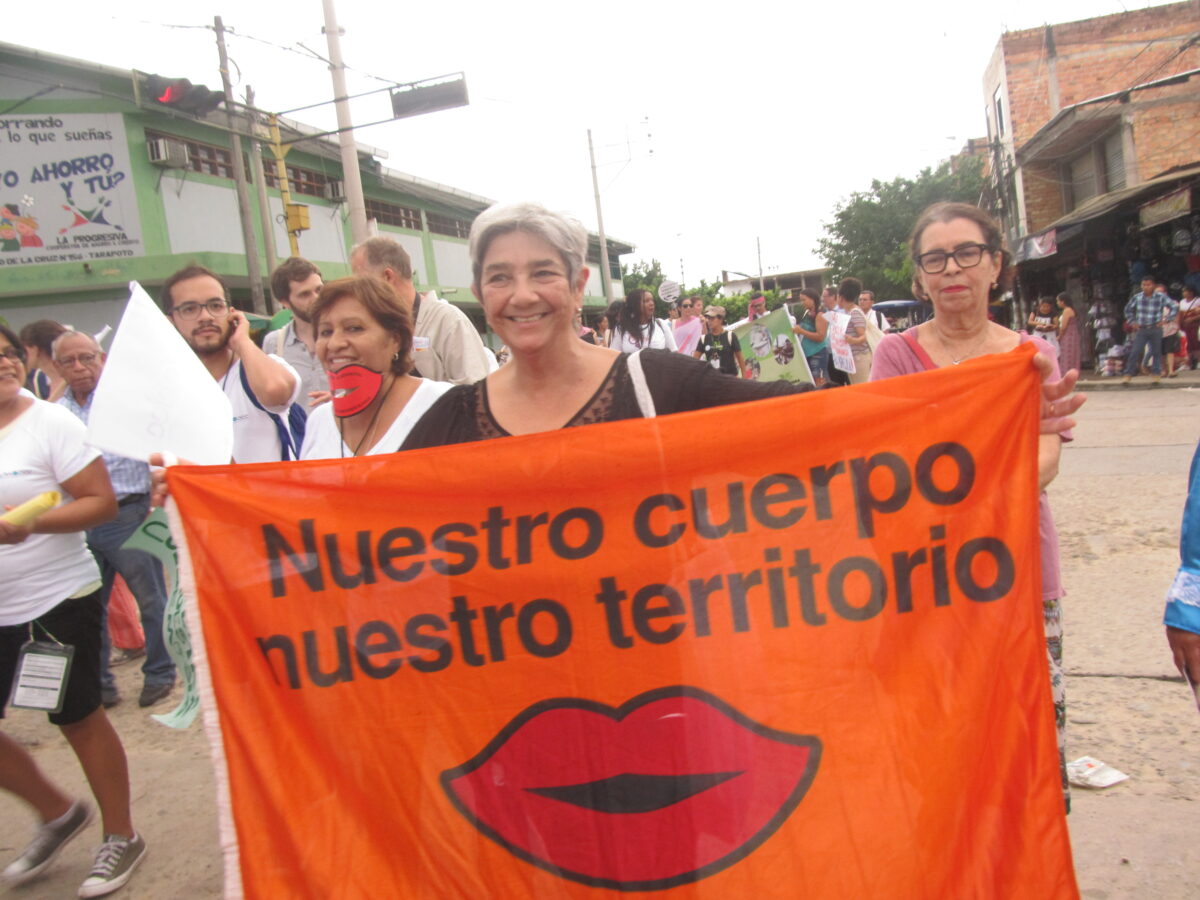
Uruguayan ecofeminist Lilian Celiberti carries a banner reading "Our body, our territory" in the streets of Tarapoto, a city in the central Peruvian jungle, during an edition of the Pan-Amazon Social Forum. CREDIT: Mariela Jara/IPS

Uruguayan ecofeminist Lilian Celiberti carries a banner reading “Our body, our territory” in the streets of Tarapoto, a city in the central Peruvian jungle, during an edition of the Pan-Amazon Social Forum. CREDIT: Mariela Jara/IPS

Changing times: another kind of coexistence with nature and equality

Lilian Celiberti, Uruguayan ecofeminist and founder of the non-governmental Cotidiano Mujer and Colectivo Dafnias, told IPS from Montevideo that governments have the tools to work on gender equality today in order to have a sustainable future tomorrow, as this year’s Mar. 8 slogan states.

But against this, she said, there are economic interests at play that maintain a development proposal based on growth and extreme exploitation of nature.

She called for boosting local economies and agroecology among other community alternatives in the Latin American region that run counter to the dominant government approach.

“But I believe that we are at a very complex crossroads and that only social participation will be able to find paths of multiple, diverse participation and collective sustainability that incorporate care policies and awareness of the eco-dependence of human society,” she said.

Celiberti said “we are on a planet of finite resources and we have to generate a new relationship with nature, but I see that governments are far from this kind of thinking.”

ECLAC’s Güezmes emphasized that social movements, especially those led by young indigenous and non-indigenous women in the region, have exposed the multiple asymmetries and inequalities that exist.
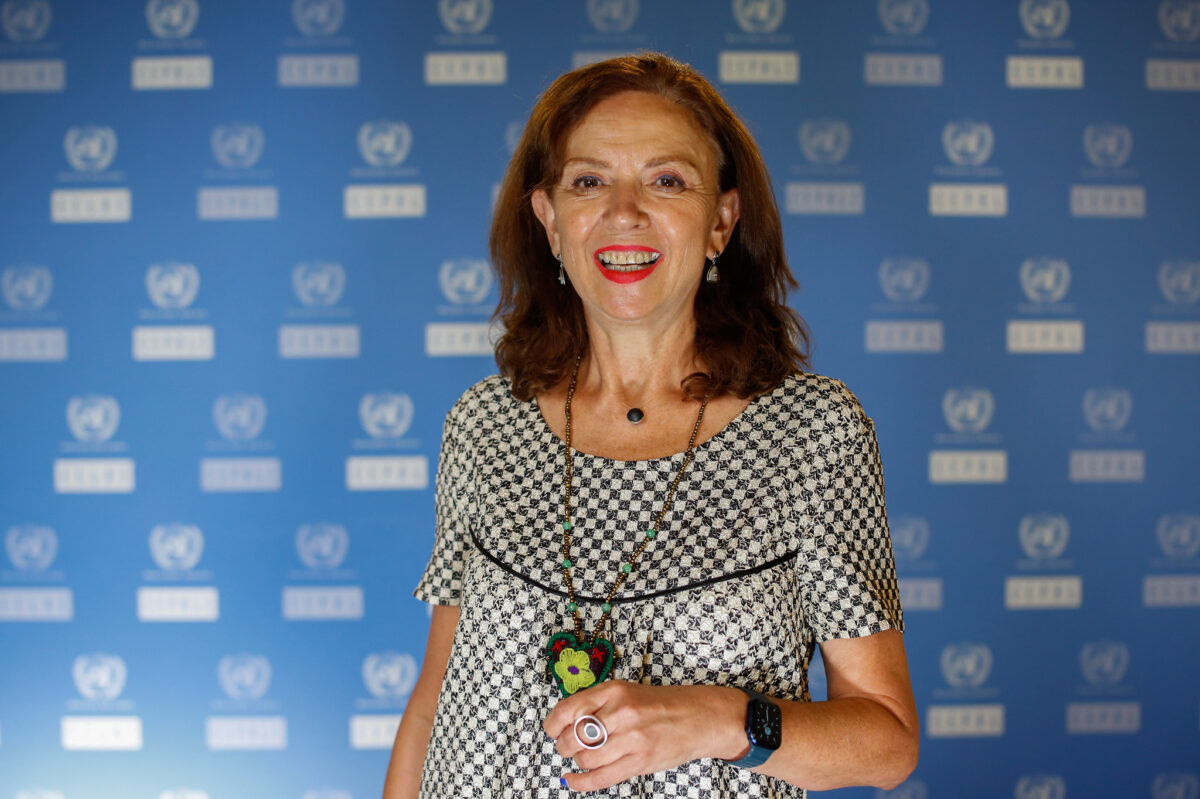
Ana Güezmes is director of the Gender Division of the Economic Commission for Latin America and the Caribbean. CREDIT: ECLAC

Ana Güezmes is director of the Gender Division of the Economic Commission for Latin America and the Caribbean. CREDIT: ECLAC

“We have an intergenerational debt, where young women have put at the center of the debate the unsustainability of the current development style that has direct impacts on our future at a global level and direct impacts on their livelihoods, territories and communities,” said Güezmes, who is from Spain and has worked for years within the United Nations in several Latin American countries.

She recognized the contribution of feminist movements that focus on a redistribution of power, resources and time to move towards an egalitarian model that includes the reduction of violence.

And she warned that from a climate perspective, the window of opportunity for action is closing, so we must act quickly, creating synergies between gender equality and climate change responses.

Güezmes said that “we are looking at a change of era” with global challenges that require a profound transformation that recognizes how the economy, society and the environment are interrelated. “To leave no one behind and no woman out, we must advance synergistically among these three dimensions of development: economic, social and environmental,” she remarked.

The expert cited gender equality as a central element of sustainable development because women need to be at the center of the responses. To this end, ECLAC plans to promote affirmative actions that bolster comprehensive care systems, decent work and the full and effective participation of women in strategic sectors of the economy.

She also raised the need to build “a renewed global pact” to strengthen multilateralism and achieve greater solidarity with middle-income countries on issues central to inclusive growth, sustainable development and gender equality.

“We have reiterated the urgent need to advance new political, social and fiscal pacts focused on structural change for equality,” Güezmes stressed.

She stated that in this perspective, the participation of women in all their diversity in decision-making processes is very important, particularly with regard to climate change.

To this end, she remarked, it is necessary to monitor their degree of intervention at the local, national and international levels – where asymmetry persists – and to provide women’s organizations, especially grassroots ones, with the necessary resources to become involved in such spaces.

“It involves strengthening financial flows so that they reach women who are at the forefront of responses to climate change and who are familiar with the situation in their communities, and boosting their capacities so that women from indigenous, native and Afro-descendant peoples participate in decision-making spaces related to the environment to promote the exchange of their ancestral knowledge on adaptation and mitigation measures,” she said.

Güezmes highlighted the contribution of women environmental activists and defenders to democracy, peace and sustainable development. It is necessary to “recognize their contribution to the protection of biodiversity and to development, despite doing so in conditions of fragility and exploitation and having less access to land, productive resources and their control,” she said.

For her part, Roca, who like other local women in the Peruvian Andes highlands practices agroecology to adapt to climate change and reconcile with Pachamama, calls for their voices to be heard.

“We have ideas and proposals and they need to be taken into account to improve the climate and our lives,” the indigenous farmer said.

  Source

A Tale of Two Refugee Crises

Civil Society, Development & Aid, Editors’ Choice, Featured, Global, Headlines, Humanitarian Emergencies, Migration & Refugees, TerraViva United Nations

Opinion

Families carry their belongings through the Zosin border crossing in Poland after fleeing Ukraine. Credit: UNHCR/Chris Melzer

GENEVA, Mar 7 2022 (IPS) Russia’s brutal and devastating invasion of Ukraine has triggered the largest and fastest refugee movement in Europe since World War II. After only a single week, more than one million people had already fled the country.


The UN High Commissioner for Refugees (UNHCR) initially predicted that as many as four million people would flee; the UN now thinks that some 10 million will eventually be displaced.

While the EU calls this the largest humanitarian crisis that Europe has witnessed in “many, many years,” it is important to remember that it was not so long ago that the continent faced another critical humanitarian challenge, the 2015 refugee “crisis” spurred by the conflict in Syria.

But the starkly different responses that Europe has directed at these two situations—in addition to its draconian response to ongoing African migration across the Mediterranean—provide a cautionary lesson for those hoping for a more humane, generous Europe.

These differences also help explain why some of those fleeing Ukraine—in particular, nationals from Africa, Asia, and the Middle East—are not receiving the same generous treatment as the citizens of Ukraine.

Ukraine’s neighbours have thus far responded with an outpouring of public and political support for the refugees. Political leaders have said publicly that refugees from Ukraine are welcome and countries have been preparing to receive refugees on their borders with teams of volunteers handing out food, water, clothing, and medicines.

Slovakia and Poland have said that refugees fleeing the war in Ukraine will be allowed to enter their countries even without passports, or other valid travel documents; other EU countries, such as Ireland, have announced the immediate lifting of visa requirements for people coming from Ukraine.

Across Europe, free public transport and phone communication is being provided for Ukrainian refugees. On 3 March, the EU voted to activate the Temporary Protection Directive, introduced in the 1990’s to manage large-scale refugee movements during the Balkans crisis.

Under this scheme, refugees from Ukraine will be offered up to three years temporary protection in EU countries, without having to apply for asylum, with rights to a residence permit and access to education, housing, and the labour market.

The EU also proposed simplifying border controls and entry conditions for people fleeing Ukraine. Ukrainian refugees can travel for 90 days visa-free throughout EU countries, and many have been moving on from neighbouring countries to join family and friends in other EU countries. Throughout Europe, the public and politicians are mobilizing to show solidarity and support for those fleeing Ukraine.

This is how the international refugee protection regime should work, especially in times of crisis: countries keep their borders open to those fleeing wars and conflict; unnecessary identity and security checks are avoided; those fleeing warfare are not penalized for arriving without valid identity and travel documents; detention measures are not used; refugees are able to freely join family members in other countries; communities and their leaders welcome refugees with generosity and solidarity.

But we know that this is not how the international protection regime has always operated in Europe, particularly in those same countries that are now welcoming refugees from Ukraine.

Public discourse in Poland, Hungary, Slovakia, and Romania is often tainted by racist and xenophobic rhetoric about refugees and migrants, in particular those from Middle Eastern and African countries, and they have adopted hostile policies like border push-backs and draconian detention measures.

A case in point is Hungary: The country has refused to admit refugees from non-EU countries since the 2015 “refugee crisis.” Prime Minister Victor Orbán has described non-European refugees as “Muslim invaders” and migrants as “a poison,” claiming that Hungary should not accept refugees from different cultures and religions to “preserve its cultural and ethnic homogeneity.”

In May 2020, The European Court of Justice found that Hungary’s arbitrary detention of asylum seekers in transit zones on its border with Serbia was illegal.

Hungary was not alone in its harsh response to the 2015 “crisis.” In their book Immigration Detention in the European Union: In the Shadow of the “Crisis” (Springer 2020), Global Detention Project (GDP) researchers detailed the evolution of the detention systems of all EU Members States before, during, and after the 2015 refugee crisis.

Among their key findings: During the years leading up to 2015, migration-related detention had largely plateaued across the EU, but refugee pressures spurred important increases in detention regimes across the entire region, which remained in place long after the “crisis” had subsided.

Fuelling these increases was anti-migrant rhetoric that spread from Brussels across the entire continent, abetted by EU-wide migration directives that allowed for lengthy detention periods. Then-European Council President Donald Tusk argued at that time that all arriving refugees could be detained for up to 18 months, in line with the limits in EU directives, while their claims were processed.

More recently, in late 2021, the terrible treatment of migrants and asylum seekers, most of them from Iraq and Afghanistan, trapped on Belarus’s borders with Poland and Lithuania sparked outrage across Europe. Belarus was accused of weaponizing the plight of these people, luring them to Belarus in order to travel on to EU countries as retaliation against EU sanctions.

Polish border guards were brutal in their treatment of these refugees and migrants, many of whom sustained serious injuries from Polish and Belarussian border guards. Thousands were left stranded in the forests between the two countries in deplorable conditions with no food, shelter, blankets, or medicines: at least 19 migrants died in the freezing winter temperatures.

In response to this situation, Poland sent soldiers to its border, erected razor-wire fencing, and started the construction of a 186-kilometre wall to prevent asylum seekers entering from Belarus. It also adopted legislation that would allow it to expel anyone who irregularly crossed its border and banned their re-entry.

Even before the stand-off between Poland and Belarus, refugees in Poland did not receive a warm welcome. Very few asylum seekers were granted refugee status (in 2020 out of 2,803 applications, only 161 were granted refugee status) and large numbers of refugees and migrants were detained: a total of 1,675 migrants and asylum seekers were in detention in January 2022, compared to just 122 people during all of 2020.

With this recent history as backdrop, the double standards and racism inherent in Europe’s refugee responses are glaring. There are no calls from Brussels today to detain refugees fleeing Ukraine for up to 18 months.

Why? Because, as Bulgarian Prime Minister Kiril Petkov said recently about people from Ukraine: “These are not the refugees we are used to. … These people are Europeans. … These people are intelligent, they are educated people. … This is not the refugee wave we have been used to, people we were not sure about their identity, people with unclear pasts, who could have been even terrorists.”

Similarly, Hungary’s Orban has said that every refugee coming from Ukraine will be “welcomed by friends in Hungary,” adding that one doesn’t have to be a “rocket scientist” to see the difference between “masses arriving from Muslim regions in hope of a better life in Europe” and helping Ukrainian refugees who have come to Hungary because of the war.

Sadly, these double standards have reared in the response to non-Ukrainians fleeing the war in Ukraine. There are a growing number of accounts of students and migrants from Africa, the Middle East, and Asia who have faced racist treatment, obstruction, and violence trying to flee Ukraine.

Many described being prevented from boarding trains and buses in Ukrainian towns while priority was given to Ukrainian nationals; others described being aggressively pulled aside and stopped by Ukrainian border guards when trying to cross into neighbouring countries.

There are also accounts of Polish authorities taking aside African students and refusing them entry into Poland, although the Polish Ambassador to the UN told a General Assembly meeting on 28 February that assertions of race or religion-based discrimination at Poland’s border were “a complete lie and a terrible insult to us.”

He asserted that “nationals of all countries who suffered from Russian aggression or whose life is at risk can seek shelter in my country.” According to the Ambassador, people from 125 different nationalities have been admitted into Poland from Ukraine.

Several African leaders have strongly criticized the discrimination on the borders of Ukraine, saying everyone has the same right to cross international borders to flee conflict and seek safety.

The African Union stated that “reports that Africans are singled out for unacceptable dissimilar treatment would be shockingly racist and in breach of international law,” and called for all countries to “show the same empathy and support to all people fleeing war notwithstanding their racial identity.”

Similar messages were shared by the UN Secretary General, Antonio Guterres, who said in a Tweet: “I am grateful for the compassion, generosity and solidarity of Ukraine’s neighbours who are taking in those seeking safety. It is important that this solidarity is extended without any discrimination based on race, religion or ethnicity,” and the UN High Commissioner for Refugees who stressed that “it is crucial that receiving countries continue to welcome all those fleeing conflict and insecurity—irrespective of nationality and race.”

The Ukraine refugee crisis presents Europe with not only an important opportunity to demonstrate its generosity, humanitarian values, and commitment to the international refugee protection regime; it is also a critical moment of reflection: Can the peoples of Europe overcome their widespread racism and animosity and embrace the universalist spirit of the 1951 Refugee Convention?

As Article 3 of the Convention holds, all member states “shall apply the provisions of this Convention to refugees without discrimination as to race, religion or country of origin.”

Rachael Reilly and Michael Flynn are based at the Global Detention Project in Geneva.

  Source

It’s Time to Step up for Street Vendors’ Rights

Asia-Pacific, Civil Society, Headlines, Labour, Poverty & SDGs

Opinion

Street Vendors Act - Since the passing of the act around seven years ago, only a minor fraction of its extensive recommendations has been implemented. Picture courtesy: Adam Cohn.

Since the passing of the act around seven years ago, only a minor fraction of its extensive recommendations has been implemented. Picture courtesy: Adam Cohn.

MUMBAI, India, Mar 2 2022 (IPS) – In the second week of January 2022, Purushottam—locally known as Prashant—a street vendor in central Delhi’s Connaught Place area, died by suicide. It was later discovered that the reason for his death was his inability to pay certain debts.


Ground reports show that, since November 8, 2021, approximately 150 street vendors in Connaught Place, including Purushottam, have lost their livelihoods due to forced eviction by municipal authorities.

Over the past few years, the vast population of vendors has reported facing repeated harassment or eviction at the hands of the police, local authorities, and society. Therefore, street vendors remain marginalised and their situation grows increasingly precarious, despite the fact that they are protected by the law

It is a complex combination of pressures from market traders’ associations, insensitive court orders, bureaucracy, and non-existent planning standards that have disallowed street vending—one of the largest economies for self-employed workers—in Connaught Place.

This removal of street vendors has further been replicated in other well-established markets of Delhi such as Lajpat Nagar, Sarojini Nagar, and Chandni Chowk, and is now being extended to other cities across India.

What the Street Vendors Act 2014 guarantees

In 2014, the central government passed the Street Vendors (Protection of Livelihood and Regulation of Street Vending) Act based on Article 21 of the Constitution of India—the right to live with dignity. As the title suggests, the act is designed to ‘protect’ and ‘regulate’ street vending in urban areas.

Till 2014, street vending was an ungoverned territory where ‘regulation’ meant the removal of vendors, who were considered illegal and unfit to be in cities. The Street Vendors Act 2014 attempted to change this mindset in the following ways:

  • It acknowledged vendors as an integral part of Indian cities and granted legal recognition to them by protecting them from evictions till they were surveyed.
  • The act created a governance framework that is participatory and decentralised, and primarily led by the town vending committees (TVCs) located in urban local bodies. TVCs are in charge of enumerating, identifying, and allocating vending zones in a city. Each TVC requires at least 40 percent of its members to be street vendors, with the rest of the committee including representation from local authorities, planning authorities, police, residential welfare associations, nonprofits, and market associations.
  • It allowed street vendors to be included in the city planning process by letting up to 2.5 percent of the city population engage in street vending.
  • It specifically mandated prevention against eviction and harassment.
  • The act laid out various inclusionary measures for the legal support and promotion of street vending through vendors’ welfare, training, and capacity building.

Overall, the act is a nuanced, well-designed legislation that is a result of numerous years of contributions from social movements led by street vendors’ associations and incremental progressive court directives.

Why are forced evictions taking place in Delhi?

Poor implementation of the act

The evictions taking place in Delhi have set a dangerous precedent by undermining the Street Vendors Act 2014—the only progressive legislation enacted for the upliftment of working-class groups such as street vendors. Since the passing of the act around seven years ago, only a minor fraction of its extensive recommendations has been implemented.

With much reluctance, it is only now that street vendors are being surveyed and issued licenses and certificates of vending in Delhi. However, with no demarcation of the vending and non-vending zones in the city, the vendors find themselves without ‘space’ on the city streets.

Over the past few years, the vast population of vendors has reported facing repeated harassment or eviction at the hands of the police, local authorities, and society. Therefore, street vendors remain marginalised and their situation grows increasingly precarious, despite the fact that they are protected by the law.

Judicial apathy

In 2021, various market traders’ associations put forth petitions challenging the act. While listening to their grievances, the Delhi High Court passed unfavourable comments on the legal rights of street vendors in Delhi.

The bench further questioned the basis of the act and said that “the country will go to [the] dogs if this act is implemented in its entirety. What will happen if street vendors start sitting on your doorsteps?”

The court also raised concerns over the rising number of vendors in the city and questioned how Delhi could become like London if the planning aspect wasn’t focused on. These comments were made alongside the passing of a legal order to remove street vendors from their spaces of work.

The same bench also stated that the act is heavily biased towards the street vendors and that there are no experts in the TVCs.

It should be noted that street vendors in Delhi make up only 40 percent of the TVC by having 12 seats out of 30, whereas 10 seats are taken by local authorities, planning authorities, the police and traffic police, the revenue department, the medical officer, and the CPWD/PWD/works department of the local authority.

The committee also offers eight seats to nonprofits, resident welfare associations, community-based organisations, and market traders’ associations—independent bodies that are nominated by the state government itself. With such a comprehensive list, encompassing the economic, spatial, health, social, and administration perspectives, the TVC is full of experts and, therefore, is not tilted towards the vendors.

Stagnant functioning of TVCs

As per the Street Vendors Act 2014, Delhi’s Street Vendor (Protection of Livelihood and Regulation of Street Vending) Rule 2017, and the Street Vendor (Protection of Livelihood and Regulation of Street Vending) Scheme 2019, Delhi has 27 TVCs across the three municipal corporations of Delhi, North Delhi Municipal Corporation, and Delhi Cantonment.

In spite of many deliberations in the TVCs where vendor representatives have pushed for a comprehensive survey to identify and register street vendors, there has been a bureaucratic lethargy and rigidness in execution. For example, the TVC meetings are not held regularly and survey and certificate issuance processes are slow.

Often the chairpersons—who are usually IAS officers—don’t listen to the TVC members, thus systematically undermining the democratic nature of TVCs.

From the minutes of the TVC meetings1 it is apparent that members representing government authorities such as the health, police, and planning departments do not attend them, thus missing the opportunity to make these meetings enriching and participatory. Together, the poor functioning of the TVCs inhibits the proper implementation of the act and allows forced evictions to continue.

Exclusionary urban planning

The recent eviction orders are unlawful also because they are based on the Master Plan of Delhi (MPD) 2021 and older vending zones—both of which were made prior to the passing of the Street Vendors Act 2014.

Moreover, as mentioned previously, the act mandates the right of TVCs to decide on vending and non-vending zones. Unfortunately, this right has been curtailed under the present MPD 2001–21 since the plan has not been amended in line with the Street Vendors Act 2014.

Now the latest draft of the MPD 2041 has also carried forward the same legacy by excluding the 2.5 percent norm on the number of street vendors in a city, TVCs, and participatory process on the vending zone demarcation. It is not a matter of coincidence that the North Delhi Municipal Corporation’s smart city plans—like the smart city plans of many other cities—have demarcated the central park and surrounding areas as ‘hawker-free zones’.

Outside the bureaucratic and city planning hurdle, societal apathy and disdain towards the vendors comes from a colonial mindset where they are viewed as smugglers and encroachers occupying public spaces, posing a threat to pedestrians’ right of way.

How do we move forward and course-correct?

The Street Vendors Act 2014 is the only legal framework that protects street vendors, as it focuses on enhancing their livelihoods and safeguarding them from evictions and harassments.

It uplifts the values of democracy by setting up the TVCs as decision-making authorities that conduct surveys, issue certificates of vending, and provide vendors with spatial right to the city.

Due to the COVID-19 pandemic, the last couple of years have been extremely difficult for street vendors and the informal economy.

Our research has shown that their incomes have reduced by more than 40 percent in the case of Delhi, and many vendors have reported falling into debt traps. The proactive measures taken by the government through the PM SVANidhi scheme and the Delhi government reaching out with PDS and non-PDS relief were only of temporary help.

The bigger problem for street vendors is that they were not legally permitted to work in the city even prior to the pandemic. Addressing this problem requires concrete efforts from the government at the central, state, and local levels.

The first step is to explicitly integrate urban development schemes such as the MPD, Smart Cities Mission, and Swachh Bharat Abhiyan with the objectives and mandates of the Street Vendors Act 2014. Since these schemes are integral to a city’s strategic planning and welfare, they must recognise the needs and aspirations of street vendors.

There is also a need to focus on training and capacity building of urban local bodies, TVCs, and vendors so that they can play a decisive role in executing the act, for example, to identify and demarcate vending zones.

Further, the Delhi Development Authority needs to acknowledge the absence of street vending and other informal livelihoods from the MPD. Lastly, there is a need to include natural markets, weekly markets, women’s markets, and other heritage markets in the MPD 2041.

Unless we reform urban planning both in theory and in practice, our cities will continue to see exclusionary development. The implementation of the Street Vendors Act 2014 could be seen as an opportunity to prioritise the welfare of the urban poor and enhance their livelihoods.

Aravind Unni is an urban rights activist and researcher associated with the National Hawker Federation.

Shalaka Chauhan is a social designer by training. Her work focuses on urban planning vis-à-vis urban poverty and inequality. 

This story was originally published by India Development Review (IDR)

  Source

Peasants Marginalized by Big Farmers

Civil Society, Development & Aid, Economy & Trade, Food and Agriculture, Global, Headlines, Inequality, TerraViva United Nations

Opinion

NEW DELHI and KUALA LUMPUR, Feb 15 2022 (IPS) – A recent Food and Agriculture Organization (FAO) study shows the largest farms cultivate a high and increasing share of agricultural land in much of the world.

Farm size concentration
World Agricultural Census data for 129 countries show about 40% of the world’s farmland is operated by farms over 1000 hectares (ha) in size. About 70% is operated by the top 1% of farms, all bigger than 50 ha each.


Vikas Rawal

A rising share of farmland is in larger farms. But farm sizes in developed and developing countries seem quite different. Farms smaller than 5 ha accounted for 63% of land in low and lower middle-income countries. But such farms covered only 8% of farmland in upper middle and high-income countries.

The “share of farmland farmed on the largest holdings has increased in … several European countries (France, Germany and the United Kingdom of Great Britain and Northern Ireland) and in the United States of America.” Similarly, in recent decades, more land in many Latin American and sub-Saharan African countries is in larger farms.

Data coverage uneven
Most agricultural censuses in developing countries do not cover large scale farms well. Official agricultural statistics in many developing countries focus on farm households, often ignoring corporate farms.

Agricultural censuses typically rely on land records, usually neither up to date nor complete. Large farms often have land registered to different persons and entities, typically to avoid taxes and bypass land ownership ceilings and regulations.

Government surveys in India have not comprehensively covered large farms, understating inequality. Other data from India suggest the top fifth of farms account for 83% of land.

Even where large farms are legally recognized as commercial entities, land is often held via subsidiaries in complex arrangements. For such reasons, the extent of concentration is probably greater than what the study suggests.

Jomo Kwame Sundaram

Ominous trends
Despite its limitations, the study findings are ominous. Changing inequalities in farmland ownership and cultivation have reduced the smallholder or peasant share of food production.

The study suggests that ‘land grabs’, new laws and policies have enabled large (capitalist) farmers, agribusiness corporations and other commercial entities to control most of the world’s farmland.

Disparities in government support allowed by World Trade Organization and other trade agreements have enabled large farms in developed countries, like the US, to gain more advantages over relatively uninfluential peasants in the South.

More advantages to big farm capital in recent decades, particularly to large-scale commercial agriculture in the global North, have enhanced their edge. More peasant distress has pushed many deeper into debt. Many of the most vulnerable have had to migrate, seeking precarious employment elsewhere.

Under various pressures not to protect food agriculture, developing countries have cut support for peasants. Withdrawal of such assistance has forced farmers to buy inputs at commercial prices. Meanwhile, many have to sell their produce cheap to those providing credit or other facilities.

By enabling easier land takeovers, commercial farming has quickly spread in ecologically fragile areas such as the Brazilian Cerrado, various parts of sub-Saharan Africa and steep slopes subject to deforestation.

Small farms, world food
The study has triggered a controversy by asserting that ‘family farms’ is a broader category than smallholdings. These would include large family-owned or run farms.

Hence, family farms account for 80% of the total value of food produced in the world, while smallholdings account for only 35%. These estimates have been contested by several civil society organizations who have protested to the FAO Director General.

Most agricultural censuses do not provide data on production by farm size. Instead, the study divides the total market value of a country’s food output by its total farmland. It then assumes a constant food output value per hectare. But this ignores significant differences in crop output among farms of different types.

Commercial bias
In many countries, large farms produce more commercial crops, not necessarily food. These may be for manufacturing (e.g., rubber, cotton), animal feed, or to be industrially processed for consumption (e.g., sugar, palm oil, coffee).

Many smallholder peasants consume significant shares of their own farm outputs. They typically work on limited land and need to meet their own food needs, rather than maximize cash incomes. Hence, their priorities may be rather different from those of commercial farms.

More fertile regions (e.g., river deltas) tend to have greater population densities, smaller farm sizes and higher productivity. Such smaller farms often grow multiple crops yearly, while larger farms with harsher agro-climatic conditions (e.g., higher temperatures, more snow or less water availability) often only have a single crop annually.

Although not universal, and often overstated, there is evidence of smallholders having higher land productivity, inversely related to farm size, owing to differences in the way factor inputs are used by various types of farms.

By assuming constant food output value per hectare, the study ignores many important variations, and probably under-estimates the contributions of small farms to world food supply.

Peasants marginalized
The study shows how various systemic advantages and biases have enabled big capitalist farms to control more of the world’s farmland and food supplies. But the share of food supply produced by smallholder producers is far from settled.

While more pronounced in rich countries, large corporate farms have also been growing in many developing countries. Even where family farming is predominant, increasing farm sizes have been apparent.

The study rightly notes the need to consider different types of farms in making appropriate policies for family farms of various sizes. This is necessary to better formulate policies to address poverty and livelihoods, especially for smallholder producers in distress.

It even suggests the need to “hold large scale and corporate agriculture accountable for the negative externalities of their production (for example on the environment)”. Besides better farming data, farmland concentration and its many implications in various parts of the world should be more appropriately addressed.

Vikas Rawal is Professor of Economics at the Centre for Economic Studies and Planning, Jawaharlal Nehru University, New Delhi. He has conducted field research on agrarian relations in different parts of India for three decades, and works on global agricultural development challenges. Inter alia, he was lead author of The Global Economy of Pulses (FAO).

  Source

Conversation with a Media Icon: Dr. Roberto Savio

Civil Society, Democracy, Headlines, Human Rights, Press Freedom, TerraViva United Nations

Democracy

The Inter Press Service co-founder is part of a vanishing breed

Dr. Roberto Savio is somewhat unique as an eyewitness to history and builder of institutions, a man who turns his visions into reality

ROME, Feb 7 2022 (IPS) – We are sitting in the heart of Rome, Via Panisperna, where Dr. Roberto Savio has had his office for the last 58 years. His energy and activity, both mental and physical, belies his age. At 87, he walks the 7 kilometres from his house to his office building and climbs two flights of stairs to reach his office. When I caution him about the traffic on the roads of Rome as he walks home every evening, he is very relaxed about it. “Look here, Rome is over 2,000 years old, and these roads were meant for pedestrians, not cars.”


I have known Dr. Savio, arguably one of Europe and the Third World’s pre-eminent public intellectuals (he has Italian and Argentine nationality) for the last 35 years. He is probably the only living journalist who was witness to three major summits of the 20th Century: Bandung Afro-Asian Summit 1955; the meeting of Tito, Nasser and Nehru at Brioni, Yugoslavia in 1960, which laid the basis of the Non-Aligned Movement; and the 1978 first-ever North-South Summit at Cancun.

Injustice is supreme, during the Coronavirus pandemic, some people still got a $1 billion dollar bonus, with the 50 richest persons increasing their wealth by 27%, while over 500 million of the poorest, got pushed below the poverty line.

Dr. Roberto Savio

Dr. Savio also cofounded, with Pero Ivačić, the Non-Aligned Press Pool, apart from the first-ever Third World news agency, Inter Press Service (IPS), plus now the aptly named ‘Other News’.

Dr. Savio is somewhat unique as an eyewitness to history and builder of institutions, since he’s not just a man of ideas but also a man of action, a doer who has the will to translate his vision into reality. In 1964, four Western news agencies — Associated Press (AP), and United Press International (UPI), both American; Agence France Presse (AFP) and the British Reuters — jointly controlled 96% of the world’s free information.

It was a near total monopoly of how and what information was disseminated. It was in this context that Dr. Savio, along with an Argentinean journalist, founded the Inter Press Service, the first Third World News agency with its headquarters in Rome.

And IPS, guided by its guru, had the audacity to challenge this monopoly of news and information, which is a subject of a number of studies. Noam Chomsky calls it Manufacturing Consent and Media Control: Spectacular Achievements of Propaganda. Edward Said published a landmark study, Covering Islam: How the media and experts determine how we see the rest of the world.

It was thus no accident that major wars were started on the ‘big lie’ peddled by a pliant media by first ‘manufacturing consent’ so that wars would have political backing. The 1964 Gulf of Tonkin incident, which laid the groundwork for the Vietnam War, or the 2003 lie about Iraqi ‘weapons of mass destruction’ as a precursor to war, are both cases in point.

Dr. Savio was a hands-on boss at IPS (I know it because I worked for him at IPS for close to a decade!), personally presiding over editorial meetings at such locations as Manila, Bangkok and Rome, giving ideas and directions but always willing to listen and learn. He led IPS with a crusader’s passion to present a perspective that was different, and, at times, opposed to what the ‘mainstream’ Western media outlets were promoting. That idealism of the 1970s and 1980s has given way to pessimism and disappointment in Dr. Savio as the divisions, class and cultural, deepen amidst an increasingly polarised world.

He is deeply disappointed with two erstwhile democracies, the United States and India. “The America we knew no longer exists,” laments Dr. Savio wistfully. “That America has gone now.” In fact, he feels that political polarisation is so deep in the US, with 60 million evangelicals (the Religious Right) in the US pushing the country rightwards, that he’s convinced Donald Trump will be back with a bang in 2024!

Ever the empirical fact-checker that he is, Dr. Savio cites a PEW public opinion poll to corroborate his assertion. In the 1960s, he says, 8% of Democrats and 12% of Republicans didn’t want their children to get married to someone from the ‘other party’. Today, 88% of Democrats and 93% of Republicans have such beliefs, signifying an almost bridgeable political divide. No wonder, in the 2020 US Presidential elections, Biden won with 80 million popular votes while Trump came a close second with a record 75 million votes, most of whom are still convinced that the 2020 elections were ‘stolen’!

The other country that has disappointed Dr. Savio is India because “Nehru’s India has ceased to exist.” He adds that “Nehru was a very careful statesman, he didn’t want confrontation within India as he understood the diversity of people and the diversity of opinion that exists in India.” Dr. Savio then adds with a note of sorrow similar to his lament about the USA, “that Nehruvian India doesn’t exist any longer. Modi has divided India, Modi has marginalised Muslims.”

Looking at the global media, economic and political landscape, Dr. Savio feels three factors are going to be decisive in transforming the world in the 21st Century.

Considering the global media landscape, Dr. Savio sees the “print media as having a less and less of a role, as most of the print media is neither making money nor posting correspondents abroad, except perhaps El Pais, Le Monde, The Washington Post and the Guardian.

There was a time when Beirut had no less than 75 foreign correspondents.” He dismisses social media as “useless, dividing the world into bubbles, with 7 seconds as the average attention span of a teenager using the social media.” However, Dr. Savio understands how social media can be a ‘weapon of choice’ for some politicians, e.g. Donald Trump who has 86 million Twitter followers.

Dr. Savio adds in such a situation, “why should Trump bother about the American print media whose total daily circulation stands at 60 million, with quality print publications at less than 10 million.” Moreover, “media is now more local, no longer global.”

The second important change, in Dr. Savio’s view, is the crisis of capitalism, citing a quote of Nikita Khrushchev in 1960 that “capitalism cannot solve social problems.”

Dr. Savio adds that most of the capitalist West is also facing other crises, with conspiracy theories galore ranging from the anti-vaccine campaign to strange notions with 60 million Evangelicals in the USA convinced of the second coming of Christ, from QA Non to the ‘Birds Aren’t Real’ madcap conspiracy concoctions, which however have garnered support amongst a large section of Americans.

Despite the rightwing racist campaign against immigrants, Western economies increasingly won’t be able to function without foreign workers. Dr. Savio cites figures: “Germany needs 600,000 new migrant labour, while Canada needs 300,000” for skills and work that locals aren’t willing to do anymore. The core issue is that “society has lost its moral compass, with the culture of greed paramount” in the capitalist West.

Given this context of a ‘greed is good’ culture, Dr. Savio likens talk of Corporate Social Responsibility (CSR) on the part of big companies as “locking the stables after the horses have bolted.” Actually, Dr. Savio rightly concludes: “the capitalist system has collapsed.”

However, the third factor is Dr.Savio’s biggest worry: the future of Europe and the looming New Cold War. He is highly critical of NATO since “it’s a structure of war, always searching for new enemies, and pushing Russia closer to China.” Criticising NATO for adding China to its list of “major challenges and threats,”

Dr. Savio questions: “by which stretch of imagination is China part of the North Atlantic? This is an exercise in futility.” Moreover, he is convinced that “Trump will come back in 2024, and one thing is for sure, Trump is not interested in spending American money on war.” Perhaps the only silver lining in an otherwise gloomy scenario. With the exit of Merkel, Europe is leaderless.

Dr. Savio then quotes his late friend, the former UN Secretary General Dr. Boutrus Boutrus Ghali, as telling him “the Americans are lousy allies and terrible enemies,” and the biggest problem is that “the Americans don’t want to be told yes, they want to be told, yes sir!” Thankfully, in a world of multi-polarity requiring multilateralism, there are very few countries in today’s world who will simply acquiesce to US bidding with a nod of “Yes Sir!”

Dr Roberto Savio is actually part of a vanishing breed, the ‘last of the Mohicans,’ idealists who were builders in the quest for a better tomorrow, for whom the good fight is to present the truth, the unvarnished truth, while giving a voice to the voiceless, a task he has admirably performed. More power to his pen!

Senator Mushahid Hussain is an elected Senator from Pakistan’s Federal Capital, Islamabad. He is currently Chairman, Senate Foreign Affairs Committee. He has been Minister for Information, Tourism & Culture, Journalist, university teacher and political analyst. He has a Master’s degree from the Georgetown University’s School of Foreign Service in Washington, DC.

This story was originally published by the Wall Street International Magazine
 

  Source

A Clash of Alms

Armed Conflicts, Asia-Pacific, Civil Society, Crime & Justice, Featured, Headlines, Human Rights, Humanitarian Emergencies, Religion, TerraViva United Nations

Opinion

Sri Lankan Buddhist monks at the UN General Assembly session commemorating Vesak. Credit: Sri Lanka’s Permanent Mission to the United Nations

LONDON, Feb 3 2022 (IPS) – Driven by unprecedented hardship to pass round the begging bowl, Sri Lanka has become the centre of a tussle between Asia’s two superpowers.


There was a time in Asia’s predominantly Buddhist countries when saffron-robed monks walked from house to house in the mornings, standing outside in silence as lay people served up freshly cooked food into their ‘alms bowls’. The food was then taken to the temples, where it was shared among the monks.

That religious tradition has now largely given to other ways of serving alms to monks.

Today, governments and their aggrandising acolytes have converted this respected and virtuous tradition into one of begging richer nations to rescue them from economic deprivation, brought on largely by failed promises and disjointed and ill-conceived foreign and national policies.

This ‘begging bowl’ mentality in search of ‘alms’ is more likely to succeed if a nation is strategically-located in an area of big power contestation. Sri Lanka is just that, situated in the Indian Ocean and only a few nautical miles from the vital international sea lanes carrying goods from West to East and vice versa.

The country’s economy has been caught in a real bind. Buffeted by the Covid pandemic on the one hand and, on the other, ego-inflating economic and fiscal policies introduced by the new president Gotabaya Rajapaksa shortly before the country was pounded by the pandemic, Sri Lanka now has to beg or borrow to keep its head above water.

By December, Sri Lanka’s parlous foreign reserves situation had dropped to a perilous $1.2 billion – enough for three weeks of imports. The foreign debt obligation of $500 million that needed to be met last month was only the beginning. Another $1 billion is due in July. The total pay-off in 2022 will amount to some $7 billion.

Meanwhile the pandemic has virtually killed tourism, one of the country’s main foreign exchange earners, driving the hospitality industry into free-fall. If this was not bad enough, the Central Bank’s attempts to put a tight squeeze on incoming foreign currency led the country’s migrant labour remittances to drop drastically as overseas workers turned to the black market to earn real value for their money sent to families at home.

But nothing has had such widespread political repercussions as the government’s ill-advised policy of banning overnight chemical fertilisers last May, ahead of the country’s main agricultural season between October and April.

Its over-ambitious agenda of trying to turn Sri Lanka into the world’s first totally ‘green agriculture’ was laudable enough, but was botched when the sudden ban on chemical fertilisers and other agrochemicals – used by farmers for the last 50 years or so – left rice farming and other cultivations in disarray and farmers inevitably confused.

The government’s agenda of trying to turn Sri Lanka into the world’s first totally ‘green agriculture’ was botched.

While agricultural scientists and other experts warned of an impending food scarcity due to failed harvests and sparsely cultivated fields, the government ignored the warnings, sacking heads of the Agriculture Ministry and removing its qualified agricultural experts for spreading doom and gloom.

Against this backdrop of confused governance, probable food shortages due to poor harvests and slashing of imports and even essential medicines for lack of foreign currency, growing public unrest has seen even farmers take to the streets.

Consequently, a once-buoyant government confident of public popularity, especially among the Sinhala-Buddhist voters and the rural community, began to look beyond its faithful ally and ‘all weather’ friend China for ‘alms’ to pull it out of the morass.

China has already planted a large footprint in Sri Lanka, with massive infrastructure projects such as sea and airports in strategic areas, which allowed a monitoring of international sea lanes to make neighbouring India worry.

A major Chinese presence in Sri Lanka could endanger India’s security at a time when China continues to militarily pressurise India in the Himalayas.

From the early 1950s Sri Lanka, then called Ceylon, and China had established close ties. Despite threats of sanctions by the US, Colombo sold natural rubber to China – then involved in the Korean War –in exchange for rice, marking the beginning of the long standing ‘Rubber-Rice Pact’.

As long as China’s immediate concern was the Pacific theatre, where the US and its allies remained dominant, and China faced territorial disputes in the South China sea and elsewhere, India was not overly concerned with China-Sri Lanka bilateral ties.

But as soon as China began to expand into the Indian Ocean, challenging what India considered its sphere of influence, New Delhi’s concerns multiplied considerably, as did its disquiet over China’s growing influence over Colombo.

The 70th anniversary of that Sino-Ceylon agreement, which cemented bilateral relations at a time when the People’s Republic of China was not even a member of the UN, was commemorated last month when China’s Foreign Minister Wang Yi visited Colombo in early January during an influence-building visit to Africa, the Maldives and Sri Lanka.

This is the third high level visit by a Chinese official in little over a year, beginning with former foreign minister and Politburo member Yang Jiechi in October 2020, and followed last April by Chinese Defence Minister Gen. Wei Fenghe, a visible signal to India and US-led ‘Quad’ countries the importance that China attaches to its relations with Sri Lanka.

But Sri Lanka’s struggle against dwindling reserves, the need for foreign investment and expansion of trade relations at a time of economic hardship has shown the Rajapaksa regime that reliance on China alone will not suffice.

A more balanced foreign policy and an equidistant relationship between Asia’s two superpowers cannot remain at the level of diplomatic rhetoric. It is an imperative, given Sri Lanka’s geographical location in close proximity to India and the historical, cultural and ethnic ties with it huge neighbour.

Sri Lanka’s ambassador to Beijing, Dr Palitha Kohona, said recently that Colombo should not depend on China forever – a valid piece of advice Colombo should seriously consider.

India also cannot ignore that, security-wise, Sri Lanka lies in India’s underbelly, whose vulnerability was exposed during the Bangladesh Liberation War in 1971. So a major Chinese presence in Sri Lanka could endanger India’s own security at a time when China continues to militarily pressurise India in the Himalayas.

Last December Finance Minister Basil Rajapaksa’s hurried visit to New Delhi, even as his maiden budget was still being debated in parliament, was indicative of Sri Lanka’s anxiety to seek India’s economic and financial assistance, without depending solely on Beijing.

That visit led to the two countries agreeing on ‘four pillars’ of cooperation in the short term, including emergency support of a $1 billion line of credit for importing food and medicines and a currency swap to bolster Colombo’s dwindling foreign reserves.

Other assistance included investment in an oil tank farm for oil storage in northeastern Trincomalee, close to the vital natural harbour that served the British well during the Second World War.

An Indian company, the Adani Group, has already won a stake in the Colombo port, where it will engage in developing the western terminal while the Chinese build the eastern wing.

Meanwhile, Colombo is having talks with China for a new loan besides the $500 million loan and a $1.5 billion currency swap.

While the two major Indian Ocean powers tussle for supremacy in this vital maritime region, Sri Lanka is beginning to understand that it sometimes pays to dip one’s oars in troubled waters.

Source: Asian Affairs, a current affairs magazine.

Neville de Silva is a veteran Sri Lankan journalist who held senior roles in Hong Kong at The Standard and worked in London for Gemini News Service. He has been a correspondent for foreign media including the New York Times and Le Monde. More recently he was Sri Lanka’s deputy high commissioner in London

  Source