Reduce Military Spending – the Much-Needed Response to Violence Against Women

Civil Society, Featured, Gender, Gender Violence, Global, Headlines, Health, Human Rights, IPS UN: Inside the Glasshouse, Poverty & SDGs, TerraViva United Nations, Women’s Health

Opinion

Maria Victoria (Mavic) Cabrera Balleza is Founder & Chief Executive Officer, Global Network of Women Peacebuilders
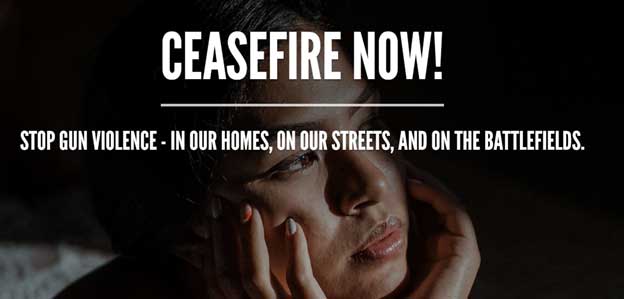
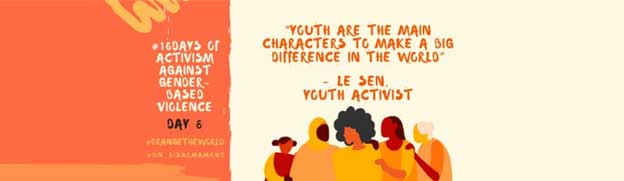
The United Nations is conducting a 16-day social media campaign from 25 November to 9 December for its 2020 Campaign: 16 Days of Activism Against Gender-Based Violence. The 16 Days of Activism is a worldwide campaign calling for the elimination of all forms of gender-based violence (GBV). Credit: International Action Network on Small Arms (IANSA)

NEW YORK, Dec 10 2020 (IPS) – The COVID-19 pandemic is NOT the biggest pandemic the world confronts at the moment, despite over 69 million cases and 1.5 million deaths worldwide.1 If it’s not COVID, what is it then? It is violence against women!


Globally, 243 million women and girls aged 15-49 have been subjected to sexual and/or physical violence perpetrated by an intimate partner in the past 12 months alone.2 The figure increases by 30 per cent if the violence experienced by women and girls in their lifetime is added.3

These numbers are likely underestimates, since many women do not report sexual and intimate partner violence due to stigma associated with it. The UN Women policy brief on COVID-19 and VAW points out that less than 40 per cent of the women who have experienced violence seek help.

Those who do, often turn to family and friends, and less than 10 per cent report to the police. This perpetuates a culture of impunity as perpetrators go unpunished.

The data clearly shows that violence against women and girls is a global emergency, which requires urgent action. It can take many forms, from human trafficking and sexual slavery, through rape and forced sexual acts, to bettering and sexual harassment—on the street, at workplace, school and online.

Harmful cultural practices – such as female genital mutilation and child, early and forced marriage are also forms of violence against women and girls. The list goes on.

Gender-based violence can happen to anyone, anytime, and anywhere. However, some women and girls are particularly vulnerable. Some of them are young girls and older women, women who identify as lesbian, bisexual, transgender or intersex, migrant, refugee and displaced women and girls, indigenous women and girls, women and girls from ethnic and religious minorities, women and girls with disabilities, and those living in situations of conflict and humanitarian crises.

The threat of violence faced by millions of women and men around the world has been compounded by the security, health, and economic crises caused by the COVID-19 pandemic. Many are trapped at home with their abusers, while women’s shelters and domestic violence hotlines are struggling to meet demands.

As the world grapples with COVID-19, it is also past time to take concrete action to address the shadow pandemic of violence against women and girls.

United Nations response

There is no shortage in UN campaigns, programs, task forces and initiatives that all aim to end violence against women and girls

Groups such as the Group of Friends for the Elimination of Violence Against Women and Girls and the Action Coalition for Gender-based violence bring together civil society, Member States, UN agencies, international organizations, and philanthropies provide space for sharing lessons learned, coordinating action and mobilizing resources to end violence against women and girls.

The Spotlight Initiative, a global, multi-year partnership between the European Union and the United Nations launched in 2019 has committed a record €500 million to end violence against women and girls.

Advocacy and communications campaigns such as the UNiTE by 2030 campaign managed by UN Women, call on governments, civil society, women’s organizations, young people, the private sector, the media, and the entire UN system to join forces in addressing the global pandemic of violence against women and girls.

There is also the Office of the Special Representative of the Secretary-General on Sexual Violence in Conflict, Special Rapporteur on Violence Against Women and the Committee on the Elimination of Discrimination against Women (CEDAW Committee), all of which have specific but related mandates that address violence against women and girls.

How effective is the UN response to violence against women and girls? The effectiveness of the UN response was put to a major test by the outbreak of COVID-19. The massive increase in the incidence of violence against women and girls is an indication that the response is ineffective—or at best—insufficient.

While one could argue that the weakness of individual Member States both in managing the pandemic and addressing violence against women and girls cannot be attributed to the UN, the shortcomings brought to light by the pandemic beg the question: how can the UN improve Member States’ compliance with and implementation of the Convention on the Elimination of All Forms of Discrimination against Women, the International Labour Organisation’s Violence and Harassment Convention, and the UN Security Council Resolution 1325 on Women, Peace and Security and its supporting resolutions?

All of these are powerful international laws that call on the UN and Member States to take concrete actions on this issue. However, the pandemic has demonstrated that actions taken to date have barely scratched the surface of the complex and pervasive issue of violence against women and girls. An effective and sustainable response requires structural changes, and a re-evaluation of global priorities!

The UN Secretary-General’s call

The current global priorities are most clearly visible if we follow the money. USD $1.9 trillion! This is how much the world spent to run military institutions in 2019, the largest annual increase in military expenditure since 2010.4 Let that sink in!!!

Meanwhile, women’s shelters are underfunded, many women—including victims of sexual violence—do not have access to quality healthcare, including maternal and reproductive health, and many women’s rights organizations are struggling to stay afloat during the COVID-19 pandemic.

To end violence against women, Member States and donors need to put their money where their mouths are. It is not only the right and necessary choice—it is also a smart investment.

According to the World Bank, violence against women is estimated to cost countries up to 3.7% of their Gross Domestic Product (GDP)—more than double what most governments spend on education.5

UN Women estimates that cost to be approximately $1.5 trillion6 – almost at the level of the record-high military expenditures. Preventing violence against women and girls first and foremost saves lives—but it can also save money.

In his 2020 report on Women and Peace and Security, the Secretary-General drew attention to the stark difference between soaring rates of military spending and the strains in social protection systems including the unavailability of necessary health care that disproportionately impact women and girls. It also underlined how bilateral aid to women’s organizations in fragile or conflict-affected countries has stagnated at 0.2 per cent of total bilateral aid ($96 million on average per year).

The Secretary-General’s report marks the 20th anniversary of Resolution 1325, arguably the most important international law that address violence against women and girls in conflict situations. It presents five goals for the next decade.

It called on the international community to “Reverse the upward trajectory in global military spending with a view to encouraging greater investment in the social infrastructure and services that buttress human security.”

Moreover, the Secretary-General urged Member States to ratify the Arms Trade Treaty, control the availability of armaments; to promote the participation of women in all arms control and disarmament processes and forums; and to reduce excessive military expenditures.

The current context calls for renewed efforts to curb military spending, which has been a chief strategic objective of the women’s movement for peace, he further stressed.

Complementing his call for reduced military spending, the other goal presented by the Secretary-General is to galvanize the donor community for universal compliance with a minimum of 15 per cent of ODA to conflict-affected countries dedicated to advancing gender equality, and the remaining 85 per cent to integrate gender considerations, including multiplying by five the direct assistance to women’s organizations.

The reduction of military spending does not only represent the possibility of financial resources that could support women and girls who are victims of gender-based violence as well as predictable core funds to women’s rights organizations.

It is also an opportunity to generate stronger political commitment to disarmament and arms control and eliminate the threats posed by the estimated one billion small arms that are circulating globally. It can also lead to preventing the use of arms to commit or facilitate serious acts of violence against women and girls.

We, in the women, peace and security community as well as all actors working on gender equality, human rights, and the elimination of violence against women and girls must waste no time.

Let us all come together and seize the moment to present our evidence-based analysis, and policy recommendations in order to influence policy outcomes and decisions that divert weapons spending to fund civil society’s initiatives to end violence against women and girls, and COVID-19 response and recovery.

1 Worldometer, “COVID-19 Coronavirus Pandemic”, Updated 9 December 2020. Accessed from https://www.worldometers.info/coronavirus/#countries
2 UN Women, “COVID-19 and Ending Violence Against Women and Girls”, 2020. Available at: https://www.unwomen.org/-/media/headquarters/attachments/sections/library/publications/2020/issue-brief-covid-19-and-ending-violence-against-women-and-girls-en.pdf?la=en&vs=5006
3 World Health Organization, “Global and Regional Estimates of Violence Against Women: Prevalence and Health Effects of Intimate Partner Violence and Non-Partner Sexual Violence”, 2013. Available at: https://apps.who.int/iris/handle/10665/85239
4 Stockholm International Peace Research Institute, “Global military expenditure sees largest annual increase in a decade—says SIPRI—reaching $1917 billion in 2019”, 27 April 2020. Available at: https://www.sipri.org/media/press-release/2020/global-military-expenditure-sees-largest-annual-increase-decade-says-sipri-reaching-1917-billion
5 World Bank, “Gender-Based Violence (Violence Against Women and Girls)”, 25 September 2019. Available at: https://www.worldbank.org/en/topic/socialsustainability/brief/violence-against-women-and-girls
6 UN-Women, “COVID-19 and ending violence against women and girls”, 2020. Available at: https://www.unwomen.org/-/media/headquarters/attachments/sections/library/publications/2020/issue-brief-covid-19-and-ending-violence-against-women-and-girls-en.pdf?la=en&vs=5006.


  Source

Escazú: Historic Step Towards Protecting Human Rights Defenders in Latin America and the Caribbean

Civil Society, Crime & Justice, Environment, Headlines, Human Rights, Latin America & the Caribbean, TerraViva United Nations

Opinion

The Escazú Agreement is innovative, for one thing because it is the first binding instrument of its kind in the world to include provisions on environmental defenders. The agreement recognizes the importance of such people’s work and obliges states to ensure their protection by establishing guidelines on appropriate and effective measures that can be taken to ensure they are able to work in safety.

The Escazú Agreement is the first binding instrument of its kind in the world to include provisions on environmental defenders. Credit: David Paniagua / Amnesty International.

MEXICO, Dec 9 2020 (IPS) – The global health crisis that has marked 2020 did not put an end to another pandemic that has been plaguing Latin America and the Caribbean: murders and attacks against environmental defenders.


While COVID-19 may have eclipsed the momentum built up by young activists globally around the climate emergency in 2019, their efforts – together with those of organizations and coalitions from all over the region – have resulted in a positive outcome in this most difficult of years: more than 11 countries have now ratified the Escazú Agreement, meaning it will finally enter into force. Another 21 countries in the region have yet to join, however.

UN representatives have emphasized that the pandemic should be seen as a wake-up call to reconsider our relationship with the environment rather than as an excuse to bring progress towards protecting our planet to a halt. This is why the Escazú Agreement is more important now than ever.

In March 2018, governments from Latin America and the Caribbean agreed the region’s first binding treaty to protect the rights of individuals and groups in relation to accessing information, participation and justice in environmental matters.

Graciela Martínez. Credit: Credit: Courtesy of the author.

Costa Rica and Chile were at the forefront of these negotiations in the run up to its adoption. Costa Rica, however, is still in the process of ratifying the text, which is tabled before its Legislative Assembly, and Chile has yet to sign it. This latter’s failure to do so is all the more surprising and contradictory since it has, in the past, been a leading international force in environmental protection, even chairing the COP25.

The Escazú Agreement is innovative, for one thing because it is the first binding instrument of its kind in the world to include provisions on environmental defenders. The agreement recognizes the importance of such people’s work and obliges states to ensure their protection by establishing guidelines on appropriate and effective measures that can be taken to ensure they are able to work in safety.

These provisions are in response to the hostile climate faced by environmental defenders in Latin America and the Caribbean. Colombia, Brazil, Mexico, Guatemala and Honduras are some of the most dangerous countries in the world in which to defend land, territory and environment, according to the latest report by the international organization Global Witness.

It is no coincidence that virtually none of these countries have yet ratified the Escazú Agreement (the Mexican Senate approved its ratification just one month ago). Furthermore, according to this same report, Honduras – which suffers the highest per capita number of murders of environmental defenders – has not even signed it.

Two other major countries that have yet to ratify it and where Amnesty International has documented attacks against people defending the land and the environment in recent years are Peru and Paraguay.

There are a number of cases that can be used to illustrate this context, some of them better known than others, but all of which we have been working on in recent years.

The indigenous Lenca defender Berta Cáceres was murdered in Honduras in 2016 as a result of her opposition to the Agua Zarca hydroelectric dam project. She was coordinator of the Civic Council of Popular Indigenous Organizations of Honduras (COPINH).

Then there is the indigenous Rarámuri defender Julián Carrillo, murdered two years ago in the Sierra Tarahumara, in northern Mexico, after expressing his opposition to a mining concession in his community’s territory because of its social and environmental impacts. Both families are continuing to seek justice.

There are others who are still alive but either in prison or displaced from their homes. In Guatemala, Bernardo Caal Xol, indigenous leader of the Q’eqchi’ Maya people and prisoner of conscience, has been unfairly incarcerated for more than two years now for defending the rights of the communities of Santa María Cahabón, which have been affected by the construction of the OXEC hydroelectric plant on the Oxec and Cahabón rivers.

Danelly Estupiñán, defender of the rights of Afro-descendent communities in Colombia, was forced to leave her home after receiving threats and harassment.

Almost all of these people had been granted some form of protective measures in their respective countries but these have not managed to address the structural causes of the violence they face. It is also no coincidence that all these individuals come from the different cultural backgrounds that make up Latin America and the Caribbean’s diversity.

It is precisely this diversity that the Escazú Agreement recognizes and, although it does not explicitly refer to the right to free, prior and informed consultation as recognized in International Labour Organization (ILO) Convention 169, the two instruments are clearly complementary.

This point is really important because behind many of these socio-environmental conflicts lies a lack of information and inclusion in the decision-making process on the part of those affected and a lack of effective mechanisms for accessing justice.

This is most evident in the case of indigenous and tribal peoples, whose exclusion is historical. The right to access information on environmental matters, key to the Escazú Agreement, is part of the informed consent of indigenous and tribal peoples, as is effective participation through legitimate representation and the incorporation and facilitation of traditional decision-making methods.

Of the 33 countries in the region, 24 have already signed the Escazú Agreement and 12 have ratified it. Argentina and Mexico still have to deposit the instrument with the Economic Commission for Latin America and the Caribbean (ECLAC) to make it official. Once one of them does so, the agreement will enter into force 90 days later.

Countries that have not yet ratified it can still continue the process. The period for depositing signatures closed on 26 September but the nine countries that have not yet signed can now adhere to the agreement.

There is still a long way to go before we even consider what implementing the Escazú Agreement will mean for each country. But today, on the 22nd anniversary of the Declaration on Human Rights Defenders, when the International Day of Human Rights Defenders is commemorated, Latin America and the Caribbean can celebrate the fact that the region has this year taken an historic step and, unless there are any last minute surprises, will soon finally have an instrument in response to at least one of the region’s pandemics.

Graciela Martinez is Amnesty International’s campaigner for human rights defenders in the Americas

  Source

Biden’s Opportunity To End Israeli-Palestinian Conflict

Armed Conflicts, Civil Society, Featured, Global Geopolitics, Headlines, IPS UN: Inside the Glasshouse, Middle East & North Africa, Peace, TerraViva United Nations

Opinion

Dr. Alon Ben-Meir is a professor of international relations at the Center for Global Affairs at New York University (NYU) and teaches courses on international negotiation and Middle Eastern studies

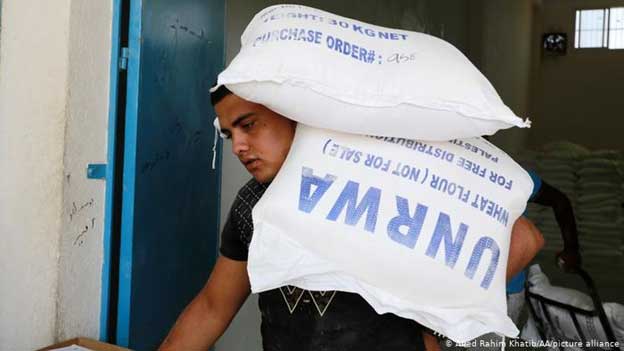
Time is running out fast. Thousands of jobs could be lost if the financial situation of the United Nations Relief and Works Agency for Palestine Refugees in the Near East (UNRWA) doesn’t improve promptly, says Philippe Lazzarini, the organization’s commissioner-general. Credit: United Nations

NEW YORK, Dec 7 2020 (IPS) – Recently I had an opportunity to brief a group of European diplomats and journalists on a variety of conflicts, with a focus on the Middle East. During the Q&A I was asked which of the region’s conflicts Biden should tackle first.


Without much hesitation I said the Israeli-Palestinian conflict, not only because it is over seven decades old, but because it is an increasingly intractable, explosive, and destabilizing situation, which reverberates throughout the Mideast, and several regional powers are exploiting it to serve their own national interests, which sadly contributes to its endurance.

It is expected that Biden will support a two-state solution given his past position on the Israeli-Palestinian conflict, albeit a growing number of Israelis and Palestinians no longer believe that such an outcome remains viable.

I disagree with this belief: the Palestinians will never give up their right to establish an independent state of their own, and the one-state solution, which is being floated as an alternative, will never be accepted by the Israelis, because that would compromise the Jewish national identity of the state and undercut its democratic nature.

Due to the inter-dispersement of the Israeli and Palestinian populations, the two independent states, however, will have to fully collaborate in many areas, especially on security and economic development. This will lead to the establishment of the framework for a confederation, which will be the final outcome after several years of peace and reconciliation.

For Biden to succeed where his predecessors failed, he must repair the severe damage that Trump has inflicted on the entire peace process and restore the Palestinians’ confidence in a new negotiation that could, in fact, lead to a permanent solution.

To that end, he must take specific measures before the start of the talks and establish rules of engagements to which both sides must fully subscribe to demonstrate their commitment to reaching an agreement.

Preliminary Measures

Reestablish the PLO mission in DC: Biden should allow the Palestinian Authority (PA) to reestablish its mission in DC. This would immediately open a channel of communication which is central to the development of a dialogue between the US and the PA and to clear some of the initial hurdles before resuming the negotiations.

Resuming financial aid: It is essential that Biden restore the financial aid that the Palestinians had been receiving from the US. The Palestinian Authority is financially strapped and is in desperate need of assistance. The aid given should be monitored to ensure that the money is spent on specific program and projects.

Prohibiting territorial annexation: The Biden administration should inform the Israeli government that it will object to any further annexation of Palestinian territories. It will, however, keep the American embassy in Jerusalem and continue recognizing Jerusalem as its capital, leaving its final status to be negotiated.

Freezing settlement expansion: Given the intense controversy about the settlements and their adverse psychological and practical effect on the Palestinians, Biden should insist that Israel impose a temporary freeze on the expansion of settlements. This issue should top the negotiating agenda to allow for a later expansion of specific settlements in the context of land swaps.

Invite Hamas to participate: The Biden administration should invite Hamas to participate in the negotiations jointly with the PA or separately, provided they renounce violence and recognize Israel’s right to exist. If they refuse, they should be left to their own devices and continue to bear the burden of the blockade.

Appoint professional and unbiased mediators: Unlike Trump’s envoys who openly supported the settlements and paid little or no heed to the Palestinians’ aspirations, Biden’s envoys should be known for their integrity, professionalism, and understanding of the intricacies of the conflict, and be committed to a two-state solution.

Invite Arab and European observers: The Arab states and the EU are extremely vested in a solution to the Israeli-Palestinian conflict. Saudi and German officials will be ideal observers who can render significant help in their unique capacity as leading Arab and European powers.

Rules of engagement

Establishing the end game: No negotiations succeed unless the parties involved agree on the nature of their desired outcome. For the Palestinians it is establishing an independent Palestinian state, and for Israelis it is maintaining the security and independence of a democratic Jewish state. Before embarking on new negotiations, the Biden administration should insist that both sides unequivocally commit to a two-state outcome.

Acknowledging historical and psychological impediments: Both sides have paid little heed in the past to the need to understand each other’s historic experiences—the Holocaust for the Israelis and the Nakba (catastrophe) for the Palestinians—which they subconsciously use as protective shields. Acknowledging each other’s respective traumatic experiences would help mitigate the psychological impediments which continue to feed into the mutual distrust and hatred.

Ending public acrimony: No negotiations can be conducted in good faith in an atmosphere of mutual public acrimony, as had been the case in all prior peace talks. An integral part of any negotiating process is to build trust, which cannot be nurtured while denouncing each other publicly. Leaders on both sides must end acrimonious statements, as their respective publics will have no faith in negotiations under such an atmosphere.

Renouncing and preventing violence: Both sides must commit not only to renouncing violence but to doing everything in their power to prevent acts of violence against one another. To be sure, nothing is more disruptive to the negotiations than a wanton act of violence.

To that end, both sides need to fully collaborate on all security matters and send a clear massage, especially to extremists on both sides, that violence will not be tolerated and perpetrators will suffer severe consequences.

Delinking and “banking” agreed-upon issues: What will be necessary in future talks is to commit to “bank” any agreement reached on a specific issue, delink it from all others, and not subject it to renegotiations should the talks stall or collapse. This would prevent the resumption of negotiations from ground zero and allow for the building blocks that could eventually lead to an agreement.

In that regard, five critical issues—the settlements, Jerusalem, the Palestinian refugees, national security, and borders—have been hashed and rehashed ad nauseum in past negotiations. The Biden team should identify any common denominator on these issues to prevent renegotiating certain elements over which both sides have already agreed.

Establishing a process of reconciliation: The negotiating process must simultaneously be accompanied by a process of reconciliation. Both sides must initiate widespread people-to-people interactions to gradually mitigate the deep animosity and distrust between them which cannot simply be negotiated away.

Israelis and Palestinians should engage in many activities, including sports, performing arts, tourism, development projects, and student interactions, to foster trust and confidence that peaceful coexistence is possible.

Keeping the public informed: Given that both sides will be required to make significant concessions, it will be imperative to keep their respective publics informed about the progress being made in the negotiations to engender support.

Keeping the public in the dark, as was the practice in past, prevented the public from developing any vested interest in the negotiating process and its successful outcome.

The failure of both sides to agree in the past to establish and be governed by the above rules of engagement clearly suggests that neither side negotiated in good faith. The Biden administration must insist that Israelis and Palestinians accept the above rules if they want to resume the negotiations in earnest. Otherwise, the new talks will be nothing but an exercise in futility.

Sadly though, the current leaders in Israel and Palestine are not in a position to enter into serious negotiations, and must leave the political scene before Biden resumes new talks. Prime Minister Netanyahu is on record opposing the establishment of a Palestinian state; he is also facing three criminal charges of corruption, and in spite of his impressive accomplishments, he may well have outlived his usefulness.

President Abbas too has taken a hard position in connection with the settlements, Jerusalem, and the refugees, and it will be nearly impossible for him to make any significant concession and survive politically.

He is also “too comfortable” in his position and does not want to leave the political scene accused of having sold the Palestinian cause. In the interim, Biden should reiterate the US commitment to Israel’s national security and his support for the establishment of a Palestinian state, giving a clear signal that only moderation will win the day.

The US remains the indispensable power that can bring both sides to an enduring peace, because no other power can exert the kind of influence needed to reach a breakthrough.

For the Biden administration to bring this about, it must play an active role by advancing its own ideas and put its foot down when necessary because neither the Israelis nor the Palestinians can have it only their way, and certainly not without direct US involvement.

As president, Biden has a momentous opportunity to end the Israeli-Palestinian conflict, and both sides will do well to grasp the moment.

  Source

Lost in Translation? Understanding Relevance of Women, Peace & Security in Arms Control & Disarmament

Civil Society, Featured, Gender, Gender Violence, Global, Headlines, Health, IPS UN: Inside the Glasshouse, Poverty & SDGs, TerraViva United Nations, Women’s Health

Opinion

Renata H. Dalaqua is Programme Lead for Gender & Disarmament at the United Nations Institute for Disarmament Research (UNIDIR)

 
At the core of landmark Security Council Resolution 1325 (2000) on Women, Peace and Security is the assertion of women’s right to participate in decisions related to war and peace.


The United Nations is conducting a 16-day social media campaign from 25 November to 10 December 2020 for its 2020 Campaign: 16 Days of Activism Against Gender-Based Violence. The 16 Days of Activism is a worldwide campaign calling for the elimination of all forms of gender-based violence (GBV). Credit: UN Office of Disarmament Affairs (UNODA)

GENEVA, Dec 3 2020 (IPS) – “What does the Women, Peace and Security Agenda have to do with arms control and disarmament?”.

Under varying formulations, this question keeps coming up whenever someone refers to the Women, Peace and Security (WPS) Agenda as a basis for ensuring that women’s voices and their specific security needs were taken into account in multilateral arms control discussions.


Even for those supportive of bringing gender equality concerns to disarmament fora, the linkages between WPS and arms control were not always clear. To tackle this, UNIDIR’s Gender and Disarmament programme initiated a nine-month research project that resulted in Connecting the Dots, a report that outlines the interconnections between arms control and the WPS Agenda and sets out concrete ideas for further dialogue and collaboration among distinct policy communities.

Shared goals

The WPS Agenda and arms control and disarmament share the broader goal of preventing and reducing armed violence. The current trend towards gender-responsive arms control is strengthening these synergies, highlighting the importance of women’s meaningful participation in discussions related to weapons.

At the core of landmark Security Council Resolution 1325 (2000) on Women, Peace and Security is the assertion of women’s right to participate in decisions related to war and peace.

Likewise, that resolution acknowledges that conflict affects women and girls differently to men and, therefore, crisis management, humanitarian and development responses need to take account of the specific needs of women and girls.

Renata H. Dalaqua

Since SCR 1325 (2000), the Security Council has adopted ten resolutions on WPS, collectively forming the basis for what is often referred to as the WPS Agenda. It is commonly defined as having four interconnected pillars:

    • • Meaningful

participation

    • of women in decision-making processes at all levels and in all aspects of international security;

Prevention

    • of violence against women and girls and of any violation of their rights;

Protection

    • of women and girls from all forms of violence and from any violation of their rights;

Relief and Recovery

    , that is, ensuring that the voices and concerns of women and girls are accounted for when creating the structural conditions necessary for sustainable peace.

Arms control and disarmament measures can strengthen all those pillars, effectively helping to implement the WPS Agenda. Despite these convergences, multilateral processes on WPS have rarely addressed the governance of weapons.

For its part, initiatives in the field of arms control and disarmament to improve women’s participation and tackle gendered impacts of weapons have not been framed explicitly in connection with the WPS Agenda.

Misconceptions

How do we explain this disconnect? UNIDIR found two misconceptions that hinder the integration of WPS and arms control.

First, is the belief that gender relates primarily or even exclusively to women and girls. This is not the case. Gender is a broad construct that refers to the roles, behaviours, activities and attributes that a given society at a given time considers appropriate or a “norm” for women and men, for girls and boys, and for non-binary or gender-fluid people.

Gender norms are socially constructed differences – as opposed to biological differences (sex) – and they function as social rules of behaviour, setting out what is desirable and possible to do as a man or a woman in a given context.

Gender points to a relational view of male, female, and trans categories as contextually and relationally defined. Thus, the way women interact with issues of weapons and armed conflict cannot be addressed by focusing only on women.

For this conversation to be effective, men and masculinities must be part of the Agenda. Moreover, as long as gender-related debates are considered “women’s issues”, their reach will be limited and progress towards the integration of gender perspectives into arms control and disarmament will be slow.

The second misconception is that WPS resolutions only apply to conflict or post-conflict situations and, thus, would not be relevant to multilateral arms control processes, which tend to be seen as instruments negotiated by and for societies considered to be at peace.

But this is not true, as many of the WPS-related activities are relevant in peacetime as well, especially those that deal with prevention of violence in general and of violence against women and girls. Femicides, in which weapons play a role, are particularly visible in areas or countries that are otherwise relatively peaceful.

Moving forward

As the WPS Agenda enters its third decade, states and civil society actors are looking for ways to strengthen its implementation. UNIDIR’s research offers several recommendations to contribute to those efforts.

    • • Go beyond merely adding women. Efforts should be taken to ensure that women, men and persons of other gender identities affected by armed violence can meaningfully participate in arms control and disarmament. This could take participation to the next level, overcoming the simplistic notion that gender equates to women.
    • • In addition to small arms control, the goals of prevention and protection should inform multilateral processes on cybersecurity. After all, online gender-based violence (GBV) is a serious issue and it can turn into armed violence, as we have seen in attacks perpetrated by the so-called

incels

    • • Lessons learned from gender-sensitive victim assistance in mine action should be applied to protocols and agreements dealing with weapons of mass destruction. In view of sex-specific and

gendered effects of chemical, biological

    and nuclear weapons, a gender-responsive approach to assistance under WMD treaties could help states and their populations to become more resilient and recover more rapidly.

Ultimately, the WPS Agenda provides a practical structure for the comprehensive integration of gender perspectives across the whole range of arms control and disarmament processes. Bringing these policy areas closer should be of equal interest to both arms control practitioners as well as WPS advocates.

This piece presents findings from a larger research project. The author is grateful to Dr. Renata Dwan and Dr. Henri Myrttinen for their contribution and insights.

The opinions articulated above represent the views of the author, and do not necessarily reflect the position of the European Leadership Network (ELN) or any of the ELN’s members. The ELN’s aim is to encourage debates that will help develop Europe’s capacity to address pressing foreign, defence, and security challenges.

  Source

Millions of New Poor Are on the Way – Who Cares?

Civil Society, Economy & Trade, Environment, Global, Headlines, Health, Human Rights, Humanitarian Emergencies, Labour, Migration & Refugees, Poverty & SDGs, TerraViva United Nations

Opinion

Batara slum in a Dhaka suburb. Credit: Naimul Haq/IPS

ROME, Nov 26 2020 (IPS) – The recent meeting of the G20 – scheduled to take place in Riyadh but held virtually due to the Coronavirus pandemic – has been an eloquent example of how the world is drifting, in a crisis of leadership.


It was, in a sense, a showcase. Everybody had to accept the view that the host of the meeting, the ailing King Salman of Saudi Arabia, was accompanied on TV screens by his apparent heir, Prince Mohamed bin Salman, who is clearly the mastermind of the brutal assassination, dismembering and disappearance of the body of dissident Saudi journalist Jamal Khashoggi.

Roberto Savio

Mohamed bin Salman got away with it, also because of the support of Donald Trump who, in his video intervention said, among other pearls, that nobody in US history had done as much as he had for the environment (like when he said that nobody since Abraham Lincoln had done as much as he had for black Americans). After that, Trump promptly left for his golf course, and ignored the debate.

Raison d’état, realpolitik, diplomatic constraints have always been part of history. The fact that the G20 was virtual, can partly hide a fact: that politicians now accept the most preposterous statements without blinking, because everything has become acceptable and legitimate. In Saudi Arabia, Prince bin Salman is highly popular and in the US, those who live in the parallel world of Trumpland follow blindly.

Biden will have a very difficult life. At least one-third of Americans believe that a massive fraud has deprived their idol of the presidency. He has a Supreme Court staffed by his nominee. And unless the Democrats win the two seats for the Senate in Georgia on January 5th, it will remain in the hands of Mitch McConnell, who will block every single Biden project that needs Senate approval.

Add to this a Trump permanent electoral campaign during the next four years, probably with his own TV channel, and it is difficult to predict that Biden’s vice-president, a woman and black, will repeat his feat in 2024.

There are plenty of solutions if there was only political will. For instance, Oxfam estimates that just an increase of 0.5% over ten years on the taxes paid by 1% of the richest (a negligible increase) would suffice to create 117 million jobs in strategic sectors like health, education, and assistance to the elderly

I apologise for this diversion. The real goal of this article is to show the stunning lack of responsibility of the leaders who met virtually, and besides making totally ritual declarations about the pandemic and climate change, when faced with the issue of the impact of Covid-19 on the poor of the world, simply decided to extend the moratorium on the interest of the external debt of the poorest countries for another year. This is a debt which, in many cases, has been amply repaid with the payment of cumulative interests.

Now, it is certainly difficult to believe that the leaders of France, Germany, Italy, Japan, Russia, the UK, India, China and Canada, and the President of the European Council, and the President of the European Union – leaving aside the United States – ignore the impacting data on the increase of poverty provided by all the international organisations.

The creation of the G7 and the G20 has been the most visible attempt of the great powers to displace substantial debates and decisions from the United Nations. It was certainly not due to lack of information that they ignored the appeal of the Secretary General of the United Nations, António Guterres, who implored action in his intervention against the unfolding drama of the poor of all over the world, which is nullifying all progress achieved in the last two decades.

The data that the G20 ignored all converge on two conclusions: the impact of the Covid-19 virus is stronger than expected, and it will bring about a global social imbalance that will have a lasting impact on several millions of people – in fact, about 300 million people.

This comes on top of an already dire situation. According to the World Bank, 720 million people will be living in extreme poverty (less than 1.90 dollars a day). Of those, 114 million are the direct result of Covid-19: that is 9.4% of the world’s population. According to the UN World Food Programme, more than 265 million are already starving, and many will die. And according to the International Labour Organization 200 million will lose their job.

Let us not forget that half of the world’s population – 3.2 billion people – live on less than 5.50 dollars a day. These are in the global South, as well as those in rich countries who are close to the conditions of the poor countries. The scale of this condition is much greater than we normally think. In the United States, according to the US Census Bureau, 11.1% of the population (49 million people) can be classified as poor; but Covid-19 will probably add another 8 million people.

A staggering 16.1 million children live in food precarity, while more than 47 million citizens depend on food banks. The National Center on Family Homelessness estimates that in 2013, 2.5 million US children experienced some form of homelessness. Finally, the US Health Affairs journal affirms that in 2016, the United States had the largest rate of children mortality in the 20 countries belonging to the OECD, while according to the US Census Bureau, life expectation has shrunk by three years.

In Europe thanks to a culture of welfare (absent in the US), things are going somewhat better. Eurostat estimates that in 2017, 11.8 million people lived in a household “at risk of poverty or social exclusion”. And Save the Children estimates that 28% of those under 18 are at risk of poverty and social exclusion.

We do not have estimates of the impact of Covid-19 in Europe, but the European Union estimates that poverty may increase by 47% if the pandemic lasts until next summer. This excludes the impact of the expected third wave in the winter of 2021. Caritas Italy estimates that at the end of the year there will be at least one million more poor children.

The leaders of the G20 cannot ignore that in April UNCTAD issued an alert: we need to find at least 2.5 billion dollars to attenuate the coming social crisis. They cannot ignore that the ILO has stated that in the poorest countries of the world, like Haiti, Ethiopia or Malawi, the average income of informal workers has fallen by 82%.

They cannot ignore the political consequences of this social crisis, and how Covid-19 is putting a brake on the world economy. But the poor, for many reasons, is not a priority in political choices. Suffice it to note that in the EU’s unprecedented and brilliant Recovery Plan for Europe there are no special provisions for the poor. They are part of the general population, and of those who have suffered because of Covid-19: people working in the tourism sector, in restaurants bar, in shops, and so on.

Yet, we have all the data to know that they suffer specific problems, problems that differ from those of who have lost their jobs. Structural poverty is a cage which does not let out those who are inside it. We have no space here to analyse why poverty needs a specific action. There are tons of studies on the subject, on the relations between poverty and education, poverty and democracy, poverty and social movements, and the list goes on.

What we want to stress is that there are plenty of solutions if there was only political will. For instance, Oxfam estimates that just an increase of 0.5% over ten years on the taxes paid by 1% of the richest (a negligible increase) would suffice to create 117 million jobs in strategic sectors like health, education, and assistance to the elderly.

Repatriating 10% of the capital hidden in fiscal paradises would obtain the same result. But we have been following Ronald Reagan’s mantra that the poor bring poverty and the rich bring wealth, so the rich should be left to create wealth. This may seem like a joke, but the OECD indicates that the average taxation on companies fell from 28% in 2000 to 20.6% in 2020.

This occurred despite the rise of the wealth of large companies, which has been accompanied by a notable decline of the middle class, not to speak of workers and the proliferation of precarious and informal jobs. According to the Washington-based Institute for Policy Studies, between March 18 and June 4, the wealth of the richest Americans increased by 19.1% – a monumental 565 million dollars. Now, the richest Americans own 3.5 billion dollars.

Just 10% of that would be enough to bail out the 46.2 million fellow citizens who ask for unemployment subsidies. Another solution would be to reduce subsidies to the fossil industry, which the International Institute for Renewable Energy estimates at 3.1 trillion dollars – 19 times those for renewables – in spite of the imminent climatic tragedy.

The same imbalance is happening with the pandemic. It is clear that until vaccination becomes universal, Covid-19 is here to stay. It recognises no borders and global problems cannot have an assorted collection of local answers.

Yet, to date, pharmaceutical companies have received 13.1 billion dollars to develop a vaccine: a fantastic business, as they will now make more money on the market, with their costs already having been paid by governments. A central discussion would be whether markets should make profit on common goods like water, air and humans, but we have no space for this debate.

This aside, the situation today is that again according to Oxfam, the rich countries have 13.5%of the world population, Yet they have bought in advance 51% of the doses that pharmaceutical companies will produce – in 2021, 86.5 % of the world will have to make do with the remaining 49%. A consortium of public and private enterprises, COVAX, has been established to deal with the most fragile parts of the world population. Over 185 countries are involved, but it is still very far from gathering the necessary funds.

What is the lesson we can draw from this incomplete analysis? That we are far from having a political class able to face global issues. On the contrary, nationalism and xenophobia are on their way back. The attitude of nationalist leaders to Covid-19 has been similar to that for the threat of climate change: it is a left-wing idea from globalists. So, wearing a mask has become a political declaration.

Trump lost re-election in a great measure due to his attitude on the virus. We can only have a dim hope that this lesson will have some impact. When it comes to the poor, the terms social justice and solidarity are out of fashion, but we are creating imbalances and tensions that we will probably pay dearly for. The French Revolution was not done by a political party, but by an impoverished Third State, or the poor, who revolted against the nobility and the clergy. That is a lesson that the richest 1% would do well not to forget.

Publisher of OtherNews, Italian-Argentine Roberto Savio is an economist, journalist, communication expert, political commentator, activist for social and climate justice and advocate of an anti-neoliberal global governance. Director for international relations of the European Center for Peace and Development. Adviser to INPS-IDN and to the Global Cooperation Council. He is co-founder of Inter Press Service (IPS) news agency and its President Emeritus.

  Source

Could the Finance Sector Hold the Key to Ending Deforestation?

Biodiversity, Civil Society, Climate Change, Development & Aid, Economy & Trade, Environment, Global, Headlines, Indigenous Rights, Natural Resources, Poverty & SDGs, TerraViva United Nations

Opinion

Sarah Rogerson is a researcher at Global Canopy. Prior to Global Canopy, she has worked on corporate environmental transparency with both CDP and the Climate Disclosure Standards Board, and on domestic recycling and engagement with Keep Britain Tidy. She has a degree in Natural Sciences (Zoology) from the University of Cambridge

Despite global commitments from a growing number of governments, companies and financial institutions, the money and effort being directed towards damaging development far exceeds the efforts being made to support sustainable livelihoods. We have not, as a global community managed to put the brakes on the juggernaut of unsustainable economic development. Credit: United Nations

OXFORD, UK, Nov 23 2020 (IPS) – At the beginning of 2020, there were hopes that this would be a ’super year for nature’. It has not turned out that way. Tropical forests, so crucial for biodiversity, the climate and the indigenous communities who live in them, have continued to be destroyed at alarming rates. In fact, despite the shutdown of large parts of the global economy, rates of deforestation globally have increased since last year.


The market forces driving deforestation are baked deep into the system of global trade. Agricultural expansion for commodities such as soy and palm oil accounts for two thirds of the problem worldwide. And forests are also being cleared to make way for mining, and for infrastructure to link once remote areas to the global markets they supply.

Coal mining is estimated to affect 1.74 million hectares of forest in Indonesia alone, with as much as nine percent of the country’s remaining forests at risk from permits for new mines. And the threat to forests from road building is significant, with 25 million kilometres of roads likely to be built by 2050, mainly in developing countries.

Underpinning these industries is over a trillion dollars a year in financing from financial institutions around the world. This investment and lending is the fuel that keeps the deforestation fires alight.

Six years ago, governments, companies and civil society signed the New York Declaration on Forests, setting a goal to end global deforestation by 2030. Each year, an independent civil society network led by Climate Focus and including Global Canopy provides a progress assessment. This year, it focuses on the NYDF goals of reducing deforestation from mining and infrastructure by 2020 (goal 3), and supporting alternatives to deforestation for subsistence needs (goal 4).

The findings are an urgent wake-up call. The threat to forests worldwide from these activities is growing, and indigenous people and local communities continue to bear a devastating cost.

But the report also highlights opportunities for progress. A growing number of governments are facing up to this issue and some companies are waking up to the risks of inaction. The same is true of the finance sector, which could become a driver of transformational change.

The opportunity for finance

Financial institutions do not, it must be recognised, have a great track record on these issues. Global Canopy’s annual Forest 500 assessment of the most influential financial institutions in agricultural and timber forest-risk supply chains has consistently found that the majority do not publicly recognise a need to engage on the issue of deforestation.

Fewer still publish clear information about how they will deal with deforestation risks identified in their portfolios, and none of the 150 financial institutions assessed in 2019 had policies across all relevant human rights issues. As a result, investment and lending has largely continued to flow to companies linked to land grabs and deforestation.

Nearly 87% of indigenous territories in the Amazon are recognised in Brazilian law, yet government concessions for mining and oil extraction overlap nearly 24% of recognised territories. This infringement of the communities’ rights is being overlooked by the companies involved, and by the financial institutions that finance them.

Yet there are signs of change. In June this year a group of 29 investors requested meetings with the Brazilian government because of concerns about the fires raging in the Amazon. Some, including BlackRock, have said they will engage with the companies they finance on deforestation risks. And some have gone further, with Citigroup, Standard Chartered, and Rabobank disinvesting from Indonesian food giant Indofood following concerns about deforestation linked to palm oil, and Nordea Asset Management dropped investments in Brazilian meat giant, JBS.

There is also support for the Equator Principles, which provide a framework for banks and investors to assess and manage social and environmental risks in project finance. Companies in the mining and extractive sectors are among the 110 financial institutions to have signed up, although reporting on implementation is voluntary and patchy.

There is also growing recognition that biodiversity loss represents a risk to investments. More than 30 financial institutions have joined an informal working group to develop a Task Force for Nature-related Disclosure (TNFD), intended to help financial institutions shift finance away from destructive activities such as deforestation. Some within the sector are developing new impact investment products designed to support poverty alleviation and sustainable development.

And there are also signs of a shift in development banks – whose finance plays such a critical role in so many development projects in the Global South. Just this month, public development banks from around the world made a joint declaration to “support the transformation of the global economy and societies toward sustainable and resilient development”.

No silver bullets

It is of course one thing to recognise the problem, another to solve it. Transforming the finance sector so that money is moved away from mining or agricultural projects linked to deforestation, and invested in sustainable alternatives that benefit local communities is an enormous challenge – made all the more difficult by the lack of transparency that currently engulfs these sectors.

For while the banks and investors funding deforestation activities are all too often invisible to the local communities and indigenous groups on the ground, those communities, and the impacts of financial investments on their land and livelihoods are similarly invisible or ignored.

But these links are increasingly being brought into the light, and new tools and technologies are bringing a new level of transparency and accountability. The new Trase Finance tool is a great example, it maps the deforestation risks for investors linked to Brazilian soy and beef, and Indonesian palm oil, and aims to extend coverage to include half of major forest-risk commodities by next year. Bringing about a new era of radical transparency could be the key for moving beyond recognition and into real solutions.

Increased transparency brings with it greater accountability, creating an opportunity for local communities to identify the financial institutions involved, and a reputational risk for financial institutions linked to infringements of land rights.

Grassroots movements can play an important role in demanding accountability from the companies and financial institutions involved where land rights are affected. Campaigns can raise awareness with the wider public, creating a reputational risk for the companies involved, and for the financial institutions that finance them. Campaigners have targeted BlackRock for its investments in JBS, for example, pushing for greater action from the investor.

Governments in consumer countries are also increasingly looking at how they can reduce their exposure to deforestation in imported products, with both the European Union and UK proposing mandatory due diligence for companies, requiring far greater transparency from all involved. These measures should be strengthened to include due diligence on human rights.

A global problem

We are all implicated in tropical deforestation – as consumers, as pension-fund holders, as citizens. In the Global North, economies rely on commodities produced in developing and emerging economies, enabled by production practices linked with deforestation.

Despite global commitments from a growing number of governments, companies and financial institutions, the money and effort being directed towards damaging development far exceeds the efforts being made to support sustainable livelihoods. We have not, as a global community managed to put the brakes on the juggernaut of unsustainable economic development.

To meet the NYDF goal of ending deforestation by 2030, as well as climate goals under the Paris Agreement, this must change urgently, and the finance sector is crucial to making this happen.

  Source