Indigenous Rights Approach a Solution to Climate Change Crisis

Biodiversity, Civil Society, Climate Change, Conferences, Development & Aid, Environment, Featured, Global, Headlines, Human Rights, Indigenous Rights, Sustainability, TerraViva United Nations
Indigenous Rights

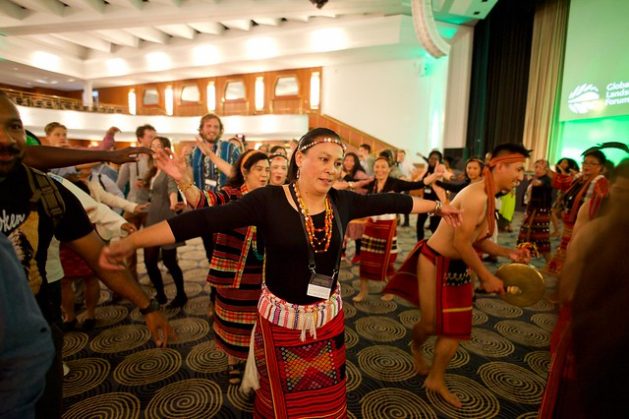
The Global Landscapes Forum (GLF) was held in Bonn, Germany and focused on how to give land rights the visibility needed to showcase that a rights approach, particularly when it comes to indigenous people, is a solution to the climate change crisis. Courtesy: Pilar Valbuena/GLF

Jun 29 2019 (IPS) – The Global Landscapes Forum (GLF) was held in Bonn, Germany to rally behind a new approach to achieving a future that is more inclusive and sustainable than the present – through the establishment of secure and proper rights for all.


On Jun. 22 and 23, experts, political leaders, NGOs and indigenous peoples and communities gathered to deliberate on a methodology that emphasises rights for indigenous peoples and local communities in the management and perseveration of landscapes. The forum took place alongside the  United Nations Framework Convention on Climate Change Bonn Climate Change Conference.

The forum focused giving land rights the visibility needed to showcase that a rights approach is a solution to the climate change crisis, and to develop a ‘gold standard’ for rights.

Indigenous peoples, local communities, women and youth, are believed to be the world’s most important environmental stewards but they are also among the most threatened and criminalised groups with little access to rights.

“We’re defending the world, for every single one of us,” said Geovaldis Gonzalez Jimenez, an indigenous peasant leader from Montes de María, Colombia.

But industries such as fossil fuels, large-scale agriculture, mining and others are not only endangering landscapes but also the lives of the people therein.

Already this year, said Gonzalez, his region witnessed 135 murders, adding that the day before the start of the GLF a local leader was killed in front of a 9-year-old boy.

According to the United Nations, the land belonging to the 350 million indigenous peoples across the globe is one of the most powerful shields against climate change as it holds 80 percent of the world’s biodiversity and sequesters nearly 300 billion metric tons of carbon

It is for this reason that amid the urgency to meet Sustainable Development Goals (SDGs) under pressure from the climate threat, dialogues about the global future have begun to wake up to the fact that indigenous peoples’ relationships with the natural world are not only crucial to preserve for their own sakes, but for everyone’s.

The drafting of the document of rights was led by Indigenous Peoples Major Group (IPMG) for Sustainable Development and the Rights and Resources Initiative in the months leading up to the GLF.

Wider discussions and workshops over the two days served as a consultation on the draft (which is expected to be finalised by the end of the year) as a concrete guide for organisations, institutions, governments and the private sector on how to apply different principles of rights. This includes the rights to free, prior and informed consent; gender equality; respect to cultural heritage; and education.

U.N. Special Rapporteur on the Rights of Indigenous Peoples Vicky Tauli-Corpuz said lands managed by indigenous peoples with secure rights have lower deforestation rates, higher biodiversity levels and higher carbon storage than lands in government-protected areas.

But Diel Mochire Mwenge, who leads the Initiative Programme for the Development of the Pygme in the Democratic Republic of Congo (DRC), one of the largest indigenous forest communities in Central Africa, said he has witnessed more than one million people being evicted from the national parkland where they have long lived. He explained that they had not been given benefits from the ecotourism industries brought in to replace them and were left struggling to find new income sources.

“Our identity is being threatened, and we need to avoid being completely eradicated,” said Mwenge.

In Jharkhand, India, activist Gladson Dungdung, whose parents were murdered in 1990 for attending a court case over a local land dispute, said an amendment to India’s Forest Rights Act currently being reviewed by the Supreme Court could see 7.5 million indigenous peoples evicted from their native forest landscapes. The act can impact a further 90 million people who depend on these forests’ resources for their survival, he said.

The amendment, Dungdung said, would also give absolute power to the national forest guard; if a guard were to see someone using the forest for hunting or timber collection, they could legally shoot the person on-sight.

“Indigenous peoples are right on the frontline of the very real and dangerous fight for the world’s forests,” said actor and indigenous rights activist Alec Baldwin in a video address.

“Granted that indigenous peoples are the superheroes of the environmental movement,” Jennifer Morris, president of Conservation International wondered why they are not heard until they become victims. “Why do we not hear about these leaders until they’ve become martyrs for this cause?”

The examples of intimidation, criminalisation, eviction and hardship shared throughout the first day clearly showcased what indigenous peoples and local communities go through to preserve the forests or ‘lungs of the earth’.

The rights approach, according to conveners of the GLF, aims to strengthen respect, recognition and protection of the rights of indigenous peoples and local communities as stewards and bearers of solutions to landscape restoration, conservation, and sustainable use. It also aims to end persecution of land and environment defenders; build partnerships to enhance engagement and support for rights-based approaches to sustainable landscapes across scales and sectors; and, scale up efforts to legally recognise and secure collective land and resource rights across landscapes.

“By implementing a gold standard, we can both uphold and protect human rights and develop conservation, restoration and sustainable development initiatives that embrace the key role Indigenous peoples and local communities are already playing to protect our planet,” said Joan Carling, co-convener of IPMG.

IPMG recognises that indigenous and local communities are bearers of rights and solutions to common challenges.

“This will enable the partnership that we need to pave the way for a more sustainable, equitable and just future,” added Carling.

And the Center for International Forestry Research (CIFOR) Director General, Robert Nasi, said when rights of local communities and indigenous peoples are recognised, there are significant benefits for the fight against climate change and environmental degradation.

“Whoever controls the rights over these landscapes has a very important part to play in fighting climate change,” he said.

In the climate and development arenas, the most current alarm being sounded is for rights–securing the land rights and freedoms of indigenous peoples, local communities and the marginalised members therein.

How can these custodians of a quarter of the world’s terrestrial surface be expected to care for their traditional lands if the lands don’t, in fact, belong to them? Or, worse, if they’re criminalised and endangered for doing so?

The basic principles of a ‘gold standard’ already exist, such as free, prior and informed consent, according to Alain Frechette of the Rights and Resources Initiative (RRI). What has been lacking, he said, is the application of principles that could be boosted by high-level statements that could “spur a race to the top”.
 

A Roadmap for Children as Victims, not Terrorists

Armed Conflicts, Civil Society, Featured, Global, Global Governance, Globalisation, Headlines, Human Rights, IPS UN: Inside the Glasshouse, Peace, TerraViva United Nations

UNITED NATIONS, Jun 26 2019 (IPS) – The feeling in the air at a recent meeting of the United Nations Office on Drugs and Crime (UNODC) was one of compassion and benevolence.

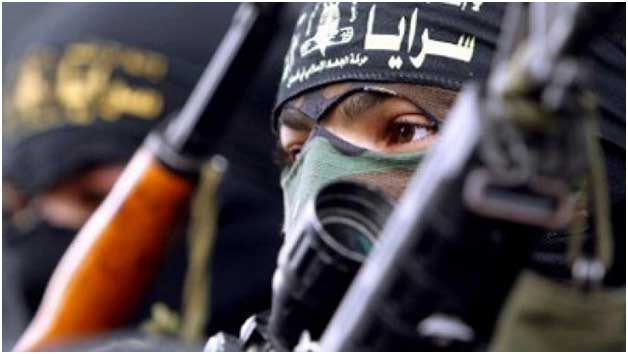
The focus was on children as Foreign Terrorist Fighters (FTFs), a subject that everyone at the panel discussion argued is delicate and politically sensitive.


Alexandra Martins, the Crime Prevention and Criminal Justice Officer at the UNODC, pointed out that “”Nobody is a lost cause, and there is always a possibility to rehabilitate and reintegrate children from these groups.”

Two of her words were repeated by almost every speaker: “rehabilitate and reintegrate”.

The meeting was meant to discuss the release of the UNODC Handbook on Children Recruited and Exploited by Terrorist and Violent Extremist Groups.

The roadmap’s main goal is to provide UN’s 193 Member States with guidance on how to treat children associated with terrorist and violent extremist groups. It argues for an approach to rehabilitate those associated with or accused of being FTFs, and to reintegrate them back into their communities.

Though many of the children accused have taken part in terrorism, the UNODC advocates for a change in the way Member States handle the children.

Speaking during the release of the handbook, Dr. Jehangir Khan, Director at the UN Office of Counter-Terrorism/Counter Terrorism Centre (UN OCT/CCT), said “children must be seen first and foremost as victims.”

The roadmap was released alongside 4 technical assistance tools: UNODC Handbook on Children Recruited and Exploited by Terrorist and Violent Extremist Groups: The Role of the Justice System (2018); the UNODC Training Manual on Prevention of Child Recruitment by Terrorist and Violent Extremist Groups (May 2019); the UNODC Training Manual on Rehabilitation and Reintegration of Child Victims of Recruitment by Terrorist and Violent Extremist Groups (to be released in July 2019); the UNODC Training Manual on Justice for Children in the Context of Counter-Terrorism (May 2019).

The documents are based on three years of technical assistance work conducted by the UNODC to Member States that have found children as FTFs.
One country already advocating its support for the Roadmap is Lebanon. Until 2013, children accused of being or associated with terrorist fighters were kept in adult prisons and tried as such.

“It is in prison that I learned the meaning of life” one of the boys, aged 19, remarked in a video played by the representative from Lebanon stated.

A step in the direction of treating children as victims came in 2013, when they were moved to a juvenile prison.

Lebanon’s Head of the Prison Administration at the Ministry of Justice of Lebanon, Judge Raja AbiNader, said: “By showing them the same respect we showed the rest of the children, things started to change.”

Martins told IPS that there are many such countries, like Lebanon, whose children and communities have already benefited from the guidance offered in the Roadmap.

“As a result of the protocol, children deprived of liberty for association with Boko Haram were released and transferred to child protection authorities to begin a process of reintegration in their communities,” she said.

Martins stated that more than 30 countries have received guidance on child FTFs from the UNODC’s, from 6 different regions (West Africa, East Africa, Middle East and North Africa, South Asia, Southeast Asia and Central Asia).

Despite the Roadmap offering guidance, at the panel discussion, Martins clarified that “there is no one size fits all approach” on handling children.

There have been different approaches offered on handling the children in general, and specifically when dealing with different genders.

There will be a second event during the United Nations General Assembly (UNGA) in September that Martins hopes will “promote the guidance further.”

Gender and the Roadmap

But there appears to be some disagreement still on the treatment of boys and girls during the rehabilitation and reintegration processes.

Under international law (Havana Rule 87.d., Bangkok Rules), boys and girls must be held in separate detention facilities. But the Roadmap encourages them to still engage together, to foster development.

The Roadmap also advocates for targeted approaches on the treatment of girls.

Martins told IPS that girls are “considerably more vulnerable to both physical and sexual abuse and require special attention in this regard.”

She noted that “girls deprived of liberty are exposed to other forms of sexual violence such as threats of rape, touching, ‘virginity testing’, being stripped naked, invasive body searches, insults and humiliations of a sexual nature.”

Given these sensitive issues, and the fact that girls are different physiologically and often psychologically from boys at certain development stages, the Roadmap advocates for an awareness of gender and for specific targeted approaches.

“A section in the manual alludes that girl victims of recruitment and exploitation by terrorist and violent extremist groups require specific approaches to reintegration, because of their increased exposure to violence at multiple levels and from different actors,” Martins said.

But it is not clear yet that this section on gender differences has been implemented.

While Martins says the Roadmap takes seriously the different approaches for girls and boys, Judge AbiNader told IPS that in Lebanon “Very honestly, we’re not working specifically with girls concerning rehabilitation.”

As of June 7th, Lebanon has 10 boys and 2 girls in prison for being associated with or accused of being FTFs.

When asked why there were not specific programs that tackle children of divergent genders differently, he argued that they girls “should be treated the same” during rehabilitation.

“And it hasn’t been discussed because the number [of girls in prison for accusations of being FTFs] is so low,” he added.

Despite the low numbers of accused girls in detention facilities, Martins believes that targeted women’s health education should be provided, and that “Access to age- and gender-specific programmes and services, such as counselling for sexual abuse or violence, has to be given to girls.”

Though the UNODC has advocated a change in outlook on children involved with terrorist organizations, the Roadmap’s release is just the beginning of that change being implemented.


There’s No Continent, No Country Not Impacted by Land Degradation

Biodiversity, Climate Change, Combating Desertification and Drought, Conferences, Editors’ Choice, Featured, Global, Headlines, Regional Categories, Sustainability, TerraViva United Nations

Combating Desertification and Drought

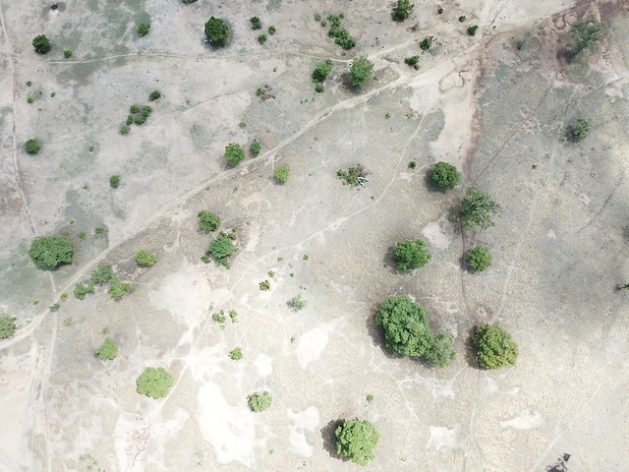
On all continents you have the issue of land degradation, and it requires governments, land users and all different communities in a country to be part of the solution. Credit: Albert Oppong-Ansah /IPS

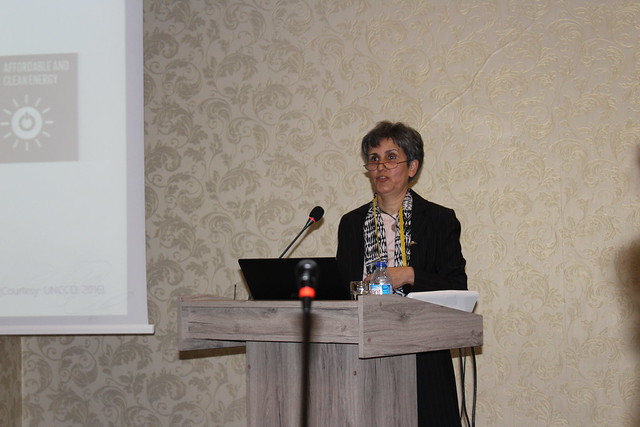
ANKARA, Jun 17 2019 (IPS) – The coming decades will be crucial in shaping and implementing a transformative land agenda, according to a scientist at the United Nations Convention to Combat Desertification (UNCCD) framework for Land Degradation Neutrality (LDN).


UNCCD-Science Policy Interface co-chair Dr. Mariam Akhtar-Schuster, who spoke with IPS ahead of the start of activities to mark World Day to Combat Desertification (WDCD) on Monday, Jun. 17, said this was one of the key messages emerging for policy- and other decision-makers.

This comes after the dire warnings in recent publications on desertification, land degradation and drought of the Global Land OutlookIntergovernmental Science-Policy Platform on Biodiversity and Ecosystem Services (IPBES) Assessment Report on Land Degradation and Restoration, World Atlas of Desertification, and IPBES Global Assessment on Biodiversity and Ecosystem Services.

“The main message is: things are not improving. The issue of desertification is becoming clearer to different communities, but we now have to start implementing the knowledge that we already have to combat desertification,” Akhtar-Schuster told IPS.

“It’s not only technology that we have to implement, it is the policy level that has to develop a governance structure which supports sustainable land management practices.”

IPBES Science and Policy for People and Nature found that the biosphere and atmosphere, upon which humanity as a whole depends, have been deeply reconfigured by people.

The report shows that 75 percent of the land area is very significantly altered, 66 percent of the ocean area is experiencing increasing cumulative impacts, and 85 percent of the wetland area has been lost.

“There are of course areas which are harder hit; these are areas which are experiencing extreme drought which makes it even more difficult to sustainably use land resources,” Akhtar-Schuster said.

“On all continents you have the issue of land degradation, so there’s no continent, there’s no country which can just lean back and say this is not our issue. Everybody has to do something.”

Akhtar-Schuster said there is sufficient knowledge out there which already can support evidence-based implementation of technology so that at least land degradation does not continue.

While the information is available, Akhtar-Schuster said it requires governments, land users and all different communities in a country to be part of the solution.

“There is no top-down approach. You need the people on the ground, you need the people who generate knowledge and you need the policy makers to implement that knowledge. You need everybody,” the UNCCD-SPI co-chair said.

“Nobody in a community, in a social environment, can say this has nothing to do with me. We are all consumers of products which are generated from land. So, we in our daily lives – the way we eat, the way we dress ourselves – whatever we do has something to do with land, and we can take decisions which are more friendly to land than what we’re doing at the moment.”

UNCCD-Science Policy Interface co-chair Dr. Mariam Akhtar-Schuster says things are not improving and that the issue of desertification is becoming clearer to different communities. Credit: Desmond Brown/IPS

UNCCD Lead Scientist Dr. Barron Joseph Orr said it’s important to note that while the four major assessments were all done for different reasons, using different methodologies, they are all converging on very similar messages.

He said while in the past land degradation was seen as a problem in a place where there is overgrazing or poor management practices on agricultural lands, the reality is, that’s not influencing the change in land.

“What’s very different from the past is the rate of land transformation. The pace of that change is considerable, both in terms of conversion to farm land and conversion to built-up areas,” Orr told IPS.

“We’ve got a situation where 75 percent of the land surface of the earth has been transformed, and the demand for food is only going to go up between now and 2050 with the population growth expected to increase one to two billion people.”

That’s a significant jump. Our demand for energy that’s drawn from land, bio energy, or the need for land for solar and wind energy is only going to increase but these studies are making it clear that we are not optimising our use,” Orr added.

Like Akhtar-Schuster, Orr said it’s now public knowledge what tools are necessary to sustainably manage agricultural land, and to restore or rehabilitate land that has been degraded.

“We need better incentives for our farmers and ranchers to do the right thing on the landscape, we have to have stronger safeguards for tenures so that future generations can continue that stewardship of the land,” he added.

The international community adopted the Convention to Combat Desertification in Paris on Jun. 17, 1994.

On the occasion of the 25th anniversary of the Convention and the World Day to Combat Desertification in 2019 (#2019WDCD), UNCCD will look back and celebrate the 25 years of progress made by countries on sustainable land management.

At the same time, they will look at the broad picture of the next 25 years where they will achieve land degradation neutrality.

The anniversary campaign runs under the slogan “Let’s grow the future together,” with the global observance of WDCD and the 25th anniversary of the Convention on Jun. 17, hosted by the government of Turkey.


UN Says Kyrgyz Journalist Should be Freed

Asia-Pacific, Civil Society, Democracy, Global, Global Governance, Headlines, Human Rights, Press Freedom, TerraViva United Nations

Opinion

Gulnoza Said* is Program Coordinator, Committee to Protect Journalists (CPJ), Europe and Central Asia

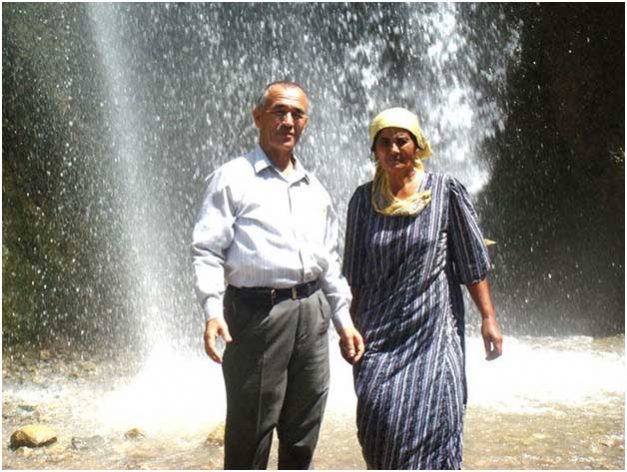
Kyrgyzstan journalist Azimjon Askarov and his wife, Khadicha, pictured during a family vacation in Arslanbob in the summer of 2009. ‘This was Azimjon’s last summer of freedom,’ Khadicha told CPJ. (Askarov family)

NEW YORK, Jun 10 2019 (IPS) – On a recent morning in Bazar-Korgon, southern Kyrgyzstan, Khadicha Askarova was giving hasty instructions to her daughter about what needed to be packed.


They were about to set off: first for the capital Bishkek, some 600km from where they live, and then another 70km to a prison colony where her husband, Azimjon Askarov, was transferred in March.

But Askarov, a 68-year-old independent journalist and rights activist, shouldn’t be in jail at all. The U.N. Human Rights Committee ruled in 2016 that Askarov was subject to torture and mistreatment from the moment of his detention on June 15, 2010 to his speedy trial and subsequent imprisonment, and that he should be released immediately.

CPJ’s research into his case found that the original trial was marred by irregularities and allegations of torture, mistreatment and harassment of defendants, including Askarov, and their witnesses. But Kyrgyz authorities defied the U.N. resolution and in 2017, amid international outcry, upheld his life sentence.

Conditions in the new prison are harsh. In letters home, the journalist wrote that he had run ins with the guards and that prison officials punish detainees after visiting days. His health is also deteriorating and he has limited access to medication, the journalist’s wife, Askarova, said.

“What breaks my heart is to see how much he aged since being imprisoned. He used to be a man full of energy and vigor. Now, he is old, sickly, skinny, and there’s no way out of this situation for him,” she said, fighting back the tears when we spoke via a video messaging app earlier this month.

The couple, who have been married for over 40 years, now have limited contact: just six family visits and two phone calls a year. As Askarov wrote in a recent letter to his wife, “They like keeping us under a tight lid here. Communication with the outside world is banned.”

The letter, which his wife shared with CPJ, also gave a glimpse of the harsh prison conditions: “After family visits, inmates are punished by being forced to eat raw onions and carrots for several days.”

“On regular days, they give us pea soup that contains nothing but watery peas. On public holidays, we get what the prison administration calls plov [pilaf] but it is not more than 150g of rice cooked with some carrots, per person.”

Since Askarov’s transfer to a prison outside Bishkek in March, he wrote that he has had three “incidents” with prison guards. The journalist did not specify the nature of incidents, but wrote that guards were known for their mistreatment of and conflicts with inmates.

“There are few good ones among them”, he added, almost as if he was preventing possible punishment should the content of the letter became known to the guards.

One of the incidents was connected to the journalist’s poor health. He has the heart condition tachycardia, hypotension, and gets dizzy and nauseated if he stands for too long.

Under prison rules, if a guard enters a cell, the inmate must stand. “That’s the rule. Twice a day, guards enter cells. An inmate has to cite his full name and an article of the criminal code he was convicted of violating. But Azimjon was not able to stand straight for too long. His knees bend, he had to sit down. That was the ‘incident’,” the journalist’s wife, Askarova, told me.

Soon after the transfer, Askarov complained about his health to prison administration, and said that low blood pressure and a cold was diagnosed. “But they did not have any medication to give me,” he wrote.

Askarova told CPJ that doctors at the prison ask families to bring medication. “They rely on us for something that they ought to provide,” she said.

She added that the few visits they are allowed are emotional, and the travel hard and costly. She makes sure that one visit falls on her husband’s birthday, May 17. This year, the couple’s daughter and their three grandchildren also visited on his birthday, their first visit to a new jail.

‘I’m afraid they will forget how he looks’ Askarov’s wife says

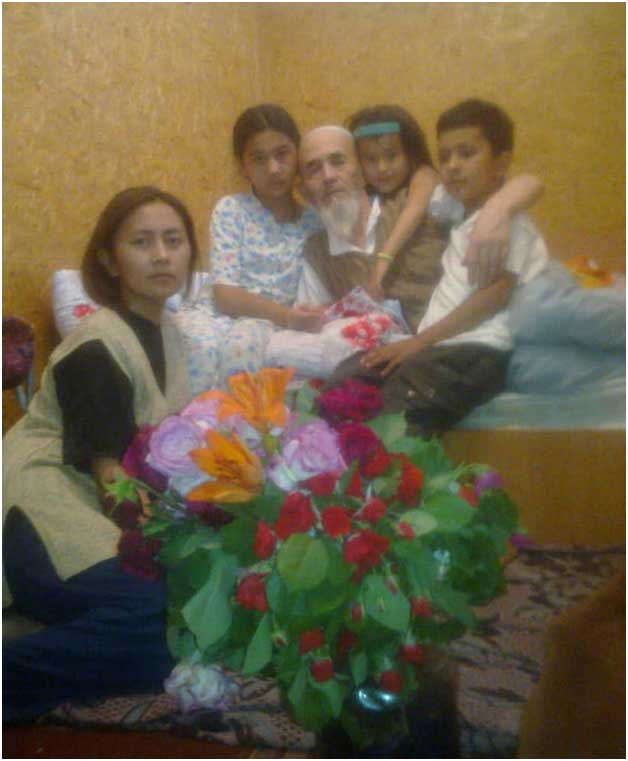
Azimjon Askarov, pictured with his daughter Navruza and grandchildren, during a May 2018 visit in Bishek prison. The journalist was moved to a new prison in 2019 that bans families from taking photographs during visits. (Askarova family)

“The new prison is much farther from Bishkek. After a nearly 14-hour drive to Bishkek, we took another taxi to the prison, but then had to walk about seven kilometers in the heat and dust. It was especially hard for the little ones, although they were excited to see their grandfather. They are still little, and I am afraid they can forget how he looks like, how he sounds,” Askarova said.

Adding to that concern is a rule at the prison banning families from taking photographs during visits. “Now, I have to look at old pictures of Azimjon. They deprived me even of the photos of my husband,” she said.

Askarova said she would move to Bishkek to be closer to the prison, but she cannot sell the house that her husband has owned for decades. The authorities seized the journalist’s property after he was charged in 2010.

In 2015, the journalist’s lawyer successfully appealed against the seizure, but before Askarova had overcome a legal quagmire of changing the ownership, authorities placed a new lien on the house in February. She said she has started another appeal process.

Askarova said that before they visit each year on his birthday, the couple’s daughter Navruza, who lives in Uzbekistan, usually comes to Bazar-Korgon to help pack personal items, food, medicine and books. But it is Askarova who picks flowers from her garden and buys bouquets at a florist for her husband.

“He is an artist, you know. He loves flowers. I get the most beautiful ones for him. Many kinds, sometimes several bouquets,” she said.

Azimjon and Khadicha met at art college in the Uzbek capital Tashkent in 1974. They have been married for 42 years and raised four children, who live in Uzbekistan. He used to work as an artist. But every time he heard a neighbor complain of injustice, he felt the urge to help, Askarova said.

In the late 1990s, he started documenting the cases, mediating between his community members and law enforcement, and researching legal books. He eventually became a go-to person in Bazar-Korgon if the rights of a member of his community had been violated.

He was known for taking up the cases on police brutality. It was this reputation that led many people to come to him for help when violence against ethnic Uzbeks erupted in June 2010, she said.

In prison, Askarov started to paint again. In 2014, international and local activists organized an exhibition of Askarov’s work to raise awareness of his case. In 2018, he wrote a book, “I am happy,” which includes a dedication to his late mother, “who lost me, her son, during her and my life, and left this world, shocked by the greatest injustice.” Copies of the book are still available online.

During his imprisonment, Askarov studied English and is able to read the many cards sent to him from around the world, his wife said. She added that he has been studying Japanese from the books and dictionaries she brought him, and that he has become interested in herbal medicine because conventional medication was not available in prison.

Askarov has also kept a diary since 2010. “He writes down everything. I keep reading them in between prison visits. One word that he uses most frequently is freedom. When he sees rain through the cell window, he writes ‘I wish I was free to feel rain drops on my skin. When he sees snow, he writes ‘I wish I was free to be outside and enjoy the snow now’. Freedom is his main wish and goal. He lives for it,” Askarova said.

* Gulnoza Said is a journalist and communications professional with over 15 years of experience in New York, Prague, Bratislava, and Tashkent. She has covered issues including politics, media, religion, and human rights with a focus on Central Asia, Russia, and Turkey.


What Standardised Testing Doesn’t Tell Us About Learning

Asia-Pacific, Civil Society, Education, Headlines

Opinion

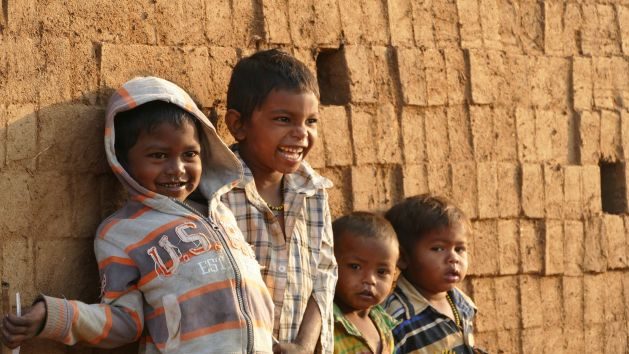
When we say that children aren’t learning, what we mean is that they are not fitting into our assessment of their learning outcomes | Picture courtesy: Nilesh Nimkar

When we say that children aren’t learning, what we mean is that they are not fitting into our assessment of their learning outcomes | Picture courtesy: Nilesh Nimkar

THANE, MAHARASHTRA, India, Jun 6 2019 (IPS) – When we look at learning outcomes for children, we only look at standardised tests, ignoring any indigenous knowledge, language, or problem solving strategies they might have.


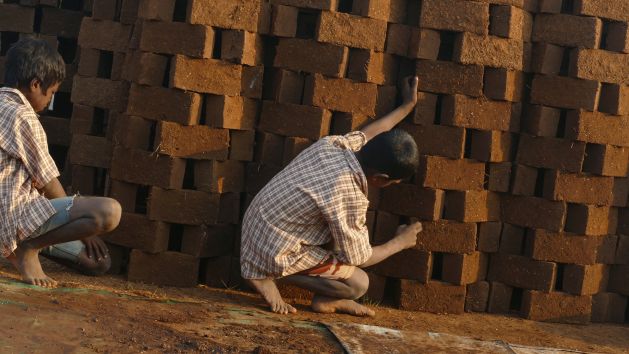
The brick kilns of Sonale were bustling with activity—children running around, indigenous technology being used, and lots of mathematics being done. I recently went there after a teacher from the nearby primary school approached our nonprofit, Quest, because the children living there were simply not learning. The concern was, if they didn’t even know their multiplication tables, how would they cope in classes V, VI, and VII?

So I went to see for myself. I asked these children, “To make the mortar for the bricks, how many pits have been dug?

“On one side 11; another side 12”

They also told me they would put three containers of raw material in each pit. So I asked them how many containers they would need in total, and after running off to count them, they came back with the right answers. They could also explain how they arrived at those numbers. What I found was that they were counting in threes. Not the way one recites the tables in the schools, but visualising it in their mind.

Clearly, these children knew how to multiply. That they failed to memorise their tables was beside the point. They had understood the concept and had demonstrated a strong meta-cognitive ability when they explained how they arrived at the answer

Clearly, these children knew how to multiply. That they failed to memorise their tables was beside the point. They had understood the concept and had demonstrated a strong meta-cognitive ability when they explained how they arrived at the answer. In my further conversations, I was amazed to see the kinds of calculations the children at the brick kilns did. For instance, 13 multiplied by 11 was done mentally because they were able to understand it within their own context (that of the brick kiln).

Standardised testing disadvantages marginalised children

This example illustrates one of the biggest challenges of our schools today—standardised assessment—which further disadvantages marginalised children. These children have a different type of cultural capital that schools and tests hardly recognise.

Western research in the field of math pedagogy points to the importance of children’s indigenous knowledge and strategies in solving problems and considers them to be the starting point for sound understanding of elementary mathematics. But what are those indigenous strategies in the Indian context? We still don’t know much about them. And our lack of knowledge results in us asking these children to run an unfair race.

Today, when we say that children from marginalised communities aren’t learning, what we mean is that they are not fitting into our assessment of their learning outcomes. By completely ignoring their indigenous knowledge, language, and problem-solving strategies, we have so far continued to focus on what they don’t know, and never paid attention to what they do know.

The process tells us more than just the outcomes

I do not deny the necessity of having some common indicators to understand the status of education in a given cluster, block, district, or state. But setting and chasing these indicators mindlessly could be dangerous.

Take for example, an encounter I had at an SSC exam centre in a rural school a few years ago. While I was visiting, I saw that the teachers were openly giving students answers to questions while they wrote their exams. When I asked why this was happening, a teacher said to me, “These children are weak from the beginning. It is almost impossible that they pass the exam on their own. If they fail, it will affect the result of our school and this would create a lot of trouble for us.”

This encounter is a classic example of what will happen if we neglect the process of learning and just focus on the numerical indicators of success. Our belief tends to be that if we can control learning outcomes, the quality of education will improve. But children can rote learn, or use unfair ways to pass their exams—we have no system that can check it at scale. What’s more, we are forgetting to track whether or not these children truly understand what they’ve been taught.

Ever since the ASER and other such reports have been published, we’ve been talking about how poor the learning outcomes are. But what have we really done to change things? We have been experimenting with examinations more than the actual process of learning, finding newer and newer ways to test the learning outcomes. But, if a pipe is choked, no matter what bowl you put under the opening, no water will drip into it. Similarly, no matter what exams, standard tests, and evaluation tool we use, only a little will change if we fail to address the core issues related to the process of learning.

When we say that children aren’t learning, what we mean is that they are not fitting into our assessment of their learning outcomes | Picture courtesy: Nilesh Nimkar

“What I found was that they were counting in threes. Not the way one recites the tables in the schools, but visualising it in their mind” | Picture courtesy: Nilesh Nimkar

What needs to be done

1. Strengthen the process, invest in teachers

One of the positive outcomes of the Right to Education (RTE) Act is that it improved enrolment rates. But we know that it’s not enough to get children into schools. We need to alter our schools to meet children’s needs. If we want to set the process of education right, we have to strengthen its most impacting factor, the teacher.

Teacher education and ongoing teacher professional development are areas where we haven’t paid much attention. Instead of offering our teachers quick fixes to the challenges they face, we need to begin working with, and for our teachers.

One example of how to do this could be through a technology based distant mentoring system for teachers working across geographies. Quest, the nonprofit I run, has a system like this on a much smaller scale—here, teachers send audio recordings of their classroom activity to mentors (experienced teachers, teacher-educators, or researchers in the field of pedagogy), who then provide them with ongoing feedback to help them fine-tune their skills. This type of support system needs to be created on a larger scale.

2. Change the way we test

We need to alter the tools and parameters we use to assess success. We had a chance to do this when the idea of continuous comprehensive evaluations was introduced. However, the teachers and education community at large could not free themselves from the idea of examinations, and we lost a golden opportunity to bring our focus on to the process.

In a country as diverse as India, the assessment framework could be common for all. But the actual tests should be local and culturally appropriate. For example, I have seen assessment tests that show a picture of a well-maintained French garden or a city park, expecting a rural child to talk about it. In this situation it is obvious that the child will show poor oral expression.

Or yet another example is that of asking children to write words only from the ‘standard’ language—when in reality, Marathi spoken in different parts of Maharashtra is not the same. But normally the assessments are not sensitive to this regional variation, which means that children with a home language that is different than the standard variant of Marathi will always perform poorly.

The question we must ask ourselves is, do we want to make the education system more inclusive, or do we want to use it as a sieve to weed out the ‘weaker’ children? We need to design an overarching framework and build a bank of regionally, culturally appropriate testing items. Unless we do this our focus will always remain on what children don’t know.

Nilesh Nimkar has over 20 years’ experience in the field of early childhood education, elementary education, teacher education and curriculum development. He has initiated several innovative programs for teachers and children, specially in the rural and tribal areas. He has received the Maharashtra Foundation Award for ‘Outstanding social work in the field of education’.

This story was originally published by India Development Review (IDR)


India’s Most Significant Innovations Have Roots in Civil Society

Asia-Pacific, Civil Society, Development & Aid, Headlines

Opinion

Handpumps, participatory rural appraisals, wadi programmes, and so on, all came from an innovation or technology developed by civil society | Picture courtesy: Aga Khan Rural Support Programme (India)

Handpumps, participatory rural appraisals, wadi programmes, and so on, all came from an innovation or technology developed by civil society | Picture courtesy: Aga Khan Rural Support Programme (India)

AHMEDABAD, GUJARAT, India, Jun 4 2019 (IPS) – When we look at some of the things we take for granted in India today, there is a common thread to all of them. Every single one. They all originated from civil society.


People hear the word civil society and react differently; and it depends on where they come from. For the business leader, social and environmental concerns are impediments to business. “Environment ke liye poora project band hojata hai, what about growth, what about the economy?” (Entire projects have to be shut down for the sake of the environment).

I’ve also been in conversations with some government officers who say, “woh kaam chhota karte hain aur credit bahut le lete hain. Kaam toh hum karte hain paisa toh hamara hai.” (The nonprofits hardly do any work but take all the credit. We are the ones who do the work, the ones who put in the money).

But nothing is farther from the truth. When we look at rural India, and look at some of the things we take for granted todaybe it women self-help groups (SHGs), ASHA workers, biogas plants, RTI applications, and so onthere is a common thread to all of them. Every single one. They all originated as innovations in civil society.

Our largest government programmes were born in civil society

1. National Rural Livelihoods Mission (NRLM) and Self Help Groups (SHGs)

When we look at rural India, and look at some of the things we take for granted today—be it women self-help groups (SHGs), ASHA workers, biogas plants, RTI applications, and so on—there is a common thread to all of them. Every single one. They all originated as innovations in civil society.

One of the largest programmes of the governmentthe National Rural Livelihood Mission (NRLM)is based on women self help groups (SHGs). And the concept of an SHG was developed by Aloysius Fernandes and his team at MYRADA.

In the 1970s, MYRADA was working with large primary agriculture cooperative societies (PACS), all of whom seemed to be failing. In some of the geographies however, while the cooperatives had collapsed, there were some villages where small groups were saving and giving credit to each other.

Aloysius and the MYRADA team saw this, identified them as empowered groups that the banks could lend to, gave it form and structure, and took it to NABARD.

NABARD realised the value of what MYRADA was helping build, because they themselves were trying to reach out to the poor and their existing institutional portfolio was failing because the cooperatives weren’t functioning. They supported MYRADA and then pushed the banks to lend to these groups of poor women who saved regularly.

So, in a sense the SHG movement was started by MYRADA and to some extent, NABARD. The state was not in the picture at that time.

Then the first SERP programme came up in Andhra Pradesh. They used the base created by NABARD and MYRADA and they promoted the SHGs. And because the SERP programme worked, and because the World Bank was funding SERP, when the government created the NRLM, they used the same principles and structures.

Today the NRLM, which rides almost entirely on the SHG infrastructure, is the only large-scale institutional arrangement that the government has to reach out to poor. Every government uses it, regardless of what end of the political spectrum they occupy. It is pro-poor and still has elements of the marketthe state can extend its entitlements directly to the people, while also enabling them to be self-reliant by promoting enterprises. But if there hadn’t been MYRADA, we probably wouldn’t have had NRLM today.

2. Mahatma Gandhi National Rural Employment Guarantee Act (MGNREGA) 

India’s most talked about government programme MGNREGA came about because Jean Drèze and others in civil society drafted it, and advocated for it.

The idea of MGNREGA did borrow from an earlier employment guarantee programme that was started in Maharashtra by Mr Vitthal Sakharam Pagechair of the Maharashtra State Legislative Council, and a social activistwho wrote the first draft in 1965. But it was only when several civil society activists fought for it in the early 2000s, that it became something that the Central government took seriously and passed into national law.

3. Integrated Water Management Programme (IWMP)

The early work around watershed management was done in Sukhomajri in Haryana. A more integrated approach was later piloted at Ralegan Siddhi by Anna Hazare. This, and the Hiware Bazar model by Popatrao Pawar became models to emulate, and the IWMP guidelines that are in place today are a result of contributions from many nonprofits.

These are just few examples but the story repeats itself again and again regardless of the sector. Consider these two others examples; one old and one relatively recent:

  • ASHA workers: The concept of ASHA workers was born in Jamkhed. The ArolesDr Mabelle and Dr Rajstarted a programme in 1970 which involved semi-literate women delivering home-based care to mothers and newborns. It was taken to scale by the government, and our country now has over six lakh ASHA workers.
  • 108 Service: The 108 service that everyone lauds as a model of efficiency and scale was started as a service by EMRIa nonprofit in Andhra Pradesh under the aegis of Satyam Foundation (EMRI was later taken over by the GVK Foundation). It was handed over to the Andhra Pradesh government, and later, other state governments implemented it. Today it runs across 15 states and two union territories.

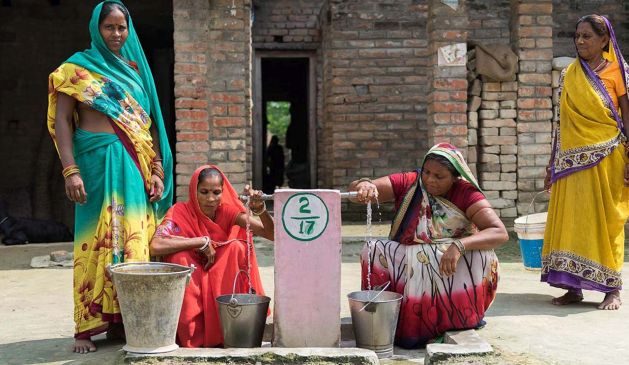
The list continueshandpumps, participatory rural appraisals, wadi programmes, and so on. Essentially, almost any government programme worth its salt came from an innovation or technology developed by civil society. This is not to belittle the role of the state, which is by far the major development actor, but to emphasise the role of civil society in nation building.

Despite this, we are seeing a marginalisation of the civil society sector by markets and the government because we haven’t told our story well enough.

Civil society is too self-effacing

What is the philosophy of a civil society? We believe that we will develop solutions which over time the community will own and the state or market will support. When that happens, we believe our work is done.

In a way, it’s a very phoenix-like approachyou create and you disband. And you start all over again on some other problem. We don’t patent anything; we don’t take credit for anything.

And perhaps this is because we know that something as complex as social change requires the contribution of many peoplecommunities, grassroots organisations, the state, funders, and so on. But we have gone to the other extreme. We don’t even acknowledge our role in the change; in fact, we undermine it.

When people ask us if we have successfully run a programme, we say “Nahi humne toh kuch kiya nahi hai, ye toh sab gaonwalon ne kiya hai” (No, we didn’t do anything, it was the villagers who did everything). And while it might be politically correct to say that we are only the catalysts, and the real work is done the community; it’s not always an accurate representation.

Civil society is more than the catalyst; we are innovatorstechnical innovators and idea innovators. We take really complex problems and come up with new ways to address them. We do effective work but refuse to take credit for it. And our refusal to take credit only feeds into the government’s view pointif the community is doing everything and civil society isn’t doing anything, then we will deal with the community directly.

People don’t understand our unique proposition

Because we have undermined ourselves, our unique proposition is not known. Our value to society is not only what we do or how we do it, but also at what cost we do what we do.

Many of us work at ridiculously low costs but we don’t document it, and we don’t measure it. So, some corporates, who want to work on social programmes, believe that they don’t need nonprofits. All they have to do is take the nonprofit’s staff and implement it on their own because it seems easy and cheap to do so.

The reality is different. Running a programme is complex. It takes years to build trust. And it requires humility, rigour, and persistence. It requires training, all-weather support, and hand-holdingall things that lead to an enabling ecosystem that a good nonprofit creates.

But some corporates don’t know this; they just want to take on the programmes because they believe they can do it better on their own rather than share space with nonprofits. It’s we who are at fault because we allowed this to happen.

The assumption is that nonprofits cannot scale

Scale is the new measure of ‘success’, where others find civil society wanting. Small, local and specialised civil society organisations are disappearing, and are not considered relevant in this new India which is in a hurry.

If one studies what has worked in the past, one realises that many, relatively small organisations have transformed the country. Consider MKSS, which started its work in a small village in Rajasthan, and even at its peak, worked largely in Rajasthan for the citizens’ right to information. That the RTI Act eventually became one of the most effective legislations by the state to hold itself accountable to its citizens, is a story of how impact is not necessarily a function of size.

We are constantly told by corporates and governments that we can’t scale. But then I reflect on what is it that a large corporate that has scaled typically does? They pick one slice of a human being’s life, for instance, the fact that people might like to drink cold sweet water in summer. It is one needone would think a very unhealthy need but nevertheless a need. And then a multi-billion-dollar soft drink industry gets created around this need. You serve nothing; in fact, you take a poor man’s good water and convert it into this sweet water and charge him INR 20 for it. That is your net value addition to society. So that is all you know. To understand one very small slice of a human being’s need and address it.

Now compare that to what civil society is trying to do. We are trying to transform the conditions in which human beings live. This is dramatically different from creating a market for one small need of an individual.

It’s easy to scale a product that is uni-dimensional, serves a very specific micro-need, to which you can throw a ton of resourcesmoney, talent, technology. But can you do it when it involves changing entrenched social norms across all aspects of a person’s life and livelihood?

The problem is while we in the sector might know how to do some of this, we don’t know how to articulate it and how to measure it.

And because we haven’t articulated it, we cannot argue for resources, for space, for anything really.

Even if the state hasn’t failed, we will always need civil society

Civil society is that critical third pillar of the samaj-sarkar-bazaar (society-government-market) triangle. Without it, no society can function. Even in most successful countries across the world there will always be people who are marginalised, and issues that are not on government or company radars.

There will always be a human problem which the market will never take up and the state will not realise either, because it is too buried, or too out there in the future. Even in its best form, the government is not designed to look at these things. And countries that have a majoritarian democracy will ignore those who are not a part of their majority. It’s a design problem.

So, who will look out for these people, who will help change entrenched social norms, who will build awareness of issues that matter?

Apoorva Oza is the chief executive officer of Aga Khan Rural Support Programme (India). He is also actively involved in founding and supporting nonprofits and nonprofit networks, as well as influencing government policy. A mechanical engineer with a diploma in rural management from the Institute of Rural Management, Anand, he has also completed courses from Cranford University, United Kingdom, and Cornell University, USA.

This story was originally published by India Development Review (IDR)