Sportwashing Allegations at Africa’s Top Football Tournament

Africa, Climate Action, Climate Change, Development & Aid, Editors’ Choice, Energy, Environment, Featured, Freedom of Expression, Green Economy, Headlines, Human Rights, Humanitarian Emergencies, Sustainable Development Goals, TerraViva United Nations

Climate Change

Opponents of the East African Crude Oil Pipeline protested American International Group's continued support of the project. The protest was in New York in July. Credit: 350.org

Opponents of the East African Crude Oil pipeline protested American International Group’s continued support of the project. The protest was in New York in July. Credit: 350.org

ABUJA, Jul 30 2024 (IPS) – Following the recent Africa Cup of Nations (AFCON) tournament in Ivory Coast, a continent-wide campaign has emerged on social media challenging the tournament’s main sponsor, TotalEnergies, over its involvement in the East African Crude Oil Pipeline (EACOP).


EACOP, a massive 1,443-kilometer crude oil export pipeline, is designed to transport oil from Western Uganda’s oilfields to the port of Tanga in Tanzania. TotalEnergies, a major stakeholder in the project, will extract oil from the Tilenga field and export it to the Global North.

Environmentalists argue that the project threatens the livelihoods of tens of thousands of people and the region’s fragile ecosystems. The Ugandan and Tanzanian governments have dismissed these concerns, asserting that the pipeline is essential for bolstering their economies.

Many of these campaigners, particularly environmentalists, have faced harassment and arrest.

One of them, Stephen Kwikiriza, an employee of Uganda’s Environment Governance Institute (EGI), a non-profit organization, was reportedly abducted and beaten by the Ugandan armed forces in Kampala on June 4, 2024.

After being questioned, he was abandoned hundreds of miles from the capital, highlighting the latest episode in the crackdown on environmentalists in Uganda.

TotalEnergies, through their press officer, François Sinecan, emphatically denied that the company had anything to do with the harassment of environmentalists, or was involved in legitimizing the company through sponsorship.

Sportswashing

Critics argue that TotalEnergies is exploiting Uganda and Tanzania for their oil, even as it faces numerous legal battles due to its role in the climate crisis and refusal to take responsibility.

They worry that TotalEnergies is using AFCON, the continent’s biggest football tournament, and its global viewership to enhance its image while profiting from climate-wrecking fossil fuel extraction across Africa.

“AFCON is one of the ways they [TotalEnergies] are using to legitimize their existence. They have to use the sports arena. They seem to say, ‘Look at what we are doing in Africa, and in your communities, it is to your benefit.’ Every time you look at the logo of TotalEnergies, you might be convinced that this is a big corporation that should invest [in Africa], when in actuality, they are destroying our existence,” Nkurunziza Alphonse, the Ugandan Coordinator of the Students Against EACOP Uganda, told IPS.

Alphonse was arrested in October 2022 when he led a group of students to the EU embassy in Kampala to deliver a petition against EACOP. But he is not the only student to be arrested and harassed in recent times.

On December 15 last year, Bwete Abdul Aziiz, a co-founder of the Justice Movement Uganda and a student at Kyambogo University in Kampala, rallied 50 students, including members of the movement, to protest and deliver a petition to the Ugandan parliament against the EACOP.

However, the students did not reach their destination as the police dispersed the protest and arrested Abdul Aziiz, along with three other students who are members of the movement.

“Before we were taken to the Central Police Station in Kampala, where we spent four days, we were held in an enclosed space for about an hour where the police threatened us to stop fighting the government. I was kicked in the ribs by a police officer, and other colleagues were slapped,” Abdul Aziiz told IPS.

However, Sinecan, TotalEnergies press officer, denied claims of sportwashing and involvement in the arrests of climate activists.

“Africa is part of the DNA of TotalEnergies, which has been present on the continent for ninety years and has never ceased to develop its activities and strengthen its local roots. The company employs 10,000 men and women in more than 40 African countries, working across the entire energy production and distribution chain. Every day, nearly 4 million customers visit the 4,700 service stations in the TotalEnergies network in Africa,” Sinecan told IPS.

He added that TotalEnergies  “will not tolerate any threat or attack against those who peacefully defend and promote human rights.”

“TotalEnergies has a history of engaging directly with all members of civil society, including NGOs involved in human rights issues. To this end, the company’s commitments include quarterly meetings, stakeholder dialogue, bilateral meetings, webinars on keynote topics identified by NGOs and responses to questions and concerns raised by all project stakeholders,” said Sinecan.

However, activists that IPS spoke to do not agree.

Bhekhumuzi Bhebhe, Campaigns Lead at Power Shift Africa, in a statement sent to IPS said, “Investing millions in sportswashing while undercompensating displaced households exposes a profound deceit by the French multinational. It also highlights the glaring disconnect between corporate sponsorship and genuine social responsibility.”

But the French oil giant denied claims of undercompensating displaced households, telling IPS that “as with all other aspects of the project, TotalEnergies stringently complies with local regulations and international standards (IFC).”

Football and Climate Change

The 2023 AFCON was postponed to 2024 due to adverse weather conditions, leading critics to argue that the tournament underscored the impacts of the climate crisis, for which TotalEnergies and other oil majors are largely responsible.

Richard Heede of the Climate Accountability Project has described EACOP as a mid-sized carbon bomb. The pipeline is projected to become operational by 2025 and once completed, it is expected to contribute approximately 34 million tons of carbon emissions annually for around 25 years.

Baraka Lenga, Greenfaith Tanzania coordinator, considers this a climate disaster.

“For capitalists and businessmen, EACOP implies making billions of dollars. TotalEnergies does not care about human rights but about money. In Tanzania, over 70 percent of citizens depend on agriculture, yet instead of being concerned about the negative impacts of EACOP, TotalEnergies is focused on profit,” Lenga said.

Alagoa Morris, an environmental expert and human rights activist in Nigeria, told IPS that African governments allow oil giants to exploit communities in the continent to maintain support from the Global North, where the majority of these oil firms are based. He says this has also led to numerous oil spills in the continent.

Last year, the Nigerian government confirmed the loss of 3,000 barrels of crude oil in TotalEnergies’ spill in the oil-rich Niger-Delta region, which is already one of the most polluted areas on the planet due to frequent oil spills.

“African governments are complicit in the exploitation of the continent’s oil resources because the wealth generated from oil is then used to fuel the lust for power and wealth of a few individuals, perpetuating a cycle of corruption and environmental degradation,” Morris said.

Renewable Energies?

To do away with fossil fuels by mid-century, world leaders during cop28 held at UAE last year, pledged to keep investing in renewable energies. However, with a projected population of about 2.5 billion in 2050, many African leaders doubt that renewable energy can adequately substitute for energy obtained from fossil fuels required to produce power for a rapidly growing population in Africa.

Seyifunmi Adebote, an environmental policy expert in Nigeria, believes Africa must embrace renewable energy but according to him, “many countries on the continent lack the infrastructure to transition to renewable energy in the short run.”

Despite accusations of investing in fossil fuels, TotalEnergies told IPS that it has “dedicated USD 5 billion to renewable and low-carbon energies and will dedicate another USD 5 billion in 2024. This is the second year in a row that TotalEnergies has invested more in low-carbon energies than in new hydrocarbon projects.

“Since 2020, we have been resolutely committed to our transition strategy, which is based on two pillars: gas and electricity. Gas and low-carbon electricity are at the heart of tomorrow’s energy system. Gas is an essential transitional energy to support the rise of intermittent renewable energies and replace coal in power generation. In electricity, we are already one of the world’s biggest solar and wind power developers, which should put us in the top 5 worldwide in this sector by 2030.”

Victory In Sight

The fate of EACOP is uncertain after several financial institutions, including previous supporters of TotalEnergies, announced they would no longer back the project due to global environmental protests.

European lawmakers have also condemned and called for its delay.

For the Ugandan-based Alphonse, this marks a significant victory in the fight against EACOP, as the lack of financiers could lead to the project being suspended.

“This is the time African countries should move away from fossil fuels. Oil is destroying our continent,” he said.

IPS UN Bureau Report

IPS UN Bureau, IPS UN Bureau Report,

  Source

How Vote Reflects Farmers’ View on India’s BJP’s Agrarian Policy Amid Climate Change

Active Citizens, Asia-Pacific, Civil Society, Climate Change, Climate Change Justice, Food and Agriculture, Headlines, Humanitarian Emergencies, Sustainable Development Goals, TerraViva United Nations | Analysis

Democracy

Political parties often play lip service to climate change, but farmers in India, faced with unpopular policies and uncertainty in their livelihoods due to climate change, ensured their views were heard during the recent general elections.

Farmers in Kashmir sow rice crops. Farmers voted against the ruling BJP because of its unpopular policies and lack of support, as uncertain weather conditions impact their livelihoods. Credit: Umer Asif/IPS

Farmers in Kashmir sow rice crops. Farmers voted against the ruling BJP because of its unpopular policies and lack of support, as uncertain weather conditions impact their livelihoods. Credit: Umer Asif/IPS

SRINAGAR, Jul 15 2024 (IPS) – On June 4, Ram Das, a 65-year-old farmer from India’s northern state of Haryana, was anxiously waiting for the results of the country’s general elections. It was early morning when he left his home and, along with his fellow villagers, congregated near a tea stall that had a transistor set playing the election results.


By 11 in the morning, Das had already sipped three cups of tea and smoked a few cigarettes. His anxiety was plummeting as the results hinted at a decreasing number of seats for India’s ruling Bharatiya Janata Party (BJP). He, along with the entire hamlet, had voted against the Narendra Modi government. “The farmers are not happy at all. We wanted to teach this government a lesson, and that is what we did,” Das told Inter Press Service. 

Despite securing a third term in government, the BJP’s overall election performance was described as a “shock” to Prime Minister Narendra Modi by several media sources. The party fell short of its goal of winning 400 out of 543 seats, managing to secure only 240 seats compared to 303 in the last elections that were held in the year 2019. Opposition parties saw significant success in states with large farming populations, such as Uttar Pradesh, Haryana, Maharashtra, Punjab, and West Bengal. Consequently, the BJP had to rely on the 28 cumulative seats from its allies to form the government.

An infographic of the number of seats won by India's ruling Bharatiya Janata Party (BJP) in the 2019 and 2024 elections for Rajasthan, Uttar Pradesh, Haryana, and Punjab have the largest farming populations. The blue bars represent the 2019 elections, and the red bars represent the 2024 elections. The numbers on top of the bars indicate the number of seats won by the BJP out of the total seats available in each state. Credit: Umar Manzoor Shah/IPS

An infographic of the number of seats won by India’s ruling Bharatiya Janata Party (BJP) in the 2019 and 2024 elections for Rajasthan, Uttar Pradesh, Haryana, and Punjab have the largest farming populations. The blue bars represent the 2019 elections, and the red bars represent the 2024 elections. The numbers on top of the bars indicate the number of seats won by the BJP out of the total seats available in each state. Credit: Umar Manzoor Shah/IPS

What went wrong and where?

When Narendra Modi first took office in 2014, he promised to reform the agriculture sector and double farmers’ incomes. However, government data from 2022 shows that farmers still live in squalid conditions, earning just Rs 28 ($0.34) per day.

Government data reveals that between 2018 and 2022, a staggering 53,478 farmers took their own lives, overwhelmed by mounting debt, inadequate compensation for their produce, and unpredictable weather conditions. This means 36 farmers were killing themselves every day during this period. “The numbers could be much higher than what is being projected in the government data. This could be the tip of an ice-berg. Many farmer suicides go unreported and never find place in government files,” says Abinav Sinha, a civil society activist based in Indian state of Uttar Pradesh.

In 2020, Modi’s government enacted three controversial agricultural laws without consulting farmers’ groups. This move sparked a massive year-long protest, as farmers feared the laws would lead to increased corporatization of agriculture and the elimination of state-backed protections, such as the minimum support price and the procurement of farm produce by state agencies.

The government ultimately repealed the controversial agricultural laws, but not before enforcing a severe crackdown on the protests. Authorities arrested farmers, barricaded highways to prevent them from reaching New Delhi, and deployed shotguns, pellets, and drones to disperse tear gas on unarmed protesters. As per the various farmers’ associations, over 570 farmers were killed during the protest.

In February of this year, farmers once again took to the streets, this time demanding legal guarantees for a minimum support price (MSP) for crops, among other issues. However, negotiations with government officials failed to yield any conclusive results.

This was the reason that the farmers associations across the country galvanized their efforts into political action and unanimously resolved to vote against the ruling Bharatiya Janata Party (BJP).

June 4: The D-Day

Farmers like Das from Haryana were one amongst the thousands of other farmers who didn’t allow the BJP candidates to even enter their villages for the campaigning. “They were ruthless for us when we sought the rollback of the draconian farm laws. How on earth should we vote for them? We will not even allow them to campaign here,” Das said.

On June 4, this year, election results were announced, and the country was shocked to find the states with a considerable amount of agrarian population voting against the BJP.

In Rajasthan, where the BJP had secured a victory in the state government last December, it won 14 out of 25 seats in the recent elections, a significant drop from winning all 25 seats in 2019.

In Uttar Pradesh, a state where 65 percent of the population relies on agriculture, the BJP managed to win just 33 out of 80 seats, a sharp decline from the 62 seats it secured in 2019 and 71 in 2014.

In Haryana, known as India’s breadbasket, the BJP’s count dropped to five seats out of the 10 available, compared to winning all 10 seats in 2019. The opposition Congress claimed the remaining five seats.

In Punjab, a leading producer of rice and wheat, the BJP failed to win any seats, drawing a blank in the state.

Government Cannot Ignore Climate Change Now

Pranav Shankar, a climate change activist based in New Delhi, told IPS that the general elections in India this year have shown a considerable trend that cannot be ignored, downplayed or undermined. “The farmers have spoken out.  This is the reality. To date, the government has ignored the importance of the farming community. From now on, the government has to remain assiduous towards the farmers’ needs and take measures to tackle climate change that is wreaking havoc in the country and putting the farmers in distress,” Shankar said.

He added that more than 33 electoral officers were killed due to heat stroke during the national elections in India this year. “No one talked about them. Even the government itself seems to have forgotten about those poor souls. This is all very unprecedented,” Shankar said.

Note: This feature is published with the support of Open Society Foundations.

IPS UN Bureau Report

  Source

Overwhelmed Healthcare Systems in Gaza Struggle Through Evacuation Orders

Aid, Armed Conflicts, Civil Society, Development & Aid, Editors’ Choice, Featured, Headlines, Health, Human Rights, Humanitarian Emergencies, Middle East & North Africa, Migration & Refugees, Sustainable Development Goals, TerraViva United Nations

Humanitarian Emergencies

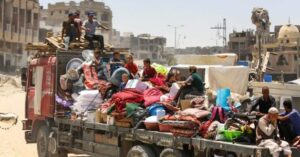
Displaced families in Gaza are on the move after the latest Israeli evacuation orders. Around nine in 10 Gazans have been displaced at least once since the war began. Photo: UNRWA

Displaced families in Gaza are on the move after the latest Israeli evacuation orders. Around nine in 10 Gazans have been displaced at least once since the war began. Photo: UNRWA

UNITED NATIONS, Jul 12 2024 (IPS) – For nine months, over 2 million people in the Gaza Strip have been forcibly displaced in the wake of the armed conflict between Israel and Hamas. The ongoing fighting and displacement have put significant strain on humanitarian organizations on the ground to address even basic health needs.

The United Nations and other humanitarian organizations have stressed that the healthcare system in Gaza has collapsed or has suffered undue pressure as a result of the fighting. Out of 36 hospitals in the area, 13 remain open, operating with partial functionality.


This includes Nasser Hospital, which now stands as the last hospital providing comprehensive healthcare services. It has been overwhelmed with patients in the wake of evacuation orders issued on July 1 by Israeli authorities for the east and south of Khan Younis. Patients and medical personnel working in the Gaza European Hospital, located in Khan Younis, evacuated ahead of time.

Although an official from the Israeli defense force stated that patients and medical personnel were exempt from the evacuation order, this was not conveyed to the humanitarian groups on the ground. 

Andrea de Domenico, UN-OCHA’s Head of Office in the Occupied Palestinian Territory, told reporters in a virtual press briefing on July 3 that OCHA was not informed. He stated that it was likely that those who evacuated acted based on past experiences where hospitals were specifically targeted for raids or military bombardment, and so they took preemptive measures to evacuate before the Israeli military moved in on Khan Younis.

Evacuation orders have devastating implications for the fragile health infrastructure by disrupting the functionality of health facilities within and adjacent to evacuation zones, as one spokesperson from the World Health Organization (WHO) told IPS. They impede access for both healthcare providers and patients, and they compromise the efficacy and security of humanitarian operations. In addition, this only increases the burden on other hospitals that are now charged with receiving patients from evacuated areas.

As one of the remaining hospitals providing comprehensive care, Nasser Hospital has been operating beyond capacity with limited supplies, amidst destruction in the surrounding area, which WHO staff on the ground have said is ‘indescribable’. The area surrounding the hospital is laden with heavy layers of debris, destroyed buildings, and no stretch of an intact road. Its pediatric ward has now hosted more than 120 patients since July 5, despite its 56-bed capacity.

OCHA and the World Health at Nasser Medical Complex in Gaza earlier this year. UN and other humanitarian agencies have been struggling to ensure health care continues. Credit: OCHA

OCHA and the World Health at Nasser Medical Complex in Gaza earlier this year. UN and other humanitarian agencies have been struggling to ensure health care continues. Credit: OCHA

It is also operating with dwindling medical supplies and holds responsibility for sterilizing equipment for the surrounding field hospitals, according to Doctors Without Borders (DWB). Despite the critical need for supplies, DWB trucks and convoys carrying these supplies have been unable to enter Gaza since April. As recently as July 3, trucks were denied entry due to ongoing fighting in the South.

“Overall, it’s a comprehensive issue—from shortages of beds and supplies to the lack of surgeons. With yet another hospital closed, patients’ lives are even more at risk,” said medical team leader Javid Abdelmoneim, working in Nasser Hospital.

The issue of life-saving aid being restricted from entering Gaza has continued to persist and impact operations for humanitarian organizations on the ground, including the UN. As the WHO spokesperson told IPS, their trucks were unable to pass through last week as the Karem Shalom crossing remains closed.

Fuel has been identified as critical to the functionality of health facilities and aid operations, and yet shortages are rampant. A WHO spokesperson stated that hospitals have been forced to work with limited supplies of fuel, electricity and solar systems, and this has only hindered groups from properly functioning.

Power blackouts in newborn/ICU and kidney dialysis units place their patients at critical risk. The lack of fuel also impacts the water and sanitation sectors, which require at least seventy-thousand liters of fuel a day, and yet in the last few weeks, they have only received less than ten percent of what is needed.

Only 500,000 liters of fuel have been brought in during the first week of July, and 2 million liters were brought in in the month of June, which humanitarian organizations note is a fraction of the fuel needed to sustain humanitarian, medical, and WASH operations—at least 400,000 liters per day.

Trash and sewage buildup and a lack of clean water, among other factors, have all led to the spread of water-borne diseases and upper respiratory infections. According to the WHO, since mid-October 2023, they have reported cases of diarrhea, lice and scabies, skin rashes, impetigo and chicken pox.

“While a healthy body can more easily fight off diseases, a wasted and weakened body will struggle and become more susceptible,” one WHO spokesperson told IPS.

Meanwhile, acute food insecurity has ravaged Gaza. Since the start of the war, food insecurity has been a major concern for humanitarian actors in the region and globally.

The Integrated Phase Classification (IPC)’s special brief acute food insecurity projected that 96 percent of Gaza’s population, or 2.15 million people, would be experiencing extreme levels of food insecurity between June 16 and September 30, which includes over 495,000 people who face catastrophic food insecurity. More than half of the households reported that often, they did not have any food in the household, and more than 20 percent go full days and nights without eating. The violence and repeated displacement have challenged people’s ability to cope or to access humanitarian assistance.

This is further exacerbated when humanitarian workers are also forced to relocate for their own safety and move their operations. Domenico stated that the constant movement also means that warehouses containing fuel and supplies are abandoned as a result. In the case of UN agencies such as OCHA and its partners, humanitarian operations may be considered a parameter of activity that is (or should be) protected from military activity. Their presence is likely to signal to people that it may be safe to be there or that their basic needs will be met.

So far, 34 people have died from malnutrition and dehydration, according to the Ministry of Health. Of those deaths, WHO notes that 28 of them are children. A group of independent experts has warned that famine has spread throughout the Gaza Strip, noting recent cases of children who have died due to hunger and malnutrition, one of whom was as young as six months old.

“With the death of these children from starvation despite medical treatment in central Gaza, there is no doubt that famine has spread from northern Gaza into central and southern Gaza,” the experts said in a shared statement.

The IPC special brief notes that only a cessation of the armed conflict and sustained, uninterrupted humanitarian intervention could reduce the risk of famine. Humanitarian organizations have struggled to maintain their operations while hostilities have persisted in the Gaza Strip, endangering and displacing more than a million civilians multiple times over, along with humanitarian workers who have risked their lives to continue providing what little life-saving aid can cross the border. Military violence has continued despite international condemnation and repeated demands for a ceasefire.

Organizations such as WHO and Doctors Without Borders have coordinated with health partners and agencies on the ground, namely UNRWA, to provide primary care, support vaccination campaigns, and deploy emergency medical teams. As the WHO notes, however, these efforts can only support the health system; they cannot replace it.

IPS UN Bureau Report

Note: This feature was published with the support of the Riana Group.

  Source

Special Report: Exposing Afghanistan’s Pervasive, Methodical System of Gender Oppression

Civil Society, Development & Aid, Editors’ Choice, Education, Featured, Gender, Headlines, Human Rights, Humanitarian Emergencies, Middle East & North Africa, Sustainable Development Goals, TerraViva United Nations

Education Cannot Wait. Future of Education is here

Richard Bennett during his oral statement at the Human Rights Council on June 18, 2024. Credit: Anne-Marie Colombet/Human Rights Council

Richard Bennett during his oral statement at the Human Rights Council on June 18, 2024. Credit: Anne-Marie Colombet/Human Rights Council

NAIROBI , Jul 1 2024 (IPS) – The UN Special Rapporteur’s annual report on human rights in Afghanistan lays bare the alarming phenomenon of an institutionalized system of discrimination, segregation, disrespect for human dignity and exclusion of women and girls.

In the new report, Richard Bennett, the UN’s Special Rapporteur, provides an intersectional analysis of the establishment and enforcement of this institutionalized system of unparalleled gender oppression. It paints a picture of a worsening situation for women and girls.


“The situation is that the de facto authorities, who control the country but are not yet recognized as a government, are not just failing to implement their obligations to human rights under the human rights treaties that they’ve signed. They are deliberately implementing policies and practices that flout those policies to create a society where women are permanently inferior to men,” says Bennett in an exclusive interview with IPS.

Education Cannot Wait’s #AfghanGirlsVoices global campaign highlights real-life testimonies of hope, courage and resilience by Afghan girls denied their right to education. Credit: ECW

Education Cannot Wait’s #AfghanGirlsVoices global campaign highlights real-life testimonies of hope, courage and resilience by Afghan girls denied their right to education. Credit: ECW

“Of course, there is sexism in every country, some worse than others, but this is very different from any other country.”

Bennett is referring to the distressing pattern of large-scale systematic violations and subjugation of women’s and girls’ fundamental rights that is unfolding, abetted by the Taliban’s discriminatory and misogynist policies and harsh enforcement methods such as gender apartheid and persecution.

“Only in Afghanistan has a government shut schools for girls above the age of 13, above the sixth grade, and does not allow women to go to universities. And this, combined with segregation, means that women are really suffering. For example, women can only get treatment from doctors who are women and the same applies to teaching. It is a very segregated society as a whole. Just today, a businesswoman told me that she could only do business with female customers. This is affecting not just the current situation and the current generation, but the future as well.”

The Special Rapporteur finds that the Taliban’s institutionalized system of discrimination is most visible through its relentless issuance and enforcement of edicts, decrees, declarations and orders that in and of themselves constitute severe deprivations of human rights and violations of international law.

Between June 2023 and March 2024, they issued an estimated 52 edicts. These include banning foreign non-governmental organizations from providing educational programmes, including community-based education. The Taliban banned women from participating in radio and television shows alongside male presenters.

In July 2023, female beauty salons were forced to close. In August 2023, women were prohibited from entering Band-e Amir National Park. In October 2023, women were excluded from holding directorships within non-governmental organizations. In February 2024, women on television were required to wear a black hijab, with their faces covered, leaving only their eyes visible.

“We are concerned about intergenerational issues, but also intersectional issues. There is discrimination against women and girls who are of an ethnic or religious or linguistic marginalized groups,  or persons with disabilities, or a woman heading a household. Travel requires accompaniment by a close male relative and some women do not have such a person available. All of this is extremely restrictive and will also affect future generations as it will lead to a lack of education and professions,” Bennett says.

The report finds that “women and girls are being maneuvered into increasingly narrow roles where the deep-rooted patriarchy, bolstered and legitimized by Taliban ideology, deems them to belong: as bearers and rearers of children, and as objects available for exploitation, including debt bondage, domestic servitude, sexual exploitation and other forms of unremunerated or poorly remunerated labor.”

The UN Special Rapporteur stresses that there was progress in Afghanistan before the return of the Taliban.

“It was not perfect, but for 20 years there was notable progress. As a result, there are very many professional women in Afghanistan, and women who head households as the main income earners—the main breadwinners for their families. The restrictions are having very serious negative effects.”

Richard Bennett, UN Special Rapporteur Afghanistan, advocates for the rights of every girl to education in Afghanistan. Credit: ECW

Richard Bennett, UN Special Rapporteur for Afghanistan, advocates for the rights of every girl to education in Afghanistan. Credit: ECW

Bennett is among the prominent supporters of the global #AfghanGirlsVoices campaign launched by Education Cannot Wait (ECW), the global fund for education in emergencies and protracted crises within the United Nations. Now in its second phase, the campaign aims to ensure unrestricted access to education for Afghan girls and young women.

After seizing power in 2021, the Taliban swiftly imposed a ban on secondary education for girls, subsequently expanding this restriction to encompass universities and, more recently, private learning centers. Young women have also been prevented from leaving Afghanistan to pursue tertiary education.

“There has never been universal education in Afghanistan, even in the 20 years preceding the return of the Taliban. However, the education system gradually improved, although not as much in remote or rural areas. Part of this was due to a lack of resources, as well as an ongoing internal conflict. So, it was insecure and difficult to maintain schools. But once the Taliban came back into power after August 2021, an education system built over two decades was quickly unraveling,” he says.

In addition to the school closures, he speaks of concerns about the quality of education from two perspectives. One is the alarm over an ongoing brain drain in Afghanistan since the Taliban took over. Many teachers and university lecturers have left the country.

The other concerns are changes to the curriculum and especially a notable increase in madrasa education. Madrasa education has always been a feature of life in Afghanistan. “But now there seems to be at least anecdotal information that the teaching is much more religious-based than a broad education. Girls can go to madrasas,” he says. 

On recommendations and urgent solutions moving forward, Bennett stresses that “no country should ban schools. We therefore continue to call for the reversal of this policy and the reopening of schools with a good quality education. My recommendations are what I call an all-tools approach, as only one approach or any one tool will not work.”

Overall, he says the report calls for justice and accountability, incorporating human rights and women’s voices in political processes and diplomatic engagement. Emphasizing that bolstering documentation of human rights abuses and violations is critical, as is reinforcing protection and solidarity for Afghan women, girls and human rights defenders.

Bennett has a direct message to the current rulers in Afghanistan, the Taliban, to reverse their policies and to comply with human rights. The second message is to the international community, urging them not to normalize or recognize Afghanistan’s unacceptable and worsening human rights situation.

Further stressing that the global community should strongly resist normalizing diplomatic relations or accepting the Taliban into the UN unless and until they meet concrete, measurable, verifiable benchmarks on human rights and the rights of women and girls.

IPS UN Bureau Report

  Source

UN Climate Talks: Setting Sail to Plunder the Ocean

Civil Society, Climate Action, Climate Change, Environment, Featured, Global, Headlines, Human Rights, Humanitarian Emergencies, Sustainable Development Goals, TerraViva United Nations

Opinion

The 60th session of the Subsidiary Bodies of the United Nations Framework Convention on Climate Change (SB 60, UNFCCC), took place in Bonn June 3-13, with the issue of climate finance high on the agenda. Credit: UN Climate Change Lucia Vasquez Tumi

BONN, Germany, Jun 28 2024 (IPS) – Despite the evident and increasing urgency of the climate crisis, the June intersessional meeting of the UNFCCC closed with little to show for two full weeks of negotiation.


With COP29 being cited as ‘the Finance COP’, much of the focus across various agenda items was on ever contested questions of who owes what to whom. Crucially, the meeting was supposed to advance negotiations on a New Collective Quantified Goal (NCQG) on climate finance for the post 2025 period, due to be agreed in Baku.

However, despite ‘quantified’ being in the very name of the goal, developed countries refused to be drawn on the critical matter of how much is owed and needed.

The 2020 goal of $100bn per year (stretched to 2025) remains unfilled, with the vast majority of what the Global North claims to have contributed in the form of loans, or money redirected from other overseas budgets.

Likewise, despite the long fought battle which secured a new loss and damage finance mechanism at COP27, that pot too remains as good as empty, with current pledges equating to less than 0.2% of the climate change related losses faced by Global South countries each year.

Climate finance is key. Intimately related to the core UNFCCC principles of equity and Common but Differentiated Responsibility (CBDR), it is central to unlocking the stalemate that has plagued negotiations since they began.

But instead of concrete finance commitments and delivery, carbon markets are increasingly being spun as climate finance, with some increasingly desperate nations on the frontlines of the climate crisis grasping wishfully at the idea that a 5% share of proceeds from markets under the Paris Agreement will plug the longstanding gap on adaptation funding, and others preparing to sell off their rich ecosystems as some form or other of carbon credits.

As the practical limitations, to say nothing of the social and environmental harms, of novel land based Carbon Dioxide Removal (CDR) schemes are increasingly exposed at a scale to impact the climate, Bioenergy Carbon Capture and Storage (BECCS), one of the most widely touted CDR technologies, would require twice the entire global land area currently under cultivation, oceans are being sized up as the next frontier for such exploitation.

Oceans cover over 70% of the Earth’s surface, and are already our greatest ally in the fight against climate change. Alarmingly, however, highly speculative and risky theories about engineering them at will to sequester and store ever more carbon are increasingly being incorporated into the climate policy landscape.

We see this in the opaque language that invites parties to scale up ‘ocean-based mitigation action’ that found its way into the Global Stocktake decision text last year in Dubai, and more clearly in the explicit inclusion of dangerous ocean CDR methods in the ongoing wrangling over Article 6 guidelines, which in various iterations identify ocean fertilisation, ocean alkalinity enhancement and algae cultivation / biomass sinking for potential inclusion.

And concerningly, we also saw it in this year’s Ocean and Climate Change Dialogue held in Bonn. Pitched as a “[recognition of] the need to strengthen the understanding of, and action on, ocean and climate change”, the Dialogue, now in its 4th year, saw a push for research and development of marine CDR under its theme on ‘Technology Needs for Ocean Climate Action, including Finance Links’.

The problem for those who would financialise and plunder the oceans under the guise of climate mitigation is that there are of course other UN Conventions of equal importance to the UNFCCC that have for good reason imposed restrictive regulations on these activities.

The Convention on Biological Diversity has had a de facto moratorium in place on all geoengineering since 2010, while the London Convention / London Protocol, which regulates pollution at sea, has made clear its intention to add potentially a further four categories of marine geoengineering to its 2008 prohibition on ocean fertilisation.

Crucially, a commercial factor is a key element under both regimes in restricting outdoor experiments – which of course is inherent in any ocean-based CDR envisaged under carbon markets, voluntary or otherwise.

The fact is, however, that none of the marine geoengineering approaches increasingly referred to as CDR do anything to tackle the root causes of climate change, and none have been able to demonstrate that they can effectively capture or store carbon with any permanence.

They are an extremely dangerous distraction from the real action we know is needed to rapidly bring down greenhouse gasses, starting with an urgent and just phase out of fossil fuels. Furthermore they are likely to cause great harm to the delicate equilibrium of the oceans – already severely stressed by over-exploitation, pollution and global heating – with potentially grave consequences for ocean biodiversity, food chains, fisheries, and even the oceans’ natural capacity to sequester carbon.

At least 40 open-water marine geoengineering experiments are currently underway or in planning, across a variety of theories and technologies, many of which have a clear commercial element and are likely in violation of international agreements. Some of these are already running into very practical challenges, such as the postponement of Planetary Technologies’ planned ocean alkalinity enhancement trial in Cornwall, where community resistance led to an independent assessment which exposed serious flaws in the plan, while biomass cultivation and sinking start-up Running Tide announced the closure of its fairly advanced operations only this last week, citing lack of demand for carbon credits from the voluntary market.

Ultimately however, as a broad spectrum of civil society organisations made clear in several interventions at the Ocean and Climate Dialogue, and in a statement endorsed by over 100 organisations as of last month, Paris Agreement carbon markets, which are so very clearly legitimising these highly speculative and risky approaches, cannot ignore international agreements restricting them and must uphold the precautionary principle.

As we head to COP29 in Baku and as IPCC kicks off its work on the 7th Assessment Cycle later this year, the voices of civil society across the globe, Indigenous Peoples, coastal communities and fisherfolk must be heard as they reiterate the risk of undermining the vital role oceans play in sustaining life on earth. It is unquestionably clear that our oceans cannot be for sale.

Mary Church is Geoengineering Campaign Manager, Center for International Environmental Law (CIEL) and member of Hands-Off Mother Earth! (HOME) Alliance.

IPS UN Bureau

  Source

African Activists Call on the West to Finance Climate Action

Africa, Civil Society, Climate Change Finance, Climate Change Justice, Conferences, Development & Aid, Editors’ Choice, Environment, Featured, Global, Headlines, Human Rights, Humanitarian Emergencies, Sustainable Development Goals, TerraViva United Nations

Climate Change Finance

Activists at Bonn accuse developed countries of frustrating the process on climate finance. Pictured here are Danni Taaffe, Head of Communications at Climate Action Network (CAN), Mohamed Adow of Power Shift Africa and Sven Harmeling, Head of Climate at CAN. Credit: Isaiah Esipisu/IPS

Activists at Bonn accuse developed countries of frustrating the process on climate finance. Pictured here are Danni Taaffe, Head of Communications at Climate Action Network (CAN), Mohamed Adow of Power Shift Africa and Sven Harmeling, Head of Climate at CAN. Credit: Isaiah Esipisu/IPS

BONN, Jun 13 2024 (IPS) – As the technical session of the global climate negotiations enters the final stretch in Bonn, Germany, climate activists from Africa have expressed fears that negotiators from the developed world are dragging their feet in a way to avoid paying their fair share to tackle the climate crisis.

“I think we will be unfair to the snail if we say that the Bonn talks have all along moved at a snail pace,” quipped Mohammed Adow, the Director, Power Shift Africa.


“Ideally, there will be no climate action anywhere without climate finance. Yet what we have seen is that developed countries are frustrating the process, blocking the UAE annual dialogues, which were agreed upon last year in Dubai, to focus on the delivery of finance so as to give confidence to developing countries to implement climate actions,” said Adow.

According to the UN Framework Convention on Climate Change (UNFCCC), the United Arab Emirates (UAE) dialogue was created to focus on climate finance in relation to implementing the first Global Stoke Take (GST-1) outcomes, with the rationale of serving as a follow up mechanism dedicated to climate finance, ensuring response to and/or monitoring of, as may be appropriate and necessary, all climate finance items under the GST

The two-week Bonn technical session of Subsidiary Bodies (SB60) was expected to develop an infrastructure for the New Collective Quantified Goal (NCQG), a climate change funding mechanism to raise the floor of climate finance for developing countries above the current $100 billion annual target.

In 2009, during the 15th Conference of Parties (COP15) of the UNFCCC in Copenhagen, developed countries agreed that by 2020, they would collectively mobilize $100 billion per year to support priorities for developing countries in terms of adaptation to climate crisis, loss and damage, just energy transition and climate change mitigation.

When parties endorsed the Paris Agreement at COP 21 in 2015, they found it wise to set up the NCQG, which has to be implemented at the forthcoming COP 29, whose agenda has to be set at the SB60 in Bonn, providing scientific and technological advice, thereby shaping negotiations in Azerbaijan.

However, activists feel that the agenda being set in Bonn is likely to undermine key outcomes of previous negotiations, especially on climate finance.

“We came to Bonn with renewed hope that the NCQG discussions will be honest and frank with all parties committed to seeing that the finance mechanism will be based on the priorities and needs of developing countries and support country-driven strategies, with a focus on Nationally Determined Contributions (NDCs) and National Adaptation Plans (NAPs),” said Memory Zonde-Kachambwa, the Executive Director, FEMNET.

“Seeing the devastation climate change is causing in our countries in terms of floods, storms, and droughts, among other calamities, it was our hope that the rich countries would be eager and willing to indicate the Quantum as per Article 9.5 of the Paris Agreement so as to allow developing countries to plan their climate action,” she said.

So far, negotiators from the North have been pushing for collective “mobilization of financial resources,” which African activists believe is merely the privatization of climate finance within NCQG, thus surrendering poor countries to climate-debt speculators and further impoverishing countries clutching onto debt.

Also in the spotlight was the Global Goal on Adaptation (GGA), where the activists feel that the means of implementation is being vehemently fought by the parties from developed countries.

“Adaptation must be funded from public resources and must not be seen as a business opportunity open to private sector players,” said Dr. Augustine Njamnshi, an environmental policy and governance law expert and the Executive Secretary of the African Coalition for Sustainable Energy and Access. “Without clear indications on the means of implementation, GGA is an empty shell and it is not fit-for-purpose.”

According to Ambassador Ali Mohammed, the incoming Chair for the African Group of Negotiators (AGN), the SB60 is an opportunity to rebuild trust in the principle of common but differentiated responsibilities and respective capabilities.

“That trust can only be rebuilt if we come out of Bonn with a quantum that adequately covers the needs of the continent,” he said, noting that the figure Africa is asking for, which is to be part of the agenda for COP29, is USD 1.3 trillion per year by 2030.

IPS UN Bureau Report