A Global Crisis Like No Other Needs a Global Response Like No Other

Civil Society, Development & Aid, Featured, Global, Headlines, Health, Human Rights, Humanitarian Emergencies, Inequity, TerraViva United Nations

Opinion

Kristalina Georgieva is the Managing Director of the International Monetary Fund (IMF)

WASHINGTON DC, Apr 22 2020 (IPS) – I have been saying for a while that this is a ‘crisis like no other.’ It is:

    • • More complex, with interlinked shocks to our health and our economies that have brought our way of life to an-almost complete stop;
    • • More uncertain, as we are learning only gradually how to treat the novel virus, make containment most effective, and restart our economies; and
    • Truly global. Pandemics don’t respect borders, neither do the economic shocks they cause.
Credit: IMF

The outlook is dire. We expect global economic activity to decline on a scale we have not seen since the Great Depression.

This year 170 countries will see income per capita go down – only months ago we were projecting 160 economies to register positive per capita income growth.

Actions taken

Exceptional times call for exceptional action. In many ways, there has been a ‘response like no other’ from the IMF’s membership.

Governments all over the world have taken unprecedented action to fight the pandemic—to save lives, to protect their societies and economies. Fiscal measures so far have amounted to about $8 trillion and central banks have undertaken massive (in some cases, unlimited) liquidity injections.

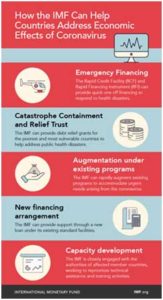
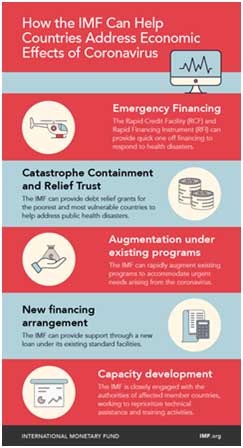
For our part, the IMF has $1 trillion lending capacity – 4 times more than at the outset of the Global Financial Crisis—at the service of its 189 member countries. Recognizing the characteristics of this crisis—global and fast-moving such that early action is far more valuable and impactful—we have sought to maximize our capacity to provide financial resources quickly, especially for low-income members.

In this regard, we have strengthened our arsenal and taken exceptional measures in just these two months.

These actions include:
Doubling the IMF’s emergency, rapid-disbursing capacity to meet expected demand of about $100 billion. 103 countries have approached us for emergency financing, and our Executive Board will have considered about half of these requests by the end of the month.
• Reforming our Catastrophe Containment and Relief Trust, to help 29 of our poorest and most vulnerable members—of which 23 are in Africa—through rapid debt service relief, and we are working with donors to increase our debt relief resources by $1.4 billion. Thanks to the generosity of the UK, Japan, Germany, the Netherlands, Singapore, and China, we are able to provide immediate relief to our poorest members.
• Aiming to triple our concessional funding via our Poverty Reduction and Growth Trust for the most vulnerable countries. We are seeking $17 billion in new loan resources and, in this respect, I am heartened by pledges from Japan, France, UK, Canada, and Australia promising commitments totaling $11.7 billion, taking us to about 70 percent of the resources needed towards this goal.
• Supporting a suspension of official bilateral debt repayments for the poorest countries through end 2020—a ground-breaking accord among G20 countries. This is worth about $12 billion to nations most in need. And calling for private sector creditors to participate on comparable terms—which could add a further $8 billion of relief.
• Establishing a new short-term liquidity line that can help countries strengthen economic stability and confidence.
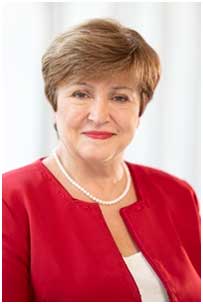
Kristalina Georgieva

This is the package of actions that the International Monetary and Financial Committee endorsed last week at our virtual Spring Meetings.

It represents a powerful policy response. Above all, it enables the IMF to get immediate, ‘here and now’ support to countries and people in desperate need. Today.

Preventing a protracted recession

But there is much more to be done and now is the time to look ahead. To quote a great Canadian, Wayne Gretzky: “Skate to where the puck is going, not where it has been.”

We need to think hard about where this crisis is headed and how we can be ready to help our member countries, being mindful of both risks and opportunities. Just as we responded strongly in the initial phase of the crisis to avoid lasting scars for the global economy, we will be relentless in our efforts to avoid a painful, protracted recession.

I am particularly concerned about emerging markets and developing countries.

They have experienced the sharpest portfolio flow reversal on record, of about $100 billion. Those dependent on commodities have been further shocked by plummeting export prices. Tourism-dependent countries are experiencing a collapse of revenues, as are those relying on remittances for income support.

For emerging economies, the IMF can engage through our regular lending instruments, including those of a precautionary nature. This may require considerable resources if further market pressures arise.

To prevent them from spreading, we stand ready to deploy our full lending capacity and to mobilize all layers of the global financial safety net, including whether the use of SDRs could be more helpful.

For our poorest members, we need much more concessional financing. With the peak of the outbreak still ahead, many economies will require significant fiscal outlays to tackle the health crisis and minimize bankruptcies and job losses, while facing mounting external financing needs.

But more lending may not always be the best solution for every country. The crisis is adding to high debt burdens and many could find themselves on an unsustainable path.

We therefore need to contemplate new approaches, working closely with other international institutions, as well as the private sector, to help countries steer through this crisis and emerge more resilient.

And the IMF, like our member countries, may need to venture even further outside our comfort zone to consider whether exceptional measures might be needed in this exceptional crisis.

Preparing for recovery

To help lay the foundations for a strong recovery, our policy advice will need to adapt to evolving realities. We need to have a better understanding of the specific challenges, risks and tradeoffs facing every country as they gradually restart their economies.

Key questions include how long to maintain the extraordinary stimulus and unconventional policy measures, and how to unwind them; dealing with high unemployment and ‘lower-for-longer’ interest rates; preserving financial stability; and, where needed, facilitating sectoral adjustment and private sector debt workouts.

We also must not forget about long-standing challenges that require a collective response, such as reigniting trade as an engine for growth; sharing the benefits of fintech and digital transformation which have demonstrated their usefulness during this crisis; and combating climate change—where stimulus to reinforce the recovery could also be guided to advance a green and climate resilient economy.

Finally, in the new post-COVID-19 world, we simply cannot take social cohesion for granted. So, we must support countries’ efforts in calibrating their social policies to reduce inequality, protect vulnerable people, and promote access to opportunities for all.

This is a moment that tests our humanity. It must be met with solidarity.

There is much uncertainty about the shape of our future. But we can also embrace this crisis as an opportunity—to craft a different and better future together.
  Source

Kerala Covid-19 Response Model for Emulation

Asia-Pacific, Civil Society, Development & Aid, Economy & Trade, Featured, Global, Headlines, Health, Humanitarian Emergencies, TerraViva United Nations

Opinion

SYDNEY and KUALA LUMPUR, Apr 9 2020 (IPS) – Within weeks, the Covid-19 epidemic was classified by the World Health Organization (WHO) as an epidemic of international significance, triggering a pre-agreed WHO response. By the end of the first week of April, more than 1.3 million people had been confirmed as infected, with over 65,000 deaths across the world.


Anis Chowdhury

Many governments of developing, especially poor countries are unsure what to do, fearing the likely economic consequences of the ‘lockdowns’ increasingly adopted by Western economies. Indeed, lockdowns may shut down businesses relying on daily turnover and eliminate incomes for daily rated workers.

Meanwhile, most East Asian and some other governments have acted early to trace, test, isolate and treat the infected without lockdowns. Yet, most measures recommended have been criticized as beyond the means of the most vulnerable societies and populations.

Early action crucial
Early measures have required ‘physical distancing’ and other precautionary measures — at work, at home and in the community, at relatively low cost. People also need to be prepared to live differently for a long time to come as part of a ‘new normal’, at least until everyone can be effectively vaccinated.

‘All of government’ approaches are urgently needed everywhere to provide effective leadership to ‘whole of society’ efforts to contain the spread of viral infections. While this is no conventional war, only whole of society mobilization efforts can help mitigate major economic disruption and damage.

This should not only involve public health and police authorities, typically those empowered by draconian lockdowns. But repressive measures are unlikely to secure needed public support for effective enforcement and implementation, and adoption of needed behavioural and cultural changes.

Health authorities must provide publics with much better understanding of the threats faced and the rationale for policy responses to secure compliance. Public appreciation of the challenges involved is crucial for policy compliance and effective implementation.

Physical distancing, social solidarity
Kerala state in southwestern India, with a population of 35 million, has become “a model state in the fight against Covid-19”. Its Left Front-led government was among the first to introduce precautionary state-wide measures against the novel coronavirus threat.

Through appropriate and effective early actions, it has successfully slowed the spread of infection in the state, largely by promoting physical distancing and mainly sanitary precautionary, measures, and providing better protection for health staff well before the hugely disruptive and draconian lockdown imposed in India in late March.

Jomo Kwame Sundaram

The Kerala state government invited religious leaders, local bodies and civil society organizations to participate in policy design and implementation, considering its specific socio-economic conditions, including urban slum environments.

It has communicated effectively in different languages to educate all, including migrants, and to prevent stigmatization of those infected, even opposing the term ‘social distancing’, which has caste connotations, with ‘physical distancing and social solidarity’.

Returning migrants
Despite Kerala’s long-standing achievements in education, health and science, highly educated Keralans tend to migrate to work out of state, if not abroad, seeking more lucrative employment. The state was still recovering from the devastating floods and nipah virus epidemic of 2018 when tens of thousands began returning after losing jobs in the Middle East.

Kerala is also the destination for a large number of Indian internal migrants. With the nationwide lockdown, non-residents, equivalent to almost 5% of Kerala’s population, have returned, causing a surge of new infections.

Such unusually high movements of people have made the state more vulnerable. Despite some controversy, the state appears to have handled the migrant issue very well, especially compared to other state governments and the central government.

There has also been a close connection between Kerala and Wuhan, a popular educational hub offering affordable quality medical and other courses; the first three positive Covid-19 cases detected in India involved returned university students in Wuhan.

The state health department promptly went into action, setting up a coordination centre on 26 January. Recognizing there was no time to be lost, the Kerala state government set up mechanisms to identify, test, isolate and treat those infected, quickly earning an excellent reputation.

Less disruptive, less costly, more effective
Some key features of Kerala’s response, undertaken by a government with very limited fiscal resources, are hence instructive.

*All-of-government approach: involving a range of relevant state government ministries and agencies to design measures to improve consistency, coordination and communication, and to avoid confusion.

*Whole-of-society approach: wide community consultations, including experts, to find the most locally appropriate modes of limiting infections, along with means to monitor and enforce them.

*Social mobilization: communities were provided essential epidemiological information to understand the threat and related issues, ensure compliance with prescribed precautionary measures, and avoid panic.

*No one left behind: adequate supply of essential commodities, particularly food and medicines, has been ensured, especially to protect the most vulnerable sections of society.

To make things worse, Kerala has been discriminated against by the central government’s disaster relief fund on specious grounds. The largely agricultural state has modest fiscal resources of its own as state governments in India have limited fiscal rights and resources.

Credible leadership
The Kerala government has set up 18 committees and holds daily evening meetings to evaluate the situation, issuing media updates about those quarantined, tested and hospitalized .

At these meetings, the state Health Minister and Chief Minister calmly explain what is going on, including what the government is doing. They thus provide credible leadership on the difficult issues involved, securing strong public participation for its mass campaign of containment.

Kerala’s approach has proven less disruptive, less costly and more effective than most others. After recording its first COVID-19 case on January 30, its infection and death rates have been kept relatively low despite much more tracing and testing.

  Source

COVID-19 in the Time of Insecurity

Civil Society, Crime & Justice, Development & Aid, Economy & Trade, Education, Featured, Gender, Global, Headlines, Health, Human Rights, Humanitarian Emergencies, Inequity, TerraViva United Nations

Opinion

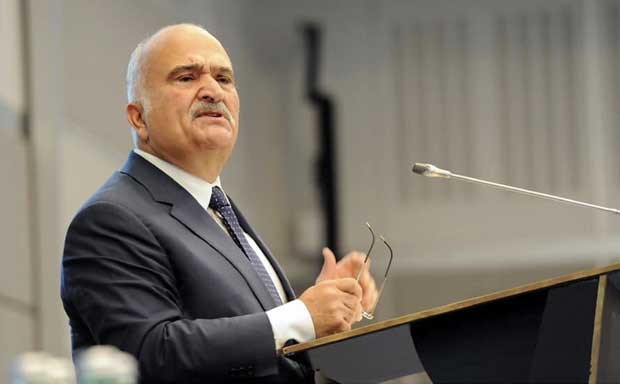
HRH Prince El Hassan bin Talal

AMMAN, Jordan, Mar 26 2020 (IPS) – Humankind has outlived multiple pandemics in the course of world history. The kingdoms and states of Central and Western Europe abolished the institution of serfdom once it had become clear that medieval rule in the aftermath of devastating pestilence would founder without ending the dependency and servitude that characterized the Dark Ages. The vulnerability of entire nations to the risk of total collapse in the absence of widespread access to the most basic healthcare in the Spanish Flu spurred governments to build the public health systems that have made the progress and development of the last hundred years possible. If the past is prologue, then continuity and survival command that we change.


We have more often than not banded together in the face of all kinds of threats. In all its ramifications, COVID-19 threatens to push our social, political and economic structures to the brink. Disease, recession and fright can rapidly overwhelm states and societies. Each coming day will bring increasing challenges that can only be met by caring for the sick, minimizing the impact of shutdowns on lives and livelihoods, securing the delivery of adequate water, food and energy supplies, and racing for a cure. Success – as in an asymmetric conflict – rests on resilience. To contain the socio-political and socio-economic fallout from the crisis, policymaking efforts should center on human dignity and welfare as the bedrock of national and international security.

The most vulnerable members of society in some parts of our world are those on the front lines of the crisis: the doctors, nurses, care-givers, pharmacists, sanitation workers, farmers, supermarket cashiers and truck drivers whose courage, sacrifice and dedication will see us through the next 12 to 18 months of expected lockdowns. In the absence of state support, what will happen to the hundreds of thousands of people who have already been laid off, while millions more face looming hardship as the numbers of layoffs grow? Some will continue to ignore the vulnerable and marginalized, those who have least access to humanitarian assistance, while others will continue to exploit them. The calls for social distancing have grown louder and more frequent over the last couple of days, and as we begin to separate from one other we must remember our humanitarian duty to each another.

Security, far from being individual, is collective and global. The current crisis calls for transcendent thinking between politicians on both sides of the aisle. Grey areas in politics in which zero-sum games and the perverse logic of mutually assured destruction proliferate will not protect and promote human dignity and welfare. Conservatives and reformers must now move beyond the tournaments and arm-twisting of politics. The logic of mutually assured survival cannot accept grey areas. If conflict resolution transcends political beliefs, nationality, ethnicity, gender, and religion, then human dignity and welfare is the benchmark of the humanitarian commitment to life.

Reliable brokers in the management of this crisis and other crises do exist as in the International Committee of the Red Cross and Médecins Sans Frontières. Corporate social responsibility requires developing a public platform of health facts so that people-to-people conversations and consultations can be promoted through civil society, the media and educational institutions. We cannot cherry-pick energy and climate change without talking about health or education and human dignity. Migrants and refugees must be an integral part of the national response for halting the spread of the novel coronavirus. The United Nations Economic and Social Commission for West Asia reports that 55 million people, in West Asia region, require some sort of humanitarian assistance and that the vulnerability of displaced women and girls is especially heightened in a pandemic. Post-conflict insecurity – whether in countries ravaged by war or across the urban centers and countrysides of advanced economies overwhelmed by disease – can only be addressed in the careful terrain mapping of humanitarian access. Yemen, Syria, Gaza and Libya are frighteningly vulnerable to the onslaught of epidemics – what will peace uncover there when the wars end?

Regional insecurity is heightened in the absence of cooperation, but the multilateral system is not at a loss in facing an existential crisis. European solidarity has been sharply damaged by the onset of widespread disease although China is performing through the swift and effective action that has come to the aid of the people and government of Italy. Multilateralism today can only be revisited with a focus on the interdisciplinary priorities of the twenty-first century that include addressing the need for a Law of Peace. We draw humanitarian concessions from the law of war in times of conflict, but have no recourse to legal instruments that can secure the dignity and welfare of all in times of peace.

The current crisis is as much a global health crisis as it is a crisis of the globalization that has come to undermine the foundations of modern society with its rampant inequality and rising injustice and which threatens the very survival of our species with climate change. The planet that we share with other organisms is fragile and prone to crises. A resolution to our predicament will take nothing short of extending the ethic of human solidarity beyond the contours of our immediate response to the outbreak of COVID-19. Real success lies not in the taming of a pathogen or in re-discovering the value of compassion, respect and generosity, but in institutionalizing these values in the days, weeks and months ahead.

  Source

UN Peacekeeping Should Not Violate Charter or Principles of Sovereignty of Member States

Armed Conflicts, Civil Society, Featured, Global, Global Governance, Headlines, Humanitarian Emergencies, IPS UN: Inside the Glasshouse, TerraViva United Nations

Opinion

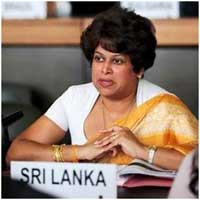
Ambassador Kshenuka Senewiratne is Permanent Representative of Sri Lanka to the United Nations

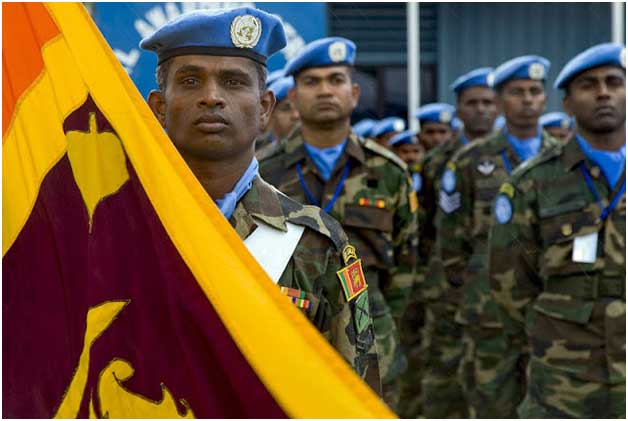
Sri Lankan Peacekeeping troops

UNITED NATIONS, Nov 8 2019 (IPS) – Given the political, economic and social exigencies of contemporary peacekeeping, it is important that the Department of Political and Peacebuilding Affairs (DPPA) remains engaged in the process.


To achieve durable peace, there must be cooperation and coordination between the United Nation’s peacebuilding architecture, its peacekeeping operations and the respective member states.

As peacekeepers are being deployed in increasingly dangerous environments, the UN faces multi-dimensional challenges in a constantly changing landscape. In order to address these new challenges, the management methods of peace operations within the UN must strive to be fair and equitable, and field operations must adapt and acquire specialized capabilities.

It is fundamental to the values of this august body, that the Secretariat adheres to accepted procedures, in order for the work of the United Nations not serve misplaced political interests of a few. This could affect the proper deployment of capable and qualified peacekeepers, thus jeopardizing the respective operations.

In this regard, Sri Lanka is compelled to refer to a matter of questionable procedure, having experienced unjust treatment at the hand of the Secretariat, in terms of the Department of Peace Operations (DPO).

This situation arose when an unilateral decision was made and conveyed by the DPO, on the adjustment of Sri Lanka’s contribution to a peacekeeping operation. This violated the provision of the related MoU, thereby bringing into question the adopted procedure, which has been flawed from the very beginning.

The DPO sought to link its decision of not replacing a contingent of peacekeepers on rotation to an internal appointment made by Sri Lanka as a sovereign right, thereby challenging the Head of State of a member country. Further the nominations of the replacing peacekeeping contingent had been made well before that of the high appointment in question to the DPO.

Ambassador Kshenuka Senewiratne

Hence the linking of the appointment of the commander of the Army to that of the peacekeepers is an anomalous situation. The UN which prides itself on humanitarian work in this instance chose to practice its tenets in the breach, by overlooking the denial of the identified peacekeepers added aspirations once nominated for the respective operation.

The flawed procedure began with the decision to adjust a Sri Lankan peacekeeping contingent and the reasons for such punitive action, being originally communicated verbally. A request was made by Sri Lanka for all these details to be informed formally in writing.

Surprisingly only the troop details were thus communicated, and the DPO chose instead to formally make a statement to the media regarding the reason; while to date Sri Lanka is yet to receive the requested information in writing.

Furthermore, though USG Lacroix even yesterday assured that every single area of Peacekeeping is rule-based, it is disconcerting that DPO chose to violate Article 15 of the related MOU, by not consulting with Sri Lanka prior to the decision being taken thus presenting a fait accompli to the UN member state. Such action has unfortunately and plausibly culminated in the creation of a trust deficit concerning DPO.

Furthermore, this manner of treatment could lead to precedent setting which member states must seek to arrest, lest the practice becomes systemized only to entrench politicization within the UN system.

It also opens the window for the pernicious violation of the principles of the UN Charter on non-interference and sovereignty of States which must be adhered to not only in relation to Peacekeeping mandates, but also in troop deployment.

It is imperative for the Secretariat, to hold sacrosanct the fact that the UN system is member state led, and discharge of its responsibilities in that context, while upholding equal treatment. This will also avoid the Secretariat contributing to the possible erosion of multilateralism.

Furthermore, while appreciating the Secretary General’s assurance to meet obligations to Member States providing troops and equipment as promptly as possible based on the availability of funds, Sri Lanka also urges the Secretariat to fulfill its financial obligations vis-a-vis peacekeepers when identified to be replaced, at the point of their repatriation.

Additionally, it is important to ensure a predictive system of payment on all dues concerning peacekeeping operations.

With the paucity of funding, peacekeeping mandates should take into account the complexities of their current operations and be clear and operable. The UN should consult TPCCs and recipient states in developing and renewing the mandate, as without those inputs, the operations may not reflect real needs.

It is also important to address the causes of instability and conflict, and peace operations must seek to build local information networks, in order to protect civilians and non-combatants. Additionally, peacekeepers should be deployed in support of robust diplomatic efforts.

At the very heart of these mandates, must be the protection of children and the most vulnerable among the community. The images of the suffering of children in conflict especially as recently seen, are particularly unacceptable.

The UN apparatus must seek coherence among its agencies in order to address this issue. As we mark 20 years of UN Security Council Resolution 1325(2000), it is important to make every effort at national, regional and global levels to include women in peacekeeping and peacebuilding.

In order to address the disproportionate and unique impact of armed conflict on women, gender perspectives must be incorporated in all UN peace and security efforts. Women are received differently by the local population and are often successful in building relationships within those communities.

In this regard it is worthy to note that Sri Lanka is currently in the process of developing by October 2020 an Action Plan on Women Peace and Security for the implementation of Resolution 1325 with the support of the Government of Japan.

Sri Lanka has demonstrated its wholehearted commitment to the elimination of Sexual Exploitation and Abuse and its zero-tolerance policy by signing the Secretary General’s related Voluntary Compact, joining his Circle of Leadership and making contributions to the Trust Fund to help such victims.

The country has also adopted several best practices including a stringent vetting procedure for selecting peacekeeping troops with the involvement of the Office of the High Commissioner for Human Rights and the Independent National Human Rights Commission of Sri Lanka.

Sri Lanka’s involvement with UN peacekeeping has covered six decades. The country commenced contributing to UN Peacekeeping Operations in 1956 initially with Military Observers. Since then a total of 22,587 peacekeepers have rotated within the Missions. Today, contributions by Sri Lanka to UN Peacekeeping stand at 657 personnel and in field support with equipment and a hospital.

Currently Sri Lanka maintains a Level II Hospital and a fleet of Combat Support Helicopters in South Sudan (UNMISS), a fleet of Helicopters in Central Africa (MINUSCA), an Infantry Company each in Lebanon (UNIFIL) and Mali (MINUSMA) and Military Observers and Staff Officers in most Missions.

It is worth noting that operating under trying circumstances, Sri Lanka’s troops – in particular under MINUSMA, the helicopter units operating in UNMISS and MINUSCA – have come in for high praise from senior officials of the UN system.

Our troops are highly professional and have been part of many endeavours of the United Nations to maintain peace and security around the world. Sri Lanka has considerable experience in combating violent unruly elements, and providing humanitarian assistance and disaster relief.

Sri Lankan peacekeepers continue to work in difficult terrain and having acquired multiple skills while facing complex situations, and possess excellent operational experience and expertise, having ended nearly three decades of separatist terrorism domestically.

Finally, over the years, hundreds of thousands of military personnel, as well as tens of thousands of UN police and other civilians from more than 120 countries, have participated in UN peacekeeping operations.

Many, including Sri Lankan peacekeepers, have paid the ultimate sacrifice while serving under the UN flag. Sri Lanka pays the highest tribute to them, and with grateful thanks and humility, recognize and commend their achievements.

  Source

Urgent Need to Replace Competition with Cooperation in the Aral Sea Basin

Asia-Pacific, Climate Change, Conferences, Development & Aid, Economy & Trade, Education, Environment, Featured, Global, Headlines, Humanitarian Emergencies, Poverty & SDGs, TerraViva United Nations, Water & Sanitation

Opinion

Stefanos Xenarios is a Professor at Nazarbaev University, Kazakhstan and co-editor-in-chief of the Central Asian Journal of Water Research; Iskandar Abdullaev is Deputy Director, CAREC Institute, China and Vladimir Smakhtin is Director, UN University Institute for Water, Environment and Health, Canada and series editor of the Routledge publishers’ Earthscan Series on Major River Basins of the World, in which the Aral Sea Basin Book is the latest addition.

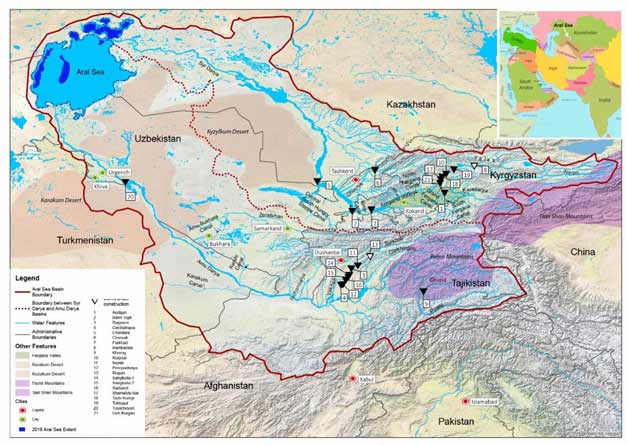
The Aral Sea Basin, defined in red, straddles six countries in Central Asia. See detailed map in full at http://bit.ly/2BQPpRm. Credit: UNU-INWEH

NUR-SULTAN CITY, Kazakhstan, Nov 7 2019 (IPS) – The water resources in Central Asia’s Aral Sea Basin support the lives and livelihoods of about 70 million people — a population greater than Thailand, France, or South Africa.


And unless well-funded and coordinated joint efforts are stepped up, with competition replaced by cooperation, ongoing over-withdrawals compounded by climate change will cause dangerous water shortages in this huge, highly complex watershed spanning six nations: Afghanistan, Kazakhstan, Kyrgyzstan, Tajikistan, Turkmenistan, and Uzbekistan.

That’s the key message of a new book co-authored by 57 regional and international experts from 14 countries and the United Nations, who spent years examining a suite of challenges in the Aral Sea Basin.

The new book assembles the views of nearly all major regional and international experts on the great challenges faced in the Aral Sea Basin. They include three co-authors from the UN University’s Institute for Water, Environment and Health, in Hamilton, Canada.

And almost half of the authors are based in Central Asia, creating a unique blend of regional and international voices and expertise on these critical issues.

The Basin’s two major rivers, the Amu Darya and Syr Darya, discharge now only about 10% of what flowed into the Aral Sea until the 1960s, shrinking the sea by more than 80 percent — “one of the world’s most severe and emblematic environmental disasters.”

Freshwater is key to food, energy, environmental security and social stability among the six Aral Basin countries. And given the countries’ prospective economic and population growth, reliance on water resources will increase, compelling cooperation in sharing benefits and reducing costs.

Intensive, wasteful irrigated farming when the nations were part of the Soviet Union was the main cause of the Aral Sea drying up and irrigation continues to consume about 90 percent of the total water withdrawal in the Basin, with agriculture contributing from 10 to 45 percent of GDP, and 20 to 50 percent of rural employment.

Most irrigation, hydropower and other water-related infrastructural systems and facilities are in transition, a blend today of past and present. Unfortunately, the existing observational meteorological and hydrological networks in the Basin, which declined in the 1990s when the Soviet period ended, are insufficient to support informed water management, and regional water data sharing is suboptimal.

Degradation of land and water are among the major hindrances to sustainable development in the region, with land degradation alone estimated to cost about US$3 billion of losses in ecosystem services annually.

There has been uneven progress across the countries on the Sustainable Development Goals (SDGs), and particularly Goal 6 (Clean Water and Sanitation), with contrasting progress also between urban and rural populations within each nation, most particularly Afghanistan.

The new book suggests a number of interventions and initiatives to end and reverse deterioration of the Aral Basin. For example, if existing large hydropower projects were managed in a collaborative manner, they can bring all countries multiple benefits, including improved reliability of supply and availability of water for agriculture, domestic use and electricity generation.

Monitoring of snow and glaciers in high altitude mountain areas, as well as permafrost, is essential for sound estimates of water availability and water-related hazards. Such systems need to be re-installed.

Also needed: institutions for decentralized management of natural resources, such as water user associations to promote cooperative, sustainable, intra-regional management between upstream and downstream countries and integrated rural development approaches.

Existing regional frameworks must either be reformed or replaced by new mechanisms of cooperation in order to successfully translate political will into highly effective, integrated regional water management.

Reforming the water sector, however, goes well beyond new policies and initiatives, updating the legislative framework, and building new institutions. A key challenge is to achieve continuous, strong, high-level political engagement throughout the Basin countries, the active participation of stakeholders, and technical and financial support.

The Aral Basin’s many water-related issues must be addressed jointly by all involved states within the concept that water, energy, and food issues represent a critical, interlinked nexus of needs.

Major geopolitical and economic development interests are placing increasing pressure on countries of the Basin to end resource competition and find a way to closer cooperation and effective pursuit of their shared interests.


Red Alert for Blue Planet and Small Island States

Asia-Pacific, Climate Change, Conferences, Development & Aid, Economy & Trade, Education, Environment, Featured, Global, Headlines, Humanitarian Emergencies, Poverty & SDGs, TerraViva United Nations, Water & Sanitation

Opinion

Farhana Haque Rahman is Senior Vice President of IPS Inter Press Service; a journalist and communications expert, she is a former senior official of the United Nations Food and Agriculture Organization and the International Fund for Agricultural Development.

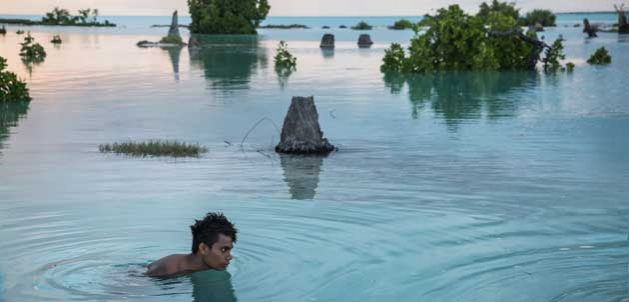
The Pacific island is one of the countries worst affected by sea-level rise. Credit: UNICEF

ROME, Oct 31 2019 (IPS) – Barely a week passes without alarming news of the most recent scientific research into the global climate crisis compounding a growing sense of urgency, particularly the impact on small island states from rising sea levels and extreme weather.


Latest findings suggest that several hundred million more people than previously thought are at risk of coastal flooding due to climate change. Climate Central, a non-profit research and news organisation, found data used in past calculations overstated the elevation of many low-lying coastal communities.

And for the people of the Bahamas who had just endured Hurricane Dorian, the most intense tropical cyclone on record to hit their islands, it came as little surprise when the UN Intergovernmental Panel on Climate Change (IPCC) soon after released its landmark special report on the planet’s oceans and frozen regions, warning of “multiple climate-related hazards” for coastal regions.

“The ocean is warmer, more acidic and less productive,” the IPCC report stated.

The “Blue Pacific” concept sees the island states establishing themselves as “large ocean states” and guardians of the region rather than “small island states”

Oceans are absorbing heat twice as fast as just two decades ago, with hundreds of billions of tonnes of melting ice raising sea levels at an average rate of 3.6 millimetres a year, more than twice as fast as during the last century.

If greenhouse gas emissions “continue to increase strongly”, the IPCC report said, then levels could rise more than a metre by 2100.

Some island states in the Pacific face becoming uninhabitable. As UN Secretary-General Antonio Guterres noted while visiting Tuvalu, the sea level rise in some Pacific countries is four times greater than the world average, posing “an existential threat” to several island states.

Against this background the UN COP25 climate change summit scheduled to be held in Santiago in December had been dubbed the Blue COP, with expectations of a focus on the oceans and commitments of aid to poorer nations most at risk. So it comes as a serious blow that President Sebastian Pinera has just announced that Chile is calling off its hosting of COP25 because of mass anti-government protests rocking the country.

While the UN anxiously looks for an alternative venue (and Santiago had been the second choice after Brazil’s newly elected president, Jair Bolsonaro, pulled out of hosting it), the small island states of the Pacific will be making their voices heard as they seek to confirm themselves in the role of custodians of the world’s largest region.

It is an existential struggle but it is not a blame game however.

As Micronesia’s President David Panuelo declared last week in The Diplomat: “Rather than point fingers, we must all point the way toward solutions.”

“No single country created this problem, and certainly a small country like ours is bearing far greater responsibility for the solution than we ever contributed to the crisis in the first place. But we sit shoulder to shoulder in a coalition which has set a goal of growing economies while achieving 30 percent marine protection globally,” he wrote in a plea for action to save the oceans.

“Everyone must do more when garbage patches larger than entire countries float in the Pacific, and rising carbon dioxide levels increase ocean acidity and devastate coral reefs and marine life.”

The Pacific Community, the principal scientific and technical organisation in the region and founded as the SPC in 1947, counts 22 Pacific island countries and territories among its members who see themselves as the “tip of the spear” in terms of the impacts of climate change and their efforts to adapt.

SPC has recently established the Pacific Community Centre for Ocean Science (PCCOS) to provide the framework to “focus its scientific and technical assistance on providing solutions that will build, sustain, and drive blue economies in Pacific Island countries and territories” and support SDG 14 of conserving and sustainably using oceans and marine resources.

The SPC’s new and growing Pacific Data Hub is a public resource of data and publications on the Pacific across key sectors, from education and human rights to oceans and geoscience.

Such initiatives reflect how Pacific Island states have grown more assertive in their diplomacy, becoming more active in global multilateral forums and using their voices and votes for increased leverage rather than the old reliance on support from Australia and New Zealand.

The “Blue Pacific” concept sees the island states establishing themselves as “large ocean states” and guardians of the region rather than “small island states”. As stewards of the Pacific with their cultural identity shaped by the ocean, the Blue Pacific framework seeks to establish leadership on issues, with smart policies backed by scientific expertise and data.

As Micronesia’s president has reminded us, the climate crisis is neither abstract nor “tomorrow’s faraway challenge”. It is happening now and as the IPCC’s special report on the oceans and cryosphere warned in September the crisis is gathering speed, as seen in the recent acceleration of sea level rise.

In Antarctica the rate of ice loss tripled in the decade 2007-2016. May and August in 2019 were the warmest on record for the Arctic while this year saw the summer minimum extent of sea ice reaching a joint-second lowest in 40 years of satellite records.

As summarised by Carbon Brief, the IPCC warns that this accelerating ice loss, and the more rapid sea level rises it causes, will continue to gather pace over this century regardless of whether greenhouse gas emissions are reduced. The “likely” maximum rise of 1.1 metres by 2100 is some 10cm above the top-end estimate from its previous estimate, while a rise of 2 metres cannot be ruled out.

Such warnings were intended to provide input at COP25 for world leaders who face mounting calls to adopt more ambitious goals for carbon emission cuts. Those negotiations will not be happening in December in Santiago after all. An alternative must be found urgently.