International Women’s Day 2026: For Girls in Pakistan’s Tribal Belt, Women’s Sports Come at a Cost

Asia-Pacific, Civil Society, Editors’ Choice, Featured, Gender, Gender Violence, Headlines, Human Rights, Sustainable Development Goals, TerraViva United Nations, Youth
Gender

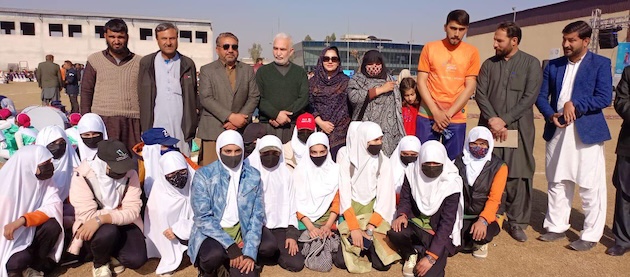
The photo shows an all-girls cricket team from Dir that made it to the finals of the inter-regional games, all without coaching, back in 2023. "Imagine what they can achieve with the right facilities and proper training," said Noorena Shams, also from Dir. Courtesy: Noorena Shams

The photo shows an all-girls cricket team from Dir that made it to the finals of the inter-regional games, all without coaching, back in 2023. “Imagine what they can achieve with the right facilities and proper training,” said Noorena Shams, also from Dir. Courtesy: Noorena Shams

KARACHI, Pakistan, Mar 4 2026 (IPS) – “I was very happy to see the way Aina Wazir was playing cricket,” says 28-year-old Noorena Shams, a professional squash player, when she saw the seven-year-old’s video. The clip, which spread rapidly across social media, drew widespread praise for the young girl’s remarkable talent.


But the events that unfolded were like reliving her past.

“It was like watching my younger self,” said Shams, who belongs to Dir, in Khyber Pakhtunkhwa (KP), bordering Afghanistan, close to where Aina lives in North Waziristan. Both are part of Pakistan’s tribal region.

“Aina, like me, does not have a father to fight the world for her,” she said quietly.

The video also caught the attention of Javed Afridi, CEO of Peshawar Zalmi, who expressed interest in inducting Aina into the upcoming Zalmi Women League. In a post on X, he requested her contact details, promising her cricket equipment and training facilities.

“We couldn’t have imagined the video would get so much attention,” said her cousin, requesting anonymity, speaking to IPS by phone from Shiga Zalwel Khel, a village along the Pakistan-Afghanistan border in North Waziristan. “We were overjoyed; it meant new opportunities and a brighter future for her.”

But the joy was short-lived.

Caught Between Militancy and Military

The video caught the attention of local militants.

Angered by the public display of a girl playing sport, the militants abducted Zafran Wazir—a local teacher who had filmed and uploaded the video with the family’s consent—and forced him to issue a public apology for violating “Islamic values and Pashtun traditions”. It has been reported that he was tortured.

The militants have warned the family that Aina cannot leave the village and that the girl must not accept any offers from anyone. “They said she can play cricket,” said her cousin, “But there should be no videos.”

“Ordinary people in the region are caught between a rock and a hard place—trapped between militant groups and the Pakistan army’s ongoing armed operations,” said Razia Mehsood, 36, a journalist from South Waziristan. “The Taliban tolerate no dissent, and our once-peaceful region is now scarred by landmines on the ground and quadcopters and drones overhead. People are living under constant psychological strain,” she added.

Noorena Shams, a professional squash player, has shown her support for Aina Wazir. Courtesy: Noorena Shams

Noorena Shams, a professional squash player, has shown her support for Aina Wazir. Courtesy: Noorena Shams

Defying the Odds

“I hope she [Aina] can leave the place,” said Maria Toorpakai, 35, the first tribal Pakistani woman who went to play in international squash tournaments, turning professional in 2007.

“Whenever there is a talented girl, every effort should be made to remove her from the toxic environment—even if it means a huge sacrifice from the family,” she said, who belongs to neighbouring South Waziristan but was speaking to IPS from Toronto, where she now resides.

Both Toorpakai and Shams had to leave their homes to escape relentless scrutiny. Belonging to a conservative and patriarchal region, they had to disguise themselves as boys to pursue sports.

Toorpakai cut her hair short, dressed like a boy, and renamed herself “Genghis Khan” to participate in competitive sports.

Shams, meanwhile, was hesitantly allowed to play badminton because it was deemed “more appropriate for young women”.

Despite her parents’ support, she watched boys playing in the only cricket club in Dir, founded by her father.

But theirs is not the only journey fraught with hurdles because of a patriarchal mindset and a rigid tribal background where women’s visibility itself is contested.

“The greatest tragedy is that women’s voices are silenced and excluded from representation, while traditions disguised as religion persist, tying honour and dishonour to women,” said Mehsood. Both Toorpakai and Shams know all this too well. Their families faced constant social rebuke and accusations for bringing dishonour to their villages and tribes, all for playing a sport.

They are not alone.

Athletes like Sadia Gul (former Pakistan No. 1 in squash), Tameen Khan (who in 2022 was Pakistan’s fastest female sprinter), and Salma Faiz (cricketer) relocated from districts including Bannu, D.I. Khan, and Karak to Peshawar, the provincial capital—not just for better opportunities but to escape constant scrutiny.

“If you’re lucky enough that your grandfather, father, or brother doesn’t put a stop to your dreams, then it will be your uncles,” said Salma Faiz, the only sister among six brothers. “And if not them, the neighbours will start counting the minutes you take to get home. They’ll question why you train under male coaches, who watches your matches, and even what you wear beneath your chador. And if it’s still not them, then the villagers will whisper behind your back or land at your doorstep, convincing your parents that girls shouldn’t play sports at all.”

Faiz endured opposition from her elder brother but never gave up cricket. She eventually got selected for the national women’s cricket team.

“Aina is fortunate to receive such overwhelming applause,” said Faiz, now 40, living in Peshawar and working as a lecturer in health and physical education at Shaheed Benazir Bhutto Women University.

“I urge her parents not to surrender to social pressure; they should stand by her and encourage her. She has extraordinary talent—I’ve seen the way she plays,” Faiz pointed out.

Safe Spaces for Women Athletes

Each of these women is now creating ways for their younger counterpart to access the opportunity they lacked.

Faiz has opened her home to girls from tribal regions pursuing sport. When space runs out, she arranges hostel accommodation to ensure they get a shot at opportunities that would likely never reach their village.

Toorpakai, through the Maria Toorpakai Foundation, has, over the years, built a strong network, providing safe spaces for young sportswomen from her region.

But now she wants to go beyond providing temporary support. Her vision to build a state-of-the-art Toorpakai Sports School—a residential facility where girls like Aina Wazir can train seriously, study properly, and live without fear—remains a dream.

“All I want from the state is six acres of land near Islamabad,” she said. “Far enough from tribal hostility but accessible to girls from across Pakistan and international coaches I intend to rope in. I can manage the rest. I can raise funds.”

For over two years, her proposal has been stalled by bureaucratic red tape. “It tells you everything,” she said. “The state simply isn’t interested.”

Shams, too, like Toorpakai, runs the Noorena Shams Foundation, currently supporting four women athletes by giving them a monthly stipend for their training, transport and rent. But if anyone else needs equipment, tuition fees, or house rent, her foundation is able to furnish those needs. She even helped construct two cricket pitches for Faiz’s university.

As the first female athlete elected to the executive committees of the Provincial Squash Association, the Sports Management Committee, the Olympic Association, and the Pakistan Cycling Federation, she has championed young athletes—especially sportswomen— ensuring their concerns are heard.

“I continue to bring to the table issues of athletes’ mental and physical health, the need for international-level coaching, the safety and harassment women face, and the importance of integrating competitive sports into school curricula.”

Using Religion to Quash Dreams

Social media may have provided Aina Wazir with a platform to showcase her talent, but it has also exposed her to hostility.

“We are not against a child playing cricket,” said 27-year-old Mufti Ijaz Ahmed, a religious scholar from South Waziristan. “But she must stop once she becomes a woman. It is against our traditions for women to run around in pants and shirts in public. It is vulgar. If Aina is allowed to do this, every girl will want to follow—and we cannot accept that.”

“The mera jism, meri marzi (my body, my choice) slogan will not work here,” Ahmed went on, referring to a popular slogan that has been chanted since March 8, 2018, and which came under heavy criticism for being a rebellion against the cultural values and Islam.

“Who is he to declare that Aina can’t play?” retorted an incensed Maria Toorpakai, who also serves on the International Olympic Committee’s (IOC) Women in Sport Commission. “Whenever a girl picks up a bat or a ball, Islam is said to be endangered,” she added.

“I would respect them if they confronted and condemned the real ills in my region—drug abuse, child marriage, bacha bazi (the exploitation of adolescent boys coerced into cross-dressing, dancing, and sexual abuse), and the spread of HIV and AIDS. Instead, they obsess over distorted ideas of honour and dishonour. They neither understand the world we live in nor the true essence of Islam. Moreover, they have done nothing for our people.”

National responsibility

Ultimately, she argued, the responsibility lies with the state. It cannot afford to look away while intimidation silences young girls with talent and ambition. It is not only a personal tragedy but also a national loss when talent in remote villages is stifled before it can surface.

“It is the government’s duty to deal firmly with such elements,” she said. “And if it cannot protect its daughters, then it must ask itself why it is in power at all.”

IPS UN Bureau Report
  Source

The Architecture of Hope Under Siege: One Year of Global Aid Dismantling

Civil Society, Climate Change, Development & Aid, Environment, Featured, Global, Headlines, Sustainable Development Goals, TerraViva United Nations

Opinion

The Architecture of Hope Under Siege: One Year of Global Aid Dismantling

Civil society organizations (CSOs) are non-state, not-for-profit, voluntary entities formed by people to address social, political, or environmental issues.

BOGOTA, Colombia, Mar 4 2026 (IPS) – A year has passed since a 90-day freeze on U.S. foreign assistance signaled the deepening of a structural dismantling of international solidarity. Today, the “existential threat” to the freedom of association I warned of in my report to last year’s General Assembly (A/80/219) is no longer a warning; it is a lived reality.


Thousands of civil society organizations (CSOs) worldwide have been reduced to their minimum or are completely vanishing, while others are forced into transformations that compromise their core missions. This is not only creating more victims of human rights violations but has also left prior victims alone.

For the freedom of association, the impact is devastating. The dismantling of USAID, the Bureau of Democracy, Human Rights and Labor (DRL), and other dedicated funds from other countries has cut the lifelines for NGOs that served as democratic watchdogs worldwide (Refugees International).

Therefore, this is not merely a budgetary shift but a coordinated attack on the infrastructure of dissent. In the U.S., for example, foundations and nonprofits are facing “three overlapping crises” (Maecenata Stiftung, Refugees International, other):

    • Policy Threats: Executive Orders targeting DEI and redefining “charitable” status to strip tax exemptions.

    • Organizational Targeting: Explicit vilification of networks like the Open Society Foundations and investigative letters targeting major funders like the Gates and Ford Foundations.

    • Mass Closings: Organizations are laying off up to 95% of staff, leading to a “generational funding collapse” of the humanitarian system.

In the meantime, worldwide we also see ultra-conservative anti-rights groups and autocratic regimes rushing to fill the vacuum left by established aid agencies. These groups are, among others, reshaping the global health landscape with actions that restrict reproductive rights and LGBTQI+ protections (The Guardian). In the Asia-Pacific region alone, 240 million young girls are facing a “coordinated global backlash” as programs focused on education and gender equality are the first to be cut (Women’s Agenda).

As I reported to the UN General Assembly last year, the right to association is an integral part of human nature. When states vilify aid as “criminal” or “corrupt,” they dismantle the lifelines that keep civic space alive (United Nations). We must restore a sustainable aid architecture that serves human dignity and the planet rather than private profit or political control.

But the impact on communities and individuals is far too grave. The data emerging in early 2026 is devastating. Since the 2025 freeze, researchers estimate the dismantling of U.S. foreign aid alone has already caused 750,000 deaths, over 60% of whom are children—a rate of 88 preventable deaths every hour (different sources).

Projections indicate that without restoration, 22.6 million people could die from preventable causes by 2030 (The Guardian).

The “hammer” thrown at the aid system has undone decades of progress:

    • Access to justice: Deeply affected by terminated grants funding for community violence intervention programs, legal assistance for crime victims from underserved communities, court-appointed advocates for children in cases of abuse or neglect, services for victims of hate crimes, shutting down the safety net for domestic violence survivors and closing of shelters and hotlines, etc. (CIJ, LLF).

    • Democracy and rule of law: Crisis in independent media and civil society reduces the critical voices that speak truth to the power and weakens checks and balances in democracies and hybrid regimes, while in authoritarian context the constraints of dissenting voices increases repression, especially against the most vulnerable groups (Global Democracy Coalition).

    • Human rights: global and regional mechanisms of human rights protections have seen drastic cuts of funding, which jeopardize the human rights protections worldwide. The OHCHR received a 16% cut of its budget for 2026 and several Human Rights Council mandates are also being defunded, many tied to HHRR violations investigations in authoritarian states (ISHR).

    • Global Health: Access to PrEP and life-saving HIV drugs has been halved for 80% of community organizations. Cholera deaths in the DRC alone surged by 361% in 2025 after essential water projects were halted (Oxfam).

    • Education: The abrupt cancellation of nearly 400 USAID-funded education programs in 58 countries risks leaving millions of children—predominantly girls and refugees—without access to quality learning (ETF).

    • Food Security: In West and Central Africa, 55 million people are expected to endure crisis levels of hunger, or worse by the end of the first semester of 2026, including over 13 million children are also expected to suffer from malnutrition during the year 2026 (WFP). In Afghanistan, monthly reach for emergency food aid plummeted from 5.6 million people to just 1 million (Refugees International).

Perhaps most alarming is the collapse of data collection systems. As USAID programs disappeared, so did the reporting requirements that tracked disease, death, and human rights violations (The Japan Times). We are entering a period where the true scale of suffering and needs may never be fully known (Refugees International).

Besides the cut of funding, the existential threat is also related to the reduction of possibilities of civil society organizations to collect new funding due to the increase of mis/disinformation about CSO work that lead to lack of trust in communities and therefore increases the shrinking civic space, already heavily affected by anti-NGO laws and persecution (Global aid freeze tracker).

We cannot allow a world without civil society. It is a world without hope, where the most vulnerable are left alone to face the most pressing human crises and wars. The international community must move beyond “business as usual” to restore a sustainable and just aid architecture that empowers civic engagement rather than advancing its suppression.

Gina Romero is UN Special Rapporteur, Freedom of Assembly and of Association.

IPS UN Bureau

  Source

As Biodiversity Loss Grows, Rome Talks Urge Nations to Step Up Action

Biodiversity, Climate Change, Conferences, Editors’ Choice, Environment, Europe, Featured, Global, Green Economy, Headlines, Natural Resources, Sustainable Development Goals, TerraViva United Nations

Biodiversity

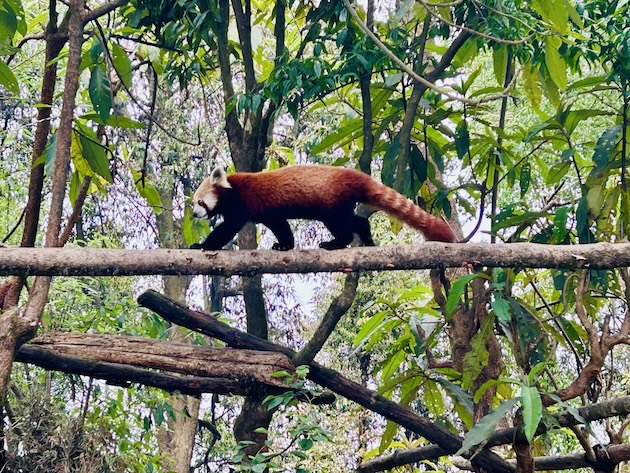
A red panda – labelled ‘endangered’ by the IUCN – at an animal sanctuary in the Indian state of West Bengal. As biodiversity loss accelerates, UNCBD is asking countries to take greater action to protect it. Credit: Stella Paul/IPS

A red panda – labelled ‘endangered’ by the IUCN – at an animal sanctuary in the Indian state of West Bengal. As biodiversity loss accelerates, UNCBD is asking countries to take greater action to protect it. Credit: Stella Paul/IPS

ROME & NEW DELHI, Feb 23 2026 (IPS) – Governments meeting in Rome last week acknowledged that global efforts to protect nature are still not moving fast enough, even as biodiversity loss continues to affect ecosystems, livelihoods, and economies worldwide.


The warning came as the sixth meeting of the Subsidiary Body on Implementation (SBI-6) under the Convention on Biological Diversity (CBD) concluded after four days of negotiations focused on how countries are putting global biodiversity commitments into practice.

Held at the headquarters of the Food and Agriculture Organization of the United Nations (FAO), the meeting is the first major checkpoint in a year of intensive talks leading to the United Nations Biodiversity Conference (COP17) in October in Yerevan, Armenia. There, governments will carry out the first global review of progress under the Kunming-Montreal Global Biodiversity Framework.

From Promises to Practice

At the centre of discussions in Rome was the challenge of turning global promises into action on the ground. The Kunming-Montreal Global Biodiversity Framework (KMGBF), adopted in 2022, sets out 23 targets to be achieved by 2030, including protecting and restoring ecosystems, reducing pollution, cutting harmful subsidies, and ensuring fair sharing of benefits from genetic resources.

While most governments have formally endorsed the framework, SBI-6 revealed that implementation remains uneven. Negotiators worked through recommendations on biodiversity finance, national planning, gender equality, capacity-building, international cooperation, and access and benefit-sharing. Many of these were adopted without brackets, suggesting broad agreement.

“This has been a long week for all,” said Clarissa Souza Della Nina, Chair of the meeting, as she closed the afternoon plenary and announced that delegates would meet again in the evening. She noted that turning global ambitions into real action on the ground requires strong systems and institutions, and that this is not an easy process.

“The conclusion of SBI-6 marks an important early milestone in a very demanding year,” said Souza Della Nina, highlighting the efforts made by countries to work together and find common ground.

But behind the consensus language, discussions repeatedly returned to the same concern: global ambition is not yet being matched by national action.

SBI 6 Chair Clarissa Souza Della Nina, Brazil; Asad Naqvi, SBI 6 Secretary; and CBD Executive Secretary Astrid Schomaker celebrating the first conference room paper being approved. Credit: IISD/ENB, Mike Muzurakis

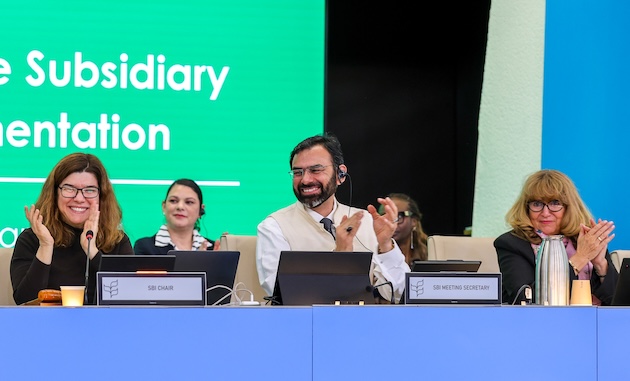
SBI 6 Chair Clarissa Souza Della Nina, Brazil; Asad Naqvi, SBI 6 Secretary; and CBD Executive Secretary Astrid Schomaker celebrate the first conference room paper being approved. Credit: IISD/ENB, Mike Muzurakis

National Plans Show Mixed Progress

A key input to the Rome meeting was an analysis by the CBD Secretariat of national biodiversity strategies and targets submitted so far. These national plans are the main way countries translate the global framework into domestic policies.

The analysis covered 51 National Biodiversity Strategies and Action Plans (NBSAPs) and 130 sets of national targets. It found that while progress is being made, many plans fall short of the scale of change required.

About 75 percent of Parties have submitted national targets, but fewer have updated their full national strategies. Even among submitted plans, several global targets are only partially addressed. Social and economic aspects of biodiversity loss — including links to livelihoods, equity, and development — tend to receive less attention than conservation measures.

“These findings show clearly where we stand,” said Astrid Schomaker, Executive Secretary of the CBD. “They also show that countries still have the opportunity to raise ambition and speed up action before the global review.”

The first global review of progress under the KMGBF will take place at COP17. A major source of information for that review will be the seventh National Reports, which countries are required to submit by 28 February 2026.

By the end of SBI-6, the European Union, Lesotho, Uganda, and Switzerland had submitted their reports. Several other countries said they were close to completion, while others cited difficulties related to limited staff, technical challenges, or delays in accessing funds.

Delegates stressed that timely reporting is essential, not only for transparency but also to ensure that the global review reflects the realities faced by countries at different levels of development.

Gender and Inclusion Lag Behind

Another issue that drew attention in Rome was the limited integration of gender equality into biodiversity action. Under the global framework, countries have committed to ensuring the full and meaningful participation of women and girls, including those from indigenous peoples and local communities.

Yet the Secretariat’s analysis showed that only around 40 percent of national targets refer to gender-related issues, and only about 20 percent address women’s rights to land and natural resources. Even fewer countries reported involving women’s organisations in the preparation of national biodiversity plans.

For many participants, this gap was a reminder that biodiversity loss is not only an environmental issue but also a social one.

“Without addressing inequality, we will not succeed in protecting nature,” said Gillian Guthrie, a delegate from Jamaica, during the discussions, urging governments still updating their plans to take a more inclusive approach.

Money and Capacity Remain Major Hurdles

Financing biodiversity action was another recurring theme. Although the most detailed negotiations on biodiversity finance are scheduled for later this year, talks in Rome were informed by new studies on funding needs, the relationship between debt and biodiversity spending, and opportunities to better align biodiversity and climate finance.

Developing countries repeatedly pointed to limited financial resources, lack of access to technology, and institutional constraints as barriers to implementation. These challenges were reflected in the meeting itself, where several delegations consisted of a single representative struggling to follow multiple negotiating tracks.

The CBD Secretariat thanked donor countries that contributed to a special trust fund to support participation and called on others to do the same. Without broader support, delegates warned, global biodiversity decision-making risks leaving some voices unheard.

A decisive year ahead

The recommendations adopted at SBI-6 will now be forwarded to COP17, where governments will assess whether collective action so far is enough to meet the biodiversity targets set for 2030.

For many participants, the Rome meeting served as both a progress report and a warning. While cooperation is improving and more countries are engaging with the global framework, biodiversity loss continues to affect food systems, health, and economic stability, particularly in the Global South.

As delegates left Rome, the message was clear: the coming months will be critical. Whether the world can move from commitments to meaningful action will be tested in Yerevan, Armenia — and the stakes, many warned, could not be higher.

Below are some of the highlights of the 4-day meeting:

  • The sixth meeting of the Subsidiary Body (SBI-6) on Implementation under the Convention on Biological Diversity began the first global review of how countries are acting to protect nature.
  • An official analysis of national biodiversity plans showed progress but also revealed wide gaps between global goals and what many countries have committed to do at home.
  • Around three-quarters of countries have submitted national biodiversity targets, but far fewer have updated full national strategies or addressed social and economic aspects of biodiversity loss.
  • Gender equality and the participation of women, Indigenous Peoples, and local communities remain weak in many national plans, despite being central to the global biodiversity agreement.
  • Developing countries highlighted ongoing challenges linked to limited funding, lack of technical capacity, and difficulty accessing resources needed to implement biodiversity actions.
  • The outcomes from Rome will shape how global progress on biodiversity is measured and reviewed, setting the tone for accountability and action in the run-up to 2030.

IPS UN Bureau Report

 

From Pledges to Proof: UN Biodiversity Meeting Begins First Global Review of Nature Action

Biodiversity, Climate Action, Conferences, Development & Aid, Editors’ Choice, Environment, Featured, Gender, Global, Headlines, Indigenous Rights, Natural Resources, Sustainable Development Goals, TerraViva United Nations

Biodiversity

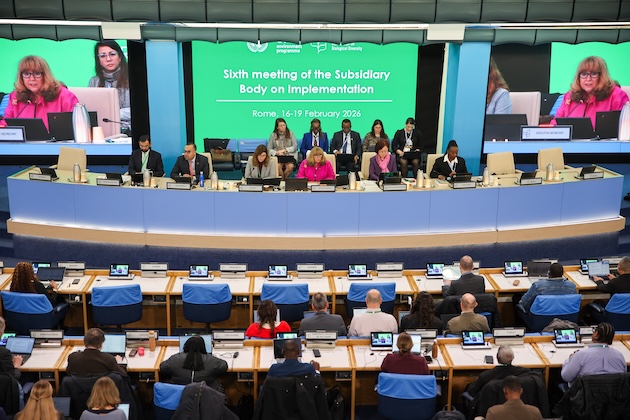
The 6th meeting of the Subsidiary Body of Implementation (SBI-6) is in progress in Rome. Credit: Mike Muzurakis | IISD/ENB

The 6th meeting of the Subsidiary Body of Implementation (SBI-6) is in progress in Rome. Credit: Mike Muzurakis | IISD/ENB |

ROME & DELHI, Feb 17 2026 (IPS) – Governments convened in Rome on Monday (February 16) for a critical round of UN biodiversity negotiations, launching the world’s first global review of how countries are acting to protect nature.


The sixth meeting of the Subsidiary Body on Implementation (SBI-6) of the Convention on Biological Diversity opened at the headquarters of the Food and Agriculture Organization (FAO), drawing government negotiators, technical experts and civil society observers from around the world. It will continue until February 19.

Although considered a technical gathering, the four-day session is expected to play a decisive role in shaping how progress under the Kunming–Montreal Global Biodiversity Framework will be assessed and whether political promises can be translated into measurable, on-the-ground action.

“This is a moment to move from commitments to delivery,” said Clarissa Souza Della Nina of Brazil, Chair of the Subsidiary Body on Implementation. “The task before us is to help countries accelerate action to halt and reverse biodiversity loss.”

Clarissa Souza Della Nina of Brazil, Chair of the Subsidiary Body on Implementation. Credit: Mike Muzurakis | IISD/ENB

Clarissa Souza Della Nina of Brazil, Chair of the Subsidiary Body on Implementation. Credit: Mike Muzurakis | IISD/ENB

A Global Stocktake for Nature

The Rome talks come two years after countries completed the first global stocktake under the Paris Agreement, which confirmed the world remains far off track on climate goals.

Now, a parallel exercise begins for biodiversity.

Under the CBD, governments will undertake the first global review of progress in implementing the Kunming–Montreal Global Biodiversity Framework (KMGBF), adopted in 2022. The framework includes 23 targets spanning conservation, finance, equity and economic transformation, with the overarching objective of halting and reversing biodiversity loss by 2030.

Biodiversity tracking is more complex than emissions accounting, but, according to CBD leadership, it is urgently needed.

“The time has come to make peace with nature… the implementation of the Kunming-Montreal Global Biodiversity Framework and the Paris Agreement in a synergistic fashion will make peace with nature within reach,” said Astrid Schomaker, Executive Secretary of the Convention on Biological Diversity.

Why Rome Matters

SBI-6 plays a central role in preparing for the upcoming global biodiversity review by examining implementation progress, highlighting gaps, and proposing ways to accelerate action. Negotiators will submit the outcomes directly to COP17 in Yerevan, Armenia, later this year.

“One year after COP16 concluded here in Rome, we must ensure these meetings deliver real progress. Submitting national reports on time is essential for a strong and credible global review in the race to 2030,” Schomaker said.

A major focus of SBI-6 is the Secretariat’s analysis of national biodiversity strategies and action plans submitted since 2022. But despite growing momentum, significant gaps persist. Many strategies still do not adequately integrate Indigenous Peoples, local communities, women, youth, or the private sector. Crucial targets relating to economic and social transformation — including sustainable consumption, equity and benefit sharing — remain underemphasised.

Inger Andersen, Executive Director of the United Nations Environment Programme (UNEP), underscored the stakes at the launch of the State of Finance for Nature 2026 report:

“Whether investments flow into nature’s destruction or into its protection will determine if we live in climate-vulnerable concrete jungles or in climate-resilient green cities,” she warned, stressing that financial and policy decisions made today will shape countries’ ability to meet biodiversity goals.

An indigenous woman and biodiversity defender from the Amazon is pictured holding a forest coconut. Women are asking for better implementation of article 23 of the KMGBF. Credit: Stella Paul/IPS

An indigenous woman and biodiversity defender from the Amazon is pictured holding a forest coconut. Women are asking for better implementation of article 23 of the KMGBF. Credit: Stella Paul/IPS

Gender, Finance and Capacity Challenges

Delegates are also reviewing progress under the CBD Gender Plan of Action (2023–2030). Early assessments show that only a quarter of countries involved women’s groups in shaping biodiversity strategies, and just 12 percent plan to do so in the future.

“Ensuring the full, effective and meaningful participation of women and other rights holders is fundamental to accountability, inclusivity and the effectiveness of biodiversity action, and to achieving the full ambition of the global framework,” the CBD Women’s Caucus stated in its official submission.

Finance remains another major point of discussion. While major funding decisions are expected later this year, Rome’s deliberations draw heavily on new research on biodiversity finance, sovereign debt, and the connections between climate and nature funding.

“If we want to mobilise the finance and resources that nature critically needs, business, finance and governments must confront the reality that persistent gaps in reliable data, incentives and institutional capacity are holding back meaningful action — and unless these barriers are addressed, many countries and sectors will continue to struggle to turn agreed goals into results,” said Matt Jones, Co-Chair of the IPBES Business and Biodiversity Assessment 2026.

Countdown to National Reports

The Rome meeting comes just weeks before countries must submit their Seventh National Reports under the CBD, due on 28 February 2026.

These national publications will serve as a principal source of information for the global biodiversity review, alongside national strategies and targets.

However, many countries remain unprepared to submit on time. On day one, Brazil, one of the most influential players in global biodiversity policy, stressed the need for flexibility.

“Ensuring the quality, consistency and internal validation of data and indicators requires additional time. In this context, Brazil suggests that SBI recommendations prioritise technical guidance, operational flexibility and targeted capacity-building support to enable high-quality reporting, rather than focusing solely on reinforcing deadlines,” the country’s delegate said.

A Test of Accountability

While SBI-6 is unlikely to produce headline-grabbing announcements, it will shape how global biodiversity action is evaluated over the next decade.

For Indigenous Peoples and local communities—who steward a significant share of the world’s remaining biodiversity—the meeting represents a critical test of whether rights, participation and lived realities will be meaningfully reflected in the global assessment process.

“This process must lead to accountability, not just documentation,” emphasised Pirawan Wongnithisathaporn, the Environment Program Officer at the Asia Indigenous Peoples Pact (AIPP), calling for tangible action rather than reporting alone.

SBI-6 will conclude on Thursday, February 19. Negotiations will continue at SBI-7 in August 2026 as governments move steadily toward the first global biodiversity review at COP17.

IPS UN Bureau Report


‘When Rains Come, Our Hearts Beat Faster’

Aid, Asia-Pacific, Civil Society, Climate Change, Climate Change Justice, Development & Aid, Disaster Management, Economy & Trade, Editors’ Choice, Environment, Featured, Headlines, Human Rights, Humanitarian Emergencies, Sustainable Development Goals, TerraViva United Nations

Disaster Management

A recent report reveals that Asia faces about 100 natural disasters every year, affecting 80 million people. Beyond the statistics are the disrupted lives, damaged homes, and a cycle of repair that drains communities.

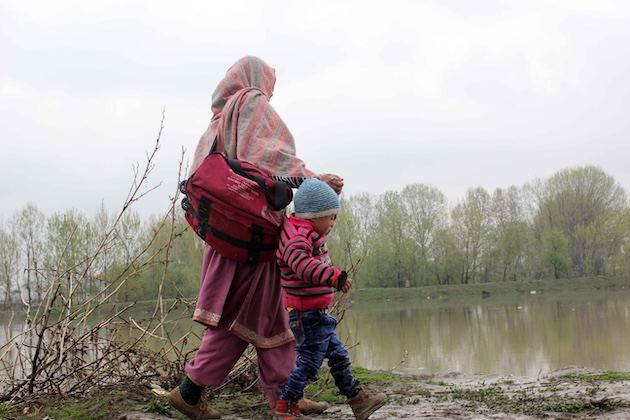
A woman in a remote hamlet in Kashmir, India, migrates to a safer location with her child as floodwater inundates her hometown. Credit: Umar Manzoor Shah/IPS

A woman in a remote hamlet in Kashmir, India, migrates to a safer location with her child as floodwater inundates her hometown. Credit: Umar Manzoor Shah/IPS

SRINAGAR & NEW DELHI, Feb 9 2026 (IPS) – When the rain begins in Kashmir’s capital Srinagar, Ghulam Nabi Bhat does not watch the clouds with relief anymore. He watches them with calculation. How much can the gutters take? How fast will the river rise? Which corner of the house will leak first? Where should the children sleep if the floor turns damp?


“Earlier, rain meant comfort,” said Bhat, a resident of a low-lying neighbourhood close to the city’s waterways. “Now it feels like a warning.”

On many days, the rain does not need to become a flood to change life. Streets fill up within hours. Shops shut early. The school van turns back. A phone call spreads across families, asking the same question, “How is your area?”

For millions across India and the wider region of emerging Asia (a group of rapidly developing countries in the region, including China, India, Indonesia, Malaysia, the Philippines, Thailand, and Vietnam), this is the new normal. Disasters no longer arrive as rare, once-in-a-generation ruptures. They come as repeated shocks, each one leaving behind repair bills, lost wages, and a deeper sense that recovery has become a permanent routine.

A recent analysis from the OECD Development Centre shows that emerging Asia has been facing an average of around 100 disasters a year over the past decade, affecting roughly 80 million people annually. The rising trend is powered by floods, storms, and droughts. The report estimates that natural disasters have cost India an average of 0.4 percent of GDP every year between 1990 and 2024.

Behind the national figure lies a quieter, more poignant story. It is the story of how repeated climate and weather shocks get absorbed by households and not just spreadsheets. By the savings a family built for a daughter’s education. By a shopkeeper’s stock bought on credit. By a farmer’s seed money saved from the last season.

In the north Indian state of Bihar’s flood-prone belt, Sunita Devi, a mother of three, says she has stopped storing anything valuable on the floor. Clothes sit on higher shelves. The grain container has moved to a safer corner. The family’s documents stay wrapped in plastic.

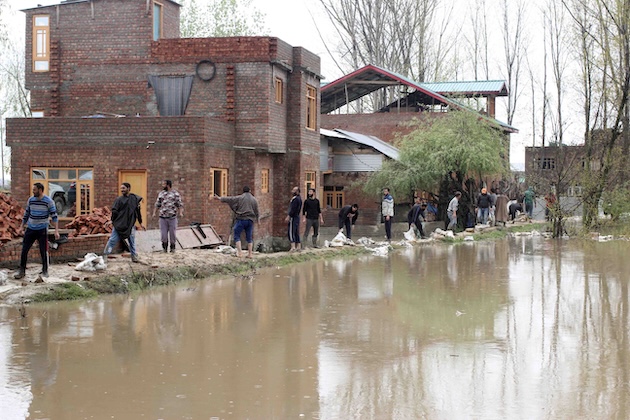
Local residents in Kashmir's capital, Srinagar, stack sandbags to safeguard their homes from floods in 2025. Credit: Umar Manzoor Shah/IPS

Local residents in Kashmir’s capital, Srinagar, stack sandbags to safeguard their homes from floods in 2025. Credit: Umar Manzoor Shah/IPS

“When water comes, you run with children,” she said. “The rest is left to fate. You can rebuild a wall. You cannot bring back the days you lost.”

Her village has lived with floods for decades, but she says what has changed is frequency, uncertainty, and cost. It is not only about big river floods that make headlines. It is also about sudden waterlogging, damaged roads, broken embankments, and illnesses that rise after the water recedes.

“Earlier we could predict. Now we cannot. Sometimes the water comes fast. Sometimes it stays. Sometimes it leaves and then comes again,” Devi told IPS.

Professor Kaveh Madani, director of the United Nations University’s Institute for Water, Environment, and Health, told IPS that water bankruptcy in Asia should be treated as a national security issue, not a sector issue.

“The priority is shifting from crisis response to bankruptcy management: honest accounting, enforceable limits, protection of natural capital, and a just transition that protects farmers and vulnerable communities,” said Madani.

Across emerging Asia, floods have emerged as one of the strongest rising trends since the early 2000s, the OECD Development Centre report notes. The reasons vary from place to place, but the result looks familiar: disrupted lives, damaged homes, and a cycle of repair that drains communities.

In Kashmir’s capital Srinagar, small shop owner Bashir Ahmad keeps an old wooden rack near the entrance. It is not for display. It is for emergencies. When rain intensifies, he quickly moves cartons of goods off the floor.

“My shop is small; my margin is smaller. One day of water is enough to destroy many things. Customers do not come. Deliveries stop. You just wait and watch,” Ahmad said.

He says the biggest loss is not always the damaged stock. It is the days without work. For families that live week to week, even a short shutdown becomes a long crisis. Rent does not pause. School fees do not pause. Loans do not pause.

The OECD analysis, while regional in scope, points to a hard truth that communities already know. It claims that disasters have economic aftershocks that last long after television cameras leave. When repeated losses occur every year, they reduce growth and reshape choices. Families postpone building stronger houses. They avoid investing in small businesses. They spend more time recovering than progressing.

“Disasters are no longer exceptional events. They have become recurring economic shocks. The problem is not only the immediate damage. It is the repetition. Repetition breaks household resilience,” Dr Ritu Sharma, a climate risk researcher based in Delhi, said.

Sharma says India’s disaster losses should not be viewed as a headline percentage alone.

They should be viewed as accumulated pressure on ordinary life.

“A flood does not only damage a bridge. It delays healthcare visits. It interrupts immunisation drives. It breaks supply chains for food and medicines. It can push vulnerable families into debt traps. What looks like a climate event becomes a social event. It becomes a health event. It becomes an education event.”

In the report’s regional comparisons, the burden is uneven. Some countries face higher average annual losses as a share of GDP, especially those exposed to cyclones and floods. India’s size allows it to absorb shocks on paper, but that size also means more people remain exposed. From Himalayan slopes vulnerable to landslides to coastal districts bracing for cyclones to plains dealing with floods and heat, risk is spread across geography and across livelihoods.

Prof. Nasar Ali, an economist who studies climate impacts, says the real damage is often hidden in the informal economy.

“A formal sector company can claim insurance, borrow on better terms, and restart faster. A vegetable vendor cannot. A small grocery shop cannot. A family with a single daily wage earner cannot. Their loss is immediate and personal. They also take the longest to recover,” Ali said.

He believes disaster impacts also deepen inequality because the poorest households lose what they cannot replace.

“A damaged roof for a rich family is a renovation problem. A damaged roof for a poor family can mean sleeping in damp rooms for weeks, infections, missed work and children dropping out temporarily.”

The report also turns attention toward a policy question that has become urgent across Asia: how should governments pay for disasters in a way that does not repeatedly divert development funds?

The analysis highlights disaster risk finance, tools that help governments prepare money in advance rather than relying mainly on post-disaster relief. This includes dedicated disaster funds, insurance mechanisms, and rapid financing that can be triggered quickly after a shock.

For communities, the debate may sound distant. But the outcomes are visible in the speed of recovery and the dignity of response.

“When a disaster happens, help should come fast,” said Meena Devi, who runs a small grocery shop in Jammu’s RS Pura area and has seen repeated waterlogging during intense rains. “We close our shop. Milk spoils. People cannot buy things. Then we borrow money to restart. If support is slow, we fall behind.”

She said her biggest fear is not a single disaster but the feeling that another one is always near.

“If it happens once, you survive. If it happens again and again, you get tired from inside,” she said.

For Sharma, preparedness must be more than emergency drills. It must include planning that reduces exposure in the first place.

“Some risks are unavoidable, but many are amplified by where and how we build,” she said. “If cities expand without drainage capacity, or if construction spreads into floodplains, then disasters become predictable. That is not nature alone. That is policy.”

In Srinagar, Bhat says residents often feel they fight the same battle every year. Cleaning drains. Stacking sandbags. Moving belongings. Calling relatives. Watching the river level updates. The work looks small, but it is exhausting because it never ends.

He pointed to marks on a wall that show where water once reached.

“We always think, maybe this year it will be better,” he said. “Then rain comes, and your heart starts beating faster.”

Asked what would make him feel safe, he did not talk about big promises. He spoke about basics. A drain that works. A road that does not collapse. A warning that comes early. Help that comes on time.

For Sunita Devi in Bihar, the dream is even simpler: a season where the family can plan without fear.

“We want to live like normal people. We want to save money, not spend it on repairing what the water broke,” she said.

IPS UN Bureau Report

  Source

Support Science in Halting Global Biodiversity Crisis—King Charles

Africa, Biodiversity, Conferences, Conservation, Development & Aid, Economy & Trade, Editors’ Choice, Environment, Europe, Featured, Global, Headlines, Natural Resources, Sustainable Development Goals, TerraViva United Nations, Trade & Investment

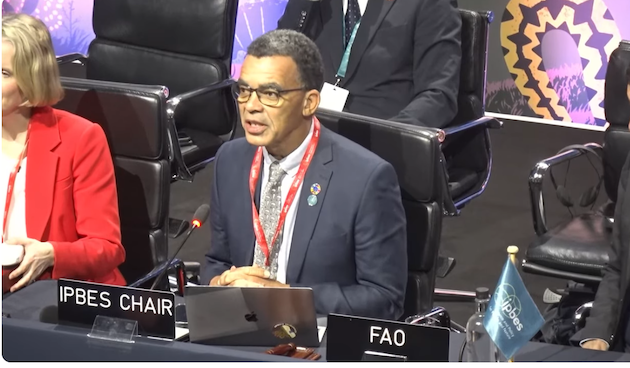
David Oburo, IPBES Chair. Credit: Busani Bafana/IPS

David Oburo, IPBES Chair. Credit: Busani Bafana/IPS

BULAWAYO, Feb 3 2026 (IPS) – British Monarch King Charles says science is the solution to protecting nature and halting global biodiversity loss, which is threatening humanity’s survival.


In a message to the 12th session of the Plenary of the Intergovernmental Science-Policy Platform on Biodiversity and Ecosystem Services (IPBES), which opened in Manchester, United Kingdom, this week, King Charles said nature is an important part of humanity but is under serious threat, which science can help tackle.

“We are witnessing an unprecedented, triple crisis of biodiversity loss, climate change, and pollution at a pace that far outstrips the planet’s ability to cope,” said King Charles in a message delivered by Emma Reynolds, United Kingdom Secretary of State for Environment, Food and Rural Affairs.

Science is the Solution

“The best available science can help inform decisions and actions to steward nature and, most importantly, to restore it for future generations, “ King Charles noted, pointing out that humanity has the knowledge to reverse the existential crisis and transition towards an economy that prospers in harmony with nature.

Delegates representing the more than 150 IPBES member governments, observers, Indigenous Peoples,  local communities and scientists are meeting for the  IPBES’ 12th Session, expected to approve a landmark new IPBES Business & Biodiversity Assessment. The report,  a 3-year scientific assessment involving 80 expert authors from every region of the world, will become the accepted state of science on the impacts and dependencies of business on biodiversity and nature’s contributions to people. It will provide decision-makers with evidence and options for action to measure and better manage business relationships with nature.

The King lauded IPBES for bringing together the world’s leading scientists, indigenous and local knowledge, citizen science and government to share valuable knowledge through the Business and Biodiversity Report—the first of its kind.

“I pray with all my heart that it will help shape concrete action for years to come, including leveraging public and private finance to close by 2030 the annual global biodiversity gap of approximately USD 700 billion,” said King Charles.

IPBES Chair, Dr. David Obura, highlighted that the approval of the IPBES Business and Biodiversity Assessment is important just days after the World Economic Forum’s 2026 Global Risks Report again spotlighted biodiversity loss as the second most urgent long-term risk to business around the world.

“In transitioning and transforming, businesses should all experience the rewards of being sustainable and vibrant, benefiting small and large,” Obura emphasized. “The Business Biodiversity assessment synthesizes the many tools and pathways available to do this and provides critical support for businesses across all countries to work with nature and people and not to work against either or both.”

Addressing the same delegates, Emma Reynolds,  UK Secretary of State for Environment, Food and Rural Affairs, highlighted the urgency of collective action, the critical role of science, and the opportunities for business in nature.

Reynolds noted there was momentum around the world as countries were restoring wetlands and forests, communities were reviving degraded landscapes and businesses were increasingly investing in nature after realizing that nature delivers real returns.

“The tide for nature is beginning to turn, but we cannot afford to slow down,” said Reynolds. “The window to halt diversity loss by 2030 is narrowing. We need to build on that momentum, and we need to do it now.”

Multilateralism, a must for protecting nature

Paying tribute to IPBES for supporting scientific research, Reynolds emphasized that the rest of the world must step forward when others are stepping back from international cooperation. This is to demonstrate that protecting and restoring nature was not just an environmental necessity but essential for global security and the economy.

“The UK’s commitment to multilateralism remains steadfast,” she said. “We believe that by working together, sharing knowledge, aligning policies, and holding one another accountable, we can halt and reverse the diversity loss by 2030,.“

In January 2026, the United States withdrew its participation in IPBES, alongside 65  international organizations and bodies, including the International Union for Conservation of Nature (IUCN), the UN Framework Convention on Climate Change (UNFCCC) and the Paris Agreement.

The United States was a founding member of IPBES, and since its establishment in 2012, scientists, policymakers, and stakeholders—including Indigenous Peoples and local communities—from the United States have been among the most engaged contributors to its work.

The approval of the Business and Biodiversity Assessment by IPBES government members this week will be multilateralism in action, she said, noting that the assessment would not be possible without the critical role of science.

Reynolds underscored the need to base sound policy on solid scientific evidence. Decisions made in negotiating rooms and capitals around the world must be guided by the best and most up-to-date science available. IPBES  exists to provide exactly that.

Noting that the business depends on nature for raw materials, clean water, a stable climate, and food, Reynolds said companies that recognize their dependency on nature are proving that nature-positive investment works.

“Business as well as the government must act now to protect and restore nature… we have the science. We have the frameworks… What we need now is action.”

“Nature loss is now a systemic economic risk. That’s precisely why the assessment on business impact and dependencies is both urgent and necessary,” said  Inger Andersen, executive director of the United Nations Environment Programme (UNEP).

“The first-ever business and diversity assessment will deliver authoritative evidence on how businesses depend on nature, how they impact it, and what that means for risk, for resilience, and for long-term value creation.”

Business and Biodiversity are linked

Underscoring that biodiversity loss is linked to the wider planetary crisis, Astrid Schomaker, executive secretary of the Convention on Biological Diversity, paid tribute to IPBES as a provider of science as a public good.

“IPBES has remained a  ‘beacon of knowledge at a time when science  and knowledge itself is under strain and when the voices of disinformation are sometimes louder than the facts,” said Schomaker, noting that ahead of the first global stocktake of progress in the implementation of the Kunming-Montreal Global Biodiversity Framework (KMGBF), the science provided by IPBES would be invaluable.

“The Business and Biodiversity assessment constitutes a win for everyone. Clarifying that biodiversity loss isn’t just an environmental issue; it’s a serious threat to economic systems, livelihoods, business profitability, and societal resilience. Biodiversity simply underpins and provides the stability we all need.”

Target 15 of the KMGBF, focuses on business reducing negative impacts on biodiversity and global businesses need to assess and disclose biodiversity-related impacts.

IPBES executive secretary, Dr. Luthando Dziba, said IPBES was on track to deliver, in the coming years, crucial knowledge and inspiration to support the implementation of current goals and targets of the KMGBF, and to provide the scientific foundation needed by the many processes now shaping the global agenda beyond 2030.

IPS UN Bureau Report