Salt: Bangladesh Communities On the Frontline of Climate Change

Asia-Pacific, Climate Change, Climate Change Justice, Conferences, COP29, Editors’ Choice, Environment, Featured, Headlines, Human Rights, Humanitarian Emergencies, Sustainable Development Goals, TerraViva United Nations, Water & Sanitation, Women & Climate Change
COP29

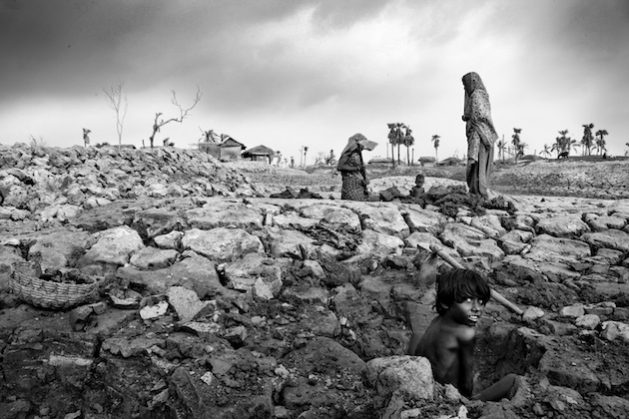
A young girl digs deep into soil saturated with salt water, hoping to find logs to burn as fuel. Two years on from Cyclone Aila, the communities along Bangladesh’s southwest coastline are starting to rebuild their lives. In the course of the cyclone, which struck in May 2009, surges of water up to three meters high battered the coast along the Bay of Bengal in Khulna district. Cyclone Sidr, the worst ever in the area, had already weakened the area. Aila only needed to hit a small amount to destroy the defenses. Credit: Mohammad Rakibul Hasan

A young girl digs deep into soil saturated with salt water, hoping to find logs to burn as fuel. Two years on from Cyclone Aila, the communities along Bangladesh’s southwest coastline are starting to rebuild their lives. In the course of the cyclone, which struck in May 2009, surges of water up to three meters high battered the coast along the Bay of Bengal in Khulna district. Cyclone Sidr, the worst ever in the area, had already weakened the area. Aila only needed to hit a small amount to destroy the defenses. Credit: Mohammad Rakibul Hasan

DHAKA, Oct 22 2024 (IPS) Global warming has far-reaching effects, and certain countries, particularly those with low lying coastal regions, are more vulnerable than others. Bangladesh, the largest delta in the world, is at the forefront of the global warming crisis. Its coastal areas are increasingly exposed to rising sea levels, natural disasters, and salinization, all of which have devastating effects on its population.


Nijhum Dwip is a 20-kilometer-long offshore island in the Bay of Bengal, nearby the South of Hatia Island. The World Wildlife Fund (WWF) has warned that the sea is rising more dramatically and may rise 11.2 inches by 2070, resulting in the shrinkage of this island by 96% within half a century (WWF 2010). Credit: Mohammad Rakibul Hasan

Nijhum Dwip is a 20-kilometer-long offshore island in the Bay of Bengal, nearby the South of Hatia Island. The World Wildlife Fund (WWF) has warned that the sea is rising more dramatically and may rise 11.2 inches by 2070, resulting in the shrinkage of this island by 96% within half a century (WWF 2010). Credit: Mohammad Rakibul Hasan

The rise in natural calamities, such as cyclones and tidal surges, worsens the already fragile ecosystem. In this context, Bangladesh serves as a case study of how climate change disproportionately affects some regions, despite their minimal contribution to global emissions.

Bangladesh’s vulnerability to global warming is linked to its geography and socioeconomic structure. The nation’s low-lying coastal regions are particularly vulnerable to sea level rise, which cyclones and tidal floods exacerbate. Two significant cyclones, Sidr in 2007 and Aila in 2009, ravaged Bangladesh’s coastal zones, including the districts of Satkhira, Barguna, Patuakhali, Khulna, and Bagerhat. These events highlighted the urgent need for climate action. 

Water and soil salinity in Satkhira, the most climate-prone district in Bangladesh, is trying to adapt, but the land is adverse to growing crops; people are fleeing to the other districts to save their livelihood even in 2021. The COVID-19 pandemic fueled climate migration more as the supply and growth of food sources have become very minimal. Credit: Mohammad Rakibul Hasan

Water and soil salinity in Satkhira, the most climate-prone district in Bangladesh, is trying to adapt, but the land is adverse to growing crops; people are fleeing to the other districts to save their livelihood even in 2021. The COVID-19 pandemic fueled climate migration more as the supply and growth of food sources have become very minimal. Credit: Mohammad Rakibul Hasan

Cyclone Aila, which struck on May 27, 2009, serves as a stark reminder of the destructive potential of climate-induced disasters. The cyclone claimed 330 lives and left over 8,000 missing. It caused extensive destruction in the coastal district of Satkhira, particularly in the village of Gabura, which was near the Sundarbans mangrove forest. Aila displaced over 1 million people, destroyed natural resources, and wiped out crucial infrastructure. Moreover, a deadly outbreak of diarrhea followed, infecting over 7,000 people, with fatalities reported within days of the cyclone.

The economic cost of Cyclone Aila was staggering. The total damage was estimated at USD 552.6 million. The cyclone also exposed the vulnerability of Bangladesh’s public health infrastructure, with millions at risk of post-disaster diseases due to inadequate resources and medical attention.

This woman lost almost everything when the cyclone Aila hit the territory. She is a widow and lives with her son. Women in developing countries like Bangladesh living around the coastline areas are mostly experiencing poverty and natural disasters. These are making them more vulnerable, affecting their livelihoods and security. Water and soil salinity in Satkhira, the most climate-prone district in Bangladesh, is trying to adapt, but the land is adverse to growing crops; people are fleeing to the other districts to save their livelihood even in 2021. The COVID-19 pandemic fueled climate migration more as the supply and growth of food sources have become very minimal. Credit: Mohammad Rakibul Hasan

This woman lost almost everything when the cyclone Aila hit the territory. She is a widow and lives with her son. Poverty and natural disasters have an impact on women in developing nations like Bangladesh who live near the coastline. These are making them more vulnerable, affecting their livelihoods and security. In Satkhira, the most climate-prone district in Bangladesh, water and soil salinity are a problem and while the region is trying to adapt, crops don’t grow there and people are fleeing to the other districts to save their livelihoods. Credit: Mohammad Rakibul Hasan

One of the long-term effects of climate change in Bangladesh is the rising sea levels, which are already encroaching on the country’s coastal areas. As sea levels rise, Bangladesh’s coastal regions face increased salinity in both soil and water. The reduced flow of freshwater from upstream rivers during the dry season exacerbates this issue.

Saline water now reaches as far as 240 kilometers inland, rendering agricultural activities increasingly difficult. Farmers, once able to produce several crops per year, are struggling to sustain their livelihoods as crop productivity plummets.

Much of the flood damage caused by Cyclone Aila was to the water and sanitation systems the Bangladeshi villagers depend on. Floodwaters seeped into supplies used for drinking and washing, and latrines were washed away, allowing raw sewage to increase the threat to diseases such as cholera. This young boy in Gabura, one of the worst-hit villages in the Satkhira district, has access to safe drinking water – but has to cross a river to collect it. Livelihoods have also been lost: freshwater with sewage and saltwater, and seawater continues to flood farmlands at high tide two years on, making it impossible to grow crops.

Much of the flood damage caused by Cyclone Aila was to the water and sanitation systems the Bangladeshi villagers depend on. Floodwaters seeped into supplies used for drinking and washing, and latrines were washed away, allowing raw sewage to increase the threat to diseases such as cholera. This young boy in Gabura, one of the worst-hit villages in the Satkhira district, has access to safe drinking water—but has to cross a river to collect it. Livelihoods have also been lost: freshwater with sewage and saltwater, and seawater continues to flood farmlands at high tide two years on, making it impossible to grow crops. Credit: Mohammad Rakibul Hasan

The saline intrusion has also led to a shift in the region’s economy, with shrimp farming becoming one of the few viable industries. Shrimp farming, however, brings its own set of environmental challenges, as it requires large-scale land conversion and disrupts natural ecosystems, further trapping seawater in agricultural lands. The transformation of agricultural lands into shrimp farms has also altered the social fabric, contributing to food insecurity and economic hardship.

A laborer who finished his work with others to build a dam to protect the border of the river. Every year, more or less, cyclones hit Gabura and its surrounding areas, high tides hit the land and drown houses, and destroy crop fields. And often, it kills lives. A young girl digs deep into soil saturated with salt water, hoping to find logs to burn as fuel. Two years on from Cyclone Aila, the communities along Bangladesh’s southwest coastline are starting to rebuild their lives. In the course of the cyclone, which struck in May 2009, surges of water up to three meters high battered the coast along the Bay of Bengal in Khulna district. It was already weakened by Cyclone Sidr, the worst ever in the region. Aila needed a tiny hit to destroy the defenses. Much of the flood damage caused by Cyclone Aila was to the water and sanitation systems the Bangladeshi villagers depend on. Floodwaters seeped into supplies used for drinking and washing, and latrines were washed away, allowing raw sewage to increase the threat to diseases such as cholera. This young boy in Gabura, one of the worst-hit villages in the Satkhira district, has access to safe drinking water – but has to cross a river to collect it. Livelihoods have also been lost: freshwater with sewage and saltwater, and seawater continues to flood farmlands at high tide two years on, making it impossible to grow crops. Credit: Mohammad Rakibul Hasan

A laborer building a dam to protect the border of the river. Every year, more or less, cyclones hit Gabura and its surrounding areas; high tides hit the land and drown houses and crop fields. And often, it kills lives. Credit: Mohammad Rakibul Hasan

The Sundarbans, the largest tidal halophytic mangrove forest in the world, play a crucial role in protecting Bangladesh’s coastal communities from climate-induced disasters. Sixty percent of the forest lies within Bangladesh, primarily in the districts of Khulna and Satkhira, while the rest extends into West Bengal, India. The Sundarbans act as a natural buffer, absorbing the impact of cyclones and tidal waves. Despite its protective function, the forest is under threat from both environmental degradation and human activities.

As agricultural lands diminish, more people are forced into the forest to collect honey, firewood, and other resources, putting them at greater risk of attacks by wildlife, including the Royal Bengal Tigers. Additionally, pirates and illegal loggers roam the forest, further endangering the livelihoods of those who depend on the Sundarbans for survival.

An agent from the shrimp farm is checking good quality baby shrimp in the shrimp market. Many people are involved in catching and trading baby shrimps. They catch baby shrimps from the nearby rivers and sell them to earn a living. Shrimp farming is widespread around the coastal area of Satkhira. It is a profitable business, but the businessmen are grabbing land from the farmers for a longtime contract for shrimp farming. This farming requires saltwater to cultivate shrimps, and the salt goes deep into the soil day by day, and after a few years, the whole area gets affected by salinity. No crops or trees cannot grow in that territory in the long run. Biodiversity and natural ecosystems get interrupted. Mohammad Rakibul Hasan

An agent from the shrimp farm is checking good quality baby shrimp in the shrimp market. Many people are involved in catching and trading baby shrimps. They catch baby shrimps from the nearby rivers and sell them to earn a living. Shrimp farming is widespread around the coastal area of Satkhira. It is a profitable business, but businessmen are grabbing land from the farmers for longtime contracts for shrimp farming. This farming requires saltwater to cultivate shrimps, and the salt goes deep into the soil day by day, and after a few years, the whole area gets affected by salinity. No crops or trees cannot grow in that territory in the long run. Biodiversity and natural ecosystems get interrupted. Mohammad Rakibul Hasan

The impacts of climate change in Bangladesh have forced many coastal inhabitants to migrate in search of safer living conditions and economic opportunities. These displaced individuals, often referred to as “climate refugees,” migrate to urban centers or across international borders, particularly into India. The migration is mostly unregulated, leading to significant challenges for both migrants and the host communities.

The story of the coastal communities of Bangladesh reflects a grim reality: climate change has not only stripped them of their homes and livelihoods but also made life increasingly unbearable. As the fairy tale of the king and his daughter suggests, life without salt is flavorless, but for these climate refugees, salt—in the form of increased salinity—is the bitter reality of their lives. The same salt that infiltrates their lands also fills their tears.

Despite the severity of the crisis, it is not too late to take meaningful action to mitigate the effects of climate change on Bangladesh and other vulnerable nations. International cooperation is essential, as the effects of climate change transcend borders. Developed countries, which are historically responsible for the majority of greenhouse gas emissions, must provide financial and technical support to countries like Bangladesh. Without adequate assistance, the human and economic toll of climate change will continue to rise.

Efforts to combat climate change must focus on both mitigation and adaptation. Coastal defenses, improved infrastructure, and sustainable agricultural practices can help protect vulnerable populations. Additionally, international policies must prioritize climate-induced migration, ensuring that displaced persons are treated with dignity and provided with the resources they need to rebuild their lives.

Bangladesh’s experience with climate change serves as a stark reminder of the global implications of environmental degradation. The country with its vulnerable coastal areas is emblematic of the challenges that face many developing nations as they struggle to adapt to rising sea levels, increased salinity, and more frequent natural disasters. International cooperation and policy reforms are critical to ensuring that Bangladesh and other nations can withstand the growing pressures of climate change.

IPS UN Bureau Report

  Source

Cuba’s Coastal Dwellers Mitigate the Effects of Climate Change

Active Citizens, Aid, Biodiversity, Caribbean Climate Wire, Civil Society, Climate Action, Climate Change, Climate Change Justice, Conservation, Development & Aid, Editors’ Choice, Environment, Featured, Headlines, Latin America & the Caribbean, Natural Resources, Sustainable Development Goals, TerraViva United Nations, Women & Climate Change

Climate Action

When the weather is bad, the residents of the Litoral neighborhood in Manzanillo, Cuba, are forced to evacuate their houses. When it’s calm, the sea penetrates the foundations of houses, leaving them vulnerable. Now the community is getting together to restore the mangroves and improve the environment to return their homes to safety.

A fisherman sits next to several boats at the GeoCuba Local Interest Fishing Port in the bay of Manzanillo, in the eastern Cuban province of Granma. Credit: Jorge Luis Baños / IPS

A fisherman sits next to several boats at the GeoCuba Local Interest Fishing Port in the bay of Manzanillo, in the eastern Cuban province of Granma. Credit: Jorge Luis Baños / IPS

MANZANILLO, Cuba, Oct 2 2024 (IPS) – Every time a hurricane clouds the skies over the city of Manzanillo, in the eastern Cuban province of Granma, the sea pounds the Litoral neighbourhood, forcing many of the 200 families who live there to evacuate inland because of flooding.


When the weather is calm, the sea penetrates subtly and constantly, salinizing the water table and eroding the coast, affecting the foundations of houses and artesian wells.

“The water almost always enters this area. The houses were built too close to the sea and the mangroves are deforested,” community leader Martha Labrada, 65, told IPS.

Labrada has presided over the people’s council (local administration organisation) for 13 years, which covers the Litoral neighbourhood and a two-kilometer stretch of coastline that is home to about 5,000 people.

Also, in her jurisdiction, about 0.2 square kilometres of mangroves have been deforested or are in very poor condition.

A mangrove forest in Manzanillo Bay, eastern Cuba. Credit: Jorge Luis Baños / IPS

A mangrove forest in Manzanillo Bay, eastern Cuba. Credit: Jorge Luis Baños / IPS

Protective mangroves

According to the United Nations Environment Programme (UNEP), mangroves extract up to five times more carbon than land forests, raise the ground level and thus slow down the rise in sea level.

This coastal ecosystem, typical of tropical and subtropical areas, usually consists of a swamp forest, a strip of black mangrove (Avicennia germinans) and a strip of red mangrove (Rhizophora mangle), the barrier closest to the sea, whose trunks absorb the impact of waves and protect against extreme weather conditions.

Mangroves act as nurseries for fish fry and as havens for honey bees, among a huge variety of fauna and flora.

They also serve as a protective area for fresh water. If degraded, salt from marine waters would more easily enter underground water basins, contaminating the drinkability of this liquid and disabling wells located miles inland.

Blanca Estrada, administrative coordinator of the Mi Costa project on behalf of the provincial government of Granma in eastern Cuba. Credit: Jorge Luis Baños / IPS

Blanca Estrada, administrative coordinator of the Mi Costa project on behalf of the provincial government of Granma in eastern Cuba. Credit: Jorge Luis Baños / IPS

Protection from the sea

The Litoral neighbourhood is one of the most vulnerable in the municipality to climate change because it borders the mangroves, but it is not the only one in this situation.

In Manzanillo there are six people’s councils that are in direct contact with the coast. Some 60,000 inhabitants suffer the consequences, almost half of the total population of the municipality located 753 kilometres east of Havana.

The need to find solutions to the problem of rising sea levels was therefore born in the rural neighborhoods and villages of Manzanillo.

To counteract this prospect, small community projects emerged in 2018, also promoted by a national plan to tackle climate change known as Tarea Vida, which had been launched by the central government a year earlier.

As a result, 23 initiatives were set up in the municipality, which were later grouped in a single nationwide project called Mi Costa, the project’s coordinator in Manzanillo, Margot Hernández, told IPS.

Mi Costa seeks to create conditions of resilience to climate change through adaptation solutions based on strengthening the benefits provided by coastal ecosystems. In essence, its main task is to reforest and rehabilitate mangroves.

“In addition, we have to change living habits. That’s what we are working on,” Hernández added.

Ditch built in the middle of a mangrove swamp to contribute to its drainage and the recirculation of saline and fresh water, in the municipality of Manzanillo, eastern Cuba. Credit: Courtesy of Mi Costa in Manzanillo

Ditch built in the middle of a mangrove swamp to contribute to its drainage and the recirculation of saline and fresh water in the municipality of Manzanillo, eastern Cuba. Credit: Courtesy of Mi Costa in Manzanillo

Behind deforestation

Manzanillo, because of its low isometry and its 25 kilometres of coastline, is in a serious state of environmental vulnerability.

The deforested areas of mangroves amount to 708.7 hectares, being the most affected concentrated at the river mouths.

With a weakened natural containment barrier, the saline waters penetrate the riverbeds and, for example, in the Yara River, in the north of the municipality, they do so up to seven kilometres inland, according to Leandro Concepción, the project coordinator for the Granma Provincial Delegation of Hydraulic Resources.

In any case, the salinity penetrates through underground water basins and, according to Hernández, the coordinator in Manzanillo, “there are people’s artesian wells, which were once used for consumption but are now salinized.”

Mangrove deforestation has several causes: the lack or blockage of channels hinders the ebb and flow of the tide and alters the exchange of freshwater with marine waters.

It is also affected by the invasion of invasive exotic species such as the arboreal Ipil Ipil or guaje (Leucaena leucocephala), anthropogenic human intervention through the construction of infrastructure, agricultural and livestock practices near the coast, and even the felling of mangroves to make charcoal.

A group of people receive a given by the Mi Costa project at the Manzanillo Training Centre. Credit: Courtesy of Mi Costa in Manzanillo

A group of people receive a class given by the Mi Costa project at the Manzanillo Training Center. Credit: Courtesy of Mi Costa in Manzanillo

According to Labrada, the community leader in Litoral, several houses have been built almost adjacent to the mangrove, without the corresponding construction permits. Moreover, state-owned industrial infrastructures, such as a shoe factory and an inactive sawmill, cause the same damage.

Coastal and river pollution from industrial waste dumping also depresses coastal ecosystems.

For decades, the region’s sugar mills and rice industry dumped their waste into the rivers, Blanca Estrada, administrative coordinator of Mi Costa on behalf of the Granma provincial government, told IPS.

This situation is one of the examples of climate injustice in the area: upstream, the industrial sector caused environmental havoc that affected mangrove health and, at the end of the chain, the quality of life of coastal residents, making them more vulnerable to climatic events.

In 2023, decisive measures were taken to solve the problem and the few active factories no longer discharge their waste into the sea or use filters. In the second half of 2024, the results have already begun to show: “The migratory birds have returned, something you didn’t see months ago,” said Estrada.

However, the effects of climate change still persist in Manzanillo.

“The environmental situation today is quite complex for the keys,” Víctor Remón, director of Manzanillo’s Department of Territorial Development, which belongs to the local government, told IPS.

The municipality’s territory contains an extensive cay of 2.44 square kilometres, but Cayo Perla has already been submerged under the waters of the Gulf of Guacanayabo.

“It disappeared six or seven years ago. It was a beautiful key, with beautiful white sands. There was a tourist facility from where you could see the city of Manzanillo,” Remón said.

For his part, Roberto David Rosales, fisherman and Mi Costa contributor, remembers a path he used to walk along the shore until last year; now it has been ‘swallowed’ by the sea.

“Almost two meters were lost in this area in one year. These are things that force us to be protectors of the mangroves. The Mi Costa project came at the right time,” he told IPS.

Margot Hernández (left), coordinator of the Mi Costa project in Manzanillo, opens the training centre in the city of Manzanillo. Credit: Courtesy of Mi Costa in Manzanillo

Margot Hernández (left), coordinator of the Mi Costa project in Manzanillo, opens the training centre in the city of Manzanillo. Credit: Courtesy of Mi Costa in Manzanillo

Steps towards a solution

Mi Costa was made official in December 2021, but heavy work began in 2023, due to a pause caused by the COVID pandemic.

In Manzanillo, the project brought together about 100 collaborators, who were divided into small community groups of about 10 people, who support the monitoring and cleaning of mangroves and ditches and awareness-raising among the population.

Labrada also has its own people’s council group, composed of six women and four men.

In addition, training centres have been set up in the municipality on climate change adaptability, environmental safeguards, gender and other issues. To date, 10,500 people have been trained.

“We are working with the coast dwellers, because the issue is that people don’t leave the coasts, but that they stay and learn to live there, taking care of them,” said Estrada, the government coordinator.

Sunset on the boardwalk in the eastern Cuban city of Manzanillo. Credit: Jorge Luis Baños / IPS

Sunset on the boardwalk in the eastern Cuban city of Manzanillo. Credit: Jorge Luis Baños / IPS

They have also built 1,300 meters of ditches, using picks and shovels, to achieve a form of water rotation, but this figure has yet to be multiplied.

The immediate challenge is to finish building the nursery where the mangrove seedlings will sprout and then be planted in the deforested areas.

“Once we have the nursery, there will be no difficulty at all in Granma to begin the process of rehabilitating the mangroves,” Norvelis Reyes, Mi Costa’s main coordinator in the province, told IPS.

Mi Costa’s area of action in Granma covers, in addition to the coast of Manzanillo, the northern municipalities of Yara and Río Cauto.

Nationwide, 24 communities in the south of Cuba are involved in resilience actions (1,300 kilometres of coastline), of which 14 are at risk of disappearing due to coastal flooding by 2050, including Manzanillo.

The southern coast of this Caribbean island country was chosen because it is more vulnerable to climate change and sea level rise, given its lower geographical isometry than in the north.

In addition, the south also has a higher concentration of mangroves, making it more necessary and effective to build coastal resilience based on adaptation and focused on the rehabilitation and reforestation of these ecosystems.

While implemented by the communities themselves and with the participation of the villagers, the project is supervised by the Ministry of Science, Technology and Environment and the country office of the United Nations Development Programme (UNDP).

The Green Climate Fund provided funding of USD 23.9 million, while Cuban state institutions contributed USD 20.3 million.

The ultimate goal will be to restore some 114 square kilometres of mangroves, 31 square kilometres of swamp forest and nine square kilometres of grassy swamps in eight years. After that, a period of 22 years will be dedicated to the operation and maintenance of the implemented actions.

It is estimated that more than 1.3 million people will benefit on this Caribbean island, the largest in the region and home to 11 million people.

UN Bureau Report

  Source

Using Education To Stop the Generational Cycle of Violence Against Women in the Pacific

Active Citizens, Asia-Pacific, Civil Society, Conferences, Development & Aid, Editors’ Choice, Featured, Gender, Gender Identity, Headlines, Human Rights, PACIFIC COMMUNITY, Pacific Community Climate Wire, Population, Sustainable Development Goals, TerraViva United Nations, Women & Climate Change, Women in Politics, Women’s Health

PACIFIC COMMUNITY

Marshall Islands President Hilda C. Heine departs the International Conference Centre after presenting her keynote speech during the first day of the 15th Triennial Conference of Pacific Women. Cr

Dr Hilda C. Heine, President, Republic of the Marshall Islands,
departs the International Conference Centre after presenting her keynote speech during the first day of the 15th Triennial Conference of Pacific Women. Credit: Chewy Lin/SPC

SYDNEY , Sep 20 2024 (IPS) – Parliamentary representation by women in Pacific Island countries remains stubbornly low at 8.4 percent. Yet women leaders across the region have been meeting every year for the past four decades to discuss goals and drive action to address gender inequality and the most pressing development challenges in the Pacific.


One of the critical issues discussed at the 15th Triennial Conference of Pacific Women, convened recently by the regional development organisation, Pacific Community, in Majuro, Republic of the Marshall Islands, was endemic levels of violence against women. Up to 68 percent of women in Pacific Island countries have suffered physical or sexual violence by a partner, more than double the global average of 30 percent, reported by the World Health Organization (WHO).

The conference is an invaluable opportunity for government, civil society and donor stakeholders to monitor progress on addressing this issue and identify action plans. And, for many Pacific women leaders, an important part of the long-term vision is preventing violence against women in the next generation. Educating the youth of today to change attitudes and behaviours that are perpetuating these human rights violations, and the severe socioeconomic repercussions is a critical strategy that the Pacific Community is working to roll out across the region.

“Young men and women can be impactful agents for change on the ground,” Mereseini Rakuita, Principal Strategic Lead for Pacific Women and Girls in the SPC executive team, told IPS. “The root cause of gender-based violence is unequal power relations between men and women. This necessitates the engagement of young men and women in advocacy work to enhance their understanding about this violence and its link to inequality.”

Group photo of delegates to the 15th Triennial Conference of Pacific Women held in Majuro, RMI. Credit: SPC

Group photo of delegates to the 15th Triennial Conference of Pacific Women held in Majuro, RMI. Credit: SPC

Growing the seed of change in young people is the vision behind the Pacific Girl project, managed by Pacific Women Lead at SPC, and also the Social Citizenship Education (SCE) program, which is part of the multi-partner Pacific Partnership to End Violence Against Women. The SCE program is supported by the European Union. It employs a ‘whole of School’ approach by training teachers in four Pacific Island countries, namely Kiribati, Vanuatu, Tuvalu and the Republic of the Marshall Islands, to embed education about human rights, gender equality and gender-based violence into the formal curriculum. And, also, informally, through the cultivation of respectful behaviours and supportive advocacy.

“In Kiribati, the SCE programme has rolled out nationally across all schools, whereas in Vanuatu it’s focused on six schools in the capital, Port Vila. In Tuvalu, it reaches four schools and 22 in the Marshall Islands across urban and rural locations,” Rakuita explained. “It successfully reaches many rural and remote communities; however, there are so many more to reach given the challenges of transport and resources, remembering that several Pacific Island countries have more than 300 islands.”

Senator Daisy Alik-Momotaro (left) with young Marshallese women sing prior to the first session on the third and final day of the 15th Triennial Conference of Pacific Women. Credit: SPC Chewy Lin

Senator Daisy Alik-Momotaro (left) with young Marshallese women sing prior to the first session on the third and final day of the 15th Triennial Conference of Pacific Women. Credit: SPC Chewy Lin

It is a strategy that resonates strongly with national leaders in Pacific Island countries. “I fully support this initiative,” Sokotia Kulene, Director of the Gender Affairs Department in Tuvalu’s Office of the Prime Minister, told IPS. “This is the mandate of the Tuvalu National Gender Equity Policy objective and plan of action, and it will make a difference by changing attitudes, behaviours and mindsets.”

Despite decades of awareness raising and international donor support for reducing the entrenched rates of violence against women, its prevalence remains stubbornly high across the region. The proportion of women who have experienced physical or sexual violence by a partner, ranges from 68 percent in Kiribati and 66 percent in Fiji to 62 percent in Samoa, reports UN Women. Globally, the Pacific Islands ranks the worst in the world for this form of violence. Fifty one percent of women in Melanesia have ever suffered physical or sexual violence, compared to 33 percent in Sub-Saharan Africa and 25 percent in Latin America and the Caribbean, according to WHO.

Marshall Islands’ Minister for Culture and Internal Affairs, Jess Gasper Jr. Credit:

“There is a need for greater investment in addressing the root causes of violence, such as tensions over economic insecurity in a family, which is exacerbated by climate change impacts and loss of livelihoods, and misinterpretation of the bible needs to be supported with transformative approaches to biblical teachings. And media content needs to be produced through various platforms to reach audiences in a way that educates men and boys, as well as women and girls,” Sharon Bhagwan Rolls, Programme Manager for the Pacific Women Mediators Network in Fiji, told IPS.

Gender inequality is the central cause of violence against women and girls. Making tangible progress to address this issue is hampered by additional barriers, including low levels of education in remote areas, perceptions of women’s lower social status, abuse of alcohol and financial abuse within families. And now, in the twenty-first century, the issue is further exacerbated by technology-facilitated gender-based violence.

It is also a major challenge to overcome the strong stigma of domestic and sexual violence in communities that influences the reluctance of survivors of gender-based violence to report these crimes to the police, resulting in a high level of impunity for perpetrators.

“In Fiji, only half of women living with violence have ever told anyone about it and only 24 percent of survivors of violence in Fiji have ever sought help from an agency or formal authority,” Rakuita claims.

From L to R RMI Senator Daisy Alik-Momotaro, Tuvalu Prime Minister and Minister of Gender Equity and Women Empowerment, Mr Feleti Teo, and Marshall Islands’ Minister for Culture & Internal Affairs Jess Gasper Jr. Credit: SPC/Chewy Lin

From L to R: RMI Senator Daisy Alik-Momotaro, Tuvalu Prime Minister and Minister of Gender Equity and Women Empowerment, Feleti Teo, and Marshall Islands’ Minister for Culture & Internal Affairs, Jess Gasper Jr. Credit: SPC/Chewy Lin

Survivors are, therefore, often trapped in a continuous cycle of abuse when spouses or partners control women’s access to financial resources and the means to independence. And the effects on women’s lives are devastating. Beatings and injuries from violent attacks leave deep physical and mental wounds, including disability, while sexual violations expose women to sexually transmitted diseases. The damage to a woman’s mental health ranges from depression and post-traumatic stress disorder to a high risk of suicide.

The broader costs of domestic violence to island societies and nations are immense. In Fiji, 43 women are physically maimed by domestic assaults every day and, in Papua New Guinea, up to 90 percent of all injuries presented by women to health facilities are due to gender-based violence, reports the Pacific Community. Studies in Vanuatu show that children with mothers who suffer domestic violence are far more likely to drop out of school. And it impacts national economies, such as Fiji, where violence contributes to 10 days of lost work time per employee per annum.

The support of Pacific Island governments and male leaders, in partnership with women, is essential to any meaningful progress.

“If most leaders in the Pacific are men, then their engagement is critical,” Rakuita explained. “We have some great examples in the Pacific of male leaders taking on this critical developmental challenge. The PNG National Parliament has a Standing Committee on gender-based violence as an oversight mechanism on the country’s response to GBV efforts. This was driven by male leaders and led by them—male leaders who recognise the deep impacts GBV is having on their communities and have had enough. They have rightly exercised their power whilst in office to create something sustainable.

There are now signs that the SCE programme, Pacific Girl and other initiatives are triggering leadership in young islanders. At SCE there are after-school clubs for students, organised to directly engage boys and girls in more than 150 primary and secondary schools in the four participating countries. “Students who have participated in the clubs are now demonstrating leadership roles in their schools, such as leading school assemblies, building positive and healthy relationships among their peers and conducting awareness sessions about violence against women in schools and communities,” Rakuita said.

For Kulene, there are major long-term gains of reducing gender-based violence, which would significantly “contribute to Tuvalu’s sustainable development goals,” whether it is improving good health, diminishing poverty, or strengthening peace, justice and economic development.

IPS UN Bureau Report


Empowering Women for a Green Future: AFPPD Conference Tackles Climate Change and Gender Equality

Asia-Pacific, Civil Society, Climate Action, Climate Change, Conferences, Development & Aid, Environment, Featured, Gender, Headlines, Population, Sustainable Development Goals, TerraViva United Nations, Women & Climate Change

Population

Secretary General of AFPPD, Dr. Jetn Sirathranont, addresses a conference with the theme Gender Empowerment for a Green Economy in Islamabad, Pakistan. Credit: AFPPD

Secretary General of AFPPD, Dr. Jetn Sirathranont, addresses a conference with the theme Gender Empowerment for a Green Economy in Islamabad, Pakistan. Credit: AFPPD

ISLAMABAD, Aug 15 2024 (IPS) – Robust data collection, integrated policies, and an accelerated push towards a green economy with a gender focus topped the agenda at a conference in Islamabad, Pakistan, that brought together policymakers, experts, and advocates from across the Asia-Pacific region.


The conference, with the theme Gender Empowerment for a Green Economy, focused on critical issues at the intersection of gender equality, climate change, and sustainable development. Held on August 12 and 13, 2024, it was convened by the Asian Forum of Parliamentarians on Population and Development (AFPPD).

Participants called for immediate action to empower women and ensure their active participation in sustainable development efforts across the region, especially since the conference coincided with the 30th anniversary of the Cairo Programme of Action from the International Conference on Population and Development (ICPD).

Romina Khurshid Alam, Coordinator to the Prime Minister on Climate Change at the Ministry of Climate Change and Environmental Coordination, set the tone for the event by highlighting Pakistan’s ongoing efforts to integrate gender perspectives into national climate policies.

“As parliamentarians, we hold the power to shape policies and laws that can drive gender equality and environmental sustainability. We must advocate for and enact legislation that ensures women have equal access to opportunities in the green economy, whether it be in renewable energy, sustainable agriculture, or ecosystem management,” Alam said.

The Secretary General of AFPPD, Dr. Jetn Sirathranont, emphasized that gender equality is not merely a fundamental human right but a crucial element for creating a positive and sustainable society. He noted that traditional stereotypes continue to perpetuate inequalities and stressed the importance of placing women at the center of efforts to develop a more inclusive and sustainable economy.

Toshiko Abe, MP and State Minister of Education, Culture, Sports, Science, and Technology of Japan, emphasized the AFPPD’s role. She said the organization plays a crucial role in addressing gender issues, particularly in countries where women’s equality is lagging. She commended the collective efforts of Asian countries towards a gendered green economy.

However, Latika Maskey Pradhan, Deputy Representative of UNFPA Pakistan, warned that the full potential of women remains untapped, constrained by social norms, discriminatory practices, and limited access to resources and decision-making spaces.

In an interview with IPS, Pradhan further highlighted three key areas that the UN is focusing on at the grassroots level to change societal mindsets:

  • Investing in women’s education and skills development: Recognizing the importance of equipping women with the necessary education and skills to thrive in various sectors.
  • Reproductive health and rights: Emphasizing that access to reproductive health and rights is integral to achieving gender equality and empowering women.
  • Supporting women’s entrepreneurship and leadership: Advocating for the economic empowerment of women by providing opportunities for entrepreneurship and leadership roles.

Tabinda Sarosh, interim Chief Executive Officer of Pathfinder International, highlighted the impacts of climate change-related disasters. In 2022, severe flooding in Pakistan resulted in the displacement of 625,000 pregnant women. In a single month, around 70,000 of them gave birth in camps, where delivery conditions are often unsafe.

Delegates at the AFPPD conference on Gender Empowerment for a Green Economy in Islamabad. Credit: AFPPD

Delegates at the AFPPD conference on Gender Empowerment for a Green Economy in Islamabad. Credit: AFPPD

Gender and Equality Intertwined

The keynote address, delivered by Pakistan’s National Assembly Speaker, Sardar Ayaz Sadiq, underscored the importance of the event at the highest levels of government.

“The theme, ‘Gender Empowerment for a Green Economy,’ is both timely and essential for our collective future. As parliamentarians, we must recognize that gender equality and environmental sustainability are deeply intertwined goals; the success of one depends on the other,” Sadiq said.

Fauzia Waqar, Federal Ombudsman Secretariat for Protection Against Harassment (FOSPAH), agreed, saying “Improvement in policies needs to be gender-affirmative, focusing on recruitment, retention, and the provision of basic facilities for women.”

Accountability was crucial. “There needs to be a national survey for the well-being of women, but currently, the baseline data is not available,” said Saliha Ramay from UNFPA. These insights underscore the need for continued efforts to promote gender equality.

One of the conference’s highlights was the session on women’s role in global crises, particularly focusing on climate change and security. Parliamentarians from Cambodia and the Maldives, along with representatives from international organizations, shared their perspectives on how women are uniquely positioned to lead in climate action and peacebuilding efforts.

Poverty, Gender and Climate Action

Ly Kimlieng, MP from Cambodia, highlighted the intersection of poverty and gender issues, stating, “Gender-responsive climate action is needed as Cambodia works with agriculture and technology to create solutions and remove gender biases.”

Ensuring community involvement was crucial. Lydia Saloucou, President of Pathfinder International’s Africa Region, told the conference: “We need to protect our next generation by collaborating with the community and affected populations to find solutions.”

Women’s role in climate change mitigation, adaptation and agriculture shouldn’t be underestimated said Dr. Anara Naeem, MP from the Maldives.

“Women’s role is invaluable in climate adaptation, with their crucial involvement in food production and capacity building.”

Guncha Annageldieva, YPEER International Coordinator from Turkmenistan, called for integrating sexual and reproductive health into climate discourse, stating, “Investing in sexual and reproductive health within climate action empowers women and prevents future disaster management costs.”

Women Key to Sustainable Development

Presentations from Indonesian parliamentarians, youth representatives, and economic experts highlighted the importance of investing in women’s economic empowerment as a key driver of sustainable development.

Jasmin Sri Wulan Sutomo, an MP from Indonesia, pointed out the ongoing challenges despite the country’s significant economic progress. She noted, “Women’s labor participation remains stagnant due to factors like the wage gap, unplanned pregnancies, and old informal labor practices.”

Jayaa Jaggi, Advocacy Manager at YPEER Pakistan, highlighted the disparity in Pakistan, noting that the gap for women is vast and young minority women have limited exposure to education and economic opportunities.

A presentation by Durre Nayab from UNFPA & PIDE addressed the demographic dividend and gender perspective through National Transfer Accounts, revealing that “women are more involved in unpaid labor while men predominantly work in the paid economy,” stressing the need to recognize women’s contributions beyond market-based work.

A crucial session emphasized the need for gender-responsive policies to empower women to address climate change. Policymakers and experts discussed specific risks faced by women and girls, advocating for enhanced investment in women’s capabilities and private sector engagement to support a transition to green and blue economies.

Women’s Role in Strong Climate Policies Lauded

Dr. AbdelHady El Kasbey, an MP from Egypt, highlighted the importance of women’s leadership in environmental policies, stating, “Countries with more women in parliament often see stronger national climate change policies adopted, leading to lower emissions and more equitable governance of natural resources.”

He stressed the need for gender-responsive financing, noting that despite billions of dollars invested in environmental issues, “less than 1% of this market aligns with women’s empowerment goals.”

Mr. Abid Qaiyum Suleri, Executive Director of SDPI, called for gender-segregated data to support gender-responsive policies, emphasizing, “Decision-makers can utilize the power of women as agents of change to adopt pro-environmental practices and turn challenges around for us.” He highlighted the need for a credible baseline to empower women to address the effects of climate change.

Climate-Resilient Healthcare Systems

The spotlight then turned to healthcare systems that are both climate-resilient and equitable. Experts presented strategies for ensuring that health systems can withstand the impacts of climate change while providing accessible care to all, particularly women and marginalized communities.

Zeeshan Salahuddin, MP from Tabadlab, highlighted the overlooked impacts of climate-induced events, stressing the importance of integrating climate considerations into national policies. He remarked, “To address these issues, there is a need to strengthen provincial departments, improve climate health financing, and explore climate debt swaps to alleviate financial and climate burdens.”

Islamabad Declaration

The conference concluded with the adoption of the Islamabad Declaration, reaffirming the commitment of participating nations and organizations to advancing gender equality, women’s empowerment, and climate action. The declaration outlined key commitments, including reaffirming support for the ICPD Programme of Action and the 2030 Agenda for Sustainable Development, acknowledging the severe impacts of climate change on vulnerable countries, and emphasizing the importance of building resilience through investments in emergency preparedness and disaster risk reduction.

As the conference ended, participants left with a renewed sense of urgency and commitment to addressing the interconnected challenges of gender inequality and climate change. The event served as a powerful reminder that empowering women is not just a matter of social justice, but a critical strategy for building a more sustainable and resilient future for all.

Note: The Asian Population and Development Association (APDA) and the Asian Forum of Parliamentarians on Population and Development (AFPPD) in Pakistan organized the meeting. It was supported by the United Nations Population Fund (UNFPA) and Japan Trust Fund (JTF).

IPS UN Bureau Report


Silenced: Women’s Many Layered Struggles for Climate Justice in Nepal

Active Citizens, Asia-Pacific, Civil Society, Climate Change, Climate Change Justice, Editors’ Choice, Featured, Gender, Headlines, Human Rights, Sustainable Development Goals, TerraViva United Nations, Women & Climate Change, Women in Politics

Women & Climate Change

Silenced and sidelined, women politicians in Nepal fight for their voices to be heard, especially as they represent a population most impacted by climate change.

Women farmers in Helambu, Sindhupalchwok. Women, who are the primary growers, have to deal with changing patterns of snowfall and rain, which is affecting their agricultural activities. However, they feel like no one is listening to their concerns. Credit: Tanka Dhakal/IPS

Women farmers in Helambu, Sindhupalchwok. Women, who are the primary growers, have to deal with changing patterns of snowfall and rain, which is affecting their agricultural activities. However, they feel like no one is listening to their concerns. Credit: Tanka Dhakal/IPS

KATHMANDU, Jul 18 2024 (IPS) – A group aligned with the mayor of Chhayanath Rara Municipality in the Mugu district of Nepal’s Karnali Province physically attacked Aishwarya Malla for simply asking for a budgetary review of the local government.


“As a deputy mayor, I have the right to know where the budget is allocated, but the mayor’s team attacked me,” Malla said. “They did it only because I’m a woman, but they forget I’m also an elected representative with a responsibility to serve people, especially women and marginalized sections of our society.”

Malla has had an upward battle trying to get her voice heard.

Earlier in May, she requested just a few minutes to lay out her area’s issues related to climate change. She was in the nation’s capital, Kathmandu, where the International Dialogue on Climate Change was happening.

“If you want to know the ground reality, you have to give time to speak,” she said in her loud, passionate voice, but she didn’t get the chance. “We represent the women and lower sections of society, and nobody listens or wants to give us space.”

Aishwarya Malla (left), Deputy Mayor of Chhayanath Rara Municipality, and Shanti Malla Bhandari (right), Vice President of Guthichaur Rural Municipality. Credit: Tanka Dhakal/IPS

Aishwarya Malla (left), Deputy Mayor of Chhayanath Rara Municipality, and Shanti Malla Bhandari (right), Vice President of Guthichaur Rural Municipality. Credit: Tanka Dhakal/IPS

In Nepal, local governments have the responsibility to be the first and most accessible authority to serve people, and elected representatives run their constituencies.

In leadership positions (mayor and their deputies or presidents and their vice presidents), women’s representation as candidates is mandatory for political parties. However, only 25 local governments have women serving as either mayors or presidents. Out of 753 local governments, 557 have women as deputy mayors or vice presidents.

Largely, women leaders are forced to remain second in line of power. But as Malla says, women leaders are the ones whom people in need reach out to, but they struggle to find their space within the male-dominant local political sphere.

“This is affecting our efforts to find solutions and adaptive measures to the climate change impact in our community and the same is true of other issues too,” Malla said, expressing her frustrations.

Local Struggle on National Platform

During the International Expert Dialogue on Mountains, People, and Climate, organized by the government of Nepal on May 22–23, experts discussed the importance of locally led adaptation to tackle the impacts of climate change in the community. However, there was no representation from the local community.

Apsara Lamsal Lamichhane, vice president of Helambu Rural Municipality, Sindhupalchowk district, stood up and expressed her frustrations when the floor was opened for questions.

“We are the ones who are suffering from the dire impacts of climate change, and we are trying to find a way to adapt,” Lamichhane angrily said as her microphone was about to be cut off. “But the central government doesn’t even listen to us, and we don’t get a chance to present our ground reality on platforms like this.”

Apsara Lamsal Lamichhane, Vice President of Helambu Rural Municipality, Sindhupalchowk, during the International Expert Dialogue on Mountains, People, and Climate. Credit: Tanka Dhakal/IPS

Apsara Lamsal Lamichhane, Vice President of Helambu Rural Municipality, Sindhupalchowk, during the International Expert Dialogue on Mountains, People, and Climate. Credit: Tanka Dhakal/IPS

She comes from one of the most vulnerable areas, where locals are facing the direct impacts of disasters exacerbated by climate change.

Lamichhane, Malla and other women in deputy mayor or vice president posts share the same complaint: that the provincial and central governments don’t listen to their concerns, including the losses caused by climate change.

“At the local level, the Mayor or President tries to silence us. In national discussions like this, we are invited but not allowed to speak. It’s our reality,” says Shanti Kumari Malla Bhandari, vice president of Guthicahur Rural Municipality in Jumla.

The Same Story on the International Stage

Just as there are internal obstacles to getting even a few minutes to present the issues local communities on the frontlines are dealing with, experts and leaders at the national level complain that in international climate forums, their voices are suppressed, and they don’t get enough space to present the reality of the climate plight.

Former Foreign Minister Dr. Bimala Rai Paudyal acknowledges that there is much to do to foster smooth discussion internally and to create a listening environment.

“We are working in isolation; there is an inter-ministerial communication gap, and yes, local representatives have to struggle much to make their voices heard,” Paudyal, who advocates for women’s representation in climate change discussions, says.

“Women are not only frontline victims of the climate crisis but also the first responders. We need to give them space, and then we can make our case in international forums. But there is a long way to go.”

To have better negotiation power in global forums, internal discussions need to prioritize local voices, she says. If we listen to each other here, then we can raise our collective voice with much conviction in international forums like the Conference of the Parties (COP) and climate finance committees.

According to Raju Pandit Chhetri, who works on climate finance negotiation, for countries like Nepal that are dependent on donor countries and agencies, negotiating on the global stage is not easy.

“There is already a giver-receiver relationship, and our psyche may be hesitant to negotiate strongly on climate finance issues. I think that kind of mentality may also exist at the national level too,” climate finance expert Chhetri said. “We have to break that wall of hesitation both internally and on the global stage.”

Note: This feature is published with the support of Open Society Foundations.

IPS UN Bureau Report

  Source

Solar Power and Biogas Empower Women Farmers in Brazil

Active Citizens, Biodiversity, Civil Society, Cooperatives, Development & Aid, Economy & Trade, Editors’ Choice, Energy, Environment, Featured, Food and Agriculture, Gender, Headlines, Integration and Development Brazilian-style, Latin America & the Caribbean, Projects, Regional Categories, TerraViva United Nations, Women & Climate Change, Women & Economy

Energy

Leide Aparecida Souza, president of the Association of Residents of the Genipapo Settlement in the rural area of Acreúna, a municipality in central-western Brazil, stands next to breads and pastries from the bakery where 14 rural women work. The women's empowerment and self-esteem have been boosted by the fact that they earn their own income, which is more stable than from farming, and provide an important service to their community. CREDIT: Marina Carolina / IPS

Leide Aparecida Souza, president of the Association of Residents of the Genipapo Settlement in the rural area of Acreúna, a municipality in central-western Brazil, stands next to breads and pastries from the bakery where 14 rural women work. The women’s empowerment and self-esteem have been boosted by the fact that they earn their own income, which is more stable than from farming, and provide an important service to their community. CREDIT: Marina Carolina / IPS

ACREÚNA/ORIZONA, Brazil , Apr 16 2024 (IPS) – A bakery, fruit pulp processing and water pumped from springs are empowering women farmers in Goiás, a central-eastern state of Brazil. New renewable energy sources are driving the process.


“We work in the shade and have a secure, stable income, not an unsteady one like in farming. We cannot control the price of milk, nor droughts or pests in the crops,” said Leide Aparecida Souza, who runs a bakery in the rural area of Acreúna, a municipality of 21,500 inhabitants in central Goiás.

“The Network is the link between the valorization of rural women, family farming and the energy transition. We chose family farmers because they are the ones who produce healthy food.” — Jessyane Ribeiro

The bakery supplies a variety of breads, including cheese buns and hot dog buns, as well as pastries, cakes and biscuits to some 3,000 students in the municipality’s school network, for the government’s school feeding program, which provides family farming with at least 30 percent of its purchases. Welfare institutions are also customers.

The bakery is an initiative of the women of the Genipapo Settlement, established in 1999 by 27 families, as part of the agrarian reform program implemented in Brazil after the 1964-1985 military dictatorship, which has so far settled 1.3 million families on land of their own.

Genipapo, the name chosen for the settlement, is a fruit of the Cerrado, the savannah that dominates a large central area of Brazil. Each settled family received 44 hectares of land and local production is concentrated on soybeans, cassava and its flour, corn, dairy cattle and poultry.

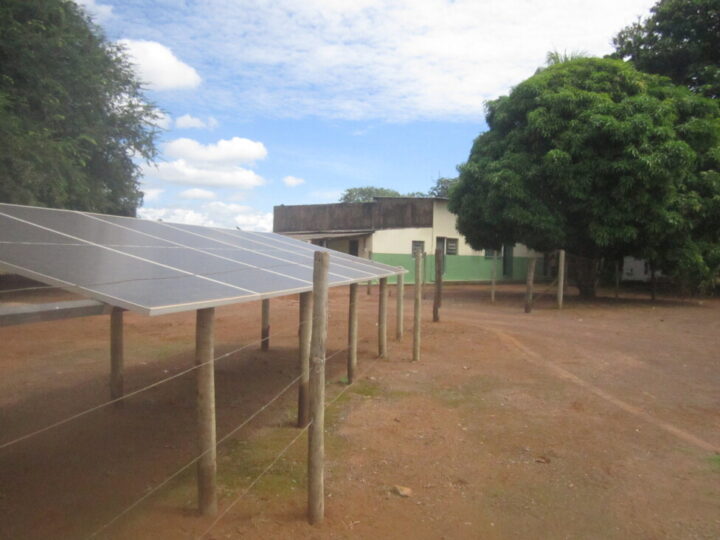
Six solar panels will reduce the costs of the women's bakery, installed on the former estate where 27 families were given land in Acreúna, in the Brazilian state of Goiás, as part of the country's ongoing agrarian reform program. CREDIT: Mario Osava / IPS

Six solar panels will reduce the costs of the women’s bakery, installed on the former estate where 27 families were given land in Acreúna, in the Brazilian state of Goiás, as part of the country’s ongoing agrarian reform program. CREDIT: Mario Osava / IPS

Bakery empowers rural women

The women of the Association of Residents of the Genipapo Settlement decided to create a bakery as a new source of income 16 years ago. They also gained self-esteem and autonomy by earning their own money. In general, agricultural and livestock income is controlled by the husbands.

Each of the women working at the bakery earns about 1,500 reais (300 dollars) a month, six percent more than the national minimum wage. “We started with 21 participants, now we have 14 available for work, because some moved or quit,” Souza said.

A year ago, the project obtained a solar energy system with six photovoltaic panels from the Women of the Earth Energy project, promoted by the Gepaaf Rural Consultancy, with support from the Socio-environmental Fund of the Caixa Econômica Federal, the regional bank focused on social questions, and the public Federal University of Goiás (UFG).

Gepaaf is the acronym for Management and Project Development in Family Farming Consultancy and its origin is a study group at the UFG. The company is headquartered in Inhumas, a city of 52,000 people, 180 km from Acreúna.

Due to difficulties with the inverter, a device needed to connect the generator to the electricity distribution network, the plant only began operating in March. Now they will see if the savings will suffice to cover the approximately 300 reais (60 dollars) that the bakery’s electricity costs.

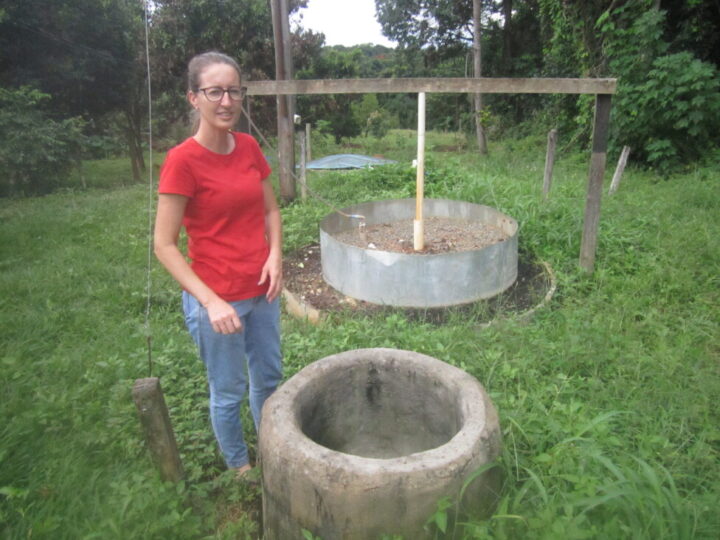
Iná de Cubas stands next to the biodigester that she got from the Women of the Earth Energy project in the municipality of Orizona, in the center-east of the Brazilian state of Goiás. The biogas generated benefits the productive activities of small farmers in rural settlements, as do solar plants on a family or community scale. Image: Mario Osava / IPS

Iná de Cubas stands next to the biodigester that she got from the Women of the Earth Energy project in the municipality of Orizona, in the center-east of the Brazilian state of Goiás. The biogas generated benefits the productive activities of small farmers in rural settlements, as do solar plants on a family or community scale. Image: Mario Osava / IPS

“It’s not that much money, but for us every penny counts,” Souza said. Electricity is cheap in their case because it is rural and nocturnal consumption. Bread production starts at 5:00 p.m. and ends at 3:00 or 4:00 a.m. from Monday to Thursday, according to Maristela Vieira de Sousa, the group’s secretary.

The industrial oven they use is low-consumption and wood-burning. There is another, gas-fired oven, which is only used in emergencies, “because it is expensive,” said de Sousa. Biogas is a possibility for the future, which would use the settlement’s abundant agricultural waste products.

Alternative energies make agribusiness viable

Iná de Cubas, another beneficiary of the Women of the Earth Energy project, has a biodigester that supplies her stove, in addition to eight solar panels. They generate the energy to produce fruit pulp that also supplies the schools of Orizona, a municipality of 16,000 inhabitants in central-eastern Goiás.

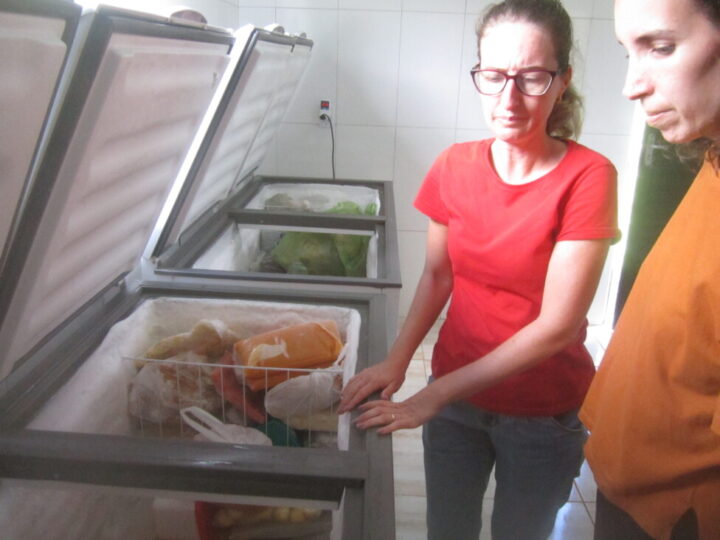
The solar plant, installed two years ago, made the business viable by eliminating the electricity bill, which was high because the two refrigerators needed to store fruit and pulp consume a lot of electricity.

The abundance of fruit residues provides the inputs for biogas production, an innovation in a region where manure is more commonly used.

The refrigerators in which Iná de Cubas keeps the fruit and fruit pulp that she prepares for sale to schools in Orizona in central Brazil consume a great deal of electricity. CREDIT: Mario Osava / IPS

The refrigerators in which Iná de Cubas keeps the fruit and fruit pulp that she prepares for sale to schools in Orizona in central Brazil consume a great deal of electricity. CREDIT: Mario Osava / IPS

“I only use an additional load of animal feces when I need more biogas,” said Cubas, who gets the manure from her neighbor’s cows, since she does not raise livestock.

On her five hectares of land, Cubas produces numerous species of fruit for her cottage industry.

In addition to typical Brazilian fruits, such as cajá or hog plum (Spondias mombin), pequi or souari nut (Caryocar brasiliense) and jabuticaba from the grapetree (Plinia cauliflora), she grows lemons, mangoes, oranges, guava and avocado, among others.

For the pulp, she also uses fruit from neighbors, mostly relatives. The distribution of her products is done through the Agroecological Association of the State of Goias (Aesagro), which groups 53 families from Orizona and surrounding areas.

Agroecology is the system used on her farm, where the family also grows rice, beans and garlic. The crops are irrigated with water pumped from nearby springs that were recovered by the diversion of a road and by fences to block access by cattle, which used to trample the banks.

“The overall aim is to strengthen family farming, the quality of life in the countryside, incomes, and care for the environment, and to offer healthy food, without poisonous chemicals, especially for schools,” explained Iná de Cubas.

Biodigesters made of steel and cement, solar energy for different purposes, including pumping water, rainwater collection and harvesting, are part of the “technologies” that the Women of the Earth Energy project is trying to disseminate, said Gessyane Ribeiro, Gepaaf’s administrator.

In the area where Iná de Cubas lives, the project installed five biodigesters and seven solar pumps for farming families, in addition to solar plants in schools, she said.

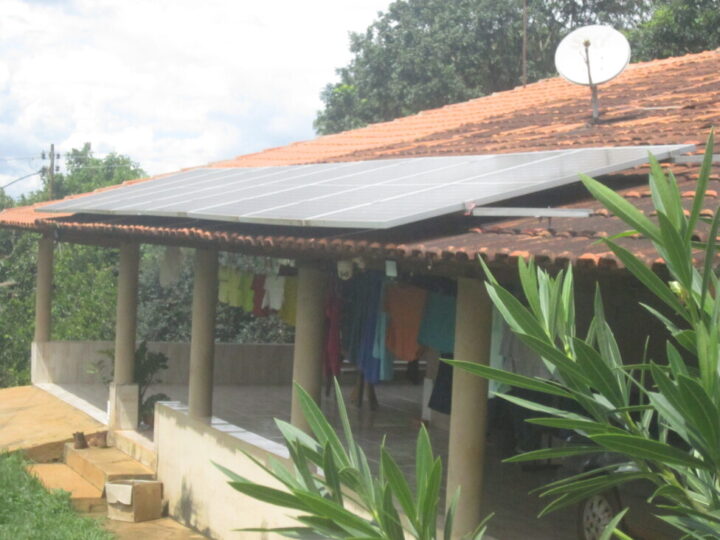
The eight solar panels on the roof of the Cubas family’s house, in the rural area of Orizona, make small agro-industrial processes viable, adding value to the wide diversity of native fruits from different Brazilian ecosystems, such as the Cerrado savannah and the Amazon rainforest, along with species imported throughout the country’s history. CREDIT: Mario Osava / IPS

Network of rural women

The Women of the Earth Energy Network, brought together by the project and coordinated by Ribeiro, operates in six areas defined by the government based on environmental, economic, social and cultural similarities. In all, it involves 42 organizations in 27 municipalities in Goiás.

The local councils choose the beneficiaries of the projects, all implemented with collective work and focused on women’s productive activities and the preservation of the Cerrado. All the beneficiaries commit themselves to contribute to a solidarity fund to finance new projects, explained agronomist Ribeiro.

“The Network is the link between the valorization of rural women, family farming and the energy transition,” she said. “We chose family farmers because they are the ones who produce healthy food.”

“We offer technological solutions that rely on the links between food, water and energy, to move towards an energy transition that can actually address climate change,” said sociologist Agnes Santos, a researcher and communicator for the Network.

Recovering and protecting springs is another of the Women’s Network’s activities.

Two solar panels run a pump installed in a spring in the forest to pump the water needed by the 29 cows owned by Nubia Lacerda Matias' family in Orizona, in the state of Goiás, near Brasilia. Thus the cows stopped drinking water in the springs, which are now fenced off, vital to protect the water source for local families living downstream. CREDIT: Mario Osava / IPS

Two solar panels run a pump installed in a spring in the forest to pump the water needed by the 29 cows owned by Nubia Lacerda Matias’ family in Orizona, in the state of Goiás, near Brasilia. Thus the cows stopped drinking water in the springs, which are now fenced off, vital to protect the water source for local families living downstream. CREDIT: Mario Osava / IPS

Nubia Lacerda Matias celebrates the moment she was invited to join the movement. She won a solar pump, made up of two solar panels and pipes, which bring water to her cattle that used to damage the spring, now protected by a fence and a small forest.

“It’s important not only for my family, but for the people living downhill” where a stream flows, fed by various springs along the way, she said.

But the milk from the 29 cows and corn crops on her 9.4-hectare farm are not enough to support the family with two young children. Her husband, Wanderley dos Anjos, works as a school bus driver.

Iná de Cubas’ partner, Rosalino Lopes, also works as a technician for the Pastoral Land Commission, a Catholic organization dedicated to rural workers.

In his spare time, Lopes invents agricultural machines. He assembles and combines parts of motorcycles, tractors and other tools, in an effort to fill a gap in small agriculture, undervalued by the mechanical industry and scientific research in Brazil.

  Source