A Year of High Expectations and Frustrations

Active Citizens, Asia-Pacific, Civil Society, Crime & Justice, Development & Aid, Economy & Trade, Global, Headlines, Human Rights, TerraViva United Nations, Youth

Opinion

DHAKA, Bangladesh, Jan 8 2026 (IPS) – As many of you know, out of the blue, I have been called in to assist the Interim Government led by Nobel Laureate Professor Muhammad Yunus in stabilising the economy left in ruins by the fallen autocratic-kleptocratic regime that looted the banks, stole public money and robbed small investors in the capital market to siphon off billions of dollars out of the country. I had never served in a government; neither had I ever expected this opportunity. However, my UN experience and political economy understanding have been handy.


Anis Chowdhury

Reflecting back the year that we have just passed, I trust, you have been well as we wished each other at the start of 2025 the best of our health and spirit. Unfortunately, despite our earnest wish, the world was not peaceful during 2025.

Hopes and global disorder

Hopes kindled briefly for justice for the Palestinians as the European powers, including Australia (a European settler colony) were forced to recognise the Palestine State, and Narcissist Trump pushed for some peace in both Ukraine and Gaza in his mad desperation for a Nobel Peace Prize.

Yet Gaza is still being bombarded with Israel’s genocidal intent, making a mockery of deranged Trump’s rhetorical claim of achieving “peace in the Middle East for the first time in 3,000 years”, and the illegal occupation of the West Bank along with settler violence continues unabated with complete immunity in blatant violations of international laws.

Narcissist Trump sanctioned the International Criminal Court (ICC) and International Court of Justice (ICJ) in his desperate attempt to save Israeli war criminals, including Benjamin Netanyahu and justify Israel’s genocide and settler violence. Trump upended his assault on the rule-based order with arbitrary so-called ‘reciprocal tariff’.

Bangladesh

As for the post-fascist Hasina Bangladesh, the year 2025 began with high expectations. And as for me, the year 2025 has been extra-ordinary.

Today, I am pleased to say that we have been able to avert a full-blown crisis. Heart-felt thanks to our ‘remittance fighters’ who whole-heartedly trusted the Interim Government’s various reform initiatives. Expatriate Bangladeshis sent a record $30.04 bn in remittances in the 2024–25 fiscal year, the highest amount ever received in a single fiscal year in the country’s history. Forex reserves surged to $33 bn, hitting 3-year high as December remittances crossed $3bn. You can get a report card by Finance Advisor, Dr. Salehuddin and myself, published in the Daily Star on 18 August 2025.

Of course, not everything has been rosy. The much-hoped systemic transition remains full of uncertainty. I see systemic transition as the process of total transformation of a caterpillar inside a cocoon. We still do not know whether the ‘caterpillar in the cocoon’ will turn out to be a butterfly or a moth. People are genuinely worried as the past systemic transition opportunities were wasted.

I myself found road-blocks at every turn. Bureaucratic inertia and resistance have frustrated my efforts for genuine reforms. It has been a real-life experience of the classic British political satire, “Yes, Minister”. Like Sir Humphrey Appleby, the bureaucrats will display outwardly extra-ordinary humbleness, but will politely defy citing rules of business. Bureaucratic resistance is the main stumbling block for achieving coordination, coherence and integration in policy making and implementation, thus, causing wasteful duplications, inefficiency and lack of effectiveness.

Nevertheless, I achieved some success. One of them is the agreement to expand the voluntary Bangladesh National Cadet Corps programme to cover ALL youths (aged 18) in 10-12 years, so that we can have a disciplined workforce to be readily deployed during any national emergency. Needless to say, that this is an imperative to realise demographic dividend. We are hoping to roll out the programme from July 2026 to coincide with the July Revolution anniversary.

Despite frustrations and uncertainties, I am hopeful as I can see a seismic shift in the political dynamics of the country. This coincides with the demographic shift – the youth (15-30 years) representing nearly 30% of the population. These youths have a different vocabulary of politics; they want justice, inclusion, self-respect, and dignity – they are fiercely nationalist.

Recently martyred Hadi is their embodiment. The establishment is understandably threatened and tried to silence the youth by assassinating Hadi; but they failed to extinguish the flame, instead, everyone has become a Hadi, standing unwavering in their commitment to carry out Hadi’s mission of building a just nation where citizens can live with dignity, free from fear, subjugation, and oppression. Hadi re-centred our national conscience on Insaf: justice, dignity, and fairness not as rhetorical slogans, but as non-negotiable ethical foundations of the State and society.

In an era of moral drift, Hadi reminded the nation that no political order can last without justice at its core. He ignited a generation with civic courage and moral responsibility. Free from fear, patronage, or transactional politics, young people saw in Hadi a new model of leadership: ethical, principled, and accountable. In doing so, he reshaped the future political character of Bangladesh and moved national thinking beyond entrenched legacy power structures toward people-centric, principled governance. He challenged the inevitability of corruption and coercion, insisting instead that politics could be reclaimed as a moral vocation. His life poses an enduring question to those who seek power: Will you serve justice, or merely rule?

Let me end this year-end message with my personal tribute to Khaleda Zia, who has recently passed away after a long illness imposed on her by the vindictive Hasina regime, falsely convicting her and imprisoning in a substandard cell. Like her husband, Shaheed President Zia, she was thrust into the whirlpool of history. They never sought power; but when the responsibility fell on their shoulders, they carried out their duties to the nation whole-heartedly and selflessly; thus, they became a true statesman (woman), winning hearts and minds of their people.

Perhaps Khaleda Zia’s most enduring legacy lies in her extraordinary restraint and dignified disposition, even under severe and prolonged adversity. Her self-restraint, rooted in grace rather than weakness, distinguished her from many of her contemporaries and offers a powerful lesson for today’s often abrasive and confrontational political culture.

Warmest regards and best wishes for the New Year

IPS UN Bureau

  Source

Cape Town Minstrels Carnival 2026 – Everything You Need To Know!

The iconic Cape Town Minstrel Carnival returns to the Mother City on 5 January 2026.

Now known as the Hollywoodbets Cape Town Street Parade, this annual event is the longest existing carnival in the city and is an integral part of the city’s cultural heritage. Historically this celebration took place on 2 January aka Tweede Nuwe Jaar and the minstrels were to referred to as the Kaapse Klopse – this celebration the Mother City’s biggest event to usher in the New Year.

What To Expect at the Cape Town Minstrel Carnival

Thousands of minstrels in glittery uniforms from a variety of troupes with face paint, hats and parasols march through the city’s roads, playing their signature “ghoema” music on banjos, trumpets and drums. The troupes are spaced out so that each performance happens separately, allowing onlookers to hear each troupe. There is also a structure to each troupe, with non-instrument playing members called “voorlopertjies” leading the way with extravagant dance moves while the band provides the backing soundtrack.

Among this year’s troupe lineup you will see Original D6 Hanover Minstrels, Mitchells Plain Young Tycoons, Phantoms Community Development, Ashwin Willemse Orient Community Development, Young Wild Comanches, Manenberg Superstars, Carnival Boys Youth Development (also known as Crystal Palace), Wild Apache, Baruch Entertainers, CPT Hawkers, Fabulous Seawind Entertainers, and many more.

Experience The Magic 

The parade is set to attract a crowd of 80,000 to 100,000 spectators, eager to experience over 16 minstrel troupes and 20,000 performers. 

The parade will begin at the corner of Somerset Rd and Dixon St. The route
will follow along Somerset Rd all the way to the DHL Stadium.  

Road Closures 

To accommodate the parade and ensure public safety, several roads will be closed from 6am on Monday, 5 January to Tuesday, 6 January 2026. 

Affected streets include: 

Street/Road  Restriction    Between  Closure Time  Opening Time 
Main Rd  Full Closure (residential access lane between Upper Portswood Rd & Highfield Rd)  York Rd  Buitengracht Street  06h00  23h59 
Prestwich Street  Full Closure  Alfred St Granger  Chiappini Street  06h00  23h59 
Somerset Road  East Bound closure  Bay Blvd Granger  Granger Bay Blvd  06h00  23h59 
Fritz Sonnenberg  Full Closure  Bay Blvd Granger  Rd Portswood  06h00  23h59 
Somerset Road  Full Closure  Bay Blvd  Buitengracht St  06h00  23h59 
Ebenezer Road  Full Closure (Hotel Access only)  Prestwich St Javis  RD Somerset  06h00  23h59 
De Smit Street  Full Closure  St Napier St Javis  Somerset RD  06h00  23h59 
Moreland Terrace  Full Closure  St Schiebe St  Somerset RD  06h00  23h59 
Napier Street  Full Closure  Dixon St  Somerset RD  06h00  23h59 
Alfred Street  Full Closure  Prestwich St  Somerset RD  06h00  23h59 
Dixon Street  Full Closure  Strand St  Javis St  06h00  23h59 
Chiappini Street  Full Closure  Prestwich St  Somerset RD  06h00  23h59 
Chiappini Street  Full Closure  Napier St Liddle  Somerset RD  06h00   23h59  
Alfred Street  Full Closure (Hotel Access only)  St Beach Rd  Schiebe St  06h00  23h59 
Prestwich Street  Full Closure  Portswood Rd  St Alfred  06h00  23h59 
Cobern St  Full Closure  Granger Bay Blvd  Somerset Rd  06h00  23h59 
Granger Bay Blvd  East Bound Carriage Closure  Helen Suzman  Helen Suzman  06h00  23h59 
Fort Wynyard St  Full Closure  Blvd  Granger Bay Blvd  12h00  23h59 
Fritz Sonnenberg  Full Closure    Beach Rd     
Vlei Road  Full Closure    Fritz Sonnenberg Rd  12h00  23h59 

 Local access and permit holders: 

Street/Road  Restriction    Between  Closure Time  Opening Time 
Main Road  Permit Holders Only  Granger Bay Blvd  Three Anchor Bay Blvd  06h00  23h59 
Granger Bay Blvd  Permit Holders Only  Helen Suzman Blvd  York Rd  06h00  23h59 
Ebenezer Road  Permit Holders Only  Port RD  Prestwich St  06h00  23h59 
Bennett Street  Permit Holders Only  Port RD  Prestwich St  06h00  23h59 
Hudson Street  Permit Holders Only  Waterkant Street  Somerset RD  06h00  23h59 
Hudson Street  Local Access Only  Hudson St  Strand St  06h00  23h59 
Vos Street  Local Access Only  Vos St  Strand St  06h00  23h59 
Rose Street  Local Access Only  Rose St  Strand St  06h00  23h59 
Waterkant  Local Access Only  Buitengracht St  Waterkant St  06h00  23h59 
Cavalcade Road  Local Access Only  York Rd  Upper Portswood Rd  06h00  23h59 
Thornhill Road  Local Access Only  Cavalcade Rd  Upper Portswood Rd  06h00  23h59 

 Entry 

The HollywoodBets Cape Town Street Parade is free for the public. Follow Cape Town Street Parade on FacebookInstagram, and X, for the latest updates on the start route and other information. 

Related Articles 

The post Cape Town Minstrels Carnival 2026 – Everything You Need To Know! appeared first on Cape Town Tourism.


Discover more from The Maravi Post

Subscribe to get the latest posts sent to your email.

The Maravi Post

UN Conference Recommits to Solidarity With Rohingyas, People of Myanmar

Armed Conflicts, Asia-Pacific, Civil Society, Development & Aid, Featured, Headlines, Human Rights, IPS UN: Inside the Glasshouse, Migration & Refugees, Religion, Sustainable Development Goals, TerraViva United Nations, Youth

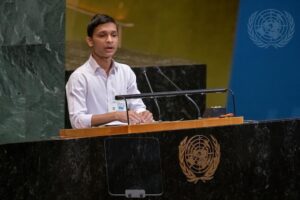
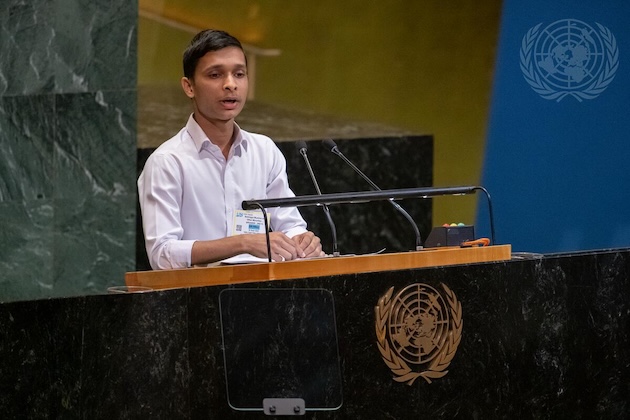
Maung Sawyeddollah, Founder of the Rohingya Students Network, addresses the high-level conference of the General Assembly on the situation of Rohingya Muslims and other minorities in Myanmar Credit: UN Photo/Manuel Elías

Maung Sawyeddollah, Founder of the Rohingya Students Network, addresses the high-level conference of the General Assembly on the situation of Rohingya Muslims and other minorities in Myanmar Credit: UN Photo/Manuel Elías

UNITED NATIONS, Oct 1 2025 (IPS) – The international community convened for a high-level meeting at UN Headquarters, this time to mobilize political support for the ongoing issue of the persecution of the Rohingya Muslims and other minorities in Myanmar.


On Tuesday September 30, representatives from Rohingya advocacy groups, the UN system and member states convened at the General Assembly to address the ongoing challenges facing Rohingya Muslims and the broader context of the political and humanitarian situation in Myanmar.

UN President of the General Assembly Annalena Baerbock remarked that the conference was an opportunity to listen to stakeholders, notably civil society representatives with experience on the ground.

“Rohingya need the support of the international community, not just in words but in action,” she said.

Baerbock added there was an “urgent need for strengthened international solidarity and increased support,” and to make efforts to reach a political solution with unequivocal participation from the Rohingyas.

“The violence, the extreme deprivation and the massive violations of human rights have fueled a crisis of grave international concern. The international community must honor its responsibilities and act. We stand in solidarity with the Rohingya and all the people of Myanmar in their hour of greatest need,” said UN Human Rights Commissioner Volker Türk.

In the eight years since over 750,000 Rohingyas fled persecution and crossed the border into Bangladesh, the international community has had to deal with one of the most intense refugee situations in living memory. Attendees at the conference spoke on addressing the root causes that led to this protracted crisis—systematic oppression and persecution at the hands of Myanmar’s authorities and unrest in Rakhine State.

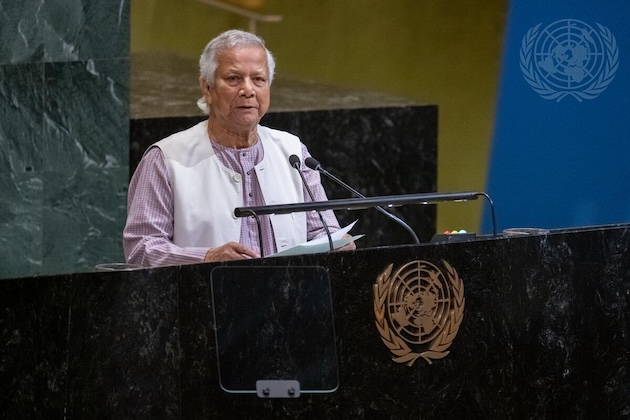
Muhammad Yunus, Chief Adviser of the interim Government of Bangladesh, addresses the high-level conference of the situation of Rohingya Muslims and other minorities in Myanmar. Credit: UN Photo/Manuel Elias

Muhammad Yunus, Chief Adviser of the interim Government of Bangladesh, addresses the high-level conference on the situation of Rohingya Muslims and other minorities in Myanmar. Credit: UN Photo/Manuel Elias

The military junta’s ascension in 2021 has only led to further unrest and instability in Myanmar and has made the likelihood of safe and sustained return far more precarious. Their persecution has only intensified as the Rohingya communities still residing in Rakhine find themselves caught in the middle of conflicts between the junta and other militant groups, including the Arakan Army.

At the opening of the conference, Rohingya refugee activists remarked that the systemic oppression predates the current crisis. “This is a historic occasion for Myanmar. But it is long overdue. Our people have suffered enough. For ethnic minorities—from Kachin to Rohingya—the suffering has spanned decades,” said Wai Wai Nu, founder and executive director of the Women’s Peace Network.

“It has already been more than eight years since the Rohingya Genocide was exposed. Where is the justice for the Rohingyas?” asked Maung Sawyeddollah, founder of the Rohingya Student Network.

For the United Nations, the Rohingya refugee crisis represents the dramatic impact of funding shortfalls on their humanitarian operations. UN Secretary-General António Guterres once said during his visit to the refugee camps in Bangladesh back in April that “Cox’s Bazar is Ground Zero for the impact of budget cuts”.

Funding cuts to agencies like UNICEF and the World Food Programme (WFP) have undermined their capacity to reach people in need. WFP has warned that their food assistance in the refugee camps will run out in two months unless they receive more funding. Yet as of now, the 2025 Rohingya Refugee Response Plan of USD 934.5 million is only funded at 38 percent.

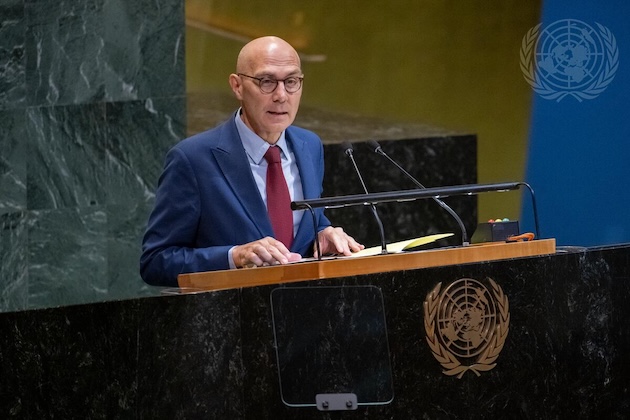
Volker Türk, United Nations High Commissioner for Human Rights, addresses the high-level conference of the General Assembly on the situation of Rohingya Muslims and other minorities in Myanmar. Credit: UN Photo/Manuel Elias

Volker Türk, United Nations High Commissioner for Human Rights, addresses the high-level conference of the General Assembly on the situation of Rohingya Muslims and other minorities in Myanmar. Credit: UN Photo/Manuel Elias

“The humanitarian response in Bangladesh remains chronically underfunded, including in key areas like food and cooking fuel. The prospects for funding next year are grim. Unless further resources are forthcoming, despite the needs, we will be forced to make more cuts while striving to minimize the risk of losing lives: children dying of malnutrition or people dying at sea as more refugees embark on dangerous boat journeys,” said Filippo Grandi, UN High Commissioner for Refugees.

As the host country of over 1 million refugees since 2017, Bangladesh has borne the brunt of the situation. Chief Advisor Muhammad Yunus said that the country faces its own development challenges and systemic issues with crime, poverty and unemployment, and has struggled to support the refugee population even with the help of aid organizations. He made a call to pursue repatriations, the strategy to ensure the safe return of Rohingyas to Rakhine.

“As funding declines, the only peaceful option is to begin their repatriation. This will entail far fewer resources than continuing their international protection. The Rohingya have consistently pronounced their desire to go back home,” said Yunus. “The world cannot keep the Rohingya waiting any longer from returning home.”

Along with the UN, Myanmar and Bangladesh, neighboring and host countries also have a role to play. Regional blocs like the Association of Southeast Asian Nations (ASEAN) are also crucial  in supporting the Rohingya population as well as leading dialogues with other stakeholders across the region.

“In my engagements with Myanmar stakeholders, I have emphasized that peace in Myanmar will remain elusive until inclusive dialogue between all Myanmar stakeholders takes place,” said Othman Hashim, the special envoy of the ASEAN Chair on Myanmar. “For actions within Myanmar, the crucial first step is stopping the hostilities and violence. Prolonged violence will only exacerbate the misery of the people of Myanmar, Rohingya and other minorities included.”

“Countries hosting refugees need sustained support. Cooperation with UNODC [UN Office of Drugs and Crime], UNHCR, and IOM [International Organization for Migration] must be deepened,” said Sugiono, Indonesia’s foreign minister.

Supporting the Rohingya beyond emergency and humanitarian needs would also require investing resources in education and employment opportunities. Involved parties were encouraged to support resettlement policies that would help communities secure livelihoods in  the long-term, or to extend opportunities for longterm work, like in Thailand where they recently granted long-staying refugees the right to work legally in the country.

“Any initiative for the Rohingya without Rohingya in the camp, from decision making to nation-building is unsustainable and unjust. The UN must mobilize resources to empower Rohingya. We are not only victims; we have the potential to make a difference,” said Sawyeddollah.

As one of the few Rohingya representatives present that had previous lived in the camps in Cox’s Bazaar, Sawyeddollah described the challenges he faced in pursuing higher education when he applied to over 150 universities worldwide but did not get into any of them. He got into New York University with a scholarship, the first Rohingya refugee to attend. He reiterated that universities had the capacity to offer scholarships to Rohingya students, citing the example of the Asian University of Women (AUW) in Chittagong, Bangladesh, where it has been offering scholarships to Rohingya girls since at least 2018.

The conference called for actionable measures that would address several key areas in the Rohingya refugee situation. This includes scaling up funding for humanitarian aid in Bangladesh and Myanmar, and notably, pursuing justice and accountability under international law. Türk and other UN officials reiterated that resolving the instability and political tensions in Myanmar is crucial to resolving the refugee crisis.

Kyaw Moe Tun, Permanent Representative of the Republic of the Union of Myanmar to the UN, blamed the military junta for the country’s current state and called for member states to refuse supporting the junta politically or financially. “We can yield results only by acting together to end the military dictatorship, its unlawful coup, and its culture of impunity. At a time when human rights, justice and humanity are under critical attack, please help in our genuine endeavour to build a federal democratic union that rooted in these very principles.”
IPS UN Bureau Report

  Source

Aid Funding Crisis Means Parliamentarians’ Visionary Leadership Even More Crucial

Africa, Asia-Pacific, Civil Society, Climate Change, Conferences, Development & Aid, Economy & Trade, Editors’ Choice, Featured, Gender, Headlines, Health, Humanitarian Emergencies, Middle East & North Africa, Population, Sustainable Development Goals, TerraViva United Nations, Women’s Health, Youth

Population

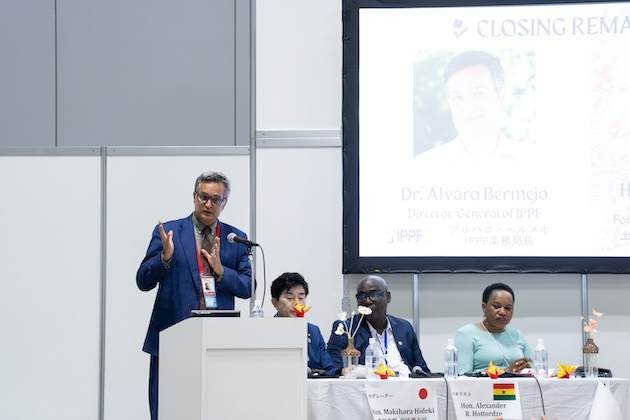
Dr. Alvaro Bermejo, Director General of the International Planned Parenthood Federation (IPPF) addresses the Let's Discuss the Future of Africa Together seminar that took place last week (August 21) on the sidelines of TICAD9 in Yokohama City, Japan. Credit: APDA

Dr. Alvaro Bermejo, Director General of the International Planned Parenthood Federation (IPPF) addresses the Let’s Discuss the Future of Africa Together seminar that took place last week (August 21) on the sidelines of TICAD9 in Yokohama City, Japan. Credit: APDA

YOKOHAMA CITY, Japan & JOHANNESBURG, South Africa, Aug 25 2025 (IPS) – As funding for sexual and reproductive health rights was on a “cliff edge,” parliamentarians now needed to play a “visionary” leadership role because “financing strong, resilient health systems for all their people rests with governments,” said Dr. Alvaro Bermejo, Director General of the International Planned Parenthood Federation (IPPF).


He was speaking at the Let’s Discuss the Future of Africa Together seminar that took place last week (August 21) on the sidelines of TICAD9 in Yokohama City, Japan.

The session was organized by the Asian Population and Development Association (APDA), in collaboration with the Forum of Arab Parliamentarians for Population and Development (FAPPD) and the African Parliamentary Forum on Population and Development (FPA).

He told parliamentarians that their role is most critical.

“Africa’s health faces a serious challenge: According to WHO’s latest analysis, health aid is projected to decline by up to 40% this year compared to just two years ago. This is not a gradual shift—it is a cliff edge,” Bermejo said. “You know as well as I do that lifesaving medicines are sitting in warehouses, health workers are losing jobs, clinics are closing, and millions are missing care.”

While this reality was outrageous, it needed to be adapted to.

“And in this crisis lies an opportunity—an opportunity to shake off the yoke of aid dependency and embrace a new era of sovereignty, self-reliance, and solidarity,” with a clear mission to protect the health and lives of women and vulnerable populations through delivering high-quality sexual and reproductive health services.

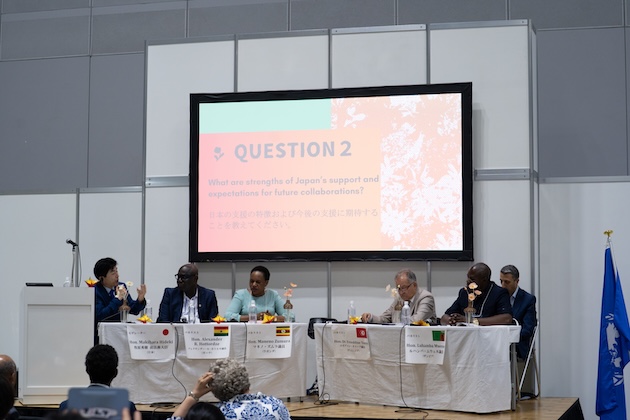
Parliamentarians engaged in debates during a policy dialogue seminar organised by the Asian Population and Development Association (APDA), in collaboration with the Forum of Arab Parliamentarians for Population and Development (FAPPD) and the African Parliamentary Forum on Population and Development (FPA). Credit: APDA

Parliamentarians engaged in debates during a policy dialogue seminar organized by the Asian Population and Development Association (APDA), in collaboration with the Forum of Arab Parliamentarians for Population and Development (FAPPD) and the African Parliamentary Forum on Population and Development (FPA). Credit: APDA

This seminar and another in the series, Policy Dialogue on the Africa-Japan Partnership for Population and Development, were both supported by the UN Population Fund (UNFPA) Arab States Regional Office (ASRO), the Japan Trust Fund (JTF) and IPPF.

During the discussions, a wide range of topics about population dynamics in Africa and Africa-Japan cooperation were discussed.

In his opening remarks, Ichiro Aisawa, a member of the House of Representatives of Japan, told the seminar it was necessary to take joint action across borders and generations.

“Youth holds the key to unlocking Africa’s future. By 2050, it is predicted that approximately 70 percent of Africa’s population will be under the age of 30. As African countries enter a demographic dividend period, the role played by parliamentarians in each country will be extremely important.

Aisawa said it was necessary to listen to the voices of the community in addressing issues related to youth empowerment, gender equality, and sexual and reproductive health (SRH).

Parliamentarians should take “concrete action through legislation and policies; it is essential to harnessing the potential of young people, directly linking them to social and economic growth, and creating a society in which no one is left behind.”

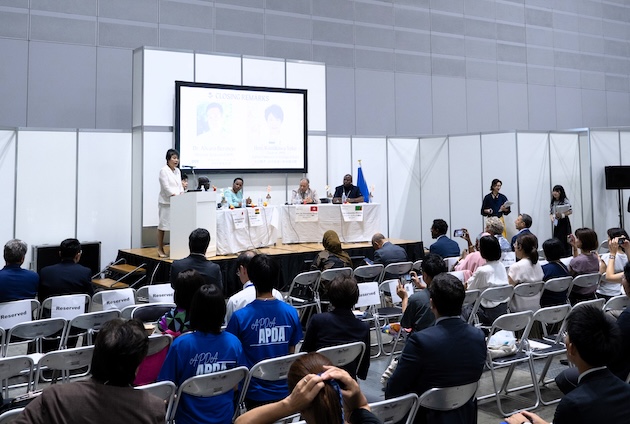
Yoko Kamikawa, Chairperson of Japan Parliamentarians for Population (JPFP), addresses a seminar for African and Asian parliamentarians on the sidelines of the TICAD9 in Yokohama City, Japan. Credit: APDA

Yoko Kamikawa, Chairperson of Japan Parliamentarians for Population (JPFP), addresses a seminar for African and Asian parliamentarians on the sidelines of the TICAD9 in Yokohama City, Japan. Credit: APDA

During the discussions, representatives from Africa gave examples of how Japan had supported their health initiatives, especially important in a climate of decreasing aid.

Maneno Zumura, an MP from Uganda, said what compounded the issues in her country and in Africa was “the changes in climate. The unpredicted climate has affected agricultural activities by 40 percent, especially in drought-prone areas of the country.” This had resulted in nearly a quarter (24 percent) of children experiencing malnutrition.

However, she noted that Japan had made considerable contributions to education and health.

“As we assess Uganda’s development and Japan’s impact, it’s clear that sustainable progress thrives on global solidarity and local governance. Key achievements include a 62 percent rise in women’s incomes through cooperatives, a 50 percent drop in maternal mortality in refugee settlements, and supporting the road infrastructure and education, illustrating how policy-driven interventions can break cycles of poverty and inequality.”

There were several specific projects she alluded to, including education experts from Japan who contributed to an improvement of the quality of primary education in districts of Wakiso, Mbale, and Arua through the Quality Improvement in Primary Education Project (2021-2023). They also trained 1,500 teachers in participatory teaching methods.

“The Government of Japan supported the vulnerable communities like refugees and host communities by strengthening the social services like health in refugee camps like Rhino Camp,” Zumura continued, including construction of a health center with antenatal facilities serving over 300,000 people in camps of Bidibidi and Rhino Camp. They also trained 200 health workers in the management of childhood illnesses and maternal health care.

Mwene Luhamba, MP, Zambia, said his country was looking forward to partnering with Japan in expanding One-Stop Reproductive Health Services, enhancing parliamentary engagement, and investing in youth programs.

Bermejo said part of the solution to the development issues is to confront constraints.

“Some countries in Africa do need global solidarity, but what Africa needs from the world, more than anything else, is fair terms. We must also confront the structural constraints. Debt service burdens are crowding out social investments. Let us seize this moment, not just to repair but to transform,” he said. “Sexual and reproductive health services save lives. They empower individuals, promote dignity, and drive national development.”

In her closing remarks, Yoko Kamikawa, Chairperson of Japan Parliamentarians for Population (JPFP), said that it was through dialogue across borders and sectors that “we build consensus, strengthen legal frameworks, and ensure that national strategies reflect the voices of all people and empower them—especially women and youth.”

IPS UN Bureau Report


Sweet Hope to End Bitter Pills for Multidrug-Resistant Tuberculosis

Active Citizens, Africa, Civil Society, Development & Aid, Editors’ Choice, Featured, Headlines, Health, Human Rights, Humanitarian Emergencies, Sustainable Development Goals, TerraViva United Nations, Youth

Health

Rallying call to end TB by 2030. Credit: Busani Bafana/IPS

BULAWAYO, Jul 15 2025 (IPS) – Every day, Yondela Kolweni has to hold down her son, who screams and fights when it is time for his daily life-saving TB tablets—a painful reminder of her battle with the world’s top infectious killer disease.


“It is a fight I win feeling awful about what I have to do,” says Kolweni (30), a Cape Town resident and a TB survivor. “The tablets are bitter, and he spits them out most of the time, and that reminds me of the time I had to take the same pills.”

Kolweni’s five-year-old son is battling Multidrug Resistant TB (MDR TB), a vicious form of TB that is rising among children globally.

The global burden of MDR-TB among children and adolescents has increased from 1990 to 2019, particularly in regions with lower social and economic development levels, according to a recent study. In addition, the top three highest incidence rates of MDR TB in 2019 were recorded in Southern sub-Saharan Africa, Eastern Europe, and South Asia, while the top three highest rates of deaths in the same period were recorded in Southern, Central, and Eastern sub-Saharan Africa.

South Africa is one of 30 countries that account for 80 percent of all TB cases in the world and has the most cases of drug-resistant TB.

A Bitter Pill to Swallow

Kolweni’s son was diagnosed with MDR-TB five years ago, having tested positive for TB which has affected his grandmother and his mother. He was immediately on treatment, a drug cocktail that included moxifloxacin—a pill not for the yellow-livered.

“There were two medications he had to take, and there was one specifically, the yellow one, that he did not like, and with the color he knew what it was,” Kolweni told IPS in an interview, explaining a daily battle to get her son to take his meds.

It was down to a fight. She crushed the tablets, mixed them with a bit of water, and fed them through a syringe.

“We would sometimes hold him or wrap a towel around him so that we could feed him the medication, but he would still spit it out, which meant he was not taking the dosage he was meant to take,” said Kolweni. “We then came up with the idea to put his tablets in his yogurt, but that technique did not work because, being a smart kid, he took the bait but would soon spit out the medication.”

Moxifloxacin, an exceptionally bitter medicine, is one of the key drugs in the new all-oral treatment for multidrug-resistant tuberculosis (MDR TB). The treatment is a combination of the drugs Bedaquiline, Pretomanid, Linezolid and Moxifloxacin, known as BPaLM. The BPaLM regimen is specially formulated for children but is a bitter pill to swallow.

Sweet Medicine

But there is sweet hope. A new study, by Stellenbosch University and the TB Alliance, found that sweet, bitter-masked versions of Moxifloxacin significantly improve kids’ willingness to take the drug—easing the burden on parents and boosting treatment adherence.

Two formulations of moxifloxacin have been identified by children as tasting better than new generic versions of products currently on the market.

The results from the ChilPref ML study—a Unitaid-funded effort sponsored and led by Stellenbosch University in collaboration with TB Alliance—will help improve MDR TB treatment and adherence in children.

Dr. Graeme Hoddinott, of Stellenbosch University and the principal investigator of the study, notes that children cannot be treated in a humane manner for drug-resistant TB if the medicines taste so terrible that children refuse them or must be forced to take them.

Children diagnosed with drug-sensitive TB have good outcomes even within the four months because there is usually one tablet given, and there is a child-friendly formulation that dissolves easily to be given on a spoon or in a syringe, Hoddinott said. However, for drug-resistant TB, the situation is complicated. Most drugs for MDR TB are no longer used because of their toxicity and have been replaced by new drugs.

MDR-TB drugs are not child-friendly, Hoddinott admits. The active ingredient that kills TB in Moxifloxacin makes the pills incredibly bad tasting for children who have to take the medication daily for between six and nine months in cases of MDR TB.

“These drugs are incredibly bad tasting; they are genuinely awful to a point where adults who have been on extended TB treatment have been unable to administer the same drugs to their children because the smell evokes the time when they were sick,” Hoddinott told IPS. “It is a trauma to administer such bad-tasting drugs to a child, both for the parent and the child, particularly for the young children.”

The ChilPref study recruited just under 100 healthy children, ages 5–17, from two diverse settings in South Africa. The children evaluated flavor blends using a ‘swish and spit’ taste panel—tasting the medicine, which was dissolved in water, and then spitting it out without ingesting any of it.

Each child participant ranked the flavor blends among the three from each manufacturer and also rated the taste, smell and other characteristics of each. For moxifloxacin, there was a clear, strong preference for the new flavor blends (“bitter masker” and orange for Macleods, and strawberry and raspberry and tutti frutti for Micro Labs) over the existing commercially available flavors for both manufacturers. For Linezolid, there was no preference between the flavor blends.

“Ensuring children have access to effective and palatable TB treatments is a crucial step in improving adherence and treatment outcomes,” said Koteswara Rao Inabathina, one of the study’s authors and CMC Project Manager at TB Alliance.

“Through close collaboration with manufacturers, we have addressed critical unmet needs by developing practical solutions that make available and effective drug-resistant TB treatments not only accessible but also palatable and acceptable for children.”

The results of the ChilPref study showed that children preferred two new flavor blends of moxifloxacin, produced by Macleods Pharmaceuticals, India, and Micro Labs Pharmaceuticals, India. The results were communicated to the manufacturers, who are already updating their products.

“We are not surprised that a lot of kids did not like any of the tastings because we knew that they were horrible taste-wise, but we got a very clear signal for both manufacturers that the flavor blends we recommended were more preferred,” Hoddinott said. “We changed which flavor was going to market with relatively simple research.”

Dr. Cherise Scott, Senior Technical Manager at Unitaid, said the easier it was for children to take their medicines regularly, the more likely they were to complete their treatment successfully.

“We will not allow children to be neglected in global health responses simply because their needs are more complex.”

A Promising Treatment for MDR TB

As multi-drug-resistant TB transmission increases among children and adolescents, the development of new treatments is imperative, Hoddinott explained.

Moxifloxacin may also be increasingly used in the future for the treatment of drug-susceptible TB, which affects an estimated 1.2 million children globally each year.

Drug-resistant TB, has previously been one of the most difficult diseases to manage because of limited child-friendly treatment options, but scientists have made strides in developing new treatments for children, explains Dr. Anthony Garcia-Prats, one of the study authors and an associate professor at the University of Wisconsin-Madison.

“Now we are making sure that these medicines are appropriate for children, starting with an aspect that children and parents say is critical: taste,” Garcia-Prats said in a statement.

The new treatment is given when TB is either resistant to rifampicin, a critical first-line drug, or rifampicin and isoniazid, another first-line drug combination. These resistant strains are collectively referred to as RR/MDR-TB.

Annually there are an estimated 32,000 new cases of RR/MDR-TB among children 14 years and under—a population that is extremely sensitive to the taste of medicine, according to researchers.

This discovery could help improve adherence to TB medication and move a step closer towards the United Nations Sustainable Development Goal 3 to end TB by 2030.

“It is not a silver bullet,” Hoddinott cautions. “It does not solve everything, as people affected by TB still face many other challenges, and even the preferred flavor blends still do not taste nice. But, as part of the overall fight against TB in children, it’s an important step.”

Kolweni welcomes the development of masked TB medication.

“My experience with TB medication was not nice, and for children it is worse, and I think flavored tablets would make it easy for children to take, like  Gummies,” she said. “Every child loves flavors; even a suspension would be nice. My son would love it, and I will have no trouble getting him to take his medicine.”

Note: This article is brought to you by IPS Noram, in collaboration with INPS Japan and Soka Gakkai International, in consultative status with the UN’s Economic and Social Council (ECOSOC).

IPS UN Bureau Report

  Source

Multi-Year Drought Gives Birth to Extremist Violence, Girls Most Vulnerable

Africa, Armed Conflicts, Biodiversity, Child Labour, Climate Change Finance, Climate Change Justice, Combating Desertification and Drought, Conferences, Development & Aid, Disaster Management, Editors’ Choice, Energy, Environment, Europe, Featured, Food and Agriculture, Gender Violence, Global, Headlines, Human Rights, Migration & Refugees, Peace, Sustainable Development Goals, TerraViva United Nations, Water & Sanitation, Women & Climate Change, Youth

Combating Desertification and Drought

In Nairobi’s Kibera, the largest urban informal settlement in Africa, girls and women wait their turn for the scarce water supply. Credit: Manipadma Jena/IPS

SEVILLE & BHUBANESWAR, Jul 2 2025 (IPS) – While droughts creep in stealthily, their impacts are often more devastating and far-reaching than any other disaster. Inter-community conflict, extremist violence, and violence and injustice against vulnerable girls and women happen at the intersection of climate-induced droughts and drought-impoverished communities.


Five consecutive years of failed rain in Ethiopia, Somalia, and Kenya brought the worst drought in seventy years to the Horn of Africa by 2023. In Somalia, the government estimated 43,000 excess deaths in 2022 alone due to drought-linked hunger.

As of early current year, 4.4 million people, or a quarter of Somalia’s population, face crisis-level food insecurity, including 784,000 people expected to reach emergency levels. Together, over 90 million people across Eastern and Southern Africa face acute hunger. Some areas have been enduring their worst ever recorded drought, finds a United Nations-backed study, Drought Hotspots Around the World 2023-2025 released today at the 4th International Conference on Financing for Development (FfD4).

UNCCD Executive Secretary Ibrahim Thiaw said "Drought is here, escalating, and demands urgent global cooperation" Photo courtesy: UNCCD

UNCCD Executive Secretary Ibrahim Thiaw noted that while drought is here and escalating, it demands urgent global cooperation. Photo courtesy: UNCCD

High tempera­tures and a lack of precipitation in 2023 and 2024 resulted in water supply shortages, low food supplies, and power rationing. In parts of Africa, tens of millions faced drought-induced food shortages, malnutrition, and displacement, finds the new 2025 drought analysis, Drought Hotspots Around the World 2023-2025, by the UN Convention to Combat Desertification (UNCCD) and the U.S. National Drought Mitigation Center (NDMC).

It not just comprehensively synthesizes impacts on humans but also on biodiversity and wildlife within the most acute drought hotspots in Africa (Somalia, Ethiopia, Zimbabwe, Zambia, Malawi, Botswana, and Namibia), the Mediterranean (Spain, Morocco, and Türkiye), Latin America (Panama and the Amazon Basin) and Southeast Asia.

Desperate to Cope but Pulled Into a Spiral of Violence and Conflict

“The coping mechanisms we saw during this drought grew increasingly desperate,” says lead author Paula Guastello, NDMC drought impacts researcher. “Girls pulled from school and forced into marriage, hospitals going dark, and families digging holes in dry riverbeds just to find contaminated water. These are signs of severe crisis.”

Over one million Somalis in 2022 were forced to move in search of food, water for families and cattle, and alternative livelihoods. Migration is a major coping mechanism mostly for subsistence farmers and pastoralists. However, mass migration strains resources in host areas, often leading to conflict. Of this large number of displaced Somalis, many crossed into territory held by Islamic extremists.

Drought in a Sub-Saharan district leads to 8.1 percent lower economic activity and 29.0 percent higher extremist violence, an earlier study found. Districts with more months of drought in a given year and more years in a row with drought experienced more severe violence.

Drought expert and editor of the UNCCD study Daniel Tsegai told IPS at the online pre-release press briefing from the Saville conference that drought can turn into an extremist violence multiplier in regions and among communities rendered vulnerable by multi-year drought.

Climate change-driven drought does not directly cause extremist conflict or civil wars; it overlaps and exacerbates existing social and economic tensions, contributing to the conditions that lead to conflict and potentially influencing the rise of extremist violence, added Tsegai.

Extracting water from a traditional well using a manual pulley system. Credit: Abdallah Khalili / UNCCD

Extracting water from a traditional well using a manual pulley system. Credit: Abdallah Khalili / UNCCD

Though the effects of climate change on conflict are indirect, they have been seen to be quite severe and far-reaching. An example is the 2006-2011 drought in Syria, seen as the worst in 900 years. It led to crop failures, livestock deaths and mass rural displacement into cities, creating social and political stress. Economic disparities and authoritarian repression gave rise to extremist groups that exploited individuals facing unbearable hardships.

The UN study cites entire school districts in Zimbabwe that saw mass dropouts due to hunger and school costs. Rural families were no longer able to afford uniforms and tuition, which cost USD 25. Some children left school to migrate with family and work.

Drought-related hunger impact on children

Hungry and clueless about their dark futures, children become prime targets for extremists’ recruitment.

A further example of exploitation of vulnerable communities by extremists is cited in the UNCCD drought study. The UN World Food Programme in May 2023 estimated that over 213,000 more Somalis were at “imminent risk” of dying of starvation. Little aid had reached Somalia, as multiple crises across the globe spread resources thin.

However, al-Shabab, an Islamic extremist group tied to al-Qaida, allegedly prevented aid from reaching the parts of Somalia under its control and refused to let people leave in search of food.

Violent clashes for scarce resources among nomadic herders in the Africa region during droughts are well documented. Between 2021 and January 2023 in eastern Africa alone, over 4.5 million livestock had died due to droughts, and 30 million additional animals were at risk. Facing starvation of both their families and their livestock, by February 2025, tens of thousands of pastoralists had moved with their livestock in search of food and water, potentially into violent confrontations with host regions.

Tsegai said, “Drought knows no geographical boundaries. Violence and conflict spill over into economically healthy communities this way.”

Earlier drought researchers have emphasized to policymakers that “building resilience to drought is a security imperative.”

Women and Girls Worst Victims of Drought Violence

“Today, around 85 percent of people affected by drought live in low- and middle-income countries, with women and girls being the hardest hit,” UNCCD Deputy Executive Secretary Andrea Meza said.

“Drought might not know boundaries, but it knows gender,” Tsegai said. Women and girls in low-income countries are the worst victims of drought-induced societal instability.

Traditional gender-based societal inequalities are what make women and girl children par­ticularly vulnerable.

During the 2023-2024 drought, forced child marriages in sub-Saharan Africa more than doubled in frequency in the four regions hit hardest by the drought. Young girls who married brought their family income in the form of a dowry that could be as high as 3,000 Ethiopian birr (USD 56). It lessened the financial burden on girls’ parental families.

Forced child marriages, however, bring substantial risks to the girls. A hospital clinic in Ethiopia (which, though, it has outlawed child marriage) specifically opened to help victims of sexual and physi­cal abuse that is common in such marriages.

Girls gener­ally leave school when they marry, further stifling their opportunities for financial independence.

Reports have found desperate women exchanging sex for food or water or money during acute water scarcities. Higher incidence of sexual violence happens when hydropower-dependent regions are confronted with 18 to 20 hours without electricity and women and girls are compelled to walk miles to fetch household water.

“Proactive drought management is a matter of climate justice,” UNCCD Meza said.

Drought Hotspots Need to Be Ready for This ‘New’ Normal

“Drought is no longer a distant threat,” said UNCCD Executive Secretary Ibrahim Thiaw, adding, “It is here, escalating, and demands urgent global cooperation. When energy, food, and water all go at once, societies start to unravel. That’s the new normal we need to be ready for.”

“This is a slow-moving global catastrophe, the worst I’ve ever seen. This report underscores the need for systematic monitoring of how drought affects lives, livelihoods, and the health of the ecosystems that we all depend on,” said Mark Svoboda, report co-author and NDMC Founding Director.

“The struggles experienced by Spain, Morocco and Türkiye to secure water, food, and energy under persistent drought offer a preview of water futures under unchecked global warming. No country, regardless of wealth or capacity, can afford to be complacent,” he added.

Global Drought Outlook 2025 estimates the economic impacts of an average drought today can be up to six times higher than in 2000, and costs are projected to rise by at least 35% by 2035.

“It is calculated that $1 of investment in drought prevention results in bringing back $7 into the GDP lost to droughts. Awareness of the economics of drought is important for policymaking,” Tsegai said.

The report released during the International Drought Resilience Alliance (IDRA) event at the Saville conference aims to get public policies and international cooperation frameworks to urgently prioritize drought resilience and bolster funding.

IPS UN Bureau Report