
Will governments make Big Tobacco pay and kick Big Polluters out from Treaty meets?

SHOBHA SHUKLA, BOBBY RAMAKANT – CNS

The secretariat of World Health Organization Framework Convention on Tobacco Control (WHO FCTC – the legally binding global tobacco treaty) had warned the governments to stay vigilant because tobacco industry is targeting the intergovernmental FCTC treaty negotiations starting on Monday, November 17th. FCTC is the first WHO corporate accountability and public health treaty ratified by 183 countries (including the European Union).

2025 marks 20 years since WHO FCTC came into force. Professor (Dr) Judith Mackay, Asian Consultancy on Tobacco Control of Hong Kong, WHO Senior Policy Advisor and Special Advisor, Global Centre for Good Governance in Tobacco Control (GGTC) underlined the importance of backbone Article 5.3 of the WHO FCTC, which obligates the ratifying governments to stop tobacco industry interference in public policy. “If a government, for example, introduces new tobacco pack warnings, then they have to tell the industry that ‘these are our new pack warnings. This is what you have to do. It is a directive.’ Tobacco industry is told what to do. But in terms of formulating the policy, they are out of it.”

We must not think that ‘tobacco industry is undefeatable’ because it is not

“Legally-binding global tobacco treaty (WHO FCTC) is a visionary treaty, not only because it includes FCTC Article 5.3 (to stop tobacco industry interference in public policy) and conflict of interest provisions, but also because it includes a remarkable provision (FCTC Article 19) on liability of tobacco industry. FCTC Article 19 empowers countries that have ratified the treaty to leverage upon it to advance legislations at the national level, either civil, criminal, administrative or other forms of liability laws, and hold tobacco industry accountable,” said Daniel Dorado Torres, a noted lawyer and Tobacco Campaign Director, Corporate Accountability.

“In the last 20 years since FCTC came into force, governments have developed several tools to enable revisiting of their national legislations to hold industry accountable. One such tool is FCTC Article 19 Civil Liability Toolkit. WHO FCTC Secretariat has also maintained an experts’ database so that governments that have ratified the treaty can receive consultative guidance as required on liability of tobacco corporations,” said Dorado.

World Conference on Tobacco Control 2025 also had adopted a strong Declaration on the need to advance liability of tobacco industries.

“At upcoming COP11 to WHO FCTC intergovernmental meet next month in Geneva, we hope that governments will adapt a report that provides more than 30 recommendations on how governments could use or extend their civil, criminal, administrative, human rights and other forms of liability to challenge industry’s abuses,” shared Dorado.

Agrees Dr Mackay: “FCTC Article 19 on liability has been instrumental in establishing legal defences in the face of a very aggressive industry. We have had some remarkable successes. For example, Uruguay defeated Philip MorrisInternational (biggest tobacco industry globally) in a legal challenge against Uruguay’s strong packaging regulations. Public health won before profits. We must not think that they are ‘undefeatable.’ They are, what in China we would call, paper tigers.”

But it has been a tough fight to protect public health against the tobacco industry. When Australia introduced plain packaging on all tobacco products in 2011, Australia had to fight 3 legal challenges against the tobacco industry: firstly, constitutional; secondly, with regards to bilateral trade agreement; and thirdly, related to World Trade Organization.

Tobacco industry (like Big Food or Big Oil) manoeuvres to hijack the political and legislative process.

Nepal continues to battle tobacco industry for protecting public health

“Because of tobacco industry interference, Nepal’s adoption of comprehensive tobacco control law got delayed. Eventually, Nepal enacted a comprehensive tobacco control law in 2010 with large graphic health warning that was 75% (largest at that time) and complete ban of tobacco advertising. Nepal had to battle tobacco industry in the court for almost three years before this law could be implemented in 2013,” said Dr Tara Singh Bam, Asia Pacific Director (Tobacco Control), Vital Strategies and Board Director of Asia Pacific Cities Alliance for Health and Development (APCAT).

In 2015, Nepal government increased the size of pictorial health warning from 75 to 90%. But it took almost seven years to win legal case against tobacco industry and implement it in 2022. “In 2025 Nepal government increased the size of pictorial health warnings to 100% (both sides of tobacco packs) – largest in the world. This is a milestone public health policy, but Nepal faced significant challenges from the tobacco industry. This had to be implemented from 1st August 2025 but due to tobacco industry lawsuit, its implementation is still pending,” said Dr Bam.

Blockers to progress at UNFCCC and FCTC are the same

“COP30 to UNFCCC and COP11 to FCTC are about corporations whose product and conduct, impacts people and our planet. Tobacco smoking causes death. Tobacco cultivation also harms our planet. Drivers of climate change are the big fossil fuel #BigOil industries that are causing climate change and impacting public health too. When governments globally try to regulate these abusive corporations, they are confronted with similar industry tactics, be it Big Oil or Big Tobacco,” said Akinbode Matthew Oluwafemi, Executive Director, Corporate Accountability and Public Participation Africa – CAPPA, Nigeria.

“These abusive industries do everything to avoid liability and stop UNFCCC and FCTC from getting implemented and achieve its original objectives. Governments go to intergovernmental meets of UNFCCC and WHO FCTC but find a number of industry representatives sitting at the table either by proxy or by direct representation. We need stringent policies enacted to ensure that abusive corporations like Big Tobacco or Big Nicotine and Big Oil cannot capture public policy,” said Bode.

Agrees Rachel Rose Jackson, Director: Climate Research & Policy, Corporate Accountability (United States) – Kick Big Polluters Out Coalition: “It is important to note that we do not see two intergovernmental meets of UNFCCC (on climate policy) and FCTC (on public health and tobacco control) as separate from each other, because, in fact, they are deeply intertwined – and so is climate and health justice.”

“Those who block critical necessary actions to address climate change or public health and broader systemic crisis are the same in both Treaty spaces (UNFCCC and FCTC) – abusive industry. They use the same playbook and same tactics and deceptive lies in both multilateral spaces in order to distract, delay, defeat or block progress. It is important to also underpin that solutions to advance accountability and liability are also the same. But unlike FCTC, which has Article 5.3 (to stop industry interference) and Article 19 (on liability), we never had such measures in UNFCCC despite it being negotiated for nearly three decades,” said Jackson.

“So, from the very conception of UNFCCC, Big Polluters have been deeply embedded in its development. This is why UNFCCC has failed entirely to galvanise the global action we urgently need to address the climate crisis. Like Big Tobacco, Big Polluters too have rigged the very system that is meant to address climate change. Last year alone more than 1700 fossil fuel lobbyists flooded the climate talks in Baku. Year after year we have seen some of the world’s largest Polluter corporations bankrolling these climate talks. It is no wonder why climate talks have failed year after year. And it is also a no wonder why meaningful science- and evidence-backed actions are failing to come out of climate talks,” added Rachel Rose Jackson. “Millions of lives and livelihoods are at stake.”

This is why over 450 organisations and networks collectively representing millions of people around the world, joined hands to launch Kick Big Polluters Out Coalition. “We have been campaigning and calling for strong measures on liability and accountability in the climate treaty space. We are demanding that ability of Big Polluters to write the rules of climate action must come to an end. No more corporate sponsorship. Full stop,” said Jackson.

Inspired by FCTC and FCTC Article 5.3, for the very first time, all non-governmental participants of climate treaty are publicly required to disclose who is paying for their participation and confirm that their objectives are aligned with UNFCCC and its associated instruments. “This is a huge victory because for the first time in 30 years anything is being done to address or even begin to acknowledge Big Polluters’ influence,” said Jackson.

Shobha Shukla, Bobby Ramakant – CNS (Citizen News Service)

(Shobha Shukla is the Founder Executive Director and Managing Editor of CNS (Citizen News Service) and SDG-3 Lead Discussant at UN Intergovernmental High Level Political Forum 2025. Bobby Ramakant works with CNS. Follow them on X: @Shobha1Shukla, @BobbyRamakant)

–              Shared under Creative Commons (CC)


Discover more from The Maravi Post

Subscribe to get the latest posts sent to your email.

The Maravi Post

Isaac Jomo Osman speaks on leadership journey, mayorship vision

By Zakeyu Mamba

LILONGWE-(MaraviPost)-Blantyre City Mayor Isaac Jomo Osman has shared insights into his leadership vision and personal journey in a Times Exclusive interview previously recorded during his tenure as Deputy Mayor.

The discussion, now circulating widely following his recent election victory, highlights the experiences that shaped the new mayor’s approach to public service.

Osman once a street child and later a minibus call-boy–told Times Exclusive host Brian Banda that his background influences how he understands the struggles of ordinary residents.

He said this gives him a deeper appreciation of issues affecting vulnerable groups, including street-connected children and unemployed youth.

In the interview, Osman described his rise to public office as a testimony of determination and community trust.

He outlined challenges faced by the Blantyre City Council, including waste management, crime, and congestion.

He emphasized teamwork between councillors and the city administration as key to delivering meaningful change.

Following his election as Mayor on 14 November 2025, Osman reiterated many of the points he made in the interview.

He pledged to steer Blantyre towards becoming a “secure, cleaner and more prosperous city that serves all its residents, not just a few.”

His win, secured with 15 votes against challengers Eric Mofolo and Joseph Makwinja, also completes the Democratic Progressive Party’s sweep of all four major city mayoral posts nationwide.

As expectations rise, residents will be watching closely to see how mayor Osman translates his promises into practical action, especially on cleanliness, security, and youth welfare.


Discover more from The Maravi Post

Subscribe to get the latest posts sent to your email.

The Maravi Post

Tensions rise in Parliament as MPs clash over alleged attack on Grezelder Jeffrey

LILONGWE-(MaraviPost)-A routine parliamentary session on Friday took a tense turn when Member of Parliament (MP) Steve Malondera alleged that Nkhotakota Chia legislator Grezelder Jeffrey had been attacked by unidentified individuals travelling in a Democratic Progressive Party (DPP) vehicle.

According to Malondera, the alleged attackers confronted Jeffrey over her supposed failure to return a government vehicle she used during the previous administration.

The allegation immediately raised questions in the chamber, particularly from Deputy Leader of the House Shadric Namalomba, who challenged whether it was procedurally appropriate for Malondera to introduce the matter on the parliamentary floor.

Namalomba argued that such accusations required verification and should follow established reporting channels before being debated in Parliament.

Speaker of Parliament Sameer Suleman intervened, advising Jeffrey to formally report the incident to the police if she believed her safety had been compromised.

Suleman reminded the House that law enforcement authorities—not Parliament—are mandated to investigate and act on criminal allegations.

Defence Minister Chimwemwe Chipungu later commented on the issue, downplaying its political significance and framing it as a personal matter rather than a partisan attack.

Chipungu drew parallels with his own experiences, recounting past confrontations allegedly involving Malawi Congress Party (MCP) supporters who had targeted him personally.

He also referenced a previous incident in which unknown individuals damaged property belonging to his family, which he suggested reflected a recurring cycle of political retaliation.

The exchange highlighted persistent political tensions and underscored the growing concerns about safety, accountability, and the role of political symbols—such as party vehicles—in alleged acts of intimidation.

As lawmakers await a possible police investigation, the matter continues to draw attention within political circles and among the public.


Discover more from The Maravi Post

Subscribe to get the latest posts sent to your email.

The Maravi Post

Chisale pledges unwavering support for Mutharika

….Ntcheu lawmaker vows to continue defending the nation’s leader amid calls for accountability

LILONGWE-(MaraviPost)-Norman Chisale, a Member of Parliament for the central region under Ntcheu District, has pledged that he will never stop defending President Peter Mutharika.

Chisale said people should stop questioning why he holds ministerial and parliamentary positions, stressing that these roles are separate from his commitment to protecting the President.

He insisted that while he might consider stepping down from other positions, his dedication to defending President Mutharika remains unwavering.

According to Chisale, there is no failure in his responsibilities when it comes to supporting the President, and he will continue to stand by him regardless of public criticism.

His remarks come amid increasing scrutiny from citizens and political observers who have questioned the loyalty of some government officials.

Chisale emphasized that defending the head of state is a duty he holds with utmost seriousness and is independent of any other political roles he occupies.

He also encouraged others who serve in government to demonstrate similar loyalty and commitment to national leadership.

The Ntcheu lawmaker’s statements underline a broader narrative of political solidarity within certain factions of the ruling administration.

Chisale concluded by reaffirming his position that while other responsibilities may change, his defense of President Mutharika is a constant that will not waver.


Discover more from The Maravi Post

Subscribe to get the latest posts sent to your email.

The Maravi Post

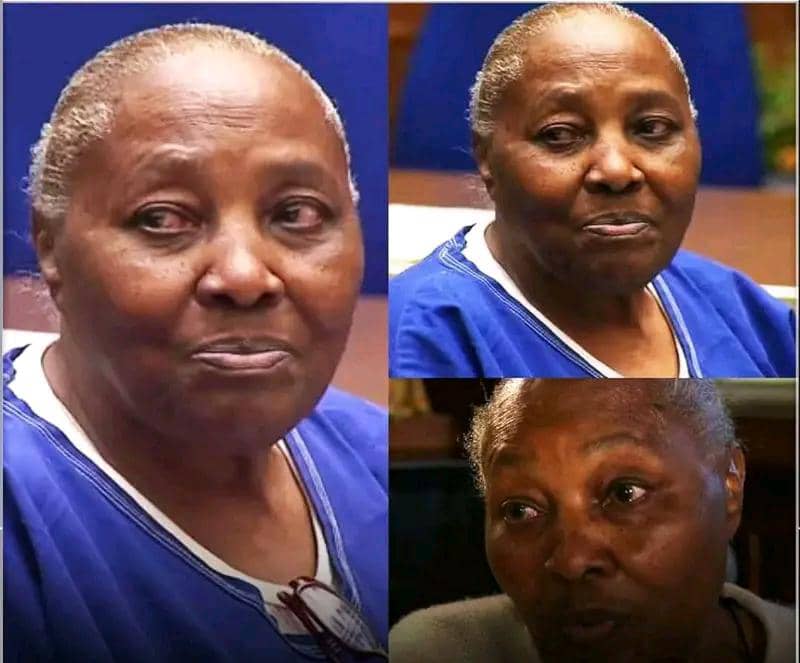
After 32 years behind bars, TRUTH FINALLY SETS Mary Virginia Jones free

….A single mother’s decades-long struggle exposes the devastating human cost of wrongful convictions in the American justice system….

Mary Virginia Jones spent more than three decades in prison for crimes she did not commit.

She was a single mother living in Los Angeles when her life took a tragic turn in 1981.

Her then-abusive boyfriend implicated her in a robbery and first-degree murder, using her as a scapegoat in a desperate attempt to avoid a death sentence.

Despite her unwavering claims of innocence, she was sentenced to 25 years to life and sent to the Central California Women’s Facility.

Her conviction relied heavily on false testimony and manipulation, leaving her trapped in a system that failed to protect her.

For 32 painful years, she remained incarcerated, separated from her loved ones and forced to endure the consequences of a crime orchestrated by the man who abused her.

Throughout her imprisonment, Mary continued to insist that she had no role in the crime and had been coerced into compliance by fear and intimidation.

Her case remained largely unnoticed until it reached the attention of the Loyola Project for the Innocent, a legal team dedicated to correcting miscarriages of justice.

Attorneys at LPI launched a thorough investigation into her conviction, uncovering the lies, coercion, and prosecutorial oversights that had contributed to her wrongful imprisonment.

They argued passionately that her conviction represented a deep failure of the justice system.

Their findings eventually reached the Los Angeles District Attorney’s office, prompting a reconsideration of her case.

In 2013, the DA acknowledged the overwhelming evidence of her innocence and supported the request to overturn her conviction.

On the day of her release, Mary Virginia Jones walked out of prison at 74 years old, having spent 32 years, 7 months, and 23 days behind bars.

Her first steps into the outside world were emotional, overwhelming, and filled with disbelief.

She emerged into a society transformed by decades of technological and cultural change, a world far removed from the one she had known.

Her story quickly became a powerful example for advocates fighting against wrongful convictions and the deep-rooted flaws within the criminal justice system.

Mary’s case stands as a reminder of the necessity for continuous reform, compassion, and vigilance in protecting the vulnerable.

Her life, though scarred by injustice, continues to inspire movements demanding accountability and fairness.


Discover more from The Maravi Post

Subscribe to get the latest posts sent to your email.

The Maravi Post

“Mutharika Government will to let communities choose their own leaders”-assures Chihana

MZUZU-(MaraviPost)-Malawi’s Second Vice President, Enock Chihana, has emphasized the importance of community-led leadership, stating that the government will allow communities to choose their own traditional leaders to promote unity and development.

Chihana made the remarks during the Gonapamhanya Cultural Ceremony in Rumphi, an annual event celebrating Tumbuka culture.

“We want to promote peace and unity among various groups in the country to enhance development. One of the issues that causes division among our people is the imposition of chiefs,” Chihana said.

He also assured Malawians that the government is committed to addressing hunger and economic challenges, including foreign exchange shortages and fuel difficulties.

The ceremony, themed “Culture and Integrity: The Backbone of Development,” brought together traditional leaders, politicians, and delegates from Malawi and neighboring countries.

Paramount Chief Chikulamayembe highlighted the event’s role in strengthening unity among the Tumbuka people and other tribes.

The government has purchased maize for distribution to households in need, and Chihana urged continued support for efforts to preserve Tumbuka culture.


Discover more from The Maravi Post

Subscribe to get the latest posts sent to your email.
The Maravi Post