LILONGWE-(MaraviPost)-The Standard Bank Joy of the Arts initiative has burst into life with two key sponsorships on music and theatre unveiled this week.
On Wednesday the bank rolled out a K12 million sponsorship for the Malawi Music Business Summit in Lilongwe and will proceed to unveil another K25 million package today for the Unima Theatre Festival weekend in Zomba.
Head of Brand and Marketing Tamanda N’gombe said the Joy of the Arts, now in its second is making tremendous progress in transforming Malawi’s arts and culture scene.
“We are into our second full year of the Joy of the Arts program to demonstrate that this initiative is about creating a uniting platform where Malawian artists connect, learn, and inspire the next generation while also making a living. By linking corporate responsibility with cultural vibrancy, Standard Bank is turning Joy of the Arts into a catalyst for social cohesion and economic growth,” she said.
She said the bank partnered Hills Capital, an artist management firm for the Malawi Music Business Summit to underline its commitment towards helping the country’s music industry become a force to reckon in Africa.
“We believe our music industry has great potential and elevating this sector for artists, music producers, song writers & talent managers is exactly what we need to activate our country’s productive sectors in Agriculture, Tourism, Energy and Mining to which music adds value,” said Ng’ombe.
She said overall the Joy of the Arts initiative is designed to embrace the diversity and lure of Malawi’s vibrant art forms in music, the visual arts, performing arts and drama, media, tourism, science and culture.
Hills Capital Managing Director Bob Phondo said launch of the Malawi Music Business Summit is a major step towards building a more vibrant and professional creative industry.
“The first Music Business Summit marks a turning point for Malawi’s creative sector. We’re grateful to Standard Bank for choosing to become a key partner in this journey, as their support reflects a genuine belief in the potential artists creating economic value,” Phondo added.
Inside the first Malawi Music Business Summit, which was held at BICC in Lilongwe were sessions on music publishing, distribution, financial fitness, foreign currency management, and a global market masterclass.
The event was attended by musicians, record producers from Malawi, Kenya and Nigeria.
Share this:
Like this:
LikeLoading…
Discover more from The Maravi Post
Subscribe to get the latest posts sent to your email.
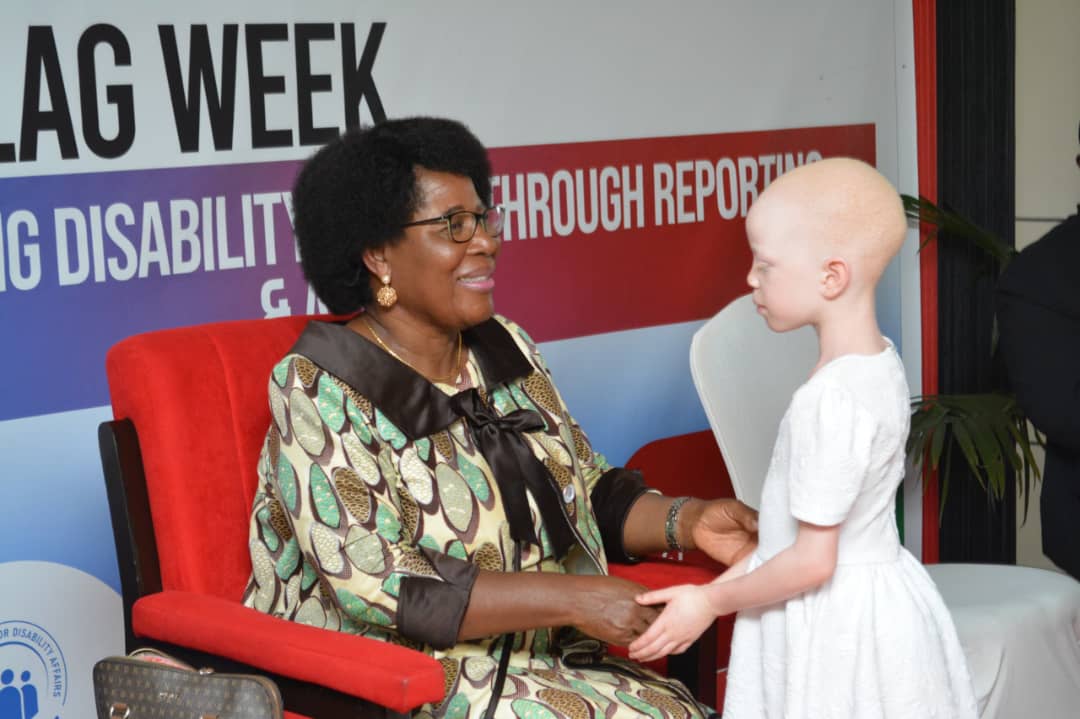
LILONGWE-(MaraviPost)-The country’s Vice President Jane Ansah has delivered a decisive call for practical progress on disability inclusion as she inaugurated the 2025 MACODA Flag Week in Lilongwe.
Rather than treating the ceremony as a routine annual tradition, she positioned it as a moment for renewed commitment and clearer accountability across all sectors.
Dr Ansah emphasised that this year’s theme—advancing disability rights through both reporting and action—must serve as a direct challenge to policymakers and institutions to abandon symbolic gestures and pursue tangible outcomes.
She made it clear that Malawi cannot afford an approach that prioritises statements over results if it aspires to build a genuinely inclusive society.
At the heart of her message was the conviction that national development must benefit every citizen, regardless of disability, gender, or background.
She stressed that this vision should be reflected consistently in both policy formulation and programme implementation.
Reflecting on the recent enactment of the Persons with Disabilities Act of 2024 and the adoption of the National Disability Policy, the Vice President noted that such milestones offer a strong policy framework.
However, she warned that these achievements will remain largely symbolic unless they are enforced with diligence and seriousness.
She urged duty bearers to ensure that the legislation translates into meaningful improvements in the daily lives of persons with disabilities.
Dr Ansah directed local councils to outline precisely how they will integrate disability considerations into the utilisation of public resources.
She pointed particularly to funds such as the Constituency Development Fund and economic empowerment allocations, insisting that persons with disabilities must be deliberately included in these financial interventions.
She argued that disability inclusion should never be left to chance but must be a planned and central element of development initiatives.
The Vice President also underscored the importance of supporting learners with disabilities through the free secondary education programme.
She reiterated that economic hardship must not be allowed to block educational opportunities for disabled pupils.
Turning to agriculture, she highlighted that the reintroduced FISP remains vital for vulnerable households, including those with disabilities.
She urged agricultural and district authorities to ensure that disabled farmers are prioritised and not overlooked when distributing subsidised inputs.
Looking ahead, Dr Ansah reaffirmed the government’s commitment to embedding disability rights within the broader Malawi 2063 vision.
She noted that disability inclusion forms a fundamental part of the country’s long-term development aspirations and must remain central in national planning.
She acknowledged the operational and financial challenges faced by MACODA and appealed to the Ministries of Finance and Trade to support viable initiatives such as the Bangwe Weaving Factory.
To ensure the factory’s sustainability, she encouraged government institutions to procure textiles from the facility, thereby strengthening economic opportunities for persons with disabilities.
Dr Ansah also stressed that accessible infrastructure is essential for real inclusion, noting that progressive policies mean little if public spaces remain physically restrictive.
She called upon construction and transport authorities to make accessibility a standard requirement rather than an optional feature.
In closing, the Vice President thanked participants for their commitment before officially launching the 2025 MACODA Flag Week.
Her address not only outlined clear expectations for disability inclusion but also set a tone of urgency, responsibility, and long-term commitment.
Through her remarks, she positioned disability rights as a vital component of Malawi’s social and economic advancement.
Share this:
Like this:
LikeLoading…
Discover more from The Maravi Post
Subscribe to get the latest posts sent to your email.
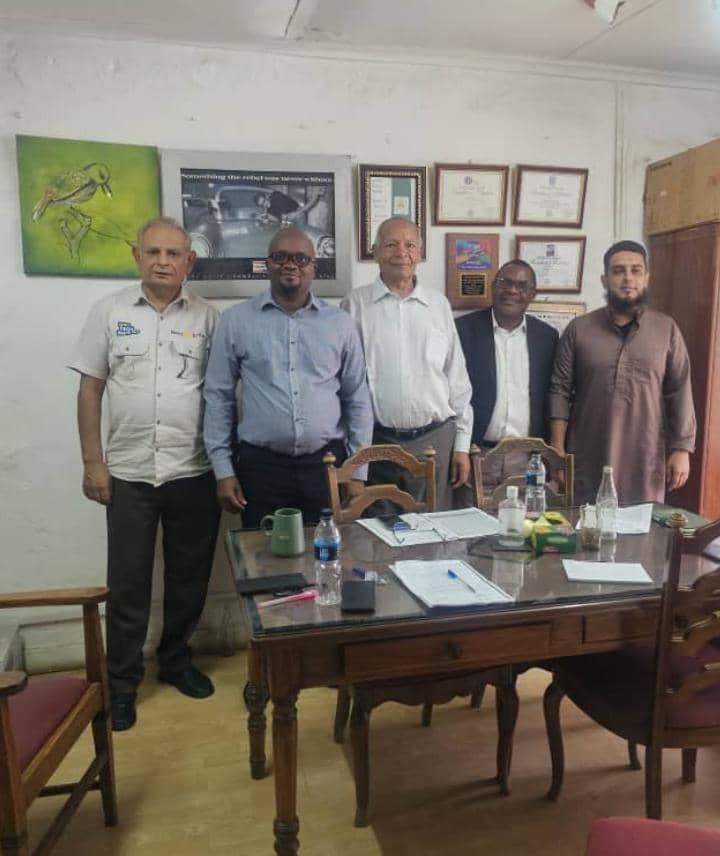
LILONGWE(MaraviPost)-The leadership of Lilongwe Private School continues to face renewed scrutiny following an interface meeting held on 11th November 2025 between the Board of Trustees and representatives of the Concerned Citizens of Malawi.
The meeting, which took place in Lilongwe, brought together Board Chairperson Mr Bheda, trustees Mr Kalaria and Mr Tikambe, alongside Comrade Edward Kambanje and Pastor Victor Nyanyaliwa, who attended on behalf of the concerned citizens.
The primary aim of the engagement was to address a series of grievances raised by members of staff from Lilongwe Private Schools, many of whom allege persistent problems in leadership, management, and staff welfare at the institution.
Among the issues presented were concerns regarding the professional conduct of the primary school head, questions surrounding salary increments, claims of discrimination, disciplinary inconsistencies, and immigration matters relating to the head of the primary section.
The Board responded to these matters by first defending the professional credentials of the primary school head, stating that she is well qualified, experienced in teacher management, and generally maintains a positive working relationship with her staff.
It was further emphasised that although the majority of teachers appreciate her leadership, some may naturally express dissatisfaction with certain management decisions.
The Board also highlighted that under her stewardship, the primary section has registered a 95 per cent improvement in both discipline and academic performance, though they acknowledged that communication challenges related to her accent have caused difficulty for some.
On remuneration matters, the Board clarified that the school operates under established conditions of service where staff are employed strictly on merit, including management positions.
It was explained that the school conducts annual staff appraisals, with salary increments ranging between 10 and 20 per cent, depending on performance.
The Board also stated that all members of staff—regardless of religion or nationality—receive uniform benefits and incentives as part of the institution’s motivation framework.
They added that only two teachers were excluded from this year’s increment because their contracts expire in December, prompting management to withhold salary adjustments.
In addressing claims of discrimination, the Board insisted that the school maintains a 50:50 enrolment policy between Malawian learners and those of other nationalities each academic year.
They further maintained that class allocation and seating arrangements are determined solely by performance and managed exclusively by class teachers without administrative interference.
It was also stated that classrooms accommodate between 25 and 30 pupils irrespective of racial or national background.
On disciplinary procedures, the Board affirmed that the school follows a structured student policy whereby minor issues are handled at class level, while serious matters escalate to the disciplinary committee involving both teachers and parents.
The Board denied any form of bias in the handling of unruly or underperforming learners and cited a recent incident in which a student was expelled after parents refused to cooperate with disciplinary processes.
On the immigration status of the primary section head, the Board clarified that she legally entered Malawi to join her husband and later applied for her role based on qualifications and experience, and now holds a valid work permit.
Attention then shifted to broader concerns relating to leadership practices, staff morale, and professional equity among teachers, where the Board acknowledged several internal challenges.
These include allegations of some members of staff offering private tutoring in breach of school policy, and reports of teachers openly challenging management decisions.
There were further claims of certain teachers selling textbooks and one teacher accused of sowing confusion, bullying pupils, and repeatedly attracting complaints from parents, learners, and fellow staff.
Management confirmed that disciplinary measures have been taken, including the withholding of salary increments for those found to be promoting misconduct.
At the conclusion of the meeting, both parties agreed on the need to work collaboratively for the benefit of the school, with an expectation that management would enforce disciplinary procedures fairly and appropriately.
However, concerns have resurfaced barely days after the interface meeting, with reports that newly recruited teachers have been informed that they will not receive salaries during the holiday period.
This development has been condemned by concerned stakeholders, who argue that Lilongwe Private School has always paid both permanent and probationary teachers during holidays.
The decision has therefore been described as an act of exploitation, raising fears that management may be reneging on assurances made during the meeting.
Comrade Edward Kambanje and Pastor Victor have warned that if the promised reforms are not implemented with urgency, further action will be taken in defence of teachers’ rights and the welfare of learners at Lilongwe Private School.
Share this:
Like this:
LikeLoading…
Discover more from The Maravi Post
Subscribe to get the latest posts sent to your email.
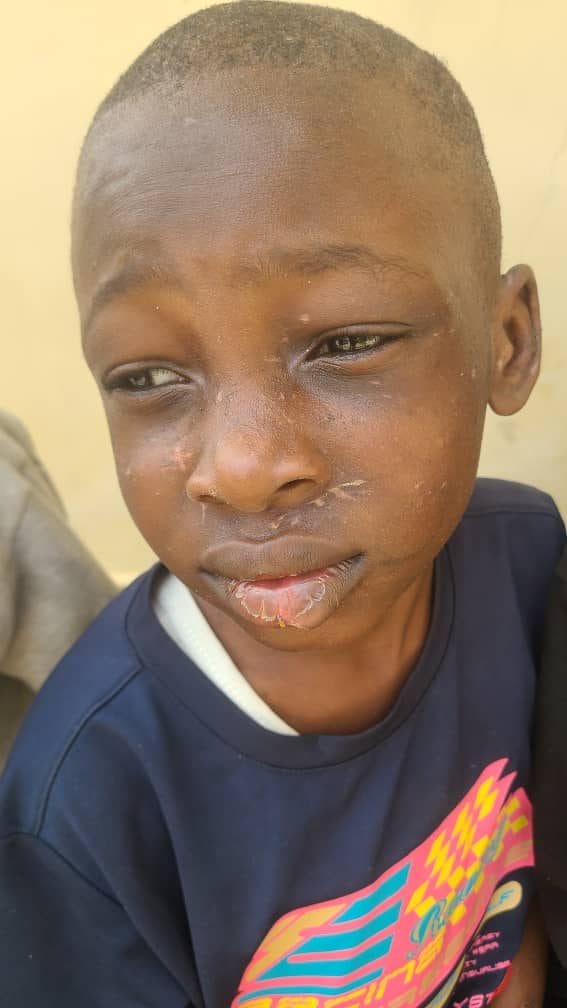
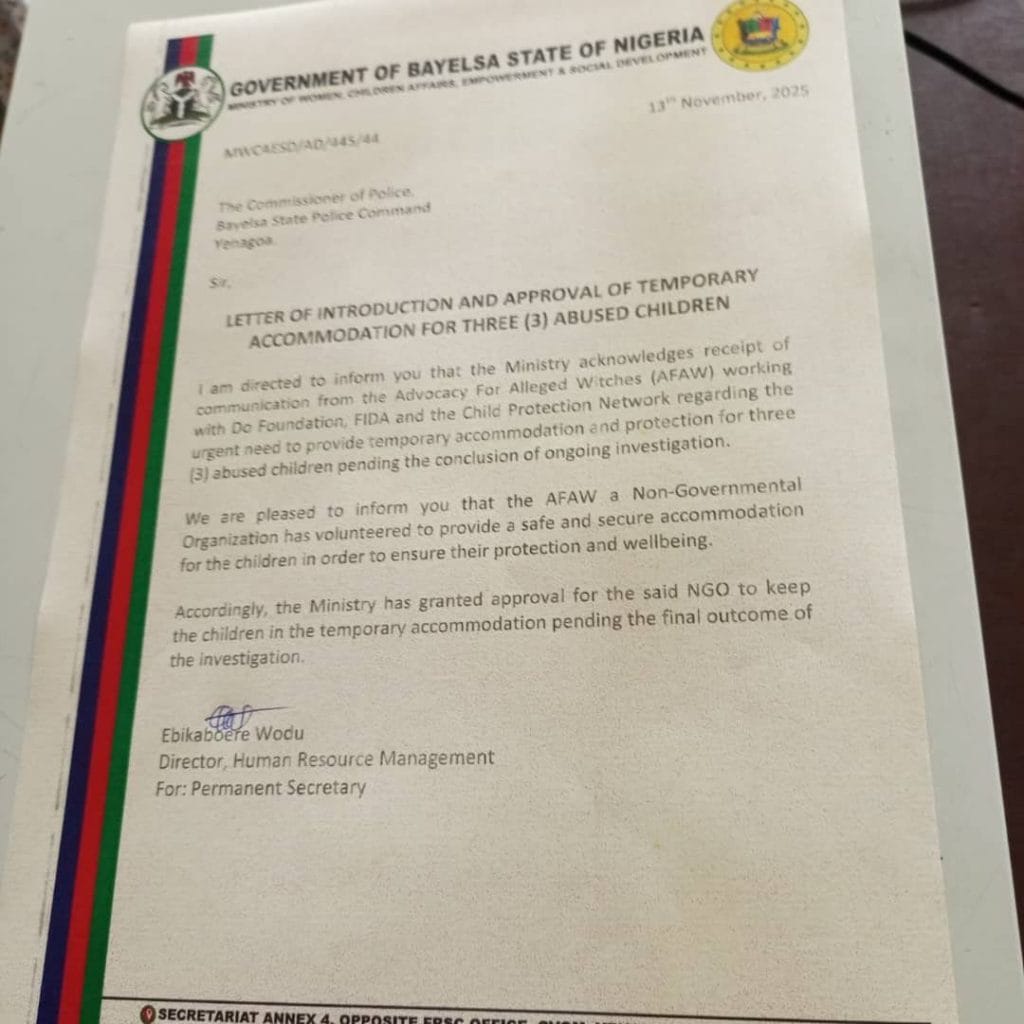
The Advocacy for Alleged Witches is disappointed by the way the police and government in Bayelsa are handling the case of children abused for witchcraft in the state. About a week ago, the police arrested an inspector, Sunday Idey, for accusing and subsequently abusing his children for belonging to a witch coven. People circulated images of the children with serious injuries on social media. The Advocacy for Alleged Witches contacted advocates in the state, and they confirmed the story. They noted that the children were in a hospital receiving treatment. Given the severity of the abuses, AfAW, with Do Foundation, and International Federation of Women Lawyers (FIDA) applied to the Ministry for Women’s Affairs for temporary custody so that the children could be medically checked and rehabilitated before handing them over to the family. AfAW urges the commissioner of police to ensure proper investigation and prosecution of the suspect.
Meanwhile, from the information reaching the Advocacy for Alleged Witches, the police have compromised on this matter. Regarding the investigation, the police had asked the suspect to go for a psychiatric test. Sources in Yenegoa are saying the police had asked him to go for the test outside the state. AfAW had been informed that this was a way the police planned to get him to escape and evade prosecution. A legal expert in Yenegoa who heard about this development stated, “I have always suspected this. Why would it be the police who would evaluate the mental state of the perpetrator? If he wants to rely on insanity, we know that it is a defense, so it should be the defendant pleading it and proving the same, while the prosecution, whose duty is to prove guilt, counters the plea with superior evidence”. Apparently, the police are trying to exonerate the suspect without charging him in court. This is sad.
The Advocacy for Alleged Witches has messaged the Commissioner of Police(CP)notifying him about this concern: “Dear CP, I am writing concerning the case of a police inspector who has been arrested for abusing the children for witchcraft. We are worried about how the case is going and how it would reflect on your office and the credibility of the Nigerian Police. First, we have been informed that he has been recommended for a psychiatrist test, and the plan is for him to travel outside Bayelsa for this test. Meanwhile, we have been informed that there are competent doctors who can conduct this test in Bayelsa. That the idea to get him to go conduct the test outside is a pretext to help him evade justice”. The CP did not respond to these messages. But the police public relations officer reassured AfAW that justice would be done.
In a related development, the Ministry of Women Affairs approved the application of the Advocacy for Alleged Witches, FIDA and Do Foundation to temporarily accommodate the children under their supervision pending the conclusion of the investigation. The emergency shelter has been rented, and caregivers have been contacted. Unfortunately, the police have refused to release the children to the Advocacy for Alleged Witches, Do Foundation, and Ministry for Women’s Affairs. The investigating police officer and his team are working with the relatives of the suspect to take the children away. The children still have bruises all over their bodies; one of them is walking with crutches. Their faces are swollen as a result of the beating. The children look traumatized. The Advocacy for Alleged Witches urges the governor of Bayelsa, Duoye Diri, to intervene and ensure justice and protection for these children. As the governor, Diri should uphold the responsibility to protect these children. The wife of the governor, Dr. (Mrs) Gloria Diri, can also help. She should utilize the office of the First Lady of the state to support these children from now on. The world is watching and following the way this case is being handled and will hold state authorities in Bayelsa to account.
Leo Igwe, director of the Advocacy for Alleged Witches, Columbia, Maryland, in the United States.
Share this:
Like this:
LikeLoading…
Discover more from The Maravi Post
Subscribe to get the latest posts sent to your email.
Schooling ourselves to protect our present and secure our future
SHOBHA SHUKLA – CNS
Let us go back in time 97 years ago and dare to imagine the plight of those who suffered with bacterial infections before the discovery of world’s first antibiotic in 1928 (penicillin). Without lifesaving medicines, curable or treatable infections could become deadly – once again. Today, a lot of medicines are failing to treat infections because disease-causing bacteria, virus, fungi and/or parasites are becoming drug-resistant – largely because of human-made misuse and overuse of medicines. Choice is ours: Do we want to slip back in time when there were not enough medicines around, or would we stop misuse and overuse of medicines and use them responsibly?
Recent data released by the WHO last month sets the alarm bells ringing on drug-resistance (or antimicrobial resistance or AMR). “Latest AMR surveillance report paints a sobering picture. AMR remains firmly among the top global health threats undermining the foundation of modern medicine. First, the scale of resistance is growing. Roughly one in six bacterial infections worldwide is caused by pathogens resistant to antibiotics. Second, the threat to critical care is real and resistance is particularly severe in gram-negative bacteria – the very pathogens most associated with hospital-acquired infections and high fatality rates. And third, AMR burden is profoundly inequitable. So low- and middle-income countries where health systems are often weaker face the highest resistance levels,” said Dr Tim France, molecular biologist turned global health thought leader.
Silver lining: Data is used as a policy compass
“AMR surveillance coverage and data quality have expanded dramatically. The GLASS (Global AMR and use Surveillance System of the WHO) network now includes 104 countries covering more than 70% of the global population compared to 2016 – a four-fold increase. Political commitment is stronger than ever. AMR global surveillance data is itself now being used as a policy compass, not just as a warning system,” added Dr France, who founded and leads Inis Communication. “MRSA rates have declined steadily in several regions by over 7% annually in Europe, and 6% in Southeast Asia. So focused interventions really do work.” Tim was speaking at the 5th Annual Global Media Forum on Antimicrobial Resistance (ahead of World AMR Awareness Week or WAAW 2025).
Inappropriate use of medicines is not just in human health but also in animal health, food and agriculture
The misuse and overuse of antimicrobial drugs in human health, animal health and livestock, food and agriculture are fuelling AMR. Additionally, environmental pollution – such as untreated hospital and community wastewater, pharmaceutical effluents, and agricultural run-off – plays a growing role in enabling resistant pathogens to emerge and persist across sectors. The consequences of AMR are far-reaching, affecting human and animal health, food safety and security, and placing additional strains on healthcare systems and economies.
Addressing AMR requires urgent, coordinated action and sustained commitment from governments and diverse sectors across the One Health spectrum, said Dr Jean-Pierre Nyemazi, Director of the Quadripartite Joint Secretariat on AMR. The Quadripartite Joint Secretariat has brought 4 global agencies on human health (WHO), food and agriculture (FAO), environment (UNEP) and animal health (WOAH) together to address AMR using the One Health approach.
“Today, 1 out of every 6 bacterial infections confirmed in the laboratory is resistant to antibiotics,” said Dr Javier Yugueros-Marcos, Head of the Antimicrobial Resistance & Veterinary Products Department, World Organization for Animal Health (WOAH).
AMR is already linked to nearly 5 million deaths each year, including 1.14 million deaths directly caused by bacterial AMR. “That is 2 lives lost every minute. Since 2016, countries have worked hard to prevent AMR. Over 90% of the countries (178 countries) have national AMR action plans. But only 22% are fully implementing the national AMR action plans with monitoring and financing in place. So, that is why world leaders stepped up last year in 2024 with another bold commitment enshrined in the Political Declaration adopted in the UNGA 2024 High Level Meeting: 60% of countries must have fully funded national AMR action plans and implement them,” said Dr Nyemazi.
“For us to reach that goal, governments also committed to mobilise at least US$ 100 million by 2030, including through AMR Multi-Partner Trust Fund (AMR MPTF) and other mechanisms. This is a powerful signal that the world understands the urgency and shared responsibility. However, technical solutions alone won’t win this fight. We need a shared responsibility,” said Dr Nyemazi.
“AMR is invisible but I am not”
“AMR is invisible, but the WHO was smart enough to recognise the value of stories of those with lived experiences of AMR,” said Rob Purdie, AMR survivor and Member of WHO Task Force of AMR Survivors.
Around the time of new year 2012, Rob started having a headache and a terrible pain. Rob made several trips to healthcare facilities in the USA and was attended by several doctors and treated for a range of conditions (which later were found to be incorrectly diagnosed). He wrongly got treated for them- from sinus infections to cluster headaches etc.
Right diagnosis was Coccidioidomycosis – a form of meningitis caused by Valley fever, a disease caused by a fungus endemic in the soil of south-west USA.
“My fungal disease of meningitis, primarily presents as a pneumonia – and because of that it is one of the reasons that multiple prescriptions of antibiotics on an average are prescribed to patients of Coccidioidomycosis,” said Rob.
Rob had to endure years of struggle and battle AMR.
“Fungal AMR is very intertwined with agricultural use of pesticides. So rather than emerging out of overprescription of antibiotics – which happens obviously on the bacterial side, it has more to do with the use of pesticides to control fungus in agriculture. That is an important example why One Health approach is so critical to address AMR,” said Rob.
It is high time we stop misuse and overuse of antimicrobial medicines in all sectors – be it human health, animal health and livestock, or food and agriculture, and stop polluting our environment. Let us hope this year’s WAAW 2025 serves as another wake up call to accelerate science-based approaches to prevent AMR with One Health approach.
Shobha Shukla – CNS (Citizen News Service)
(Shobha Shukla is a feminist, health and development justice advocate, and an award-winning founding Managing Editor and Executive Director of CNS (Citizen News Service). She was also the Lead Discussant for SDG-3 at United Nations inter-governmental High Level Political Forum (HLPF 2025). She is a former senior Physics faculty of prestigious Loreto Convent College; current President of Asia Pacific Regional Media Alliance for Health, Gender and Development Justice (APCAT Media); Chairperson of Global AMR Media Alliance (GAMA received AMR One Health Emerging Leaders and Outstanding Talents Award 2024); and Host of SHE & Rights (Sexual Health with Equity & Rights). Follow her on Twitter/X @shobha1shukla or read her writings here www.bit.ly/ShobhaShukla)
– Shared under Creative Commons (CC)
Share this:
Like this:
LikeLoading…
Discover more from The Maravi Post
Subscribe to get the latest posts sent to your email.
LILONGWE-(MaraviPost)-Malawi is preparing for a major change in the way taxes are recorded and collected as the Malawi Revenue Authority (MRA) moves forward with the roll-out of the Electronic Invoicing System (EIS) in February 2026.
The rollout was initially scheduled for November 2025 but was postponed after taxpayers and key stakeholders requested more time to understand the system’s technical and operational requirements.
The MRA, which has long relied on Electronic Fiscal Devices (EFDs), describes the EIS as a major digital upgrade that is more efficient, user friendly, and cost effective.
According to MRA, the shift to the EIS is part of a broader effort to improve tax compliance and record keeping.
The system promises better accessibility and functionality for businesses of all sizes, aligning Malawi with a growing list of countries pursuing similar digital tax reforms.
For example, Uganda introduced its Electronic Fiscal Receipting and Invoicing System (EFRIS) earlier this year, while Poland’s KSeF and Saudi Arabia’s FATOORAH are also underway.
Tanzania’s Electronic Financial Data Management System (EFDMS), Vietnam’s e-invoicing platform, and Mauritius’ EBS reflect the same continental and global trend.
Across these nations, governments have recognised the severe losses caused by tax non-compliance in revenue collection.
In Malawi, the issue is especially pressing as we face a fiscal deficit of MK2.4 trillion, twice the budget for education (MK1.3 trillion) and nearly four times the allocation for health (MK714 billion).
The World Bank estimates that tax evasion alone costs Malawi about 12 percent of its GDP, a figure higher than Namibia’s by roughly three percentage points.
Combined with persistent corruption, these losses have significantly constrained public investment and service delivery.
Despite previous reform efforts, Malawi’s fiscal challenges have persisted for decades. But digital interventions like the EIS and the recently introduced Digital Excise Tax Stamps (Kalondola) offer a potential turning point for revenue management and transparency.
In 2024, the MRA signed a ten-year agreement with SICPA Malawi, a subsidiary of the Swiss-based SICPA SA, globally known for secure traceability and authentication technology.
The partnership introduced the Kalondola system to modernise excise tax collection and reinforce accountability in Malawi.
The SICPA technology behind Kalondola uses secure tax stamps combining material and digital security features.
It allows both authorities and consumers to verify product authenticity while helping detect illicit trade activities such as counterfeiting or smuggling.
The system improves oversight across the supply chain, particularly for excisable goods such as cigarettes, alcoholic beverages, bottled water, carbonated soft drinks, lotions & glycerines.
These categories have historically been vulnerable to under-declaration and illicit trade.
Castel Malawi, one of the country’s largest beverage producers, publicly supported the initiative, saying the digital excise tax stamps enable accurate revenue capture that can be reinvested in essential services and economic growth.
In a press statement, Castel Malawi Managing Director Thomas Reynaud emphasized the importance of consumer vigilance in the fight against counterfeit products, which he said pose serious health risks and undermine legal trade.
“Castel Malawi Limited urges all customers to remain alert and ensure that all spirits purchased are genuine and compliant with legal standards,” said Reynaud. “Authentic Castel products carry digital tax stamps, date stamps, and batch numbers, which are clear indicators of their legitimacy and regulatory compliance.”
In supporting digital tax reforms, economic and policy expert Dumbani Mzale notes the substantial economic and governance benefits that digital tax stamps can bring to public finance management, including increased revenue collection and the reduction of illicit trade.
Mzale said, “Digital tax stamps (Kalondola), particularly for excisable goods like alcohol and tobacco, help governments all over the world to effectively control and collect taxes.
By minimizing opportunities for fraud and tax evasion, the state can significantly boost its revenue streams, and Malawi could be no exception if this agenda could be implemented to the letter.”
He added, “For too long, Malawi has been a victim of counterfeit products, especially beer and other key consumables.
This has resulted in the country losing billions of Kwachas in potential tax revenue, money that could have helped reduce the gap between total government expenditure and total domestic revenue, which includes tax and non-tax revenue.”
By deploying both the EIS and Kalondola, the Government of Malawi is signalling a shift toward stronger controls, cleaner tax administration, and better protection of public resources and of consumers.
Moreover, this state-of-the art technology enables leveling the playing field for legitimate actors whose contribution to growth and development of the country is paramount, contrary to illicit traders.
If implemented effectively, these reforms could help move the country toward a more stable, predictable, and equitable public finance framework.
Share this:
Like this:
LikeLoading…
Discover more from The Maravi Post
Subscribe to get the latest posts sent to your email.