Donald Trump implied he’s resigning the presidency … well, if he’s not a better host than Jimmy Kimmel, that is … cracking the joke during a Kennedy Center Honors event at the White House. The President of the United States took another shot at…
Share this:
Like this:
LikeLoading…
Discover more from The Maravi Post
Subscribe to get the latest posts sent to your email.
“🎄✨It’s beginning to look a lot like Christmas!” a Saturday, December 7, post via the royal family’s official Instagram read. “The King and Queen are pleased to share this year’s Christmas card.”
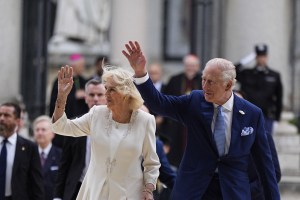
The seasonal card featured an image of Charles, 77, and Camilla, 78, strolling hand in hand while visiting Rome’s Villa Wolkonsky earlier this year. The image, taken by Chris Jackson, was snapped during the royal couple’s official state visit to Italy in April.
“Wishing you a very Happy Christmas and New Year,” the inside of the card read.
Photographer Jackson, 45, was especially pleased to take Charles and Camilla’s holiday card pic.
“What a great visit that was,” Jackson wrote via Instagram comment on Saturday. “Happy Christmas!!🎄🇮🇹.”
Charles’ Christmas card is just one of his annual traditions. Every year, he leads his family — including Camilla, son Prince William and the monarch’s siblings — on a walk to Christmas Day church services at Sandringham Estate. That afternoon, Charles will deliver a sentimental holiday speech to the British people before settling in for an intimate celebration with his family.
“The celebration may carry a wistful tone,” a source exclusively told Us Weekly earlier this month, referring to Charles and daughter-in-law Princess Kate Middleton’s respective cancer battles. “However, it will also be a time of celebration, especially after Kate received the all-clear.”
King Charles III and Queen Camilla leave the Vatican in October.Aaron Chown / POOL / AFP
Charles and Kate, 43, were both diagnosed with undisclosed forms of cancer in 2024. While the king is still undergoing treatment, Kate revealed that she is in remission earlier this year.
“They all want to make the most of their time together,” the insider added of the family’s holiday plans. “Charles prioritizes duty, but he’s also a family man who knows his time is precious. He wants a special last Christmas in case it’s his last.”
The source further revealed that Charles will do “everything expected of him and more” regarding his public Christmas duties.
“Charles wants to have a traditional holiday with all the royals,” the source added to Us. “Every family Christmas is precious, but it’s especially so for him this year.”
Kate kicked off the festive season with the “Together at Christmas” carol concert she, once again, organized on Friday, December 5. Kate was joined by husband William, 43, and their three children at Westminster Abbey.
“At its heart, Christmas speaks of love taking form in the simplest, most human ways. Not in sentimental or grand gestures, but gentle ones. A moment of listening, a word of comfort, a friendly conversation, a helping hand, presence,” the Princess of Wales wrote in a letter to attendees. “These simple acts of care might seem small, but they contribute to the beautiful tapestry of life to which we all belong. Christmas is a time that reminds us how deeply our lives are woven together. Just as the roots of trees share strength beneath the soil, unseen but vital, so too do we. We are drawn by an instinctive pull towards belonging and connection.”
Charles, meanwhile, was absent from the carol service as he had official engagements in Germany that same week.
Share this:
Like this:
LikeLoading…
Discover more from The Maravi Post
Subscribe to get the latest posts sent to your email.
The vice president, Jane Ansah, has sparked mixed reactions among concerned Malawians due to her frequent food distribution trips.
To begin with, supporters of the Democratic Progressive Party (DPP) maintain that it falls within her duties as the leader of the Department of Disaster Management Affairs (DoDMA) to evaluate the extent of food crisis, engage with impacted communities, and facilitate prompt aid initiatives.
They contend that these actions play a vital role in disaster management by ensuring that the response is suitable and prompt.
It is indeed true that her presence on the ground can easily facilitate a better understanding of the situation and the specific needs of the communities affected by disasters.
Additionally, the community’s confidence in government initiatives can be strengthened by her involvement, as it reassures Malawians that their concerns are directly being acknowledged and resolved.
It is therefore believed that this Ansah’s approach can improve the overall efficiency of disaster relief efforts and promote a feeling of cooperation between the government and local communities.
However, distributing food items as a vice president comes with additional expenses.
Firstly, the transportation of food items requires vehicles, which incur fuel expenses. Obviously, vice president’s frequent trips lead to significant fuel consumption.
In fact, regular use of state vehicles for food distribution often leads to increased wear and tear, necessitating repairs and maintenance that can strain state budgets.
Additionally, the travel of the vice-president results in the mobilization of security personnel, provision of accommodations and daily allowances for protection teams and other emergency personnel, as well as coordination with local law enforcement for logistics.
Obviously, these expenses astronomically accumulate over multiple trips.
In conclusion, while food distribution initiatives are vital for community support, they can also lead to significant expenditures that oftentimes drain state resources.
It is essential to evaluate the efficiency and effectiveness of these trips to ensure that they are providing the intended benefits without imposing excessive costs on the state.
It is strongly advised that during this time of strict economic measures, one way to decrease the overall cost of Vice President’s frequent travel is to assign food assessments and distribution tasks to local and regional authorities.
Lastly, it is believed that excessive expenditures on Ansah’s travel should be redirected towards providing direct assistance or constructing necessary infrastructure.
Share this:
Like this:
LikeLoading…
Discover more from The Maravi Post
Subscribe to get the latest posts sent to your email.
HBO’s Heated Rivalry is captivating audiences — but what did the TV adaptation change from Rachel Reid‘s Game Changers book series?
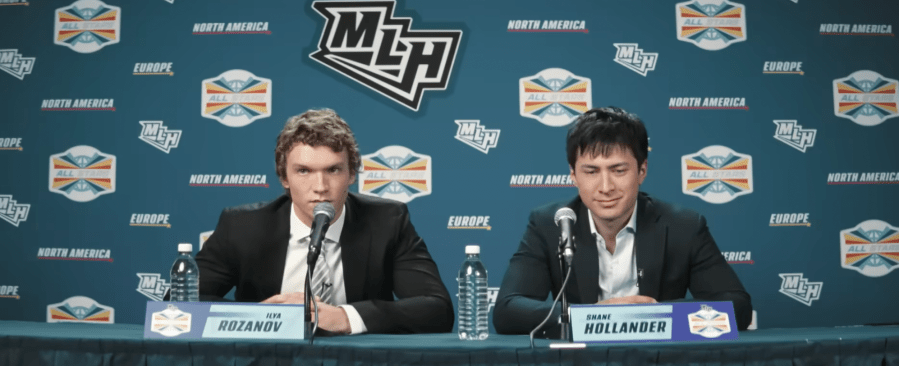
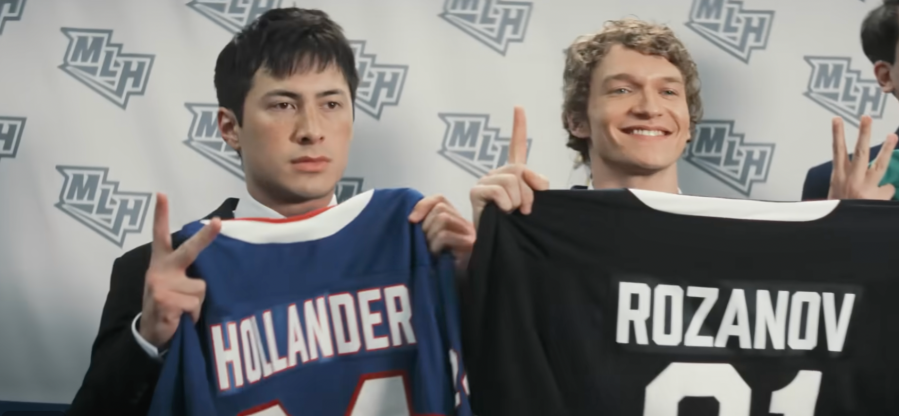
Based on the hit book franchise, Heated Rivalry follows two rival professional hockey players Shane Hollander (Hudson Williams) and Ilya Rozanov (Connor Storrie), whose animosity on the ice is just a front for a secret romance.
Heated Rivalry blew up on social media after premiering on Crave and HBO Max in November 2025 — in large part due to the heated scenes between Williams and Storrie. Creator Jacob Tierneyopened up about the work that went into developing the fictional TV couple.
“We talked about how every time these guys aren’t touching, they want to be,” Tierney told Swooon at the time. “So the act of not touching should be more difficult for them than touching. They would want to be physical with one another, and that’s part of the public/private dance that they do, and the frustration of being in public.”
He continued: “There’s a magnetism because there are two characters that essentially have this chemistry immediately. This magnetic electric thing is happening between them, and they do not get to satisfy it because they’re not allowed to be physical with each other the way that they would like to be in public.”
Keep scrolling for a breakdown of what differs in the TV adaptation of Heated Rivalry:
Expanding on Shane’s Life Outside of Romance
HBO
As readers may know, the book series doesn’t explore as much of Shane’s parents or his cultural identity since his mother is Japanese and his father is Canadian.
“I felt like [his cultural identity] needed to be said out loud because his name is Shane Hollander,” Tierney told Teen Vogue. “So you can whitewash him in your brain really easily when you’re reading a book or when you’re listening in a way that I don’t want to with this show.”
Speaking of Shane’s arc, his excessive dieting is addressed in Heated Rivalry‘s sequel book The Long Game. But the show doesn’t wait to hint at Shane’s complicated and concerning relationship with food.
Investing More Time in Scott Hunter
The third episode of the show focused on Scott Hunter (François Arnaud) and Kip’s (Robbie G.K.) romance, which is actually the central story of Reid’s Game Changer. Elsewhere in the HBO series, Scott is utilized more when it comes to Shane and Ilya’s romance.
Building up the suspense is a priority in the show, which waited years while the book spanned only two weeks between Shane and Ilya’s initial hookup and then taking the next sexual step.
Ilya’s Life Out of the Spotlight
HBO
Notably, Svetlana (Ksenia Daniela Kharlamova) and Sasha’s (Kaden Connors) individual roles in Ilya’s life are expanded on in the show compared to the book.
Less Locations
There are some places book fans were hoping to see that Tierney confirmed were cut due to budget restrictions preventing them from showing more areas on screen.
Share this:
Like this:
LikeLoading…
Discover more from The Maravi Post
Subscribe to get the latest posts sent to your email.
BLANTYRE-(MaraviPost)-Charles “Grandmaster” Nyirenda, one of Malawi’s respected sports analysts, has expressed deep concern over the congested fixture handed to Silver Strikers, who are expected to play six league matches within just 13 days.
He says the situation raises serious questions about player welfare and the overall integrity of the competition.
Nyirenda noted that the tight schedule stems from Super League of Malawi’s (SULOM) decision to ensure that the 2025 season concludes by December 20.
However, he believes the push to finish the league should not come at the expense of the players’ health.
In his remarks, Nyirenda said it is “unacceptable and unsafe” for a team to be forced into such an intense run of fixtures within a short time frame.
He stressed that footballers need adequate rest in between matches to recover physically and mentally.
He further argued that fixture planning must prioritise fair competition and professionalism.
Forcing Silver Strikers to complete six matches in less than two weeks, he added, does not reflect good administrative practice.
Nyirenda was particularly critical of SULOM’s handling of the league calendar, accusing the body of making decisions that appear rushed and poorly thought out.
He warned that such congestion increases the risk of injuries, fatigue and underperformance, which could ultimately weaken the quality of football displayed on the pitch.
According to him, the league should aim to protect players, not expose them to avoidable harm.
Supporting Nyirenda’s sentiments, football commentator Ibrahim Phiri also voiced concern.
He reminded the public that SULOM originally allocated only one match per week for each team, making the sudden increase to six matches in 13 days completely unreasonable.
Phiri said the schedule contradicts the league’s own planning principles and puts Silver Strikers at a clear disadvantage compared to other clubs whose fixtures are less demanding.
He suggested that better planning could have prevented this situation.
He emphasised that consistency and fairness are fundamental in football administration.
Deviations of this nature he said, create confusion and raise questions regarding unequal treatment of teams.
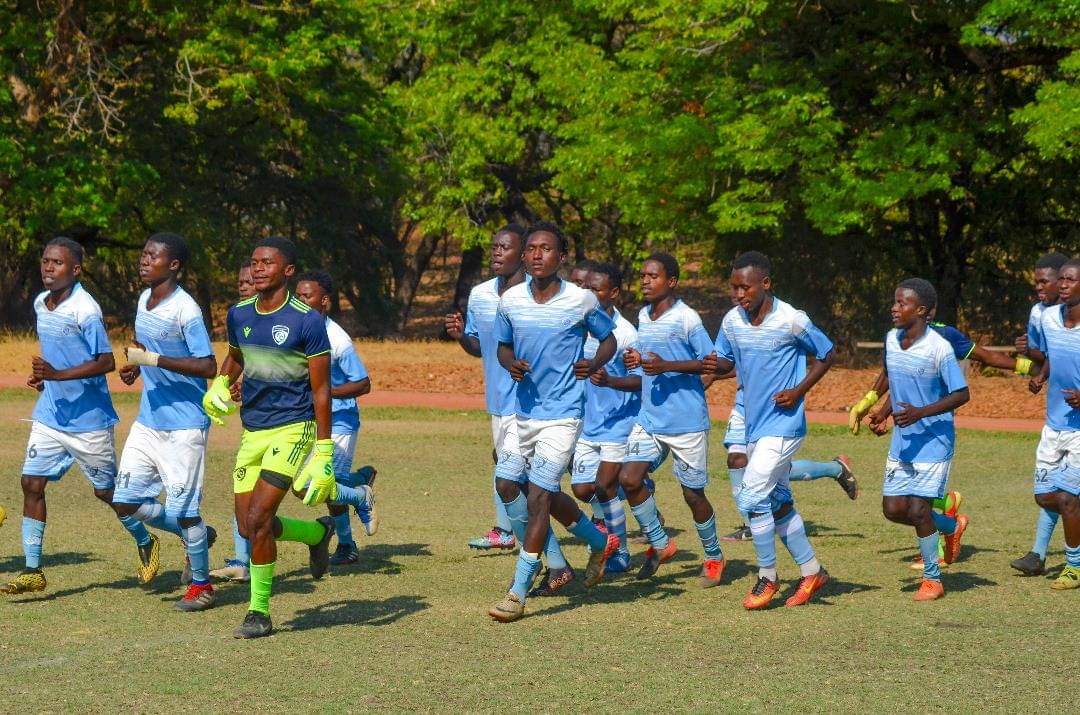
Meanwhile, Silver Strikers currently sit third on the TNM Super League table with 50 points from 24 matches.
Despite the pressure, the team remains one of the strongest contenders as they continue to defend their position.
Share this:
Like this:
LikeLoading…
Discover more from The Maravi Post
Subscribe to get the latest posts sent to your email.
Reality TV is one of the best indulgences around, and Netflix knows how to satisfy that particular guilty pleasure.
This December, Watch With Us is highlighting two great but very different reality shows. Is It Cake? Holiday is a spin-off of the popular baking show that sees bakers craft mind-boggling replicas out of confectionery.
Additionally, Squid Game: The Challenge returns for its second season, based on the Korean Netflix sci-fi phenomenon.
Netflix offers a wide range of reality TV that caters to various tastes and interests. Whether you’re looking for lowbrow or, well, slightly less lowbrow entertainment, you’re sure to find something.