“Fuel price hike will not fix Malawi’s structural economic tumoil”-UTM leader Kabambe

BLANTYRE-(MaraviPost)-United Transformation Movement (UTM ) President and former Reserve Bank of Malawi (RBM ) Governor Dalitso Kabambe says the government’s recent fuel price increase reflects deeper structural weaknesses in Malawi’s economy, arguing that price adjustments alone cannot resolve the country’s persistent fuel shortages and foreign exchange challenges.

In an interview with Maravi Post,Kabambe said the government’s decision to raise fuel pump prices by 41 percent under the Automatic Pricing Mechanism (APM) may be technically compliant with the established pricing framework, but falls short of addressing the underlying causes of Malawi’s fuel crisis.

“From a narrow regulatory standpoint, the decision is defensible because the formula has been applied as designed.

“However, treating this adjustment as a sufficient response to Malawi’s fuel challenges would be a strategic mistake,” said Kabambe.

He noted that while cost-reflective pricing can help prevent losses in the fuel supply chain and reduce hidden subsidies, Malawi’s recent experience shows that strict adherence to the APM has not guaranteed fuel availability, foreign exchange stability, or economic resilience.

The ex-RBM Governor highlighted that when the Malawi Congress Party (MCP) assumed office in 2020, fuel prices stood at K699 per litre.

He said over the past five years, successive APM-driven adjustments pushed prices as high as K2,530 per litre, before an administrative price freeze was imposed.

Kabambe said the last price adjustment under the MCP administration, in October 2025, saw fuel prices rise to K3,459 per litre.

He said despite these historically high prices, fuel shortages persisted, parallel markets emerged, and pressure on foreign exchange intensified.

“If higher prices alone were sufficient to stabilise fuel supply, these outcomes should not have materialised,” said Kabambe, adding that the continued challenges indicate that Malawi’s fuel problem is structural rather than a pricing anomaly.

Kabambe warned that fuel price increases have far-reaching inflationary effects due to the central role of fuel in the economy.

He noted that transport costs account for approximately 56 percent of landed transport costs and about 30 percent of export costs, significantly undermining Malawi’s international competitiveness.

The UTM leader explained that fuel is a highly inelastic commodity and a foundational input in transport, agriculture, manufacturing, electricity generation, and public service delivery.

He said as a result, higher fuel prices transmit inflation throughout the economy, driving up food prices, production costs, and household expenditures.

“A sharp fuel price increase imposes immediate and broad-based economic pain on both households and firms,” he said.

Kabambe further observed that Malawi’s production and trade structure amplifies this vulnerability, as a large share of goods transported within the economy includes petroleum products themselves and bulky agricultural commodities such as fertiliser, maize, and tobacco.

While acknowledging that higher fuel prices may temporarily improve cash flow in the fuel importation and distribution chain, Kabambe cautioned that such gains are fragile without parallel reforms.

“The system remains exposed to foreign exchange shortages, inefficient procurement arrangements, logistical bottlenecks, and global oil price volatility.

“Under such conditions, today’s adjustment simply postpones tomorrow’s crisis,” he said.

Kabambe criticised what he described as poor policy sequencing, arguing that the government has opted to shock an already fragile economy before addressing its structural weaknesses.

“Foreign exchange supply remains weak, export capacity is constrained, transport and logistics costs remain high, and public sector inefficiencies persist.

“Pain imposed without prior strengthening does not build resilience it breaks it,” he said.

The economic genius further warned that the cumulative impact of higher PAYE, VAT, capital gains tax, and fuel prices is systematically draining capital from the economy, leaving households without savings and businesses without reinvestment capacity.

He also described the policy direction as contradictory, noting that while government speaks of private sector growth and job creation, it simultaneously raises operating costs and suppresses consumer demand.

“A durable solution must go beyond the pump price,” he said.

Kabambe called for structural reforms aimed at strengthening export capacity, reducing transport and logistics costs, and improving fuel supply efficiency.

He proposed strategic investment in rail transport, including modern electric trains, inland logistics infrastructure, and the development of a fuel pipeline to reduce reliance on road haulage.

He also emphasised the need to strengthen governance, efficiency, and transparency in fuel procurement, storage, and distribution to eliminate avoidable costs and leakages.

Kabambe stressed that the APM remains an important tool for transparency, predictability, and protection against ad hoc political interference, but said it must be embedded within a broader fuel security and economic competitiveness strategy.

“On its own, it cannot resolve Malawi’s fuel vulnerabilities,” he said.

He concluded that the key policy question is not whether the APM has been followed, but whether fuel pricing decisions are advancing Malawi toward sustained fuel availability, lower structural costs, and long-term economic stability.
The Maravi Post

Attorney General Mbeta to challenge High Court order on MCP’s Chimwendo Banda attempted murder case

LILONGWE-(MaraviPost)-Attorney General (AG) Frank Mbeta is contesting a High Court decision allowing Malawi Congress Party (MCP) Secretary General Richard Chimwendo Banda to pursue a judicial review of his detention.

Mbeta argues that Chimwendo Banda had alternative remedies, such as invoking habeas corpus, which he failed to exhaust.

The High Court had ordered Chimwendo Banda’s immediate release from prison, citing unlawful detention beyond the legally prescribed remand period.

However, Mbeta’s preliminary application seeks to discharge the leave granted for the judicial review proceedings and set aside the interim reliefs obtained by Chimwendo Banda.

Chimwendo Banda’s lawyer, Khwima Mchizi, says he hasn’t seen the application filed by the respondents, the Inspector General of Police and the Director of Public Prosecutions. An inter partes hearing is scheduled for January 23, 2026.

Chimwendo Banda was arrested in December 2025 on attempted murder charges dating back to 2021.

His release was ordered after his lawyer argued that the State had exceeded the 30-day detention period allowed under the Criminal Procedure and Evidence Code.

The case has sparked controversy, with the MCP accusing the government of political persecution,a claim dismissed by many.

The outcome of the judicial review proceedings will determine whether Chimwendo Banda’s detention is lawful.

The Maravi Post

‘Scream’ Star Scott Foley Talks Neve Campbell Return, Signs Fan’s Knife

Scott Foley is pumped he got to work with Neve Campbell and David Arquette again on the upcoming ‘Scream 7’ movie … and we got him on video signing a deadly object. We caught up with the ‘Scream’ star Wednesday in New York City as he was being…

The Maravi Post

Dodgers’ Alex Vesia, Wife Share Touching Post After Newborn’s Death

CopyRight @2009 The Maravi Post , An Eltas EnterPrises INC Company Since @2005. Publishing and Software Consulting company

Contact us: contact@maravipost.com

The Maravi Post

Chakwera’s hypocrisy on full display: A call to shut up, reflect

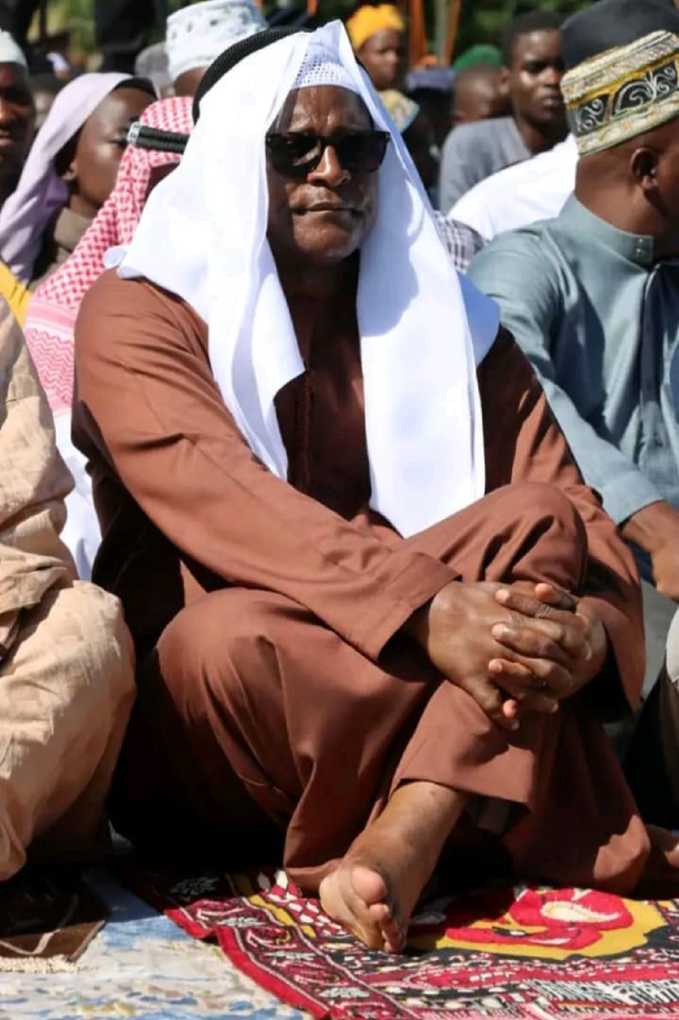
Chakwera attends Eid al-Fitr Prayers
Lazarus Chakwera attends Eid al-Fitr Prayers at Mchoka Primary School Ground

BLANTYRE-(MaraviPost)-Former President Lazarus Chakwera’s recent call alleging that the arrest of senior Malawi Congress Party (MCP) officials is politically motivated is a classic case of the pot calling the kettle black.

The man who presided over a regime notorious for arbitrary arrests and detentions, often without evidence or due process, has the audacity to lecture President Peter Mutharika on governance and human rights. It’s time for Chakwera to shut up and reflect on his own record.

During his five-year tenure, Chakwera’s administration was marked by a string of politically motivated arrests, targeting critics, opposition figures, and perceived enemies of the state.

The list of victims is long and includes notable figures such as Professor Arthur Peter Mutharika, Late Saulos Chilima, Alfred Gangata, Ben Phiri, Henry Mussa, Roza Mbilizi, Peter Mukhito, Jean Mathanga, Henry Mathanga, Norman Chisale, Linda Kunje, Martha Chizuma, Rayneck Matemba, Mzomera Ngwira, Enock Chihana, Bon Kalindo, Patricia Kaliyati, Sameer Suleman, Charles Mchacha, Leonard Chimbanga, Levy Luwemba, Newton Kambala, Kamlepo Kalua, Kennedy Luwemba, Fegus Lipenga, Grace Kaphale, Ben Chitsonga, Godfrey Itaye, Henry Macheso, Elvin Mwapasa, Stanley Chirwa, Joseph Mwanamvekha, James Chuma, Henry Njoloma, Elvis Thodi, and many others.

Not a single one of these individuals was convicted, because, as President Mutharika pointed out, the arrests were made without sufficient evidence.

The same cannot be said of the current administration, which has taken a more measured approach, ensuring that law enforcement agencies act on clear evidence before making arrests.

The five MCP officials who were recently arrested including Vitumbiko Mumba, Richard Chimwendo Banda, Jessie Kabwila, Moses Kunkuyu, and Ezekiel Ching’oma, are being held on charges that are being investigated and will be tried in court.

Chakwera’s claim that the arrests are politically motivated is not only baseless but also an insult to the intelligence of Malawians.

His regime’s record on human rights and governance is a matter of public record, and he should be the last person to lecture anyone on the rule of law.

The people of Malawi remember the terror and intimidation that characterized his administration, and they will not be swayed by his empty rhetoric.

It’s time for Chakwera to take a long, hard look in the mirror and confront the demons of his past.

He should acknowledge the damage his regime inflicted on the country and its people, and seek redemption rather than trying to score cheap political points.

The Mutharika administration has shown restraint and commitment to the rule of law, and it will not be swayed by baseless allegations from a man with a tainted past.

To Lazarus Chakwera, we say: shut up and reflect on your own record.

The people of Malawi deserve better than lectures from someone who presided over a regime of terror and repression.

The current administration will continue to uphold the rule of law and ensure that justice is served, without fear or favor.

The list of victims of Chakwera’s regime goes on and on, and it’s time he took responsibility for his actions. The people of Malawi will not forget, and they will not forgive.

It’s time for Chakwera to retire from the scene and let those who are committed to democracy and the rule of law take the reins.

In conclusion, the arrest of the MCP officials is a matter for the courts, and it’s not for Chakwera or anyone else to prejudge.

The Mutharika administration has shown commitment to justice and the rule of law, and it will not be swayed by baseless allegations.

Chakwera should shut up and let justice take its course.

The Maravi Post