NBM Development Bank bags Industrialisation Catalyst Award

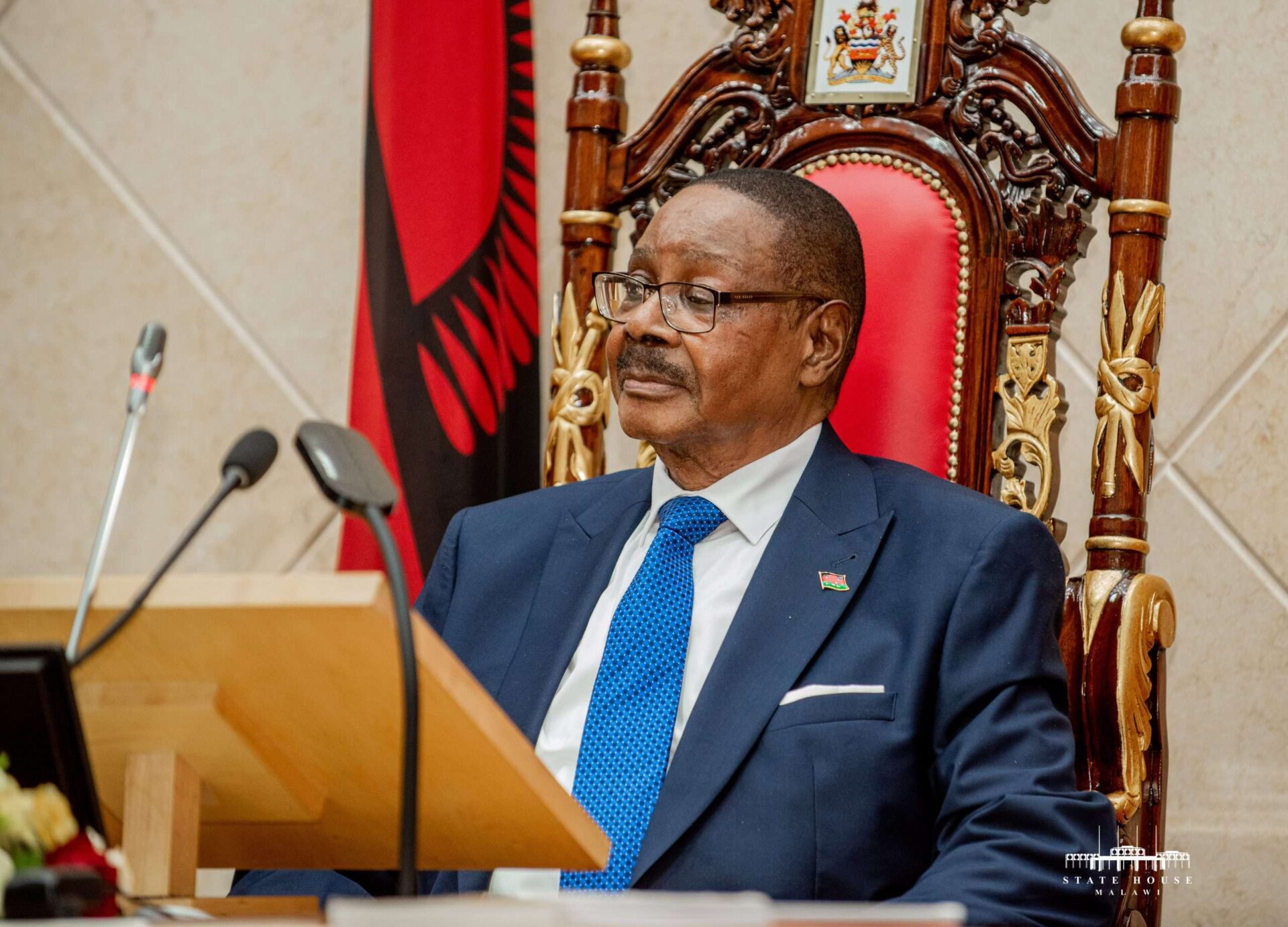
BLANTYRE-(MaraviPost)-NBM Development Bank Limited (NBMDBL) has been named the Top Industrialisation Catalyst Award winner at the 2025 Impact Integration and Investment Forum held at the Bingu International Convention Centre (BICC) in Lilongwe over the weekend.

The forum, themed ‘Mobilising Private Capital Towards Malawi 2063’, formed part of the Midterm Review of the Malawi Implementation Plan (MIP-1) organised by Stratedge Limited.

This year’s awards spotlighted institutions driving inclusive growth, sustainability, and measurable socio-economic transformation in line with national development aspirations.

According to Stratedge Limited, Managing Partner, Kisunge Kabwere, NBMDBL excelled in financing programmes that are accelerating industrialisation and boosting agricultural productivity and commercialisation, apart from effectively leveraging key enablers such as human capital development, economic infrastructure, good governance, and private sector dynamism.

“NBM Development Bank Limited has financed 78 SMEs across agribusiness, manufacturing, energy, education, health, tourism, ICT, water and sanitation, and structured mining, strengthening supply chains and enabling value addition. A total of K17.03 billion has been disbursed through blended financing, including concessional rates under the FInES project, providing patient capital for scaling operations, and this is something that deserves recognition,” said Kabwere.

It was also observed during the awards ceremony that the Bank’s initiatives have also contributed to significant job creation, with over 1,800 direct and indirect jobs generated.

“These interventions have fostered skills development, supported industrial operations, promoted export expansion and import substitution, and advanced inclusive development,” added Kabwere.

Reacting to the recognition, NBMDBL General Manager Bernard Masi, said the award reaffirms the institution’s mandate of driving development financing in Malawi.

“We are deeply rooted in development funding, and this award serves as a strong encouragement for us to continue pushing boundaries,” said Masi.

He dedicated the award to the Bank’s customers and staff, acknowledging their pivotal role in the institution’s achievements.

“This award belongs to our customers and our dedicated team. Their trust and hard work are what make recognitions like this possible,” he added.

Looking ahead, Masi underscored the Bank’s commitment to expanding its support for Malawi’s private sector.

“We are committed to finding even better and more innovative ways to support businesses across Malawi. Our goal is to ensure that entrepreneurs and enterprises continue to thrive,” he said.

In 2024, NBMDBL was awarded by the Malawi Investment and Trade Centre (MITC) in the Best Financial Services category at the 34th Malawi International Trade Fair.


Discover more from The Maravi Post

Subscribe to get the latest posts sent to your email.

The Maravi Post

United States, Hawkish Fed cut points to more 2 more cuts in 2026: deVere CEO

Fed Chair Powell
The Federal Reserve

December 10 2025: The Federal Reserve’s latest interest rate cut today strengthens the case for two further reductions in 2026, despite the central bank’s deliberately cautious tone, predicts the CEO of one of the world’s largest independent financial advisory organizations.

Nigel Green, CEO of deVere Group, says today’s move confirms that US monetary policy has entered an easing phase that remains incomplete.

“This rate cut validates our view that restrictive policy is giving way to a slower, more measured recalibration,” he says. “The Fed’s language is hawkish by design, yet the underlying signals continue to point toward additional easing next year.”

The Fed lowered borrowing costs by a quarter percentage point, taking its benchmark rate to a range of 3.5% to 3.75%.

Officials paired the move with messaging aimed at tempering expectations for rapid follow-up action, a combination that has quickly been described in markets as a “hawkish cut.”

He says that characterization supports deVere’s forecast rather than undermining it.

“A hawkish cut is a hallmark of a central bank managing transition,” he says. “It reflects disagreement over timing, not direction.

“The Fed is easing while attempting to keep financial conditions from loosening too quickly.”

The internal divide within the rate-setting committee remains clear. Some policymakers argue that further cuts are needed to prevent a deeper slowdown in the labour market, where job growth has weakened noticeably this year.

Others warn that inflation could remain above target, particularly with tariffs introduced by President Donald Trump pushing up prices across parts of the economy.

Nigel Green says this split explains why the Fed is unlikely to commit to an aggressive path, but also why holding rates steady for too long would carry risk. “Policy remains restrictive in real terms,” he says.

“If hiring continues to cool and inflation does not reaccelerate, keeping rates at current levels into 2026 would tighten conditions by default.”

Labour-market dynamics form a key pillar of deVere’s outlook. Employment weakness often develops gradually before becoming visible in headline figures. Once firms slow hiring and reduce job turnover, momentum rarely reverses quickly.

“The Fed is acting on forward-looking risk,” says Nigel Green. “By the time deterioration becomes obvious, the cost of delay rises sharply. Two cuts next year would reflect risk management rather than urgency.”

Inflation concerns, while valid, carry a different profile than during earlier phases of the tightening cycle. Tariff-related pressures raise prices but do not generate demand-driven momentum. As a result, higher rates offer limited offset.

“Monetary policy cannot reverse tariff effects,” says Nigel Green. “What it can do is compound the drag on growth if it remains overly tight. That asymmetry increases the likelihood of further adjustments once inflation shows stability rather than acceleration.”

Another factor reinforcing the forecast is the impending leadership transition at the Fed. Today’s decision comes ahead of the announcement of a new chair, following President Trump’s confirmation that a nomination will be made early next year. Jerome Powell’s term ends in May, marking a sensitive institutional handover.

Nigel Green says such transitions typically favour continuity. “Incoming leadership rarely begins with abrupt shifts,” he says.

“Measured changes spread over time allow credibility to carry across administrations. That makes a series of modest cuts more likely than a prolonged pause.”

Financial conditions also argue in favour of further easing. Interest-sensitive sectors continue to face pressure, while credit availability remains tight for smaller businesses. Market pricing alone cannot resolve these constraints without follow-through from policy.

“Validating part of the adjustment through action reduces the risk of uneven tightening,” says Nigel Green. “Two cuts across 2026 would still leave policy disciplined.”

He adds that today’s decision should be viewed as confirmation of trajectory rather than conclusion. “This was not a finishing move,” he says. “It was a controlled step in a longer process.”

Nigel Green concludes: “The Fed’s hawkish cut does not close the door on further easing.

“It reinforces our expectation that next year brings additional reductions as policy aligns more closely with a slowing labour market and a changing leadership landscape.”


Discover more from The Maravi Post

Subscribe to get the latest posts sent to your email.

The Maravi Post

NBM plc ‘12 Days of Christmas’ initiative up to MK250 million

BLANTYRE-(MaraviPost)-National Bank of Malawi (NBM) plc has increased this year’s ‘12 Days of Christmas initiative’ package to MK250 million, from last year’s allocation of MK130 million.

The initiative is aimed at supporting communities across the country during the festive season.

This marks the fifth consecutive year that the ‘Bank of the Nation’ is running the initiative, which channels donations of food and non-food items to selected beneficiaries identified by its service centres nationwide.

This year, the initiative is scheduled to run from December 5 to December 22, with each participating service centre making a K20 million-worth donation, and a final donation of a K30 million package at the end of the campaign.

NBM plc Marketing and Corporate Affairs Manager, Akossa Hiwa, said the initiative reflects the Bank’s deep appreciation for the communities that have supported its growth over the years.

“Every year, this initiative reminds us of the real meaning of the festive season — reaching out, sharing, and standing with those who need a helping hand. We hope that these contributions bring comfort, dignity, and encouragement to the institutions and families we serve,” said Hiwa

Hiwa added that the initiative also strengthens the relationship between the Bank and the communities in which it operates.

“We do not take our place in these communities for granted. The ‘12 Days of Christmas’ allows each service centre to connect with people on a more personal level and respond to needs that are truly felt on the ground. It is one of the ways we live out our responsibility to support national development and promote collective wellbeing,” said Hiwa.

This year’s selected beneficiaries encompass a range of institutions, including educational, health, and community welfare organisations across the country.

The selected service centres this year include Henderson Street Service Centre, which will donate to Chilomoni Health Centre, Mwanza Service Centre will donate medical equipment to St Martin’s Health Centre, while Chichiri Mall Service Centre will donate to Wells of Joy Orphan Care.

Nchalo Service Centre and Top Mandala Service Centre will donate to Makande Primary School in Ngabu and Nankumba Catholic Primary School in Chazunda, respectively.

Lilongwe Gateway and Kanengo Service Centres will donate to the Mngongonda Village community and Area 25 Health Centre, respectively.

Kasungu Service Centre will donate to Mpapa Community Secondary School, while Mzuzu Service Centre will contribute to Bandawe Girls Secondary School.

Karonga Service Centre will support Chilumba community projects, Liwonde Service Centre will donate to Liwonde Secondary School, while Zomba Service Centre will donate to Magomero Health Centre.


Discover more from The Maravi Post

Subscribe to get the latest posts sent to your email.

The Maravi Post

Three tailwinds shaping the global investment outlook for 2026

December 8 2025: Global investors looking toward 2026 are beginning to see a set of structural forces that are grounded in observable economic reality rather than optimism alone, affirms the CEO of one of the world’s largest independent financial advisory organizations.

The year ahead, says deVere Group’s Nigel Green, is defined by three credible tailwinds.

“Markets reward evidence over enthusiasm,” Nigel Green says. “As 2026 approaches, investors are increasingly distinguishing between stories and substance.”

The first tailwind is the persistence of global economic growth that is broader than in recent years, even if it remains uneven.

“Current projections continue to point toward expansion rather than contraction, with resilience in the US, gradual improvement across Europe, and ongoing structural growth in parts of Asia.

“Large-scale fiscal spending linked to infrastructure, defence, supply-chain security and strategic industrial policy continues to filter through economies with long lags, providing a steady underpinning for activity,” explains the deVere CEO.

He stresses that this environment doesn’t require rapid growth to support markets.

“Markets respond to durability,” he says. “When growth proves persistent rather than fragile, earnings expectations stabilize and capital becomes more willing to take risk. Broader participation across regions matters far more than headline growth rates.”

He adds that this backdrop historically supports equities, selective credit and globally exposed companies, while reducing the over-concentration risk seen when returns rely on one dominant region.

The second tailwind is the transition of AI and automation from hype to hard numbers.

“After an initial phase dominated by capital spending and valuation expansion, 2026 is shaping up as a period where scrutiny intensifies. Investors are increasingly focused on profit checks, cash flow contribution and operational delivery, rather than future promise alone.”

Nigel Green says this shift is critical.

“Markets are demanding proof,” he explains. “Companies talking about AI without showing returns will struggle. Those that can demonstrate margin improvement, cost reduction or revenue scalability will attract capital.”

He notes that AI adoption is no longer confined to a small group of technology leaders. Productivity gains are beginning to emerge across healthcare, logistics, manufacturing and financial services, where automation, data optimization and intelligent systems are improving efficiency and decision quality.

“This phase favours execution,” Nigel Green says. “Businesses that integrate tech into core operations, rather than showcasing it, are the ones that will stand out. Hype fades quickly when profit delivery is absent.”

He adds that even modest but widespread productivity gains can accumulate into meaningful economic support over time, strengthening profitability without relying on excessive pricing power or leverage.

The third tailwind is the return of diversification as a meaningful contributor to performance.

The deVere chief executive comments: “For much of the past decade, global returns have been dominated by a narrow segment of US assets, diminishing the effectiveness of diversified portfolios.

“This dynamic is beginning to change. Valuations across regions are less stretched, real yields in parts of fixed income are more compelling than in recent years, and commodities and other real assets are regaining relevance amid geopolitical tension and industrial re-shoring.

Nigel Green emphasises that diversification does not imply uniform gains.

“Dispersion is increasing,” he says. “Some assets will perform well, others will not. Investors who rely on broad exposure alone may be disappointed. Selectivity becomes critical.”

He also highlights the growing importance of currency movements in a less concentrated global environment.

“When growth becomes more distributed, currencies begin to matter again as a source of return and risk,” Nigel Green says.

“These tailwinds do not eliminate risk,” Nigel Green says. “They provide structure. Growth resilience, measurable innovation and renewed diversification are beginning to align.”

He concludes: “Investors who approach 2026 with realism, global awareness and disciplined analysis are better positioned than those chasing narratives.”

e: george@priorconsultancy.co.uk
t: +44 207 1220 925
Twitter: @PriorConsults


Discover more from The Maravi Post

Subscribe to get the latest posts sent to your email.

The Maravi Post

Castel Malawi partners with MBCHealth on World AIDS Day

A parade during the AIDS Day commemoration

BLANTYRE-(MaraviPost)-Castel Malawi Limited has reinforced its dedication to supporting government efforts in the fight against HIV/AIDS through a partnership with the Malawi Business Coalition on Health (MBCHealth) during this year’s World AIDS Day commemoration.

The event, held on Monday (December 1) in Makata, Blantyre, ran under the theme ‘We Remember, We Lead, We Rise to Transform the Response.’

Castel Malawi Limited’s Corporate Social Responsibility Manager, Linda Kolomba, said the company remains deeply invested in strengthening the country’s HIV/AIDS response through strategic collaborations.

“As Castel Malawi, we recognise that the fight against HIV/AIDS requires unity and consistent action. This is why we continue to stand side by side with organisations to ensure that communities have access to the support and information they need. Our role is to uplift, empower, and contribute meaningfully to a healthier Malawi,” said Kolomba.

Kolomba further emphasised that, as a company, Castel Malawi places high importance on health and wellbeing, not only within the communities it supports but also among its own employees.

“At Castel Malawi, we believe that a thriving workforce starts with a healthy workforce. This is why we prioritise health initiatives internally and extend the same support to the communities we operate in. When our people are healthy, our nation is stronger,” she said.

In her remarks, MBCHealth Chairperson, Gloria Zimba, thanked Castel Malawi for joining hands with the coalition, adding that the health sector is currently facing significant financial constraints.

“We have lost partners from abroad, and we are very grateful to Castel Malawi and others for stepping forward to support us. We now depend heavily on such partnerships for financial assistance. Their involvement shows how dedicated they are, and as MBCHealth, we are honoured to have this collaboration,” said Zimba.

Other partners for the commemoration day included National Bank of Malawi plc, MASM, ESCOM, and Blantyre Water Board (BWB).


Discover more from The Maravi Post

Subscribe to get the latest posts sent to your email.

The Maravi Post

NABW revived, set to launch gender-responsive procurement position paper in Lilongwe today

NABW Executive Director Barbara Banda

LILONGWE-(MaraviPost)-The country’s National Association of Business Women (NABW) is set to launch its advocacy paper under the project Enhancing Gender-Inclusive Public Procurement and Open Contracting in Malawi.

The Launch and presentation of the Advocacy Position Paper on Gender-Responsive procurement slated today, Thursday in the capital Lilongwe at Crossroads Hotel aims at facilitating dialogue among stakeholders on inclusive procurement reforms, engaging the media in promoting women’s economic participation.

NABW Executive Director Barbara Banda told The Maravi Post in an interview that women-led enterprises in Malawi continue to face barriers in accessing public procurement opportunities including limited access to information and procurement platforms, inadequate awareness of procurement policies such as the MSME Order 2020, limited capacity to prepare compliant bids and financial and collateral constraints hence the launch.

“The Advocacy Position Paper provides evidence from policy analysis, stakeholder interviews, and consultations, identified gaps in the procurement ecosystem, recommended gender-inclusive procurement reforms, practical measures for MDAs, SOEs, PPDA, and policymakers.

“The paper also advocates for gender quotas or set-asides for women-owned enterprises, simplified bidding requirements and strengthened implementation of MSME Order 2020,” discloses Banda.

The event has attracted government institutions, state-owned enterprises, civil society, private sector players, and women-led businesses and among others.

The National Association of Business Women (NABW), with support from the Women and Girls Fund (WGF), is implementing a national advocacy project titled Enhancing Gender-Inclusive Public Procurement and Open Contracting in Malawi.


Discover more from The Maravi Post

Subscribe to get the latest posts sent to your email.

The Maravi Post