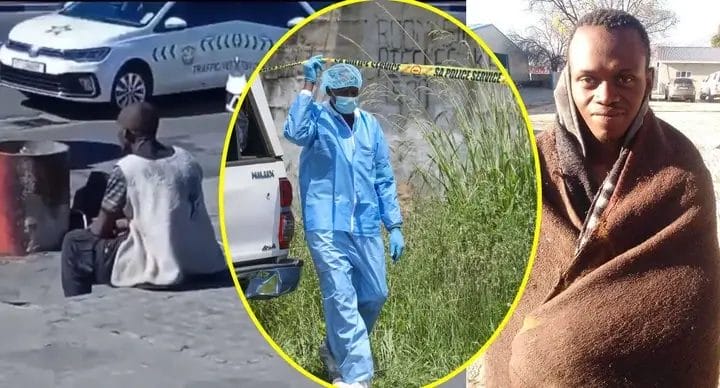

RSA serial killer Zwelinjani Mbola walks around town with body parts of a man he brutally murdered

..’He cut off private parts and arms’: Ceres man walks around town with body parts of man he brutally killed…

WESTERN CAPE-(MaraviPost)-The tranquil town of Ceres, nestled in the Western Cape, has been shattered by a gruesome crime that defies comprehension.

Zwelinjani Mbola, a 22-year-old man, has been arrested and charged with the murder and desecration of Peter Joubert, 43.

The allegations against Mbola are chilling: he is accused of not only killing Joubert but also mutilating his body, severing his arms and private parts, and then brazenly parading around town with some of the human remains.

The horrifying discovery was made on Sunday morning, when municipal law enforcement officers received a disturbing report.

According to a statement released by the Witzenberg Municipality, officers were alerted to a man walking in town, openly displaying what appeared to be human remains.

“Municipal Law Enforcement officers were alerted to a man walking in town with what appeared to be human remains in his possession,” the municipality stated. “Officers immediately responded and notified the South African Police Services (SAPS).”

The officers’ swift response led to the apprehension of Mbola, who was subsequently taken into custody by the SAPS.

A full investigation was immediately launched, leading to the discovery of the remainder of Joubert’s body at a second location pointed out by the alleged perpetrator.

Adding to the horror, reports from local residents suggest that Mbola was allegedly sitting in front of a liquor store, basking in the sun, with Joubert’s severed limbs displayed before him.

One witness even claimed that Mbola was holding one of Joubert’s ears in his hand.

This shocking scene was witnessed by a member of the community who, horrified by what they saw, immediately alerted the authorities.

The Witzenberg Municipality has expressed its profound shock and condemnation of the brutal crime.

“Witzenberg Municipality is deeply saddened and shocked by this brutal crime against one of their local residents,” the municipality stated, adding that Joubert’s body was found under a bridge and that the suspect was apprehended by Municipal Law Enforcement officers and subsequently arrested by the South African Police Service (SAPS).

“This senseless and horrific act has left our community reeling,” the municipality continued. “We are absolutely appalled by this level of violence. Our heartfelt condolences go out to the victim’s family during this devastating time.”

The case has now moved to the courts, with Mbola appearing in the Ceres Magistrate’s Court on Tuesday. Eric Ntabazalila, Regional Communications for the National Prosecuting Authority (NPA), confirmed Mbola’s appearance and the charges he faces.

“Zwelinjani Mbola, 22, appeared at the Ceres Magistrate’s Court this morning charged with murder and violation of a corpse,” Ntabazalila explained. “The State alleges that on December 7, the accused murdered Peter Joubert by cutting and dismembering his body with a sharp object. The State alleges that the accused physically violated the deceased’s body by cutting off his arms and private parts.”

The NPA spokesperson also stated that the case has been postponed until December 17 for bail information and a possible referral to a district surgeon for mental assessment. “His case has been postponed until 17 December 2025 for bail information and a possible referral to a district surgeon for mental assessment,” Ntabazalila added.

As the legal proceedings unfold, the focus remains on the victim, Peter “Piet” Joubert. Those who knew him describe him as a kind and gentle soul who did not deserve such a brutal end.

Anneke Jansen van Wielies, a relative of Joubert, described him as “a people person, someone with a beautiful personality who crept into everyone’s hearts.” She revealed that Joubert had lived with her in Wolseley for four years before moving to Ceres.

“He and I grew up together in Sutherland. Piet was not a person who got angry easily. On the contrary, he was always the one who wanted to keep the peace between our cousins,” Jansen van Wielies said. She also addressed rumours circulating about Joubert’s living situation, stating, “Then I also want to mention, since the public thinks that he had no place to go, he comes from and lived in a good house and worked for his money.”

Joubert was a long-time employee at Ina’s Carwash in Ceres. Ina Mouton, the owner of the carwash, shared a heartfelt tribute on Facebook, urging people to remember Joubert for the beautiful person he was.

“His name has come and gone, but now he has finally gone to our Father’s house. Pieter was like a child in our house, there he lay and relaxed in a warm bubble bath for the first time that I later had to call him to hear if he was still alright,” Mouton wrote. “Ate with us and watched TV and slept safely in a warm bed. Where Pieter could help, he didn’t think twice.” She further added that Joubert was her “left and right hand.”

The details emerging from the investigation paint a gruesome picture of the crime scene. According to a source close to the investigation, Joubert’s body was desecrated in a horrific manner. Both of his forearms were severed, his stomach area was cut open, and some of his organs were removed. His genitals and testicles were also cut off.

While the motive for the murder remains under investigation, rumours are circulating within the Ceres community that Mbola may be suffering from mental health issues.

Some residents believe that Joubert was simply in the wrong place at the wrong time.

Source: celebgossip.co.za


Discover more from The Maravi Post

Subscribe to get the latest posts sent to your email.

The Maravi Post

Patrick Mahomes Tears ACL in Loss to Chargers

Patrick Mahomes’ season is over after a devastating knee injury took him out of Sunday’s game … with the team just announcing he’s torn his ACL. The Kansas City Chiefs quarterback led his squad against the Los Angeles Chargers … and, down 16-13…


Discover more from The Maravi Post

Subscribe to get the latest posts sent to your email.

The Maravi Post

Bobby Shmurda Involved in Brawl at Minnesota Club, on Video

Bobby Shmurda hasn’t changed one bit … because another one of his shows ended in a brawl … and we’ve got the shocking video. The rapper performed at MN Gold Room in Minneapolis Saturday night … when eyewitnesses say someone threw a bottle at…


Discover more from The Maravi Post

Subscribe to get the latest posts sent to your email.

The Maravi Post

My Take On It: The Good, the Bad, Downright Ugly of 2025, Part I

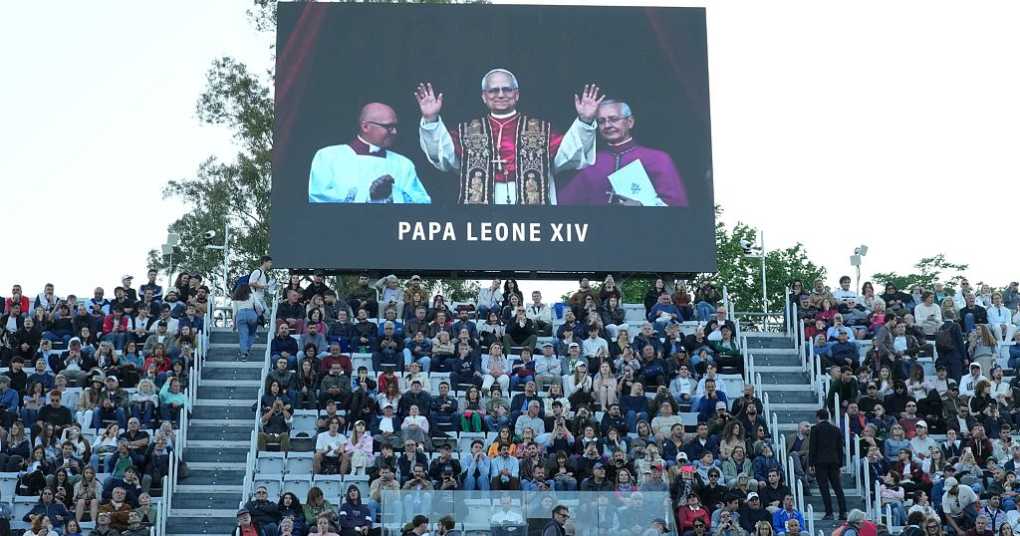
Pope’s creole roots revealed

 1To everything there is a season, and a time to every purpose under the heaven: 2A time to be born, and a time to die; a time to plant, and a time to pluck up that which is planted; 3A time to kill, and a time to heal; a time to break down, and a time to build up; 4A time to weep, and a time to laugh; a time to mourn, and a time to dance; 5A time to cast away stones, and a time to gather stones together; a time to embrace, and a time to refrain from embracing; 6A time to get, and a time to lose; a time to keep, and a time to cast away; 7A time to rend, and a time to sew; a time to keep silence, and a time to speak; 8A time to love, and a time to hate; a time of war, and a time of peace. — Ecclesiastes 3:1-8

Give thanks in all circumstances; for this is the will of God in Christ Jesus for you.” — Thessalonians 5:18

Of all the seasons and moments in the year, I love the Christmas season and the songs celebrating and remembering the birth of Jesus. I love the December rush to close the year and usher in a new one.

I also enjoy the round up in this column’s segment called the Good, the Bad, and the Downright Ugly in which I round up the events that have taken place in Malawi and around the world. Truth be told (and I usually almost always tell the truth), the year 2025 reminded me of the year 2020, even without the Covid-19!

We have lost friends, relatives, and many famous actors, actresses, and sports personalities, have passed on into glory. Looking at these from a distance (January to December 2025!), it has been a big mix bag of the Good, the Bad, and the Downright Ugly.

In brief, on the good platform, the world welcomed a new Pope, American born (out of Chicago) Pope Leo XIV. He replaced Pope Francis who passed to eternity in April. A peace accord was agreed in the Middle East. On the local scene, my first born son turned 50. Years. Old. On September 16, Malawians re-elected former President Peter Mutharika, complete with the second female Vice President, retired Supreme Court Judge, Dr. Jane Ansah. To cap all this goodness, my new book, a 3-year journal entitled 365 Day of Gratitude – One Day at a Time, is finally in the bookshelves and available online.

Leo XIV is the first Pope from the Order of Saint Augustine and the second Pope from the Americas (after Pope Francis), and is counted as the 267th pope. He is a dual citizen of Peru and the United States. He is the first American pope, in the sense of being the first born in the United States. He has a Bachelor’s degree in Mathematics. Pope Leo has met three of his predecessors, namely met Pope John Paul II, Pope Benedict XVI, and Pope Francis. Although his messages are in Latin, Americans for sure, get a thrill hearing him when he speaks in English, complete with his Chicago accent. It  is like listening to one’s next door neighbor.

In the Hamas-Israeli war that started on October 7 2023, approximately 70,000 Palestinians and 1,200 people in Israel have been killed. A multilateral agreement between Israel and Hamas, the Gaza peace plan aims to address the ongoing Gaza war and broader Middle Eastern crisis. The process is led by United States President Donald Trump, it was negotiated in consultation with many Arab and Muslim countries. On its part, the United Nations Security Council on November 17, approved a U.S.-drafted resolution for peace in the Gaza Strip, a breakthrough for the Trump administration’s twenty-point plan to broker peace in the region. The vote was 13–0. China and Russia abstained from voting.

In September, former President Peter Mutharika, pulled what can be termed a hat-trick in football circles, when he won Malawians’ votes in a landslide. He scooped 58% of the vote in another landslide victory! He beat then incumbent President Lazarus Chakwera who only secured 33 percent of the ballots cast on September 16.

Mutharika brought to the State House, the second female vice president, but the first high court justice. Malawi is thus being ruled by two legal giants. Mutharika is a former professor of law from Rutgers University.

When one of my students hit me on the head with a steel-legged chair, I was out on sick leave for two month. During this time, I was led in my search of the scriptures to 1 Thessalonians 5:18 that states “Give thanks in all circumstances; for this is the will of God in Christ Jesus for you.” 

The lesson for gratitude and thankfulness is an important aspect of our faith. In meditating on this verse, I was inspired to create the  3-year journal entitled 365 Day of Gratitude – One Day at a Time; author’s name is Jayzedkay – which is my initials . In the journal there is space to write daily nuggets of gratitude, for 365 days.

The journal owner can then go back to January of the next year and start the daily gratitude journey of writing from January to December. After three years, journal owners will discover, as I have, that “the more grateful and thankful we are, the more uplifted we feel. As we lift up our gratitude and thankfulness, we too are lifted up in the most divine manner possible!”

The journal opens with 20 scriptures on gratitude and thankfulness. These are followed by a three-year gratitude space for people to write in their daily gratitude and thankfulness! The journal is available on Amazon and Barnes and Noble.

Next week, Part II of The Good, the Bad, and the Downright Ugly.


Discover more from The Maravi Post

Subscribe to get the latest posts sent to your email.

The Maravi Post

Sharp Focus: What the detentions of Mumba, Chimwendo Banda, Kabwira—Chakwera’s private trip—mean for Malawi

LILONGWE -(MaraviPost)-The arrest of Malawi Congress Party (MCP) figures Vitumbiko Mumba, Richard Chimwendo Banda, and Jessie Kabwira, occurring alongside the private foreign trip of former president Lazarus Chakwera, has produced a politically charged moment that demands careful, sober analysis rather than rushed conclusions.

These events, unfolding in close temporal proximity, have triggered intense public debate about accountability, power, institutional independence, and the enduring influence of political leadership in Malawi’s democratic journey.

At the heart of the discussion is the question of whether these arrests reflect the impartial application of the law or whether they are entangled with political timing, factional dynamics, and narrative control.

Vitumbiko Mumba, known for his combative political style and high public profile, has long been a lightning rod for controversy, making his arrest symbolically significant beyond the specifics of any alleged offense.

Richard Chimwendo Banda, a seasoned political strategist with deep roots in party organization and governance, represents institutional continuity, which magnifies the implications of his detention.

Jessie Kabwira, as a prominent female political voice within MCP, adds a further layer of complexity, particularly in how gender, power, and accountability intersect in public perception.

Together, the arrests of these three figures create a powerful image that reshapes the political landscape and forces both supporters and critics to reassess assumptions about immunity and influence.

In any democracy, arrests of high-ranking political actors can signal a maturation of institutions when conducted transparently and fairly.

Conversely, in contexts with a history of selective justice, such arrests can deepen mistrust if motives appear opaque or inconsistently applied.

Malawi’s past experiences with high-profile prosecutions that either stalled or collapsed weigh heavily on public interpretation of the current developments.

Citizens have learned to distinguish between the announcement of arrests and the delivery of justice, and they will judge this moment accordingly.

The credibility of the legal process will therefore rest not on the drama of the arrests but on the professionalism, evidence, and procedural integrity that follow.

If investigations proceed efficiently and trials are conducted openly, confidence in the justice system may be strengthened.

If delays, political statements, or procedural missteps dominate the process, cynicism will deepen.

The arrests also place the MCP itself under intense scrutiny, testing its stated commitment to the rule of law.

A party that claims reformist credentials must demonstrate that accountability applies internally as much as it is demanded externally.

How MCP leadership communicates about these arrests will shape public understanding of whether the party sees justice as principle or as inconvenience.

Defensiveness risks appearing self-serving, while restraint could signal respect for institutional independence.

Silence, too, will be interpreted, either as confidence in due process or as avoidance.

Simultaneously, the private foreign trip by former president Lazarus Chakwera introduces a parallel narrative that complicates interpretation.

Although former presidents are entitled to private travel, the timing of such a trip amid domestic political turbulence inevitably attracts political reading.

In politics, absence can be as communicative as presence, especially when crises or controversies emerge.

Supporters may view Chakwera’s departure as evidence that institutions are now sufficiently autonomous to function without presidential oversight.

Critics may see the move as strategic distancing from unfolding events linked to his political legacy.

Others may interpret the trip as personal necessity unrelated to politics, a reminder that public figures are also private individuals.

Yet in a highly polarized environment, neutral interpretations are often the least persuasive.

The optics of a former president leaving the country while senior figures from his political camp face arrest create a striking contrast that fuels speculation.

This contrast raises broader questions about leadership responsibility beyond formal office.

Former presidents often retain informal influence that can stabilize or destabilize political processes depending on how it is exercised.

Whether Chakwera chooses to comment publicly, engage quietly, or remain silent will be closely analyzed for meaning.

Any statement risks being seen as interference, while silence risks being read as detachment.

The convergence of arrests and travel also highlights the enduring importance of symbolism in Malawian politics.

Political narratives are not shaped solely by facts but by timing, sequencing, and perception.

This moment illustrates how quickly public focus can shift from policy debates to questions of power and accountability.

For opposition parties, the situation presents both opportunity and danger.

There is an opportunity to demand institutional reform and equal application of the law.

There is also the danger of appearing to exploit legal processes for political gain.

Civil society organizations occupy a critical space in this moment as guardians of democratic norms.

Their role is to insist on transparency and fairness without aligning prematurely with any political camp.

The media, too, bears significant responsibility in shaping understanding.

Sensationalism may drive short-term attention but risks distorting complex realities.

Sustained, factual reporting will better serve the public interest.

The judiciary and law enforcement agencies are perhaps the most tested institutions in this unfolding scenario.

Their conduct will determine whether this moment is remembered as a step forward or a missed opportunity.

Professionalism, independence, and procedural rigor are now under the microscope.

International partners and observers are also watching closely.

Governance, rule of law, and political stability remain key benchmarks for international confidence and cooperation.

Any perception of politically motivated justice could have implications beyond domestic politics.

Conversely, credible accountability can enhance Malawi’s democratic standing.

The arrests also raise deeper questions about the culture of power and entitlement within political systems.

Do political leaders truly accept that public office comes with legal vulnerability?

Or do they expect informal shields that only fall when political winds change?

How this question is answered in practice will shape citizen trust for years to come.

The issue of corruption, often central to political arrests, further complicates interpretation.

Selective anti-corruption efforts can undermine genuine reform.

Comprehensive, consistent enforcement can rebuild faith in institutions.

Malawians are therefore less interested in who is arrested than in whether standards are applied universally.

The broader lesson of this moment lies in the distinction between legality and legitimacy.

Actions may be legal yet lack legitimacy if perceived as politically motivated.

Actions may be politically costly yet gain legitimacy if transparently grounded in law.

The challenge for Malawi’s institutions is to align legality with legitimacy.

Ultimately, the arrests of Mumba, Chimwendo Banda, and Kabwira, alongside Chakwera’s private trip, expose the fragile intersection of justice, power, and perception.

They remind political actors that public trust is earned through consistency, not convenience.

They remind citizens that democracy is sustained by institutions, not personalities.

They remind the nation that accountability is not a moment but a process.

The true implications of these events will therefore be revealed not in headlines but in outcomes.

If Malawi emerges with stronger institutions and clearer standards, this period may be seen as a necessary reckoning.

If not, it risks becoming another chapter in contested justice and political suspicion.

In the end, the most important question remains whether Malawi chooses principle over expediency.

The answer will define not only this moment but the future trajectory of the nation’s democratic life.

Feedback: +265884433313
Email: bonnetmunthali2101@gmail.com


Discover more from The Maravi Post

Subscribe to get the latest posts sent to your email.

The Maravi Post

Chatama remains optimistic despite Ekhaya FC defeat to Bullets: 2025 TNM Super League

….Ekhaya 0-2 Bullets

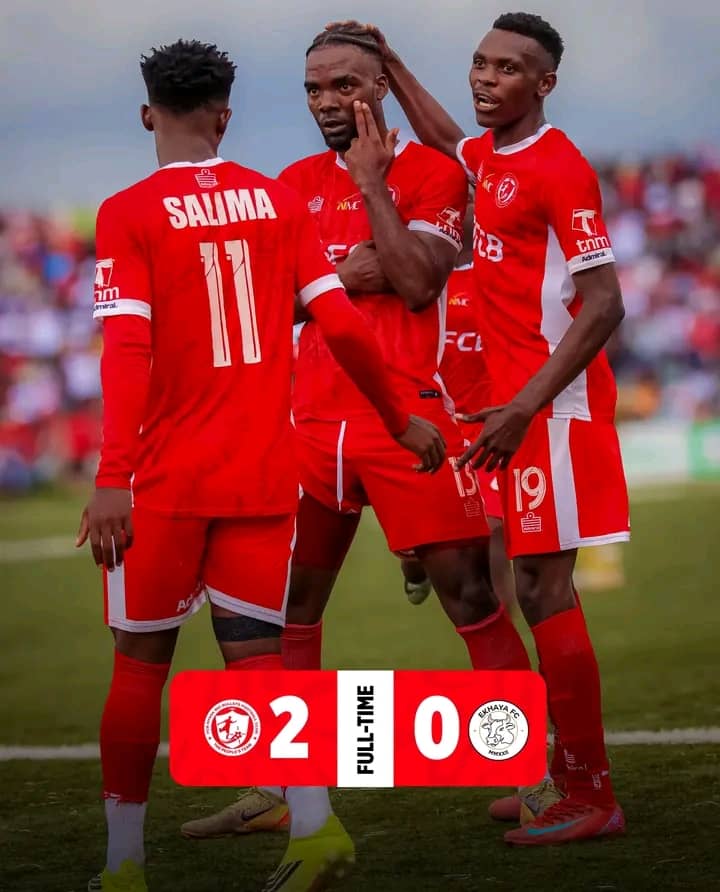
BLANTYRE-(MaraviPost)-Ekhaya FC head coach Enos Chatama has expressed confidence in his side’s future despite suffering a 2–0 defeat to FCB Nyasa Big Bullets on Sunday afternoon in Blantyre.

The loss marked Ekhaya’s third consecutive defeat, but the coach insists the struggles are part of a learning process that will make the team stronger next season.

Speaking after the match, Chatama admitted that results have not gone his team’s way in recent outings. However, he maintained that the technical panel has already identified key areas that need improvement and believes the team will return “more dangerous” once those problems are addressed ahead of the next campaign.

The match, played at Mpira Stadium, saw Bullets start on the front foot, immediately setting the tempo with quick ball circulation and high pressing.

Ekhaya were forced to defend deep in the opening minutes as the hosts pushed numbers forward, stretching their defensive line in search of an early breakthrough.

Bullets’ persistence paid off in the 31st minute when substitute Maxwell Phodo, who had just come on for Mike Mkwate, found the back of the net. Phodo calmly finished after receiving a well weighted pass from Chikumbutso Salima, giving the hosts a deserved 1–0 lead.

Just before the halftime whistle, Bullets doubled their advantage. Ephraim Kondowe scored a fine goal in stoppage time after being set up by Phodo, capping off a dominant first-half display by the home side and sending them into the break with a comfortable 2–0 cushion.

Ekhaya attempted to regroup in the second half, while Bullets made tactical changes, including the introduction of Babatunde Adebouje in the 58th minute.

Ekhaya also responded with a series of substitutions, bringing in Kester Simbi, Vincent Salawila and later Clever Chikwata in an effort to inject fresh energy into the game.

Despite the changes, Ekhaya struggled to break down a well-organised Bullets defence. The hosts managed the game professionally, limiting Ekhaya’s chances and maintaining control as the clock ran down.

After three minutes of added time, the referee brought the match to an end with Bullets securing a solid 2–0 victory. The win further underlined their authority, while Ekhaya were left to reflect on another tough afternoon.

Maxwell Gastin Phodo was named Man of the Match for his decisive impact off the bench, contributing a goal and an assist. For Ekhaya and coach Enos Chatama, the focus now shifts to rebuilding with optimism firmly placed on a stronger and more competitive return next season.

Bullets remain on position two with 62 points from 28 matches while Ekhaya Fc stay on position 7 with 39 points from the same number of matches.


Discover more from The Maravi Post

Subscribe to get the latest posts sent to your email.

The Maravi Post