Blantyre City Mayor Osman makes history by share tables with street kids in his office

By Zakeyu Mamba

LILONGWE-(MaraviPost)-The Mayor of Blantyre City, Jomo Osman, made history this week on by becoming the first mayor in Malawi to officially invite street children into his office for an open, motivational, and personal conversation.

The rare moment, which took place Tuesday 18 Nomber, 2025, has drawn widespread praise from community members, leaders, and social-welfare advocates who view the gesture as a compassionate and progressive step toward supporting vulnerable young people.

During the meeting, Mayor Jomo spoke to the children with humility and honesty, sharing the difficulties he faced while growing up.

He explained that his journey to leadership was filled with struggles, uncertainty, and moments where giving up seemed easier.

However, through perseverance, discipline, and continuous effort, he managed to shape a better future for himself.

His message to the children was clear: Their present situation does not determine their destiny, and with commitment and self-belief, they can rise above any challenge.

The children listened closely as the mayor encouraged them to avoid destructive behaviors and to distance themselves from influences that may push them deeper into hardship.

He emphasized the value of education, respect, hard work, and good conduct-qualities he described as essential for anyone who wishes to transform their life.

He also assured them that his office remains open for guidance, mentorship, and support whenever they may need it.

As the meeting concluded, Mayor Jomo politely reminded the children to respect the office environment and ensure that nothing went missing as they left.

The remark, although delivered with humor, carried an important lesson about trust, responsibility, and integrity.

The visit has since been celebrated as a groundbreaking effort to build stronger relationships between city leadership and marginalized children-many of whom often feel unseen, unheard, and forgotten in society.


Discover more from The Maravi Post

Subscribe to get the latest posts sent to your email.

The Maravi Post

Why a Coup won’t work in Modern-Day Nigeria

President Bola Tinubu

By Tony Ogunlowo

In the runup to the October 1st Independence celebrations Sahara Reporters leaked a story that a bloody coup aimed at destabilizing , and overthrowing, the democratic government of President Tinubu had been thwarted.

There is still no official confirmation of this todate even though top service chiefs have been replaced and more than 40 officers have been arrested by the DSS who allegedly have had them under surveillance since August 2024.

Nigeria is a different country to the way it was in the 60s, 70s and 80s when anybody, presumably any disgruntled junior officer, could just pick up a gun, overthrow the incumbents, become Head of State and start their dictatorships: Africa, and mostly certainly Nigeria, have moved on from the Abachas and Idi-Amins of the past.

A military junta coming into power will abolish all laws and will rule by degree, so it’ll be a question of them shouting ‘jump’ and the people going ‘how high?’. Nigerians have long evolved beyond this and it’ll only bring out the people , en-masse, to protest. And as we’ve seen from previous mass protests, such as #ENDSARS, it’s not easy to crush the will of the people anymore. No more are they scared of a soldier with a gun. And with SM to pass the word around and keep everyone up to date; a medium even the junta can’t control or shut down completely as we’ve seen when the Buhari-led government tried shutting down Twitter usage in Nigeria, people just used VPNs to get around the ban. So a government overall control of the media is out of the question.

Nigerians have tasted the freedom of democracy, however imperfect it may be, and a return to a repressive military will not be welcomed with open arms: people now have the right to elect whoever they want to rule them instead of having somebody imposed upon them.

For a military coup to be successful the military will have to coral the people into a pen they can control: this can work in countries like Mali or Niger where the entire populace is less than the population of Lagos state. In Nigeria, a country of more than 200 million souls plus, the military is already stretched beyond its limits fighting insurgencies in the North and South-East so a new military junta won’t have the might – or equipment – to control the country successfully.

Mali and Niger armed forces removed democratically elected Presidents and their governments on the grounds of absolute abuse of office. Some will argue that the same should happen in Nigeria.

Whilst I’m not a big fan of President Tinubu it’s got to be said  he’s been in power for less than two years and he inherited a mess from Buhari who in turn inherited it from Jonathan, who….need I go back any further? Logically thinking, anybody coming into power, military or civilian, will not have the power to change things overnight, as the people want, and the hardship will continue. For those old enough to remember when the Buhari/Idiagbon junta ousted Shehu Shagari from power in 1983 change did not happen overnight: it was a gradual undertaking and things weren’t as bad as they are now. So a military junta coming in will just huff and puff without getting anything done.And to make matters worse the international community will be watching and will impose extremely tough sanctions upon the nation in effect crippling all business transactions in and out of the country. And if they go as far as declaring an oil embargo and call in all loans obtained, the country will be finished. Further more ECOWAS, the OAU – including President Trump’s USA – may decide on a military intervention to forcibly remove the junta from power because democracy can not be seen to fail in Nigeria, Africa’s most populous nation, as it has in Mali,Niger and elsewhere.( – and don’t forget Trump is looking for any excuse to bomb ‘disgraced’ Nigeria anyway!). If people think life under Tinubu is hard, then it’ll become unbearable.

In an earlier article ( “Are Coups in Africa still a Good thing?) I did point out that if we are going to practice democracy the African way there should be provision to remove inept and corrupt leaders the African way (aka a coup d’etat). Without sounding like I’m contradicting myself, people like the late Robert Mugabe needed a palace coup to remove him from office ( – as may well Paul Biya of Cameroon) for the systematic abuse of the democratic process that kept him in power. The same can be said also of the autocratic democracies of Niger, Mali etc who were also overthrown by the military. But the question is, as I pointed out then, is where do you draw the line?

Nigeria is still a fledgling democracy, I say is still in its infancy and mistakes will be made as we learn as once did the great democracies of the Western world: we are going to screw things up, abuse things but eventually we’ll get it right ( – whenever that might be!) as they say Rome wasn’t built in a day. Allowing the boys in khaki back will just send us back to square one and all the efforts of those who fought for modern-day democracy in Nigeria, like MKO, would have been in vain.

So the idea that a semi-illiterate gun-totting ‘who-build-dis-garda’ Army General seizes power and miraculously restores the country to its former glory, overnight, is not going to happen. It’s simply against the Law of Averages.


Discover more from The Maravi Post

Subscribe to get the latest posts sent to your email.

The Maravi Post

Gender Minister Navicha unhappy with static women representation numbers in Malawi Parliament

.….Calls for Accelerated Action

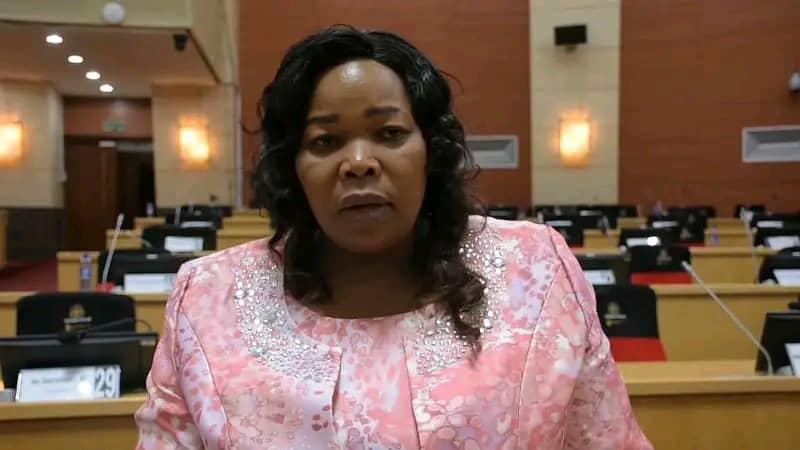
LILONGWE-(MaraviPost)-Minister of Gender, Community Development and Social Welfare, Mary Navisha, has raised fresh concerns over the low number of women serving in Malawi’s Parliament, revealing that women currently make up only 21 percent of all sitting legislators.

Speaking in an interview, Navisha said the figure is a reminder of the persistent barriers women face in political participation despite years of advocacy aimed at increasing female leadership in governance.

“It is worrying that women remain underrepresented in such an important decision-making space,” Navisha said.

“We need to collectively step up efforts to ensure more women are empowered and supported to contest for public office.”

She attributed the low numbers to structural and cultural challenges, including limited access to campaign resources, political intimidation, and deeply rooted social norms that discourage women from seeking leadership roles.

According to Navisha, increased female representation is critical to achieving gender equality and ensuring that issues affecting women and girls such as gender-based violence, maternal health, and economic empowerment are addressed effectively at policy level.

The minister said the government, civil society organizations, and political parties must intensify capacity-building programs, mentorship initiatives, and financial support mechanisms aimed at helping women navigate the political landscape.

Several gender rights advocates have echoed Navisha’s sentiments, saying the 21 percent representation falls short of regional and international commitments such as the SADC Protocol on Gender and Development, which encourages member states to strive for 50 percent women’s representation in decision-making positions.

As Malawi prepares for future elections, stakeholders are urging communities to challenge stereotypes and support female candidates, emphasizing that stronger representation in Parliament will contribute to more inclusive and balanced national development.


Discover more from The Maravi Post

Subscribe to get the latest posts sent to your email.

The Maravi Post

Tanzania human rights group rejects Chakwera as political crisis’ mediator

DODOMA-(MaraviPost)-Tanzanian human rights organisation, Sauti ya Watanzania (The Voice of Tanzanians), has strongly rejected the appointment of former Malawian President Lazarus Chakwera as the mediator in that country’s political crisis.

According to the public statement we have seen the grouping argued that a mediator must be a person of strong integrity with a proven track record in leadership qualities they believe Chakwera did not demonstrate during his tenure as Malawi President.

The organisation cited reports of corruption, bribery, and governance weaknesses under Chakwera’s administration, saying such issues could undermine public confidence in the mediation process.

Chakwera is not accepted in Tanzanian

The rights group observes that Chakwera played a role in leading mass protests in 2019, which they claim may compromise his ability to handle Tanzania’s post-election conflict in a fair and impartial manner.

Tanzania continues to experience serious violence following the October 29 elections, with some reports suggesting that more than 700 people may have died in the unrest.

As pressure mounts for credible and transparent peace talks, experts warn that appointing a mediator whose credibility is widely questioned could further complicate efforts to resolve the crisis.

However, the Commonwealth has defended its decision to appoint Chakwera, emphasising the need for swift action to help restore peace and stability in the country.

Chakwera office is yet to comment on the matter.


Discover more from The Maravi Post

Subscribe to get the latest posts sent to your email.

The Maravi Post

South Korea’s National Team faces test ahead of World Cup amid mixed performances

South Korea’s men’s football team concluded another year of international fixtures with mixed emotions.

The national side recorded eight wins, three draws, and two losses, a record that superficially appears solid.

Closer examination, however, reveals persistent flaws that could challenge the team in the upcoming 2026 FIFA World Cup.

Under the guidance of coach Hong Myung-bo, South Korea, ranked 22nd in the world, managed victories over Bolivia and Ghana in the final matches of the year.

While the wins were welcome, fans expressed concern over the team’s struggle to dominate lower-ranked opponents convincingly.

The sentiment reflects a broader pattern throughout 2025, in which South Korea frequently underperformed relative to expectations.

The team began the year with 1-1 draws against Oman and Jordan, results that drew criticism from both supporters and the coaching staff.

Hong himself labeled the draw with Oman as “the worst performance” of the qualification phase.

Following those matches, South Korea rebounded with two consecutive victories to secure a World Cup berth in June.

In July, during the East Asian Football Federation E-1 Championship, the team defeated China and Hong Kong but fell short against Japan in the decisive match for the regional title.

A trip to the United States in September brought a strong 2-0 win over the host nation, though a subsequent 2-2 draw with Mexico tempered the optimism.

The victory over the U.S. highlighted South Korea’s defensive solidity and individual brilliance, with captain Son Heung-min contributing both a goal and an assist.

October brought a stark reminder of vulnerabilities, as the team suffered a humiliating 5-0 defeat to Brazil in front of more than 63,000 spectators.

The loss had immediate consequences for fan engagement, with attendance plummeting to just 22,000 for the following match against Paraguay.

Even the final home fixture against Ghana drew only 33,000 fans, a surprisingly low turnout considering the significance of the friendly as preparation for the World Cup.

Hong’s tenure has faced scrutiny for an overreliance on the individual talent of players such as Son and Lee Kang-in, with the team’s offensive strategies often predictable.

The absence of key midfielder Hwang In-beom in the November matches exposed further weaknesses, particularly in linking defense and attack.

Hong acknowledged that the midfield’s limited performance against Ghana hindered the team overall but expressed confidence that Hwang’s return would address many of these issues.

The heavy dependence on a single player underscores a deeper concern regarding the team’s adaptability and depth.

Lee Kang-in, emerging as a vocal leader, emphasized the importance of focusing internally rather than reacting to external criticism.

He highlighted the team’s commitment to mutual support and to improving play in ways that benefit the collective effort.

Veteran Hwang Hee-chan, reflecting on the past year, pointed to the team’s accumulation of victories over strong opponents as a positive takeaway.

He stressed that results matter and that the team had strengthened its confidence and cohesion through shared experiences in 2025.

Looking ahead, South Korea plans additional friendly matches in March 2026 to refine tactics and build momentum before the World Cup kicks off in June.

The team’s preparation remains a delicate balance between addressing weaknesses, maintaining morale, and harnessing the brilliance of its key players.


Discover more from The Maravi Post

Subscribe to get the latest posts sent to your email.

The Maravi Post

Malawi Govt vows tough penalties for child sexual abuse perpetrators

LILONGWE-(MaraviPost)-The government of Malawi has pledged to ensure that individuals found guilty of committing sexual abuse against children face severe punishment.

This commitment was made in response to the recent case involving a 12-year-old girl who was sexually assaulted by her father in Area 25, Lilongwe.

Officials emphasized that there should be no distinction between male and female offenders, underscoring the government’s stance on equality in justice.

Authorities expressed deep concern that such abusive behavior continues to affect the safety, wellbeing, and future prospects of vulnerable children across the country.

Memory Chisenga, head of the Child Advocacy Centre, spoke on the matter, affirming her agreement with the government’s position.

She highlighted that imposing long prison sentences on offenders is essential not only for justice but also as a deterrent to prevent others from engaging in similar crimes.

Chisenga stressed that ensuring perpetrators face significant consequences is a critical step in protecting children and promoting public confidence in the justice system.

The government and child protection agencies reiterated their commitment to safeguarding minors and preventing sexual abuse through strict enforcement of the law.


Discover more from The Maravi Post

Subscribe to get the latest posts sent to your email.
The Maravi Post