Asia-Pacific, Civil Society, Editors’ Choice, Featured, Gender, Gender Violence, Headlines, Human Rights, Sustainable Development Goals, TerraViva United Nations, Youth
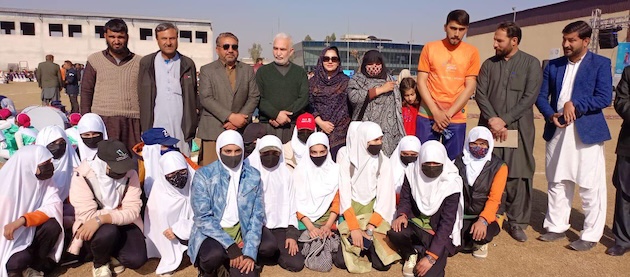
The photo shows an all-girls cricket team from Dir that made it to the finals of the inter-regional games, all without coaching, back in 2023. “Imagine what they can achieve with the right facilities and proper training,” said Noorena Shams, also from Dir. Courtesy: Noorena Shams
– “I was very happy to see the way Aina Wazir was playing cricket,” says 28-year-old Noorena Shams, a professional squash player, when she saw the seven-year-old’s video. The clip, which spread rapidly across social media, drew widespread praise for the young girl’s remarkable talent.
But the events that unfolded were like reliving her past.
“It was like watching my younger self,” said Shams, who belongs to Dir, in Khyber Pakhtunkhwa (KP), bordering Afghanistan, close to where Aina lives in North Waziristan. Both are part of Pakistan’s tribal region.
“Aina, like me, does not have a father to fight the world for her,” she said quietly.
The video also caught the attention of Javed Afridi, CEO of Peshawar Zalmi, who expressed interest in inducting Aina into the upcoming Zalmi Women League. In a post on X, he requested her contact details, promising her cricket equipment and training facilities.
“We couldn’t have imagined the video would get so much attention,” said her cousin, requesting anonymity, speaking to IPS by phone from Shiga Zalwel Khel, a village along the Pakistan-Afghanistan border in North Waziristan. “We were overjoyed; it meant new opportunities and a brighter future for her.”
But the joy was short-lived.
Caught Between Militancy and Military
The video caught the attention of local militants.
Angered by the public display of a girl playing sport, the militants abducted Zafran Wazir—a local teacher who had filmed and uploaded the video with the family’s consent—and forced him to issue a public apology for violating “Islamic values and Pashtun traditions”. It has been reported that he was tortured.
The militants have warned the family that Aina cannot leave the village and that the girl must not accept any offers from anyone. “They said she can play cricket,” said her cousin, “But there should be no videos.”
“Ordinary people in the region are caught between a rock and a hard place—trapped between militant groups and the Pakistan army’s ongoing armed operations,” said Razia Mehsood, 36, a journalist from South Waziristan. “The Taliban tolerate no dissent, and our once-peaceful region is now scarred by landmines on the ground and quadcopters and drones overhead. People are living under constant psychological strain,” she added.
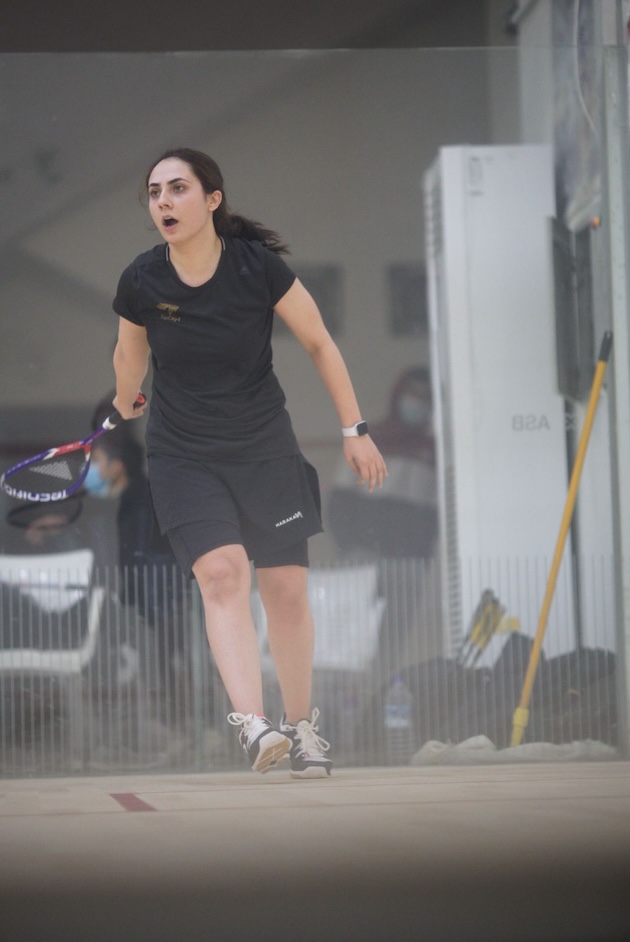
Noorena Shams, a professional squash player, has shown her support for Aina Wazir. Courtesy: Noorena Shams
Defying the Odds
“I hope she [Aina] can leave the place,” said Maria Toorpakai, 35, the first tribal Pakistani woman who went to play in international squash tournaments, turning professional in 2007.
“Whenever there is a talented girl, every effort should be made to remove her from the toxic environment—even if it means a huge sacrifice from the family,” she said, who belongs to neighbouring South Waziristan but was speaking to IPS from Toronto, where she now resides.
Both Toorpakai and Shams had to leave their homes to escape relentless scrutiny. Belonging to a conservative and patriarchal region, they had to disguise themselves as boys to pursue sports.
Toorpakai cut her hair short, dressed like a boy, and renamed herself “Genghis Khan” to participate in competitive sports.
Shams, meanwhile, was hesitantly allowed to play badminton because it was deemed “more appropriate for young women”.
Despite her parents’ support, she watched boys playing in the only cricket club in Dir, founded by her father.
But theirs is not the only journey fraught with hurdles because of a patriarchal mindset and a rigid tribal background where women’s visibility itself is contested.
“The greatest tragedy is that women’s voices are silenced and excluded from representation, while traditions disguised as religion persist, tying honour and dishonour to women,” said Mehsood. Both Toorpakai and Shams know all this too well. Their families faced constant social rebuke and accusations for bringing dishonour to their villages and tribes, all for playing a sport.
They are not alone.
Athletes like Sadia Gul (former Pakistan No. 1 in squash), Tameen Khan (who in 2022 was Pakistan’s fastest female sprinter), and Salma Faiz (cricketer) relocated from districts including Bannu, D.I. Khan, and Karak to Peshawar, the provincial capital—not just for better opportunities but to escape constant scrutiny.
“If you’re lucky enough that your grandfather, father, or brother doesn’t put a stop to your dreams, then it will be your uncles,” said Salma Faiz, the only sister among six brothers. “And if not them, the neighbours will start counting the minutes you take to get home. They’ll question why you train under male coaches, who watches your matches, and even what you wear beneath your chador. And if it’s still not them, then the villagers will whisper behind your back or land at your doorstep, convincing your parents that girls shouldn’t play sports at all.”
Faiz endured opposition from her elder brother but never gave up cricket. She eventually got selected for the national women’s cricket team.
“Aina is fortunate to receive such overwhelming applause,” said Faiz, now 40, living in Peshawar and working as a lecturer in health and physical education at Shaheed Benazir Bhutto Women University.
“I urge her parents not to surrender to social pressure; they should stand by her and encourage her. She has extraordinary talent—I’ve seen the way she plays,” Faiz pointed out.
Safe Spaces for Women Athletes
Each of these women is now creating ways for their younger counterpart to access the opportunity they lacked.
Faiz has opened her home to girls from tribal regions pursuing sport. When space runs out, she arranges hostel accommodation to ensure they get a shot at opportunities that would likely never reach their village.
Toorpakai, through the Maria Toorpakai Foundation, has, over the years, built a strong network, providing safe spaces for young sportswomen from her region.
But now she wants to go beyond providing temporary support. Her vision to build a state-of-the-art Toorpakai Sports School—a residential facility where girls like Aina Wazir can train seriously, study properly, and live without fear—remains a dream.
“All I want from the state is six acres of land near Islamabad,” she said. “Far enough from tribal hostility but accessible to girls from across Pakistan and international coaches I intend to rope in. I can manage the rest. I can raise funds.”
For over two years, her proposal has been stalled by bureaucratic red tape. “It tells you everything,” she said. “The state simply isn’t interested.”
Shams, too, like Toorpakai, runs the Noorena Shams Foundation, currently supporting four women athletes by giving them a monthly stipend for their training, transport and rent. But if anyone else needs equipment, tuition fees, or house rent, her foundation is able to furnish those needs. She even helped construct two cricket pitches for Faiz’s university.
As the first female athlete elected to the executive committees of the Provincial Squash Association, the Sports Management Committee, the Olympic Association, and the Pakistan Cycling Federation, she has championed young athletes—especially sportswomen— ensuring their concerns are heard.
“I continue to bring to the table issues of athletes’ mental and physical health, the need for international-level coaching, the safety and harassment women face, and the importance of integrating competitive sports into school curricula.”
Using Religion to Quash Dreams
Social media may have provided Aina Wazir with a platform to showcase her talent, but it has also exposed her to hostility.
“We are not against a child playing cricket,” said 27-year-old Mufti Ijaz Ahmed, a religious scholar from South Waziristan. “But she must stop once she becomes a woman. It is against our traditions for women to run around in pants and shirts in public. It is vulgar. If Aina is allowed to do this, every girl will want to follow—and we cannot accept that.”
“The mera jism, meri marzi (my body, my choice) slogan will not work here,” Ahmed went on, referring to a popular slogan that has been chanted since March 8, 2018, and which came under heavy criticism for being a rebellion against the cultural values and Islam.
“Who is he to declare that Aina can’t play?” retorted an incensed Maria Toorpakai, who also serves on the International Olympic Committee’s (IOC) Women in Sport Commission. “Whenever a girl picks up a bat or a ball, Islam is said to be endangered,” she added.
“I would respect them if they confronted and condemned the real ills in my region—drug abuse, child marriage, bacha bazi (the exploitation of adolescent boys coerced into cross-dressing, dancing, and sexual abuse), and the spread of HIV and AIDS. Instead, they obsess over distorted ideas of honour and dishonour. They neither understand the world we live in nor the true essence of Islam. Moreover, they have done nothing for our people.”
National responsibility
Ultimately, she argued, the responsibility lies with the state. It cannot afford to look away while intimidation silences young girls with talent and ambition. It is not only a personal tragedy but also a national loss when talent in remote villages is stifled before it can surface.
“It is the government’s duty to deal firmly with such elements,” she said. “And if it cannot protect its daughters, then it must ask itself why it is in power at all.”
IPS UN Bureau Report