Football and spiritualism

Ghana
Ghana
The Ghana national team is set to hold a training camp in Abu … ”We head out to Ismailia to look at the facilities that are available to our teams.

Introduction

A Dictionary of African-American Slang says juju, as it spells it, is from the Bantu word ‘njiu’, which means both ‘danger’ and a ‘fetish against harm’.

The Bantu languages are spoken in central and southern Africa.

Another Dictionary of Folklore, Mythology, and Legend, says juju is “the spirit dwelling within a made object or fetish”, in the belief of the Ibo in the lower Niger. The term is said to be applied to the ghosts and evil spirits of southern Nigeria.

Indeed, a good number of Africans generally see juju as any object that is worshipped superstitiously and used as an amulet or fetish.

So, how effective is Juju?

The interaction between sport and religion has been a significant area of study for sports psychologists, who have recognized the importance of religion and spirituality in athlete’s lives. According to research done by organizations such as Christians in Sport (CIS) in the United Kingdom, the fellowship of Christian athletes (FCA), and the centre for sport and Jewish Life in America, illustrates that a significant number of religious athletes exist in the world of sports. In Africa, religion and spirituality is a very sensitive issue. In dealing with issues in Africa, the scientific aspects of the issues are mostly ignored and the spiritual aspect rather takes centre stage. This is no cultural shock to Africans as we believe in spirituality in every facet of our lives and sports especially football is no exception. Religion and spirituality examples in sports include prayers, ritual activities, superstition, and myths just to mention a few exist in sports.

Juju scandal rocks Africa U-20 Championship final

Zambia defeated Senegal 2-0 to win the 2017 Africa U-20 Championship in a game the latter were suspected of using Juju.

Senegal were accused of using Juju in the final of the Africa U-20 Championship final, which was full of drama, as they suffered a 0-2 defeat against, hosts nation, Zambia at the National Heroes Stadium on Sunday.

One Senegalese player had to be forced by the referee to remove something he had put under his wrist band while another one was seen pulling something from his socks and throwing it in the Zambian net but Zambian players protested and quickly threw it out of the net.

During the game goals from PatsonDaka and Edward Chilufya won the Zambians their first title at youth level and their second major continental in 2012 by their senior team.

Pele

Even the best players can find themselves under the control of a superstition and when I say ‘best’ I mean Pele.

The Brazilian legend once gave a match shirt to a fan, only to then suffer a dip in form. He instructed a friend to track down the old shirt and a week later it was returned to Pele, who immediately returned to his goalscoring ways.

What the friend did not tell Pele was that he actually could not find the original shirt and simply gave him another one. If he had not lied, then football history might have been very different.

Anthony Kodjo Djifan explains ‘Voodoo’

King of Voodoo in neighbouring Togo, Anthony Kodjo Djifan, who says voodoo and juju share similar traits, believes juju plays football.

According to him, many clubs and national teams have often come into my shrine to enlist the help of Amegatetele-glikpo and Torgbui Ativinikpin (both deities) and testified to their wondrous works.

Juju and personal effort

  • Maitre Polo, a 48-year-old karate-do specialist who is popularly known in Lome stated categorically that as much as juju is powerful, the team also will have to complement its work by putting in a lot of efforts on the field of play.

Maitre Polo is an international referee and professor of judo and karate-do. The former national trainer of Togo’s martial teams at the Abuja 2003 All Africa Games, own the Plaisir Judo Club.

Malawi-based renowned local herbalist, Dr Moffat Moyo, also says he has been supplying juju to both local and foreign clubs but quickly points out that hard work and training are the best medicine.

“I can confirm those teams from within and neighbouring countries and regions come to seek help but I cannot give their details. However, what I can advise is that hard work is the best medicine. The [concoctions] that we give only boost performance. I provide farmers with ‘medicine’ that boosts crop yields but if a farmer doesn’t work hard, he won’t realize bumper yields.

“If I provide ‘medicine’ to somebody who has never practiced boxing, will that work against an

experienced boxer? That’s why I am saying one needs to put in extra effort other than waiting for juju to do everything.

Former Technical Director of Nigeria Football Association (NFA), Kashimowo Laloko, once told the BBC World Service programme that he believes juju can change the course of a football match.

“I believe it does exist (juju). As an African, we have our customs and tradition.”

Laloko was sent off before the start of the 2000 African Cup of Nations quarter-final between Nigeria and Senegal for removing what he believed to be a talisman that was near Senegal’s goal.

“I had to pick whatever I found there and I left,” he said. Although Laloko was sent off after being reported to Botswana’s Ashford Mamelodi, who was the match commissioner, he has no regrets for his controversial action five years on.

“Before the match [the Senegalese] came onto the pitch and started performing some rituals.

“An executive member of CAF then asked me if I was going to allow what was happening.

“If I had not done what I did and we had lost, journalists would have written all sorts of nonsense,” Laloko told the BBC.

Perhaps, Laloko knows where he is coming from. Not too long ago, the BBC also reported that the Ivorian government settled a 10-year dispute with disgruntled witch doctors (juju men) who claimed to have had a hand in the country’s Nations Cup victory in Senegal 1992. They had threatened mayhem to befall Ivorian football if not compensated.

The witch doctors, from a suburb of the capital Yamoussoukro, were said to have been hired by the then sports Minister before the Nations Cup finale with Ghana.

The Elephants of Ivory Coast (Cote d’Ivoire) won the trophy after out-muscling Ghana’s Black Stars in a historic and dramatic penalty shoot-out (11-10) after extra time.

As a matter of fact, the belief in the use of juju and other forms of charms and incantations is not exclusive to West Africans.

Former trainer of the South African senior national team, Jomo Sono, is a self-confessed believer in the power of charms to change his fortunes on the pitch.

Former Zimbabwe international, Memory Mucherahohwa revelations on Juju

In Zimbabwe, there have been claims and counter-claims but the use of juju has largely remained shrouded in secrecy.

One of Zimbabwe’s most revered players has lifted the lid on the practice during his time at the country’s biggest football club, Dynamos.

Memory Mucherahohwa, who led Dynamos to the 1998 African Champions League final, has revealed a world of bizarre rituals, spells and charms to enhance the team’s fortunes on the field.

In his autobiography, Soul of Seven Million Dreams, the 49-year-old former Zimbabwe international said belief in juju was so deep that it got in the way of technical strategy and negatively affected performances.

“Every week before a game the team would consult a traditional healer. I, as the team captain, would be the one to execute whatever the sangoma [witch doctor] had said. Whether it actually aided us, I do not know,” Mucherahohwa writes.

“The team believed more in juju than players’ ability. We believed in collective use of the juju and consulted one traditional healer as a team.

“In most cases, we had the team’s traditional healers who were on the team’s payroll.

“The belief was so high at the club that coach [Peter] Nyama lost his job in 1990 after being fingered by a traditional healer as being guilty of jinxing the team.”

Mucherahohwa, who retired in 2001 after captaining Dynamos for eight years, also describes an incident in which a juju-man slit the players’ toes in order to administer his “medicine” and asked the team to play through the pain.

“The cuts were so deep and our toes were in pain throughout the match.

“The pain was made worse by the fact that we drew the match 1-1 [against Canon Yaoundé of Cameroon] to bow of the competition [1987 Africa Cup of Champions].

“In that case, juju did not help us at all, but that did not stop the team from believing in it.

“My loyalty was with the team’s cause and I was prepared to do anything. I was prepared to die on the field … and even volunteered to be the team’s juju carrier.”

A comical incident was recorded in Zimbabwean football a couple of seasons back when the Highlanders played Arcadia FC in an epic league match. It was reported by a Zimbabwean website that handlers of Arcadia, probably convinced their opponents had ‘jujued’ the approved entry points, decided to use a long ladder to get the players onto the field via one of the stands.

According to former goalie of the Zimbabwean national team, MuzondiwaMugadza, juju or muti as they call it there is a commonplace but as to whether it works is another story.”

“At Zimbabwean Saints, we were regularly given juju as a team or made to do certain rituals, but at the end of the day we had to battle relegation”, Mugadza told the New-Zimbabwe.com.

Here are the most ridiculous superstitions in world football.

Sam Johnson

Former Black Stars player said superstition plays a big part in the lives of many footballers.

He has made a startling revelation about him consulting witch doctors in a bid to improve his game and break the curse of injury.

“There is Juju in football and any footballer who says otherwise is a liar. I’ve practised it before,” he told Happy Fm’sAnopaBosuo Sports,

“I used it to play football for a longer period but it got to a time I decided to stop because it wasn’t helping like the way I anticipated but I think it did a lot for me also.

“I’m now a born again Christian and won’t advise anybody to venture into that because football at moment has changed a lot from our time, it has evolved.”

KoloToure

The Ivorian insists on being the last player to come onto the pitch. It sounds a harmless enough superstition, but it landed the player in real trouble during a Champions League game between Roma and Toure’s former club Arsenal.

With Toure’s then central-defensive partner William Gallas receiving half-time treatment on an injury, Toure refused to come out before Gallas and the game restarted without them. Toure eventually took the field without permission from the referee and received a yellow card for his troubles.

John Terry

The former England skipper admitted to John Cross of The Mirror that he has ‘around 50’ superstitions that he has to observe before a match. The list of rituals is so lengthy and involved that even Rain Man would consider it a bit strange.

Before a game, John Terry listens to the same Usher CD in the car, parks in the same spot, sits on the same seat on the team bus, ties the tapes round his socks three times and cut the tubular grip for his shin-pads exactly the same length. Terry even used the same pair of ‘lucky’ shin pads for ten years before losing them at an away game in Barcelona.

I wonder if wearing a full kit (including lucky shin pads) for a match that he’s suspended for, is another of Terry’s superstitions? It would certainly explain a few things…

Johan Cruyff

He has played for and managed both Ajax and Barcelona. Embodying the “total football” philosophy, he was voted European Player of the Century in 1999.

Johan Cruyff’s rituals seemed bizarre on the face of it. The Dutch footballing legend would always punch his teammate GertBals in the stomach before a match began. A slightly less aggressive, but scarcely less peculiar habit of Cruyff’s was to spit his chewing gum into the opponent’s half of the field just before kick-off. He felt that the influence of this latter habit was vindicated when he forgot his gum in the European Cup Final of 1969. His Ajax side lost 4-0 to AC Milan.

David Beckham

He spent ten years with Manchester United, during which he won a clutch of trophies, including the 1999 treble. He also turned out for a number of other sides, including Preston North End and Real Madrid. He made over a hundred appearances for England, many as captain.

Former England captain David Beckham admits that he struggles with obsessive-compulsive disorder. This has helped push him towards a series of rituals that he felt were very necessary to perform. “I have to have everything in a straight line, or everything has to be in pairs,” he said. Beckham admitted that he has often rearranged hotel rooms to make “everything perfect”. He will move all the leaflets and books into a drawer. The former Manchester United star’s wife Victoria also revealed that Beckham will throw away a can of drink from their fridge rather than tolerate an uneven number. “He’s a weirdo,” said Victoria.

Shay Given

He has kept goal for a host of clubs including Blackburn Rovers, Newcastle United and Aston Villa. He won over a hundred caps for the Republic of Ireland.

Prior to every match, he competed in, Irish goalkeeper Shay Given would place a vial of Lourdes holy water at the back of his goal as a lucky charm. “I carry it in my kit bag and it goes everywhere with me,” he said. Given was not the first Irish goalie to take something special to the field. His predecessor in goal for the Republic of Ireland was Paddy Bonner, who would take a piece of clay from County Donegal onto the pitch in his glove bag.

David James

He began his career with Watford in the 1980s. During the following decade, as a Liverpool player, he also represented England on 53 occasions. He has also worked as a model for Giorgio Armani and as a TV pundit.

Many footballers have obsessive rituals that go “way beyond the normal”, says former Liverpool goalkeeper David James. Take James himself, for instance. His elaborate routines, which he described as “mental machinery”, began the evening before each game. He would not speak to anyone and he would seek out a urinal, wait until it was deserted and then spit against the wall. James felt it really made a difference when he was between the sticks. “I was in this mad little world where as long as I did everything in the right order, then anything could be achieved,” he said.

Laurent Blanc and Fabien Barthez

Blanc played for several clubs including Napoli, Barcelona and Manchester United. A cultured defender, he won 97 caps for France and a World Cup winner’s medal in 1998.

A kiss is just a kiss – unless it’s a puckering ritual that leads to your country winning the football World Cup. French defender Laurent Blanc took to kissing the bald head of a teammate, goalkeeper Fabien Barthez, before each game at the 1998 World Cup finals. It made for quite an arresting sight: the big-haired Blanc kissing the vast, barren orb of Barthez. But Blanc’s superstition worked – the French went all the way to the final, in which they beat mighty Brazil. The French team had another tradition during the tournament: listening to the Gloria Gaynor song ‘I Will Survive’ in the dressing room.

Incest and spiritual sacrifice: The shocking story of Shiva N’Zigou

A former Ligue 1 footballer has claimed his mother was killed in a “spiritual sacrifice” in order to further his football career.

Shiva N’Zigou was a striker who played for both Nantes and Reims in the French top flight between 2001 and 2010.

In an amazing confessional given at a church his homeland, the former Gabon international also claims he lied about his age and had sexual relations with his aunt and his sister.

According to N’Zigou, his father murdered his mother in a ritual killing so that his son could keep all the money he earned from football to himself.

N’Zigou also says his parents doctored his passport at the beginning of his career to make him five years younger. Until now it was believed he was 34, but it seems he is really closer to 39.

In the year 2000, N’Zigou became the youngest player to score at the African Cup of Nations when he netted for Gabon in a 3-1 defeat to South Africa at the age of 16 years and 93 days. However, this recent revelation means he would actually have been 21 at the time.

N’Zigou reveals some shocking details about his personal life.

“I had [sexual] relations with my aunt,” he says.

“These relations happened again with my sister. I slept with my sister.

“I slept with a man. And I had another long-term relationship also with a man.”

This isn’t the first time a footballer has been linked with the extremely murky world of ritual killings.

In 2014, former Rennes and Sunderland striker Asamoah Gyan was forced to deny rumours he had been involved in the sacrificial murder of his friend, Ghanaian rapper Castro.

At this juncture, let’s review some observable facts in sports that has spiritual connotations.

Prayer

Javier Hernandez a.k.a ‘Chicharito’ is one player who says a prayer before a game kick off, the ritual has been the same before every game. In his previous team, he was not playing regularly and he got frustrated. His confidence as a player was dropping every time he was selected to play. This situation got a point of him quitting football. He finally got his chance and he took it. So he always goes on his knees to say a prayer to God for helping him become a success. This shows his belief in divine authority.

Lionel Messi is one player seen often raising his hands and looking at the sky during his goal celebrations. In an interview, he said “I am doing this because I dedicate my goals to grandmother. She took me to football but now she cants see how far I have come. Nevertheless, she continues to help and my family”. This shows that it is not only Africans who believe in life after death, the whites also do.

Ricardo Kaka is another football player who believes that his technical ability is a God-given gift. He says that he has perfected the gift God gave him and that is why he plays well. His belief in God is observed in his goal celebration and at times wearing t-shirts under his jersey with religious inscriptions.

Ritual activity and superstitions

Superstitions are commonplace in football. Plenty of players, coaches and fans strive to achieve some kind of spiritual sanctuary before a game by performing various rituals.

Giovanni Trapattoni, an Italian coach who considered the most successful in Serie A is deeply superstitious and used to take holy water to matches when he was boss of the national team. The holy water was provided by his sister, who just happened to be a nun (roman sister).

Raymond Domenech, a former France national team coach would consult the horoscopes before making his team selection. Players even claimed to have been dropped because alignment of the stars was against them.

Winfried Schaffer, coach of Cameroon national team during the 2002 African Cup of Nations in Mali was arrested along with his assistant Thomas Nkono for trying to place a voodoo charm on the pitch before the game.

Tony Sylva, a Senegalese goalkeeper was accused of hiring a witch doctor to smear his goal posts magic ointment. After the alleged treatment, Sylva went 448 minutes without considering a goal.

In Ghana, fans and supporters of the two biggest clubs always seek for supernatural powers for intervention or favours when they meet in a match. The winner of the match mostly attributes it to their spiritual fathers or fetish priest and priestess over the abilities of their managers or players.

Kotoko-Hearts clashes

Superstition and juju over the years have played a major role in the biggest fixture in Ghana football

Although some may disagree that superstition has no role to play in football, ardent followers and players of Ghana Premier League clubs Accra Hearts of Oak and Kumasi Asante Kotoko know it takes more than just playing to win.

Sometimes the rule of form guide is defied because football is not just the physical play.

Here is a recount of some of the Hearts of Oak versus Asante Kotoko matches that were dominated by juju and superstition.

1984 – Sunday, 23rd December 1984

Asante Kotoko suffered a 0-2 defeat at the hands of Hearts of Oak in Accra in 1984. The Porcupine Warriors went down 0-2 in the first half through goals from OfeiAnsah in the 3rd minute and George Lamptey in the 5th minute.

During the break, something bizarre happened: Asante Kotoko returned from the dressing room having changed from their red jersey into white for the second half.

According to the reports, a juju man told them to change their jersey because the white jersey was going to turn things around for them. However, it was mission impossible as they failed to stage a comeback in the second half.

1989 – 31st December 1989 (League game Cum 31st Revolution Cup Match)

Hearts of Oak 2-2 Asante Kotoko (6-7penalties)

The Ghana Football Association (GFA) introduced penalty shootouts to decide a winner whenever a game ended in a draw in the 1989-1990 season.

Hearts of Oak were held to a two-all draw at the Accra Sports Stadium by Asante Kotoko with the Porcupine Warriors subsequently winning 6-7 in the penalty shootout to break the tie.

Sarfo Gyamfi nicknamed the Black President, a key member of the Asante Kotoko team was told by a juju man that two different balls will be used for the game- a ‘blue and black’ ball and a ‘white and blue Adidas’ ball.

According to the juju man, the black and white ball will favour Asante Kotoko, whereas the blue and white ball will be to the advantage of the Phobians.

Sarfo Gyamfi and Mohammed Odoom, who kept the post for Kotoko, fashioned a covert plan: whenever a blue and white ball was introduced they resolved to deflate it with a needle they hid in Odoom’s gloves.

Interestingly, Kotoko got their two goals through the black and white ball and conceded the two goals from the blue and white ball.

Odoom, meanwhile, was ruthless: he deflated the blue and white balls whenever it was in play.

The ball that was eventually used for the penalty shootout was a black and white Adidas ball. Asante Kotoko won 7-6 to take two points and the trophy at stake, while Hearts of Oak got a point for drawing in regulation time.

Also, because it was an anniversary game to commemorate the December 31, 1981 coup d’etat that brought the then incumbent military government into power, the Head of State, Flt Lt Jerry John Rawlings, led the delegation to inspect both teams before kickoff.

Sarfo Gyamfi, however, snubbed a handshake from Rawlings because apparently, the juju man had told him Kotoko would lose should all the players exchange a handshake with the Head of State.

The ‘Black President’, as Gyamfi was nicknamed, was suspended for some games for snubbing Ghana’s leader, but it was later rescinded.

1998 – Hearts 1-1 Kotoko (7-6 penalties)

This game was a June 4 Cup match (June 4, 1979 was the date on which Flt Lt Jerry John Rawlings staged his first coup d’etat, bringing into power the Armed Forces Revolutionary Council – AFRC – that replaced the Supreme Military Council II government of General F.W.K Akuffo).

Both Kotoko and Hearts had been hinted by spiritualists after they went for consultations that the results won’t go in their favour if they start with eleven men on the field.

So they both started the game with ten men – before Lawrence Amankwa and Jacob Nettey came on for Asante Kotoko and Hearts of Oak respectively. The match ended 1-1 and Hearts of Oak won 7-6 in the penalty shootout to break the tie.

31st August 2003 (Hearts 1-1 Kotoko)

Asante Kotoko, afraid of being hypnotized under a presumed Hearts of Oak spell came to the stadium in bits and pieces.

When they finally assembled in the dressing room, they used the tartan tracks briefly for the warm-up and only went onto the pitch after their opponents had done so.

The game itself was also full of drama, as Hearts of Oak scored the opener through Bernard Dong Bortey with YusifAlhassanChibsah firing the equalizer which created much controversy.

Chibsah shot the ball in after goalkeeper Eben Dida who was brought down was cruelly forced to spill the ball in the six-yard box.

The decision angered the home fans who resorted to hurling bagged water and other missiles at the match official and players.

2005 – Asante Kotoko (1-1 Hearts of Oak)

The final of the 2004 CAF Confederation Cup which was played in February 2005 is believed to have had some superstitious acts.

Accra Hearts of Oak who won on penalties after the game ended in a 1-1 draw claimed they used the hair of the Asante Kotoko coach Hans Dietar Schmidt to perform some rituals.

It was amazing on the day that Charles Taylor, who was the most exciting player of the Porcupine Warriors, was taken out by the German at a time they were leading 1-0 against Hearts of Oak.

A group of Hearts of Oak fans later came out to ‘confess’ that they masterminded their side’s victory by collecting Dietar Schmidt’s hair from the saloon he usually has his hair done and that influenced his decision to substitute Charles Taylor.

2005 – (Hearts 1-1 Kotoko)

Events from the start of the match set up the tone for an uncompromising game as both teams decided not to come into the stadium in their respective team buses but rather preferred to walk into the stadium.

More was to come when after the usual warm up, both sides appeared in the tunnel dressed in all-white jerseys resulting in a lot of deliberations between officials of the teams.

Kick-off was held up for more than one hour 10 minutes.

After sanity prevailed, Hearts players went to the field of play in a strip of green jerseys.

Another piece of drama occurred that delayed the match further as Kotoko had to change their white socks to yellow as it clashed with the colours of Hearts of Oak.

All these happenings took place because both sides had consulted some juju men concerning their fate and they were advised to go through those exercises if they wanted to avoid a defeat.

2012 (Kotoko 2-1 Hearts)

Dr. K.K Sarpong, who was unknown in the football circles until he took over the Asante Kotoko job as the Executive Chairman of the club in 2011 was advised to seek spiritual backing from a juju man if he wanted to be famous among the Kotoko fraternity.

Various accounts claim he was introduced to a spiritualist at Nkoranza in the BrongAhafo Region and in Kotoko’s home game against Hearts of Oak, the Chief Executive Officer of the Ghana National Petroleum Corporation (GNPC) allegedly had to harbour a female fetish priest in his house to chant to ensure Kotoko won the game.

Asante Kotoko scored first before Mahatma Otoo drew Hearts of Oak level. K.K Sarpong who was troubled with the outcome was forced to place a call to the fetish priest.

The priest told the Executive Chairman of the club that he shouldn’t worry because Kotoko was going to carry the day.

Michael Akuffo’s stunner from long range in added time won the Kumasi giants all the three points, bringing relief to Sarpong.

(19 March, 2017) Hearts Pip Kotoko 1-0 in Top League Clash…

Vincent Atinga became the hero as he ensured that the Porcupine Warriors’ unbeaten run in the Super Clash was halted with a late penalty

Hearts of Oak defeated rivals Asante Kotoko 1-0 in matchday eight of the Ghana Premier League at the Accra Sports Stadium.

Defender Vincent Atinga slotted in a late penalty for the hosts after Ahmed Adams handled the ball in Kotoko’s box.

Kumasi Asante Kotoko marched to the pitch walking backwards, which was awkward after Hearts coach Frank Nuttal has entered to stir the supporters into battle spirit, but it was Kotoko coach Croatian ZdravkoLugarusic who receive the loudest cheers when he also waved the reds.

Hearts won the toss and the fabulous lads kicked off in grand fashion, but before the clock could start clicking, Hearts player kept falling on the pitch as if they were not fit or hypnotized, as all clashes between the two sides are characterized by juju or some mystic forces.

Fans of Kumasi Asante Kotoko may still be cursing Referee Samuel Suker for blowing a doubtful penalty against them to break the eight-year jinx of Accra Hearts of Oak not winning at the Accra Sports Stadium.

Leicester City 2015-16 EPL Win

Leicester City won their first Premier League title in the 2015-16 season; owner Vichai Srivaddhanaprabha has sought spiritual guidance since buying Leicester City.

The reburial of Richard III – which took place in March 2015 which coincided with the team’s dramatic rise from the relegation zone, but in Thailand, the home of the club’s owners, there’s a belief that one of the sports’ most unlikely triumphs has more to do with spirituality.

Buddhist monks in Thailand believe they helped the team’s remarkable run. Over the last three years, Buddhist monks have been visiting the club to bless the pitch, bestow special sacred cloths on the players and spread karma.

Chief Monk PhraPrommangkalachan is in little doubt that his unseen powers are propelled Leicester’s unforeseen rise.

Also in Rwanda during a football championship in 2016, Rayon Sports and Mukura sport met and during the last minute in the first half, Musa Camara who was the striker of the losing side, Rayon sport, decided to help his team by resorting to magic.

He went into the goalposts of his opponent and planted something in the ground at the left post and quickly ran away.

At the very beginning of the second half, the same player, Musa Camara scored a goal and tied up the match.

JUJU IN GHANA

In Ghana, the use of juju in matches is a commonplace, but the practice is deeply steeped in secrecy.

Clubs like Accra Hearts of Oak and Kumasi Asante Kotoko, Gullivers of the Ghanaian game, have occasionally used undesignated entry points to the stadium and got punished for the offence.

The two clubs might have been told by whoever they consulted that using the approved entry points signified a calamitous result. And, they dared not disobey.

In the words of former Ghana coach, BurkhardZiese: “Club officials in Ghana draw a lot of money from teams under the pretext of paying a juju man but end up pocketing it “.

Perhaps, that explains why owner of Ghanaian premiership side, Tema Real Sportive, Y.A. Ibrahim, recently called on the Professional League Board (PLB) and the Ghana Football Association (GFA) to, as a matter of urgency deal severely with juju men in the premiership.

“Football games are supposed to be won on merit on the field and not by evil spirits,” he said, adding that when the situation was not controlled, a time would come when the results of matches in the country’s football will be determined by soothsayers.

As far as football is concerned, win, draw or lose is unavoidable. Surprisingly when European teams are not faring well, fans of these teams take it as normal but when it comes to their local clubs failing to perform above their expectations, they turn around to attribute their team’s abysmal performance to a spiritual problem.

The likes of Real Tamale, Gbeewa United, Susubribi, Fankoba, Kpando Heart of Lions, Ho Voradep, Hasacas, Eleven Wise are teams that wouldn’t have been relegated if indeed Juju is real. Also, India and Benin would have dominated the world football easily without any difficulty all because people who seek for supernatural powers normally go to these places to empower themselves.

In the late ’70s players of Glorious Accra Hearts Of Oak failed to score a goal against their Guinean counte
A hundred years on and I see you, ICU

CLR James, the great Caribbean intellectual, published two books in 1938. The first, The Black Jacobins, is an account of the Haitian Revolution that is now widely considered a classic.
The second, A History of Negro Revolt, is less well known.
It looks at black struggles for freedom in Africa, the Caribbean and the United States from 1739 to early 1938. It includes a section on the Industrial and Commercial Workers’ Union (ICU) in South Africa.

James wrote: “It will be difficult to overestimate what [was] … achieved between 1919 and 1926 … The real parallel to this movement is the mass uprising in San Domingo. There is the same instinctive capacity for organisation, the same throwing-up of gifted leaders from among the masses.”

The ICU was formed in Cape Town in 1919 and, although we are in the year of its centenary, it is an anniversary that has been met mostly with silence. In a time in which the response to the increasingly icy winds of global capitalism is often that of national chauvinism, the history of the ICU offers a window into a very different kind of political imagination.

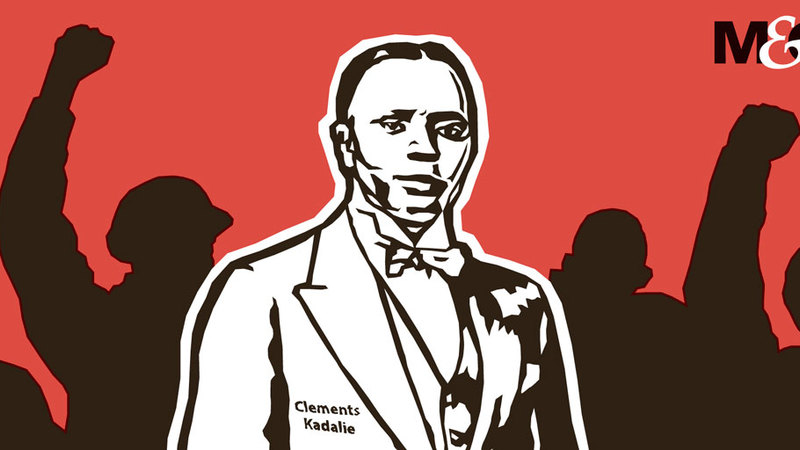
Clements Kadalie arrived in Cape Town in 1918 from Nyasaland [now Malawi], where he was born and educated in a mission school, via Rhodesia [now Zimbabwe], where he had worked as a mine clerk. In his autobiography he wrote that it was “the systemic torture of the African people in Southern Rhodesia that kindled the spirit of revolt in me”.

While walking down Darling Street on a Saturday afternoon, he was pushed off the pavement and then assaulted by a white police officer. A white socialist intervened; the two got talking and decided that the moment was ripe for political action. They called a public meeting in Buitengracht Street on January 17 1919 to discuss working conditions on the docks and the ICU was formed with 24 members.

The new organisation drew from syndicalist ideas, the enthusiasm for the Russian Revolution that had rushed around the colonial world and — through the Caribbean workers on the docks — Garveyist ideas.

By December that year, the union was able to call a strike that shut down the docks for three weeks. The following year, Alex la Guma opened an ICU branch in the coastal town of Lüderitz, in South West Africa (now Namibia).

The ICU rapidly developed into a mass movement with support from workers, peasants, squatters and intellectuals across Southern Africa, without regard for colonial borders. Its leaders included people from different countries in the region, and the Caribbean.

At a time when women couldn’t join the South African Native National Council — the forerunner of the ANC — as full members, it is striking that one of the central aims of the ICU was to take a position in favour of equal pay for men and women and to “see that all females in industries and domestic services are protected by the organisation, by encouraging them to enrol in all branches of the union and to help them obtain a living wage”.

In Port Elizabeth in 1920, Samuel Masabala tried to organise a general strike. He was arrested at a mass meeting held in Korsten on October  23. A crowd of 3 000 gathered to demand his release and tried to storm the police station. Twenty-four people were shot dead and another eight were wounded.

After the killings, shop workers in Port Elizabeth slipped pamphlets into boxes of goods moving into the rural areas and within a month, farm workers in the Orange Free State had heard of the riot and were threatening their bosses. There was a growing panic among white people about the “red flag people” and calls to raise commandos. In 1924, presaging things to come, Masabala was dismissed by the ICU for financial irregularities.

In 1925 a branch of the ICU was opened in Durban. AWG Champion soon assumed control. Champion had been expelled from Lovedale, a highly regarded mission school, for hoisting the red flag and organising pupils in a militant protest against the school’s disciplinary regime that concluded with the stoning of the principal.

He did not always separate his own finances from that of the organisation, but he was a charismatic and effective organiser. Within 18 months of his arrival in Durban the local ICU employed 58 secretaries, clerks and organisers.

The ICU expanded into rural areas at a rapid rate and 21 village branches were opened in Natal in three months in 1927. By that year the Durban branch claimed 27 000 paid-up members, an astonishing number given that there were about 35 000 to 40 000 Africans in the city.

Rapid growth was not unique to Durban. Between 1927 and 1928 the movement spread with the velocity of Mao’s prairie fire and branches were lit up in villages around the country. Estimates of its national membership at this point range from 100 000 to 250 000. Its politics often took on a millenarian form, sometimes awaiting the arrival of armed African-Americans as liberators.

In Durban, the ICU largely built its extraordinary mass support by an astute use of the courts. Its legal successes included lifting the curfew on African people; gaining an exemption for black women from carrying night passes; ending the power of the police to make arbitrary arrests of African people; ending character references in passbooks; ending prohibitions on Africans trading in the city; and, most famously, ending the system by which African people were dipped, like cattle, in tanks of disinfectant on arrival in the city.

But, at the end of 1928, Champion was suspended pending an investigation into claims of financial irregularities. Most of the Natal branches followed Champion when he left the national ICU to form a breakaway faction (ICU yase Natal). It was vigorously opposed by the Zulu monarchy and the sugar barons.

The new movement explicitly opposed itself to the elite politics of the ANC, which it derided as “amarespectables” and whose meetings it sometimes forcibly closed. It ran night schools; staged music and dance performances; held large marches; continued to make innovative use of the courts; and spoke in many churches, becoming what liberation theology would later call a “prophetic voice” in these churches.

In 1929, women began to organise against municipal canteens and for the right to brew beer in towns across Natal. Raids on domestic brewers had been relentless, violent and destructive, often involving theft and harassment. In November that year, the protests reached Durban. The ICU quickly responded with two large marches from the ICU Hall at 117 Prince Edward Street — the first was headed by a brass band, a man in a kilt and flag bearers carrying the Union Jack and a red flag with a hammer and sickle.

In June, the dockworkers — who were housed together and well able to mobilise swiftly and effectively — declared a boycott of the beer halls.

Champion was initially hostile to the idea but, in the end, had to lend his support, as did Josiah Gumede, the ANC president. Gumede had visited Moscow in 1927 for the celebration of the 10th anniversary of the Bolshevik revolution. At an ICU meeting at Cartwright’s Flats, Gumede declared: “The ICU has taken the place of the Congress absolutely in Natal and that shows that the officers of the Congress were wrong to think that they could think for other people … Now let us combine and take our freedom …”

On June 17, all five of the Durban beer halls were picketed by the dock workers and a white motorist was killed. A mob of white people rushed to the ICU Hall to exact vengeance.

Paul la Hausse gives a concise account of events: “White ‘vigilantes’ laid siege to the ICU Hall and, by evening, close on two thousand white civilians, from every class, and three hundred and fifty policemen faced six thousand stick-wielding African workers. These Africans had poured from every quarter of town to relieve the beleaguered men, women and children in the hall and in the ensuing clashes one hundred and twenty people were injured and eight mortally wounded.”

In the end the “vigilantes” destroyed the ICU Hall, along with the instruments of its famous brass band. In September 1930, Champion was banished from Natal for three years.

The political initiative shifted to the Communist Party of South Africa which, amid opposition from the ICU leadership, organised a mass pass-burning by workers on December  16 1930. It was led by Johannes Nkosi, a leader of the dockworkers. More than 2 000 passes were handed in to be burnt before the police shot and killed Nkosi on the platform. The protesters fought back and two others were killed.

The communist party went underground. By 1931 the ICU was a spent force in South Africa, although various offshoots continued for the next 30 years and it continued to flourish in Rhodesia until the 1950s.

We could say, with Rosa Luxemburg, that: “The most precious, because lasting, thing in the rapid ebb and flow of the wave [of struggle] is its mental sediment.”

Jason Jingoes, a much-arrested ICU leader, captured the essence of that sediment in an interview in March 1927: “Although its initials [ICU] stood for a fancy title, to us Bantu it meant basically: when you ill-treat the African people, I See You. I see you when you do not protect the Bantu; when an African woman with her child on her back is knocked down by the cars in the street, I see you; I see you when you kick my brother, I see you.”

Richard Pithouse is an associate professor at the Wits Institute for Social and Economic Research

Sanctions the ultimate disaster

On Wednesday March 20, The Washington Post published an article written by Tatenda Chitagu, Paul Schemm and Siobhan O. Grady entitled; “It was too late . . . Hundreds are dead as rescue efforts stall in Mozambique and Zimbabwe” in light of the Cyclone Idai disaster.

While millions of everyday sisters and brothers in Zimbabwe, Mozambique and Malawi are emotionally devastated, by the death of their children, parents, grandparents and countless loved ones, the last thing they need is to watch the US-EU media imperialist apparatus attempt to politicise a natural disaster.

In the article published in The Washington Post, the Minister of Local Government July Moyo is quoted as saying “If we closed schools, we would have saved lives”.

The article shared two additional quotes from Minister Moyo; “We understand there are bodies which are floating” and “some are floating all the way into Mozambique”.

The article then turns its attention to a Zimbabwean mother Nyevero Sinyabuwe who had two children killed when a boulder rolled on top of their hut in a Ngangu township, the next comment by Sinyabuwe was that many Zimbabweans directly affected by Cyclone Idai, were forced to flee their homes and leave the dead behind.

Sinyabuwe also added her children are among those whose bodies may never be recovered and many others may now be buried in mass graves.

Minister Moyo’s insightful analysis and emphasis on sanctions, put not only US-EU Imperialism on notice, but our sisters and brothers at home and abroad who are in panic mode because of a natural disaster, but have yet to realise living under sanctions 24/7 for 18 years is even worse.

The article began by discussing how students at the St. Charles Lwanga School huddled in classrooms and their dining hall waiting to be rescued, mourning two of their classmates and a security guard whose lives were claimed by Cyclone Idai.

The article highlights how boulders are blocking roads in Zimbabwe and how people walked for miles with corpses of their loved ones, and fellow citizens until they reached destinations not compromised by Cyclone Idai.

This account while short and immediate, captured the wicked nature of a newspaper, which is one of the main lighting rods of the US-EU media imperialist apparatus. Because Minister Moyo is very close to President Mnangagwa, this explains why a newspaper still seething with anger concerning the outcome of last year’s Presidential elections, would not hesitate to make him look not only grossly incompetent and bewildered, but as a hapless observer completely disengaged from the current environmental crisis.

If Zimbabwe had a neo-colonialist government, Minister Moyo would be all over CNN, BBC and the Voice of America with Don Lemon, Chris Cuomo draping all over them pleading with their viewers to help the people of Zimbabwe, Mozambique and Malawi.

Lemon and Cuomo might actually welcome the opportunity, primarily because they have run out of angles to discuss Jussie Smolett, R. Kelly and the children of the wealthy and affluent exercising privilege, in order to force their spoiled brats into colleges and universities.

Those who still believe in objective journalistic standards and integrity are more than likely wondering if Minister Moyo shared how his ministry was addressing the situation, and if so why The Washington Post chose not to share it instead of presenting a narrative of doom and gloom.

For all who are curious, the usual suspects IE Humanity and Inclusion, Catholic Relief Services, The Association for the Children of Mozambique, Joint Aid Management, UN International Disaster Relief System, Gift of the Givers, Doctors Without Borders, and CARE are already in position to do their part.

If concerned Africans in the Diaspora, decide to limit their efforts to assist Zimbabweans in need when cyclones and droughts hit, but ignore the devastation of sanctions, they might as well join these organisations who are part of the Humanitarian Relief Industrial Complex.

What we are speaking to is band aid politics, which is the only way the children of Mother Africa can best describe the relief efforts representing the Governments, who feed off not only her rape and plunder, but the extraction of human resources.

Unfortunately, the people of Zimbabwe may not record how many of these humanitarian workers, have used this opportunity to criticise President Mnangagwa and ZANU-PF, amongst the Western-based humanitarian workers who embrace the US-EU Imperialist agenda, some will even go as far as to encourage the cyclone victims to join the efforts of MDC, ZCTU and the 400 civil society groups in their daily cowardly and unpatriotic efforts.

When environmental challenges beyond our control and capacity as mortal human beings occur, we can count on the most genuine patriots who have been fearless in the propaganda war to shield us, from the trappings of utter confusion courtesy of the US-EU Imperialist media apparatus.

The other angle by the US-EU Media Imperialist Apparatus was to highlight the financial offerings by the colonialists and imperialists, who unfortunately feel a momentary act of good will, wipes the slate clean from the countless atrocities them and their forefathers have committed on our sacred motherland.

The European Union donated $3,9 million, Britain $7,9 million and the United Arab Emirates donated $5 million.

As this pertains to Zimbabwe US-EU sanctions have cost the government and people over $50 billion since 2001, therefore the drops in the bucket by British and EU Imperialism are quite frankly a spit in our faces.

The main equivalent that comes to mind, is how inside US borders the fraternity of billionaires and multi-millionaires flood homeless shelters with turkeys on Thanksgiving and Christmas, but virtually ignore the homeless and hungry the other 363 days of the calendar.

We must also let it be known that, concerning natural disasters in Southern Africa, as long as SADC nations stand behind the people and Government of Zimbabwe, US-EU Imperialism’s response will always be casual.

It was only a few years ago, when El Nino wreaked havoc in Southern Africa, only to see the US-EU Imperialist media apparatus, all but ignore how droughts had brought Mother Africa’s most politically stable and agriculturally fruitful region to a complete standstill.

When we analyse and contextualise how the US-EU Imperialist media apparatus lied to the world, by painting the picture that it was governmental mismanagement not drought that compromised Zimbabwe’s Land Reclamation Programme, the hateful and vindictive nature of our enemies was on full display for all to see.

The only aspect of Cyclone Idai that troubles US-EU Imperialism, is their employees in MDC, ZCTU and the 400 Civil Society Groups have to take a break from their fraudulent and opportunist demonstrations and feeble strike attempts, to pose as compassionate crusaders concerned about the victims of Cyclone Idai’s welfare.

How many times since Cyclone Idai hit have Nelson Chamisa and Evan Mwarire prayed for the victims? It would not the least bit surprising if Mr Chamisa, pastor Mwarire and Douglas Coltart are given millions of dollars by their sponsors and benefactors, in order to hit the streets for the purpose of upstaging President Mnangagwa and ZANU-PF, because they feel during a disaster Zimbabweans won’t care who the relief comes from.

We pose this question because a cyclone doesn’t distinguish between ZANU-PF or MDC members, however when you advocate a diplomatic measure rooted in genocide, maybe its best you don’t mock anyone’s spirituality by uttering the name of the creator.

At the height of so called African Americans heroic fight against lynching, Queen Mother Ida B. Wells wrote two books Southern Horrors and the Red Record, Dr WEB DuBois revealed the names of lynching victims in each publication of the Crisis magazine, and Billie Holliday sang Strange Fruit.

At the risk of being labelled know it all Pan African solidarity workers in the Diaspora, perhaps the time has come to create a publication revealing every Zimbabwean whose deaths can be attributed to US-EU sanctions.

This way Africans worldwide that focus disasters go far beyond the realm of environmental calamities. What better way to honour true patriots like Comrade Judith Makanya.

——
Obi Egbuna Jr is the US Correspondent to The Herald and External Relations Officer to ZICUFA (Zimbabwe Cuba Friendship Association)

He finds humans ‘too unpredictable’ — so he studies cougars for a living

My adviser, Heather Williams, was instrumental in helping me learn to be creative and think on my feet as a scientist. I was able to do field work with her for three years. It was just great. She knew that I was somewhat self-conscious of my academic capabilities and she said, “Here in the field, toughness and other things like that are what get you in; you’re a football player, and this is where you should shine.” So I really devoted myself to field work.

I learned that your GPA or GRE score won’t define your capabilities as a grad student or as a researcher. Learning that lesson was important because [in addition], there [already] aren’t that many people who look like me in the field. And so to know that intelligence can also be defined in a number of ways was heartening.

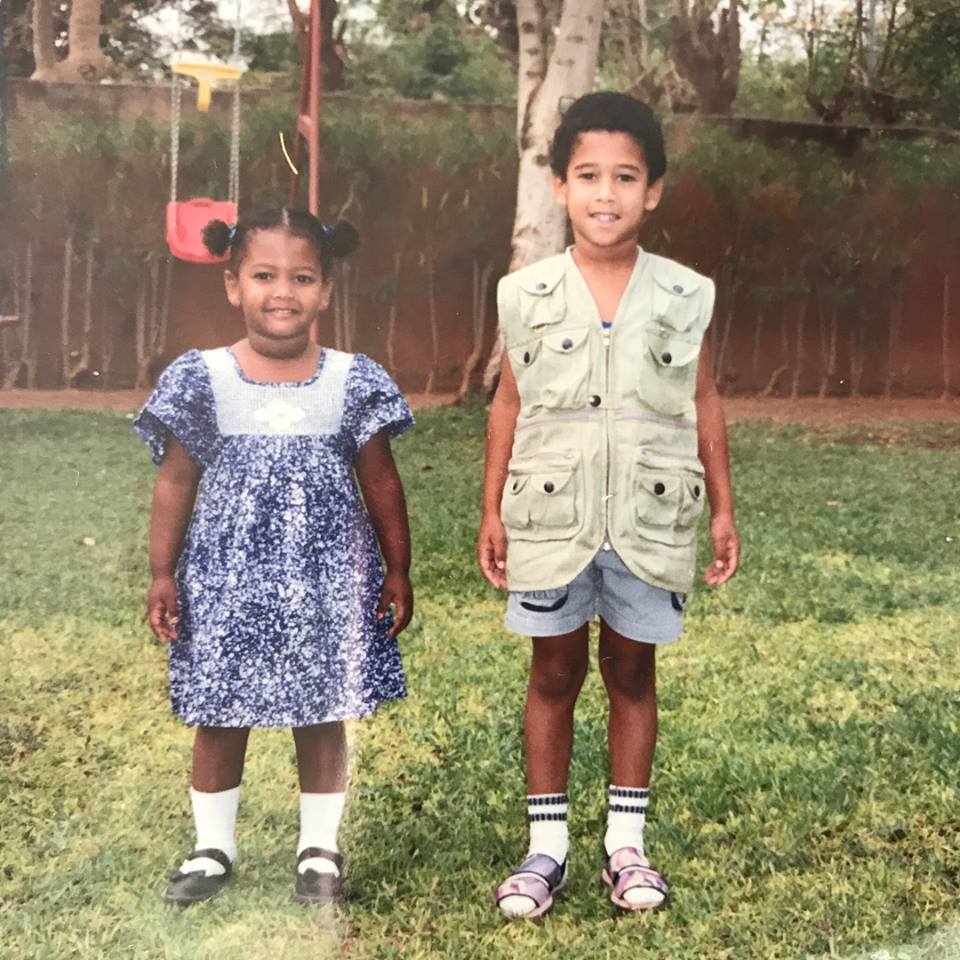
Clint Robins, right, as a child with his sister in Ouagadougou, Burkina Faso. (Photo provided by Clint Robins)
Clint Robins, right, as a child with his sister, Elsa Robins, in Ouagadougou, Burkina Faso. (Photo provided by Clint Robins)

I’ve always been a little bit more interested in the big, cuddly, fuzzy things — but I did bird research [at Williams that] taught me a lot about difficult field work. You’re in remote locations, working long hours and having to pay attention while you’re collecting data. I also learned to work in a 50-meter-by-50-meter square for 12 straight hours, looking at birds, and not go crazy.

When I graduated, I applied to a bunch of grad programs and didn’t get into any; and then applied to a few jobs, and nothing landed there. I moved home and contacted the local dive shop that certified me at 12. They said, “We could use someone to teach dive classes, and we have trips that go down to the Caribbean. Do you think you’d be willing to get your dive masters this weekend. We can help you do that at cost?” I was sold. I worked for them for a while. And then I volunteered at the University of Minnesota Lion Lab, going through camera trap videos and identifying species. Someone at that lab had done work on a grizzly bear project in Montana and put in a good word for me. I did that, and then a Fulbright in Malawi.

I grew up listening to stories that my mom told me about the gorillas in Rwanda and the Rwandan genocide — a lot of people killing people, a lot of people killing wildlife. I thought about that when looking into grad schools. I thought, there’s got to be a way to create more balance as far as people being able to live with people, and with wildlife. I think that was a sort of childish sentiment at the time, but I looked at labs that explored predator-prey relationships with large carnivores and Aaron Wirsing’s predator ecology lab came up pretty quickly. [Washington] is a state that is by and large proud of its wildlife and eager to find ways to protect it and manage it effectively. I felt like Washington was the place to be.

There really aren’t that many African Americans doing fieldwork here in Western Washington, especially the kind of fieldwork I do. Most of my fieldwork occurs in managed forests — there’s mostly foresters and some Fish and Wildlife personnel. I love seeing them, and them me. They’re the ones who’ve helped me with my research. My guiding experienced helped me a bit with fieldwork, but by far, I’ve learned more from my adviser, Brian Kertsonwho’s a carnivore scientist with WDFW [Washington Department of Fish and Wildlife]. For my whole first year in the field, we’d go out together every day and I got to watch what he did up close.

For my master’s degree, I looked at how urbanization impacts cougar foraging ecology. What is the probability that a cougar takes a domestic animal as urbanization increases? The truth is, cougars do eat urban prey like raccoons and coyotes, but they just don’t kill a lot of domestic animals. We found the more development you have, the greater chances that cougars are going to kill something that you don’t want them to kill — but almost 80 percent of their diet is deer. We were also able to demonstrate that those areas where cougars kill are exurban landscapes, and involve just a few cats. The behavior that we’re really worried about cougars exhibiting is unlikely in most areas.

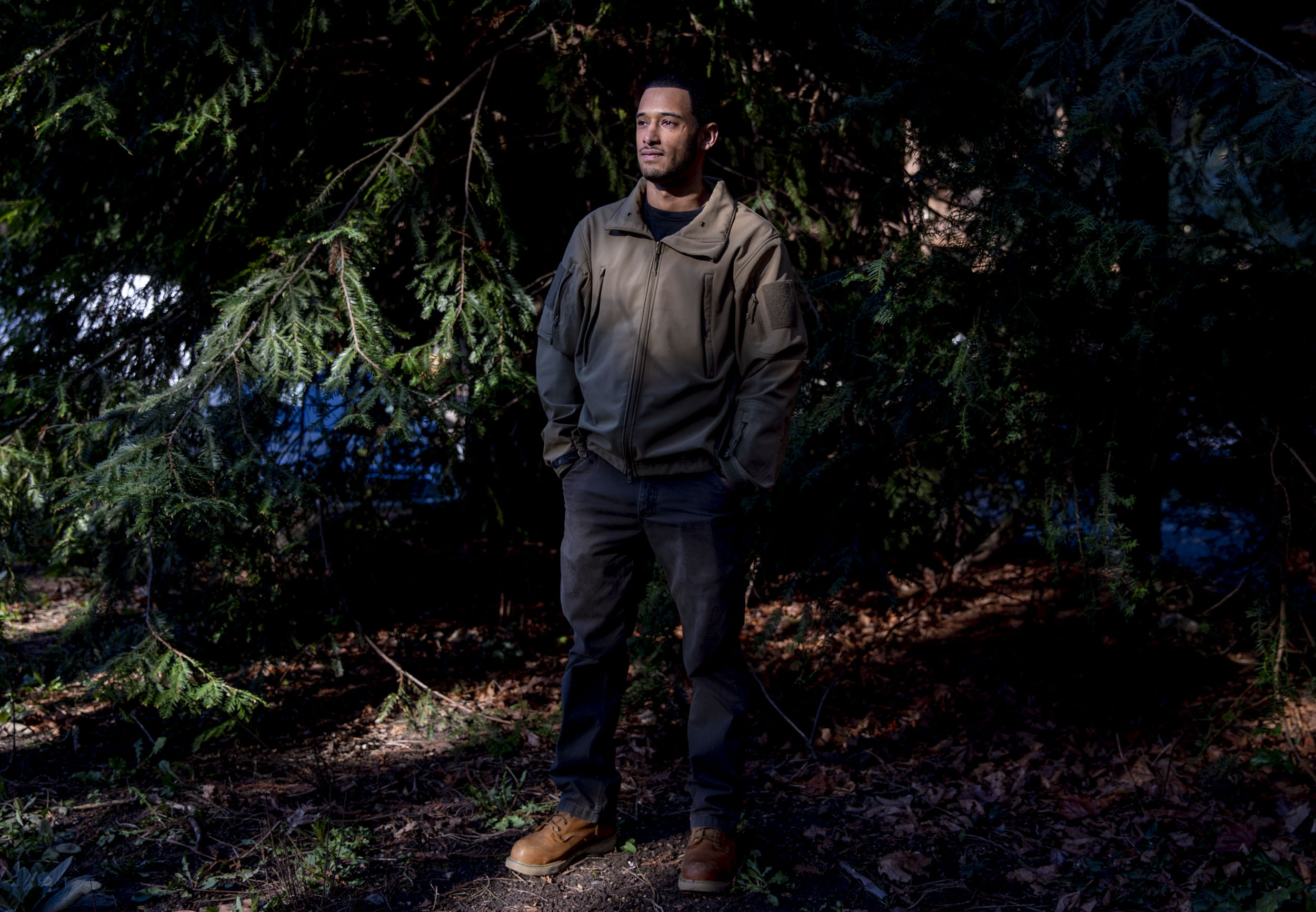
University of Washington Ph.D. student Clint Robins on March 15, 2019.
University of Washington Ph.D. student Clint Robins on March 15, 2019. Robins is a part of the School of Environmental and Forest Sciences and focusing his research on cougar hunting behavior. (Photo by Dorothy Edwards/Crosscut)

Right now, I’m looking into the bear-cougar relationship in light of urbanization, because bears sometimes scavenge cougar kills. I’m curious as to whether urbanization decouples that relationship and instead bears are foraging on human resources more.

Cougar attacks on humans are rare. When they happen, it’s often because they misidentify the human as prey or there’s maybe something wrong with the cat — they’re malnourished or something like that. Unfortunately, you need collared animals to get data like this, which means that it takes years of work and a lot of community support and patience.

I’m sure that there’s been many times where I’m hiking in the woods where cougars have been either aware of my presence or have left because of it. I guess there’s another level of respect there, knowing that they are predators.

Tribeca Film Festival Announces 2019 Short Film Lineup

Written and directed by Carlos Baena, Spain’s ‘La Noria’ is one of six animated shorts selected to compete at this year’s Tribeca Film Festival.

NEW YORK — The 18th annual Tribeca Film Festival has announced its 2019 lineup of 63 diverse and engaging short films in competition, including 31 world premieres. This year’s shorts program includes a cross-section of international and U.S. filmmakers, curated from a record 5,131 submissions with female filmmakers directing 45% of the selections. The short films will be presented in 11 distinct competition programs, consisting of six narrative, four documentary, and one animation program. There will also be special screening programs for the annual Tribeca/ESPN Sports Film Festival and the debut of shorts from The Queen Collective, a program aimed at accelerating gender and racial equality behind the camera. The 2019 shorts lineup is programmed by Sharon Badal and Ben Thompson. The 2019 Tribeca Film Festival takes place April 24 through May 5.

“We spent a great deal of time curating programs that reflect the diverse interests of our audiences,” said Sharon Badal, Vice President of Filmmaker Relations and Shorts Programming. “This year we emphasize identity, community, and humanity while also entertaining our audience with some laughter, fun, and adventure.”

The flagship New York Shorts Program this year is entitled Streetwise and contains all world premiere narrative films, and back by popular demand are comedy (Funhouse) and sci-fi (Down to Earth). Among the new programs are the music-focused On Tour and the female-focused No Shortcuts documentary programs, and curated especially for late-night is the self-explanatory program WTF.

This year’s shorts program continues Tribeca’s tradition of discovering talent and encouraging filmmaker alumni development. Alumni returning this year with short films include Alexandra Barreto (Lady Hater), Matthew Bonifacio (Master Maggie), 2019 Oscar nominee Marshall Curry (The Neighbors’ Window) David Darg (Lazarus), Lance Edmands (Whiteout,) Henry Hayes (Rogers and Tilden), Nadia Hallgren (After Maria), Jonathan Halperin (These American Truths), Scott Floyd Lochmus (Metronome) Smriti Mundhra (St. Louis Superman), Dana Nachman (Hook Up 2.0) and Victoria Rivera (Night Swim).

Tribeca’s Short Film program celebrates international storytelling with 44% of its selections representing 19 countries, including: Australia, Canada, China, Denmark, Egypt, France, Iran, Ireland, Japan, Malawi, Mexico, the Netherlands, Norway, Peru, Spain, Taiwan, Ukraine, the United Kingdom, and the United States.

The 2019 Oscar winner Bao, directed by Domee Shi world premiered at last year’s Tribeca Film Festival and is the latest in the Festival’s long tradition of curating films that have been nominated or won an Oscar. Recipients of the Tribeca Film Festival awards for Best Narrative Short, Best Documentary Short, and Best Animated Short will qualify for consideration in the Academy Awards’ Short Films category, provided the film complies with Academy rules. Tribeca Film Festival also gives out a Student Visionary Award to a student filmmaker.

The 2019 Tribeca Film Festival Shorts Program is as follows:

Animated Shorts Curated by Whoopi G

Showcasing imaginative storytelling and captivating craft. (This program is suggested for those 14 and older.)

  • La Noria, directed and written by Carlos Baena. (Spain) – New York Premiere. A young boy who loves to draw and build ferris wheels encounters strange creatures that turn his life upside down. With English subtitles.
  • PeiXes, directed and written by Juan C. Pena. (Spain) – New York Premiere. A bold fish wants to see that there is beyond the water, and it is determined to succeed… With Antón Cancelas. In Spanish with English subtitles.
  • Mind My Mind, directed and written by Floor Adams. (Netherlands) – International Premiere. When relying on social scripts to survive the social world, it’s not easy to go off-script. Especially if you’re obsessed with German dive bombers and just want to date a girl. With Simon Hodges, Cézanne Tegelberg, Adam Fields, Faye Bloomfield, Lesley Hughes, Elias Vervecken.
  • My Mother’s Eyes, directed and written by Jenny Wright. (UK) – New York Premiere. My Mother’s Eyes is a story about motherhood and loss in the abstracted world of childhood memory.
  • These American Truths, directed by Ed Bell, Clementine Briand, Pierce Freelon, Jon Halperin, Aaron Keane, Drew Takahashi, written by Pierce Freelon, Jon Halperin. (USA) – World Premiere. How skin became color, color became race, and race became power. Or… the relationship of Sally Hemings and Thomas Jefferson in an animated musical.
  • The Downfall of Santa Claus (Julenissens fall), directed and written by Robert Depuis. (Norway) – North American Premiere. Santa Claus whole existence is dependent on a little boy’s faith. With Jan Sælid, Jonathan Gebuhr, Fridtjov Såheim, Tone Merete Aas Skålevik. In Norwegian with English subtitles.

Down To Earth

Sci-Fi shorts explore the “gravity” of the situations.

  • Storm, directed and written by Will Kindrick. (USA) – World Premiere, Short Narrative. An unexpected user is accidentally launched through a series of turbulent splash portals when his government enforced dating app malfunctions in his bathtub. With John Bubniak, Corey Potter, Gwen Van Dam, RJ Howard, Corey L Page.
  • Bunker Burger, directed and written by Adam Yorke. (Canada) – World Premiere, Short Narrative. The members of an underground, post-apocalyptic bunker invite a psychologist from the radioactive and chaotic surface to audition for a place to live among them. With Enrico Colantoni, Sara Mitich, Tony Babcock, Jennifer Vallance, Sarah Gnocato, Bethanie Ho.
  • Flyby, directed and written by Jesse Mittelstadt. (USA) – World Premiere, Short Narrative. When a passing asteroid begins to affect how people perceive time, one man struggles to keep up with a life that is quickly disappearing into the future. With Tommee May, Riley Egan, Adam Mayfield, Akul Dang, Bardot Corso, Charles Chu, Chelsea Harris, Chris Reagan, Justin Rupple, Phil Abrams, Ryan Shrime, Torrey Devitto, Valeria Maldonado, Caity Ware.
  • Unregistered, directed by Sophia Banks, written by Erin Dignam. (USA) – World Premiere, Short Narrative. Unregistered is a narrative short film following a new couple navigating analog and digital connections in the not-too-distant future of a dystopian Los Angeles. With Dylan Penn, Trevor Jackson, David Lee Smith.
  • Zero, directed and written by The Brother’s Lynch. (USA, UK) – World Premiere, Short Narrative. After a mysterious electromagnetic pulse renders the world’s technology useless, a young girl finds herself isolated and alone with only her father’s strict set of rules to keep her alive. With Bella Ramsey, Nigel O’Neill, Danny Shooter, James Oliver Wheatley.
  • The Shipment, directed and written by Bobby Bala. (Canada) – New York Premiere, Short Narrative. Unable to afford repairs to his old broken ship, a struggling interplanetary transporter and his daughter are stranded on a wretched spaceport as his morality is put to the test. With Aleks Paunovic, Ishana Bala, Robert Maillet, Omari Newton.

Express Yourself

Shorts that show their true colors.

  • This Perfect Day, directed and written by Lydia Rui. (Australia) – World Premiere, Short Narrative. Across the street, a music store is closing. With only a few minutes to make their move, Julia realizes it’s time for them to face their fears. With Michelle Keating, Lee Mason, Hannah Koch.
  • Ponyboi, directed and written by River Gallo. (USA) – New York Premiere, Short Narrative. Ponyboi, an intersex sex-worker, looks for love and to escape his seedy life in New Jersey. Through an encounter with the man of his dreams, Ponyboi discovers his worth. With River Gallo, Keith Allan, Aaron Schwartz, Sophie Labelle, Logan Arevelo.
  • War Paint, directed by J.C. Doler, Taylor Bracewell, written by J.C. Doler. (USA) – New York Premiere, Short Narrative. War Paint is a reverse first-person narrative telling the true story of Joe, a veteran of the Vietnam war. The film follows him as he enlists, prepares, and heads off to war. With J.C. Doler, Alex Dafnis, Patrick Kirton, Chris Alan Evans, Paul Petersen, Clayton Henderson.
  • Street Flame, directed and written by Katherine Propper. (USA) – New York Premiere, Short Narrative. Following the death of their friend, a crew of skaters and motley street teens imagine their own rituals to commemorate her on their own terms. With Sauve Sidle, Isaiah Shepard, Jessica Price, Kaitlyn Mitchell, Curtis Rhodes.
  • Driving Lessons, directed and written by Marziyeh Riahi. (Iran) – North American Premiere, Short Narrative. According Iranian law, Bahareh must have her traditional, chauvinistic husband accompany her on driving lessons so she and her instructor will not be alone. With Linda Kiani, Alireza Sanifar, Salar Khamseh, Sanaz Mesbah. In Persian with English subtitles.
  • Maja, directed by Marijana Jankovic, written by Marijana Jankovic, Adam August. (Denmark) – New York Premiere, Short Narrative. Maja, a six-year-old Serbian girl, has a difficult time interacting with the other kids — and she ends up being misunderstood and lonesome. With Selena Marsenic, Jesper Christensen, Dejan Cukic, Marijana Jankovic. In Danish, Serbian with English subtitles.

Forces of Nature

Character docs that demand attention.

  • 99 Problems, directed by Ross Killeen. (Ireland) – International Premiere, Short Documentary. The inside scoop on the murky world of the ice cream business.
  • Framing Agnes, directed by Chase Joynt, Kristen Schilt. (USA) – North American Premiere, Short Documentary. In 2017, trans artists gained access to a 1950s archive of never-before-seen histories of transgender people. Through reenactment and documentary, they revive the past to redefine the future. With Angelica Ross, Chase Joynt, Max Wolf Valerio, Silas Howard, Zackary Drucker.
  • Stanley Stellar: Here for this Reason, directed and written by Eric Leven. (USA) – World Premiere, Short Documentary. 40 years of New York City gay history told through photographs and the man behind the camera there to capture it all.
  • War Mothers: Unbreakable, directed by Stefan Bugryn. (Ukraine, Australia) – World Premiere, Short Documentary. What does an 18-year-old do when war comes to her country? In Ukrainian with English subtitles.
  • St. Louis Superman, directed by Smriti Mundhra, Sami Khan. (USA) – New York Premiere, Short Documentary. Bruce Franks Jr., a Ferguson activist and battle rapper who was elected to the overwhelmingly white and Republican Missouri House of Representatives, must overcome both personal trauma and political obstacles to pass a critical bill for his community.

Funhouse

It’s all fun and games in these comedic shorts.

  • Hook Up 2.0, directed and written by Dana Nachman. (USA) – New York Premiere, Short Narrative. A sorority girl figures out a way to eliminate all risk from the late-night ritual that is the college hook up. Now all she needs is to find a guy to test out her idea on… and with. With Veronica Dunne, Billy Meade.
  • Westfalia, directed and written by Haley Finnegan, written by Haley Finnegan. (USA) – New York Premiere, Short Narrative. A couple embarks on an epic road trip in an attempt to gain more followers after their Instagram rival’s fame doubles overnight. With Haley Finnegan, Brian Flynn, Nicholas DePriest, Belle Adams, Laura Lawson Visconti, Nick Visconti.
  • Lady Hater, directed and written by Alexandra Barreto. (USA) – World Premiere, Short Narrative. A self-proclaimed “guy’s girl” finds herself stuck in an all-female, goddess seminar. With Allyn Rachel, Natalie Zea.
  • I Think She Likes You, directed by Bridey Elliott, written by Teresa Lee (Screenplay), Christine Medrano. (USA) – World Premiere, Short Narrative. When Justine and Julia pick Jake up at a bar, it’s not quite the threesome he was expecting. With Christine Medrano, Teresa Lee, Josh Fadem.
  • Peggy, directed and written by Justin O’Neal Miller. (USA) – New York Premiere, Short Narrative. Everything always seems to work out perfectly for Peggy, but her social graces are put to the test when she throws a birthday party for her eight-year-old son. With Jason MacDonald, Sarah Blackman, Josh Warren, Kurt Yue.
  • Hard-ish Bodies, directed and written by Mike Carreon. (USA) – World Premiere, Short Narrative. A plus-size male stripper knocks on the wrong door and is thrust into the criminal underworld. His only chance to save the club and himself is to do what he does best … DANCE! With Mike Carreon, James C Leary, Regina Soto, Heidi Lornz, Marcone Cangussu, Adam Mengesha, Isaac Garza, Meghan Malone.
  • 40 Minutes Over Maui, directed by Michael Feld, Josh Covitt, written by Steve Feld, Michael Feld, Josh Covitt. (USA) – New York Premiere, Short Narrative. For 40 minutes on January 13, 2018, the fate of the world hung in the balance. For Larry and Penny… their Hawaiian vacation became a lot more meaningful. With Julie Brister, Johnny Ray Meeks.

Life Preserver

Docs that make a difference.

  • Keepers of the Wild, directed and written by Adam McClelland. (USA) – New York Premiere, Short Documentary. Keepers of the Wild follows baby orphan elephants and their human keepers in the constant struggle to keep these majestic, complex and loving animals alive and wild in Kenya’s largest National Park.
  • A Tale of Two Kitchens, directed by Trisha Ziff, written by Trisha Ziff, Sheerly Avni. (USA, Mexico) – World Premiere, Short Documentary. Two countries, two restaurants, one vision. A Tale of Two Kitchens explores how a restaurant is a place of dignity and community across Mexico City and San Francisco. In English, Spanish with English subtitles. A Netflix release.
  • All On a Mardi Gras Day, directed and written by Michal Pietrzyk. (USA) – New York Premiere, Short Documentary. In a gentrifying New Orleans, Demond is part of a secret culture called Mardi Gras Indians, African-American men who spend all year sewing feathered suits to decide who’s “the prettiest.”
  • Learning To Skateboard In a Warzone (If You’re A Girl), directed by Carol Dysinger. (UK) – World Premiere, Short Documentary. Learning To Skateboard In A Warzone (If You’re A Girl) is the story of young Afghan girls learning to read, write — and skateboard — in Kabul. In Dari with English subtitles.

No Shortcuts

Navigating life is tough in these female-focused docs.

  • Reality Baby, directed by Nodlag Houlihan. (Ireland) – International Premiere, Short Documentary. A group of friends is given lifelike baby dolls to care for over 24 hours. How will they rise to the challenges of teenage motherhood?
  • Little Miss Sumo, directed and written by Matt Kay. (Japan, Taiwan R.O.C., UK, USA) – North American Premiere, Short Documentary. Female sumo wrestling champion Hiyori confronts obstacles both inside and outside the ring in an attempt to change Japan’s national sport forever. In English, Japanese with English subtitles. Also playing in Tribeca/ESPN Sports Film Festival: Sports Shorts
  • A Love Song for Latasha, directed by Sophia Nahli Allison. (USA) – World Premiere, Short Documentary. A dreamlike conversation with the past and the present, this film reimagines a more nuanced narrative of Latasha Harlins by excavating intimate memories shared by her cousin and best friend. With Tybee O’Bard, Shinese Harlins, Zoe Flint, Nnenna Brown, Juanita Jennings, Marley Cortez, Londyn Sharp, Raigan Alex, Irie Hudson.
  • After Maria, directed by Nadia Hallgren. (USA) – World Premiere, Short Documentary. Strong Puerto Rican women forced to flee the island after Hurricane Maria have bonded like family in a FEMA hotel in the Bronx. They seek stability in their new life as forces try to pull them apart. In Spanish with English subtitles. A Netflix release.

On Tour

Music docs that speak to heart and soul.

  • Xmas Cake – This American Shelf-Life, directed by May Yam, written by Petra Hanson. (USA) – World Premiere, Short Documentary. A coming-of-middle-age story about a female singers’ journey from hot to not, and what ensues across cultures — from New York to Tokyo. With Petra Hanson.
  • Lost Weekend, directed by Bradford Thomason, Brett Whitcomb. (USA) – World Premiere, Short Documentary. In 1984, two friends from small town Pennsylvania win an MTV contest and the chance to party with Van Halen for 48 Hours. With Kurt Jefferis, Tom Winnick.
  • A Song Can’t Burn, directed and written by Roscoe Neil. (UK) – New York Premiere, Short Documentary. A Song Can’t Burn follows a Scottish musician working with refugee children who have crossed the border from Syria to Lebanon.
  • Lazarus, directed by David Darg. (USA, Malawi, UK) – World Premiere, Short Documentary. Lazarus is a short documentary following Lazarus Chigwandali, a street musician with Albinism from Malawi as he teams up with a London-based music producer to record his debut album. With Clem Kwizombe, Esau Mwamwaya, Johan Hugo, Ikponwosa Ero. In Chechewa, English with English subtitles.
  • That’s My Jazz, directed by Ben Proudfoot. (USA) – World Premiere, Short Documentary. Milt Abel Jr., a world-renowned pastry chef, reflects on his relationship with his deceased father and famed Kansas City jazz musician, Milton Abel Sr. With Albert Trepanier Jr., Bobby “Hurricane” Spencer, Cathy Luke, Henry Franklin, Ibrahima Sow, Kaleb Ross, Lasse Funch Sørenson, Lasse Mørck, Marie Buch Hoyer, Michael Be Holden, Norman Weatherly, Retha Spencer, Richard Spicer, Søren Høst.

Roads Less Traveled

Destinations unknown.

  • East of the River, directed and written by Hannah Peterson. (USA) – New York Premiere, Short Narrative. When Teonna is unexpectedly suspended from school, she encounters a girl from her past who takes her on an adventure through the city. With Ayiana T. Davis, Steloni Mason, Malachi Mack.
  • Pearl (Zhen Zhu), directed and written by Yuchao Feng. (China) – World Premiere, Short Narrative. In a desolate Chinese fishing village, a single mother gives her 6-year-old daughter one final lesson. With Lu Liu, Yating Cao, Menghua Zhong, Jinnai Chen. In Chinese with English subtitles.
  • Black Hat, directed by Sarah Smith, written by Phillip Guttmann. (USA) – New York Premiere, Short Narrative. A pious Hasidic man living a secret double life misplaces his hat one night, which will cause his two separate lives to collide in a way he never imagined. With Adam Silver, Sebastian Velmont, Shelly Kurtz, Alan Lennick, Carolyn Michelle Smith, Nicholas Hylander.
  • Snare, directed by Madeleine Gottlieb, written by Madeleine Gottlieb, James Fraser. (Australia) – New York Premiere, Short Narrative. At an aging Chinese restaurant in 1997, a dad asks his punk musician son to help him follow his dreams. With Steve Rodgers, James Fraser.
  • Carlito Leaves Forever, directed and written by Quentin Lazzarotto. (France, Peru) – New York Premiere, Short Narrative. A short poetic film following Carlito, a young man living in an indigenous village at the heart of the Amazonian jungle, who decided to leave and change his life forever. With Carlito Tirira Meshi, Alfonsina Sehua Tioshe.
  • Jebel Banat, directed and written by Sharine Atif. (Egypt) – North American Premiere, Short Narrative. Two Bedouin sisters hide on a mountain, escaping forced marriages and embarking on a journey of freedom. With Sara Soumaya Abed, Jala Hesham, Soliman El Jebaly. In Arabic with English subtitles.
  • Where I End And You Begin, directed and written by Will Hoffman, Julius Metoyer. (USA) – World Premiere, Short Narrative. Snapshots of different lives are woven together to illuminate something deeply human about the country: despite obvious differences, emotions provide a common ground.

Streetwise

New York shorts that can handle themselves.

  • The Dishwasher, directed and written by Nick Hartanto, Sam Roden. (USA) – World Premiere, Short Narrative. A chef at a fine dining restaurant in New York City asks a Mexican dishwasher to find good tortillas. With Kevin Balmore, Elisha Yaffe, Holly Lynn Ellis, Teddy Cañez, Arisleyda Lombert, Richie Moriarty. In English, Spanish with English subtitles.
  • Night Swim, directed by Victoria Rivera, written by Victoria Rivera and Neda Jebelli. (USA) – World Premiere, Short Narrative. Three teenage girls break into a shut down pool. When uninvited guests show up, their friendship is tested and one of them is left behind. With Adriana Santos, Chloe Roe, Adea Lennox.
  • Rogers and Tilden, directed by Henry Hayes, written by Zolan Kanno-Youngs, Henry Hayes. (USA) – World Premiere, Short Narrative. Fresh out of prison in a Brooklyn he barely recognizes, Marcus is looking to seize his second chance. But first, he needs that driver’s license. With Gbenga Akinnagbe, Curtiss Cook Jr, Lorrie Odom.
  • Master Maggie, directed by Matthew Bonifacio, written by Julianna Gelinas Bonifacio, Matthew Bonifacio. (USA) – World Premiere, Short Narrative. A celebrity acting coach is interrupted by an unknown actor begging for her help for a TV audition. What follows is an unexpected journey for the both of them. With Lorraine Bracco, Neil Jain, Kenan Thompson, Brian Dennehy, Chris Henry Coffey.
  • Metronome (In Time), directed and written by Scott Floyd Lochmus. (USA) – World Premiere, Short Narrative. In this wordless fable, an ailing elderly maestro and a young piano prodigy venture out of their musical isolation in hopes of selling their beloved piano. With David Patrick Kelly, Gabriel Gurevich, Patrick Cannell, Adaku Ononogbo, Mehdi Barakchian, Valerie Steinberg.
  • The Neighbors’ Window, directed and written by Marshall Curry. (USA) – World Premiere, Short Narrative. The Neighbors’ Window tells the true story of a middle-aged woman with small children whose life is shaken up when two free-spirited twenty-somethings move in across the street. With Maria Dizzia, Greg Keller, Juliana Canfield, Bret Lada.

WTF

Watch These Films curated especially for late-night.

  • Twist, directed and written by Aly Migliori. (USA) – World Premiere, Short Narrative. No choice but to walk home alone, Hannah sees an opportunity for a ride, but others see an opportunity in her. With Helena Howard, Megan Seely, Henry Dwyer, Mike Donovan, Justin Hofstad, Matthew Russell.
  • Whiteout, directed by Lance Edmands, written by Lance Edmands, Sarah Tihany. (USA) – World Premiere, Short Narrative. When a young couple encounters a strange old man wandering in a snowstorm, they must decide if he needs help, or if he has more sinister intentions. With Sarah Tihany, David Call, Patrick M Walsh Jr..
  • His Hands, directed and written by Arron Blake, Darius Shu. (UK) – North American Premiere, Short Narrative. Two men of different ages meet for the strangest encounter of their lives. With Arron Blake, Philip Brisebois.
  • Momster, directed and written by Drew Denny. (USA) – World Premiere, Short Narrative. When notorious bank robber, the Momster, catches her daughter Angel mid-gunfight, Angel thinks she’s being rescued… until she realizes she has to do the saving. With Brianna Hildebrand, Amanda Plummer, John Ennis, Josh Fadem, Ryan Simpkins.
  • Hunting Season, directed by Shannon Kohli, written by Hannah Levien. (Canada) – New York Premiere, Short Narrative. Callie, a small town gas station attendant, has an unexpected encounter which will change the course of her life forever. With Hannah Levien, Luke Camilleri.
  • 11:50, directed and written by Yiguo Chen. (China) – World Premiere, Short Narrative. In the pouring rain, a junkie takes the hotel key of a man that his car has accidentally killed. As he walks into the hotel and finds that room, he has to face a mysterious journey that will never have an end. In Chinese with English subtitles.
  • Snaggletooth, directed and written by Colin Bishopp. (USA) – New York Premiere, Short Narrative. An unusual girl needs to get her teeth fixed at midnight. With Jolie Ledford, Sierra Marcks, Susan Louise O’Connor, Thomas Cokenias.

Tribeca/ESPN Sports Film Festival: Sports Shorts

A spectrum of stories, styles, and sports, this collection of athletically-minded short films will take audiences on the exciting personal journeys of these athletes.

  • The Boxers of Brule, directed and written by Jessie Adler. (USA) – World Premiere, Short Documentary. Shaionna, a young Lakota woman, creates a girls’ boxing team to combat the youth suicide epidemic threatening the Lower Brule Sioux Reservation. With the odds stacked against her, she must confront her own demons while fighting to bring hope and healing to her community. With Shaionna Grassrope-Ziegler, Davita Thompson, Shilea Grassrope, Pam Ziegler, Jada Whitelight, Rianna Rodriguez. In English with English subtitles.
  • Mack Wrestles (Mack Wrestles), directed by Taylor Hess, Erin Sanger. (USA) – New York Premiere, Short Documentary. Mack Beggs loved wrestling — it gave him a sense of purpose and a sense of self. Mack Wrestles, takes the audience behind the scenes as this gifted athlete from Euless, Texas, struggles against the outside forces that stigmatize transgender athletes.
  • Who Says I Can’t (Who Says I Can’t), directed by Kristen Lappas. (USA) – World Premiere, Short Documentary. Rob Mendez was born without arms or legs, but after more than a decade of acting as an assistant football coach, he finally got the opportunity he’d always wanted: the head coaching position at a major high school. Who Says I Can’t chronicles Mendez’ first season at the helm of his own team.

Also playing in Tribeca/ESPN Sports Film Festival: Sports Shorts  — Little Miss Sumo

The Queen Collective shorts

The debut of two Queen Collective documentaries, supported by Proctor & Gamble, aimed at accelerating gender and racial equality behind the camera. Created by diverse young women – these short films inspire positive social change and embody Procter and Gamble’s commitment to supporting gender and racial equity, on-screen and behind the scenes.

  • Ballet After Dark, directed by B.Monét. (USA) – World Premiere, Short Documentary. Ballet After Dark tells the story a young woman who found the strength to survive after an attack. She created an organization that is helping sexual abuse and domestic violence survivors find healing after trauma through dance therapy.
  • If There Is Light, directed by Haley Elizabeth Anderson. (USA) – World Premiere, Short Documentary. Fourteen-year-old Janiyah Blackmon wrestles with her new life in New York City as her mom tries to move her family out of the shelter system and into a stable home. With Janiyah Blackmon, McKayla Blackmon, Jakena Blackmon.

Passes and Tickets for the 2019 Tribeca Film Festival

Advance selection ticket packages are now on sale. All packages can be purchased online at tribecafilm.com/festival/tickets, or by telephone at (646) 502-5296 or toll-free at (866) 941-FEST (3378).

Also available for purchase now is The Hudson Pass, an all-access pass to screenings and talks taking place at BMCC, Regal Battery Park Stadium, Village East Cinema, and SVA theaters as well as full access to all events at the Festival Hub at Spring Studios, which includes VR and Immersive projects, Movies Plus screenings and access to festival lounges.

Single tickets cost $24.00 for evening and weekend screenings, $12.00 for weekday matinee screenings, $30.00 for Tribeca TV and Movies Plus $40.00 for Tribeca Talks panels and $40.00 for Tribeca Immersive. Single ticket sales begin Tuesday, March 26 and can be purchased online through the Tribeca Film Festival film guide or through the call center.

Tickets for events at The Beacon Theatre are available for purchase online starting March 19.

Packages and passes are now available for purchase on the 2019 Tribeca Film Festival App, on iTunes and Google Play.

Source: Tribeca Film Festival

At 98, Chicago chaplain still brings her ministry to Illinois prisons every Sunday: ‘How can I quit when people need me?’

“When you are dealing with the prison population, it’s not a high-glitter, high-glamour position that people want to put a spotlight on,” said Devorah Crable, a Chicago-based filmmaker who’s been working on a documentary about Sinclair’s life. “She has been a soldier on the field standing up for inmates’ rights and fighting for the programs that restore their dignity, their self-esteem and their pride.”