

Civil Society, Democracy, Global, Headlines, Human Rights, IPS UN: Inside the Glasshouse, TerraViva United Nations
– In the month of February 2025, one year ago, United Nations Secretary-General Antonio Guterres commenced his briefing of the media by announcing that “I want to start by expressing my deep concern about information received in the last 48 hours by UN agencies — as well as many humanitarian and development NGOs — regarding severe cuts in funding by the United States.” He went on to warn that ““The consequences will be especially devastating for vulnerable people around the world.”
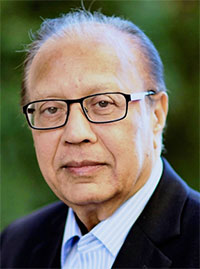
Anwarul K. Chowdhury
UN80 Initiative – Reform or Pressure?
That budgetary crisis was attempted to be put off by launching the anniversary-rationaled and liquidity-crunch-panic-driven, window-dressing reform agenda – the so-called UN80 Initiative. These long overdue structural and programmatic reforms of the UN system have been on the agenda of at least for the last four Secretaries-General but without having much significant impact, except acronym-changing, mandate-creeping and structure-tweaking, and now these days, staff-relocating.
An Alarm Bell for Financial Collapse
End of this January again the Secretary-General said in a letter to all UN Member States that cash for its regular operating budget could run out by July, which could dramatically affect its operations. He also called on the to fundamentally overhaul the UN’s financial rules to prevent an “imminent financial collapse”.
Why now ask the member states to do something concrete? Why not in February 2025 when he sounded the alarm himself?
It reminds me of the somewhat similar Aesop’s fable about boy who cried wolf.
Lamenting Limited Power – No Power, No Money
In the past, Secretary-General Guterres lamented to the media asserting that “… it is absolutely true that the Secretary-General of the United Nations has very limited power, and it’s also absolutely true that he has very little capacity to mobilize financial resources. So, no power and no money.”
That is the reality which every Secretary-General faces and has been aware of. That is also known generally to the people who follow the United Nations regularly and thoroughly understand the functional complexity of the world’s largest multilateral apparatus.
Why then does this reality surfaces and brought to public attention only when the UN leadership fails to carry out the mandated responsibilities?
I believe strongly that this “very limited power”, as worded by SG Guterres, should be highlighted as often as possible to avoid unnecessary and undue expectations of the global community about the UN and its top leadership. No Secretary-General has pointed out these limitations as he campaigned for the post and on assuming the office, as far as I know.
Current SG Guterres is no exception. He would have been realistic and factual if he had pointed out the limitations – better termed as obstacles – to his leadership as he took office in 2017, and not in 2026 after being in office for nearly nine years. This built-in operational weakness and inability of the world’s most important diplomat have always been there.
Controlling Or Quitting?
Some people speculate that the US is using its financial clout and pressure to threaten the collapse of the UN.
The US has always been using its huge power of veto and almost one-fourth of the budgetary contributions to the operations of the UN system. That is a reality which should be kept in mind by the leadership of the UN and its Member States, unless the Charter of the UN is changed to create a more democratic organization in the true sense.
For a long time, the US has used the part payment arrangements for its legally due contributions, with full understanding and acceptance of the Secretary-General, so that it can avoid losing its voting power and get its own pound of flesh each time such instalment payments are made.
I believe the US wants to use the world body in its own way by controlling, not quitting.
A Woman at the Helm for The UN
In this context, let me reiterate that after eight decades of its existence and choosing nine men successively to be the world’s topmost diplomat, it is incumbent on the United Nations to have the sanity and sagacity of electing a woman as the next Secretary-General in 2026 when the incumbent’s successor would be chosen.
There is a need for creative, non-bureaucratic and pro-active leadership initiative for a real change to ensure avoidance of “crying wolf” syndrome disrupting the work and activities of the most universal multilateral body with the mandate for working in the best interest of humanity.
Ambassador Anwarul K. Chowdhury is a former UN Under-Secretary-General, one-time Permanent Representative of Bangladesh to the United Nations, Chairman of the UN General Assembly’s Administrative and Budgetary Committee (1997-1998), former Senior Special Adviser to UN General Assembly President (2011-2012) and President of the UN Security Council (2000 and 2001) and a two-term Vice Chairman of the all-powerful UN Committee on Programme and Coordination (1984-85).
IPS UN Bureau






