

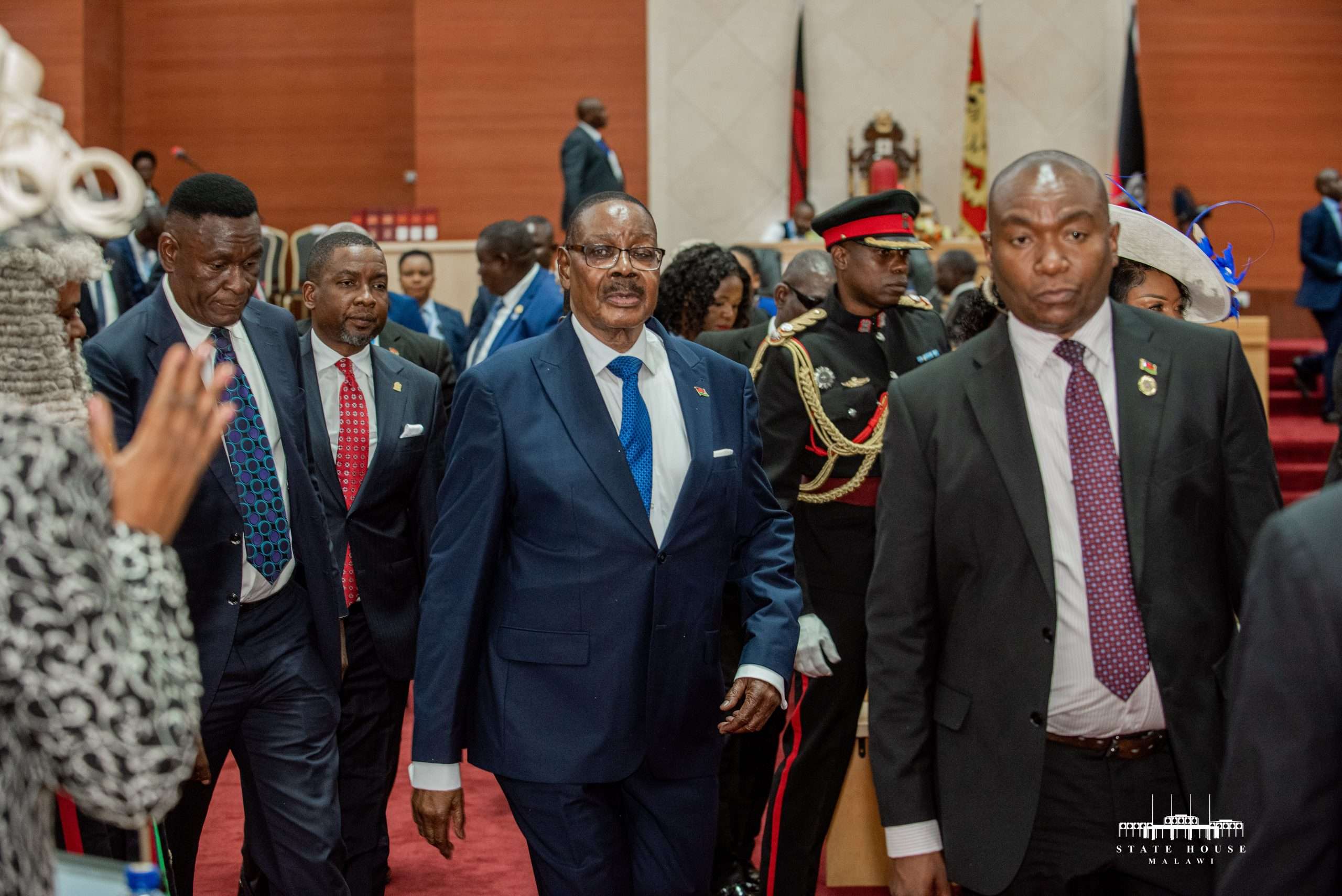
Praises, ululations and jubilations have erupted among the ruling Democratic Progressive Party (DPP) supporters following President Mutharika’s State of the nation address (Sona) which exudes a ray hope to Malawians regarding the availability of fuel, reduced inflation rates, availability of cheap and affordable maize, a major staple food crop in the country
The majority of Malawians are optimistic about the commitments made in the Sona, including the acquisition of seven new airplanes within the next five years, ensuring fairness and justice for all citizens, a strong stance against corruption, plans to build two-storey market structures in Blantyre, Lilongwe, and Mzuzu cities, and most importantly , the introduction of dialysis services at Mzuzu central hospital.
Nonetheless, the Sona received substantial backlash from opposition parties, civil society groups, and economic experts.
Jessie Kabwira, spokesperson for the Malawi Congress Party (MCP), expressed disappointment with the address, stating that the administration had neglected the central region in their implementation of the Farm Input Subsidy Program (FISP).
Furthermore, critics from the opposing party contended that the government’s assertion of providing free secondary education was deceptive, pointing out that only a small amount (K10,000) was waived from fees. Is this sufficient? They wondered.
Additionally, Simplex Chithyola Banda, the leader of the Opposition, voiced his disapproval of the speech for its failure to address rampant robberies and abductions, and for lacking a comprehensive homeland security strategy.
According to Kabambe, an experienced economist and the president of UTM, the majority of efforts in the Sona have been directed towards treating the symptoms rather than tackling the underlying issues in the economy.
From the standpoint of the UTM Party, Kabambe emphasized the need for a comprehensive stabilization plan that prioritizes growth through production, rather than relying on temporary emergency measures.
Undule Mwakasungula, a proponent of good governance, denounced the recent tax hikes as contradicting the DPP’s pledges during their campaign. He argued that these increases unfairly burden regular citizens and small enterprises.
Although the SONA pledged to tackle corruption without any exceptions, activists like Onjezani Kenani expressed doubt about the genuineness of these efforts, citing personnel appointments that seemed contradictory to the anti-corruption commitments.
According to experts from the Economics Association of Malawi (Ecama) and other analysts, Mutharika’s “discipline-first” plan for economic recovery may face constraints due to the country’s high debt levels and ongoing foreign currency shortages.
Experts also pointed out that Mutharika’s portrayal of himself as the main force behind reform could result in him bearing the brunt of criticism if his ambitious economic goals, such as lowering inflation from 28.7% to under 21%, are not achieved.
In a nutshell, it is not surprising that Mutharika’s Sona attracted mixed reactions among many Malawians.






