Will governments make Big Tobacco pay and kick Big Polluters out from Treaty meets?

SHOBHA SHUKLA, BOBBY RAMAKANT – CNS

The secretariat of World Health Organization Framework Convention on Tobacco Control (WHO FCTC – the legally binding global tobacco treaty) had warned the governments to stay vigilant because tobacco industry is targeting the intergovernmental FCTC treaty negotiations starting on Monday, November 17th. FCTC is the first WHO corporate accountability and public health treaty ratified by 183 countries (including the European Union).

2025 marks 20 years since WHO FCTC came into force. Professor (Dr) Judith Mackay, Asian Consultancy on Tobacco Control of Hong Kong, WHO Senior Policy Advisor and Special Advisor, Global Centre for Good Governance in Tobacco Control (GGTC) underlined the importance of backbone Article 5.3 of the WHO FCTC, which obligates the ratifying governments to stop tobacco industry interference in public policy. “If a government, for example, introduces new tobacco pack warnings, then they have to tell the industry that ‘these are our new pack warnings. This is what you have to do. It is a directive.’ Tobacco industry is told what to do. But in terms of formulating the policy, they are out of it.”

We must not think that ‘tobacco industry is undefeatable’ because it is not

“Legally-binding global tobacco treaty (WHO FCTC) is a visionary treaty, not only because it includes FCTC Article 5.3 (to stop tobacco industry interference in public policy) and conflict of interest provisions, but also because it includes a remarkable provision (FCTC Article 19) on liability of tobacco industry. FCTC Article 19 empowers countries that have ratified the treaty to leverage upon it to advance legislations at the national level, either civil, criminal, administrative or other forms of liability laws, and hold tobacco industry accountable,” said Daniel Dorado Torres, a noted lawyer and Tobacco Campaign Director, Corporate Accountability.

“In the last 20 years since FCTC came into force, governments have developed several tools to enable revisiting of their national legislations to hold industry accountable. One such tool is FCTC Article 19 Civil Liability Toolkit. WHO FCTC Secretariat has also maintained an experts’ database so that governments that have ratified the treaty can receive consultative guidance as required on liability of tobacco corporations,” said Dorado.

World Conference on Tobacco Control 2025 also had adopted a strong Declaration on the need to advance liability of tobacco industries.

“At upcoming COP11 to WHO FCTC intergovernmental meet next month in Geneva, we hope that governments will adapt a report that provides more than 30 recommendations on how governments could use or extend their civil, criminal, administrative, human rights and other forms of liability to challenge industry’s abuses,” shared Dorado.

Agrees Dr Mackay: “FCTC Article 19 on liability has been instrumental in establishing legal defences in the face of a very aggressive industry. We have had some remarkable successes. For example, Uruguay defeated Philip MorrisInternational (biggest tobacco industry globally) in a legal challenge against Uruguay’s strong packaging regulations. Public health won before profits. We must not think that they are ‘undefeatable.’ They are, what in China we would call, paper tigers.”

But it has been a tough fight to protect public health against the tobacco industry. When Australia introduced plain packaging on all tobacco products in 2011, Australia had to fight 3 legal challenges against the tobacco industry: firstly, constitutional; secondly, with regards to bilateral trade agreement; and thirdly, related to World Trade Organization.

Tobacco industry (like Big Food or Big Oil) manoeuvres to hijack the political and legislative process.

Nepal continues to battle tobacco industry for protecting public health

“Because of tobacco industry interference, Nepal’s adoption of comprehensive tobacco control law got delayed. Eventually, Nepal enacted a comprehensive tobacco control law in 2010 with large graphic health warning that was 75% (largest at that time) and complete ban of tobacco advertising. Nepal had to battle tobacco industry in the court for almost three years before this law could be implemented in 2013,” said Dr Tara Singh Bam, Asia Pacific Director (Tobacco Control), Vital Strategies and Board Director of Asia Pacific Cities Alliance for Health and Development (APCAT).

In 2015, Nepal government increased the size of pictorial health warning from 75 to 90%. But it took almost seven years to win legal case against tobacco industry and implement it in 2022. “In 2025 Nepal government increased the size of pictorial health warnings to 100% (both sides of tobacco packs) – largest in the world. This is a milestone public health policy, but Nepal faced significant challenges from the tobacco industry. This had to be implemented from 1st August 2025 but due to tobacco industry lawsuit, its implementation is still pending,” said Dr Bam.

Blockers to progress at UNFCCC and FCTC are the same

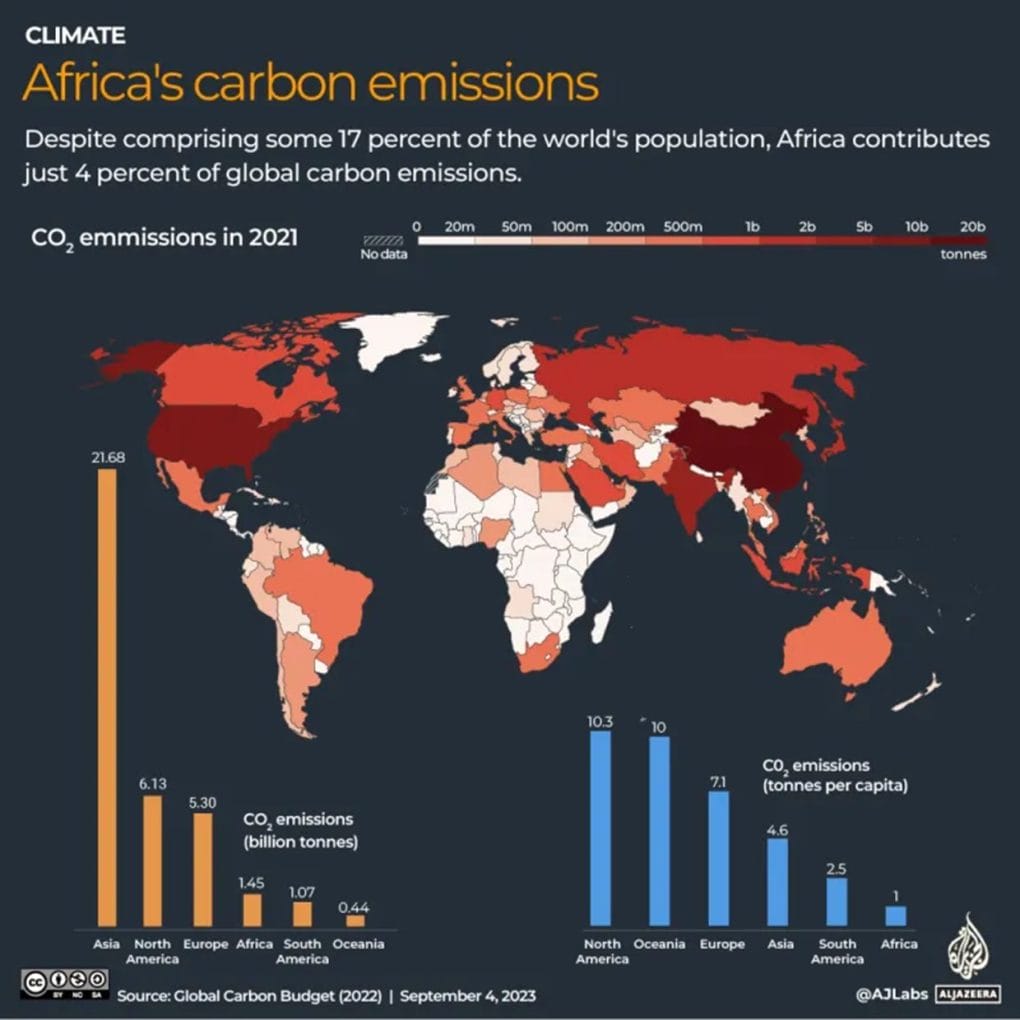
“COP30 to UNFCCC and COP11 to FCTC are about corporations whose product and conduct, impacts people and our planet. Tobacco smoking causes death. Tobacco cultivation also harms our planet. Drivers of climate change are the big fossil fuel #BigOil industries that are causing climate change and impacting public health too. When governments globally try to regulate these abusive corporations, they are confronted with similar industry tactics, be it Big Oil or Big Tobacco,” said Akinbode Matthew Oluwafemi, Executive Director, Corporate Accountability and Public Participation Africa – CAPPA, Nigeria.

“These abusive industries do everything to avoid liability and stop UNFCCC and FCTC from getting implemented and achieve its original objectives. Governments go to intergovernmental meets of UNFCCC and WHO FCTC but find a number of industry representatives sitting at the table either by proxy or by direct representation. We need stringent policies enacted to ensure that abusive corporations like Big Tobacco or Big Nicotine and Big Oil cannot capture public policy,” said Bode.

Agrees Rachel Rose Jackson, Director: Climate Research & Policy, Corporate Accountability (United States) – Kick Big Polluters Out Coalition: “It is important to note that we do not see two intergovernmental meets of UNFCCC (on climate policy) and FCTC (on public health and tobacco control) as separate from each other, because, in fact, they are deeply intertwined – and so is climate and health justice.”

“Those who block critical necessary actions to address climate change or public health and broader systemic crisis are the same in both Treaty spaces (UNFCCC and FCTC) – abusive industry. They use the same playbook and same tactics and deceptive lies in both multilateral spaces in order to distract, delay, defeat or block progress. It is important to also underpin that solutions to advance accountability and liability are also the same. But unlike FCTC, which has Article 5.3 (to stop industry interference) and Article 19 (on liability), we never had such measures in UNFCCC despite it being negotiated for nearly three decades,” said Jackson.

“So, from the very conception of UNFCCC, Big Polluters have been deeply embedded in its development. This is why UNFCCC has failed entirely to galvanise the global action we urgently need to address the climate crisis. Like Big Tobacco, Big Polluters too have rigged the very system that is meant to address climate change. Last year alone more than 1700 fossil fuel lobbyists flooded the climate talks in Baku. Year after year we have seen some of the world’s largest Polluter corporations bankrolling these climate talks. It is no wonder why climate talks have failed year after year. And it is also a no wonder why meaningful science- and evidence-backed actions are failing to come out of climate talks,” added Rachel Rose Jackson. “Millions of lives and livelihoods are at stake.”

This is why over 450 organisations and networks collectively representing millions of people around the world, joined hands to launch Kick Big Polluters Out Coalition. “We have been campaigning and calling for strong measures on liability and accountability in the climate treaty space. We are demanding that ability of Big Polluters to write the rules of climate action must come to an end. No more corporate sponsorship. Full stop,” said Jackson.

Inspired by FCTC and FCTC Article 5.3, for the very first time, all non-governmental participants of climate treaty are publicly required to disclose who is paying for their participation and confirm that their objectives are aligned with UNFCCC and its associated instruments. “This is a huge victory because for the first time in 30 years anything is being done to address or even begin to acknowledge Big Polluters’ influence,” said Jackson.

Shobha Shukla, Bobby Ramakant – CNS (Citizen News Service)

(Shobha Shukla is the Founder Executive Director and Managing Editor of CNS (Citizen News Service) and SDG-3 Lead Discussant at UN Intergovernmental High Level Political Forum 2025. Bobby Ramakant works with CNS. Follow them on X: @Shobha1Shukla, @BobbyRamakant)

–              Shared under Creative Commons (CC)


Discover more from The Maravi Post

Subscribe to get the latest posts sent to your email.

The Maravi Post

Legislator Mkumba vows to continue empowering Ndilande, Malabada constituents

LILONGWE-(MaraviPost)-Member of Parliament (MP) for Ndilande and Malabada-Nyambadwe constituency, Ismael Rizk Mkumba, has expressed joy over his recent court victory, describing the election petition against him as “malicious, fraudulent, and baseless.”

Speaking to Maravi Post in an interview on Thursday, Mkumba said the judgment was a validation of his hard work and deep connection with his constituents.

“Iam extremely happy with the victory because the petition was merely malicious, fraudulent, and baseless. I managed to secure about 12,000 votes after campaigning for only five days, while my opponent campaigned for almost 12 months,” Nkumba said.

He attributed his success to the long-term investments he has made in uplifting the lives of the people in his area since 2018.

This victory is well-deserved. It shows that the investments I made in the people from 2018 up to polling day have paid dividends,” he added.

Nkumba highlighted his constituency development record, noting that his 2018 campaign motto, “Kuthana ndi Umphawi” (Eradicating Poverty), continues to guide his initiatives.

“I have trained about 2,300 drivers and 3,200 chefs. We have provided small loans through the Constituency Development Fund (CDF) of up to 5,000, and paid bursaries for about 500 needy students some of whom have now graduated with bachelor’s degrees,” he said.

He further claimed that his office has implemented more tangible development projects in six years than the Blantyre City Council has managed in 31 years.

Nkumba reaffirmed his commitment to economic empowerment and development in the constituency.

“I love my people and my people love me. We will not allow any detractors to derail us from our goal of achieving financial freedom. With the MK5.2 billion annual CDF allocation from 2026 poverty will be something of the past,” he said confidently.


Discover more from The Maravi Post

Subscribe to get the latest posts sent to your email.

The Maravi Post

Kawinga’s Ministry feeds thousands Lilongwe communities

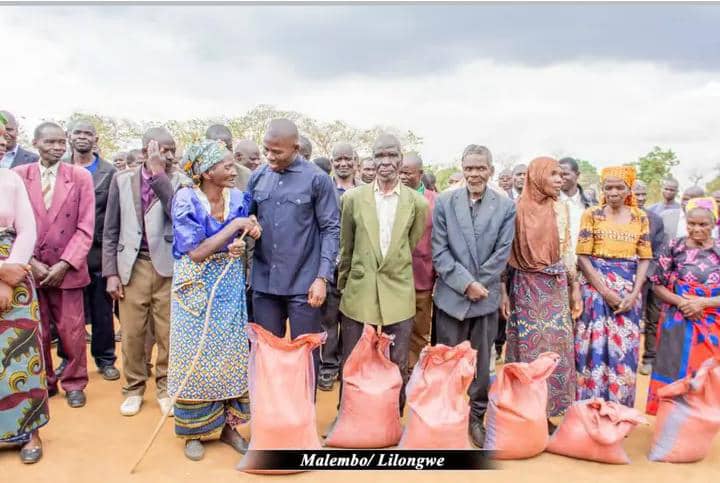
LILONGWE-(MaraviPost)-Salvation for All Ministries International has extended a lifeline to over 4,000 people in Traditional Authority Chiwaura (T.A), Lilongwe District, through the donation of 6,000 bags of maize, as part of its ongoing mission to empower vulnerable communities across Malawi.

The food donation was made during a spirit-filled crusade held at Chiwaura CDSS, led by Apostle Clifford Kawinga, the founder of the ministry.

The outreach comes barely a month after the ministry distributed irrigation farming equipment to farmers in Malawi’s Southern Region, reaffirming its commitment to combining spiritual nourishment with practical humanitarian support.

Speaking during the event in Malembo, Apostle Kawinga emphasized that addressing hunger is essential to effective ministry.

“This is one area that has been affected by hunger due to the dry spells. We thought it wise to come here and spread the good news while donating food because we can’t preach to people who are hungry,” Kawinga said.

He further called on other stakeholders and faith-based organizations to complement government efforts in assisting those affected by the ongoing food crisis.
It is not the responsibility of the government alone. We can all join hands to help families affected by hunger,” he added.

Kawinga also expressed concern that hunger has forced some families to cross into Mozambique and Zambia in search of food, describing the situation as alarming.

Representing TA Chiwaura and all Sub-T/As, Bleston Caleb commended the ministry for the timely support.

“Our area has been hit hard by hunger. We are grateful to Apostle Kawinga and his ministry for this generous gesture,” Caleb said.

One of the beneficiaries, Lucia Chipozi, shared her gratitude, revealing that her family had been going to bed on empty stomachs.

“This maize will surely bail us out. We had nothing to eat for days,” Chipozi said.

Beyond his ministry work, Apostle Kawinga is also a successful entrepreneur and philanthropist the proprietor of Creck Hardware and General Suppliers, CK Storage, Creck Sporting Club, and several other enterprises that contribute to community development and economic empowerment.

Through such initiatives, Salvation for All Ministries International continues to demonstrate that faith in action can bring hope and transformation to struggling communities across Malawi.


Discover more from The Maravi Post

Subscribe to get the latest posts sent to your email.

The Maravi Post

Speaker Suleman urges legislators to show commitment in parliamentary committees

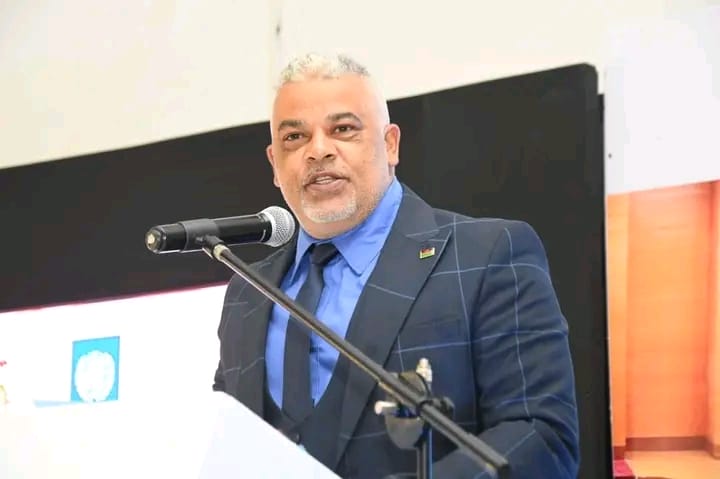
LILONGWE-(MaraviPost)-Speaker of Parliament Sameer Gaffar Suleman, has called on Members of Parliament (MPs) to work diligently in parliamentary committees, emphasizing that these committees are the engine rooms of Parliament.

Suleman made the call during the opening of a two-day orientation for MPs on parliamentary committees in Lilongwe.

The Speaker stressed that committees play a crucial role in transforming Parliament into a functioning system of checks and balances.

“We are here to work, and work begins in the committees. Expect that I will expect you to work. I will need regular reports from the committees, I will ask for programmes because I will rely on these committees to work effectively,” Suleman said.

He emphasized the importance of MPs questioning, probing, and demanding accountability on behalf of the people who elected them.

The orientation aims to introduce MPs to best practices on gender-responsive budgeting and budget analysis, crucial for committee work.

United Nations Development Programme (UNDP) Representative Chika-Charles Aniekwe noted that the orientation is timely, as it will equip MPs with the necessary skills to effectively carry out their committee duties.

MPs are expected to resume sitting on Wednesday, November 5, 2025, at 2:00 p.m., following the opening of the First Meeting in the 52nd Session of Parliament by President Arthur Peter Mutharika last week.


Discover more from The Maravi Post

Subscribe to get the latest posts sent to your email.

The Maravi Post

Mutharika’s cabinet swearing-in ceremony postponed today, all set for smooth transition

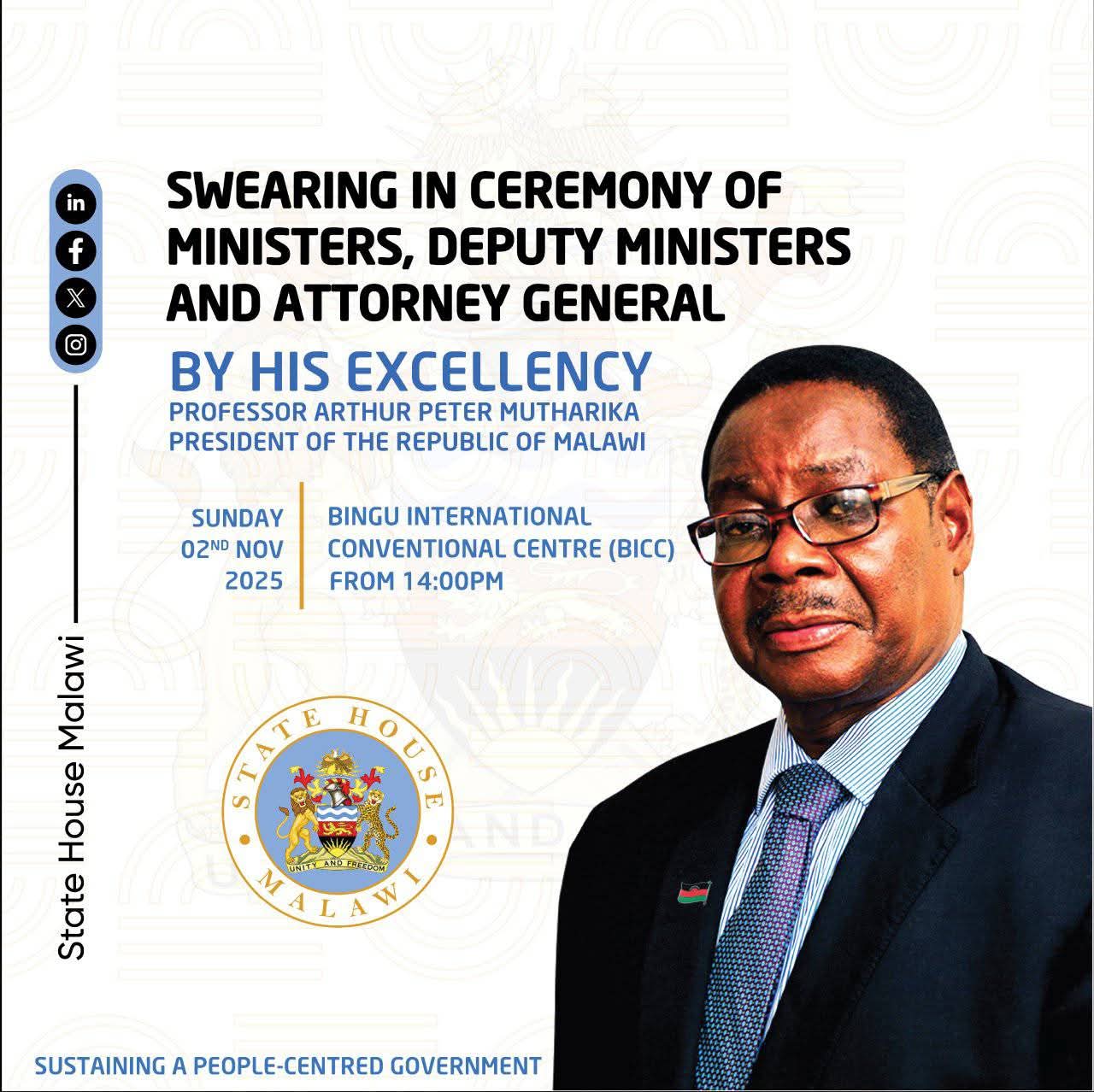
BLANTYRE-(MaraviPost)-In a last-minute change, the Office of the President and Cabinet has announced that the swearing-in ceremony for newly appointed cabinet ministers, deputy ministers, and the Attorney General has been set today Sunday.

The ceremony, initially scheduled for Saturday, at 2 o’clock, will now take place today at the same time.

According to Chief Secretary Dr. Justin Adack K. Saidi, the postponement would not impact the government’s transition process.

President Arthur Peter Mutharika’s administration has been working diligently to ensure a seamless transition, and the new cabinet is set to bring fresh perspectives to the table.

The newly appointed cabinet has garnered attention for its lean structure, with many sectors commending the President for making it the leanest cabinet ever.

The appointments have been praised for striking a balance between competence and representation, with a focus on meritocracy and national unity.

The cabinet’s composition reflects a mix of experienced professionals and new faces, all working towards delivering tangible results for the Malawian people.

Notable appointments include Joseph Mwanamvekha as Minister of Finance, Economic Planning, and Development, and George Chaponda as Minister of Foreign Affairs.

The postponement of the swearing-in ceremony is not expected to delay the government’s work, as the President and his team have been working tirelessly to ensure continuity and stability.

With the ceremony now set for Sunday, Malawians can expect a smooth transition and a renewed sense of purpose from their government.

As the nation awaits the swearing-in ceremony, there is a sense of optimism and hope for a brighter future.

The new cabinet is expected to drive meaningful reforms and work towards addressing the country’s pressing challenges.

With President Mutharika’s leadership, Malawians are confident that their government is in capable hands.


Discover more from The Maravi Post

Subscribe to get the latest posts sent to your email.

The Maravi Post

Journalists urged to embrace entrepreneurship as SRPC eyes economic self-reliance

BLANTYRE-(MaraviPost)-The Southern Region Press Club (SRPC) has challenged journalists to look beyond the newsroom and embrace entrepreneurship as a means of achieving economic independence.

This comes as the club holds its Annual General Meeting (AGM) in Blantyre over the weekend.

SRPC president Ronald Amos said the days when journalists relied solely on newsrooms for survival are over, emphasizing that financial stability is key to maintaining professionalism and integrity in the media industry.

“Economic freedom among journalists is no longer a luxury it’s a necessity.Without it, the profession risks being compromised, especially in the face of growing economic pressures and shrinking media revenues,” explains Amos..

He disclosed that through the SRPC cooperative, members are venturing into various income generating projects, including a multimillion-kwacha poultry project in Lirangwe, being implemented with funding support from the Agricultural Commercialization (AGCOM) programme.

The project, valued at K340 million, has already received K148 million as its first tranche.

According to Amos, the initiative is designed to help journalists supplement their incomes while supporting the long-term sustainability of the media industry.

The AGM, held under the theme “Media Professionalism: A Tool for Economic Advancement and Good Governance,” has attracted dozens of media practitioners and stakeholders who are discussing ways to strengthen professionalism, enhance training and build stronger partnerships for media development.

The event is being supported by Castel Malawi, Glo Best and the National Economic Empowerment Fund (NEEF).


Discover more from The Maravi Post

Subscribe to get the latest posts sent to your email.
The Maravi Post