Hoping my WhatsApp message finds you in good spirits and health. I am a very good follower of your articles, and indeed I’ve learnt a lot from them.
My name is Finley Mbella. I live here in the UK. I came here in 2002 after retiring from the army, having worked for 25 years.
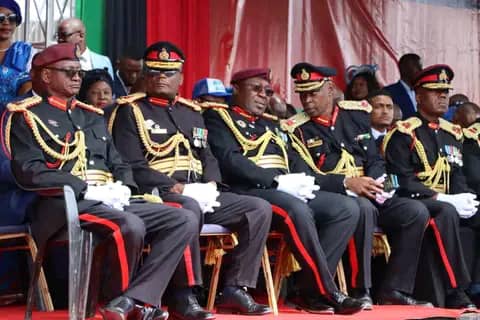
I thought I should comment about this issue concerning the secondments of those 5 military officers. It is really a shame that the ‘judiciary’ has turned itself into a bullying institution in Malawi. Actually, their responsibilities requires them to work hand in hand with the other 2 arms of government and possibly provide an advisory role to both the Executive and the Legislature. Being antagonistic, and know-it-all merely defeats the purposes of having those 3 institutions in a government.
Those who crafted the ‘Law’ knew what they were doing. In any democratic country there are demarcations when it comes to the application of both the ‘Civil Law’ on one hand, and the ‘Military Law’ on the other. Military law has to be applied within the context and atmosphere of the military (barracks).
A serving military personnel is answerable to both civil and military law. It depends on the circumstances under which a crime is committed. Minor civil infringements can summarily be dealt with within the barracks’ setup but if the charge is severe and involves issues outside of the barracks, the culprit, though a military person, has to answer charges in a civilian court. In the military they have ‘Court Martials’. An officer/soldier has to abide to both civil/military laws; while as a civilian is covered by the civil law only. It is therefore, disingenuous for Justice Kenyatta Nyirenda to bulldoze his judiciary muscle wholesale, in the process throw out the window the gravity and real essence of the ‘MILITARY LAW’. In developed countries, that practice can not be condoned. Malawi being a democracy in transition, anything goes!!
During my time in the military I saw General Matewere (late), General Namwali (late), and General Simwaka, being appointed as directors of security at ESCOM, RESERVE BANK, and MALAWI HOUSING CORPORATIONS. A few years ago we witnessed some generals seconded into various institutions, and these were Generals Msonthi, Odillo, Maulana, Supuni, Namathanga, Nundwe etc, etc and nobody ran to the judiciary to lodge a complaint. Why this time with these 5 people, how special are they?
You are right in your judgement that the militaty is an institution that is governed and upheld by military ethics and discipline. Insubordination, refusing to accept an order, mutiny or disorderly of any sort is punishable by a court martial. There is no justification for the judges to start throwing spanners in the military machinery. That on its own sets up a wrong precedence that will compromise the operations of the military, for simply to satisfy someone’s ego and misdirected ambitions.
In reality, these men should have read the writing on the wall that loudly says “their services in the military is no longer required” – period. Others have been kicked out of the system without any secondment at all. They are lucky that they have politely been asked to shift in order to create room for competent, seasoned and trustworthy mlitary personnel. Well, I thought I needed to amplify your observations concerning this and the other areas you talked about. It is hightime these corrupt judges were told the truth concerning their delivery of the expected services to the nation.
The recent Supreme Court ruling directing the Reserve Bank of Malawi (RBM) to compensate Finance Bank for the revocation of its licence in 2005 has sent shockwaves across the nation, with many questioning the prudence of the judgment.
The decision, which requires the RBM to pay compensation calculated from 2005 to date, has sparked intense debate, with critics arguing that it could have far-reaching consequences for the country’s financial stability and regulatory framework.
The RBM, as the primary banking regulator, revoked Finance Bank’s licence due to concerns over its financial stability and potential risks to the broader banking system, acting within its statutory mandate to protect depositors and maintain financial stability.
However, the Supreme Court’s ruling suggests that the RBM’s actions were unlawful, and the bank is entitled to compensation for the loss of its licence.
But is this judgment a victory for justice, or a recipe for disaster?
The Attorney General’s claim for damages against the RBM is a misguided attempt to shift responsibility and undermine the regulatory authority’s autonomy, argues Burnett Munthali, a renowned commentator.
The RBM’s role is to regulate and supervise banks, not to guarantee their success, and it would be unfair to hold the RBM liable for Finance Bank’s collapse, which was reportedly due to its own mismanagement and risk-taking.
Awarding damages to the government in this context could set a troubling precedent, effectively allowing the state to shift the burden of private sector failures onto the regulatory authority, and undermining the principles of accountability and good governance.
The RBM’s actions, if deemed lawful and reasonable, should be shielded from liability to ensure that regulators can act decisively without fear of financial consequences, as provided for in Section 15(2) of the Reserve Bank of Malawi Act.
It is crucial to maintain a clear distinction between regulatory oversight and commercial risk, lest we create a moral hazard where banks take excessive risks knowing they will be bailed out or compensated.
Dr. Ken Lipenga, a renowned English language professor, echoes this sentiment, arguing that the Supreme Court’s decision raises fundamental questions about the prudence of judicial decision-making.
Jurisprudence, he notes, involves considering the consequences of a decision and its impact on the community, and the recent ruling has sparked intense debate, with many questioning its legality.
The decision could have far-reaching consequences, potentially destabilizing the economy and undermining public trust, and it is essential to consider the implications of this judgment carefully.
Malawians need to think seriously about clarifying how society wants regulation to function when regulators act in good faith, and this requires a framework that balances accountability with protection for regulators, ensuring that officials can act decisively to protect the public without fear of reprisal.
This is jurisprudence in its deeper sense: cultivating judgment across institutions and across time, and a decision that satisfies a rule but fractures the community is not justice; it is judgment without prudence.
The Supreme Court’s ruling is a classic example of judgment without prudence, and it is essential to rethink this decision to ensure that it does not have devastating consequences for Malawi’s financial sector.
For more than six decades, Malawi’s football giants FCB Nyasa Big Bullets and Mighty Wanderers FC have carried the pride of Blantyre and the nation on their shoulders.
With rich histories, massive fan bases and consistent domestic success, the two clubs remain the heartbeat of Malawian football.
Yet one uncomfortable truth continues to linger, neither club owns its own stadium.
Instead, the two traditional rivals continue to rely on Kamuzu Stadium, a facility owned by government authorities.
While Kamuzu Stadium has been a historic theatre of epic clashes, the continued dependency raises serious questions about sustainability, business growth and long term vision.
These are not small community teams. Both Bullets and Wanderers are over 60 years old. They command thousands of supporters every match day.
Derby matches between the two easily fill up Kamuzu Stadium, generating millions of kwacha in gate revenue.
If five high profile matches can generate significant income, why can’t structured financial planning turn that revenue into a long term infrastructure investment?
The argument that there is no money simply does not hold. Gate collections from big matches, season ticket sales, merchandising and sponsorship deals provide a steady stream of income.
Instead of spending heavily on stadium rentals, logistics and operational costs associated with using a borrowed facility, a portion of match day revenue could be ring fenced into a stadium development fund.
Examples from across the region show that this is possible.
In Zimbabwe, businessman Shepherd Chahwanda built the 15,000 seater Chahwanda Stadium in Kwekwe.
The stadium now serves as the home of Hardrock FC, a club he owns.
If an individual can mobilize resources to construct such a facility, surely institutions as big as Bullets and Wanderers can develop structured, phased stadium projects.
Owning a stadium is not just about pride it is about business sense.
A club owned stadium means full control of match day revenue streams,gate collections, VIP sections, advertising boards, food concessions, parking fees and hosting rights for other events.
Instead of sharing or losing part of the revenue to rental costs, every kwacha would circulate within the club’s ecosystem.
Moreover, modern football is driven by infrastructure. A private stadium can attract corporate sponsors, improve branding and increase fan experience.
Hospitality suites, club museums, merchandise shops and training facilities can all be integrated into the project.
This is how clubs grow from being just football teams into sustainable sporting institutions.
Critics may argue that land acquisition and construction costs are too high.
But development does not have to happen overnight. A phased approach is realistic.
First, acquire land. Second, build a basic structure with essential facilities and a standard pitch. Gradually expand seating capacity as revenue grows. Even a modest 10,000–15,000-seater stadium would be a powerful starting point.
There is also the hidden cost of dependency. Every season spent paying for stadium use is money lost that could have gone into permanent infrastructure.
Over decades, that cumulative expenditure becomes significant.
What seems cheaper in the short term often becomes more expensive in the long run.
Supporters, too, would embrace the idea. Imagine a Bullets fortress or a Wanderers stronghold a true home where fans feel ownership and identity.
Stadium naming rights alone could attract corporate partnerships, especially considering the commercial value of these two brands in Malawian football.
The real issue is not money it is vision and discipline. With proper financial management, transparent fundraising campaigns and strategic planning, building a stadium is not impossible. It only becomes impossible when ambition is absent.
After 60 years of glory, rivalry and unmatched fan loyalty, the time has come for FCB Nyasa Big Bullets and Mighty Wanderers to think beyond match results.
For more than six decades, Malawi’s football giants FCB Nyasa Big Bullets and Mighty Wanderers FC have carried the pride of Blantyre and the nation on their shoulders.
With rich histories, massive fan bases and consistent domestic success, the two clubs remain the heartbeat of Malawian football.
Yet one uncomfortable truth continues to linger, neither club owns its own stadium.
Instead, the two traditional rivals continue to rely on Kamuzu Stadium, a facility owned by government authorities.
While Kamuzu Stadium has been a historic theatre of epic clashes, the continued dependency raises serious questions about sustainability, business growth and long term vision.
These are not small community teams. Both Bullets and Wanderers are over 60 years old. They command thousands of supporters every match day.
Derby matches between the two easily fill up Kamuzu Stadium, generating millions of kwacha in gate revenue.
If five high profile matches can generate significant income, why can’t structured financial planning turn that revenue into a long term infrastructure investment?
The argument that there is no money simply does not hold. Gate collections from big matches, season ticket sales, merchandising and sponsorship deals provide a steady stream of income.
Instead of spending heavily on stadium rentals, logistics and operational costs associated with using a borrowed facility, a portion of match day revenue could be ring fenced into a stadium development fund.
Examples from across the region show that this is possible.
In Zimbabwe, businessman Shepherd Chahwanda built the 15,000 seater Chahwanda Stadium in Kwekwe.
The stadium now serves as the home of Hardrock FC, a club he owns.
If an individual can mobilize resources to construct such a facility, surely institutions as big as Bullets and Wanderers can develop structured, phased stadium projects.
Owning a stadium is not just about pride it is about business sense.
A club owned stadium means full control of match day revenue streams,gate collections, VIP sections, advertising boards, food concessions, parking fees and hosting rights for other events.
Instead of sharing or losing part of the revenue to rental costs, every kwacha would circulate within the club’s ecosystem.
Moreover, modern football is driven by infrastructure. A private stadium can attract corporate sponsors, improve branding and increase fan experience.
Hospitality suites, club museums, merchandise shops and training facilities can all be integrated into the project.
This is how clubs grow from being just football teams into sustainable sporting institutions.
Critics may argue that land acquisition and construction costs are too high.
But development does not have to happen overnight. A phased approach is realistic.
First, acquire land. Second, build a basic structure with essential facilities and a standard pitch. Gradually expand seating capacity as revenue grows. Even a modest 10,000–15,000-seater stadium would be a powerful starting point.
There is also the hidden cost of dependency. Every season spent paying for stadium use is money lost that could have gone into permanent infrastructure.
Over decades, that cumulative expenditure becomes significant.
What seems cheaper in the short term often becomes more expensive in the long run.
Supporters, too, would embrace the idea. Imagine a Bullets fortress or a Wanderers stronghold a true home where fans feel ownership and identity.
Stadium naming rights alone could attract corporate partnerships, especially considering the commercial value of these two brands in Malawian football.
The real issue is not money it is vision and discipline. With proper financial management, transparent fundraising campaigns and strategic planning, building a stadium is not impossible. It only becomes impossible when ambition is absent.
After 60 years of glory, rivalry and unmatched fan loyalty, the time has come for FCB Nyasa Big Bullets and Mighty Wanderers to think beyond match results.
For more than six decades, Malawi’s football giants FCB Nyasa Big Bullets and Mighty Wanderers FC have carried the pride of Blantyre and the nation on their shoulders.
With rich histories, massive fan bases and consistent domestic success, the two clubs remain the heartbeat of Malawian football.
Yet one uncomfortable truth continues to linger, neither club owns its own stadium.
Instead, the two traditional rivals continue to rely on Kamuzu Stadium, a facility owned by government authorities.
While Kamuzu Stadium has been a historic theatre of epic clashes, the continued dependency raises serious questions about sustainability, business growth and long term vision.
These are not small community teams. Both Bullets and Wanderers are over 60 years old. They command thousands of supporters every match day.
Derby matches between the two easily fill up Kamuzu Stadium, generating millions of kwacha in gate revenue.
If five high profile matches can generate significant income, why can’t structured financial planning turn that revenue into a long term infrastructure investment?
The argument that there is no money simply does not hold. Gate collections from big matches, season ticket sales, merchandising and sponsorship deals provide a steady stream of income.
Instead of spending heavily on stadium rentals, logistics and operational costs associated with using a borrowed facility, a portion of match day revenue could be ring fenced into a stadium development fund.
Examples from across the region show that this is possible.
In Zimbabwe, businessman Shepherd Chahwanda built the 15,000 seater Chahwanda Stadium in Kwekwe.
The stadium now serves as the home of Hardrock FC, a club he owns.
If an individual can mobilize resources to construct such a facility, surely institutions as big as Bullets and Wanderers can develop structured, phased stadium projects.
Owning a stadium is not just about pride it is about business sense.
A club owned stadium means full control of match day revenue streams,gate collections, VIP sections, advertising boards, food concessions, parking fees and hosting rights for other events.
Instead of sharing or losing part of the revenue to rental costs, every kwacha would circulate within the club’s ecosystem.
Moreover, modern football is driven by infrastructure. A private stadium can attract corporate sponsors, improve branding and increase fan experience.
Hospitality suites, club museums, merchandise shops and training facilities can all be integrated into the project.
This is how clubs grow from being just football teams into sustainable sporting institutions.
Critics may argue that land acquisition and construction costs are too high.
But development does not have to happen overnight. A phased approach is realistic.
First, acquire land. Second, build a basic structure with essential facilities and a standard pitch. Gradually expand seating capacity as revenue grows. Even a modest 10,000–15,000-seater stadium would be a powerful starting point.
There is also the hidden cost of dependency. Every season spent paying for stadium use is money lost that could have gone into permanent infrastructure.
Over decades, that cumulative expenditure becomes significant.
What seems cheaper in the short term often becomes more expensive in the long run.
Supporters, too, would embrace the idea. Imagine a Bullets fortress or a Wanderers stronghold a true home where fans feel ownership and identity.
Stadium naming rights alone could attract corporate partnerships, especially considering the commercial value of these two brands in Malawian football.
The real issue is not money it is vision and discipline. With proper financial management, transparent fundraising campaigns and strategic planning, building a stadium is not impossible. It only becomes impossible when ambition is absent.
After 60 years of glory, rivalry and unmatched fan loyalty, the time has come for FCB Nyasa Big Bullets and Mighty Wanderers to think beyond match results.
The recent High Court ruling in Lilongwe that quashed the redeployment of five senior Malawi Defence Force (MDF) officers to the civil service epitomizes a judiciary deeply entangled in politics and far removed from the true essence of justice.
This ruling, and several others like it, reveal a disturbing trend: the Malawian judiciary appears less as an independent arbiter of law and more as a political actor obstructing the legitimate efforts of the government to implement its policies.
It is high time this uncomfortable reality is confronted honestly and without fear, for the good of Malawi and its future.
The Democratic Progressive Party (DPP), under the visionary leadership of Professor Arthur Peter Mutharika, has charted a clear path for Malawi’s development. Their government has demonstrated a commitment to reforms and to steering the country towards greater prosperity.
Yet, despite these noble intentions, the judiciary persistently stands as a formidable barrier, frustrating and nullifying executive decisions that are essential to the functioning of the state and the advancement of national interests.
The ongoing standoff between the executive and the judiciary is now undeniable, and the consequences of this power struggle are detrimental to Malawi’s progress.
Consider the redeployment of MDF senior officers—a routine administrative action that has been a normal feature of government operations, including during the previous Malawi Congress Party (MCP) regime.
Redeployment is not dismissal; it is a strategic repositioning within government ranks to meet evolving institutional needs. It is baffling, therefore, that the judiciary should intervene to halt such a standard practice.
One must ask: Why did the judiciary raise an alarm over redeployments under the DPP, when similar transfers occurred without controversy during MCP’s tenure? Is this selective legal activism, or worse, political interference masquerading as judicial prudence?
The hard truth is that the judiciary seems to be serving partisan interests rather than the rule of law. Its actions suggest a clear bias against the current administration.
By obstructing government moves such as redeploying MDF officers, the courts are effectively undermining the chain of command and the authority vested in the executive by the Constitution.
The military, by its very nature, is disciplined and hierarchical. Orders from senior commanders, including the Commander-in-Chief, must be obeyed promptly and without question.
The decision by some senior MDF officers to seek judicial intervention rather than comply with redeployment orders is a direct challenge to military discipline and the principle of obedience that underpins effective defense forces worldwide.
The judiciary should understand this fundamental aspect of military operations. Redeployment does not equate to job loss or demotion; it is a standard personnel management practice.
Instead of supporting the executive’s lawful directives, the courts have sided with officers who flout military discipline, thereby encouraging insubordination.
This is dangerous precedent-setting that threatens both national security and the principle of civilian oversight over the military.
Moreover, the judiciary’s penchant for nullifying executive decisions has broader implications.
It sends a message that every viable government initiative, no matter how reasonable or necessary, can be stalled or overturned by judicial fiat. If the DPP government fails to deliver on its promises, it will not be for lack of vision or effort, but because the judiciary has systematically hampered its ability to govern effectively.
This politicization of the judiciary is a betrayal of the very people the courts purport to serve.
Judge Kenyatta Nyirenda’s recent public tirades against the media further illustrate the judiciary’s troubling conduct.
His accusations of ignorance and propaganda directed at Malawi’s journalists are not only baseless but also deeply disrespectful to an institution that plays a critical role in democracy. The media—professional, dedicated, and often under-resourced—works tirelessly to inform the public and hold power to account.
The judge’s disparaging remarks, including questioning journalists’ credentials and competence, reveal a profound misunderstanding of the media’s role and an alarming intolerance for scrutiny.
The hard truth here is that Kenyatta Nyirenda, despite his legal expertise, is neither a media expert nor an authority on journalism. His attempt to undermine and belittle the press is an abuse of his position and an affront to the democratic principles of freedom of expression and information.
The judiciary must respect the independence of other institutions, especially those that serve as watchdogs over government and society.
Judges should confine their critiques to legal matters and refrain from launching unwarranted attacks on the media, which only serve to erode public confidence in the judiciary itself.
This situation is exacerbated by the judiciary’s own operational shortcomings. Malawi’s courts are notorious for delays and inefficiencies. It is common knowledge that while litigants arrive early, often as early as 7:30 am, court sessions do not commence until well after 10:30 am.
Such delays undermine public trust and deny timely justice to those who need it most. Worse still, there is rarely an apology or explanation for these delays, signaling a lack of accountability and respect for the public.
If the judiciary claims to be the guardian of justice, it must first demonstrate professionalism and commitment to serving the people efficiently.
Malawi’s judiciary is far from infallible; it is not a demigod or a semi-god institution that should intimidate or threaten the citizenry.
The reverence accorded to the courts must be balanced with a critical appraisal of their performance and impartiality.
When judges stray from the law to serve political interests or personal biases, they do a disservice to the country’s democratic foundations.
The judiciary’s perceived partisanship and questionable rulings erode the public’s faith in the justice system and fuel cynicism about the rule of law in Malawi.
The hard truth is that Malawi’s judiciary is in desperate need of a complete overhaul. Structural reforms, enhanced transparency, accountability mechanisms, and rigorous training focused on judicial ethics and independence are urgently required.
Without these changes, the judiciary will continue to be a stumbling block to national development and a source of injustice for ordinary Malawians.
The judiciary’s interference in the redeployment of MDF officers, its antagonism towards the media, and its operational inefficiencies paint a grim picture of an institution that has strayed from its constitutional mandate.
The courts must cease using their authority to frustrate government policies and must respect the disciplined nature of military service.
Judge Kenyatta Nyirenda and his colleagues should recognize that their role is to interpret the law impartially, not to engage in political battles or vilify other democratic institutions.
Malawi deserves a judiciary that is independent, professional, and committed to delivering justice without fear or favor.
Until then, the country’s democratic progress will remain hostage to judicial overreach and partisanship. The time for candid reflection and bold reform is now. The future of Malawi depends on it.