Why insightful, revolutionary legislator Anthony Masamba’s call for salary, allowances cuts matters amid Malawi ailing economy?

LILONGWE-(MaraviPost)-In a rare show of legislative self-restraint, Anthony Masamba has called on Malawi’s Members of Parliament to reduce their own salaries and fuel allowances in support of President Peter Mutharika’s government’s austerity measures.

Masamba posed a pointed question in Parliament — “Is it right for us to enjoy full salaries and fuel benefits while imposing punitive measures on poor Malawians?”

His appeal underscores a growing recognition among some lawmakers that public servants should share the pain in times of national economic distress.

Masamba’s stance comes as the government rolls out a sweeping package of budget-cutting measures intended to rein in recurring expenditure and stabilise public finances.

Among the austerity steps recently announced are a freeze on new staff recruitment, a suspension of promotions without Treasury approval, and a prohibition on the purchase of new government vehicles.

Fuel entitlements for ministers and senior public officers — a traditional perk enjoyed by the political elite — have been cut by 30%.

These moves follow pressure from economic experts, who warn that growing public debt, inflation and fiscal imbalance demand urgent corrective action.

Against this backdrop, Masamba’s call resonates as both morally compelling and politically significant.

He argued that lawmakers cannot in good conscience retain full benefits when ordinary Malawians face rising hardship — a point that taps directly into questions of equity, legitimacy, and public trust.

His remarks triggered murmurs of disagreement in the chamber, showing that not all legislators are ready to embrace austerity in their own ranks.

The First Deputy Speaker responded by urging Masamba to formalise the proposal through a Private Member’s Bill if he wished to advance the idea.

Beyond the symbolism, the proposal has significant structural implications for governance in Malawi.

If implemented, a cut in MPs’ remuneration and perks could meaningfully reduce the wage burden on the exchequer — a burden which, according to recent budget data, has swollen alarmingly.

Statutory payments — including wages, pensions and debt servicing — now consume about 89 percent of domestic revenue, squeezing out resources for development, education, and health.

Indeed, debt-servicing costs have grown so large that they reportedly exceed combined allocations for education and health in the 2025/26 budget.

In such a context, even modest reductions in allowances and perks for high-income public officials could free up resources for critical sectors.

Masamba’s appeal also raises broader questions about political accountability and the social contract between representatives and the citizenry.

If MPs are willing to share the sacrifice — rather than merely demand more from taxpayers — it could strengthen public confidence in political leadership.

Conversely, failure to act might reinforce perceptions of privilege, disconnect, and hypocrisy among the political class — especially at a time when many Malawians struggle to cope with rising cost of living, inflation, and reduced public services.

The call for internal austerity among lawmakers also complements external pressure from economists and civil society groups demanding disciplined public spending and prudent fiscal management.

But for such a shift to materialize, structural reforms and political will are needed.

A Private Member’s Bill, as suggested by the First Deputy Speaker, would need to be drafted, debated, and passed — a process that could test political courage and unity, especially among those accustomed to generous allowances.

Moreover, any reduction must be transparent and legally binding, to avoid symbolic gestures that are reversed as soon as public attention wanes.

In a country where government debt is soaring, borrowing is increasing, and revenue mobilisation remains fragile, Masamba’s call signals a potential turning point.

It aligns with the logic of austerity but also injects a moral dimension: that those who benefit most when times are good should also share the burden when times are hard.

For Malawi, this could mark the beginning of a deeper paradigm shift — from public service as a pathway to personal enrichment, to public service as a genuine act of stewardship.

If the idea gains momentum, it could pave the way for more far-reaching reforms: a leaner legislature, reduced perks, and a stronger alignment between public interest and political remuneration.

Ultimately, the test will be whether words translate into action.

Will MPs be willing to lead by example, sacrificing their own perks for the greater good? Or will this remain a symbolic gesture, aborted by entrenched interests?

Only time — and the courage of the Legislature — will tell.


Discover more from The Maravi Post

Subscribe to get the latest posts sent to your email.

The Maravi Post

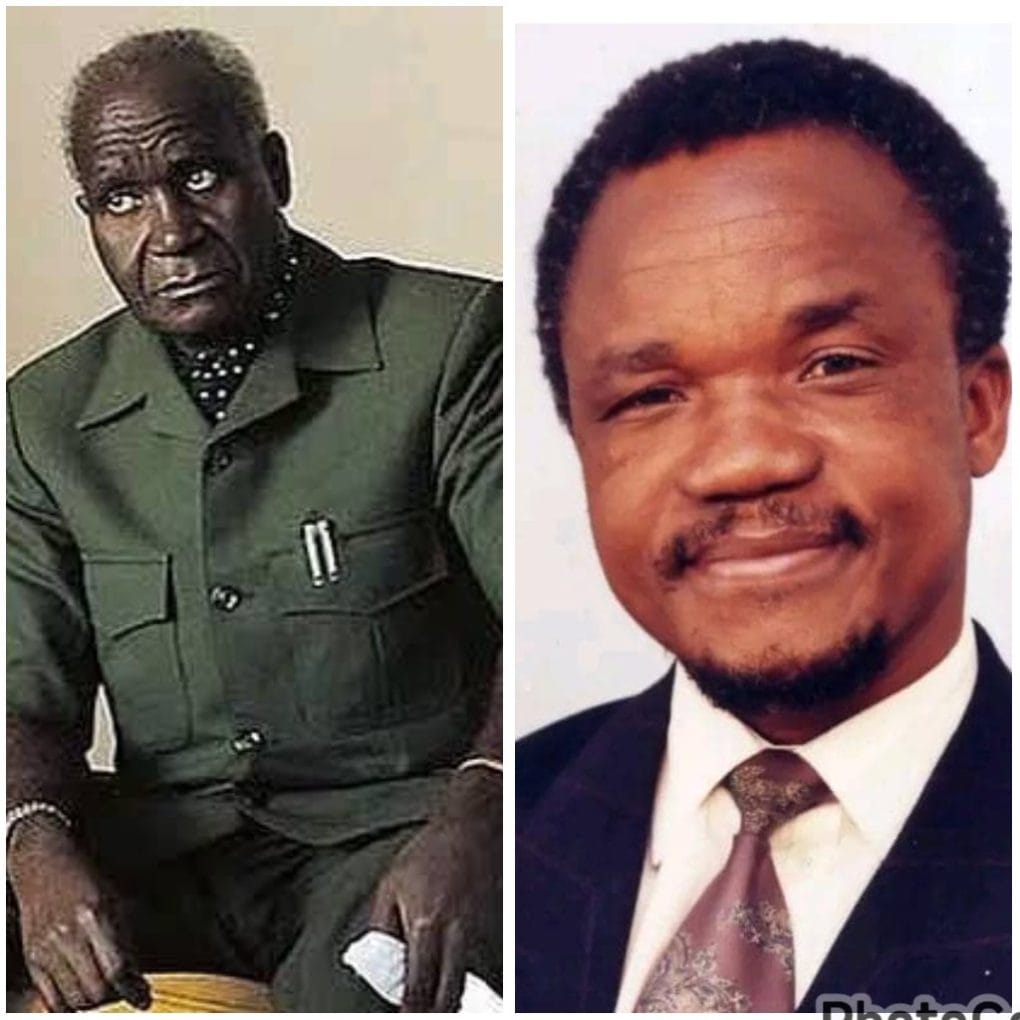
The untold story of Kaunda’s arrest: How Chiluba tried to break Zambia’s father of the nation

LUSAKA-(MaraviPost)-When Zambia transitioned from Kenneth Kaunda’s 27-year rule to Frederick Chiluba’s new multiparty era, the change appeared peaceful on the surface.

However, beneath the handshake diplomacy, one of Southern Africa’s most psychologically brutal political confrontations was unfolding.

On Christmas Day, 1997, Kaunda was arrested, a moment chosen for maximum symbolic impact.

Christmas, traditionally a day of presidential addresses and national unity, became the backdrop for Kaunda being bundled into a vehicle by armed officers.

The timing led many senior diplomats to conclude that the arrest was meant to break Kaunda psychologically, rather than simply pursue legal action.

The government accused Kaunda of involvement in a failed coup in October 1997, led by junior soldiers.

Yet Zambian intelligence insiders later admitted that there was no concrete evidence linking Kaunda to the mutiny.

Kaunda had been out of power for six years, had no military command, and was leading a peaceful political movement under UNIP.

Despite this, he became the central figure blamed for a coup he did not participate in.

At the time, Kaunda was experiencing an unexpected political resurgence, drawing large crowds to his rallies and maintaining widespread respect across rural districts.

Inside State House, Chiluba’s camp feared that Kaunda could potentially win the 1998 elections if allowed to run.

Kaunda’s moral authority still overshadowed other political figures and remained a unifying force across tribal lines, unlike the fragmented new elite.

For many observers, his arrest was interpreted as a pre-emptive political strike rather than a measure of national security.

During the same period, Kaunda was shot in the neck by government forces while leading a peaceful protest.

This injury left him physically vulnerable at the time of his detention.

For many Zambians, this act reinforced the perception that the state was willing to use lethal force against a national symbol.

Kaunda was subsequently held in Mukobeko Maximum Security Prison, a facility typically reserved for murderers, armed robbers, and political radicals.

This was not merely imprisonment but an attempt to erode his legacy by equating him with dangerous criminals.

Some prison officials later revealed they were instructed to treat Kaunda “as an ordinary dangerous suspect,” delivering a psychological blow aimed at undermining his stature.

The international community, including the Commonwealth, the United Nations, and African heads of state, intervened behind the scenes to pressure Chiluba to release Kaunda.

Even Nelson Mandela reportedly sent private messages condemning the treatment of the former president.

Diplomats feared that Zambia was descending into personal vendetta politics, with the potential to trigger ethnic tensions or civil unrest.

Chiluba’s own cabinet was divided on the matter, with some ministers warning that humiliating Kaunda could backfire politically.

Nevertheless, hardline security advisors convinced Chiluba that neutralising Kaunda was essential to consolidating power.

Ironically, the detention had the opposite effect of what Chiluba intended.

Kaunda emerged from prison more respected, seen as a statesman, and admired internationally as a martyr of democratic abuse.

The attempted political witch hunt, while meant to cripple Kaunda’s comeback, ultimately strengthened his legacy.

Historians agree that there was no direct evidence linking Kaunda to the coup, the arrest’s timing and style were deeply political, and Chiluba had strong incentives to remove a key rival.

Official statements cited national security, but the methods, symbolism, and sequence of events pointed clearly to a targeted political campaign.

The detention of Kaunda remains a powerful reminder of how political power struggles can shape the destiny of nations and the enduring respect commanded by principled leadership.


Discover more from The Maravi Post

Subscribe to get the latest posts sent to your email.
The Maravi Post

Ntata on Mutharika’s private trip to RSA-“The private trip that isn’t private”

The Head of State Professor Arthur Peter Mutharika has announced a “private visit.”But here is the question Malawi must ask without fear: How can the President’s trip be “private” to the very nation he governs?

A president is not a tourist. His movements are not personal errands. His absences are not family outings. Every time he leaves the country, the entire machinery of the state shifts around that moment.

There is no such thing as “private” when the presidency itself is public property.

So when an 80-year-old president quietly slips out under the veil of “private visit,” the nation is expected to pretend not to know what is happening.

But the truth is simple: At that age, a presidential “private visit” is almost always a medical appointment.

And that matters.
Deeply.

Because a President’s health is not his private business.
It is a matter of:National security; Succession clarity; Policy continuity; Investor confidence; Public stability; Geopolitical assurance

A president’s heartbeat is tied to the heartbeat of the nation.
If he falters, the country feels it. If he weakens, the system trembles. If he becomes incapacitated, the entire nation enters a legitimacy crisis.

This is why mature democracies disclose the health of their leaders.

Not because they enjoy gossip; but because a nation cannot be governed from behind a medical curtain.

When a president hides behind the phrase “private visit,” he is essentially saying this to his people:

“You must trust me with your lives,
but I will not trust you with the truth about mine.”

That is not leadership. That is paternalistic secrecy. And as Malawi approaches a critical election, transparency is not a favour. It is an obligation.

Malawians deserve to know: Is the man asking for five more years physically capable of carrying the burden of the presidency?

That question cannot be hidden behind euphemisms. Not anymore. The presidency is public. The consequences are public. Therefore the truth must be public.

Because when a leader’s health becomes “private,” the nation’s anxiety becomes public.


Discover more from The Maravi Post

Subscribe to get the latest posts sent to your email.

The Maravi Post

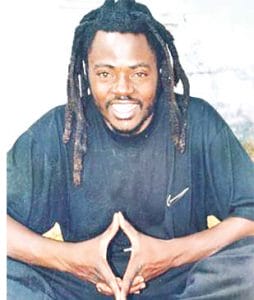
The final hours of Malawi’s music icon Evison Matafale: A tragic account

On Monday afternoon, 26 November 2001, Evison Matafale was being held at Area 3 Police Station in Lilongwe.

He had been arrested at his home in Chileka, Blantyre, on Saturday, 24 November 2001, while already in poor health and appeared visibly frail.

During his detention, Matafale repeatedly requested to be taken to a medical facility for urgent treatment, but the police refused.

His father arrived at the station and pleaded for him to be allowed to go to a private clinic, but the request was again denied.

The police eventually relented, allowing Matafale to be taken to a public hospital—Kamuzu Central Hospital (KCH) in Lilongwe—but still refused private medical care.

He was transported in a police Land Cruiser, accompanied by two Rastafarians, Natty Prince and Ras David Chikomeni Chirwa, members of a newly formed band preparing to perform with him in Lilongwe.

At KCH, Matafale was wheeled into a consultation room, where the attending doctor recommended admission and close observation.

While admitted, Matafale requested porridge, which was initially brought by Congo Justice but was too hard for him to swallow, prompting arrangements for softer porridge the next morning.

Later that night, he was administered three drips, but his condition worsened dramatically, leading Congo Justice to try cooling him with a wet cloth, although his health continued to deteriorate.

In the early hours of Tuesday, 27 November 2001, Congo Justice returned to Ras Walusako’s home with Matafale’s clothes and delivered the tragic news that Evison Matafale had passed away.


Discover more from The Maravi Post

Subscribe to get the latest posts sent to your email.

The Maravi Post

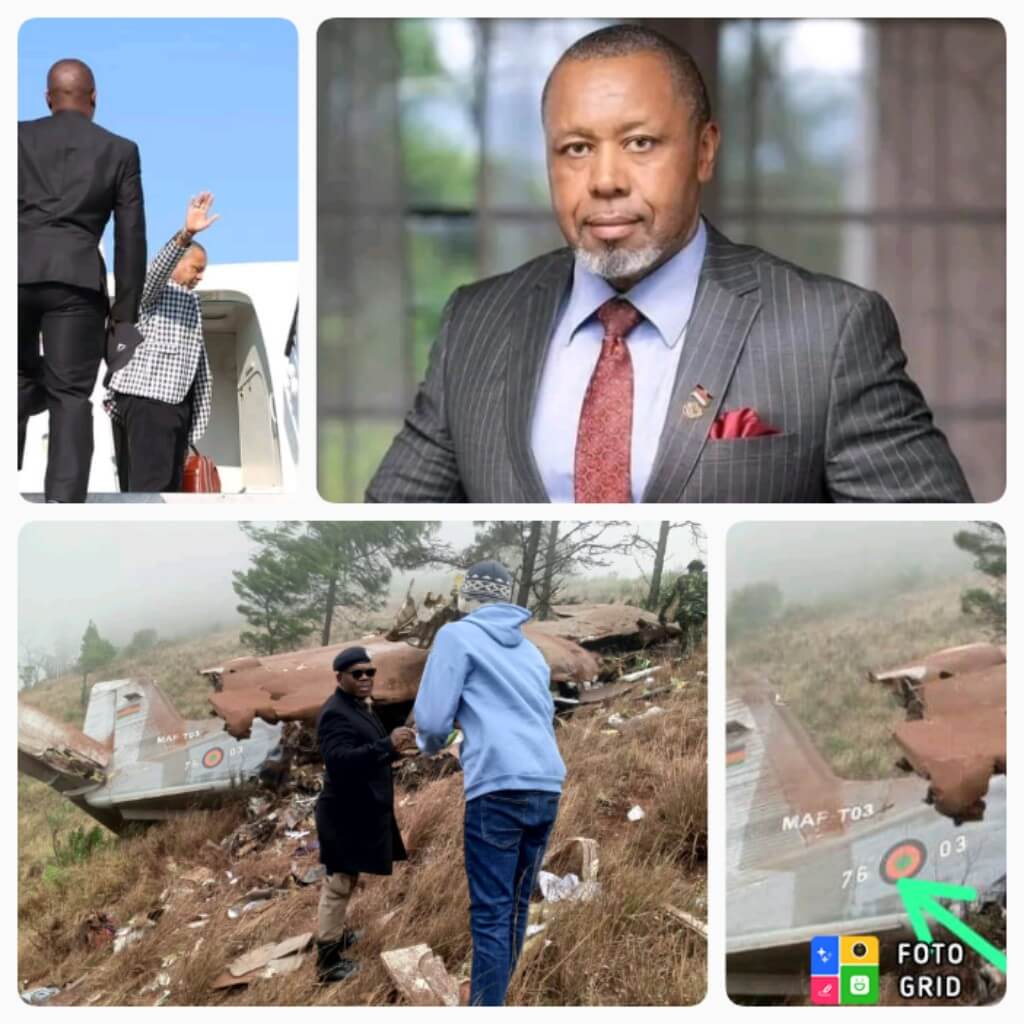
Who assassinated Saulos Chilima?

Saulos Chilima dies in Plane Crash
Saulos Chilima dies in plane crash

The fatal plane crash that killed Malawi’s Vice President Saulos Chilima and nine others on June 10, 2024, has been officially attributed to a combination of human error and poor weather conditions, specifically the crew’s decision to fly despite limited visibility.

However, the official findings have been met with widespread public suspicion and a “secret tale” of conspiracy theories in Malawi, largely due to political tensions and significant operational failures highlighted in independent investigations.

A government-appointed Commission of Inquiry and a subsequent report by German investigators (BFU) concluded that the primary cause was the flight crew’s decision to proceed in bad weather, leading to the plane clipping a tree and crashing in the Chikangawa Forest.

Despite the official reports, many Malawians, including Chilima’s wife, do not accept the official narrative, leading to a persistent “secret tale” of political foul play.

The skepticism is fueled by several factors.

Chilima was a popular politician, especially among the youth, and a potential rival to President Lazarus Chakwera in the upcoming 2025 presidential election.

Tensions between their political parties (the Tonse Alliance) were public knowledge.

President Chakwera initially stated the plane was told to turn back from Mzuzu Airport due to bad weather; however, German investigators later reported the plane never reached Mzuzu and no such orders were recorded.

The German investigation revealed shocking negligence by the Malawi Defence Forces (MDF), which operated the military aircraft.

Key safety concerns included:
An inoperable Emergency Locator Transmitter (ELT) with an expired battery from 2004.

The absence of crucial flight recorders (Cockpit Voice Recorder and Flight Data Recorder).

Unrecorded radar data and radio communications.

An allegedly medically unfit pilot.

The aircraft’s certification was reportedly expired or had unresolved mechanical issues.

In the absence of a fully trusted and transparent official account, rumors and calls for an independent, non-military inquiry continue among the Malawian public.

The perception of a “secret tale” stems from the belief that the government and military are not being fully accountable or transparent about the preventable nature of the crash and the potential political dimensions surrounding the death of the popular Vice President.


Discover more from The Maravi Post

Subscribe to get the latest posts sent to your email.

The Maravi Post

My Take On It: Companies, Malawians, NGOs must help in educating Malawi’s future workers

Dr. Jessie Kabwila
Minister of Higher Education, Dr. Jessie Kabwila

….Train up a child in the way he should go: and when he is old, he will not depart from it. – Proverbs 22:6

“If you are planning for a year, sow rice; if you are planning for a decade, plant trees; if you are planning for a lifetime, educate people.” – Asian Proverb

If you think education is expensive, try ignorance. -Derek Bok, Ann Landers, or Char Meyers

As an educator, I often pay close and particular attention to government policies. It was thus very exciting news that was released by Malawi leader Arthur Peter Mutharika, upon his re-election to the high seat: that his government was going to introduce free secondary school education in Malawi. I was instantly caused to think about other Malawi leaders who made similar impacts to the education system of our country.

These are former first President Dr. H. Kamuzu Banda who introduced free university education to every student. This was complete with a $6.00 stipend. The second was Muluzi who introduced free primary school education, living true to the tradition of “m’mela m’poyamba (sic – growth starts early).

Mutharika’s free secondary school finishes the picture of the attempts to ease the burden of educating the children of Malawi – the future leaders of the country.

All three paths cost money. Lots of money, but they are all worth the struggle.

Kamuzu’s free tertiary education built in three decades, a cadre of highly educated professional people that filled middle and high managerial positions in companies in and outside Malawi. More importantly, the country has had four vice presidents and one president that are former graduates of free university education.

When the era of free university education came to an end, two friends of mine (Margaret Mbilizi, Thandikile Chisala and I formed Magzeentha Promotions to raise money and establish a scholarship fund for university students. The NGO raised over $5,000.00 that went into the Vice Chancellor’s Scholarship Fund.

More importantly, because I was in the media, I used any space I could garner in the papers I worked for, to raise awareness of the need to keep standards of university education at the same levels experienced in the 30 years. Such activism led to companies and NGOs to start making contributions to the University of Malawi. Such social responsibility by local companies allowed them to pay for the education of their future employees.

President Muluzi’s introduction of free primary school education, giving credence to an old proverb, was cheaper than funding university students; however, truckloads of students filled to register for entry.

This created the need for more calls to companies for social responsibility and to contribute; as educationists scrambled to ensure that the quality and standards of education was maintained in a landscape of growing freedoms.

As a media practitioner, calls were made or stories highlighted on the education sector. The story of William Kamkwamba, Malawi’s pride of a young lad who from his humble beginnings created a windmill that produced electricity for his village.

Another landmark concern raised was of a young 9-year old kwasa-kwasa dancer, who despite the enormous money her dancing skills was being raised, had to be stopped due to her age. These caused Malawians to pay attention to the raising of their children.

Enter President Peter Mutharika’s dance on the educational platform. The policy offers great new hope to Malawian youth, many of whom are living in humble circumstances.

According to the World Bank, 58% of Malawians face multidimensional poverty with deprivations in health, education, food security, climate change and others.

The Bank, the cost of schooling is the main reason secondary students dropout of school. (Government of the Republic of Malawi, 2019.

With a population of 20.93 million. 80% of the population works in agriculture, Malawi is considered a low-income country with 76.31% of people living below the international poverty line of $3.00 per day, and 71% living in extreme poverty. A severe drought in 2024 led to poor harvests and higher food prices. Food insecurity has been increasing in the past few years.

In the 2025 school year, approximately 80,876 students passed the Malawi School Certificate of Education (MSCE) exams, with a total of 194,584 students who wrote the exams.

This is a significant number of secondary school graduates that are entering the employment or informal sectors. (Quoted from Fact Sheet 2025 and Ip-ed.org on 11.24.2025).

The country’s formal education has primary, secondary, and tertiary levels. Free secondary education puts a bright shining light in Malawi education tunnel.

This is my second call for Malawians everywhere and companies operating in Malawi to help President Mutharika’s vision of educating all Malawians to secondary level; help him turn the grimy picture of our education system to one of glimmer and hope for all Malawians.

The call is for every economically-abled Malawian lining inside or outside the country to contribute either a one-off annual contribution or a monthly contribution into the Malawi Secondary School Fund. This will help the country attain its picture-perfect education scenery.

Additionally, and also very important, the call is made to Malawi government officials in charge of receiving or handling the contributions to this new venture the country is embarking, to PLEASE tighten your belts, close your pockets and handbags, and definitely wash your gluey hands so that Malawi continues its recovery journey.

Your sterling, excellent, and authentic diligence and corrupt-free manner, will permit Malawi school children to get the education they need and must have so they can play their future roles of leadership, equipped with knowledge and wisdom.

Please donate to educating Malawi’s secondary school students.

Knowledge is less expensive than ignorance.


Discover more from The Maravi Post

Subscribe to get the latest posts sent to your email.
The Maravi Post