Passport printing challenges persists as Malawi Govt clings to discredited Indian firm Madras

By Draxon Maloya

MZUZU-(MaraviPost)-Questions continue to mount following President Peter Arthur Mutharika’s declaration during his State of the Nation Address in Parliament on Friday that his government will procure heavy-duty passport printing machines to ease the burden of producing travel documents locally.

Socioeconomic advocates have expressed concern that the government persists in relying on Madras Security Printers (MSP) of India—a company widely accused of corruption and failed projects—despite the enormous strain this continues placing the Department of Immigration in issuing passports to citizens.

Commentators argue that MSP secured its contract under the previous administration through the influence of then-Acting Director General of Immigration Ananchuma Kalindangoma and Principal Secretary for Homeland Security Steven Kayuni, allegedly sidelining other qualified competitors in favour of kickbacks.

Mervin Nxumayo, chairperson of the Young Human Rights Defenders Network (YHRDN), warned that procuring more machines will not resolve the crisis:

“Madras Security Printers pocketed about IS$12.8 million upfront before processing a single passport as part of the US$27 million deal. Yet today, the government is buying printers for them. What was that US$12.8 million for if not heavy-duty printers? Malawi is obsessed with procurement,” lamented Nxumayo.

It is reported elswhere, MSP faces serious allegations of corruption and failed projects across multiple countries, including Kenya, South Sudan, Mauritius, and India.

Bangladesh even banned the company over fraudulent practices involving tax stamps and stolen data.

In early 2025, then-Leader of Opposition Hon. George Chaponda urged the Malawi Congress Party-led government to cancel MSP’s contract after a severe passport printing crisis left thousands stranded.

“Reports indicate that MSP failed to roll out passport printing months after being paid over K8.7 billion. The company was alleged to have been awarded over K100 billion in contracts through secretive, non-transparent processes,” Chaponda told Parliament, pressing for a “reputable and scandal-free company.”

An informant within the Department of Immigration revealed that Malawi already possesses heavy-duty passport printers capable of producing 150,000 passports in two days—enough to clear the backlog.

He further alleged that despite objections, the Anti-Corruption Bureau (ACB) was pressured by senior MCP and State House officials to approve a US$35 million deal with MSP for blank national ID cards.

Homeland Security Minister Peter Mukhitho recently announced that three new heavy-duty machines destined for Mzuzu, Mangochi, and Blantyre are expected to arrive next week.

“The machines are part of a contract signed in February 2025 between the Malawi Government and MSP. By the time the current administration assumed office, only US$9 million had been paid out of the required US$17.9 million. This funding gap disrupted implementation and contributed to delays,” Mukhitho explained.

Critics argue that MSP continues to print passports in India despite receiving millions for “setup costs.” Local firm Technobrain, they note, managed to establish operations in two weeks at less than US$500,000, printing over 200,000 passports in under a year despite political hostility and limited capacity. MSP, by contrast, has printed fewer than 50,000.

Social media advocate Leonard Chimbanga criticized the government’s continued dealings with MSP:

“Here in Malawi, Lazarus Chakwera and Madame Colleen Zamba are happily handing them a aUS$29.9 million passport deal. What could go wrong? Maybe next, we shall let bank robbers handle our treasury,” he wrote.

Chimbanga further alleged that continuing to work with MSP amounts to direct government funding of the former ruling Malawi Congress Party, which initially offered the contract under undisclosed terms.

In 2024, Malawi transitioned to a secure e-passport system after a major system hack and the cancellation of the previous supplier left thousands stranded.

To stabilize the situation, the government engaged local firm E-Tech Systems under temporary contracts.

The upgraded system was capable of processing over 10,000 passports daily, offering express services within 1–2 days and ordinary processing within 10 days—a significant improvement compared to delays of up to 12 months.

Despite the availability of six heavy-duty printers, political interference prevented their integration into the system.

Instead, authorities pursued new procurement deals, reportedly 40 times costlier than local solutions and payable in USD, allegedly to secure campaign kickbacks.

Progress was further marred by corruption, poor contract management, and abrupt termination of agreements without proper transition.

This locked in over 200,000 processed applications, forcing citizens to reapply. Reports also suggested that senior officials demanded bribes from E-Tech Systems, undermining efforts to clear the backlog.

In March 2024, passport fees were revised to MK100,000 for a 64-page (10-year) booklet and MK50,000 for a 32-page (5-year) booklet.

Citizens were also introduced to an online application system allowing renewals and real-time tracking—developed under the emergency solution but later publicized as MSP’s package.

Observers warn that the government is once again being misled into endless procurement.

The real problem, they argue, is not printing capacity but processing inefficiencies, politicization, poor contract management, and lack of system transitions.

The Maravi Post

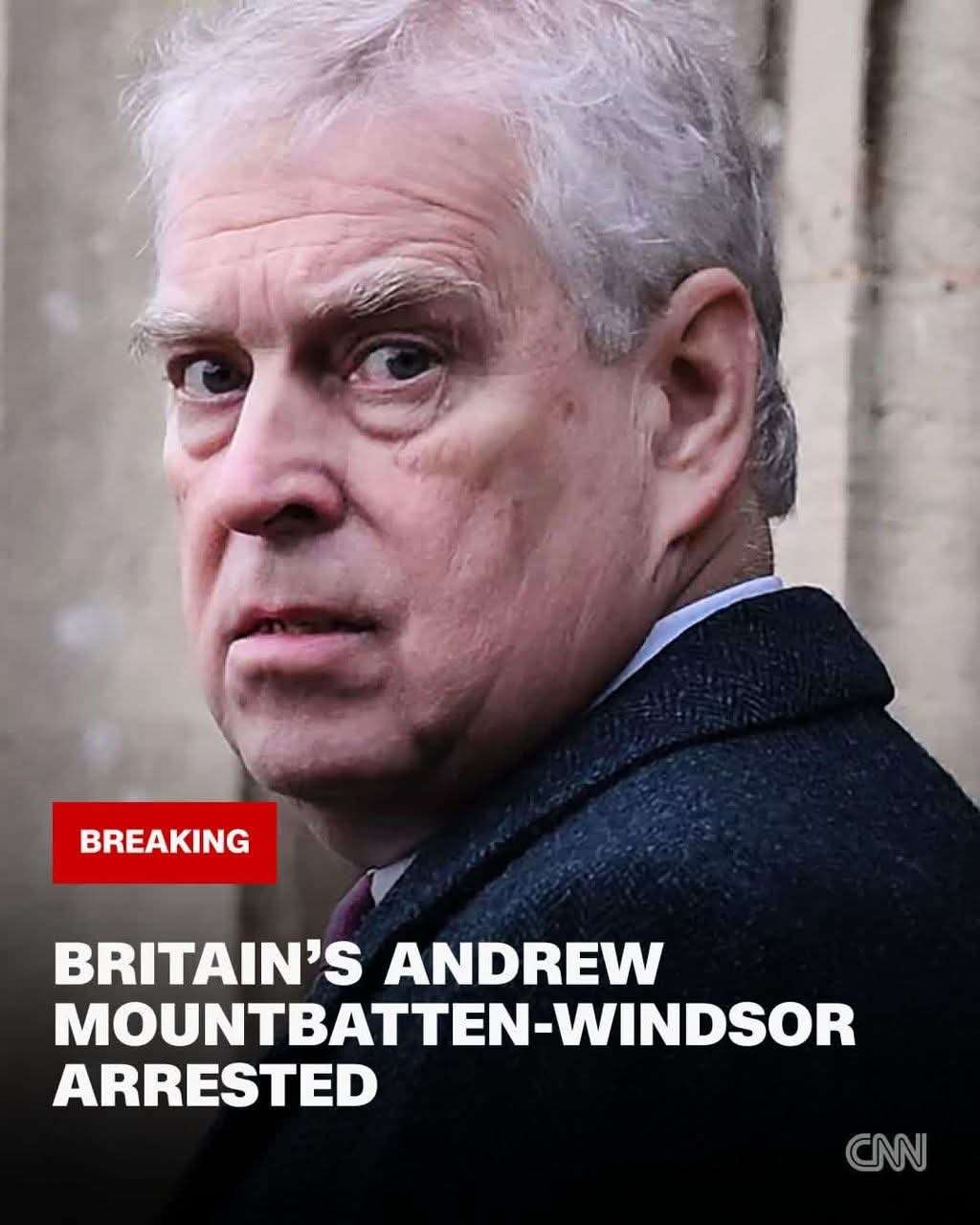
England King Charles III’s brother Andrew Mountbatten-Windsor arrested over office misconduct

LONDON-(MaraviPost)-Andrew Mountbatten-Windsor, brother of King Charles III of England, has been arrested on suspicion of misconduct in public office.

According to CNN, officers arrived at Mountbatten-Windsor’s home at Sandringham, King Charles’s estate in Norfolk, early Thursday morning.

Police said they were searching addresses in Norfolk and Berkshire, where the former prince lived until he left his home at Windsor this month.

Police had previously said the force was reviewing allegations that a woman was trafficked to the UK by Jeffrey Epstein to have a sexual encounter with Mountbatten-Windsor, and claims he shared sensitive information with the convicted sex offender while serving as the UK’s trade envoy.

Mountbatten-Windsor has denied all accusations against him and insisted that he never witnessed or suspected any of the behaviour of which Epstein was accused.

He has not commented on recent allegations of misconduct in public office.

The British loyal family is also yet to comment on the matter.

The Maravi Post

Why APM must resist PAC’s calls to fire Cabinet Ministers, public officers with active court cases

By Watipaso Mzungu

Amid calls from the Public Affairs Committee (PAC) to President Professor Arthur Peter Mutharika to fire Cabinet ministers and government officers with outstanding corruption cases, governance and human rights advocates have urged the President to exercise caution.

Recently, the Public Affairs Committee (PAC) – a quasi-religious grouping, which together with the Catholic Bishops, spearheaded the birth of multiparty democracy in 1992, called upon President Mutharika to sack officials facing corruption and other charges.

However, a seasoned governance and human rights advocate Undule Mwakasungula cautioned the President against acting on the calls wholesome, fearing this could be a recipe for disaster.

He reminded Malawians that hasty decisions have ruined lives and careers for innocent citizens before, citing the case of former Minister of Agriculture, Dr. George Chaponda, who was victimized for a crime he never committed.

“PAC’s call to fire ministers and senior officials over corruption allegations deserves attention. However, it does not automatically mean the President made a mistake in appointing them. First, the President acted on the information available at the time of the appointments. Many of those appointed had strong qualifications, experience, and a proven track record. For this reason, it will be unfair to say the President failed in make the right choices,” reacted Mwakasungula.

He wondered why PAC is raising this issue now when they were silent when the appointments were being made.

Mwakasungula urges PAC and other groups to avoid handling this matter emotionally or politically, emphasizing that government needs stability to function well.

“If every allegation leads to immediate removal, government operations may be seriously affected. Then also a risk that such calls could be used politically to weaken the administration rather than to promote justice. Much as oversight is necessary, but it should strengthen, not be used to paralyze government functions. We must also keep the principle of “innocent until proven guilty” at the center. Allegations are not proof. Removing ministers or officials based only on accusations is creating fear and instability, and may encourage the use of rumors as political weapons. This would harm our governance more than it would help,” emphasized the most revered governance and human rights advocate.

In a separate interview, a human rights lawyer, Alfred Munika, echoed Mwakasungula’s views, stressing that it would be unfair to punish someone who is still presumed innocent.

“We have seen cases where officials are acquitted after being dismissed, only to be left without a job or reputation. The case of George Chaponda, former Minister of Agriculture, is a stark reminder of the dangers of knee-jerk reactions. Dr. Chaponda was dismissed from the cabinet over maize-gate allegations, only to be acquitted and cleared by the court. This shows how hasty decisions can ruin lives and careers,” said Munika.

He further argued that it is not practical for a president to work with entirely new faces, who did not accompany him on his campaign trail.

“These are people he knows, trusts, and has worked with. Replacing them overnight could lead to a vacuum in leadership and disrupt government operations,” said Munika.

As Mwakasungula concluded, while accountability is crucial, due process must be respected. The Constitution guarantees the right to a fair hearing, and it’s essential that this principle is upheld.

“The President should focus on ensuring that the law takes its course rather than pre-empting it,” said Mwakasungula.

Mutharika’s predecessors have faced similar pressures, often with disastrous consequences.

In 2013, Joyce Banda sacked several officials over corruption allegations, only to see some reinstated or cleared later. This created uncertainty and undermined government effectiveness.

The PAC’s call for sackings may be well-intentioned, but it’s essential to consider the broader implications.

Malawi needs stability and continuity, not a revolving door of officials. Mutharika should resist this pressure and prioritize prudent governance over populist posturing.

Instead, the President could consider suspending officials with cases in court, allowing them to defend themselves while ensuring they don’t interfere with investigations.

This balanced approach would demonstrate commitment to accountability while upholding the principles of fairness and justice.

As Mwakasungula puts it, “A president can’t just wake up one morning and decide to start afresh with new faces. That’s not how governance works.”

Mutharika would do well to heed this advice and prioritize wise counsel over hasty decisions.

The Maravi Post

FND lauds Mutharika’s bold health sector reform, a move to protect vulnerable communities

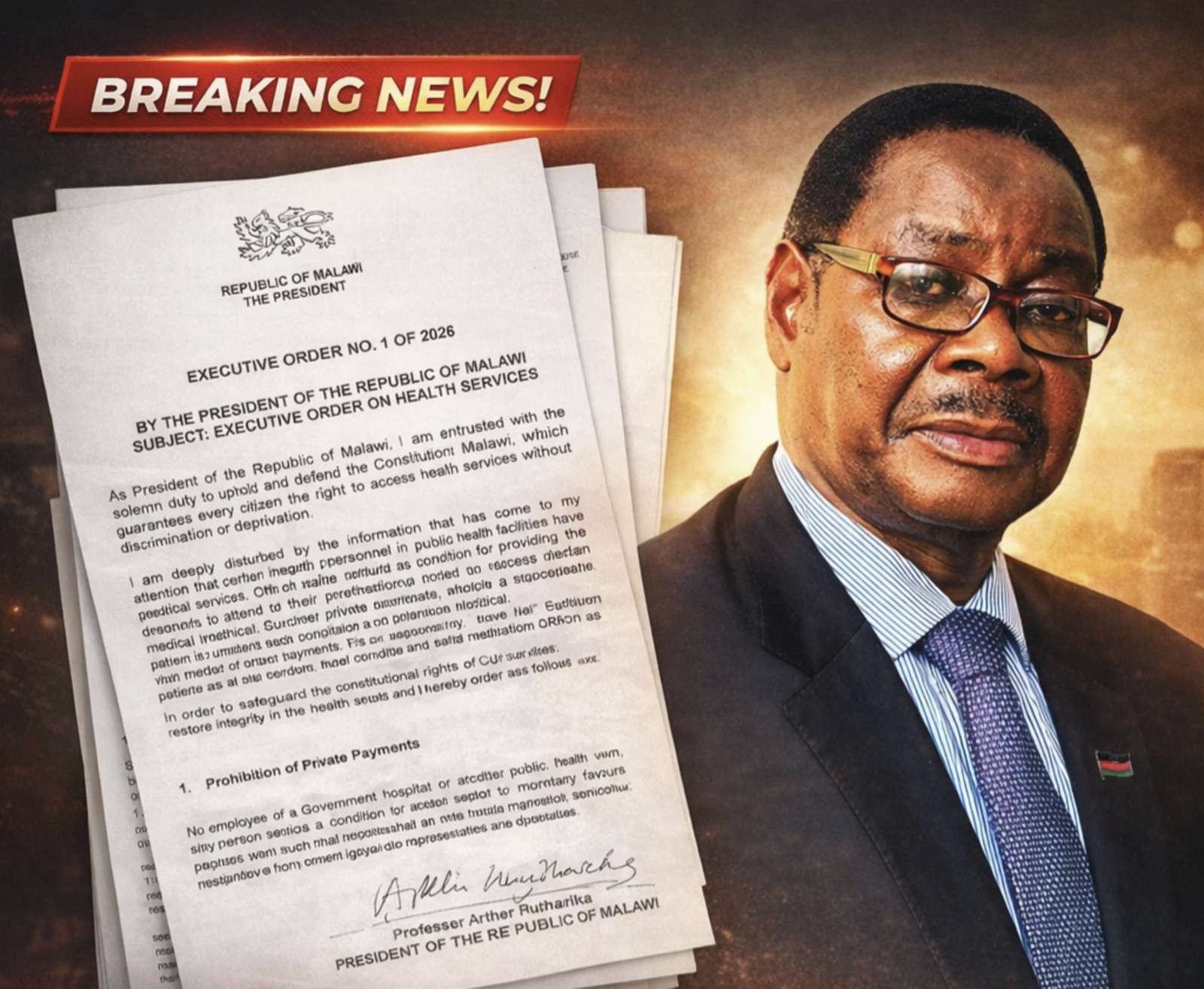
LILONGWE-(MaraviPost)-The Forum for National Development (FND) has strongly welcomed and fully supported the Executive Order issued on 16 February 2026 by President Arthur Peter Mutharika, describing it as a bold step toward restoring integrity, discipline and accountability in Malawi’s public health sector.

The statement has been signed by Fryson Chodzi, National Coordinator of the Forum for National Development (FND), who emphasized the organisation’s full backing of the reform measures.

In its statement, FND says the Executive Order is a necessary intervention aimed at correcting long standing structural weaknesses that have negatively affected service delivery in public hospitals and clinics across the country.

According to FND, the decision to prohibit public health employees from owning or operating private health facilities and requiring them to divest within 30 days is a decisive move to eliminate conflicts of interest that have undermined public confidence and compromised patient care.

For years, concerns have persisted that divided loyalties among some health workers contributed to drug shortages, absenteeism and the redirection of patients from public hospitals to privately owned clinics.

The organisation believes the new Order directly confronts this problem and reaffirms that public service must serve the public interest, not private profit.

Equally commendable, FND says, is the strict prohibition against public health personnel soliciting, demanding or receiving bribes from patients.

The practice of extorting money for services that are legally free has, according to the organisation, been one of the most painful injustices within the health system.

FND notes that poor Malawians particularly women, the elderly and those in rural communities have often been denied access to treatment simply because they could not afford unofficial payments.

The Executive Order, it says, sends a strong message that exploitation of vulnerable citizens will no longer be tolerated.

The organisation outlines several potential benefits of the reform, including the protection of the poor from unlawful financial demands and ensuring equal access to free public healthcare services.

It also says the Order will help restore ethical standards, reinforce zero tolerance for corruption in frontline service delivery and rebuild public trust in government hospitals.

Furthermore, FND believes the reforms will strengthen service delivery by ensuring full time commitment from public health workers while reducing corrupt practices that weaken efficiency and accountability.

The organisation adds that the measures will also help preserve public resources such as medicines, equipment and funds from misuse and diversion.

Describing the Executive Order as a demonstration of courageous leadership and deep commitment to social justice, FND says the move reflects a clear understanding that corruption in essential services disproportionately harms the poor and widens inequality.

FND has since urged health professionals, administrators and oversight institutions to embrace the reform in good faith, stressing that implementation must be firm, fair and transparent, supported by strong monitoring systems and improved working conditions.

In conclusion, the organisation maintains that the Executive Order is more than just a regulatory directive “it’s a powerful statement of values affirming that Malawi’s public health system must operate on integrity, fairness and service to the people”.

The Maravi Post

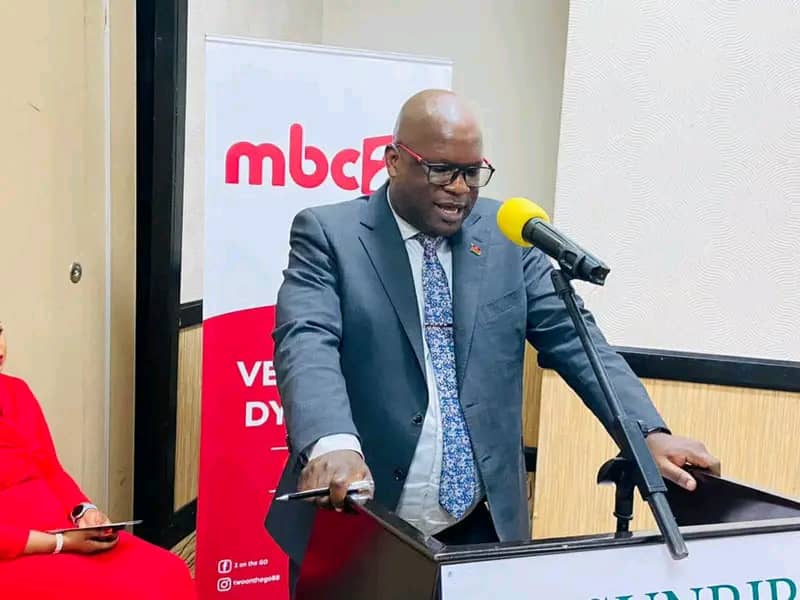
George Kasakula dismissed as MBC chief

BLANTYRE-(MaraviPost)-The Malawi Broadcasting Corporation (MBC) board of directors has dismissed the institution’s director general George Kasakula.

Kasakula confirmed the development, saying he received the dismissal letter today.

“It is true, the board has summarily dismissed me. They are saying I was partisan,” he told Nationonline.

The decision follows his appearance before the board’s Human Resource and Administration Committee last week.

Kasakula was appointed MBC director general in 2021 and signed a new contract in June 2024 running up to June 2027.

In October last year, he was suspended from the public broadcaster pending investigations.

The Maravi Post

Chithyola left in the cold as MCP gurus snub caucus call

LILONGWE-(MaraviPost)-The Malawi Congress Party (MCP) Kasungu South legislator who is also leader of opposition in Parliament Simplex Chithyola Banda has been left in the cold after senior party members snubbed his caucus call.

Several top MCP officials including former MCP Secretary General Elsenhower Mkaka, incumbent Secretary General Chimwendo Banda, Ching’oma and Kazembe boycotted the caucus citing no attendance without notice.

Not only but also Gotan Hara excused herself, citing other commitments.

The boycott raises questions about the party’s internal dynamics, with speculation that the meeting may be dominated by supporters of party president Lazarus Chakwera.

Chithyola is expected to make MCP position this afternoon in Parliament on President Peter Mutharika’s 2026/26 SONA.

The Maravi Post