
Rising global tensions: Trump’s ultimatum to Maduro sparks warning from China, Putin’s stark message to Europe, Zelensky’s fear of waning USA support

In a dramatic escalation of international political tensions, a series of high-stakes statements from global leaders have sent shockwaves through diplomatic circles and the world’s media.

U.S. President Donald Trump has issued a striking ultimatum to Venezuelan President Nicolás Maduro, demanding that he flee the country immediately to “save yourself and those closest to you.”

This bold directive comes amid growing instability in Venezuela and reflects the persistent friction between the United States and the Maduro regime.

Trump’s order is not just a call for a change in leadership but a stark warning that the United States is prepared to exert significant pressure on Venezuela.

The message underscores the urgency and gravity with which Washington views the situation, signaling a no-nonsense approach that could potentially lead to drastic consequences if ignored.

The implication is clear: the window for Maduro’s peaceful exit is closing rapidly, and the consequences of defiance could be severe.

This ultimatum has elicited an immediate response from China, which has cautioned the United States against any military intervention in Venezuela.

Beijing’s warning highlights the complex geopolitical stakes involved, emphasizing that Venezuela is a country where China holds substantial investments and strategic interests.

China’s position serves as a reminder that the Venezuelan crisis is not merely a regional issue but a flashpoint in the broader contest for influence between major world powers.

The Chinese government’s admonition reflects its broader foreign policy of opposing unilateral military actions that threaten sovereign nations, especially where Chinese economic and diplomatic interests are concerned.

By publicly challenging Washington’s potential intentions, China is signaling its readiness to defend its investments and maintain its foothold in Latin America, further complicating the already tense situation.

Meanwhile, in a separate but equally momentous development, Russian President Vladimir Putin issued a chilling message to Europe, stating that Russia is prepared to fight if Europe desires war.

This declaration intensifies fears of a renewed and dangerous confrontation on the European continent, where tensions between Russia and Western countries have been simmering for years.

Putin’s words carry a dual warning: a readiness to defend Russian interests at all costs and a stark challenge to Europe’s political will to escalate conflict.

Putin’s statement cannot be viewed in isolation. It comes at a time when Europe is navigating a complex security environment marked by energy disputes, military posturing, and diplomatic standoffs. The readiness to “fight if Europe wants war” is a stark reminder of the fragile peace and the high stakes involved in diplomatic interactions between Russia and European nations.

It raises concerns about the potential for miscalculations that could spiral into broader conflict.

Adding another layer to this geopolitical puzzle is Ukrainian President Volodymyr Zelensky’s candid admission of fear that the United States might lose interest in Ukraine’s ongoing conflict.

Zelensky’s statement reveals a deep anxiety about sustaining international support in a protracted and challenging war environment.

The U.S. has been a critical ally to Ukraine, providing military aid, financial support, and diplomatic backing. Any perceived waning of this support risks undermining Ukraine’s position and morale.

Zelensky’s concern reflects the broader uncertainty faced by countries caught in geopolitical struggles dependent on external support.

The possibility of diminished U.S. engagement could embolden opposing forces and shift the balance of power in the region, with far-reaching consequences for European and global security.

Taken together, these developments paint a picture of a world teetering on the edge of heightened conflict and instability.

The Trump administration’s ultimatum to Maduro, China’s warning against U.S. military action, Putin’s readiness to confront Europe militarily, and Zelensky’s fears of declining American interest all signal a period of intense rivalry and precarious diplomacy.

The connections between these statements are deeply intertwined.

The Venezuelan crisis, while geographically distant from Europe and Ukraine, is a critical arena where global powers are vying for influence.

The U.S. push against Maduro is not just about Venezuela’s internal politics but also involves challenging China’s expanding reach in Latin America.

China’s swift warning to Washington underscores the global nature of this contest, where economic and military interests overlap.

Simultaneously, Russia’s belligerent posture toward Europe reflects its broader strategic calculation to assert dominance and deter Western influence near its borders.

This posture has a ripple effect on the security dynamics surrounding Ukraine, where Moscow’s ambitions have already led to conflict.

Zelensky’s worries about U.S. commitment highlight the fragile alliances underpinning the current balance of power.

This convergence of geopolitical flashpoints underscores the complexity and interconnectedness of global politics today.

Each leader’s statement not only addresses a specific regional issue but also reverberates across continents, influencing diplomatic calculations and military strategies worldwide.

The urgency in Trump’s demand for Maduro to flee suggests an attempt to force a rapid resolution in Venezuela, potentially preempting further deterioration or foreign intervention.

However, China’s cautionary stance signals that any U.S. military action may provoke wider diplomatic and economic repercussions, including a hardening of Sino-American relations.

Putin’s readiness to engage militarily if provoked by Europe serves as a stark reminder that the specter of conflict remains alive in Europe, despite efforts at diplomacy and sanctions.

His message is a warning to European nations to carefully weigh their actions and avoid missteps that could escalate tensions beyond control.

Zelensky’s public expression of concern about U.S. interest highlights the fragility of international coalitions and the critical role that sustained support from powerful allies plays in conflict zones.

It also serves as a call for renewed engagement and reassurance from Washington to prevent any erosion of commitment.

In sum, these developments collectively represent a moment of heightened alert in international affairs.

The interplay between the United States, China, Russia, Europe, Venezuela, and Ukraine illustrates the multidimensional challenges facing global peace and security.

The world watches anxiously as these leaders navigate a precarious path, where decisions made in the coming days and weeks could shape the geopolitical landscape for years to come.

The urgency, warnings, and fears expressed by these key figures serve as both a reflection of current tensions and a cautionary tale about the dangers of escalating conflicts in a highly interconnected world.

The international community’s response to these developments will be crucial in determining whether diplomacy can prevail or if the world is headed toward a more volatile and uncertain future.


Discover more from The Maravi Post

Subscribe to get the latest posts sent to your email.

The Maravi Post

Insightful lawmaker Anthony Masamba pushes salaries, allowances cuts to support Mutharika’s Govt austerity measures

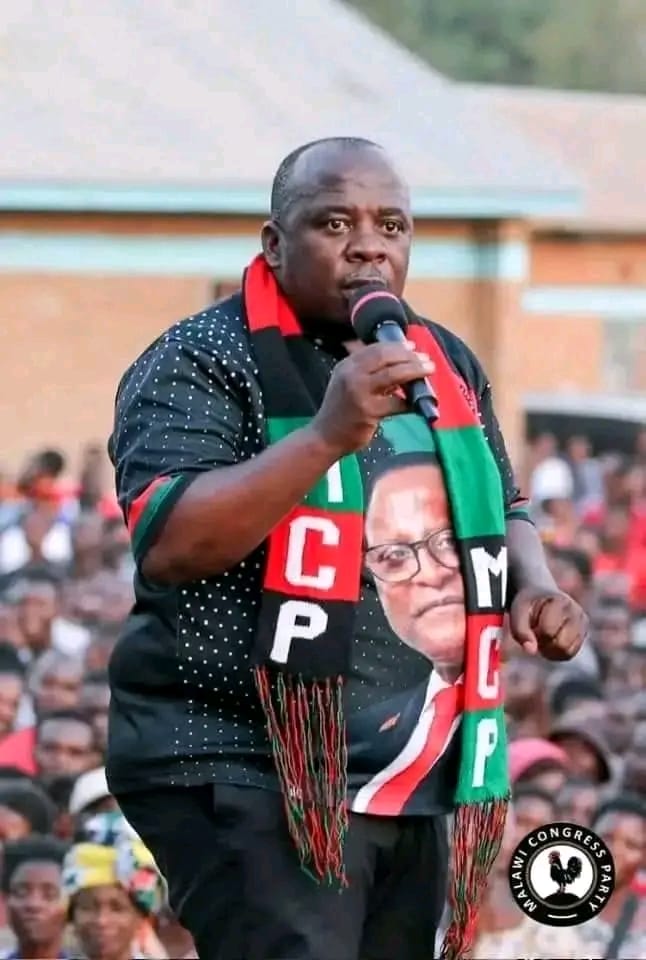
LILONGWE-(MaraviPost)-In a rare insightful and adorable of people centred legislator for Malawi Congress Party (MCP)’s Mchinji North East Anthony Masamba has called on lawmakers consider reducing their own salaries and fuel allowances to support President Peter Mutharika’s government austerity measures.

Despite Masamba’s good intention for the country amid ailing economy, many greedy Members of Parliament (MPs) stood against him in Parliament on Tuesday afternoon.

The well-trained media personnel Masamba raised the point while contributing to debate on an amendment bill seeking to revise the Value Added Tax (VAT) rate.

“Is it right for us to enjoy full salaries and fuel benefits while imposing punitive measures on poor Malawians?

“Why can’t we trim our benefits to save some money for our people?” He asked, prompting murmurs—mostly in disagreement—across the chamber.

First Deputy Speaker Victor Musowa responded Masamba by urging him to pursue the idea through a Private Member’s Bill.

“The chair has received your request. If you want to implement it, present it during Private Members Business and this House will support you,” Musowa appealed.

Meanwhile, Malawians across the country have lauded Masamba for showing a true colour of legislator who puts the nation first than personal interests.

“Titakhalanawo 20 ma MPs ngati akulu awawa, it’s my hope kuti Malawi athakukhala dziko lokoma kwambiri. Aliyense waona yekha kuti ma MPs aja tidawavotera aja amangotinamiza kuti amakonda ma constituencies athu, anthu aja amangowona zammimba mwawo.

“Ulemu wanu Honourable Anthony Masamba Mulungu azikudalitsani. Zangovuta kuti inuyo mulinokha ku parliament yemwe mumalakalaka kuona a Malawi akukhala moyo woyenera,” lauds Limbani Chisale from Ntcheu.


Discover more from The Maravi Post

Subscribe to get the latest posts sent to your email.
The Maravi Post

Zelensky set for landmark address to Irish Parliament

Ukrainian President Volodymyr Zelensky is expected to deliver a historic address to the Irish Parliament as part of his continued diplomatic outreach amid the ongoing war with Russia.

The planned address will take place during a special sitting of the Oireachtas, where both Irish lawmakers and senior government officials will gather to hear his message.

Zelensky is anticipated to express gratitude for Ireland’s humanitarian support while urging the nation to continue standing with Ukraine as it navigates unprecedented security challenges.

Irish officials say the invitation reflects their solidarity with the Ukrainian people and their commitment to supporting democratic values under threat from Russian aggression.

The speech is expected to focus on strengthening international alliances, deepening cooperation with European partners, and mobilising additional global assistance for Ukraine’s defence.

Analysts believe Zelensky’s engagement with Ireland underscores his broader diplomatic strategy of building a united front across Europe, even among countries that are militarily neutral.

The visit is also seen as an effort to remind European governments that Ukraine’s struggle has far-reaching implications for the continent’s security and democratic stability.

Irish lawmakers have welcomed the upcoming address, describing it as a timely reminder of the urgent need for global solidarity in the face of ongoing conflict.


Discover more from The Maravi Post

Subscribe to get the latest posts sent to your email.

The Maravi Post

The untold story of Kaunda’s arrest: How Chiluba tried to break Zambia’s father of the nation

LUSAKA-(MaraviPost)-When Zambia transitioned from Kenneth Kaunda’s 27-year rule to Frederick Chiluba’s new multiparty era, the change appeared peaceful on the surface.

However, beneath the handshake diplomacy, one of Southern Africa’s most psychologically brutal political confrontations was unfolding.

On Christmas Day, 1997, Kaunda was arrested, a moment chosen for maximum symbolic impact.

Christmas, traditionally a day of presidential addresses and national unity, became the backdrop for Kaunda being bundled into a vehicle by armed officers.

The timing led many senior diplomats to conclude that the arrest was meant to break Kaunda psychologically, rather than simply pursue legal action.

The government accused Kaunda of involvement in a failed coup in October 1997, led by junior soldiers.

Yet Zambian intelligence insiders later admitted that there was no concrete evidence linking Kaunda to the mutiny.

Kaunda had been out of power for six years, had no military command, and was leading a peaceful political movement under UNIP.

Despite this, he became the central figure blamed for a coup he did not participate in.

At the time, Kaunda was experiencing an unexpected political resurgence, drawing large crowds to his rallies and maintaining widespread respect across rural districts.

Inside State House, Chiluba’s camp feared that Kaunda could potentially win the 1998 elections if allowed to run.

Kaunda’s moral authority still overshadowed other political figures and remained a unifying force across tribal lines, unlike the fragmented new elite.

For many observers, his arrest was interpreted as a pre-emptive political strike rather than a measure of national security.

During the same period, Kaunda was shot in the neck by government forces while leading a peaceful protest.

This injury left him physically vulnerable at the time of his detention.

For many Zambians, this act reinforced the perception that the state was willing to use lethal force against a national symbol.

Kaunda was subsequently held in Mukobeko Maximum Security Prison, a facility typically reserved for murderers, armed robbers, and political radicals.

This was not merely imprisonment but an attempt to erode his legacy by equating him with dangerous criminals.

Some prison officials later revealed they were instructed to treat Kaunda “as an ordinary dangerous suspect,” delivering a psychological blow aimed at undermining his stature.

The international community, including the Commonwealth, the United Nations, and African heads of state, intervened behind the scenes to pressure Chiluba to release Kaunda.

Even Nelson Mandela reportedly sent private messages condemning the treatment of the former president.

Diplomats feared that Zambia was descending into personal vendetta politics, with the potential to trigger ethnic tensions or civil unrest.

Chiluba’s own cabinet was divided on the matter, with some ministers warning that humiliating Kaunda could backfire politically.

Nevertheless, hardline security advisors convinced Chiluba that neutralising Kaunda was essential to consolidating power.

Ironically, the detention had the opposite effect of what Chiluba intended.

Kaunda emerged from prison more respected, seen as a statesman, and admired internationally as a martyr of democratic abuse.

The attempted political witch hunt, while meant to cripple Kaunda’s comeback, ultimately strengthened his legacy.

Historians agree that there was no direct evidence linking Kaunda to the coup, the arrest’s timing and style were deeply political, and Chiluba had strong incentives to remove a key rival.

Official statements cited national security, but the methods, symbolism, and sequence of events pointed clearly to a targeted political campaign.

The detention of Kaunda remains a powerful reminder of how political power struggles can shape the destiny of nations and the enduring respect commanded by principled leadership.


Discover more from The Maravi Post

Subscribe to get the latest posts sent to your email.

The Maravi Post

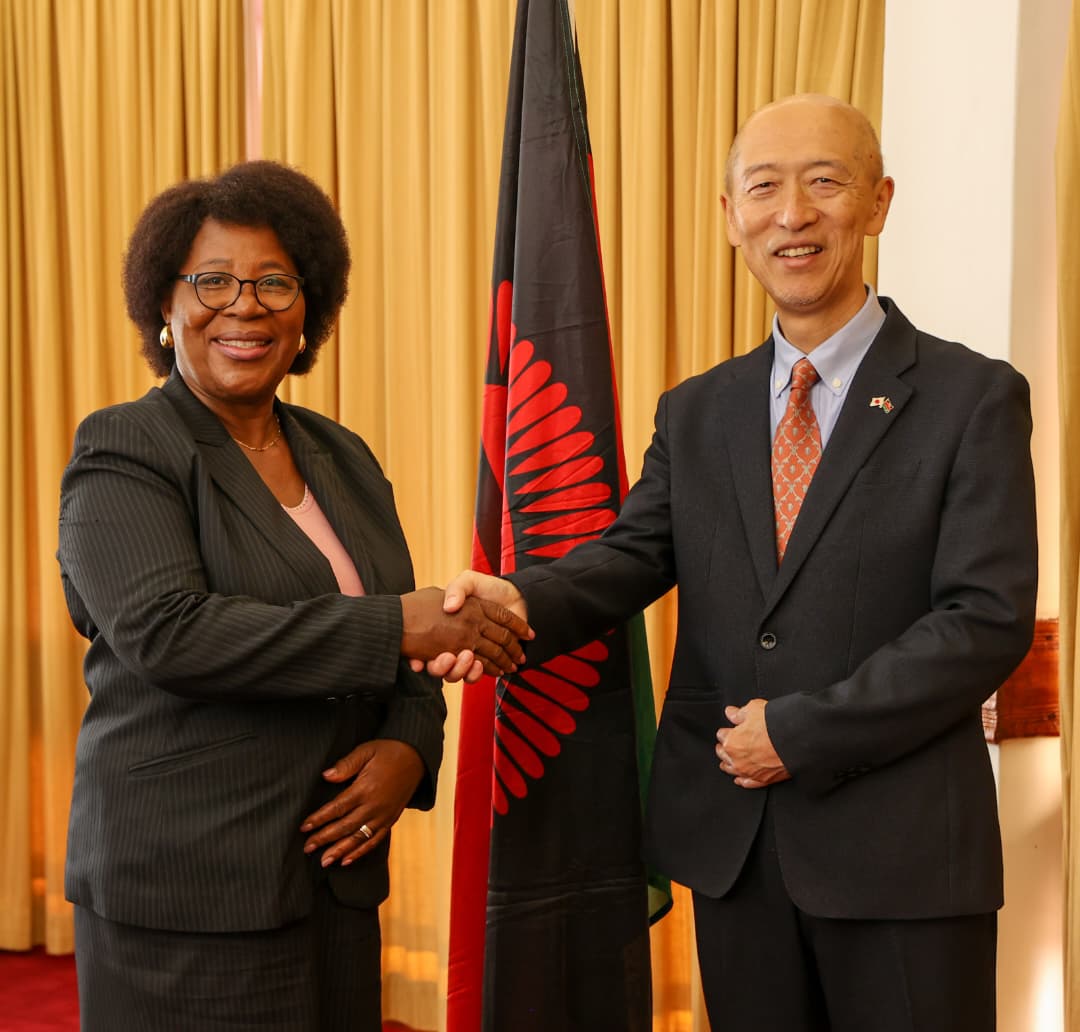
Former Malawi leader Joyce Banda appointed as Global Fairness Initiative Board Chairperson

Former President Joyce Banda

LILONGWE-(MaraviPost)-The country’s former President Joyce Banda has been appointed as board Chairperson for Global Fairness Initiatives (GFI).

Banda’s Executive Assistant, Media and Public Relations Arnold Mnelemba has to confirmed the news to The Maravi Post a while ago.

“I can indeed confirm that the 4th President of the Republic of Malawi Her Excellency Dr Joyce Banda has been appointed board chair for Global Fairness Initiative.

“It is something of great honour considering the fact that the initiative is a global
institution of highest reputation,” Mnelemba said.

He added, “We are thrilled to hear the news and Her Excellency is ready to serve. It will be a great honour for Her Excellency to serve in the board whose first chairperson was President Bill Clinton.

“She is ready to serve in that capacity and her term begins on first January. She will chair Her first board meeting in May, Ghana”.

According to the Global Fairness Initiative (GFI), a leading NGO committed to creating more equitable, and secure livelihoods for the working poor, announced today that Banda will head the GFI Board of Directors replacing outgoing Chair H.E. Kabine Komara, Former Prime Minister of Guinea.

“We are honored to welcome President Banda as Chairperson of the GFI Board of Directors,” said H.E. Komara. “She has been a champion of working people in Malawi and throughout Africa, and her deep intellect and practical experience will bring great benefit to the important work of GFI and our grassroots partners throughout the world.”

Joyce Banda served as the 4th President of the Republic of Malawi from 2012 to 2014 following over a decade in public service as Vice President, Minister of Foreign Affairs, Minister for Gender and Community Services and a Member of Parliament. Dr. Banda was Malawi’s first female Head of State and the 2nd in Africa.

During her Presidency, she championed reforms that exemplified good governance and the democratic rule of law.

She is the recipient of numerous international awards and accolades and is celebrated for her work to tackle global challenges ranging from hunger to maternal health.

Through her Joyce Banda Foundation, she has supported primary and secondary school education of some of Malawi’s most vulnerable children.

The Joyce Banda Foundation also feeds and provides head-start education to over 10-thousand children across the country. The Foundation’s other key activity has been building climate-resilient houses for the vulnerable across the country, with recent focus being on those who lost their homes to the four cyclones that have hit Malawi in recent years.

“It is a privilege to have President Banda as the new Chair of the GFI Board of Directors,” said Karen Tramontano, Founder of Global Fairness Initiative.

“She has been a true advocate and partner to the grassroots, and we look forward to collaborating on our shared work to uplift working poor communities in Malawi and throughout the world.”

Global Fairness Initiative is a US-based INGO committed to creating a more equitable, sustainable approach to economic development through programs to reduce poverty, enfranchise informal workers, and create a more just, secure future for workers.

Founded by Karen Tramontano with Former President Bill Clinton as founding Chair, GFI has implemented programs that strengthen rights and livelihoods for the working poor in nations across the Global South.

Who is Joyce Banda?

Joyce Banda became President of the Republic of Malawi in 2012 following more than a decade in public service beginning with her election to Parliament and service as Malawi’s Foreign Minister and Minister for Gender and Community Services and then as Vice President.

Dr. Banda was Malawi’s first woman Head of State and only the 2nd in Africa, and she has been widely recognized for her work to expand the country’s economy, strengthen democratic systems and build strong diplomatic ties globally.

During her Presidency, Dr. Joyce Banda is credited with turning around an ailing economy which was on the verge of collapse to one that registered 6.2% in 2014 from 1.8% registered in 2012.

This followed her aggressive economic reforms which led to significant economic expansion.

Under President Banda, Malawi’s operational industrial capacity improved from 35% in 2012 to 85% in July 2014, and the foreign exchange import cover improved from one week to three and half months in July 2014.

In the areas of democracy, good governance, and rule of law, President Banda repealed a number of draconian laws which had weakened essential democratic institutions, infringed upon civil liberties, and restricted the freedom of the press.

Since her Presidency, Dr. Banda has launched women-centered organizations across Africa, including the African Federation of Women Entrepreneurs (AFWE), the Council for Economic Empowerment for Women in Africa (CEEWA), the American & African Business Women’s Alliance (AABWA), and her Joyce Banda Foundation.

She served as a Distinguished Fellow at the Center for Global Development and the Woodrow Wilson Center, a member of the United Nations Council of Women World Leaders and is a standing member of the Club de Madrid.


Discover more from The Maravi Post

Subscribe to get the latest posts sent to your email.

The Maravi Post

Ntata on Mutharika’s private trip to RSA-“The private trip that isn’t private”

The Head of State Professor Arthur Peter Mutharika has announced a “private visit.”But here is the question Malawi must ask without fear: How can the President’s trip be “private” to the very nation he governs?

A president is not a tourist. His movements are not personal errands. His absences are not family outings. Every time he leaves the country, the entire machinery of the state shifts around that moment.

There is no such thing as “private” when the presidency itself is public property.

So when an 80-year-old president quietly slips out under the veil of “private visit,” the nation is expected to pretend not to know what is happening.

But the truth is simple: At that age, a presidential “private visit” is almost always a medical appointment.

And that matters.
Deeply.

Because a President’s health is not his private business.
It is a matter of:National security; Succession clarity; Policy continuity; Investor confidence; Public stability; Geopolitical assurance

A president’s heartbeat is tied to the heartbeat of the nation.
If he falters, the country feels it. If he weakens, the system trembles. If he becomes incapacitated, the entire nation enters a legitimacy crisis.

This is why mature democracies disclose the health of their leaders.

Not because they enjoy gossip; but because a nation cannot be governed from behind a medical curtain.

When a president hides behind the phrase “private visit,” he is essentially saying this to his people:

“You must trust me with your lives,
but I will not trust you with the truth about mine.”

That is not leadership. That is paternalistic secrecy. And as Malawi approaches a critical election, transparency is not a favour. It is an obligation.

Malawians deserve to know: Is the man asking for five more years physically capable of carrying the burden of the presidency?

That question cannot be hidden behind euphemisms. Not anymore. The presidency is public. The consequences are public. Therefore the truth must be public.

Because when a leader’s health becomes “private,” the nation’s anxiety becomes public.


Discover more from The Maravi Post

Subscribe to get the latest posts sent to your email.
The Maravi Post