HARARE-(MaraviPost)-The Premier Soccer League (PSL) of Zimbabwe has agreed in principle to expand the top-flight league following a proposal by the Zimbabwe Football Association (ZIFA) aimed at increasing the number of participating teams and restructuring the country’s football system.
The development was announced in a statement signed by PSL Communications and Media Liaison Officer, Kudzai Bare,the PSL confirmed that it had convened an Extraordinary General Meeting to discuss ZIFA’s proposal.
ZIFA recommended that the league expand from 18 to 20 teams starting from the 2026 season, alongside the establishment of a National First Division League.
According to the PSL, the meeting resolved to suspend relegation for the 2025 season.
This decision will allow the league to accommodate newly promoted teams, resulting in a temporary expansion to 22 teams for the 2026 campaign.
The transitional measure is meant to ensure a smooth shift into the new structure.
The PSL further indicated that after the conclusion of the 2026 season, the league will revert to the proposed 20-team format beginning in 2027.
This marks a significant milestone in the long-term restructuring of Zimbabwe’s football leagues.
In addition to the expansion, the PSL has proposed a phased approach to implementing the National First Division League.
The body expressed optimism that the new division could become fully operational within the next three years, representing a major step toward strengthening the country’s football development pathways.
Bare reiterated the league’s commitment to working closely with national football authorities to ensure the success of the reforms.
The changes are expected to reshape the competitive landscape of Zimbabwean football, offering more opportunities for clubs while aligning the domestic league structure with broader development goals.
Share this:
Like this:
LikeLoading…
Discover more from The Maravi Post
Subscribe to get the latest posts sent to your email.
LUSAKA-(MaraviPost)-Netball Zambia has announced the withdrawal of both the Women’s and Men’s National Netball Teams from the 2025 Africa Netball Cup, a major continental tournament set to run from December 8–14 in Lilongwe, Malawi.
In a press statement issued in Lusaka on Monday, the Association described the move as a painful but unavoidable decision prompted by its failure to raise the MK1.2 million required for the teams’ travel, accommodation and participation expenses.
Despite weeks of outreach and discussions with potential sponsors, Netball Zambia said all efforts to secure funding had been unsuccessful.
Netball Zambia Secretary General, Pritchard Ngoma, expressed deep regret over the development, noting that the Association had exhausted all possible avenues.
“It is with great disappointment that we announce the withdrawal of our Men’s and Women’s National Teams from the 2025 Africa Netball Cup. We have done everything within our means to mobilise resources but we can no longer hold on in the hope of a last-minute sponsor at this advanced stage, as doing so risks exposing the Association to penalties,” Ngoma said.
He further thanked players, fans and the wider netball community for their unwavering commitment to the sport.
“We appreciate the athletes’ dedication and the support from the netball community nationwide. We remain hopeful that Zambia will bounce back stronger and compete at next year’s tournament,” he added.
The announcement comes as a particular blow to the Women’s National Team, which made history by lifting their first-ever Africa Netball Cup title in 2023.
Netball Zambia acknowledged that the withdrawal would be especially disappointing for the reigning champions and their supporters.
However, the Association assured the nation that it remains focused on rebuilding and strengthening its systems to ensure better preparation and sustainable funding for future competitions.
Netball Zambia also extended its gratitude to all stakeholders, partners and fans for their continued support as it works to secure long-term solutions for the national teams.
Share this:
Like this:
LikeLoading…
Discover more from The Maravi Post
Subscribe to get the latest posts sent to your email.
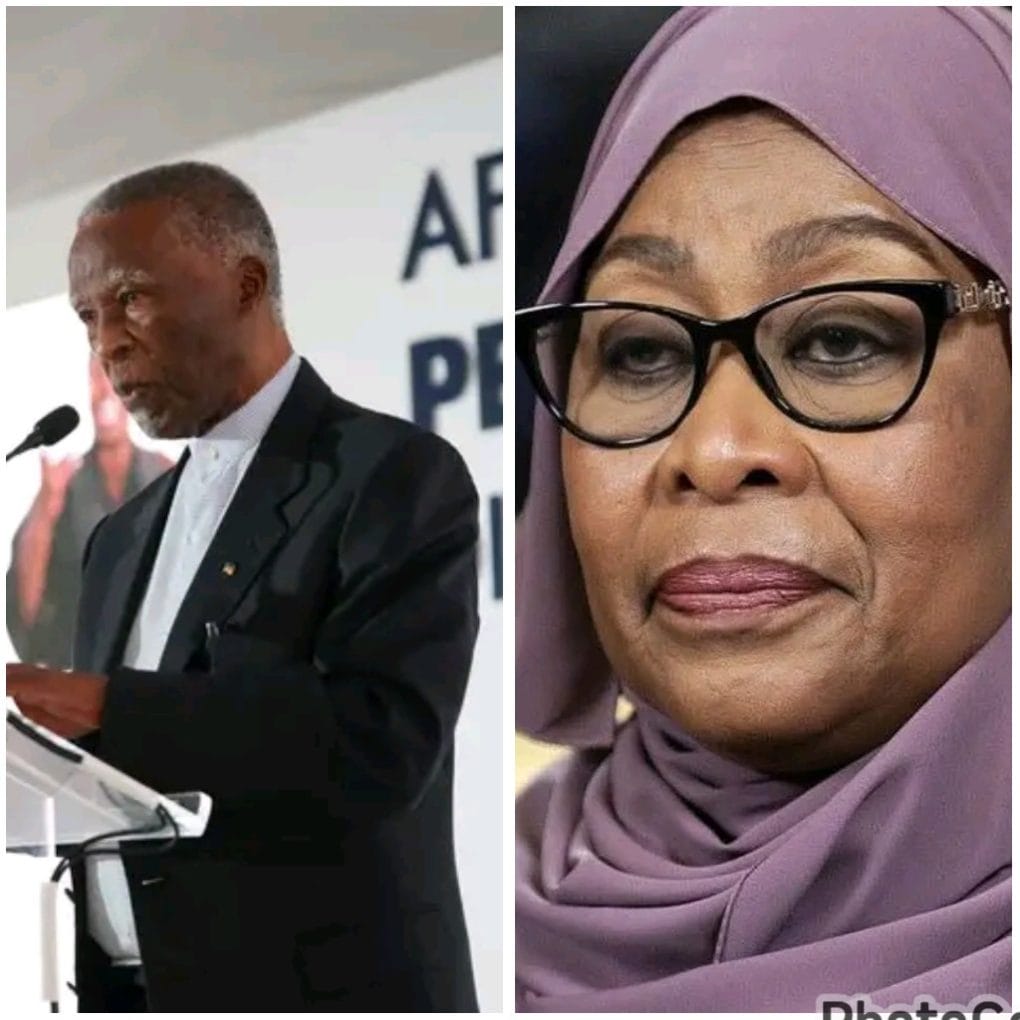
PRETORIA-(MaraviPost)-In a statement that has sent ripples across East African political circles, the Thabo Mbeki Foundation, representing South Africa’s former President Thabo Mbeki, has publicly declared that Tanzania currently lacks a legitimate government.
The foundation contends that the administration led by President Samia Suluhu Hassan was “imposed upon the people through a combination of force and fraudulent means,” raising urgent questions about governance and democracy in the East African nation.
The pronouncement comes amidst ongoing regional concerns about political transparency and democratic processes in several African countries.
Thabo Mbeki, a respected elder statesman known for his diplomatic approach to conflict resolution and governance issues, has through his foundation urged Tanzanians to reflect critically on the trajectory their country is taking.
The foundation’s statement calls for a collective examination of what has gone wrong and what corrective measures are necessary to restore Tanzania on a path that respects the will of its people.
Tanzania, under the leadership of President Samia Suluhu Hassan, who assumed office in March 2021 following the sudden death of her predecessor John Magufuli, has experienced significant political shifts. President Hassan’s administration has been marked by efforts to open the political space, improve relations with international partners, and stimulate economic reforms.
However, the foundation’s assertion challenges the legitimacy of the current government’s ascent and tenure, suggesting that these changes may have been engineered through undemocratic practices.
The foundation’s statement reflects deep concerns about the electoral processes and political freedoms in Tanzania. Over recent years, international observers and local opposition groups have reported incidents of political repression, restrictions on media freedoms, and limitations on civil society activities.
These factors have contributed to a climate of suspicion and distrust among segments of the Tanzanian population and the wider international community.
Thabo Mbeki’s foundation emphasized the need for open dialogue and inclusive participation to address the critical questions facing Tanzania. “What went wrong, and what must be done to put the beloved country back on course?” the foundation asked, implying that the current situation threatens the social contract between the government and the people.
Such a call for introspection and reform is significant given Mbeki’s reputation for advocating peaceful solutions and democratic governance across the continent.
The implications of the foundation’s statement are profound for Tanzania’s political landscape. It signals a potential shift in regional perspectives about the legitimacy of governments and the respect for democratic norms.
Neighboring countries and regional blocs such as the East African Community (EAC) may find themselves pressured to engage more critically with governance issues in Tanzania.
President Samia Suluhu Hassan, Tanzania’s first female president, has faced numerous challenges since taking office.
She inherited a nation grappling with economic difficulties, international isolation due to the previous administration’s policies, and internal political tensions. Her administration has attempted several reforms, including re-engaging with international financial institutions and promoting a more open political dialogue.
However, the allegations from the Mbeki Foundation suggest that these efforts may not fully address underlying governance concerns.
Political analysts note that the foundation’s critique may stem from wider regional anxieties about governance and legitimacy in Africa.
The continent has witnessed a complex interplay of democratic transitions, electoral disputes, and governance challenges in recent decades.
South Africa, under Mbeki’s presidency, played a significant role in promoting peace and democratic governance in Africa, which adds weight to the foundation’s pronouncement.
Locally, Tanzanian political actors have responded with mixed reactions.
Supporters of President Hassan’s government have dismissed the foundation’s statement as interference in Tanzania’s internal affairs, emphasizing the legitimacy conferred by the constitutional processes following President Magufuli’s death.
Opposition parties and civil society activists, however, have expressed cautious optimism that such international attention could foster greater accountability and political reform.
The broader African community is watching closely how Tanzania will respond to these criticisms.
The country’s stability and democratic health are vital not only for its citizens but also for the region’s economic integration and security.
East Africa’s development agenda heavily depends on political stability and good governance, making Tanzania’s situation a matter of regional interest.
The statement from the Thabo Mbeki Foundation brings to the forefront critical questions about governance legitimacy in Tanzania under President Samia Suluhu Hassan.
It challenges the narrative of a smooth political transition and calls for a collective reckoning with the country’s current political trajectory.
As Tanzania navigates these challenges, the eyes of the continent remain firmly fixed on how its leaders and people will respond to restore trust, uphold democratic principles, and ensure a future that reflects the will of its citizens.
The call for dialogue and reform echoes beyond Tanzania’s borders, resonating with broader struggles for democracy and good governance across Africa.
Share this:
Like this:
LikeLoading…
Discover more from The Maravi Post
Subscribe to get the latest posts sent to your email.
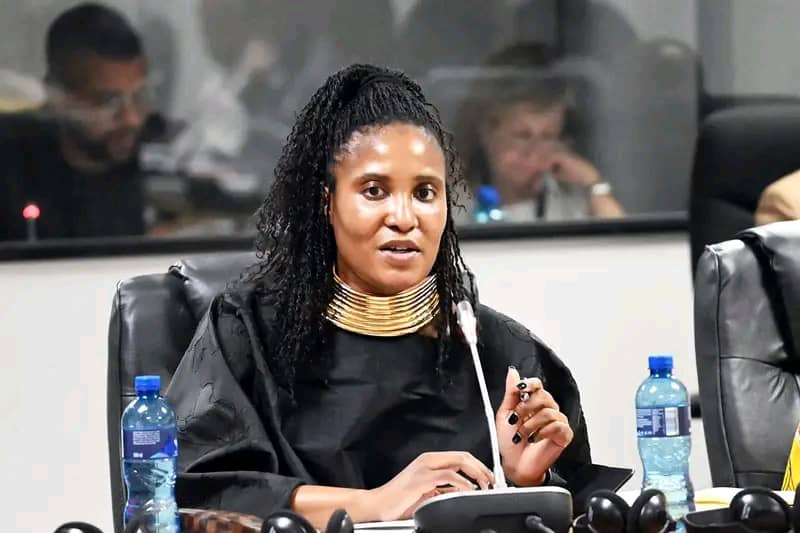
PRETORIA-(MaraviPost)-South African police have launched an investigation into serious allegations against Duduzile Zuma-Sambudla, the daughter of former President Jacob Zuma.
She is accused of allegedly deceiving 17 men into joining Russia’s war in Ukraine.
Reports indicate that the men were recruited under the pretense of serving as bodyguards for her father’s uMkhonto weSizwe (MK) party.
Her stepsister, Nkosazana Bongamini Zuma-Mncube, has claimed that the men were sent to Russia and subsequently deployed to the front lines of the conflict.
Duduzile Zuma-Sambudla has not publicly responded to the accusations at this time.
The 2021 riots in South Africa remain a separate legal matter for which she is already facing trial, reportedly for incitement of violence.
Earlier this month, the office of President Cyril Ramaphosa confirmed that it had received urgent requests for assistance from 17 South African men, aged between 20 and 39, who are trapped in the Donbas region of Ukraine.
The allegations have sparked national concern in South Africa over the recruitment of citizens for foreign conflicts under potentially false pretenses.
Police investigations are ongoing, and authorities are seeking to establish the full circumstances surrounding the men’s deployment and the role of Duduzile Zuma-Sambudla and her associates.
The situation has added to the scrutiny of Zuma-Sambudla’s activities and intensified discussions around accountability for the recruitment of citizens in international conflicts.
Share this:
Like this:
LikeLoading…
Discover more from The Maravi Post
Subscribe to get the latest posts sent to your email.
DRC, Rwanda agree economic framework outline as part of peace deal
The Sheikh Tamim Bin Hamad Foundation (STBHF) expresses strong support for the historic peace framework initiated and hosted by the Emir of Qatar, His Highness Sheikh Tamim Bin Hamad Al-Thani, to end the bitter conflict in the Democratic Republic of Congo (DRC). At this crucial time, what the DRC and of course Africa needs urgently as a continent is total peace, culminating into political stability, democratic good governance, human rights, justice, freedom and dignity.
The peace framework was signed in Doha, the Qatari capital city, on 15th November, 2025 by the Government in Kinshasa and the M-23 rebel group. With this development, the STBHF urges both parties to sum-up great political courage, and exert further expeditious and systematic efforts, without recourse to violence, to resolve the hardcore political issues in order to achieve a lasting political settlement of decades of protracted conflict. The STBHF recognises the pivotal role played by the Emir of Qatar and the Qatari government in maintaining not only the ceasefire agreement, but also to ensure that a peace deal was signed, signaling hope to end Africa’s longest and devastating conflict in history.
The STBHF also takes this opportunity to urgently appeal to all citizens of the DRC, their political leaders and institutions to support a national consensus on the need for an end to the decades long conflict, which has devastated lives and destroyed the country’s infrastructure-based facilities and ruined its national economy. To this end, we encourage all member-states of the African Union (AU) to rally their support behind the DRC peace process with courage and vision, and ensure that no territory of Africa is used as a recruiting, or training or launching pad to continue the violence in the central African nation.
We urge the government in Kinshasa and the M23 rebel group militants to make every effort to promote an inclusive and comprehensive peace process, ending the untold suffering, misery and indignities associated with such a bitter conflict. Thus, we urge the two parties to take urgent action, on the premise that only the people of the DRC are best qualified, and not foreigners to be the architects of the destiny of their country.
And for the peace process to succeed, we call for sustainable support among Congolese people, given the complexity of the issues to be resolved. We know that the remaining negotiations will face significant challenges as they progress, but also, we believe with international financial assistance coming from peace and development partners, the people of the DRC will see tangible benefits of the entire process in their daily lives.
The STBHF recognizes restoring hope among the people of the DRC requires that all of them enjoy the benefits of the peace. The same also can be said that, building a national consensus for the difficult steps ahead in the DRC’s peace process require also great efforts to meet the social and humanitarian needs of war victims, including the poor, the unemployed, the internally displaced especially in the rural areas, the wounded, and women, children and the elderly people.
For lasting peace, the people of the DRC must unite to renounce violence and show their loyalty and respect for the principles of human rights, democracy, rule of law, and recognition of the rights of ethnic minorities. They must also focus on making ways to address justly the needs of all communities across the DRC, in order to combat poverty and foster social cohesion. Ending the violence is the only civilized and guaranteed step to remove the main barriers that militate against economic freedom, social progress and sustenance of the environment in the DRC. It is in this perspective that the STBHF is appealing to the Emir of Qatar to lead the global community to organize an international fundraising conference to help the reconstruction of the DRC, and to provide assistance to meet the immediate and priority needs of the people of the DRC. This is one of the many ways to help promote the peace process in the DRC.
While all areas of Eastern DRC have been seriously affected by the war, all the other regions have suffered the most extensive destruction and devastation. We commend the Emir of Qatar for his peace and development agenda across Africa, and pray that Allah Almighty continue to protect and guide him with vision, good health and long life.
We encourage all parties in the DRC’s peace process to collectively work towards providing the immediate needs of the war ravaged areas of their country, which continue to experience severe social-economic hardships and deprivation. We assure all parties to the peace process of our continued advocacy in promoting peace in the DRC. We stand ready also to launch a global campaign for immediate assistance to begin a process of resettling, rehabilitating internally displaced persons, addressing the needs of women and children and helping the population to restart their economic activities.
The STBHF explicitly condemns war and the application of war as an instrument to settle political differences, either at national, regional, continental or international level. We also adhere to cherished principles of peace and amity amongst member-states of the United Nations.
Naturally, the STBHF has had to counter various lies, hate messages and malicious attacks peddled in the mainstream media as well as the social media platform. We often dismiss these attacks as nothing but mere fake news or misinformation and disinformation campaigns intended to embarrass the Emir of Qatar and the Qatari people.
In a conflict regime, Qatar under the wise leadership of the authentic Emir, His Highness Sheikh Tamim Bin Hamad Al-Thani, advocates peaceful solutions based on international law, international humanitarian law and arbitration. With the Emir of Qatar now at the forefront of the peace process in the DRC, we warn against fake news designed to reverse progress in attempts to end the bitter conflict in the Central DRC.
Long live the great Emir of Qatar! Long live Qatar-Africa Solidarity!!
Signed:
Miss Zainab Sanko Chief Executive Director The Sheikh Tamim Bin Hamad Foundation (STBHF)
Share this:
Like this:
LikeLoading…
Discover more from The Maravi Post
Subscribe to get the latest posts sent to your email.
The French Navy has formally denied recent claims made by some Pakistani media outlets regarding the purported statements of a French officer on regional air engagements.
Reports had suggested that Captain Yvan Launay confirmed Pakistan’s air superiority and the downing of Indian Rafale jets, a claim that quickly circulated online.
In a statement, the French Navy clarified that Captain Launay never made any such remarks.
The Navy emphasized that Captain Launay’s role is purely technical and he did not comment on operational aerial engagements or the capabilities of foreign systems, including Chinese aircraft.
The clarification comes amid heightened tensions in the South Asian region, where misinformation and speculative reports can rapidly influence public perception.
Officials noted that attributing statements to military personnel without verification can create diplomatic misunderstandings and undermine regional stability.
The French Navy’s statement reinforces the importance of relying on verified sources when reporting on sensitive defense matters.
Captain Launay himself has remained neutral, focusing on technical expertise rather than operational or strategic assessments of foreign air forces.
This development serves as a reminder of the need for caution in media reporting on military affairs, especially in conflict-prone regions.
Share this:
Like this:
LikeLoading…
Discover more from The Maravi Post
Subscribe to get the latest posts sent to your email.