A U.S. official contradicts the White House account of who ordered the deadly boat strike in the Caribbean, while President Trump considers his next moves with Venezuela. U.S. envoy Steve Witkoff heads to Moscow for high-stakes talks after revising the peace agreement with Ukrainian negotiators. And new details about the Afghan man accused of shooting two National Guard soldiers point to a long-running mental health crisis rather than radicalization.
Want more comprehensive analysis of the most important news of the day, plus a little fun? Subscribe to the Up First newsletter.
<
p class=”readrate”>Today’s episode of Up First was edited by Rebecca Metzler, Miguel Macias, Alina Hartounian, Mohamad ElBardicy and Alice Woelfle.
<
p class=”readrate”>
<
p class=”readrate”>It was produced by Ziad Buchh, Nia Dumas and Christopher Thomas.
<
p class=”readrate”>
<
p class=”readrate”>We get engineering support from Damian Herring. And our technical director is Carleigh Strange.
<
p class=”readrate”>
<
p class=”readrate”>Our Senior Supervising Producer is Vince Pearson.
The White House is moving swiftly to tighten legal immigration reviews after two National Guard members were shot in Washington, D.C. last week, escalating scrutiny on asylum seekers, green card holders and refugees already living in the U.S. U.S. strikes on alleged drug boats in the Caribbean are under growing scrutiny, as some lawmakers warn one attack may constitute a war crime. And Ukraine enters a new round of negotiations without its top negotiator, after a corruption scandal forces out President Zelensky’s powerful chief of staff.
Want more comprehensive analysis of the most important news of the day, plus a little fun? Subscribe to the Up First newsletter.
<
p class=”readrate” data-rr=”18″ data-pm-slice=”1 1 []”>Today’s episode of Up First was edited by Anna Yukhananov, Tara Neill, Miguel Macias, Mohamad ElBardicy and Lisa Thompson.
<
p class=”readrate” data-rr=”18″>
<
p class=”readrate” data-rr=”18″>It was produced by Ziad Buchh, Nia Dumas and Christopher Thomas.
<
p class=”readrate” data-rr=”18″>
<
p class=”readrate” data-rr=”18″>We get engineering support from Stacey Abbott. And our technical director is Carleigh Strange.
p class=”readrate”>A federal judge dismissed the indictments President Trump ordered up against former FBI Director James Comey and New York Attorney General Letitia James. The judge found the prosecutor in the case was improperly appointed.
Europeans have offered their ownproposal to end the war in Ukraine. How is it different from President Trump’s 28-point proposal?
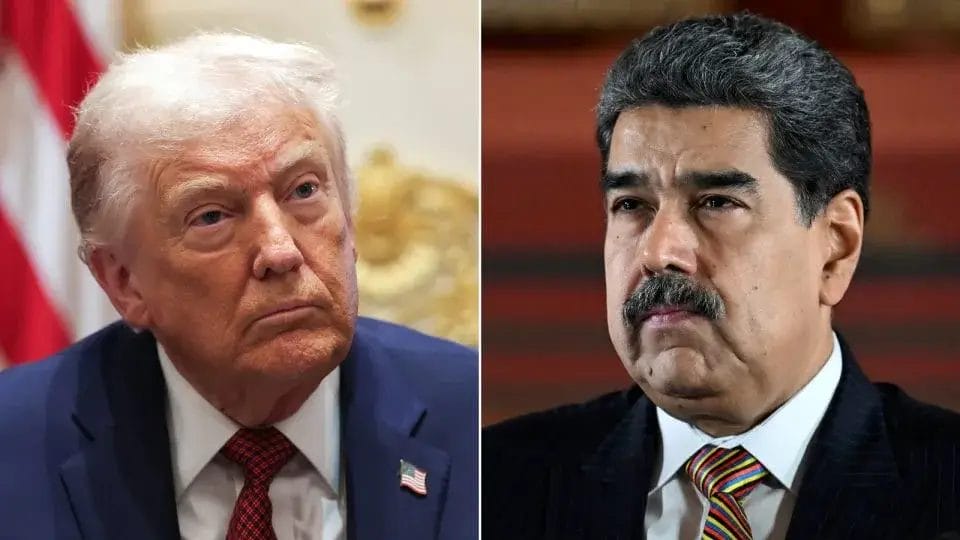
Also, the Trump administration named Venezuela’s president the leader of a terror group.
<
p class=”readrate”>
<
p class=”readrate”> Want more comprehensive analysis of the most important news of the day, plus a little fun? Subscribe to the Up First newsletter.
<
p class=”readrate”> Today’s episode of Up First was edited by Anna Yukhananov, Kate Bartlett, Rebekah Metzler, HJ Mai and Alice Woelfle.
<
p class=”readrate”>
<
p class=”readrate”>It was produced by Ziad Buchh, Nia Dumas and Christopher Thomas.
<
p class=”readrate”>
<
p class=”readrate”>We get engineering support from Damien Herring. And our technical director is Carleigh Strange.
<
p class=”readrate”>
<
p class=”readrate”>Our Supervising Producers are Vince Pearson and Michael Lipkin.
President Trump suddenly reverses course on the Epstein files, urging Republicans to support a House vote on Tuesday that he was previously trying to block. In the Caribbean, a major U.S. military buildup raises new questions about the administration’s strategy toward Venezuela as Trump claims President Maduro “would like to talk.” And in Charlotte, North Carolina, a new Border Patrol operation sparks fear and confusion after immigration enforcement agents fan out across the city with little warning.
Want more comprehensive analysis of the most important news of the day, plus a little fun? Subscribe to the Up First newsletter.
<
p class=”readrate” data-rr=”18″ data-pm-slice=”1 1 []”>Today’s episode of Up First was edited by Dana Farrington, Tara Neill, Kevin Drew, Mohamad ElBardicy, and Martha Ann Overland.
<
p class=”readrate” data-rr=”18″>
<
p class=”readrate” data-rr=”18″>It was produced by Ziad Buchh, Nia Dumas and Lindsay Totty.
<
p class=”readrate” data-rr=”18″>
<
p class=”readrate” data-rr=”18″>We get engineering support from Damian Herring. And our technical director is Carleigh Strange.
<
p class=”readrate” data-rr=”18″>
<
p class=”readrate” data-rr=”18″>Join us again tomorrow
President Trump’s Asia trip kicks off with peace deal between Cambodia and Thailand and a trade framework with China, before meeting with President Xi Jinping on Thursday. The massive U.S. military build up in the Caribbean waters off the coast of Venezuela is causing concern from Caracas to the U.S. Congress, Venezuelan troops conduct drills on their beaches this weekend. And federal workers face growing financial strain as the government shutdown threatens holiday travel and food benefits.
Want more comprehensive analysis of the most important news of the day, plus a little fun? Subscribe to the Up First newsletter.
<
p class=”readrate”>Today’s episode of Up First was edited by Dana Farrington, Tara Neil, Kelsey Snell, Mohamad ElBardicy and Alice Woelfle .
<
p class=”readrate”>
<
p class=”readrate”>It was produced by Ziad Buchh, Ben Abrams and Christopher Thomas
<
p class=”readrate”>
<
p class=”readrate”>We get engineering support from Neisha Heinis. And our technical director is Carleigh Strange.
Venezuela’s legislative National Assembly approves the Bolivar law to punish with unprecedented severity those who support or facilitate punitive measures against the country. Credit: AN
WASHINGTON, Dec 18 2024 (IPS) – In Venezuela you can no longer say in public that the economic sanctions applied by the United States and other countries are appropriate, or even be suspected of considering any of the authorities illegitimate, because you can be sentenced to up to 30 years in prison and lose all your assets.
In late November, the ruling National Assembly passed the Simon Bolivar Organic Law (of superior rank) against the imperialist blockade and in defence of the Republic, the latest in a regulatory padlock closing civic space, according to human rights organisations.
“We see a process of authoritarian learning. When we look at democratic setbacks, we see things that are repeated as patterns, such as the closure of civic space, of civil organisations, of journalism, of democratic political parties”: Carolina Jiménez Sandoval.
The powers of the Venezuelan state thus responded to United States’ and the European Union’s sanctions, and to the protests and denunciations of opponents and American and European governments, to the effect that a gigantic fraud was committed in the presidential election of 28 July this year.
The ruling Nicolás Maduro was proclaimed by the electoral and judicial powers as re-elected president for a third six-year term beginning on 10 January 2025, even though the opposition claims, by showing voting records, that it was their candidate Edmundo González who won, with at least 67% of the vote.
Speaking to IPS, several human rights defenders agreed that the country is following the example of Nicaragua, where laws and measures are driving hundreds of opponents into prison and exile, stripping them of their nationality and property, and suppressing critical voices by shutting down thousands of civil, religious and educational organisations.
“A red line has been crossed and the Nicaraguan path has been taken. Arbitrariness has been put in writing, in black and white, the repressive reality of the Venezuelan state, something even the military despots of the past did not do,” said lawyer Alí Daniels, director of the organisation Acceso a la Justicia, from Caracas.
The law adopted its long name as an indignant response to the US Bolivar Act, an acronym for Banning Operations and Leases with the Illegitimate Venezuelan Authoritarian Regime, designed to block most of that country’s business dealings with Venezuela.
The president of the non-governmental Washington Office on Latin America (Wola), Carolina Jiménez Sandoval, observed that “the closer we get to 10 January, the day when whoever won the 28 July election must be sworn in, we see more and more laws meant to stifling civic space.”
Other laws along these lines include: one to punish behaviour or messages deemed to incite hatred; another “against fascism, neo-fascism and similar expressions”; a reform to promptly elect 30,000 justices of the peace; and a law to control non-governmental organisations.
Demonstration in Caracas demanding respect for human rights. Credit: Civilis
Mere suspicion is enough
The Venezuelan Bolivar act considers that sanctions and other restrictive measures against the country “constitute a crime against humanity”, and lists conduct and actions that put the nation and its population at risk.
These include promoting, requesting or supporting punitive measures by foreign states or corporations, and “disregarding the public powers legitimately established in the Republic, their acts or their authorities.”
Those who have at any time “promoted, instigated, requested, invoked, favoured, supported or participated in the adoption or execution of measures” deemed harmful to the population or the authorities, will be barred from running for elected office for up to 60 years.
Any person who “promotes, instigates, solicits, invokes, favours, facilitates, supports or participates in the adoption or execution of unilateral coercive measures” against the population or the powers in Venezuela will be punished with 25 to 30 years in prison and fines equivalent to between US$100,000 and one million.
In the case of media and digital platforms, the punishment will be a heavy fine and the closure or denial of permits to operate.
The law highlights the creation of “a register that will include the identification of natural and legal persons, national or foreign, with respect to whom there is good reason to consider that they are involved in any of the actions contrary to the values and inalienable rights of the state.”
This registry is created to “impose restrictive, temporary economic measures of an administrative nature, aimed at mitigating the damage that their actions cause against the Bolivarian Republic of Venezuela and its population.”
Daniels tells IPS that “this means that a mere suspicion on the part of an official, with good reason to believe that a sanction is supported, is sufficient for a preventive freezing of a person’s assets, prohibiting them from buying, selling or acting in a money-making business.”
“Without prior trial, by an official’s decision, without knowing where to appeal against the entry in that register, the person is stripped of means of livelihood. Civil death returns,” he added.
Archive image of a national meeting of human rights defenders. Credit: Civicus
Other laws
The “anti-hate law” – without defining what is meant by it – has since 2018 prosecuted protesters, journalists, firefighters, political activists and human rights defenders on charges of directing messages inciting hatred towards the authorities.
This year, the state endowed itself with a law to punish fascism and similar expressions, a broad arc because it considers that “racism, chauvinism, classism, moral conservatism, neoliberalism and misogyny are common features of this stance.”
It has also reformed the justice of the peace law to promote the popular election of 30,000 local judges, under criticism from human rights organisations that see the process as a mechanism for the control of communities by pro-government activists and the promotion of informing on neighbours.
And, while the Bolivar act was being passed, the law on the control of NGOs and similar organisations was published, which NGOs have labelled an “anti-society law”, as it contains provisions that easily nullify their capacity for action and their very existence.
The law establishes a new registry with some 30 requirements, which are difficult for NGOs to meet, but they can only operate if authorised by the government, which can suspend them from operating or sanction them with fines in amounts that in practice are confiscatory.
“I think the application of the Bolívar law is going to be very discretionary, and if Maduro is sworn in again on Jan. 10, civic space will be almost completely closed and the social and democratic leadership will have to work underground,” sociologist Rafael Uzcátegui, director of the Venezuelan Laboratorio de Paz, which operates in Caracas, told IPS.
The president of Nicaragua, Daniel Ortega, and his wife and vice-president, Rosario Murillo, have taken measures against dissent that are models of authoritarianism in the region. Human rights activists believe that in countries such as Venezuela and El Salvador their strategies and norms are being replicated by those who seek to remain in power indefinitely. Credit: Presidency of Nicaragua
The Nicaraguan path
Daniels also argues that with the Bolívar law, the government “is going back 160 years, when the Venezuelan Constitution after the Federal War (1859-1863) abolished the death penalty and life sentences. A punishment that lasts 60 years in practice is in perpetuity, exceeding the average life expectancy of an adult in Venezuela.”
Along with this, “although without going to the Nicaraguan extreme of stripping the alleged culprits of their nationality, punishments are imposed that can turn people into civilian zombies, driven into exile. As in Nicaragua”.
For Jiménez Sandoval “there are similarities with Nicaragua, a harsh and consolidated case. It has cancelled the legal personality of more than 3,000 organisations, including humanitarian entities, national and international human rights organisations and universities, through the application of very strict laws.”
“In these cases… we see a process of authoritarian learning. When we look at democratic setbacks, we see things that are repeated as patterns, such as the closure of civic space, of civil organisations, of journalism, of democratic political parties,” she told IPS.
To achieve this, “they use different strategies, such as co-opting legislatures to make laws that allow them to imprison and silence those who think differently, to avoid any kind of criticism, because, at the end of the day, the ultimate goal of authoritarianism is to remain in power indefinitely”, concluded Jiménez Sandoval.