Excluding Food Systems From Climate Deal Is a Recipe for Disaster

Africa, Climate Change, Climate Change Justice, Conferences, COP30, Development & Aid, Editors’ Choice, Featured, Food and Agriculture, Food Systems, Global, Headlines, Latin America & the Caribbean, Population, Sustainable Development Goals, TerraViva United Nations | Analysis

Food Systems


Food solutions were on display everywhere around COP30—from the 80 tonnes of local and agroecological meals served to concrete proposals for tackling hunger—but none of this made it into the negotiating rooms or the final agreement. —Elisabetta Recine, IPES-Food panel expert

Agriculture is both a challenge and a solution for climate change. Busani Bafana/IPS

Agriculture is both a challenge and a solution for climate change. Busani Bafana/IPS

BULAWAYO, Jan 9 2026 (IPS) – As they ate catered meals, COP30 negotiators had no appetite for fixing broken food systems, a major source of climate pollution, experts warn.


Food systems are the complete journey food takes—from the farm to fork—which means its growing, processing, distribution, trade and consumption and even the waste.

The International Panel of Experts on Sustainable Food Systems (IPES-Food) warns that the final COP30 agreement risks deepening climate and hunger crises.  It failed  to address global warming emissions from food systems and the escalating damages caused by fossil-fuel-dependent industrial agriculture.

Food appears only once in the negotiated text, as a narrow indicator on ‘climate resilient food production’ under the Global Goal on Adaptation, IPES-Food pointed out.

“There is no mention of food systems, no roadmap to tackle deforestation, and no recognition that industrial agriculture drives nearly 90 percent of forest loss worldwide,” noted the think tank, emphasizing that negotiators also weakened language in the Mitigation Work Programme from addressing the ‘drivers’ of deforestation to vague ‘challenges.’

IPES-Food argued that the omission of food systems in the COP30 agreement was in stark contrast to the summit itself, which was held in the heart of the Amazon. Thirty percent of all food served during COP30 came from agroecological family farmers and traditional communities, and concrete public policy proposals for a just transition of food systems were on full display, IPES-Food said.

By not supporting a transition to environmentally friendly and low-emission agriculture, the agreement has left the global food system—and the billions who depend on it—highly vulnerable to the very climate shocks it helps cause, experts said.

“Food solutions were on display everywhere around COP30—from the 80 tonnes of local and agroecological meals served to concrete proposals for tackling hunger—but none of this made it into the negotiating rooms or the final agreement,” said Elisabetta Recine, IPES-Food panel expert and president of the Brazilian National Food and Nutrition Security Council (Consea), in a statement.

“Despite all the talk, negotiators failed to act, and the lived realities of people most affected by hunger, poverty, and climate shocks went unheard.”

Big Oil and Big Ag, Bigger voice

More than 300 industrial agriculture lobbyists were registered as delegates to COP30. They  are blamed for influencing discussions and promoting false solutions to climate change.

“COP30 was supposed to be the Implementation COP—where words turned into action,” Danielle Nierenberg, an expert on sustainable agriculture and food issues and President of Food Tank, told IPS. “But once again, corporate interests won over people, nature, and the future of our food and agriculture systems as part of the solution to the climate crisis.”

Raj Patel, IPES-Food panel expert and professor at the University of Texas, argues that agribusiness lobbyists captured COP30 to influence outcomes favoring industrial agriculture and big oil interests.

“Food systems are second only to oil and gas as a driver of the climate crisis, and unlike oil wells, they are also the first victim of the chaos they create, Patel noted.

Obstacles and Opportunities

Scientists have warned that carbon emissions, including those from agriculture, must be cut considerably if the world is to meet the goals of the Paris Agreement to limit global warming to 2°C or less.

Even if fossil fuel emissions were eliminated immediately, emissions from the global food system alone would make it impossible to limit warming to 1.5°C and difficult even to realize the 2°C target, scientists have said.

Selorm Kugbega, a Research Fellow at the Stockholm Environment Institute, agrees that despite many promises made to tackle agriculture-linked emissions, COP30 turned out to be a damp squib for agrifood systems.

Initiatives such as RAIZ to restore 500 million hectares of degraded agricultural land by 2030 and TERRA to scale out climate solutions for smallholder farmers through blended finance, which were launched at COP30 omitted to highlight the effects of industrial food systems. Over 300 industrial agriculture lobbyists participated in discussions at COP30, leading to accusations of swaying the outcomes.
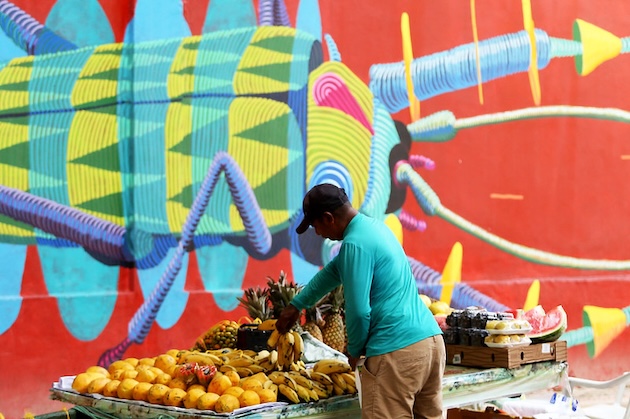
Analysts warn the final agreement at COP30 in Belém, Brazil, risks deepening climate and hunger crises. Credit: Raimundo Pacco/COP30

Analysts warn the final agreement at COP30 in Belém, Brazil, risks deepening climate and hunger crises. Credit: Raimundo Pacco/COP30

Kugbega observed that after several years of slow progress and momentum in integrating food systems in climate negotiations, COP30 should have been the opportunity to seal agriculture’s centrality in future COPs. However, it ended with no clear agreements on grant-based public finance for adaptation in agriculture or redirection of public funds that subsidize industrial systems.

The climate negotiations demonstrated power inequality in climate negotiations with the implicit protection of industrial agriculture interests, which weakened the credibility of any global efforts at mitigating agriculture-based emissions, Kugbega observed, highlighting that smallholders bear a high burden of climate risks and have little adaptation financing.

Kugbega argued the most powerful countries, which are generally less dependent on agriculture, tend to prioritize sectors such as energy and transport in climate negotiations. However, many least developed countries, particularly in Africa, are highly dependent on agriculture for employment and economic stability and face urgent climate risks.

“Yet these countries often lack the political influence to elevate agriculture and food systems as central issues in COP negotiations,” he said. “COP30 in Brazil presented a major opportunity to shift this imbalance, making the failure to position food systems at the center of the climate agenda particularly troubling.”

Frugal Financing for Food and Farmers

According to the Climate Policy Initiative (CPI) and the UN’s Standing Committee on Finance, agriculture receives a small and insufficient share of total global climate finance.

Of the available approximate total global climate finance of USD 1.3 trillion per year on average, agriculture gets around USD 35 billion per year. This is a huge shortfall given that food systems are estimated to be responsible for roughly one-third of global greenhouse gas emissions and are one of the sectors most vulnerable to climate impacts, according to the CPI. Worse still, smallholder farmers, who produce up to 80 percent of food in developing countries, only receive 0.3 percent—a striking imbalance, yet they feed the world and are more exposed to climate impacts.

Will COP31 Deliver?

While COP30 highlighted the need to tackle climate change impacts through the transformation of food systems, such as highlighted in the Belém Declaration on Hunger, Poverty and Human-Centered Climate Action, it remains to be seen if COP31 will deliver a positive outcome on food systems.

Waiting for COP31 to save the world is surrendering because agribusiness lobbyists do not take holidays, argues IPES-Food panel’s Raj Patel.

“The test is not whether diplomats can craft better language in Antalya, but whether farmers’ movements, indigenous movements, and climate movements can generate enough political pressure to make governments fear inaction more than they fear confronting corporate power,” he said.

COP31, to be  hosted by Turkey with Australia as negotiations president in 2026 , is expected to prioritize an action agenda centered on adaptation finance, fossil fuel phase-out, adaptation in Small Island Developing States, and oceans.

While this agenda aligns with broader climate justice goals, it means food systems risk becoming indirectly addressed rather than explicitly championed, Kugbega said.

Given the stalled negotiations on financing sustainable agriculture transitions and the postponement of the Sharm el-Sheikh Joint Work on Agriculture, Kugbega said COP31 will likely focus more on developing new roadmaps and agreements than on full-scale implementation.

COP32 could be a greater opportunity for the implementation of the work program under Ethiopia’s COP32 presidency, given the country’s direct exposure to climate risks in agriculture, he noted.

“COP31 will likely shape whether the world arrives at COP32 ready to implement and operationalize sustainable food systems or once again be forced to renegotiate what is already known.”

This feature is published with the support of Open Society Foundations.

IPS UN Bureau Report


What’s On In Cape Town In January 2026

Cape Town welcomes 2026 on a high note – January is peak summer, and the city comes alive with an unbeatable mix of concerts, festivals, sport, culture and outdoor experiences. From iconic events like the Cape Town Minstrels Street Parade and the King’s Plate to international music tours, open-air theatre and cricket at Newlands.

Cats, the Musical

📅

2-11 January 2026 📍 Artscape Theatre, Cape Town

Pieter Toerien and GWB Entertainment in association with Cape Town Opera by arrangement with The Really Useful Group presents CATS. Andrew Lloyd Webber’s world-famous musical Cats brings iconic songs, choreography and theatrical magic to the Artscape stage. Tickets from R180 on Webtickets.

cats the musical

WAV Festival by AfroNation

📅

2 January 2026 📍 Green Point Track, Cape Town

A festival R&B lovers cannot miss! Amapiano’s Kelvin Momo brings his deep, emotional sound to the festival, while Shekinah’s golden voice is set to light up the stage. The lineup also includes Mariah the Scientist, Wale, Langa Mavuso, and Kujenga. Cape Town, get ready for a high-energy stadium showcase featuring the best in R&B. Find ticket information here.

Milk & Cookies Festival

📅

3 January 2026 📍 Kenilworth Racecourse, Cape Town

This multi-genre festival celebrates music, food, and community. From amapiano to R&B, house to hip-hop, Milk and Cookies blends global sounds with local culture for one unforgettable celebration. Vibrant stages, curated food vendors, immersive art installations, and the kind of energy that turns a crowd into a community – it’s a gathering where culture, connection, and creativity meet. For tickets go to Howler’s website and for more information visit the official page here.


View this post on Instagram

A post shared by 🥛

Milk + Cookies 🍪 (@milkcookiesfest)

BLANCHE – a luxury daytime event

📅

4 January 2026 📍 The Terrace Rooftop, Salt River

Step into the New Year with Blanche; an All-white outdoor celebration, curated by AfroFuture and PVO. This signature experience blends live music, an unmatched atmosphere, and the most vibrant crowd. Presented by Martell, set against Cape Town’s stunning backdrop. Click here for ticket information.

Freshlyground Reunion Concert

📅

4, 11, 18 January 2026 📍 Kirstenbosch National Botanical Garden

Freshlyground reunites for a special open-air concert at Kirstenbosch, delivering feel-good hits in one of Cape Town’s most popular outdoor venues. Find more information and ticket information.

Cape Town Minstrels Street Parade

📅

5 January 2026 📍 Somerset Road & Fan Walk, Green Point

The iconic Cape Town Minstrel Carnival returns to the Mother City on 5 January 2026. The annual event fills the streets with colour, music and tradition, continuing into DHL Stadium for the Kaapse Klopse Choral Competition. Tap here for the latest event information.

St Tropez presents: Uncle Waffles – The ultimate day time escape

📅

5 January 2026 📍 Cabo Beach Club, Cape Town

Turn on the glitz and glamour at this epic Cabo Beach experience. Headlined by global sensation Uncle Waffles, expect nothing less than an unforgettable day of pulsating beats, high-energy performances, and pure sophistication. The event promises world-class local DJs spinning infectious sounds that keep the energy flowing from noon until sunset. Get your tickets now.

MI Cape Town vs Joburg Super Kings

📅

6 January 2026 📍 Newlands Cricket Grounds

Catch SA20 cricket action as MI Cape Town face the Joburg Super Kings at the historic Newlands Cricket Ground. For ticket info, email info@ticketpro.co.za or visit the website here.

Cape Town Jazzathon

📅

9-11 January 2026 📍 Amphitheatre, V&A Waterfront, Cape Town

Celebrating its 29th anniversary this year, the Cape Town Jazzathon is South Africa’s longest-running music festival. Often referred to as “The People’s Festival,” the event will feature performances daily, from 12.30pm to 8pm. Enjoy a rich variety of styles including Afro Jazz, Cape Jazz, Hip Hop, R&B, Reggae, Neo Soul, and Straight Ahead packed into three days of non-stop entertainment… and its free!!! Learn more.

L’Ormarins King’s Plate

📅

10 January 2026 📍 Hollywoodbets Kenilworth Racecourse

The Running of the 165th King’s Plate – the L’Ormarins King’s Plate is one of South Africa’s most prestigious horse racing events, combining elite racing, high fashion and a vibrant atmosphere. The King’s Plate is a totally blue and white affair where guests can enjoy some of the country’s best racing, wine, food, antique car displays and renowned after party in the peak of Cape Town’s summer. Tickets start from R600. For more information visit here.

king's plate

Maynardville Open-Air Festival

📅

From 13 January 2026 📍 Maynardville Park, Wynberg

Cape Town’s premier open-air theatre experience returns, featuring live performances in a magical forest setting. Opening on 13 January, the Shades of Blue Chamber Concert will feature music from composers influenced by the rhythms and harmonies of jazz. Next up is Jazz in the Park (14 to 15 Jan), a new two-day celebration featuring local jazz legends from Cape Town’s rich jazz tradition. From 16 to 17 January, another crowd-favourite Cape Town Philharmonic Orchestra returns with a stirring classical programme. See the full festival programme.

Calum Scott – The Avenoir Tour

📅

14 January 2026 📍 Kirstenbosch National Botanical Garden

International singer-songwriter Calum Scott performs live at Kirstenbosch as part of his global Avenoir Tour. Gates open at 6pm. Concert starts 7pm. For more information, go to Big Concert’s website.

Sheer City Festival

📅

17-18 January 2026 📍 Harrington Street Precinct

Sheer City is launching its inaugural two-day inner-city festival bringing together Cape Town’s most influential underground nightlife crews with international acts like Horse Meat Disco, Tama Sumo & Lakuti, Make A Dance, Freudenthal, and more. It’s a multi-venue, walkable block party across Harrington Street and the City Bowl fringe, a celebration of Cape Town’s creative pulse, queer culture, music, fashion, performance, and community. Expect six venues, over twenty artists, a full weekend immersion in the city’s next cultural moment.

Sheer Drop at Texas – 2pm to 10pm
Sheer Delight at The Electric – 5pm to 2am
Sheer Disco at Harringtons – 6pm to 4am
Sheer D.O.G at Zer021 Social – 8pm to 4am
Sheer Assembly at District – 8pm to 4am
Sheer Dive at Surfa Rosa – 9pm to 4am

Tickets available from Airdosh

sheer city festival

Sundaze at Durbanville Hills

📅

25 January 2026 📍 Durbanville Hills Winery

Long, lazy afternoons, cool beats and Cape Town’s most iconic views. Summer at Durbanville Hills is super chilled, and with it, the popular cellar’s much-loved Sundaze Summer Series. DJ Stefanos will be spinning tracks from 2pm to 6pm while you enjoy crisp wines, cocktails, craft beer, wine slushies, and a mouth-watering selection of eats from the Olive Grove Bistro. Set against panoramic vistas of Table Bay and Table Mountain, Sundaze is the perfect way to vibe with friends and family. Tickets cost R100pp and available via Webtickets.

Shxtsngigs: Daddy’s Home – South Africa Tour

📅

27 January 2026 📍 Grand Arena, GrandWest, Cape Town

The viral podcast duo James and Fuhad bring their Daddy’s Home live show to Cape Town, blending comedy, culture and crowd interaction. Whether you’re a die-hard Cult Baby or just discovering the podcast that’s racked up millions of streams and laughs worldwide, this live experience is your chance to see the boys like never before – live, loud, and uncut. Tickets from R440 via Ticketmaster.

DHL Stormers vs Vodacom Blue Bulls

📅

27 January 2026 📍 DHL Stadium, Cape Town

Get ready for a major rugby showdown as the DHL Stormers face the Vodacom Blue Bulls in one of the season’s most anticipated fixtures. Cape Town is set to bring the gees – get your tickets today on the Stormer’s website.

green point stadium cape town

World Sports Betting Cape Town Met

📅

31 January 2026 📍 Hollywoodbets Kenilworth Racecourse

Prepare for the grand return of the World Sports Betting Cape Town Met, where the thrill of elite horse racing converges with a multisensory celebration unlike any other. The 2026 theme Symphony of Style combines fashion, music, and immersive moments. Book your tickets via Computicket.

MET

The post What’s On In Cape Town In January 2026 appeared first on Cape Town Tourism.


Discover more from The Maravi Post

Subscribe to get the latest posts sent to your email.

The Maravi Post

5 Best Free Movies to Watch on YouTube, Pluto TV, Tubi and More (December 2025)

For a long time, if you wanted to watch a movie on TV at home for free, you simply had to watch with a few commercials.

Well, if you don’t feel like shelling out the money for Netflix or HBO Max, you’re in luck: movies with ads still exist, they’re just on ad-supported streamers.

Platforms like Tubi, Pluto TV and even YouTube carry thousands of quality free movies in their libraries. This December, Watch With Us is highlighting some of the best.

Whether you want a big-budget comedy like Barbie or a prestige superhero movie like Batman Begins, you can watch it all for free at your fingertips.

New on Tubi in December 2025 — The Full List of All the Free Movies and TV Shows

Barbie (Margot Robbie) lives in the perfect dreamworld of Barbieland, where Barbies hold positions of power while all the Kens have to do is spend their days at the beach. However, when Barbie starts to experience an uncharacteristic existential crisis, she learns she must travel to the real world to see what’s going on with the girl who’s playing with her. Accompanied by a Ken (Ryan Gosling), Barbie searches for her owner while Ken gets some unsavory ideas about a newfangled concept called “the patriarchy.”

The Barbie phenomenon was certainly helped a bit by the “Barbenheimer” double-feature craze back in 2023, but make no mistake — Barbie is a fantastic and ingenious comedy film with or without the help of Christopher Nolan. Robbie and Gosling are the film’s standouts (Gosling in particular able to show off his comedic chops), but the entire cast works wonders: Will Ferrell, Kate McKinnon, Simu Liu and Michael Cera all give hilarious performances.

Thirty-five years following the events of Ridley Scott’s Blade Runner, Blade Runner 2049 stars Ryan Gosling now stars in this sequel as LAPD Officer K, who hunts down and kills rogue replicant models — while also being a replicant himself. When K discovers a box containing shocking information following a mission, it threatens to destabilize the relationship between humans and replicants. K’s discovery is linked to missing blade runner Rick Deckard (Harrison Ford), whom he goes on a quest to find.

While Blade Runner 2049 didn’t do so great at the box office, it was critically acclaimed and received a number of Academy Award nominations, winning two: Best Cinematography for Roger Deakins and Best Special Visual Effects. Ultimately, director Denis Villeneuve (Dune) expands upon Blade Runner in thoughtful and exciting ways, and the film manages to be an impressive visual feat distinct from the original as well.

The final installment in Daniel Craig‘s iteration as James Bond sees 007 finally leading a peaceful life in Jamaica, having since left active service in MI6. But, of course, that respite is merely momentary, and Bond is pulled back into his former work when an old CIA friend (Jeffrey Wright) shows up in need of his help. Bond must rescue a kidnapped scientist, but the mission becomes more arduous than expected and sends him down a dangerous path.

This epic conclusion to Craig’s chapter as Bond was met with warm response from fans and critics, praising the film not only for its exciting action sequences and slick style, but its ability to oscillate between comedy, drama, horror and romance with ease. In the end, the thrilling and visually stunning film is a fitting sendoff to Craig that ends up being far more moving than most people might expect.

This Batman origin story follows Bruce Wayne (Christian Bale) from developing a fear of bats to his parents’ grisly murders, to his time in Bhutan training with the League of Shadows. But when he discovers the League’s intent to destroy the “corrupt” Gotham, he returns to the city intent on cleaning up crime sans killing. With the help of his butler (Michael Caine) and tech expert Lucius Fox (Morgan Freeman), Batman takes on bad guys like the Scarecrow (Cillian Murphy).

Christopher Nolan’s take on Batman is credited with having revitalized the character after the poor showing in Batman & Robin from 1997. Nolan moved away from the camp of Joel Schumacher and the gothic kink of Tim Burton and turned Batman into a prestige drama film — and it paid off. Critics applauded Batman Begins for understanding the core of the character while bringing him into exciting and intelligent new territory. In the end, Batman Begins spawned a legendary trilogy.

The grand conclusion to the John Wick story (or is it?), John Wick: Chapter 4 follows the events of John Wick: Chapter 3 —Parabellum. Wick (Keanu Reeves) hides out in New York City with the Bowery King (Laurence Fishburne) as he recovers from having been shot. Now seeking revenge against the High Table, who want him dead, the price on Wick’s head grows higher and higher. But Wick’s final battle now goes global, as he finds himself targeted by assassins around the world in service of a powerful enemy.

5 Great Movies to Watch in Pluto TV’s “Holidays Are Brutal” Collection

John Wick: Chapter 4 manages to be more grandiose, violent and excessive than the previous three John Wick films, and yet the movie doesn’t suffer for it. Instead, this fourth film in the action franchise proves that there can never be too much when it comes to watching Keanu Reeves’ kick people’s butts. With fantastic set pieces, mesmerizing fight choreography, and genuinely solid performances, John Wick: Chapter 4 stands as a highlight in modern action blockbuster filmmaking.


Discover more from The Maravi Post

Subscribe to get the latest posts sent to your email.

The Maravi Post

FBI’s Jeremy Sisto Says ‘Scary’ Fall Finale Has Jubal at ‘Center of the Storm’

As FBI heads into its winter hiatus, Jeremy Sisto warns that Jubal’s team is in for an “exciting” and “horrible” case with many twists and turns.

“It’s scary,” Sisto, who plays ASAC Jubal Valentine, exclusively told Us Weekly of the show’s two-part fall finale airing on Monday, December 15.

He teased that Jubal is “at the center of the storm in this one,” and so is his son, Tyler (Caleb Reese Paul).

Monday’s double feature begins with “Lone Wolf,” which, according to Sisto, 51, starts with the FBI team being alerted to a crime by the tip line, “which is not something [that] usually leads us anywhere.”

FBI’s Alana De La Garza Explains Isobel’s Job Decision, What’s Next for Jubal

Sisto revealed that FBI analyst Kelly Moran (Taylor Anthony Miller) has an “instinct” about one of the calls, and “heads out with our agents, and they find three dead sex workers.”

Throughout the episode, the special agents discover that the murderer has connections to a “radical accelerationist movement that is committed to resetting society because it’s gotten so, so rotten.”

The actor explained that the terrorist group’s “plan is big” and includes “disrupting cell and internet connectivity,” which impacts how Jubal and the team investigate. “[It’s] very frustrating when you get disconnected, but even worse when you’re trying to stop further damage [from happening],” Sisto shared.

Which ‘FBI’ Stars Are — And Aren’t — Returning for Season 8?

“It rises to a pretty drastic, pretty dramatic threat,” Sisto told Us, noting all of the agents become “concerned” with their families “being in the wrong place at the wrong time when there is an active threat.”

That threat hits especially close to Jubal, whose high-school aged son is “in the city for the day with a friend” as the events unfold.

“[He’s] just hoping he’s not at the wrong place, at the wrong time,” Sisto said of his character’s arc, teasing that fans should pay special attention to Tyler and his conversations with dad Jubal in both parts of the fall finale.

FBI Jeremy Sisto Previews Scary 2 Part Fall Finale With Jubal at The Center of the Storm Inline
Bennett Raglin/CBS

Sisto confirmed, “In the beginning, you know something is going to get dirty with this plot,” teasing that in part two, titled “Wolf Pack,” the team must track down the bad guys without their usual communication tools in place.

Even with the disruption to their comms system, Sisto said the team will do their best to “search every square inch” of New York City to find the culprits — but it won’t be without a few mishaps.

5 Top New Movies and TV Shows to Watch This Week on Netflix, Prime and More (December 15-19)

“In this particular case, we don’t find them quick enough before some very bad stuff happens,” Sisto explained, hinting that Jubal’s personal connection to the case will be part of the “bad stuff” that transpires.

He teased that the second half of the fall finale is all about “finding [the culprits] before even more horrible things happen.”

“It’s definitely not a victory throughout,” Sisto ominously warned. “That’s why it takes two hours to get through the story. Because there’s some pretty, pretty bad losses along the way.”

FBI’s two-part fall finale airs on CBS Monday, December 15, at 8 p.m. ET. The show will resume with new episodes in February 2026.


Discover more from The Maravi Post

Subscribe to get the latest posts sent to your email.

The Maravi Post

‘Low- and Middle-Income Countries Need Better Data, Not Just Better Tech’

Conferences, Development & Aid, Economy & Trade, Editors’ Choice, Featured, Headlines, Sustainable Development Goals, TerraViva United Nations

Conferences

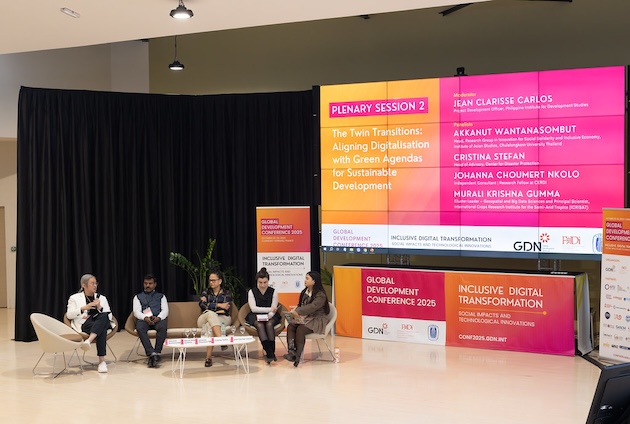
Johanna Choumert-Nkolo, third from right, speaking during a panel discussion at the Global Development Conference 2025 in Clermont-Ferrand, France. Credit: Athar Parvaiz/IPS

Johanna Choumert-Nkolo, third from right, speaking during a panel discussion at the Global Development Conference 2025 in Clermont-Ferrand, France. Credit: Athar Parvaiz/IPS

CLERMONT-FERRAND, France, Dec 4 2025 (IPS) – During the Global Development Conference 2025, development experts and researchers kept warning that low- and middle-income countries (LMICs) were being pushed into a wave of digital transformation without the basic statistical systems, institutional capacity, and local context needed to ensure that AI and digital tools truly benefited the poor.


Among the prominent voices shaping this conversation were Dr. Johannes Jütting, Executive Head of the PARIS21 Secretariat at the OECD, and development economist Johanna Choumert-Nkolo, who has over 15 years of research and evaluation experience. IPS interviewed both Jutting and Choumert-Nkolo following the conference, which concluded about five weeks ago, about the issues surrounding digitalization in LMICs.  Following is the summary of their responses.

How is Data the Weakest Link?

Much of the conversation around AI’s potential in the Global South centers on the promise of improved governance. But for Jutting, whose organization has been working on AI and data, there is a widening gap between the capacities of countries in the Global North and those in the Global South.

AI, he said, offers enormous potential. “For lower-income countries in particular, the production side is promising because AI can reduce the very high costs of traditional data collection. By combining geospatial data with machine learning, for instance, we can generate more granular and more timely data for policymaking, including identifying where poor populations live,” Jutting told IPS.

“But real challenges remain. Many low-income countries lack the fundamental conditions required to make use of AI. First, connectivity: without it, there is no practical AI application. Second, technical infrastructure such as data centers and reliable data transmission. Third, human capacity and skills, which require sustained investment. And fourth, governance and legal frameworks that must be updated to reflect new technologies,” he said.

There are also clear risks, particularly concerning confidentiality, privacy, and the fact that most large AI models are trained on data from the Global North, he told IPS and added that this creates potential biases and limits their usefulness for national statistical offices in the Global South.

Data collection processes, such as censuses and household surveys, are expensive, slow, and operationally difficult. According to him, many national statistical offices lack the workforce, training, and budget needed to maintain regular, reliable data production.

The challenge, he emphasized, is not simply technological.

“Digital transformation is not just a technology issue. It is a change management issue, a capacity development issue, a skills issue, and a political will issue.”

Dr. Johannes Jütting, second from right,speakingg during a panel discussion atthe Globall Development Conference 2025 in Clermont-Ferrand, France. Credit: Athar Parvaiz/IPS

Dr. Johannes Jütting, second from right, speaking during a panel discussion at the Global Development Conference 2025 in Clermont-Ferrand, France. Credit: Athar Parvaiz/IPS

Divide Within the Global South and Fiscal Constraints

While global debates often frame digital inequality as a problem between rich and poor nations, Jütting believes the more serious divide is emerging within the Global South itself. He argues that some LMICs are sprinting ahead while others fall further behind, a divergence he calls “one of the most worrying trends in development today.”

“What I see is a divide inside the Global South,” he said. “Countries like Rwanda, Kenya, the Philippines and Colombia are advanced—sometimes more advanced than OECD members. But others like Mali, Niger, and several small island states, are completely left behind.”

This divide is not only visible in connectivity and infrastructure but also in institutional readiness, technological skills and even access to basic demographic data. In some countries, he said, governments still lack reliable records of how many people are born each year or how many people live within their borders.

“How can we talk about fancy AI models when basic population data is missing?” he asked. “We have to start with the fundamentals.”

He also cautioned that development agencies may inadvertently widen this divide by focusing on “low-hanging fruits” that yield quick, measurable results, instead of supporting long-term system-building in fragile countries.

“There is donor fatigue, and funding is shrinking,” he said.

So, how do we move forward? First, Jutting said, every country needs a strong national strategy for the development of statistics (NSDS). This strategy must be fully aligned with national development plans, he said and added that only then can we ensure financing is efficient, coordinated, and aligned with country needs as well as international monitoring requirements, such as the SDGs or Africa’s Agenda 2063.

“Second, viable financing models will require greater domestic resource mobilization. Governments must be convinced to invest in their own data systems—and this requires demonstrating tangible impact.”

And third, he said, donors need to align their spending more effectively. “Our recent work on gender data financing shows a major disconnect: while gender equality funding is increasing, funding for gender data is not. This mismatch risks wasting money and undermining progress.”

He believes that there has to be a change on both fronts: national governments must allocate more domestic resources, and donors must invest in data in a more strategic, coherent, and results-oriented way.

Complexity of Measuring Digital Impacts

While Jütting focused on institutions and governance, Choumert-NKolo approached digitalization through the lens of climate resilience, human behaviour and evidence generation. Unlike many policy conversations that foreground tools and technologies, she emphasized the complexity of understanding real-world impacts.

“Digitalization is reshaping economies at a very fast pace,” she told IPS. “From a climate perspective, we need to understand what this means, both in terms of opportunities and risks.”

Her main concern is the long-term and layered nature of digital impacts. A digital tool deployed today may influence decisions in ways that take years to fully materialize.

“You never know how a tool will be used until people start making decisions with it,” she said. “Understanding behavioural change is complex, and attribution to one digital tool is extremely difficult.”

Despite these challenges, she emphasized that digital tools have significant potential to support climate adaptation. Farmers facing unpredictable weather patterns can benefit from climate information services delivered through mobile platforms. Communities vulnerable to storms or floods can receive alerts even through basic SMS networks. Such tools, she said, can save lives.

But she urged caution in assuming digital tools are universally accessible or understood.

“We must remember that not everyone can read or act on digital messages,” she said. “Literacy and accessibility gaps remain large in many countries.”

Her research experience in East Africa reinforced the importance of context. Mobile money, she said, became a major success story precisely because it solved local problems and fit local cultural and economic realities. But not every challenge requires a digital solution.

“Sometimes nature-based or low-cost solutions work better. The key is context. We must understand what problem we are trying to solve and whether digital tools are the right fit.”

She believes the way forward lies in identifying local needs, drawing from existing evidence and piloting new solutions where knowledge gaps remain. “There is a lot of hype around digitalization,” she said. “We need more comparative evidence on what works best in each setting.”

A Future That Must Be Shaped Carefully

One theme emerged with clarity from both experts: Digital transformation can support inclusive development, but only if countries invest in strengthening their statistical systems, building institutional capacity and grounding innovation in local realities.

“We need more and better data for better lives,” Jütting said. “But we must ensure the poorest countries are not left behind in this digital wave.”

Choumert-NKolo echoed that sentiment. “Digital tools offer huge opportunities,” she said. “But they must be rooted in context, evidence and local needs.”

For LMICs navigating the uncertainties of climate change, economic pressures and technological disruption, these warnings are timely. Digital transformation can be a powerful equalizer—or a new source of exclusion. The difference, experts said, will depend on whether governments and development partners prioritize the foundations that make digital inclusion truly possible.

  • “Travel (for reporting this story) to the Global Development Conference was supported by GlobalDev, the research communications platform of the Global Development Network (GDN). The 2026 Global Development Conference was organized in partnership with other members of the Pôle clermontois de développement international (PCDI)—Foundation for Studies and Research on International Development (FERDI) and Centre for International Development Studies and Research (CERDI). Reporting and research remain independent.”

IPS UN Bureau Report

 

Graduation Must Be a Springboard, Not a Stumbling Block

Climate Change Finance, Conferences, Development & Aid, Economy & Trade, Environment, Financial Crisis, Global, Headlines, Sustainability, Sustainable Development Goals, TerraViva United Nations, Trade & Investment

Opinion

UNITED NATIONS, Dec 1 2025 (IPS) – As we gather in Doha for the High-Level Meeting on “Forging Ambitious Global Partnerships for Sustainable and Resilient Graduation of Least Developed Countries,” the stakes could not be higher. A record number of fourteen countries-equally divided between Asia and Africa are now on graduation track. Graduation from the Least Developed Country (LDC) category is a landmark national achievement—a recognition of hard-won gains in income, human development, and resilience. Yet, for too many countries, this milestone comes with new vulnerabilities that risk undermining the very gains that enabled graduation.


Since the establishment of the LDC category in 1971, only eight countries have graduated. Today, 44 countries remain in the group, representing 14% of the world’s population, but contributing less than 1.3% to global GDP. The Doha Programme of Action (DPoA) charts an ambitious yet achievable target: enabling at least 15 additional countries to graduate by 2031. But as the DPoA underscores graduation must be sustainable, resilient and irreversible. It must serve as a springboard for transformation— not a moment of exposure to new risks.

USG Rabab Fatima

Graduation with momentum:
Graduation often coincides with a significant shift in the international support landscape. As preferential trade arrangements, concessional financing, and dedicated technical assistance begin to phase down, countries may face heightened fiscal pressures, reduced competitiveness, and increased exposure to external shocks. Without well-sequenced and forward-looking transition planning, these shifts can slow progress toward the Sustainable Development Goals (SDGs) and strain national systems.

Yet within these challenges also lie opportunities. With the right policies, partnerships, and incentives, graduation can catalyse deeper structural transformation, expand access to new financing windows, strengthen institutions, and unlock pathways to diversified, resilient, and inclusive growth. The task before us is to manage risks while harnessing these opportunities—ensuring that no country graduates without momentum.

Smooth Transition Strategies: A National Imperative
The DPoA calls for every graduating country to develop inclusive, nationally owned Smooth Transition Strategies (STS) well-ahead of the graduation date. These strategies must be fully integrated into national development plans and SDG frameworks, ensuring coherence and resilience. They should prioritize diversification, human capital investment, and adaptive governance, while placing women, youth, and local actors at the center of design and oversight. STS must be living documents—flexible, participatory, and backed by robust monitoring and financing.

Reinvigorated Global Partnerships: The essential Pillar
No country can navigate this transition alone. The Doha Programme of Action calls for an incentive-based international support structure that extends beyond graduation. For LDCs with high utilization of trade preferences – the withdrawal of preferential market access must be carefully sequenced to avoid abrupt disruptions. For climate-vulnerable SIDS and LLDCs, enhanced access to climate finance, debt solutions, and resilience support are key elements in their efforts to tackle post-graduation challenges.

Deepened South-South and triangular cooperation, innovative financing instruments, blended finance, and strengthened private-sector engagement will be essential to building productive capacities and unlocking opportunities in digital transformation, green and blue economies, and regional market integration.

iGRAD: A Transformative Tool
The operationalization of the Sustainable Graduation Support Facility—iGRAD—is a concrete step forward. By providing tailored advisory services, capacity-building, and peer learning, iGRAD can serve as a critical tool to help countries anticipate risks, manage transitions, and sustain development momentum. Its success, however, hinges on strong political support and adequate, predictable resourcing from development partners.

Graduation as a Catalyst for Transformation
Graduation should not be the end of the story—it should be the beginning of a new chapter of resilience and opportunity. With integrated national strategies and reinvigorated global partnerships, we can turn graduation into a catalyst for inclusive, sustainable development. Let us seize this moment in Doha to reaffirm our collective commitment: no country should graduate into vulnerability. Together, we can ensure that graduation delivers on its promise—for communities, for economies, and for future generations.

Rabab Fatima is UN Under Secretary General and High Representative for the Least Developed Countries, Landlocked Developing Countries and Small Island Developing States

IPS UN Bureau