Developing Countries Battle Climate Change, While the Wealthy Make Frozen Pledges: Will COP27 Usher a New Era?

Biodiversity, Climate Action, Climate Change, Conferences, Environment, Featured, Global, Headlines, TerraViva United Nations

Climate Change

Climate change is predicted to put pressure on the Nile Valley and Delta, where about 95% of Egypt's population resides. Credit: Hisham Allam/IPS

Climate change is predicted to put pressure on the Nile Valley and Delta, where about 95% of Egypt’s population resides. Credit: Hisham Allam/IPS

Cairo, Oct 20 2022 (IPS) – The countdown to the UN Climate Summit COP27, which will take place in Sharm el-Sheikh, Egypt, from November 6 to November 18, has begun.

This summit has drawn the attention of world leaders, high-ranking United Nations officials, and thousands of environmental activists worldwide.


The COP27 summit is an annual gathering of 197 countries to discuss climate change and what each country is doing to limit the impact of human activity on the climate.

About 90 heads of state have confirmed their attendance at the COP27 in Sharm El-Sheikh, according to the special representative of the Egyptian presidency.

Amr Abdel-Aziz, Director of Mitigation at Egypt’s Ministry of Environment, noted that the central theme for COP27 is implementation.

“We hope to demonstrate what that looks like in terms of mitigation and adaptation. If the summit can address the topic of implementation in all of its discussions, it will be a sign of its success,” Abdel-Aziz said.

The primary objective of COP27 is to achieve positive results in terms of emissions reduction; on the agenda is also a discussion of financing losses and damage.

“We also intend to advance the agenda to double climate adaptation financing by 2025 and reach an agreement on the unfulfilled $100 billion financial pledge from developed countries,” Abdel-Aziz told IPS.

The overarching goal is to strike a balance between all parties’ interests. The mitigation program, for example, is primarily driven by developed countries and small island developing states, which are currently experiencing severe climate change impacts.

On the other hand, emerging markets are principally accountable for adjustments, losses, and damages.

“Our goal is to achieve a balanced result that meets all of these goals and objectives,” he continued

“We wanted to cover as much of Egypt’s total emissions as possible,” Abdel-Aziz explains, “So we focused on three sectors: energy, oil and gas, and transportation. We also chose the industries that are most likely to reduce emissions.”

Abdel-Aziz says he is optimistic about meeting the goals, especially in the transport sector, which could even exceed the goals as there has been significant progress including in the area of “transportation electrification and other forms of sustainable mobility.”

The summit’s top priorities are to achieve the Paris Agreement’s goals and progress in the fight against climate change. According to scientific research, limiting global warming to 1.5°C by 2030 requires cutting emissions in half.

“Climate finance must be available for this to occur,” COY 17 Programme Leader Hossam Imam told IPS.

COY17 is an annual event organized by YOUNGO, the Official Youth Constituency of the United Nations Framework Convention on Climate Change (UNFCCC). This year’s event will take place on the sidelines of the 27th Party Summit in Sharm El-Sheikh, Egypt (COP27).

Imam will collaborate with 1,500 young people from 140 countries to draft the youth statement, which will be delivered to the presidency of the Climate Summit and discussed by high-ranking officials.

“The impact of climate change on indigenous peoples and coastal city dwellers who face flooding is one of the most pressing issues to be addressed in COY 17,” Imam said.

Environmental activist Ahmed Fathy told IPS that the most significant obstacle to developing countries achieving their climate goals is a “lack of adequate and adequate financing from developed countries. And, despite years of neglect, adaptation financing remains a top priority for developing countries. Without it, developing countries cannot combat and mitigate the effects of climate change.”

The Nile Valley and Delta, where about 95% of Egypt’s population resides, make up only 4% of the country’s natural area. Climate change is predicted to put pressure on these areas, particularly the Nile, and the region could experience more frequent droughts.

“Egypt is also one of the few nations that actually struggle with water scarcity,” Fathy added.

“Since the world faces several economic issues in addition to the energy crisis, we expect that the conference will produce workable proposals,” said Fathy, the founder of the ‘Youth Love Egypt Association,’ involved in organizing the COY17 conference and the promotion of the COP27. “We expect the summit to produce a workable charter and to be COP for actions rather than COP for pledges.”

IPS UN Bureau Report


Global Biodiversity Agenda: Nairobi Just Added More to Montreal’s Plate

Biodiversity, Climate Action, Climate Change, Conferences, Conservation, Environment, Featured, Global, Headlines, TerraViva United Nations

Biodiversity

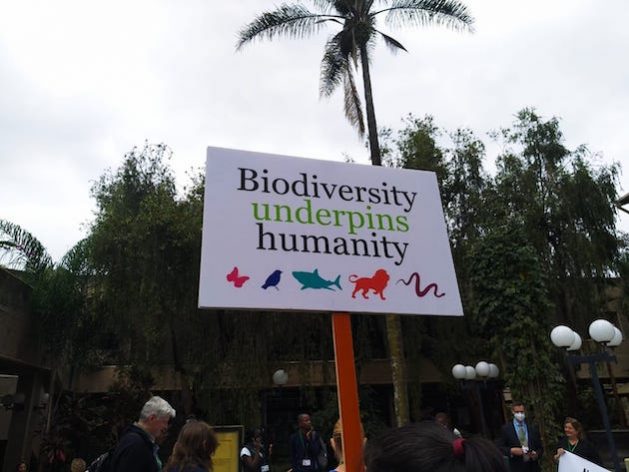
A placard on display at activists' demonstration outside the 4th meeting of the CBD Working Group at the UNEP headquarter in Nairobi. Credit: Stella Paul/IPS

A placard on display at activists’ demonstration outside the 4th meeting of the CBD Working Group at the UNEP headquarter in Nairobi. Credit: Stella Paul/IPS

Nairobi, Jun 27 2022 (IPS) – As the last working group meeting of the Post 2020 Global Biodiversity Agenda concluded here on Sunday, the delegates’ job at COP15 Montreal just got tougher as delegates couldn’t finalize the text of the agenda. Texts involving finance, cost and benefit-sharing, and digital sequencing – described by many as ‘most contentious parts of the draft agenda barely made any progress as negotiators failed to reach any consensus.


Nairobi – the Unattempted ‘Final Push’

The week-long 4th meeting of the Working Group of the Biodiversity Convention took place from June 21-26, three months after the 3rd meeting of the group was held in Geneva, Switzerland. The meeting, attended by a total of 1634 participants, including 950 country representatives, had the job cut out for them: Read the draft Post 2020 Global Biodiversity Framework (GBF) and its 21 targets, discuss, and clean up the text – target by target, sentence by sentence, at least up to 80%.

But, on Saturday – a day before the meeting was to wrap up, David Ainsworth – head of Communications at CBD, hinted that the progress was far slower than expected. Ainsworth mentioned that the total cleaning progress made was just about 8%.

To put it in a clearer context, said Ainsworth, only two targets now had a clean text – Target 19.2 (strengthening capacity-building and development, access to and transfer of technology) and target 12 (urban biodiversity). This means that in Montreal, they could be placed on the table right away for the parties to decide on, instead of debating the language. All the other targets, the work progress has been from around 50% to none, said Ainsworth.

An entire day later, on Sunday evening local time, co-chairs of the WG4 Francis Ogwal and Basile Van Havre confirmed that those were indeed the only two targets with ‘clean’ texts. In other words, no real work had been done in the past 24 hours.

On June 21, at the opening session of the meeting, Elizabeth Maruma Mrema, Executive Secretary of the Convention on Biological Diversity, described the Nairobi meeting as an opportunity for a ‘final push’ to finalize the GBF. On Sunday, she called on the parties to “vigorously engage with the text, to listen to each other and seek consensus, and to prepare the final text for adoption at COP 15”.

Answering a question from IPS News, Mrema also confirmed that there would be a 5th meeting of the Working Group before the Montreal COP, indicating the work done in the Nairobi meeting wasn’t enough to produce a draft that was ready to be discussed for adoption.

The final push, it appeared, had not even been attempted.

Bottlenecks and Stalemate

According to several observers, instead of cleaning up 80% of the texts over the past six days, negotiators had left 80% of the text in brackets, which signals disagreement among parties. Not only did countries fail to progress, but in some cases, new disagreements threatened to move the process in the opposite direction. The most fundamental issues were not even addressed this week, including how much funding would be committed to conserving biodiversity and what percentage figures the world should strive to protect, conserve, and restore to address the extinction crisis.

True to the traditions of the UN, the CBD wouldn’t be critical of any party. However, on Sunday evening, Francis Ogwal indicated that rich nations had been dragging their feet on meeting the commitment of donating to global biodiversity conservation. Without naming anyone, Ogwal reminded the negotiators that the more time they took, the tougher they would get the decision.

At present, said Ogwal, 700 billion was needed to stop and recover global biodiversity. “If you keep giving less and less, the problems magnify. Ten years down the line, this will not be enough,” he said.

The civil society was more vocal in criticizing the delegates for losing yet another opportunity.

According to Brian O’Donnell, Director of the Campaign for Nature, the negotiations were faltering, with some key issues being at a stalemate. It is, therefore, up to heads of state and other political and United Nations leaders to act with urgency. “But time is now running out, and countries need to step up, show the leadership that this moment requires, and act urgently to find compromise and solutions,” O’Donnell said in a statement.

The Next Steps

The CBD Secretariat mentioned a string of activities that would follow the Nairobi meeting to speed up the process of building a consensus among the delegates. The activities include bilateral meetings with some countries, regional meetings with others, and a Working Group 5 meeting which will be a pre-COP event before COP15.

Finally, the CBD is taking a glass-half-filled approach toward the GBF, which is reflected in the words of Mrema: “These efforts (Nairobi meeting) are considerable and have produced a text that, with additional work, will be the basis for reaching the 2050 vision of the Convention: A life in harmony with nature,” she says.

The upcoming UN Biodiversity Conference will be held from 5 to December 17 in Montreal, Canada, under the presidency of the Government of China. With the bulk of the work left incomplete, the cold December weather of Montreal is undoubtedly all set to be heated with intense debates and negotiations.
IPS UN Bureau Report


Healthy Planet Needs ‘Ocean Action’ from Asian and Pacific Countries

Asia-Pacific, Climate Action, Climate Change, Conferences, Development & Aid, Economy & Trade, Environment, Headlines, Poverty & SDGs, Sustainability, TerraViva United Nations

Opinion

BANGKOK, Thailand, Jun 27 2022 (IPS) – As the Second Global Ocean Conference opens today in Lisbon, governments in Asia and the Pacific must seize the opportunity to enhance cooperation and solidarity to address a host of challenges that endanger what is a lifeline for millions of people in the region.


Armida Salsiah Alisjahbana

If done right ocean action will also be climate action but this will require working in concert on a few fronts.

First, we must invest in and support science and technology to produce key solutions. Strengthening science-policy interfaces to bridge practitioners and policymakers contributes to a sound understanding of ocean-climate synergies, thereby enabling better policy design, an important priority of the Indonesian Presidency of the G20 process. Additionally policy support tools can assist governments in identifying and prioritizing actions through policy and SDG tracking and scenarios development.

We must also make the invisible visible through ocean data: just three of ten targets for the goal on life below water are measurable in Asia and the Pacific. Better data is the foundation of better policies and collective action. The Global Ocean Accounts Partnership (GOAP) is an innovative multi-stakeholder collective established to enable countries and other stakeholders to go beyond GDP and to measure and manage progress towards ocean sustainable development.

Solutions for low-carbon maritime transport are also a key part of the transition to decarbonization by the middle of the century. Countries in Asia and the Pacific recognized this when adopting a new Regional Action Programme last December, putting more emphasis on such concrete steps as innovative shipping technologies, cooperation on green shipping corridors and more efficient use of existing port infrastructure and facilities to make this ambition a reality.

Finally, aligning finance with our ocean, climate and broader SDG aspirations provides a crucial foundation for all of our action. Blue bonds are an attractive instrument both for governments interested in raising funds for ocean conservation and for investors interested in contributing to sustainable development in addition to obtaining a return for their investment.

These actions and others are steps towards ensuring the viability of several of the region’s key ocean-based economic sectors, such as seaborne trade, tourism and fisheries. An estimated 50 to 80 per cent of all life on Earth is found under the ocean surface. Seven of every 10 fish caught around the globe comes from Pacific waters. And we know that the oceans and coasts are also vital allies in the fight against climate change, with coastal systems such as mangroves, salt marshes and seagrass meadows at the frontline of climate change, absorbing carbon at rates of up to 50 times those of the same area of tropical forest.

But the health of the oceans in Asia and the Pacific is in serious decline: rampant pollution, destructive and illegal fishing practices, inadequate marine governance and continued urbanization along coastlines have destroyed 40 per cent of the coral reefs and approximately 60 per cent of the coastal mangroves, while fish stocks continue to decline and consumption patterns remain unsustainable.

These and other pressures exacerbate climate-induced ocean acidification and warming and weaken the capacity of oceans to mitigate the impacts of climate change. Global climate change is also contributing to sea-level rise, which affects coastal and island communities severely, resulting in greater disaster risk, internal displacement and international migration.

To promote concerted action, ESCAP, in collaboration with partner UN agencies, provides a regional platform in support of SDG14, aligned within the framework of the UN Decade of Ocean Science for Sustainable Development (2021-2030). Through four editions so far of the Asia-Pacific Day for the Ocean, we also support countries in identifying and putting in place solutions and accelerated actions through regional dialogue and cooperation.

It is abundantly clear there can be no healthy planet without a healthy ocean. Our leaders meeting in Lisbon must step up efforts to protect the ocean and its precious resources and to build sustainable blue economies.

Armida Salsiah Alisjahbana is an Under-Secretary-General of the United Nations and Executive Secretary of the Economic and Social Commission for Asia and the Pacific (ESCAP)

IPS UN Bureau


It’s Time To Globalise Compassion, Says Nobel Laureate Kailash Satyarthi

Africa, Child Labour, Conferences, Editors’ Choice, Featured, Headlines, Human Rights, Humanitarian Emergencies, Inequity, Labour, Poverty & SDGs, TerraViva United Nations

Child Labour

“I have been talking to leaders of rich countries to address the problem of post-pandemic economic meltdown. We have to work for social protection for marginalised people in low-income countries and focus on children, education, health, and protection. That is not a big investment compared to what we are going to lose – a whole generation.” – Nobel Laureate Kailash Satyarthi

Nobel Laureate Kailash Satyarthi addresses the 5th Global Conference on the Elimination of Child Labour. Despite setbacks, he is optimistic that child labour can be abolished. Credit: Cecilia Russell/IPS

Nobel Laureate Kailash Satyarthi addresses the 5th Global Conference on the Elimination of Child Labour. Despite setbacks, he is optimistic that child labour can be abolished. Credit: Cecilia Russell/IPS

Durban, May 16 2022 (IPS) – A mere 35 billion US dollars per annum – equivalent to 10 days of military spending – would ensure all children in all countries benefit from social protection, Nobel Laureate Kailash Satyarthi told the 5th Global Conference on the Elimination of Child Labour.


He said this was a small price to pay considering the catastrophic consequences of the increase in child labour since 2016, after several years of decline in child labour numbers.

An estimated 160 000 million kids are child labourers, and unless there is a drastic reversal, another 9 million are expected to join their ranks.

Satyarthi was among a distinguished group of panellists on setting global priorities for eliminating child labour. The panel included International Labour Organisation(ILO) DG Guy Ryder, South African Employment and Labour Minister Thulas Nxesi, James Quincey, CEO of Coca Cola,  Alliance 8.7 chairperson Anousheh Karver and European Union Commissioner Jutta Urpilainen.

The panel discussed child labour in the context of decent work deficits and youth employment. It identified pressing global challenges and priorities for the international community.

Satyarthi said the 35 million US dollars was far from a big ask. Nor was the 22 billion US dollars needed to ensure education for all children. He said this was the equivalent of what people in the US spent on tobacco over six days.

Satyarthi said it was a travesty that the G7, the world’s wealthiest countries, had never debated child labour – something he intends to change.

The panellists attributed the increase in child labour to several factors, including lack of political will, lack of interest from rich countries and embedded cultural and economic factors.

Asked how he remained optimistic in light of the dismal picture of growing child labour rates. Satyarthi told IPS that having been in the trenches for 40 years, he had seen and been happy to see a decline in child labour until 2016 – when the problem began escalating again.

“I strongly believe in freedom of human beings. The world will slowly move towards a more compassionate society, sometimes faster, sometimes slower,” he said.

Satyarthi, together with organisations like the ILO, succeeded in putting the issue of child labour on the international agenda. Through his foundation in collaboration with other NGOs, he got the world to take note of this hidden scourge.

He is convinced that child labour will be eliminated despite the recent setbacks.

“I am hopeful because there was no ILO programme when I started 40 years ago. Child labour was not recognised as a problem, but slowly, it is being realised that it’s wrong and evil – even a crime. So, 40 years isn’t a big tenure in the history of human beings. This scourge has been there for centuries.”

Yet he recognises the need for urgency to roll back the escalation of child labour.

“The next ten years are even more important because now we have the means, we have power, technology, and we know the solution. The only thing we need is a strong political will but also social will,” Satyarthi said. “We have to speed it up and bring back the hope. Bring back the optimism. The issue is a priority, and that’s why we are calling on markets to globalise compassion. There are many things to divide us, but there’s one thing we all agree on: the well-being of our children.”

Satyarthi said to meet the SDG deadline of 2025, he and other Nobel laureates and world leaders are pushing hard to ensure that child labour starts declining again.

“We as a group of Nobel laureates and world leaders are working on two fronts. One is a fair share for children on budgetary allocations and policies,” he said.

The group engaged with governments to ensure that children received a fair share of the budget and resources.

Then they are pushing governments on social protection, which he believes in demystifying.

“We have seen in different countries, social protection – helping through school feeding schemes, employment programmes and conditional grant programmes to ensure that children can go to school, with proven success in bringing down child labour.”

The Nobel laureate knocked on the doors of the leaders of wealthy nations.

“I have been talking to leaders of rich countries to address the problem of post-pandemic economic meltdown. We have to work for social protection for marginalised people in low-income countries and focus on children, education, health, and protection. That is not a big investment compared to what we are going to lose – a whole generation.”

Satyarthi said he was heartened by the response to their efforts to motivate governments and the private sector to join the fight against child labour.

“I have been optimistic to say many of the governments and EU leaders are not only listening – they are talking about it. Yesterday only, I was so happy that President Cyril Ramaphosa spoke very explicitly on this issue, and almost everyone was talking about this issue. But it took several months, several years to get there.”

And Satyarthi is not going to stop soon. With the Laureates and Leaders For Children project, he and fellow laureates are determined the world sits up and finds the will to ensure every child can experience a childhood.

IPS UN Bureau Report

This is part of a series of stories published by IPS during the 5th Global Conference on the Elimination of Child Labour in Durban. 


Call to Freedom for Millions of Children Trapped in Child Labour as Global Conference to Comes to Africa

Child Labour, Conferences, Education, Featured, Global, Headlines, Humanitarian Emergencies, Labour, Poverty & SDGs, TerraViva United Nations

Labour

A child beneficiary holding a drawing portraying domestic violence, at the Centre for Youth Empowerment and Civic Education, Lilongwe, Malawi which partnered with the ILO/IPEC to support the national action plan aimed at combating child labour. Credit: Marcel Crozet/ILO

A child beneficiary holding a drawing portraying domestic violence, at the Centre for Youth Empowerment and Civic Education, Lilongwe, Malawi which partnered with the ILO/IPEC to support the national action plan aimed at combating child labour. Credit: Marcel Crozet/ILO

Nairobi, May 13 2022 (IPS) – Children washing clothes in rivers, begging on the streets, hawking, walking for kilometres in search of water and firewood, their tiny hands competing with older, experienced hands to pick coffee or tea, or as child soldiers are familiar sights in Africa and Asia.


Child rights experts at Kailash Satyarthi Children’s Foundation reiterate that tolerance and normalisation of working children, many of whom work in hazardous conditions and circumstances, and apathy has stalled progress towards the elimination of child labour.

Further warnings include more children in labour across the sub-Saharan Africa region than the rest of the world combined. The continent now falls far behind the collective commitment to end all forms of child labour by 2025.

The International Labour Organization estimates more than 160 million children are in child labour globally.

How to achieve the Sustainable Development Target 8.7 and the International Programme on the Elimination of Child Labour that focuses on its elimination by 2025 will be the subject of the 5th Global Conference on the Elimination of Child Labour to be held in Durban, South Africa, from May 15 to 20, 2022.

South Africa’s President Cyril Ramaphosa is expected to open the conference. He will share the stage with the Southern African Development Community (SADC) chairperson and President of the Republic of Malawi Lazarus McCarthy Chakwera, ILO Director-General Guy Ryder, and Argentina President Alberto Ángel Fernández Pérez (virtual).

“There are multiple drivers of child labour in Africa, and many of them are interconnected,” Minoru Ogasawara, Chief Technical Advisor for the Accelerating action for the elimination of child labour in supply chains in Africa (ACCEL Africa) at the International Labour Organization (ILO) tells IPS.

He speaks of the high prevalence of children working in agriculture, closely linked to poverty and family survival strategies.

Rapid population growth, Ogasawara says, has placed significant pressure on public budgets to maintain or increase the level of services required to fight child labour, such as education and social protection.

“Hence the call to substantially increase funding through official development assistance (ODA), national budgets and contributions from the private sector targeting child labour and its root causes,” he observes.

UNICEF says approximately 12 percent of children aged 5 to 14 years are involved in child labour – at the cost of their childhood, education, and future.

Of the 160 million child labourers worldwide, more than half are in sub-Saharan Africa, and 53 million are not in school – amounting to 28 % aged five to 11 and another 35 % aged 12 to 14, according to the most recent child labour global estimates by UNICEF and ILO.

Against this grim backdrop, keynote speakers Nobel Peace Laureates Kailash Satyarthi and Leymah Gbowee and former Prime Minister of Sweden Stefan Löfven will address the conference, which is expected to put into perspective how and why children still suffer some of the worst, most severe forms of child labour such as bonded labour, domestic servitude, child soldiers, drug trafficking and commercial sexual exploitation.

Satyarthi has been at the forefront of mobilising global support to this effect.

“I am working in collaboration with a number of other Nobel Laureates and world leaders. We are demanding the setting up of an international social protection mechanism. During the pandemic, we calculated that $53 billion annually could ensure social protection for all children in all low-income countries, as well as pregnant women too,” Satyarthi emphasises.

“Increased social protection, access to free quality education, health care, decent job opportunities for adults, and basic services together create an enabling environment that reduces household vulnerability to child labour,” Ogasawara stresses.

He points to an urgent need to introduce and or rapidly expand social security and other social protection measures suitable for the informal economy, such as cash transfers, school feeding, subsidies for direct education costs, and health care coverage.

The need for a school-to-work transition and to “target children from poor households, increase access to education while reducing the need to combine school with work among children below the minimum working age” should be highlighted.

In the absence of these social protection safety nets, the  International Labour Organization says it is estimated that an additional 9 million children are at risk of child labour by the end of this year and a possible further increase of 46 million child labourers.

In this context, the fifth global conference presents an opportunity to assess progress made towards achieving the goals of SDG Target 8.7, discuss good practices implemented by different actors around the world and identify gaps and urgent measures needed to accelerate the elimination of both child labour and forced labour.

The timing is crucial, says the ILO, as there are only three years left to achieve the goal of the elimination of all child labour by 2025 and only eight years towards the elimination of forced labour by 2030, as established by the Sustainable Development Goal (SDG) Target 8.7.

The conference will also see the active participation of young survivor-advocates from India and Africa. They will share their first-person accounts and lived experiences in sync with the core theme of the discussion.

The conference will also take place within the context of the COVID-19 pandemic, amid fears and concerns that ending child labour became less significant on the international agenda as the world coped with the impact of the pandemic. This could reverse the many gains accrued in the fight against child labour, forced labour and child trafficking.

This is the first of a series of stories which IPS will be publishing during the 5th Global Conference on the Elimination of Child Labour from May 15 to 20, 2022.

IPS UN Bureau Report


How Collective Action Can Move the Needle on Gender Equality

Active Citizens, Conferences, Development & Aid, Education, Gender, Global, Headlines, Health, Human Rights, TerraViva United Nations, Women & Climate Change, Women’s Health

Opinion

Delegates take a group photo at the Young Leaders & Alumni Workshop at the Women Deliver 2019 Conference in Vancouver, Canada. Credit: Isabella Sarmiento

NEW YORK, Mar 18 2022 (IPS) – During this year’s sixty-sixth session of the Commission on the Status of Women (CSW66), we are eager to see the global community pivot towards more inclusive approaches to advocacy. It’s imperative to put the spotlight on women’s rights and youth-led organizations in communities that are often left out of key discussions. By handing the mic over to advocates across all backgrounds and ages, we can shift to a model that enables all advocates to take a lead role in policy-making and ultimately translate promises and rhetoric into real impact and accountability.


Since the emergence of the COVID-19 pandemic, the ways that the global community works together to push for inclusive progress toward gender equality — progress that fully and effectively engages and equally benefits everyone — are fundamentally changing. Private conversations between the organizations and people with the resources and privilege to access the halls of power have given way to hybrid events and videoconferences that are open to a more diverse, intergenerational set of stakeholders than ever before. This significant shift began to open the doors to more inclusive partnerships.

Also, during these past two years, a global reckoning called on us all to meaningfully transform our advocacy, practices, and programs. International development organizations, including our own, took a long, overdue look in the mirror, and in some cases, began the deep learning and unlearning needed to acknowledge the persistent power imbalances that plague our sector at large. It’s a first step in living up to the values of equity and inclusion — not just on paper, but in practice.

As the world as we know it changed, we were hard at work changing, too. We began actively leveraging our power and influence more intentionally than ever before to center the work and expertise of women’s rights and youth-led organizations in low- and middle-income countries (LMICs). Now, we are digging deeper to find and use new tools that enable advocates to co-create and co-lead by themselves so that our work and the Women Deliver 2023 Conference (WD2023) is more inclusive, diverse, consultative, and accessible than ever before.

Young gender equality advocates kick off the Youth Zone at the Women Deliver 2019 Conference in Vancouver, Canada. Credit: This Is It Studios

In “calling us in” and championing our ability to foster more inclusive partnerships across all of our programs, we are taking action to effectively and authentically advocate for, with, and alongside girls and women everywhere, in all their intersecting identities, to catalyze lasting progress on gender equality.

Transforming ourselves is of course a continuous process. Each day, we are learning to do better and to be better. We hope that our key learnings, below, can support our development colleagues, wherever they find themselves on their journey.

1. Accessibility and inclusion must lead the way — in-person and virtually.

    According to expert studies, organizations and individuals from LMICs are often under-represented at global health convenings. From day one, it’s urgent to intentionally engage those who have historically been excluded. In planning WD2023, we have leveraged the lessons of the past two years and from prior Women Deliver Conferences. We used an open application to select one-third of our Conference Advisory Group — a diverse panel with a balance of technical expertise. Our advisors represent 30 organizations — 10 individuals are from youth or youth-led organizations and 35 are from LMICs. We have done this to ensure that the Conference is co-created from the start by organizations and individuals representing the intersectional identities of the girls and women we work with and for.

    We meet regularly via videoconference with our Advisory Group to co-create the Conference’s Global Dialogue, theme, programming, and more, with support from social impact design experts at IDEO.org. IDEO also supports us as we carry out targeted discussions with specific stakeholder groups, including Women Deliver Young Leaders and Alumni, Deliver for Good Country Coalitions, and Conference Sponsors and Funders.

    In planning how to shape the dialogue, foster collaboration, and drive collective action before, during, and after the Conference, we’re working with our partners to ensure that all Conference advocacy spaces, be they digital or physical, are accessible to all. This includes low-bandwidth options, closed captioning, interpretation in multiple languages, and International Sign Language. On-site, we will also provide trauma-informed specialists, breastfeeding/nursing stations, child safeguarding support, and mental health specialists.

Mme Safiétou Diop, President of Réseau Siggil Jigeen speaking at a press conference during the launch of the Deliver for Good Senegal Campaign in Dakar, Senegal in 2019.

2. Move from meaningful youth engagement to co-leadership and intergenerational action.

    It’s time to follow the lead of young people, shift away from top-down approaches, and actively provide resources for robust youth co-leadership. According to global consensus, young people have a fundamental right to actively and meaningfully engage in all matters that affect their lives. For international development organizations, this means offering space, support, and compensation that youth need and deserve to co-create a more-gender equal future — a future from which they have the most to gain and to lose.

    We created the 14-person Young Leaders Program Alumni Committee, with an honorarium for their valuable expertise, to advise us on strategy and implementation of the Young Leaders Program and ideate youth co-creation opportunities. This committee provides invaluable guidance to ensure the Young Leaders Program models meaningful youth engagement and co-leadership, and effectively meets the needs of Young Leaders on the ground.

    Women Deliver also hosts Multi-Country Workshops to foster capacity strengthening, knowledge sharing, and coordinated advocacy on sexual and reproductive health and rights (SRHR) and gender equality. Starting in 2021, these workshops are now designed and led by a Young Leader Planning Committee representing the regions where the workshops take place. They are in the driver’s seat as they craft workshop content and programming, while Women Deliver provides logistical support and the virtual space to gather. This co-created process has led to more targeted — and impactful — workshops that cater to Young Leaders’ specific needs and build capacity in the issue areas where it’s most needed.

Delegates taking a group photo on stage at the Deliver for Good Campaign side event “Leveraging National Movements for Global Change” at the Women Deliver 2019 Conference in Vancouver, Canada.

3. Elevate diverse voices and support organizations working on the ground.

    Incusion and participation have to be integrated into the mission of development work, not a one-off tactic or strategy. Diverse, resilient feminist and women’s rights organizations and movements are – and must always be positioned as – the key drivers of change for gender equality and women’s rights across the globe.

    Over the past two years, we have stepped back to shift power across every aspect of our organization’s activities, policies, programs, and behaviors, into the hands of the youth and women’s rights groups most impacted by our work. For example, in 2020, in partnership with Girl Effect, as well as with young people themselves, we worked to understand how youth in India, Malawi, and Rwanda use digital platforms to learn about their sexual and reproductive health (SRHR). This project was designed and executed by more than 160 adolescent girls and young women, who worked hand in hand with researchers on the ground in India, Malawi, and Rwanda to conduct interviews within their own communities, as well as to design questions, discuss results, and generate recommendations. Moving forward, we must involve girls and women in all aspects of data collection and evidence generation that impacts them. This will ensure that the local knowledge and skills needed to drive sustainable change in their own communities, regions, and countries are an integral part of effective advocacy and decision-making.

    We’re now handing the pen directly to Young Leaders and spotlighting the work of youth-led organizations during key advocacy moments. Last year, the Deliver for Good Campaign organized its first ever Continental Conversation — an idea conceived by partners in Kenya and Senegal — as a way to work together towards gender equality in the region. What was first envisioned as a one-off peer-to-peer sharing opportunity via videoconference became understood as a vital, first-of-its-kind Continental Conversation to bridge divides — some of which had never been crossed. Together, the Campaign’s country partners shared their own experiences, lessons, challenges, and successes in advancing gender equality, laying the groundwork for a cross-regional peer-to-peer learning model with the power to accelerate progress on girls’ and women’s health and rights in Kenya, in Senegal, and around the world.

    Over the past year, we have also co-convened multi-sectoral coalitions with diverse partners representing the intersectional identities of girls and women. For example, as part of the SRHR & Climate Justice Coalition, we’re working on collective action and coordinated advocacy in partnership with more than 60 representatives from a wide range of civil society organizations. The Coalition is working to advance SRHR and gender equality in the context of climate change from an intersectional and climate justice approach.

    The Coalition emerged from the need to break down silos between the SRHR and Climate Justice organizations and movements, facilitate knowledge sharing, jointly mobilize, and amplify the voices and priorities of grassroots organizations. These organizations are led by girls and women, the LGBTQIA+ community, and Indigenous people from LMICs, particularly those most affected by climate change and without continuous access to high-quality SRH services. The Coalition is currently raising awareness of the interlinkages of SRHR and climate change in order to ensure SRHR is a key part of climate change conversations and action strategies ahead of key policy moments, such as CSW66 and COP27.

4. Collect and present data that accurately represents the diverse needs of all girls and women.

    Sustainable progress — and lasting change — will take all of us. Over the past two years, we’ve focused on connecting advocates working across different issue areas and collecting gender-disaggregated data. The data is broken down into the many factors that shape people’s lives, including race and ethnicity, sexual orientation, disability status, and socioeconomic class in order to drive collective action, the mainstay of transformative change. We also need to engage with data scientists from regions most impacted by this research.

    Last year, we partnered with Focus 2030 to carry out a survey of 17 countries on six continents — representing half of the world’s population. An overwhelming majority said they support gender equality, believe that women should be fully engaged in charting our path forward, and expect leaders – political and in business – to take meaningful action to bridge the gender divide. In centering the voices of citizens, we were able to effectively advocate for bigger, bolder commitments by governments and the private sector, ahead of the Generation Equality Forum.

As Women Deliver evolves and grows, we will continue to call upon our partners and funders, including in the private sector, to ensure that the international development world champions and secures robust, feminist funding and resources for women’s rights organizations, youth, and other marginalized communities. We hope you will join us in leveraging the changes set into motion during the pandemic and the global reckoning in our sector. Let’s work together to bridge existing divides and form inclusive partnerships — between countries, sectors, and generations.

The authors are Kathleen Sherwin (CEO/President), Divya Mathew (Director, Policy & Advocacy), Julia Fan (Senior Manager, Youth Engagement), Gretchen Gasteier (Manager, Conference), Rachel Elliott (Senior Associate, Communications) of Women Deliver

IPS UN Bureau