5 Best Free Movies to Watch on YouTube, Pluto TV, Tubi and More (December 2025)

For a long time, if you wanted to watch a movie on TV at home for free, you simply had to watch with a few commercials.

Well, if you don’t feel like shelling out the money for Netflix or HBO Max, you’re in luck: movies with ads still exist, they’re just on ad-supported streamers.

Platforms like Tubi, Pluto TV and even YouTube carry thousands of quality free movies in their libraries. This December, Watch With Us is highlighting some of the best.

Whether you want a big-budget comedy like Barbie or a prestige superhero movie like Batman Begins, you can watch it all for free at your fingertips.

New on Tubi in December 2025 — The Full List of All the Free Movies and TV Shows

Barbie (Margot Robbie) lives in the perfect dreamworld of Barbieland, where Barbies hold positions of power while all the Kens have to do is spend their days at the beach. However, when Barbie starts to experience an uncharacteristic existential crisis, she learns she must travel to the real world to see what’s going on with the girl who’s playing with her. Accompanied by a Ken (Ryan Gosling), Barbie searches for her owner while Ken gets some unsavory ideas about a newfangled concept called “the patriarchy.”

The Barbie phenomenon was certainly helped a bit by the “Barbenheimer” double-feature craze back in 2023, but make no mistake — Barbie is a fantastic and ingenious comedy film with or without the help of Christopher Nolan. Robbie and Gosling are the film’s standouts (Gosling in particular able to show off his comedic chops), but the entire cast works wonders: Will Ferrell, Kate McKinnon, Simu Liu and Michael Cera all give hilarious performances.

Thirty-five years following the events of Ridley Scott’s Blade Runner, Blade Runner 2049 stars Ryan Gosling now stars in this sequel as LAPD Officer K, who hunts down and kills rogue replicant models — while also being a replicant himself. When K discovers a box containing shocking information following a mission, it threatens to destabilize the relationship between humans and replicants. K’s discovery is linked to missing blade runner Rick Deckard (Harrison Ford), whom he goes on a quest to find.

While Blade Runner 2049 didn’t do so great at the box office, it was critically acclaimed and received a number of Academy Award nominations, winning two: Best Cinematography for Roger Deakins and Best Special Visual Effects. Ultimately, director Denis Villeneuve (Dune) expands upon Blade Runner in thoughtful and exciting ways, and the film manages to be an impressive visual feat distinct from the original as well.

The final installment in Daniel Craig‘s iteration as James Bond sees 007 finally leading a peaceful life in Jamaica, having since left active service in MI6. But, of course, that respite is merely momentary, and Bond is pulled back into his former work when an old CIA friend (Jeffrey Wright) shows up in need of his help. Bond must rescue a kidnapped scientist, but the mission becomes more arduous than expected and sends him down a dangerous path.

This epic conclusion to Craig’s chapter as Bond was met with warm response from fans and critics, praising the film not only for its exciting action sequences and slick style, but its ability to oscillate between comedy, drama, horror and romance with ease. In the end, the thrilling and visually stunning film is a fitting sendoff to Craig that ends up being far more moving than most people might expect.

This Batman origin story follows Bruce Wayne (Christian Bale) from developing a fear of bats to his parents’ grisly murders, to his time in Bhutan training with the League of Shadows. But when he discovers the League’s intent to destroy the “corrupt” Gotham, he returns to the city intent on cleaning up crime sans killing. With the help of his butler (Michael Caine) and tech expert Lucius Fox (Morgan Freeman), Batman takes on bad guys like the Scarecrow (Cillian Murphy).

Christopher Nolan’s take on Batman is credited with having revitalized the character after the poor showing in Batman & Robin from 1997. Nolan moved away from the camp of Joel Schumacher and the gothic kink of Tim Burton and turned Batman into a prestige drama film — and it paid off. Critics applauded Batman Begins for understanding the core of the character while bringing him into exciting and intelligent new territory. In the end, Batman Begins spawned a legendary trilogy.

The grand conclusion to the John Wick story (or is it?), John Wick: Chapter 4 follows the events of John Wick: Chapter 3 —Parabellum. Wick (Keanu Reeves) hides out in New York City with the Bowery King (Laurence Fishburne) as he recovers from having been shot. Now seeking revenge against the High Table, who want him dead, the price on Wick’s head grows higher and higher. But Wick’s final battle now goes global, as he finds himself targeted by assassins around the world in service of a powerful enemy.

5 Great Movies to Watch in Pluto TV’s “Holidays Are Brutal” Collection

John Wick: Chapter 4 manages to be more grandiose, violent and excessive than the previous three John Wick films, and yet the movie doesn’t suffer for it. Instead, this fourth film in the action franchise proves that there can never be too much when it comes to watching Keanu Reeves’ kick people’s butts. With fantastic set pieces, mesmerizing fight choreography, and genuinely solid performances, John Wick: Chapter 4 stands as a highlight in modern action blockbuster filmmaking.


Discover more from The Maravi Post

Subscribe to get the latest posts sent to your email.

The Maravi Post

FBI’s Jeremy Sisto Says ‘Scary’ Fall Finale Has Jubal at ‘Center of the Storm’

As FBI heads into its winter hiatus, Jeremy Sisto warns that Jubal’s team is in for an “exciting” and “horrible” case with many twists and turns.

“It’s scary,” Sisto, who plays ASAC Jubal Valentine, exclusively told Us Weekly of the show’s two-part fall finale airing on Monday, December 15.

He teased that Jubal is “at the center of the storm in this one,” and so is his son, Tyler (Caleb Reese Paul).

Monday’s double feature begins with “Lone Wolf,” which, according to Sisto, 51, starts with the FBI team being alerted to a crime by the tip line, “which is not something [that] usually leads us anywhere.”

FBI’s Alana De La Garza Explains Isobel’s Job Decision, What’s Next for Jubal

Sisto revealed that FBI analyst Kelly Moran (Taylor Anthony Miller) has an “instinct” about one of the calls, and “heads out with our agents, and they find three dead sex workers.”

Throughout the episode, the special agents discover that the murderer has connections to a “radical accelerationist movement that is committed to resetting society because it’s gotten so, so rotten.”

The actor explained that the terrorist group’s “plan is big” and includes “disrupting cell and internet connectivity,” which impacts how Jubal and the team investigate. “[It’s] very frustrating when you get disconnected, but even worse when you’re trying to stop further damage [from happening],” Sisto shared.

Which ‘FBI’ Stars Are — And Aren’t — Returning for Season 8?

“It rises to a pretty drastic, pretty dramatic threat,” Sisto told Us, noting all of the agents become “concerned” with their families “being in the wrong place at the wrong time when there is an active threat.”

That threat hits especially close to Jubal, whose high-school aged son is “in the city for the day with a friend” as the events unfold.

“[He’s] just hoping he’s not at the wrong place, at the wrong time,” Sisto said of his character’s arc, teasing that fans should pay special attention to Tyler and his conversations with dad Jubal in both parts of the fall finale.

FBI Jeremy Sisto Previews Scary 2 Part Fall Finale With Jubal at The Center of the Storm Inline
Bennett Raglin/CBS

Sisto confirmed, “In the beginning, you know something is going to get dirty with this plot,” teasing that in part two, titled “Wolf Pack,” the team must track down the bad guys without their usual communication tools in place.

Even with the disruption to their comms system, Sisto said the team will do their best to “search every square inch” of New York City to find the culprits — but it won’t be without a few mishaps.

5 Top New Movies and TV Shows to Watch This Week on Netflix, Prime and More (December 15-19)

“In this particular case, we don’t find them quick enough before some very bad stuff happens,” Sisto explained, hinting that Jubal’s personal connection to the case will be part of the “bad stuff” that transpires.

He teased that the second half of the fall finale is all about “finding [the culprits] before even more horrible things happen.”

“It’s definitely not a victory throughout,” Sisto ominously warned. “That’s why it takes two hours to get through the story. Because there’s some pretty, pretty bad losses along the way.”

FBI’s two-part fall finale airs on CBS Monday, December 15, at 8 p.m. ET. The show will resume with new episodes in February 2026.


Discover more from The Maravi Post

Subscribe to get the latest posts sent to your email.

The Maravi Post

‘Low- and Middle-Income Countries Need Better Data, Not Just Better Tech’

Conferences, Development & Aid, Economy & Trade, Editors’ Choice, Featured, Headlines, Sustainable Development Goals, TerraViva United Nations

Conferences

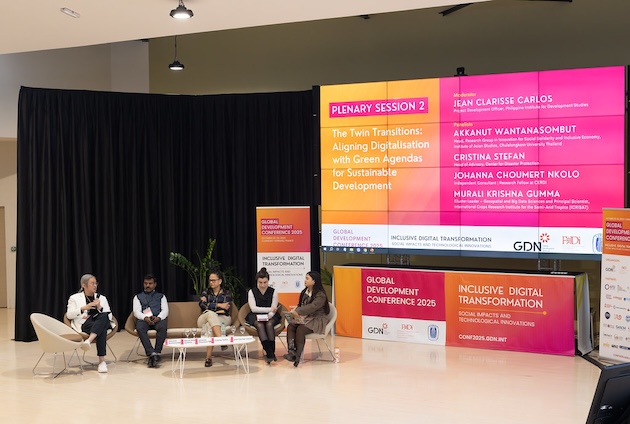
Johanna Choumert-Nkolo, third from right, speaking during a panel discussion at the Global Development Conference 2025 in Clermont-Ferrand, France. Credit: Athar Parvaiz/IPS

Johanna Choumert-Nkolo, third from right, speaking during a panel discussion at the Global Development Conference 2025 in Clermont-Ferrand, France. Credit: Athar Parvaiz/IPS

CLERMONT-FERRAND, France, Dec 4 2025 (IPS) – During the Global Development Conference 2025, development experts and researchers kept warning that low- and middle-income countries (LMICs) were being pushed into a wave of digital transformation without the basic statistical systems, institutional capacity, and local context needed to ensure that AI and digital tools truly benefited the poor.


Among the prominent voices shaping this conversation were Dr. Johannes Jütting, Executive Head of the PARIS21 Secretariat at the OECD, and development economist Johanna Choumert-Nkolo, who has over 15 years of research and evaluation experience. IPS interviewed both Jutting and Choumert-Nkolo following the conference, which concluded about five weeks ago, about the issues surrounding digitalization in LMICs.  Following is the summary of their responses.

How is Data the Weakest Link?

Much of the conversation around AI’s potential in the Global South centers on the promise of improved governance. But for Jutting, whose organization has been working on AI and data, there is a widening gap between the capacities of countries in the Global North and those in the Global South.

AI, he said, offers enormous potential. “For lower-income countries in particular, the production side is promising because AI can reduce the very high costs of traditional data collection. By combining geospatial data with machine learning, for instance, we can generate more granular and more timely data for policymaking, including identifying where poor populations live,” Jutting told IPS.

“But real challenges remain. Many low-income countries lack the fundamental conditions required to make use of AI. First, connectivity: without it, there is no practical AI application. Second, technical infrastructure such as data centers and reliable data transmission. Third, human capacity and skills, which require sustained investment. And fourth, governance and legal frameworks that must be updated to reflect new technologies,” he said.

There are also clear risks, particularly concerning confidentiality, privacy, and the fact that most large AI models are trained on data from the Global North, he told IPS and added that this creates potential biases and limits their usefulness for national statistical offices in the Global South.

Data collection processes, such as censuses and household surveys, are expensive, slow, and operationally difficult. According to him, many national statistical offices lack the workforce, training, and budget needed to maintain regular, reliable data production.

The challenge, he emphasized, is not simply technological.

“Digital transformation is not just a technology issue. It is a change management issue, a capacity development issue, a skills issue, and a political will issue.”

Dr. Johannes Jütting, second from right,speakingg during a panel discussion atthe Globall Development Conference 2025 in Clermont-Ferrand, France. Credit: Athar Parvaiz/IPS

Dr. Johannes Jütting, second from right, speaking during a panel discussion at the Global Development Conference 2025 in Clermont-Ferrand, France. Credit: Athar Parvaiz/IPS

Divide Within the Global South and Fiscal Constraints

While global debates often frame digital inequality as a problem between rich and poor nations, Jütting believes the more serious divide is emerging within the Global South itself. He argues that some LMICs are sprinting ahead while others fall further behind, a divergence he calls “one of the most worrying trends in development today.”

“What I see is a divide inside the Global South,” he said. “Countries like Rwanda, Kenya, the Philippines and Colombia are advanced—sometimes more advanced than OECD members. But others like Mali, Niger, and several small island states, are completely left behind.”

This divide is not only visible in connectivity and infrastructure but also in institutional readiness, technological skills and even access to basic demographic data. In some countries, he said, governments still lack reliable records of how many people are born each year or how many people live within their borders.

“How can we talk about fancy AI models when basic population data is missing?” he asked. “We have to start with the fundamentals.”

He also cautioned that development agencies may inadvertently widen this divide by focusing on “low-hanging fruits” that yield quick, measurable results, instead of supporting long-term system-building in fragile countries.

“There is donor fatigue, and funding is shrinking,” he said.

So, how do we move forward? First, Jutting said, every country needs a strong national strategy for the development of statistics (NSDS). This strategy must be fully aligned with national development plans, he said and added that only then can we ensure financing is efficient, coordinated, and aligned with country needs as well as international monitoring requirements, such as the SDGs or Africa’s Agenda 2063.

“Second, viable financing models will require greater domestic resource mobilization. Governments must be convinced to invest in their own data systems—and this requires demonstrating tangible impact.”

And third, he said, donors need to align their spending more effectively. “Our recent work on gender data financing shows a major disconnect: while gender equality funding is increasing, funding for gender data is not. This mismatch risks wasting money and undermining progress.”

He believes that there has to be a change on both fronts: national governments must allocate more domestic resources, and donors must invest in data in a more strategic, coherent, and results-oriented way.

Complexity of Measuring Digital Impacts

While Jütting focused on institutions and governance, Choumert-NKolo approached digitalization through the lens of climate resilience, human behaviour and evidence generation. Unlike many policy conversations that foreground tools and technologies, she emphasized the complexity of understanding real-world impacts.

“Digitalization is reshaping economies at a very fast pace,” she told IPS. “From a climate perspective, we need to understand what this means, both in terms of opportunities and risks.”

Her main concern is the long-term and layered nature of digital impacts. A digital tool deployed today may influence decisions in ways that take years to fully materialize.

“You never know how a tool will be used until people start making decisions with it,” she said. “Understanding behavioural change is complex, and attribution to one digital tool is extremely difficult.”

Despite these challenges, she emphasized that digital tools have significant potential to support climate adaptation. Farmers facing unpredictable weather patterns can benefit from climate information services delivered through mobile platforms. Communities vulnerable to storms or floods can receive alerts even through basic SMS networks. Such tools, she said, can save lives.

But she urged caution in assuming digital tools are universally accessible or understood.

“We must remember that not everyone can read or act on digital messages,” she said. “Literacy and accessibility gaps remain large in many countries.”

Her research experience in East Africa reinforced the importance of context. Mobile money, she said, became a major success story precisely because it solved local problems and fit local cultural and economic realities. But not every challenge requires a digital solution.

“Sometimes nature-based or low-cost solutions work better. The key is context. We must understand what problem we are trying to solve and whether digital tools are the right fit.”

She believes the way forward lies in identifying local needs, drawing from existing evidence and piloting new solutions where knowledge gaps remain. “There is a lot of hype around digitalization,” she said. “We need more comparative evidence on what works best in each setting.”

A Future That Must Be Shaped Carefully

One theme emerged with clarity from both experts: Digital transformation can support inclusive development, but only if countries invest in strengthening their statistical systems, building institutional capacity and grounding innovation in local realities.

“We need more and better data for better lives,” Jütting said. “But we must ensure the poorest countries are not left behind in this digital wave.”

Choumert-NKolo echoed that sentiment. “Digital tools offer huge opportunities,” she said. “But they must be rooted in context, evidence and local needs.”

For LMICs navigating the uncertainties of climate change, economic pressures and technological disruption, these warnings are timely. Digital transformation can be a powerful equalizer—or a new source of exclusion. The difference, experts said, will depend on whether governments and development partners prioritize the foundations that make digital inclusion truly possible.

  • “Travel (for reporting this story) to the Global Development Conference was supported by GlobalDev, the research communications platform of the Global Development Network (GDN). The 2026 Global Development Conference was organized in partnership with other members of the Pôle clermontois de développement international (PCDI)—Foundation for Studies and Research on International Development (FERDI) and Centre for International Development Studies and Research (CERDI). Reporting and research remain independent.”

IPS UN Bureau Report


Graduation Must Be a Springboard, Not a Stumbling Block

Climate Change Finance, Conferences, Development & Aid, Economy & Trade, Environment, Financial Crisis, Global, Headlines, Sustainability, Sustainable Development Goals, TerraViva United Nations, Trade & Investment

Opinion

UNITED NATIONS, Dec 1 2025 (IPS) – As we gather in Doha for the High-Level Meeting on “Forging Ambitious Global Partnerships for Sustainable and Resilient Graduation of Least Developed Countries,” the stakes could not be higher. A record number of fourteen countries-equally divided between Asia and Africa are now on graduation track. Graduation from the Least Developed Country (LDC) category is a landmark national achievement—a recognition of hard-won gains in income, human development, and resilience. Yet, for too many countries, this milestone comes with new vulnerabilities that risk undermining the very gains that enabled graduation.


Since the establishment of the LDC category in 1971, only eight countries have graduated. Today, 44 countries remain in the group, representing 14% of the world’s population, but contributing less than 1.3% to global GDP. The Doha Programme of Action (DPoA) charts an ambitious yet achievable target: enabling at least 15 additional countries to graduate by 2031. But as the DPoA underscores graduation must be sustainable, resilient and irreversible. It must serve as a springboard for transformation— not a moment of exposure to new risks.

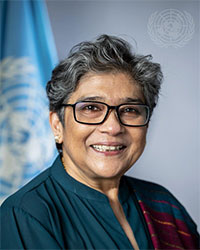
USG Rabab Fatima

Graduation with momentum:
Graduation often coincides with a significant shift in the international support landscape. As preferential trade arrangements, concessional financing, and dedicated technical assistance begin to phase down, countries may face heightened fiscal pressures, reduced competitiveness, and increased exposure to external shocks. Without well-sequenced and forward-looking transition planning, these shifts can slow progress toward the Sustainable Development Goals (SDGs) and strain national systems.

Yet within these challenges also lie opportunities. With the right policies, partnerships, and incentives, graduation can catalyse deeper structural transformation, expand access to new financing windows, strengthen institutions, and unlock pathways to diversified, resilient, and inclusive growth. The task before us is to manage risks while harnessing these opportunities—ensuring that no country graduates without momentum.

Smooth Transition Strategies: A National Imperative
The DPoA calls for every graduating country to develop inclusive, nationally owned Smooth Transition Strategies (STS) well-ahead of the graduation date. These strategies must be fully integrated into national development plans and SDG frameworks, ensuring coherence and resilience. They should prioritize diversification, human capital investment, and adaptive governance, while placing women, youth, and local actors at the center of design and oversight. STS must be living documents—flexible, participatory, and backed by robust monitoring and financing.

Reinvigorated Global Partnerships: The essential Pillar
No country can navigate this transition alone. The Doha Programme of Action calls for an incentive-based international support structure that extends beyond graduation. For LDCs with high utilization of trade preferences – the withdrawal of preferential market access must be carefully sequenced to avoid abrupt disruptions. For climate-vulnerable SIDS and LLDCs, enhanced access to climate finance, debt solutions, and resilience support are key elements in their efforts to tackle post-graduation challenges.

Deepened South-South and triangular cooperation, innovative financing instruments, blended finance, and strengthened private-sector engagement will be essential to building productive capacities and unlocking opportunities in digital transformation, green and blue economies, and regional market integration.

iGRAD: A Transformative Tool
The operationalization of the Sustainable Graduation Support Facility—iGRAD—is a concrete step forward. By providing tailored advisory services, capacity-building, and peer learning, iGRAD can serve as a critical tool to help countries anticipate risks, manage transitions, and sustain development momentum. Its success, however, hinges on strong political support and adequate, predictable resourcing from development partners.

Graduation as a Catalyst for Transformation
Graduation should not be the end of the story—it should be the beginning of a new chapter of resilience and opportunity. With integrated national strategies and reinvigorated global partnerships, we can turn graduation into a catalyst for inclusive, sustainable development. Let us seize this moment in Doha to reaffirm our collective commitment: no country should graduate into vulnerability. Together, we can ensure that graduation delivers on its promise—for communities, for economies, and for future generations.

Rabab Fatima is UN Under Secretary General and High Representative for the Least Developed Countries, Landlocked Developing Countries and Small Island Developing States

IPS UN Bureau


COP30 Fails the Caribbean’s Most Vulnerable, Leaders Say: ‘Our Lived Reality Isn’t Reflected’

Climate Change Finance, Climate Change Justice, Conferences, COP30, Development & Aid, Editors’ Choice, Environment, Featured, Headlines, International Justice, Latin America & the Caribbean, Small Island Developing States, Sustainable Development Goals, TerraViva United Nations

COP30


Regional leaders say the outcome of the ‘mixed bag’ climate talks once again overlooks the real and mounting threats faced by Caribbean countries.

A coastal community in the Eastern Caribbean. Small island states say their extreme climate vulnerability is still not reflected in global finance decisions made at COP30. Credit: Alison Kentish/IPS

A coastal community in the Eastern Caribbean. Small island states say their extreme climate vulnerability is still not reflected in global finance decisions made at COP30. Credit: Alison Kentish/IPS

CASTRIES, St Lucia, Dec 1 2025 (IPS) – Caribbean small island states say this year’s UN climate conference has once again failed to deliver the urgency and ambition needed to tackle escalating climate devastation across the region. From slow-moving climate finance to frustrating political gridlock, leaders say COP30 did not reflect the realities that small islands are living through every day.


Jamaica is recovering from Hurricane Melissa, which left over 30 percent of the country’s GDP in losses and billions of dollars in damage. While the country has been able to respond rapidly thanks to a suite of innovative developmental finance tools, including a USD 150 million catastrophe bond, parametric insurance and a disaster savings fund, its Minister for Water, Environment and Climate Change, Matthew Samuda, warns that the vast majority of Caribbean islands do not have similar mechanisms.

Speaking at a press conference organized by Island Innovation and themed “Islands, the Climate Finance Gap, and COP30 Reflections,” Samuda said this is precisely why global negotiations must center the lived experiences of SIDS.

“I think I perhaps may be a little more disappointed than I am usually at the end of a COP because seeing what Jamaica is going through, seeing what Vietnam is going through, seeing extreme weather events pop up all around the world over the last 10 days, you would think that the urgency and the facts staring us in the face would have brought about greater ambition,” he said, adding that “unfortunately, the global geopolitical landscape didn’t allow for us to go much further.”

A Struggle Just to be Heard?

For many small islands and territories, simply participating meaningfully at COP30 was an uphill battle. The British Virgin Islands, like other Caribbean territories, had to rely on partners, including the Organisation of Eastern Caribbean States and the Caribbean Community Climate Change Centre for accreditation and access to the negotiations.

“We try to split up and cover as much as we can,” said Dr. Ronald Berkeley, Permanent Secretary in the Ministry of Environment, Natural Resources and Climate Change. “Our reliance on partners shows how limited our reach still is.”

Berkeley said that despite the Caribbean’s visible and worsening climate impacts, it remains difficult to get major emitters to understand the region’s urgency.

“For small islands, this is real. I’m not sure a lot of the big players believe us,” he said. “Until you live through being almost blown to smithereens by a Category Five hurricane, you will never understand.”

The BVI recently established its own climate trust fund, currently funded with about US$5.5 million, to address some financing shortfalls, but Berkeley emphasized that this cannot make up for reliable, large-scale climate funding.

Barriers to Pledges

Caribbean officials are echoing the same concern—that climate finance exists on paper but rarely reaches small, vulnerable nations at the speed or scale required.

“At COP there were positive commitments, about US$1.3 trillion annually by 2035 for climate action, the tripling of adaptation finance and operationalizing the Loss and Damage Fund,” said Dr. Mohammad Rafik Nagdee, Executive Director of the Caribbean Centre for Renewable Energy and Energy Efficiency (CCREEE).

“But the elephant in the room is the global finance gap,” he said. “Even where access exists, it’s not accessible at the speed the climate crisis demands. Processes are lengthy, requirements heavy and small governments simply don’t have the technical capacity.”

Nagdee said the region needs “greater predictability, simpler pathways and finance that is actually ready to disburse.”

Living Through it—Not Debating it

For Jamaica, which is emerging from one of the most devastating storms in its history, the mismatch between climate impacts and climate action is glaring.

“In the past four years, Jamaica has had its hottest day on record, its wettest day on record, its worst droughts, two tropical storms, a Category 4 hurricane and now what could be classified as a Category 6,” Samuda said. “That’s climate change in reality. That’s not an academic debate for us.”

Caribbean leaders widely described COP30 as a ‘mixed bag,’ with negotiations with incremental progress overshadowed by inadequate urgency.

“We cannot talk about building back better if the resources arrive slowly,” Nagdee said.

For small island states living on the frontlines of warming seas, rising temperatures and record-breaking storms, the message from COP30 is clear and becoming all-too familiar—that  climate change is accelerating and the price of delay is already being paid.

This feature is published with the support of Open Society Foundations.

IPS UN Bureau Report


From Access to Action — Carbon Markets Can Turn Developing Countries’ Ambitions into Realities

Biodiversity, Climate Action, Climate Change, Climate Change Finance, Climate Change Justice, Conferences, COP30, Economy & Trade, Environment, Global, Headlines, Sustainability, Sustainable Development Goals, TerraViva United Nations

Opinion

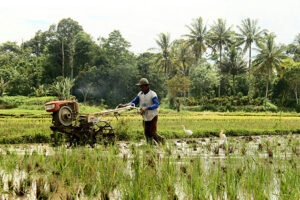
Local farmer ploughing a field in Indonesia. Credit: Unsplash

RIO DE JANEIRO, Brazil, Nov 26 2025 (IPS) – The UN climate talks at COP30 once again brought the critical issue of climate finance to the forefront of global discussions.

However, while much of the debate revolved around traditional forms of aid directed at developing countries most vulnerable to the impacts of climate change, a faster, more transformative approach lies in expanding access to carbon markets.


When emerging and developing economies (EMDEs) are equipped with the tools and knowledge needed to engage in these markets on their own terms, carbon finance can be generated and harnessed in ways that reflect their unique natural assets, governance, social contexts, and national priorities.

Achieving global climate and sustainable development goals depends on ensuring that those worst affected by climate change can fully participate in and benefit from this growing flow of finance.

EMDEs are on the frontlines of climate change — from rising sea levels threatening Pacific island nations to intensifying droughts and fires in the Amazon and Horn of Africa, and increasingly intense and frequent hurricanes in the Caribbean. These crises often hit hardest in regions that have contributed least to global emissions and in the most difficult position to react to them.

Yet, these same nations face a climate finance shortfall of $1.3 trillion per year. Carbon markets present an opportunity for these countries to bridge this gap by turning their natural advantages into climate finance assets.

Despite successful initiatives aimed at bolstering both high-integrity supply and demand for carbon credits, significant barriers to access persist, particularly for EMDEs. From fragmented policy landscapes to weak governance structures, limited institutional capacity, and low investor confidence, various obstacles prevent the vast potential of EMDEs to engage fully.

The Access Strategies Program — led by the Voluntary Carbon Markets Integrity Initiative — is a direct response to these challenges. It helps governments design and implement their own pathways into high-integrity carbon markets, enabling them to build the policies, institutional capacity, and investor confidence needed to meet their climate finance needs and transform their potential into progress.

Each country’s natural capital — from Brazil’s vast rainforest and agricultural landscapes, to the Caribbean’s blue carbon ecosystems, or Kenya’s grasslands and renewable energy potential — represents a unique competitive advantage, ready to be realised.

Simultaneously, no two countries share the same development goals or governance contexts. In some, carbon markets can drive forest conservation and biodiversity protection; while in others, they deliver the most impact by strengthening rural livelihoods or financing clean energy transitions.

The Access Strategies model recognises this uniqueness, tailoring its support to help countries use carbon finance in ways that align with their own specific economic and environmental strategies and goals.

For example, the Partnership for Agricultural Carbon (PAC) — developed with the Inter-American Institute for Cooperation on Agriculture (IICA) — is building capacity across Latin American and Caribbean agriculture ministries to participate in high-integrity carbon markets. It provides training, policy guidance, and decision-making tools that help governments and farmers identify viable carbon projects aligning with national agricultural and sustainability goals.

The collaboration has given small and medium producers a clearer route to investment, while positioning agriculture as a central player in regional climate strategies. Another example of the Access Strategies work is the recently launched Amazon Best Practices Guide, which will help Amazon state governments design and implement carbon market frameworks made specifically for their unique ecological and governance realities.

Moreover, in countries such as Kenya, Peru, and Benin, the Program has provided tailored support to develop policy and regulatory frameworks, strengthen institutional capacity, and attract responsible investment for high-priority climate mitigation projects — all in line with country-led goals.

These examples show what’s possible when governments have the tools and expertise to engage in high-integrity carbon markets on their own terms. More countries should seize this opportunity to tap into the growing flow of finance from carbon markets.

While carbon markets are not a silver bullet, they are one of the few scalable and self-sustaining tools available when grounded in integrity and tailored to each country’s needs.

Programs like Access Strategies do more than transfer technical knowledge — they build the enabling conditions for locally led action, drawing on countries’ unique ecological, social, and institutional insights to shape solutions that work in practice.

The focus of global climate action should not only be on new funding pledges, but on ensuring funding that is already available is effectively redirected for EMDEs countries to harness their own natural capital and promote social inclusion, while meeting their climate goals and reshaping their development pathway.

Building this kind of capacity is how we turn global ambition into lasting, locally owned progress, and moreover how carbon finance can become a true instrument of sustainable development.

Ana Carolina Avzaradel Szklo, Technical Director, Markets and Standards, Voluntary Carbon Markets Integrity Initiative (VCMI)

IPS UN Bureau