Taking Bangladesh to Zero-Leprosy, One New Case at a Time

Asia-Pacific, Conferences, Development & Aid, Featured, Headlines, Health, Human Rights, Labour, Poverty & SDGs, TerraViva United Nations
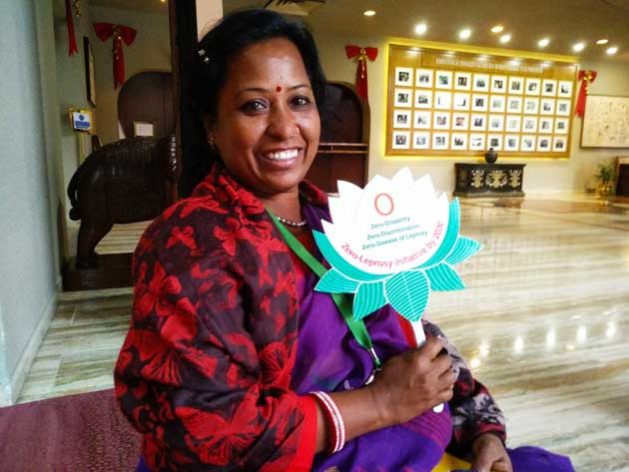
Sandhya Mandal – a community health worker working on leprosy in Meherpur district of Bangladesh. Credit: Stella Paul / IPS

DHAKA, Bangladesh, Dec 11 2019 (IPS) – Sandhya Mandal has never felt so vindicated. For the past four years, the 36-year-old community health worker from Meherpur – a rural district bordering India – has been traveling 50 km every day along dusty roads on an old motorbike, searching for leprosy patients who needed urgent treatment. But in her community, instead of compliments, neighbours and relatives raised questions about her work and her character. “They ask why I come home so late and what is this ‘work’ that I really do. Some even imply that I might be doing something like prostitution,” Mandal tells IPS.


However, Mandal – project manager at an NGO called Shalom, which works with the government to end leprosy, sat in an audience of diplomats, ministers and health experts from all over the country, listening to Sheikh Hasina – the prime minister of Bangladesh – at a national conference on leprosy. “Nobody can doubt me or my work now,” she says, proudly clutching the yellow invitation card she received from the organizers of the conference – her first to a national-level event.

Mandal has every reason to be in the conference: since 2015 she has searched and found over 300 new leprosy cases. In fact, in November this year, she found 10 new cases on a single day – the result of an intense door-to-door search in Gangni, a small town with a high rate of leprosy. “We opened our database of old patients and contacted each one of them individually. We asked them if they knew anyone around them who had leprosy. Nobody could give us any concrete information, so I went from one house to other and from morning to evening I covered 40 families,” she recalls the drill. It was hard and Mandal did not have any time to eat or drink. But by day-end, she had found eight adults and two children who had visible signs of leprosy. She arranged for all of them to visit the TB and Leprosy Clinic (TLC) in Meherpur, a facility run by the government.

Early detection in leprosy key

Early detection and early treatment are the key to complete cure for anyone affected by leprosy, tells Mujibur Rahaman – a doctor at the TLC Meherpur. “The treatment is free. We have enough medicines. But bringing the affected ones to the treatment facility remains the biggest challenge,” Rahman tells IPS. Bangladesh eliminated leprosy in 1998, but new cases continued to be detected. In 2018, 3 729 new leprosy cases were detected.

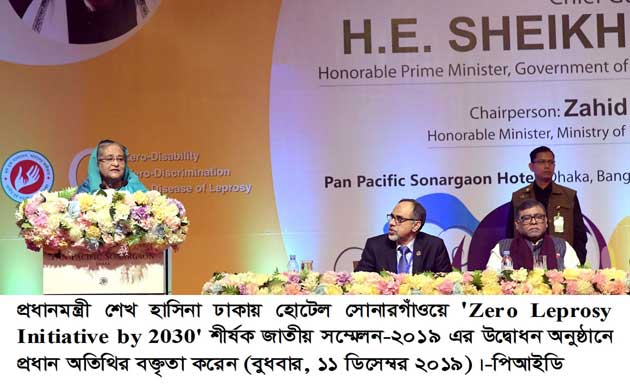
Earlier this week, in her opening speech at the national conference, Prime Minister Hasina asserted that Bangladesh was committed to become leprosy-free by 2030. According to Rahman, dedicated community workers like Sandhya Mandal are the key to realizing the zero-leprosy status.

“Identifying a new patient is one thing; convincing them to see a doctor is entirely different. It takes very different level of skills,” he adds.

Providing counseling services

Mandal throws a little light on that skill: every time she finds a villager with a suspicious white patch with numbness, she tells him that it is a skin disease that needs urgent medical attention. “I never tell him it’s leprosy because, only a doctor can declare that after a test and also, if I spoke of leprosy, it would shock the person as everyone is still afraid of the disease,” Mandal reveals.
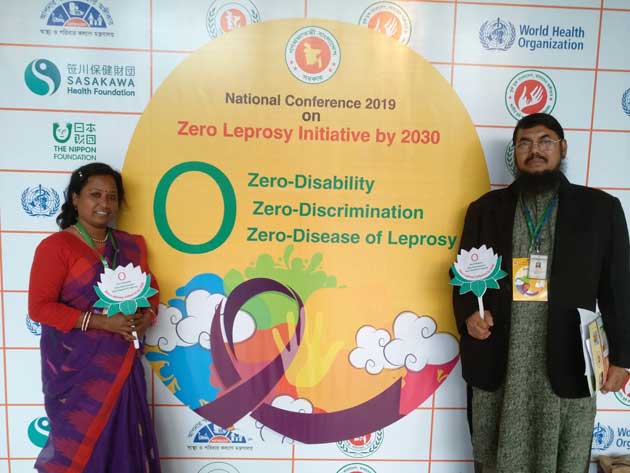
Mandal also counsels and provides emotional support to the person after a doctor has confirmed his or her leprosy. “Women are more scared than men because they feel their husbands will abandon them if they find out about their sickness. They are also scared of how their community would react. I tell them that they must tell their husbands but explain that its curable. To the neighbours, they can say it is a skin disease. I hold their hands, spend time with them. It calms them and it also makes them feel confident,” she tells IPS.

Listening to the prime minister has been an inspiring experience, Mandal says. At present there are not enough community health workers on leprosy. For example, in her own NGO, there are just two health workers. So, to achieve zero-leprosy in the next 10 years, Bangladesh would need many more community health workers, she says. Equipping the field workers at the rural NGOs with a motorbike would also help, as transportation remains a huge challenge in the villages. If these gaps are plugged, there is no reason why Bangladesh could not be leprosy-free, she says.
For those doubting her work, Mandal now has an answer: “Even the prime minister has shown an interest in leprosy, in our collective work. If anyone still doesn’t know why I work on leprosy for such long hours, they can ask the prime minister!”

The Nippon Foundation and the Sasakawa Health Foundation of Japan organized a national conference on leprosy in Dhaka on December 11 under the theme “ZeRo leprosy initiative”.

 

Bangladesh Can Be Leprosy-Free by 2030 Says Leprosy Activist

Aid, Asia-Pacific, Conferences, Headlines, Health, Multimedia, Podcast, TerraViva United Nations

Health

DHAKA, Bangladesh, Dec 11 2019 (IPS) – Despite its efforts to eliminate leprosy as a public health threat, Bangladesh’s leprosy burden ranks fourth-highest in the world. Four thousand new cases are detected annually – an average of 11 to 12 cases per day over the last 10 years.


Leprosy issues have taken centre stage at the National Conference 2019 on Zero Leprosy Initiatives by 2030 in Dhaka Bangladesh. The country’s National Leprosy Programme, in collaboration with the Nippon Foundation and Sasakawa Health Foundation in Japan believes its key that every person with leprosy has access to the right medicines, diagnosed and treated in a timely fashion.

Akthar Ali is the Project Co-ordinator of the Missionary Sisters of Mary Immaculate (with the Pontifical Institute for Foreign Missions (PIME) Sisters) in Khulna in the south of Bangladesh and believes the country can be leprosy-free by 2030.

Crystal Orderson spoke Ali on the sidelines of the National Conference in Dhaka, Bangladesh.

[embedded content]


Bangladesh Can Be Leprosy-Free Before 2030 Prime Minister Tells National Zero Leprosy Conference

Asia-Pacific, Conferences, Development & Aid, Featured, Headlines, Health, Human Rights, Poverty & SDGs, TerraViva United Nations, Women’s Health

Mr Yohei Sasakawa, chairman of the Nippon Foundation and Sasakawa Health Foundation and WHO Goodwill ambassador. Credit : Crystal Orderson / IPS

DHAKA, Bangladesh, Dec 11 2019 (IPS) – Leprosy is not a curse but should be detected and treated early, Bangladeshi Prime Minister, Sheikh Hasina, has told delegates at a gathering in her country’s capital to discuss the elimination of the disease.


“In the past, it was thought that leprosy was a curse. But it was not a curse at all. The disease is caused by bacteria (Mycobacterium Leprae). We should fight it through research,” Hasina said, adding that the discrimination against leprosy sufferers should end. She called upon all concerned to work together so that Bangladesh could be leprosy-free before 2030.

Prime Minister Hasina, who spoke in Bengali at the National Conference 2019 on Zero Leprosy Initiatives by 2030, also committed her government to proper treatment for leprosy sufferers.

To achieve these targets, the country’s National Leprosy Programme, in collaboration with the Nippon Foundation and Sasakawa Health Foundation in Japan, has worked tirelessly to convene the conference, bringing together hundreds of health workers, medical professionals and district officers to discuss the issue under the theme “Zero Leprosy Initiatives”.

Certain areas in Bangladesh are particularly leprosy-prone, including its northern region and the Chittagong Hill Tracts, Prime Minister Hasina said.

Sheikh Hasina, Prime Minister of Bangladesh.

“If we can give special focus to these areas, I do believe it would be quite possible to declare Bangladesh a leprosy-free country before 2030,” she added.

“Leprosy patients must be considered on humanitarian grounds. If we all take a little responsibility in this regard, they will get recovery from this disease … I think we can do so,” Prime Minister Hasina said.

Distribute drugs free of cost

The prime minister said many Bangladeshi pharmaceutical companies export medicines, and she called upon these companies to produce drugs for leprosy locally and distribute those among leprosy patients free of charge.

The prime minister also warned that no-one could fire leprosy patients from their jobs but rather should arrange treatment for them.

End stigma and discrimination

The Chairman of the Nippon Foundation and World Health Organization (WHO) Goodwill Ambassador for Leprosy Elimination, Yohei Sasakawa, says leprosy is not only a medical issue but also a social issue “because of the stigma and discrimination that the disease attracts”.

He said: “We have an effective cure for leprosy, and it is essential that every person with the disease has access to the cure and is diagnosed and treated in a timely fashion. With timely diagnosis and treatment, a patient can be cured without disability.

“This conference presents us with an opportunity to re-focus efforts on leprosy and aim at an ambitious target: zero leprosy by 2030,” Mr Sasakawa added.

The WHO Representative to Bangladesh, Dr Bardan Jung Rana, told delegates that leprosy has caused immense human suffering when those affected remained untreated.

“With the aim of a leprosy-free world, WHO is committed to providing technical and strategic guidance, strengthening country-level capacity and delivering interventions through appropriate technology at affordable costs,” said Dr Jung Rana.

Leprosy a treatable disease

Leprosy is a chronic infectious disease affecting mainly the skin, the peripheral nerves, the mucosa of the upper respiratory tract, and the eyes. Leprosy is curable and treatment has been available through the WHO free of charge to all patients worldwide since 1995.

The history of leprosy dates back centuries in Bangladesh. Different Christian missionary organizations used to provide leprosy services in various high endemic areas in the country. In 1965 the government sector implemented leprosy services through three public hospitals.

Eliminating leprosy in Bangladesh

Despite its efforts to eliminate leprosy as a public health threat, Bangladesh’s leprosy burden ranks fourth-highest in the world. Four thousand new cases are detected annually – an average of 11 to 12 cases per day over the last 10 years. Every year an estimated 3000 leprosy sufferers are affected by complications that require specialized treatment in hospital.

Although the the number of leprosy cases are declining, more than one-third of leprosy patients are facing the threat of permanent and progressive physical and social disability. The human suffering resulting from the physical deformities and related social problems are immense.

Activists and community workers in Bangladesh welcomed the government’s commitment to ensure proper treatment for leprosy sufferers.

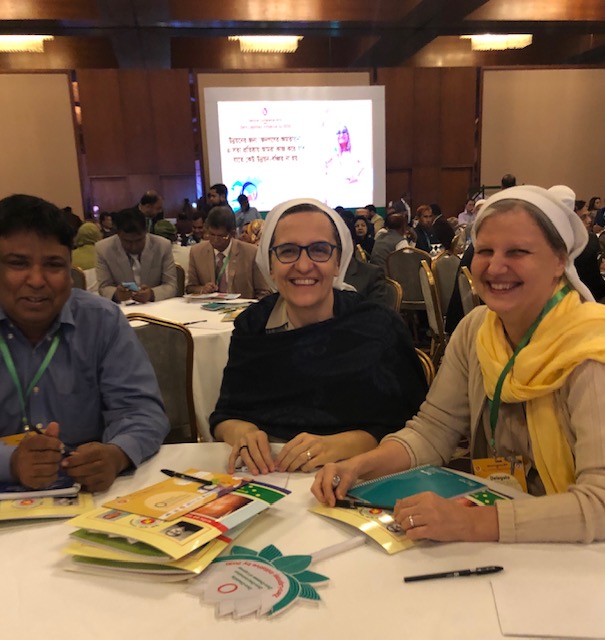
Delegates at National Conference 2019 Zero Leprosy Initiative by 2030, Dr Sr Roberta Pignone, PIME sisters (middle). Credit : Crystal Orderson / IPS

Stop pushing Leprosy in a corner

Dr Sr Roberta Pignone, Project Director of the Missionary Sisters of Mary Immaculate (with the Pontifical Institute for Foreign Missions (PIME) Sisters) in Khulna in the south of Bangladesh, told IPS: “It is good to listen to the prime minister and health officials and hear what they say they will do in the future to eliminate leprosy.” She added: “Leprosy is always pushed in a corner. It is good to hear that the government is aware of the disease. If the prime minister speaks to the nation, they will listen.”

The PIME Sisters have been working with leprosy since the mission opened its doors in 1986. “Sometimes leprosy is neglected and this conference shows that the government is committed to deal with leprosy,” says Dr Sr Pignone. “It is time to accept that leprosy is in the country and to deal with the situation.”

The Nippon Foundation and the Sasakawa Health Foundation of Japan organized a national conference on leprosy in Dhaka on December 11 under the theme “ZeRo leprosy initiative”.
 

Social Summit Demands Stronger Commitments in Climate Talks

Civil Society, Climate Change, Conferences, Development & Aid, Economy & Trade, Editors’ Choice, Environment, Featured, Global, Global Governance, Globalisation, Green Economy, Headlines, Human Rights, Indigenous Rights, IPS UN: Inside the Glasshouse, Poverty & SDGs, Regional Categories

Climate Change

One of the continuous protests staged at the Social Summit for Climate Action, meeting Dec. 7-13 parallel to the official 25th Conference of the Parties (COP25) on climate change. The Summit, hosted by the Complutense University of Madrid, is tackling issues such as the controversial trading of carbon credits, human rights in the climate struggle and opposition to the growing production of hydrocarbons. Credit: Emilio Godoy/IPS

One of the continuous protests staged at the Social Summit for Climate Action, meeting Dec. 7-13 parallel to the official 25th Conference of the Parties (COP25) on climate change. The Summit, hosted by the Complutense University of Madrid, is tackling issues such as the controversial trading of carbon credits, human rights in the climate struggle and opposition to the growing production of hydrocarbons. Credit: Emilio Godoy/IPS

MADRID, Dec 9 2019 (IPS) – As the COP25 deliberations enter the decisive final week, representatives of environmental and social organisations gathered in a parallel summit are pressing the governments to adopt stronger commitments in the face of a worsening climate emergency.


In the debates in the week-long Social Summit for Climate Action, which began Dec. 7 parallel to the Dec. 2-13 United Nations 25th Conference of the Parties (COP25) on climate change taking place in Madrid, skepticism has been expressed with respect to the results to come out of the official meeting.

“Nothing good is going to come out of it for Central America, only proposals that are going to make it more vulnerable. The damage is going to become more serious,” Carolina Amaya, representative of the Salvadoran Ecological Unit, told IPS, pointing out that the region is one of the most exposed to the climate crisis, facing persistent droughts, intense storms, rising sea levels and climate migrants.

The social summit is taking place at the public Complutense University, in the west of the Spanish capital, about 15 km from the IFEMA fairgrounds which are hosting COP25 after Chile pulled out on Oct. 30 from holding the event due to massive anti-government protests and social unrest.

The alternative activities, which also end on Friday Dec. 13, include a varied menu of issues, such as free trade and its socioenvironmental impacts, oil drilling in indigenous territories, the protection of forests, and opposition to trading reductions in greenhouse gas (GHG) emissions, which cause global warming.

They are also discussing the monetisation of environmental services, increased funding for the most vulnerable nations, climate justice and attacks against land rights activists.

The Madrid Social Summit is also holding sessions in Santiago de Chile, under the same slogan, “Beyond COP25: People for Climate”, although there are fewer representatives of organised civil society than at previous COPs because of the last minute change of venue.

Civil society groups are also organising activities at their green pavilion within the official COP25 compound of the United Nations Framework Convention on Climate Change (UNFCCC), where their participation is more formal and ceremonious.

The demands of civil society gained visibility thanks to the mass demonstration held in Madrid on Friday Dec. 6, with the participation of Swedish activist Greta Thunberg, the reluctant star of the official conference and social summit.

COP25 is the third consecutive COP held in Europe, this time under the motto “Time to act”.

The deliberations, which enter the crucial phase of the adoption of agreements Tuesday Dec. 10, are focusing on financing national climate policies, rules for emission reduction markets, and the preparation of the update of emissions reductions and funding of the Warsaw International Mechanism for Loss and Damage, designed to assist regions particularly affected by climate change.

COP25 is the climate summit that directly precedes the 2020 entrance into effect of the historic Paris Agreement on climate change, adopted in the French capital in 2015, which left key areas to be hashed out at the current conference, such as the controversial emissions market.

In their statement to the COP, the organisations criticise the economic model based on the extraction of natural resources and mass consumption, blaming it for the climate crisis, and complaining about the lack of results in the UNFCCC meetings.

“The scientific diagnosis is clear regarding the seriousness and urgency of the moment. Economic growth happens at the expense of the most vulnerable people,” says the statement, which defends climate justice “as the backbone of the social fights of our time” and “the broadest umbrella that exists to protect all the diversity of struggles for another possible world.”

At the social summit, the first “Latin American Climate Manifesto was presented on Monday Dec. 9, which lashes out at carbon credit trading, the role of corporations in climate change and the increase in production of hydrocarbons, while expressing support for the growth of agroecology, the defence of human rights and the demand for climate justice.

In addition, indigenous peoples are holding their own meeting, the “indigenous Minga“, with the message “Traditional knowledge at the service of humanity in the face of climate change.” They are demanding respect for their rights, participation in the negotiations and recognition of their role as guardians of ecosystems such as forests.

“We are here to raise our voices and offer our contribution to fight” against the climate emergency, Jozileia Kaingang, a chief of the Kaingang people and a representative of the non-governmental Articulation of the Indigenous Peoples of Brazil, told IPS.

Brazilian indigenous groups are in conflict with the government of far-right President Jair Bolsonaro because of its attempts to undermine their rights and encourage the commercial exploitation of their territories. In fact, the Brazilian government delegation does not include a single indigenous member – unprecedented in the recent history of the COPs.

Faced with this dispute and the critical situation of the Amazon jungle, Brazil’s indigenous people have sent representatives to Madrid to speak out and seek solidarity.

The murder of two leaders of the Guajajara people in northeastern Brazil on Saturday Dec. 7 shook the indigenous delegation. Two murders had already occurred in that native community in the last two months.

In 2017, the States Parties to the UNFCCC adopted at COP23 the Local Communities and Indigenous Peoples Platform for the exchange of experiences and best practices, thereby ensuring the participation of these groups in the negotiations of the convention.

The Platform’s facilitative working group, composed of delegates from seven States Parties and seven indigenous peoples, is currently developing its plan for the period 2020-2021.

Martín Vilela, a representative of the Bolivian Platform for Climate Change umbrella group of local organisations, questioned the effectiveness of the climate summits.

“The agreements are only paper. Emissions continue to rise and countries’ voluntary targets are insufficient. The countries have to be more ambitious if they really want to avoid major disasters,” he told IPS.

Social organizations fear that the Paris Agreement, when it replaces the Kyoto Protocol next year, will be stillborn, because countries are failing to keep their promises, even though scientists are warning that the goal of limiting global warming to 1.5 degrees Celsius is insufficient.

The Agreement sets mandatory emission reduction targets for industrialised countries and voluntary targets for developing countries in the South.

“The countries need to know that we’re monitoring them. We, the organisations, must prepare ourselves to demand better action,” said Amaya from El Salvador.

For her part, Brazil’s Kaingang argued that the climate struggle would only be effective if it includes indigenous peoples.

COP26 will be hosted by Glasgow, Scotland in November 2020, after pre-conference meetings in Germany and Italy.

This article was supported by the COP25 Latin American Journalistic Coverage Programme.


Indigenous Knowledge, a Lesson for a Sustainable Food Future

Biodiversity, Climate Change, Conferences, Development & Aid, Economy & Trade, Environment, Featured, Food & Agriculture, Food Sustainability, Global, Headlines, Health, Indigenous Rights, Poverty & SDGs, TerraViva United Nations, Trade & Investment

BCFN Yes winner Geraldin Lengai is researching bio-integrated crop management among tomato farmers in Tanzania. Credit: Busani Bafana / IPS

MILAN, Italy, Dec 4 2019 (IPS) – Local knowledge systems rooted in traditional practices and culture passed down generations provide sustainable solutions to food and nutritional insecurity on the back of climate change, a conference heard this week.


More than 370 million indigenous people, living in 70 countries, make up just 6 percent of the global population, according to the United Nations. But their food systems are models of diet diversity, innovation, conservation and local adaptability the world can benefit from in the face of risks such as climate change, delegates at the 10th Forum on Food and Nutrition convened by the Barilla Centre heard.

Speaking at a panel session on Preserving Mother Earth, Food Culture, Local Traditions and Biodiversity, Mattia Prayer Galletti, lead technical specialist on indigenous peoples and tribal issues at IFAD, said indigenous peoples have a connection with nature. They understand the concept of sustainability and the protection of natural resources.

IFAD has promoted an Indigenous People’s Forum to foster dialogue and consultant among indigenous people organisations and IFAD member countries. Through this Forum, IFAD has supported the economic empowerment of indigenous people, particularly women and the youth. IFAD has also contributed to the improvement in livelihoods of indigenous peoples through the Indigenous Peoples Assistance Facility which has provided small grants of up to US$50 000 for development projects.

He said indigenous food systems provide food security and biodiversity because indigenous communities have cultivated resilient foods, making them ideal in adapting to climate change. This despite the growing threats indigenous communities have faced, including marginalisation, loss of their ancestral lands and the destruction of their way of life.

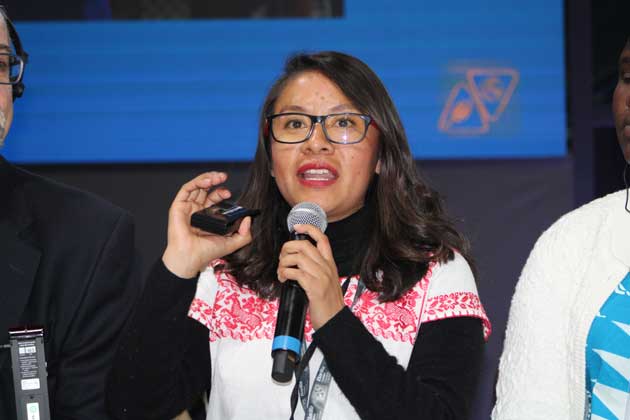
Dali Nolasco Cruz, an advisory board member of the Indigenous Terra Madre (ITM) from Mexico. Credit: Busani Bafana / IPS

Dali Nolasco Cruz, an advisory board member of the Indigenous Terra Madre (ITM) from Mexico, concurred saying indigenous people are being criminalised and killed by big powers that are extracting natural resources in their lands.

“We need alliances, we need to fight for Mother Earth,” Cruz said, “We need to transform our livelihoods by protecting the Earth to help others.”

Indigenous Innovations for food security

Indigenous knowledge provides innovations researchers are convinced can provide models for promoting resilience in our current food systems. Several researchers shared their on-going work on this.

Martina Occelli, a PhD student at the Santa Anna School of Advanced Studies in Pisa, is undertaking multidisciplinary research on how smallholder farmer’s collective knowledge is shaping soil productivity in the Gera Gera region of Ethiopia among 300 smallholder farmers. The research has shown that collective knowledge within and between households which farmers learnt from their fathers was relevant in determining the soil ability, which is critical in food production and resilience.

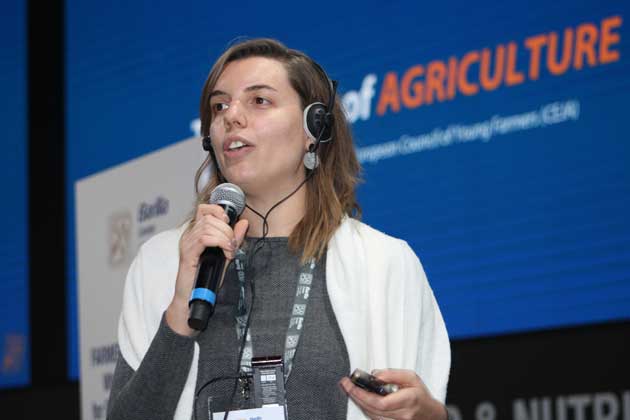
Martina Occelli speaks at the 10th International Forum on Food and Nutrition. Credit: Busani Bafana / IPS

Occelli is a winner of 2018 BCFN Yes international multidisciplinary contest launched by the BCFN Foundation in 2012 to support research on promoting the intersection of food sustainability and environmental sustainability.

Geraldin Lengai, another BCFN Yes winner, is researching on enhancing sustainable agriculture through the adoption of bio-integrated crop management among tomato farmers in Tanzania comparing conventional and non-conventional farming methods. Her research expects to provide insights into the use of organic pesticide properties of ginger and turmeric – cash crops grown by farmers in Tanzania – in fighting pests and diseases in vegetables. Also, she has researched the efficacy of organic fertilisers such as goat manure and chicken manure on the productivity of the spice coriander and amaranthus, a plant cultivated as a vegetable.

“Sustainable agriculture is important because you need a doctor once in a while, but you need the farmer at least three times a day,” Lengai told IPS. “I believe people should have access to food that is safe and healthy. How we produce the food, process it and how the food reaches the end consumer is the business of sustainable agriculture, and my research is on crop protection because people use crop protection synthetically yet there are alternatives that nature has provides. Before synthetic pesticides, our forefathers used tobacco to control insects, and if we can look at other plants that have the same capacity, we can promote sustainable agriculture.”

Lengai said the benefits of manure has in producing vegetables and the near to zero cost for farmers who keep animals means farmers have a sustainable fertiliser for organic produce which is attractive for global markets. Citing the case of pesticides with the Kenya market for French beans, Lengai said organic produce had secured international markets which have traceability systems in place.

“Growing organic vegetables and using organic pesticides and fertilisers is a win-win for everybody for the environment, for the farmer for the consumer,” said Lengai. She added that synthetic pesticides are favoured because they are easy to apply and cheaper – but come at a cost to the environment and health.


Fixing the Business of Food

Conferences, Development & Aid, Economy & Trade, Environment, Featured, Food & Agriculture, Food Sustainability, Global, Headlines, Health, Poverty & SDGs, TerraViva United Nations, Trade & Investment

Delegates grappled with getting the business of food right. Credit: Busani Bafana / IPS

MILAN, Italy, Dec 4 2019 (IPS) – Milan is the city where Leonardo da Vinci painted his iconic Last Supper. Frozen in time is the moment Christ told his disciples there was a traitor among them. Visitors to the painting can examine the expressions on the faces of the disciples and look the food they might have eaten – the bread and wine, and of course the spilt salt. As one delegate to the 10th International Forum on Food and Nutrition noted, the diet did not seem varied or healthy.


Several centuries later, with the spotlight firmly on the state of our planet, global warming, delegates grappled solutions for producing and consuming food, nutrition and the state of the earth. Taking centre stage was the question of the roles, activists, workers, businesses and leadership play in the food cycle.

Mario Monti, Senator for Life of the Italian Republic; articulated the challenge succinctly. The forum with the theme Fostering Business and Innovation while preserving Mother Earth he said, provided a “beautiful challenge” dedicated to securing food for people to inhabit the planet.

Ertharin Cousin, from the Chicago Council on Global Affairs, referred to a conundrum that while in the United States 1450 deals were signed across 1000 agri-food tech start-ups none of the businesses focused on addressing the challenges of low-income people.

It was clear from the presentation by Jeremy Oppenheim, Founder and Managing Partner, SYSTEMIQ the food system’s hidden costs amounting to $12 trillion, including food subsidies – that the food system is dysfunctional.

Many speakers alluded to resolving the conundrum involving complex interplays between activism; innovative business practice and digital innovation, financing and political commitment.

Changing the culture of business and financing of companies was considered a major consideration which needed change to fix the food system.

Ben Valk, Lead Food and Agriculture Benchmark, commented that, for example, there were solutions which reduce the pressure on land and therefore on deforestation.

“First things we should do is to start to implement those solutions,” he said, but added that it astonishing to that so little money was allocated towards the Sustainable Development Goals. Change was needed and money allocated to sport for, example, should be reduced to ensure the SDGs were achieved.

Charlotte Ersbøll, representing the United Nations Global Compact, commented that businesses should be aware that employees were committed to sustainable practices. She referred to a study done in the US where half of all the staff would accept a salary cut if they were if they could work for a more climate-friendly company. “And if you look at the millennials, it would be two thirds. And, and all of them were frustrated that they really didn’t see the companies following through and really taking the lead.”

Oppenheim concluded his presentation with a note of caution. People at the conference were the converted, people already finding and looking at solutions to food and nutrition.

“What we need to do is to take this room and have thousands of rooms of like this … The real opportunity is to take this agenda to seize it with both hands to translate it into massive business opportunities.”