The Top Climate Leaders Are Now in The Global South

Biodiversity, Climate Action, Climate Change, Conferences, COP30, Development & Aid, Economy & Trade, Energy, Environment, Global, Green Economy, Headlines, Labour, Natural Resources, TerraViva United Nations

Opinion


As climate leaders gather in the Amazon, the world’s green transformation is speaking with a southern accent—powered by markets, technology, and a new economic logic.

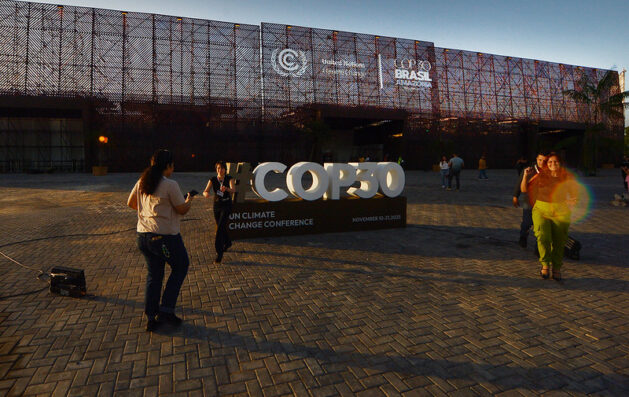
Belém—30th Conference of the Parties (COP30). Credit: Antônio Scorza/COP30

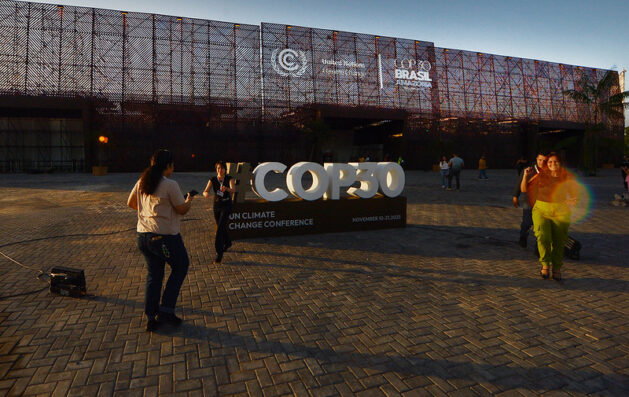
Belém—30th Conference of the Parties (COP30). Credit: Antônio Scorza/COP30

OSLO, Norway, Nov 11 2025 (IPS) – When world leaders now gather in Belém, Brazil for the UN climate conference, expectations will be modest. Few believe the meeting will produce any breakthroughs. The United States is retreating from climate engagement. Europe is distracted. The UN is struggling to keep relevant in the 21st century.


But step outside the negotiation tents, and a different story unfolds—one of quiet revolutions, technological leaps, and a new geography of leadership. The green transformation of the world is no longer being designed in Western capitals. It is being built, at scale, in the Global South.

Ten years ago, anyone seeking inspiration on climate policy went to Brussels, Berlin or Paris. Today, you go to Beijing, Delhi or Jakarta. The center of gravity has shifted. China and India are now the twin engines of the global green economy, with Brazil, Vietnam and Indonesia closely behind.

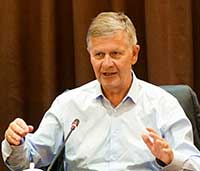
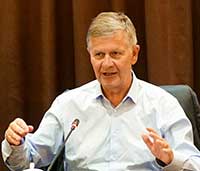
Erik Solheim

This is not about rhetoric; it is about results. China accounts for roughly 60 percent of global capacity in solar, wind, and hydropower manufacturing. It dominates in electric vehicles, batteries, and high-speed rail. China’s 93 GW installation of solar in May 2025 is a historic high and exceeds the monthly or short‐term installation levels of any other country to date.

China has made the green transition its biggest business opportunity, turning green action into jobs, prosperity and global leadership. China is now making more money from exporting green technology than America makes from exporting fossil fuels.

India, too, is reshaping what green development looks like. I was in Andhra Pradesh last month, when I visited a wonderful six-gigawatt integrated energy park—solar, wind, and pumped storage. It delivers round-the-clock clean power. There is nothing like that in the West. In another state, Tamil Nadu, an ecotourism circuit is protecting mangroves and marine ecosystems while creating local jobs in tourism. The western state of Gujarat, long a laboratory for industrial innovation, has committed to 100 gigawatts of renewables by 2030, with the captains of Indian business – Adani and Reliance – driving large-scale solar and wind investments with the state government.

These are not pilot projects. They are national strategies. And they are succeeding because the economics have flipped.

The cost of solar power has fallen by over 90 percent in the last decade, largely thanks to the intense competition between Chinese solar companies. Battery storage is now competitive with fossil fuels. What was once an environmental aspiration has become a financial inevitability. In Indian Gujarat, solar-plus-storage projects are already cheaper than coal. Switching to clean energy is no longer a cost—it is a saving.

That is why climate action today is driven not by diplomacy, but by economics. The question is no longer if countries will go green, but who will own the technologies and industries that make it possible.

Europe, long the moral voice of the climate agenda, now risks losing the industrial race. After years of blocking imports from developing countries on grounds of “inferior” green quality, it now complains that Chinese electric vehicles are too good— too cheap and too efficient. Europe cannot have it both ways. The world cannot build a green transition behind protectionist walls. The markets must open to the best technologies, wherever they are made.

President Luiz Inácio Lula da Silva of Brazil understands this new reality. That is why he chose Belém, deep in the Amazon, as the site for climate talks. The location itself is a statement: the future of climate policy lies in protecting the rainforests and empowering the people who live within them.

Forests are not just carbon sinks; they are living economies. When I was Norway’s environment minister, we partnered with Brazil and Indonesia to reward them for reducing deforestation. Later, Guyana joined our effort—a small South American nation where nearly the entire population is of Indian or African origin.

Guyana has since turned conservation into currency. Under its jurisdictional REDD+ programme, the country now sells verified carbon credits through the global aviation market known as CORSIA. In the third quarter of this year, these credits traded at USD 22.55 per tonne of CO₂ equivalent, with around one million credits sold through a procurement event led by IATA and Mercuria.

The proceeds go directly to forest communities—building schools, improving digital access, and funding small enterprises. It is proof that the carbon market can deliver real value when tied to real lives. You cannot protect nature against the will of local people. You can only protect it with them. Last year in Guyana, I watched children play soccer and cricket beneath the jungle canopy—a glimpse of life thriving in harmony with the forest, not at its expense.

That, ultimately, is what Belém should represent: not another round of procedural debates, but a vision for linking markets, nature and livelihoods.

The Global South has also sidestepped one of the West’s greatest political failures: climate denial. In India, there is no major political party—or public figure, cricket star or Bollywood artist—questioning the reality of climate change. Leaders may differ on ideology, but not on this. Across Asia, from China to Indonesia, climate action unites rather than divides. Because here, ecology and economy move together.

Prime Minister Narendra Modi of India puts it simply: by going green, we also go prosperous. President Xi Jinping of China and President Lula of Brazil share that same message—a vision that draws people in, instead of lecturing them. It is this integration of growth and sustainability that explains why the Global South is moving faster than most of the developed world.

None of this means diplomacy is irrelevant. The UN still matters. But its institutions must evolve to reflect the realities of the 21st century. The Security Council, frozen in 1945, still excludes India and Africa from permanent membership. Without reform, multilateralism risks losing its meaning.

Yet, while negotiations stall, transformation continues. From solar parks in Gujarat to high-speed rail across China, from mangrove tourism in Tamil Nadu to carbon markets in Guyana—climate leadership is happening in real economies, not in press releases.

Belém will not deliver a grand agreement. But it doesn’t need to. The world is already moving—faster than our diplomats.

The story of Belem will not be written in communiqués, but in kilowatts, credits, and communities.

The real climate leaders are no longer in Washington or Brussels.

They are in Beijing, Delhi, São Paulo, and Georgetown.

The future of climate action is already here.

It just speaks with a southern accent.

The author is the former Executive Director of the United Nations Environment Programme and Norway’s Minister for Environment and International Development.

IPS UN Bureau


The Silent War Before COP30: How Corporations Are Weaponising the Law to Muzzle Climate Defenders

Active Citizens, Civil Society, Climate Action, Climate Change, Climate Change Justice, Conferences, COP30, Crime & Justice, Development & Aid, Economy & Trade, Energy, Environment, Freedom of Expression, Global, Headlines, Indigenous Rights, Latin America & the Caribbean, Press Freedom, TerraViva United Nations

Opinion

Family agriculture and land defenders in Colombia. Credit: Both Nomads/Forus

BELÉM, Brazil, Nov 10 2025 (IPS) – As the world prepares for the next COP30 summit, a quieter battle is raging in courtrooms. Strategic Lawsuits Against Public Participation (SLAPPs) are the fossil-fuel industry’s new favourite weapon, turning justice systems into instruments of intimidation.


“Speak out, and you’ll pay for it”

On a humid morning in August 2025, two small environmental groups in Panama — Centro de Incidencia Ambiental and Adopta Bosque Panamá — found out through social media that they were being sued for “slander” and “crimes against the national economy.” Their offence? Criticising a port project on the country’s Pacific coast.

A few days later, across the border in Costa Rica, two environmental content creators woke up to find their bank accounts frozen and salaries withheld. Their “crime” was posting videos about a tourism project they said was damaging Playa Panamá’s fragile coastline.

In both cases, the message was straightforward: speak out, and you’ll pay for it.

These are part of a growing global trend that is particularly ominous as climate activists, Indigenous defenders, and journalists push their demands upon the upcoming COP30 negotiations. The battle to protect the planet increasingly comes with an additional cost: defending yourself in court.

SLAPPs: Lawsuits Designed to Scare, Not Win

The acronym sounds almost trivial — SLAPP — but its impact is anything but. SLAPP stands for Strategic Lawsuits Against Public Participation, a term coined decades ago to describe legal actions intended not to win on merit but to intimidate, exhaust, and silence those who speak out on matters of public interest.

According to Transparency International, “SLAPPs are also known as frivolous lawsuits or gag lawsuits, as they silence journalists, activists, whistleblowers, NGOs and anyone who brings facts to light in the public interest.”

These are not just lawsuits; they are in fact strategy. They don’t need to win, they just need to drain your time, your money, and your hope.

The claimants are usually powerful, ranging from corporations, politicians, or investors.

In the Costa Rican case, the company linked to the Playa Panama tourism project did not even allege material harm. Yet the court imposed “precautionary embargoes,” blocking credit cards, freezing wages, even restricting property rights, punishing through the process.

In Panama, the developers of the Puerto Barú port project filed a criminal complaint against environmental NGOs who had challenged the project’s environmental impact assessment before the Supreme Court. Those challenges are still pending. Rather than waiting for the judiciary’s ruling, the company launched a separate legal attack, accusing those NGOs of harming the national economy.

Observers call it “judicial intimidation.” The case triggered several alerts across the EU SEE Early Warning Mechanism, warning of a “chilling effect on civic participation.”

‘Unfortunately, in Panama, judicial harassment of journalists and activists by politicians and businesspeople is already common practice because criminal law allows it. Reform is needed in relation to so-called crimes against honour and the grounds for seizure of assets. International organisations such as the Inter-American Press Association have warned about this,’ says Olga de Obaldía, executive director of Transparency International – Panama Chapter, a national member of the EU SEE network.

In Costa Rica, the embargoes imposed on content creators Juan Bautista Alfaro and Javier Adelfang sparked outrage. Within days, 72 organisations and more than 3,000 individuals — from academics to Indigenous leaders — signed an open letter condemning the action as “an assault on public interest advocacy.”

The backlash worked: members of the Frente Amplio Party introduced a bill to restrict the use of preventive embargoes in cases involving public interest speech.

But for those already targeted, the damage – emotional, financial and reputational – has already been done.

We do not just see SLAPPs deployed in Latin America. Examples of SLAPPs as a means of lawfare by the rich and powerful have been around for a long time across the globe.

In Thailand, Thammakaset sued several members of the NGO Fortify Rights and other activists for denouncing abusive working conditions. Still today content posted by communities or NGOs, or even comments under local government posts, are often picked up and turned into criminal defamation cases.

Despite the existence of anti-SLAPP provisions in the Criminal Procedure Code, experiences indicate that they are largely ineffective. The constant threat of facing litigation based on online content disrupts CSO work and chills free speech.

Climate Activism Under Pressure

As the world heads toward another global climate summit in Brazil – where journalist Amanda Miranda faces a SLAPP by government officials for uncovering corruption – we face a paradox: while governments make promises about protecting the environment, environmental defenders are being prosecuted for holding them accountable.

Brazil’s baseline snapshot on an enabling environment also highlights a related trend: environmental defenders are frequently framed as “anti-development,” a narrative used to delegitimise their work and undermine public support. SLAPPs reinforce this strategy. Beyond draining time and resources, these lawsuits inflict reputational harm, serving as tools in broader campaigns to discredit and silence critics.

According to research from the Business & Human Rights Resource Centre, the highest number of SLAPPs – almost half of them – took place in Latin America, followed by Asia and the Pacific (25%), Europe & Central Asia (18%), Africa (8.5%), and North America (9%). Nearly three-quarters of cases were brought in countries in the Global South and 63% of cases involved criminal charges. Furthermore, most individuals and groups facing SLAPPs raised concerns about projects in four sectors: mining, agriculture and livestock, logging and lumber, and finally palm oil.

In an International Center for Non-Profit law – ICNL – study on over 80 cases of SLAPPs across the Global South, out of them “91% were brought by private companies or company officials(…) 41% brought by mining companies and (…) 34% brought by companies associated with agriculture.”

According to data from the CASE Coalition, SLAPP cases have risen sharply in recent years: from 570 cases in 2022 to over 820 in 2023 in Europe alone. Around half of those targeted climate, land, and labor rights defenders. Fossil fuel and extractive industries remain the most frequent initiators.

It is important to remember that those numbers under-represent the extent of SLAPP use, they are based on reported legal cases and can’t include the many cases in which the mere threat of a lawsuit was enough to silence before filing a complaint

The Business & Human Rights Resource Centre has documented that companies linked to mining, tourism, and large infrastructure projects are increasingly using SLAPPs to paralyse critics ahead of international events like COP, when scrutiny intensifies.

The danger of SLAPPs lies in their quietness. They happen behind closed doors, in legal language, far from the marches and hashtags. The trials often do not even end up in lawsuits. Yet their effect is profound. Every frozen bank account, every unpaid legal fee, every public apology extracted under duress weakens the collective courage needed to hold power to account.

Across regions, SLAPPs follow the same playbook: identify outspoken defenders, sue them on vague charges like “defamation” or “economic harm”, drag the process out for years, win by exhausting, not convincing.

Of course, the specific tactics vary by legal context. In some countries, certain charges carry strategic advantages. For example, in the Philippines, authorities frequently rely on serious, non-bailable allegations — including charges like illegal possession of firearms — to keep activists detained for extended periods.

The Philippines remains the most dangerous country in Asia for land and environmental defenders with frequent attacks linked to mining, agribusiness, and water projects.

Political repression persists and civil society groups continue to face “red-tagging” and SLAPPs, further enabled by the passage of the Anti-Terrorism Act, the Anti-Money Laundering Act of 2001, and the Terrorism Financing Prevention and Suppression Act of 2012.

Authorities have also used fabricated firearms and explosives charges to target activists, journalists, and community leaders, often accompanied by asset freezes, surveillance, and prolonged detention. In these settings, SLAPPs can “weaponise” the criminal justice system itself to remove critics from public life entirely.

SLAPPs have become the invisible front of the climate struggle, a slow-motion suppression campaign that rarely makes headlines.

Tactics to Fight Back

In early 2024, the European Union adopted its first-ever Anti-SLAPP Directive, a milestone achievement after years of campaigning by journalists and civil society. It sets out minimum standards to prevent abusive lawsuits and protect public participation.

But implementation remains uncertain. The Vice-President of the European Commission, Vera Jourova, called the Directive “Daphne’s law,” in memory of the Maltese journalist Daphne Caruana Galizia, who was killed in 2017 while she was the victim of numerous legal proceedings against her, and whose tragic story helped raise awareness of the issue.

Beyond the European context, similar efforts to counter SLAPPs have emerged elsewhere, for example in Colombia with the Guerra v. Ruiz-Navarro case. This case illustrates the importance of investigating sexual violence and abuse of power, recognising it as a matter of public interest that warrants protection. This ruling sets a strong precedent against the misuse of courts to silence the press by influential figures and underscores that defending victims and informing the public are acts of defending human rights.

In Indonesia, another country where SLAPPs are being deployed, civil society groups continue to advocate for stronger legal protections, including legislation to protect from SLAPPs. A small step forward came in September 2024, when the Ministry of Environment and Forestry issued Regulation No. 10/2024, on legal protection for environmental defenders.

“While the Ministry of Environment and Forestry Regulation No. 10/2024 represents an initial step toward safeguarding environmental defenders, civil society organisations expect its effective implementation, coupled with broader anti-SLAPP legislation, to ensure comprehensive protection against retaliatory lawsuits and foster a secure environment for public participation in environmental governance,” says Intan Kusumaning Tiyas of INFID, national civil society platform in Indonesia.

Civil society groups are calling for action on immediate priorities.

These include stronger legal safeguards by enacting robust national anti-SLAPP laws that allow for early case dismissal, ensure defendants can recover legal costs, and penalise those who file abusive lawsuits.

Setting up solidarity and support through regional and global networks can quickly mobilise legal assistance, mental health support, and emergency funding for those targeted.

Finally, actions around visibility and accountability are needed to bring SLAPPs into the public eye and raise awareness. SLAPPs need to be framed not as ordinary legal conflicts, but as violations of human rights that weaken an enabling environment for civil society, democratic participation and obstruct climate justice.

At COP30, negotiators will debate carbon credits and transition funds. But the real test of climate commitment may lie in whether states protect the people defending rivers, forests, and coastlines from powerful interests.

Civil society hopes to push a bold message into COP30 discussions: defending the environment requires defending those who defend it and supporting an enabling environment for civil society.

This article was written with the support of the Forus team, particularly Lena Muhs, and members of the EU SEE network.

IPS UN Bureau


Rajagopal PV’s Blueprint for Another World: Peace

Active Citizens, Africa, Asia-Pacific, Civil Society, Conferences, Editors’ Choice, Featured, Global, Headlines, Human Rights, Humanitarian Emergencies, Peace, Population, Sustainable Development Goals, TerraViva United Nations

Peace

Rajagopal P.V. at the International Civil Society Week (ICSW2025) in Bangkok. Credit: Zofeen Ebrahim/IPS

Rajagopal P.V. at the International Civil Society Week (ICSW2025) in Bangkok. Credit: Zofeen Ebrahim/IPS

BANGKOK, Nov 4 2025 (IPS) – “If nations can have defense ministries, why not peace ministries?” asks Rajagopal PV, the soft-spoken yet formidable founder of Ekta Parishad. “We are told to see issues through a gender lens—why not a peace lens? Why can’t we imagine a business model rooted in non-violence or an education system that teaches peace?”


Founded in 1989, Ekta Parishad—literally Forum for Unity—is a vast people’s movement of more than 250,000 landless poor, now recognized as one of India’s largest and most disciplined grassroots forces for justice.

To Rajagopal, these aren’t utopian dreams—they’re blueprints for a possible world.

Over the decades, Ekta Parishad has secured land rights for nearly half a million families, trained over 10,000 grassroots leaders, protected forests and water bodies, and helped shape key land reform laws and policies in India.

All this has been achieved not through anger, but through disciplined, nonviolent marches that stretch across hundreds of kilometers. Along the way, many leaders have walked beside him—among them, the current Prime Minister of Armenia.

In an age marked by deep disorder—where wealth concentrates in few hands, poverty spreads, and the planet itself trembles under human greed—the 77-year-old Gandhian remains unshaken in his belief that peace alone can redeem humanity.

“We must rescue peace from the clutches of poverty and all its evils,” he told IPS on the sidelines of the International Civil Society Week, standing on the football ground of Bangkok’s Thammasat University.

“And it can be done,” he insists—and his life is proof. In 1969, the centenary year of Mahatma Gandhi’s birth, the Government of India launched a unique exhibition on wheels, a ten-coach train carrying Gandhi’s life and message across the nation. Rajagopal was part of the team that curated and travelled with it.

“For an entire year, we journeyed from state to state. Thousands of schoolchildren would gather at railway platforms, their faces lit with curiosity, waiting to meet Gandhi through our displays,” he recalls.

Yet somewhere along those long railway tracks, Rajagopal began to feel that displaying Gandhi’s ideals wasn’t enough. “The exhibition was beautiful,” he says, “but what was the use of preaching non-violence if we couldn’t live it, breathe it, and bring it to life?”

That realization led him to one of the most daring experiments in peacebuilding India had ever seen—negotiating with the feared bandits of the Chambal valley. “It was 1970,” he recalls. “We moved cautiously, first meeting villagers on the periphery to build trust. Once we had their confidence, we sent word to the dacoits: we wanted to talk. With the government’s consent, we ventured into what we called a ‘peace zone’—often by night, walking for hours through deep ravines—to meet men the world only knew as outlaws.”

The dialogues continued for four years. Eventually, as many as 570 bandits laid down their arms before a photograph of Mahatma Gandhi—a sight India had never seen before. The government, in turn, promised they would not face the death penalty and would receive land and livestock to rebuild their lives. Rehabilitation took another four painstaking years, but it was a victory of conscience over fear.

“They didn’t just surrender their weapons—they surrendered their anger,” Rajagopal says quietly. “There was real repentance, and that takes time—but it lasts.” His commitment came at a cost. At his ashram—a spiritual retreat he had founded—he was threatened, beaten, and ordered to abandon his peace efforts. He talked them through to accepting his presence.

“Today that same region is heaven,” he smiles, his eyes crinkling with memory. “Fifty years ago, people trembled at sunset—terrified of the bandits. Today, you can travel at 2:00 pm in the night, where fear ruled once.”

The mass surrender may have looked like a triumph for the state, but Rajagopal urges people to look deeper. “It’s the invisible violence—poverty, injustice, and oppression—that breeds the visible one: dacoities, kidnappings, and killings,” he explains.

Though Rajagopal and his companions had ended one form of violence, the deeper, quieter kind—born of poverty and neglect—still festered. Until that was confronted, he knew, peace would remain incomplete.

Years of working alongside the poor had taught him one truth: non-violence needs structure. If India’s Indigenous and landless communities were to be heard, they had to be organized.

“We began training young people from dozens of villages,” he says. “They went door to door, teaching others not only about their rights—especially the right to land—but also how to claim them peacefully.”

With that foundation, a five-year plan took shape. Each village home chose one member to take part. Every day, the family set aside one rupee and a fistful of rice—a humble but powerful act of commitment.

They even created a “playbook” of possible scenarios—how to stay calm under provocation, how to respond to setbacks, and how to practice non-violence in thought and action. “In one of our marches, a truck ran over three of our people, killing them,” he recalls softly. “There was grief, but no retaliation. Instead, they sat in silence and meditated. That was our true test.”

In 2006, 500 marchers walked 350 kilometers from Gwalior to Delhi, demanding land rights. Nothing changed. But they didn’t stop.

A year later, in 2007, 25,000 people—many barefoot—set out again on the national highway. “Imagine that sight,” Rajagopal says, eyes gleaming. “Twenty-five thousand people walking for a month, powered only by hope.”

The march displayed not just India’s poverty but also its power—the quiet power of the poor united. It was among the most disciplined mobilizations the country had ever seen. “There was one leader for every hundred people,” Rajagopal explains. “We walked by day and slept on the highway by night. Those in charge of cooking went ahead each morning so that by sundown, a single meal was ready for all.”

In a later march, Rajagopal recalls, the government sent a large police force. “I was worried,” he admits. “I called the authorities to tell them this was a non-violent protest—we didn’t need protection. The officer replied, ‘They’re not there for you; they’re here to learn how disciplined movements should be.’”

Along the route, villages greeted them like family—offering bags of rice, water, and prayers. “There was never a shortage of food,” Rajagopal smiles. “When your cause is just, the world feeds you.”

By the time the march reached Delhi, the government announced a new land reform policy and housing rights and agreed to enact the Forest Rights Act.

The government dispersed the marchers with hollow promises and the reforms never happened.

So Ekta Parishad planned an even larger march—a Jan Satyagraha of 100,000 people in 2012.

“Halfway through, the government came running.”

Rajagopal’s face lights up as he recalls the event. “They agreed to our ten-point agenda and signed it in front of the people. That moment was historic—governments almost never do that; the Indian government certainly never does it!”

The agreement included land and housing rights, a national task force on land reform, the prime minister’s oversight of policy implementation, and fast-track courts to resolve land disputes.

Today, because of these long, barefoot marches, more than three million Indigenous people in India now have legal rights to land and housing. The struggle also gave birth to India’s Land Acquisition, Rehabilitation, and Resettlement Act—a landmark in people’s movements.

“The Act also safeguards fertile land,” Rajagopal explains. “Before the government can acquire any area, a social impact study must be done. And if farmland is taken, the owners receive four times its value in compensation.”

“The purpose of our marches,” Rajagopal says, “is not to fight the government, but to win it over. The government is not the enemy; injustice is. We must stand on the same side of the problem.”

For Rajagopal, peace is not a sentiment but a system—something that must be built, brick by brick, through dialogue and respect. “Non-violence,” he says, “isn’t passive. It’s active patience—listening, accepting differences, never policing thought.” The same principle, he believes, can heal families, neighborhoods, nations—and the world itself.

His next mission is to create a Youth Peace Force, ready to enter conflict zones and resolve disputes through dialogue. He has also launched the Peace Builders Forum, or Peace7, uniting seven countries—South Africa, Japan, Costa Rica, Switzerland, Canada, India, and Armenia. His dream is to expand it to Peace20, where, as he smiles, “wealth will never be a criterion for membership.”

IPS UN Bureau Report


Wealthy Nations Urged to Curb Climate Finance Debt For Developing Countries

Active Citizens, Civil Society, Climate Action, Climate Change, Climate Change Finance, Climate Change Justice, Conferences, Development & Aid, Economy & Trade, Environment, Gender, Global, Headlines, Sustainability, Sustainable Development Goals, TerraViva United Nations

Children in Bangladesh riding a boat through a flooded river to attend school. Bangladesh is one of the most climate-sensitive regions in the world. Credit: UNICEF/Suman Paul Himu

UNITED NATIONS, Oct 8 2025 (IPS) – In recent years, international climate financing has declined sharply, leaving billions of people in developing nations increasingly vulnerable to natural disasters and unable to adapt effectively. With major cuts in foreign aid, these communities are expected to face the brunt of the climate crisis, while wealthier nations continue to reap economic benefits.


A new report from Oxfam and CARE Climate Justice Center, Climate Finance Shadow Report 2025: Analyzing Progress on Climate Finance Under the Paris Agreement, showcases the significant gaps in climate financing for developing countries in the Global South, and the far-reaching implications for climate resilience and global preparedness.

This comes ahead of the 30th United Nations (UN) Climate Change Conference (COP30), in which world leaders, diplomats, and civil society groups will converge in Belém, Brazil, from November 10–21, to discuss strategies to strengthen global cooperation, advance inclusive and sustainable development, and accelerate efforts to address the climate crisis. The United Nations Environment Programme (UNEP) states that there will be a major focus on allocating public funds for mitigation and adaptation efforts in developing countries, aiming to mobilize at least USD 300 billion annually by 2035 for developing countries and a yearly USD 1.3 trillion over the same period.

In the report, CARE and Oxfam found that developing countries are paying disproportionately high disbursements to wealthy nations in exchange for comparatively modest climate finance loans—spending about seven dollars for every five dollars they receive in return. This, compounded with “the most vicious foreign aid cuts since the 1960s”, shows a nearly 9 percent drop in climate funding in 2024, which is projected to drop by a further 9-17 percent in 2025.

“Rich countries are failing on climate finance and they have nothing like a plan to live up to their commitments to increase support. In fact, many wealthy countries are gutting aid, leaving the poorest to pay the price, sometimes with their lives” said John Norbo, Senior Climate Advisor at CARE Denmark. “COP30 must deliver justice, not another round of empty promises.”

As of 2022, developed nations reported pledging approximately USD 116 billion in climate funding for developing countries. However, the actual amount delivered is less than one-third of the pledged total — estimated at only USD 28–35 billion. Nearly 70 percent of this funding came in the form of loans, often issued at standard rates of interest without concessions. As a result, wealthy nations are driving developing countries deeper into debt, despite these nations contributing the least to the climate crisis and lacking the resources to manage its impacts.

It is estimated that developing countries are indebted by approximately USD 3.3 trillion. In 2022, developing countries received roughly USD 62 billion in climate loans, which is projected to produce over USD 88 billion for wealthy countries, yielding a 42 percent profit for creditors. The countries issuing the highest concessional loans in climate financing were France, Japan, Italy, Spain, and Germany.

“Rich countries are treating the climate crisis as a business opportunity, not a moral obligation,” said Oxfam’s Climate Policy Lead, Nafkote Dabi. “They are lending money to the very people they have historically harmed, trapping vulnerable nations in a cycle of debt. This is a form of crisis profiteering.”

Despite wealthy nations issuing high loans to developing countries, Least Developed Countries (LDCs) received only 19.5 percent of the total public climate funding over 2021-2022, while Small Island Developing States (SIDs) received roughly 2.9 percent. Only 33 percent of this funding went toward climate adaptation, a “critically underfunded” measure according to Oxfam, as the majority of creditors favor investing in mitigation efforts that deliver faster financial returns. Additionally, only 3 percent of this funding went to gender equality efforts, despite women and girls being disproportionately impacted by the climate crisis.

The report also underscores the dire impacts of the misallocation of climate financing and funding cuts, as vulnerable communities in particularly climate-sensitive environments find themselves with far fewer resources to adapt to natural disasters.

In 2024, communities in the Horn of Africa were ravaged by brutal cycles of droughts and flooding, which displaced millions of civilians and pushed tens of millions into food insecurity. In Rio Grande do Sul, Brazil, massive floods caused over 180 civilian deaths, displaced 600,000 people, and the resulting damage led to billions of dollars in losses. According to figures from UNICEF, around 35 million children in Bangladesh experienced school disruptions in 2024 due to heatwaves, cyclones, and floods, posing serious risks to their long-term development. The United Nations Environment Programme (UNEP) warns that global temperatures are on course to rise to a “catastrophic” 3°C by the end of the century, with extreme weather events expected to intensify further.

Ahead of the COP30 conference, Oxfam has urged wealthy nations to honor their climate finance commitments, including the delivery of the full USD 600 billion pledged for the 2020–2025 period, aligning with the UN’s target of mobilizing USD 300 billion annually. The organization also called for a substantial increase in global funding for climate adaptation and loss management, alongside the implementation of higher taxes on the wealthiest individuals and fossil fuel companies—which could generate an estimated USD 400 billion per year. Additionally, Oxfam emphasized the need for developed countries to stop deepening the debt of climate-vulnerable nations by expanding the share of grants and highly concessional financing instead of standard loans.

IPS UN Bureau Report

 

Beijing+30: A Culmination of International, Intergenerational Dialogue

Conferences, Development & Aid, Editors’ Choice, Gender, Gender Identity, Gender Violence, Global, Headlines, Human Rights, Population, Sustainable Development Goals, TerraViva United Nations, Women & Climate Change, Women & Economy, Women in Politics, Women’s Health

IPS UN: Inside the Glasshouse

Participants at the Non-Governmental Organizations Forum meeting held in Huairou, China, as part of the United Nations Fourth World Conference on Women held in Beijing, China, on 4-15 september 1995. Credit: UN Photo/Milton Grant

Participants at the Non-Governmental Organizations Forum meeting held in Huairou, China, as part of the United Nations Fourth World Conference on Women held in Beijing, China, on 4-15 september 1995. Credit: UN Photo/Milton Grant

UNITED NATIONS, Sep 30 2025 (IPS) – Thirty years since the UN Fourth World Conference on Women in Beijing, the resolve that defined and united the world toward a global agenda for gender equality make it just as relevant in 2025.


The Beijing Conference represents a turning point for the global movement in gender equality. It is marked by the adoption of the Beijing Declaration and Platform for Action, which is still held up as a landmark document in presenting a comprehensive blueprint to achieve gender equality.

The Beijing Conference was just “one stop in a long and continuing journey of feminist advocacy,” said Sia Nowrojee, a Kenyan women’s rights advocate with more than thirty years’ experience.

“Even though it’s thirty years later, it’s absolutely relevant. It was the culmination of twenty years of advocacy and gender equality.” Nowrojee is the UN Foundation’s Associate Vice President of their Girls and Women Strategy division.

The Beijing Conference was the first time that the international community integrated gender equality into the global development and rights agenda. It was recognition that securing the rights and dignities for all women and girls would be integral to achieving widespread development. This was key for the countries that had emerged in the post-colonial era.

Sia Nowrojee, UN Foundation’s Associate Vice President of Girls and Women Strategy. Credit: UN Foundation

Sia Nowrojee, UN Foundation’s Associate Vice President of Girls and Women Strategy. Credit: UN Foundation

The leadership of advocates from the Global South was instrumental to the Beijing PoA. Representatives from Africa, Asia, and Latin America pushed for the measures that make the framework as inclusive as it is. Nowrojee gave the example of girls’ rights being recognized thanks to the efforts of African feminists in the lead-up to Beijing.

Hibaaq Osman, a Somali human rights activist and founder of El-Karama, considers that the Global South activists had been uniquely prepared to participate as they had lived through their countries’ great political upheavals against colonialism and racism.

Osman attended Beijing 1995 as part of the Center of Strategic Initiatives of Women, a civil society network.

Hibaaq Osman, a Somali human rights activist and founder of El-Karama. Credit: UN Foundation

Hibaaq Osman, a Somali human rights activist and founder of El-Karama. Credit: UN Foundation

“For me, as a young woman, I was shocked by the things that I heard. I was raised to believe that everything was a privacy. But to hear a woman speaking for herself and sharing things that I never thought you could share with others, including violence against women… It absolutely opened my eyes and made me see, ‘Oh my god, I can actually share things with other women,’” Osman told IPS.

For Osman, the Beijing conference represented the possibilities of what could be achieved through a shared agenda and a shared sense of hope. The unique energy from that conference drove her advocacy work through groups like the Strategic Initiative for Women in the Horn of Africa (SIHA) and then El-Karama, which is working to end violence against women in the Arab region and South Sudan.

General view of the opening session of the Fourth World Conference on Women in Beijing. Credit: UN Photo/Milton Grant

General view of the opening session of the Fourth World Conference on Women in Beijing. Credit: UN Photo/Milton Grant

Beijing 1995 also provided the expectation of accountability from governments and policy makers if they did not implement the PoA. “That had never happened before. There was a mechanism for the first time…,” said Osman. “You can hold governments and policymakers accountable. But you also have the connection with grassroots. That it was no longer the individual woman that could claim that she was the leader, but having accountability to your own people, I think that whole thing was fantastic.”

“I think the legacy of Beijing 1995 honestly, it gave us a legacy of getting out of our corners and just wide open to the rest of the women. And I think that vision, that framework is still working.”

Delegates working late into the night to draft the Beijing Declaration and Platform for Action. Credit: UNDP/Milton Grant

Delegates working late into the night to draft the Beijing Declaration and Platform for Action. Credit: UNDP/Milton Grant

The success of the Women’s Conferences also demonstrated the UN’s role as a space to build up the gender equality movement, Nowrojee remarked. The UN has also served as a platform for emerging countries to raise their issues to the international community and to shape global agendas on their terms.

Prior to Beijing, the UN World Conference on Women had previously been held in Nairobi (1985), Copenhagen (1980) and Mexico City (1975). These were also key forums for people from all parts of the world to build relationships and for there to be a “cross-pollination of ideas and experiences”, laying down the groundwork for what was later achieved in Beijing.

Nowrojee was 18 years old when she attended the Nairobi 1985 Conference as part of a school/youth delegation. The experience was formative in listening to women’s activists from the region impart their wisdom and insights.

“To see the world’s women come to my home and talk about the fact that we mattered was life-changing for me,” Nowrojee said. “I made friends who I still work with and love and see today. And I think there is that sort of personal part, which is both personally sustaining, but it’s a critical part of feminist movement building.”

Each conference built up momentum that saw no sign of slowing down. Osman and Nowrojee explained that as gains were being made at local, national and global levels, this encouraged those in the movement to act with urgency and go further. This provided them the spaces to learn how to refine the messages for local contexts.

Delegates at the Fourth UN World Conference on Women in Beijing 1995.' Credit: UNDPI /UN Women

Delegates at the Fourth UN World Conference on Women in Beijing 1995. Credit: UNDPI /UN Women

The gains towards gender equality should be noted: the codification of women’s rights around the world, their increased participation in politics and in peace negotiations. Evidence has shown that investing in women’s participation in society through health, education and employment leads to economic growth and prosperity. More women in the workforce mean greater economic gains and stability. Increased social protections for women lead to more stability in communities.

And yet, there was backlash to the momentum. Recent years have seen the rise of anti-rights and anti-gender movements gain greater traction, combined with increasing attempts to strip women of their rights. UN Women has warned that one in four countries are reporting a backlash to women’s rights.

Nowrojee remarked that the autocratic leaders that champion these movements target women’s rights because it threatens their own agenda. “If you are silencing half the human family, and you are hampering their ability to make decisions about their bodies, to participate in political process… these are very, very effective ways of undermining democracy, development, peace and the achievement of all the goals and values that we hold dear.”

“They understand that if you bring women down, you are bringing society down, because women are the core of society,” Osman added.

The modern movements are also well-funded and well-organized. But there is an irony to it in that they use the same tactics that feminist movements have been using for decades by organizing at the grassroots level before moving their influence up to the national level and beyond. But this should not be where activists fall to despair. Instead they should understand, Osman and Nowrojee remarked, that women in this space already know what actions need to be taken to regain lost momentum.

“I’m sure that Sia and I and many, many others who were part of that are also thinking about today and what’s happening, and we know the space for civil society is shrinking,” Osman said. “The space for democracy, human rights, justice, reproductive rights, for all of that, there is absolutely a rollback, But it’s not going to delay us. We are just going to be more sophisticated and ask ourselves “Where are the blocks, how do we build… diverse constituencies?”… So it is hard, but we are not slowing down whatsoever.”

Today, it may seem the pursuit of gender equality is an ongoing struggle that faces the threat of autocratic movements that sow distrust and division. For the people who championed the women’s rights movement and can recall a time before the Beijing PoA, they are all too aware of what is at stake. The leaders in modern movements today need to look back to the past to take lessons, and to take courage.

IPS UN Bureau Report

 

Loss and Damage at COP30: Indigenous Leaders Challenge Top-Down Finance Models

Active Citizens, Civil Society, Climate Action, Climate Change, Climate Change Finance, Climate Change Justice, Conferences, COP29, COP30, Editors’ Choice, Featured, Headlines, Human Rights, Humanitarian Emergencies, Indigenous Rights, International Justice, Sustainable Development Goals, TerraViva United Nations

Indigenous Rights

Indigenous activists continue to fight for a seat at the table in solving climate change, asking for self-determination and financial agency.

Activists demand loss and damage reparations outside the hall where the COP29 negotiators were concluding their negotiations. Credit: UN Climate Change/Kiara Worth

Activists demand loss and damage reparations outside the hall where the COP29 negotiators were concluding their negotiations. Credit: UN Climate Change/Kiara Worth

UNITED NATIONS, Sep 17 2025 (IPS) – As climate-induced disasters continue to devastate the Global South, nations are steadily mounting pressure at the United Nations for wealthier countries to deliver on long-promised climate reparations through the Loss and Damage Fund. For Indigenous peoples, whose territories are often the most ecologically intact yet most damaged by climate change, these negotiations define survival, sovereignty and recognition as rights-holders in global climate governance.


After the fund’s operationalization at the 29th Conference of the Parties to the United Nations Framework Convention on Climate Change (COP29) in Baku last fall, developing countries say that the pledges so far—approximately USD 741 million—fall drastically short of the trillions needed to recover from climate devastation.

This low number is acutely felt in Indigenous communities, whose local economies rely on thriving ecosystems.

“A lot of rich biodiversity, carbon sinks and the most preserved parts of the world are within indigenous territories,” said Paul Belisario, Global Coordinator for the Secretariat of the International Indigenous Peoples Movement for Self-Determination and Liberation (IPMSDL), in an interview with IPS. “Without recognizing Indigenous people’s right to take care of it, to govern it and to live in it so that their traditional knowledge will flourish, we cannot fully address the climate crisis.”

UN Secretary-General António Guterres echoed this sentiment in Baku, saying, “The creation of the Loss and Damage Fund is a victory for developing countries, for multilateralism and for justice.  But its initial capitalization of USD 700 million doesn’t come close to righting the wrong inflicted on the vulnerable.”

These “wrongs,” Indigenous leaders argue, must include the exclusion of traditional and tribal knowledge in decision-making. In light of pushback to make climate action a legal responsibility rather than a political agreement, many are hopeful that COP30 will yield a more successful negotiation for adequate compensation.

The call for action is led by coalition blocs including the Alliance of Small Island States (AOSIS) and G77, an alliance of developing countries with China as its primary political and financial supporter. Both alliances represent the countries most vulnerable to climate-related natural disasters. G77 was particularly vocal during COP29, where their rejection of the deal was backed by a number of climate and civil society organizations who criticized the negotiating text for giving developed countries too much leeway to shirk their climate finance obligations.

For Indigenous groups, this criticism stems from concerns that funding will not successfully reach their communities due to bureaucracy or geographical and political isolation.

Secretary-General António Guterres meets with André Aranha Corrêa do Lago, President-designate of COP 30, the 2025 UN Climate Change Conference, which will be held in Belém, Brazil. Credit: UN Photo

Secretary-General António Guterres meets with André Aranha Corrêa do Lago, President-designate of COP 30, the 2025 UN Climate Change Conference, which will be held in Belém, Brazil. Credit: UN Photo

Janene Yazzie, director of policy and advocacy at the NDN Collective, spoke about the importance of Indigenous involvement in funding distributions, saying, “What we’re advocating for is to ensure that these mechanisms… are accessible to Indigenous Peoples, uphold the rights of Indigenous Peoples, and can be utilized towards solutions and responses that are designed and prioritized by Indigenous Peoples.”

Last year, countries eventually settled on mobilizing USD 300 billion annually by 2035 to developing countries for climate finance—far below the USD 1 trillion experts say is the minimum for effective mitigation and adaptation. The financial commitment is voluntary, meaning that countries can withdraw without consequence and no protections exist to ensure the money is distributed with regard for Indigenous governance systems.

The Forest Stewardship Council (FSC) Indigenous Foundation noted that groups without formal land titles could be excluded entirely, despite their role in stewarding biodiverse landscapes.

However, a recent International Court of Justice (ICJ) report has created new legal pathways. The court placed stringent obligations on states to prevent significant climate harm and tackle climate change, stating that failure to do so triggers legal responsibility. Scientific evidence can link emissions to specific countries, allowing those affected by climate change to seek legal action, which could include getting money back, restoring land, improving infrastructure, or receiving compensation for financial losses.

Indigenous activists at COP29. Credit: UN Climate Change/ Kiara Worth

Indigenous activists at COP29. Credit: UN Climate Change/Kiara Worth

This legal opinion opens new pathways for seeking restitution—not only in money but also in land recovery, infrastructure for adaptation, and guarantees of political participation.

This legal shift comes at a crucial time. In April 2025, thousands of Indigenous Brazilians marched in the capital ahead of COP30 in Belém, demanding land rights and decision-making influence. Meanwhile, the National Organization of the Indigenous Peoples of the Colombian Amazon (OPIAC) also issued a statement about the summit for Deforestation of the Amazon. They outline an action plan to end deforestation, strengthen land rights and phase out oil and gas exploration.

After indigenous groups were denied a co-presidency for COP30, Conference President André Corrêa do Lago pledged to establish a “Circle of Indigenous Leadership” within the conference. Many leaders found the arrangement insufficient—the FSC Indigenous Foundation called instead for “co-governance models where Indigenous Peoples are not just consulted but are leading and shaping climate action.”

Indigenous people make their message clear during COP29. Credit: Photo- UN Climate Change/Lara Murillo

Indigenous people make their message clear during COP29. Credit: UN Climate Change/Lara Murillo

Other groups were more explicitly critical. The Indigenous Climate Action co-authored a statement at the end of COP29 saying, “There is nothing to celebrate here today… While we urgently need direct and equitable access to climate finance for adaptation, mitigation and loss and damage across all seven socio-cultural regions… we reject the financial colonization that comes from loans and any other financial mechanisms that perpetuate indebtedness of nations that have contributed the least to climate change yet bear the brunt of its tragedies.”

Belisario frames the funding question as a matter of justice rather than charity.

“This funding is not just corporate social responsibility or compensation,” he told IPS. “This is historical justice.”

However, without Indigenous influence in the distribution of money from the Loss and Damage Fund, it remains unclear how effective this aid will be in combating climate change based on Indigenous knowledge and science. Many activists advocate for more localized approaches to climate action.

Belisario acknowledges the limitations of international negotiations.

“It’s been a running joke that we will negotiate until COP100, and we might not have that long. What we would really like to get out of COP30 is to meet many communities to discuss the common problems and make them realize that this COP is just a part of how we would like to solve our climate crisis,” he said. “We really believe that more radical ways to enact accountability and responsibility will start with movements in people’s own countries, in their own localities.”

As the FSC Indigenous Foundation concluded, “Indigenous Peoples must lead the design, management, and oversight of financial mechanisms that affect their lands, lives, and futures. Climate justice will only be possible when Indigenous Peoples are recognized as rights-holders and partners in decision-making.”

IPS UN Bureau Report