Inside Africa’s Big Bet on Youth to Feed the Continent and Who’s Actually Getting Funded

Africa, Conferences, Development & Aid, Economy & Trade, Editors’ Choice, Environment, Featured, Food and Agriculture, Food Systems, Gender, Headlines, Sustainable Development Goals, TerraViva United Nations, Trade & Investment, Women & Economy

Food Systems

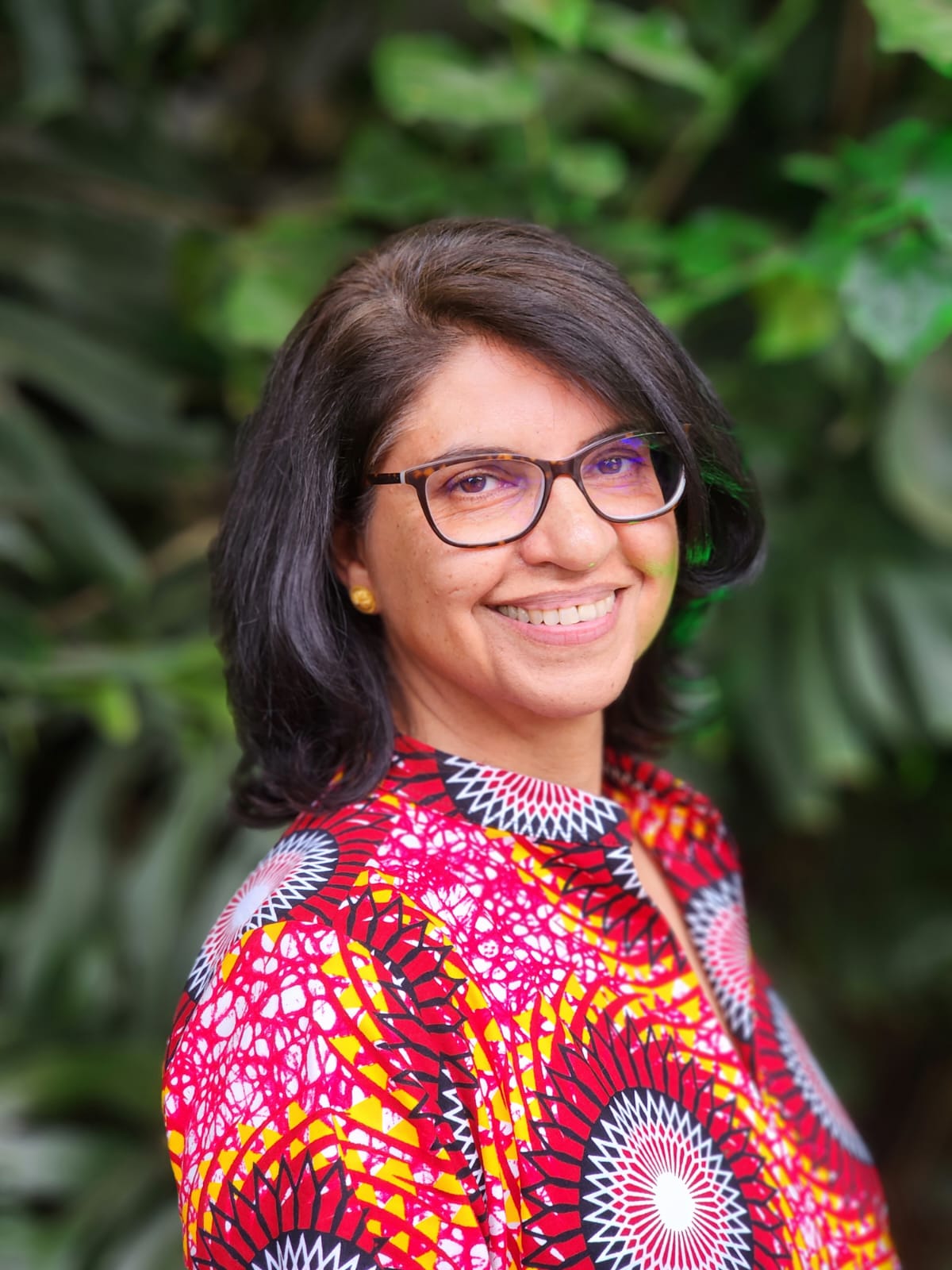
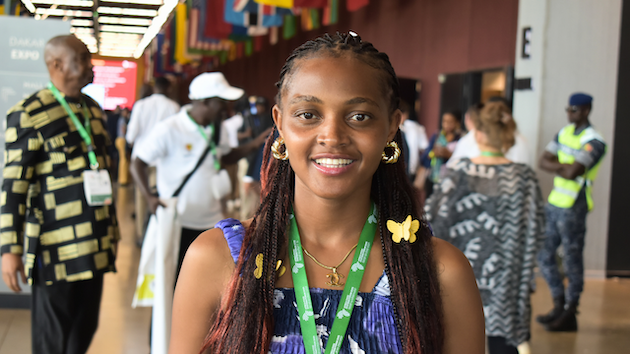
Winnie Wambui, co-founder of Harcourt Agri-Eco Farm in Kenya, speaks to IPS outside the Dealroom at the Africa Food Systems Forum 2025, held at the Centre International de Conférences Abdou Diouf (CICAD) in Dakar, Senegal, September 4, 2025. Credit: Chemtai Kirui/IPS

Winnie Wambui, co-founder of Harcourt Agri-Eco Farm in Kenya, speaks to IPS outside the Dealroom at the Africa Food Systems Forum 2025, held at the Centre International de Conférences Abdou Diouf (CICAD) in Dakar, Senegal, September 4, 2025. Credit: Chemtai Kirui/IPS

DAKAR, Sep 15 2025 (IPS) – Winnie Wambui leans forward on the panel stage, microphone in hand, scanning the room until she spots a raised hand.


Everyone in the room wears headphones, each voice isolated so that discussions don’t clash with sessions in adjacent halls. A question cuts through: how did a student science project become a commercial business?

At 24, Wambui, a Kenyan agripreneur, runs Harcourt Agri-Eco Farm, which recycles organic waste into animal feed using black soldier flies.

“Back then, I didn’t know it would become a farm or a business,” she said to a room of agripreneurs, researchers, and investors, describing her first experiments in 2022 as an energy engineering student at Jomo Kenyatta University of Agriculture and Technology (JKUAT).

Today, her eight-person team processes around 30 tonnes of waste each month and monitors the carbon emissions avoided.

The enterprise now generates at least USD 1,000 in monthly revenue, a modest but steady profit by Kenyan standards.

Inside the calm Knowledge Hub, on a panel organized by the International Centre of Insect Physiology and Ecology (icipe), Wambui tells her story to a dozen listeners in an intimate, almost subdued setting. But just outside, at the leafy Centre International de Conference’s Abdou Diouf (CICAD) in Dakar, Senegal, the atmosphere is charged.

Presidents, cabinet ministers, development banks, and agribusiness executives pace the halls at the annual Africa Food Systems Forum (AFSF) 2025, the continent’s flagship platform for agricultural policy and investment.

This year, the forum positioned youth at the center of Africa’s food security agenda.

Wambui is part of a new generation of innovative agripreneurs that governments and financiers promise to support.

For the first time, youth agripreneurs joined heads of state on the Forum’s opening stage, a symbolic gesture of recognition in a region where nearly 400 million people are under 35.

“Our median age is just 19. And by 2050, one in three young people in the world will be African,” said Claver Gatete, Executive Secretary of the UN Economic Commission for Africa (UNECA).

He said that if given land, finance, technology and markets, the youths can feed not only Africa but also the world.

However, turning such vision into reality is where the continent struggles.

The African Development Bank (AfDB) often says that Africa holds roughly 60 percent of the world’s uncultivated arable land, yet poor infrastructure, limited financing, and climate shocks keep much of it idle.

With the continent collectively importing approximately USD50 billion worth of food annually, according to the African Export–Import Bank (Afreximbank), the stakes are high.

At the national level, countries like Kenya continue to face hunger crises at emergency levels.

At the start of the year, the World Food Programme estimated that around two million people were experiencing acute hunger—a recurring crisis in a country with relatively better infrastructure and higher investment flows than many of its East African neighbors.

Experts say that despite localized crises, structural issues in African agriculture worsen food insecurity across the continent.

“We have relied on grants and aid to keep agriculture afloat, and this has made the agriculture sector stuck in a risk perception trap,” said Adesuwa Ifedi, Vice President of Africa Programs at Heifer International.

Ifedi said that commercial banks and investors avoid the sector, leaving grants to fill the gap. But grant dependence can undermine ventures in the eyes of private financiers.

“Grants should leverage commercial capital so the ecosystem can thrive,” Ifedi said.

This year’s Forum coincided with the recent African Union’s rollout of its Kampala Comprehensive Africa Agriculture Development Programme (CAADP) Strategy & Action Plan (2026–2035), or CAADP 3.0.

The new 10-year plan aims to mobilize USD 100 billion in investment, raise farm output by 45 percent, cut post-harvest losses in half, triple intra-African agrifood trade by 2035, and place youth inclusion at the core of Africa’s food future under the AU’s Agenda 2063.

In Dakar, over 30 agriculture ministers gathered under the chairmanship of former Ethiopian Prime Minister Hailemariam Desalegn Boshem, pledging to move beyond policy drafting toward delivering tangible results for agribusiness investment.

Their top priority, they said, was to shrink Africa’s food import bill by strengthening regional value chains.

Dr. Janet Edeme, head of the Rural Economy Division at the African Union Commission, told IPS that the Forum provides mechanisms to operationalize CAADP 3.0, aiming to empower at least 30 percent of youth in the agri-food sector while closing a USD 65–70 billion annual financing gap for agricultural small and medium-sized enterprises (agri-SMEs).

She said AFSF offers a rare opportunity for youthful agripreneurs to showcase bankable projects, access mentorship, and meet investors who would otherwise be out of reach.

“There are dedicated spaces—deal rooms, youth innovation competitions, investment roundtables—where these innovators can connect with governments, development finance institutions, and private investors,” said Edeme.

Organizers pointed to new spaces for youth to meet investors, but agripreneurs like Wambui said those opportunities felt distant.

She had never heard of the AU’s new flagship plan.

“I’m only hearing about that from you. If it’s meant to guide Africa’s food future, why aren’t there clear materials or programs I can see and use?” Wambui said. “Otherwise, we leave without knowing what strategies exist to support our work.”

By day two of the six-day forum, she had found her way into the deal room, the flagship space to connect entrepreneurs with investors, but instead of streamlined matchmaking, she found confusion.

“We are looking for the investors, and they’re looking for us—yet we don’t meet. Deals still depend on connections. That’s why I came to Dakar.”

Wambui, who co-founded Harcourt Agri-Eco Farm with two other partners, said the business has grown enough to cover wages, taxes, and debt repayments. Banks now extend her loans.

But that access to financing remains an exception in a system stacked against most, said Dr. Eklou Attiogbevi-Somado, the African Development Bank’s Regional Manager for Agriculture and Agro-Industry in West Africa.

He said that AfDB data shows commercial banks in Africa channel just 3–4 percent of their lending into agriculture.

Dr. David Amudavi, CEO of Biovision Africa Trust, said this capital drought is a huge concern in a sector that drives most livelihoods on the continent.

Amudavi, whose non-profit organization promotes ecological agriculture, said that the squeeze leaves farmers, and especially young agripreneurs, struggling to access credit for starting or scaling their agribusinesses, even though nearly 60 percent of Africa’s unemployed are under 25.

“Without finance, many youth-led ventures stay stuck at micro-scale or collapse,” Amudavi said.

Not far from the Youth Dome, at the deal room, Tanzanian agripreneur Nelson Joseph Kisanga, the co-founder of Get Aroma Spices, is also navigating the same maze.

Seven years ago, he left a banking career to try poultry farming, losing almost everything in his first three years.

Kisanga regrouped, merged his venture with that of his wife, Deborah, also a young agripreneur, and built Get Aroma Spices, now working with more than 50,000 farmers across southern Tanzania.

“Agriculture back home is seen as not for young people,” he said. “Even now, scaling means loans at high interest rates. There’s no other way.”

The family-run company exports turmeric, ginger, cardamom, and avocado oil while operating a youth- and women-led agro-processing hub through a public-private partnership.

His presence at the AFSF forum has already borne fruit.

“My intention coming here was to break into the West African market, and I’m happy to say I have clinched a supply deal in Ghana. All that’s left is for the lawyers to finalize the contract.” Kisanga said, before moving to the Youth Dome, a separate pavilion for young participants.

Inside, some groups chatted, others played basketball and table tennis, while others listened as young agri-food innovators pitched their ideas to a panel of investors.

Despite the fanfare, the forum ended without revealing how much capital reached youth-led ventures.

The most visible funding for youth at the summit came via the GoGettaz Agripreneur Prize, a pan-African initiative under the Generation Africa movement. The prize awarded USD 50,000 each to Egypt’s Naglaa Mohammad, who turns agricultural waste into natural products, and Uganda’s Samuel Muyita, who uses nanotechnology to reduce post-harvest fruit and vegetable losses.

An additional USD 60,000 impact award brought total prizes to roughly USD 160,000.

Other announcements included a USD 6.7 million trade programme from the United Kingdom (UK), the Alliance for a Green Revolution in Africa (AGRA), and the African Union (AU).

Senegal also launched a USD 22.5 million pilot for Community Agricultural Cooperatives, with financing linked to the African Food Systems Resilience Fund.

Yet there was no breakdown showing how much, if any, flowed to youth-led ventures.

The opacity mirrors past patterns.

Public summaries from the 2023 deal room reported only USD 3.5 million in closed investments, with no traceable flows to youth-led enterprises.

With AFSF positioned as Africa’s premier delivery platform, observers measured the announcements against CAADP 3.0’s USD 100 billion mobilization target, saying the gap is stark.

“We have seen this pattern before: big pledges at the summit, but little clarity or follow-up on how much actually reaches youth and smallholder farmers—the backbone of African food production,” said Famara Diédhiou, a Senegal-based food systems program manager with a regional civil society network.

“Without such accountability and inclusion of all stakeholders, these forums risk becoming mere showcases rather than platforms that deliver,” he said.

For now, even with the youth-first theme, AFSF still leaves young founders stuck in the same cycle of chasing visibility, hustling for contacts, and stitching together their own contracts.

As Wambui found, Kisanga, who has attended three previous Forums, said that in AFSF access is everything: you need to know in advance who to meet and be in the right room at the right moment.

“All visibility is currency,” said Kisanga. “That’s how you survive.”

IPS UN Bureau Report

IPS UN Bureau, IPS UN Bureau Report, Senegal,


Aid Funding Crisis Means Parliamentarians’ Visionary Leadership Even More Crucial

Africa, Asia-Pacific, Civil Society, Climate Change, Conferences, Development & Aid, Economy & Trade, Editors’ Choice, Featured, Gender, Headlines, Health, Humanitarian Emergencies, Middle East & North Africa, Population, Sustainable Development Goals, TerraViva United Nations, Women’s Health, Youth

Population

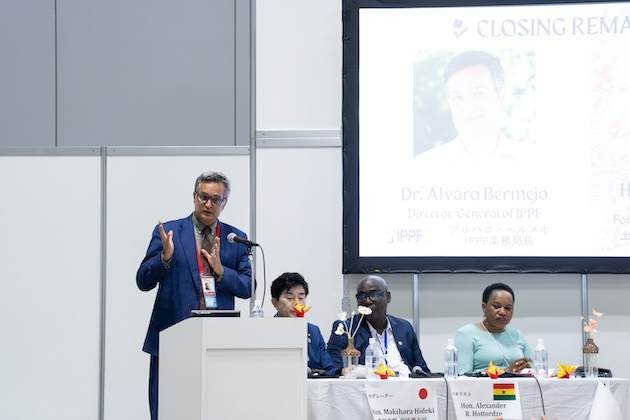
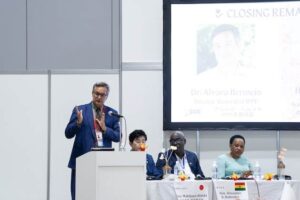
Dr. Alvaro Bermejo, Director General of the International Planned Parenthood Federation (IPPF) addresses the Let's Discuss the Future of Africa Together seminar that took place last week (August 21) on the sidelines of TICAD9 in Yokohama City, Japan. Credit: APDA

Dr. Alvaro Bermejo, Director General of the International Planned Parenthood Federation (IPPF) addresses the Let’s Discuss the Future of Africa Together seminar that took place last week (August 21) on the sidelines of TICAD9 in Yokohama City, Japan. Credit: APDA

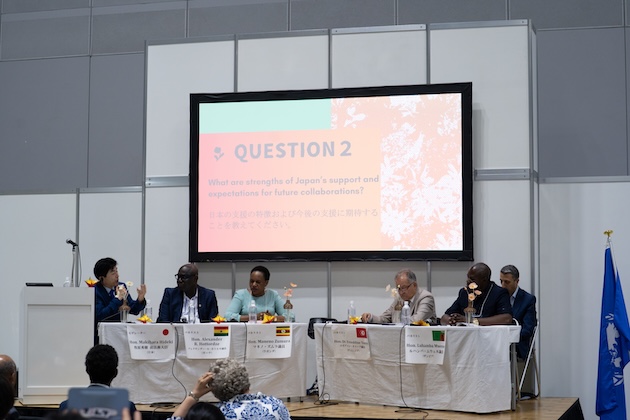
YOKOHAMA CITY, Japan & JOHANNESBURG, South Africa, Aug 25 2025 (IPS) – As funding for sexual and reproductive health rights was on a “cliff edge,” parliamentarians now needed to play a “visionary” leadership role because “financing strong, resilient health systems for all their people rests with governments,” said Dr. Alvaro Bermejo, Director General of the International Planned Parenthood Federation (IPPF).


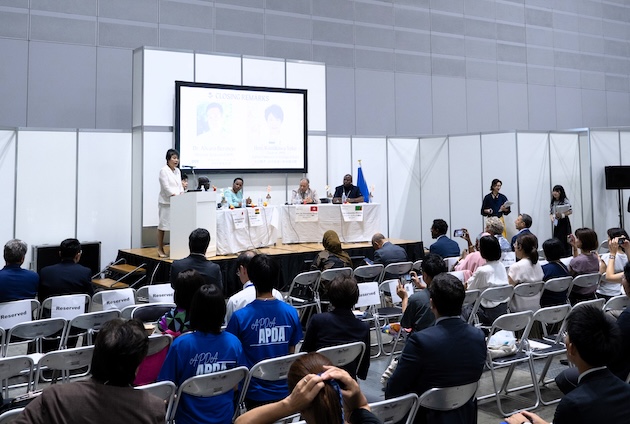
He was speaking at the Let’s Discuss the Future of Africa Together seminar that took place last week (August 21) on the sidelines of TICAD9 in Yokohama City, Japan.

The session was organized by the Asian Population and Development Association (APDA), in collaboration with the Forum of Arab Parliamentarians for Population and Development (FAPPD) and the African Parliamentary Forum on Population and Development (FPA).

He told parliamentarians that their role is most critical.

“Africa’s health faces a serious challenge: According to WHO’s latest analysis, health aid is projected to decline by up to 40% this year compared to just two years ago. This is not a gradual shift—it is a cliff edge,” Bermejo said. “You know as well as I do that lifesaving medicines are sitting in warehouses, health workers are losing jobs, clinics are closing, and millions are missing care.”

While this reality was outrageous, it needed to be adapted to.

“And in this crisis lies an opportunity—an opportunity to shake off the yoke of aid dependency and embrace a new era of sovereignty, self-reliance, and solidarity,” with a clear mission to protect the health and lives of women and vulnerable populations through delivering high-quality sexual and reproductive health services.

Parliamentarians engaged in debates during a policy dialogue seminar organised by the Asian Population and Development Association (APDA), in collaboration with the Forum of Arab Parliamentarians for Population and Development (FAPPD) and the African Parliamentary Forum on Population and Development (FPA). Credit: APDA

Parliamentarians engaged in debates during a policy dialogue seminar organized by the Asian Population and Development Association (APDA), in collaboration with the Forum of Arab Parliamentarians for Population and Development (FAPPD) and the African Parliamentary Forum on Population and Development (FPA). Credit: APDA

This seminar and another in the series, Policy Dialogue on the Africa-Japan Partnership for Population and Development, were both supported by the UN Population Fund (UNFPA) Arab States Regional Office (ASRO), the Japan Trust Fund (JTF) and IPPF.

During the discussions, a wide range of topics about population dynamics in Africa and Africa-Japan cooperation were discussed.

In his opening remarks, Ichiro Aisawa, a member of the House of Representatives of Japan, told the seminar it was necessary to take joint action across borders and generations.

“Youth holds the key to unlocking Africa’s future. By 2050, it is predicted that approximately 70 percent of Africa’s population will be under the age of 30. As African countries enter a demographic dividend period, the role played by parliamentarians in each country will be extremely important.

Aisawa said it was necessary to listen to the voices of the community in addressing issues related to youth empowerment, gender equality, and sexual and reproductive health (SRH).

Parliamentarians should take “concrete action through legislation and policies; it is essential to harnessing the potential of young people, directly linking them to social and economic growth, and creating a society in which no one is left behind.”

Yoko Kamikawa, Chairperson of Japan Parliamentarians for Population (JPFP), addresses a seminar for African and Asian parliamentarians on the sidelines of the TICAD9 in Yokohama City, Japan. Credit: APDA

Yoko Kamikawa, Chairperson of Japan Parliamentarians for Population (JPFP), addresses a seminar for African and Asian parliamentarians on the sidelines of the TICAD9 in Yokohama City, Japan. Credit: APDA

During the discussions, representatives from Africa gave examples of how Japan had supported their health initiatives, especially important in a climate of decreasing aid.

Maneno Zumura, an MP from Uganda, said what compounded the issues in her country and in Africa was “the changes in climate. The unpredicted climate has affected agricultural activities by 40 percent, especially in drought-prone areas of the country.” This had resulted in nearly a quarter (24 percent) of children experiencing malnutrition.

However, she noted that Japan had made considerable contributions to education and health.

“As we assess Uganda’s development and Japan’s impact, it’s clear that sustainable progress thrives on global solidarity and local governance. Key achievements include a 62 percent rise in women’s incomes through cooperatives, a 50 percent drop in maternal mortality in refugee settlements, and supporting the road infrastructure and education, illustrating how policy-driven interventions can break cycles of poverty and inequality.”

There were several specific projects she alluded to, including education experts from Japan who contributed to an improvement of the quality of primary education in districts of Wakiso, Mbale, and Arua through the Quality Improvement in Primary Education Project (2021-2023). They also trained 1,500 teachers in participatory teaching methods.

“The Government of Japan supported the vulnerable communities like refugees and host communities by strengthening the social services like health in refugee camps like Rhino Camp,” Zumura continued, including construction of a health center with antenatal facilities serving over 300,000 people in camps of Bidibidi and Rhino Camp. They also trained 200 health workers in the management of childhood illnesses and maternal health care.

Mwene Luhamba, MP, Zambia, said his country was looking forward to partnering with Japan in expanding One-Stop Reproductive Health Services, enhancing parliamentary engagement, and investing in youth programs.

Bermejo said part of the solution to the development issues is to confront constraints.

“Some countries in Africa do need global solidarity, but what Africa needs from the world, more than anything else, is fair terms. We must also confront the structural constraints. Debt service burdens are crowding out social investments. Let us seize this moment, not just to repair but to transform,” he said. “Sexual and reproductive health services save lives. They empower individuals, promote dignity, and drive national development.”

In her closing remarks, Yoko Kamikawa, Chairperson of Japan Parliamentarians for Population (JPFP), said that it was through dialogue across borders and sectors that “we build consensus, strengthen legal frameworks, and ensure that national strategies reflect the voices of all people and empower them—especially women and youth.”

IPS UN Bureau Report


Fiji’s Truth and Reconciliation Commission Aims To Restore Trust and Peace After Decades of Political Crises

Active Citizens, Asia-Pacific, Civil Society, Conferences, Editors’ Choice, Featured, Headlines, Human Rights, Humanitarian Emergencies, PACIFIC COMMUNITY, Peace, Small Island Developing States, Sustainable Development Goals, TerraViva United Nations
Democracy

Fiji is a Pacific Island nation renowned for its tourism industry, but it has also endured four armed coups and 38 years of political instability. Photo credit: Julie Lyn

Fiji is a Pacific Island nation renowned for its tourism industry, but it has also endured four armed coups and 38 years of political instability. Credit: Julie Lyn

SYDNEY, Aug 14 2025 (IPS) – Fiji, a nation located west of Tonga in the central Pacific, is renowned for its natural beauty and beach resorts. But for 38 years it has endured a political rollercoaster of instability with four armed coups that overturned democratically elected governments and eroded human rights.


Now, following a peaceful transition of power at the last 2022 election, Prime Minister Sitiveni Rabuka and his coalition government want to deal with the past with a Truth and Reconciliation Commission (TRC) to pave the way for a more peaceful and resilient future.

The commission will “facilitate open and free engagement in truth-telling regarding the political upheavals during the coup periods and promote closure and healing for the survivors,” Rabuka, who led the first coup, told parliament before supporting legislation that was passed in December last year. Now he has pledged to oversee the country’s reconciliation and return to democratic norms.

The TRC is tasked with investigating what happened during the coups d’état of 1987, 2000 and 2006, related human rights abuses and the grievances that have driven the relentless struggle for power between Fiji’s indigenous and Indo-Fijian communities. Its focus is on truth-telling and preventing a repetition of conflict; it will not prosecute perpetrators of abuses or provide reparations to victims.

“This commission aims to serve the people of Fiji to come to terms with your own history… the purpose is not to put blame and to deepen the trauma and the difficulties, but to help the people of Fiji to move on for a better future for everyone,” Dr. Marcus Brand, the TRC chairman, who has extensive experience with transitional justice initiatives and held senior roles in the United Nations and European Union, said in January.

He is joined by four Fijian commissioners, namely former High Court Judge Sekove Naqiolevu, former TV journalist Rachna Nath, former Fiji Airways Captain Rajendra Dass, and leadership expert Ana Laqeretabua.

The Fiji Parliament, Suva, Fiji. Credit: Josuamudreilagi

The Fiji Parliament, Suva, Fiji. Credit: Josuamudreilagi

Florence Swamy, Executive Director of the Pacific Centre for Peacebuilding, a non-governmental organization based in the capital, Suva, told IPS that the TRC is important to building trust in the country, where many people still experience fear and anxiety about the violence they witnessed.

“As a first step, it is creating a safe space for people to talk about what happened to them,” she emphasized.

Fiji’s political turmoil has roots in the past. British colonization in the nineteenth century was accompanied by policies that were intended to strengthen indigenous land rights and prevent dispossession, rights that were reinforced in Fiji’s first constitution at Independence in 1970.

But, at the same time, Fijian society was irrevocably changed by the organized immigration of Indians to work on sugar plantations and boost development of the colony. By the mid-twentieth century, the Indo-Fijian population was larger than the indigenous community and their demands for equal rights increased.

“Fijian Indians were brought to the country, in many cases, under the false pretense of better work and wage opportunities, to develop the economy of Fiji…while indigenous Fijians were hardly consulted about such a momentous decision,” Dr. Shailendra Singh, Head of Journalism at the University of the South Pacific in Fiji, told IPS.

Soon the country’s politics were mired in a fierce contest for power. And in 1987, Rabuka, then an officer in the Fiji military, led the overthrow of the first elected Indo-Fijian government under Prime Minister Timoci Bavadra.

Rabuka then became Prime Minister from 1992 to 1999 before another Indo-Fijian government, led by Mahendra Chaudhry, was voted in. This triggered a second coup instigated by nationalist George Speight in 2000 in which the government was held hostage in the nation’s parliament for weeks. Then, in 2006, Frank Bainimarama, head of the armed forces, orchestrated the third coup, which he claimed was necessary to eliminate corruption and divisive policies in the government of the day presided over by Prime Minister Laisenia Qarase. For the next eight years he oversaw an authoritarian military government until democratic elections were held again in 2014.

Suva, capital city of Fiji. Photo credit: Maksym Kozlenko

Fiji’s capital city Suva. Credit: Maksym Kozlenko

The coups inflicted a significant human cost. Lawlessness, inter-community violence, military and police brutality, and arrests and torture of people critical of the regime occurred increasingly after 2006.

Three years later, Amnesty International called for “an immediate halt to all human rights violations by members of the security forces and government officials, including the arbitrary arrests, intimidation and threats, and assaults and detentions of journalists, government critics and others.” It also called for the repeal of the Public Emergency Regulations imposed by the government in 2009 that led to impunity for state officials involved in abuses.

Today, the demographic balance has shifted again in the wake of an outward exodus of Indo-Fijians, who now comprise about 33 percent of Fiji’s population of about 900,000, while Melanesians constitute about 56 percent. But societal divisions remain entrenched and the past has not been forgotten.

The commission is now preparing to hold hearings over the next 18 months. And Rabuka has promised to be one of the first to testify of his involvement in the political upheavals.

I will swear to say everything, the truth… I want to continue to live with a clear conscience. I want people to know that at least they understand my reasons for doing it,” he told the media in January. But the TRC also promises to place victims and survivors at the center of its mission, claiming that “their lived experiences are vital to fostering accountability, encouraging healing and building a more united and compassionate society.”

However, there are voices of caution, too, warning of the risks of reviving memories of conflict and pain and the need to prevent this from inflaming divisions.

While experts in the country speak of the need to go beyond the TRC and tackle structural issues of inequality and disenfranchisement, which have driven community grievances, “to make everyone feel a sense of belonging and loyalty to the country of their birth,” Singh said.

In particular, “indigenous fears concerning political dominance in Fiji” and “Indo-Fijians’ feeling of being marginalized by the state and not treated as equal citizens” need to be addressed, she continued.

The Fijian armed forces, which played a decisive role in executing the coups, often justifying their actions in protecting Fiji’s internal order, are also critical to the success of the country’s return to democratic governance.

In 2023 an internal reconciliation process began, aimed at ending military intervention in the country’s politics and elections. In April, during an official meeting with the TRC, the military leadership pledged ‘to ensure that past mistakes are not repeated, and that its role as a guardian of Fiji’s constitutional order remains anchored in service to all citizens, regardless of ethnicity, background or political belief.’

After the commission has concluded its estimated two years of work, it will make recommendations in its final report for public measures and policy reforms to support the country’s social cohesion. Here Swamy emphasizes that it is crucial the recommendations do not remain on paper but are acted on.

“In terms of the recommendations, who will be responsible for them? Will they ensure that the recommendations are implemented? And what mechanisms will be put in place to make sure that institutions are held accountable?” she declared.

Looking into the future, Swamy said that she would like to see her country become one “where everyone feels safe, where there is equal opportunity… a country where everyone can realize their potential.”

Note: This article is brought to you by IPS Noram in collaboration with INPS Japan and Soka Gakkai International in consultative status with ECOSOC.

IPS UN Bureau Report


UN Chief Hails Turkmenistan’s Quiet Diplomacy as Launchpad for Landlocked Solidarity

Civil Society, Conferences, Development & Aid, Economy & Trade, Featured, Global, Headlines, Humanitarian Emergencies, Inequality, Landlocked Developing Countries, Least Developed Countries, Sustainable Development Goals, TerraViva United Nations, Trade & Investment

Volunteers at the Third United Nations Conference on Landlocked Developing Countries (LLDCs). Credit: Kizito Makoye/IPS

Volunteers at the Third United Nations Conference on Landlocked Developing Countries (LLDCs). Credit: Kizito Makoye/IPS

AWAZA, Turkmenistan , Aug 6 2025 (IPS) – In the glass-panelled hallway straddling Buildings 2 and 3 at the Awaza Congress Centre, two smartly dressed young Turkmens stood behind an ornate national pavilion—anxious, alert, and surprisingly eloquent.


Their broad smiles visibly grabbed wide-eyed delegates attending the Third United Nations Conference on Landlocked Developing Countries (LLDCs). With a confidence far beyond their age, the volunteers clearly explained to visitors the kernel of Turkmenistan’s national identity—entangled by culture as politics.

“This is a dutar,” said one, gesturing toward a glass-encased replica of a traditional two-stringed musical instrument. “It is played during weddings and celebrations. It carries the stories of our people.”

His colleague pointed to a smaller display nearby, where a miniature replica of the monumental Neutrality Monument stood—the golden effigy of Saparmurat Niyazov, the country’s founding president, glinting under gallery lights. “This represents our neutrality,” she said proudly. “We are a peaceful nation. We do not choose sides.”

As visitors flocked to the pavilion, the two young guides continued their patient explanations—this time describing a replica of Akhal-Teke horses, symbols of national pride, bred for endurance and elegance.

“Just like the horses,” one said with a grin, “Our country is strong, swift, and steady. But we also don’t race just because others are running.”

In this resort city, hospitality is a powerful expression of national pride.

As you move around the streets, women in long traditional gowns greet you with a graceful nod and a soft “Hoş geldiňiz”—welcome.” Dressed in embroidered velvet dresses that sweep the floor and crowned with intricate headscarves, these women are the gentle face of Turkmenistan’s long-held tradition of welcoming strangers with dignity and warmth.

“It is in our blood to treat foreigners with great care and concern.”

In a world increasingly divided, the warmth of Turkmenistan’s people, cloaked in simple gestures of kindness, stands as a symbol of diplomacy—one that speaks not through declarations, but through hospitality that lingers long after the meetings are over.

A Doctrine of Distance

Since 1995, when the UN General Assembly unanimously recognized Turkmenistan’s neutrality, the Central Asian nation has embraced a foreign policy of non-alignment, eschewing military alliances, foreign bases, and entanglements in regional conflicts. The policy, enshrined in the national constitution, is described by government officials as a model of “positive neutrality”—a means of building peace through equidistance and sovereignty.

A Fortress Amid Fires

Bordered by Iran, Afghanistan, Uzbekistan, Kazakhstan, and the Caspian Sea, Turkmenistan occupies a strategically sensitive patch of Eurasia. Yet it has remained almost impervious to the turmoil around it. When war engulfed Afghanistan, Turkmenistan kept its embassies open. It offered humanitarian aid—but not political commentary.

Unlike other Central Asian states, it refrained from joining Moscow-led security blocs like the Collective Security Treaty Organization (CSTO) and even kept Beijing at a careful diplomatic bay despite deepening energy ties.

Turkmenistan’s hosting of the LLDC conference carried both symbolic and practical significance. It is one of the few LLDCs that has successfully leveraged its location by investing heavily in cross-border energy and transport infrastructure.

“Your hosting of this important global gathering is a testament to the country’s commitment to international cooperation and sustainable development,” said UN Secretary-General António Guterres.

A Landmark Moment for Landlocked Nations

On the shores of the Caspian Sea, in the resort town of Awaza, limousines ferried dignitaries past pine-lined boulevards and marble buildings as world leaders gathered for the momentous talk.

The Awaza gathering brought together representatives from 32 landlocked developing countries—home to nearly 600 million people across Africa, Asia, Europe, and South America—to chart a new course under the Awaza Programme of Action, a 10-year strategy aimed at reversing structural disadvantages stemming from geographical isolation.

Awaza’s gleaming hotels and high-tech halls stood in contrast to Burundi’s rugged highlands thousands of kilometers away—but in both, a digital transformation is underway.

The stakes could not be higher. LLDCs account for just over 1 percent of global trade and economic output, despite housing 7 percent of the global population. They face steep transport costs, limited access to global markets, unreliable infrastructure, and acute climate vulnerabilities.

A Moment for Multilateralism

As the 3rd LLDC conference convened in the windswept coastal town of Awaza, all eyes turned to Turkmenistan—not for bold pronouncements, but for the quiet power of its example. With its longstanding policy of neutrality, the Central Asian nation has carved a distinct identity rooted in non-alignment and peaceful engagement, making it an ideal host for a summit aimed at fostering regional solidarity and global support for countries isolated by geography.

Secretary-General António Guterres, in a rousing address, held up Turkmenistan’s model of diplomacy and inclusion as a guiding light for other landlocked nations struggling with marginalization. Against a backdrop of rising global fragmentation, Awaza became more than a meeting ground—it emerged as a bridge between continents and between aspiration and action.

Speaking at a high-level press conference Tuesday, Guterres issued a passionate appeal for justice, equity, and renewed international solidarity, reminding the world that “geography should never define destiny.”

“This conference reflects a new era of cooperation taking shape across Central Asia,” said Guterres, “grounded in mutual trust, shared priorities, and growing regional solidarity. At a time when multilateralism is being tested, this spirit of partnership is more essential than ever.”

A Plea for Dignity and Inclusion

Guterres’s remarks were peppered with humanistic language rarely heard at geopolitical conferences. “This is not only a matter of development,” he told journalists. “It’s a matter of dignity and justice.”

Responding to a question from Euronews, he drew a distinction between landlocked developed nations like Switzerland or Austria and their developing counterparts. “They have free access to harbors and integrated markets. But for landlocked developing countries, being far from ports and trade hubs is a real disadvantage,” he said.

He praised Turkmenistan’s multilateral diplomacy and recalled the country’s remarkable feat of granting citizenship to all stateless persons left behind after the collapse of the Soviet Union. “This was almost unique in the world—a symbol of generosity I never forgot,” he said.

Four Pillars of Action

The Awaza Programme of Action is a comprehensive development framework aligned with the UN 2030 Agenda. It charts an ambitious, multi-sectoral path forward, structured around four priorities:

1. Unlocking Economic Potential

Guterres called for bold investment in infrastructure, education, digital connectivity, and innovation.

“The countries represented here have the talent and the ideas,” he said. “They need the tools and support.”

2. Connecting to the World

“Trade corridors, transit systems, and regional integration are not technical issues—they are lifelines,” Guterres said.

He urged countries and institutions to invest in both the “hardware” and “software” of trade—resilient transport infrastructure, harmonized customs procedures, and smart logistics platforms.

3. Confronting the Climate Crisis

Though LLDCs contribute less than 3 percent to global emissions, they are among the hardest hit by climate disasters.

Guterres called on rich nations to fulfill their pledges to double adaptation finance, support green industries in LLDCs, and provide early warning systems.

4. Reforming Global Finance

Guterres described the global financial system as “unfit for the realities of today.” He called for tripling the lending capacity of development banks, expanding concessional finance, and reforming sovereign debt architecture.

Global Responsibility and Shared Future

Though the conference was set against a backdrop of regional cooperation in Central Asia, its implications reverberate far beyond.

“When LLDCs thrive, entire regions benefit.” Guterres said

Global Call for Justice, Not Charity

Though spread across four continents—from the Sahel to the Himalayas, and from Central Asia to South America—LLDCs face a strikingly similar plight: crippling transport costs, technological isolation, and rising debt burdens.

“Landlocked developing countries don’t want charity. They want justice,” Guterres told reporters. “They want equitable access.”

Digital Lifelines for a Disconnected World

One of the most pressing themes in Awaza was the digital divide that has left millions in LLDCs without access to online education, health services, or global markets.

“Digital transformation must be central to our effort,” Guterres said.

He pledged to present a report on innovative financing to support AI capacity-building and called for robust public-private partnerships.

Connecting Landlocked Economies to the World

Guterres also emphasized infrastructure investment and seamless cross-border trade as keys to transformation.

“We must cut red tape, digitize border operations, and modernize transport networks,” he said.

Building Bridges Across Borders

In an interview with IPS, Aygul Rahimova, a resident of Turkmenistan, underlined the importance of the LLDC conference for regional connectivity.

“Although we are technically landlocked, Turkmenistan borders the Caspian Sea, which offers us a unique opportunity to serve as a transport and logistics bridge between Asia and Europe,” she said.

“I hope this conference becomes a catalyst for deeper cooperation… Turkmenistan is ready to play a key role in building bridges—through the Caspian, through trade, through diplomacy.”

IPS UN Bureau Report
 

Equal Footing: Building Pathways for Landlocked Developing Countries to Participate in Global Economy

Conferences, Development & Aid, Economy & Trade, Editors’ Choice, Featured, Headlines, Human Rights, Inequality, IPS UN: Inside the Glasshouse, Landlocked Developing Countries, Least Developed Countries, Small Island Developing States, Sustainable Development Goals, TerraViva United Nations, Trade & Investment

Conferences

The raised flags of Turkmenistan and the United Nations marked the official opening of the Third UN Conference on Landlocked Developing Countries (LLDC3). Credit: Joyce Chimbi/IPS

The raised flags of Turkmenistan and the United Nations marked the official opening of the Third UN Conference on Landlocked Developing Countries (LLDC3). Credit: Joyce Chimbi/IPS

AWAZA, Turkmenistan, Aug 5 2025 (IPS) – Heads of State, ministers, investors and grassroots leaders are gathered in Awaza on Turkmenistan’s Caspian coast for a once-in-a-decade UN conference aimed at rewiring the global system in support of 32 landlocked developing countries whose economies are often ‘locked out’ of opportunity due to their lack of access to the sea.


Geography has long dictated the destiny of landlocked nations. Trade costs are up to 74 percent higher than the global average. It can take twice as long to move goods across borders compared to coastal countries. As a result, landlocked nations are left with just 1.2 percent of world trade and are at great risk of being left furthest behind amid global economic shifts.

Speaking during the opening plenary and in the context of implementing the Sustainable Development Goals (SDGs), President of Turkmenistan Serdar Berdimuhamedow stated that his country believes “in the need to accelerate the process of ensuring transport connectivity, as well as to bring fresh ideas and momentum to this process.”

“In connection with this, last year at the World Government Summit in Dubai, Turkmenistan proposed creating a new partnership format, namely a global atlas of sustainable transport connectivity. I invite all foreign participants to carefully consider this initiative.”

The Third UN Conference on Landlocked Developing Countries, or LLDC3, is pushing for freer transit, smarter trade corridors, stronger economic resilience, and fresh financing to boost development prospects for the estimated 600 million people living in those countries.

The UN Secretary-General António Guterres stressed that the conference is centered on reaffirming a fundamental truth: that “geography should never define destiny.”

“Yet,” Guterres continued, “For the 32 landlocked developing countries across Africa, Asia, Europe, and South America, geography too often limits development opportunities and entrenches inequality.”

Rabab Fatima, Under-Secretary-General and High Representative for the Least Developed Countries, Landlocked Developing Countries and Small Island Developing States, and Secretary-General of the Third United Nations Conference on Landlocked Developing Countries, said, “For too long, LLDCs have been defined by the barriers of geography, remoteness, inaccessibility, and the fact that they do not have a sea. But that is only part of the story.”

She stressed that LLDCs may be landlocked, but they are not opportunity locked, as they are rich in resources, resilience, and ambition. These countries seek to lean into these resources and strong partnerships to counter challenges such as an infrastructure financing shortfall of over USD 500 billion.

For these countries, goods take 42 days to enter and 37 days to exit their borders. Paved road density stands at just 12 percent of the global average. Internet access is only 39 percent. To address these constraints, the Awaza Programme of Action proposes a new facility for financing infrastructure investments. This new initiative aims to mobilize capital in large quantities to bridge the gaps and construct roads.

Meanwhile, as these daunting challenges prevail, Guterres said debt burdens are rising to dangerous and unsustainable levels. And one-third of LLDCs are grappling with vulnerability, insecurity, or conflict. Despite representing 7 percent of the world’s population, LLDCs account for just over one percent of the global economy and trade—a stark example of deep inequalities that perpetuate marginalization.

Guterres emphasized that these inequalities are not inevitable. They are the result of an unfair global economic and financial architecture unfit for the realities of today’s interconnected world, compounded by systemic neglect, structural barriers, and—in many cases—the legacy of a colonial past.”

“Recent shocks—from the COVID-19 pandemic to climate disasters, supply chain disruptions, conflicts and geopolitical tensions—have deepened the divide, pushing many LLDCs further away from achieving the SDGs.”

Further stressing that the conference is not about obstacles but solutions that include launching a new decade of ambition—through the Awaza Programme of Action and its deliverables—and fully unlocking the development potential of landlocked developing countries.

Fatima said the Awaza Programme of Action is a bold and ambitious blueprint to transform the development landscape for the 32 landlocked developing countries for the next decade. The theme of the conference, ’Driving Progress Through Partnerships,’ captures a collective resolve to unlock that potential. It underscores the new era of collaboration where LLDCs are not seen as isolated or constrained but as fully integrated.

Emphasizing that the Awaza Programme of Action provides “the tools to unlock the full potential of LLDCs and turn their structural challenges into transformative opportunities. The implementation of the Programme of Action has begun. We arrive in Awaza with momentum on our side. We have put together a UN system-wide development and monitoring framework with clear milestones and outcomes, comprising over 320 complete projects, programs, and activities.”

“Over the course of the week, we will see here the launch of many new partnerships and initiatives that will bring fresh momentum to its implementation. As we take this process forward, allow me to highlight three strategic priorities that will guide our work in Awaza. First, bridging the infrastructure and connectivity gap remains our top priority,” she said.

Heads of state and governments, including the presidents of the Republic of Uzbekistan, the Republic of Armenia, Tajikistan, the Republic of Kazakhstan, and His Majesty King Mswati III from the Kingdom of Eswatini, stressed the significance of the conference for the group of landlocked developing countries in terms of identifying priority areas for further efforts with a focus on addressing modern challenges the international community is facing.

Mswati III said the conference reaffirms a shared commitment to having the structural barriers that hinder LLDCs from participating in the global economy, offering a platform to chart a path of resilience, innovation and inclusive growth. The leaders also shared many of the successes they have achieved amidst daunting challenges.

“To build resilience and ensure sustainable growth, Eswatini is diversifying beyond traditional sectors. We are promoting investment in agroprocessing, tourism, renewable energy, ICT, creativity, industries and private enterprise. This strategy broadens our economic base, creates jobs and supports inclusive development, aligning with our national priorities for 2030 and 2063,” he said.

Shavkat Mirziyoyev, President of the Republic of Uzbekistan, said that his country was “demonstrating strong momentum towards greater openness and transparency in logistics. Complex measures are being implemented to facilitate the digitalization of trade and transport processes. Structural transport and logistics spaces are the basis for dynamic transport implementation.”

Mirziyoyev stated that today, a single transport and logistics space is being established in the region. Comprehensive programs and projects are being implemented to transform Central Asia into a fully-fledged transit hub between East and West and North and South. Recently, mutual trade volumes have grown 4.5-fold, investments have doubled, and the number of joint ventures has increased 5-fold.

“This year, jointly with our partners, we have started construction of the China-Kyrgyzstan-Uzbekistan railway. Freight traffic on the Uzbekistan-Turkmenistan-Iran-Turkey transport corridor has increased significantly. In today’s world, it is crucial to have concrete, feasible, and institutionally supported solutions to overcome common threats and challenges,” he stated.

Fatima, the Secretary-General of the Conference, said the challenges are many, varied and complex, requiring investing in robust implementation tools and partnerships at all levels.

“Our mapping confirms that every target adopted here in Awaza advances inclusive, resilient and sustainable development. But policy alignment alone is not enough. We need a whole-of-society approach,” she expounded.

“This Conference marks a turning point in that regard. For the first time, LLDC3 features dedicated platforms for civil society, the private sector, youth, women leaders, parliamentarians, and South-South partners – each playing a critical role in making the APOA people-centered and responsive.”

Overall, she urged the global community to seize the present moment—with ambition, unity, and purpose—to chart a new path for the LLDCs: one of prosperity, resilience, and full global integration. She stressed that the true legacy of the ongoing conference will not be measured by declarations, but by the real and lasting change that is delivered on the ground.

IPS UN Bureau Report
 

Spotlight on Landlocked Developing Countries Ahead of Third UN Conference

Africa, Climate Change, Conferences, Development & Aid, Economy & Trade, Editors’ Choice, Featured, Global, Headlines, Human Rights, Humanitarian Emergencies, Inequality, IPS UN: Inside the Glasshouse, Least Developed Countries, Population, Small Island Developing States, Sustainable Development Goals, TerraViva United Nations, Trade & Investment

Sustainable Development Goals

Uganda's Malaba town borders Kenya to the east and is a major entry point for goods destined for landlocked Uganda, Rwanda, and South Sudan from Kenya's Mombasa Port. Credit: Joyce Chimbi/IPS

Uganda’s Malaba town borders Kenya to the east and is a major entry point for goods destined for landlocked Uganda, Rwanda, and South Sudan from Kenya’s Mombasa Port. Credit: Joyce Chimbi/IPS

NAIROBI, Aug 1 2025 (IPS) – Landlocked developing countries face a unique set of challenges. Without coastal ports, they rely on transit nations, causing higher trade costs and delays.


To explore solutions to these complex hurdles, the Third UN Conference on Landlocked Developing Countries (LLDCs) or LLDC3, will take place in Awaza, Turkmenistan, 5–8 August 2025.

May Yaacoub, LLDC3 spokesperson and head of Advocacy and Outreach at the United Nations Office of the High Representative for the Least Developed Countries, Landlocked Developing Countries and the Small Island Developing States (UNOHRLLS), told IPS that the conference is “an opportunity to unlock the full potential of landlocked countries and address the challenges faced by some of the world’s most marginalized countries.”

“In every LLDC the map itself shapes the economy. Without a coastline, even the simplest export, whether cotton lint, copper cathode or cloud‑based software, must first cross at least one foreign border and frequently an entire transit corridor before it reaches a port,” Tomás Manuel González Álvarez, Senior Programme Management Officer and LLDC Team Lead at UNOHRLLS told IPS.

“The UN estimates that this physical detour means average transport costs in LLDCs are about 1.4 times higher than in comparable coastal economies. Those added costs depress profit margins, narrow the range of viable products and deter investors who value just‑in‑time delivery.”

Against this backdrop and while lacking direct sea access causes and exacerbates hurdles in trade, connectivity, and development, Yaacoub says LLDCs host vibrant communities with untapped potential and that these countries “have the ideas and know what they need to prosper. By supporting them at LLDC3 with partnerships, innovations and cooperation, we can help to build a more equitable and prosperous future for all.”

“This conference comes at the heels of the expiration of the Vienna Programme of Actions, which was adopted in Vienna, Austria, in November 2014, during LLDC2. LLDC3 will continue the work of LLDC2 and serve as a platform to explore innovative solutions, build meaningful and strategic partnerships, and increase the investment in LLDCs,” she observed.

The theme of the conference is ‘Driving Progress through Partnerships’, which she says underscores a shift from donor-recipient dynamics to mutual accountability and co-investment. And, that this includes a stronger role for transit countries, enhanced multilateral cooperation, and alignment with the SDGs, Paris Agreement and the Pact of the Future.

Álvarez emphasizes that this key, landlockedness, is experienced very differently and that the conference agenda reflects an understanding of these complexities. In Africa, “for countries such as Niger or Zambia, the critical pain point is the sheer length and fragility of overland routes—1,800 km from Niamey to Cotonou; 1,900 km from Lusaka to Durban.”

“Road and rail bottlenecks meet frequent customs stops and, in parts of the Sahel, insecurity. The result is chronic delays and freight rates that can exceed the f.o.b. (a term that defines who pays for the transportation costs) value of low‑margin agricultural commodities.”

He says in Asia, Kazakhstan or Uzbekistan possess better road and rail grids yet face. At the same time, these economies are accelerating an energy transition, moving from hydrocarbons to renewables and green hydrogen so they now need corridors that can carry high‑voltage electricity and fiber as well as bulk ore.

“Bolivia and Paraguay rely on the 3,300‑km Paraguay–Paraná waterway for almost four‑fifths of their trade. Low river levels during recent droughts have stranded barges and cost Paraguay an estimated USD 300 million in 2024 alone. Moreover, new tolls levied by Argentina highlight the vulnerability that comes with dependence on a single transit state,” he says.

Within this context, Yaacoub says LLDC3 represents a major change in both scope and ambition compared to its predecessors—LLDC1 held in Almaty in 2003, which was a ministerial meeting, and LLDC2 in Vienna in 2014. The first conference of this nature, or LLDC1 focused primarily on transit policy, infrastructure development, international trade, and technical and financial assistance.

LLDC2 expanded to include structural economic transformation, regional integration, and means of implementation. Notably, she says, LLDC3 “introduces a more holistic and forward-looking agenda, emphasizing climate resilience and adaptation, digital transformation and technology access, sustainable industrialization, reforming the global financial architecture, shock-resilience and disaster risk reduction.”

Yaacoub says the LLDC3 agenda reflects the unprecedented global complexities of the current era—climate change, pandemics, geopolitical tensions, and economic shocks. Key thematic areas include climate vulnerability and financing, with an emphasis on operationalizing the Loss and Damage Fund, doubling adaptation finance, and ensuring access to concessional resources.

Álvarez says the conference is particularly focused on converting the narrative from landlocked to land‑linked and that unlocking these countries potential relies on a strategy built on mutually reinforcing pillars that include “how Multibillion‑dollar investments in regional corridors, the Central and Northern Corridors in East Africa, the Trans‑Caspian route into Europe, and new dry‑ports on the Paraguay‑Paraná system can cut door‑to‑port time by 30 percent within the decade.”

He says building climate resilience is critical due to a “heavy reliance of LLDCs on agriculture, especially rain-fed agriculture, as a primary source of income, employment, and sustenance. Climate variability has already begun to disrupt agricultural cycles, reduce crop yields, and threaten food security. These effects ripple across rural economies, deepening poverty and forcing difficult choices for households.”

Álvarez says these issues are critical, as the same remoteness that inflates freight costs also hampers relief when drought, flood or storm strikes. Many LLDCs suffer disproportionately from climate‑related disasters because they lack redundant road and telecom links, and that “as extreme weather intensifies, production shocks travel quickly through thinly diversified economies and can wipe out years of growth.”

Overall, he says, “collectively these headwinds jeopardize progress on at least six Sustainable Development Goals—most visibly Goals 1 (No Poverty), 9 (Industry and Infrastructure) and 13 (Climate Action). Unless structural constraints are eased, many LLDCs risk missing the 2030 milestones by a full generation.”

Álvarez says the “developmental drag created by geography is not merely inconvenient; it is systemic.”

Stressing that high logistics costs shrink the set of competitive exports and that “many LLDCs remain reliant on two or three unprocessed commodities, leaving them vulnerable to price swings and limiting the spill‑overs that normally accompany industrial clustering.”

He says limited fiscal space means that governments struggle to finance education, health and social protection at scale. LLDCs as a group record poverty rates 50–60 percent higher than the global developing‑country average and score lower on the World Bank’s human‑capital index, 0.36 versus 0.48 in 2024.

Yaacoub confirms that all these issues will be explored in depth across key thematic areas that also include the private sector, civil society and youth engagement to foster inclusive partnerships and South-South and Triangular Cooperation with an emphasis on regional and interregional collaboration.

“This inclusive process ensures that the new Awaza Programme of Action is grounded in the lived realities of LLDCs and their partners,” she observes.

After all is said and done, Yaacoub says the most desirable outcome from the Third UN Conference on Landlocked Developing Countries would be the global endorsement and operationalization of the Awaza Programme of Action, which is a transformative and actionable framework that empowers LLDCs to overcome their structural challenges and thrive in a rapidly evolving global landscape.

Stressing that LLDC3 will serve as “a high-level platform to present, promote, and mobilize support for the implementation of the Awaza PoA that was adopted in December 2024. The second outcome would be the mobilization of resources and investment commitments from development partners to support infrastructure, climate resilience, and digital transformation.”

Ultimately, she is optimistic that the conference will lead to strengthened partnerships and regional cooperation to renew and expand transit agreements and regional integration initiatives, including enhanced South-South and Triangular Cooperation frameworks and commitments to multilateral collaboration aligned with the SDGs, the Paris Agreement and the pact of the Future.

IPS UN Bureau Report