Support Science in Halting Global Biodiversity Crisis—King Charles

Africa, Biodiversity, Conferences, Conservation, Development & Aid, Economy & Trade, Editors’ Choice, Environment, Europe, Featured, Global, Headlines, Natural Resources, Sustainable Development Goals, TerraViva United Nations, Trade & Investment
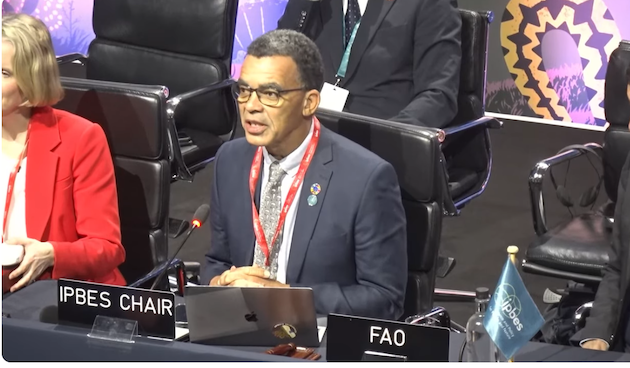
David Oburo, IPBES Chair. Credit: Busani Bafana/IPS

David Oburo, IPBES Chair. Credit: Busani Bafana/IPS

BULAWAYO, Feb 3 2026 (IPS) – British Monarch King Charles says science is the solution to protecting nature and halting global biodiversity loss, which is threatening humanity’s survival.


In a message to the 12th session of the Plenary of the Intergovernmental Science-Policy Platform on Biodiversity and Ecosystem Services (IPBES), which opened in Manchester, United Kingdom, this week, King Charles said nature is an important part of humanity but is under serious threat, which science can help tackle.

“We are witnessing an unprecedented, triple crisis of biodiversity loss, climate change, and pollution at a pace that far outstrips the planet’s ability to cope,” said King Charles in a message delivered by Emma Reynolds, United Kingdom Secretary of State for Environment, Food and Rural Affairs.

Science is the Solution

“The best available science can help inform decisions and actions to steward nature and, most importantly, to restore it for future generations, “ King Charles noted, pointing out that humanity has the knowledge to reverse the existential crisis and transition towards an economy that prospers in harmony with nature.

Delegates representing the more than 150 IPBES member governments, observers, Indigenous Peoples,  local communities and scientists are meeting for the  IPBES’ 12th Session, expected to approve a landmark new IPBES Business & Biodiversity Assessment. The report,  a 3-year scientific assessment involving 80 expert authors from every region of the world, will become the accepted state of science on the impacts and dependencies of business on biodiversity and nature’s contributions to people. It will provide decision-makers with evidence and options for action to measure and better manage business relationships with nature.

The King lauded IPBES for bringing together the world’s leading scientists, indigenous and local knowledge, citizen science and government to share valuable knowledge through the Business and Biodiversity Report—the first of its kind.

“I pray with all my heart that it will help shape concrete action for years to come, including leveraging public and private finance to close by 2030 the annual global biodiversity gap of approximately USD 700 billion,” said King Charles.

IPBES Chair, Dr. David Obura, highlighted that the approval of the IPBES Business and Biodiversity Assessment is important just days after the World Economic Forum’s 2026 Global Risks Report again spotlighted biodiversity loss as the second most urgent long-term risk to business around the world.

“In transitioning and transforming, businesses should all experience the rewards of being sustainable and vibrant, benefiting small and large,” Obura emphasized. “The Business Biodiversity assessment synthesizes the many tools and pathways available to do this and provides critical support for businesses across all countries to work with nature and people and not to work against either or both.”

Addressing the same delegates, Emma Reynolds,  UK Secretary of State for Environment, Food and Rural Affairs, highlighted the urgency of collective action, the critical role of science, and the opportunities for business in nature.

Reynolds noted there was momentum around the world as countries were restoring wetlands and forests, communities were reviving degraded landscapes and businesses were increasingly investing in nature after realizing that nature delivers real returns.

“The tide for nature is beginning to turn, but we cannot afford to slow down,” said Reynolds. “The window to halt diversity loss by 2030 is narrowing. We need to build on that momentum, and we need to do it now.”

Multilateralism, a must for protecting nature

Paying tribute to IPBES for supporting scientific research, Reynolds emphasized that the rest of the world must step forward when others are stepping back from international cooperation. This is to demonstrate that protecting and restoring nature was not just an environmental necessity but essential for global security and the economy.

“The UK’s commitment to multilateralism remains steadfast,” she said. “We believe that by working together, sharing knowledge, aligning policies, and holding one another accountable, we can halt and reverse the diversity loss by 2030,.“

In January 2026, the United States withdrew its participation in IPBES, alongside 65  international organizations and bodies, including the International Union for Conservation of Nature (IUCN), the UN Framework Convention on Climate Change (UNFCCC) and the Paris Agreement.

The United States was a founding member of IPBES, and since its establishment in 2012, scientists, policymakers, and stakeholders—including Indigenous Peoples and local communities—from the United States have been among the most engaged contributors to its work.

The approval of the Business and Biodiversity Assessment by IPBES government members this week will be multilateralism in action, she said, noting that the assessment would not be possible without the critical role of science.

Reynolds underscored the need to base sound policy on solid scientific evidence. Decisions made in negotiating rooms and capitals around the world must be guided by the best and most up-to-date science available. IPBES  exists to provide exactly that.

Noting that the business depends on nature for raw materials, clean water, a stable climate, and food, Reynolds said companies that recognize their dependency on nature are proving that nature-positive investment works.

“Business as well as the government must act now to protect and restore nature… we have the science. We have the frameworks… What we need now is action.”

“Nature loss is now a systemic economic risk. That’s precisely why the assessment on business impact and dependencies is both urgent and necessary,” said  Inger Andersen, executive director of the United Nations Environment Programme (UNEP).

“The first-ever business and diversity assessment will deliver authoritative evidence on how businesses depend on nature, how they impact it, and what that means for risk, for resilience, and for long-term value creation.”

Business and Biodiversity are linked

Underscoring that biodiversity loss is linked to the wider planetary crisis, Astrid Schomaker, executive secretary of the Convention on Biological Diversity, paid tribute to IPBES as a provider of science as a public good.

“IPBES has remained a  ‘beacon of knowledge at a time when science  and knowledge itself is under strain and when the voices of disinformation are sometimes louder than the facts,” said Schomaker, noting that ahead of the first global stocktake of progress in the implementation of the Kunming-Montreal Global Biodiversity Framework (KMGBF), the science provided by IPBES would be invaluable.

“The Business and Biodiversity assessment constitutes a win for everyone. Clarifying that biodiversity loss isn’t just an environmental issue; it’s a serious threat to economic systems, livelihoods, business profitability, and societal resilience. Biodiversity simply underpins and provides the stability we all need.”

Target 15 of the KMGBF, focuses on business reducing negative impacts on biodiversity and global businesses need to assess and disclose biodiversity-related impacts.

IPBES executive secretary, Dr. Luthando Dziba, said IPBES was on track to deliver, in the coming years, crucial knowledge and inspiration to support the implementation of current goals and targets of the KMGBF, and to provide the scientific foundation needed by the many processes now shaping the global agenda beyond 2030.

IPS UN Bureau Report

 

Guinea’s Path to Electoral Autocracy

Active Citizens, Africa, Civil Society, Crime & Justice, Democracy, Featured, Headlines, Human Rights, Press Freedom, TerraViva United Nations

Opinion

Credit: Luc Gnago/Reuters via Gallo Images

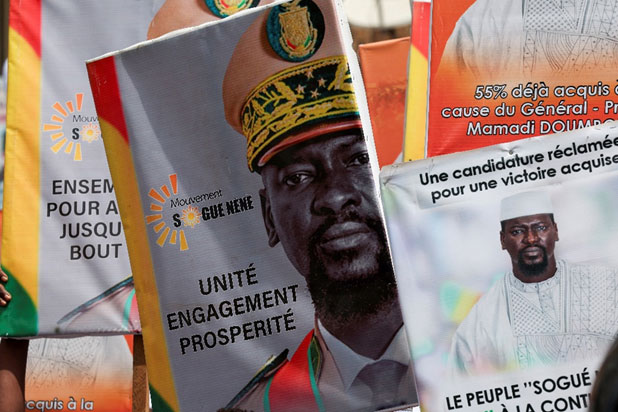
MONTEVIDEO, Uruguay, Jan 20 2026 (IPS) – In December, the dust settled on Guinea’s first presidential election since the military took control in a 2021 coup. General Mamady Doumbouya stayed in power after receiving 87 per cent of the vote. But the outcome was never in doubt: this was no a democratic milestone; it was the culmination of Guinea’s denied transition to civilian rule.


Doumbouya has successfully performed an act of political alchemy, turning a military autocracy into an electoral one. By systematically dismantling the opposition, silencing the press and rewriting laws to suit his ambitions, he has made sure to shield his grip on power with a thin veil of electoral legitimacy.

The architecture of autocracy

The path to this moment was paved with precision. In April 2025, Doumbouya announced a constitutional referendum, a move that may have looked like it would herald the beginning of the end of military rule. But it was something else entirely. By June, Doumbouya had further centralised control by creating a new General Directorate of Elections. This body, placed firmly under the thumb of the Ministry of Territorial Administration, reversed previous efforts to establish an independent electoral institution.

The constitution was drafted in the shadows by the National Council of the Transition, the junta-appointed legislative body. While early drafts reportedly contained safeguards against lifetime presidencies, these were stripped away before the final text reached the public. The result was a document that removed a ban on junta members running for office, extended presidential terms from five to seven years and granted the president the power to appoint a third of the newly created Senate.

When the referendum was held on 21 September, it rubber-stamped de facto rule. Official figures claimed 89 per cent support with an 86 per cent turnout, numbers that defied the reality of a widespread opposition boycott and a palpable lack of public enthusiasm.

A climate of fear

With a blanket ban on protests in effect since May 2022, those who’ve dared challenge the junta’s controlled transition have been met with security force violence. On 6 January 2025, security forces killed at least three people, including two children, during demonstrations called by the opposition coalition Forces Vives de Guinée.

The political landscape was further cleared through administrative and judicial means. In October 2024, the government dissolved over 50 political parties. By August 2025, major opposition groups such as the Rally of the People of Guinea had been suspended. Key challengers, including former Prime Minister Cellou Dalein Diallo, remain in exile, while others, among them Aliou Bah, have been sentenced to prison – in Bah’s case, for allegedly insulting Doumbouya.

The atmosphere of fear has been reinforced by a brutal crackdown on the media. Guinea plummeted 25 places in the 2025 World Press Freedom Index, the year’s largest fall. Independent outlets have had their licences revoked and journalists have been detained. Those still working have learned to practise strict self-censorship to avoid becoming the next target. This meant that as voters went to the polls, there was nobody to provide diverse perspectives, scrutinise the process, investigate irregularities or hold authorities accountable.

Coup contagion

Guinea is no outlier. Since 2020, a coup contagion has swept through Africa, with military takeovers in Burkina Faso, Chad, Gabon, Guinea-Bissau, Madagascar, Mali, Niger and Sudan. In each instance, the script has been similar: military leaders seize power promising to ‘correct’ the failures of the previous regime, only to break their promises of a return to civilian rule.

Guinea is now the third country among this recent wave to move from a military dictatorship to an electoral autocracy. It follows in the footsteps of Chad, where Mahamat Idriss Déby secured victory in May 2024 after the suspicious killing of his main opponent, and Gabon, where General Brice Oligui Nguema won a 2025 election with a reported 90 per cent of the vote.

The international community does little. Doumbouya routinely ignored deadlines and sanctions from the Economic Community of West African States, which once prided itself on a ‘zero-tolerance’ policy for coups, and no consequences ensued. The African Union and the United Nations offered rhetorical concern, but their warnings were not accompanied by tangible diplomatic or economic repercussions.

The world’s willingness to maintain business as usual while Doumbouya steered through a fake transition sends a dangerous message to other aspiring autocrats, in the region and beyond.

Democracy denied

When Doumbouya seized power in 2021, he was greeted with a degree of cautious optimism. His predecessor, Alpha Condé, had controversially amended the constitution to secure a third term amid violent protests and corruption and fraud allegations. Doumbouya promised to fix things, but instead became a mirror image of the man he ousted, using the same tactics of constitutional revision and repression to secure his power.

The statistics of the December election – an 87 per cent victory on a claimed 80 per cent turnout – do not reflect a genuine mandate but rather a vacuum: with no independent media to scrutinise the process and no viable opposition allowed to run, the election was a technicality.

The prospects for real democracy in Guinea appear remote. Doumbouya has secured a seven-year mandate through an election that eliminated the essential infrastructure needed for democracy. In the absence of stronger international pressure and tangible support for Guinean civil society, Guinea faces prolonged authoritarian rule behind a democratic facade, with dismal human rights prospects.

Inés M. Pousadela is CIVICUS Head of Research and Analysis, co-director and writer for CIVICUS Lens and co-author of the State of Civil Society Report. She is also a Professor of Comparative Politics at Universidad ORT Uruguay.

For interviews or more information, please contact research@civicus.org

  Source

Excluding Food Systems From Climate Deal Is a Recipe for Disaster

Africa, Climate Change, Climate Change Justice, Conferences, COP30, Development & Aid, Editors’ Choice, Featured, Food and Agriculture, Food Systems, Global, Headlines, Latin America & the Caribbean, Population, Sustainable Development Goals, TerraViva United Nations | Analysis

Food Systems


Food solutions were on display everywhere around COP30—from the 80 tonnes of local and agroecological meals served to concrete proposals for tackling hunger—but none of this made it into the negotiating rooms or the final agreement. —Elisabetta Recine, IPES-Food panel expert

Agriculture is both a challenge and a solution for climate change. Busani Bafana/IPS

Agriculture is both a challenge and a solution for climate change. Busani Bafana/IPS

BULAWAYO, Jan 9 2026 (IPS) – As they ate catered meals, COP30 negotiators had no appetite for fixing broken food systems, a major source of climate pollution, experts warn.


Food systems are the complete journey food takes—from the farm to fork—which means its growing, processing, distribution, trade and consumption and even the waste.

The International Panel of Experts on Sustainable Food Systems (IPES-Food) warns that the final COP30 agreement risks deepening climate and hunger crises.  It failed  to address global warming emissions from food systems and the escalating damages caused by fossil-fuel-dependent industrial agriculture.

Food appears only once in the negotiated text, as a narrow indicator on ‘climate resilient food production’ under the Global Goal on Adaptation, IPES-Food pointed out.

“There is no mention of food systems, no roadmap to tackle deforestation, and no recognition that industrial agriculture drives nearly 90 percent of forest loss worldwide,” noted the think tank, emphasizing that negotiators also weakened language in the Mitigation Work Programme from addressing the ‘drivers’ of deforestation to vague ‘challenges.’

IPES-Food argued that the omission of food systems in the COP30 agreement was in stark contrast to the summit itself, which was held in the heart of the Amazon. Thirty percent of all food served during COP30 came from agroecological family farmers and traditional communities, and concrete public policy proposals for a just transition of food systems were on full display, IPES-Food said.

By not supporting a transition to environmentally friendly and low-emission agriculture, the agreement has left the global food system—and the billions who depend on it—highly vulnerable to the very climate shocks it helps cause, experts said.

“Food solutions were on display everywhere around COP30—from the 80 tonnes of local and agroecological meals served to concrete proposals for tackling hunger—but none of this made it into the negotiating rooms or the final agreement,” said Elisabetta Recine, IPES-Food panel expert and president of the Brazilian National Food and Nutrition Security Council (Consea), in a statement.

“Despite all the talk, negotiators failed to act, and the lived realities of people most affected by hunger, poverty, and climate shocks went unheard.”

Big Oil and Big Ag, Bigger voice

More than 300 industrial agriculture lobbyists were registered as delegates to COP30. They  are blamed for influencing discussions and promoting false solutions to climate change.

“COP30 was supposed to be the Implementation COP—where words turned into action,” Danielle Nierenberg, an expert on sustainable agriculture and food issues and President of Food Tank, told IPS. “But once again, corporate interests won over people, nature, and the future of our food and agriculture systems as part of the solution to the climate crisis.”

Raj Patel, IPES-Food panel expert and professor at the University of Texas, argues that agribusiness lobbyists captured COP30 to influence outcomes favoring industrial agriculture and big oil interests.

“Food systems are second only to oil and gas as a driver of the climate crisis, and unlike oil wells, they are also the first victim of the chaos they create, Patel noted.

Obstacles and Opportunities

Scientists have warned that carbon emissions, including those from agriculture, must be cut considerably if the world is to meet the goals of the Paris Agreement to limit global warming to 2°C or less.

Even if fossil fuel emissions were eliminated immediately, emissions from the global food system alone would make it impossible to limit warming to 1.5°C and difficult even to realize the 2°C target, scientists have said.

Selorm Kugbega, a Research Fellow at the Stockholm Environment Institute, agrees that despite many promises made to tackle agriculture-linked emissions, COP30 turned out to be a damp squib for agrifood systems.

Initiatives such as RAIZ to restore 500 million hectares of degraded agricultural land by 2030 and TERRA to scale out climate solutions for smallholder farmers through blended finance, which were launched at COP30 omitted to highlight the effects of industrial food systems. Over 300 industrial agriculture lobbyists participated in discussions at COP30, leading to accusations of swaying the outcomes.

Analysts warn the final agreement at COP30 in Belém, Brazil, risks deepening climate and hunger crises. Credit: Raimundo Pacco/COP30

Analysts warn the final agreement at COP30 in Belém, Brazil, risks deepening climate and hunger crises. Credit: Raimundo Pacco/COP30

Kugbega observed that after several years of slow progress and momentum in integrating food systems in climate negotiations, COP30 should have been the opportunity to seal agriculture’s centrality in future COPs. However, it ended with no clear agreements on grant-based public finance for adaptation in agriculture or redirection of public funds that subsidize industrial systems.

The climate negotiations demonstrated power inequality in climate negotiations with the implicit protection of industrial agriculture interests, which weakened the credibility of any global efforts at mitigating agriculture-based emissions, Kugbega observed, highlighting that smallholders bear a high burden of climate risks and have little adaptation financing.

Kugbega argued the most powerful countries, which are generally less dependent on agriculture, tend to prioritize sectors such as energy and transport in climate negotiations. However, many least developed countries, particularly in Africa, are highly dependent on agriculture for employment and economic stability and face urgent climate risks.

“Yet these countries often lack the political influence to elevate agriculture and food systems as central issues in COP negotiations,” he said. “COP30 in Brazil presented a major opportunity to shift this imbalance, making the failure to position food systems at the center of the climate agenda particularly troubling.”

Frugal Financing for Food and Farmers

According to the Climate Policy Initiative (CPI) and the UN’s Standing Committee on Finance, agriculture receives a small and insufficient share of total global climate finance.

Of the available approximate total global climate finance of USD 1.3 trillion per year on average, agriculture gets around USD 35 billion per year. This is a huge shortfall given that food systems are estimated to be responsible for roughly one-third of global greenhouse gas emissions and are one of the sectors most vulnerable to climate impacts, according to the CPI. Worse still, smallholder farmers, who produce up to 80 percent of food in developing countries, only receive 0.3 percent—a striking imbalance, yet they feed the world and are more exposed to climate impacts.

Will COP31 Deliver?

While COP30 highlighted the need to tackle climate change impacts through the transformation of food systems, such as highlighted in the Belém Declaration on Hunger, Poverty and Human-Centered Climate Action, it remains to be seen if COP31 will deliver a positive outcome on food systems.

Waiting for COP31 to save the world is surrendering because agribusiness lobbyists do not take holidays, argues IPES-Food panel’s Raj Patel.

“The test is not whether diplomats can craft better language in Antalya, but whether farmers’ movements, indigenous movements, and climate movements can generate enough political pressure to make governments fear inaction more than they fear confronting corporate power,” he said.

COP31, to be  hosted by Turkey with Australia as negotiations president in 2026 , is expected to prioritize an action agenda centered on adaptation finance, fossil fuel phase-out, adaptation in Small Island Developing States, and oceans.

While this agenda aligns with broader climate justice goals, it means food systems risk becoming indirectly addressed rather than explicitly championed, Kugbega said.

Given the stalled negotiations on financing sustainable agriculture transitions and the postponement of the Sharm el-Sheikh Joint Work on Agriculture, Kugbega said COP31 will likely focus more on developing new roadmaps and agreements than on full-scale implementation.

COP32 could be a greater opportunity for the implementation of the work program under Ethiopia’s COP32 presidency, given the country’s direct exposure to climate risks in agriculture, he noted.

“COP31 will likely shape whether the world arrives at COP32 ready to implement and operationalize sustainable food systems or once again be forced to renegotiate what is already known.”

This feature is published with the support of Open Society Foundations.

IPS UN Bureau Report


‘Zambia Has Environmental Laws and Standards on Paper – the Problem Is Their Implementation’

Active Citizens, Africa, Civil Society, Crime & Justice, Energy, Environment, Featured, Food and Agriculture, Headlines, Health, TerraViva United Nations

Dec 29 2025 (IPS) –  
CIVICUS discusses environmental accountability in Zambia with Christian-Geraud Neema, Africa editor at the China Global South Project, an independent journalism initiative that covers and follows China’s activities in global south countries.


Zambia has environmental laws and standards on paper – the problem is their implementation’

Christian-Geraud Neema

A group of 176 Zambian farmers has filed a US$80 billion lawsuit against a Chinese state-owned mining company over a major toxic spill. In February, the collapse of a dam that was supposed to control mining waste released 50 million litres of toxic wastewater into the Kafue River system, killing fish, destroying crops and contaminating water sources for thousands of people. The compensation demand highlights broader questions about mining governance, environmental oversight and corporate accountability.

What’s this lawsuit about, and why are farmers seeking US$80 billion?

The farmers are suing Sino-Metals Leach Zambia, a subsidiary of the Chinese state-owned China Nonferrous Metal Mining Group, because on 18 February, the company’s tailings dam collapsed, releasing an estimated 50 million litres of acidic, toxic wastewater and up to 1.5 million tonnes of waste material into the Kafue River. This led to water pollution affecting communities in Chambishi and Kitwe, far beyond the immediate mining area.

The lawsuit reflects real harm and frustration. From the farmers’ perspective, the company is clearly responsible. Their livelihoods have been destroyed, their land contaminated and their future made uncertain. In that context, seeking accountability through the courts is a rational response.

That said, the US$80 billion figure is likely exaggerated. It shows the absence of credible damage assessments rather than a precise calculation. When no one provides clear data on losses, communities respond by anchoring their claims in worst-case scenarios.

This case also highlights a broader accountability gap. Mining companies should be held responsible, but governments must also be questioned. These projects are approved, inspected and regulated by state authorities. If a dam was unsafe, why was it authorised? Why was oversight insufficient?

It should be noted that Zambia’s legal framework allows communities to bring such cases domestically, which is a significant step forward compared to earlier cases where affected communities had to sue foreign companies in courts abroad.

What caused the toxic spill?

There is no single, uncontested explanation. There were clear structural weaknesses in the tailings dam. Reports from civil society and media suggest the dam was not built to the required standards under Zambian regulations. But the company argues the dam complied with existing standards and that it was encroachment by surrounding communities that weakened the structure over time.

These two narratives are not mutually exclusive. Even if community interactions with the site occurred, the primary responsibility still lies with the company. Mining operations take place in complex social environments, and companies are expected to anticipate these realities and design infrastructure that is robust enough to withstand them. Ultimately, this incident reflects governance and regulatory failures. It was not an isolated accident.

What were the consequences of the spill?

The impacts have been severe and multidimensional. The spill polluted large sections of the Kafue River, reportedly extending over 100 kilometres. It killed large numbers of fish, contaminated riverbeds and disrupted ecosystems. Agriculturally, farmers using river water for irrigation saw their crops destroyed or rendered unsafe. Livestock and soil quality were also affected. Acidic and toxic substances entered water sources used daily for cooking, drinking and washing, and communities were exposed to serious health risks.

What makes the situation particularly troubling is the lack of reliable and independent data. There has been no transparent and comprehensive assessment released by the government, the company or an independent body. This absence has left communities uncertain about long-term environmental damage and health effects, and fuelled emotionally charged debates instead of evidence-based responses.

Was the disaster preventable?

Absolutely. At a technical level, stronger infrastructure, better-quality materials and stricter adherence to safety standards could have significantly reduced the risk. At an operational level, companies know mining sites are rarely isolated, and community proximity, informal access and social dynamics must be factored in when designing and securing tailings dams.

But prevention also depends heavily on governance. Mining companies are profit-driven entities, and in weak governance environments, the temptation to cut costs is high. This is not unique to Chinese firms. The main difference in how companies operate is not their origin but their context: the same companies often operate very differently in countries with weak or strong regulatory oversight. Where rules are enforced, behaviour improves; where oversight is weak, shortcuts become the norm.

The key issue here is enforcement. Zambia has good environmental laws and standards on paper. The problem is their implementation.

Could this case set a precedent?

This case has the potential to strengthen existing accountability mechanisms rather than create a new precedent. Zambia has seen similar cases before, including lawsuits involving western mining companies. What is different now is the increased legal space for communities to act locally.

If successful, the case could reinforce civil society advocacy for responsible mining, greater transparency and stronger enforcement of environmental regulations. It could also raise awareness among communities living near mining sites about their rights and the risks they face.

GET IN TOUCH
Website
Facebook
TikTok
Twitter
YouTube
Christian-Geraud Neema/LinkedIn

SEE ALSO
South Africa: ‘Environmental rights are enforceable and communities have the right to be consulted and taken seriously’ CIVICUS Lens | Interview with The Green Connection 12.Dec.2025
DRC: ‘International demand for coltan is linked to violence in the DRC’ CIVICUS Lens | Interview with Claude Iguma 09.Jul.2025
Ghana: ‘We demand an immediate ban on illegal mining and strict enforcement of environmental laws’ CIVICUS Lens | Interview with Jeremiah Sam 29.Oct.2024

  Source

What’s On In Cape Town In January 2026

Cape Town welcomes 2026 on a high note – January is peak summer, and the city comes alive with an unbeatable mix of concerts, festivals, sport, culture and outdoor experiences. From iconic events like the Cape Town Minstrels Street Parade and the King’s Plate to international music tours, open-air theatre and cricket at Newlands.

Cats, the Musical

📅

2-11 January 2026 📍 Artscape Theatre, Cape Town

Pieter Toerien and GWB Entertainment in association with Cape Town Opera by arrangement with The Really Useful Group presents CATS. Andrew Lloyd Webber’s world-famous musical Cats brings iconic songs, choreography and theatrical magic to the Artscape stage. Tickets from R180 on Webtickets.

cats the musical

WAV Festival by AfroNation

📅

2 January 2026 📍 Green Point Track, Cape Town

A festival R&B lovers cannot miss! Amapiano’s Kelvin Momo brings his deep, emotional sound to the festival, while Shekinah’s golden voice is set to light up the stage. The lineup also includes Mariah the Scientist, Wale, Langa Mavuso, and Kujenga. Cape Town, get ready for a high-energy stadium showcase featuring the best in R&B. Find ticket information here.

Milk & Cookies Festival

📅

3 January 2026 📍 Kenilworth Racecourse, Cape Town

This multi-genre festival celebrates music, food, and community. From amapiano to R&B, house to hip-hop, Milk and Cookies blends global sounds with local culture for one unforgettable celebration. Vibrant stages, curated food vendors, immersive art installations, and the kind of energy that turns a crowd into a community – it’s a gathering where culture, connection, and creativity meet. For tickets go to Howler’s website and for more information visit the official page here.


View this post on Instagram

A post shared by 🥛

Milk + Cookies 🍪 (@milkcookiesfest)

BLANCHE – a luxury daytime event

📅

4 January 2026 📍 The Terrace Rooftop, Salt River

Step into the New Year with Blanche; an All-white outdoor celebration, curated by AfroFuture and PVO. This signature experience blends live music, an unmatched atmosphere, and the most vibrant crowd. Presented by Martell, set against Cape Town’s stunning backdrop. Click here for ticket information.

Freshlyground Reunion Concert

📅

4, 11, 18 January 2026 📍 Kirstenbosch National Botanical Garden

Freshlyground reunites for a special open-air concert at Kirstenbosch, delivering feel-good hits in one of Cape Town’s most popular outdoor venues. Find more information and ticket information.

Cape Town Minstrels Street Parade

📅

5 January 2026 📍 Somerset Road & Fan Walk, Green Point

The iconic Cape Town Minstrel Carnival returns to the Mother City on 5 January 2026. The annual event fills the streets with colour, music and tradition, continuing into DHL Stadium for the Kaapse Klopse Choral Competition. Tap here for the latest event information.

St Tropez presents: Uncle Waffles – The ultimate day time escape

📅

5 January 2026 📍 Cabo Beach Club, Cape Town

Turn on the glitz and glamour at this epic Cabo Beach experience. Headlined by global sensation Uncle Waffles, expect nothing less than an unforgettable day of pulsating beats, high-energy performances, and pure sophistication. The event promises world-class local DJs spinning infectious sounds that keep the energy flowing from noon until sunset. Get your tickets now.

MI Cape Town vs Joburg Super Kings

📅

6 January 2026 📍 Newlands Cricket Grounds

Catch SA20 cricket action as MI Cape Town face the Joburg Super Kings at the historic Newlands Cricket Ground. For ticket info, email info@ticketpro.co.za or visit the website here.

Cape Town Jazzathon

📅

9-11 January 2026 📍 Amphitheatre, V&A Waterfront, Cape Town

Celebrating its 29th anniversary this year, the Cape Town Jazzathon is South Africa’s longest-running music festival. Often referred to as “The People’s Festival,” the event will feature performances daily, from 12.30pm to 8pm. Enjoy a rich variety of styles including Afro Jazz, Cape Jazz, Hip Hop, R&B, Reggae, Neo Soul, and Straight Ahead packed into three days of non-stop entertainment… and its free!!! Learn more.

L’Ormarins King’s Plate

📅

10 January 2026 📍 Hollywoodbets Kenilworth Racecourse

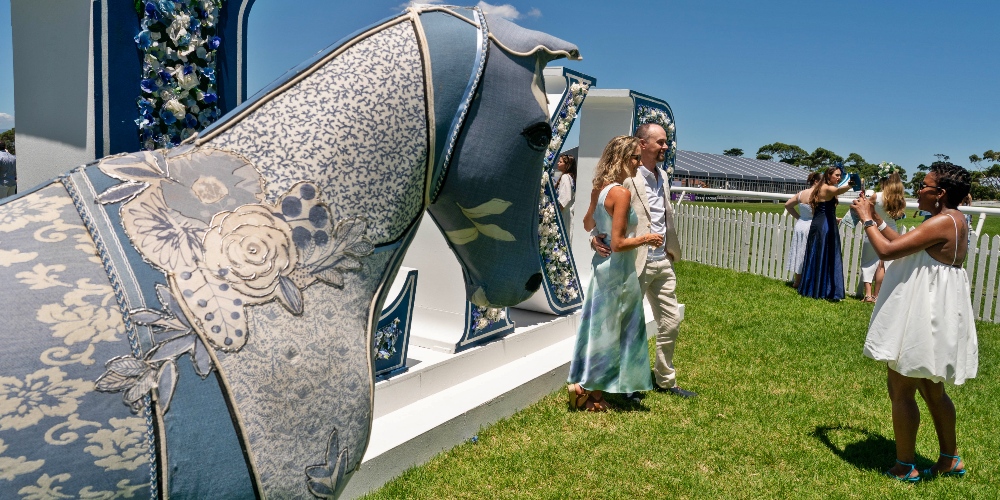
The Running of the 165th King’s Plate – the L’Ormarins King’s Plate is one of South Africa’s most prestigious horse racing events, combining elite racing, high fashion and a vibrant atmosphere. The King’s Plate is a totally blue and white affair where guests can enjoy some of the country’s best racing, wine, food, antique car displays and renowned after party in the peak of Cape Town’s summer. Tickets start from R600. For more information visit here.

king's plate

Maynardville Open-Air Festival

📅

From 13 January 2026 📍 Maynardville Park, Wynberg

Cape Town’s premier open-air theatre experience returns, featuring live performances in a magical forest setting. Opening on 13 January, the Shades of Blue Chamber Concert will feature music from composers influenced by the rhythms and harmonies of jazz. Next up is Jazz in the Park (14 to 15 Jan), a new two-day celebration featuring local jazz legends from Cape Town’s rich jazz tradition. From 16 to 17 January, another crowd-favourite Cape Town Philharmonic Orchestra returns with a stirring classical programme. See the full festival programme.

Calum Scott – The Avenoir Tour

📅

14 January 2026 📍 Kirstenbosch National Botanical Garden

International singer-songwriter Calum Scott performs live at Kirstenbosch as part of his global Avenoir Tour. Gates open at 6pm. Concert starts 7pm. For more information, go to Big Concert’s website.

Sheer City Festival

📅

17-18 January 2026 📍 Harrington Street Precinct

Sheer City is launching its inaugural two-day inner-city festival bringing together Cape Town’s most influential underground nightlife crews with international acts like Horse Meat Disco, Tama Sumo & Lakuti, Make A Dance, Freudenthal, and more. It’s a multi-venue, walkable block party across Harrington Street and the City Bowl fringe, a celebration of Cape Town’s creative pulse, queer culture, music, fashion, performance, and community. Expect six venues, over twenty artists, a full weekend immersion in the city’s next cultural moment.

Sheer Drop at Texas – 2pm to 10pm
Sheer Delight at The Electric – 5pm to 2am
Sheer Disco at Harringtons – 6pm to 4am
Sheer D.O.G at Zer021 Social – 8pm to 4am
Sheer Assembly at District – 8pm to 4am
Sheer Dive at Surfa Rosa – 9pm to 4am

Tickets available from Airdosh

sheer city festival

Sundaze at Durbanville Hills

📅

25 January 2026 📍 Durbanville Hills Winery

Long, lazy afternoons, cool beats and Cape Town’s most iconic views. Summer at Durbanville Hills is super chilled, and with it, the popular cellar’s much-loved Sundaze Summer Series. DJ Stefanos will be spinning tracks from 2pm to 6pm while you enjoy crisp wines, cocktails, craft beer, wine slushies, and a mouth-watering selection of eats from the Olive Grove Bistro. Set against panoramic vistas of Table Bay and Table Mountain, Sundaze is the perfect way to vibe with friends and family. Tickets cost R100pp and available via Webtickets.

Shxtsngigs: Daddy’s Home – South Africa Tour

📅

27 January 2026 📍 Grand Arena, GrandWest, Cape Town

The viral podcast duo James and Fuhad bring their Daddy’s Home live show to Cape Town, blending comedy, culture and crowd interaction. Whether you’re a die-hard Cult Baby or just discovering the podcast that’s racked up millions of streams and laughs worldwide, this live experience is your chance to see the boys like never before – live, loud, and uncut. Tickets from R440 via Ticketmaster.

DHL Stormers vs Vodacom Blue Bulls

📅

27 January 2026 📍 DHL Stadium, Cape Town

Get ready for a major rugby showdown as the DHL Stormers face the Vodacom Blue Bulls in one of the season’s most anticipated fixtures. Cape Town is set to bring the gees – get your tickets today on the Stormer’s website.

green point stadium cape town

World Sports Betting Cape Town Met

📅

31 January 2026 📍 Hollywoodbets Kenilworth Racecourse

Prepare for the grand return of the World Sports Betting Cape Town Met, where the thrill of elite horse racing converges with a multisensory celebration unlike any other. The 2026 theme Symphony of Style combines fashion, music, and immersive moments. Book your tickets via Computicket.

MET

The post What’s On In Cape Town In January 2026 appeared first on Cape Town Tourism.


Discover more from The Maravi Post

Subscribe to get the latest posts sent to your email.

The Maravi Post

12 Days of Summer Giveaways: Day 12 – V&A Waterfront

It’s our 12 Days of Summer Giveaways!

We’re embracing the festive spirit this summer, and from 4 to 19 December 2025, you can win some of the best experiences in Cape Town.

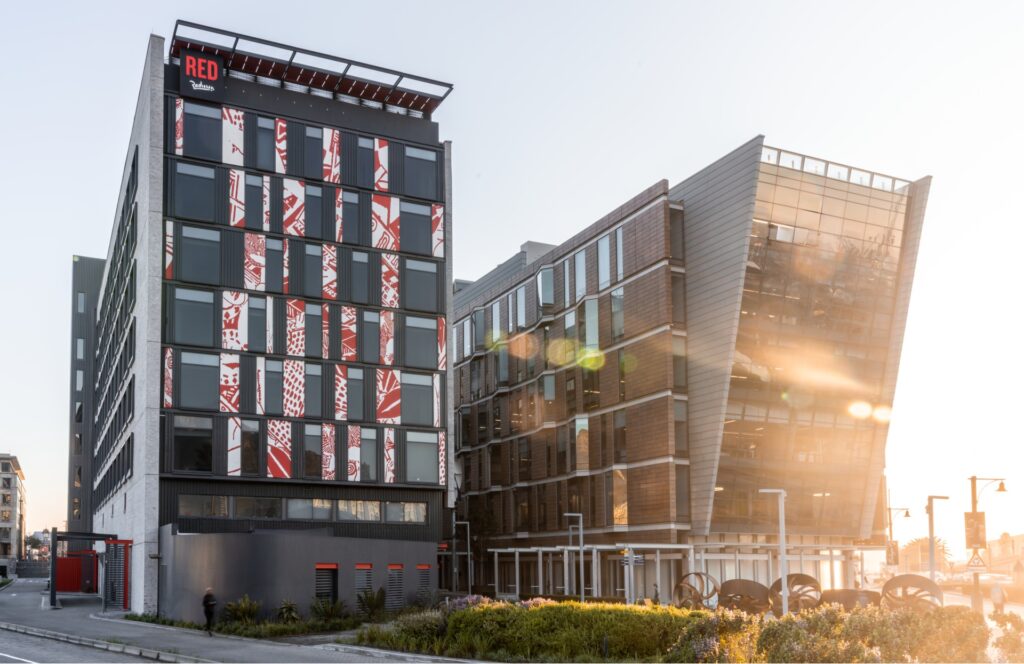
Win a R5000 V&A Waterfront gift voucher, R3000 dining voucher at Coy Restaurant, and one-night stay for 2 people at the Radisson RED Hotel valued at R2750.

The V&A Waterfront is one of Africa’s most visited destinations. Set in South Africa’s oldest working harbour, with the majestic Table Mountain as its backdrop, this iconic destination is a firm favourite among locals and international travellers.


Start your adventure with a R5000 shopping spree, giving you access to hundreds of stores, restaurants and attractions across this world-class neighbourhood.

Then tuck into a fine-dining feast at Coy Restaurant, overlooking spectacular Table Mountain views. Then unwind with a one-night stay for two at the Radisson RED Hotel in the heart of the Silo District.

The competition ends on 19 December 2025, at 23:59 pm SAST. The winner will be announced on Monday, 22 December, at 9am.

Please use this link to enter if the form does not populate: Day 12 – V&A Waterfront – 19th Dec 2025 – Fill out form

Terms and Conditions:

  • The prize is non-transferable and cannot be exchanged for cash.
  • Gift vouchers cannot be redeemed for cash.
  • The hotel stay prize at Radisson RED Hotel can be redeemed between May 2026 and September 2026. The stay is subject to availability and is not valid over block out dates.
  • The hotel stay is for two guests in a Mountain View room with breakfast.

In addition to the above, please view our T’s and C’s here.

The post 12 Days of Summer Giveaways: Day 12 – V&A Waterfront appeared first on Cape Town Tourism.


Discover more from The Maravi Post

Subscribe to get the latest posts sent to your email.

The Maravi Post